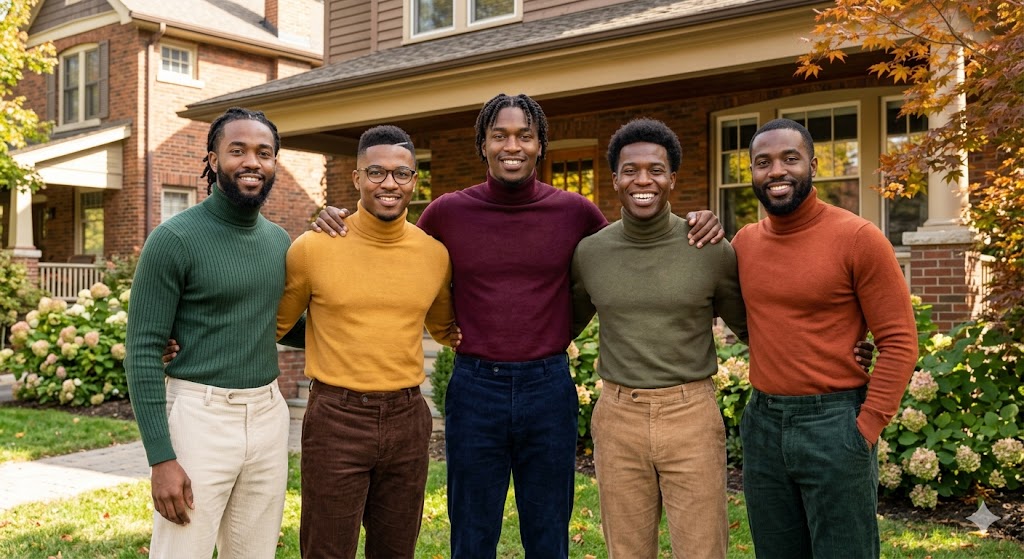
Tag Archives: black men

Forged in Fire: The Resilience and Identity of the Black Man in America.

The identity of the Black man in America has been shaped by a historical crucible of oppression, resistance, and transformation. From the earliest days of forced migration during the Transatlantic Slave Trade to contemporary struggles with systemic inequality, the Black man’s journey reflects both the brutality of racial subjugation and the enduring strength of cultural and spiritual resilience. His story is not merely one of survival, but of continual redefinition in the face of adversity.

The institution of chattel slavery stripped Black men of autonomy, identity, and familial authority. Enslaved African men were commodified, their labor exploited to build the economic infrastructure of a nation that simultaneously denied their humanity. This paradox—being essential yet devalued—formed the foundation of a fractured identity that would echo across generations.

Following the formal abolition of slavery, Black men entered a period marked by false promises and systemic betrayal. Reconstruction briefly offered hope, but the rise of Jim Crow Laws reinstated a rigid racial hierarchy. Black men were systematically disenfranchised, criminalized, and excluded from civic participation, reinforcing narratives of inferiority and danger.

The criminalization of Black masculinity became a central tool of social control. Stereotypes portraying Black men as inherently violent or hypersexual were propagated through media, politics, and pseudo-scientific discourse. These narratives justified discriminatory practices and contributed to the disproportionate targeting of Black men within the criminal justice system.

The emergence of the Civil Rights Movement marked a pivotal moment in redefining Black male identity. Leaders such as Martin Luther King Jr. advocated for nonviolent resistance, while Malcolm X emphasized self-defense and Black empowerment. Together, these figures embodied the complexity and diversity of Black masculinity.

Despite legislative victories, including the Civil Rights Act and Voting Rights Act, structural inequalities persisted. Black men continued to face barriers in employment, education, and housing, limiting opportunities for upward mobility. The promise of equality remained elusive, as systemic racism adapted to new social and political contexts.

The concept of “the Black male crisis” gained prominence in sociological discourse, often focusing on issues such as unemployment, incarceration, and educational disparities. However, this framing frequently overlooks the systemic roots of these challenges, placing undue responsibility on individuals rather than institutions.

Mass incarceration has emerged as one of the most significant threats to Black male identity in the modern era. Policies such as the War on Drugs disproportionately impacted Black communities, leading to the overrepresentation of Black men in prisons. Scholars like Michelle Alexander have described this phenomenon as a contemporary system of racial control.

Economic disenfranchisement further compounds these challenges. The decline of industrial jobs and the persistence of wage gaps have limited economic opportunities for many Black men. Without access to stable employment, the ability to fulfill traditional roles associated with masculinity—provider, protector, leader—becomes increasingly constrained.

Education systems also reflect and reinforce inequality. Black boys are more likely to face disciplinary action, be placed in special education programs, or attend underfunded schools. These disparities contribute to lower graduation rates and reduced access to higher education, perpetuating cycles of disadvantage.

Media representations play a critical role in shaping public perceptions of Black men. Often depicted through narrow and negative stereotypes, Black men are rarely afforded the complexity and humanity granted to other groups. These portrayals influence societal attitudes and inform policy decisions.

Yet, amidst these challenges, the resilience of Black men remains evident. Cultural expressions—music, art, literature—serve as powerful tools of resistance and identity formation. From hip-hop to spoken word poetry, Black men have used creative platforms to articulate their experiences and assert their humanity.

Family and community structures provide additional sources of strength. Despite systemic pressures, many Black men continue to prioritize fatherhood, mentorship, and communal responsibility. These roles challenge dominant narratives and highlight the importance of relational identity.

Faith and spirituality have historically been central to the Black male experience. The church has functioned as both a refuge and a site of resistance, offering moral guidance and collective empowerment. Biblical narratives of suffering and redemption resonate deeply within this context.

The intersection of race and masculinity creates unique psychological pressures. Black men must navigate a society that simultaneously fears and marginalizes them, leading to heightened stress and mental health challenges. Yet, stigma surrounding mental health often prevents open dialogue and access to care.

Contemporary movements have sought to reclaim and redefine Black male identity. Initiatives focused on mentorship, education, and entrepreneurship aim to empower Black men and address systemic barriers. These efforts reflect a broader commitment to self-determination and community uplift.

The role of allyship and policy reform cannot be overlooked. Addressing systemic inequality requires collective action, including equitable legislation, institutional accountability, and cultural change. Without these measures, progress remains limited.

The narrative of the Black man in America is not monolithic. It encompasses a wide range of experiences, identities, and perspectives. Recognizing this diversity is essential to understanding the full scope of Black masculinity.

Resilience, while often celebrated, should not be romanticized as a substitute for justice. The ability of Black men to endure hardship does not absolve society of its responsibility to address the root causes of inequality.

Ultimately, the identity of the Black man in America is forged not only through struggle but through resistance, creativity, and hope. His story is a testament to the enduring human spirit and a call to reimagine a society grounded in equity and dignity.


References

Alexander, M. (2010). The New Jim Crow: Mass incarceration in the age of colorblindness. The New Press.

Anderson, E. (1999). Code of the street: Decency, violence, and the moral life of the inner city. W.W. Norton.

Du Bois, W. E. B. (1903). The souls of Black folk. A.C. McClurg & Co.

Foner, E. (2014). Reconstruction: America’s unfinished revolution, 1863–1877. Harper & Row.

hooks, b. (2004). We real cool: Black men and masculinity. Routledge.

Kendi, I. X. (2016). Stamped from the beginning: The definitive history of racist ideas in America. Nation Books.

Massey, D. S., & Denton, N. A. (1993). American apartheid: Segregation and the making of the underclass. Harvard University Press.

Muhammad, K. G. (2010). The condemnation of Blackness: Race, crime, and the making of modern urban America. Harvard University Press.

Staples, R. (1982). Black masculinity: The Black male’s role in American society. Black Scholar Press.
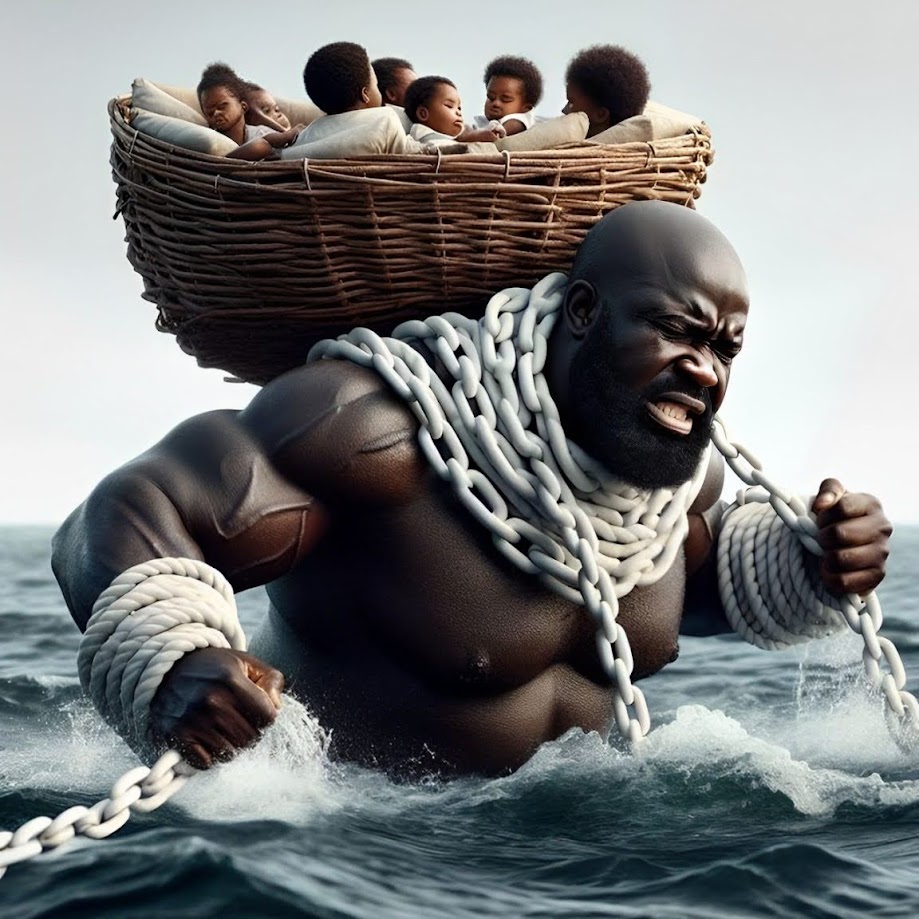
The Strength of a Black Man

This photograph is the property of its respective owner.

The strength of a Black man is not measured solely in physical ability, wealth, or social influence. True strength encompasses character, resilience, spiritual grounding, emotional intelligence, and responsibility. It is forged through trials, adversity, and a deliberate commitment to purpose.

Historically, Black men have endured systemic oppression, slavery, and societal devaluation. Yet, strength is reflected in their endurance, leadership, and preservation of culture. From African kings like Mansa Musa to civil rights leaders such as Martin Luther King Jr., Black men have demonstrated resilience, wisdom, and vision that transcend generations.

Biblical strength is both moral and spiritual. In 1 Corinthians 16:13 (KJV), Paul exhorts, “Watch ye, stand fast in the faith, quit you like men, be strong.” Here, strength is equated with faithfulness, courage in adversity, and steadfastness in moral convictions.

Emotional strength is critical. A strong Black man processes emotions constructively, maintains integrity, and leads with compassion. Proverbs 20:7 (KJV) emphasizes, “The just man walketh in his integrity: his children are blessed after him.” Legacy, therefore, is part of strength.

Responsibility defines a strong man. Providing for family, protecting community, and honoring God are essential expressions of manhood. Strength without responsibility is incomplete and unsustainable.

Spiritual grounding anchors strength. Prayer, scripture, and devotion provide clarity, perseverance, and wisdom. Psalm 1:3 (KJV) compares a righteous man to a tree planted by rivers of water, symbolizing growth, fruitfulness, and enduring impact.

Resilience is forged through adversity. Black men navigate systemic pressures, stereotypes, and societal challenges, yet resilience transforms hardship into growth, echoing James 1:2-4 (KJV), which teaches that trials develop perseverance and mature character.

Cultural strength strengthens identity. Awareness of African heritage and ancestral achievements provides a foundation of pride and purpose, enhancing personal and communal strength.

Mentorship and leadership reflect true strength. Proverbs 27:17 (KJV) says, “Iron sharpeneth iron; so a man sharpeneth the countenance of his friend.” A strong man uplifts others, multiplies influence, and builds lasting impact through guidance and support.

Relational strength is equally important. Loving and nurturing family, friends, and partners demonstrates balance, emotional intelligence, and integrity. Ephesians 5:25 (KJV) highlights sacrificial love as the model for godly men.

Financial and intellectual strength are tools, not goals. Knowledge, strategic thinking, and financial literacy empower men to protect, provide, and lead effectively (Proverbs 22:7, KJV).

Physical strength matters only when disciplined and guided by wisdom. Aggression without moral grounding undermines true strength. Physical ability should serve purpose, protection, and community well-being.

Legacy is the ultimate measure of strength. A Black man’s influence on family, community, and culture reflects his character, faith, and resilience. Strength ensures future generations inherit wisdom, courage, and integrity.

Understanding identity is vital. Men grounded in history, faith, and self-awareness navigate life confidently, resisting societal narratives that seek to diminish their value. Knowledge of self and purpose fosters unshakeable strength.

Moral courage distinguishes true strength. Standing firm in conviction despite opposition, fear, or marginalization reflects biblical examples such as Daniel in the lion’s den.

Forgiveness and emotional mastery demonstrate strength. Matthew 5:44 (KJV) teaches, “But I say unto you, Love your enemies, bless them that curse you.” Restraint, patience, and understanding are marks of mature strength.

Ultimately, the strength of a Black man is an offering—to God, family, and community. It is a holistic cultivation of character, faith, resilience, and wisdom, impacting generations and fulfilling divine purpose.


Fake Strength vs True Strength

Fake StrengthTrue Strength
Physical power without disciplineMoral, emotional, and spiritual power guided by integrity
Wealth used for self-gratificationFinancial acumen used to provide, protect, and empower others
Dominance or aggression over othersLeadership through service, mentorship, and compassion
Pride without purposeHumility rooted in faith and responsibility
Ignoring emotional growthEmotional intelligence, self-awareness, and vulnerability
Short-term gains and imageLong-term legacy and generational impact
Influence based on fear or intimidationInfluence based on respect, wisdom, and example
Avoiding challengesResilience and perseverance through trials
Isolation from communityBuilding relationships, mentorship, and communal uplift
Neglecting faith or purposeSpiritual grounding and alignment with God’s calling

References

Holy Bible, King James Version. (1611). Thomas Nelson.

Guthrie, D. (1994). The NIV application commentary: Proverbs. Grand Rapids, MI: Zondervan.

Wright, C. J. H. (2002). Old Testament ethics for the people of God. Downers Grove, IL: InterVarsity Press.

Aune, D. E. (2013). Reconsidering the role of men in the Bible: Biblical theology for contemporary men. New York, NY: Continuum.

Harrison, J. (2020). Black masculinity, resilience, and leadership in historical perspective. Chicago, IL: University of Chicago Press.

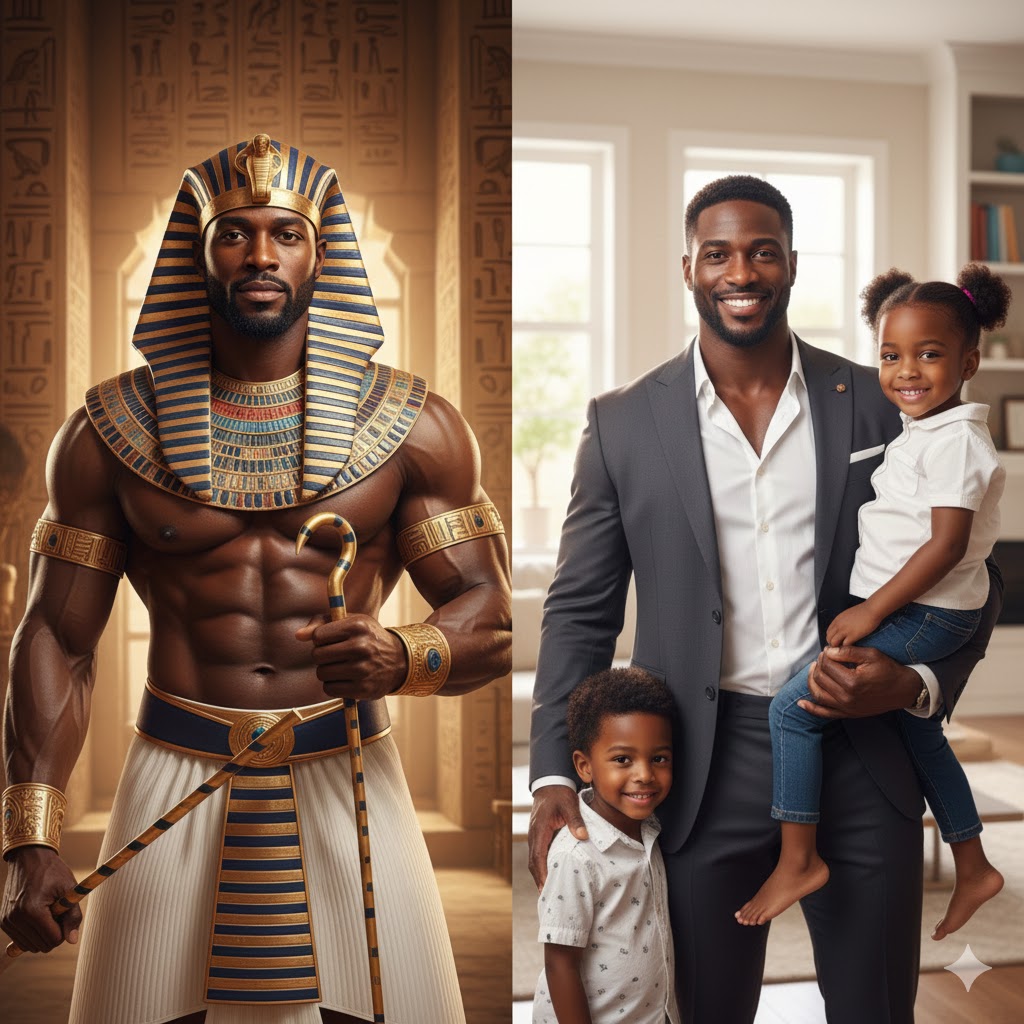
From Pharaohs to Fathers: Rediscovering the Royal Bloodline of Black Men

he history of Black men has often been obscured by narratives that diminish their dignity, leadership, and legacy. From the pharaohs of ancient Egypt to the contemporary challenges of fatherhood in the Black community, the journey of Black men reflects both a royal heritage and the struggles of displacement, oppression, and identity loss. Rediscovering this royal bloodline is essential for understanding self-worth, responsibility, and the sacred duty of leadership within the family and society.

The pharaohs of Egypt, many of whom were Black, exemplified the pinnacle of leadership, wisdom, and governance. Men like Pharaoh Thutmose III and Ramses II displayed strategic prowess, cultural sophistication, and spiritual devotion. Ancient texts and archeological evidence highlight their role not merely as rulers but as protectors of societal order and justice, echoing the biblical mandate for leaders to act as shepherds over their people (Exodus 18:21 KJV).

Beyond Egypt, the African continent bore kingdoms rich in culture, commerce, and governance. The Kingdom of Kush, Mali, and Songhai all boasted leaders who wielded influence, amassed wealth, and ensured the spiritual and physical welfare of their people. Mansa Musa of Mali, renowned for his pilgrimage to Mecca and his wealth, serves as a reminder of the grandeur and intellectual capacity of African leadership. These men were embodiments of divine appointment, carrying the responsibility of preserving their lineage and cultural legacy.

The spiritual dimension of Black manhood is highlighted throughout the Scriptures. In Genesis 15:5, God tells Abraham, “Look now toward heaven, and tell the stars, if thou be able to number them: and he said unto him, So shall thy seed be.” This promise underscores the importance of lineage and legacy. Black men, as descendants of the ancient Israelites (Deuteronomy 28), bear the weight of historical continuity, not merely as biological fathers but as spiritual stewards.

Fatherhood, historically, has been a sacred role—one that demands presence, guidance, and protection. The neglect or distortion of this role in modern society has had profound consequences on families and communities. Proverbs 22:6 (KJV) instructs, “Train up a child in the way he should go: and when he is old, he will not depart from it.” Black men, reclaiming their royal heritage, are called to embody this principle, ensuring that their children inherit not only biological life but wisdom, faith, and identity.

The erosion of Black male authority began during the transatlantic slave trade, when men were forcibly separated from families, stripped of agency, and dehumanized. This systematic assault disrupted generational knowledge transfer, creating cycles of trauma that persist today. Yet, understanding one’s history and royal lineage can catalyze restoration, turning pain into purpose.

Modern society often presents Black men with distorted images of masculinity—hyper-aggression, absenteeism, or materialism—as substitutes for the authentic power once held by pharaohs and kings. These portrayals ignore the spiritual and intellectual dimension of Black manhood. Romans 12:2 (KJV) counsels believers to “be not conformed to this world: but be ye transformed by the renewing of your mind,” highlighting the necessity of reclaiming identity through spiritual renewal rather than societal mimicry.

Education and cultural awareness are critical tools in this reclamation. By studying African history, biblical genealogies, and the narratives of ancient leaders, Black men can reconnect with their ancestral wisdom. Knowledge of one’s past is a pathway to empowerment; it transforms self-perception from one of victimhood to one of inherent value and purpose.

The role of community and mentorship is equally vital. Just as ancient kings surrounded themselves with advisors, scribes, and spiritual guides, contemporary Black men benefit from cultivating relationships that reinforce responsibility, moral integrity, and leadership. Proverbs 27:17 (KJV) states, “Iron sharpeneth iron; so a man sharpeneth the countenance of his friend,” illustrating the necessity of accountability and communal growth.

Spiritual discipline anchors the royal bloodline in divine purpose. Prayer, meditation, and adherence to God’s Word provide guidance for personal conduct and familial leadership. Psalm 112:1-2 (KJV) notes, “Blessed is the man that feareth the LORD, that delighteth greatly in his commandments. His seed shall be mighty upon earth: the generation of the upright shall be blessed,” connecting reverence for God with generational influence.

Reclaiming the identity of Black men as heirs to a royal lineage also necessitates confronting societal obstacles. Racism, systemic oppression, and cultural misrepresentation challenge the restoration of dignity. Nevertheless, as 2 Corinthians 4:8-9 (KJV) reminds, “We are troubled on every side, yet not distressed; we are perplexed, but not in despair; Persecuted, but not forsaken; cast down, but not destroyed,” emphasizing resilience amid adversity.

Economic empowerment, civic engagement, and cultural preservation complement spiritual and familial responsibilities. Pharaohs and African kings secured wealth not for selfish indulgence but for community stability and legacy preservation. Similarly, modern Black men are called to steward resources in ways that benefit families and communities, reinforcing the principle that leadership is inseparable from responsibility.

The restoration of the Black male identity also involves healing from historical trauma. Therapy, counseling, and intergenerational dialogue allow men to process inherited wounds and reclaim self-worth. Healing strengthens the capacity to lead effectively and maintain the integrity of the royal bloodline through future generations.

Media representation plays a significant role in shaping perception. By celebrating Black excellence in leadership, scholarship, arts, and family life, society can counteract narratives of deficiency. Highlighting positive examples reinforces the truth that Black men are heirs of kings and pharaohs, capable of guiding their families and communities with honor.

Faith communities provide critical support in this restoration. Churches, synagogues, and spiritual networks offer a space for mentorship, teaching, and the reinforcement of values aligned with divine purpose. Hebrews 13:7 (KJV) encourages reflection on past leaders: “Remember them which have the rule over you, who have spoken unto you the word of God: whose faith follow, considering the end of their conversation,” promoting continuity of moral and spiritual guidance.

Art, literature, and music serve as vehicles for affirming royal heritage. African-centered narratives, hip-hop with conscious messages, and literary works by Black authors transmit culture, history, and identity. These mediums counteract erasure and celebrate lineage, providing inspiration for the next generation of fathers and leaders.

Black fatherhood, when approached as a sacred duty, extends beyond provision. It encompasses emotional presence, moral instruction, spiritual mentorship, and legacy cultivation. By reclaiming their royal bloodline, men can model integrity, resilience, and wisdom, counteracting centuries of marginalization.

Education of the young is both a privilege and a responsibility. Teaching children about ancestral achievements, biblical promises, and the value of lineage fosters self-respect and ambition. Deuteronomy 6:6-7 (KJV) instructs, “And these words, which I command thee this day, shall be in thine heart: And thou shalt teach them diligently unto thy children,” reinforcing the importance of active participation in shaping future generations.

Ultimately, rediscovering the royal bloodline of Black men is a holistic endeavor. It integrates historical awareness, spiritual discipline, familial responsibility, community leadership, and personal integrity. This reclamation restores dignity, instills purpose, and honors God’s design for manhood and family.

By embracing the legacy of pharaohs and kings, Black men can navigate the modern world with confidence and authority. From Pharaohs to Fathers, the journey is one of transformation—reclaiming identity, fostering generational prosperity, and embodying the divine blueprint of leadership, protection, and legacy.


References

Exodus 18:21, KJV.
Genesis 15:5, KJV.
Deuteronomy 6:6-7, KJV.
Deuteronomy 28, KJV.
Proverbs 22:6, KJV.
Proverbs 27:17, KJV.
Psalm 112:1-2, KJV.
Romans 12:2, KJV.
2 Corinthians 4:8-9, KJV.
Hebrews 13:7, KJV.
Martin, M. (2019). The Royal Legacy of African Kings: Leadership and Lineage. New York: Academic Press.
Hilliard, A. G. (2000). The Maroons of Suriname: African Legacy in the Americas. London: Routledge.
Manning, P. (2007). Slavery and African Culture in the Americas: Restoring the Connection. Chapel Hill: University of North Carolina Press.

The Perfect Man: Does He Really Exist?

The idea of the “perfect man” has occupied human imagination for centuries, appearing in philosophy, religion, psychology, and popular culture. In modern society, the perfect man is often portrayed as wealthy, emotionally intelligent, physically attractive, faithful, ambitious, spiritually grounded, and socially powerful. Yet this idealized image raises an important question: does such a man truly exist, or is perfection merely a social and theological construct shaped by unrealistic expectations?

From a biblical perspective, the concept of perfection is complex. The King James Bible uses the word “perfect” not to imply flawlessness in the modern sense, but spiritual maturity, completeness, or alignment with God’s will. Jesus himself states, “Be ye therefore perfect, even as your Father which is in heaven is perfect” (Matthew 5:48, KJV). This verse sets an impossibly high standard if interpreted literally, suggesting that human perfection is aspirational rather than fully attainable.

Scripture consistently affirms that no human being is without sin. Romans 3:23 declares, “For all have sinned, and come short of the glory of God” (KJV). This includes even the most righteous men in the Bible—Abraham lied, Moses disobeyed, David committed adultery, Solomon fell into idolatry, and Peter denied Christ. These figures were called by God, yet deeply imperfect.

The only truly perfect man in biblical theology is Jesus Christ. Hebrews 4:15 states that Christ “was in all points tempted like as we are, yet without sin” (KJV). Unlike all other men, Jesus is presented as morally, spiritually, and ontologically perfect. In Christian doctrine, perfection is not embodied in human men, but in the divine-man Christ.

Psychologically, the idea of the perfect man reflects projection and idealization. Carl Jung described ideals as archetypes—symbolic representations of inner desires and collective myths. The perfect man often functions as an unconscious projection of safety, validation, authority, and emotional fulfillment rather than a real, embodied human being (Jung, 1969).

Modern dating culture intensifies this illusion. Social media presents curated images of men who appear successful, disciplined, loving, wealthy, and spiritually grounded. Yet these representations hide flaws, struggles, insecurities, and moral failures. What is marketed as “high-value men” often reflects capitalist performance rather than character formation.

From a sociological standpoint, perfection is also shaped by gender expectations. Men are expected to be providers, protectors, leaders, emotionally strong yet emotionally available, dominant yet gentle, ambitious yet present. These contradictory demands make the ideal of the perfect man structurally impossible (Connell, 2005).

Biblically, manhood is not defined by perfection but by obedience, repentance, and growth. Proverbs 24:16 states, “For a just man falleth seven times, and riseth up again” (KJV). The righteous man is not the one who never falls, but the one who returns to God after failure.

The apostle Paul openly rejected the idea of personal perfection. In Philippians 3:12 he writes, “Not as though I had already attained, either were already perfect: but I follow after” (KJV). Paul acknowledges that spiritual maturity is a process, not a destination. Even apostles were in development.

The desire for a perfect man often masks deeper fears—fear of abandonment, fear of instability, fear of emotional harm. Perfection becomes a psychological defense mechanism: if a man is perfect, he cannot disappoint, betray, or fail. But this belief denies the reality of human vulnerability.

In theology, this longing is ultimately misplaced. Augustine argued that human beings are restless until they find rest in God, not in other humans. Expecting perfection from a man places divine expectations on a finite being, which inevitably leads to disillusionment (Augustine, Confessions).

Relationally, the myth of the perfect man can damage intimacy. When one partner is idealized, the other becomes pressured to perform rather than be authentic. This creates emotional distance, resentment, and identity strain. Love becomes conditional on maintaining an image.

From a Black theological perspective, the perfect man narrative is further complicated by systemic racism. Black men are often denied full humanity in social institutions and portrayed through stereotypes—either hypermasculine or socially deficient. The demand to be “perfect” becomes an added psychological burden in an already unequal society (hooks, 2004).

Scripture instead offers a different model: the “whole man,” not the perfect man. Micah 6:8 states, “What doth the Lord require of thee, but to do justly, and to love mercy, and to walk humbly with thy God?” (KJV). Wholeness is ethical, spiritual, and relational—not flawless.

The biblical ideal of manhood centers on character rather than perfection: humility, accountability, faithfulness, self-control, leadership through service, and submission to God. These are cultivated, not inherent. They are fruits of discipline, not genetic traits (Galatians 5:22–23, KJV).

Even marriage in Scripture assumes imperfection. Ephesians 5 calls husbands to love their wives as Christ loved the church, yet the church itself is described as flawed, rebellious, and in constant need of correction. Love, therefore, operates in imperfection, not beyond it.

The fantasy of the perfect man is ultimately a modern form of idolatry. It elevates human relationships to a salvific role, expecting men to provide emotional, spiritual, and existential fulfillment that only God can sustain. This mirrors what theologians call “relational substitution for God.”

Theologically speaking, perfection belongs to the eschaton—the future restored world, not the present fallen one. Ecclesiastes 7:20 states, “For there is not a just man upon earth, that doeth good, and sinneth not” (KJV). Human perfection is postponed until divine restoration.

What does exist, however, is the growing man: imperfect, reflective, accountable, spiritually seeking, emotionally developing, and ethically grounded. This man does not claim perfection but pursues wisdom, repentance, and responsibility.

Thus, the perfect man does not exist in human form. He exists only in Christ. What exists among men are degrees of maturity, integrity, discipline, and faith. The real question is not whether the perfect man exists, but whether we are willing to love imperfect people without turning them into gods.

In conclusion, the perfect man is a theological impossibility and a psychological projection. Scripture, psychology, and sociology all agree: human beings are inherently flawed. The biblical call is not to find perfection in men, but to pursue wholeness in God and growth in character.

The perfect man does not exist—but the faithful, growing, accountable man does. And that man, though imperfect, is the only real man available in this world.


References

Augustine. (2001). Confessions (H. Chadwick, Trans.). Oxford University Press. (Original work published c. 397)

Connell, R. W. (2005). Masculinities (2nd ed.). University of California Press.

hooks, b. (2004). The will to change: Men, masculinity, and love. Atria Books.

Jung, C. G. (1969). The archetypes and the collective unconscious (2nd ed.). Princeton University Press.

The Holy Bible, King James Version. (1611/1769). Cambridge Edition.

Phillips, J. B. (1953). Your God is too small. Touchstone.

Tillich, P. (1957). Dynamics of faith. Harper & Row.

The Phenomenal Black Man

The Black man stands as one of the most complex and misunderstood figures in modern society—shaped by historical trauma, systemic barriers, and cultural misrepresentation, yet continually producing excellence, innovation, and leadership. His story is not one of deficiency, as dominant narratives often suggest, but of resilience: surviving institutions that were never designed for his success while still cultivating identity, dignity, and generational hope.

Historically, Black men were foundational to the construction of the modern world. From forced labor during enslavement to skilled craftsmanship, engineering, agriculture, and military service, Black men have contributed materially to global economies while being excluded from the political and financial rewards of their labor. This historical displacement from power did not erase their leadership capacity—it delayed its recognition.

In education, Black men face some of the most significant structural barriers of any demographic group, including school discipline disparities, underfunded institutions, and racialized tracking systems. Yet despite these obstacles, Black men continue to excel in higher education, producing scholars, scientists, theologians, engineers, physicians, and legal minds who challenge the myth of intellectual inferiority.

The intellectual legacy of Black men includes some of the most influential thinkers of modern history. Figures such as W.E.B. Du Bois, James Baldwin, Martin Luther King Jr., Malcolm X, Frantz Fanon, and Carter G. Woodson reshaped sociology, political theory, psychology, theology, and cultural studies. Their work remains foundational to understanding race, power, identity, and human liberation.

Economically, Black men are increasingly asserting entrepreneurial agency. From tech startups and financial services to fashion, real estate, sports management, and media production, Black men are building independent economic infrastructures. Entrepreneurship has become both a form of resistance to labor market discrimination and a strategy for generational wealth creation.

The Black man is also a cultural architect. Music, fashion, language, and global aesthetics have been profoundly shaped by Black male creativity—from jazz and blues to hip-hop, from streetwear to luxury fashion, from spoken word to film and digital media. Black men continuously produce cultural capital that fuels global industries.

Spiritually, the Black man has served as a prophet, preacher, teacher, and revolutionary theologian. The Black church, Islamic movements, and Afrocentric spiritual systems have provided Black men with frameworks for moral leadership, communal healing, and resistance to psychological colonization. Faith has often been a survival technology in a hostile world.

Psychologically, Black men navigate a unique terrain of racialized masculinity. They are frequently socialized to suppress vulnerability, emotional expression, and mental health needs in order to survive in environments that criminalize their bodies and silence their pain. Yet Black men are increasingly reclaiming emotional literacy, therapy, and self-awareness as tools of empowerment.

In family life, the narrative of the “absent Black father” has been one of the most damaging cultural myths. Research consistently shows that Black fathers are among the most involved fathers across racial groups when structural barriers such as incarceration and economic exclusion are accounted for. Black men actively participate in caregiving, emotional bonding, and moral instruction.

The Black man’s body has historically been framed as a site of fear and criminality. From slavery patrols to modern policing, Black male bodies have been surveilled, punished, and politicized. Yet the Black man continues to reclaim his body as sacred—through health, fitness, discipline, self-care, and spiritual grounding.

Politically, Black men have been central to liberation movements worldwide. From abolition and anti-colonial struggles to civil rights and Pan-Africanism, Black men have organized, theorized, and mobilized resistance against racial oppression. Their political consciousness has shaped democratic ideals globally.

The Black man’s relationship to labor has been one of both exploitation and mastery. Despite being overrepresented in physically demanding and dangerous occupations, Black men have also excelled in professional, technical, and intellectual fields, redefining what Black masculinity looks like beyond brute survival.

In relationships and intimacy, Black men are often burdened by stereotypes of emotional detachment, hypersexuality, or instability. Yet many Black men actively seek emotional depth, spiritual connection, and partnership grounded in respect and mutual growth. They are redefining masculinity beyond dominance toward responsibility and presence.

Culturally, Black men serve as intergenerational bridges. They carry ancestral memory, oral history, and survival strategies passed down through fathers, grandfathers, and community elders. Their identity is not isolated—it is collective, historical, and deeply rooted in lineage.

The modern Black man is increasingly invested in self-development. He studies financial literacy, mental health, spirituality, fitness, and purpose. He reads, builds, mentors, and heals. This shift represents a quiet revolution in Black male consciousness.

The Black man is also a mentor and protector. Whether through coaching, teaching, community organizing, or informal leadership, Black men invest in the next generation, offering guidance in environments where institutional support is often absent.

Despite structural violence, Black men continue to love—deeply, creatively, and spiritually. They love their families, their communities, their cultures, and their futures. Love becomes an act of resistance in a world that expects their emotional absence.

The phenomenal Black man is not defined by pathology but by possibility. He is a survivor of historical trauma and a carrier of ancestral wisdom. He is a thinker, a builder, a father, a lover, a leader, and a visionary.

An ode to the Black man is an ode to perseverance. He exists in the tension between vulnerability and strength, memory and future, pain and purpose. His presence is not accidental—it is historical, spiritual, and revolutionary.

The phenomenal Black man is not waiting to be redeemed by society—he is redeeming himself through consciousness, discipline, faith, and collective responsibility. He is not a problem to be solved, but a force to be understood, honored, and supported.


References

American Psychological Association. (2018). Boys and men of color: Implications for academic success. https://www.apa.org/monitor/2018/07/boys-men-color

Anderson, E. (1999). Code of the street: Decency, violence, and the moral life of the inner city. W. W. Norton.

Bonilla-Silva, E. (2014). Racism without racists: Color-blind racism and the persistence of racial inequality in America (4th ed.). Rowman & Littlefield.

Du Bois, W. E. B. (1903). The souls of Black folk. A.C. McClurg & Co.

Edin, K., Tach, L., & Mincy, R. (2009). Claiming fatherhood: Race and the dynamics of paternal involvement. The ANNALS of the American Academy of Political and Social Science, 621(1), 149–177. https://doi.org/10.1177/0002716208325548

Fanon, F. (1952). Black skin, white masks. Grove Press.

Harper, S. R. (2012). Black male student success in higher education. ASHE Higher Education Report, 38(3), 1–140. https://doi.org/10.1002/aehe.20002

National Center for Education Statistics. (2022). Status and trends in the education of racial and ethnic groups. https://nces.ed.gov/

Pew Research Center. (2018). Black fathers more involved than other dads. https://www.pewresearch.org/social-trends/2018/06/14/fathers-day-2018/

U.S. Department of Justice. (2021). Contacts between police and the public. https://bjs.ojp.gov/

U.S. Small Business Administration. (2023). Black-owned business statistics. https://www.sba.gov/

Woodson, C. G. (1933). The mis-education of the Negro. Associated Publishers.

World Economic Forum. (2020). The future of jobs report. https://www.weforum.org/reports/

The Male Files: The Truth About Men — No Filter.

Photo by Ali Drabo on Pexels.com

The truth about men is not always easy to say, but it is necessary. Men are often painted in extremes—either as stoic protectors who never feel or as reckless pursuers of sex and power. But in reality, men live in a space where strength collides with vulnerability, and where desires often wrestle against fears. No filter means speaking plainly about what men deal with, even if it’s uncomfortable.

Sex is one of the biggest areas where men are misunderstood. For many, sex is not just about physical pleasure—it is deeply tied to identity, validation, and self-worth. Men often measure their value by their ability to attract women, perform sexually, and maintain dominance. This pressure distorts healthy intimacy into performance, creating cycles of insecurity when men fall short.

At the root of this is fear. Many men fear rejection more than they fear failure. Rejection strikes at a man’s sense of masculinity, raising questions about whether he is desirable or enough. Psychology explains this through self-determination theory: humans crave competence, relatedness, and autonomy (Ryan & Deci, 2000). When men feel rejected, competence and relatedness are shattered, leaving insecurity behind.

Men also fear vulnerability. Society trains boys to suppress emotions, equating tears with weakness. As Proverbs 29:25 (KJV) warns, “The fear of man bringeth a snare.” This cultural snare traps men in silence, unable to express pain. In relationships, this silence becomes misinterpreted as indifference, when in reality it is fear of exposure.

Insecurity about provision is another deep truth. Many men are raised to believe their worth rests in financial success. If they cannot provide, they often feel emasculated. Studies show that unemployment or underemployment strongly correlates with depression in men, not just because of economic loss but because of an identity crisis (Wilkinson, 2001).

Sexual performance anxiety also weighs heavily. Men fear being inadequate in bed, as performance has been culturally tied to masculinity. Failure in this area can cause shame, silence, and avoidance. This creates a paradox: men crave sexual intimacy but fear it because it risks exposing their insecurities.

Pornography intensifies these struggles. Men are conditioned to view sex as conquest, comparing themselves to exaggerated performances on screen. This distorts expectations, leaving many dissatisfied with reality and unprepared for real intimacy. Proverbs 6:25 (KJV) warns against lustful illusions: “Lust not after her beauty in thine heart; neither let her take thee with her eyelids.”

Commitment is another area clouded by fear. Many men desire stability but fear losing freedom. This creates tension between wanting a lifelong partner and clinging to independence. Psychology calls this avoidant attachment, where closeness feels threatening because it means potential loss (Mikulincer & Shaver, 2007).

For others, commitment is frightening because it exposes the possibility of failure. Divorce, heartbreak, and betrayal leave scars, teaching men that intimacy is dangerous. Instead of healing, many retreat into casual sex or emotional withdrawal. It feels safer, but it leaves them lonely.

Trust is a battlefield for men. Some carry deep wounds from betrayal—whether from mothers, past lovers, or absent fathers. These betrayals create a reluctance to fully invest in women, out of fear of being hurt again. As a result, many men love halfway, holding back pieces of themselves.

Ego is another powerful force. Men often protect their egos with silence, pride, or anger. To admit fear feels like weakness, so many hide behind bravado. But as the Bible reminds us in 2 Corinthians 12:9 (KJV), “My strength is made perfect in weakness.” True strength for men lies not in hiding fears but in owning them.

Friendship is another misunderstood need. Men crave brotherhood, but modern masculinity often isolates them. Without trusted male friends, they place all emotional needs on women, which strains relationships. Research confirms that men with strong male friendships experience greater mental health and marital satisfaction (Mahalik et al., 2003).

Fatherhood also reveals deep insecurities. Many men wrestle with the fear of becoming the same fathers who wounded them—or of failing their children altogether. This fear pushes some into abandonment, while others overcompensate through over-discipline. The balance is difficult, especially when men themselves were never nurtured.

Spiritually, men wrestle with temptation. The struggle against lust, pride, and greed is ongoing. Paul describes this inner battle in Romans 7:19 (KJV): “For the good that I would I do not: but the evil which I would not, that I do.” Men know right from wrong but often find themselves doing the very things they despise.

Communication is another truth. Men are often labeled as emotionally unavailable, but many simply lack the vocabulary for vulnerability. They were never taught to name feelings beyond anger, so frustration becomes the default. This miscommunication fuels conflict in relationships, leaving women feeling unloved while men feel misunderstood.

Financial insecurity intersects with relational fear. Men fear being loved only for what they provide. This suspicion creates defensiveness, leading them to test women’s loyalty. Unfortunately, this defensive posture can drive away genuine partners, reinforcing their fears.

Another truth is men’s longing for respect. Ephesians 5:33 (KJV) highlights this dynamic: “Let the wife see that she reverence her husband.” Men crave respect as deeply as women crave love. When men feel disrespected, they withdraw, often silently, creating distance in relationships.

Men also struggle with aging. Gray hair, slowing bodies, and decreased strength remind men of mortality. Fear of losing virility leads some to chase younger women or cling to shallow displays of masculinity. Others grow resentful, fearing they are no longer attractive or useful.

Another hidden truth is men’s battle with mental health. Depression in men often manifests as anger, workaholism, or substance abuse. Yet men are less likely to seek help, fearing stigma. This silent suffering devastates relationships, as unaddressed pain spills over into destructive behavior.

Yet, despite these fears and insecurities, men deeply desire love. They may not always show it in words, but most crave companionship, partnership, and legacy. This truth cuts through the myths: men want intimacy, not just sex, but fear often distorts how they pursue it.

The key to healing lies in honesty. Men must learn to admit their weaknesses without shame. Vulnerability opens the door to authentic connection. When men speak plainly about their struggles, they discover they are not alone.

Women, too, play a role in this process. Patience, respect, and encouragement help men lower their defenses. But men must also take responsibility—learning to communicate, seeking therapy when needed, and grounding their worth not in sex or money but in God’s design.

Spiritually, men find strength when they root their identity in Christ. 1 Corinthians 16:13 (KJV) says, “Watch ye, stand fast in the faith, quit you like men, be strong.” This strength is not bravado but courage rooted in faith. True manhood is not about hiding fear but walking through it with integrity.

The truth about men, no filter, is that they are human. They fear, they fail, they hurt, and they love. Behind the masks of pride and performance lies a deep longing to be seen, respected, and loved for who they are. The more men embrace this truth, the more honest and whole their relationships become.


References

  • Mahalik, J. R., Burns, S. M., & Syzdek, M. (2003). Masculinity and perceived normative health behaviors as predictors of men’s health behaviors. Social Science & Medicine, 57(8), 1559–1569.
  • Mikulincer, M., & Shaver, P. R. (2007). Attachment in adulthood: Structure, dynamics, and change. Guilford Press.
  • Ryan, R. M., & Deci, E. L. (2000). Self-determination theory and the facilitation of intrinsic motivation, social development, and well-being. American Psychologist, 55(1), 68–78.
  • Wilkinson, R. (2001). Unemployment and health: A review. Public Health, 115(3), 153–160.
  • The Holy Bible, King James Version.

Girl Talk Series: The Male Files – The Secrets You Need to Know.

Understanding Male Emotions and Communication Styles

This artwork is the property of its respective owner. No copyright infringement intended.

Men often experience and express emotions differently than women, not because they feel less, but because of socialization, cultural expectations, and biological factors. From a young age, many boys are taught to “toughen up,” suppress tears, or hide vulnerability. This can lead to a gap in emotional expression that women sometimes interpret as indifference or detachment.

Psychologically, men often process feelings internally before verbalizing them. Research in gender studies shows that men may exhibit emotions through actions rather than words — fixing things, giving gifts, or providing support instead of verbal affirmation. Understanding this is key: their silence does not always mean a lack of feeling.

Communication styles also differ. Men often favor solution-focused communication, seeking to solve problems rather than share feelings in detail. Women, by contrast, often communicate to process emotions and seek empathy. Misunderstandings arise when men interpret questions as requests for advice and women interpret silence as disinterest.

Body language is a significant part of male communication. Posture, gestures, and tone often reveal more than words. A man who avoids eye contact might be struggling internally, while someone who withdraws physically may need space to process emotions. Observing actions alongside words provides a fuller picture of what he feels.

Cultural factors can compound these patterns. In many Black communities, historical and social pressures encourage men to project strength and stoicism. Scripture reminds men to lead with integrity and strength, yet also with sensitivity: “Be strong and of a good courage, fear not, nor be afraid of them: for the Lord thy God, he it is that doth go with thee” (Deuteronomy 31:6, KJV). Strength does not preclude emotional expression.

Emotional literacy is crucial for men. Teaching men to identify, name, and express their emotions can prevent destructive patterns like anger outbursts, withdrawal, or unhealthy coping mechanisms such as substance use. Proverbs 15:1 (KJV) highlights the power of gentle communication: “A soft answer turneth away wrath: but grievous words stir up anger.”

Practical Tips for Understanding Men’s Emotions:

  • Observe actions alongside words
  • Ask open-ended questions gently
  • Avoid judgment or criticism
  • Create safe spaces for vulnerability
  • Encourage emotional literacy and self-expression
  • Recognize cultural and social pressures influencing behavior
  • Integrate faith-based encouragement for holistic growth

Trust plays a major role in emotional openness. Many men do not share their feelings until they feel safe and respected. Women seeking emotional connection should foster environments of trust, patience, and non-judgment, encouraging honest dialogue.

Listening without immediate correction or advice is another key strategy. Men often need to articulate feelings without being problem-solved immediately. Reflective statements like “I hear you” or “I understand” validate their emotions and open deeper communication channels.

Men may also experience pressure around masculinity and societal expectations, which influences emotional expression. Addressing toxic masculinity and promoting vulnerability as a strength allows men to connect authentically. 1 Peter 3:8 (KJV) emphasizes unity and compassion: “Finally, be ye all of one mind, having compassion one of another.”

A Biblical Perspective

Men often experience and express emotions differently than women. This is not because they feel less deeply, but because God created men with unique emotional wiring and societal pressures often teach them to suppress vulnerability. From a young age, men are frequently taught to “be strong,” avoid crying, or hide sensitivity — behaviors that can hinder emotional connection.

The Bible acknowledges the emotional depth of men. King David, for example, openly expressed grief, fear, and joy. In Psalm 6:6 (KJV), he says, “I am weary with my groaning; all the night make I my bed to swim; I water my couch with my tears.” This demonstrates that men are capable of deep emotional expression, and tears are not a weakness but a form of release.

God designed men to lead their families with both strength and compassion. Ephesians 5:25 (KJV) instructs, “Husbands, love your wives, even as Christ also loved the church, and gave himself for it.” Emotional awareness is essential for this sacrificial love, because understanding feelings — their own and their spouse’s — enables men to lead with sensitivity and wisdom.

Men often communicate through actions more than words. Proverbs 20:11 (KJV) says, “Even a child is known by his doings, whether his work be pure, and whether it be right.” This principle applies to men of all ages: actions reflect emotional reality, even when verbal expression is limited. Fixing problems, providing support, or offering protection are often expressions of care.

Biblical masculinity balances strength and vulnerability. Deuteronomy 31:6 (KJV) reminds men, “Be strong and of a good courage, fear not, nor be afraid of them: for the LORD thy God, he it is that doth go with thee; he will not fail thee, nor forsake thee.” Strength is commanded, but God’s presence invites men to lean on Him — emotionally, spiritually, and relationally.

Communication differences are often shaped by culture. Men may be solution-focused, while women often process emotions verbally. Understanding this distinction prevents misinterpretation. Proverbs 15:1 (KJV) teaches, “A soft answer turneth away wrath: but grievous words stir up anger.” Gentle, patient communication helps men feel safe in expressing their hearts.

Trust is critical. Many men struggle to share emotions because of fear of judgment or appearing weak. Proverbs 3:5-6 (KJV) reminds believers, “Trust in the LORD with all thine heart; and lean not unto thine own understanding. In all thy ways acknowledge him, and he shall direct thy paths.” Men can be encouraged to trust God and, by extension, the safe spaces God places around them to express emotions.

The Bible models healthy emotional expression. Jesus wept at Lazarus’ tomb (John 11:35, KJV) and expressed anger in the temple (Matthew 21:12-13, KJV). Both demonstrate that emotional expression, even strong emotions, is appropriate when aligned with righteousness and truth.

Men’s emotional struggles may also stem from societal pressure to perform masculinity without fault. Addressing toxic expectations through mentorship and biblical teaching is key. 1 Peter 3:8 (KJV) teaches, “Finally, be ye all of one mind, having compassion one of another, love as brethren, be pitiful, be courteous.” Compassion and empathy are markers of spiritual and emotional maturity.

Encouraging men to cultivate emotional literacy — naming, expressing, and processing feelings — aligns with biblical principles of self-awareness and integrity. James 1:19 (KJV) instructs, “Wherefore, my beloved brethren, let every man be swift to hear, slow to speak, slow to wrath.” Listening and reflection are essential for healthy communication.

Practical strategies for understanding male emotions include: observing actions, creating safe spaces for dialogue, encouraging journaling, prayer, or mentorship, and modeling vulnerability. Ecclesiastes 4:9-10 (KJV) reminds us, “Two are better than one; because they have a good reward for their labour. For if they fall, the one will lift up his fellow.” Supportive relationships strengthen emotional expression.

Men’s emotional growth is not just for their own benefit — it strengthens families and communities. Proverbs 20:7 (KJV) says, “The just man walketh in his integrity: his children are blessed after him.” Emotionally aware men model integrity, teach healthy relationships, and break cycles of emotional suppression.

Healing from past emotional trauma, including generational trauma, is also essential. Counseling, prayer, and mentorship can help men process grief, shame, and suppressed emotions. Psalm 34:18 (KJV) reassures, “The LORD is nigh unto them that are of a broken heart; and saveth such as be of a contrite spirit.”

Men are capable of balancing strength with sensitivity when guided by God’s Word and empowered through faith. Colossians 3:12-13 (KJV) exhorts, “Put on therefore, as the elect of God, holy and beloved, bowels of mercies, kindness, humbleness of mind, meekness, longsuffering; Forbearing one another, and forgiving one another…” Emotional maturity reflects spiritual growth.

In romantic relationships, understanding male emotions improves intimacy and trust. Women who recognize nonverbal cues, respect need for space, and affirm men’s feelings foster healthier partnerships. Song of Solomon 2:16 (KJV) shows mutual delight and appreciation, affirming emotional connection in love.

Male mentorship programs, brotherhood groups, and faith-based counseling provide men spaces to explore vulnerability without judgment. Titus 2:2,6 (KJV) teaches older men to be sober, reverent, and mentors for younger men, modeling godly emotional behavior.

Emotional intelligence is also critical in leadership. Proverbs 16:32 (KJV) states, “He that is slow to anger is better than the mighty; and he that ruleth his spirit than he that taketh a city.” Men who master emotions lead families, communities, and workplaces with wisdom and stability.

Finally, women can play a supportive role by encouraging prayer, honest dialogue, and reflection. Galatians 6:2 (KJV) reminds us, “Bear ye one another’s burdens, and so fulfil the law of Christ.” Supporting men emotionally fulfills the biblical call to love and mutual care.


Key Takeaways

  • Men express emotions differently — often through actions, silence, or problem-solving.
  • Emotional literacy, mentorship, and faith-based guidance empower men to process feelings.
  • Scripture affirms that emotional depth, vulnerability, and empathy are marks of godly manhood.
  • Healthy communication strengthens relationships, families, and communities.

Finally, patience is essential. Changing communication patterns takes time, especially when emotions have been repressed for years. Encouraging men to journal, talk to mentors, or seek counseling can support emotional growth and healthier relationships.

References

The Holy Bible, King James Version. (1611). Thomas Nelson.

Clark, K., & Clark, M. (1947). Racial identification and preference in Negro children. Journal of Negro Education, 16(3), 169–175.

Hunter, M. (2007). The persistent problem of colorism: Skin tone, status, and inequality. Sociology Compass, 1(1), 237–254. https://doi.org/10.1111/j.1751-9020.2007.00006.x

Tajfel, H., & Turner, J. C. (1979). An integrative theory of intergroup conflict. In W. G. Austin & S. Worchel (Eds.), The social psychology of intergroup relations (pp. 33–47). Brooks/Cole.

Akbar, N. (1996). Breaking the chains of psychological slavery. Mind Productions.

Algorithms of Black Manhood

This photograph is the property of its respective owner. No copyright infringement is intended.

Black manhood has never been formed in isolation; it has always been shaped, surveilled, and disciplined by external systems of power. In the digital age, algorithms now join history, media, and law as invisible architects of how Black men are seen, sorted, rewarded, and punished. These systems do not merely reflect society—they reproduce its biases at scale.

Algorithms are often framed as neutral tools driven by data, yet data itself is historical. Because Black men have been disproportionately criminalized, excluded, and stereotyped, the datasets used to train algorithms inherit these distortions. As a result, digital systems frequently encode old racial myths into new technological forms.

One of the most enduring myths shaping Black manhood is criminality. Predictive policing algorithms, facial recognition software, and risk assessment tools consistently flag Black men as higher risk, not because of inherent behavior, but because past policing practices over-targeted Black communities. The algorithm learns the bias and calls it probability.

These systems extend surveillance beyond the street and into everyday life. Credit scoring, hiring software, insurance assessments, and social media moderation all participate in ranking Black men’s trustworthiness, competence, and value. Manhood becomes something quantified, filtered, and judged by machines that cannot understand context, humanity, or history.

Media algorithms further distort Black masculinity. Platforms reward content that reinforces familiar tropes—hypermasculinity, aggression, emotional detachment—because such content drives engagement. Nuanced representations of Black fatherhood, vulnerability, or intellectual depth are less likely to be amplified, not because they lack value, but because they disrupt profitable narratives.

This creates a feedback loop. Black men who wish to be seen or heard online may feel pressure to perform algorithm-approved versions of masculinity. Authenticity is punished, while caricature is rewarded. Over time, performance replaces self-definition.

The workplace is not exempt from algorithmic shaping. Automated résumé screeners trained on historically white, male corporate profiles may downgrade Black male candidates based on names, schools, or speech patterns. Leadership potential is filtered through coded assumptions about what authority is supposed to look and sound like.

Education systems increasingly rely on algorithmic assessment as well. Disciplinary prediction tools and behavioral analytics disproportionately flag Black boys as future problems, reinforcing a school-to-prison pipeline under the guise of efficiency. Manhood is framed early as deviance rather than potential.

Dating apps and social platforms also reveal algorithmic hierarchies of desire. Studies show that Black men are often ranked lower or fetishized based on racialized assumptions about dominance, danger, or athleticism. Even intimacy is shaped by code that translates bias into preference.

The emotional cost of this constant evaluation is significant. When manhood is continuously questioned, monitored, or misread, it produces hypervigilance, stress, and alienation. Black men must navigate not only social expectations, but automated judgments they cannot see or contest.

Historically, Black manhood has been policed through law, violence, and propaganda. Algorithms represent a quieter continuation of this control—less visible, more technical, and therefore harder to challenge. Power becomes abstracted behind dashboards and models.

Yet algorithms are created by people, not destiny. Their values, priorities, and blind spots reflect the cultures that build them. When diversity, ethics, and historical literacy are absent from tech development, bias becomes automated rather than eliminated.

Resistance begins with literacy. Understanding how algorithms work, where data comes from, and who benefits from these systems empowers communities to question their authority. Transparency is not a technical luxury; it is a civil rights necessity.

Scholars and activists have begun calling for algorithmic accountability, demanding audits, bias testing, and inclusive design. These efforts recognize that justice in the digital age requires more than representation—it requires structural intervention.

Redefining Black manhood outside algorithmic constraints is also essential. Manhood cannot be reduced to data points, threat scores, or engagement metrics. It must be reclaimed as relational, ethical, spiritual, and communal.

Faith traditions, cultural memory, and intergenerational knowledge offer counter-algorithms—value systems that affirm dignity beyond performance or prediction. These frameworks resist reduction and insist on humanity over efficiency.

The danger of algorithmic manhood is not only misrepresentation, but inevitability. When systems are treated as objective, their outcomes feel unchangeable. Challenging this myth reopens space for agency and reform.

A future that honors Black manhood must confront the technologies shaping it. This includes diversifying tech leadership, regulating high-stakes algorithms, and centering those most harmed by automated decision-making.

Ultimately, algorithms do not define Black manhood—power does. And power can be challenged. By exposing how digital systems encode old hierarchies, society can begin to imagine technologies that serve justice rather than reproduce inequality.

Black manhood has survived centuries of distortion. It will also survive algorithms. But survival is not the goal. Liberation requires that technology be reshaped to recognize Black men not as risks to be managed, but as full human beings worthy of complexity, care, and self-definition.

References

Benjamin, R. (2019). Race after technology: Abolitionist tools for the new Jim Code. Polity Press.

Browne, S. (2015). Dark matters: On the surveillance of Blackness. Duke University Press.

Buolamwini, J., & Gebru, T. (2018). Gender shades: Intersectional accuracy disparities in commercial gender classification. Proceedings of Machine Learning Research, 81, 1–15.

Eubanks, V. (2018). Automating inequality: How high-tech tools profile, police, and punish the poor. St. Martin’s Press.

Noble, S. U. (2018). Algorithms of oppression: How search engines reinforce racism. NYU Press.

O’Neil, C. (2016). Weapons of math destruction: How big data increases inequality and threatens democracy. Crown.

Rios, V. M. (2011). Punished: Policing the lives of Black and Latino boys. NYU Press.

The Male Files: The Soul of a King

In a world that often diminishes the spiritual authority and divine design of manhood, the soul of a king stands as both a mystery and a mandate. The King, in biblical and spiritual context, represents more than status—he embodies stewardship, wisdom, and submission to the will of God. To understand the soul of a king is to look beyond the crown and into the inner workings of purpose, identity, and divine responsibility. Scripture reminds us that true kingship is not measured by dominance or wealth, but by righteousness and humility. As Proverbs 16:12 declares, “It is an abomination to kings to commit wickedness: for the throne is established by righteousness” (KJV).

A king’s soul must be anchored in divine order. He is not self-appointed but chosen by God for leadership, both in his home and his community. David, the shepherd who became Israel’s greatest king, was anointed long before he ascended the throne. His kingship began in obscurity, formed through worship and warfare in the fields (1 Samuel 16:13). This reveals a spiritual truth: kings are forged in secret before they are revealed in public. The soul of a king must first learn servanthood before exercising dominion.

The greatest danger to any man’s kingship is pride. When the soul exalts itself above God, authority becomes corrupted. King Saul’s fall serves as a solemn warning that disobedience and ego can strip a man of divine favor. As 1 Samuel 15:23 states, “For rebellion is as the sin of witchcraft, and stubbornness is as iniquity and idolatry” (KJV). The soul of a king must therefore remain teachable, repentant, and obedient to the voice of God, lest his throne become his prison.

A true king governs not only others but himself. He rules over his emotions, his impulses, and his tongue. Proverbs 25:28 warns, “He that hath no rule over his own spirit is like a city that is broken down, and without walls” (KJV). The disciplined soul becomes a fortress of stability in a chaotic world. Kingship without self-control leads to ruin, but kingship with restraint establishes peace within and around.

The soul of a king is also a soul of service. Christ, the King of Kings, modeled leadership through humility and sacrifice. In Matthew 20:28, He declared, “The Son of man came not to be ministered unto, but to minister, and to give his life a ransom for many” (KJV). The essence of spiritual royalty lies in serving others with love, compassion, and justice. A king who refuses to serve cannot sustain his rule, for service is the foundation of divine leadership.

A king’s wisdom is his crown. Solomon prayed not for riches or victory, but for understanding. His request pleased the Lord, who granted him both wisdom and prosperity (1 Kings 3:9–13). This teaches that a king’s greatness flows from his ability to discern the will of God. The soul of a king listens more than it speaks, meditates before it acts, and seeks counsel before making decisions.

The heart of a king must also be tender toward the people. David’s compassion for his soldiers and his grief over Absalom’s rebellion show that true kingship carries emotional weight. The soul of a king is not hardened by power but softened by empathy. He feels deeply, yet governs wisely. His strength lies in his balance—firm in justice, but rich in mercy, reflecting God’s own heart.

Righteous kingship demands spiritual warfare. Every true king faces opposition, not only from the external world but from the unseen realm. The adversary seeks to dethrone men from their spiritual position through temptation, lust, and pride. Yet the armor of God remains his defense. As Ephesians 6:11 instructs, “Put on the whole armour of God, that ye may be able to stand against the wiles of the devil” (KJV). The soul of a king must be battle-ready, clothed in faith and truth.

The anointed man’s path is often lonely. Isolation refines the king’s character and tests his endurance. In moments of solitude, he learns to hear the whisper of the Spirit, as Elijah did in the wilderness (1 Kings 19:12). The king’s solitude is not abandonment but preparation. God hides His chosen ones before revealing their destiny.

Kingship is not inherited by blood alone but by covenant. Every man who walks in faith becomes part of a royal priesthood (1 Peter 2:9). This means that kingship is not about title or throne, but about alignment with God’s will. The modern man, therefore, is called to rule with integrity in his sphere—whether as father, husband, leader, or mentor. His throne is wherever his obedience to God establishes dominion.

The soul of a king must be anchored in humility. The world teaches men to boast, but Scripture reminds them to kneel. In Micah 6:8, the prophet writes, “What doth the Lord require of thee, but to do justly, and to love mercy, and to walk humbly with thy God?” (KJV). The posture of humility attracts divine favor and guards the king from self-destruction.

Every king must also confront his inner wounds. Generational trauma, fatherlessness, and societal rejection often leave men broken beneath their crowns. Yet healing is the key to righteous rule. Psalm 34:18 declares, “The Lord is nigh unto them that are of a broken heart; and saveth such as be of a contrite spirit” (KJV). A healed soul becomes a vessel of restoration for others.

A true king leads his family with love and spiritual vision. His leadership begins in the home, where his example shapes generations. Ephesians 5:23 affirms, “For the husband is the head of the wife, even as Christ is the head of the church” (KJV). Yet this headship is not tyranny; it is sacrificial love, mirroring Christ’s devotion to the Church.

The king’s relationship with God defines his reign. His prayer life is his strategy, his worship is his weapon, and his faith is his fortress. Without intimacy with God, his crown becomes heavy and his vision fades. Psalm 27:4 captures the king’s longing: “One thing have I desired of the Lord… that I may dwell in the house of the Lord all the days of my life” (KJV).

The soul of a king must also learn forgiveness. Unforgiveness poisons authority and corrupts purpose. Joseph, though betrayed by his brothers, forgave and ruled with compassion (Genesis 50:20). Forgiveness is the hallmark of a matured king—it signifies mastery over bitterness and alignment with divine mercy.

A righteous king uplifts the poor and defends the oppressed. His rule extends justice, not exploitation. Proverbs 29:14 teaches, “The king that faithfully judgeth the poor, his throne shall be established forever” (KJV). The true measure of a man’s kingship lies not in his wealth but in his compassion.

The soul of a king must remain teachable under divine authority. Even King David, though anointed, sought the counsel of prophets and priests. This humility preserved his throne and renewed his heart. Every king who submits to God’s Word ensures that his rule endures beyond his lifetime.

Kingship also demands accountability. A man’s power must be checked by moral principle and spiritual discipline. Without accountability, authority becomes abuse. Nathan’s rebuke of David (2 Samuel 12:7) illustrates that even kings must be corrected. True strength lies not in being above reproach, but in receiving it with wisdom.

The soul of a king is eternal. Earthly crowns tarnish, but spiritual legacy endures. When a man governs with love, integrity, and truth, he becomes a reflection of the eternal King, Christ Himself. His rule transcends generations, shaping destinies long after his physical reign has ended.

Ultimately, the soul of a king is a heart surrendered to God. His purpose is not to be worshipped, but to worship; not to rule alone, but to reflect divine rulership on earth. The world needs such kings—men of valor, humility, and faith—who will rise in righteousness and restore the moral order of nations. For as Revelation 19:16 declares, “He hath on his vesture and on his thigh a name written, KING OF KINGS, AND LORD OF LORDS” (KJV).


References (KJV Bible)
1 Samuel 15:23; 1 Samuel 16:13; 1 Kings 3:9–13; 1 Kings 19:12; 2 Samuel 12:7; Ephesians 5:23; Ephesians 6:11; Genesis 50:20; Micah 6:8; Matthew 20:28; Psalm 27:4; Psalm 34:18; Proverbs 16:12; Proverbs 25:28; Proverbs 29:14; Revelation 19:16; 1 Peter 2:9.

Inside the Manosphere: Masculinity, Trauma, and the Search for Identity

The term manosphere has become a cultural phenomenon—an online constellation of blogs, influencers, podcasts, and forums where men gather to discuss masculinity, identity, relationships, and power. Yet beneath the surface lies a complex psychological, sociological, and spiritual reality that shapes how modern men interpret themselves and the world. The manosphere is not just a digital community; it is a mirror reflecting the anxieties, wounds, and aspirations of men living in a rapidly changing society.

The rise of the manosphere must be understood within the context of shifting gender norms. As traditional roles blur, many men experience a destabilization of identity. For some, this space becomes a refuge—a place to voice concerns without judgment. For others, it becomes a breeding ground for bitterness, resentment, and hyper-individualism. The manosphere is therefore not monolithic; it is a spectrum ranging from healthy male self-improvement to toxic ideologies anchored in misogyny.

Central to the manosphere’s appeal is the hunger for meaning. Many men feel isolated in a world that rarely encourages emotional vulnerability. With rates of male depression, loneliness, and suicide rising, online male communities often claim to fill a void left by absent fathers, fragmented families, or a culture that repeatedly tells men to “man up” rather than to heal. In this sense, the manosphere often functions as an informal form of brotherhood.

However, the manosphere also includes extremist factions that weaponize men’s pain. These groups—such as incels, red pill purists, and certain hyper-nationalistic voices—convert insecurity into ideology. Their narratives often blame women, feminism, or multiculturalism for men’s frustrations, redirecting personal wounds toward collective resentment. These narratives thrive because they offer simple explanations for complex emotional realities.

The manosphere also capitalizes on the modern marketplace of attention. Influencers monetize male insecurity through coaching programs, dating strategies, and lifestyle brands. While some provide legitimate guidance on discipline, fitness, or financial literacy, others exploit men’s vulnerabilities by offering overly simplistic narratives about dominance, submission, and sexual entitlement.

Spiritually, the manosphere reflects a crisis of masculine purpose. Historically, men found identity through covenant relationships, community, and responsibility. Today’s manosphere often promotes a detached masculinity rooted in self-gratification rather than service. In contrast to biblical manhood—which emphasizes love, stewardship, and sacrificial leadership—the manosphere frequently exalts power over humility and conquest over character.

At the same time, not all digital male spaces are destructive. Some men’s groups foster healthy dialogue about accountability, emotional intelligence, mentorship, and healing generational trauma. These spaces acknowledge the reality of male pain without blaming entire genders. They encourage growth, integrity, and brotherhood rooted in compassion rather than competition.

The manosphere’s obsession with dating dynamics reveals deeper issues about relational insecurity. Many voices teach men to view women as adversaries, prizes, or objects to be manipulated. This dehumanizing approach reflects a broader cultural problem: a lack of emotional maturity. Healthy relationships require empathy, communication, and mutual respect—qualities often dismissed in more toxic corners of the manosphere.

The manosphere also intersects with race. Black men, for instance, navigate not only gender expectations but also historical trauma, systemic oppression, and racial stereotypes. As a result, the Black manosphere often includes discussions about legacy, survival, and spiritual identity that differ from mainstream narratives. Yet even within Black communities, the influence of misogynoir can distort relationships by aligning with harmful patriarchal patterns.

In many ways, the manosphere is a symptom of fractured families. Men who grow up without stable male role models often seek identity in digital substitutes. This creates a vacuum where influencers become father figures—guiding millions not through covenant, wisdom, or lived experience, but through charisma and algorithmic popularity.

Economically, many men feel powerless in a world where career stability and financial certainty are no longer guaranteed. The manosphere taps into this anxiety by promising shortcuts to wealth, success, and dominance. Yet these promises often oversimplify the realities of socioeconomic stress.

The manosphere also thrives because society rarely provides safe spaces for male vulnerability. When emotional expression is stigmatized, unresolved trauma festers. Digital communities then become an outlet for suppressed anger. The problem is not that men seek refuge online—it is that many find the wrong voices at the wrong time.

Intellectually, the manosphere promotes a pseudo-scientific worldview that blends evolutionary psychology with selective data. Arguments about “male hierarchy,” “female hypergamy,” or “alpha archetypes” often ignore the nuance and complexity of real human behavior. These narratives appeal because they make relational struggles feel predictable and controllable.

Politically, the manosphere intersects with anti-feminist movements, conservative nationalism, and reactionary ideologies. These movements often exploit men’s grievances to recruit supporters and reinforce polarized worldviews. As a result, the manosphere becomes not only a gendered space but a political tool.

Yet the manosphere’s existence also reveals society’s failure to support men holistically. Schools often lack male mentors. Churches struggle to engage young men effectively. The workforce increasingly rewards skills traditionally associated with collaboration rather than physical labor. Without guidance, many men turn to digital communities for identity formation.

The spiritual danger of the manosphere lies in its distortion of leadership. True leadership is rooted in accountability, humility, and service. Yet manosphere leaders often promote dominance without responsibility, authority without empathy, and influence without moral grounding. This produces men who are emotionally underdeveloped yet psychologically inflated.

Still, the manosphere reveals that men desire structure, meaning, and purpose. When guided by healthy principles, male communities can produce resilience, discipline, and brotherhood. The solution is not to eliminate male spaces but to reform them—to infuse them with wisdom, character, and compassion.

A redeemed version of the manosphere would prioritize healing trauma, improving emotional intelligence, strengthening families, and encouraging men to embrace both strength and tenderness. Rather than targeting women, it would call men to grow into the fullness of their divine and human potential.

Ultimately, the manosphere is a mirror of modern manhood—its wounds, its fears, its hopes, and its confusion. It reveals how desperately men need guidance, fathering, community, and a purpose higher than ego. What men choose to do with this space will determine whether the manosphere becomes a force for healing or a playground for dysfunction.


References

Bailey, J., & Noman, R. (2020). Digital masculinity and online identity formation. Journal of Cyber Psychology, 12(3), 145–162.

Connell, R. W. (2005). Masculinities (2nd ed.). University of California Press.

Ging, D. (2019). Alphas, betas, and incels: The manosphere as a transnational online masculinity ecosystem. Men and Masculinities, 22(4), 638–657.

Kimmel, M. (2017). Angry white men: American masculinity at the end of an era. Nation Books.

Marwick, A., & Lewis, R. (2020). Media manipulation and online radicalization within the manosphere. Internet Studies Review, 8(1), 55–78.

Wilson, S. (2021). Broken boys to hardened men: Male vulnerability in digital subcultures. Journal of Social Psychology, 161(2), 240–256.