Tag Archives: black history month

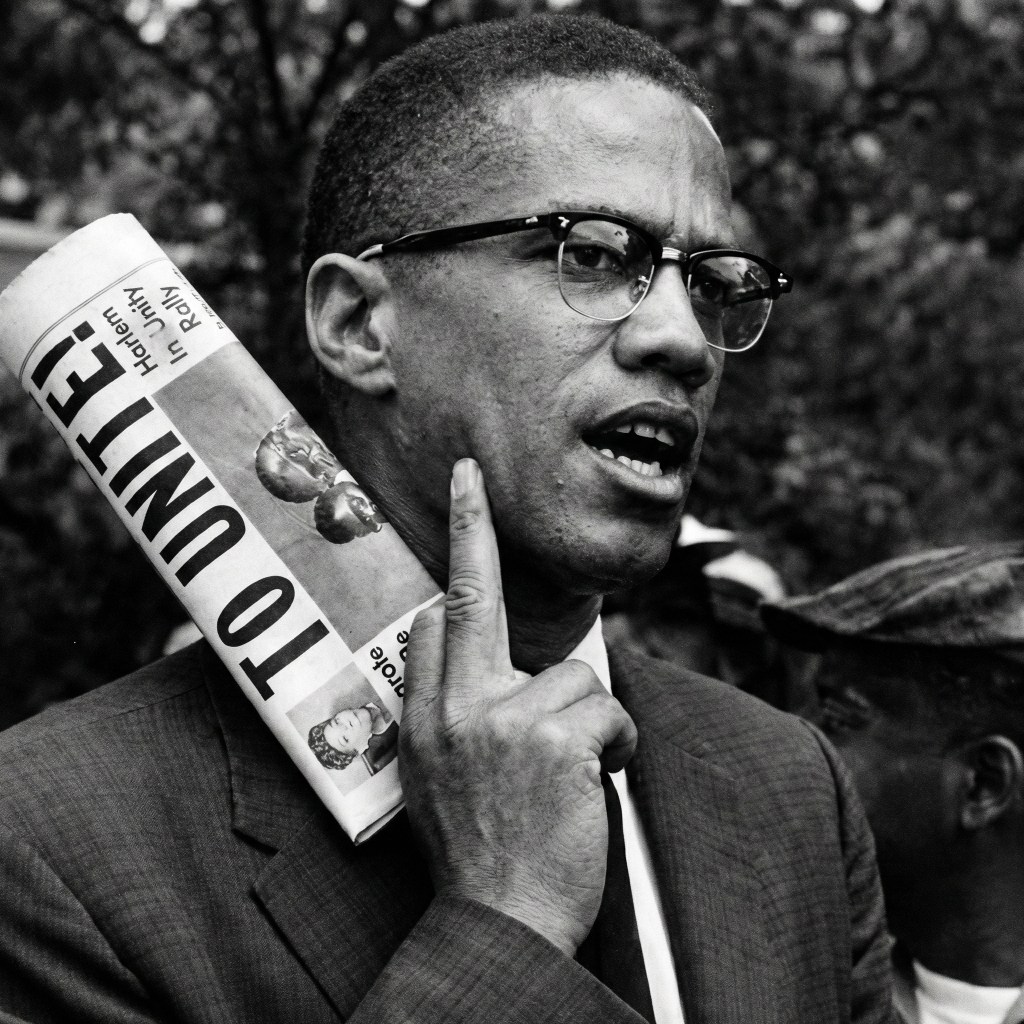
Black History Month: Malcolm X – Life, Legacy, and Impact.

This photograph is the property of its respective owner. No copyright infringement intended.

Malcolm X, born Malcolm Little on May 19, 1925, in Omaha, Nebraska, was one of the most influential African American leaders of the 20th century. His life journey—from a troubled youth to a prominent civil rights leader—reflects resilience, intellectual growth, and unwavering advocacy for Black empowerment. He died tragically on February 21, 1965, in New York City after being assassinated while preparing to address the Organization of Afro-American Unity.

Early Life: Malcolm was born to Earl Little, a Baptist minister and supporter of Black nationalist Marcus Garvey, and Louise Little, who was of Grenadian descent. Some sources suggest Malcolm may have had mixed ancestry, particularly through his mother’s Caribbean background, although he identified wholly with his African heritage (Marable, 2011). His early life was marked by hardship, including the death of his father under suspicious circumstances and his mother’s institutionalization, leaving Malcolm and his siblings in foster care.

Education and Youth: Malcolm was a bright student but faced systemic racism and personal challenges. Dropping out of school in eighth grade, he became involved in petty crime and was eventually imprisoned in 1946. His prison years became a turning point; he educated himself extensively, reading widely on history, philosophy, and religion, and converted to the Nation of Islam, adopting the surname “X” to symbolize the lost name of his African ancestry.

Nation of Islam and Activism: As a minister and national spokesperson for the Nation of Islam, Malcolm X advocated for Black self-determination, economic independence, and the rejection of racial integrationist strategies favored by other civil rights leaders like Martin Luther King Jr. He emphasized pride in Black identity and self-defense “by any means necessary” (Malcolm X, 1965).

Family Life: Malcolm married Betty Shabazz in 1958. Together they had six daughters: Attallah, Qubilah, Ilyasah, Gamilah, Malaak, and Kareema. His family played a critical role in preserving his legacy, with Betty Shabazz becoming a prominent educator and activist after his death.

Impact and Power: Malcolm X’s influence stemmed not from official awards or honors during his lifetime but from the power of his voice, intellect, and strategic activism. He inspired generations of African Americans to embrace self-respect, political engagement, and the pursuit of justice. His speeches, writings, and autobiography continue to serve as foundational texts for studies on civil rights, Black nationalism, and social justice (X & Haley, 1965).

Legacy: Malcolm X’s transformation after leaving the Nation of Islam in 1964 broadened his message to include global human rights and racial unity. His pilgrimage to Mecca, where he witnessed Muslims of all races praying together, influenced his belief in universal brotherhood while maintaining a focus on Black empowerment.

Awards and Recognition: While Malcolm X did not receive mainstream awards during his life, posthumously he has been honored extensively. He appears on lists of influential Americans, is commemorated through schools, streets, and cultural centers named in his honor, and his life story has been adapted in literature, documentaries, and films, notably the 1992 biographical film Malcolm X directed by Spike Lee and starring Denzel Washington.

Death: On February 21, 1965, Malcolm X was assassinated at the Audubon Ballroom in Manhattan. Three members of the Nation of Islam were convicted for his murder. His death marked a profound moment in the civil rights movement, and his ideas continued to shape Black empowerment movements, including the Black Power movement.

Nationality and Identity: Malcolm X identified as African American, fully embracing his Black heritage and ancestry. Although he may have had mixed ancestry through his mother, his philosophy and activism were rooted in reclaiming African identity and dignity in a racially oppressive society.

Power and Influence: Malcolm X’s power was intellectual, spiritual, and rhetorical. He wielded influence through his charisma, unflinching critique of systemic racism, and ability to mobilize people around principles of justice and self-determination. He challenged complacency, promoted self-education, and inspired activism that extended beyond the United States, connecting the struggle of African Americans to a global fight for human rights.

Conclusion: Malcolm X’s life is a testament to transformation, resilience, and the pursuit of justice. From troubled youth to revolutionary leader, he left an indelible mark on the civil rights movement and the consciousness of African Americans worldwide. His teachings on empowerment, pride, and self-determination remain deeply relevant in contemporary discussions of race, identity, and social justice.


References:

  • Marable, M. (2011). Malcolm X: A life of reinvention. New York: Viking.
  • X, M., & Haley, A. (1965). The autobiography of Malcolm X. New York: Grove Press.
  • Carson, C. (Ed.). (1998). The autobiography of Martin Luther King, Jr. includes comparative studies on civil rights leadership. New York: Warner Books.
  • Lincoln, C. E., & Mamiya, L. H. (1990). The Black church in the African American experience. Durham, NC: Duke University Press.
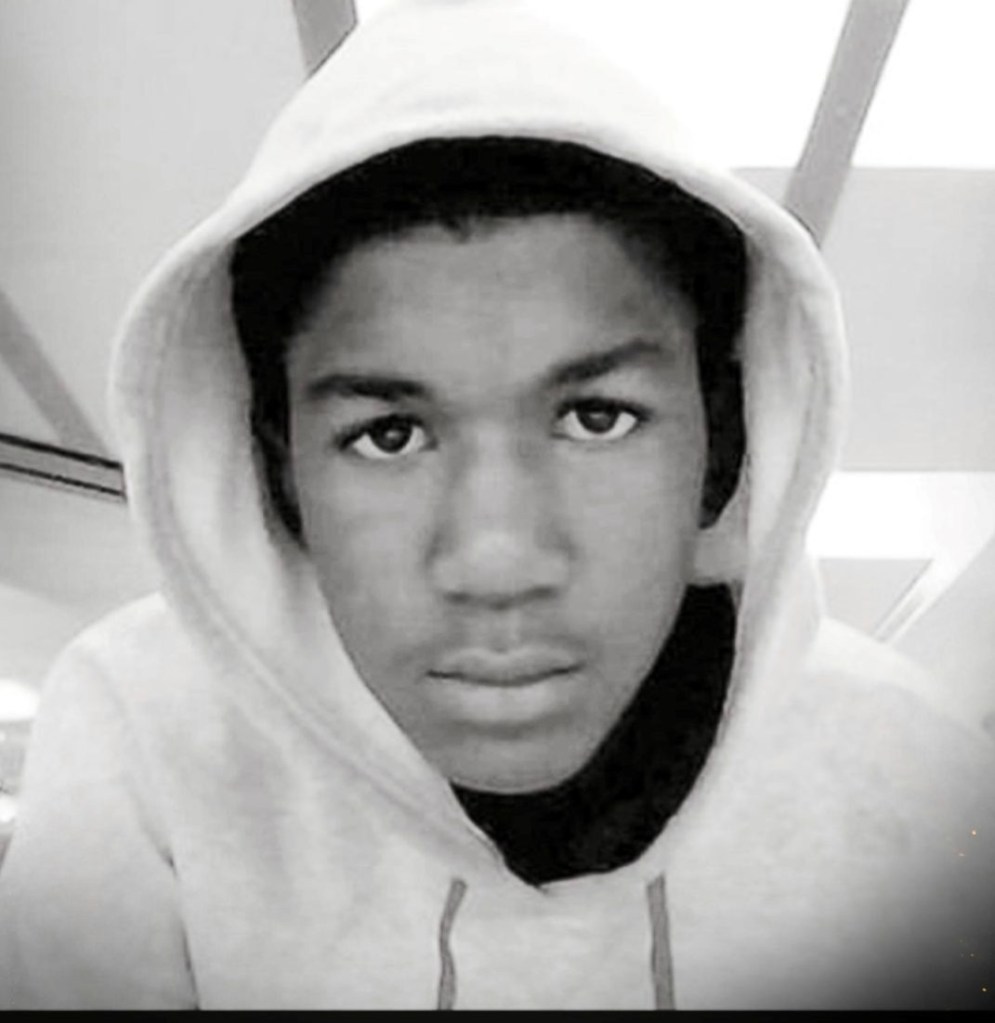
Black History Month: Trayvon Martin – A Life Stolen, A Nation Awakened.

Trayvon Benjamin Martin was born on February 5, 1995, in Miami, Florida. He was a young African American teenager known by his family and friends as kind-hearted, playful, and full of potential. Trayvon enjoyed sports, especially football and basketball, and aspired to become an aviation mechanic. Like many young Black boys in America, his life reflected both ordinary youthful dreams and the inherited weight of navigating a society shaped by racial stereotypes and systemic inequality.


What Happened to Trayvon Martin

On the evening of February 26, 2012, Trayvon Martin was walking back to his father’s fiancée’s home in Sanford, Florida, after purchasing snacks from a convenience store. He was unarmed, wearing a hoodie, and talking on the phone with a friend. George Zimmerman, a neighborhood watch volunteer, reported Trayvon as “suspicious” to police, followed him despite being advised not to, and ultimately shot and killed him.

Zimmerman claimed self-defense and was later acquitted of all charges in 2013. The verdict sparked national and international outrage, as many saw the case as a reflection of how Black bodies are often criminalized, feared, and devalued within American society.


His Impact on the World

Though his life was tragically cut short at just 17 years old, Trayvon Martin’s death became a historical turning point. His name became a symbol of racial injustice and the dangerous consequences of racial profiling. The case helped ignite the modern civil rights movement known as Black Lives Matter, founded in 2013 by Alicia Garza, Patrisse Cullors, and Opal Tometi in response to Trayvon’s killing and Zimmerman’s acquittal.

Trayvon’s story forced America to confront uncomfortable truths about race, surveillance, fear, and the unequal application of justice. His hoodie became a global symbol of protest, representing how something as simple as clothing could become a perceived threat when worn by a Black male.


He Would Have Been 31 This Year

In 2026, Trayvon Martin would have been 31 years old. He could have been a husband, a father, a professional, or a leader in his community. Instead, his life exists in collective memory as a reminder of stolen futures and unrealized potential. His age now represents not just time passed, but the depth of loss — a life that never had the chance to fully begin.


Racism in America: A Broader Context

Trayvon Martin’s death cannot be understood in isolation. It exists within a long historical continuum of racial violence in America, from slavery and lynching to mass incarceration and police brutality. Sociologists describe this phenomenon as systemic racism — a structure in which laws, institutions, and cultural narratives disproportionately harm Black people.

The fear that led to Trayvon’s death reflects what scholars call implicit racial bias, where Black males are often subconsciously associated with danger, criminality, and threat. These biases influence everything from policing and surveillance to legal outcomes and media portrayals.

Trayvon’s case exposed how even in the absence of a crime, Black existence itself can be treated as suspicious. His death became a mirror held up to American society, forcing the nation to ask: Who is allowed to be innocent? Who is allowed to be safe? And whose life is presumed valuable?


Legacy

Trayvon Martin’s legacy is not defined by his death, but by the global movement that arose because of it. His name is spoken alongside others — Michael Brown, Tamir Rice, Sandra Bland, Breonna Taylor, George Floyd — as part of a growing historical archive of racial injustice.

Yet Trayvon remains unique: he was not arrested, not resisting, not committing a crime. He was simply walking home.

His life and death continue to educate, mobilize, and challenge the world to build a society where Black children can exist without fear, where justice is not selective, and where no family must bury a child for simply being seen as “out of place.”


References

Alexander, M. (2012). The new Jim Crow: Mass incarceration in the age of colorblindness. The New Press.

Bonilla-Silva, E. (2018). Racism without racists: Color-blind racism and the persistence of racial inequality in America (5th ed.). Rowman & Littlefield.

CBS News. (2013). George Zimmerman acquitted in Trayvon Martin case.

Garza, A. (2014). A herstory of the #BlackLivesMatter movement. The Feminist Wire.

Newman, K. S., & Cohen, A. (2014). Race, place, and building a youth movement: The case of Trayvon Martin. American Sociological Review, 79(3), 449–476.

Pew Research Center. (2016). On views of race and inequality, Blacks and Whites are worlds apart.

U.S. Department of Justice. (2013). Investigation of the Sanford Police Department’s handling of the Trayvon Martin shooting.

We Are the Story America Cannot Edit

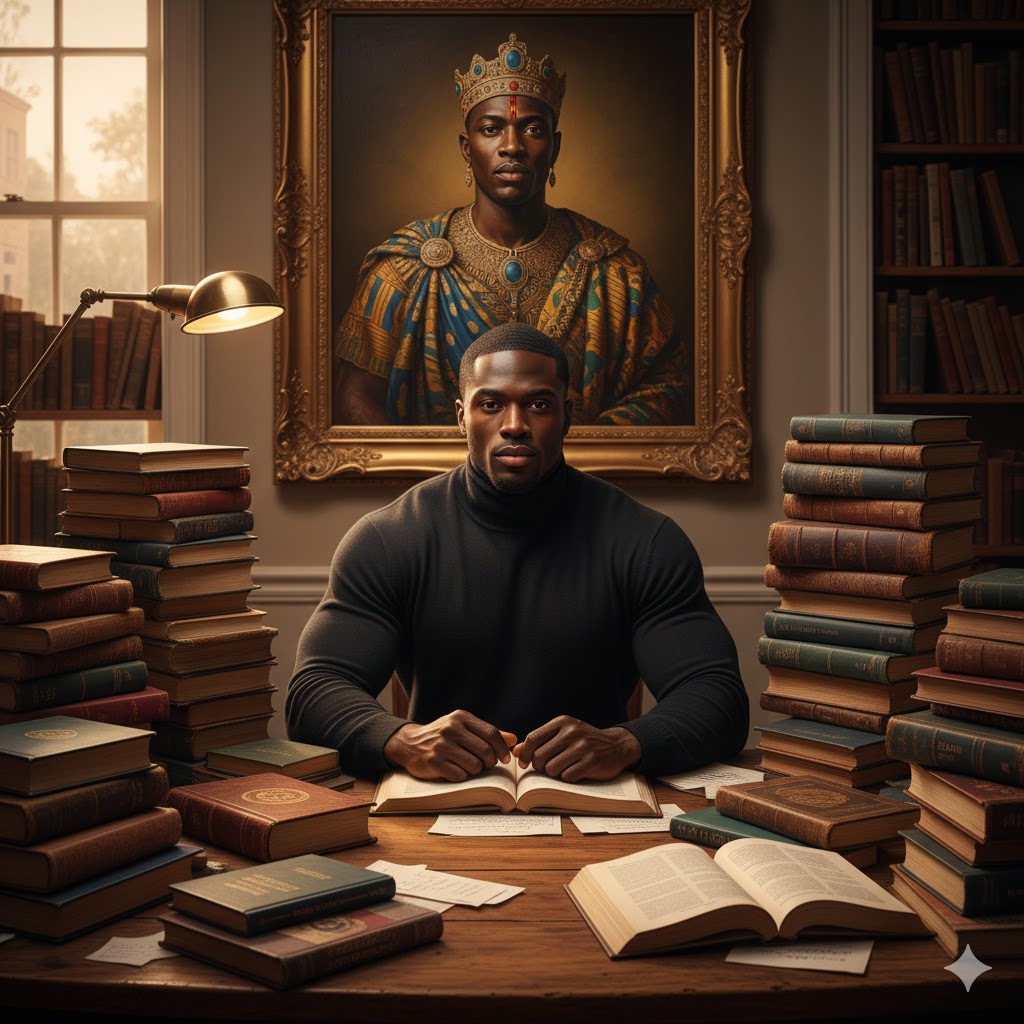
Black history in America has always been more than a chapter—it is the spine of the national narrative. Yet for centuries, this story has been edited, erased, softened, or rewritten to soothe the conscience of a nation deeply shaped by the labor, blood, and brilliance of a people it tried to silence. Still, despite redactions and revisions, the truth endures: we are the story America cannot edit.

This story begins long before ships touched the Atlantic coast. It begins in African kingdoms where art, astronomy, architecture, and theology flourished. The brilliance of the ancestors did not begin in bondage; it began in royalty, innovation, and legacy. No revisionist textbook can erase the origins of a people whose civilizations helped advance global knowledge.

When the Middle Passage shattered families and scattered bodies across the ocean, America inherited a people it tried to dehumanize but could not destroy. The nation wrote laws to silence Black voices, but those voices survived. They survived in spirituals, in whispered prayers, in maroon communities, in the coded footsteps of escape routes carved in the night. The ink of this story was not blacklisted—it was carved in courage.

America tried to enslave people into subservience, but instead they became prophets, builders, warriors, and liberators. Harriet Tubman turned the Underground Railroad into a living testament of freedom. Frederick Douglass transformed literacy into a revolution. Sojourner Truth took the podium and shook the conscience of a country pretending not to hear her. These names refuse erasure.

The Civil War and Reconstruction wrote a brief chapter of possibility—Black senators, congressmen, teachers, and landowners rose swiftly. But America attempted another revision: Jim Crow. Segregation, lynching, and systemic disenfranchisement were designed to rewrite the Black story into one of subjugation. Yet the people refused the edits. Every protest, every church meeting, every organizing circle was a declaration that the pen of oppression could not overrule the pen of destiny.

The Civil Rights Movement authored a new wave of transformation. Martin Luther King Jr.’s dream, Malcolm X’s fire, Rosa Parks’ quiet firmness, and Fannie Lou Hamer’s thunderous truth-telling exposed the nation’s moral contradictions. Their lives demonstrate that Black people did not just endure history—they shaped it. They re-inked the American narrative with justice.

America has long tried to reduce Black identity to struggle, but Black culture refuses to be footnoted. Jazz, gospel, blues, soul, hip-hop, theatre, literature, and film—all are chapters written in brilliance, not brokenness. These art forms do not ask permission; they testify. They preserve memory. They uplift. They correct the historical record by embodying the power and creativity of a people the nation tried to underestimate.

Black resilience has always been inconvenient for America’s preferred storyline. It challenges myths of meritocracy, exposes the violence of past and present systems, and proves that progress was never given—only won. This is why so many attempts have been made to censor, dilute, or distort Black history. Yet truth has a way of resurfacing, even through the cracks of suppression.

The story America cannot edit also includes everyday heroes—grandmothers who kept families together, fathers who worked two and three jobs, children who dared to learn in schools that did not want them, freedom fighters whose names never made headlines, teachers who planted dreams in young minds, and church mothers who prayed communities through storms. These lives are sacred scripture for a people who built resilience into their DNA.

Even today, as political forces attempt to ban books, restrict curriculum, or sanitize the past, the story resists. Black scholars, artists, pastors, activists, and youth are documenting the truth in new ways—through digital archives, spoken word, classrooms, podcasts, and movements for justice. The story is not just preserved; it is expanding.

We are the story America cannot edit because our existence defies the narrative of inferiority that once dominated the national imagination. Every achievement in science, politics, sports, education, business, and ministry disproves the lies that once served as historical “facts.” Black excellence is not an anomaly—it is a continuation of ancestral greatness.

We are the story America cannot edit because the evidence is everywhere. It is in the economic foundation Black labor built. It is in the culture Black creativity shaped. It is in the democracy Black activism strengthened. It is in the global influence Black innovation commands. America has benefitted too deeply from Black genius to pretend it did not exist.

Our story remains uneditable because it is woven into Scripture as well as history. From Cush to Ethiopia, from the Queen of Sheba to the early church, the Bible itself records the presence, power, and purpose of African-descended people. The sacred text affirms what oppression tried to deny: that Blackness has always been part of God’s design and destiny.

We are the story America cannot edit because the truth is living, breathing, and continually unfolding. It shows up in every generation—Black children with brilliance in their eyes, Black elders carrying the wisdom of survivors, Black communities redefining strength, joy, and possibility.

Ultimately, America cannot edit what God Himself has preserved. The story of Black people is marked by divine protection, ancestral strength, and spiritual authority. It is a story of survival, transformation, and triumph. It is a story that exposes injustice but also reveals hope. It is a story bigger than slavery, bigger than segregation, bigger than racism.

We are the story America cannot edit because the truth is too powerful, too resilient, too sacred to be silenced. And as long as we continue to speak it, write it, live it, and teach it—the story will remain unaltered, unstoppable, and unforgettable.

References:
Exodus 1–3 (KJV); Psalm 68:31; Acts 8:27–39; Franklin, J. H. From Slavery to Freedom; Gates, H. L. The African Americans: Many Rivers to Cross; Hannah-Jones, N. The 1619 Project; Litwack, L. Trouble in Mind; Stevenson, B. Just Mercy; Anderson, C. White Rage; Raboteau, A. Slave Religion.

The History of the Black Cowboys and Cowgirls

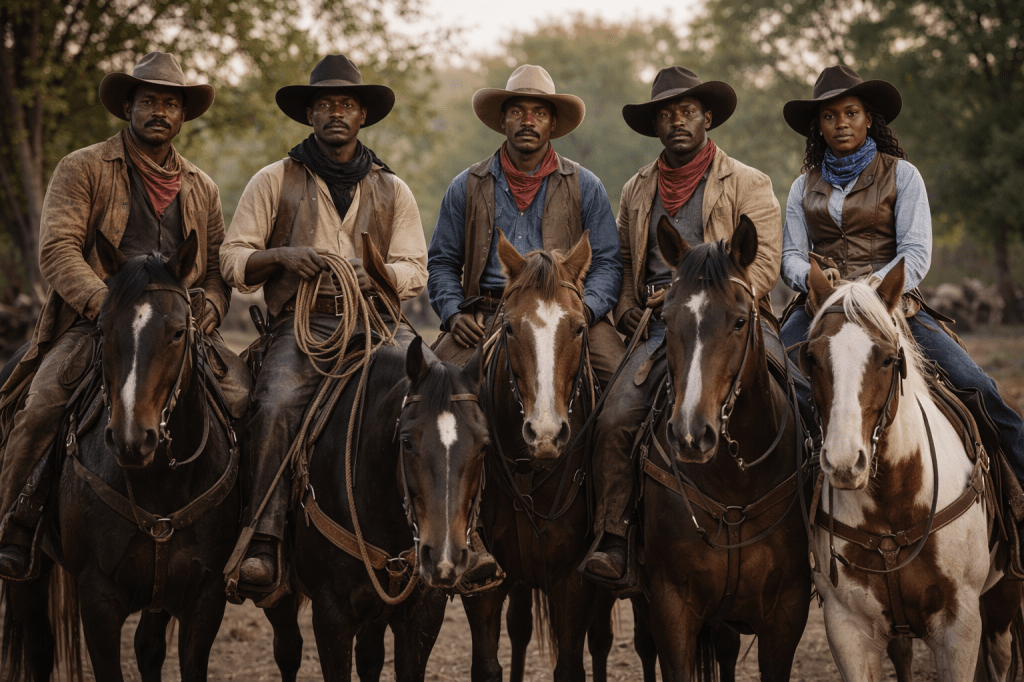
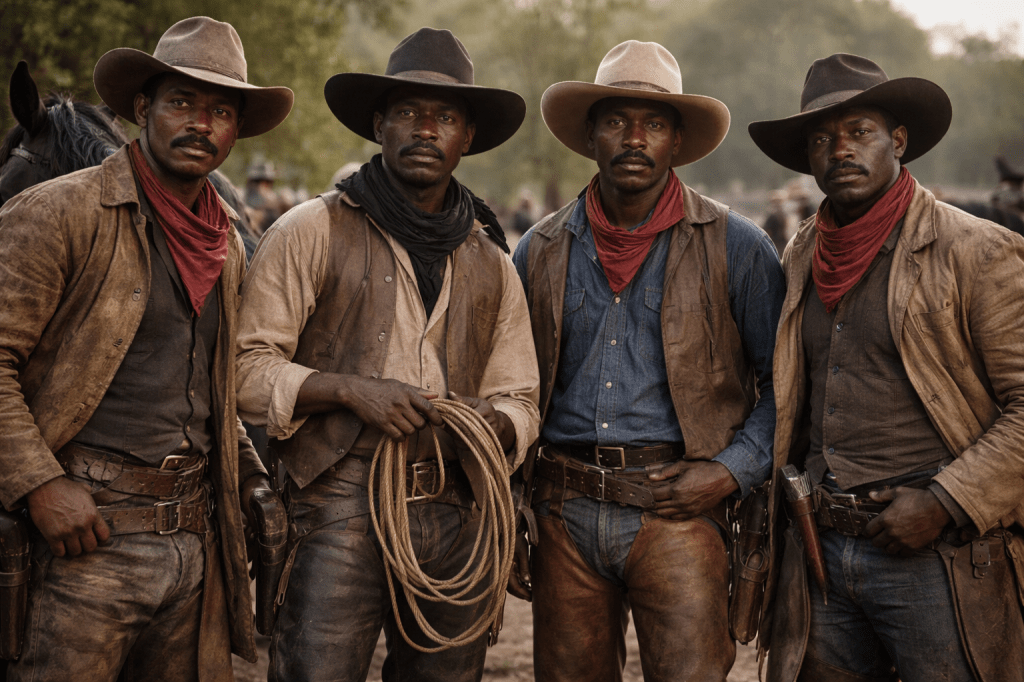
The history of Black cowboys and cowgirls is one of the most overlooked yet foundational narratives in American history. Although popular culture often portrays the cowboy as a white, rugged frontiersman, historical scholarship estimates that one in four cowboys in the American West was Black, alongside many Indigenous and Mexican vaqueros. Black cowboys emerged primarily in the post–Civil War era, when formerly enslaved Africans sought employment and freedom in the cattle industry, finding opportunities as ranch hands, wranglers, trail riders, and rodeo performers.

The roots of Black cowboys begin with slavery itself. Enslaved Africans in the southern United States were already skilled in animal husbandry, horseback riding, and land management. Many plantations relied on enslaved Black men to manage livestock, making them natural candidates for cowboy labor after emancipation. When slavery ended in 1865, thousands of freedmen entered the expanding cattle industry in Texas, Oklahoma, Kansas, and the Great Plains.

Black cowboys were often called “cowboys,” “trail riders,” “wranglers,” or “buffalo soldiers” (if they served in the military), while women were known as cowgirls or sometimes “rodeo queens.” Despite their central role, Black cowboys were rarely credited in mainstream narratives, largely due to systemic racism and the whitewashing of Western mythology through Hollywood films and dime novels.

One of the most famous Black cowboys was Nat Love, also known as Deadwood Dick. Born into slavery in Tennessee, Love became a legendary cattle driver and rodeo champion in the late 19th century. He won multiple roping and riding competitions and documented his life in his autobiography The Life and Adventures of Nat Love (1907), which remains one of the most important firsthand accounts of Black cowboy life.

Another major figure was Bill Pickett, a Black rodeo innovator credited with inventing bulldogging (steer wrestling)—a technique where the rider jumps from a horse onto a steer and wrestles it to the ground. Pickett became one of the most famous rodeo performers of the early 20th century and was posthumously inducted into the National Rodeo Hall of Fame and the Pro Rodeo Hall of Fame.

This photograph is the property of its respective owner. No copyright infringement intended.

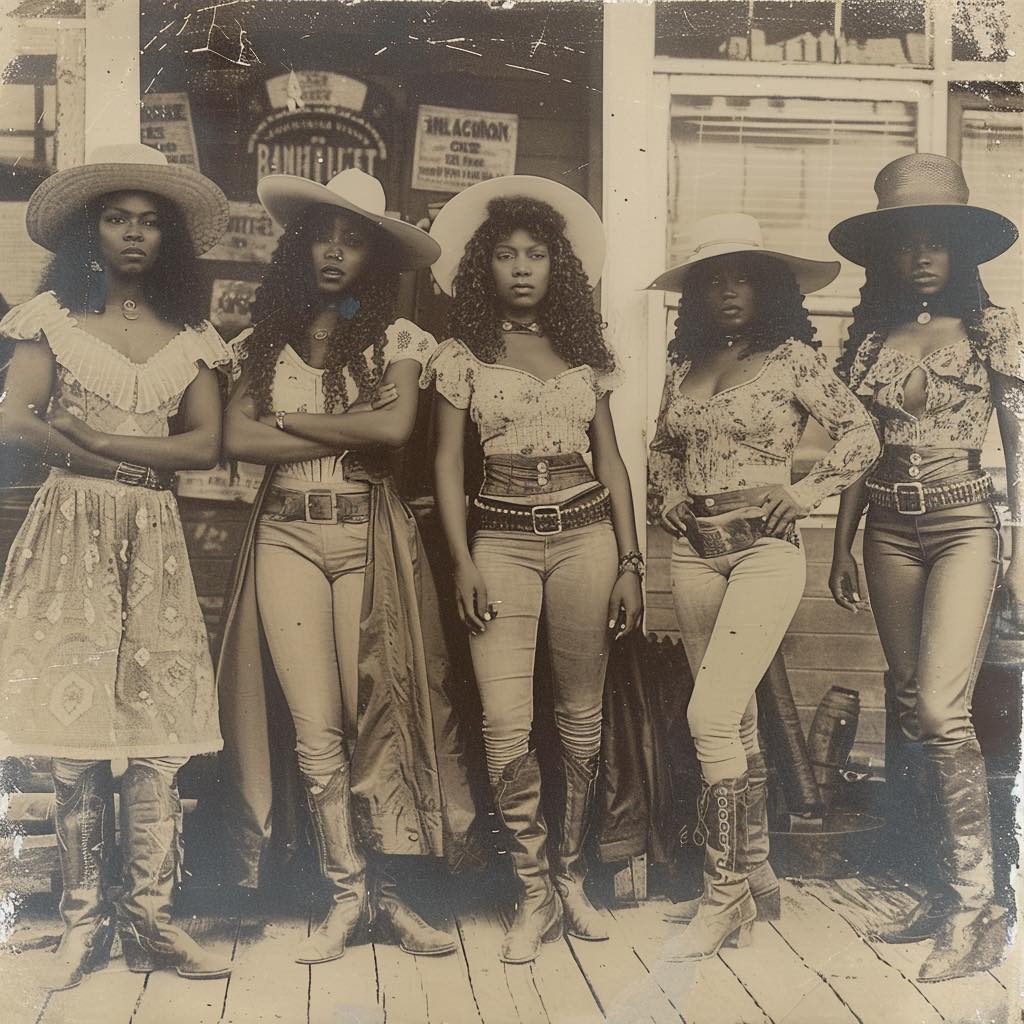
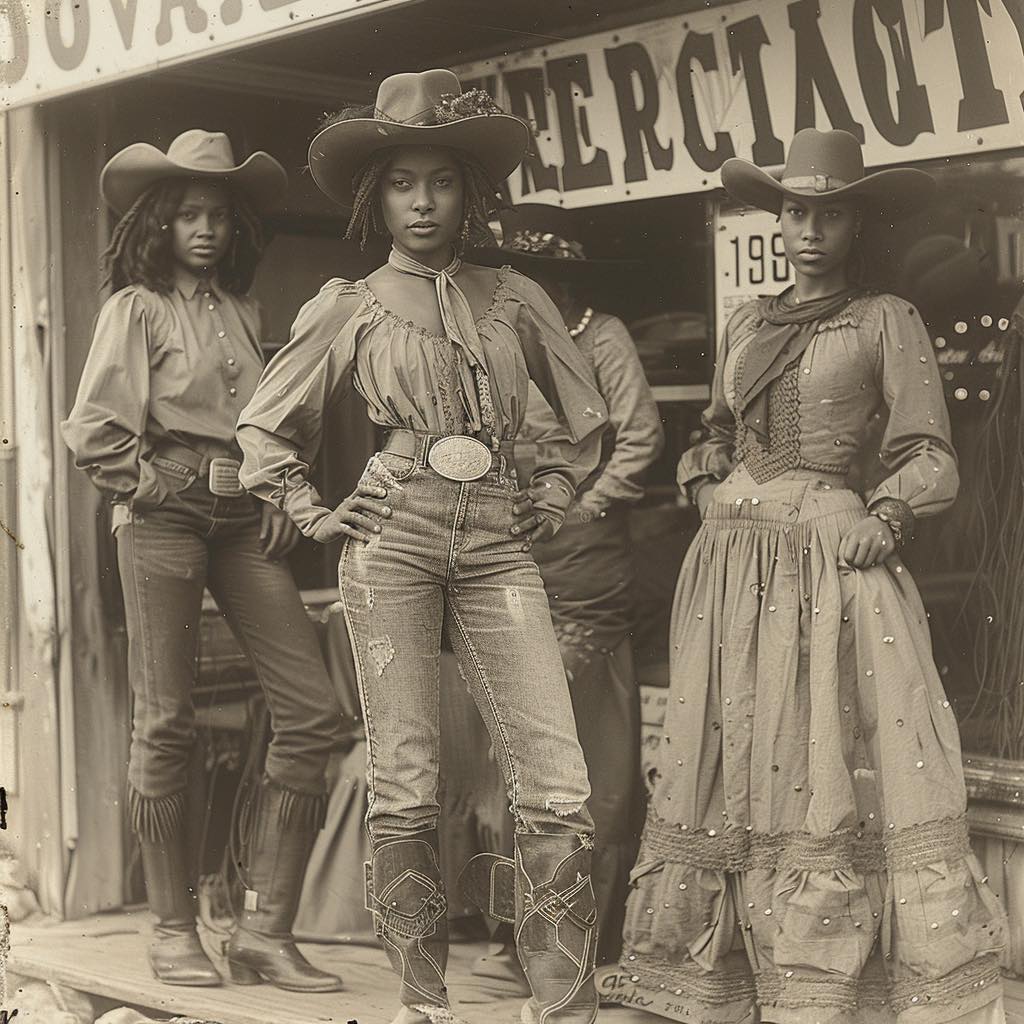
Black cowgirls also played a significant role, although their stories are even more marginalized. Mary Fields, also known as Stagecoach Mary, worked as a mail carrier and ranch hand in Montana and was known for her strength, independence, and marksmanship. Jesse Stahl, another notable Black cowgirl, was a world-renowned trick rider who performed across the United States in Wild West shows.

Racism shaped every aspect of Black cowboy life. Although Black cowboys often worked alongside white cowboys and performed the same labor, they were frequently paid less, denied leadership positions, and excluded from many professional rodeos. Segregation forced Black cowboys to create their own circuits, including the Bill Pickett Invitational Rodeo, which remains the longest-running African American rodeo in the United States.

Hollywood played a major role in erasing Black cowboys from public memory. Early Western films almost exclusively portrayed white cowboys, reinforcing the myth that the American frontier was racially homogenous. This cultural erasure contributed to the widespread belief that Black people had little involvement in shaping the West, despite overwhelming historical evidence to the contrary.

In reality, Black cowboys were instrumental in building the cattle economy that helped industrialize America. They drove cattle across thousands of miles, supplied beef to eastern cities, and helped establish rail-based commerce. Without their labor, the famous cattle drives from Texas to Kansas and Wyoming would not have been possible.

Black cowboys also contributed to American culture through music, language, and fashion. Many cowboy expressions, riding techniques, and musical traditions, such as early country blues and work songs, trace their roots to African American culture. The cowboy hat, boots, and rodeo rituals were influenced by Black, Indigenous, and Mexican practices long before they became national symbols.

In terms of awards and recognition, modern institutions have begun to honor Black cowboys more visibly. Bill Pickett’s induction into major rodeo halls marked a turning point, and figures like Fred Whitfield, a contemporary Black rodeo champion, have won multiple PRCA World Championships in calf roping. Whitfield is one of the highest-earning Black cowboys in modern rodeo history.

The term “Buffalo Soldier” is also closely linked to Black cowboy identity. These were Black U.S. Army regiments formed after the Civil War who protected settlers, built infrastructure, and managed frontier territories. Many buffalo soldiers later became ranchers and cowboys, blending military discipline with frontier survival skills.

This photograph is the property of its respective owner. No copyright infringement intended.

Black cowboys lived primarily during the late 1800s through the early 1900s, known as the Golden Age of the American West. However, Black cowboys continue to exist today, particularly in Texas, Oklahoma, California, and Georgia, where Black rodeo associations preserve the tradition and mentor younger generations.

In the present day, organizations such as the National Multicultural Western Heritage Museum and the Black Cowboy Museum in Texas work to document and preserve this history. Social media and documentary films have also helped revive interest in Black cowboy culture, challenging decades of historical erasure.

Black cowboys represent more than just a profession; they symbolize resistance, resilience, and self-determination. At a time when Black Americans were denied political rights, land ownership, and safety, the cowboy life offered a rare space for autonomy, skill recognition, and economic mobility.

Their legacy also challenges stereotypes about Black masculinity and femininity. Black cowboys and cowgirls embodied discipline, courage, leadership, and technical expertise—traits rarely associated with Black people in dominant American media narratives.

From a sociological perspective, the erasure of Black cowboys reflects what scholars call historical silencing, where dominant groups control national memory. The myth of the white cowboy served ideological purposes, reinforcing white supremacy and minimizing Black contributions to nation-building.

The revival of Black cowboy history also connects to broader movements of Afrofuturism, Afrocentric education, and cultural reclamation, where Black communities seek to restore forgotten legacies and reshape historical consciousness.

Spiritually and symbolically, Black cowboys reflect a biblical pattern of the marginalized becoming central to divine and historical narratives. Much like shepherds in the Bible—who were considered low-status yet chosen by God—Black cowboys were essential laborers whose stories were hidden despite their foundational role.

In conclusion, Black cowboys and cowgirls were not side characters in American history; they were architects of the West. Their contributions to agriculture, commerce, culture, and national identity remain undeniable. Recognizing their legacy is not merely about representation—it is about correcting historical truth and honoring a people whose labor helped build modern America.

Their story stands as a powerful reminder that Black history is not separate from American history—it is American history.


References

Love, N. (1907). The life and adventures of Nat Love, better known in the cattle country as “Deadwood Dick.” University of Nebraska Press.

Katz, W. L. (2012). The Black West: A documentary and pictorial history of the African American role in the Westward expansion of the United States. Simon & Schuster.

Pickett, B., & Smith, S. (2009). Bill Pickett: Bulldogger. University of Oklahoma Press.

Savage, W. S. (1997). Blacks in the West. Greenwood Press.

Taylor, Q. (2018). In search of the racial frontier: African Americans in the American West, 1528–1990. W. W. Norton & Company.

National Park Service. (2021). African American cowboys and the American West. U.S. Department of the Interior.

Smithsonian National Museum of African American History and Culture. (2020). The Black cowboy: Myth and reality. Smithsonian Institution.

Whitfield, F. (2015). Cowboy of color: Rodeo, race, and identity in modern America. Pro Rodeo Historical Society.

Bill Pickett Invitational Rodeo. (2023). History of African American rodeo culture. BPI Rodeo Archives.

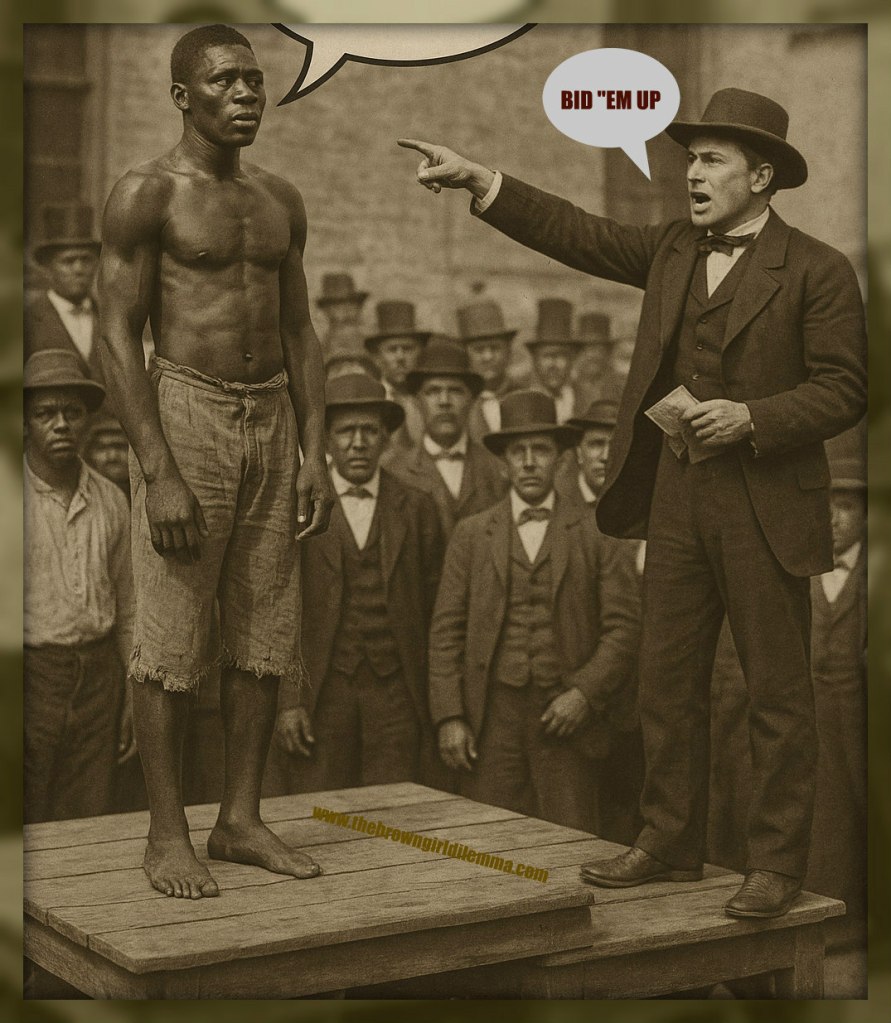
Dilemma: Bid ’Em Up

The phrase “Bid ’em up” refers to one of the most dehumanizing practices of the transatlantic slave trade: the process of auctioning African men, women, and children to the highest bidder. It was a command shouted at buyers during slave auctions, urging them to increase their bids as if the people on the block were livestock rather than human beings. This phrase captures the brutality, humiliation, and commercial greed embedded in American slavery.

Slave auctions operated as public markets where enslaved Africans were bought and sold, primarily in the 1700s–1800s, with the largest waves occurring from the early 18th century up to the Civil War in 1861. These auctions were often loud, crowded, and emotionally devastating events. Families were torn apart as husbands, wives, and children were separated, sold to different plantations, and sent to different states based solely on profit margins. “Bid ’em up” was not merely a business tactic—it was a reflection of how deeply racism shaped the economic and social system of the United States.

The auctions often took place in major Southern cities such as New Orleans, Charleston, Richmond, and Savannah. These markets drew slave traders, planters, wealthy merchants, and speculators eager to expand their labor force. In these spaces, the racial hierarchy of America was not hidden or subtle—it was on full display. Black people were forced onto platforms, examined, touched, and evaluated like property. Their bodies were scrutinized for strength, fertility, and obedience.

The enslaved were stripped of humanity through language. Terms like “bucks,” “breeders,” and “hands” reduced people to economic tools. The phrase “Bid ’em up” reveals the cold transactional nature of slavery, where human lives became items in an economic system built entirely on violence and racial domination.

Racism played a central role in justifying these practices. Europeans and white Americans constructed ideologies claiming Black people were inferior, subhuman, or naturally suited for enslavement. These racist beliefs formed the moral foundation for buying and selling millions of Africans. Without racism, the brutality of the slave market could not have been rationalized or sustained.

Slave auctions were not isolated events—they were central to the expansion of American agriculture. The rise of cotton, sugar, and rice industries increased demand for enslaved labor. The years following the 1808 ban on international slave importation saw the rise of the domestic slave trade, where enslaved people were sold from the Upper South to the Deep South in massive numbers.

These auctions were emotional battlegrounds. Many enslaved people prayed, cried, or resisted in small ways as they were forced onto the blocks. Mothers clung to their children, couples begged to stay together, and countless individuals were separated forever. The psychological trauma of these auctions rippled across generations.

The sight of chains, ropes, and shackles haunted the enslaved. Their names were replaced with auction numbers. Their futures were determined not by God or family but by the greed of bidders. The auction block became a symbol of absolute powerlessness.

Even children were not spared. Boys and girls as young as five or six were sold for their future labor value. Infants were sold with their mothers or separated from them, depending on what yielded higher profits. Slave traders calculated the price of innocence.

The practice reached its most infamous moment in 1859 during the largest recorded slave auction in U.S. history: The Weeping Time in Georgia, where over 400 enslaved people were sold over two days. The rain that fell during the event was described as the tears of heaven, mourning the suffering.

The economic impact of these auctions built generational wealth for white families while simultaneously creating generational poverty for Black Americans. Plantations, banks, and insurance companies all profited from human sale and exploitation.

The culture around slave auctions normalized cruelty. Newspapers advertised upcoming sales, listing children alongside horses. Hotels hosted bidders. Judges and sheriffs enforced fugitive slave laws to protect the system. Churches often remained silent, and in some cases participated.

After the Civil War and emancipation, the memory of the auction block became a permanent wound in African American history. It shaped family structures, migration patterns, and the cultural resilience of Black communities. Many African Americans today trace their lineage to ancestors sold on those blocks.

The legacy of “Bid ’em up” exposes how slavery was not just a labor system—it was an industry, a psychology, and a national economic engine grounded in racial violence. Understanding this context helps illuminate the roots of systemic racism in modern America.

The phrase also reminds us of the strength of the ancestors who survived unimaginable pain. Their endurance, faith, and determination laid the foundation for Black progress in the centuries that followed. They were bought and sold, yet they remained unbroken.

Remembering these auctions is not simply an act of historical reflection. It is a testimony to the resilience of a people who were denied humanity but ultimately reclaimed their identity, dignity, and voice. The auction block is a scar, but it is also a monument to survival.

In studying this painful history, we confront the truth of America’s origins. Slavery was not a footnote—it was central. And phrases like “Bid ’em up” force us to acknowledge the systems of racism that endured long after the auctions ended.

This history calls us to honor the ancestors by telling their stories truthfully, challenging systemic injustice, and ensuring that the trauma of the auction block is never forgotten.

References
Berlin, I. (2003). Generations of captivity: A history of African-American slaves. Harvard University Press.
Fett, S. (2002). Working cures: Healing, health, and power on Southern slave plantations. University of North Carolina Press.
Johnson, W. (1999). Soul by soul: Life inside the antebellum slave market. Harvard University Press.
Smallwood, S. (2007). Saltwater slavery: A Middle Passage from Africa to American diaspora. Harvard University Press.
Smith, C. (2012). The Weeping Time: Slave auctions and the economy of the South. Yale University Press.

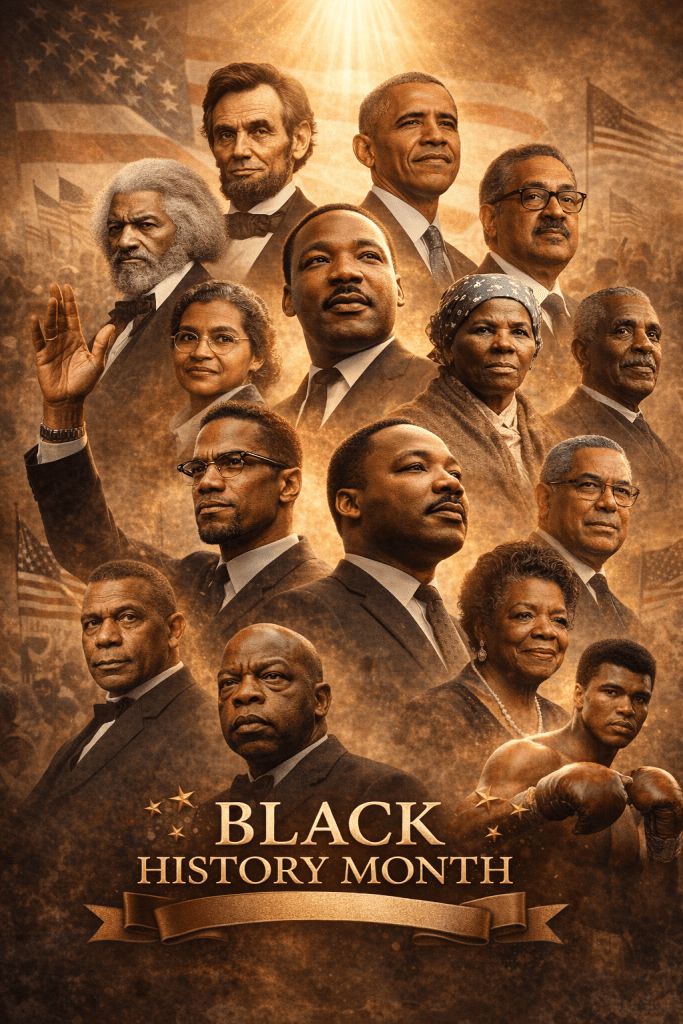
Black History Month: History, Struggle, and Why It Matters.

Black History Month is a nationally recognized observance in the United States dedicated to honoring the history, culture, contributions, and resilience of African Americans. It originated from the work of historian Carter G. Woodson, who established “Negro History Week” in 1926 to counter the exclusion of Black achievements from mainstream historical narratives (Woodson, 1915). The celebration expanded to a full month in 1976, officially recognized by President Gerald Ford, who urged Americans to acknowledge the “too-often neglected accomplishments of Black Americans.”

The importance of Black History Month lies in historical correction. For centuries, Black people in America were either erased from history books or portrayed only through the lens of slavery. This observance restores truth by centering Black voices, experiences, and intellectual contributions that shaped the nation politically, economically, culturally, and spiritually.

One of the foundational experiences Black Americans endured was the transatlantic slave trade, where millions of Africans were forcibly transported, enslaved, dehumanized, and exploited for labor in agriculture, infrastructure, and domestic work. Enslaved people were stripped of language, names, family structures, and legal personhood, treated as property rather than human beings (Berlin, 2003).

After emancipation in 1865, Black Americans faced Black Codes and Jim Crow laws that enforced segregation, restricted voting rights, and maintained economic dependency. Sharecropping replaced slavery with debt bondage, ensuring that many formerly enslaved people remained trapped in poverty (Du Bois, 1935).

Black Americans were subjected to widespread racial terrorism. Thousands were lynched between the late 19th and mid-20th centuries, often publicly, as a tool of social control. These acts were rarely punished and were sometimes encouraged by local authorities (Equal Justice Initiative, 2017).

The struggle for civil rights defined much of the 20th century. Black Americans fought for desegregation, voting rights, and equal protection under the law through movements led by figures such as Martin Luther King Jr., Malcolm X, Rosa Parks, and countless grassroots activists (Morris, 1984).

Despite legal progress, systemic racism persisted through redlining, housing discrimination, employment inequality, and mass incarceration. Black communities were denied access to quality education, wealth-building opportunities, and fair treatment within the criminal justice system (Alexander, 2010).

Black Americans have endured medical exploitation, including the Tuskegee Syphilis Study, where Black men were intentionally left untreated for decades without informed consent, revealing deep ethical violations in U.S. medical history (Brandt, 1978).

Culturally, Black people have faced appropriation, censorship, and marginalization, even as they created some of the most influential artistic forms in the world, including jazz, blues, hip-hop, gospel, soul, and modern dance (Gates, 2014).

Economically, Black Americans were historically excluded from the GI Bill, homeownership programs, and business funding, creating a persistent racial wealth gap that still exists today (Rothstein, 2017).

Psychologically, Black people have endured generational trauma, internalized racism, colorism, and social devaluation, which continue to shape mental health outcomes and identity development (Cross, 1991).

Black History Month is important because it affirms dignity. It reminds Black communities of their resilience, brilliance, and survival in the face of systemic oppression.

It is also important for national accountability. The United States cannot address present inequalities without understanding historical causes. Black History Month provides the context necessary for meaningful dialogue about race, justice, and equity.

The month serves as an educational intervention. Many U.S. school systems still under-teach Black history outside of slavery and civil rights. This observance creates space to explore African civilizations, Black inventors, scholars, scientists, and leaders whose contributions are often ignored.

Black History Month is a tool of empowerment. Representation shapes identity, and seeing Black excellence in history strengthens self-concept, especially for Black youth.

It is also a form of resistance. Remembering is an act of defiance against erasure. Historical memory challenges dominant narratives that portray Black people only through deficit and suffering.

Finally, Black History Month matters because Black history is American history. The United States was built through Black labor, culture, struggle, and innovation. To ignore this is to misunderstand the nation itself.

Black History Month is not about separation, but inclusion. It exists not to isolate Black history, but to correct a system that excluded it for centuries.

The ultimate purpose of Black History Month is truth, healing, and transformation. It invites the nation to confront its past honestly, honor those who endured it, and commit to building a more just future.


References

Alexander, M. (2010). The new Jim Crow: Mass incarceration in the age of colorblindness. The New Press.

Berlin, I. (2003). Generations of captivity: A history of African-American slaves. Harvard University Press.

Brandt, A. M. (1978). Racism and research: The case of the Tuskegee Syphilis Study. Hastings Center Report, 8(6), 21–29.

Cross, W. E. (1991). Shades of Black: Diversity in African-American identity. Temple University Press.

Du Bois, W. E. B. (1935). Black reconstruction in America, 1860–1880. Free Press.

Equal Justice Initiative. (2017). Lynching in America: Confronting the legacy of racial terror.

Gates, H. L. (2014). Life upon these shores: Looking at African American history, 1513–2008. Knopf.

Morris, A. D. (1984). The origins of the civil rights movement. Free Press.

Rothstein, R. (2017). The color of law: A forgotten history of how our government segregated America. Liveright.

Woodson, C. G. (1915). The education of the Negro prior to 1861. G.P. Putnam’s Sons.