Tag Archives: black hair

Black History: Tignon Law – When Black Beauty Became a Crime.

The Tignon Law represents one of the most striking examples of how Black beauty and identity have been policed through legislation. Passed in 1786 in Louisiana, this law required Black women, both free and enslaved, to cover their hair in public with a tignon, a type of headscarf. The law was ostensibly aimed at curbing the allure of Black women, reflecting deep anxieties about race, beauty, and social hierarchy in a colonial society.

The law was enacted during the period of Spanish rule in Louisiana, under the governorship of Esteban Rodríguez Miró. Miró was concerned with the growing social influence of free Black women, particularly the Gens de Couleur Libres, or free women of color, who were achieving economic independence and social prominence. Wealthy and attractive, these women challenged the rigid racial and gender hierarchies of the time.

The Tignon Law was framed as a moral and social regulation. Officials argued that Black women’s natural beauty and fashionable adornments threatened social order and risked attracting attention from white men. By forcing women to cover their hair, the law sought to visibly mark them as subordinate, restricting their ability to express themselves through appearance.

Hair and head wrapping have long been deeply symbolic in African and African diasporic cultures. Hair texture, styles, and adornments signify identity, social status, and cultural heritage. The Tignon Law directly targeted these expressions, attempting to erase visible signs of Black beauty that could empower women socially and economically.

Free Black women in New Orleans were particularly affected. Many were wealthy business owners, property holders, and skilled artisans. Their appearance, including elaborately styled hair and colorful scarves, became symbols of their independence and influence. These displays were seen as threats by a white elite intent on maintaining racial hierarchies.

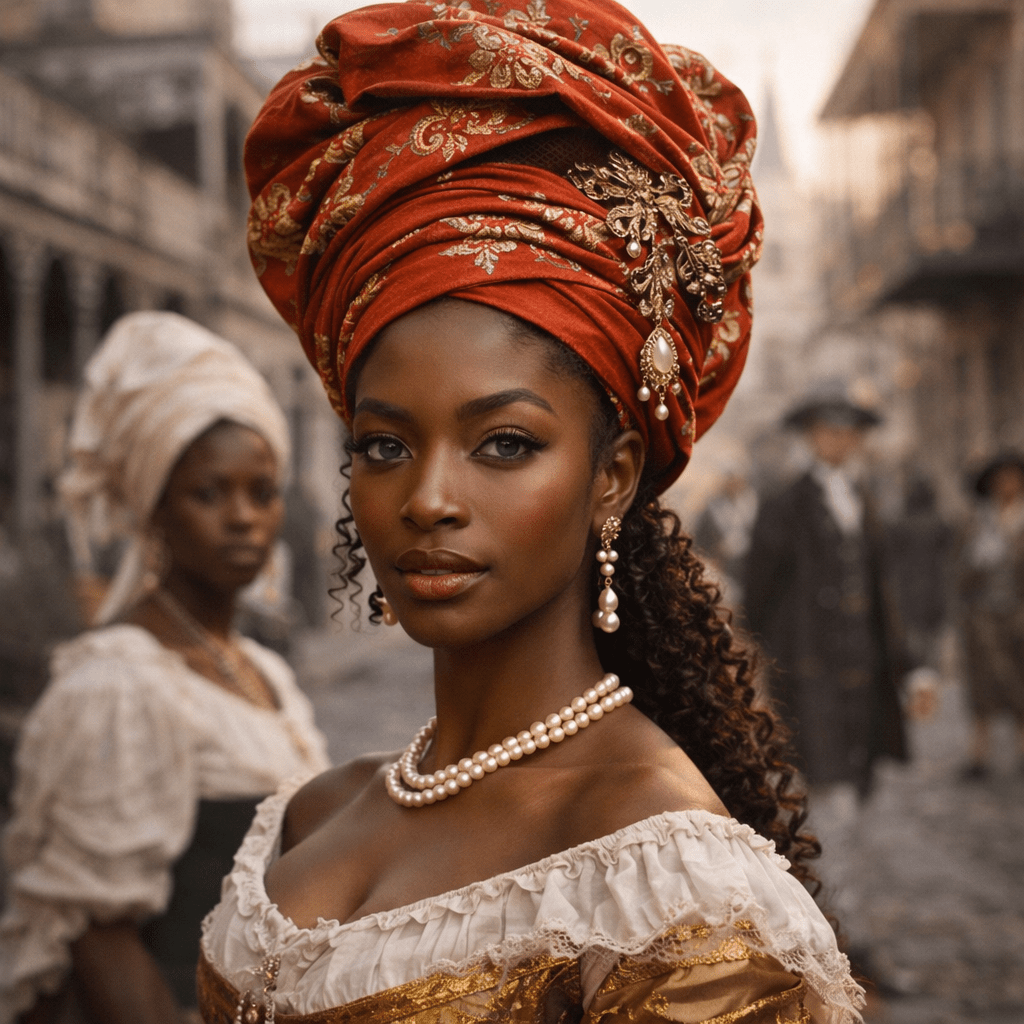
Despite the law’s oppressive intent, Black women creatively subverted it. They wore tignons in elaborate, colorful, and decorative ways, turning what was intended as a mark of subjugation into a fashion statement. This resistance reflected ingenuity, resilience, and the enduring assertion of beauty and identity under racist constraints.

The law illustrates broader societal anxieties about Black female sexuality and power. White authorities feared that attractive Black women could disrupt social control by challenging assumptions of whiteness as superior and Blackness as subordinate. The Tignon Law is a vivid example of how systemic racism extends beyond economics and politics into the policing of appearance and cultural expression.

The Tignon Law was not only about controlling hair—it was about controlling the body and autonomy of Black women. By regulating visibility and beauty, colonial authorities sought to communicate that Black women could not assert power through self-presentation, wealth, or social influence.

Economic success among free Black women further intensified white anxieties. Many were entrepreneurs, running boarding houses, laundries, or small shops. Their wealth and social presence contradicted prevailing stereotypes of Black women as powerless or submissive, prompting legislative efforts to suppress this visibility.

The law also had implications for enslaved women. While their labor was exploited, enslaved women who displayed beauty or elegance could be accused of seduction or insolence. Hair covering laws reinforced a racialized hierarchy that sought to render all Black women invisible, modest, and socially subordinate.

Head wrapping itself carries a long history in African culture, signaling marital status, social rank, or spiritual devotion. The tignon, while imposed by colonial authorities, was adopted and transformed by Black women into an assertion of cultural pride and defiance.

Racist views underpinning the Tignon Law reflect broader European ideologies that sought to contain Black identity and sexuality. Beauty was racialized as threatening, with Black women punished for attractiveness and personal style in ways that white women were never subjected to.

Despite legal restrictions, Black women used the tignon to communicate status, creativity, and elegance. Some tied elaborate knots, layered multiple scarves, and adorned them with jewels or lace. Their adaptation of the law demonstrates the power of cultural expression to resist oppression.

The Tignon Law also highlights intersections of race, gender, and law. Unlike men, whose economic success might be tolerated or co-opted, Black women’s appearance and autonomy were policed as a threat to social order, revealing gendered dimensions of racial control.

Cultural historians argue that the Tignon Law had unintended consequences. By attempting to suppress Black beauty, it fostered a unique fashion aesthetic that blended African heritage with European influences, influencing Caribbean and American styles for generations.

The law remained in effect throughout the late 18th century, though enforcement was inconsistent. Black women’s ingenuity rendered the law largely symbolic, showing that social power can be expressed through appearance even under legal constraints.

The Tignon Law is a precursor to later codes and social norms that restricted Black women’s hair, such as school bans on natural hairstyles or corporate appearance policies. These contemporary issues echo the same underlying anxieties about Black beauty, professionalism, and visibility.

Understanding the Tignon Law is critical for appreciating the ways Black women have historically resisted aesthetic policing. It highlights their creativity, resilience, and ability to claim beauty as a form of power, even in the face of systemic oppression.

The law also reminds modern audiences that beauty is not superficial—it is political. Black women’s choices regarding hair, adornment, and style have long been sites of resistance, negotiation, and cultural affirmation.

Ultimately, the Tignon Law exemplifies the intersection of race, gender, law, and aesthetics. It serves as a testament to the enduring struggle of Black women to define their identity, assert autonomy, and transform imposed limitations into symbols of pride and cultural resilience.


References

Miller, M. (2017). Wrapped in Pride: African American Women and Head Coverings. University of North Carolina Press.

Foster, T. (2013). The Tignon Law: Policing Black Female Beauty in Colonial Louisiana. Journal of Southern History, 79(2), 287–310.

Reed, A. (2005). The Black Past: New Orleans Free Women of Color and the Tignon Law. African American Review, 39(4), 601–618.

Giddings, P. (1984). When and Where I Enter: The Impact of Black Women on Race and Sex in America. HarperCollins.

Hall, K. (1992). Hair as Power: Cultural Identity and Resistance in African American History. Journal of American History, 79(3), 921–939.

Dominguez, V. (2008). Colonial Laws and Racial Control in Spanish Louisiana. Louisiana Historical Quarterly, 91(1), 45–72.

Scott, R. (2006). Beauty and Subversion: The Politics of Black Female Appearance. Feminist Studies, 32(1), 87–112.
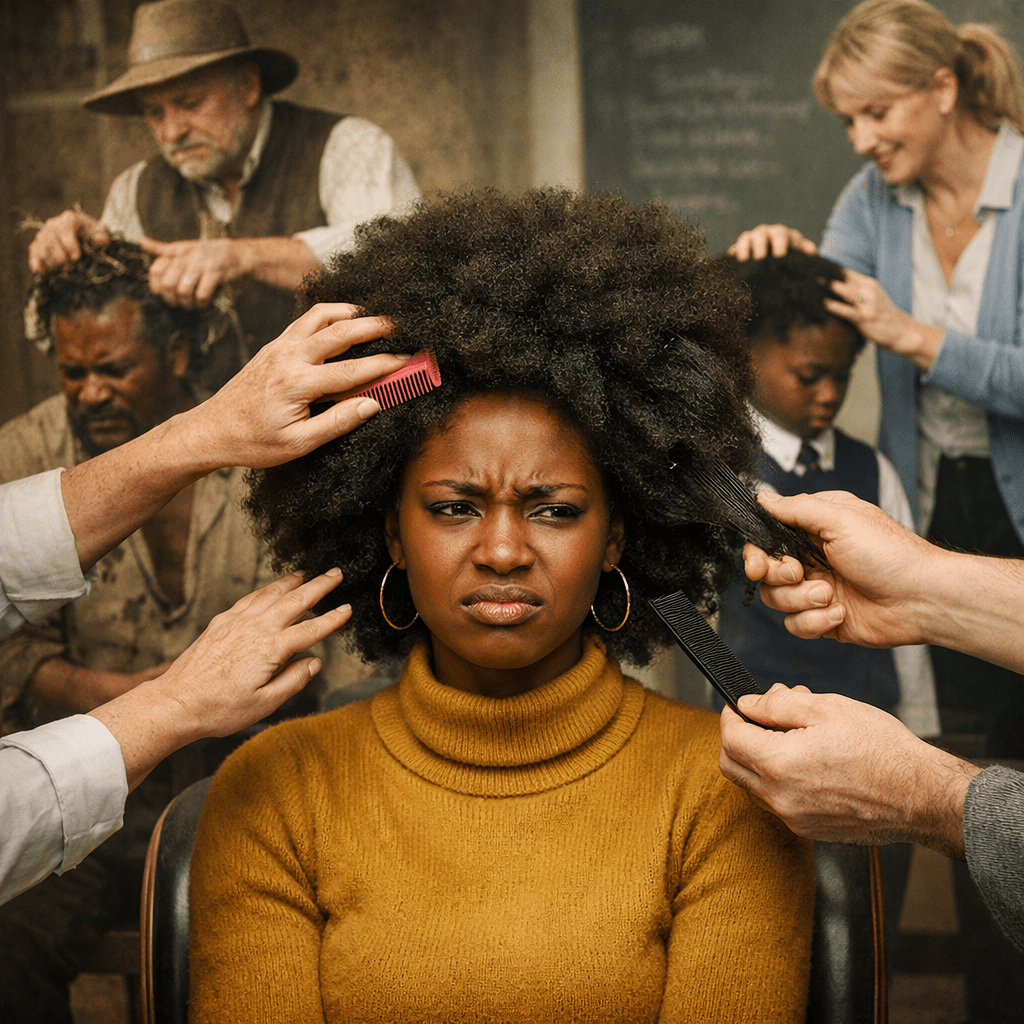
Dilemma: Black Hair Discrimination

The Politics of Policing Black Identity

Angela Davis

“I had been looking at pictures of women who were free, and they were wearing their hair the way it grows out of their heads.”
(Davis, A. Y., Women, Race & Class, 1981)

Chimamanda Ngozi Adichie

“Hair is political. Hair is personal. Hair is identity.”
(Adichie, C. N., Americanah, 2013)

Bell Hooks

“Straightening our hair is one of the many ways we try to erase the reality of our Blackness.”
(Hooks, b., Black Looks: Race and Representation, 1992)

Lupita Nyong’o

“What I learned is that when the world tells you you’re not enough, you don’t have to believe it.”
(Nyong’o, L., Sulwe, 2019)

“Black hair is not a trend, a problem, or a phase—it is a living archive of survival, resistance, and ancestral memory.”

Black hair discrimination remains one of the most visible and normalized forms of racial bias in modern society. From classrooms to corporate offices, Black hair is disproportionately scrutinized, regulated, and punished under the guise of “professionalism,” “neatness,” or “dress code policies.” These standards are not neutral; they are rooted in Eurocentric ideals that define straight, loose, and non-textured hair as the default measure of beauty and respectability. As a result, Black people are often forced to alter their natural hair to gain acceptance, employment, or basic dignity.

In schools, Black children are suspended, sent home, or humiliated for wearing braids, locs, Afros, twists, or even natural curls. These disciplinary practices communicate a dangerous message: that Black identity itself is disruptive and unacceptable. When a child’s natural hair becomes grounds for punishment, the educational system participates in psychological harm that can shape self-esteem and identity formation for life. The classroom becomes not a place of learning, but a site of racial conditioning.

In the workplace, similar patterns persist. Black professionals are routinely told their hair is “unprofessional,” “distracting,” or “unkept,” even when it is clean, styled, and culturally appropriate. This forces many to chemically straighten their hair, wear wigs, or suppress their natural texture in order to be perceived as competent. Such pressures reveal how deeply white norms are embedded in institutional culture, where assimilation is often required for survival.

The hatred toward Black hair did not originate in modern offices or schools—it was cultivated during slavery. Enslaved Africans were stripped of their cultural grooming practices and taught to associate straight hair with proximity to whiteness and social advantage. Field laborers, who often had tightly coiled hair, were deemed inferior, while those with looser textures were privileged within the plantation hierarchy. Hair became a racial marker used to rank human worth.

This legacy did not disappear after emancipation. It evolved into colorism and texture discrimination, where straighter hair is still associated with beauty, intelligence, and professionalism, while kinky or coiled hair is labeled “nappy,” “bad,” or “ugly.” These terms, passed down through generations, reflect internalized racism—a psychological inheritance from white supremacy that continues to shape how Black people see themselves.

One of the most painful aspects of Black hair discrimination is that it is often reinforced within Black families themselves. Many Black parents, conditioned by their own experiences of rejection and survival, teach their children that their natural hair is something to be fixed, relaxed, or hidden. Phrases like “your hair is too nappy” or “you need a perm” are not harmless—they transmit shame and self-rejection at the most formative stages of identity.

This internalization is not accidental; it is a direct result of systemic oppression. When society consistently rewards whiteness and penalizes Blackness, marginalized communities may adopt those standards as coping mechanisms. However, survival strategies should not become permanent ideologies. Black parents must wake up to the reality that teaching children to hate their natural features only perpetuates the same system that devalues them.

White supremacy plays a central role in Black hair discrimination because it establishes whiteness as the universal standard of normality. Under this system, anything outside of European phenotypes is constructed as deviant, exotic, or inferior. Hair texture becomes political, not because Black people made it so, but because racism made Black bodies sites of control.

The concept of “professionalism” itself is racially coded. There is no scientific or moral basis for associating straight hair with competence or intelligence. These associations are cultural myths that developed within colonial and capitalist systems that centered white identity as the model citizen. Black hair challenges these myths simply by existing in its natural state.

Black hair has also been criminalized. From police stops to courtroom bias, Afro-textured hair has been associated with deviance and threat. Studies show that Black people with natural hairstyles are more likely to be perceived as aggressive, untrustworthy, or less intelligent, even when all other factors are controlled. This demonstrates how aesthetic bias becomes a mechanism of social exclusion.

The rise of movements like the Natural Hair Movement and the passing of the CROWN Act represent resistance against these injustices. These efforts aim to legally protect individuals from discrimination based on hair texture and style. However, legal reform alone cannot dismantle deeply ingrained psychological and cultural beliefs. Laws can change policies, but they cannot instantly heal internalized self-hatred.

True liberation requires a cultural shift in how Black beauty is defined and taught. Black hair must be reframed not as a problem to manage, but as a sacred inheritance—genetically rich, biologically diverse, and historically powerful. The same coils once mocked were used to map escape routes during slavery, braid seeds for survival, and encode communal identity.

Education plays a crucial role in this transformation. Schools must incorporate Black history and African aesthetics into curricula, not as side notes, but as central narratives. When children learn that their features have historical meaning and cultural value, they are less likely to internalize racist hierarchies imposed by society.

Media representation is equally important. For decades, Black beauty was only celebrated when it approximated whiteness—light skin, straight hair, narrow features. Today, although representation has expanded, Eurocentric beauty standards still dominate advertising, film, and fashion industries. The normalization of natural Black hair must move beyond trends and become structural.

The policing of Black hair is ultimately about control. It is about who gets to define beauty, respectability, and humanity. When institutions regulate how Black people wear their hair, they are not managing aesthetics—they are managing identity. Hair becomes a battlefield where cultural memory confronts colonial ideology.

Psychologically, hair discrimination contributes to identity fragmentation. Black individuals are often forced to perform different versions of themselves depending on context—natural at home, altered at work, cautious in public. This constant self-monitoring produces emotional fatigue and reinforces the idea that authenticity is unsafe.

Black parents, educators, and leaders have a responsibility to disrupt this cycle. Teaching children that their hair is “good” exactly as it grows is not a trivial affirmation—it is a radical act of resistance. It challenges centuries of propaganda designed to disconnect Black people from their bodies and ancestry.

Healing from hair discrimination requires both structural and spiritual work. Structurally, institutions must dismantle biased policies. Spiritually and psychologically, Black communities must unlearn the lie that proximity to whiteness equals worth. The reclamation of Black hair is inseparable from the reclamation of Black identity.

Black hair is not unprofessional, unclean, or undesirable. It is African. It is genetic. It is historical. It is political because oppression made it so. And until society confronts the racial logic behind its beauty standards, Black hair will continue to be policed—not because it is wrong, but because it refuses to conform to a system built on white supremacy.

Ultimately, the hatred of Black hair reflects a deeper hatred of Black existence. To love Black hair fully is to reject the entire hierarchy that ranks human value by proximity to Europe. In that sense, every Afro worn freely, every loc grown proudly, and every child taught to love their coils is an act of cultural revolution.


References

Banks, I. (2000). Hair matters: Beauty, power, and Black women’s consciousness. New York, NY: New York University Press.

Byrd, A. D., & Tharps, L. L. (2014). Hair story: Untangling the roots of Black hair in America. New York, NY: St. Martin’s Press.

Collins, P. H. (2004). Black sexual politics: African Americans, gender, and the new racism. New York, NY: Routledge.

Crenshaw, K. (1991). Mapping the margins: Intersectionality, identity politics, and violence against women of color. Stanford Law Review, 43(6), 1241–1299.

Johnson, T. R., & Bankhead, T. (2014). Hair it is: Examining the experiences of Black women with natural hair. Open Journal of Social Sciences, 2(1), 86–100.

Rooks, N. (1996). Hair raising: Beauty, culture, and African American women. New Brunswick, NJ: Rutgers University Press.

Rosette, A. S., & Dumas, T. L. (2007). The hair dilemma: Conformity versus authenticity. Journal of Applied Psychology, 92(6), 1601–1616.

Tate, S. A. (2009). Black beauty: Aesthetics, stylization, politics. Farnham, UK: Ashgate.

The CROWN Act. (2019). Creating a Respectful and Open World for Natural Hair. U.S. legislation on hair discrimination.

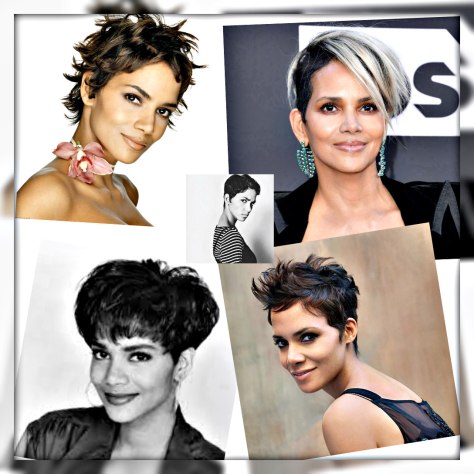
The Hair Diaries: Short Hair

These photographs are the property of their respective owners. No copyright infringement intended.

Halle Berry’s short hair became one of the most iconic beauty statements in Hollywood history. When she first cut her hair into a sleek pixie style in the early 1990s, the move was seen as daring—especially for a Black woman in an industry that often equated femininity with long, flowing hair. Yet what many saw as risky, Halle turned into revolutionary. Her cropped cut became her signature, accentuating her delicate bone structure, radiant eyes, and magnetic smile. Instead of hiding behind hair, she revealed her true essence—unapologetically bold, elegant, and self-possessed.

The short haircut elevated Halle Berry from merely “beautiful” to unforgettable. It transformed her from another up-and-coming actress into a cultural trendsetter. Stylists, fashion editors, and women around the world took notice. The look wasn’t just stylish; it was empowering. Berry’s pixie cut challenged Eurocentric ideals of beauty, asserting that femininity and sensuality come from confidence, not conformity. Her look became synonymous with modern sophistication—graceful yet fierce, delicate yet powerful.

Berry has often spoken about how that decision affected her career and self-image. In interviews, she shared that cutting her hair was an act of liberation. It wasn’t for a role, a magazine shoot, or an image change—it was personal. She wanted to feel free of the societal expectations that dictated how women, particularly Black women, “should” look. “When I cut my hair short, I felt like my true self finally emerged,” Berry once said. “It was about letting go of other people’s ideas of me and stepping fully into my own.”

Hollywood initially resisted the look. Studio executives and casting directors doubted her ability to play romantic leads or glamorous roles with such a daring cut. But Berry proved them wrong. With her short hair, she landed major roles in Boomerang, The Flintstones, and Bulworth, where her beauty and confidence captivated audiences. The haircut became part of her allure—a declaration of independence and authenticity that set her apart from her peers.

The short style also helped Halle connect more deeply with fans. Many women, particularly Black women, saw her as a trailblazer who redefined beauty standards. Her pixie cut became a symbol of self-acceptance and self-love. In an era when straightened or weaved hair was considered the professional norm, Berry showed that natural beauty and minimalism could be equally stunning.

Her short hair even shaped her roles. When she portrayed Dorothy Dandridge in Introducing Dorothy Dandridge (1999), the cropped look emphasized her expressive face, bringing emotional depth to the screen. In Monster’s Ball (2001), it underscored the vulnerability and strength of her character. The hairstyle wasn’t just aesthetic—it was a visual metaphor for authenticity and resilience.

Berry’s pixie cut became a cultural phenomenon, inspiring countless imitations and tributes in magazines, salons, and fashion runways. Essence, Vogue, and People all hailed her as a style icon. In 2004, she told InStyle magazine, “I think women are more powerful when we are comfortable in our own skin, when we can look in the mirror and love ourselves without hiding behind anything.” Her hair was the outward reflection of that inner truth.

Beyond fashion, the haircut symbolized Berry’s transition from Hollywood starlet to Hollywood legend. It became part of her brand—a visual shorthand for confidence, individuality, and strength. Even as she’s grown older, Berry continues to wear her hair short, demonstrating that beauty evolves with age but never fades.

In interviews, she has revealed that keeping her hair short also contributes to her health and wellness philosophy. She embraces simplicity—using natural products, staying hydrated, eating clean, and focusing on mental peace. The freedom of short hair mirrors the freedom she seeks in her lifestyle: uncluttered, intentional, and true to herself.

Today, Halle Berry’s short hair remains as iconic as ever. It represents far more than style—it’s a symbol of empowerment, authenticity, and the beauty of embracing who you truly are. Through it, she changed the conversation about what it means to be a beautiful woman, proving that confidence is the real crown. Her pixie cut wasn’t just a trend; it was a cultural statement—one that continues to inspire women across generations to stand tall, love themselves, and shine from the inside out.

References

  • Essence Magazine. (2023). Halle Berry Reflects on Her Iconic Pixie Cut and Self-Liberation.
  • InStyle. (2004). Halle Berry on Beauty, Confidence, and Short Hair Empowerment.
  • Vogue. (2022). The History of Halle Berry’s Hair: From Pageant Queen to Hollywood Icon.
  • People Magazine. (2019). Halle Berry’s Timeless Beauty Secrets and the Power of Simplicity.
  • The Holy Bible, King James Version (KJV). 1 Peter 3:3-4 – “Whose adorning let it not be that outward adorning of plaiting the hair… but let it be the hidden man of the heart.”

The Hair Diaries: The Myth of Good Hair

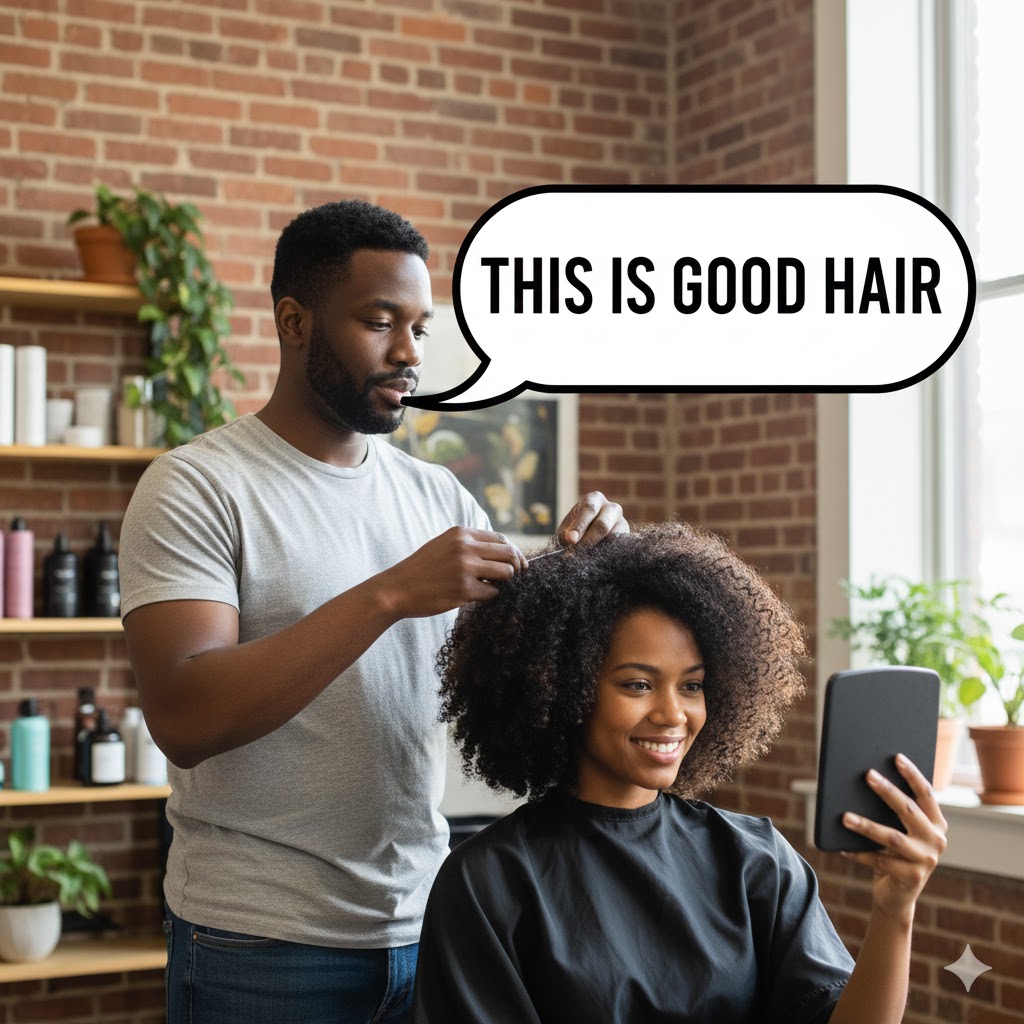
The idea of “good hair” is a myth rooted not in biology or beauty, but in power. Hair, in all its textures, is a natural extension of the human body, growing exactly as it was designed to grow. No strand that emerges from a healthy scalp is bad, defective, or inferior. Scripture affirms that God’s creation is intentional and good in every form (Genesis 1:31, KJV).

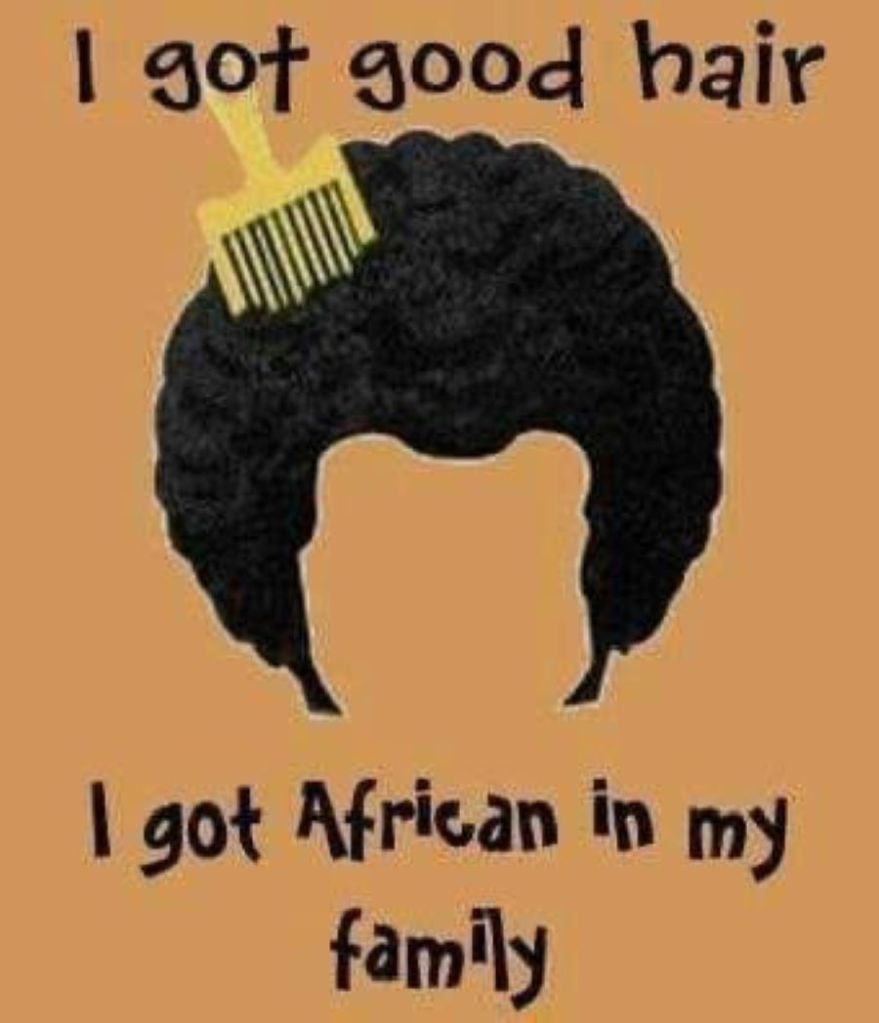
The “good hair versus bad hair” narrative emerged from colonialism and slavery, not from truth. European features were elevated as the standard of beauty, while African features were devalued to justify domination. Hair texture became a visible marker used to rank humanity along racial lines (Byrd & Tharps, 2014).

During slavery, hair texture was tied to social survival. Straighter hair was associated with proximity to whiteness and, in some cases, less brutal treatment. This produced a hierarchy within Black communities that persists today, even though its origin is rooted in trauma rather than preference.

Coily, kinky, and tightly curled hair was labeled “excessive” because it resisted assimilation. It could not easily conform to European grooming norms without chemical or mechanical alteration. Resistance, not inferiority, is what made this hair political.

Biologically, coily hair is a marvel of design. Its spiral structure helps protect the scalp from intense sun exposure and reduces heat absorption. These textures evolved as an adaptive strength, not a flaw (Jablonski, 2015).

Black hair also demonstrates incredible versatility. It can be braided, twisted, loc’d, coiled, stretched, sculpted, wrapped, and worn free. Few hair types carry such cultural, artistic, and functional range.

Historically, African hairstyles communicated age, marital status, tribe, spirituality, and social role. Hair was language before colonization disrupted these systems. To demean Black hair is to demean African knowledge systems (Thompson, 1983).

The hatred directed toward Black hair often reflects fear of difference rather than aesthetic judgment. What cannot be controlled is often labeled unprofessional, wild, or inappropriate. This language exposes anxiety, not truth.

The Bible does not rank hair textures. Scripture emphasizes modesty, order, and reverence—not conformity to Eurocentric appearance. God looks at the heart, not the curl pattern (1 Samuel 16:7, KJV).

Black hair has been policed in schools, workplaces, and public spaces, revealing how deeply the myth of “good hair” is institutionalized. Laws like the CROWN Act exist because natural hair was treated as a threat to order rather than a neutral human trait.

The pressure to alter Black hair has often been framed as professionalism. Yet professionalism is a social construct shaped by those in power. Hair that grows naturally from the head cannot be unprofessional by nature.

Internalized hair bias is one of the most painful legacies of colonialism. When Black children learn to dislike their own hair, it is not personal insecurity but inherited harm. Healing begins with truth-telling and affirmation.

Speaking positively about Black hair is not exclusionary; it is corrective. Affirmation restores balance where distortion has reigned. Celebrating Black hair does not diminish other hair types—it ends false hierarchy.

Coily hair teaches patience, care, and attentiveness. It thrives when treated gently and intentionally. This relationship fosters self-awareness and self-respect rather than shame.

The Bible describes God as a creator of diversity, not uniformity. If variety glorifies God in nature, it also glorifies Him in human appearance (Psalm 104:24, KJV).

The myth of “good hair” survives because it benefits systems that profit from insecurity. Entire industries were built on convincing Black people that their natural hair needed correction.

Black hair is not a trend, a rebellion, or a statement—it is a reality. Its presence does not require justification or explanation. It simply exists because God designed it to.

When Black people wear their hair freely, it is an act of self-acceptance, not defiance. Freedom should not be mistaken for aggression.

Restoring reverence for Black hair is part of restoring dignity. What was once mocked is now being reclaimed, not as fashion, but as truth.

All hair that grows from the head is good hair. Coily hair is not excessive; it is expressive. Kinky hair is not unmanageable; it is powerful. Curly hair is not a problem to solve, but a gift to honor.

The myth of good hair collapses when truth stands upright. Black hair needs no permission to exist beautifully—it already does.


References

Byrd, A. D., & Tharps, L. L. (2014). Hair story: Untangling the roots of Black hair in America. St. Martin’s Press.

Jablonski, N. G. (2015). Skin color: A natural history. University of California Press.

Thompson, R. F. (1983). Flash of the spirit: African and Afro-American art and philosophy. Vintage Books.

The Holy Bible, King James Version (Genesis 1:31; 1 Samuel 16:7; Psalm 104:24).

Hair Is the Crowning Glory

This photograph is the property of its respective owner. No copyright infringement intended.

Hair is more than adornment — it is an anointing. In every strand lies a story, in every curl, a code of creation. Scripture declares, “If a woman have long hair, it is a glory to her: for her hair is given her for a covering” (1 Corinthians 11:15, KJV). To understand the sacredness of hair is to recognize it as both physical beauty and spiritual symbolism — a divine marker of identity and inheritance.

For the Black woman, hair is history. It has been braided in kingdoms, cut in captivity, covered in faith, and celebrated in freedom. Each texture — from the tightest coil to the softest wave — bears the fingerprint of God’s artistry. It connects her not only to her ancestors but to the Creator who crowned her with distinction.

In ancient Africa, hair was language. Styles conveyed tribe, status, age, and even spiritual calling. The Yoruba, Himba, and Fulani women wore their stories on their scalps, transforming their heads into living manuscripts of identity. To touch a woman’s hair was to read her soul. In this way, hair became both heritage and halo.

The transatlantic slave trade attempted to sever that connection. Enslaved women were often forced to shave their heads, a violent act of dehumanization meant to erase tribal lineage and pride. Yet, even in bondage, hair remained a silent act of resistance — braided maps, hidden seeds, and whispered prayers wove freedom into every plait.

When Paul wrote of hair as a woman’s glory, he spoke of divine order — not vanity, but sacred symbolism. Hair represents covering, covenant, and consecration. In the Bible, Nazarites like Samson carried divine strength in their locks (Judges 16:17). The cutting of his hair symbolized the breaking of a spiritual vow. Likewise, a woman’s hair remains a visible emblem of her spiritual integrity.

The Black woman’s hair has always carried more than aesthetic meaning — it bears cultural warfare. From workplace discrimination to school dress codes, society has repeatedly tried to regulate her crown. But the CROWN Act and a rising chorus of self-love movements declare a new era: her hair is no longer a battleground but a banner of liberation.

Natural hair is not rebellion; it is revelation. It reveals the divine geometry of God’s creation — coiled like galaxies, spiraled like fingerprints, and strong enough to defy gravity. Each strand stands as a metaphor for resilience: stretched, twisted, and yet unbroken. To wear one’s natural hair is to testify, “I am fearfully and wonderfully made” (Psalm 139:14, KJV).

From wigs and weaves to locs and fros, Black hair expresses multiplicity — not confusion, but creativity. It evolves, transforms, and reinvents itself just as the woman does. Her hair is her canvas; her crown is her story. To style her hair is not vanity but ritual — a daily affirmation of worth and womanhood.

The sacred ritual of haircare connects generations. Mothers oil their daughters’ scalps with tenderness, whispering lessons of patience and pride. Grandmothers pass down recipes of shea, coconut, and castor — ancient anointing oils for modern queens. In those intimate moments, hair becomes ministry.

Hair is also prophetic. It carries spiritual resonance — the way it grows, sheds, and renews mirrors the seasons of a woman’s life. It teaches her detachment when it breaks, humility when it thins, and gratitude when it flourishes. Her crown becomes a compass of divine timing.

To cover the head, as practiced in many biblical and Hebraic traditions, is an act of reverence, not repression. It symbolizes spiritual submission, protection, and modesty. But whether covered or uncovered, sacred femininity reminds her that the glory lies not in the style, but in the spirit beneath it.

Colorism and Eurocentric beauty ideals once tried to shame the kink and celebrate the curl that conformed. Yet today, locs, afros, and braids have returned to their throne. Each twist and cornrow becomes a crown of resilience — a statement that she no longer seeks to assimilate but to ascend.

In the diaspora, hair has been both burden and beacon. It has endured burning combs, toxic relaxers, and societal rejection. Yet, like the phoenix, it rises again — embracing its natural rhythm, its divine pattern. What was once mocked is now magnified.

The theology of hair is the theology of glory. Just as Christ’s transfiguration revealed His divine nature, a woman walking in her authenticity reveals God’s creative intention. Her crown is not for decoration but for declaration: that she is chosen, set apart, and sovereign.

When she adorns her hair with beads, scarves, or oils, she is not performing — she is prophesying. Each adornment is symbolic: beads of remembrance, scarves of sanctity, oils of anointing. Her head becomes holy ground, her hair a visible altar of gratitude.

Hair connects heaven and heritage. In African cosmology, the head — ori — is the seat of destiny, the place where divine purpose dwells. To honor the hair is to honor the spiritual headship God placed upon woman — a reminder that she walks with divine covering and creative authority.

Her hair carries memory — of pain, of pride, of prayer. Each style tells of seasons survived: the big chop of new beginnings, the protective style of rest, the natural growth of self-acceptance. Through each transition, she learns that her beauty is not borrowed; it is born of God.

To despise her natural hair is to reject her divine design. But to embrace it is to walk in resurrection — a restoration of what colonialism tried to cut away. In loving her hair, she reclaims her history, her holiness, and her harmony with heaven.

Thus, hair becomes more than a crown; it becomes a covenant. It binds the woman to her lineage and to her Lord. In the sacred rhythm of braiding, washing, and wrapping, she remembers that she is a daughter of Zion — crowned with compassion, wrapped in wisdom, and radiant in glory.

For indeed, hair is not just her glory — it is her testimony. It tells the world that she has survived every storm and still stands crowned. Her head lifted, her crown intact, she becomes the living fulfillment of Scripture: “She shall give to thine head an ornament of grace: a crown of glory shall she deliver to thee” (Proverbs 4:9, KJV).


References

  • The Holy Bible, King James Version. (n.d.).
  • Byrd, A., & Tharps, L. L. (2014). Hair Story: Untangling the Roots of Black Hair in America. St. Martin’s Press.
  • hooks, b. (2000). Feminism Is for Everybody: Passionate Politics. South End Press.
  • Collins, P. H. (2000). Black Feminist Thought: Knowledge, Consciousness, and the Politics of Empowerment. Routledge.
  • Walker, A. (1983). In Search of Our Mothers’ Gardens: Womanist Prose. Harcourt.
  • Tate, S. A. (2009). Black Beauty: Aesthetics, Stylization, Politics. Ashgate.
  • Banks, I. (2000). Hair Matters: Beauty, Power, and Black Women’s Consciousness. New York University Press.

Natural Hair: Identity, Beauty, and the Power of Embracing Your Roots

This photograph is the property of its respective owner. No copyright infringement intended.

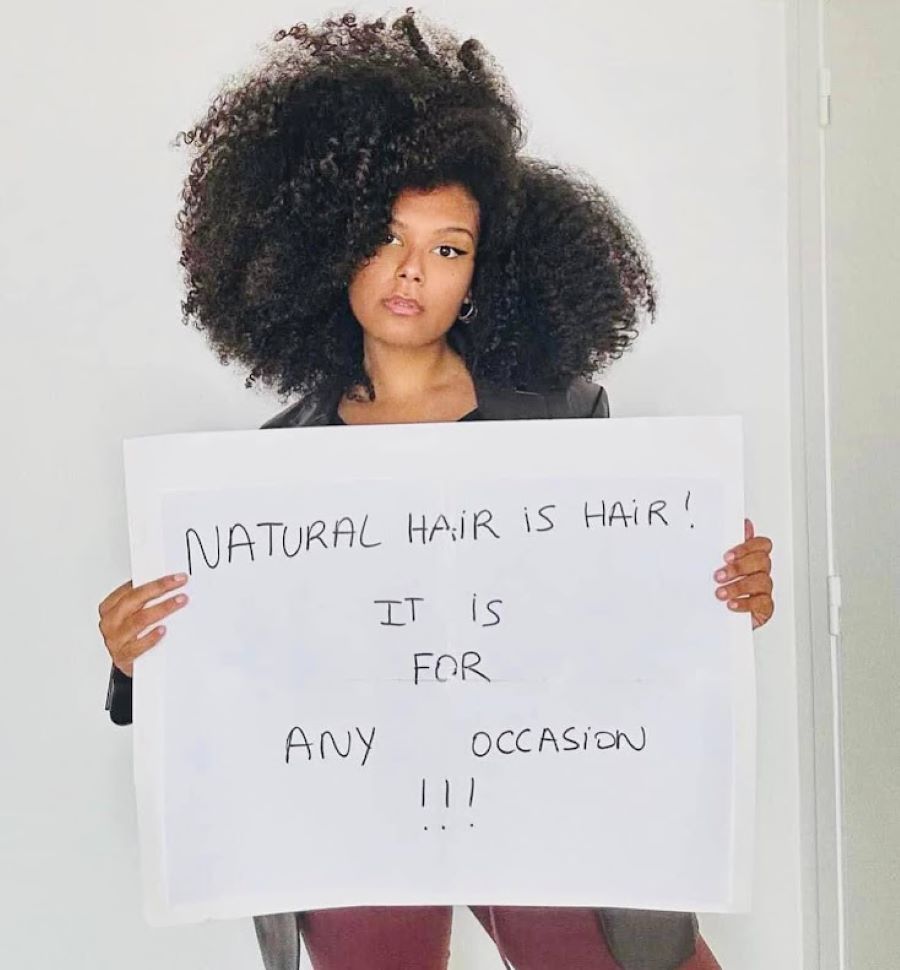
Natural hair is more than a style—it is an expression of identity, culture, and self-acceptance. For many Black women and men, natural hair represents a return to authenticity and a refusal to conform to standards that were never created with them in mind. The beauty and freedom of natural hair stretch beyond aesthetics; it is deeply spiritual, emotional, historical, and physical.

Natural hair carries tremendous benefits, starting with its health. Free from harsh chemicals, relaxers, and heat damage, natural hair can thrive in its truest state. Without chemical breakdown, the curl pattern stays strong, the strands retain elasticity, and the scalp experiences less irritation. The health benefits alone encourage many to embrace their natural texture unapologetically.

Natural hair also promotes self-love by encouraging individuals to connect with their authentic selves. It requires one to accept their God-given crown exactly as it grows. This acceptance builds confidence, identity, and pride, especially in a world where European beauty standards still dominate mainstream perceptions.

Another benefit of natural hair is its versatility. Curls, coils, kinks, locs, twist-outs, braid-outs, afros, bantu knots, silk presses—natural hair offers endless styling options. This adaptability allows creative expression and empowers individuals to showcase their personality through their look.

Beyond versatility, natural hair symbolizes heritage. It carries the stories of ancestors who braided maps into hair, used it to store seeds during the Middle Passage, and saw their identity attacked and regulated through laws. Wearing natural hair today is a reclaiming of dignity and cultural power.

Despite its value, natural hair has often been misunderstood or unaccepted in society. Many people struggle with it because they were conditioned to believe straight hair is “neat,” “professional,” or “beautiful,” while natural hair was labeled as “wild” or “unmanageable.” These beliefs are rooted in racism and Eurocentric standards that have shaped beauty norms for centuries.

Even today, some individuals do not like their natural hair because they were taught to see it as an inconvenience rather than a blessing. Internalized bias can lead people to reject their curl patterns, compare themselves to others, or feel pressure to alter their appearance. Healing this mindset requires unlearning generational narratives and embracing new ones.

Social acceptance of natural hair has improved, yet discrimination still exists. Workplaces, schools, and public spaces have historically penalized natural textures. Laws like the CROWN Act prove that acceptance is still evolving, highlighting the need for continued advocacy and education surrounding Black hair.

Though society’s acceptance fluctuates, natural hair is gaining visibility and representation. More public figures, influencers, and everyday people proudly embrace their coils, helping normalize natural textures and expand definitions of beauty. The movement encourages younger generations to grow up loving their hair.

Caring for natural hair requires patience, understanding, and consistency. It begins with moisture—water, leave-ins, oils, and butters all support hydration. Natural hair tends to be dry because the curl pattern makes it difficult for natural oils to travel down the strands. This means moisture must be intentionally added.

Protective styles also play a major role in natural hair care. Braids, twists, locs, and updos help prevent breakage, reduce manipulation, and promote growth. Protective styling paired with proper maintenance keeps natural hair healthy and strong.

Understanding your hair type—whether loose curls, tight coils, or somewhere in between—helps determine what products and methods work best. Each curl type has its own needs, and learning them builds a personalized routine that supports growth and retention.

Natural hair care also includes scalp health. A clean, moisturized scalp encourages healthy growth. Oils such as castor, peppermint, jojoba, and rosemary stimulate circulation and nourish the roots. Healthy hair begins with a healthy foundation.

Detangling is another crucial aspect. Using gentle tools, wide-tooth combs, or fingers reduces breakage. Natural hair thrives when handled with care, especially when wet or stretched to minimize tangles.

Heat usage should be kept to a minimum to preserve the curl pattern. Occasional silk presses are fine, but regular heat can cause damage or loss of curl texture. Natural hair flourishes when heat is controlled and used properly.

One essential fact about natural hair is that shrinkage is a sign of health. Shrinkage shows your curls have elasticity and bounce, which means your strands are strong. Instead of being seen as a flaw, shrinkage should be celebrated as proof of vibrancy.

Another fact is that natural hair grows at the same rate as all human hair—about half an inch per month. What affects length retention is breakage, not growth speed. When natural hair is moisturized and protected, it retains its length effortlessly.

Natural hair is deeply spiritual. For many, it represents liberation, self-discovery, and healing. It is a crown God placed on Black heads—a symbol of royalty and resilience. Embracing natural hair becomes an act of honoring oneself and honoring the Creator.

Ultimately, natural hair is beauty, culture, and power woven together. It is a reminder that Black identity is rich, divine, and unique. Embracing natural hair is not just about appearance—it is about reclaiming worth, rejecting narrow beauty standards, and walking confidently in the glory of one’s natural design. Embracing your natural hair is embracing yourself, fully and fearlessly.

References
CROWN Act resources
Psalm 139:14 (identity and creation)
Historical scholarship on Black hair and culture

Good Hair (Poem)

Good Hair
A Poem by www.thebrowngirldilemma.com

Good hair is the crown God wove with His own hands,
A tapestry of coils, curls, kinks, and strands,
A language spoken in spirals and waves,
A history braided through mothers and graves.

Good hair is the rhythm of roots that rise,
Defying gravity, touching the skies,
A halo of strength that the world once denied,
Yet still blooms boldly with unbroken pride.

Good hair is Sunday mornings with warm oil’s sheen,
Auntie’s hands parting like a quiet routine,
The pull, the twist, the tender care,
Love is passed down in every braid we wear.

Good hair is shrinkage—magic in motion—
A spring of life, a living ocean,
Proof that what looks small can expand with grace,
Proof of resilience woven in place.

Good hair is softness wrapped in a tough embrace,
A garden of texture no copy can trace,
A map of identity, sacred and true,
A signature style the Creator drew.

Good hair is locs that speak of time,
Twists that whisper, “I am divine,”
Afros that rise like a new dawn’s fire,
Edges that swoop with artistic desire.

Good hair is the right to choose,
To press, to braid, to twist, to fuse,
To rock it natural or wear it long,
Each style a verse in a freedom song.

Good hair is not what others decide—
Not a scale, not a standard, not a measure of pride.
Good hair is the hair God placed on your head,
Alive with stories your ancestors said.

Good hair is heritage, holy and deep,
A beauty the world tried to steal but couldn’t keep,
A reflection of glory, regal and rare—
You don’t have good hair.
You have good hair.

Brown Girl Blues: “Why don’t you do something with your hair?” They Say….

Photo by KoolShooters on Pexels.com

The question, “Why don’t you do something with your hair?” may seem harmless to some, but to many Black women, it cuts deeper than strands and styles—it reaches the roots of identity, history, and self-worth. Beneath the surface of that question lies centuries of cultural conditioning, where European aesthetics became the measuring rod for beauty, and anything deviating from that ideal was deemed unkempt, unruly, or undesirable.

For the brown girl, hair has never been “just hair.” It has been a site of both pride and pain, rebellion and respectability, resistance and reinvention. The texture of Black hair tells a story—one of survival through enslavement, assimilation through colonization, and reclamation through self-love. When society asks her to “do something” with it, it’s not simply asking for grooming—it’s demanding conformity.

Historically, enslaved African women were stripped not only of their homeland but also of their cultural expressions. Hair, once a symbol of tribal identity and spirituality, was forcibly shaved or hidden beneath rags. This act was psychological warfare—a way to erase selfhood. The lingering echo of that erasure still reverberates when a Black woman is told that her natural curls, coils, or kinks are “unprofessional” or “too much.”

The “Brown Girl Blues” emerge when the pressure to assimilate collides with the yearning to be authentic. Straightening, relaxing, and weaving became not merely beauty choices but survival tactics. For decades, many Black women internalized the message that straight hair equaled success, and natural hair equaled defiance. The corporate world, media, and even schools reinforced these codes of respectability through policies and imagery that favored Eurocentric beauty.

The Crown Act, passed in several U.S. states, sought to challenge these biases by legally protecting natural hairstyles. Yet, laws alone cannot undo generations of psychological conditioning. The battle over Black hair is not only fought in courtrooms but also in mirrors, classrooms, and boardrooms—everywhere a brown girl silently wonders if she’s “enough.”

In biblical terms, hair has always been symbolic of identity and covenant. Samson’s strength was connected to his locks (Judges 16:17), and a woman’s hair was often referred to as her “glory” (1 Corinthians 11:15). Yet for Black women, this glory has been distorted by societal judgment. The question, “Why don’t you do something with your hair?”, becomes not about maintenance but about value—an attempt to measure worth through assimilation.

The modern natural hair movement represents a spiritual and cultural awakening. It is a declaration that Black beauty, in its raw and natural form, is divine. Afro-textured hair defies gravity—it rises upward, toward the heavens—symbolizing resilience, creativity, and connection to something higher than human approval. Each coil, each curl, is a fingerprint of divine design.

However, the journey toward self-acceptance is not always smooth. Many brown girls recall being teased in childhood for their “nappy” hair or “kitchen.” These early wounds leave imprints that resurface in adulthood, influencing how they view their reflection. Healing requires unlearning not only external prejudice but internalized shame.

This healing is both emotional and theological. When a Black woman begins to see herself as fearfully and wonderfully made (Psalm 139:14), her relationship with her hair transforms. What was once a burden becomes a crown—an emblem of divine artistry. The process of detangling, twisting, and moisturizing becomes a sacred ritual of self-love and restoration.

Still, the societal gaze remains relentless. Even as representation increases, media often celebrates “acceptable” versions of natural hair—looser curls, lighter skin, or “manageable” textures—while sidelining tighter coils and darker complexions. Thus, colorism and texturism intertwine, creating a hierarchy within Black beauty itself.

The “Brown Girl Blues” is not just a personal lament; it is a cultural diagnosis. It asks: why must the Black woman still defend her right to simply be? Why must her hair still be politicized, policed, or tokenized? Why must she apologize for the crown God gave her? These questions echo through generations of women who have fought to redefine beauty on their own terms.

In academia, thinkers like bell hooks and Audre Lorde have explored how hair politics reflect the intersection of race, gender, and power. Lorde (1984) argued that self-care is an act of political warfare; for the Black woman, wearing her natural hair is exactly that—a rebellion against centuries of aesthetic colonization. It is a declaration that her beauty needs no validation from oppressive systems.

Faith and psychology converge here. While the world critiques, God affirms. The anxious heart that once craved acceptance learns to rest in divine identity. As Romans 12:2 urges, “Be not conformed to this world, but be ye transformed by the renewing of your mind.” Transformation begins internally, when the brown girl realizes her reflection already bears the image of God—no alterations necessary.

Black hair, in all its forms, is a metaphor for spiritual resilience. It bends but does not break; it shrinks yet expands; it endures heat, tension, and pressure but always finds a way to thrive. That endurance mirrors the Black woman’s soul—a living testimony of beauty born from struggle.

Community has been vital in reclaiming this narrative. Natural hair expos, YouTube tutorials, and sister circles have become spaces of affirmation where brown girls uplift one another and rediscover pride in their roots. These collective affirmations function like modern-day psalms—songs of freedom and healing sung through shared experience.

Still, not every Black woman chooses natural hair, and that, too, deserves respect. True liberation means freedom of choice, not obligation to any one aesthetic. Whether she wears braids, wigs, locs, or silk presses, her worth is not in the texture but in her authenticity. The problem was never the style—it was the shame.

To dismantle “Brown Girl Blues,” society must stop pathologizing Blackness. It must stop framing Black beauty as a problem to be solved and begin honoring it as a reflection of cultural genius. The question must shift from “Why don’t you do something with your hair?” to “What stories does your hair tell?”—because every strand carries history, faith, and pride.

Ultimately, the healing of the brown girl begins with reclaiming her divine mirror. She looks at her reflection and no longer sees deficiency, but design. She hears the old question—“Why don’t you do something with your hair?”—and smiles, because she already did: she learned to love it.

In that moment, the blues fade into gold, and her crown—once questioned—now glows with the glory of a woman who finally knows she was never the problem. Her hair, her hue, her heritage—all of it—is holy.


References

  • The Holy Bible, King James Version.
  • hooks, b. (1994). Outlaw culture: Resisting representations. Routledge.
  • Lorde, A. (1984). Sister outsider: Essays and speeches. Crossing Press.
  • Byrd, A. D., & Tharps, L. L. (2014). Hair story: Untangling the roots of Black hair in America. St. Martin’s Griffin.
  • Johnson, T. A., & Bankhead, T. (2014). Hair it is: Examining the experiences of Black women with natural hair. Open Journal of Social Sciences, 2(1), 86–100.
  • Tate, S. A. (2007). Black beauty: Shade, hair and anti-racist aesthetics. Ethnic and Racial Studies, 30(2), 300–319.

Black Women and Hair Activism: From Nappy Roots to #BlackGirlMagic

Photo by Pixabay on Pexels.com

Hair has always been a central marker of identity, culture, and resistance for Black women. From the era of slavery, where enslaved women were forced to conform to Eurocentric beauty standards, to the modern-day #BlackGirlMagic movement, hair has served as both a site of oppression and empowerment. Hair activism represents a form of social and political engagement, challenging systemic discrimination while affirming Black women’s cultural identity.

Historical Context: Slavery and Eurocentric Standards

During slavery in the Americas, Black women were often compelled to alter their natural hair to fit European ideals of beauty, sometimes being shaved or chemically straightened (Byrd & Tharps, 2014). These practices symbolized a broader attempt to erase African identity and enforce subservience, embedding the politics of hair into social hierarchies.

The Civil Rights Era and Nappy Roots

The 1960s and 1970s saw a rise in natural hair as a political statement. The Afro became a symbol of pride, resistance, and Black identity, captured in the phrase “Black is beautiful.” Movements like Nappy Roots (both the cultural reference and musical group) emphasized embracing natural hair, celebrating Black aesthetics, and challenging societal norms.

Workplace and Legal Activism

Despite cultural shifts, Black women continue to face discrimination for natural hairstyles in professional and educational settings. Legal efforts, such as the CROWN Act (Creating a Respectful and Open World for Natural Hair) in the U.S., address hair-based discrimination and underscore the ongoing struggle for equity (Tharps, 2019). Hair activism thus extends beyond aesthetics—it’s about civil rights and self-determination.

The Rise of #BlackGirlMagic

In the 2010s, movements like #BlackGirlMagic and natural hair communities online created global spaces celebrating Black women’s hair, beauty, and accomplishments. Social media platforms have enabled activism, awareness, and community-building, empowering women to reclaim agency over their hair and identity.

Hair as Resistance and Empowerment

Hair activism encompasses education, advocacy, and personal empowerment. For Black women, embracing natural hair is not just an aesthetic choice but a political act, affirming self-worth and resisting systemic bias. It communicates pride, autonomy, and a refusal to conform to oppressive standards.

Psychology and Identity

Research indicates that hair significantly impacts self-esteem and identity formation among Black women (Banks, 2000). Wearing natural hairstyles or participating in hair activism is linked to higher self-confidence, stronger cultural identity, and resistance to internalized oppression.

Conclusion

From Nappy Roots to #BlackGirlMagic, Black hair activism reflects a dynamic intersection of culture, politics, and identity. By embracing natural hair and challenging societal norms, Black women assert autonomy, demand respect, and celebrate their heritage, transforming a personal expression into a collective movement for empowerment.


References

  • Banks, I. (2000). Hair matters: Beauty, power, and Black women’s consciousness. New York: NYU Press.
  • Byrd, A., & Tharps, L. (2014). Hair Story: Untangling the Roots of Black Hair in America. St. Martin’s Press.
  • Tharps, L. L. (2019). The CROWN Act: Natural Hair, Discrimination, and Social Change. Harvard Journal of African American Public Policy, 1(1), 45–60.
  • Robinson, T. (2018). Social media and Black hair activism: #BlackGirlMagic and the politics of identity. Journal of Black Studies, 49(7), 657–676.
  • Tate, S. A. (2007). Hair and the politics of Black women’s identity. Cultural Studies, 21(5), 641–655.

Hair, Politics, and Respectability: The Crown We Never Asked For

Hair has never been “just hair” for Black people. In societies shaped by colonialism and racism, Black hair—especially its natural textures—has been politicized, stigmatized, and controlled. The title Hair, Politics, and Respectability: The Crown We Never Asked For captures this tension: while hair is a natural inheritance, it has become a symbol of identity, resistance, and discrimination. From biblical reflections to modern psychology, the struggle over Black hair reveals both the resilience of a people and the weight of systemic oppression.


Hair and Politics: Why Texture Became a Battleground

During slavery, Black hair was ridiculed as “woolly,” “unkempt,” or “inferior” compared to European textures. Enslaved women were often forced to cover their hair with scarves, stripping them of cultural expression. In the twentieth century, straightening became associated with “respectability,” as Eurocentric beauty standards were used to determine professionalism, employability, and social acceptance (Byrd & Tharps, 2014). Hair became political because it signified whether one conformed to dominant norms or resisted them.

Even today, workplace and school policies ban natural styles such as locs, afros, and braids, framing them as “unprofessional.” This reveals how deeply Eurocentric aesthetics are embedded in institutional power structures. Black hair is not bad—it is the perception of it, shaped by systemic racism, that weaponizes it against Black people.


Media Examples of Hair Discrimination

  • Gabrielle Union (2019): The actress revealed that she was criticized on America’s Got Talent for her hairstyles being “too Black” for mainstream audiences.
  • Zendaya (2015): At the Oscars, a TV host insulted her locs, suggesting they made her smell like “weed or patchouli oil,” perpetuating stereotypes about natural Black hair.
  • Ayanna Pressley (2020): The U.S. Congresswoman openly discussed the politics of her hair after revealing her alopecia, highlighting the burden Black women face regarding appearance.
  • Students Nationwide: Numerous cases have emerged of Black children suspended or excluded from schools for wearing natural hairstyles—demonstrating how hair policing begins in childhood.

These examples show that hair is treated not as personal expression but as a battleground of social acceptance.


Why Is Black Hair Considered “Bad”?

  1. Colonial Legacies: European colonizers ranked African features as inferior to justify slavery and subjugation. Hair texture became part of this false hierarchy.
  2. Respectability Politics: Within Black communities, straightened hair was sometimes encouraged as a survival strategy, signaling assimilation to reduce discrimination.
  3. Media Reinforcement: Advertisements and entertainment long centered straight hair as the default “beautiful,” erasing the diversity of Black textures.
  4. Psychological Control: By stigmatizing natural hair, systems of power sought to strip Black people of cultural pride and self-love.

Psychological Dimensions of Hair Politics

Hair discrimination carries profound psychological effects. Research shows that Black women who feel pressure to conform to Eurocentric hairstyles report higher stress levels, body image struggles, and identity conflict (Robinson, 2011). Natural hair movements—such as the resurgence of afros in the 1970s and the current embrace of locs, twists, and braids—function as acts of resistance and self-acceptance. For Black children, representation is vital: being punished for natural hair fosters shame and internalized racism, while affirmation builds resilience and pride.


Biblical Reflections on Hair and Identity

The Bible addresses hair as both symbolic and spiritual.

  • Glory and Crown: “But if a woman have long hair, it is a glory to her: for her hair is given her for a covering” (1 Corinthians 11:15, KJV). Here, Paul acknowledges hair as a natural crown of dignity.
  • Consecration: In Numbers 6:5, Nazirites such as Samson were commanded not to cut their hair as a sign of holiness and covenant with God. This shows that hair was more than appearance—it was identity and consecration.
  • Diversity in Creation: Scripture affirms that humanity is “fearfully and wonderfully made” (Psalm 139:14). Black hair textures, in all their variety, are part of God’s intentional design, not a flaw.

These biblical insights reject the notion that natural hair is “bad.” Instead, hair is a crown—sometimes even a sacred symbol of identity and strength.


Toward Liberation: Reclaiming the Crown

To break free from the burden of hair politics, society must dismantle Eurocentric beauty hierarchies and embrace inclusivity. Policies such as the CROWN Act (Creating a Respectful and Open World for Natural Hair) in the U.S. represent legal recognition of this struggle. On a personal and cultural level, embracing natural hair affirms resilience: a refusal to bow to imposed norms. For Black women and men, reclaiming their hair is reclaiming their God-given identity, their psychological well-being, and their cultural pride.


Conclusion

Hair, Politics, and Respectability: The Crown We Never Asked For underscores that Black hair has been politicized against its wearers, weaponized as a marker of inferiority. Yet, both psychology and scripture affirm that Black hair is beautiful, intentional, and sacred. It is not a flaw to be corrected but a crown to be celebrated. In embracing their natural hair, Black people reject imposed shame and walk boldly in resilience, dignity, and divine purpose.


References

  • Byrd, A., & Tharps, L. L. (2014). Hair story: Untangling the roots of Black hair in America. St. Martin’s Press.
  • Robinson, C. (2011). Hair as race: Why “good hair” may be bad for Black females. Howard Journal of Communications, 22(4), 358–376.
  • The Holy Bible, King James Version.