Tag Archives: Beauty

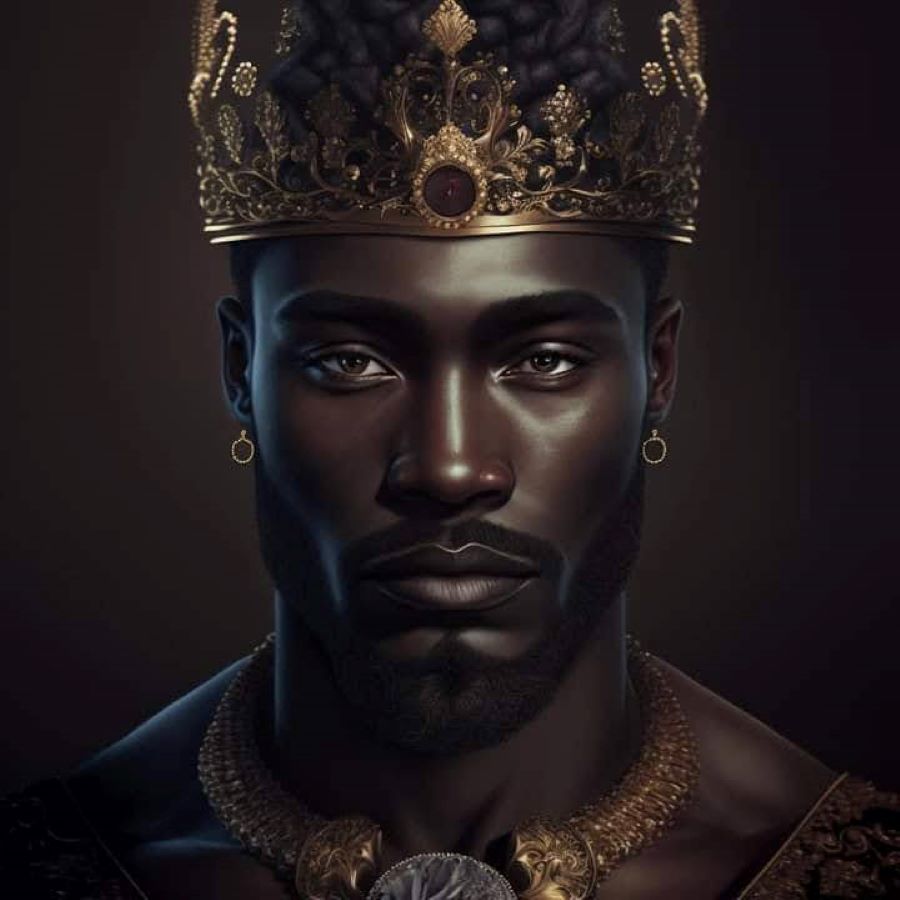
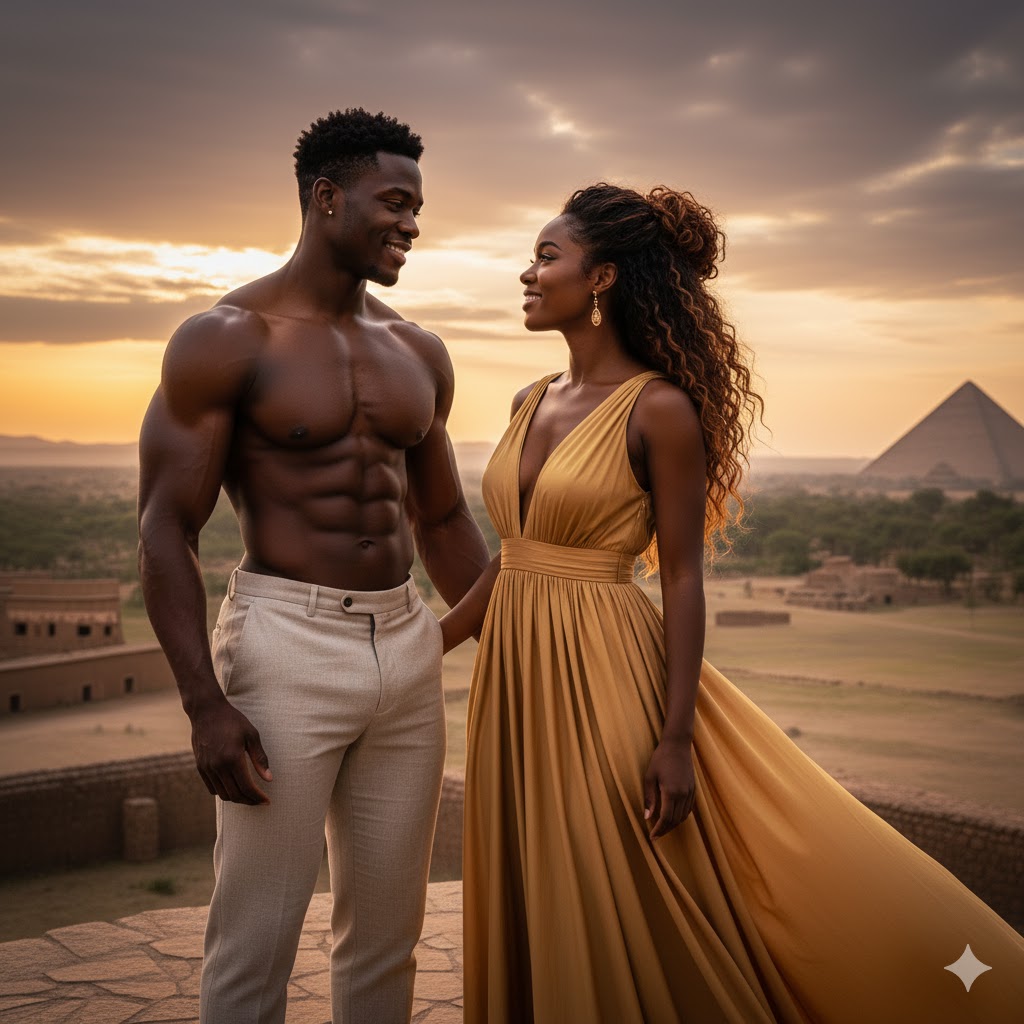
Black Men, Beautiful by Divine Design

Black men are beautiful by divine design, not as a reaction to oppression but as an original truth rooted in creation itself. From the first formation of humanity, Scripture affirms that mankind was made in the image and likeness of God, carrying dignity, purpose, and beauty that cannot be erased by history or hatred (Genesis 1:26–27, KJV). Black male beauty is therefore not merely aesthetic; it is theological, intentional, and sacred.

The beauty of Black men is expressed through strength and softness existing in harmony. Muscular frames, broad shoulders, and commanding posture often reflect physical power, yet the deeper beauty lies in restraint, wisdom, and emotional depth. Biblical masculinity never divorces strength from gentleness, as Christ Himself embodied both authority and compassion (Matthew 11:29, KJV).

Melanin itself stands as a biological testimony of divine wisdom. Scientifically, melanin provides protection against ultraviolet radiation and contributes to skin resilience, reflecting adaptation and intentional design (Jablonski, 2012). What society has often devalued, creation reveals as functional, protective, and beautiful.

Black men’s facial diversity—strong jawlines, full lips, wide or narrow noses, deep-set or expressive eyes—reflects a vast genetic inheritance rooted in Africa, the cradle of humanity. Genetics confirms that African populations possess the greatest genetic diversity on Earth, making Black features foundational rather than derivative (Tishkoff et al., 2009).

Hair textures among Black men, from tight coils and full afros to locs and curls, represent cultural memory and biological brilliance. Coiled hair conserves moisture and protects the scalp in warm climates, further revealing form following function (Jablonski & Chaplin, 2010). What was once policed and stigmatized is now being reclaimed as a crown.

Scripture consistently affirms that beauty is not accidental but crafted. Psalm 139 declares that human beings are “fearfully and wonderfully made,” language that applies fully to Black men whose bodies and identities have been historically attacked (Psalm 139:14, KJV). Divine craftsmanship cannot be undone by social distortion.

Historically, Black male beauty was intentionally suppressed during slavery and colonialism. European racial hierarchies sought to redefine beauty through whiteness to justify domination, portraying Black men as hyperphysical but subhuman (Fanon, 1952). This distortion was never truth—it was strategy.

Despite this, Black men have continually embodied dignity under pressure. From enslaved fathers protecting their families in spirit, to freedom fighters, scholars, artists, and builders, Black men have reflected a beauty rooted in perseverance and moral courage. Such beauty aligns with biblical endurance refined through trial (James 1:12, KJV).

The physical presence of Black men often communicates authority even in silence. This presence, frequently misinterpreted as threat, is in fact a reflection of bearing—what Scripture might call countenance. When Moses descended from Sinai, his face shone with divine encounter, reminding us that presence can be mistaken when observers lack understanding (Exodus 34:29, KJV).

Black male beauty is also relational. A man’s ability to love, lead, protect, and nurture reflects God’s design for masculine stewardship. Biblical manhood emphasizes responsibility and sacrificial love, not domination (Ephesians 5:25, KJV). In this, Black men mirror divine order.

In contemporary media, the reclamation of Black male beauty challenges centuries of distortion. When Black men are depicted as intellectual, tender, fashionable, faithful, and emotionally whole, the narrative shifts toward truth. Representation becomes a corrective lens rather than a superficial trend.

Psychologically, affirming Black male beauty is essential for healing. Studies show that internalized racism negatively impacts self-concept and mental health among Black men (Williams & Mohammed, 2009). Reclaiming beauty is therefore an act of restoration, not vanity.

Spiritually, beauty is linked to purpose. The Most High does nothing without intention, and Black men exist as vessels of divine assignment. Their appearance, voice, and physicality are part of how they move through the world and fulfill calling (Jeremiah 1:5, KJV).

The biblical narrative includes men of dark complexion and strength, such as the Shulammite’s beloved, described with admiration and desire in the Song of Solomon. The language of attraction and admiration in Scripture affirms that Blackness and beauty are not opposites (Song of Solomon 5:10–11, KJV).

Black men’s beauty also lives in discipline—how they carry themselves, speak with wisdom, and develop mastery in skill and craft. Proverbs teaches that skill brings a man before greatness, reinforcing that excellence itself is attractive and honorable (Proverbs 22:29, KJV).

Athleticism, often emphasized in Black male bodies, should be understood as one expression of embodied intelligence, not the limit of Black potential. The same bodies that run, lift, and endure also think, create, heal, and lead. Divine design never restricts purpose to one dimension.

Fatherhood reveals another layer of beauty. When Black men nurture children, guide families, and restore generational foundations, they reflect God as Father. This image is especially powerful in a society shaped by intentional family disruption (Malachi 4:6, KJV).

Cultural style—how Black men dress, groom, and adorn themselves—functions as visual theology. From tailored suits to casual streetwear, style communicates identity, self-respect, and cultural continuity. Even Scripture acknowledges garments as expressions of honor and position (Genesis 41:42, KJV).

Black men’s voices carry resonance, rhythm, and authority, shaped by both ancestry and lived experience. Whether preaching, teaching, singing, or speaking truth in everyday spaces, their voices reflect breath given by God Himself (Genesis 2:7, KJV).

Ultimately, declaring Black men “beautiful by divine design” is an act of truth-telling. It resists false narratives, restores dignity, and aligns with both Scripture and science. Beauty, in this sense, is not subjective—it is ordained.

When Black men see themselves as God sees them, beauty becomes a foundation for wholeness, responsibility, and righteous living. To affirm their beauty is to affirm God’s craftsmanship, wisdom, and sovereignty. What God has designed beautifully, no system has the authority to redefine.


References

Fanon, F. (1952). Black skin, white masks. Grove Press.

Jablonski, N. G. (2012). Living color: The biological and social meaning of skin color. University of California Press.

Jablonski, N. G., & Chaplin, G. (2010). Human skin pigmentation as an adaptation to UV radiation. Proceedings of the National Academy of Sciences, 107(Supplement 2), 8962–8968.

Tishkoff, S. A., et al. (2009). The genetic structure and history of Africans and African Americans. Science, 324(5930), 1035–1044.

Williams, D. R., & Mohammed, S. A. (2009). Discrimination and racial disparities in health. Journal of Behavioral Medicine, 32(1), 20–47.

The Holy Bible, King James Version. (1611/2017). Cambridge University Press.

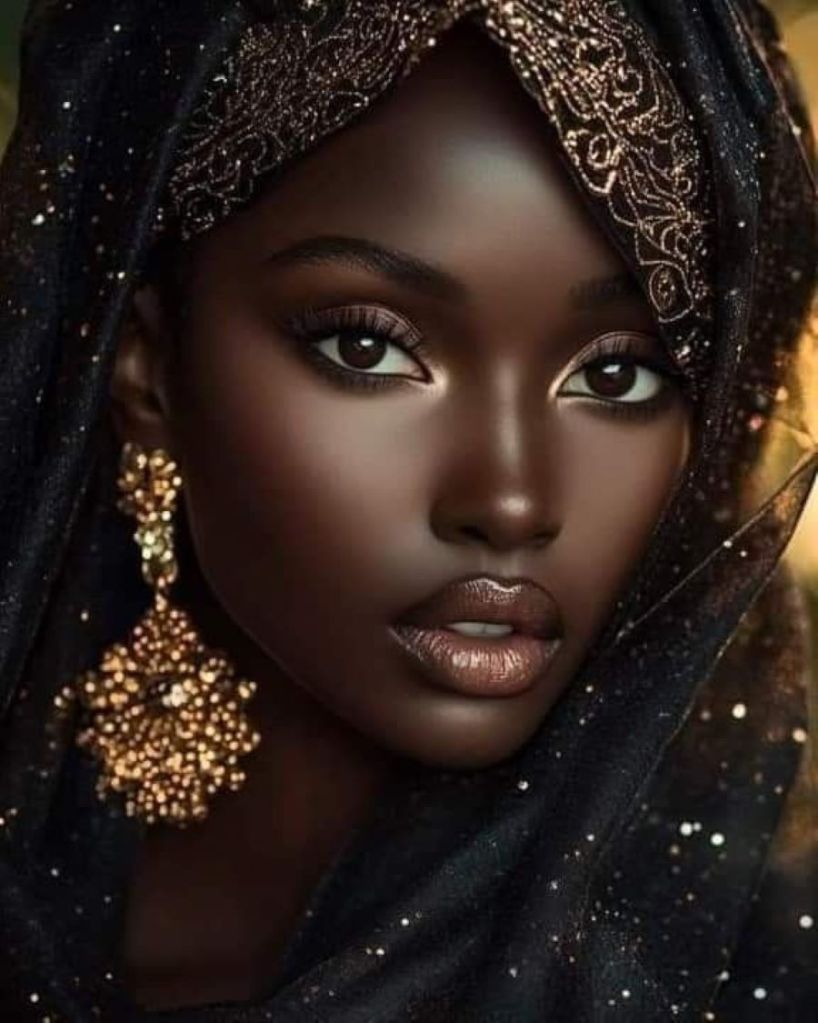
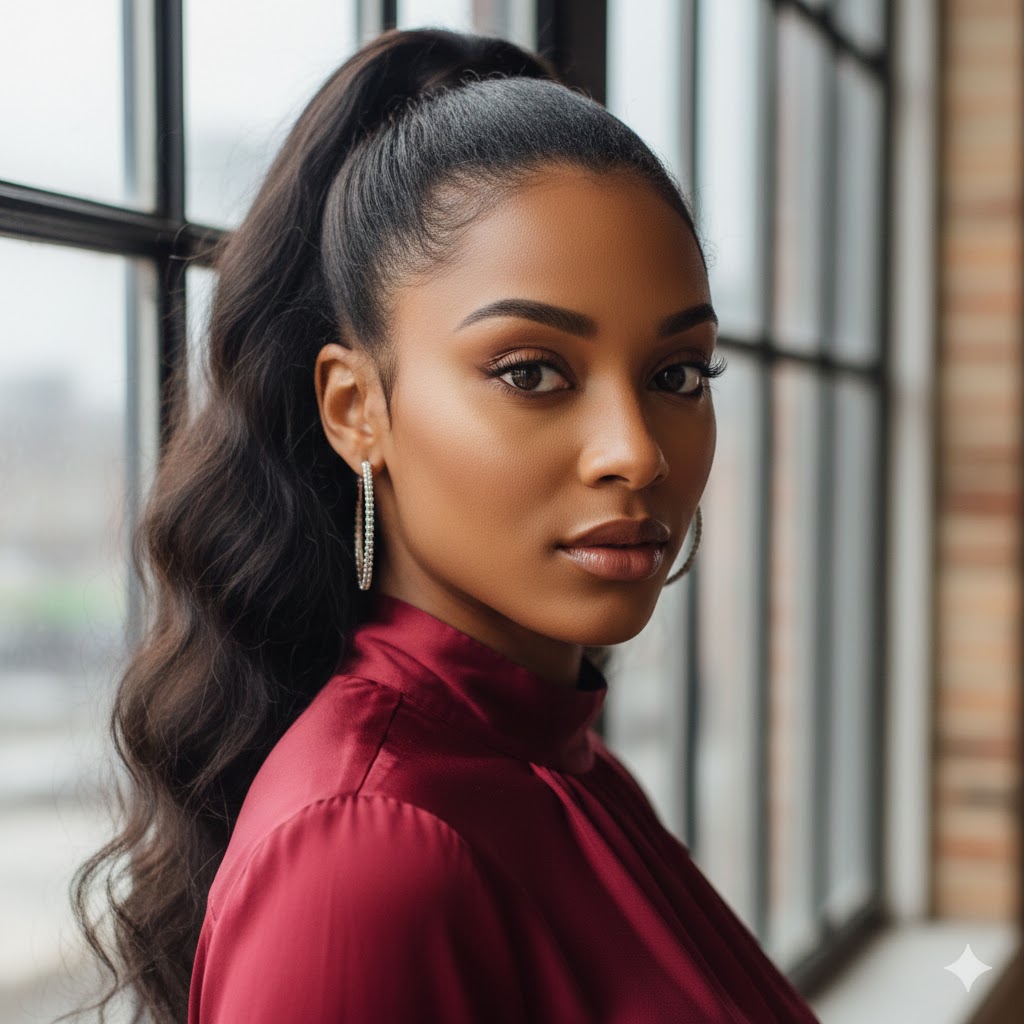
She is Light: A Celebration of the Beauty God Gave Black Women

She is light. Not because the world crowned her, but because God placed radiance in her before her first breath. The beauty of a Black woman is not an accident, not an afterthought, not an alternate version of anything else. It is intentional, divine, and woven with the fingerprints of a Creator who makes no mistakes. Her melanin is not simply a pigment; it is a reflection of God’s artistry, absorbing light, reflecting warmth, and telling a story thousands of years old.

Her beauty was never meant to be measured by the standards of societies that once denied her humanity. Her light predates oppression, predates Western ideals, predates any system designed to diminish her. Long before colorism or colonialism, the Black woman was already crowned with dignity, already adorned with strength, already declared “good” by God in Eden. She was never created to compete—only to shine.

Her skin, rich with depth and dimension, testifies of resilience and royalty. Melanin is protective, powerful, and majestic—evidence of survival, adaptation, and divine engineering. It glows under the sun, holds warmth in winter, and remains a symbol of strength across generations. When Scripture says, “I am black, but comely” (Song of Solomon 1:5, KJV), it is not a concession—it is a declaration. Beautiful and Black have always belonged in the same sentence.

Her hair, coiled like the rivers of Eden, holds its own testimony. Whether tightly curled, loosely waved, loc’d, braided, pressed, or natural, her hair defies gravity and rules. It stretches when pulled and shrinks when free—it expands and contracts like creation itself. Every curl is a fingerprint of identity, a crown that changes form but never loses its glory. God designed her hair to hold history, culture, versatility, and pride all at once.

Her features—full lips, broad nose, high cheekbones, deep eyes—were crafted with intention, artistry, and balance. These traits have traveled from ancient kingdoms, adorned queens, and birthed nations. What some once mocked, the world now imitates. What was dismissed as “too much” is now desired globally. The features of a Black woman are a reminder that nothing about her needs shrinking, altering, or apologizing for. She is already enough.

Psychologically, Black women have endured centuries of messages suggesting their beauty is conditional, rare, or negotiable. Yet despite that, they rise with a knowing that cannot be erased. The internal strength it takes to love oneself in a world that profits from insecurity is itself a testimony of divine resilience. She learns to heal from inherited pain, to reject generational comparisons, and to embrace the full truth of who she is.

Her beauty is not merely external—it is spiritual. Scripture calls her “fearfully and wonderfully made” (Psalm 139:14, KJV), meaning she is constructed with reverence and awe. She carries light not only in her appearance but in her spirit, compassion, intuition, wisdom, and emotional depth. Her beauty radiates in her ability to nurture, lead, feel, empathize, and discern. She is a vessel of both softness and fire.

Society has often feared the Black woman’s light because it cannot be contained. It is too powerful, too rich, too ancient. Attempts to dilute that light—through colorism, misogynoir, erasure, and standards that were never made with her in mind—were never successful. She is still here. Still glowing. Still redefining beauty on her own terms.

Her walk carries confidence that comes from ancestors who survived storms. Her smile carries joy that cannot be taken. Her presence shifts atmospheres because her essence carries history, promise, and creativity. She is not simply seen—she is felt. Whole rooms brighten when she embraces who she is.

In relationships, families, friendships, and sisterhood, her light offers refuge. She encourages, uplifts, and heals with a word, a touch, a look. Her beauty is not vain; it is functional. It restores. It nourishes. It inspires. It teaches the world what divine femininity looks like in motion. Her spirit mirrors the Proverbs 31 woman in strength, wisdom, and dignity.

Even in adversity, she shines. She turns pain into purpose, obstacles into innovations, and wounds into wisdom. Her beauty is seen in her survival, her laughter, her voice, and her refusal to let darkness dim her brilliance. She is a living reflection of Isaiah 61:3—the one who brings forth “beauty for ashes.”

When she loves herself, she becomes magnetic. When she embraces her identity, she becomes unstoppable. When she honors her body, her skin, her hair, her voice, her story—she becomes a force too powerful to erase. Her beauty becomes a declaration of victory over everything meant to silence her.

Spiritually, her beauty has always been connected to purpose. God never designed beauty without intention. The Black woman’s beauty speaks of strength, spiritual discernment, nurturing, leadership, and sacred femininity. She carries the reflection of African matriarchs, biblical mothers, and modern queens who shaped nations with their presence.

She is light when she walks into a room. She is light when she prays. She is light when she dreams. She is light when she speaks truth. She is light when she heals. She is light because God said she is, and no culture, system, or opinion can override divine affirmation.

Healing from comparison and colorism is the beginning of awakening. She learns that her complexion is not a ranking, but a revelation. Her beauty does not exist in shades, but in essence. Every shade of Black skin is sacred. Every curl pattern is divine. Every feature is intentional. She is not a trend—she is a blueprint.

The world may try to rewrite definitions, but God’s original design stands. When she looks in the mirror, she looks into history, divinity, and promise. She carries the brilliance of galaxies in her skin, the depth of oceans in her eyes, and the artistry of creation in her form. She is not ordinary—she is extraordinary.

The celebration of Black beauty is more than affirmation—it is restoration. It breathes life into what society tried to suppress. It unravels lies and replaces them with truth. It teaches daughters to celebrate themselves long before the world tries to teach them to shrink. It reminds mothers and aunties that they are still beautiful, still chosen, still radiant.

She is light because she was born with light. She is radiant because God called her radiant. She shines not because she tries, but because she is. Her beauty is eternal, spiritual, ancestral, and divine. She is light—and the world is brighter because she is in it.


References

Boylorn, R. M. (2013). Sweetwater: Black women and narratives of resilience. Peter Lang.

Hunter, M. (2007). The persistent problem of colorism: Skin tone, status, and inequality. Sociology Compass, 1(1), 237–254.

Jones, C., & Shorter-Gooden, K. (2003). Shifting: The double lives of Black women in America. HarperCollins.

Robinson-Moore, C. L. (2008). Beauty standards reflect Eurocentric paradigms—A Black female perspective. Journal of Black Studies, 39(2), 326–344.

White, L. (2020). Melanin and the biological benefits of pigmentation. Journal of Dermatological Science, 98(3), 241–250.

The Holy Bible, King James Version. (1769/2023). Cambridge University Press.

Nothing More Beautiful Than a Black Woman Who Loves God.

There is nothing more beautiful than a Black woman who loves God, because her beauty radiates from a source untouched by trends, time, or human approval. Her glow is not manufactured; it is cultivated in prayer, obedience, and reverence for the Most High. What people see in her presence is not merely personality, but light.

Scripture teaches that when God dwells within a person, it becomes visible. “Arise, shine; for thy light is come” (Isaiah 60:1, KJV). A woman who loves God carries a spiritual illumination that draws others not to herself, but to the God she serves. Her life becomes a testimony without words.

Her beauty is rooted in purity, not perfection. Purity of heart, intention, and devotion governs her choices. She understands that holiness is not repression but alignment, and that guarding her heart is an act of wisdom and strength (Proverbs 4:23).

People can see God in her because her character reflects His nature. Her compassion mirrors His mercy, her patience reflects His longsuffering, and her forgiveness reveals His grace. She does not strive to be seen as godly; she simply walks with God, and the evidence follows.

A Black woman who loves God loves people deeply, not selectively. She understands that love is not merely emotion but action, sacrifice, and humility. She serves without applause and gives without calculation, embodying the command to love her neighbor as herself (Matthew 22:39).

She is a woman of peace in a world addicted to chaos. Her presence calms rather than agitates, heals rather than inflames. Scripture calls the peacemakers blessed (Matthew 5:9), and her spirit confirms that peace is a spiritual authority, not weakness.

In marriage, she loves her husband with wisdom, respect, and covenant understanding. She honors him not out of fear, but out of reverence for God. Her love strengthens the household, and her loyalty builds a legacy rather than competition (Proverbs 31:11–12).

She is humble, knowing that humility is not self-erasure but God-centered confidence. She does not need to announce her worth because she understands who defines it. “God resisteth the proud, but giveth grace unto the humble” (James 4:6, KJV).

Her meekness is often misunderstood, but it is power under control. Meekness allows her to respond rather than react, to correct without cruelty, and to endure without bitterness. Christ Himself described meekness as blessed (Matthew 5:5).

She possesses a quiet spirit, not because she lacks a voice, but because she knows when silence speaks louder than noise. Scripture calls this quiet spirit “of great price” in the sight of God (1 Peter 3:4). Her restraint reveals maturity and discernment.

She is not a troublemaker because she refuses to thrive on disorder. She does not sow division, provoke strife, or delight in conflict. Her wisdom teaches her that chaos is rarely holy, and peace is often the truest evidence of God’s presence.

She does not gossip about others, understanding that words carry power to heal or destroy. “Life and death are in the power of the tongue” (Proverbs 18:21, KJV). She guards her speech because she honors God with her mouth as well as her heart.

Her integrity remains consistent whether she is seen or unseen. She lives before God rather than before people. This consistency is what gives her beauty depth and permanence, separating her from surface-level admiration.

A Black woman who loves God knows her identity. She is not confused by cultural narratives that distort womanhood or diminish her value. She understands that she is fearfully and wonderfully made, crafted with intention and divine purpose (Psalm 139:14).

Her faith anchors her through adversity. When storms arise, she does not collapse into despair but leans into prayer. Her resilience is not self-generated; it is sustained by trust in God’s sovereignty.

She carries joy that cannot be stolen by circumstance. Even in sorrow, her hope remains intact. This joy is not denial of pain, but confidence that God is present within it (Nehemiah 8:10).

Her love for God influences future generations. Whether through children, mentorship, or quiet example, she leaves a spiritual imprint. Her obedience plants seeds that may flourish long after she is gone.

She understands submission biblically, not as inferiority but as order under God. She submits first to God’s will, allowing Him to shape her relationships, decisions, and direction.

Her beauty challenges shallow standards. It testifies that holiness is attractive, discipline is powerful, and righteousness is radiant. She reminds the world that true beauty begins within and reflects outward.

Nothing is more beautiful than a Black woman who loves God because her life glorifies Him. She walks in dignity, clothed in strength, crowned with wisdom, and guided by faith. Her beauty is not fleeting; it is eternal.


References

Cone, J. H. (1975). God of the oppressed. New York, NY: Seabury Press.

Holy Bible, King James Version. (1769/2017). Cambridge Edition.

Piper, J. (2012). This momentary marriage. Wheaton, IL: Crossway.

Tozer, A. W. (1948). The pursuit of God. Harrisburg, PA: Christian Publications.

Townsend, J. T. (2010). Sacred womanhood: Faith, identity, and spiritual formation. Downers Grove, IL: IVP Academic.

🌸 The Beauty Within: How Character Outshines Appearance in God’s Design 🌸

Photo by Jermaine Ulinwa on Pexels.com

In a society that often equates beauty with physical features, fashion, and external charm, the Word of God reminds us that true beauty flows from within. Proverbs 31:30 (KJV) declares: “Favour is deceitful, and beauty is vain: but a woman that feareth the Lord, she shall be praised.” Outward attractiveness may capture attention, but it is the enduring light of godly character that leaves a lasting impression. God’s design for beauty transcends appearance and reveals itself in virtues such as kindness, humility, and faith.

Psychology supports this biblical truth by showing that people are drawn not only to physical attractiveness but also to personality traits such as warmth, empathy, and integrity. Studies reveal that individuals who display compassion and positivity are perceived as more attractive over time than those with only outward appeal (Little et al., 2011). This confirms the biblical principle that inner beauty outshines physical appearance because it nourishes relationships and fosters genuine connection.

Scripture offers countless examples of women whose beauty was defined not merely by appearance but by faith and character. Esther, though physically beautiful, found favor because of her courage and wisdom. Her willingness to risk her life for her people (Esther 4:16 KJV) demonstrates that true beauty is expressed in sacrificial love and unwavering trust in God. Similarly, Ruth’s devotion to Naomi and her faith in God made her stand out, leading to honor, restoration, and her place in the lineage of Christ (Ruth 1:16 KJV).

The Apostle Peter emphasized this in his letter: “Whose adorning let it not be that outward adorning of plaiting the hair, and of wearing of gold… But let it be the hidden man of the heart, in that which is not corruptible, even the ornament of a meek and quiet spirit, which is in the sight of God of great price” (1 Peter 3:3–4 KJV). Here, beauty is framed as incorruptible when rooted in character. Unlike physical features, which change with time, spiritual virtues grow stronger and more radiant.

Modern psychology echoes this biblical view through the concept of “authentic attractiveness.” People find genuineness, kindness, and reliability more appealing than artificial displays of beauty (Riggio & Widaman, 1984). A woman who exudes inner peace and strength provides stability as a friend, nurturing care as a mother, and respect as a wife. Her role in family and community becomes a living testimony of God’s design for inner beauty.

True beauty also has transformative power. For example, a teacher who leads with patience and compassion may inspire generations of students, not because of her appearance but because of her integrity and encouragement. A nurse who offers care with gentleness brings healing that goes beyond medicine. These real-life reflections mirror Christ’s love and show that beauty shines brightest when it uplifts others.

As a friend, the beautiful woman uplifts; as a sister, she supports; as a mother, she nurtures; as a wife, she loves unconditionally; and as an aunt, she provides guidance. Her impact reaches far beyond herself. Proverbs 31 paints the picture of such a woman—her hands provide, her mouth speaks wisdom, and her children rise and call her blessed (Proverbs 31:26–28 KJV). Her beauty is defined by what she gives to others and how she reflects God’s character.

The moral lesson is clear: physical beauty fades, but inner beauty rooted in faith and character endures. The woman who fears God and walks in virtue reflects His image, blessing her family and community. Her beauty outshines appearance because it is eternal, incorruptible, and aligned with God’s divine design.

Ultimately, the beauty within is not a possession but a practice. It is cultivated daily through prayer, humility, acts of service, and trust in God. In a world that often glorifies outward appearance, God calls His daughters to reflect His light through their hearts. True beauty is not about being admired but about inspiring others to glorify the Creator.


References

  • The Holy Bible, King James Version.
  • Little, A. C., Burt, D. M., & Perrett, D. I. (2011). What is good is beautiful: Face preference reflects desired personality. Personality and Individual Differences, 50(7), 862–866.
  • Riggio, R. E., & Widaman, K. F. (1984). The interrelationships of self-esteem, locus of control, and attractiveness. Personality and Social Psychology Bulletin, 10(2), 241–247.
  • Koenig, H. G. (2012). Religion, spirituality, and health: The research and clinical implications. ISRN Psychiatry, 2012, 278730. https://doi.org/10.5402/2012/278730

Boy Meets Girl Series: Episode 1 — When His Eyes Found Hers.

When his eyes found hers, time did not rush forward; it stood still, as though creation itself paused to witness a divine appointment. This was not a glance rooted in appetite or impulse, but a recognition that reached beyond the surface and into the depths of the soul. In her mirrored eyes, he did not merely see beauty—he saw memory, calling, and promise intertwined.

Her eyes reflected his past, not as shame, but as refinement. Every trial that had shaped him, every lesson carved by obedience and repentance, found meaning in that moment. Scripture teaches that God orders the steps of the righteous, and this meeting was not random but arranged by a Sovereign hand that wastes nothing (Psalm 37:23, KJV).

In her gaze, he also saw his present self clearly. There was no need for performance or pretense. Truth stood uncovered, steady and unashamed. “As in water face answereth to face, so the heart of man to man” (Proverbs 27:19, KJV). What he saw reflected back was alignment—two hearts standing honestly before God.

Yet it was the future that startled him most. Within her eyes lived vision: family, legacy, spiritual fruit, and covenant. This was not fantasy, but foresight rooted in purpose. The Word declares that God knows the end from the beginning (Isaiah 46:10, KJV), and when He introduces two lives, He does so with destiny already written.

This encounter moved beyond romance because romance alone cannot sustain a covenant. Attraction may initiate interest, but purpose sustains union. “Except the LORD build the house, they labour in vain that build it” (Psalm 127:1, KJV). What God joins is not merely emotional—it is architectural, intentional, and enduring.

Their meeting was marked by purity, not passion out of control. Desire existed, but it was governed. Beauty was admired without being consumed. He saw her form, yet honored her frame as a temple, not an object. Job’s declaration echoed silently between them: “I made a covenant with mine eyes; why then should I think upon a maid?” (Job 31:1, KJV).

This was admiration without lust, affection without fornication, intimacy without trespass. Scripture does not condemn attraction; it disciplines it. “Flee fornication” (1 Corinthians 6:18, KJV) is not a rejection of desire, but a protection of destiny. They understood that purity preserves clarity.

In a culture that rushes physical closeness while neglecting spiritual alignment, their restraint became revolutionary. They refused to awaken love before its time (Song of Solomon 2:7, KJV). Waiting was not weakness—it was wisdom. Their patience testified that what God ordains, He also sustains.

When their eyes met, they did not speak immediately, yet understanding passed between them. The Spirit bore witness where words would have fallen short. “The Spirit itself beareth witness with our spirit” (Romans 8:16, KJV). This was recognition at the level of calling.

Marriage, in the biblical sense, is never accidental. “He which made them at the beginning made them male and female… What therefore God hath joined together, let not man put asunder” (Matthew 19:4–6, KJV). Their meeting echoed this truth—not ownership, but union under God’s authority.

He did not pursue her to conquer; he approached to cover. She did not entice him to consume; she inspired him to protect. Their interaction reflected Christ and the Church, a pattern rooted in sacrifice, honor, and order (Ephesians 5:25–27, KJV).

This moment affirmed that destiny does not shout; it often whispers. It does not overwhelm the senses but settles the spirit. Peace accompanied their connection, for “God is not the author of confusion, but of peace” (1 Corinthians 14:33, KJV).

Beyond romance, there was an assignment. Beyond affection, there was agreement. Their lives aligned not merely emotionally, but missionally. Amos asks, “Can two walk together, except they be agreed?” (Amos 3:3, KJV). Agreement preceded movement.

They understood that love defined by God is patient, disciplined, and enduring. It seeks the other’s holiness before its own pleasure. Charity “seeketh not her own” (1 Corinthians 13:5, KJV), and so they guarded one another’s virtue as a sacred trust.

In that first meeting, their eyes spoke what their mouths would later confirm: this was not a chance. Heaven had already spoken. The Most High, who establishes households and uproots them, had seen fit to align two paths into one covenant future (Proverbs 18:22, KJV).

Thus, when his eyes found hers, it was not merely a beginning—it was a remembrance of something God had already written. Past refined, present aligned, future revealed. A divine meeting where purity guarded promise, and destiny waited patiently for its appointed time.


References

The Holy Bible, King James Version. (1769/2017). Cambridge University Press.

Additional biblical references used:
Amos 3:3; Ephesians 5:25–27; Isaiah 46:10; Job 31:1; Matthew 19:4–6; Psalm 37:23; Psalm 127:1; Proverbs 18:22; Proverbs 27:19; Romans 8:16; Song of Solomon 2:7; 1 Corinthians 6:18; 1 Corinthians 13:5; 1 Corinthians 14:33.

Physical Attraction

Physical attraction is a powerful human experience that influences desire, connection, and decision-making. Scripture does not deny its existence, but it does warn against allowing attraction to govern behavior apart from wisdom and holiness. When physical attraction is unchecked, it can override discernment and lead individuals away from God’s design.

The origin of physical attraction is rooted in creation itself. God created humanity with the capacity to recognize beauty and form bonds. In Genesis, Adam’s recognition of Eve reveals that attraction was present before sin: “This is now bone of my bones, and flesh of my flesh” (Genesis 2:23, KJV). Attraction, in its original form, was pure and covenantal.

However, the fall of man distorted attraction. After sin entered the world, desire became disordered and self-centered. Scripture notes this shift when God said, “Thy desire shall be to thy husband, and he shall rule over thee” (Genesis 3:16, KJV). Attraction moved from harmony to tension, vulnerability, and misuse.

Physical attraction becomes dangerous when it is divorced from purpose. Lust replaces love when desire seeks gratification without responsibility. Jesus clarified this danger by teaching, “Whosoever looketh on a woman to lust after her hath committed adultery with her already in his heart” (Matthew 5:28, KJV). Lust transforms attraction into sin at the level of thought.

The eyes play a central role in fueling unhealthy attraction. Scripture repeatedly warns about visual temptation. Job declared, “I made a covenant with mine eyes; why then should I think upon a maid?” (Job 31:1, KJV). Guarding the eyes is a primary defense against lust-driven attraction.

Physical attraction often leads to fornication when boundaries are absent. Fornication is condemned throughout Scripture because it corrupts the body and soul. Paul commands believers to “Flee fornication” (1 Corinthians 6:18, KJV), emphasizing urgency rather than resistance. Attraction without restraint quickly becomes transgression.

The danger of physical attraction lies in its ability to silence wisdom. Strong desire can cloud judgment and override godly counsel. Proverbs warns, “He that trusteth in his own heart is a fool” (Proverbs 28:26, KJV). When attraction governs decisions, spiritual consequences often follow.

Attraction can also lead individuals to form unequal or ungodly relationships. Desire may cause people to overlook character, faith, or moral alignment. Scripture cautions believers not to be “unequally yoked together with unbelievers” (2 Corinthians 6:14, KJV), reminding us that attraction is not a reliable measure of compatibility.

The culture often celebrates lust while minimizing its cost. Yet Scripture exposes the end result: “The end thereof are the ways of death” (Proverbs 14:12, KJV). Lust promises pleasure but delivers bondage, guilt, and spiritual distance from God.

Physical attraction can become a form of idolatry when beauty or desire replaces obedience to God. Anything that rules the heart competes with God’s authority. The Bible commands, “Thou shalt have no other gods before me” (Exodus 20:3, KJV). Attraction becomes dangerous when it takes precedence over righteousness.

Fornication creates spiritual and emotional bonds that were never intended outside of marriage. Scripture describes sexual union as becoming “one flesh” (1 Corinthians 6:16, KJV). When attraction leads to repeated fornication, it fragments the soul and dulls spiritual sensitivity.

The body is not merely a tool for pleasure but a temple for God’s Spirit. Paul reminds believers, “Know ye not that your body is the temple of the Holy Ghost?” (1 Corinthians 6:19, KJV). Yielding the body to lust dishonors both God and oneself.

Discipline is essential in managing physical attraction. The Bible teaches self-control as a fruit of the Spirit. “A city that is broken down, and without walls, is a man that hath no rule over his own spirit” (Proverbs 25:28, KJV). Without discipline, attraction becomes a gateway to sin.

Physical attraction must be subordinated to holiness. Scripture instructs believers to pursue purity actively: “That every one of you should know how to possess his vessel in sanctification and honour” (1 Thessalonians 4:4, KJV). Honor governs desire when God is at the center.

The renewal of the mind is necessary to overcome lust. The world conditions the mind to eroticize bodies and normalize excess desire. God’s word calls believers to transformation: “Be not conformed to this world: but be ye transformed by the renewing of your mind” (Romans 12:2, KJV).

God provides a righteous outlet for attraction within marriage. Sexual desire is sanctified in covenant. “Marriage is honourable in all, and the bed undefiled” (Hebrews 13:4, KJV). Outside of marriage, the same desire becomes sin and disorder.

Victory over lust requires vigilance and prayer. Jesus warned, “Watch and pray, that ye enter not into temptation” (Matthew 26:41, KJV). Spiritual awareness prevents attraction from maturing into action.

Physical attraction must be interpreted through spiritual discernment. Not every strong feeling is a divine signal. Scripture urges believers to test impulses: “Beloved, believe not every spirit, but try the spirits” (1 John 4:1, KJV). Discernment distinguishes desire from direction.

God’s commandments regarding sexuality are protective, not punitive. Obedience preserves clarity, peace, and future joy. “The law of the Lord is perfect, converting the soul” (Psalm 19:7, KJV). God’s design guards the heart from regret.

Those who walk in purity gain spiritual confidence. A clean conscience strengthens fellowship with God. “Blessed are the pure in heart: for they shall see God” (Matthew 5:8, KJV). Purity sharpens spiritual vision.

Ultimately, physical attraction must submit to Christ. Believers are called to glorify God in body and spirit. “Whether therefore ye eat, or drink, or whatsoever ye do, do all to the glory of God” (1 Corinthians 10:31, KJV). When attraction is surrendered to God, it no longer destroys but serves His purpose.


References (KJV Bible)

The Holy Bible, King James Version.
Genesis 2:23; 3:16
Exodus 20:3
Job 31:1
Proverbs 14:12; 25:28; 28:26
Psalm 19:7
Matthew 5:8, 5:28; 26:41
Romans 12:2
1 Corinthians 6:16, 6:18–19; 10:31
2 Corinthians 6:14
1 Thessalonians 4:4
Hebrews 13:4
1 John 4:1

The Science of Beauty (Celebrity Edition)

Beauty has long captivated philosophers, artists, theologians, and scientists alike, prompting a timeless question: Is beauty a biologically grounded reality, or is it shaped by the beholder’s eye and cultural imagination? Contemporary research suggests the answer lies at the intersection of both. Beauty, though subjective in its cultural expressions, draws from deeply embedded evolutionary cues, genetic factors, and perceptual biases that shape human attraction and social response.

Human beings are biologically attuned to detect cues of health, vitality, and fertility, which often manifest physically. From skin clarity to facial symmetry and body proportions, these physical traits historically signaled reproductive fitness in ancestral environments. Modern psychology calls these traits “fitness indicators,” linking beauty to evolutionary survival mechanisms (Gangestad & Scheyd, 2005).

Yet beauty is also profoundly psychological, shaped by memory, cultural storytelling, spiritual symbolism, and personal experience. One person may be moved by sharp cheekbones and porcelain skin, another by full lips and rich melanin, another by youthful softness and roundness—differences rooted not only in personal taste but also in social history and racial conditioning.

At its core, beauty involves four primary pillars of facial aesthetics: symmetry, averageness, sexual dimorphism (masculinity or femininity), and skin quality. Each contributes to how observers process faces rapidly and subconsciously, forming impressions within milliseconds (Willis & Todorov, 2006).

Symmetry often reflects developmental stability and genetic health. Faces with high symmetry evoke greater automatic liking and trust, even across cultures. Yet perfect symmetry is neither common nor necessary; slight asymmetry can add human uniqueness and charm—what many call “character.”

Averageness, or the degree to which a face resembles a statistical norm, is another universal beauty marker. Averaged facial composites are consistently rated as attractive across ethnic groups, a finding famously demonstrated in computer-generated studies (Langlois & Roggman, 1990). The logic is evolutionary: average features may represent genetic diversity and health.

Sexual dimorphism signals fertility and hormone levels. Feminine features in women—large eyes, full lips, high cheekbones, and a soft jawline—are often preferred, while masculine traits in men—defined jaws, brow prominence, and broader faces—signal strength and protection. However, preferences for masculinity versus gentleness in male faces fluctuate with social context and female hormonal cycles (Penton-Voak et al., 1999).

Skin quality communicates health, youth, and vitality. Smooth texture, even tone, and luminosity are associated with strong immune systems and good nutrition. Across global cultures, clear skin maintains its status as a beauty cornerstone.

Skin color, however, reflects complex biological and sociocultural meaning. Biologically, melanin protects against ultraviolet damage; culturally, shades of skin have been politicized, especially in societies shaped by colonialism and caste stratification. While media norms historically elevated lighter tones, global appreciation for diverse skin tones continues to grow, particularly as cultural representation expands.

Facial features carry racial aesthetics rooted in ancestry and geography. African diasporic features—strong cheekbones, full lips, deeper eye shapes, and rich melanin—reflect adaptation to equatorial environments and hold beauty that is regal, ancestral, and ancient. East and South Asian features carry their own elegance, harmony, and distinct eye and jaw structures shaped by climate and evolution. European features, often associated with delicate bone structure and lighter pigmentation, reflect northern climate adaptations.

Preferences across racial groups can shift depending on exposure and cultural power. Research shows that beauty ideals mirror societies’ dominant ethnic imagery and media representation (Rhodes, 2006). When representation expands, perception expands; when representation narrows, imagination shrinks.

Beyond the face, body proportions also influence attraction. The hourglass figure—waist-to-hip ratio around 0.7—is cross-culturally linked to fertility and hormonal balance in women (Singh, 1993). The V-shaped torso in men—broad shoulders tapering to the waist—signals strength and physical capability. Yet contemporary beauty movements increasingly celebrate diversity in body shapes, challenging rigid biological interpretations.

Psychology reminds us that beauty also resides in the emotional aura one carries—confidence, grace, humor, humility, and depth. A mathematically beautiful face with a cold spirit lacks radiance; a sincere and joyful countenance shines regardless of ratio perfection.

Culturally, beauty narratives can become oppressive if stripped from humanity. When beauty becomes a tool of hierarchy, exclusion, or racial bias, it harms self-worth and limits collective imagination. Yet when understood as both art and biology, wonder and science, beauty becomes empowering—a study in divine craftsmanship and evolutionary brilliance.

Across civilizations, beauty has also symbolized holiness and divinity. In sacred traditions, beauty reflects harmony, order, and spiritual balance. To see beauty rightly is, in a sense, to see God’s fingerprint in human form.

Modern neuroscience reveals that beauty activates the brain’s reward system, lighting up emotional and cognitive pathways associated with pleasure, meaning, and social connection (Ishizu & Zeki, 2011). Beauty is not trivial—it shapes social bonds, inspires creativity, and nurtures emotional well-being.

Still, beauty remains plural. What one considers ethereal, another overlooks. This plurality reminds humanity to honor the diverse expressions of creation rather than idolize a single mold.

True sophistication lies in appreciating structural science while honoring cultural dignity and individual uniqueness.

The Aesthetics of Feminine Beauty: Structure, Ancestry, and Archetype

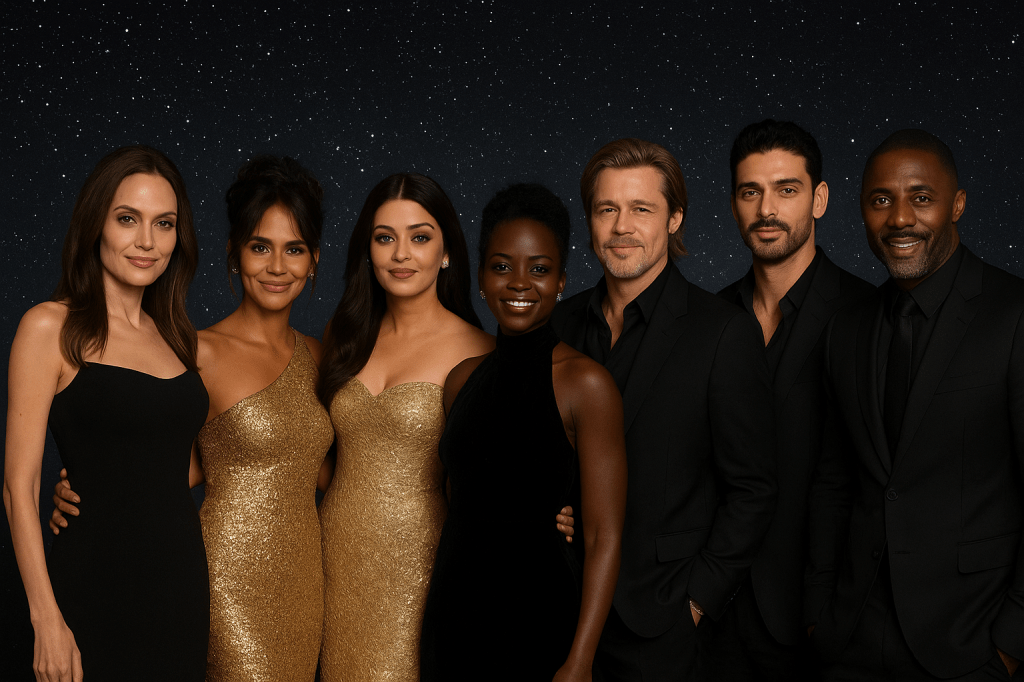
Angelina Jolie — The Geometry of Allure & Evolutionary Feminine Magnetism

Angelina Jolie occupies a uniquely enduring place in global beauty discourse, often referenced as a benchmark for feminine facial aesthetics in modern Western and global culture. Her beauty blends structural precision with sensual softness, positioning her as an exemplar of balanced sexual dimorphism—where feminine softness coexists with sculpted angularity. This duality creates a visual signature that is both delicate and commanding, an interplay that captivates biological instinct and artistic perception.

Lips: The Icon of Fullness & Sexual Dimorphism

Jolie’s lips are among the most frequently studied and emulated features in contemporary cosmetic literature. Naturally voluminous and rich in vermilion visibility, her lips signal estrogen dominance, youthfulness, and reproductive health—universal biological cues linked to attraction. From an evolutionary standpoint, fuller lips are associated with sexual maturity and fertility, which explains their cross-cultural desirability. Her upper-to-lower lip balance (slightly fuller lower lip) reflects proportions considered near ideal in facial aesthetics, driving her influence on modern beauty standards and cosmetic enhancement trends.

Cat-Like Eyes: Exotic Shape & Feminine Intensity

Jolie’s almond-shaped, slightly upturned “cat eyes” provide a dramatic focal point in her facial architecture. Eyes of this shape elongate the face visually and create a natural femme fatale quality—mysterious, intense, and slightly predatory in aesthetic psychology. The subtle upward tilt at the lateral canthus gives a lifted effect that conveys alertness, youth, and emotional depth. Wide palpebral fissure dimensions, combined with thick lash framing and contrasting scleral brightness, reinforce a look associated with sensual power and aristocratic elegance across cultures.

Cheekbones: Sculpted Definition & High-Angle Contour

Her high, sharply contoured cheekbones are hallmarks of classical facial beauty, associated with genetic refinement, low facial adiposity, and strong bone density. Prominent cheekbones create natural shadow structures, emphasizing facial depth and camera-readability—features prized in film and photography. Their angular projection enhances facial sculpting, achieving a balance between feminine softness and architectural definition, a combination found in many historically celebrated beauties and fine-art portrait archetypes.

Face Shape: A Harmonious Fusion of Angles & Curves

Jolie’s face shape—an oval base with diamond-like cheek prominence and tapered jawline—is highly prized in aesthetic science. Oval-diamond hybrid shapes distribute facial volume evenly while maintaining lift, contour, and visual flow. Her structure avoids heaviness in the lower face, maintaining an upward geometric movement associated with youth, vitality, and social dominance in facial perception research.

The slightly squared yet refined jaw adds strength without sacrificing femininity, creating a commanding presence that appeals to psychological constructs of confidence, leadership, and sophistication. Her bone structure exemplifies the balance between grace and power, traits often found in individuals who become cultural icons rather than mere beauties.

Cultural & Psychological Impact

Angelina Jolie’s phenotype shaped early-21st-century beauty norms, influencing media, fashion, and cosmetic ideals for decades. Yet her beauty transcends formulaic metrics. Her features—dramatic yet harmonious, exotic yet classical—create a face of mythic proportions, one that feels ancient and modern at once. She represents beauty that is not merely symmetrical, but expressive, sculptural, cinematic, and biologically resonant.

Her look reminds scholars and admirers that beauty is not a checklist, but an orchestration: a synergy of proportion, emotion, bone structure, and presence.

Angelina Jolie is not simply a beautiful woman—she is a case study in aesthetic equilibrium, where genetics, evolution, and artistic design converge to create a face that altered global beauty psychology for a generation.

Halle Berry — The Hybrid Genetic Ideal & Cross-Cultural Feminine Symmetry

Halle Berry represents one of the most widely discussed embodiments of cross-ethnic beauty, often cited in academic and media discussions for her balanced facial proportions, luminous skin tone, and universal appeal. Her beauty illustrates the evolutionary concept of hybrid vigor—sometimes observed in mixed-ancestry individuals—where genetic blending may produce heightened symmetry, structural balance, and perceived attractiveness due to diverse gene pools contributing to developmental stability.

Facially, Berry’s beauty aligns with key scientific markers: high cheekbones, large almond-shaped eyes, harmonious jaw contours, and soft feminine curvature in facial geometry. Her lips sit in ideal proportion to her facial width, offering fullness without exaggeration, reflecting the evolutionary preference for cues of health and fertility. Her bone structure exemplifies moderate facial dimorphism, balancing feminine refinement with subtle strength—traits often favored in attraction psychology for signaling both approachability and resilience.

Her medium-to-deep melanin richness carries biological advantages, including photoprotection and even skin tone, which historically signaled youth, vitality, and genetic health. Socially, Berry’s complexion sits at a complex intersection of racial aesthetics in Western society—light enough to fit Eurocentric media structures, yet richly melanated enough to embody the ancestry of African diasporic beauty. Her global appeal underscores how diverse phenotypic representation expands beauty norms, showing that elegance, symmetry, and melanin co-exist powerfully in the global beauty landscape.

Culturally, Halle Berry’s ascent challenges Hollywood’s historically narrow beauty standards while simultaneously showing the psychological impact of representation. Her presence in leading roles positioned Black women—particularly women of African descent with mixed heritage—at the forefront of mainstream desirability and cinematic admiration. In beauty science, she serves as a living example of the harmony between genetic diversity, feminine softness, and symmetrical architecture, demonstrating that the world’s perception of beauty is enriched when multiple ancestral aesthetics are elevated.


Aishwarya Rai BachchanThe Golden Ratio & Classical Indian Beauty Aesthetics

Aishwarya Rai Bachchan is globally regarded as one of the most mathematically and symmetrically balanced faces ever studied in beauty science. Numerous aesthetic analyses and plastic-surgery research forums reference her facial structure when examining the Golden Ratio (Phi ≈ 1.618) and the harmony of classical beauty proportions. With wide-set almond eyes, a delicately sculpted nose, high cheekbones, balanced brow arches, and a soft yet defined jawline, her face demonstrates significant alignment with geometric principles associated with visual harmony.

Her eyes—large, bright, and elongated—anchor her facial expression, enhanced by long ciliary framing and a luminous scleral contrast. Eye prominence is a universal beauty cue linked to perceptions of youthfulness and warmth. Rai’s lips present gentle fullness, maintaining proportion with her nose-to-chin ratio and facial width, while her skin tone—creamy golden-brown with undertones reflecting South Asian pigmentation—embodies the richness of subcontinental ancestry shaped by climate, diet, and genetic evolution.

Unlike Western beauty ideals, Rai exemplifies South Asian feminine archetypes: soft sensuality, serene expression, refined bone structure, and traditionally prized features such as expressive eyes, smooth skin, and balanced facial width-to-height ratios. Her aesthetic presence challenges the assumption that Western features define universal beauty, proving that global admiration expands when the media honors diverse phenotypes rather than conforming them to European standards.

Her legacy also represents India’s historical relationship with beauty—rooted in classical sculpture, Ayurveda, temple aesthetics, and cinematic glamour. She symbolizes a bridge between biology and cultural symbolism, demonstrating how evolutionary symmetry, genetic ancestry, and cultural identity converge to produce a beauty standard that is both scientifically admired and spiritually revered.

Through her worldwide impact, Rai reinforces a central truth in beauty theory: when different regions of the world are seen through their own aesthetic lens—not filtered through colonial beauty hierarchies—new archetypes emerge that reshape global perception.

Lupita Nyong’o — Melanin Majesty & the Reclamation of African Aesthetics

Lupita Nyong’o stands as a living counter-narrative to colorism, Eurocentric hierarchy, and media-driven beauty conditioning. Her deep ebony complexion represents the highest concentration of eumelanin—an evolutionary masterpiece formed under intense equatorial sunlight, offering superior photoprotection and antioxidant capacity. In biological terms, her skin reflects genetic strength, evolutionary adaptation, and biochemical richness.

Her facial structure—high cheekbones, balanced forehead ratio, sculpted jaw, and refined nasolabial contour—embodies classic East African beauty typology. While Western beauty messaging historically marginalized phenotypes like hers, Nyong’o’s global rise demonstrates a profound perceptual shift: society’s expanding ability to see beauty without colonial filters. She represents the scientific and spiritual sanctity of melanin—a reminder that beauty does not exist only where power once resided.

Her presence in luxury fashion, cosmetics, and cinema marks a critical psychological milestone: the re-education of the global eye, where African features are no longer contextualized by struggle alone but by regality, brilliance, purity, and cosmic depth.


Naomi Campbell — Supermodel Proportions & Runway Phenotype Perfection

Naomi Campbell occupies a distinct place in beauty science: the aerodynamic runway phenotype. Her face exhibits sharp angles, pronounced cheekbones, elongated bone structure, and symmetrical alignment that photographs with precision under high fashion lighting—features evolutionarily rare and visually commanding.

Genetically rooted in Afro-Caribbean ancestry with African origins, her facial and body proportions align with elite model requirements—long limbs, narrow waist, and a naturally elongated silhouette. Her allure lies not only in symmetry but in a predictive aesthetic: her presence anticipated and reshaped fashion’s future acceptance of global beauty archetypes long before diversity became corporate vocabulary.

Campbell embodies the endurance of beauty—her longevity challenges stereotypes that feminine allure expires with age. She exists as a beauty constant, proving that genetic elegance paired with discipline and presence can transcend decades.


Sophia Loren — Mediterranean Femininity, Maturity & Timeless Aesthetic Biology

Sophia Loren represents fertility, warmth, and classical European sensuality rooted in Mediterranean genetics. Her full lips, olive complexion, voluptuous hourglass frame, and deep-set eyes reflect a phenotype sculpted by Italy’s climate, diet, and cultural ideals of womanhood.

Her beauty shines not only in youth but in maturation—demonstrating the biology of aging attractiveness. While collagen decreases and skin texture shifts over time, Loren’s charisma and poise reconstruct desirability beyond youthful symmetry alone. She represents the scientific truth that confidence, emotional intelligence, and feminine self-possession amplify beauty in ways no algorithm can quantify.

Loren proves beauty is not merely a stage of life but a temperament and inheritance, where maturity can refine rather than diminish allure.


Monica Bellucci — Voluptuous Elegance & Curvilinear Facial Harmony

Monica Bellucci is celebrated for her high romantic femininity—full lips, balanced brow-to-chin ratio, luminous olive skin tone, and soft jaw curvature. She exemplifies the classical Roman ideal: rounded features, sensual warmth, and proportional symmetry.

Bellucci’s appeal increases with age, embodying “slow beauty”—a style rooted in patience, subtle expression, and the unhurried grace of a woman who exists beyond the male gaze’s urgency. Her mature presence defies Western pressure toward hyper-youth, proving that feminine allure deepens with lived experience.

Her phenotype demonstrates that beauty science is not exclusively concerned with numerical symmetry—softer geometry and emotional magnetism hold equal power.


Rihanna — Asymmetry Allure, Fashion Evolution & Global Aesthetic Disruption

Rihanna’s beauty defies classic symmetry. Her face carries subtle asymmetries—slightly varied eye height, sharp nasal structure, and angular cheekbones—which paradoxically intensify her appeal. This supports contemporary research showing controlled asymmetry can enhance uniqueness and memorability, qualities prized in entertainment and fashion psychology.

Her Caribbean heritage expresses itself in golden-brown undertones, full lips, defined bone angles, and radiant melanin—a phenotype rooted in African ancestry and island hybridity.

Rihanna’s power lies in rebellion against aesthetic predictability. She transitions between tomboy streetwear, haute couture royalty, and avant-garde experimentalism. Her beauty is kinetic, culturally fluid, and emotionally bold—a demonstration that aesthetic dominance in the modern era belongs not only to symmetry, but to audacity, originality, and identity mastery.

The Aesthetics of Masculine Beauty: Structure, Ancestry, and Archetype

Masculine beauty carries its own evolutionary, spiritual, and sociocultural language. Unlike feminine aesthetics—often oriented toward softness, symmetry, and fertility cues—male attractiveness typically combines strength, structure, dominance, emotional command, and noble restraint. Across civilizations, philosophers, sculptors, and poets sought to define manly allure: not merely in muscle or features, but in presence, posture, and the unspoken aura of discipline and legacy.

Modern research emphasizes facial width-to-height ratio, pronounced jawlines, cheekbone projection, brow ridge shape, skin luminosity, vocal resonance, and posture as biological signals tied to testosterone, genetic vitality, and leadership psychology. Yet science alone cannot measure charisma, dignity, emotional intelligence, and ancestral weight—qualities deeply expressed in Black male beauty.

The following case studies explore how three contemporary figures exemplify this masculine aesthetic paradigm.


Idris Elba — The Sovereign Masculine Archetype

Idris Elba embodies the regal masculine template—a fusion of strength, maturity, and quiet dominance. His face reveals structural masculinity: a broad and angular mandible, balanced zygomatic arch, deep-set eyes, and a pronounced brow ridge. These features signal high testosterone equilibrium, conveying confidence and genetic fitness without aggression.

Elba’s rich melanin tone enhances facial definition and symmetry perception, while his salt-and-pepper beard symbolizes wisdom, virility, and maturity—traits increasingly valued in global beauty psychology, countering youth-fixated Western standards. His voice—deep, resonant, and paced with intentional cadence—reinforces alpha calmness rather than performative dominance.

Culturally, he represents a shift from Hollywood’s historically Eurocentric masculine standard, standing as an international symbol of Black elegance, romantic power, and ancestral nobility. His beauty lies not only in his bone structure, but in restraint, confidence, and sovereign emotional command—the beauty of a king in stillness.


Morris Chestnut — Symmetry, Warm Masculinity & Melanin Radiance

Morris Chestnut exemplifies the harmonious masculine ideal—strength balanced by warmth, approachability, and emotional presence. His facial geometry demonstrates symmetrical alignment, strong cheek projection, refined jaw shape, and balanced eye spacing, amplifying perceptions of reliability and trustworthiness.

Chestnut’s smooth, deep brown complexion reflects a youth-preserving melanin advantage and a velvety visual texture associated with vitality, health, and masculine elegance. His physique presents the archetypal mesomorphic V-shape with balanced muscularity—not exaggerated, but powerful, athletic, and functional.

Unlike harsh or stoic masculine portrayals, Chestnut’s beauty carries emotion—softness without fragility, strength without intimidation, affection without surrender. He represents the psychological appeal of a man who protects, honors, and loves deeply—where masculine beauty meets moral presence and relational steadiness.

He is the beloved protector archetype, a man whose beauty feels like home.

Brad Pitt — Symmetry, Masculine Bone Architecture, and the Evolutionary Template of Western Male Beauty

Brad Pitt remains one of the most enduring examples of Western masculine beauty, functioning not only as a cultural icon but also as an anatomical benchmark in aesthetic and evolutionary studies. His face exhibits exceptional synthesis of symmetry, proportional golden-ratio alignment, and sexually dimorphic facial structure, making him a biological ideal often used in academic discussions on human attractiveness. Like classical sculpture and Renaissance male portraiture, Pitt’s beauty sits at the intersection of mathematical harmony and primal masculine signaling — a rare duality that fuels universal appeal.

Genetically, Pitt represents Northern European ancestry, with phenotypic traits associated with Anglo-Germanic and Celtic lineages — lighter pigmentation, angular craniofacial structure, and pronounced brow ridge formation. These phenotypes historically symbolize noble lineage and heroic archetypes in European art and cinema. Evolutionary theorists argue that traits like high jawbone density, pronounced midface projection, and balanced brow structure correlate with both high prenatal androgen exposure and perceived genetic fitness, further positioning Pitt within a biological category associated with dominance, health, and competitive success.

Pitt’s facial symmetry is a primary contributor to his aesthetic ranking. His facial thirds (forehead, midface, lower face) display balanced proportion, and his jawline is sharply squared yet smooth at transition points — a structural harmony rarely seen naturally without surgical intervention. His cheekbones are prominent but not excessively wide, maintaining a masculine yet elegant silhouette. Studies on golden ratio facial mapping frequently align his eye spacing, nose-to-lip distance, and jawline angles with idealized phi-based ratios, reinforcing the mathematical underpinnings of his attractiveness.

Ultimately, Brad Pitt’s face and career demonstrate that beauty is not merely an accident of biology, but a convergence of genetics, symmetry, evolutionary signaling, and myth-building. His structure aligns with measurable scientific ideals, while his cultural positioning amplifies those signals into legend. He is not simply “attractive”; he is a case study in how symmetry, proportion, sexual dimorphism, and sociocultural storytelling unite to create a near-universal masculine ideal. Pitt’s image endures as both specimen and symbol — a living blueprint for modern Western male beauty.

Michele Morrone — Mediterranean Genetic Aesthetics, Sexual Dimorphism, and the Romance-Warrior Archetype

Michele Morrone embodies the modern Mediterranean masculine ideal — a fusion of sculpted facial symmetry, deep pigmentation richness, and sensual expressiveness. His features align with classical Southern European beauty archetypes similar to ancient Roman busts and Renaissance masculine portraiture. Morrone’s appearance exists at the intersection of rugged virility and poetic seduction, making him a compelling evolutionary and cultural study in male attractiveness across global audiences. As with iconic “Italian Lover” archetypes, his beauty derives not only from structural precision but also from emotional depth and sultry allure.

Genetically, Morrone represents the Southern Italian / Mediterranean genetic cluster, characterized by higher melanin levels, darker eye and hair pigmentation, dense facial hair growth, and pronounced midface projection. These phenotypes historically emerge from regions where sunlight, climate, and evolutionary sexual selection favored stronger pigmentation and soft yet dominant bone structure. His phenotype reflects ancient Italic and Levantine genetic exchanges — a beauty narrative rooted in both Roman nobility and ancient Eastern influence, producing a hybrid of warrior masculinity and sensual mystique.

Morrone’s beauty is defined by both structural balance and striking sexual dimorphism. His deep-set hooded eyes, strong brow ridge, and masculine orbital depth convey primal dominance and intensity — traits associated with testosterone symmetry and mate-selection preference. His high, sculpted cheekbones, narrow midface taper, and angular jawline reinforce a predatory masculine silhouette, yet his smooth malar transition, full lips, and warm eye softness provide romantic contrast. Like Pitt, he represents dual signaling, but Morrone leans more heavily into the seductive-dominant phenotype rather than the heroic-noble archetype.

Ultimately, Michele Morrone represents the Mediterranean apex of male beauty — a harmonious convergence of bone architecture, pigmentation advantage, sensual expressiveness, and evolutionary sexual dimorphism. His aesthetic is mathematically balanced yet emotionally charged, scientific yet poetic. In him, symmetry meets soul, masculine strength meets romantic danger, and ancient phenotype meets modern cinematic fantasy. Morrone stands not merely as a handsome man but as an embodied phenotype-myth — a living testament to how genetics, psychology, culture, and archetypal storytelling construct global male beauty.


Regé-Jean Page — Aristocratic Geometry & Refined Masculinity

Regé-Jean Page represents the aristocratic masculine phenotype: high cheekbones, narrow nasal bridge, tapered jawline, and symmetrical contours suggesting refined androgen expression rather than brute strength. His features evoke classical sculpture—elegant, chiseled, poetic, and noble.

A signature trait is his gaze—controlled, observant, emotionally intelligent—communicating internal life rather than stoic emptiness. Beauty science recognizes the allure of expressive masculine eyes as a cue of cognitive depth, empathy, and courtship intelligence.

His skin tone—a smooth espresso-warm hue—reflects Sub-Saharan ancestry blended with European structural proportions, yielding a hybrid aristocratic profile treasured in global aesthetics: ancient yet modern, royal yet youthful, commanding yet romantic.

He embodies the gentleman-warrior aesthetic: not the brute, but the refined sovereign; not the conqueror, but the enlightened ruler—the masculine ideal framed not only by bone, but by dignity.


Closing Reflection: The Divine Craftsmanship of Masculine Beauty

The beauty of men is not accidental—it is architectural, ancestral, and spiritual. In all of them, we see sovereignty, warmth, and devotion. An aristocratic refinement. Each represents a chapter in the book of masculine creation:

  • Strength without brutality
  • Leadership without arrogance
  • Beauty without vanity
  • Emotion without weakness
  • Power anchored in restraint

Such men redefine beauty as heritage, posture, discipline, and presence, reminding a fractured world that true masculine allure is not born in muscle alone, but in character, ancestry, and sacred purpose.

Ultimately, beauty is not merely what the world sees; it is what the soul radiates. Science gives language to structure, but spirit, culture, memory, and emotion complete the portrait.

Beauty is both seen and felt, shaped by biology and breathed through humanity. In its purest form, beauty is a gift—rooted in nature, refined through culture, and crowned by individuality.


References

Gangestad, S. W., & Scheyd, G. J. (2005). The evolution of human physical attractiveness. Annual Review of Anthropology, 34, 523–548.

Ishizu, T., & Zeki, S. (2011). Toward a brain-based theory of beauty. PLOS ONE, 6(7).

Langlois, J. H., & Roggman, L. A. (1990). Attractive faces are only average. Psychological Science, 1(2), 115–121.

Penton-Voak, I. S., et al. (1999). Menstrual cycle alters face preference. Nature, 399(6738), 741–742.

Rhodes, G. (2006). The evolutionary psychology of facial beauty. Annual Review of Psychology, 57, 199–226.

Singh, D. (1993). Adaptive significance of female physical attractiveness. Journal of Personality and Social Psychology, 65(2), 293–307.

Willis, J., & Todorov, A. (2006). First impressions: Making up your mind after a 100-ms exposure. Psychological Science, 17(7), 592–598.


Beauty Personified: The History of the Black Aesthetic.

This photograph is the property of its respective owner. No copyright infringement is intended.

Black beauty has always been a reflection of resilience, identity, and cultural heritage. Long before colonial influence and Eurocentric beauty ideals, African peoples celebrated diverse features, skin tones, and hair textures as markers of pride and identity (Byrd & Tharps, 2014). Beauty was never simply aesthetic; it was political, spiritual, and social.

In ancient Africa, beauty standards varied across regions but consistently emphasized harmony with nature and individuality. Facial symmetry, body proportions, and elaborate adornments were expressions of status, spirituality, and lineage. Scarification, body paint, and jewelry communicated wealth, maturity, and tribal identity (Banks, 2000).

Biblically, beauty carries spiritual significance. In 1 Samuel 16:7 (KJV), God instructs, “For the LORD seeth not as man seeth; for man looketh on the outward appearance, but the LORD looketh on the heart.” This verse underscores that Black beauty is multidimensional: outwardly expressive yet inwardly spiritual.

Hairstyles have historically been central to Black beauty. Cornrows, braids, and locs served as both artistic expression and social communication, reflecting age, marital status, and even spiritual allegiance (Roach, 2018). Hair was, and remains, an essential component of identity and aesthetic.

Skin tone was celebrated within African societies, with varying hues symbolizing status, tribe, or seasonal adaptation. While European colonization attempted to devalue darker skin, pre-colonial Africa embraced a spectrum of melanated beauty (Thompson, 2009).

Facial features such as full lips, wide noses, and high cheekbones were considered attractive and emblematic of lineage and strength. Sculptures, masks, and paintings from ancient African civilizations, including Egypt and Mali, reflect admiration for these traits (Diop, 1987).

Adornment and clothing further expressed beauty. Beaded jewelry, headwraps, and patterned textiles were not only aesthetic but signified intelligence, creativity, and societal role. A well-adorned individual reflected personal and communal pride.

With the advent of slavery, Black beauty faced systemic devaluation. Enslavers imposed European standards, ridiculing African features and promoting straight hair, lighter skin, and narrower noses as ideals. This caused intergenerational psychological and social trauma (Byrd & Tharps, 2014).

Despite this, enslaved Africans maintained beauty practices as a form of resistance. Braiding patterns preserved African heritage, and adornments symbolized hope, dignity, and communal identity (Painter, 2006). Beauty became an act of defiance.

The Harlem Renaissance marked a renaissance of Black beauty and culture. Artists, writers, and performers celebrated Black features, skin tones, and hair textures as central to American identity, countering racist narratives (Huggins, 1971).

In the 1960s and 1970s, the natural hair and “Black is Beautiful” movements elevated African features as symbols of pride and resistance. Afros, locs, and braids became political statements, asserting self-love and cultural reclamation (Craig, 2002).

Black women and men used fashion, makeup, and hair to reclaim aesthetic sovereignty. Iconic figures like Cicely Tyson, Nina Simone, and Angela Davis redefined mainstream perceptions of beauty, highlighting authenticity and heritage over assimilation.

Hollywood and the media often misrepresented Black beauty, favoring Eurocentric standards. Nevertheless, contemporary artists, models, and public figures have increasingly embraced and normalized natural textures, darker skin, and African features in global spaces (Banks, 2000).

Cosmetic entrepreneurship has played a vital role in celebrating Black beauty. Madam C.J. Walker, Annie Malone, and modern beauty brands empower communities while creating products specifically for Black skin and hair, affirming beauty in its natural form (Walker, 1910).

Colorism, a residual effect of colonialism, remains a challenge. Preferences for lighter skin and European features still influence perceptions of attractiveness within Black communities, revealing the ongoing negotiation of identity and self-esteem (Hunter, 2007).

Social media has reshaped beauty discourse, enabling Black creators to challenge standards, share hair and skin care tips, and celebrate diverse aesthetics. Platforms have become modern-day salons and classrooms, fostering education and empowerment (Twine, 2010).

Beauty intersects with spirituality in Black communities. Proverbs 31:30 (KJV) states, “Favor is deceitful, and beauty is vain: but a woman that feareth the LORD, she shall be praised.” Black beauty is thus not only physical; it is entwined with moral character, resilience, and divine favor.

The global influence of Black beauty is evident in fashion, music, and popular culture. African features inspire designers, musicians, and artists worldwide, reshaping perceptions of elegance, style, and power (Henderson, 2008).

In conclusion, Black beauty is multidimensional—historically rooted, culturally expressive, and spiritually significant. From pre-colonial Africa to contemporary global spaces, Black people have navigated oppression while reclaiming, redefining, and celebrating their natural features. Beauty is not merely skin deep; it is identity, resilience, and glory personified.


References

  • Banks, I. (2000). Hair matters: Beauty, power, and Black women’s consciousness. NYU Press.
  • Byrd, A., & Tharps, L. (2014). Hair story: Untangling the roots of Black hair in America. St. Martin’s Press.
  • Craig, M. L. (2002). Ain’t I a beauty queen?: Black women, beauty, and the politics of race. Oxford University Press.
  • Diop, C. A. (1987). The African origin of civilization: Myth or reality. Chicago Review Press.
  • Henderson, C. (2008). Black aesthetics and culture: The evolution of African American beauty standards. Journal of African Cultural Studies, 20(2), 115–134.
  • Huggins, N. (1971). Harlem Renaissance. Oxford University Press.
  • Hunter, M. (2007). The persistent problem of colorism: Skin tone, status, and inequality. Sociology Compass, 1(1), 237–254.
  • Painter, N. I. (2006). Exodusters: Black migration to Kansas after Reconstruction. Knopf.
  • Roach, M. (2018). Hair and identity in the African diaspora. Journal of Black Studies, 49(5), 435–456.
  • Thompson, C. (2009). Black women, beauty, and hair: How hair matters in identity formation. Women’s Studies Quarterly, 37(3/4), 101–123.
  • Twine, F. (2010). A white side of Black Britain: Skin tone, identity politics, and the “good” vs. “bad” Black girl narrative. Sociology, 44(5), 903–920.
  • Walker, M. C. J. (1910). Secrets of success. Independent Business Publisher.

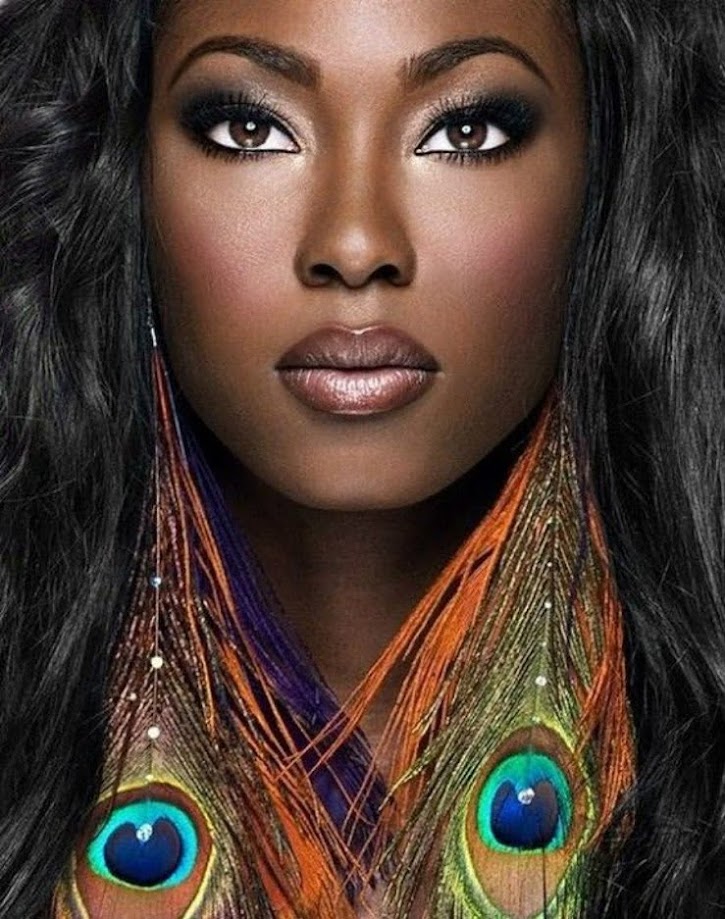
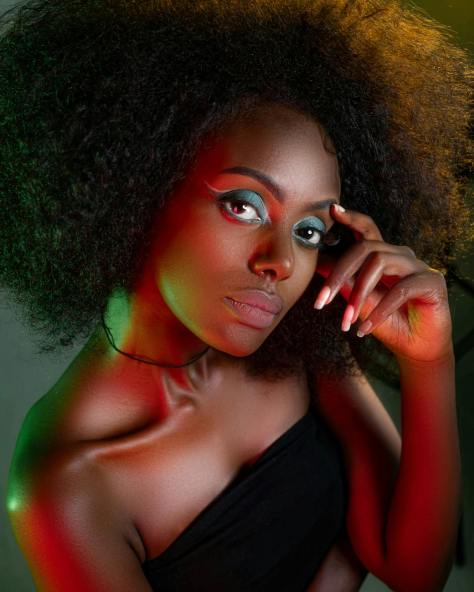
✨ The Aesthetics of Melanin: Masculine & Feminine Beauty ✨

A celebration of Black physical excellence — form, feature, and divine design

The beauty of Black people is not merely visual; it is architectural, sculptural, and elemental. It is heritage carved into flesh, ancestry alive in bone, and glory poured into skin. Melanin is not pigment — it is poetry. It reads like scripture on the body, testifying to divine intention and ancestral brilliance.

Black skin holds sunlight like a crown. Rich tones ranging from deep ebony to golden bronze shimmer with warmth and depth untouched by time. Under light, melanin glows, refracting gold and copper undertones like sacred metal. Where others burn under sun, Black skin communes with it, absorbing radiance and returning it as brilliance.

The texture of Black skin is resilient and regal. Smooth like velvet, firm like carved obsidian, it communicates strength and softness in the same breath. Even in aging, Black skin preserves youth, holding firmness and clarity as a mark of blessing and biology. Time bends gently around melanin.

Black eyes are galaxies — deep, soulful, luminous. They hold ancestral wisdom, passion, and mystery. Their depth is unmatched, reflecting strength, intuition, and spiritual perception. Brown eyes ranging from warm amber to midnight black speak without words, their intensity capable of piercing or comforting in equal measure.

Full lips remain one of the most admired features in global beauty standards — naturally plump, sculpted, and expressive. They symbolize richness and vitality, formed to communicate power, tenderness, and passion. Where imitation tries and fails, Black lips set the original blueprint for sensual symmetry.

Black noses come in noble forms — wide, sculpted, and strong. They speak of identity, rootedness, and authenticity. The elegance of broader nasal structures enhances facial harmony, balance, and presence. In an era of artificial features, original African contours stand unmatched, unapologetic, and divine.

Cheekbones in Black men and women rise like royal architecture. High, pronounced, and sculpted, they frame the face with an effortless dignity. They create definition without effort, shaping expressions into portraits of grace or power depending on the moment.

Jawlines among Black men often carry heroic structure — angular, bold, carved like marble. Their faces speak of protection, authority, and masculine divinity. Black women’s jawlines balance softness and strength, demonstrating a design that holds both gentleness and majesty.

Hair — in coils, curls, waves, and kinks — stands as a living crown. Defying gravity, it rises toward heaven in spirals mirroring galaxies. Every curl is a signature of identity, every coil a testimony to resilience. Black hair is versatile, expressive, regal — a divine engineering of texture and pride.

Black men possess physiques sculpted by nature to command, protect, and endure. Broad shoulders, powerful backs, strong chests, and athletic proportions represent raw strength and disciplined elegance. From warriors to modern athletes, the Black male form proves excellence in structure and motion.

Black women embody curvature as art — hips shaped like crescents, waists sculpted like pottery, and silhouettes that flow like water. Their bodies represent fertility, power, beauty, and grace. Their movement carries rhythm, heritage, and magnetic softness.

The legs of Black men and women tell stories of mobility, endurance, and athletic superiority. Strong thighs, graceful calves, and balanced proportions reveal bodies built for power and speed, as though carved for motion with divine precision.

Black hands reveal labor and love. Strong and expressive, they carry cultural memory — hands that have created, fought, healed, raised nations, and built empires. In their form lies capability, tenderness, and dignity.

Collarbones and shoulders among Black women shimmer like sculpture. Smooth, elegant, and defined, they reflect femininity in pure form. Black men’s shoulders stand broad and unwavering, pillars of masculine power.

Black smiles, framed by full lips and bright teeth, radiate warmth, vitality, and confidence. There is a glow behind them — one shaped by survival, joy, and soul-deep life force. When Black people smile, the room lights differently.

Posture distinguishes Black beauty — upright, proud, grounded, and graceful. Even in casual stance, there is royal poise, inherited from ancestors who walked like kings and queens despite chains.

Movement in Black bodies is music made visible. Whether walking, dancing, or simply existing, fluidity and rhythm define them. Grace lives in the hips, strength in the back, confidence in the stride.

Masculine beauty among Black men is the fusion of power and nobility. Their features command attention; their presence shifts atmosphere. Feminine beauty among Black women is softness wrapped in steel, elegance intertwined with strength. Together they form a visual symphony — balance, brilliance, and divine complementarity.

The aesthetics of melanin transcend human standards. They reflect an original blueprint — the first beauty shaped by the Creator. Black bodies are not merely physically beautiful — they are historical, celestial, and spiritual. They carry the imprint of Eden, the dignity of royalty, and the radiance of creation itself.

Black beauty is not a trend. It is a truth — ancient, eternal, and unmatched. It does not strive to belong to the world’s standard; the world strives to imitate it. And yet, imitation never surpasses authenticity. Where melanin breathes, beauty lives in its highest form.

Biblical References (KJV)

  • Genesis 1:27 – “So God created man in his own image, in the image of God created he him; male and female created he them.”
  • Psalm 139:14 – “I will praise thee; for I am fearfully and wonderfully made: marvellous are thy works; and that my soul knoweth right well.”
  • Song of Solomon 4:1–7 – Descriptions of physical beauty, including lips, eyes, and skin.
  • Proverbs 31:25–30 – The virtuous woman: strength, beauty, and dignity.
  • 1 Corinthians 15:46 – “First that which is natural; afterward that which is spiritual.”

Scientific / Anthropological References

  • Jablonski, N. G. (2006). Skin: A Natural History. University of California Press.
  • Relethford, J. H. (2012). The Human Species: An Introduction to Biological Anthropology. McGraw-Hill Education.
  • Robins, G. (2014). The Science of Beauty: Facial Symmetry, Melanin, and Aesthetic Perception. Journal of Aesthetic Research.
  • Farkas, L. G. (1994). Anthropometry of the Head and Face. Raven Press.

Sociocultural / Psychological References

  • Banks, I. (2018). The Melanin Millennium: African Aesthetics in the Modern World.
  • Byrd, A., & Tharps, L. L. (2014). Hair Story: Untangling the Roots of Black Hair in America. St. Martin’s Press.
  • Hall, R. E. (2010). African-American Facial Features and Perceptions of Beauty. Journal of Black Studies.

Crowning Confidence: Celebrating Dark Beauty in a Light-Skinned World.

Photo by Abenezer Shewaga on Pexels.com

Beauty has long been racialized and hierarchized, with Eurocentric and light-skinned ideals dominating media, fashion, and cultural representation. Lighter skin has often been associated with elegance, refinement, and desirability, giving rise to systemic biases that valorize women like Yara Shahidi, Salli Richardson, and Mari Morrow. These women are celebrated for their features, poise, and charm, yet the broader narrative has historically marginalized darker-skinned women, deeming their beauty less desirable despite its richness, depth, and cultural significance.

Dark-skinned women, however, embody a powerful and resilient form of beauty that defies these narrow societal standards. Lupita Nyong’o, Kenya Moore, and Issa Rae represent a celebration of melanin-rich skin, diverse features, and cultural pride. Lupita’s radiant skin and delicate facial symmetry have been hailed as a “modern masterpiece,” earning her acclaim on red carpets and in film alike. Kenya Moore’s high cheekbones, full lips, and commanding presence have made her a standout in the pageant and reality TV worlds, while Issa Rae’s authenticity and radiant complexion have inspired countless young women to embrace their natural beauty.

While light-skinned beauty continues to dominate mainstream media, the representation of dark-skinned women is gradually increasing, challenging long-held biases. Yara Shahidi, Salli Richardson, and Mari Morrow exemplify elegance and style within lighter-complexion parameters, but their visibility contrasts with the historical underrepresentation of darker-skinned women. This disparity underscores the importance of highlighting figures like Lupita, Kenya, and Issa, whose successes demonstrate that beauty is not bound by shade but by confidence, talent, and presence.

Facial features play a critical role in this narrative. Dark-skinned women often possess unique and striking attributes—full lips, broad noses, defined jawlines, and high cheekbones—that have been historically undervalued. Lupita Nyong’o’s delicate facial symmetry and luminous skin redefine red carpet standards, while Kenya Moore’s sculpted features and radiant smile showcase the allure of dark-skinned aesthetics. Issa Rae combines natural texture, expressive eyes, and a warm, rich complexion to exemplify how authenticity enhances beauty. These features remind us that aesthetic appeal is diverse and culturally embedded.

Cultural and historical context is essential in understanding the challenges dark-skinned women face. For centuries, colonial and Eurocentric beauty standards privileged lighter skin as an aspirational ideal, relegating darker tones to marginal status. Media reinforcement of this hierarchy contributed to colorism, internalized bias, and social exclusion. By celebrating dark-skinned icons, society begins to dismantle these limiting narratives, validating beauty in all shades and promoting a more inclusive understanding of attractiveness.

Psychologically, representation impacts self-esteem and identity. Visibility of dark-skinned role models fosters confidence and resilience, counteracting the effects of colorism and societal marginalization. When young girls see Lupita, Kenya, and Issa celebrated for their melanin-rich skin and natural features, it reinforces the notion that their beauty is valid, desired, and powerful. This affirmation nurtures self-love, pride, and the courage to embrace natural aesthetics in the face of prevailing biases.

Fashion and personal style amplify the power of dark-skinned beauty. Lupita Nyong’o is known for her bold, colorful ensembles that complement her rich skin tone, while Kenya Moore often employs glamorous, classic styling that emphasizes her elegance. Issa Rae embraces chic, modern attire that highlights her unique features and authenticity. These women demonstrate that confidence is expressed not only through physical traits but through presentation, poise, and individuality.

The broader cultural impact of celebrating dark-skinned beauty extends to media, entertainment, and social movements. #BlackGirlMagic and #UnapologeticallyBlack emphasize the power, intelligence, and allure of dark-skinned women. Celebrating these figures challenges ingrained hierarchies, creates space for diverse representation, and educates society on the value and beauty of all skin tones. By centering dark-skinned icons, cultural narratives are reshaped to reflect authenticity, heritage, and resilience.

In conclusion, crowning confidence involves redefining societal standards to celebrate dark beauty in a world that historically prioritized lighter skin. Figures like Lupita Nyong’o, Kenya Moore, and Issa Rae exemplify this celebration through talent, poise, and unapologetic pride in their features and complexion. While light-skinned icons like Yara Shahidi, Salli Richardson, and Mari Morrow remain influential, the elevation of dark-skinned women challenges colorism, promotes inclusive beauty standards, and empowers a generation to embrace melanin-rich aesthetics with confidence, pride, and grace.


References

Hunter, M. (2007). The persistent problem of colorism: Skin tone, status, and inequality. Sociology Compass, 1(1), 237–254.

Byrd, A. D., & Tharps, L. L. (2014). Hair Story: Untangling the Roots of Black Hair in America. New York, NY: St. Martin’s Press.

Fardouly, J., Diedrichs, P. C., Vartanian, L. R., & Halliwell, E. (2015). Social comparisons on social media: The impact of Facebook on young women’s body image concerns and mood. Body Image, 13, 38–45.

Rhodes, G. (2006). The evolutionary psychology of facial beauty. Annual Review of Psychology, 57, 199–226.