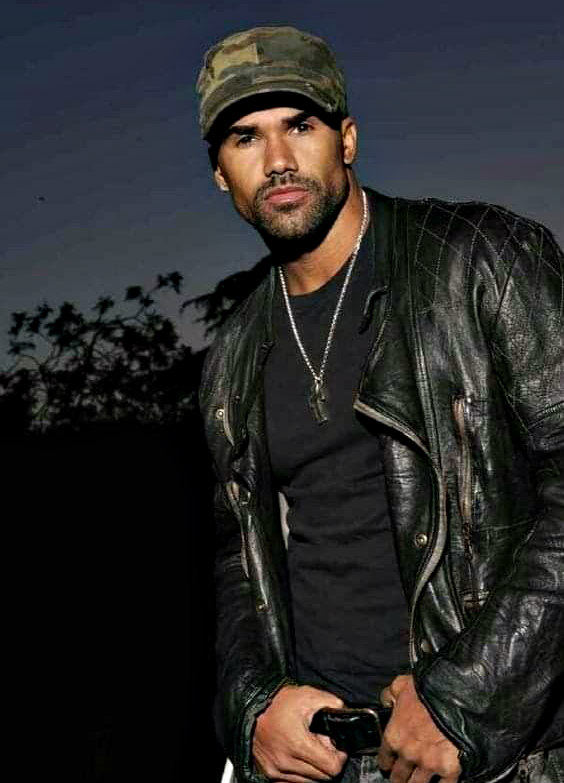
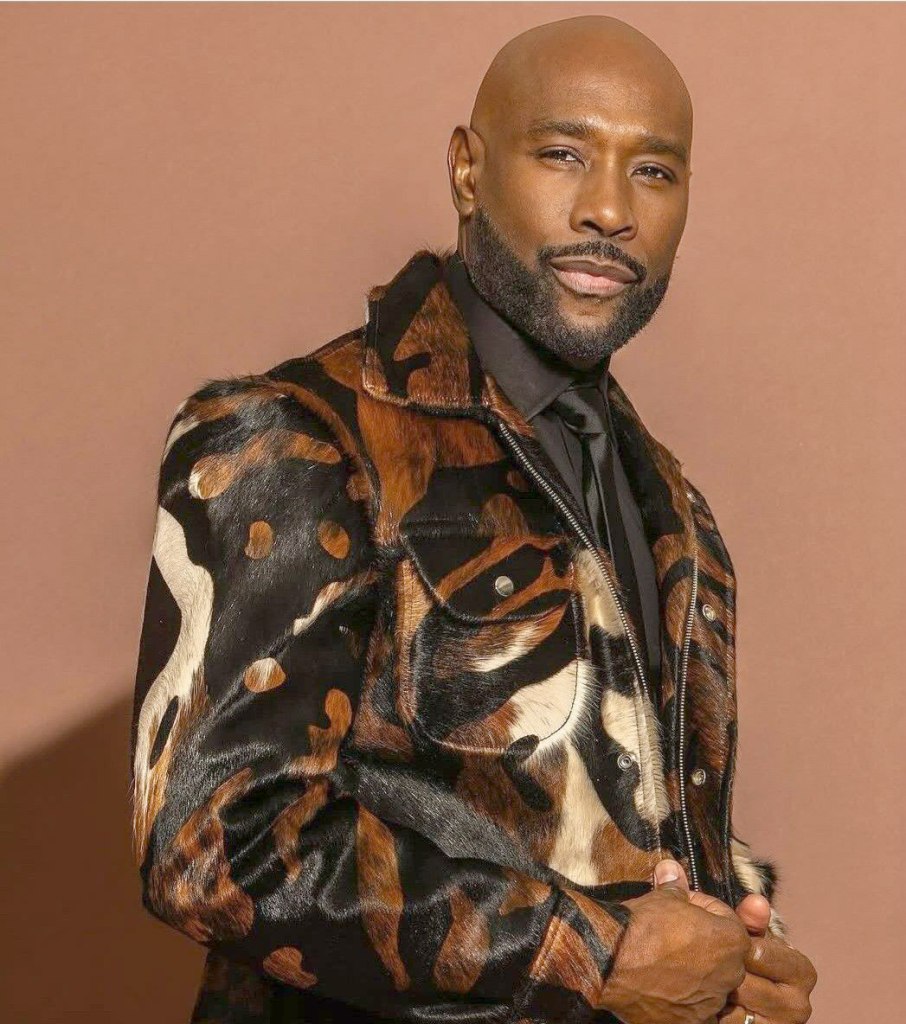
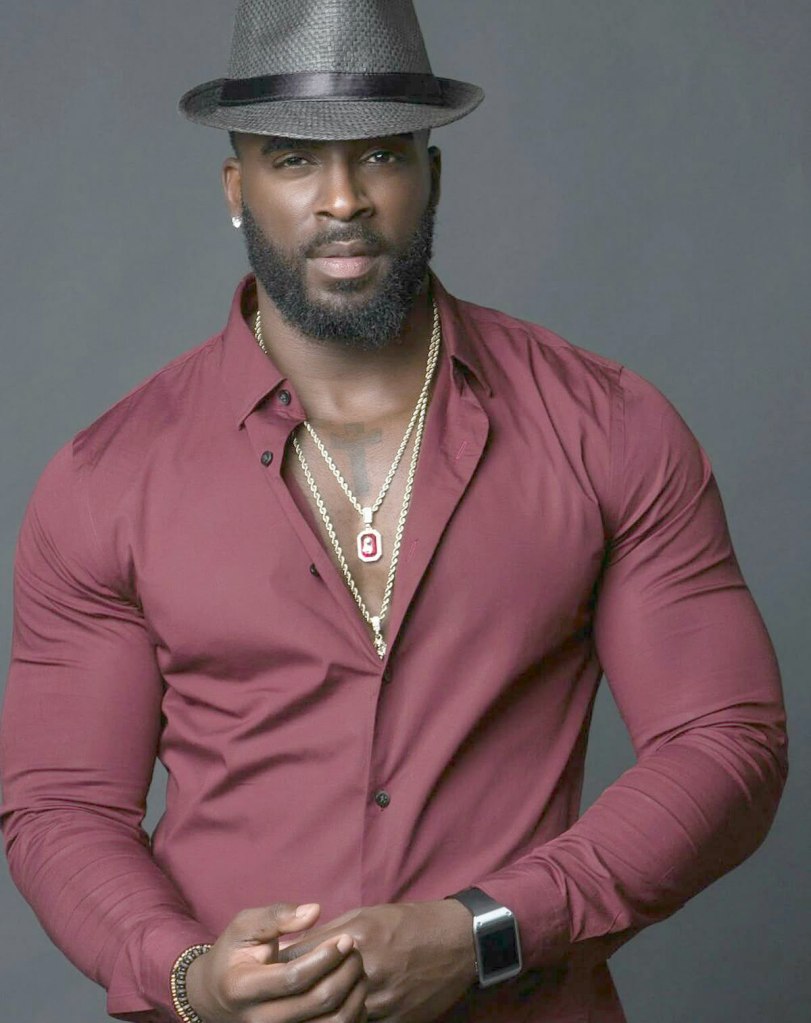
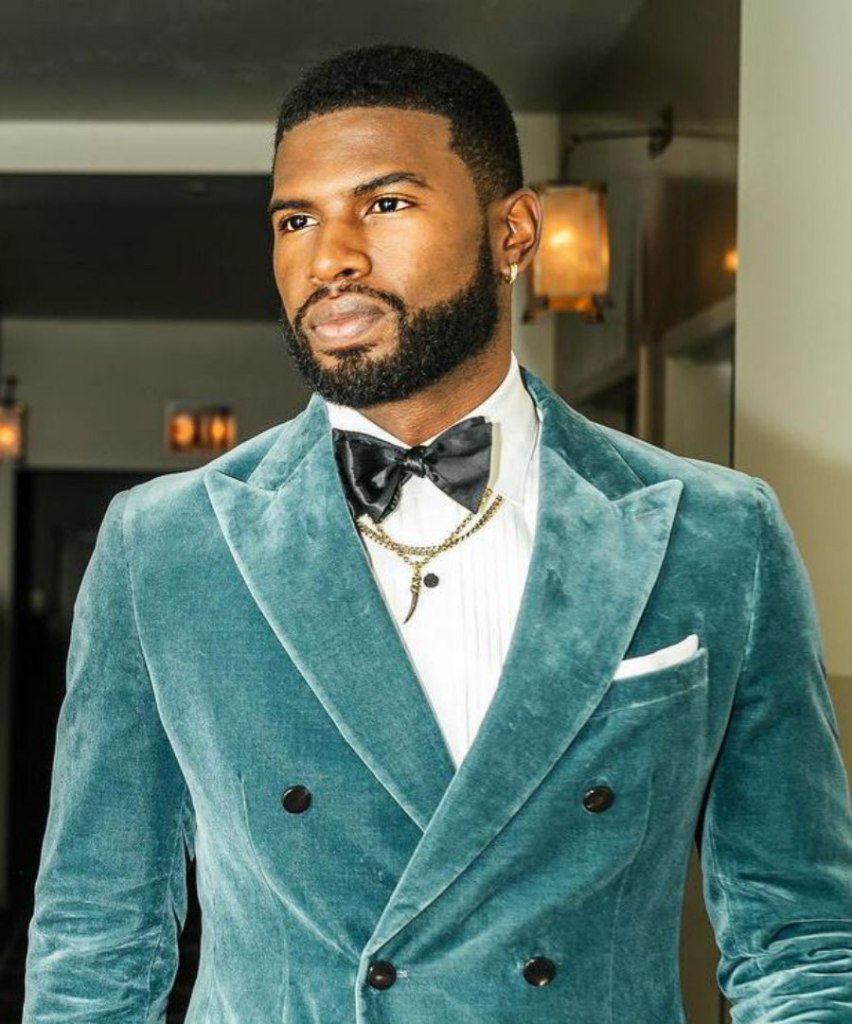
Tag Archives: Beauty

The Ebony Dolls: Vanity (Denise Matthews)

From Canadian beauty queen and pop icon to born-again Christian minister
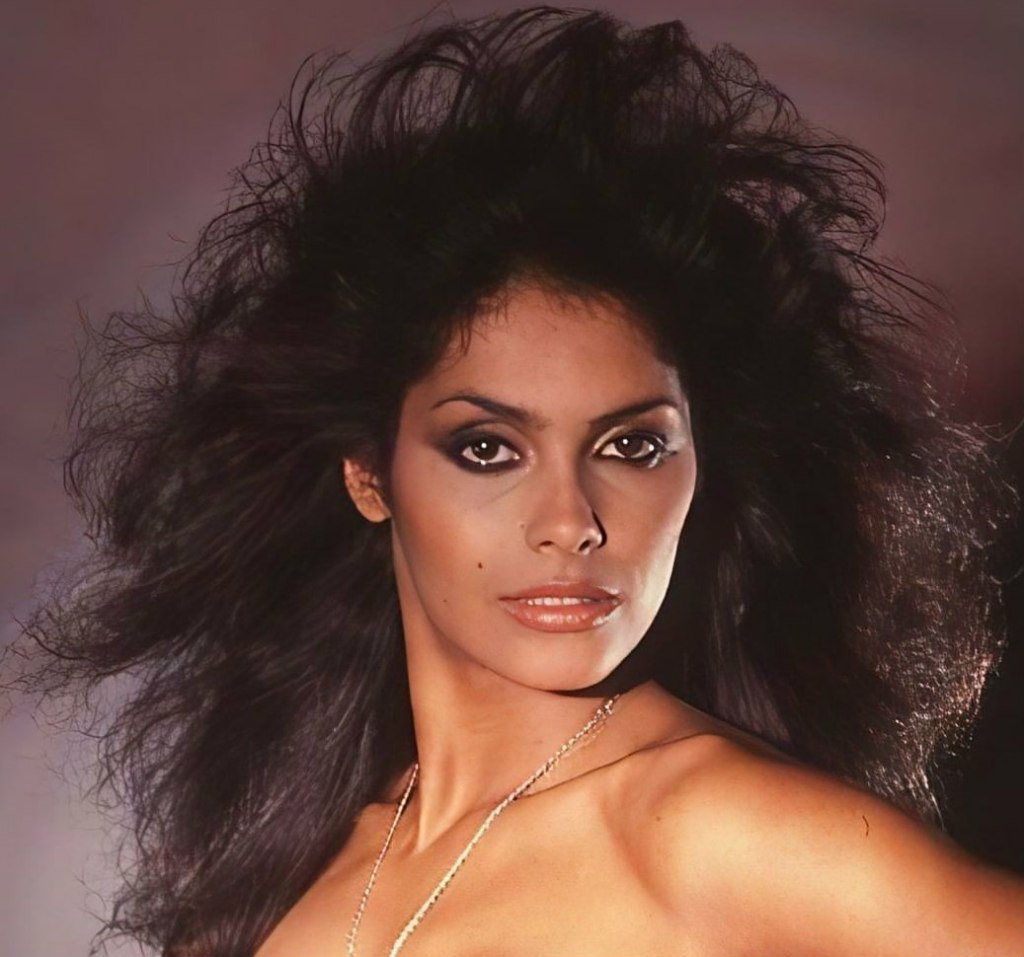
This photograph is the property of its respective owners. No copyright infringement intended

She looked like a mirror of me. I saw her and thought, that’s me in female form.” — — Prince

Denise Matthews, known to the world as Vanity, embodied a rare and arresting form of beauty—one that felt almost mythic. With her almond-shaped eyes, glowing skin, racially ambiguous features, and effortless beauty, she represented the archetype of the 1980s “Ebony Doll”: a woman whose presence commanded attention before she ever spoke a word. Vanity was not merely admired; she was desired, elevated into fantasy, and projected onto screens and stages as an icon of glamour and Black feminine mystique.

Yet the most profound chapter of her life unfolded far from the spotlight. After years of fame, addiction, and near-death, Vanity experienced a spiritual awakening that led her to renounce celebrity culture entirely. She publicly surrendered her stage name, calling it a false identity, and dedicated the rest of her life to Jesus Christ and Christian ministry. In doing so, she became one of the rare figures in pop history whose legacy is not defined only by beauty and desire, but by repentance, faith, and radical transformation—an “Ebony Doll” who walked away from the world to choose God.

Denise Katherine Matthews (January 4, 1959 – February 15, 2016), professionally known as Vanity, was a Canadian model, singer, songwriter, actress, and later a Christian evangelist. She rose to global fame in the early 1980s as the frontwoman of the provocative pop-funk group Vanity 6, created and produced by Prince. Her life became a powerful narrative of beauty, fame, addiction, redemption, and spiritual rebirth.


Denise Matthews was born in Niagara Falls, Ontario, Canada. She was of mixed racial heritage, with a Black father and a mother of German and Jewish descent. From a young age, Denise gravitated toward modeling and performance. She entered beauty competitions and gained national recognition when she won Miss Niagara Hospitality (1977) and later competed in Miss Canada (1978). These early achievements established her as a rising figure in Canadian beauty culture and opened doors to professional modeling. She was one of the most beautiful celebrities.


This photograph is the property of its respective owners. No copyright infringement intended

Following her pageant success, Matthews relocated to New York City, where she signed with the prestigious Zoli Model Agency. Though she did not fit traditional high-fashion height standards, her magnetic presence, camera appeal, and sensual confidence made her highly marketable. She appeared in commercials, print advertisements, and international modeling campaigns, including work in Japan.

Her early image combined innocence and eroticism, foreshadowing the bold persona she would later embody as Vanity.


Denise’s career took a dramatic turn after meeting Prince at the 1980 American Music Awards. Prince saw in her a female reflection of his own artistic identity and envisioned her as the centerpiece of a new musical project.

Originally, Prince proposed highly explicit stage names, but Denise refused one of them and accepted “Vanity” instead. The name symbolized both beauty and self-obsession—qualities that became central to her public persona.
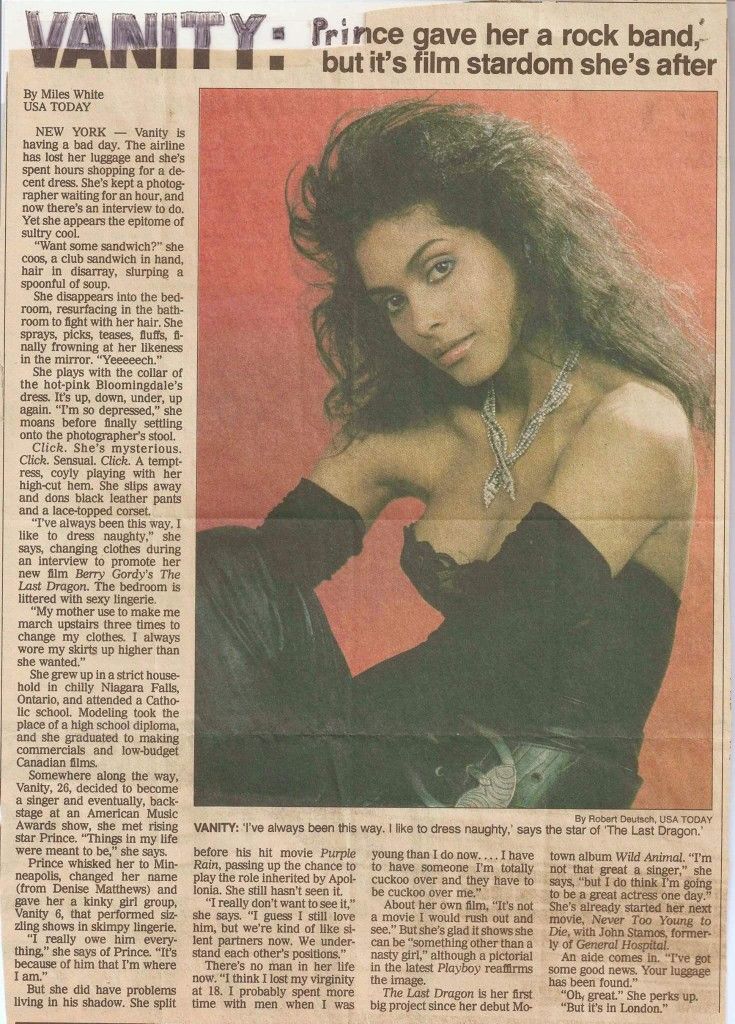
USA Today

Prince formed Vanity 6, a three-woman group that blended sexual imagery, synth-funk music, and provocative performance aesthetics. The group’s lingerie-styled outfits and explicit lyrics made them cultural lightning rods.

Their breakout hit “Nasty Girl” (1982) became a defining anthem of the decade, reaching #1 on the U.S. Billboard Dance Chart and turning Vanity into a global sex symbol.


After leaving Vanity 6, Denise signed with Motown Records and launched a solo career. She released two albums:

  • Wild Animal (1984)
  • Skin on Skin (1986)

Her single “Under the Influence” charted on Billboard’s R&B and Dance rankings.

In parallel, she pursued acting, appearing in major films including:

  • The Last Dragon (1985)
  • 52 Pick-Up (1986)
  • Never Too Young to Die (1986)
  • Action Jackson (1988)

Vanity became one of the most visible Black female celebrities of the era, blending beauty, sexuality, and pop culture power.
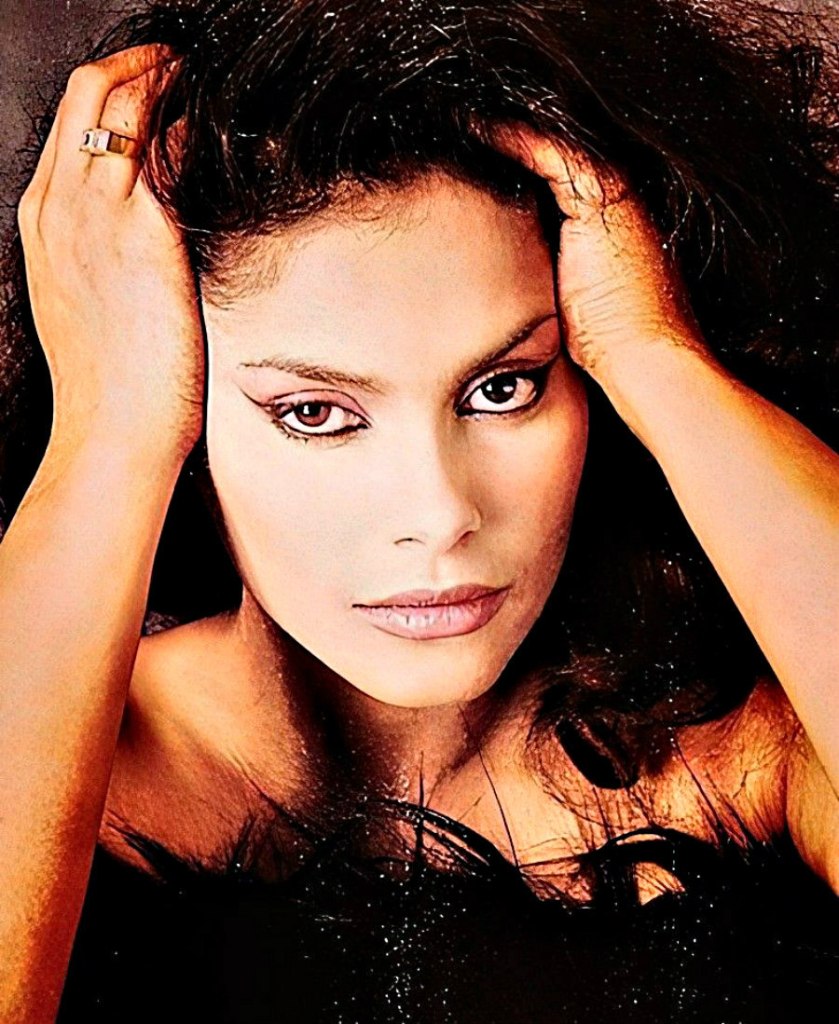
This photograph is the property of its respective owners. No copyright infringement intended

Vanity’s beauty and fame attracted high-profile relationships throughout the 1980s, including musicians and rock stars. However, behind the glamorous image were deep struggle with substance abuse.

In 1995, she married former NFL player Anthony Smith after a brief courtship. The marriage ended in divorce, and Smith later became infamous after being convicted of multiple murders and receiving life imprisonment. This period marked a traumatic chapter in her personal life.


By the early 1990s, Vanity’s cocaine addiction had devastated her health. In 1994, she suffered near-fatal kidney failure. During her hospitalization, she reported a spiritual encounter with Jesus Christ, which she described as a divine intervention that saved her life.

She immediately renounced the “Vanity” persona, abandoned secular entertainment, and became a born-again Christian evangelist.

This photograph is the property of its respective owners. No copyright infringement intended

Denise founded Pure Hearts Ministries in California and dedicated her life to preaching, counseling, and sharing her testimony about spiritual transformation, repentance, and redemption.

She later published her autobiography:
Blame It On Vanity: Hollywood, Hell and Heaven (2010), detailing her journey from fame to faith.


Years of substance abuse permanently damaged her kidneys. She underwent a kidney transplant in 1997 and later suffered from sclerosing encapsulating peritonitis, a rare and painful abdominal disease.

After multiple surgeries and long-term dialysis, Denise Matthews died on February 15, 2016, at age 57, in Fremont, California, from kidney failure.


Vanity remains a symbol of Black feminine beauty, erotic power, and cultural transformation. As an “Ebony Doll,” she embodied the intersection of beauty, visibility, and spirituality—first as a singer-actress and later as a woman who publicly rejected celebrity culture in favor of faith.

Her life stands as a rare testimony of radical personal change within the entertainment industry, illustrating the spiritual cost of fame and the possibility of redemption.


References

Matthews, D. (2010). Blame It On Vanity: Hollywood, Hell and Heaven. Destiny Image Publishers.

Vanity. (n.d.). In Wikipedia. https://en.wikipedia.org/wiki/Vanity_(singer)

Vanity 6. (n.d.). In Wikipedia. https://en.wikipedia.org/wiki/Vanity_6

Nasty Girl (Vanity 6 song). (n.d.). In Wikipedia. https://en.wikipedia.org/wiki/Nasty_Girl_(Vanity_6_song)

Time Magazine. (2016). Vanity, singer and actress, dies at 57. https://time.com/4225112/vanity-denise-mathews-dead/

The Washington Post. (2016). Denise Matthews, troubled pop singer known as Vanity, dies at 57.

Vogue. (2016). Vanity’s legacy: Prince, pop culture, and the erotic imagination.

AOL Entertainment. (2016). Denise “Vanity” Matthews dies at 57.

Billboard. (1984–1986). Chart history for “Under the Influence”.
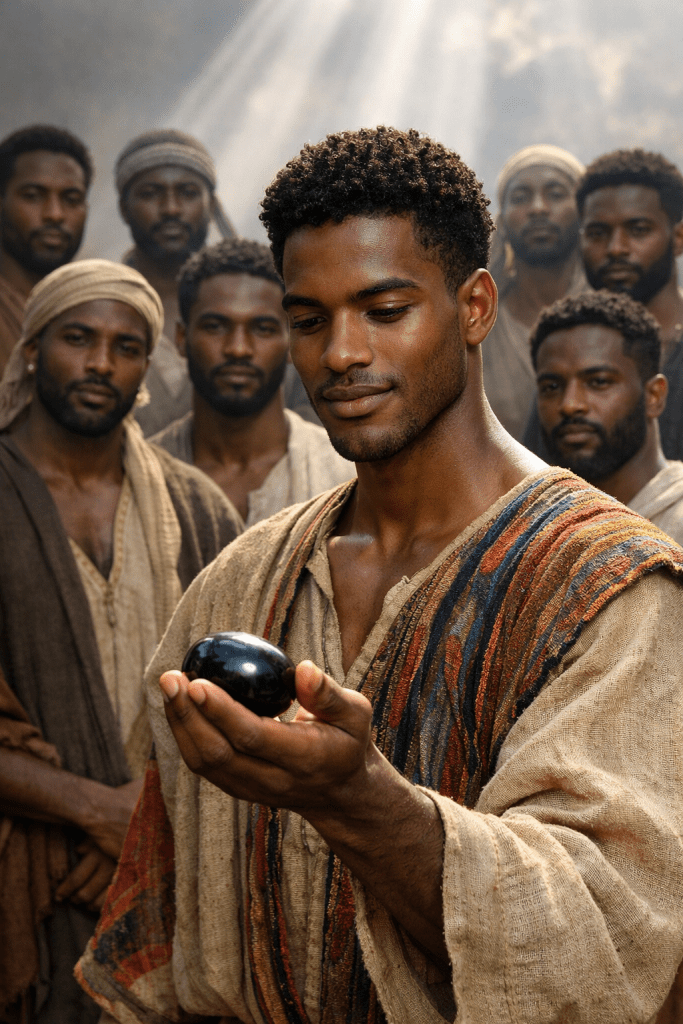
The Onyx Stone: A Family Affair — Joseph and His Brothers.

Onyx, dark as the midnight sky yet polished with hidden light,
a stone of mystery shaped by time and pressure,
a gem that carries both beauty and burden,
whispering of destinies forged through suffering,
and of souls refined in the fire of betrayal.

Onyx holds deep symbolic meaning in the biblical tradition, representing endurance, spiritual depth, and divine remembrance. In Scripture, onyx is one of the stones set in the high priest’s breastplate, engraved with the names of the tribes of Israel, signifying that each tribe was carried before God in sacred memory.

Joseph, the eleventh son of Jacob and the firstborn of Rachel, stands as one of the most compelling figures among the twelve tribes of Israel. His life narrative is not merely historical but theological, illustrating divine providence, generational conflict, and the mystery of chosenness within a fractured family system.

According to rabbinic and later symbolic traditions, Joseph is associated with the onyx stone, reflecting both his dark trials and radiant destiny. Onyx becomes a metaphor for Joseph’s life—polished through suffering, yet ultimately exalted through divine purpose.

Joseph’s story begins with favor, as he is given the coat of many colors by his father, a garment symbolizing distinction, authority, and emotional preference. This visible sign of love ignites jealousy among his brothers, sowing the seeds of betrayal long before the act itself unfolds.

The dreams Joseph receives intensify this conflict. In his visions, the sun, moon, and stars bow before him, along with sheaves of grain belonging to his brothers. These dreams are not merely youthful imagination but prophetic revelations that foreshadow his future role as a ruler and preserver of life.

Yet divine insight does not shield Joseph from human cruelty. His brothers, consumed by envy, conspire against him, stripping him of his garment and casting him into a pit before selling him to Midianite traders for silver, effectively turning family into traffickers and blood into profit.

This act of betrayal reflects one of the Bible’s deepest moral tensions: how God’s purpose often unfolds through human sin. Joseph is innocent, yet he becomes the vessel through which divine redemption will later flow, revealing the paradox of suffering as preparation.

Joseph’s descent into Egypt marks the beginning of his transformation. Though enslaved, he maintains integrity, resisting moral compromise even when falsely accused and imprisoned. His righteousness becomes a quiet rebellion against despair.

In prison, Joseph’s gift of dream interpretation resurfaces, proving that divine calling cannot be silenced by circumstance. His spiritual insight becomes the very instrument that elevates him from prisoner to prince.

Pharaoh’s dreams of famine and abundance position Joseph as a savior figure, entrusted with authority over Egypt’s economy. He rises not by lineage but by wisdom, embodying the principle that divine favor transcends social status.

Joseph’s beauty is also noted in Scripture, described as fair in form and appearance, making him both desired and tested. His physical attractiveness parallels his spiritual calling, showing how outward beauty can coexist with inner discipline.

When famine strikes, Joseph’s brothers unknowingly come before him in search of food, fulfilling the very dreams they once mocked. Their bowing becomes not an act of submission to a man, but to the divine orchestration behind his life.

Joseph’s emotional response reveals the complexity of forgiveness. He weeps privately, torn between memory and mercy, justice and compassion. His power is not in revenge, but in restraint.

The moment of reconciliation becomes one of the Bible’s most profound theological revelations. Joseph declares that what his brothers meant for evil, God intended for good, reframing trauma as testimony.

This declaration does not erase the pain of betrayal but redeems it. Joseph becomes the preserver of the family that once sought his destruction, turning the wound into a wellspring of survival.

Onyx, in this context, becomes more than a gemstone; it is a symbol of Joseph himself—darkened by suffering, refined by pressure, and set in divine memory as part of Israel’s eternal identity.

The family affair of Joseph is not merely about sibling rivalry but about generational inheritance, divine election, and moral responsibility. His story challenges the illusion of fairness and exposes the deeper logic of providence.

Joseph’s life reveals that destiny is not destroyed by betrayal, but often activated by it. The pit becomes the passageway, the prison becomes the platform, and the wound becomes the witness.

Through Joseph, the tribe associated with onyx emerges as a testament to spiritual endurance. He becomes a living stone in the architecture of Israel’s story, bearing both the scars of rejection and the seal of divine favor.

Onyx thus stands as a sacred metaphor for Joseph’s journey, reminding readers that God often engraves glory upon the darkest surfaces, and that what is polished by suffering may one day shine in sovereignty.


References
The Holy Bible, King James Version. (2017). Hendrickson Publishers. (Original work published 1611).
Exodus 28:9–12, 28:20 (KJV).
Genesis 37–50 (KJV).
Alter, R. (2018). The Hebrew Bible: A translation with commentary. W. W. Norton & Company.
Sarna, N. M. (1989). Genesis: The traditional Hebrew text with the new JPS translation. Jewish Publication Society.
Brown, F., Driver, S. R., & Briggs, C. A. (2001). The Brown-Driver-Briggs Hebrew and English lexicon. Hendrickson.

The Black Archetypes of Male Beauty: The Most Handsome Black Male Celebrities.

Black male beauty has long existed at the intersection of visibility and erasure—celebrated within Black communities yet historically marginalized by mainstream media that privileged Eurocentric standards of masculinity. Today, the rise of Black leading men in film, television, fashion, and culture represents not merely aesthetic recognition but a cultural re-centering of what male beauty truly looks like. Black male attractiveness is not singular or monolithic; it spans a spectrum of shades, facial structures, energies, and archetypes—from regal authority to gentle vulnerability, from warrior strength to romantic softness. These men embody more than physical appeal; they reflect history, resilience, and ancestral aesthetics that reclaim African features as symbols of global desirability. In honoring the most handsome Black male celebrities, we are also honoring a larger truth: Black male beauty is diverse, powerful, and divinely designed, standing as both a visual standard and a cultural restoration.

This photograph is the property of its respective owner. No copyright infringement intended.

Idris Elba
Idris Elba embodies the classic “tall, dark, and handsome” archetype through his imposing height, deep complexion, resonant voice, and commanding presence, which together signal what evolutionary psychology associates with protective and authoritative masculinity—strength, genetic fitness, and emotional depth (Rhodes, 2006; Puts et al., 2012). He is the epitome of handsomeness, the complete package, with his broad facial structure, piercing soulful eyes, strong jawline, and calm demeanor. This projection of kingly gravitas feels both powerful and grounding, making his beauty not only physical but also symbolic of dignified Black male authority in a global cultural landscape.

This photograph is the property of its respective owner. No copyright infringement intended.

Shemar Moore
Shemar Moore represents a “golden” or “light cafe au lait” masculinity rooted in warmth, symmetry, and relational charm, with his light honeyed skin tone, expressive marbles like eyes, and radiant smile activating perceptions of approachability, joy, and emotional safety (Maddox & Gray, 2002; Gangestad & Simpson, 2000). He is the complete package in terms of beauty. His muscular build, combined with playful charisma, reflects a form of soft dominance—strength without threat—making his beauty feel intimate, affectionate, astonishing, and emotionally inviting rather than distant or intimidating.

This photograph is the property of its respective owner. No copyright infringement intended.

Morris Chestnut
Morris Chestnut has been the heartthrob for decades, representing black masculinity and black male beauty. He embodies a form of “classic gentleman masculinity” rooted in symmetry, emotional steadiness, and timeless appeal. The epitome of fineness. His medium-brown complexion, described as chocolate heaven, refined facial proportions, calm eyes that convey a great deal, and consistently polished presentation signal what evolutionary psychology describes as stable attractiveness—beauty associated with trust, long-term partnership, and reliability, rather than fleeting sexual novelty (Rhodes, 2006; Gangestad & Simpson, 2000). Chestnut’s appeal is not loud or hyper-sexualized; it is dignified, mature, and romantic, making him the archetype of the dependable Black leading man whose beauty feels safe, rooted, and enduring across generations.

This photograph is the property of its respective owner. No copyright infringement intended.

Travis Cure
Travis Cure represents a modern “aesthetic masculinity” shaped by fitness culture, facial harmony, and digital-era visual standards. His lean, muscular build, sharp jawline, clear skin, come-hither good looks, and balanced facial symmetry align closely with contemporary metrics of physical attractiveness, where visual clarity, body sculpting, and high grooming standards dominate desirability frameworks (Frederick & Haselton, 2007). Cure’s beauty reflects a post-Instagram masculinity—where the male body is curated, disciplined, and displayed as both art and aspiration, signaling self-mastery, health, and high social capital.

Photo Credit: Tibo Norman Photography

Louis Allen III
Louis Allen III embodies “intellectual masculinity”—a beauty rooted not only in physical features but in cognitive presence, articulation, and cultural depth. His refined facial structure, physique, piercing green-hazel eyes, like a piece of art found in a museum, and composed demeanor project what social psychology identifies as competence-based attractiveness, where intelligence, emotional regulation, and verbal confidence significantly enhance perceived desirability (Fiske et al., 2007). Allen’s appeal operates in the realm of gravitas and mental authority; his beauty feels thoughtful, elevated, and spiritually grounded, representing a form of Black male attractiveness where the mind becomes the primary aesthetic asset.

This photograph is the property of its respective owner. No copyright infringement intended.

Broderick Hunter
Broderick Hunter represents “sculptural masculinity”—a form of beauty that feels almost architectural in its precision and physical harmony. His tall, model-good-looks, bewitching mirrored eyes, athletic frame, sharply defined cheekbones, full lips, and symmetrical facial structure align closely with classical standards of male attractiveness rooted in proportion, balance, and visual impact (Rhodes, 2006). Hunter’s appeal is highly aesthetic and cinematic; he embodies the archetype of the living statue, where Black male beauty is experienced as fine art—polished, striking, and immediately captivating, reflecting a modern luxury ideal of masculine form.

This photograph is the property of its respective owner. No copyright infringement intended.

Redriac Williams
Redriac Williams represents a form of “regal masculinity” rooted in stature, symmetry, and aristocratic bearing. His athletic frame, mesmerizing green-hazel eyes, sculpted features, and composed posture align with what social psychologists describe as status-based attractiveness—beauty associated with leadership, high rank, and social authority (Fiske et al., 2007). Williams’ appeal feels noble and elevated, evoking the image of a modern Black prince whose beauty communicates command, discipline, and quiet confidence.

This photograph is the property of its respective owner. No copyright infringement intended.

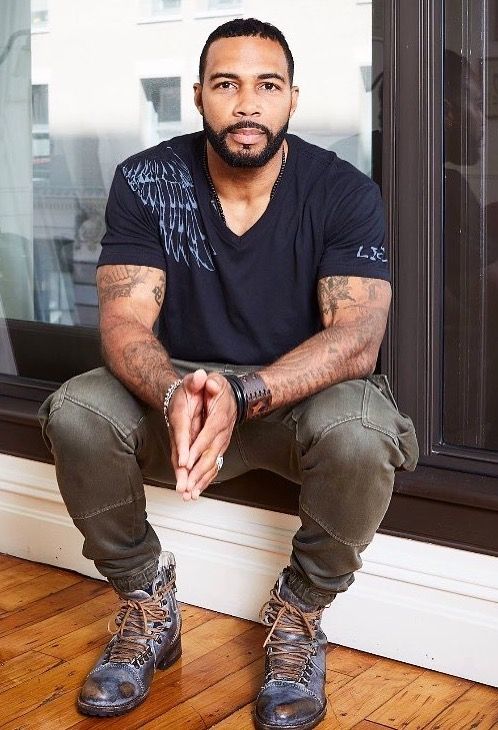
Omari Hardwick
Omari Hardwick represents “warrior-poet masculinity”—a fusion of physical intensity and emotional complexity. His muscular build, pretty eyes with an intense gaze, and textured facial features project what psychology defines as dominance-based attractiveness, while his artistic sensibility and introspective demeanor soften that dominance into depth (Frederick & Haselton, 2007). Hardwick’s beauty feels charged and cinematic; he embodies the archetype of the brooding protector whose appeal lies in both power and inner struggle.

This photograph is the property of its respective owner. No copyright infringement intended.

Kenneth Okolie
Kenneth Okolie embodies “continental masculinity”—a deeply Afrocentric beauty marked by strong bone structure, dark luminous skin, and ancestral presence. His broad facial planes, deep-set eyes, and princely demeanor associate with royalty. Dignified stillness aligns with evolutionary cues of genetic robustness and masculine stability (Rhodes, 2006). Okolie’s attractiveness feels primal and rooted, reflecting a lineage-based aesthetic where Black male beauty is directly tied to heritage, earthiness, and spiritual depth rather than Western grooming standards.

This photograph is the property of its respective owner. No copyright infringement intended.

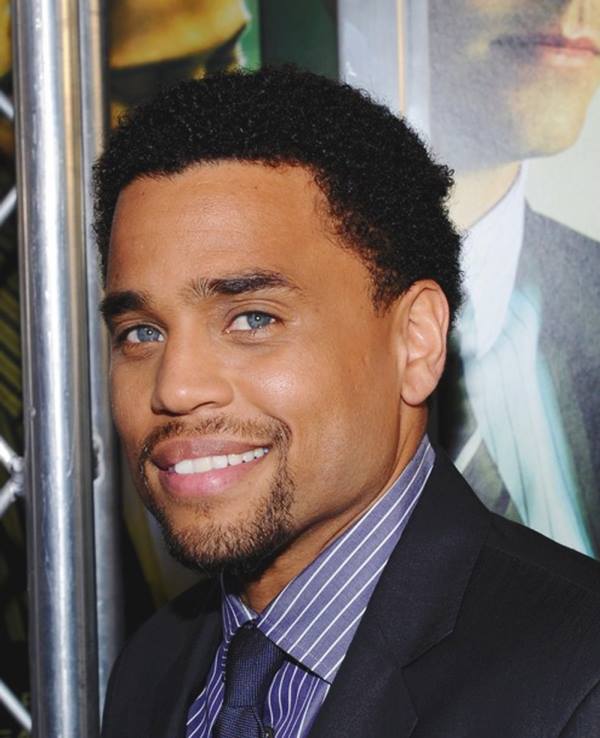
Michael Ealy
Michael Ealy embodies “ethereal masculinity”—a rare form of beauty defined by softness, luminosity, and emotional transparency. His light complexion, piercing blue eyes, gentle facial contours, and expressive gaze activate what psychologists describe as neotenous attractiveness, where youthful features and vulnerability increase perceptions of trust, emotional safety, and romantic desirability (Fiske et al., 2007; Rhodes, 2006). Ealy’s beauty feels tender, positioning him as the archetype of the sensitive romantic—where Black male attractiveness is associated not with dominance, but with intimacy, empathy, and emotional depth.

*Honorary Mention*

This photograph is the property of its respective owner. No copyright infringement intended.

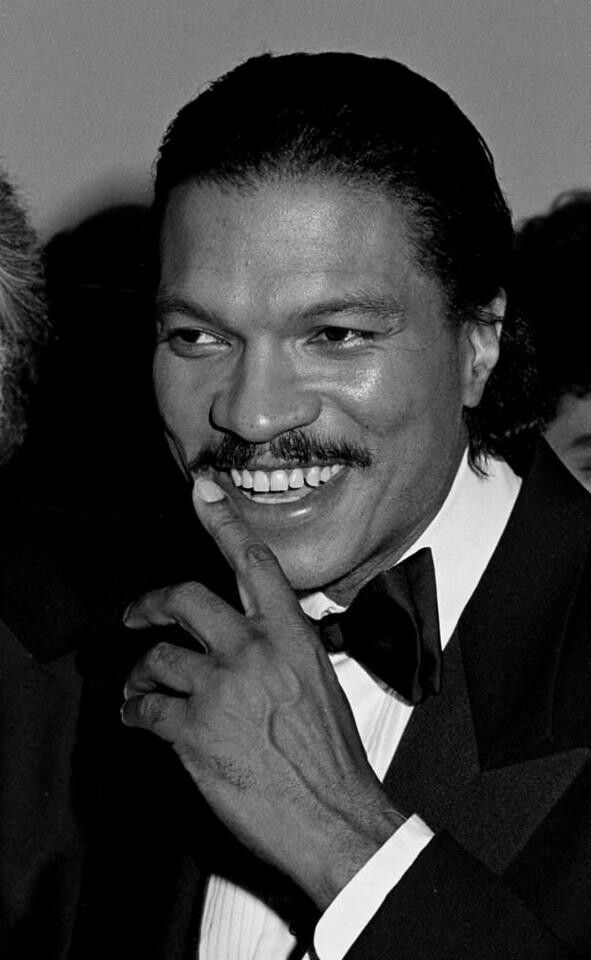
Billy Dee Williams
Billy Dee Williams embodies “legendary gentleman masculinity”—a timeless elegance defined by smooth features, a come-hither smile, relaxed confidence, and effortless charm. His appeal aligns with what sociologists describe as charisma-based attractiveness, where confidence, voice, and social ease outweigh raw physicality (Fiske et al., 2007). Williams’ beauty is not about youth but about aging gracefully—he represents the archetype of the black male celebrity beauty – cool, demure, unique, sophisticated, and romantic icon whose sophistication and grace transcend generations.

References

Gangestad, S. W., & Simpson, J. A. (2000). The evolution of human mating: Trade-offs and strategic pluralism. Behavioral and Brain Sciences, 23(4), 573–587.
Maddox, K. B., & Gray, S. A. (2002). Cognitive representations of Black Americans: Reexploring the role of skin tone. Personality and Social Psychology Bulletin, 28(2), 250–259.
Puts, D. A., et al. (2012). Sexual selection on male vocal fundamental frequency in humans. Proceedings of the Royal Society B, 279(1743), 1–7.
Rhodes, G. (2006). The evolutionary psychology of facial beauty. Annual Review of Psychology, 57, 199–226.

Frederick, D. A., & Haselton, M. G. (2007). Why is muscularity sexy? Tests of the fitness indicator hypothesis. Personality and Social Psychology Bulletin, 33(8), 1167–1183.
Fiske, S. T., Cuddy, A. J. C., & Glick, P. (2007). Universal dimensions of social cognition: Warmth and competence. Trends in Cognitive Sciences, 11(2), 77–83.
Gangestad, S. W., & Simpson, J. A. (2000). The evolution of human mating: Trade-offs and strategic pluralism. Behavioral and Brain Sciences, 23(4), 573–587.
Rhodes, G. (2006). The evolutionary psychology of facial beauty. Annual Review of Psychology, 57, 199–226.

Crowns Shorn: Black Hair, Wealth, Tribal Identity, and the Economics of Enslavement in Africa and the Atlantic World

Black hair has long functioned as a cultural archive in Africa, encoding information about lineage, spirituality, marital status, age, occupation, and wealth. Across the continent, hair was never merely aesthetic; it was social language. Intricate braiding, sculptural coiffures, and the use of oils, beads, shells, gold thread, and cowries communicated rank and prosperity, situating the individual within a complex web of kinship and economy.

In many West and Central African societies, the care and styling of hair signified time, labor, and communal investment. Hairstyles that took hours or days to complete demonstrated access to leisure, skilled labor, and social networks—markers of wealth in precolonial economies where time itself was a resource. Hair thus operated as visible capital, reflecting one’s position within agrarian, mercantile, or royal systems.

Among the Yoruba, hair (irun) was closely associated with ori, the spiritual head believed to house destiny. Elaborate hairstyles accompanied rites of passage and royal ceremonies, underscoring hair’s sacred dimension. To damage or desecrate the hair was to threaten both social standing and spiritual integrity, a concept widely shared across African cosmologies.

In Wolof, Mandé, Akan, and Fulani cultures, hairstyles distinguished nobility from commoners and free people from the enslaved. Certain styles were restricted to royal households or warrior classes, while others marked griots, healers, or married women. Hair was a regulated symbol, reinforcing social order and economic hierarchy without written law.

Wealth in Africa was not only material but relational. Hairstyles often incorporated trade goods—beads from trans-Saharan routes, gold dust from Akan fields, or indigo-dyed threads—linking hair to continental and global commerce. These adornments made the head a site of economic display and interregional exchange.

Gendered meanings of hair further reflected socioeconomic status. Women’s hair often communicated fertility, marital eligibility, and household stability, while men’s hair could signify age-grade, military readiness, or priestly calling. In both cases, hair connected the body to productive and reproductive labor essential to wealth creation.

The violent rupture of the transatlantic slave trade deliberately targeted these meanings. Upon capture, African men, women, and children were often forcibly shaved. This act was not incidental hygiene; it was a calculated assault on identity, dignity, and memory. Shaving erased tribal markers, spiritual protections, and visible signs of status, rendering captives symbolically “blank.”

European slave traders justified head-shaving as a means to control lice and disease, yet the practice also facilitated commodification. Stripped of recognizable cultural signifiers, enslaved Africans were transformed into fungible labor units. The removal of hair assisted in breaking communal bonds and accelerating psychological disorientation.

On the auction block, shaved heads standardized bodies for sale. Without hairstyles to indicate nobility, skill, or ethnic origin, buyers assessed Africans primarily by age, musculature, and perceived productivity. The economics of slavery demanded depersonalization, and hair—once a ledger of social wealth—became an obstacle to profit.

The plantation regime extended this logic. Enslaved Africans were denied time, tools, and autonomy to care for their hair according to tradition. Scarcity of oils, combs, and communal grooming spaces disrupted cultural continuity. Over time, coerced neglect was weaponized as evidence of supposed African inferiority.

Colonial ideologies later pathologized African hair textures, labeling them “woolly” or “unkempt” in contrast to European norms. These racial hierarchies mapped aesthetics onto economics, positioning straight hair as “professional” and kinky hair as “primitive,” a legacy that persisted into post-emancipation labor markets.

After emancipation, hair became a site of survival. Many Black people altered or concealed natural hair to access employment and safety within white-dominated economies. Straightening practices, while often framed as assimilation, were pragmatic responses to structural exclusion rooted in slavery’s visual economy.

Despite this, African-descended communities preserved hair knowledge through oral tradition and innovation. Braiding patterns carried maps, kinship codes, and resistance strategies during enslavement, while post-slavery styles became acts of reclamation. Hair quietly remembered what history tried to erase.

In the twentieth century, Pan-Africanism and Black liberation movements explicitly reclaimed natural hair as political economy. Afros and locs rejected Eurocentric beauty standards and asserted continuity with African heritage, reframing hair as cultural wealth rather than liability.

Contemporary Africa and the diaspora continue to negotiate hair within global capitalism. The multibillion-dollar hair industry—often dominated by non-Black ownership—extracts value from Black bodies while stigmatizing natural textures. This paradox mirrors earlier patterns of exploitation, albeit in modern form.

Yet natural hair movements challenge this imbalance by re-centering African aesthetics as assets. Locally sourced shea butter, palm oil, and traditional grooming practices reconnect hair to indigenous economies and ecological knowledge, echoing precolonial systems of value.

Hair discrimination laws emerging in the United States and elsewhere acknowledge that hair-based bias is a civil rights issue, not mere preference. These policies implicitly recognize that hair has always been tied to access, labor, and economic mobility—just as it was during slavery.

Understanding the history of Black hair reveals slavery as not only a system of forced labor but of cultural theft. The shaving of African heads was an opening move in a broader project to sever people from their wealth—material, spiritual, and social.

To study Black hair is to study African political economy, cosmology, and resistance. It is a reminder that what grows from the head once carried nations, and that reclaiming it is an act of historical repair.

Today, as African and diasporic communities reassert control over their hair, they also reclaim narratives of wealth and worth long denied. In this sense, Black hair remains what it has always been: a crown, once shorn, now rising again.


References

Byrd, A. D., & Tharps, L. L. (2014). Hair story: Untangling the roots of Black hair in America. St. Martin’s Press.

Gomez, M. A. (1998). Exchanging our country marks: The transformation of African identities in the colonial and antebellum South. University of North Carolina Press.

Herskovits, M. J. (1958). The myth of the Negro past. Beacon Press.

Lovejoy, P. E. (2012). Transformations in slavery: A history of slavery in Africa (3rd ed.). Cambridge University Press. https://doi.org/10.1017/CBO9781139030116

Patton, T. O. (2006). Hey girl, am I more than my hair?: African American women and their struggles with beauty, body image, and hair. NWSA Journal, 18(2), 24–51. https://doi.org/10.2979/NWS.2006.18.2.24

Raboteau, A. J. (2004). Slave religion: The “invisible institution” in the antebellum South. Oxford University Press.

Sieber, R., & Herreman, F. (Eds.). (2000). Hair in African art and culture. Museum for African Art / Prestel.

Thornton, J. (1998). Africa and Africans in the making of the Atlantic world, 1400–1800 (2nd ed.). Cambridge University Press. https://doi.org/10.1017/CBO9780511583749

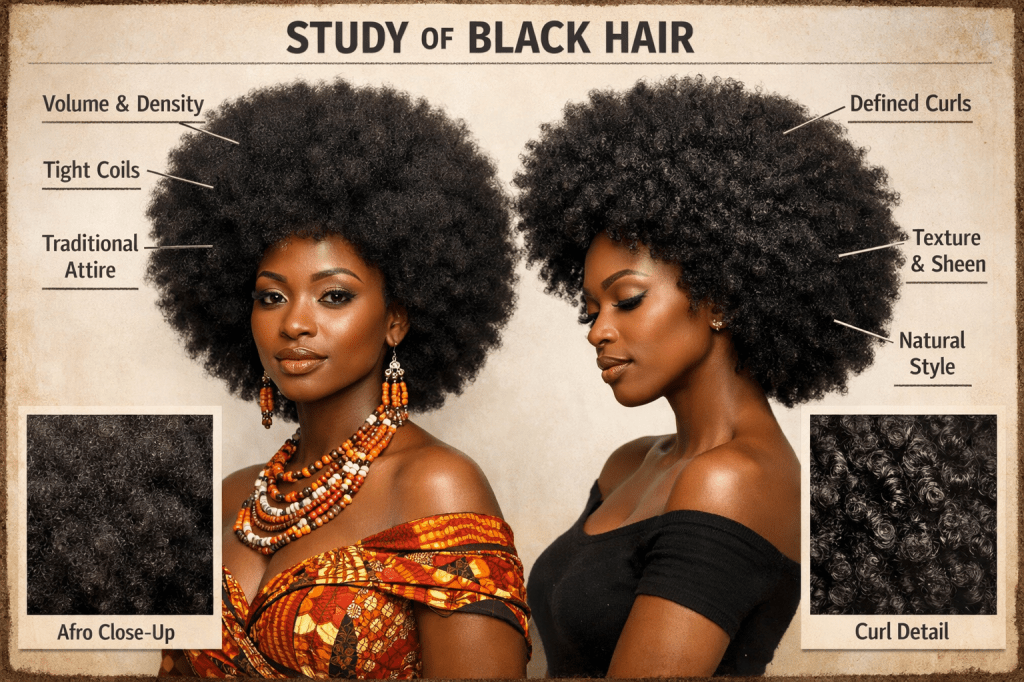
Study of Black Hair

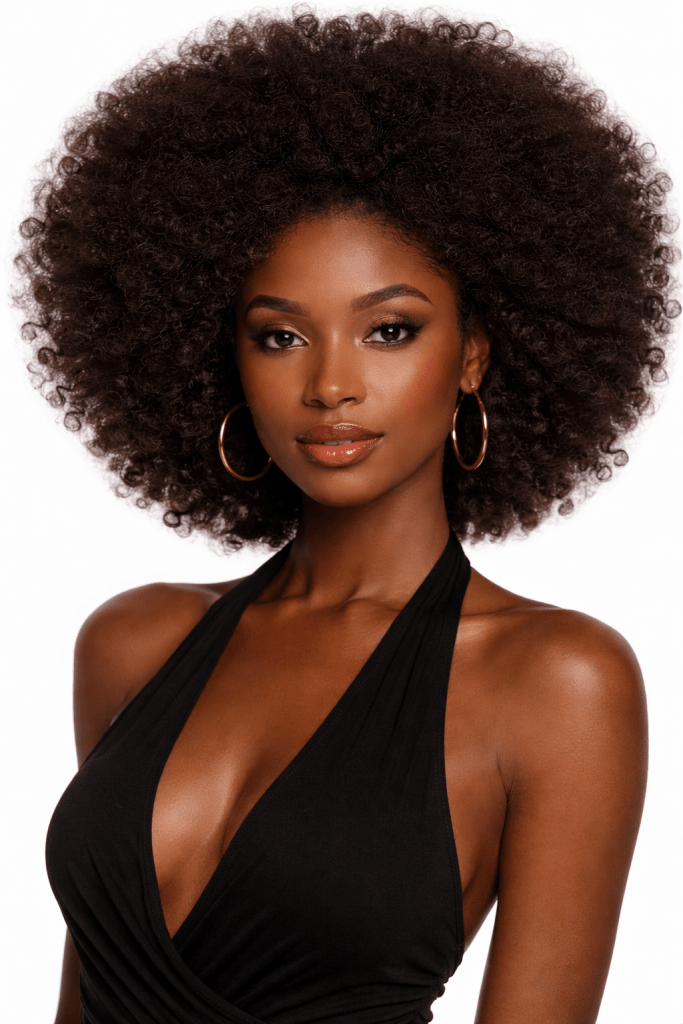
Black hair is not merely a biological feature but a profound cultural, historical, and spiritual marker that has shaped identity across the African continent and the African diaspora. Its textures, patterns, and styles communicate lineage, status, resistance, creativity, and survival. To study Black hair is to study a living archive of African civilizations, colonial disruption, and modern reclamation.

From an anthropological perspective, Black hair exhibits the widest range of natural textures found in human populations, particularly tightly coiled and spiral patterns commonly categorized as Type 4 hair. These textures are not accidental; they are adaptive traits shaped by evolution in equatorial climates, aiding thermoregulation and protecting the scalp from intense ultraviolet radiation (Jablonski, 2012).

In precolonial African societies, hair functioned as a sophisticated language. Styles signified age, marital status, ethnic affiliation, wealth, fertility, and spiritual rank. Among the Yoruba, Himba, Maasai, and Wolof peoples, hair was adorned with beads, cowrie shells, clay, and oils, transforming the head into a crown that reflected both communal belonging and divine order (Sieber & Herreman, 2000).

Hair care itself was a communal ritual. Grooming involved social bonding, storytelling, and intergenerational knowledge transfer. Natural oils such as shea butter and palm oil were used not only for aesthetics but for scalp health and protection, underscoring an advanced understanding of cosmetic science long before Western industrial products emerged (Byrd & Tharps, 2014).

The transatlantic slave trade violently disrupted these traditions. Enslaved Africans were often forcibly shaved upon capture, a symbolic stripping of identity, dignity, and ancestry. This act was not hygienic alone; it was psychological warfare designed to erase memory and enforce submission (White & White, 1995).

During slavery in the Americas, Black hair became politicized. European beauty standards elevated straight hair as “civilized” and denigrated African textures as inferior. These ideologies were embedded into laws, social hierarchies, and labor systems, reinforcing racial domination through aesthetics (Banks, 2000).

Post-emancipation, many Black people adopted hair straightening practices as survival strategies within hostile racial economies. Straight hair often afforded greater access to employment and social mobility. This was not self-hatred, but adaptation within systems that punished African appearance (Rooks, 1996).

The 20th century marked a turning point as Black intellectuals and artists challenged Eurocentric norms. The Harlem Renaissance and later the Black Power Movement reframed natural hair as political resistance. The Afro became a visible declaration of pride, autonomy, and rejection of assimilation (Van Deburg, 1992).

Scientifically, Black hair has been misunderstood and understudied. Traditional cosmetology training and dermatological research historically centered straight hair models, leading to misclassification of Black hair as “problematic” rather than biologically distinct. Contemporary research now recognizes the unique elliptical follicle shape and curl geometry of Afro-textured hair (Franbourg et al., 2003).

Psychologically, hair plays a critical role in self-concept and racial identity development. Studies show that acceptance of natural hair correlates with higher self-esteem among Black women and girls, while hair discrimination is linked to anxiety, workplace bias, and internalized racism (Rosette & Dumas, 2007).

Black women, in particular, bear the heaviest social burden regarding hair. Their hair has been hyper-policed in schools, workplaces, and the military, prompting legal interventions such as the CROWN Act, which affirms natural hairstyles as protected expressions of racial identity (Greene, 2021).

In African spiritual systems, hair is often seen as sacred—an extension of the soul and a conduit of spiritual energy. Many traditions hold that the head is the highest point of the body and closest to the divine, making hair an integral component of ritual purity and spiritual discipline (Mbiti, 1990).

The global natural hair movement of the 21st century represents a reclamation of ancestral knowledge. Social media, digital archives, and grassroots education have empowered millions to unlearn colonial beauty myths and embrace their God-given design. This movement is both aesthetic and epistemological.

Economically, Black hair has fueled a multibillion-dollar global industry, yet Black communities have historically been excluded from ownership and profit. Recent shifts toward Black-owned brands and ethical sourcing reflect a growing demand for economic justice within beauty culture (Wilkinson-Weber & DeNicola, 2016).

From a genetic standpoint, African hair diversity mirrors the deep genetic diversity of African populations themselves. Africa contains the oldest and most varied human gene pools, and hair texture variation is a visible testament to this biological richness (Tishkoff et al., 2009).

Education systems are increasingly recognizing the importance of inclusive representation. When Black hair is normalized in textbooks, media, and academic studies, it disrupts deficit narratives and affirms Black children’s embodied identities as worthy of study and respect.

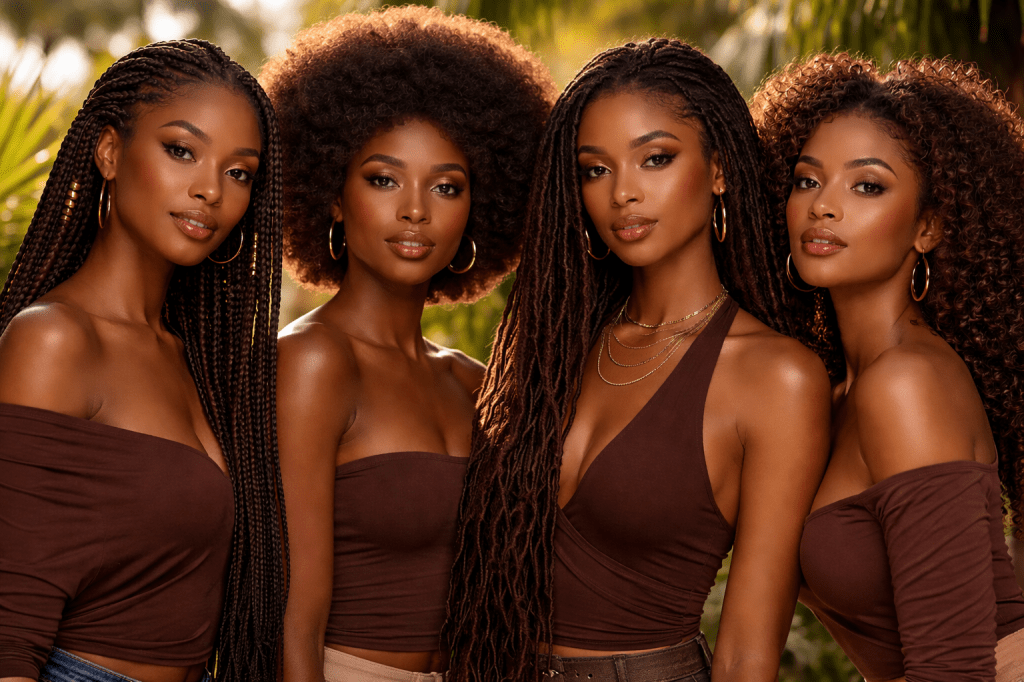
In media and visual culture, the afro, locs, braids, and twists function as counter-hegemonic symbols. They resist homogenization and assert presence in spaces that once demanded erasure. Representation of natural hair is thus inseparable from struggles for visibility and equity.

The study of Black hair also intersects with gender, class, and theology. In many faith traditions, debates around modesty, submission, and beauty are projected onto Black women’s hair, revealing how control over hair often mirrors control over bodies and voices.

In diasporic contexts, Black hair connects past and present, Africa and the Americas. It carries memory even when language and geography are lost. Each coil becomes a lineage marker, a living genealogy etched into the body.

Ultimately, Black hair is evidence of survival. Despite centuries of violence, ridicule, and regulation, it continues to grow—defiant, adaptive, and beautiful. To study Black hair is to study resilience written in keratin and culture.

As scholarship expands, Black hair must be treated not as a niche topic but as a legitimate interdisciplinary field encompassing anthropology, biology, history, psychology, theology, and cultural studies. Its significance reaches far beyond appearance into the core of human identity.

In honoring Black hair, academia participates in restorative justice—correcting historical distortions and affirming that what was once marginalized is, in truth, central to understanding humanity itself.


References

Banks, I. (2000). Hair matters: Beauty, power, and Black women’s consciousness. NYU Press.

Byrd, A. D., & Tharps, L. L. (2014). Hair story: Untangling the roots of Black hair in America (2nd ed.). St. Martin’s Press.

Franbourg, A., Hallegot, P., Baltenneck, F., Toutain, C., & Leroy, F. (2003). Current research on ethnic hair. Journal of the American Academy of Dermatology, 48(6), S115–S119.

Greene, T. (2021). The CROWN Act and the fight against hair discrimination. Harvard Civil Rights–Civil Liberties Law Review, 56, 487–515.

Jablonski, N. G. (2012). Living color: The biological and social meaning of skin color. University of California Press.

Mbiti, J. S. (1990). African religions and philosophy (2nd ed.). Heinemann.

Rooks, N. (1996). Hair raising: Beauty, culture, and African American women. Rutgers University Press.

Rosette, A. S., & Dumas, T. L. (2007). The hair dilemma: Conformity versus authenticity in corporate America. Academy of Management Journal, 50(4), 785–807.

Sieber, R., & Herreman, F. (2000). Hair in African art and culture. The Museum for African Art.

Tishkoff, S. A., et al. (2009). The genetic structure and history of Africans and African Americans. Science, 324(5930), 1035–1044.

Van Deburg, W. L. (1992). New day in Babylon: The Black Power movement and American culture. University of Chicago Press.

Wilkinson-Weber, C. M., & DeNicola, A. (2016). Critical craft: Technology, globalization, and capitalism. Bloomsbury.

The Beautiful Brown Paradox: Beauty, Society, and Self.

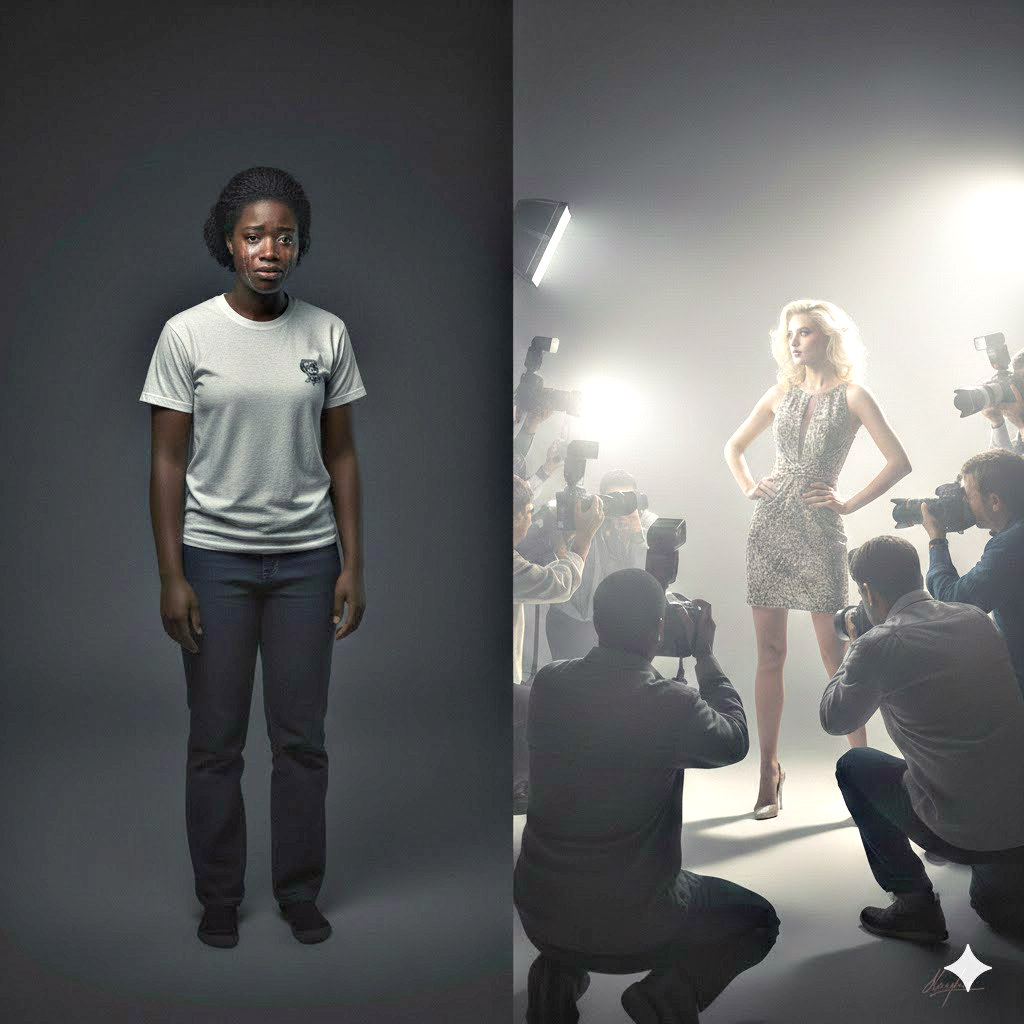
The lived experience of a beautiful brown woman in today’s world is layered with complexity, triumph, and contradiction. She exists in a space where beauty is simultaneously a blessing and a battlefield—a lens through which society sees her, yet often fails to truly know her. The beautiful brown paradox is the tension between being visually adored but socially dismissed, culturally exalted but systemically constrained, desired yet rarely protected. In this paradox, beauty does not erase oppression; instead, it often highlights it.

Within the Black and brown community, beauty is a cultural inheritance—an embodied legacy of ancestry, geography, and divine artistry. From rich melanin tones to textured hair and regal facial architecture, brown beauty is rooted in history older than empires. Yet colonialism distorted this reality, making brown beauty invisible, inferior, or conditional. The beautiful brown woman today carries not only the gift of her appearance but the weight of reclaiming its truth.

Society weaponizes beauty standards, often rewarding proximity to whiteness. Even when brown beauty is praised, it is sometimes praised selectively—lighter shades, looser curls, delicate features. The brown woman whose beauty does not align with Eurocentric norms may find herself celebrated within her culture but overlooked in mainstream spaces. This hierarchy shapes identity and experience, forcing her to navigate the politics of complexion and attractiveness.

In public perception, the beautiful brown woman is often exoticized. She is labeled “different,” “rare,” or “special”—descriptors cloaked as compliments yet rooted in the idea that brown beauty is exceptional rather than foundational. She becomes spectacle instead of standard, admired but othered, desired yet misunderstood. Her identity becomes an aesthetic, not a humanity.

Social desirability does not translate into social safety. A beautiful brown woman may attract attention but not advocacy. She may be admired in music videos, but ignored in boardrooms. Emulated in style and beauty trends, yet excluded from leadership. Loved on screen, but unprotected in real life when injustice strikes. Her beauty, instead of armor, becomes exposure.

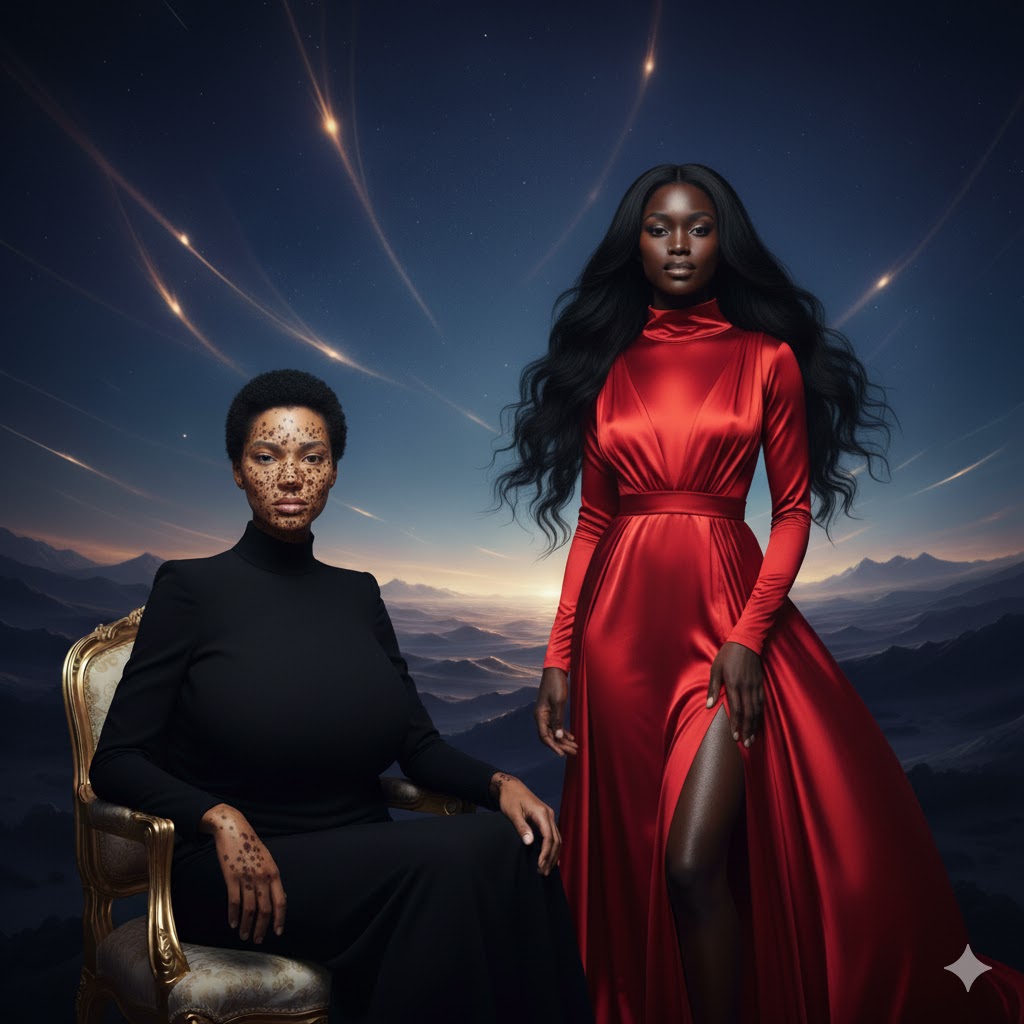
Colorism complicates her world further. Privilege may come with lighter complexion, yet scrutiny may intensify with deeper melanin. Brown beauty exists on a spectrum where each shade bears its own burdens. Light-skinned women may face accusations of arrogance or “passing privilege,” while dark-skinned women may fight invisibility and devaluation. Each lives a different verse of the same song: beauty politicized.

The paradox extends to relationships. The beautiful brown woman may be desired romantically, yet objectified more than cherished. She may attract suitors fascinated by her appearance but intimidated by her intellect or strength. Love becomes a negotiation between being adored and being truly seen. Her heart longs for recognition beyond the physical—a love that honors her essence, not just her allure.

In professional spaces, her beauty can be double-edged. It may draw opportunity but also unwanted assumption. She may be seen as capable because she “looks polished,” or underestimated because beauty is mistaken for superficiality. She must work twice as hard to prove she is not merely ornamental. Intelligence becomes her shield, and excellence her language.

Psychologically, beauty can become a mask. The world applauds her appearance but often overlooks her pain. She learns early that vulnerability contradicts image, so she smiles when tired, succeeds when overwhelmed, and forgives when wounded. She carries grace because she must, but inside, she seeks safe spaces to rest her soul and remove the armor of expectation.

Spiritually, her journey carries deep significance. Scripture reminds us that external beauty is fleeting, but inward beauty—wisdom, humility, and faith—endures (1 Peter 3:3–4, KJV). The beautiful brown woman’s strength lies not only in how she looks, but in the resilience she embodies. Her radiance is divine, not merely cosmetic. Her worth is eternal, not algorithmic.

Modern beauty culture complicates her reflection. Filters, trends, and visibility metrics tell her that beauty must be perfected, performed, and proven. Yet ancestral wisdom whispers that true beauty is rooted in identity and dignity—not validation. Her challenge is to see herself clearly in a world that constantly distorts mirrors.

In media, representation grows but remains incomplete. When she sees herself, it is often in curated roles—strong, sensual, supportive. Rarely soft, complex, or unguarded. She longs to see narratives where brown women exist without stereotype or performance; where they breathe fully, laugh freely, and heal publicly.

Community plays a healing role. Among other brown women, she finds recognition without explanation. Shared experience becomes sanctuary. Yet even within community, internalized color hierarchies must be dismantled so beauty becomes celebration, not competition.

The beautiful brown paradox teaches resilience. She learns to define herself rather than be defined. She cultivates internal wealth: character, purpose, vision. Beauty becomes her introduction, not her identity. Her value is no longer measured by perception, but by purpose.

She raises daughters and sons with new language—affirmation rooted in heritage and holiness. She reminds them that melanin is majesty, hair is crown, and beauty is inheritance, not achievement. In doing so, she interrupts generations of distortion and chooses liberation over imitation.

Her presence challenges the world. Brown beauty stands as testimony: that Blackness is not deviation from beauty but the blueprint of it. That her body carries history, culture, and divine intention. That she is not anomaly but origin.

Ultimately, the paradox dissolves in truth: she is more than the gaze that looks at her. She is soul, mind, spirit, destiny. She is chosen, crafted, and crowned by God—not by trends or opinions. Her beauty is not dilemma, but design.

In this revelation, the brown woman walks boldly. She no longer asks for space—she embodies it. She no longer seeks validation—she knows who she is. She no longer battles identity—she rests in it. Her beauty becomes witness to a greater glory: that she is fearfully and wonderfully made (Psalm 139:14, KJV).

The beautiful brown paradox becomes, ultimately, a beautiful brown awakening. And in her awakening, she redefines beauty not only for herself, but for the world.


References

Hunter, M. (2007). The persistent problem of colorism: Skin tone, status, and inequality. Sociology Compass, 1(1), 237–254.

Nash, J. C. (2019). Black feminism reimagined: After intersectionality. Duke University Press.

Russell, K., Wilson, M., & Hall, R. (2013). The color complex: The politics of skin color in a new millennium. Anchor Books.

Wolf, N. (1991). The beauty myth: How images of beauty are used against women. HarperCollins.

Psalm 139:14 (KJV); 1 Peter 3:3–4 (KJV).

The Male Files: Melanin, Muscle & Meaning.

Black male bodies tell stories long before words are spoken. Melanin, muscle, and meaning converge as visual language—each layer communicating history, resilience, and divine intention. To observe Black men fully is to witness biology, theology, and culture moving together in embodied form.

Melanin is not simply pigment; it is protection, adaptation, and ancestral memory encoded in the skin. Scientific research confirms that higher melanin concentration evolved as a biological response to intense ultraviolet radiation, preserving folate and protecting cellular integrity (Jablonski, 2012). What has been racialized as inferior is, in truth, a marker of intelligent design.

Muscle, often emphasized in depictions of Black men, has been misunderstood and weaponized. While physical strength is a visible attribute, it is only one dimension of embodied intelligence. In Scripture, strength is consistently paired with discipline and restraint, suggesting that true power lies in control, not excess (Proverbs 16:32, KJV).

The Black male form has historically been reduced to labor and spectacle. During slavery and colonial expansion, Black men were framed as bodies without minds, tools without souls—a distortion necessary to justify exploitation (Fanon, 1952). This legacy still shapes contemporary perceptions, making reclamation essential.

Meaning restores what distortion removed. Black men exist not as reactions to trauma but as original carriers of purpose. Genesis affirms that humanity was created intentionally, endowed with dominion, stewardship, and moral responsibility (Genesis 1:26–27, KJV). Black manhood is included fully within this divine mandate.

Genetically, Black men represent humanity’s deepest roots. Africa holds the greatest genetic diversity on Earth, meaning Black bodies contain the widest range of human variation (Tishkoff et al., 2009). This reality reframes Blackness as foundational rather than peripheral to human identity.

Hair—whether cropped, coiled, locked, or curled—functions as both biology and symbol. Coiled hair protects the scalp and regulates heat, while culturally it communicates identity, resistance, and continuity (Jablonski & Chaplin, 2010). Grooming becomes an act of self-definition.

Muscle also reflects survival. Generations of forced labor, physical endurance, and resilience shaped not just bodies but collective memory. Yet Scripture reminds us that the body is a temple, worthy of care and honor, not exploitation (1 Corinthians 6:19–20, KJV).

Black male beauty has often been policed, feared, or eroticized rather than honored. Psychological research shows that racialized surveillance of Black men’s bodies contributes to chronic stress and identity fragmentation (Williams & Mohammed, 2009). Visibility without humanity becomes a burden.

Meaning, therefore, must be reclaimed internally as well as externally. When Black men define themselves rather than accepting imposed narratives, healing begins. Proverbs teaches that wisdom guards the heart and mind, offering stability amid distortion (Proverbs 4:23, KJV).

In art and photography, intentional representation challenges inherited myths. To depict Black men with dignity, softness, confidence, and complexity is to correct historical imbalance. Visual culture shapes belief as powerfully as written text.

The biblical image of manhood emphasizes leadership through service. Christ-centered masculinity models sacrifice, accountability, and love rather than domination (Mark 10:42–45, KJV). Muscle without meaning becomes threat; meaning without embodiment becomes abstraction.

Black men’s voices—deep, varied, rhythmic—carry authority shaped by experience. Whether speaking truth in intimate spaces or public arenas, their voices echo the breath of life God placed within humanity (Genesis 2:7, KJV).

Fatherhood reveals another dimension of meaning. Black men who nurture, protect, and instruct restore what systemic disruption sought to erase. Scripture links generational healing to the restoration of fathers’ hearts (Malachi 4:6, KJV).

Fashion and presentation also carry meaning. Tailored suits, casual wear, cultural garments—all communicate self-respect and intentionality. Scripture recognizes clothing as symbolic of position and honor, not vanity (Genesis 41:42, KJV).

Melanin, muscle, and meaning together form a complete narrative. Remove any element, and the picture distorts. Black men are not only seen—they are interpreted, and interpretation must be rooted in truth.

Psychologically, affirming Black male wholeness strengthens identity and resilience. Research in racial identity development demonstrates that positive self-concept buffers against systemic stressors (Helms, 1990).

Spiritually, Black men are not accidents of history. Jeremiah’s call narrative reminds us that God’s knowledge and purpose precede birth itself (Jeremiah 1:5, KJV). Purpose is embedded, not assigned later.

The Male Files seeks not to idolize bodies but to restore balance—to see Black men as whole beings: physical, intellectual, emotional, and spiritual. This wholeness resists reduction.

When melanin is honored, muscle disciplined, and meaning embraced, Black men stand not as symbols but as sons, leaders, creators, and stewards. This is not reclamation alone—it is alignment with divine truth.

To affirm Black men fully is to affirm God’s design. What has been fragmented by history can be made whole through truth, intention, and reverence. Melanin, muscle, and meaning were never meant to be separated.


References

Fanon, F. (1952). Black skin, white masks. Grove Press.

Helms, J. E. (1990). Black and White racial identity: Theory, research, and practice. Greenwood Press.

Jablonski, N. G. (2012). Living color: The biological and social meaning of skin color. University of California Press.

Jablonski, N. G., & Chaplin, G. (2010). Human skin pigmentation as an adaptation to UV radiation. Proceedings of the National Academy of Sciences, 107(Supplement 2), 8962–8968.

Tishkoff, S. A., et al. (2009). The genetic structure and history of Africans and African Americans. Science, 324(5930), 1035–1044.

Williams, D. R., & Mohammed, S. A. (2009). Discrimination and racial disparities in health. Journal of Behavioral Medicine, 32(1), 20–47.

The Holy Bible, King James Version. (1611/2017). Cambridge University Press.

Aesthetics, Access, and Anti-Blackness

Aesthetics have never been neutral. From art and architecture to beauty standards and branding, what a society deems “beautiful” often reflects who holds power. In the Western world, aesthetic norms were constructed alongside colonialism, elevating Eurocentric features while devaluing African phenotypes, cultures, and expressions. This hierarchy of beauty became a quiet but powerful mechanism of anti-Blackness.

Anti-Black aesthetics operate by rendering Blackness undesirable, excessive, or threatening. Dark skin, broad noses, full lips, coily hair, and African body types were historically caricatured and pathologized. These representations did not arise organically; they were crafted to justify enslavement, segregation, and social exclusion.

Colonial visual culture played a central role in this process. European art and early scientific illustrations depicted Africans as primitive or animalistic, contrasting sharply with idealized white bodies portrayed as rational and refined. These images circulated widely, shaping public perception and reinforcing racial hierarchies.

Access became the material consequence of aesthetic hierarchy. Beauty standards dictated who could enter certain spaces, industries, and opportunities. From employment and housing to education and media visibility, proximity to whiteness often determined access to social mobility.

The beauty industry institutionalized this bias. For decades, cosmetic products, hair care lines, and advertising excluded darker skin tones and natural hair textures. Black consumers were forced to assimilate or self-alter in order to be seen as professional or acceptable.

Colorism emerged as a byproduct of anti-Black aesthetics. Within Black communities themselves, lighter skin and looser curls were rewarded, while darker skin was stigmatized. This internalized hierarchy reflects the psychological residue of colonial domination.

Media representation continues to shape aesthetic access. Black characters are often relegated to stereotypes, while darker-skinned women and men are underrepresented in leading or romantic roles. Visibility becomes conditional upon conformity to palatable forms of Blackness.

Fashion and luxury spaces also function as aesthetic gatekeepers. Black bodies are celebrated as inspiration yet policed as consumers. Cultural appropriation allows Black style to be commodified while Black people themselves face exclusion from elite spaces.

Educational institutions reinforce aesthetic norms through Eurocentric curricula that privilege Western art, philosophy, and standards of excellence. African aesthetics are often treated as supplemental or folkloric rather than foundational.

In the workplace, aesthetics dictate professionalism. Natural Black hair has been labeled unkempt, braids deemed unprofessional, and dark skin subtly associated with incompetence. These judgments translate into hiring bias, wage gaps, and limited advancement.

The criminalization of Black aesthetics further exposes anti-Blackness. Hoodies, sagging pants, and Afros have been used to justify surveillance, harassment, and lethal force. Black style becomes evidence of threat rather than expression.

Social media has intensified aesthetic policing while offering new avenues of resistance. Algorithms often favor Eurocentric beauty, yet digital platforms also allow Black creators to reclaim narrative control and redefine beauty on their own terms.

Historically, Black resistance has always included aesthetic rebellion. From African textiles and hairstyles to the Black Arts Movement, aesthetic expression has functioned as cultural preservation and political defiance.

Access to health and wellness is also shaped by aesthetics. Studies show that darker-skinned individuals receive less attentive medical care, as pain tolerance and credibility are racially biased. Appearance influences who is believed and who is neglected.

Aesthetics intersect with capitalism by determining market value. Black beauty generates billions in revenue, yet ownership and profit remain largely outside Black communities. Extraction persists even in celebration.

The psychological toll of aesthetic exclusion is profound. Anti-Black beauty standards contribute to low self-esteem, body dysmorphia, and identity fragmentation, particularly among Black youth.

Policy interventions such as the CROWN Act reveal how deeply aesthetics are tied to civil rights. Laws protecting natural hair underscore that beauty norms are not merely cultural preferences but mechanisms of discrimination.

Challenging anti-Black aesthetics requires structural change, not just representation. It demands redistribution of access, ownership, and authority over cultural production.

Reclaiming Black aesthetics is an act of liberation. When Black people define beauty on their own terms, they disrupt systems that profit from their erasure while consuming their culture.

Ultimately, aesthetics are about power—who is seen, who is valued, and who belongs. Until Blackness is no longer a barrier to beauty, access, and dignity, anti-Blackness will remain embedded in the visual and social fabric of society.


References

Bourdieu, P. (1984). Distinction: A social critique of the judgement of taste. Harvard University Press.

Collins, P. H. (2000). Black feminist thought: Knowledge, consciousness, and the politics of empowerment. Routledge.

Craig, M. L. (2002). Ain’t I a beauty queen? Black women, beauty, and the politics of race. Oxford University Press.

Fanon, F. (1952/2008). Black skin, white masks. Grove Press.

Hunter, M. (2007). The persistent problem of colorism. Sociology Compass, 1(1), 237–254.

Tate, S. A. (2015). Skin bleaching in black Atlantic zones. Palgrave Macmillan.

Wilkerson, I. (2020). Caste: The origins of our discontents. Random House.

🌹 Beyond the Mirror: Discovering God’s Definition of Beauty 🌹

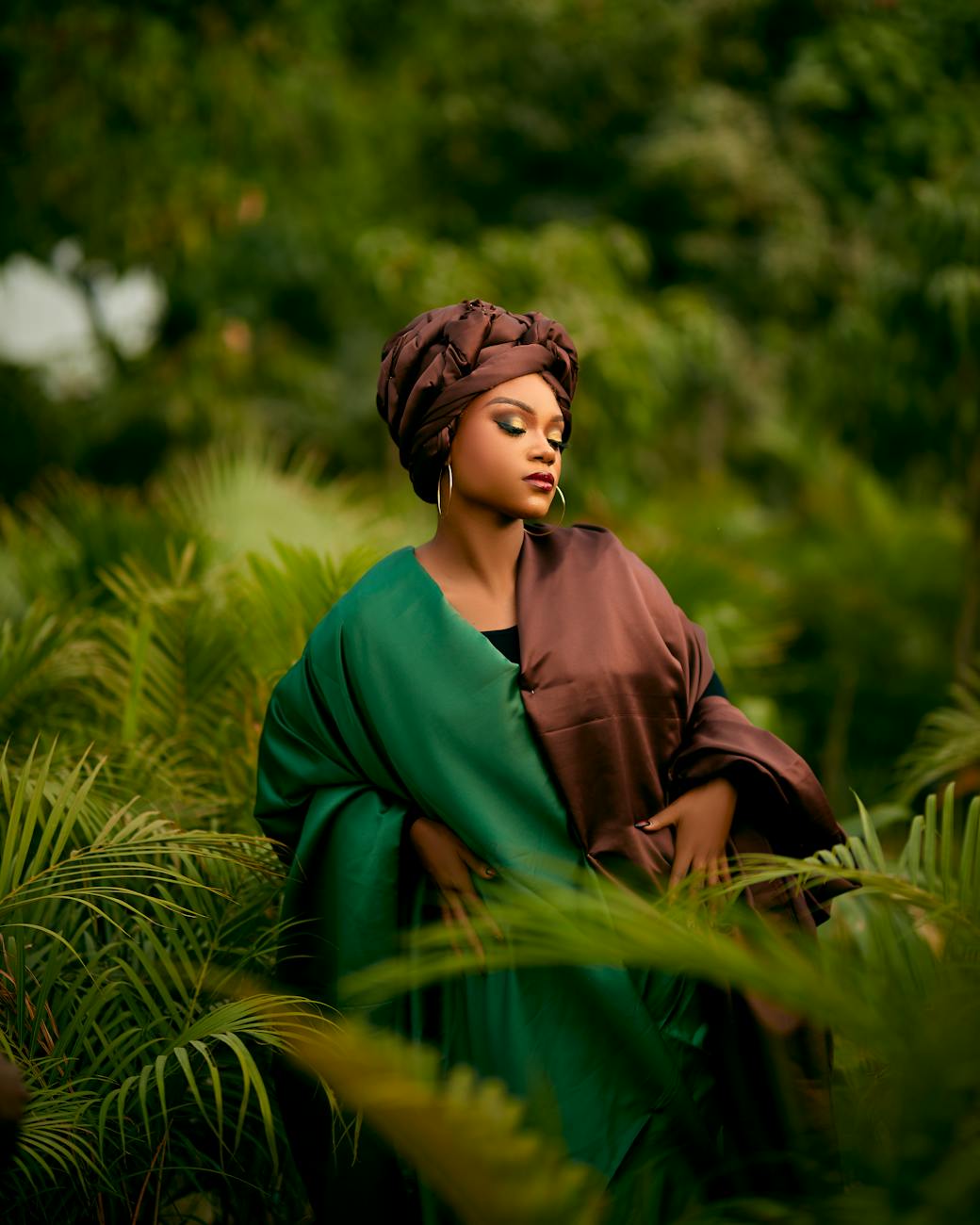
Photo by Al Ameen Saddiq on Pexels.com

When a person stands before a mirror, the reflection that stares back often determines their mood, confidence, or sense of worth. Yet the Bible reminds us that beauty cannot be fully captured by glass or surface. “For the Lord seeth not as man seeth; for man looketh on the outward appearance, but the Lord looketh on the heart” (1 Samuel 16:7, KJV). God’s definition of beauty goes beyond what is visible—it is rooted in the heart, character, and the fear of the Lord.

The world often sets unrealistic standards of beauty, equating it with youth, body type, skin tone, or fashion trends. These standards shift with culture and time, leaving many feeling inadequate. Psychology confirms that society’s obsession with appearance can lead to anxiety, depression, and body dissatisfaction (Cash & Smolak, 2011). In contrast, God’s design frees us from this endless comparison by grounding beauty in eternal virtues like love, humility, and kindness.

Scripture provides clear examples of this truth. Sarah was admired for her physical beauty (Genesis 12:11 KJV), but it was her faith in God’s promises that secured her place in history. Similarly, Ruth’s loyalty and courage, not her outward form, drew Boaz’s admiration and favor (Ruth 3:11 KJV). Their stories highlight that God values inner faithfulness far above fleeting appearances.

The Apostle Peter addressed women directly about this issue: “Whose adorning let it not be that outward adorning of plaiting the hair, and of wearing of gold… But let it be the hidden man of the heart… the ornament of a meek and quiet spirit, which is in the sight of God of great price” (1 Peter 3:3–4, KJV). Here, beauty is portrayed as something incorruptible—a spiritual adornment more precious than pearls or jewels.

Psychological studies echo this wisdom. Research shows that personality traits such as warmth, honesty, and compassion strongly influence perceptions of attractiveness (Zebrowitz & Montepare, 2008). In other words, a person who radiates kindness and confidence is often seen as more beautiful than someone with perfect features but a harsh spirit. This is why Proverbs 31:26 (KJV) praises the virtuous woman: “She openeth her mouth with wisdom; and in her tongue is the law of kindness.”

Modern life provides countless opportunities to live out God’s definition of beauty. A woman who comforts the grieving, a man who serves the poor, or a youth who stands firm in purity all embody beauty that no mirror can reflect. Their actions mirror Christ’s love and bring light into dark spaces. True beauty shines not through selfies or admiration, but through service, compassion, and faith.

The story of Mary, the mother of Jesus, further exemplifies this. Though not described in Scripture by her appearance, she was called “highly favoured” (Luke 1:28 KJV) because of her obedience and humility. Her legacy demonstrates that God elevates character above all else. This truth reminds believers today that they need not chase worldly standards—they are already beautiful in God’s eyes when they walk in faith.

Ultimately, the mirror shows what time will fade, but God’s definition of beauty is eternal. Outward appearance may open doors for a moment, but character, wisdom, and righteousness leave a lasting legacy. To discover God’s beauty is to embrace the heart He transforms, reflecting His glory in every act of love and every word of truth.

True beauty, then, is not what you see—it’s what you give, how you love, and who you glorify.


References

  • The Holy Bible, King James Version.
  • Cash, T. F., & Smolak, L. (2011). Body Image: A Handbook of Science, Practice, and Prevention. New York: Guilford Press.
  • Zebrowitz, L. A., & Montepare, J. M. (2008). Social psychological face perception: Why appearance matters. Social and Personality Psychology Compass, 2(3), 1497–1517.
  • Koenig, H. G. (2012). Religion, spirituality, and health: The research and clinical implications. ISRN Psychiatry, 2012, 278730. https://doi.org/10.5402/2012/278730

Does Having Light Skin = Pretty?

Beauty has long been tied to social hierarchies and cultural perceptions, with lighter skin often privileged in many societies. Yet equating light skin with attractiveness is misleading and overly simplistic. True beauty is a combination of facial features, symmetry, proportion, expression, and character. While society may focus on skin color, psychology and aesthetics show that light skin does not guarantee beauty, nor does dark skin preclude it.

The Cultural Obsession with Light Skin

Throughout history, light skin has been associated with wealth, status, and desirability. From colonialism to modern media, lighter skin has been positioned as aspirational. Colorism perpetuates the false belief that fairness equals beauty, ignoring the complexity of human aesthetics (Hunter, 2007).

The Science of Facial Harmony

Research in facial aesthetics shows that facial harmony—balanced proportions between the eyes, nose, lips, and jaw—is a primary determinant of attractiveness. Features aligned with the golden ratio (approximately 1.618) are perceived as more aesthetically pleasing, regardless of skin tone (Rhodes, 2006).

Symmetry and Perceived Beauty

Facial symmetry is another critical factor. Symmetrical faces are often rated as healthier, more attractive, and genetically fit. Both light-skinned and dark-skinned individuals can possess perfect symmetry, demonstrating that attractiveness is independent of melanin content.

The Eye of the Beholder

Beauty is subjective and culturally mediated. The famous adage, “beauty is in the eye of the beholder,” reflects the role of personal preference, social context, and cultural standards in shaping who is considered attractive (Jones & Hill, 1993). A face admired in one culture may be overlooked in another.

Dark Skin Can Be Beautiful

Many dark-skinned individuals possess features that are considered conventionally beautiful—high cheekbones, symmetrical eyes, balanced lips, and radiant skin. Natural beauty cannot be measured solely by complexion, and dark skin often carries a richness and depth that enhances aesthetic appeal.

Light Skin Does Not Guarantee Beauty

Light-skinned individuals may not have the facial harmony or symmetry that contributes to attractiveness. There are light-skinned people with disproportionate or less balanced facial features, showing that skin tone alone is not an indicator of beauty.

Facial Features Over Skin Tone

Studies demonstrate that eye shape, nose width, lip fullness, and jawline prominence are central to perceptions of beauty. Skin tone plays a role in contrast and highlight but is secondary to feature harmony (Rhodes, 2006).

Expression and Emotional Appeal

Beyond structure, facial expression contributes to perceived attractiveness. A warm smile, expressive eyes, and confident posture enhance beauty in all skin tones, proving that emotional appeal matters more than melanin content.

Cultural Perceptions and Media Bias

Media often reinforces the myth that light skin equals beauty. Advertising, film, and social media tend to feature light-skinned models, skewing public perception and perpetuating colorist ideals. This bias fails to acknowledge the diversity of beautiful faces across all skin tones.

The Role of Confidence

Confidence and self-assurance influence attractiveness. Someone who carries themselves with dignity and self-love is perceived as beautiful regardless of complexion. Inner beauty radiates outward, affecting how others perceive physical appearance (1 Peter 3:3-4).

The Psychology of Preference

Human attraction is influenced by evolutionary psychology—signals of health, fertility, and genetic fitness. Symmetry, proportionality, and skin health signal vitality and influence perception more than skin lightness.

Historical Context

Historically, societies with darker-skinned populations have had their own beauty ideals that did not privilege lightness. African, Indigenous, and Asian cultures have celebrated diverse features, demonstrating that beauty is culturally and biologically multifaceted.

Misconceptions About Fairness

The belief that fair skin guarantees beauty erases diversity and harms self-esteem in darker-skinned populations. People often internalize these messages, creating a false hierarchy of attractiveness.

Beauty Across Skin Tones

Research confirms that both light-skinned and dark-skinned individuals can be beautiful. Symmetry, proportion, facial harmony, and personal presence are universal indicators of attractiveness, not melanin content.

Faith and True Beauty

Scripture reminds us that outward appearance is secondary to the heart. God sees the heart, and His value system is not tied to skin tone (1 Samuel 16:7). True beauty includes character, kindness, and alignment with God’s design.

Examples in Society

Numerous public figures illustrate that beauty transcends skin tone. Dark-skinned models, actors, and leaders are celebrated globally for their aesthetic appeal, disproving the myth that lightness equals prettiness.

The Eye of the Beholder Revisited

Beauty is subjective and socially mediated. While one person may value lighter skin, another may be captivated by facial features, expression, or charisma. Recognizing subjectivity challenges rigid beauty hierarchies.

Challenging Colorist Ideals

Rejecting the notion that light skin is inherently superior empowers individuals to appreciate diverse beauty. Colorism is socially constructed, but feature harmony, symmetry, and confidence are universally admired.

Conclusion

Light skin does not automatically equal beauty. True attractiveness is determined by facial harmony, symmetry, expression, and character. Dark-skinned individuals can be stunningly beautiful, while light-skinned individuals may lack these aesthetic qualities. Beauty is subjective, culturally influenced, and deeply rooted in both physical features and the spirit. Recognizing this truth helps dismantle harmful stereotypes and celebrates God’s diverse creation (Psalm 139:14).


References

  • Hunter, M. L. (2007). The persistent problem of colorism: Skin tone, status, and inequality. Sociology Compass, 1(1), 237–254. https://doi.org/10.1111/j.1751-9020.2007.00006.x
  • Rhodes, G. (2006). The evolutionary psychology of facial beauty. Annual Review of Psychology, 57(1), 199–226. https://doi.org/10.1146/annurev.psych.57.102904.190208
  • Jones, D., & Hill, K. (1993). Criteria of facial attractiveness in five populations. Human Nature, 4(3), 271–296.
  • Psalm 139:14 (KJV) – “I am fearfully and wonderfully made.”
  • 1 Samuel 16:7 (KJV) – “Man looketh on the outward appearance, but the LORD looketh on the heart.”
  • 1 Peter 3:3-4 (KJV) – Emphasis on inner beauty over outward adornment.