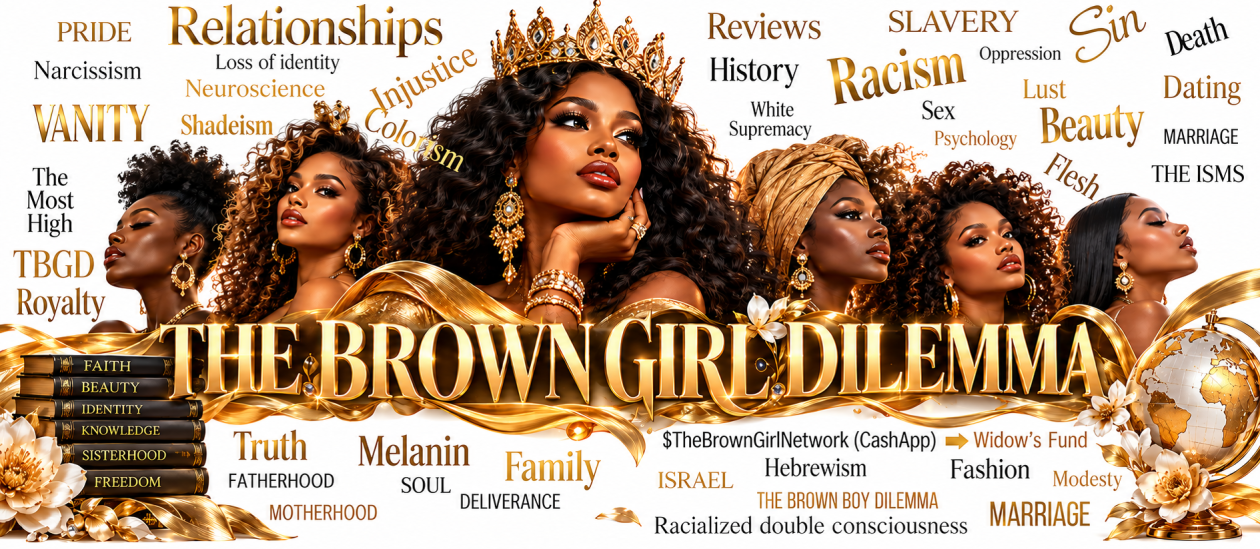


What makes Black beauty particularly extraordinary is that the very features once ridiculed, criticized, or excluded from dominant beauty standards have become among the most admired and imitated aesthetics in contemporary culture. Full, beautifully shaped lips, soulful and expressive eyes, rich melanin, sculpted cheekbones, natural curls and coils, fuller brows, graceful curves, and radiant skin have all become highly coveted symbols of beauty. From light brown and caramel to café au lait, mahogany, cocoa, and deep chocolate, Blackness encompasses a magnificent spectrum of complexions that photograph with extraordinary depth and luminosity. There is an undeniable fascination with the aesthetic qualities associated with Black beauty, and their influence can be seen throughout fashion, cosmetics, music, entertainment, hairstyles, tanning culture, cosmetic procedures, and popular imagery. Yet the irony is profound: features celebrated when reproduced or adopted by others have often been criticized when naturally embodied by Black people themselves. That contradiction makes the cultural history of Black beauty particularly powerful. Black people have never needed to borrow beauty from the world; the world has repeatedly discovered, celebrated, and sometimes attempted to reproduce elements of a beauty that Black people have carried naturally for generations.

Black beauty is melanated, regal, resplendent, and majestic. It is a beauty that encompasses the extraordinary diversity of African-descended people across the globe. From the deepest ebony complexions to warm brown, mahogany, copper, and golden tones, Black skin reflects an extraordinary range of pigmentation. Melanin is not merely a biological characteristic; it has also become a powerful cultural symbol of identity, heritage, resilience, and pride. To describe Black beauty is therefore to speak about physical appearance while also acknowledging history, culture, ancestry, creativity, and human dignity.

What makes Black beauty extraordinary?

1. Extraordinary range of skin tones
Black skin encompasses an immense spectrum—from the deepest ebony and blue-black tones to rich mahogany, chestnut, caramel, copper, and golden-brown shades. Melanin gives the skin a distinctive luminosity and depth that can be especially striking under natural or carefully designed lighting.
2. Remarkable hair diversity
Afro-textured hair can appear in an extraordinary variety of curl patterns, densities, lengths, and textures. Afros, locs, braids, twists, cornrows, coils, natural curls, and elaborate protective styles aren’t merely hairstyles; they can become expressions of identity, artistry, heritage, and individuality.
3. Incredible facial diversity
There is no single “Black look.” African and African-diaspora populations contain enormous genetic diversity, reflected in different combinations of:
Eye shapes and sizes
Nose shapes
Lip shapes
Cheekbones
Jawlines
Facial proportions
Brow structures
Face shapes
This diversity makes Black beauty extraordinarily difficult to reduce to one standard.
4. The beauty of contrast
One of the particularly striking characteristics of many Black faces is the interplay of deeply pigmented skin, eyes, lips, hair, and facial features. Dark skin can create a magnificent canvas for gold jewelry, vibrant colors, jewel tones, red lipstick, white clothing, and dramatic photography.
5. African ancestral diversity
Africa contains more than a billion people across thousands of ethnic and cultural communities. The continent is extraordinarily genetically and culturally diverse. Consequently, the beauty found among African peoples cannot be represented by a single phenotype.
That is one reason the idea of a single “Black beauty standard” is inadequate.
6. Beauty shaped by history
There is also something deeper than physical appearance.
Black beauty has often existed in societies where African features were devalued, stereotyped, or excluded from dominant standards of beauty. The persistence of Black people embracing their natural features despite those pressures gives the celebration of Black beauty a powerful cultural dimension.
A dark-skinned woman wearing her natural hair, for example, isn’t simply displaying an aesthetic preference. In certain historical contexts, that presentation can also represent self-acceptance and resistance to imposed standards.
And perhaps the most extraordinary thing…

Black beauty does not have to be validated by proximity to European beauty standards.
A Black woman does not become beautiful because she has a smaller nose, lighter skin, straighter hair, or features that resemble another population. A Black man does not become handsome because his features approximate another racial ideal.
Dark skin can be beautiful. Broad noses can be beautiful. Full lips can be beautiful. Coils can be beautiful. Wide noses can be beautiful. Strong facial structures can be beautiful. Delicate features can be beautiful.
There is room for all of it.
And that’s what makes the concept of Black beauty so powerful: it isn’t one face. It’s an entire spectrum of human beauty. 🖤✨


The word melanated celebrates the richness of melanin and the remarkable spectrum of human skin pigmentation found among Black people. Melanin contributes to the color of skin, hair, and eyes and provides protection against ultraviolet radiation. Yet the aesthetic meaning of melanin extends beyond biology. Across generations, Black communities have transformed characteristics that were historically stigmatized into sources of pride. Dark skin, tightly coiled hair, broad noses, full lips, high cheekbones, and other features associated with African ancestry have increasingly been embraced as beautiful expressions of human diversity.


Black beauty can also be described as regal. Regal beauty possesses dignity, composure, elegance, and an almost royal presence. Throughout African history, queens, kings, chiefs, warriors, scholars, artists, and spiritual leaders were represented through elaborate clothing, jewelry, hairstyles, architecture, and artistic traditions. The visual language of African royalty demonstrates that beauty was not simply an individual characteristic; it could communicate social status, ancestry, spirituality, community belonging, and power. Contemporary Black beauty continues to draw inspiration from these traditions.
It is also resplendent—brilliant, radiant, and visually magnificent. Resplendence can be seen in the luminous quality of healthy skin, the brilliance of jewelry against dark complexions, the richness of African textiles, and the dramatic beauty of natural Black hair. Photography, fashion, cinema, and visual art have increasingly demonstrated how beautifully Black skin responds to light. The aesthetic possibilities are virtually limitless because Blackness itself encompasses tremendous variation rather than representing a single appearance.

Black beauty is majestic because it can communicate strength without sacrificing elegance. The majesty of Black beauty can be seen in a woman’s posture, a man’s bearing, the confidence of natural hair, the sophistication of formal clothing, or the quiet dignity of an elder. Majesty does not require exaggerated performance. Sometimes it appears in simplicity: a beautiful face, expressive eyes, healthy skin, and a confident presence. The ability of Black people to inhabit their appearance with confidence can itself become an expression of majesty.
The word ebonic can be used poetically to evoke the richness of deep, dark beauty, although it is important to recognize that the term is less established as a standard descriptor of physical appearance. The deeper shades of Black skin possess extraordinary visual depth and variation. Ebony itself has long been associated with darkness, richness, durability, and preciousness. Used thoughtfully, the imagery can celebrate dark complexions without suggesting that darker skin is valuable only because it resembles an object or material.
Black beauty is profoundly Afrocentric when it intentionally centers African heritage, history, aesthetics, and cultural expression. Afrocentric beauty does not require every Black person to look the same or adopt a particular style. Instead, it recognizes Africa as an important source of cultural ancestry and aesthetic inspiration. Hairstyles, textiles, jewelry, patterns, sculpture, music, dance, and fashion can all communicate connections to African civilizations and diasporic traditions. Afrocentric beauty allows Black people to see themselves through cultural frameworks that existed long before European standards of beauty became globally influential.
It is also radiant. Radiance describes the visual impression of light, warmth, vitality, and life. Black skin can display remarkable undertones ranging from cool blue and red undertones to golden, olive, neutral, and warm tones. The diversity of complexion makes Black beauty particularly expansive. One cannot accurately reduce Black skin to simply “dark.” Blackness encompasses an enormous chromatic spectrum, and that spectrum deserves to be represented honestly in photography, cosmetics, fashion, advertising, and entertainment.

Black beauty can be described as sublime because certain forms of beauty produce an emotional response that seems greater than ordinary attractiveness. A face may be striking because of symmetry, expression, proportion, individuality, or the combination of features that makes someone unmistakably themselves. The sublime is not merely about perfection. Indeed, some of the most memorable faces are memorable because they possess distinctive characteristics rather than conforming to a mathematical ideal. Individuality is one of the great dimensions of human beauty.
It can also be called magnificent. Magnificence suggests something exceptional, impressive, and worthy of admiration. Black magnificence can be found in the diversity of African-descended populations throughout the world. A person of Senegalese ancestry may look different from someone whose ancestors come from Nigeria, Ethiopia, Ghana, South Africa, Jamaica, Brazil, Haiti, the United States, or other parts of the African diaspora. These differences do not diminish Black identity; they demonstrate its extraordinary breadth.

The word Nubian has also been used poetically to evoke African beauty and heritage. Historically, Nubia refers to regions along the Nile in present-day southern Egypt and northern Sudan, encompassing ancient civilizations with significant cultural and political achievements. In contemporary popular culture, “Nubian” has sometimes become an affectionate aesthetic term for Black beauty. Its historical meaning should not be confused with a universal synonym for all Black people, but its poetic use can evoke antiquity, elegance, African heritage, and enduring cultural memory.
Black beauty is also diverse. This may be one of the most important words to place alongside melanated, regal, resplendent, majestic, Afrocentric, radiant, sublime, magnificent, and Nubian. There is no single Black phenotype. Black people possess different facial structures, body types, heights, hair textures, eye shapes, skin tones, and ancestral backgrounds. Recognizing this diversity protects Black beauty from becoming another rigid standard. Celebrating Blackness should never mean creating a new narrow definition of what a Black person must look like.

Black beauty can further be described as ethereal, particularly when an individual’s appearance possesses an unusually delicate, luminous, or otherworldly quality. Ethereal beauty can exist in many forms. A woman with deep ebony skin and luminous eyes may possess it; so may a man with sculpted features and an expressive gaze. It can appear in youthful faces as well as mature faces. Beauty does not belong exclusively to one age, complexion, body type, or facial structure.
It is striking because Black features can create extraordinary visual contrast and individuality. Dark skin against vibrant colors, natural hair against elegant clothing, or expressive eyes against rich pigmentation can create memorable imagery. Fashion photographers and artists have increasingly explored these contrasts, demonstrating that Black subjects can be photographed with the same artistic sophistication historically granted to European subjects. Representation matters because people deserve to see their own beauty treated as worthy of artistic attention.
Black beauty is also ancestral. The faces of contemporary Black people carry biological histories that extend through generations. Although physical appearance cannot reveal a person’s entire ancestry, features and pigmentation are products of complex genetic inheritance. Hair texture, skin pigmentation, facial morphology, and other characteristics emerge through combinations of genes passed across generations. Consequently, beauty can become a visual reminder of continuity: parents, grandparents, ancestors, and descendants connected through the extraordinary inheritance of human biology.
There is also something timeless about Black beauty. Ancient African artistic traditions provide evidence that African societies represented human beauty through sculpture, painting, jewelry, architecture, hairstyles, and adornment long before modern Western beauty industries emerged. The artistic record demonstrates that African civilizations possessed their own aesthetic philosophies and standards. Modern Black beauty therefore does not need permission to exist. It has historical depth and cultural foundations that extend thousands of years.
Black beauty is resilient as well. Its celebration cannot be separated entirely from the history of racial discrimination. Colonialism, slavery, segregation, colorism, and Eurocentric beauty standards have influenced how Black people have been perceived and how some Black individuals have learned to perceive themselves. Yet Black communities repeatedly created systems of affirmation through family, music, literature, religious institutions, fashion, art, and social movements. The celebration of Black beauty can therefore function as an affirmation of humanity against histories that attempted to deny it.


At the same time, celebrating Black beauty should not require diminishing anyone else’s beauty. The purpose of affirming Blackness is not to establish a racial hierarchy of attractiveness. Human beauty exists across populations, and every community contains extraordinary individuals. The particular importance of Black beauty lies in allowing Black people to recognize themselves without apology. A healthy appreciation of Black aesthetics does not require contempt for other groups; it requires freedom from the belief that European features are the universal standard against which everyone else must be measured.
The media have an especially important role in shaping perceptions of beauty. Representation influences which faces audiences repeatedly encounter as desirable, sophisticated, romantic, professional, glamorous, or heroic. When Black people are represented across the entire spectrum of human experiences—including romance, intellectual achievement, elegance, family life, aging, spirituality, leadership, and ordinary happiness—the cultural definition of beauty becomes broader and more accurate. Black women and Black men should not have to possess extraordinary fame or celebrity status before their beauty is treated as worthy of admiration.
Ultimately, the resplendent beauty of Blackness is larger than physical appearance. It encompasses melanin, heritage, individuality, creativity, history, culture, dignity, and human complexity. It can be melanated, regal, resplendent, majestic, ebonic, Afrocentric, radiant, sublime, magnificent, Nubian, diverse, ethereal, striking, ancestral, timeless, and resilient. These words do not describe one particular face. Together, they describe an expansive aesthetic vocabulary through which Black people can celebrate the extraordinary variety of their appearance and heritage.

Blackness does not need to be made beautiful by comparison with other people. It possesses its own visual languages, histories, traditions, and expressions. From the darkest ebony complexion to the warmest golden-brown skin, from tightly coiled hair to looser curl patterns, from delicate features to powerful facial structures, Black beauty exists in countless forms. Its greatest strength may be precisely this diversity. The resplendent beauty of Blackness is not one face—it is a multitude of faces, histories, cultures, and expressions united by a shared human dignity.
© 2026 The Brown Girl Dilemma
If this work has informed or inspired you, please consider supporting it so we can continue researching, writing, and sharing these stories.
CashApp: $thebrowngirlnetwork
Make a one-time donation
Make a monthly donation
Make a yearly donation
Choose an amount
Or enter a custom amount
Your contribution is appreciated.
Your contribution is appreciated.
Your contribution is appreciated.
References
American Academy of Dermatology Association. (n.d.). Skin color and melanin. American Academy of Dermatology.
Bamshad, M., Wooding, S., Salisbury, B. A., & Stephens, J. C. (2004). Deconstructing the relationship between genetics and race. Nature Reviews Genetics, 5(8), 598–609. https://doi.org/10.1038/nrg1401
Carter, R. T. (2007). Racism and psychological and emotional injury: Recognizing and assessing race-based traumatic stress. The Counseling Psychologist, 35(1), 13–105. https://doi.org/10.1177/0011000006292033
Fanon, F. (1967). Black skin, white masks (C. L. Markmann, Trans.). Grove Press. (Original work published 1952)
Hunter, M. (2005). Race, gender, and the politics of skin tone. Routledge.
Jackson, R. L., II. (2006). Scripting the Black masculine body: Identity, discourse, and racial politics in popular media. SUNY Press.
Lester, N. A. (2000). Nappy edges and goldy locks: African American daughters and the politics of hair. The Lion and the Unicorn, 24(2), 201–224. https://doi.org/10.1353/uni.2000.0023
Oyěwùmí, O. (1997). The invention of women: Making an African sense of Western gender discourses. University of Minnesota Press.
Thompson, M. S., & Keith, V. M. (2001). The blacker the berry: Gender, skin tone, self-esteem, and self-efficacy. Gender & Society, 15(3), 336–357. https://doi.org/10.1177/089124301015003002
Walker, S. (Ed.). (1986). Black looks: Race and representation. South End Press.