Tag Archives: Beauty

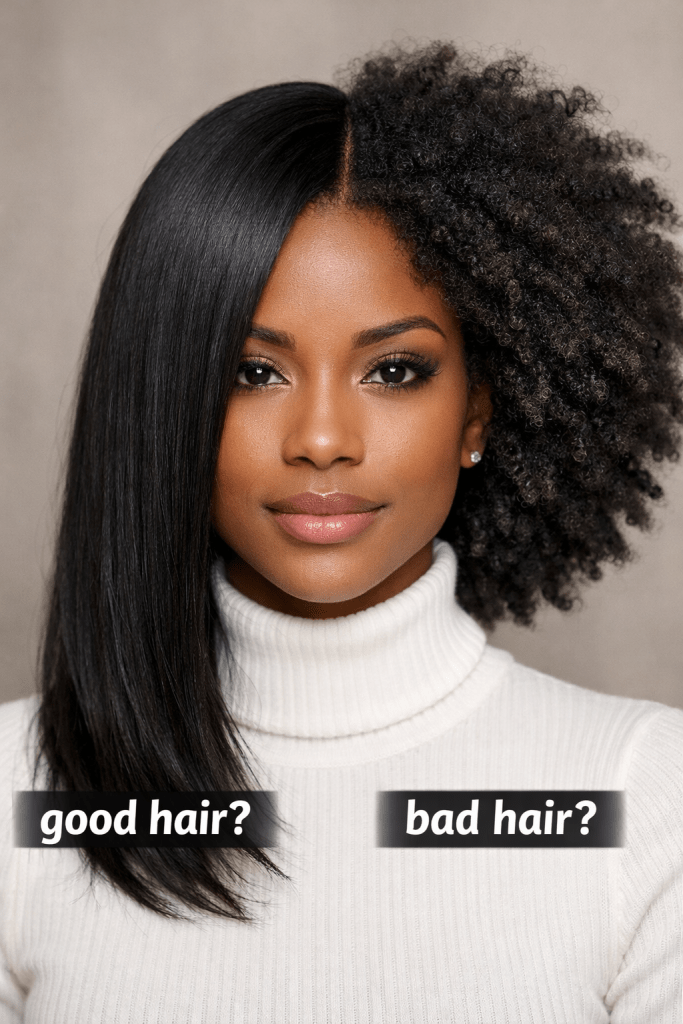
Good Hair Vs Bad Hair

The conversation around “good hair” and “bad hair” has long been a source of tension, pride, and pain within the Black community. The term “good hair” often refers to straighter, silkier textures associated with European standards of beauty, while “bad hair” is used to describe tightly coiled, kinky textures often associated with African heritage. But what does the Bible say about hair, and how can we reclaim a healthy, godly perspective?

The Bible affirms that all hair is good because it is created by God. Matthew 10:30 (KJV) declares, “But the very hairs of your head are all numbered.” This scripture shows the Most High’s care and intentionality regarding hair. There is no biblical basis for labeling one texture as superior to another. Instead, hair is seen as a natural part of God’s design, a symbol of identity, and, in many cases, a spiritual covering (1 Corinthians 11:15, KJV).
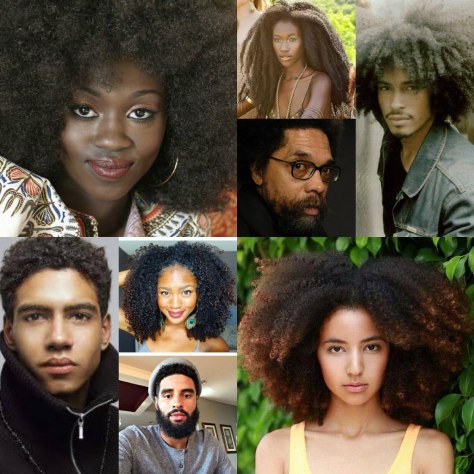
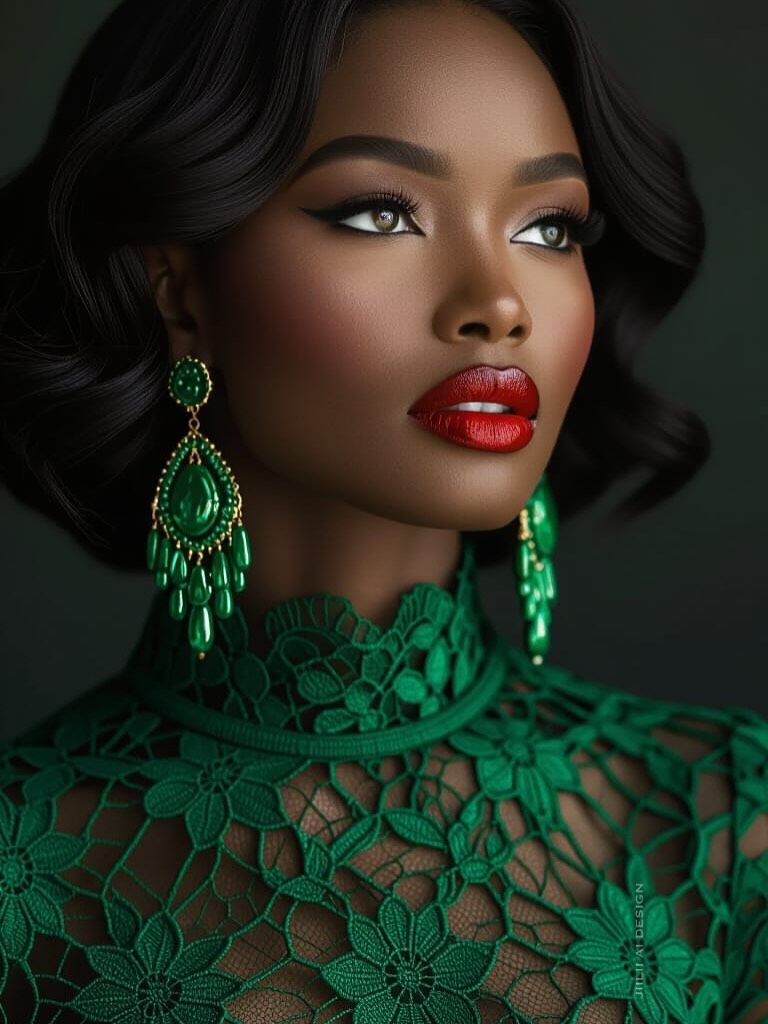
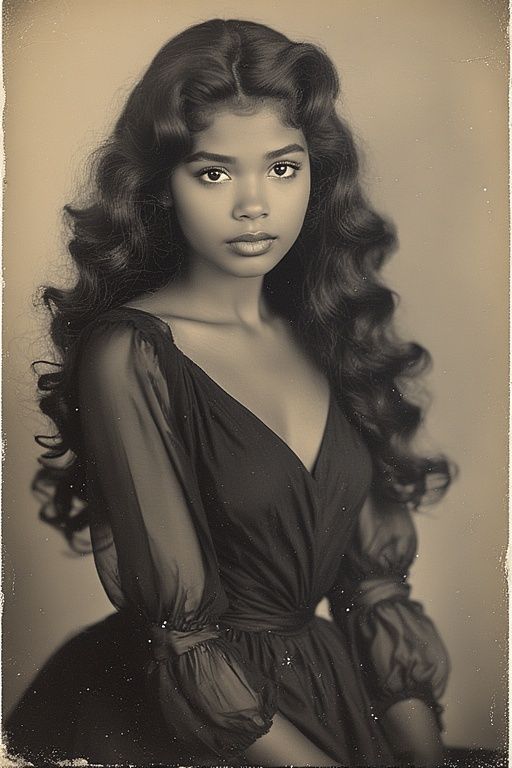
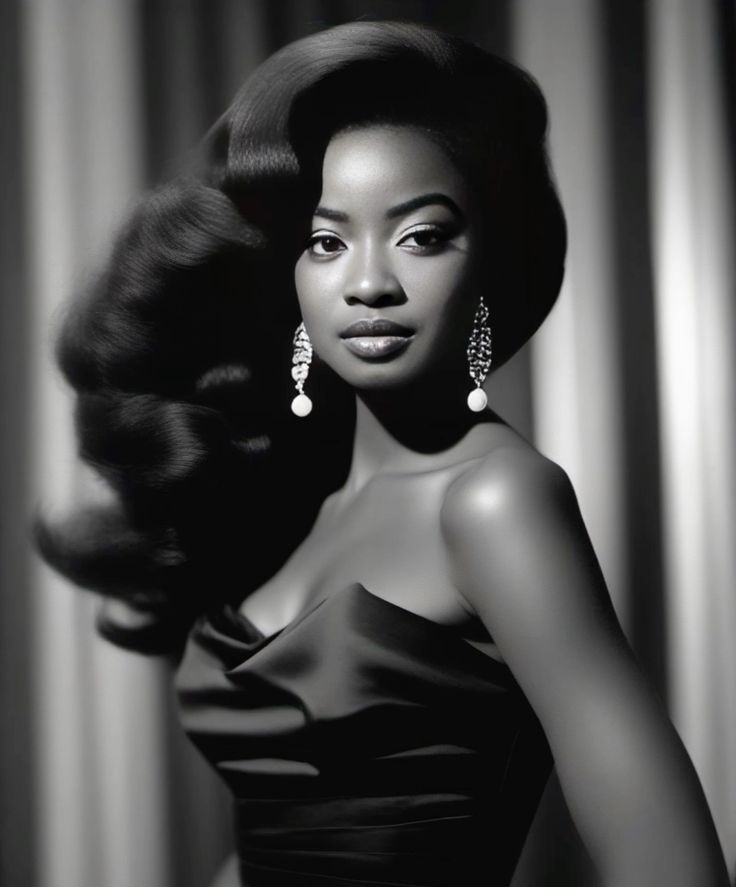
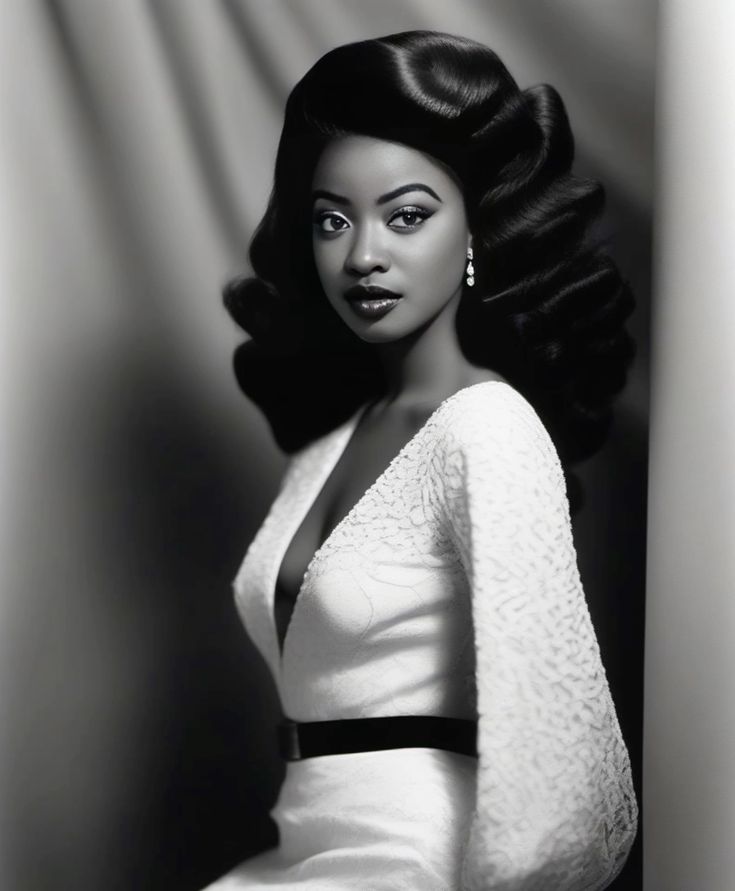
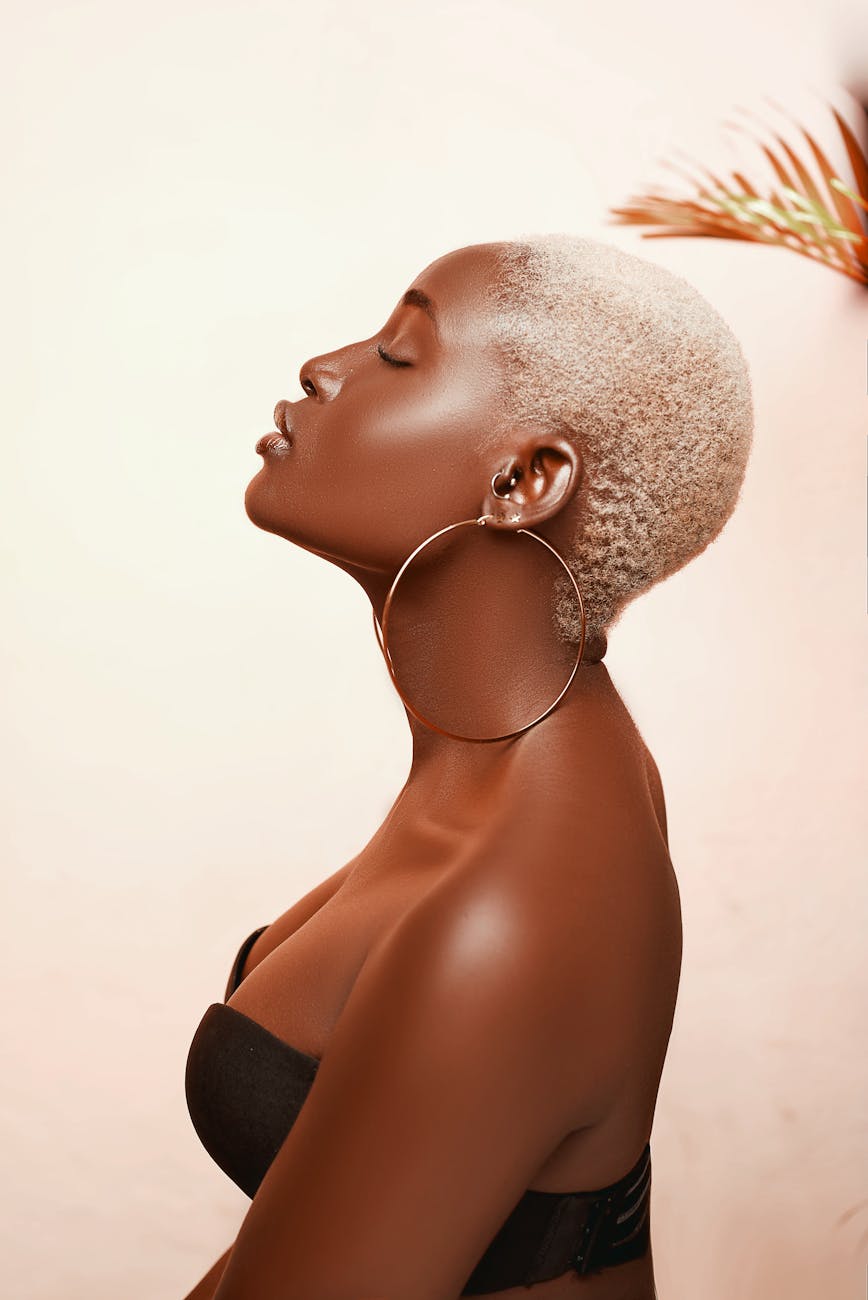
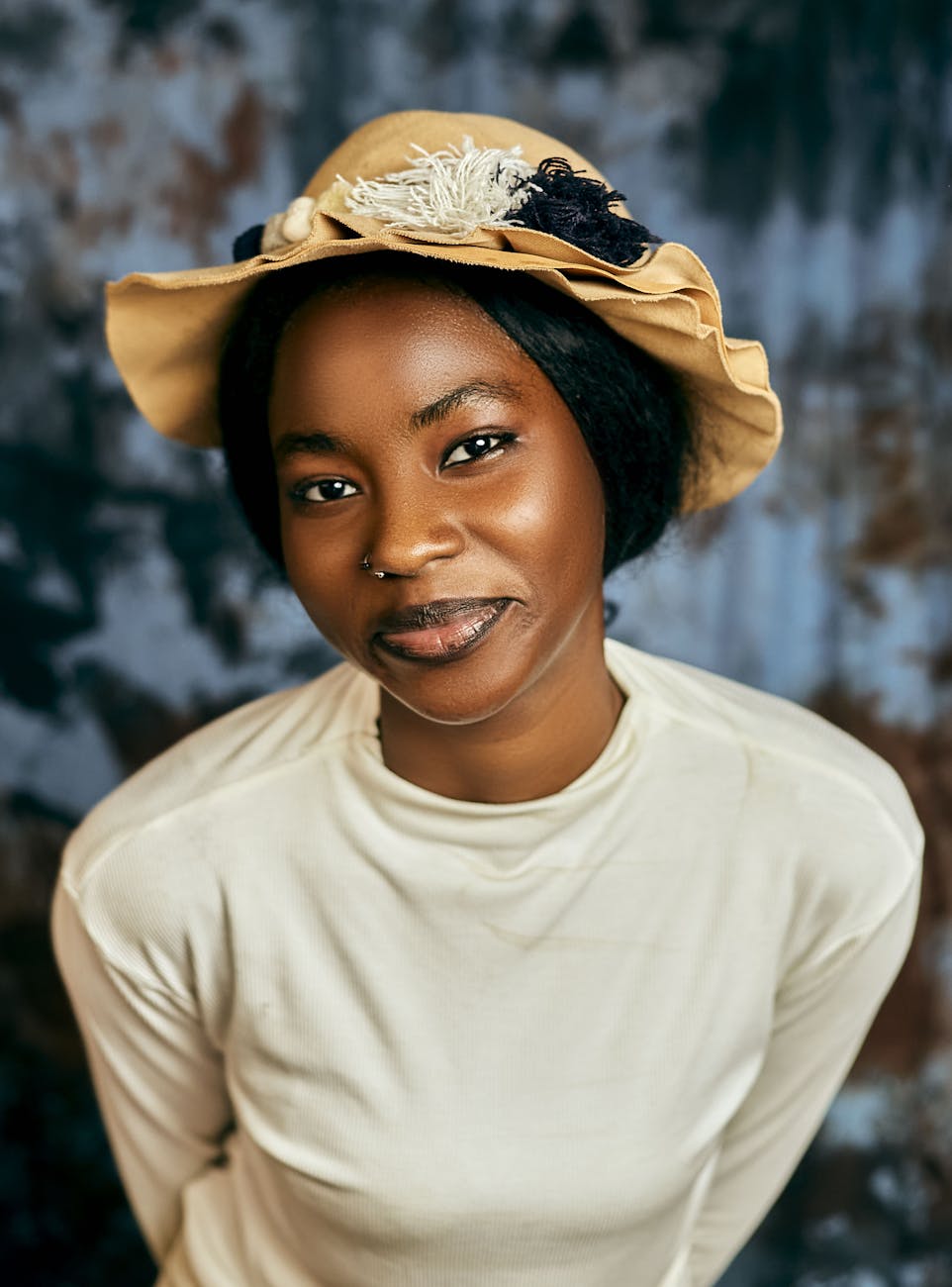
All photographs are the property of their respective owners. No copyright infringement intended.

The notion of “bad hair” largely stems from the legacy of slavery and colonialism. During slavery in America, Africans’ natural hair was often ridiculed and seen as “wild” or “unkempt” by European enslavers. This ridicule was strategic—it sought to strip enslaved Africans of pride in their natural appearance, to convince them that European features and styles were superior.

Psychologically, this produced internalized racism. Over time, many Black people began to associate straight hair with beauty, respectability, and even success. This association was reinforced in media, workplaces, and schools that penalized or banned natural hairstyles. Such systemic discrimination can lead to what scholars call “cultural trauma,” where a group learns to devalue aspects of its own identity.

The term “nappy” historically was used as a derogatory word. It mocked the tight coils and kinks of African hair, equating them with roughness or uncleanliness. The phrase “nappy-headed” became a slur that reinforced the idea that natural Black hair was undesirable. This is a psychological residue of enslavement that still impacts Black self-esteem today.

In truth, there is no such thing as “bad hair.” All hair grows according to the genetic blueprint given by God. Psalm 139:14 (KJV) reminds us, “I will praise thee; for I am fearfully and wonderfully made.” The texture, thickness, and curl pattern of one’s hair is divinely designed, not a mistake.

The love-hate relationship with hair in the Black community also reveals a longing for acceptance. Many Black people invest heavily in hair products, wigs, and chemical treatments to conform to mainstream standards. This is not just vanity—it is often a survival mechanism in a society that discriminates based on appearance.

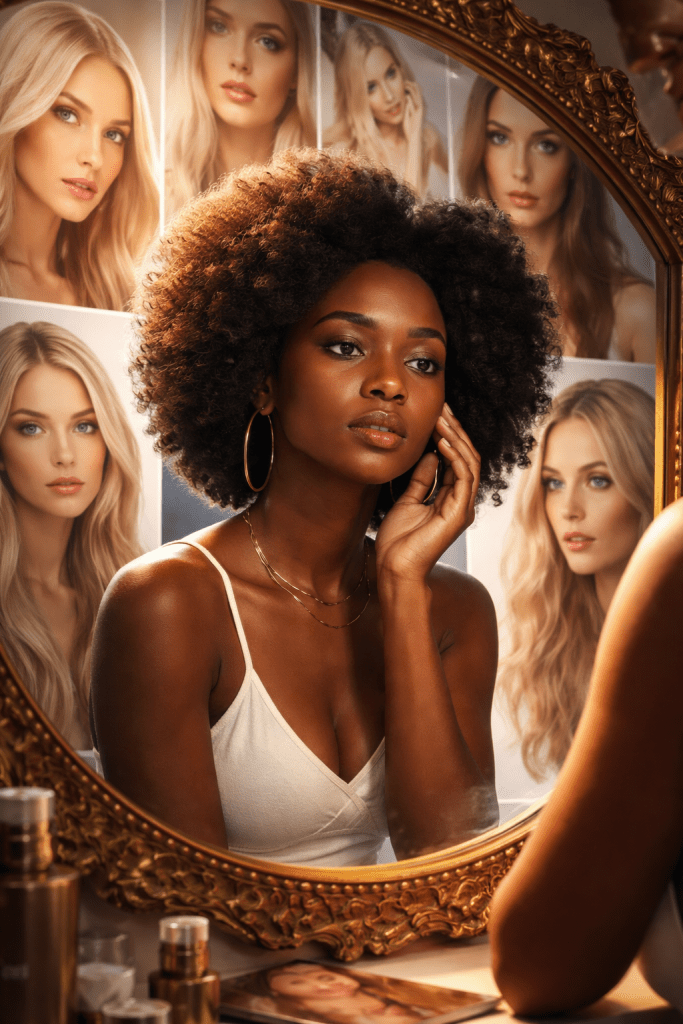
Hollywood, advertising, and fashion industries have historically promoted Eurocentric beauty ideals, making straight hair the default standard of attractiveness. This has led to generations of Black children growing up believing that their natural hair was unprofessional or unattractive unless it was altered.

The Bible warns against adopting the world’s standard of beauty. 1 Samuel 16:7 (KJV) says, “For man looketh on the outward appearance, but the Lord looketh on the heart.” God is not concerned with whether hair is curly, straight, or coiled—He is concerned with the condition of our spirit.

Hair is also deeply symbolic in the Bible. Samson’s hair represented his covenant with God (Judges 16:17, KJV). The Nazarites were instructed not to cut their hair as a sign of consecration (Numbers 6:5, KJV). These examples remind us that hair has spiritual meaning, but no texture or style makes one holier than another.

Solutions to the “good hair” vs. “bad hair” divide must begin with education and affirmation. Parents can teach children from an early age to embrace their natural hair textures, using affirmations and showing them examples of beauty that look like them. Representation matters.

The natural hair movement has been one powerful response to centuries of hair-shaming. By wearing afros, locs, braids, and twists proudly, Black people reclaim their heritage and reject the lie that straight hair is superior. This movement echoes Romans 12:2 (KJV): “And be not conformed to this world: but be ye transformed by the renewing of your mind.”

Workplaces and schools must also be challenged. Laws like the CROWN Act, which bans hair discrimination, are steps toward justice. Discrimination against natural hair is not merely a fashion issue—it is a civil rights issue rooted in systemic racism.

Spiritually, the solution also involves repentance and deliverance from self-hatred. Generational trauma and the colonial mindset must be broken. Believers can pray for a renewed mind and ask God to restore confidence in His design.

Men must also be part of this conversation. In many cases, Black men have been conditioned to prefer straight hair on women, reinforcing Eurocentric standards. Re-educating men about the beauty and versatility of natural hair is part of community healing.

Media creators and influencers have a responsibility to showcase diverse hair textures positively. When children see actresses, news anchors, and professionals wearing natural styles proudly, it normalizes their beauty. This can shift psychological perceptions over time.

The church can play a role by teaching that hair should not be a source of pride, shame, or division. James 2:1-4 (KJV) warns against showing partiality based on outward appearance. The body of Christ should be the first place where people of all textures feel celebrated.

Healing the Next Generation

The conversation around hair identity must address its impact on children, because early experiences with hair-shaming or affirmation often shape a child’s self-image for life. Developmental psychology teaches that children form a sense of self-worth between ages 3 and 7. If a child repeatedly hears that their hair is “nappy,” “ugly,” or “unprofessional,” those words can leave a deep emotional wound that lasts into adulthood.

Hair bullying is a real issue. In many schools, Black children have been suspended or sent home for wearing braids, locs, or afros—styles that are natural and culturally significant. These incidents teach children that who they are is unacceptable unless they conform to Eurocentric beauty standards. This form of discrimination not only harms self-esteem but also creates anxiety and shame.

From a psychological standpoint, children who internalize negative messages about their hair often struggle with identity development. They may wish they looked different, leading to feelings of inadequacy. Erik Erikson’s theory of psychosocial development identifies this as an “identity vs. role confusion” stage—when children are trying to discover who they are, acceptance plays a critical role.

Biblically, this issue is critical because self-hatred contradicts God’s design. Psalm 8:5 (KJV) declares, “For thou hast made him a little lower than the angels, and hast crowned him with glory and honour.” Every child is made in God’s image (Genesis 1:27, KJV) and should be celebrated as such. Teaching children to love their hair is teaching them to love God’s creation.

Parents play the most important role in reversing the harm of “good hair vs. bad hair” conditioning. Affirmations like “Your hair is beautiful just the way God made it” can help children internalize positive messages. Taking time to gently care for and style their hair with love turns grooming into a time of bonding and affirmation.

Representation in books, toys, and media is also crucial. When children see dolls, superheroes, and princesses with afros, braids, and coils, they learn that beauty comes in many forms. Christian parents can incorporate Bible lessons on diversity and God’s intentional creation to reinforce this truth.
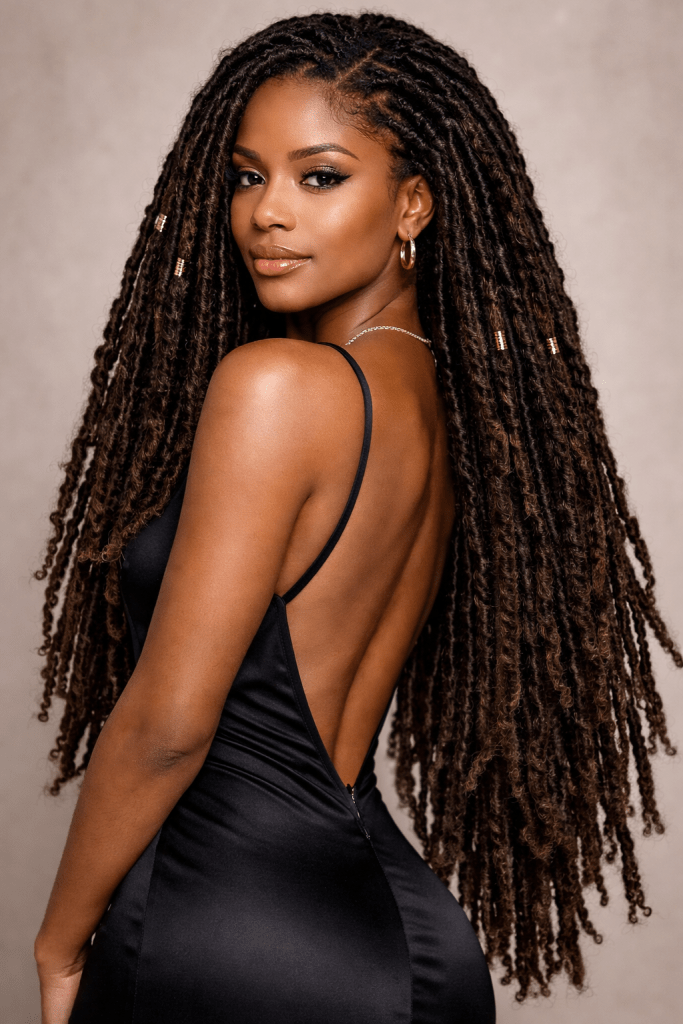
People must create spaces where natural beauty is affirmed rather than criticized. Sadly, some church cultures have pressured women and girls to straighten their hair to look “presentable” for service. Instead, churches should teach that modesty and holiness are about the heart (1 Peter 3:3-4, KJV), not about imitating European hairstyles.

Schools need cultural sensitivity training to prevent hair discrimination. The CROWN Act (Creating a Respectful and Open World for Natural Hair) is now law in several U.S. states and should be advocated for everywhere. This legislation protects children from unfair discipline or exclusion based on hair.

Psychologists recommend early intervention when children experience hair-based bullying. Parents should validate the child’s feelings, teach coping strategies, and involve teachers if necessary. Healing from these experiences prevents long-term damage to self-esteem.

Mentorship programs can also make a difference. When children see older peers or adults proudly rocking natural hair, they have role models to look up to. This helps normalize natural hair and removes the stigma.

Hair care education is another solution. Many parents and teachers simply do not know how to care for natural hair, which can lead to frustration or neglect. Workshops on proper styling, maintenance, and products empower families to care for their hair healthily.

From a community perspective, celebrating natural hair through events like hair shows, heritage days, or social media campaigns can build pride. These events allow children to see that their hair is not just normal—it is special and worth celebrating.

Men and fathers have a special responsibility to speak life into their daughters. A father who compliments his daughter’s natural hair can shield her from seeking validation from harmful sources. Proverbs 18:21 (KJV) reminds us that “death and life are in the power of the tongue.”

Mental health support is also important. If a child’s self-esteem has been deeply harmed, counseling can help them rebuild a healthy self-image. Christian counseling can integrate biblical truths with therapeutic strategies to restore confidence.

The natural hair conversation should also extend to young boys. Boys with locs or afros have been stereotyped as “unprofessional” or even “criminal.” Parents must teach their sons that their hair is not a marker of delinquency but of heritage, creativity, and pride.

Psychologically, embracing natural hair is part of decolonizing the mind. It is a way of rejecting oppressive beauty standards and embracing cultural authenticity. Romans 12:2 (KJV) calls us to “be transformed by the renewing of your mind.” Renewing the mind means unlearning lies that say Blackness must be hidden or altered to be acceptable.

Education on African history is also a solution. When children learn about ancient African civilizations—Egypt, Kush, Mali—and their rich culture, they develop pride in their heritage. This context reframes hair as part of a royal, powerful legacy rather than something to be ashamed of.

Finally, prayer and community support are vital. Families can pray over their children’s self-esteem and ask God to protect them from the spirit of rejection. James 5:16 (KJV) promises that “the effectual fervent prayer of a righteous man availeth much.” Community support groups can also provide encouragement and resources for families committed to embracing natural beauty.

In conclusion, healing the next generation from the trauma of “good hair vs. bad hair” is not just a beauty issue—it is a spiritual and cultural mission. By affirming children early, reforming schools and churches, and providing mentorship and representation, we can raise a generation that celebrates what God has given them. When we teach children that all hair is good hair, we teach them that they themselves are good—fearfully and wonderfully made.

Ultimately, the conversation about “good hair” vs. “bad hair” is about much more than hair. It is about freedom—freedom from colonial thinking, from internalized racism, and from societal pressure to conform. True freedom comes from knowing who you are in Christ and embracing every part of your God-given identity.

In conclusion, all hair is good hair. It is numbered by God, designed with purpose, and worthy of care and respect. The challenge before us is to uproot the lies of slavery, colonization, and white supremacy that taught generations of Black people to hate what God made. Only then can we walk fully in the truth that we are fearfully and wonderfully made—kinks, curls, coils, and all.
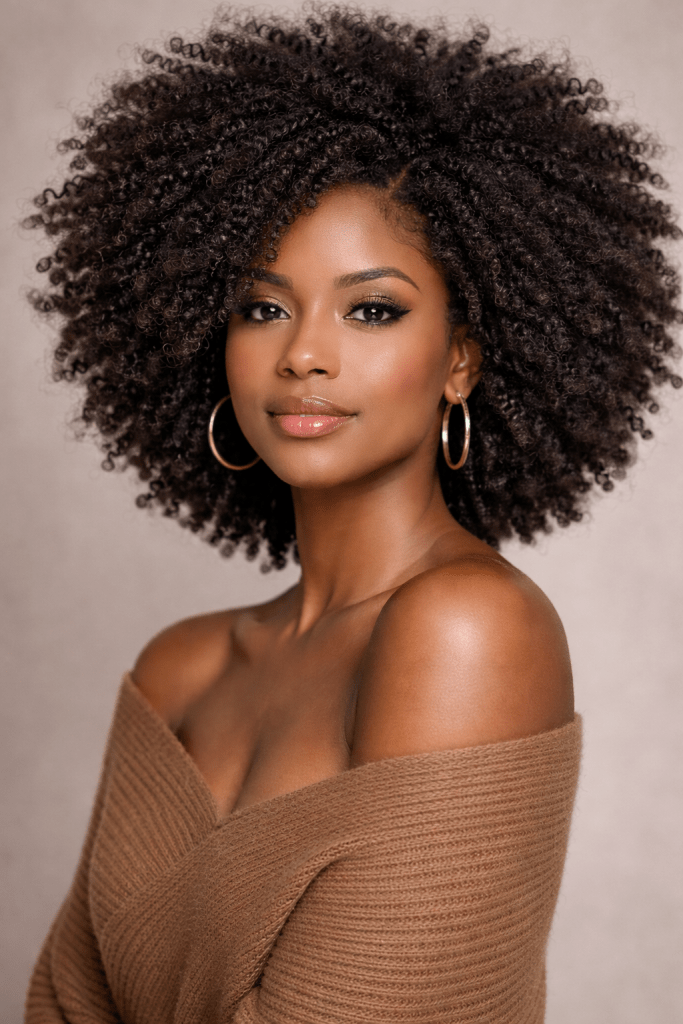
Good Hair? YES


References

  • Banks, I. (2000). Hair Matters: Beauty, Power, and Black Women’s Consciousness. NYU Press.
  • Byrd, A., & Tharps, L. (2014). Hair Story: Untangling the Roots of Black Hair in America. St. Martin’s Griffin.
  • hooks, b. (1992). Black Looks: Race and Representation. South End Press.
  • DeGruy, J. (2005). Post Traumatic Slave Syndrome. Joy DeGruy Publications.

Key KJV Scriptures: Matthew 10:30; 1 Corinthians 11:15; Psalm 139:14; 1 Samuel 16:7; Judges 16:17; Numbers 6:5; Romans 12:2; James 2:1-4.
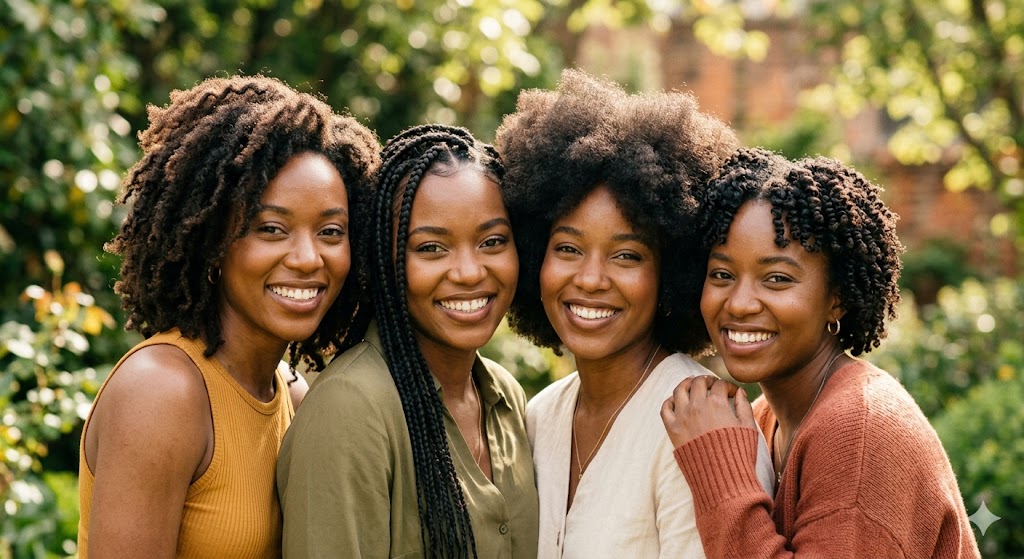
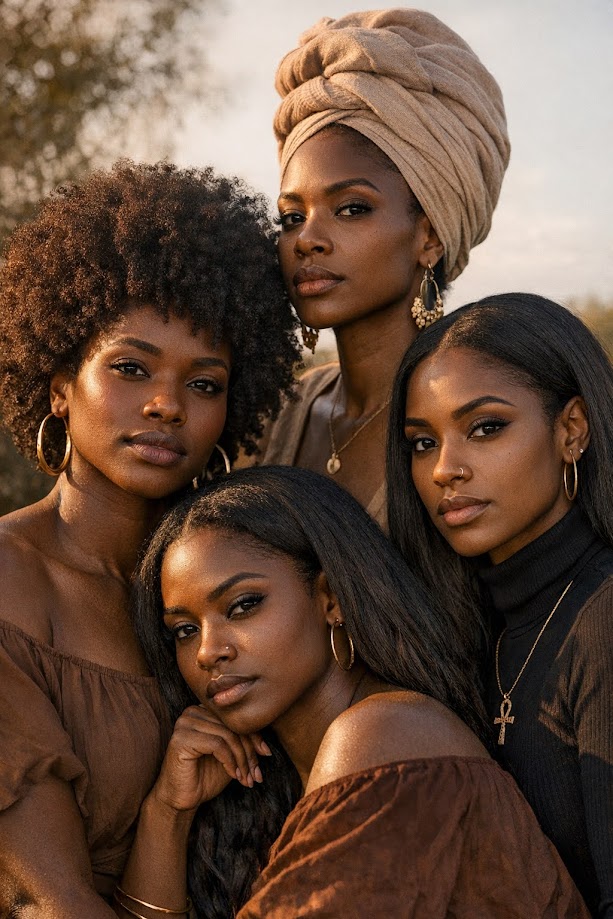
The Essence of Black Beauty

Black beauty has always transcended mere aesthetics; it is a testament to resilience, cultural richness, and ancestral legacy. Across history, Black people have navigated societies that often sought to diminish their worth, yet the essence of Black beauty has endured as a symbol of dignity, pride, and self-expression. From the radiant skin tones and textured hair of African queens to the strong features and commanding presence of Black men, Black beauty is deeply intertwined with identity and cultural memory (hooks, 1992).

In the African diaspora, colorism has shaped perceptions of beauty, creating hierarchies that favored lighter skin over darker skin. This bias, rooted in colonialism and slavery, persists in media, fashion, and social interactions today (Hunter, 2007). Despite these pressures, Black women and men continue to reclaim and redefine beauty standards that honor natural hair, melanin-rich skin, and traditional African features. Celebrating Black beauty is not merely about appearance; it is an act of cultural resistance and affirmation.

This photograph is the property of its respective owner.

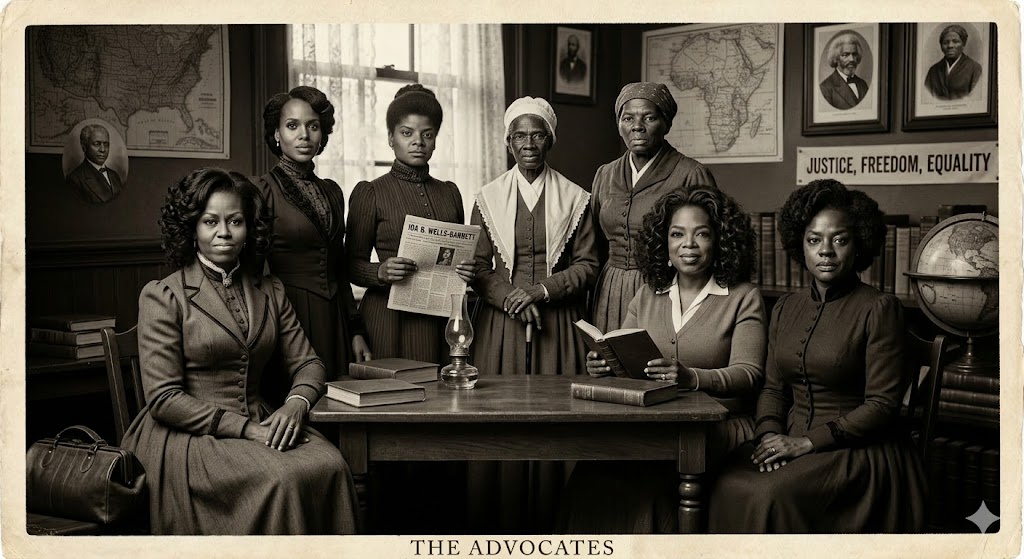
Black women, from historical figures like Harriet Tubman and Sojourner Truth to contemporary icons like Lupita Nyong’o and Viola Davis, embody beauty that intersects with intellect, courage, and artistry (Griffin, 2016). Their beauty cannot be reduced to a color palette; it is the resilience in their eyes, the grace in their posture, and the confidence in their presence that radiates powerfully. The acknowledgment of this multidimensional beauty challenges societal biases that have long devalued dark-skinned women.

This photograph is the property of its respective owner.

The resilience inherent in Black beauty reflects a historical continuum of survival and triumph. African civilizations prized intricate hairstyles, body art, and jewelry not only for aesthetic appeal but as markers of social status, spirituality, and identity (Echeruo, 1998). Enslaved Africans brought these traditions to the Americas, adapting them to new realities while preserving cultural memory. Contemporary Black beauty carries this legacy forward, connecting past and present in a celebration of unbroken identity.

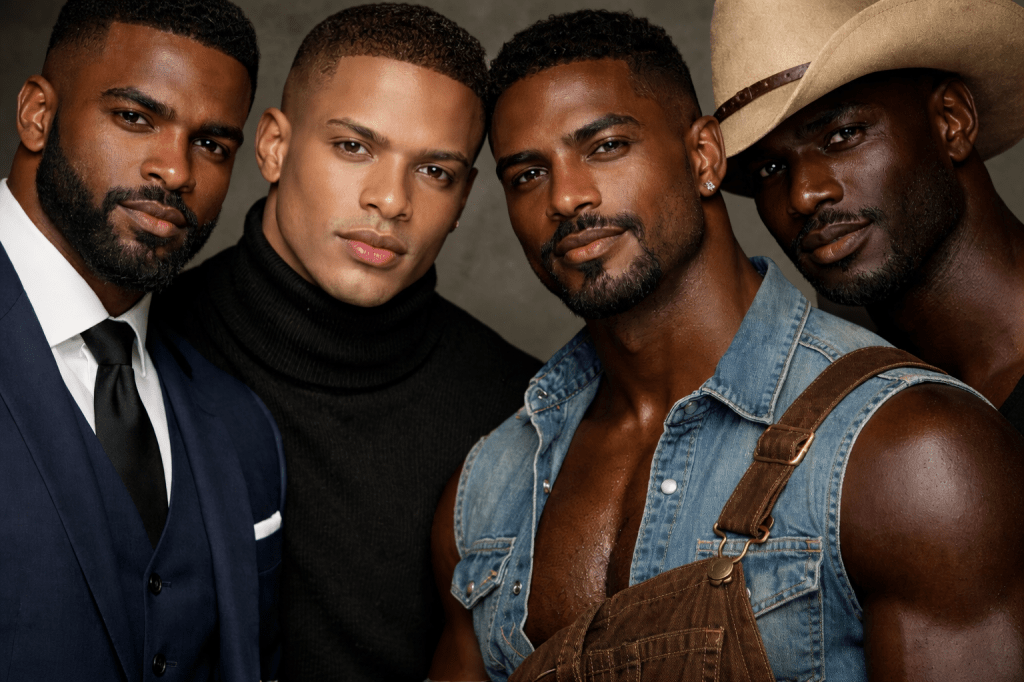
Equally compelling is the beauty of Black men, whose aesthetics convey strength, dignity, and sensuality. Black men’s beauty is found in their diverse skin tones, sculpted physiques, natural hair, and facial symmetry, reflecting both genetic legacy and personal style (Russell-Cole, Wilson, & Fergunson, 2013). It is also expressed through demeanor—confidence, resilience, intellect, and emotional depth—which enhances their physical presence. From civil rights leaders to cultural icons like Idris Elba, Morris Chestnut, and Omari Hardwick, Black men exemplify a holistic beauty that integrates mind, body, and spirit. This celebration of Black male beauty, often overlooked in mainstream narratives, affirms that attractiveness is inseparable from character and heritage.

Media representation has played a double-edged role in defining Black beauty. Historically, Black features were marginalized or caricatured, reinforcing Eurocentric ideals (Patton, 2006). Yet contemporary media increasingly spotlights diverse Black aesthetics, showcasing models, actors, and influencers who embrace natural hair, muscular physiques, and rich skin tones. Campaigns that center dark-skinned beauty, such as those featuring Naomi Campbell, Alek Wek, or Lupita Nyong’o, disrupt conventional norms and inspire younger generations to value authenticity over conformity.

This photograph is the property of its respective owner.

Black beauty also manifests through style and self-expression. Fashion, grooming, and personal adornment serve as mediums through which Black individuals celebrate identity and challenge societal expectations. From the elegance of a tailored suit to the casual flair of denim and vibrant textiles, Black beauty encompasses creativity and individuality (Steele, 1997). Accessories, hairstyles, and cultural symbols are not superficial; they are visual narratives of pride, resistance, and heritage.

In interpersonal and societal contexts, Black beauty has often been politicized. The pressure to conform to Eurocentric beauty standards has generated internalized bias and colorism within communities (Hunter, 2007). Yet, movements such as natural hair advocacy, dark-skinned representation campaigns, and Black male modeling collectives challenge these limitations, promoting self-love, acceptance, and empowerment. Beauty becomes a vehicle for social commentary and cultural affirmation.

This photograph is the property of its respective owner.

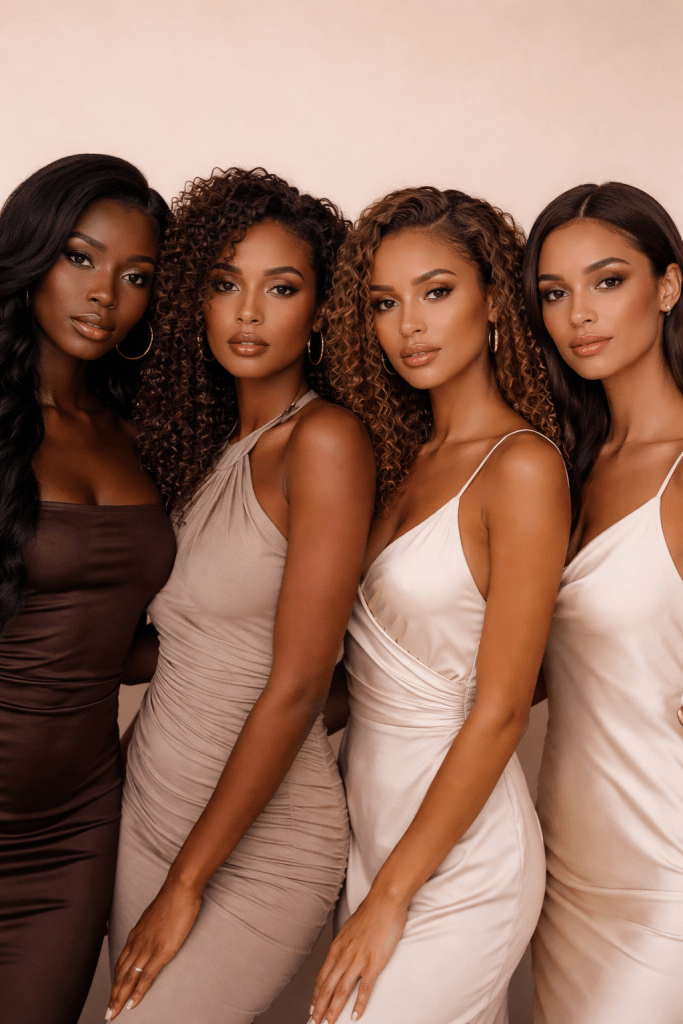
A key aspect of Black beauty is its versatility and range. Black skin exhibits a spectrum of rich tones, from deep ebony to caramel and golden hues. Hair textures range from tightly coiled to loosely wavy, each holding unique aesthetic and cultural significance. Facial features are equally varied, encompassing a diversity of nose shapes, lips, eyes, and jawlines. This multiplicity defies narrow standards, underscoring that beauty cannot be uniform but is enhanced by individuality and difference.

The spiritual dimension of Black beauty is also notable. In many African traditions, physical beauty is inseparable from moral and spiritual integrity. Radiance is considered a reflection of inner harmony, wisdom, and virtue (Asante, 2007). This perspective challenges purely superficial understandings of attractiveness, positioning beauty as a holistic attribute encompassing mind, body, and spirit.

In celebrating Black men’s beauty, it is important to recognize the intersection of physical and cultural aesthetics. Strong jawlines, muscular frames, well-groomed hair, and facial hair styles are enhanced by posture, poise, and presence. Whether clad in suits, casual attire, or cultural dress, Black men project confidence that transcends clothing, revealing dignity, strength, and heritage. This form of beauty is not performative but deeply rooted in identity, ancestry, and self-respect.

Black beauty, however, extends beyond individual features to collective affirmation. Community events, cultural festivals, and artistic expressions showcase the diversity and richness of Black aesthetics, reinforcing pride and belonging. Such spaces allow Black individuals to appreciate beauty in its many forms, fostering unity and countering narratives of marginalization.

This photograph is the property of its respective owner.

Education and scholarship also contribute to understanding Black beauty. Studies examining the psychology of race, aesthetics, and representation highlight the sociocultural pressures faced by Black individuals while celebrating adaptive strategies and cultural resilience (Russell-Cole et al., 2013). By documenting and analyzing Black beauty across contexts, scholars provide frameworks for appreciating its complexity and significance.

Ultimately, Black beauty is a celebration of survival, creativity, and self-expression. It resists devaluation, transcends colorism, and affirms identity. Each hairstyle, skin tone, and facial feature carries historical resonance, connecting individuals to a rich tapestry of culture, resilience, and artistry. Beauty is not passive but active—a statement of existence, pride, and defiance in the face of oppression.

Black beauty is not merely seen; it is felt, lived, and honored. It is a language of resistance, an affirmation of humanity, and a testament to ancestral strength. From the elegance of Black women to the commanding presence of Black men, this beauty encompasses the full spectrum of identity, expression, and cultural memory. It is an enduring, transformative force.

References

  • Asante, M. K. (2007). The history of Africa: The quest for eternal harmony. Routledge.
  • Echeruo, M. J. C. (1998). Victorian African Studies: Art, culture, and aesthetics. Cambridge Scholars Press.
  • Griffin, L. (2016). Shades of beauty: Colorism in the African diaspora. University Press.
  • hooks, b. (1992). Black looks: Race and representation. South End Press.
  • Hunter, M. (2007). The persistent problem of colorism: Skin tone, status, and inequality. Sociology Compass, 1(1), 237–254.
  • Patton, T. O. (2006). Hey girl, am I more than my hair?: African American women and their struggles with beauty, body image, and hair. NWSA Journal, 18(2), 24–51.
  • Russell-Cole, K., Wilson, M., & Fergunson, R. (2013). The color complex: The politics of skin color in a New Millennium. Anchor Books.
  • Steele, V. (1997). Fashion and eroticism: Ideals of feminine beauty from the Victorian era to the Jazz Age. Oxford University Press.

The Ebony Dolls: Irene Cara

Beauty in Motion, Talent in Song

This photograph is the property of its respective owner.

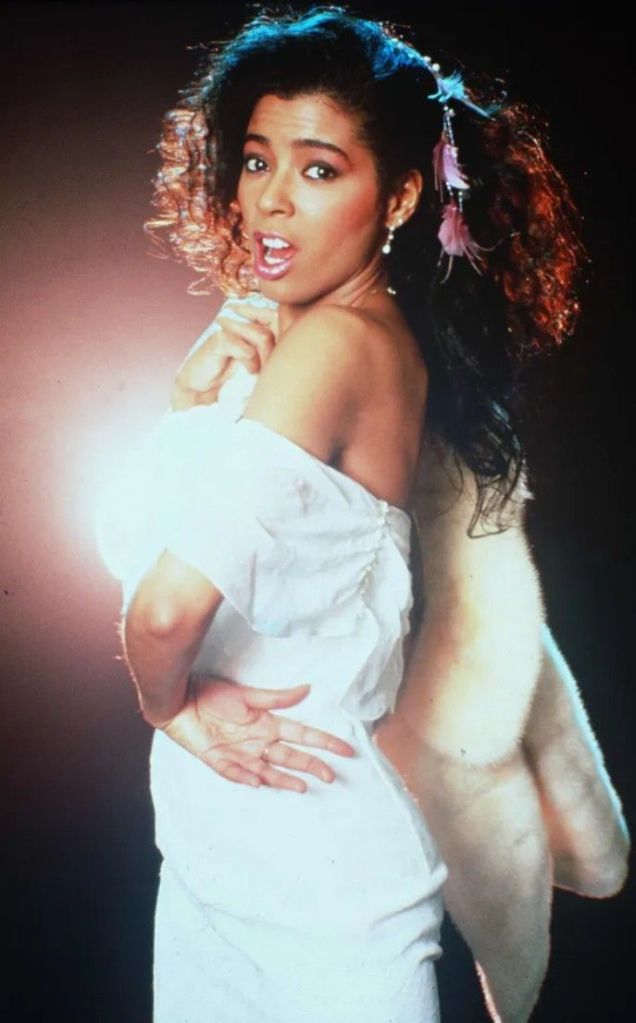
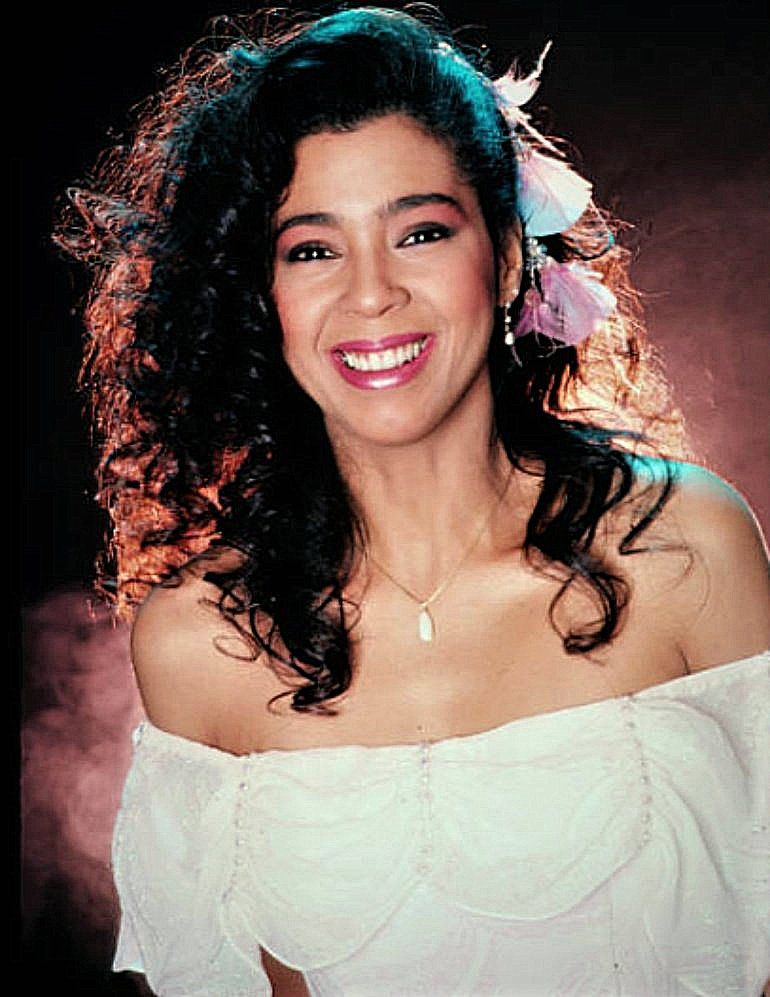
In the world of music and film, few women have embodied the combination of radiant talent, striking beauty, and cultural impact like Irene Cara. With her glowing skin, expressive features, and charismatic presence, Cara became a symbol of inspiration and elegance for young Black women during the late 1970s and 1980s. Her accomplishments as a singer, songwriter, and actress earned her a place as an “Ebony Doll”—a figure whose beauty, poise, and artistry appear almost sculpted, leaving an enduring mark on entertainment and popular culture.

This photograph is the property of its respective owner.

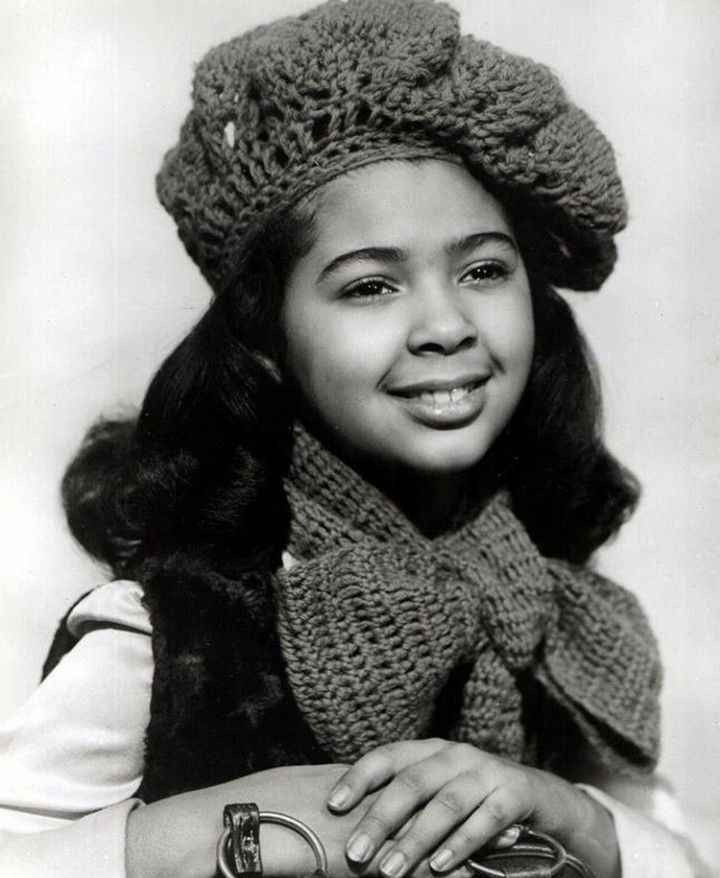
Irene Cara Escalera was born on March 18, 1959, in New York City. was of mixed racial heritage, primarily Afro-Puerto Rican. Her father, Irene Cara Sr., was Puerto Rican, and her mother, Lillie Margaret Escalera, was African American. Growing up in this multicultural household, Cara was exposed to a rich blend of musical, cultural, and artistic influences, which shaped both her musical talent and her cosmopolitan sense of style. Raised in a family that encouraged musical expression, she developed her artistic skills from an early age. She studied dance, acting, and music, eventually attending the High School of Performing Arts, where her talent began to flourish. Her early immersion in performing arts laid the foundation for a career that would span film, stage, and music.

This photograph is the property of its respective owner.

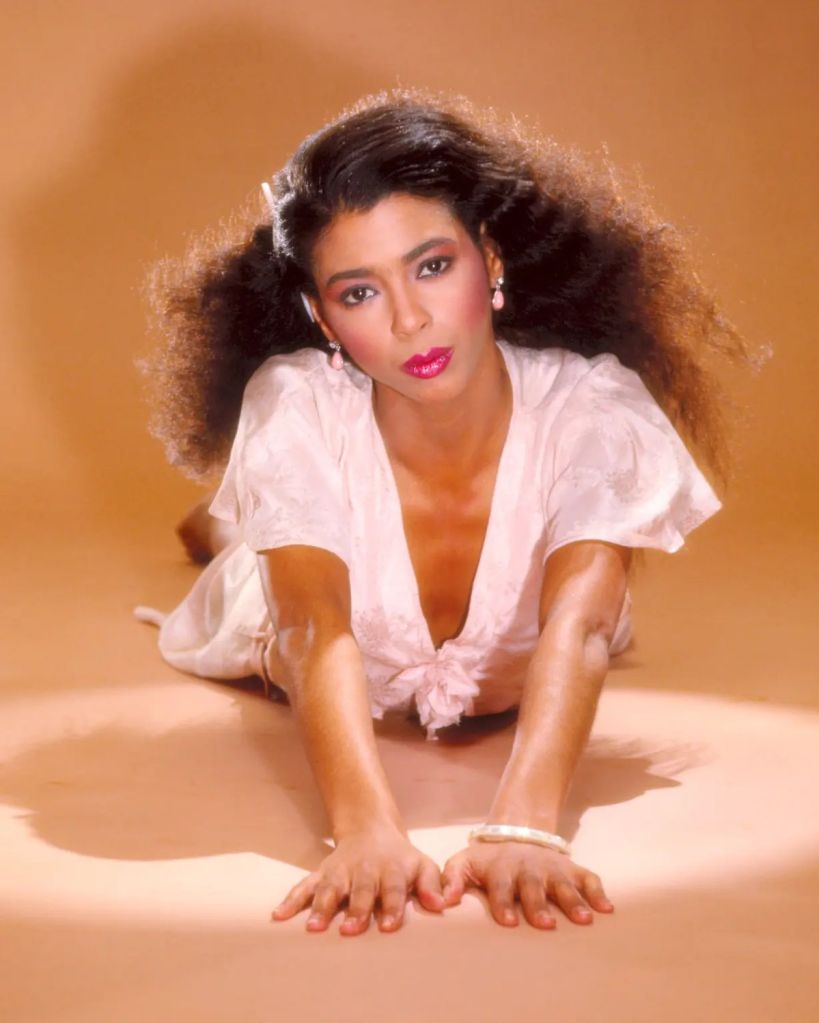
Cara’s beauty was immediately noticeable. Her radiant skin, symmetrical features, and bright smile captured attention both on stage and on camera. Her statuesque frame and graceful movements gave her a commanding presence that complemented her vocal and acting abilities. As an “Ebony Doll,” Cara’s appearance projected both strength and elegance, inspiring admiration from fans and peers alike.

She first gained major public recognition through her work on Broadway and in television musicals. One of her earliest successes was starring in the musical Sparkle (1976), where her combination of acting, singing, and dance skills showcased her versatility as a performer. The role allowed Cara to project youthful beauty, talent, and confidence in a way that resonated with audiences.

This photograph is the property of its respective owner.

Cara’s career reached its peak in the early 1980s with her starring role in the film Fame (1980). She portrayed Coco Hernandez, an ambitious young performer attending a New York City performing arts high school. The role highlighted her dramatic range, dance skills, and vocal talent, while also emphasizing her radiant, statuesque presence on screen. Her performance earned widespread acclaim and became iconic in the history of musical films.

The film’s theme song, Fame, performed by Cara, became a global sensation. Her voice, full of energy and passion, helped cement the song as an anthem for aspiring artists around the world. Her success with this song, combined with her on-screen charisma, made her a role model for young women pursuing careers in music and performance.

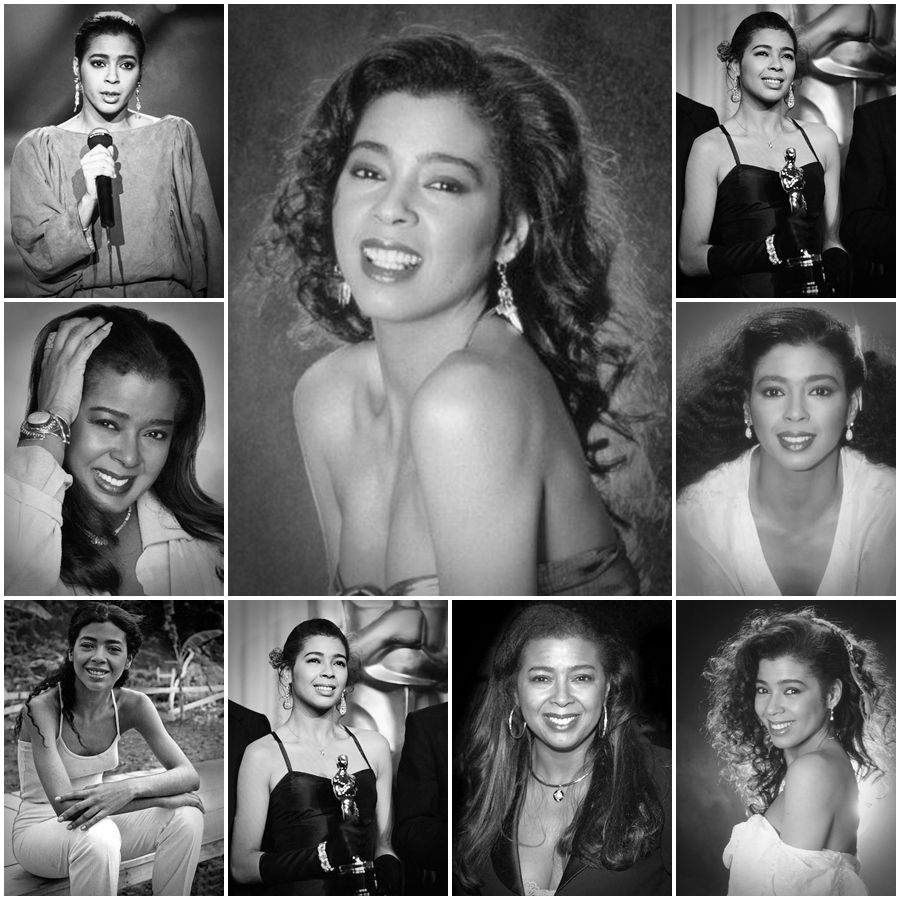
Following Fame, Cara achieved further acclaim with the hit single Flashdance… What a Feeling (1983) from the film Flashdance. She co-wrote the song, which went on to win both an Academy Award for Best Original Song and a Grammy Award for Best Female Pop Vocal Performance. The success of this track not only demonstrated her musical genius but also reinforced her position as an iconic figure of beauty and talent.

This photograph is the property of its respective owner.

Cara’s combination of vocal power, on-screen presence, and expressive movements contributed to her “Ebony Doll” status. Her performances radiated elegance, energy, and confidence, qualities that fans admired and the media celebrated. She served as a representation of Black female beauty that was glamorous, athletic, and inspiring.

Throughout her career, Cara also remained connected to live performance, touring internationally and appearing on stage in musical productions. Her work in music and theater allowed her to maintain her artistry while continuing to inspire new audiences.

Her impact on fashion and style was also notable. Cara’s distinctive hairstyles, radiant skin, and elegant wardrobe choices in performances and public appearances helped define the aesthetic of early-1980s pop culture for Black women. She represented a modern, glamorous vision of Black femininity that combined sophistication with youthful energy.

Beyond her artistry, Cara’s life and career demonstrated resilience. She navigated a challenging music industry while maintaining her integrity as a performer and songwriter. Her ability to blend artistry with poise exemplifies the qualities of an “Ebony Doll”: beauty, talent, and self-possession.

These photographs are the property of their respective owners.

Even decades after her peak fame, Irene Cara remained a cultural touchstone for her contributions to music and film. Her performances in Fame and Flashdance continue to inspire aspiring artists, and her elegant, radiant image remains celebrated in retrospectives and media coverage.

What makes Cara an “Ebony Doll” is the fusion of her physical beauty, artistic talent, and inspiring presence. She embodied the ideal of Black glamour in a way that is both authentic and aspirational, representing strength, confidence, and elegance across multiple disciplines.

Ultimately, Irene Cara’s story was one of brilliance, artistry, and timeless beauty. She was and remains a symbol of excellence in performance, style, and cultural influence, embodying the “Ebony Doll” ethos for generations of admirers.


References

Cara, I. (Interviews and public statements).

IMDb. (2026). Irene Cara Filmography. IMDb Database.

Britannica. (2026). Irene Cara. Encyclopaedia Britannica.

Smith, S. (2018). Black Women in Television and Film: A Cultural History. New York University Press.

PopMatters. (2020). Remembering Irene Cara: Fame, Flashdance, and the Voice of a Generation.

Unseen, Uncelebrated, Unstoppable: Dark-Skinned Women Who Changed Everything.

Dark-skinned women have long shaped history, art, culture, and politics, yet their contributions are often overlooked or undervalued. These women embody resilience, brilliance, and transformative power that defy societal limitations.

Harriet Tubman is one of the most iconic figures in American history. Born into slavery, she risked her life repeatedly to lead enslaved people to freedom via the Underground Railroad. Her courage and strategic brilliance exemplify the profound impact of dark-skinned women on the fight for justice.

Ida B. Wells transformed journalism and activism by exposing lynching and systemic racial violence. Through her fearless reporting, she challenged entrenched social norms and advocated for civil rights long before the modern civil rights movement.

Sojourner Truth, born into slavery, became a compelling orator and activist for abolition and women’s rights. Her speech “Ain’t I a Woman?” continues to inspire generations, illustrating the intersection of race and gender in advocacy.

Michelle Obama redefined the role of First Lady, advocating for education, health, and empowerment for young women. Her public presence and initiatives have had global influence, elevating the visibility and authority of Black women in leadership.

Viola Davis has reshaped Hollywood’s understanding of talent and representation. Her Emmy, Tony, and Academy Awards highlight not only her personal achievements but also the need for equitable opportunities for women of color in the entertainment industry.

Lupita Nyong’o’s Oscar-winning performance in 12 Years a Slave brought grace, strength, and visibility to dark-skinned actresses worldwide. Beyond acting, she challenges beauty standards and inspires young women to embrace their natural skin.

Angela Davis, a scholar and activist, has dedicated her life to fighting for civil rights, prison reform, and gender equality. Her fearless advocacy demonstrates the intellectual and moral leadership of Black women in public discourse.

Toni Morrison used literature to give voice to Black experiences and histories. Through novels like Beloved and The Bluest Eye, she illuminated the struggles and triumphs of dark-skinned women, creating a legacy of empowerment through storytelling.

Maya Angelou, a poet, singer, and activist, intertwined artistry and advocacy. Her work celebrated Black identity, resilience, and self-expression, leaving an enduring cultural imprint on generations of readers and performers.

Serena Williams transformed sports and broke racial and gender barriers in tennis. Her dominance on the court and influence off it showcase the resilience and versatility of dark-skinned women excelling in highly visible arenas.

Shirley Chisholm broke political barriers as the first Black woman elected to Congress and the first to run for a major party presidential nomination. Her courage inspired countless women to pursue leadership roles.

Oprah Winfrey’s rise from poverty to global influence demonstrates the transformative power of determination and vision. Her philanthropy and media presence have created platforms for countless underrepresented voices.

Madam C.J. Walker became the first self-made female millionaire in the U.S., creating economic opportunities and challenging social barriers for Black women in the early 20th century.

Mae Jemison, the first Black woman in space, shattered barriers in STEM and exploration, inspiring generations of girls to pursue careers in science and technology.

Zora Neale Hurston preserved African American folklore and heritage through literature and anthropology, elevating cultural narratives often ignored in mainstream history.

Coretta Scott King continued her husband’s civil rights work, advocating for equality, peace, and justice. Her leadership exemplifies the often unseen roles women play in movements for societal transformation.

Alice Walker, author of The Color Purple, illuminated the lived experiences of Black women, addressing trauma, resilience, and empowerment, shaping contemporary conversations around race and gender.

Ella Baker’s grassroots activism was pivotal in the civil rights movement, emphasizing collective leadership and community empowerment over personal recognition.

Shonda Rhimes revolutionized television by centering Black female characters in mainstream media, creating cultural influence and changing industry standards for representation.

Audre Lorde, a poet and activist, challenged oppression through her writing, encouraging Black women to embrace their voices and assert their identities unapologetically.

Angela Rye’s political commentary and advocacy work amplify marginalized voices, highlighting the continued need for equity and justice in modern society.

Kerry Washington blends artistry and activism, using her platform to engage in civic causes while portraying multidimensional Black women in film and television.

Ruby Dee’s career as an actress and activist highlighted the intersection of artistry and social advocacy, reflecting a lifelong dedication to both craft and justice.

Maya Rudolph, through comedy and performance, brings intelligence, cultural commentary, and visibility to dark-skinned women in entertainment, expanding the narrative of influence.

These women, past and present, demonstrate the unstoppable force of dark-skinned women in shaping history, culture, and society. Their achievements remind us that leadership, talent, and courage are not defined by visibility but by impact.

By celebrating their stories, society acknowledges not only their individual achievements but also the broader legacy of dark-skinned women who continue to inspire and transform the world.

Through their lives, we see a pattern: resilience, brilliance, and the ability to break barriers are hallmarks of dark-skinned women. Their impact is profound, enduring, and unstoppable.

The ongoing work of highlighting, recognizing, and celebrating these women is essential to rewriting narratives and empowering future generations. Their stories remind us that greatness often emerges in spite of societal neglect.

The legacies of these extraordinary women prove that being unseen or uncelebrated does not diminish influence. Their courage, intellect, and creativity continue to change the world in every sphere.

Ultimately, dark-skinned women have always been drivers of progress. By learning from and amplifying their stories, we ensure that their transformative power is recognized, celebrated, and passed on to inspire the leaders of tomorrow.


References

The Holy Bible, King James Version. (1611).

Clinton, C. (2004). Harriet Tubman: The Road to Freedom. Little, Brown.

Obama, M. (2018). Becoming. Crown Publishing Group.

Davis, V. (Interviews and speeches). Various sources.

Nyong’o, L. (Interviews, various). Media coverage and awards.

Walker, A. (1982). The Color Purple. Harcourt.

Angelou, M. (1993). Phenomenal Woman: Four Poems Celebrating Women. Random House.

Hooks, B. (1992). Black Looks: Race and Representation. South End Press.

Gates, H. L., Jr. (2019). Stony the Road: Reconstruction, White Supremacy, and the Rise of Jim Crow. Penguin Press.

Winfrey, O. (2007). The Wisdom of Sundays. Flatiron Books.

The Skin Equation: Value, Beauty, and Bias. #thebrownpeopledilemma

Photo by Bolaji Balogun on Pexels.com

The politics of skin color remains one of the most enduring social hierarchies across the world. Within the spectrum of human diversity, the color of one’s skin has historically functioned as a social equation — determining beauty, value, and belonging. This “skin equation” reflects not only aesthetic preferences but also deep-rooted power dynamics forged through colonialism, slavery, and systemic racism. In modern times, it continues to shape how people of color, particularly within the African diaspora, perceive themselves and others.

Skin tone has become a social currency, an unspoken determinant of privilege and opportunity. In post-slavery societies, lighter skin was often associated with freedom, education, and proximity to whiteness — while darker skin became stigmatized as a visual marker of servitude and inferiority (Hunter, 2007). This hierarchy birthed what is now known as colorism, a phenomenon that exists both within and outside of racial boundaries, influencing social mobility, media representation, and romantic desirability.

Beauty standards, largely shaped by Eurocentric ideals, perpetuate the marginalization of darker complexions. Historically, the Western world’s definition of beauty has been tethered to lightness — straight hair, thin noses, and pale skin. These features were systemically glorified in art, advertising, and cinema, creating a global aesthetic code that devalued African features. As a result, many individuals internalized color-based bias, linking lighter skin with attractiveness and success.

This internalized bias, as theorized by Frantz Fanon in Black Skin, White Masks (1952), results in psychological fragmentation. The colonized subject learns to desire the oppressor’s image, wearing a metaphorical “white mask” in pursuit of acceptance. Fanon’s analysis highlights that colorism is not merely an aesthetic issue but a form of psychological violence, teaching the oppressed to despise their reflection.

In the Americas, color hierarchies were institutionalized through systems like the “one-drop rule” and the “mulatto caste,” where mixed-race individuals were placed above darker-skinned Africans. This practice reinforced racial purity ideologies and divided the Black community along pigment lines. Even after emancipation, these divisions persisted — visible in employment discrimination, political leadership, and media representation (Russell, Wilson, & Hall, 1992).

The entertainment industry further amplifies the bias of the skin equation. Light-skinned actors and models are often cast as romantic leads or beauty icons, while darker-skinned individuals are relegated to roles of servitude or aggression. This pattern, sometimes called “color-coded casting,” communicates to audiences that lightness equates to worthiness and desirability. It becomes a subconscious pedagogy — teaching viewers which shades deserve empathy and admiration.

However, the rise of digital media has sparked a counter-narrative. Movements like #MelaninMagic and #BlackGirlMagic have redefined beauty through the celebration of dark skin tones. Social media platforms have allowed creators to subvert Eurocentric imagery by showcasing diverse complexions in their natural splendor. This reclamation of aesthetic autonomy represents a cultural resistance — an act of rewriting the visual narrative of beauty.

The “skin equation” also extends to economics. In numerous studies, lighter-skinned individuals have been shown to earn higher wages, receive shorter prison sentences, and be perceived as more intelligent or trustworthy than their darker-skinned peers (Maddox & Gray, 2002). These disparities indicate that colorism functions as an economic bias as much as a cultural one.

In the realm of dating and marriage, skin tone continues to influence desirability politics. Research shows that lighter skin correlates with perceptions of femininity and gentleness in women, and with professionalism and status in men. These notions, deeply entrenched in colonial logic, sustain social hierarchies even within intra-racial relationships.

Globally, skin lightening remains a billion-dollar industry, particularly in regions like Africa, Asia, and the Caribbean. The marketing of bleaching products often implies that success, romance, and prestige are achievable through lightness. Such campaigns perpetuate a colonial beauty mindset — convincing the consumer that transformation toward whiteness equals empowerment, when in truth it is an extension of self-erasure (Glenn, 2008).

Colorism’s impact on identity development is particularly harmful among children and adolescents. Studies reveal that darker-skinned children often face more bullying and internalized shame, resulting in lower self-esteem (Wilder, 2010). This early conditioning establishes a lifelong struggle between self-acceptance and societal rejection, producing adults who must heal from inherited bias.

Religious and spiritual imagery has also played a role in reinforcing skin hierarchies. The portrayal of divine figures as white — from angels to Christ — encoded whiteness as holiness and blackness as sinfulness. This theological distortion produced what some scholars call “pigment theology,” where color became synonymous with morality (Cone, 1970). Such images continue to shape subconscious associations of purity and impurity.

In African and Caribbean contexts, the colonial past lingers in linguistic and cultural symbols that favor lightness — phrases like “fair and lovely” or “bright and clean” carry subtle biases. In these societies, color becomes both a marker of postcolonial trauma and an indicator of social aspiration. The residue of empire thus lives on in the language of beauty and respectability.

Despite these systemic issues, the reclamation of dark skin as divine and regal has gained momentum in recent decades. Artists, theologians, and activists have sought to reframe Blackness as sacred — connecting it to African spirituality, biblical lineage, and ancestral royalty. This reimagining restores balance to the skin equation by asserting that melanin is not a curse but a crown.

From a psychological perspective, the deconstruction of colorism requires reprogramming collective self-image. Healing involves education, representation, and the dismantling of media-driven hierarchies. When people of all shades see themselves reflected positively in culture, they begin to rewrite the equation of value and beauty from within.

Sociologically, the persistence of colorism reveals how racism mutates over time. As overt racial segregation wanes, colorism operates subtly — maintaining inequality through aesthetics rather than legislation. This covert discrimination is harder to detect but equally destructive to communal unity.

Educational reform also plays a role in dismantling the skin equation. Curriculums that include African civilizations, Black inventors, and darker-skinned beauty icons broaden the definition of excellence. When children learn to associate dark skin with intelligence, creativity, and leadership, they internalize empowerment rather than shame.

The media’s future lies in the intentional elevation of diverse skin tones — in fashion campaigns, film casting, and advertising. Representation must move beyond tokenism toward genuine inclusivity, celebrating the full range of human hues. Only through visual equity can we begin to repair centuries of aesthetic injustice.

Ultimately, the “skin equation” reflects a collective moral test. It challenges societies to confront the hidden mathematics of bias that equate whiteness with worth and darkness with deficiency. The dismantling of this formula is both a spiritual and cultural act — requiring truth, love, and liberation. When we learn to see beauty not as a spectrum of shade but as a manifestation of soul, the equation balances at last.


References

Cone, J. H. (1970). A Black theology of liberation. Orbis Books.

Fanon, F. (1952). Black skin, white masks. Grove Press.

Glenn, E. N. (2008). Yearning for lightness: Transnational circuits in the marketing and consumption of skin lighteners. Gender & Society, 22(3), 281–302.

Hunter, M. (2007). The persistent problem of colorism: Skin tone, status, and inequality. Sociology Compass, 1(1), 237–254.

Maddox, K. B., & Gray, S. A. (2002). Cognitive representations of Black Americans: Reexploring the role of skin tone. Personality and Social Psychology Bulletin, 28(2), 250–259.

Russell, K., Wilson, M., & Hall, R. (1992). The color complex: The politics of skin color among African Americans. Anchor Books.

Healing. Honor. High Value.

Photo by Abdulkadir muhammad sani on Pexels.com

Healing is the foundation of restoration. Psalm 147:3 declares, “He healeth the broken in heart, and bindeth up their wounds.” Emotional, spiritual, and relational healing allows individuals—particularly women of color—to reclaim their identity, purpose, and voice in a world that often devalues them.

Honor flows from God’s design. Proverbs 3:35 teaches, “The wise shall inherit glory: but shame shall be the promotion of fools.” When a person aligns with God’s truth, they walk in dignity that no worldly measure can diminish.

High value originates in divine creation. Psalm 139:14 affirms, “I will praise thee; for I am fearfully and wonderfully made: marvellous are thy works; and that my soul knoweth right well.” Recognizing intrinsic worth rooted in God’s craftsmanship fosters confidence, resilience, and purpose.

Healing nurtures spiritual growth. James 5:16 exhorts, “Confess your faults one to another, and pray one for another, that ye may be healed. The effectual fervent prayer of a righteous man availeth much.” Community and prayer are vital components in restoration.

Honor shapes relationships. Romans 12:10 teaches, “Be kindly affectioned one to another with brotherly love; in honour preferring one another.” Treating oneself and others with respect reinforces godly influence.

High value guides decision-making. Proverbs 4:7 affirms, “Wisdom is the principal thing; therefore get wisdom: and with all thy getting get understanding.” Awareness of personal worth informs choices that align with God’s purpose.

Healing restores identity. Isaiah 61:1 declares, “The Spirit of the Lord GOD is upon me; because the LORD hath anointed me to preach good tidings unto the meek…” Restoration begins when spiritual truth reshapes perception of self.

Honor manifests in integrity. Proverbs 10:9 teaches, “He that walketh uprightly walketh surely: but he that perverteth his ways shall be known.” Dignity grows when actions align with God’s principles.

High value empowers advocacy. Proverbs 31:26 affirms, “She openeth her mouth with wisdom; and in her tongue is the law of kindness.” Speaking truth and establishing boundaries reflect self-worth and divine guidance.

Healing strengthens resilience. Romans 5:3-4 teaches, “…tribulation worketh patience; And patience, experience; and experience, hope.” Overcoming past wounds develops character and fortitude.

Honor amplifies influence. 1 Peter 2:17 exhorts, “Honour all men. Love the brotherhood. Fear God. Honour the king.” Respect for self and others fosters leadership and legacy.

High value sustains purpose. Colossians 3:23 commands, “And whatsoever ye do, do it heartily, as to the Lord, and not unto men.” Valuing oneself in accordance with God’s standards inspires excellence.

Healing restores voice. Psalm 34:18 declares, “The LORD is nigh unto them that are of a broken heart; and saveth such as be of a contrite spirit.” Emotional restoration empowers expression and authenticity.

Honor reflects divine reflection. Ephesians 4:32 teaches, “And be ye kind one to another, tenderhearted, forgiving one another, even as God for Christ’s sake hath forgiven you.” Treating others with reverence mirrors God’s character.

High value nurtures leadership. Proverbs 31:25 states, “Strength and honour are her clothing; and she shall rejoice in time to come.” Recognizing worth strengthens confidence, influence, and legacy.

Healing requires intentionality. Matthew 11:28 encourages, “Come unto me, all ye that labour and are heavy laden, and I will give you rest.” Seeking restoration through Christ sustains transformation.

Honor sustains relationships. Romans 12:18 teaches, “If it be possible, as much as lieth in you, live peaceably with all men.” Living honorably fosters trust, respect, and collaboration.

High value inspires boundaries. Proverbs 25:28 warns, “He that hath no rule over his own spirit is like a city that is broken down, and without walls.” Recognizing worth ensures protection of self and integrity.

Healing cultivates wholeness. 1 Peter 5:7 exhorts, “Casting all your care upon him; for he careth for you.” Spiritual surrender releases burdens, allowing restoration to flourish.

Ultimately, healing, honor, and high value converge as a blueprint for living authentically and purposefully. Psalm 1:3 promises, “And he shall be like a tree planted by the rivers of water, that bringeth forth his fruit in his season; his leaf also shall not wither; and whatsoever he doeth shall prosper.” Wholeness, dignity, and worth are cultivated in alignment with God’s truth.

Internalized Whiteness: Beauty Standards and the Reverence for Eurocentric Features.

Black people in the United States and around the world have long contended with beauty ideals that place white, Eurocentric features at the top of a global hierarchy. These standards influence perceptions of skin, hair, facial structure, and desirability — shaping how individuals see themselves and each other. This phenomenon, when adopted within marginalized groups, is often referred to as internalized whiteness or internalized racism.

Internalized whiteness emerges when dominant cultural norms — rooted in white supremacy — become so embedded that they influence individuals’ self-value and self-image. This includes prioritizing lighter skin, straight hair, narrower noses, and thinner lips — traits historically associated with whiteness — over features more common among Black people.

At its core, internalized whiteness is not simply a matter of preference. It is a psychological and social legacy of historical oppression and exclusion — the aftermath of centuries in which European features were valorized while African features were devalued. This dynamic can play out within Black communities themselves, manifesting in preferences that mimic wider societal biases.

Research in psychology has found that internalized endorsement of Eurocentric beauty standards is associated with negative psychological outcomes for Black women, including increased anxiety and depression. This illustrates how deeply these aesthetic norms can penetrate individual self-worth.

Much of this beauty hierarchy has historical roots in colonialism and slavery. During slavery in the United States and Europe’s colonial enterprises globally, lighter skin was sometimes associated with proximity to enslaved persons’ masters or privileges — creating a rudimentary hierarchy of skin tone. This early color hierarchy evolved into modern colorism, where lighter skin and Eurocentric physical traits are socially rewarded.

Colorism — discrimination based on skin tone — is shaped by these beauty standards and operates both between and within racial groups. Studies have shown that within Black communities, lighter skin is often associated with social advantages, while darker skin correlates with disadvantage in socioeconomic status, relationships, and self-esteem.

This internalized ranking contributes to phenomena such as Black mothers complimenting mixed-race children for being “cute” while overlooking the beauty of darker-skinned children. Embedded beauty hierarchies can lead to intracommunity bias that privileges proximity to whiteness — a painful echo of larger societal values.

Internalized whiteness also shapes dating ideals. Within many Black communities, lighter or Eurocentric features are often perceived as more desirable. Researchers have documented how colorism can influence romantic relationships, with lighter-skinned individuals sometimes given preferential social attention or perceived as more attractive.

This dynamic is reinforced by media portrayals that celebrate Eurocentric standards. Television, film, and social media often highlight lighter skin and straighter hair as ideals of attractiveness, while darker skin and natural hair textures are marginalized or exoticized.

The entertainment industry itself reflects these norms. Colorism has long affected casting decisions, where lighter or Eurocentric Black actors may receive more visibility or roles reinforcing beauty ideals closer to whiteness. This can subtly encourage audiences to associate desirability with a closer resemblance to white aesthetics.

Prominent individuals have spoken about their own struggles with internalized beauty norms. Actor Taye Diggs has shared that he experienced self-esteem issues due to his dark skin during his youth and that seeing a dark-skinned model like Tyson Beckford celebrated for his looks helped shift his self-perception.

Diggs recounted that after seeing such representation, he felt more pride in his appearance — illustrating how affirming depictions can counteract internalized negative values.

Despite these pressures, there is a long tradition of movements that push back against internalized whiteness. The “Black Is Beautiful” movement, for example, explicitly affirmed the beauty of all African features and encouraged pride in Black identity and aesthetics.

Nonetheless, everyday social interactions continue to reflect internalized standards. Many within Black communities witness attitudes where darker skin or kinkier hair is overlooked or undervalued — sometimes even compared unfavorably to lighter skin or straighter hair. These preferences can create tension between generations and within peer groups.

Colorism also affects self-image in deeper ways. Adolescent Black girls who internalize beauty norms tied to whiteness often show lower body esteem and self-confidence, especially when media representations seldom reflect their own appearance.

The internalized gaze — the tendency to view oneself and one’s group through the lens of dominant Eurocentric ideals — is a psychological burden that can shape life choices, aspirations, and identity development.

Black individuals may also project these norms onto others. Stories of Black men and women expressing preferences for lighter-skinned or mixed partners indicate that societal beauty hierarchies persist even within marginalized groups. These patterns often reflect deeper social conditioning rather than genuine individual aesthetics.

For some, these preferences result in Black-on-Black criticism — for example, targeting darker-skinned individuals for perceived unattractiveness. Such intragroup conflict reflects the broader influence of external beauty standards internalized over time.

Within families, these dynamics can influence how children are treated and perceived. Some Black parents may unconsciously praise lighter or mixed-heritage children more frequently, reinforcing beauty standards rooted in whiteness.

However, research suggests that strong racial identity and cultural affirmation can mitigate the psychological effects of internalized whiteness. Black feminist consciousness and pride in African aesthetics have been linked to better body satisfaction and resilience against beauty ideals imposed by dominant culture.

Colorism and internalized whiteness do not only affect women. Men in Black communities may also internalize beauty hierarchies, influencing their preferences in partners and perceptions of themselves. These internalized biases can contribute to harmful social norms around desirability and masculinity.

Despite the deep roots of these issues, many in the Black community are actively resisting internalized beauty standards. Grassroots movements, cultural affirmations of natural hair care, skin tone diversity celebrations, and educational campaigns all challenge the notion that whiteness equals beauty.

Social media has become a space for Black creators to celebrate Afrocentric features, natural hair textures, and darker skin tones — offering counter-narratives to historical beauty hierarchies.

These cultural shifts are important because representation matters. Seeing diverse Black beauty celebrated publicly can weaken the internalized gaze and make space for fuller self-acceptance.

Fostering dialogue within families and communities about these issues can help dismantle internalized beauty standards. Education about the historical origins of these preferences can reveal how deeply they are rooted in systemic inequities, not biological superiority.

Ultimately, internalized whiteness and the reverence for Eurocentric features represent not an inherent flaw within Black people but the lingering psychological impact of centuries of racial domination and cultural marginalization.

Embracing Black aesthetics — in all their diversity — is part of the healing process. It involves reclaiming beauty definitions and affirming that Black features, skin tones, and hair textures are not only valid but inherently beautiful.

By understanding and challenging the internalized gaze, individuals and communities can move toward greater self-acceptance and collective pride.

Breaking free from these internalized hierarchies is not just a cultural shift — it’s a step toward racial justice and psychological liberation.


References

Dennis, A. C., DeAngelis, R., Hargrove, T. W., & Pearson, J. A. (2025). Colorism and health inequities among Black Americans: A biopsychosocial perspective. PMC. https://pmc.ncbi.nlm.nih.gov/articles/PMC12573201/?utm_source=chatgpt.com

Phoenix, A., & Craddock, N. (2024). Skin shade and relationships: How colourism pits Black and mixed Black-White women against each other. Frontiers in Sociology. https://pubmed.ncbi.nlm.nih.gov/39758188/?utm_source=chatgpt.com

Walker, S. T. (2014). Black beauty, white standards: Impacts on Black women and resources for resistance and resilience. University of Massachusetts Boston. https://scholarworks.umb.edu/doctoral_dissertations/147?utm_source=chatgpt.com

Williams, T. R., Sanders, S. M., Bass, J. E., Tookes-Williams, K., Popplewell, R., Hooper, V., & Garcia-Aguilera, C. (2025). Investigating the effects of racial identity on the relationship between Black women’s endorsement of Eurocentric beauty standards and psychological health. Women & Therapy. https://www.tandfonline.com/doi/full/10.1080/02703149.2025.2515013?utm_source=chatgpt.com

Internalized racism – Wikipedia. https://en.wikipedia.org/wiki/Internalized_racism?utm_source=chatgpt.com

Black is Beautiful – Wikipedia. https://en.wikipedia.org/wiki/Black_is_beautiful?utm_source=chatgpt.com

Taye Diggs commentary on colorism and self-esteem – Atlanta Black Star. https://atlantablackstar.com/2012/01/19/taye-diggs-reveals-black-men-are-scarred-by-colorism/?utm_source=chatgpt.com

Chromatic Hierarchy: The Social Order of Skin Tone.

Chromatic hierarchy refers to a system of social stratification in which individuals are ranked or valued based on variations in skin tone. Within this framework, lighter complexions are often privileged while darker complexions are marginalized. Although the concept is closely related to colorism, chromatic hierarchy emphasizes the broader structural and historical patterns that create and sustain these inequalities. This hierarchy can exist both between racial groups and within them, shaping perceptions of beauty, intelligence, social status, and economic opportunity.

The roots of chromatic hierarchy can be traced to the historical processes of colonialism, slavery, and racial classification. European colonial powers constructed racial hierarchies that placed whiteness at the top as a symbol of civilization and superiority. These ideas were reinforced through pseudoscientific racial theories that attempted to rank human populations according to physical characteristics such as skin color, facial features, and hair texture. Over time, these ideologies became embedded in social institutions and cultural norms.

In the context of the transatlantic slave trade, chromatic hierarchy became particularly pronounced. Enslaved Africans were often categorized and treated differently depending on their complexion. Lighter-skinned individuals, many of whom were the mixed-race children of enslavers, were sometimes given different labor assignments or allowed limited privileges within plantation systems. While these distinctions did not erase the brutality of slavery, they created internal divisions that would influence later social dynamics within Black communities.

Following emancipation in the United States, chromatic hierarchy continued to shape social life. During the late nineteenth and early twentieth centuries, lighter-skinned African Americans were sometimes perceived as having greater access to education, employment, and social mobility. Elite organizations and social clubs occasionally used informal complexion tests—such as the infamous “paper bag test”—to determine who could participate in certain institutions. These practices reinforced the idea that proximity to whiteness conferred social advantage.

Chromatic hierarchy also intersected with economic opportunity. Research has shown that lighter-skinned individuals in many societies have historically received higher wages, more favorable treatment in hiring, and increased representation in leadership roles. These patterns illustrate how color-based stratification operates not only at the interpersonal level but also within broader economic systems.

The concept is deeply tied to the legacy of racial ideology in Western societies. In the United States, racial categories were constructed during slavery and codified through laws that reinforced segregation and discrimination. The association of lightness with privilege and darkness with marginalization became embedded in cultural narratives, influencing how people interpret identity and status.

Within Black communities, chromatic hierarchy has often produced complex social dynamics. While the shared experience of racial discrimination fosters solidarity, differences in complexion can still shape perceptions of beauty, desirability, and social standing. Media representation, historical social structures, and colonial legacies have contributed to these internal hierarchies.

Beauty standards provide one of the most visible examples of chromatic hierarchy. For decades, mainstream media and fashion industries have often favored lighter skin tones and Eurocentric features. This preference has influenced advertising, film casting, and beauty industries, shaping cultural perceptions of attractiveness and worth. As a result, darker-skinned individuals—particularly women—have frequently been underrepresented or stereotyped in media portrayals.

These patterns can have psychological consequences. Studies in social psychology suggest that exposure to hierarchical beauty standards can affect self-esteem, identity formation, and perceptions of belonging. When individuals repeatedly encounter messages that privilege certain physical characteristics, those messages can shape internal beliefs about value and desirability.

Education and socialization also play important roles in maintaining or challenging chromatic hierarchy. Children often learn cultural preferences regarding complexion through family conversations, media exposure, and peer interactions. These early experiences can influence how individuals perceive themselves and others throughout their lives.

The relationship between chromatic hierarchy and socioeconomic mobility has been widely studied. Sociologists have found correlations between skin tone and outcomes such as educational attainment, income, and occupational status in certain contexts. These findings suggest that the legacy of color-based stratification continues to influence opportunities in contemporary society.

At the same time, many scholars emphasize that chromatic hierarchy is not a universal or static phenomenon. Its effects vary across regions, cultures, and historical periods. In some societies, different forms of color-based stratification exist that are not directly tied to racial categories but instead relate to class or colonial history.

Within the African diaspora, discussions about chromatic hierarchy often intersect with broader conversations about identity, representation, and empowerment. Activists, artists, and scholars have increasingly called attention to the ways in which skin tone bias affects social experiences. These discussions aim to promote awareness and encourage more inclusive representations of beauty and identity.

The media has begun to reflect these conversations. In recent years, film, television, and fashion industries have made efforts to showcase a broader range of complexions and features. While progress remains uneven, these shifts illustrate how cultural institutions can influence public perceptions and challenge long-standing hierarchies.

Scholars often emphasize that dismantling chromatic hierarchy requires both cultural and structural change. Addressing bias involves examining historical narratives, expanding representation, and promoting equitable opportunities across institutions. Education and critical discussion play crucial roles in helping individuals recognize how historical systems continue to shape present realities.

Within Black communities, confronting chromatic hierarchy also involves fostering dialogue about shared history and internal diversity. Recognizing the influence of historical color-based divisions allows communities to address them with honesty and compassion, promoting solidarity rather than division.

Theological and ethical perspectives have also contributed to critiques of chromatic hierarchy. Many religious traditions emphasize the intrinsic value and dignity of every human being. From this perspective, hierarchies based on skin tone contradict moral teachings that affirm equality and justice.

Ultimately, chromatic hierarchy reflects the enduring influence of historical racial ideologies. Although societies have made progress toward greater equality, the legacy of color-based stratification continues to shape social interactions and institutional outcomes. Understanding this history is essential for recognizing how past structures influence present conditions.

By examining the origins and consequences of chromatic hierarchy, scholars and communities can better understand the complexities of identity and inequality. Awareness of these dynamics encourages a broader commitment to justice, representation, and respect for the full diversity of human experience.


References

Hunter, M. L. (2007). The persistent problem of colorism: Skin tone, status, and inequality. Sociology Compass, 1(1), 237–254.

Keith, V. M., & Herring, C. (1991). Skin tone and stratification in the Black community. American Journal of Sociology, 97(3), 760–778.

Hall, R. E. (2010). The bleaching syndrome: African Americans’ response to cultural domination vis-à-vis skin color. Journal of Black Studies, 26(2), 172–184.

Glenn, E. N. (2009). Shades of difference: Why skin color matters. Stanford University Press.

Wilder, J. (2015). Color stories: Black women and colorism in the 21st century. Temple University Press.

Russell, K., Wilson, M., & Hall, R. (1992). The color complex: The politics of skin color among African Americans. Harcourt Brace Jovanovich.

Ode to the shades of Brown

Oh, the shades of brown, rich as the earth,
From the deepest mahogany to the honeyed warmth of birth.
You tell stories of ancestry, of kings and queens,
Of rivers crossed and lands unseen.

Your skin, a tapestry woven by God’s own hand,
A palette divine, too vast to understand.
Every tone a hymn, every hue a song,
A testament of resilience, proud and strong.

In sunlight, you shimmer like burnished gold,
A brilliance no lens nor mirror can hold.
In shadow, you speak of depth and grace,
Of sacred histories, time cannot erase.

Oh, chestnut, cocoa, and espresso hues,
Each a reflection of ancient truths.
Each freckle, each mole, a jewel to behold,
A story of courage, of valor untold.

Caramel whispers of warmth and light,
Mocha radiates quiet power in sight.
Amber gleams with a gentle fire,
Chestnut glows with ancestral desire.

The shades of brown, both subtle and bold,
Carry legacies neither bought nor sold.
From slave cabins to palaces, from fields to streets,
Your beauty defies oppression, never retreats.

KJV Truth sings in your radiant skin:
Psalm 139:14 – “I am fearfully and wonderfully made.”
Every shade, every tone, every nuance,
A reflection of God’s artistry, perfect and true.

Celebrate your brown, in all its delight,
From dawn’s soft glow to the velvet of night.
No pigment dictates your worth or your place,
Your brown is divine, imbued with God’s grace.

Oh, the shades of brown, a spectrum so vast,
From subtle taupe to the boldest cast.
You are power, beauty, endurance, and art,
A masterpiece woven straight from God’s heart.

So rise, brown daughters, with pride in your skin,
Let no world’s bias define what’s within.
Your shade is a crown, your hue is a song,
In the orchestra of creation, you alone belong.

The phrase “shades of brown” reflects more than just physical variation in skin tone—it represents a complex social reality shaped by history, power, and perception. Across the African diaspora and other communities of color, differences in skin tone have been given meaning within systems that rank and assign value to people based on how light or dark they appear. This phenomenon, known as Colorism, continues to influence identity, opportunity, and self-perception.

Colorism has deep roots in the history of slavery and colonialism. During the transatlantic slave trade, lighter-skinned enslaved individuals—many of whom were of mixed ancestry—were sometimes given preferential treatment, such as working in the house rather than in the fields. These divisions were not accidental; they reinforced a hierarchy that placed whiteness, and proximity to it, at the top. Over time, these patterns became internalized within communities, creating lasting divisions based on complexion.

The legacy of these practices can still be seen today. Lighter skin is often associated with beauty, success, and desirability, while darker skin is unfairly stigmatized. This bias is reinforced through media representation, where lighter-skinned individuals are frequently overrepresented in leading roles, advertisements, and positions of influence. As a result, societal standards of beauty often reflect a narrow range of features tied to Eurocentric ideals.

From a sociological perspective, colorism operates as a learned norm within Sociology, passed down through generations and reinforced by institutions such as media, education, and family structures. Individuals absorb these messages early in life, shaping how they view themselves and others. Children, for example, may begin to associate lighter skin with positive traits and darker skin with negative ones, even without explicit instruction.

The psychological impact of colorism is significant. Studies have shown that individuals with darker skin tones may experience lower self-esteem, higher levels of discrimination, and reduced access to opportunities in areas such as employment and education. This aligns with Social Identity Theory, which explains how people derive part of their self-worth from how their group is perceived in society. When darker skin is devalued, it can negatively affect individual identity and confidence.

In addition to its psychological effects, colorism also has economic consequences. Research suggests that lighter-skinned individuals, on average, earn higher incomes and are more likely to be perceived as professional or trustworthy. These disparities highlight how deeply embedded color bias is within social and institutional structures.

The concept of “shades of brown” also intersects with ideas of mixed race and racial ambiguity. Individuals with lighter or racially ambiguous features are often treated differently, sometimes receiving privileges not afforded to darker-skinned individuals. However, this can also come with its own challenges, including questions about identity and belonging.

The Media continues to play a central role in reinforcing color hierarchies. Through film, television, and social media, certain looks are elevated while others are marginalized. The lack of diverse representation contributes to a limited understanding of beauty and perpetuates harmful stereotypes.

At the same time, there has been a growing movement to challenge colorism and celebrate darker skin tones. Campaigns promoting inclusivity and representation have begun to shift public perception, encouraging a broader and more authentic definition of beauty. Social media, while part of the problem, has also become a platform for advocacy and empowerment.

Education and awareness are key to addressing colorism. By understanding its historical roots and recognizing its modern impact, individuals and communities can begin to dismantle these biases. Conversations about colorism help to bring attention to an issue that is often overlooked but deeply felt.

Ultimately, the “shades of brown” are a testament to human diversity, not a hierarchy of value. Skin tone variation is a natural result of genetic adaptation and ancestry, not a measure of worth. Challenging colorism requires both individual reflection and collective action to redefine standards and promote equity.

The journey toward dismantling colorism is ongoing, but it begins with recognizing that all shades carry equal beauty, dignity, and significance. By confronting these biases, society can move closer to a more inclusive and just understanding of identity.


References

Hunter, M. (2007). The persistent problem of colorism: Skin tone, status, and inequality. Sociology Compass, 1(1), 237–254.

Keith, V. M., & Herring, C. (1991). Skin tone and stratification in the Black community. American Journal of Sociology, 97(3), 760–778.

Monk, E. P. (2015). The cost of color: Skin color, discrimination, and health among African Americans. American Journal of Sociology, 121(2), 396–444.

Dixon, T. L., & Telles, E. E. (2017). Skin color and colorism: Global research, concepts, and measurement. Annual Review of Sociology, 43, 405–424.

Hall, R. E. (2018). The Bleaching Syndrome: African Americans’ Response to Cultural Domination. Springer.

Golden Essence

There is a luminous quality in beauty that transcends time, a radiance rooted in ancestry, heritage, and enduring dignity. “Golden Essence” explores how timeless aesthetics, cultural heritage, and ancestral identity intersect to shape perceptions of worth, influence social capital, and confer privilege. It celebrates the richness of Black beauty as both a visual and moral inheritance, emphasizing that true value lies in character, lineage, and the grace of history rather than fleeting trends.

Historically, African civilizations cultivated beauty not only as visual appeal but as a reflection of social, spiritual, and moral integrity. Hairstyles, adornments, clothing, and physical demeanor conveyed status, wisdom, and communal respect. As Asante (2003) emphasizes, aesthetic expression in Africa was interwoven with principles of balance, harmony, and dignity. The visual presentation of self was a statement of lineage and societal role, a reflection of collective and ancestral identity.

The concept of aesthetic capital, articulated by Bourdieu (1986), illuminates how beauty functions as social currency. Individuals embodying ancestral traits, poise, or classical proportions accrue recognition, social deference, and opportunity. This capital is amplified by contemporary social structures, wherein beauty intersects with economic, professional, and cultural advantage. The “golden essence” thus operates as both inherited dignity and cultivated advantage.

Psychologically, the halo effect enhances the perception of virtue in those who embody timeless beauty. Dion, Berscheid, and Walster (1972) observed that physically attractive individuals are often assumed to possess other positive traits, including intelligence, moral integrity, and competence. In the context of Golden Essence, beauty is inseparable from the perception of ancestral wisdom, poise, and social grace, making physical presence a marker of historical and moral authority.

Colorism complicates the recognition of ancestral beauty. Hunter (2007) notes that lighter skin tones, often aligned with Eurocentric ideals, are disproportionately privileged within and across communities of color. Golden Essence challenges this hierarchy, affirming that aesthetic value and social recognition should honor the depth, history, and diversity inherent in ancestral traits rather than conform to imposed standards.

Economically and socially, those who embody ancestral aesthetics often experience amplified advantages. Hamermesh (2011) documents that attractiveness influences wages, promotions, and opportunity. In communities valuing ancestral traits, these advantages are reinforced by historical recognition and social reverence. Conversely, individuals whose appearances are marginalized face invisibility and diminished access to social and professional networks, demonstrating the intersection of beauty, race, and structural bias.

The media often distorts or erases ancestral aesthetics, privileging images that align with Western beauty ideals. This misrepresentation contributes to the invisibility of Golden Essence, reinforcing biased perceptions of desirability. Representation is critical: authentic portrayals of Black heritage restore dignity, affirm cultural pride, and challenge inequitable hierarchies (Rhode, 2010).

Biblically and spiritually, Golden Essence underscores that true worth transcends appearance. Scripture repeatedly emphasizes the primacy of character, heart, and virtue over external looks. In 1 Samuel 16:7, God instructs that “man looketh on the outward appearance, but the LORD looketh on the heart,” affirming that divine favor is not contingent upon conformity to human aesthetic standards. The golden essence of an individual is therefore measured by integrity, resilience, and moral alignment.

Psychologically, the recognition of ancestral beauty fosters self-confidence, social influence, and communal pride. Individuals who are celebrated for their Golden Essence internalize a sense of worth that counters external marginalization, while communities that honor ancestral aesthetics reinforce identity, heritage, and cultural continuity.

Education and representation are vital to sustaining the recognition of Golden Essence. Schools, cultural institutions, and media platforms play a key role in celebrating ancestral beauty, teaching its historical significance, and validating diverse expressions of grace. By codifying respect for heritage, society affirms the enduring value of ancestral traits in contemporary contexts.

Ethically, acknowledging Golden Essence requires dismantling superficial and imposed hierarchies of beauty. It demands the rejection of colorism, Eurocentric dominance, and narrow media portrayals, centering dignity, history, and intrinsic value. True recognition of beauty encompasses lineage, virtue, and resilience rather than transient social approval.

Culturally, Golden Essence bridges past and present, connecting contemporary visibility with ancestral legacy. It preserves the visual and moral memory of communities while shaping modern standards of grace, poise, and influence. In this way, beauty becomes an expression of historical continuity, cultural pride, and social legitimacy.

Spiritually, Golden Essence reflects the enduring favor that accompanies virtue, integrity, and righteousness. Beauty rooted in heritage conveys symbolic significance, representing resilience, wisdom, and the blessings of ancestry. Recognition of this essence elevates not merely physical presence but the moral and historical narrative embodied by individuals.

Socially, honoring Golden Essence strengthens solidarity, reduces internalized bias, and affirms identity. Communities that embrace ancestral beauty cultivate pride and resilience, counteracting the marginalization imposed by contemporary beauty hierarchies. In doing so, they reinforce a legacy of dignity, authority, and grace.

Psychologically, the affirmation of Golden Essence mitigates the pressures of appearance-based discrimination. Individuals who see their ancestral beauty valued internalize worth beyond superficial standards, gaining confidence and self-respect that inform personal, social, and professional success.

Ultimately, Golden Essence illustrates that true beauty is timeless, moral, and historically grounded. It transcends social trends, cultural impositions, and transient media representations. Recognizing Golden Essence affirms both individual dignity and collective heritage, highlighting the importance of ancestral wisdom, resilience, and grace.

In conclusion, Golden Essence celebrates the enduring power of ancestral beauty, cultural dignity, and moral integrity. It challenges superficial hierarchies, restores visibility to historically marginalized aesthetics, and emphasizes that human worth is measured not by conformity to ephemeral standards but by character, legacy, and the luminous quality of heritage. By honoring Golden Essence, society affirms both the individual and the enduring spirit of generations past.


References

Anderson, T. L., Grunert, C., Katz, A., & Lovascio, S. (2010). Aesthetic capital: A research review on beauty perks and penalties. Sociology Compass, 4(8), 564–575.

Asante, M. K. (2003). The history of Africa: The quest for eternal harmony. Routledge.

Bourdieu, P. (1986). The forms of capital. In J. Richardson (Ed.), Handbook of theory and research for the sociology of education (pp. 241–258). Greenwood Press.

Dion, K., Berscheid, E., & Walster, E. (1972). What is beautiful is good. Journal of Personality and Social Psychology, 24(3), 285–290.

Eagly, A. H., Ashmore, R. D., Makhijani, M. G., & Longo, L. C. (1991). What is beautiful is good, but… Psychological Bulletin, 110(1), 109–128.

Eze, E. C. (2010). Intellectual history in contemporary African thought: Ancient wisdom, modern debates. Palgrave Macmillan.

Feingold, A. (1992). Good-looking people are not what we think. Psychological Bulletin, 111(2), 304–341.

Gafney, W. (2017). Womanist midrash: A reintroduction to the women of the Torah and the Throne. Westminster John Knox Press.

Hamermesh, D. S. (2011). Beauty pays: Why attractive people are more successful. Princeton University Press.

Hunter, M. (2007). The persistent problem of colorism: Skin tone, status, and inequality. Sociology Compass, 1(1), 237–254.

Langlois, J. H., et al. (2000). Maxims or myths of beauty? Psychological Bulletin, 126(3), 390–423.

Rhode, D. L. (2010). The beauty bias: The injustice of appearance in life and law. Oxford University Press.

Wilson, T. D. (2002). Strangers to ourselves: Discovering the adaptive unconscious. Harvard University Press.