Tag Archives: america

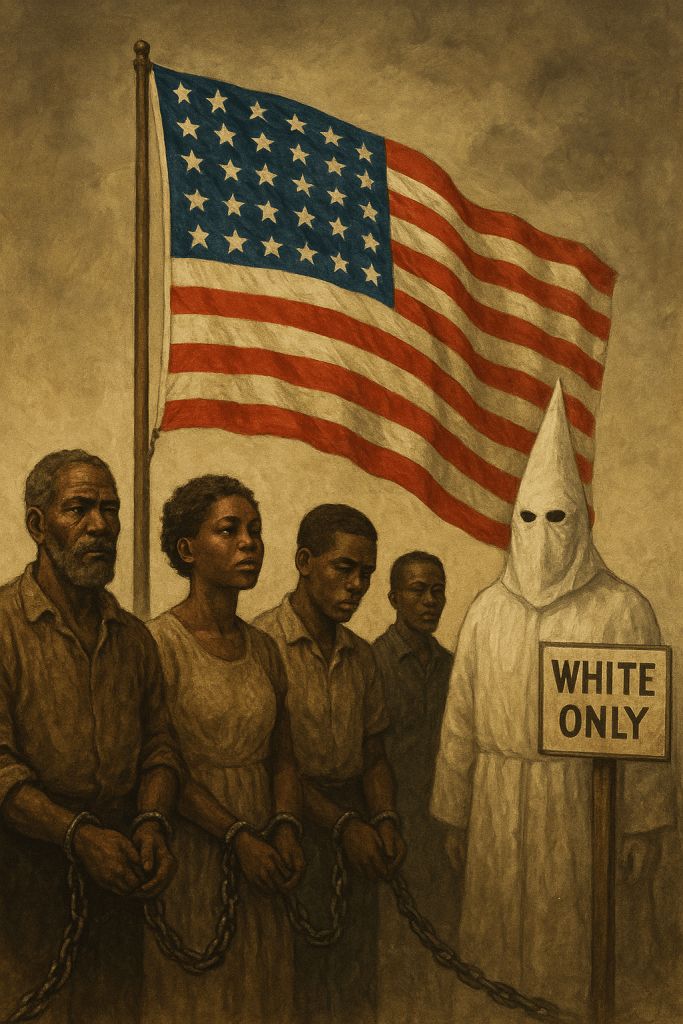
America, the Great? Power, Paradox, and the Price of Progress.

This photograph is the property of its respective owner.

America has long been celebrated as a beacon of freedom, democracy, and opportunity. The phrase “America the Great” echoes through political speeches, national anthems, and cultural narratives. Yet beneath this polished identity lies a complex and often troubling history shaped by conquest, exploitation, racial hierarchy, and systemic inequality. To understand why America considers itself “great,” one must examine both its achievements and the deeply rooted injustices that have defined its development.

The notion of American greatness is largely tied to its economic power, global influence, and foundational ideals of liberty outlined in the Declaration of Independence. These ideals, however, were not extended to all people. From its inception, the nation operated within contradictions—proclaiming freedom while institutionalizing slavery.

The economic foundation of the United States was built significantly through the exploitation of enslaved Africans during the Transatlantic Slave Trade. Millions of Black bodies were commodified, stripped of identity, and subjected to chattel slavery, a system in which human beings were treated as property. This system fueled agricultural wealth, particularly in cotton and tobacco industries, making America a global economic force.

Chattel slavery in America was uniquely brutal. Enslaved people were denied legal rights, family stability, and bodily autonomy. Their labor was extracted without compensation, and violence was used to maintain control. The wealth generated from slavery directly contributed to the nation’s infrastructure, banking systems, and early industrialization.

The myth of meritocracy often overshadows the reality that America’s prosperity was not built on equal opportunity but on unequal exploitation. Black labor laid the foundation of American capitalism while Black people themselves remained excluded from its benefits.

The presidency of Abraham Lincoln is often highlighted as a turning point in American history. Lincoln’s issuance of the Emancipation Proclamation symbolized a shift toward ending slavery. However, it is important to recognize that this act was as much a strategic wartime decision as it was a moral one.

While Lincoln played a role in the abolition of slavery, freedom did not equate to equality. The end of slavery ushered in a new era of oppression through systems like Black Codes and later the Jim Crow Laws, which legally enforced racial segregation and disenfranchisement.

The Jim Crow era institutionalized racial inequality across the South and beyond. Black Americans were subjected to separate and unequal facilities, denied voting rights, and lived under constant threat of racial violence. Lynching became a tool of terror, reinforcing white supremacy.

The Civil Rights Movement emerged as a response to these injustices. Leaders like Martin Luther King Jr., Malcolm X, and Rosa Parks challenged systemic racism and demanded equal rights under the law.

Legislation such as the Civil Rights Act of 1964 and the Voting Rights Act of 1965 marked significant victories. However, these legal gains did not dismantle the structural inequalities embedded within American society.

The concept of “shadow slavery” refers to modern systems that disproportionately affect Black communities, such as mass incarceration, economic disenfranchisement, and exploitative labor practices. These systems mirror aspects of slavery by controlling bodies and limiting freedom through institutional mechanisms.

Mass incarceration, often referred to as the “New Jim Crow,” disproportionately targets Black men, perpetuating cycles of poverty and marginalization. Policies such as the War on Drugs intensified these disparities, criminalizing entire communities.

Economic inequality remains a defining feature of American society. Despite being one of the wealthiest nations in the world, millions of Americans live in poverty. Black Americans, in particular, face systemic barriers to wealth accumulation, including discriminatory housing practices like redlining.

The American Dream promises upward mobility through hard work, yet this ideal is not equally accessible. Structural inequalities in education, employment, and healthcare continue to hinder progress for marginalized groups.

America’s global image as a land of opportunity often obscures the lived realities of its most vulnerable populations. Homelessness, food insecurity, and wage stagnation challenge the narrative of greatness.

The treatment of Black people in America cannot be divorced from its history. From slavery to segregation to systemic racism, each era has left an indelible mark on the social and economic fabric of the nation.

In recent years, Diversity, Equity, and Inclusion (DEI) initiatives have attempted to address these disparities. However, there has been significant backlash, with many institutions rolling back or eliminating such programs.

The dismantling of DEI efforts reflects a broader resistance to acknowledging and addressing systemic inequality. Critics argue that these programs are divisive, while proponents see them as necessary for achieving equity.

The tension surrounding DEI highlights the ongoing struggle over America’s identity. Is it a nation committed to equality, or one that resists confronting its past?

Education plays a critical role in shaping national narratives. The omission or sanitization of historical truths in curricula perpetuates ignorance and hinders progress.

The legacy of slavery and segregation continues to influence contemporary issues such as police brutality, racial profiling, and voter suppression.

Movements like Black Lives Matter have brought renewed attention to these injustices, challenging the notion that America has moved beyond its racist past.

The concept of greatness is often tied to power and dominance. America’s military strength and economic influence contribute to its global standing, but these factors do not necessarily equate to moral or ethical superiority.

Patriotism can sometimes function as a barrier to critical reflection. Questioning America’s history is often met with resistance, as it challenges deeply held beliefs about national identity.

The idea of American exceptionalism suggests that the United States is inherently different from and superior to other nations. This belief can obscure the need for accountability and reform.

Historical amnesia allows injustices to persist. Without a full reckoning with the past, systemic inequalities remain entrenched.

The labor of enslaved Africans was not merely a footnote in American history—it was central to the nation’s development. Acknowledging this truth is essential to understanding present-day disparities.

Reparations have been proposed as a means of addressing the enduring impact of slavery and systemic racism. This debate continues to spark controversy and resistance.

The criminal justice system reflects broader societal inequalities. Disparities in sentencing, policing, and incarceration rates reveal deep-rooted biases.

Healthcare inequality is another manifestation of systemic racism. Black Americans face higher rates of chronic illness and lower access to quality care.

Housing discrimination has long-term effects on wealth accumulation and community stability. Redlining and discriminatory lending practices have created lasting disparities.

Education inequality limits opportunities for upward mobility. Underfunded schools in predominantly Black communities perpetuate cycles of disadvantage.

The media plays a role in shaping perceptions of Black people, often reinforcing stereotypes and biases.

Cultural contributions of Black Americans—music, art, language—have profoundly influenced American identity, yet the creators are often marginalized.

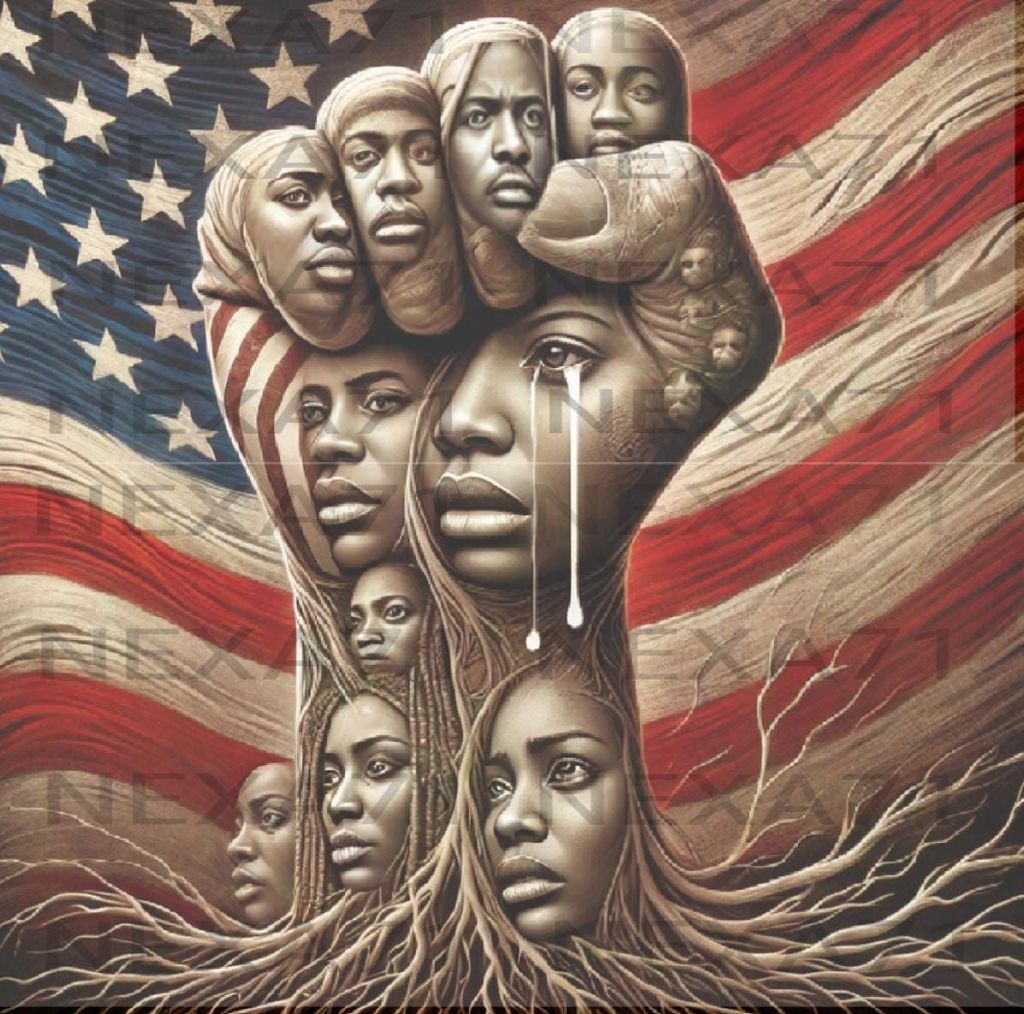
The resilience of Black communities in the face of systemic oppression is a testament to strength and perseverance.

America’s greatness, if it exists, may lie not in its perfection but in its potential for growth and transformation.

True greatness requires accountability, justice, and a commitment to equity. Without these, the label becomes hollow.

The question is not whether America is great, but for whom it has been great—and at what cost.

A nation cannot fully realize its ideals while ignoring the suffering that built it.

The path forward requires honest dialogue, systemic change, and a willingness to confront uncomfortable truths.

Only then can America begin to reconcile its identity with its reality.


References

Alexander, M. (2010). The New Jim Crow: Mass incarceration in the age of colorblindness. The New Press.

Anderson, C. (2016). White Rage: The unspoken truth of our racial divide. Bloomsbury.

Baptist, E. E. (2014). The half has never been told: Slavery and the making of American capitalism. Basic Books.

Du Bois, W. E. B. (1903). The souls of Black folk. A.C. McClurg & Co.

Foner, E. (2010). The fiery trial: Abraham Lincoln and American slavery. W.W. Norton.

Hannah-Jones, N. (2019). The 1619 Project. The New York Times Magazine.

Massey, D. S., & Denton, N. A. (1993). American apartheid: Segregation and the making of the underclass. Harvard University Press.

Muhammad, K. G. (2010). The condemnation of Blackness: Race, crime, and the making of modern urban America. Harvard University Press.

Omi, M., & Winant, H. (2014). Racial formation in the United States. Routledge.

Wilkerson, I. (2020). Caste: The origins of our discontents. Random House.

Why Are Americans So Overweight?

The United States stands among the nations most affected by the global obesity epidemic. According to the Centers for Disease Control and Prevention, more than 40% of American adults are classified as obese, with even higher percentages considered overweight. These figures represent a dramatic increase over the past five decades and correlate with rising rates of type 2 diabetes, cardiovascular disease, hypertension, and certain cancers. Obesity is no longer a marginal issue; it is a defining public health crisis of the modern American era.

A primary driver of excess weight in the United States is the dominance of ultra-processed foods in the national diet. Researchers at institutions such as the National Institutes of Health have demonstrated that diets high in ultra-processed foods lead to greater caloric intake and measurable weight gain compared to whole-food diets, even when macronutrients are matched. These foods are engineered for hyper-palatability, long shelf life, and convenience, often at the expense of nutritional integrity.

Ultra-processed foods typically contain high levels of added sugars, refined carbohydrates, industrial seed oils, and sodium. Ingredients such as high-fructose corn syrup, hydrogenated oils, artificial flavor enhancers, and synthetic preservatives increase calorie density while reducing satiety. Excess sugar consumption, particularly in beverages, has been strongly linked to insulin resistance and fat accumulation.

A growing body of scientific evidence links diets high in ultra-processed foods, added sugars, processed meats, and chemical additives to an increased risk of cancer and other chronic illnesses. The World Health Organization, through its cancer research arm the International Agency for Research on Cancer, has classified processed meats as Group 1 carcinogens, meaning there is sufficient evidence that they cause colorectal cancer in humans. Additionally, high consumption of ultra-processed foods has been associated with increased risks of cardiovascular disease, type 2 diabetes, and certain cancers due to factors such as chronic inflammation, insulin resistance, oxidative stress, and exposure to food additives and contaminants formed during high-heat processing. Diets rich in refined sugars and unhealthy fats further contribute to metabolic dysfunction, obesity, and nonalcoholic fatty liver disease, all of which elevate long-term disease risk. These findings underscore the importance of prioritizing whole, minimally processed foods to reduce the burden of diet-related illness.

Beyond macronutrients, the modern American food supply contains numerous additives and chemical agents that may influence metabolic processes. Certain emulsifiers, artificial sweeteners, and preservatives have been studied for their potential impact on gut microbiota and metabolic regulation. Disruption of gut flora has been associated with inflammation and weight gain, suggesting that food chemistry may indirectly contribute to obesity risk.

Another controversial but frequently discussed topic is genetically modified organisms (GMOs). While leading scientific bodies, including the National Academy of Sciences, conclude that GMOs currently approved for consumption are not directly linked to obesity or chronic disease, concerns persist among consumers regarding pesticide residues and the broader industrial agricultural model. The issue may be less about genetic modification itself and more about the industrial processing of foods derived from such crops.

Hormones in meat production are often cited in discussions about weight gain. It is important to clarify that the use of added hormones is prohibited in U.S. poultry production, as regulated by the U.S. Department of Agriculture. However, hormones are permitted in some cattle production. While no definitive evidence links dietary hormones in approved quantities to obesity, the perception reflects broader mistrust of industrial food systems.

Chemical exposure is not limited to food alone. Drinking water contamination has become a growing concern. Substances such as PFAS (per- and polyfluoroalkyl substances), sometimes referred to as “forever chemicals,” have been detected in water supplies across the country. The Environmental Protection Agency has acknowledged links between certain PFAS exposures and metabolic disorders, thyroid dysfunction, and hormonal disruption. Although research is ongoing, endocrine-disrupting chemicals in water may influence fat storage and metabolic balance.

Bisphenol A (BPA), phthalates, and other plastic-associated chemicals can leach into both food and water from packaging and containers. These compounds are classified as endocrine disruptors because they mimic or interfere with hormonal signaling. Hormonal dysregulation affects appetite, fat storage, and insulin sensitivity, potentially contributing to weight gain over time.

Lifestyle patterns further compound the issue. Americans consume larger portion sizes than most nations and eat outside the home more frequently. Restaurant meals and fast food portions often exceed daily caloric needs in a single sitting. Combined with sedentary occupations and car-dependent infrastructure, caloric intake often surpasses energy expenditure.

Globally, the most obese countries include small Pacific Island nations such as Nauru and Tonga, where obesity rates exceed 60–70%. The United States ranks among the highest of large industrialized nations. In contrast, countries such as Japan and Vietnam report adult obesity rates below 5%.

Many Americans question why countries like France appear to maintain relatively lower obesity rates despite consuming bread, pastries, and desserts. The so-called “French paradox” highlights differences in eating culture rather than specific foods. French meals tend to emphasize portion control, slower eating, fewer snacks, and fresh ingredients rather than highly processed packaged products.

Similarly, traditional diets in China historically centered on vegetables, rice, legumes, and modest portions of meat. While modern China is experiencing rising obesity due to Western dietary influence, traditional dietary patterns involved high fiber intake and minimal processed sugar.

Food deserts and socioeconomic disparities also contribute significantly. In many American urban and rural areas, fresh produce is less accessible than convenience stores stocked with packaged snacks. Lower-income communities often face limited access to affordable, nutrient-dense food options, reinforcing unhealthy dietary cycles.

Marketing practices intensify the issue. Ultra-processed foods are heavily advertised, especially to children. Bright packaging, cartoon branding, and digital marketing campaigns normalize excessive sugar and snack consumption from an early age, shaping lifelong habits.

Sleep deprivation and chronic stress also affect metabolic health. Elevated cortisol levels are associated with increased abdominal fat storage and cravings for high-calorie foods. In a fast-paced, high-stress society, these physiological responses amplify dietary risks.

Physical inactivity is another structural factor. Unlike many European and Asian countries where walking, biking, and public transit are common, American infrastructure often requires automobile travel. Reduced daily movement contributes to energy imbalance over time.

The solution to American obesity must be multifaceted. Individual behavior change—such as cooking whole foods, reducing processed sugar intake, filtering drinking water when necessary, and increasing physical activity—is essential. However, systemic change is equally critical.

Policy interventions may include regulating harmful additives, improving water quality standards, limiting marketing of unhealthy foods to children, and incentivizing access to fresh produce. Public health campaigns must emphasize food literacy, label awareness, and long-term lifestyle change rather than short-term dieting.

Culturally, a shift toward mindful eating, smaller portions, and valuing food quality over quantity may help reshape national norms. Observing dietary patterns in countries with lower obesity rates suggests that eating rituals, moderation, and whole-food traditions play a powerful role in weight stability.

Ultimately, Americans are not overweight because of a single ingredient or habit. The crisis reflects an intricate interaction of industrial food production, chemical exposures in food and water, environmental design, socioeconomic disparities, stress, and lifestyle patterns. Addressing obesity requires both personal accountability and structural reform aimed at restoring balance to the modern American diet and environment.


References

Centers for Disease Control and Prevention. (2023). Adult obesity facts.
Environmental Protection Agency. (2023). PFAS and human health effects.
Hall, K. D., et al. (2019). Ultra-processed diets cause excess calorie intake and weight gain: An inpatient randomized controlled trial. Cell Metabolism, 30(1), 67–77.
National Academy of Sciences. (2016). Genetically Engineered Crops: Experiences and Prospects.
National Institutes of Health. (2022). Ultra-processed foods and obesity research updates.
U.S. Department of Agriculture. (2023). Hormones in meat and poultry.
World Health Organization. (2023). Obesity and overweight global statistics.

International Agency for Research on Cancer. (2015). IARC Monographs evaluate consumption of red meat and processed meat. World Health Organization.

We Are the Story America Cannot Edit

Black history in America has always been more than a chapter—it is the spine of the national narrative. Yet for centuries, this story has been edited, erased, softened, or rewritten to soothe the conscience of a nation deeply shaped by the labor, blood, and brilliance of a people it tried to silence. Still, despite redactions and revisions, the truth endures: we are the story America cannot edit.

This story begins long before ships touched the Atlantic coast. It begins in African kingdoms where art, astronomy, architecture, and theology flourished. The brilliance of the ancestors did not begin in bondage; it began in royalty, innovation, and legacy. No revisionist textbook can erase the origins of a people whose civilizations helped advance global knowledge.

When the Middle Passage shattered families and scattered bodies across the ocean, America inherited a people it tried to dehumanize but could not destroy. The nation wrote laws to silence Black voices, but those voices survived. They survived in spirituals, in whispered prayers, in maroon communities, in the coded footsteps of escape routes carved in the night. The ink of this story was not blacklisted—it was carved in courage.

America tried to enslave people into subservience, but instead they became prophets, builders, warriors, and liberators. Harriet Tubman turned the Underground Railroad into a living testament of freedom. Frederick Douglass transformed literacy into a revolution. Sojourner Truth took the podium and shook the conscience of a country pretending not to hear her. These names refuse erasure.

The Civil War and Reconstruction wrote a brief chapter of possibility—Black senators, congressmen, teachers, and landowners rose swiftly. But America attempted another revision: Jim Crow. Segregation, lynching, and systemic disenfranchisement were designed to rewrite the Black story into one of subjugation. Yet the people refused the edits. Every protest, every church meeting, every organizing circle was a declaration that the pen of oppression could not overrule the pen of destiny.

The Civil Rights Movement authored a new wave of transformation. Martin Luther King Jr.’s dream, Malcolm X’s fire, Rosa Parks’ quiet firmness, and Fannie Lou Hamer’s thunderous truth-telling exposed the nation’s moral contradictions. Their lives demonstrate that Black people did not just endure history—they shaped it. They re-inked the American narrative with justice.

America has long tried to reduce Black identity to struggle, but Black culture refuses to be footnoted. Jazz, gospel, blues, soul, hip-hop, theatre, literature, and film—all are chapters written in brilliance, not brokenness. These art forms do not ask permission; they testify. They preserve memory. They uplift. They correct the historical record by embodying the power and creativity of a people the nation tried to underestimate.

Black resilience has always been inconvenient for America’s preferred storyline. It challenges myths of meritocracy, exposes the violence of past and present systems, and proves that progress was never given—only won. This is why so many attempts have been made to censor, dilute, or distort Black history. Yet truth has a way of resurfacing, even through the cracks of suppression.

The story America cannot edit also includes everyday heroes—grandmothers who kept families together, fathers who worked two and three jobs, children who dared to learn in schools that did not want them, freedom fighters whose names never made headlines, teachers who planted dreams in young minds, and church mothers who prayed communities through storms. These lives are sacred scripture for a people who built resilience into their DNA.

Even today, as political forces attempt to ban books, restrict curriculum, or sanitize the past, the story resists. Black scholars, artists, pastors, activists, and youth are documenting the truth in new ways—through digital archives, spoken word, classrooms, podcasts, and movements for justice. The story is not just preserved; it is expanding.

We are the story America cannot edit because our existence defies the narrative of inferiority that once dominated the national imagination. Every achievement in science, politics, sports, education, business, and ministry disproves the lies that once served as historical “facts.” Black excellence is not an anomaly—it is a continuation of ancestral greatness.

We are the story America cannot edit because the evidence is everywhere. It is in the economic foundation Black labor built. It is in the culture Black creativity shaped. It is in the democracy Black activism strengthened. It is in the global influence Black innovation commands. America has benefitted too deeply from Black genius to pretend it did not exist.

Our story remains uneditable because it is woven into Scripture as well as history. From Cush to Ethiopia, from the Queen of Sheba to the early church, the Bible itself records the presence, power, and purpose of African-descended people. The sacred text affirms what oppression tried to deny: that Blackness has always been part of God’s design and destiny.

We are the story America cannot edit because the truth is living, breathing, and continually unfolding. It shows up in every generation—Black children with brilliance in their eyes, Black elders carrying the wisdom of survivors, Black communities redefining strength, joy, and possibility.

Ultimately, America cannot edit what God Himself has preserved. The story of Black people is marked by divine protection, ancestral strength, and spiritual authority. It is a story of survival, transformation, and triumph. It is a story that exposes injustice but also reveals hope. It is a story bigger than slavery, bigger than segregation, bigger than racism.

We are the story America cannot edit because the truth is too powerful, too resilient, too sacred to be silenced. And as long as we continue to speak it, write it, live it, and teach it—the story will remain unaltered, unstoppable, and unforgettable.

References:
Exodus 1–3 (KJV); Psalm 68:31; Acts 8:27–39; Franklin, J. H. From Slavery to Freedom; Gates, H. L. The African Americans: Many Rivers to Cross; Hannah-Jones, N. The 1619 Project; Litwack, L. Trouble in Mind; Stevenson, B. Just Mercy; Anderson, C. White Rage; Raboteau, A. Slave Religion.

The Degradation of American Culture: The Good, the Bad, and the Ugly – The Niggerization of America!

Race, Media, Internalized Oppression, and the Crisis of Identity in Modern America

What the word is meant to imply (in sociological usage)

When people use the term “niggerization” (usually in polemical or extremist writing), they typically mean:

The perceived process by which a society or group is said to adopt negative stereotypes historically associated with Black people, such as:

  • poverty
  • disorder
  • criminality
  • vulgarity
  • hypersexuality
  • anti-intellectualism
  • cultural dysfunction

So in that usage, it is shorthand for:

“cultural degradation framed through racist stereotypes.”

Why the term itself is intellectually flawed

From a scholarly standpoint, the term is conceptually incoherent and racist, because:

  1. It assumes Blackness itself is synonymous with dysfunction.
  2. It collapses complex social problems into racial essence.
  3. It confuses structural conditions (poverty, trauma, policy, media) with biological or cultural identity.
  4. It reproduces the very colonial logic it claims to critique.

In other words, it racializes social pathology, instead of analyzing:

  • capitalism
  • media systems
  • historical trauma
  • political economy
  • psychological conditioning

The accurate academic concepts instead

In serious sociology and psychology, the phenomena people try to describe with that word are actually studied as:

  • Cultural degradation (Postman, 1985)
  • Internalized oppression (Fanon, 1967)
  • Collective trauma (Herman, 1992)
  • Symbolic violence (Bourdieu, 1991)
  • Cultural pathology under late capitalism
  • Media-induced behavioral normalization

These frameworks explain the same issues without racial essentialism.

Bottom line (the honest answer)

The term “niggerization” means:

“The claim that social or cultural decline is caused by or resembles racist stereotypes of Black people.”

But academically speaking, it is:

  • not a valid concept
  • not used in peer-reviewed scholarship
  • built on racist assumptions
  • and analytically useless for real understanding.

Serious analysis talks about systems, trauma, incentives, power, and psychology — not racialized caricatures.

American culture stands at a paradoxical crossroads. On one hand, it represents unprecedented technological advancement, economic power, and global influence; on the other, it reveals deep moral confusion, cultural fragmentation, and psychological instability. The same society that produced civil rights movements, scientific revolutions, and artistic brilliance now also exports nihilism, hypersexuality, intellectual decline, and cultural self-loathing. This contradiction demands serious analysis, not sentimental nostalgia or ideological denial.

The “good” of American culture lies in its foundational ideals: liberty, education, innovation, and the belief in human potential. The United States historically functioned as a space where marginalized groups—particularly Black Americans—transformed systemic adversity into cultural excellence. From spirituals and jazz to civil rights theology and Black intellectualism, oppressed communities generated some of the most profound moral and artistic contributions in human history.

Black culture, in particular, once operated as a counter-hegemonic force—rooted in church, family structure, discipline, and collective survival. The Black church served not merely as a religious institution but as a psychological refuge, political organizing center, and moral compass. It cultivated literacy, leadership, and resistance, producing figures like Martin Luther King Jr., W.E.B. Du Bois, Malcolm X, and countless unsung educators and theologians.

However, the “bad” emerges when culture shifts from liberation to commodification. Under late-stage capitalism, identity itself becomes a product. Blackness, once forged in collective struggle, is now marketed as aesthetic rebellion divorced from historical consciousness. Hip-hop, fashion, slang, and trauma are packaged for global consumption while structural realities remain unresolved.

This transformation reflects what Frantz Fanon described as internalized oppression—the psychological condition in which colonized or marginalized people unconsciously absorb the values and narratives of their oppressors. Rather than defining themselves through ancestral dignity or moral purpose, individuals increasingly mirror distorted media archetypes that reward dysfunction, hypervisibility, and performative identity.

The American media-industrial complex plays a decisive role in this pathology. Reality television, viral culture, and algorithmic platforms normalize ignorance, narcissism, and moral exhibitionism. Intelligence is no longer rewarded; attention is. Loudness replaces substance, controversy replaces coherence, and degradation becomes spectacle.

From a sociological standpoint, this represents what Pierre Bourdieu called symbolic violence—a system in which dominant structures impose meaning in ways that appear natural or entertaining. Cultural decline is not accidental; it is engineered through incentives that reward psychological regression over collective uplift.

The “ugly” phase emerges when dysfunction becomes identity. At this stage, cultural pathology is defended, not questioned. Self-destructive behavior is reframed as authenticity. Anti-intellectualism becomes empowerment. Victimhood becomes currency. Accountability becomes oppression. The very tools needed for liberation—language, art, sexuality, spirituality—are weaponized against self-development.

This phenomenon is not limited to Black America; it reflects a broader American collapse of values. Consumerism replaces character. Pleasure replaces purpose. Image replaces substance. The nation increasingly resembles what the sociologist Christopher Lasch termed a culture of narcissism, where self-expression replaces moral formation and therapy replaces ethics.

Theologically, this crisis reflects a deeper spiritual disorder. Scripture consistently frames cultural decay as the consequence of moral inversion. “Woe unto them that call evil good, and good evil” (Isaiah 5:20, KJV). When societies lose transcendent moral reference points, they descend into relativism, where no behavior can be judged and no standard upheld.

In biblical anthropology, human beings are not merely social animals but moral agents accountable to divine law. When culture severs itself from transcendent accountability, identity collapses into instinct, impulse, and ego. This is not freedom; it is regression.

Deuteronomy 28 presents a powerful framework for cultural analysis: obedience produces collective flourishing, while disobedience produces psychological confusion, social instability, and generational trauma. The text reads less like ancient theology and more like sociological prophecy.

From a psychological perspective, the current American condition aligns with collective trauma theory. Historical violence—slavery, segregation, economic exploitation—left deep neurological and cultural scars. However, unresolved trauma does not heal itself; it either transforms into wisdom or mutates into pathology.

Instead of healing through historical consciousness, education, and moral reconstruction, American culture increasingly chooses escapism: drugs, sex, entertainment, consumption, and digital addiction. These are not neutral pleasures; they function as anesthetics against existential emptiness.

The tragedy is that Black America once offered a powerful counter-model: communal identity, spiritual resilience, disciplined family structures, and moral seriousness forged under pressure. That legacy is now being diluted, caricatured, and commercially exploited.

What was once a culture of survival has become a culture of simulation. Pain is aestheticized. Trauma is monetized. Rebellion is marketed. Liberation is reduced to branding.

This is not merely cultural decline; it is psychological colonization in reverse—where the descendants of the oppressed internalize and perform the very stereotypes once imposed upon them, now for profit and validation.

Yet the story is not closed. Cultural cycles can be reversed. The same communities that produced intellectual giants, theologians, artists, and revolutionaries can do so again. Cultural resurrection is possible, but it requires ruthless honesty.

It requires rejecting media lies, reclaiming historical consciousness, restoring intellectual discipline, rebuilding family structures, and re-centering spiritual identity. Culture does not change through slogans; it changes through values, institutions, and collective memory.

The future of America will not be determined by technology or politics alone, but by psychological orientation: whether society chooses depth over spectacle, meaning over impulse, and truth over performance.

Ultimately, the crisis of American culture is not racial at its core—it is spiritual and psychological. Race merely reveals the fractures more vividly. What we are witnessing is not just cultural decay, but a civilizational test: whether identity will be grounded in transcendence or dissolved into algorithmic noise.

The good showed what America could be.
The bad reveals what it compromised.
The ugly exposes what it becomes when it forgets who it is.


References

Bourdieu, P. (1991). Language and symbolic power. Harvard University Press.

Fanon, F. (1967). Black skin, white masks. Grove Press.

Du Bois, W. E. B. (1903). The souls of Black folk. A.C. McClurg.

Lasch, C. (1979). The culture of narcissism: American life in an age of diminishing expectations. W. W. Norton.

Herman, J. L. (1992). Trauma and recovery. Basic Books.

bell hooks. (1992). Black looks: Race and representation. South End Press.

Postman, N. (1985). Amusing ourselves to death. Penguin.

The Holy Bible, King James Version. (1611/2017). Hendrickson Publishers.

Dei, G. J. S. (2012). Reframing Blackness and Black solidarities through anti-colonial and decolonial prisms. Springer.

Wilkerson, I. (2020). Caste: The origins of our discontents. Random House.

Dilemma : The Beast Nation

The term Beast Nation is not merely rhetorical; it is biblical, symbolic, and historical. In Scripture, beasts represent empires built on domination, violence, deception, and exploitation (Daniel 7; Revelation 13). America, when examined through its treatment of Black and Indigenous peoples, mirrors the characteristics of a prophetic beast—powerful, wealthy, religious in language, yet ruthless in practice.

Colonialism marks the first stage of the Beast Nation. European powers arrived under the banner of “discovery,” yet what followed was invasion, land theft, and cultural annihilation. Indigenous nations were displaced, murdered, and erased to establish settler dominance, fulfilling the biblical pattern of conquest through bloodshed (Habakkuk 2:12, KJV).

Colonial theology weaponized Christianity to justify conquest. Scripture was distorted to portray Europeans as divinely ordained rulers while Africans and Indigenous peoples were cast as subhuman. This manipulation of God’s Word mirrors the beast that speaks “great things and blasphemies” (Revelation 13:5, KJV).

Chattel slavery institutionalized this evil into law. Unlike other forms of servitude, chattel slavery reduced Africans to lifelong, inheritable property. Black bodies became commodities—bought, sold, bred, insured, and punished—stripped of humanity and covenantal identity.

The Bible condemns manstealing explicitly: “He that stealeth a man, and selleth him…shall surely be put to death” (Exodus 21:16, KJV). Yet America built its wealth in direct violation of this command, revealing the moral contradiction at its core.

Reconstruction briefly exposed the Beast Nation’s fear of Black autonomy. Promises of “40 acres and a mule” symbolized restitution and independence, yet these promises were rescinded. Land was returned to former enslavers, while Black families were thrust into sharecropping and debt peonage.

This betrayal echoed Proverbs 20:10: “Divers weights, and divers measures, both of them are alike abomination to the LORD” (KJV). America promised justice publicly while practicing theft privately.

Jim Crow followed as a system of racial terror disguised as law. Segregation, lynching, and voter suppression enforced white supremacy through fear. Black progress was criminalized, and racial hierarchy was violently preserved.

Lynching functioned as public ritual—Black bodies displayed as warnings. Crosses burned beside corpses while churches remained silent or complicit. This hypocrisy fulfilled Isaiah 1:15: “Your hands are full of blood” (KJV).

Surveillance evolved as a modern method of control. Slave patrols became police departments; plantation ledgers became data systems. Black neighborhoods were watched, tracked, and criminalized long before digital technology made surveillance ubiquitous.

The civil rights movement revealed the Beast Nation’s resistance to righteousness. Peaceful protestors were beaten, jailed, assassinated, and vilified. America condemned foreign tyranny while unleashing state violence on its own citizens.

Dr. King’s assassination symbolized the cost of prophetic truth. Like the prophets before him, he confronted power—and paid with his life (Matthew 23:37, KJV).

The War on Drugs marked a new era of legalized oppression. Though drug use was statistically similar across races, Black communities were targeted disproportionately. Mandatory minimums, three-strikes laws, and police militarization fueled mass incarceration.

Scripture warns of unjust laws: “Woe unto them that decree unrighteous decrees” (Isaiah 10:1, KJV). The prison system became a modern plantation, extracting labor and removing generations of Black men and women from their communities.

America proclaims itself the “Land of the Free,” yet millions of Black people lived and died in bondage on that very soil. Freedom was declared selectively, revealing liberty as conditional rather than universal.

It calls itself the “Home of the Brave,” while Indigenous nations were slaughtered, displaced, and confined to reservations. Courage was claimed by conquerors, while resistance was labeled savagery.

“In God We Trust” is stamped on currency that once financed human trafficking, slave ships, and plantations. Mammon was worshiped while God’s commandments were violated (Matthew 6:24, KJV).

“One Nation Under God” rang hollow as Black bodies swung from trees and crosses burned in terror campaigns. God’s name was invoked while His image-bearers were desecrated.

“Liberty and justice for all” existed only for white citizens. Black Americans were excluded from the social contract, taxed without representation, and punished without protection.

Education systems sanitized this history, presenting America as a flawed but noble experiment rather than a predatory empire. Truth was buried beneath patriotism.

Media reinforced the beast’s image, portraying Black resistance as threat and Black suffering as deserved. Narrative control became psychological warfare.

Churches often chose comfort over conviction. Many preached obedience to the state while ignoring God’s demand for justice (Micah 6:8, KJV).

The Beast Nation thrives on amnesia. Forgetting allows repetition; silence permits continuation.

Biblically, beasts fall when truth is revealed and judgment arrives (Daniel 7:26). Empires collapse not from external enemies alone, but from internal corruption.

For Black America, survival has always required spiritual discernment—recognizing systems not merely as flawed, but as adversarial.

The Exodus narrative reminds us that God hears the cries of the oppressed (Exodus 3:7, KJV). Liberation is divine, not granted by empires.

The Beast Nation fears awakening. Knowledge of history, identity, and covenant threatens its legitimacy.

Judgment begins with truth. Repentance demands restitution, not rhetoric.

Until justice flows “like waters, and righteousness like a mighty stream” (Amos 5:24, KJV), America remains a beast clothed in religious language and democratic symbols.


References

Alexander, M. (2012). The new Jim Crow: Mass incarceration in the age of colorblindness. The New Press.

Baptist, E. E. (2014). The half has never been told: Slavery and the making of American capitalism. Basic Books.

Du Bois, W. E. B. (1935). Black reconstruction in America. Free Press.

Horsman, R. (1981). Race and manifest destiny. Harvard University Press.

KJV Bible. (1769/2017). Authorized King James Version.

Wilkerson, I. (2020). Caste: The origins of our discontents. Random House.

The Altar of American Exceptionalism: Promise, Peril, and Consequence.

American exceptionalism is the belief that the United States occupies a unique moral, political, and historical position among nations. Rooted in Puritan theology, Enlightenment ideals, and revolutionary mythology, it has long framed the nation as chosen, exemplary, and destined for leadership. This belief has functioned as both a guiding philosophy and a civic religion, shaping national identity and public policy across generations.

At its best, American exceptionalism has inspired aspirational ideals. The language of liberty, equality, and self-governance provided a moral vocabulary that fueled abolitionism, civil rights movements, and democratic reforms. By holding itself to a proclaimed higher standard, the nation created a framework through which citizens could critique injustice and demand alignment between principle and practice.

The Declaration of Independence stands as a canonical text of exceptionalist thought, asserting universal rights while situating the American experiment as historically unprecedented. This rhetoric energized oppressed groups who invoked its promises to expose hypocrisy. Frederick Douglass’s famous question—what to the slave is the Fourth of July—demonstrates how exceptionalist ideals could be turned inward as a moral indictment rather than an excuse for complacency.

Yet American exceptionalism has also functioned as an altar upon which truth is sacrificed. When national myth hardens into unquestionable dogma, it suppresses historical accountability. Slavery, Indigenous dispossession, segregation, and imperial expansion were often justified or minimized under the assumption that America’s intentions were inherently benevolent, regardless of outcomes.

The doctrine has repeatedly blurred the line between patriotism and moral exemption. Foreign interventions, from Manifest Destiny to twentieth-century wars, were frequently framed as civilizing missions rather than power pursuits. Exceptionalism provided the moral cover for empire, allowing violence to be narrated as virtue and domination as destiny.

Domestically, exceptionalism has obscured structural inequality. The insistence that America is uniquely free and just has been used to delegitimize claims of systemic racism, economic exploitation, and gender inequality. If the nation is already exceptional, then disparities are framed as personal failures rather than institutional designs.

This mindset has been particularly damaging to Black Americans. The contradiction between exceptionalist rhetoric and lived reality produced what W.E.B. Du Bois called “double consciousness,” a constant negotiation between national belonging and exclusion. Black resistance movements have historically navigated the tension between appealing to American ideals and rejecting America’s false innocence.

American exceptionalism also reshaped capitalism into a moral narrative. Wealth accumulation became equated with virtue, and poverty with moral deficiency. The “American Dream” promised upward mobility while masking the racialized and class-based barriers that structured opportunity. Exceptionalism thus sanctified inequality under the guise of meritocracy.

In education, exceptionalist narratives often sanitize history. Textbooks emphasize triumph while minimizing atrocity, creating citizens who inherit pride without responsibility. This selective memory weakens democratic capacity, as honest self-critique is replaced with defensive nationalism.

Religiously, exceptionalism has fused with Christian nationalism, transforming the state into a quasi-divine instrument. Biblical language of chosenness has been selectively applied to America, displacing its original covenantal context. This theological distortion elevates the nation above moral law rather than subjecting it to prophetic judgment.

The psychological effects of exceptionalism are equally profound. It fosters cognitive dissonance when reality contradicts belief, leading to denial rather than reform. Citizens may experience identity threat when confronted with injustice, responding with hostility instead of empathy.

Globally, exceptionalism damages credibility. When the United States preaches democracy while tolerating human rights abuses at home and abroad, its moral authority erodes. Allies perceive hypocrisy, while adversaries exploit inconsistency, weakening international trust.

However, rejecting blind exceptionalism does not require abandoning national aspiration. A critical patriotism can preserve ethical commitment without mythological arrogance. Nations, like individuals, mature through accountability rather than denial.

Some scholars argue for a post-exceptionalist identity grounded in democratic humility. This approach views the United States not as above history but within it—capable of learning from other nations and from its own marginalized voices. Such humility strengthens rather than weakens democratic life.

The civil rights movement offers a model of reformed exceptionalism. Leaders like Martin Luther King Jr. appealed to America’s professed ideals while exposing its moral bankruptcy. Their vision did not worship the nation; it called it to repentance.

In this sense, American exceptionalism becomes most ethical when desacralized. When stripped of infallibility, it can function as an aspirational ethic rather than a shield against critique. The danger lies not in national ideals, but in their absolutization.

The future of American democracy depends on whether exceptionalism remains an altar or becomes a mirror. A mirror reflects both beauty and blemish, demanding growth. An altar demands worship and excuses failure.

Ultimately, the question is not whether America is exceptional, but how it understands exceptionality. If exceptionalism justifies power without justice, it corrodes the nation’s soul. If it compels responsibility proportional to power, it may yet serve a moral purpose.

The effects of American exceptionalism are therefore paradoxical. It has empowered liberation and legitimated oppression, inspired reform and excused violence. Its legacy demands discernment rather than devotion.

A transformed national consciousness would replace myth with memory, arrogance with accountability, and supremacy with service. Only then can the United States pursue greatness without sacrificing truth upon the altar of its own exceptionalism.


References

Appleby, J. (2018). The virtues of liberalism. Oxford University Press.

Bellah, R. N. (1967). Civil religion in America. Daedalus, 96(1), 1–21.

Du Bois, W. E. B. (1903). The souls of Black folk. A.C. McClurg & Co.

King, M. L., Jr. (1963). Why we can’t wait. Harper & Row.

Lipset, S. M. (1996). American exceptionalism: A double-edged sword. W.W. Norton.

Mills, C. W. (1997). The racial contract. Cornell University Press.

Zinn, H. (2003). A people’s history of the United States. HarperCollins.

Beyond the Textbooks: The Erased Histories of Black Excellence

“A people without the knowledge of their past history, origin, and culture is like a tree without roots.” — Marcus Garvey


Photo by Oladimeji Ajegbile on Pexels.com

The history of Black excellence is far older, richer, and more complex than the version most people encounter in school curricula. The conventional narratives presented in textbooks are often incomplete, diluted, or intentionally altered to support dominant cultural and political agendas. From ancient African civilizations that pioneered mathematics, medicine, and architecture, to intellectual, artistic, and scientific contributions during and after slavery, much of Black history has been systematically erased or reframed. The erasure is not accidental—it is part of an ongoing strategy by those in power to control the collective memory of oppressed peoples, thereby shaping identity, opportunity, and self-worth.


What Has Been Erased from History

Mainstream history often omits or minimizes Africa’s role as the cradle of civilization. The advanced societies of Kemet (ancient Egypt), Kush, Mali, and Songhai are rarely presented as African achievements in the West, despite evidence of their innovations in astronomy, irrigation, architecture, and governance. Figures like Imhotep, the world’s first recorded multi-genius and physician, are seldom highlighted alongside Greek and Roman thinkers, even though his work predated them by millennia. The erasure extends to the transatlantic slave trade narrative, which is often oversimplified into dates and numbers, glossing over the complex political, spiritual, and cultural identities enslaved Africans brought with them. In modern times, the contributions of Black inventors, such as Garrett Morgan (traffic signal, gas mask) or Granville T. Woods (electrical railway improvements), have been under-credited or misattributed.


How People in Power Erase and Dilute History

Erasure occurs through multiple mechanisms:

  1. Textbook Censorship – School boards and publishers often frame slavery as a “migration” or “labor system” rather than a brutal institution rooted in racial terror.
  2. Selective Storytelling – Historical figures are stripped of their radical politics; for example, Martin Luther King Jr. is remembered primarily for “I Have a Dream” while his critiques of capitalism and militarism are ignored.
  3. Eurocentric Framing – Achievements of African civilizations are either ignored or attributed to outside influences, denying African agency.
  4. Modern Digital Manipulation – Social media algorithms and biased search results bury scholarship that challenges dominant narratives.

This dilution serves the purpose of cultural control. If oppressed groups are denied their true history, they may more easily internalize inferiority and accept their place in a manufactured social order. This aligns with George Orwell’s warning in 1984: “Who controls the past controls the future: who controls the present controls the past.”


Credible Sources to Learn Our History

To reclaim erased histories, credible sources are essential. These include:

  • Primary Sources: Archival documents, oral histories, and African artifacts preserved in institutions like the Schomburg Center for Research in Black Culture.
  • Scholarly Works: Ivan Van Sertima’s They Came Before Columbus, Cheikh Anta Diop’s The African Origin of Civilization, and Chancellor Williams’ The Destruction of Black Civilization.
  • Community Historians: Black churches, grassroots historians, and African cultural organizations often safeguard truths omitted from academic spaces.
  • Credible Textbooks: From Slavery to Freedom by John Hope Franklin, Before the Mayflower by Lerone Bennett Jr., and The Mis-Education of the Negro by Carter G. Woodson.

These sources resist the revisionism found in standard education systems and offer counter-narratives rooted in fact.


Biblical Insight into Historical Erasure

The Bible acknowledges the importance of remembering history and warns against its distortion. Deuteronomy 32:7 (KJV) commands, “Remember the days of old, consider the years of many generations: ask thy father, and he will shew thee; thy elders, and they will tell thee.” This mirrors the African oral tradition of passing down wisdom and identity. Psalm 78:4 (KJV) declares, “We will not hide them from their children, shewing to the generation to come the praises of the Lord, and his strength, and his wonderful works that he hath done.” The suppression of history is therefore not only an academic injustice but also a spiritual violation, cutting people off from divine instruction embedded in their collective story.


How the Past Has Been Watered Down

From the 19th century onward, Western historical scholarship often diminished African agency. Textbooks in the early 20th century described slavery as a “civilizing” process for Africans, ignoring the violence, cultural erasure, and systemic exploitation involved. Even today, school curricula often reduce the Civil Rights Movement to a few key events, ignoring the global anti-colonial solidarity movements it inspired. The erasure of radical Black political thought—such as the Pan-Africanism of Marcus Garvey or the anti-imperialism of Malcolm X—waters down the revolutionary potential of these legacies.


Modern-Day Erasure

In the 21st century, the erasure of Black history continues through legislative bans on “critical race theory,” the removal of books from school libraries, and the underfunding of African American studies programs. The cultural sanitization of slavery—framing it as “shared history” rather than a system of racialized terror—is a political act intended to protect dominant narratives and prevent structural change. Additionally, media often elevates stories of Black struggle over Black achievement, perpetuating a one-dimensional view of the Black experience.


Keeping Our History Alive

To keep our history alive, we must be proactive and communal in preservation:

  1. Intergenerational Storytelling: Families should pass down ancestral narratives without dilution.
  2. Independent Institutions: Support Black-owned publishing houses, museums, and schools that tell the full story.
  3. Curriculum Reform: Advocate for comprehensive African and African American history in public education.
  4. Digital Archives: Create accessible online repositories of oral histories, photographs, and documents.
  5. Spiritual Restoration: Reaffirm the biblical call to remember and honor the legacy of our ancestors as part of our divine inheritance.

Conclusion

The erasure of Black excellence is not simply an omission—it is an intentional act of power designed to weaken identity and unity. But knowledge is a form of liberation. By seeking out credible sources, rejecting diluted narratives, and actively preserving our history, we ensure that future generations stand rooted in truth. Marcus Garvey’s words remind us that without historical consciousness, we are like trees without roots—unable to stand tall or bear fruit. History is not a passive memory; it is a living inheritance, and we must guard it with vigilance, truth, and pride.


References

  • Bennett, L., Jr. (1993). Before the Mayflower: A History of the Negro in America, 1619–1992. Penguin Books.
  • Diop, C. A. (1974). The African Origin of Civilization: Myth or Reality. Chicago Review Press.
  • Franklin, J. H., & Moss, A. A. (2000). From Slavery to Freedom: A History of African Americans (8th ed.). McGraw-Hill.
  • Garvey, M. (1920). Philosophy and Opinions of Marcus Garvey. Universal Negro Improvement Association.
  • Van Sertima, I. (1976). They Came Before Columbus: The African Presence in Ancient America. Random House.
  • Williams, C. (1987). The Destruction of Black Civilization. Third World Press.
  • Woodson, C. G. (1933). The Mis-Education of the Negro. Associated Publishers.
  • The Holy Bible, King James Version.