Category Archives: The Brown Girl Experience

The Shade Spectrum

Photo by Bave Pictures on Pexels.com

The shade spectrum represents one of the most delicate and divisive realities within Black identity. From the earliest days of colonialism and slavery, skin tone became more than a biological trait—it became a marker of privilege, beauty, and perceived worth. Today, those hierarchies remain deeply embedded in culture, psychology, and social interaction. Understanding the shade spectrum requires examining not just its history but also its present effects and the biblical truth that dismantles it.

The transatlantic slave trade laid the foundation for shade divisions. Light-skinned enslaved people were often given preferential treatment, such as domestic work, while darker-skinned individuals endured harsher field labor (Hunter, 2007). These divisions created long-lasting hierarchies within the Black community, pitting skin tones against one another in a manufactured contest for worth.

Light skin came to symbolize proximity to whiteness, an idea deeply ingrained in Eurocentric beauty standards. Social psychology notes that this proximity often translated into economic and social advantages, from better marriage prospects to higher rates of employment (Keith & Herring, 1991). Within the shade spectrum, lightness was rewarded, reinforcing generational divisions.

Dark skin, conversely, was vilified under colonial ideologies. It was associated with savagery, hypersexuality, and labor, becoming a site of stigma and shame. Yet, over time, darker complexions have also become symbols of strength, pride, and authenticity, particularly during cultural movements like Black Power in the 1960s and the current “melanin magic” renaissance.

Brown skin occupies a complex middle ground within the shade spectrum. Women like Nia Long, Gabrielle Union, Regina King, and Sanaa Lathan embody this hue, which often goes uncelebrated. While not outright despised, middle hues are frequently overlooked, representing an “in-between” that lacks the societal benefits of lightness or the cultural symbolism of darkness.

Psychologically, the shade spectrum functions as a system of social stratification. Research in colorism shows that individuals with lighter skin often report higher self-esteem and greater access to resources, while darker-skinned individuals face more discrimination (Hill, 2002). Brown-skinned individuals fall somewhere in between, experiencing subtle invisibility and marginalization.

The concept of “passing” further complicates the shade spectrum. Historically, light-skinned individuals could sometimes cross into white society, benefiting from privileges denied to darker-skinned peers. This practice reinforced the perception that lightness was synonymous with safety and success, embedding generational trauma into the community.

Media has consistently reflected and reinforced these hierarchies. From Lena Horne in the 1940s to Halle Berry in the 1990s, light-skinned women were elevated as beauty icons. Dark-skinned women like Lupita Nyong’o and Viola Davis have only recently gained widespread recognition. Brown-skinned women, while present, often remain categorized as “relatable” rather than ideal.

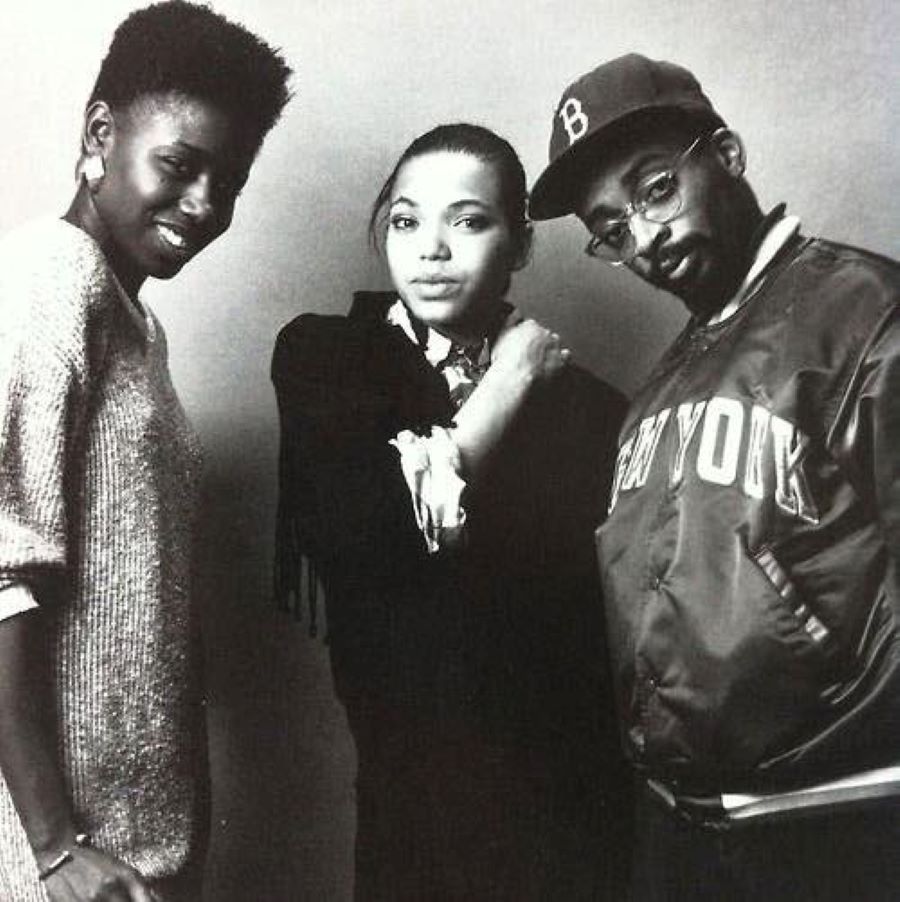
Spike Lee’s School Daze dramatized these tensions, contrasting the “Wannabes” (light-skinned) with the “Jigaboos” (dark-skinned). Yet the film also revealed the absence of middle hues, showing how the shade spectrum often erases women who live between these extremes.

Biblical truth directly challenges the shade spectrum. Genesis 1:27 (KJV) declares that all humanity is made in God’s image, leaving no room for hierarchies based on complexion. Song of Solomon 1:5 (KJV) boldly affirms dark beauty: “I am black, but comely.” These scriptures dismantle the false narratives that tie worth to skin tone.

The psychology of belonging highlights the damage caused by shade hierarchies. Social identity theory (Tajfel & Turner, 1986) suggests that group belonging shapes self-worth. When shade divisions fracture community, individuals struggle with identity, often internalizing inferiority based on where they fall within the spectrum.

For many brown-skinned women, adolescence becomes a battleground. Not deemed “light enough” or “dark enough,” they often internalize invisibility. These experiences can lead to anxiety, depression, and confusion about self-worth. The middle hue’s challenge reveals the cruel subtlety of colorism.

Romantic relationships also reflect the shade spectrum. Studies show that lighter-skinned women are often preferred as partners, symbolizing prestige, while darker-skinned women encounter stereotypes of strength or difficulty (Maddox & Gray, 2002). Brown-skinned women often become “safe choices,” valued for balance rather than passion.

Yet, each part of the spectrum carries resilience. Light-skinned women must navigate assumptions of privilege or inauthenticity. Dark-skinned women turn stigma into power through pride movements. Brown-skinned women create identity through balance and perseverance. Each shade holds a unique story of survival and resistance.

Theologically, the shade spectrum can be viewed as a distortion of divine creation. God’s design of melanin reflects artistry and variation, not hierarchy. Acts 17:26 (KJV) reminds us that God “hath made of one blood all nations of men.” Division based on shade is a man-made system that directly opposes divine unity.

Healing begins when the community rejects these hierarchies. Psychological research suggests that collective affirmation, media representation, and open dialogue about colorism are essential for dismantling generational biases (Monk, 2014). Acknowledging the spectrum without ranking it is the first step toward healing.

Representation matters deeply. When actresses like Regina King or Lupita Nyong’o are celebrated not just for their talent but for their beauty, the spectrum shifts. Affirmation at every shade disrupts the old hierarchies and plants seeds of pride across the spectrum.

Intergenerational healing also requires deliberate teaching. Parents and mentors must affirm children of every shade, reinforcing that no complexion is more worthy than another. This breaks cycles of bias that often begin in family structures.

Spirituality offers a higher lens. Psalm 139:14 (KJV) declares: “I will praise thee; for I am fearfully and wonderfully made.” This truth dismantles the spectrum’s hierarchy, affirming that all shades reflect God’s wonder. Healing comes from grounding identity in God, not in societal categories.

Colorism is not only a gendered issue but also affects men. Dark-skinned men are often stereotyped as threatening, while lighter-skinned men may be perceived as less masculine. Brown-skinned men, like their female counterparts, often occupy a liminal, overlooked position.

Music has also addressed the shade spectrum. From India.Arie’s anthem Brown Skin to Beyoncé’s celebration of “brown-skinned girls,” artists have used their platforms to affirm beauty across the spectrum. These cultural shifts remind society that music and art can heal the wounds of division.

Despite progress, the shade spectrum persists. Workplace studies reveal that lighter-skinned individuals continue to earn more and are more likely to be promoted than darker-skinned peers (Hersch, 2006). Colorism is not just a personal struggle but a systemic injustice embedded in structures of power.

Educational systems also reflect the spectrum. Teachers may unconsciously favor lighter-skinned students, leading to disparities in discipline and academic encouragement (Ferguson, 2001). These biases perpetuate long-term inequalities, showing how colorism shapes opportunity.

Yet, the shade spectrum can also be reframed as a source of collective beauty. Rather than functioning as a hierarchy, the spectrum represents the richness of Black identity—light, brown, and dark together form a radiant tapestry. Healing requires shifting from competition to celebration.

Community initiatives, like shade-inclusive campaigns in fashion and beauty industries, represent tangible steps forward. By displaying models across the full spectrum, these industries challenge Eurocentric standards and affirm every shade as worthy of admiration.

The shade spectrum also demands a theological response within churches. Too often, Westernized Christianity absorbed colorist ideas, perpetuating silence or complicity. A biblical reclaiming of melanin as divine artistry restores dignity and affirms unity.

Ultimately, the shade spectrum reveals the destructive power of division but also the potential for healing. When light, brown, and dark are each honored, the community reflects the wholeness God intended. The spectrum becomes not a hierarchy but a rainbow of resilience.

In the end, the shade spectrum is not about superiority or inferiority but about the richness of human diversity. Black skin, in all its hues, is a testimony of survival, beauty, and divine creation. When society finally sees this truth, the spectrum will no longer divide but unite.


References

  • Ferguson, A. A. (2001). Bad boys: Public schools in the making of Black masculinity. University of Michigan Press.
  • Hersch, J. (2006). Skin tone effects among African Americans: Perceptions and reality. American Economic Review, 96(2), 251–255.
  • Hill, M. E. (2002). Skin color and the perception of attractiveness among African Americans: Does gender make a difference? Social Psychology Quarterly, 65(1), 77–91.
  • Hunter, M. (2007). The persistent problem of colorism: Skin tone, status, and inequality. Sociology Compass, 1(1), 237–254.
  • Keith, V. M., & Herring, C. (1991). Skin tone and stratification in the Black community. American Journal of Sociology, 97(3), 760–778.
  • Maddox, K. B., & Gray, S. A. (2002). Cognitive representations of Black Americans: Re-exploring the role of skin tone. Personality and Social Psychology Bulletin, 28(2), 250–259.
  • Monk, E. P. (2014). Skin tone stratification among Black Americans, 2001–2003. Social Forces, 92(4), 1313–1337.
  • Tajfel, H., & Turner, J. (1986). The social identity theory of intergroup behavior. In S. Worchel & L. W. Austin (Eds.), Psychology of intergroup relations (pp. 7–24). Nelson-Hall.
  • The Holy Bible, King James Version.
Pretty Privilege Series: Beauty Without Borders — Restoring the Full Spectrum of Blackness.

This photograph is the property of its respective owner. No copyright Infringement intended.

Beauty has always been contested ground, a terrain where power, culture, and identity collide. For people of African descent, the question of beauty is deeply entangled with histories of slavery, colonialism, and white supremacy. The privileging of light skin and Eurocentric features has long marginalized darker-skinned men and women, creating a hierarchy within the Black community itself. “Pretty privilege” is often granted selectively, leaving the richness of Blackness fragmented instead of embraced in its fullness.

The phrase Beauty Without Borders calls us to dismantle these false boundaries. It challenges the lie that only certain shades, hair textures, or facial features are beautiful, while others are devalued. God created the “full spectrum of Blackness,” from the deepest ebony to the lightest brown, from tight coils to loose curls, each carrying divine intention. Scripture affirms, “I will praise thee; for I am fearfully and wonderfully made” (Psalm 139:14, KJV). Any system that denies this truth is a distortion of God’s design.

Historically, pretty privilege in the Black community is a colonial residue. During slavery, lighter-skinned enslaved people were often given roles inside the house, while darker-skinned people were forced to labor in the fields. This artificial division sowed seeds of mistrust and envy that still linger. What began as a tool of control has evolved into a system of internalized bias that shapes dating, employment, and self-esteem.

Psychology recognizes the damaging impact of colorism. Research shows that darker-skinned individuals often face harsher judgments, fewer opportunities, and lower levels of perceived attractiveness compared to lighter-skinned peers (Hunter, 2007). These biases function even within communities of color, revealing how deeply internalized oppression becomes. Beauty, once a gift of identity, is turned into a weapon of division.

At the heart of pretty privilege is authenticity lost. When Blackness is reduced to a narrow ideal, the wide heritage of African beauty is erased. The straightened hair, bleached skin, or surgically altered features testify to a world that demands conformity to white aesthetics. Yet, “Can the Ethiopian change his skin, or the leopard his spots?” (Jeremiah 13:23, KJV). God did not make a mistake in creating Blackness. To deny one’s natural self is to deny a portion of His craftsmanship.

The restoration of Black beauty requires breaking free from envy and competition. Too often, darker-skinned women are told they are “less desirable,” while lighter-skinned women are accused of being “privileged frauds.” Both are victims of the same oppressive system. Instead of fighting each other, the call is to unite, affirming that “the eye cannot say unto the hand, I have no need of thee” (1 Corinthians 12:21, KJV). All shades and textures are essential to the wholeness of Black identity.

Black men also suffer under pretty privilege. Those with darker complexions are often stereotyped as dangerous or hyper-masculine, while lighter-skinned men may be viewed as “softer” or less authentic. These caricatures rob men of individuality and humanity. True liberation allows every man to embrace his God-given identity without the burden of imposed stereotypes.

Another layer is media representation. The entertainment industry frequently elevates a single “acceptable” type of Black beauty, often lighter and closer to European standards. This limited visibility reinforces the idea that only one look is marketable. The body of Christ, however, rejects such favoritism: “But if ye have respect to persons, ye commit sin” (James 2:9, KJV). Favoring one shade over another is a spiritual as well as cultural injustice.

Pretty privilege also intersects with economic systems. Beauty standards often dictate who is hired, promoted, or endorsed. Studies show that skin tone can influence income levels, with lighter-skinned individuals sometimes earning more than darker-skinned peers with similar qualifications (Monk, 2014). In this sense, beauty bias becomes structural racism in disguise.

Theological reflection reveals a deeper wound. When people internalize the belief that only certain forms of Blackness are valuable, they align more with Pharaoh than with God. Pharaoh sought to oppress, to divide, and to strip identity. God, by contrast, affirms freedom, dignity, and beauty. The Song of Solomon reminds us of the beloved who declares: “I am black, but comely” (Song of Solomon 1:5, KJV). Her words reject shame and affirm worth.

Restoring beauty without borders requires healing from envy. Jealousy fuels division, making one sister resent another’s complexion or one brother mock another’s features. But envy corrodes love. Scripture warns: “Wrath is cruel, and anger is outrageous; but who is able to stand before envy?” (Proverbs 27:4, KJV). The fight is not with each other but with the system that taught us to hate ourselves.

It also requires courage to stand against assimilation. To wear natural hair in a workplace, to reject skin-lightening creams, or to affirm dark skin in a culture that worships lightness is a radical act. This courage reflects the biblical call to resist conformity: “Be not conformed to this world: but be ye transformed by the renewing of your mind” (Romans 12:2, KJV).

Education plays a role in this restoration. Children must be taught from a young age that their beauty is not conditional. Dolls, storybooks, and media must reflect the full range of Blackness. Without this affirmation, young girls and boys may grow up doubting their worth, seeking validation in destructive ways.

Community is equally vital. A supportive community celebrates every shade, affirms natural beauty, and challenges colorist jokes or biases. Churches especially have a responsibility to dismantle these patterns, modeling inclusivity and love. After all, the kingdom of God is not divided by shade but united by spirit.

Psychology teaches that affirmations and representation can rewire negative beliefs. Exposure to diverse images of beauty can disrupt the internalized hierarchy of skin tone (Burke, 2019). This aligns with Scripture’s command to renew the mind, for transformation begins with thought.

In practice, restoring beauty without borders means celebrating African features globally. Broad noses, full lips, kinky hair, and dark skin should not only be accepted but exalted as beautiful. These features tell stories of resilience, heritage, and divine artistry. They are markers of identity, not liabilities.

The movement also calls for accountability in industries that perpetuate bias. Fashion, film, and advertising must be challenged to widen their representation. Token inclusion is not enough. Full restoration means full spectrum visibility.

Ultimately, pretty privilege is dismantled not just by redefining beauty but by grounding it in God’s truth. “Man looketh on the outward appearance, but the Lord looketh on the heart” (1 Samuel 16:7, KJV). True beauty radiates from character, integrity, and love. External features, no matter how celebrated or scorned, are only temporary.

The vision of Beauty Without Borders is both cultural and spiritual. It is a call to honor the artistry of God in the Black body. It is a challenge to uproot envy, favoritism, and bias. And it is a promise that restoration comes when we see each other fully, without restriction.

When the spectrum of Blackness is embraced, the community heals. Daughters will grow up knowing they are beautiful as they are. Sons will walk without the burden of stereotypes. And the entire community will reflect the glory of a God who makes no mistakes.

In this way, beauty without borders is not just a concept but a prophetic vision. It restores dignity, dismantles lies, and brings honor back to the full spectrum of Blackness—a beauty that was always complete in God’s eyes.


References

  • Burke, M. (2019). Colorism and the Politics of Skin Tone in the Black Community. Sociology Compass, 13(6), e12693.
  • Hunter, M. (2007). The Persistent Problem of Colorism: Skin Tone, Status, and Inequality. Sociology Compass, 1(1), 237–254.
  • Monk, E. P. (2014). Skin Tone Stratification among Black Americans, 2001–2003. Social Forces, 92(4), 1313–1337.
  • Holy Bible, King James Version.

The Silent Battle: The Brown Girl Dilemma in a Color-Conscious World. #Thebrowngirldilemma

Photo by Last Chwezi on Pexels.com

The experience of being a brown-skinned girl in a color-conscious world is a battle that is often fought in silence. It is a struggle that does not always leave visible scars but deeply impacts self-image, mental health, and emotional well-being. Many brown girls grow up internalizing unspoken messages about their worth based on skin tone, hair texture, and proximity to Eurocentric standards of beauty. The world subtly communicates that lighter is better, leaving darker-skinned girls to question their place and value in society. This silent battle affects confidence and identity, sometimes shaping life choices in profound ways.

Colorism, a term coined by Alice Walker, describes the preferential treatment given to lighter skin tones within and outside communities of color. Psychological studies confirm that colorism can lead to lower self-esteem and higher rates of anxiety and depression among darker-skinned women. The Brown Girl Dilemma is not just about beauty standards but about access — access to opportunity, representation, and affirmation. It is a reminder that racism is not the only challenge Black and brown women face; sometimes, bias comes from within their own culture, adding a double layer of pain and isolation.

From a biblical perspective, God does not measure worth by appearance but by the heart. The Bible says, “Man looketh on the outward appearance, but the Lord looketh on the heart” (1 Samuel 16:7, KJV). This scripture offers a powerful antidote to the internalized shame that colorism can produce. A brown girl’s value is not determined by societal standards but by her Creator, who made her “fearfully and wonderfully” (Psalm 139:14, KJV). This truth becomes a shield against the lies that suggest she must alter or diminish herself to be worthy of love and respect.

Psychologically, the internalization of color-based prejudice can lead to what is known as “internalized oppression,” where the individual begins to adopt negative beliefs about their own group. Brown girls may overcompensate by bleaching their skin, straightening their hair, or minimizing their ethnic features in order to fit in. This creates a cycle of disconnection from self, which researchers say can cause long-term emotional harm. Healing requires not only unlearning these messages but also embracing cultural pride and self-acceptance.

Representation matters in this healing journey. Seeing brown-skinned women celebrated in media, academia, and positions of influence reinforces that beauty and brilliance exist in every shade. It tells brown girls that they are enough as they are. As Philippians 4:8 (KJV) reminds believers, we must think on things that are “true, honest, just, pure, lovely, and of good report.” Choosing to focus on affirming messages can help dismantle years of internalized bias.

In relationships, the Brown Girl Dilemma can manifest as settling for less than one deserves or seeking validation through unhealthy attachments. When society tells you you are “less desirable,” it takes spiritual strength and psychological resilience to wait for someone who honors your worth. This is why affirming communities and faith-based support systems are crucial — they remind women that they are not defined by a world that idolizes lighter complexions but by God’s eternal truth.

The workforce is another battlefield for brown-skinned women. Studies show that lighter-skinned individuals are sometimes given preferential treatment in hiring, promotions, and salaries. This reality can lead to frustration, burnout, and feelings of invisibility. However, the Bible promises that “your labor is not in vain in the Lord” (1 Corinthians 15:58, KJV). A brown girl who persists, despite systemic barriers, becomes a living testimony of resilience and grace under pressure.

Action Steps for Overcoming the Brown Girl Dilemma

Affirm Your Identity in God’s Word
Start each day by declaring Scriptures that affirm your worth. Verses like Psalm 139:14 (“I will praise thee; for I am fearfully and wonderfully made”) and Song of Solomon 1:5 (“I am black, but comely”) remind you that your beauty and value come from God, not from cultural beauty standards.

Limit Negative Influences
Reduce exposure to media that glorifies only one type of beauty. Psychology research shows that repeated exposure to biased imagery reinforces internalized prejudice. Replace it with diverse, affirming images of Black and brown women thriving in different areas of life.

Practice Self-Compassion and Inner Healing
Use journaling, prayer, or therapy to process pain related to colorism. Cognitive Behavioral Therapy (CBT) techniques can help reframe negative thoughts about appearance and self-worth. Spiritually, ask God to renew your mind (Romans 12:2) and heal emotional wounds.

Surround Yourself with Affirming Community
Connect with mentors, faith-based groups, or women’s circles that celebrate melanin-rich beauty and personal growth. Social support buffers against the negative effects of discrimination and increases self-esteem (Cohen & Wills, 1985).

Celebrate Your Natural Beauty
Wear your natural hair, showcase your skin tone, and embrace your cultural heritage as acts of resistance. These practices reinforce self-love and signal to others that you are proud of who you are.

Educate and Advocate
Learn the history of colorism and talk about it openly with others. Bringing awareness to the issue helps dismantle harmful narratives and gives younger girls permission to love themselves fully.

Pursue Purpose, Not Approval
Focus on developing your skills, talents, and spiritual gifts instead of seeking validation from others. Proverbs 31:30 reminds us that “favour is deceitful, and beauty is vain: but a woman that feareth the Lord, she shall be praised.”

Seek Professional and Spiritual Guidance
If colorism-related trauma is affecting mental health, seek professional counseling or Christian therapy. Prayer, fasting, and wise counsel can be combined with evidence-based therapy for holistic healing.

Ultimately, the Brown Girl Dilemma calls for both personal and collective healing. It challenges society to confront colorism and dismantle systems that privilege one shade over another. For the brown girl, victory in this silent battle is found in embracing her identity, anchoring her worth in God’s truth, and walking boldly in the knowledge that she carries greatness within her. Her beauty, resilience, and brilliance are not diminished by the shade of her skin — they are magnified by her strength to rise above a color-conscious world.

References

  • Holy Bible, King James Version
  • Cohen, S., & Wills, T. A. (1985). Stress, social support, and the buffering hypothesis. Psychological Bulletin, 98(2), 310–357.
  • Hunter, M. (2007). The persistent problem of colorism: Skin tone, status, and inequality. Sociology Compass, 1(1), 237–254.
  • Maddox, K. B., & Perry, J. L. (2017). Skin tone, race, and the psychology of colorism. American Psychologist, 72(9), 996–1006.
  • Walker, A. (1983). In Search of Our Mothers’ Gardens: Womanist Prose. Harcourt Brace Jovanovich.
  • Williams, M. T., & Lewis, J. A. (2019). Microaggressions and discrimination: The experience of people of color. American Psychologist, 74(1), 77–89.

Lightism: The Elevation of Light Skin and Its Impact on the Black Community.

Lightism, commonly referred to as colorism, is the systemic privileging of lighter skin within the Black community. Unlike racism, which operates across racial lines, colorism functions within the racial group, placing value on lighter pigmentation while devaluing darker skin tones. It manifests socially, economically, and psychologically, shaping perceptions of beauty, intelligence, and status.

Historically, light skin became esteemed due to colonialism and slavery. Enslaved Africans with lighter skin, often mixed-race offspring of enslaved women and European men, were sometimes granted preferential treatment, such as domestic roles instead of field labor. This hierarchy created a social precedent in which lighter skin was associated with proximity to power and privilege.

The legacy of slavery and colonialism established a generational hierarchy within the Black community. Light-skinned individuals were sometimes allowed greater access to education, resources, or social mobility. Over time, these historical inequities translated into cultural norms that valorize lighter skin.

Spike Lee’s film School Daze (1988) explores this phenomenon vividly. Set on a historically Black college campus, the film depicts a divide between light-skinned and dark-skinned students, highlighting intra-racial prejudice, social fragmentation, and internalized oppression. The narrative exposes how colorism affects relationships, self-esteem, and group solidarity.

The message of School Daze is multifaceted. It critiques the ways Black people internalize societal beauty standards, encouraging audiences to recognize and resist internalized lightism. By portraying conflict between “pretty girls” with lighter skin and darker-skinned counterparts, Lee emphasizes the psychological and cultural damage of color-based favoritism.

Social psychology suggests that colorism impacts dating preferences, career opportunities, and media representation. Studies indicate that lighter-skinned Black women often receive more positive attention from peers and employers, perpetuating societal biases and reinforcing the notion that light skin equates to desirability or social capital.

Within the Black male dating paradigm, preferences often reflect internalized colorist ideals. While personal preference varies, research shows a disproportionate attraction to light-skinned women, influenced by media portrayal, historical conditioning, and societal messaging (Hunter, 2011). This preference affects self-perception and romantic dynamics within the community.

Skin-Lightening and Lightismlorism in the Black Community

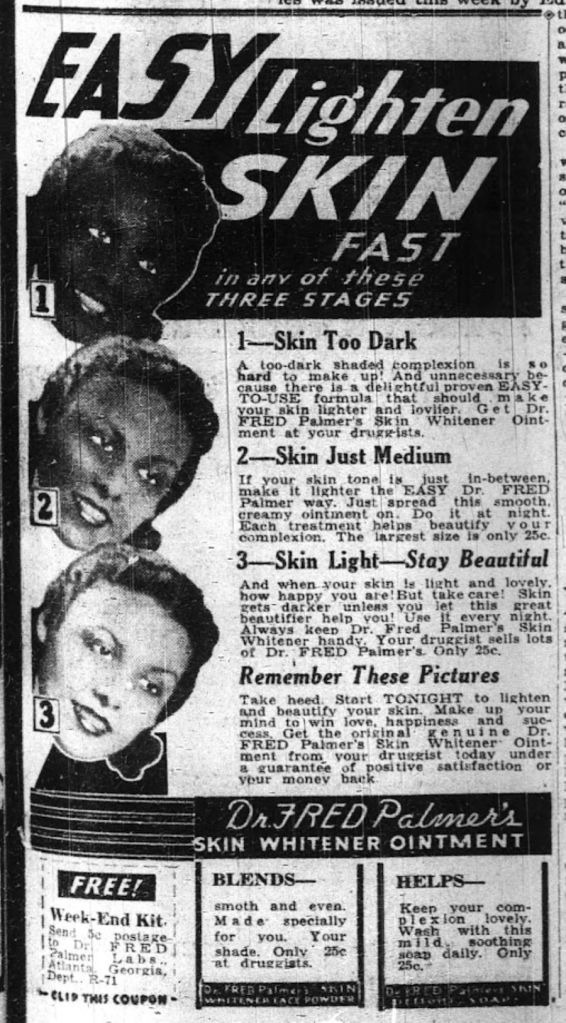
Skin-lightening, also called skin bleaching, is the practice of using chemical products, creams, or procedures to reduce melanin in the skin. Within the Black community, it often reflects internalized lightism: the belief that lighter skin confers beauty, social status, or economic advantage. Psychologically, this practice is linked to low self-esteem, internalized racism, and social pressure (Hunter, 2011).

Celebrities and ordinary individuals alike have historically felt pressure to conform to lighter-skinned beauty ideals. Skin-lightening can temporarily change appearance but does not address the underlying social and cultural biases. It is also associated with health risks, including skin irritation, scarring, and long-term systemic effects from chemical exposure.

Biblically, true beauty is not skin-deep. Psalm 139:14 (KJV) states: “I will praise thee; for I am fearfully and wonderfully made: marvellous are thy works; and that my soul knoweth right well.” This reinforces that self-worth and beauty come from God’s design, not pigmentation.

Celebrities have long commented on light vs. dark skin tensions. Lena Horne, an iconic performer, spoke openly about the privileges she experienced as a lighter-skinned Black woman and the societal biases she observed against darker-skinned peers. Horne’s reflections highlight the complex interplay of skin tone, opportunity, and discrimination within the Black community.

Vanessa L. Williams and Halle Berry, both light-skinned women who achieved international fame, have also discussed colorism. Berry acknowledged the rarity of dark-skinned lead actresses in Hollywood, while Williams spoke on the pressures to conform to Eurocentric beauty standards, revealing a tension between personal pride and societal expectation.

Lightism Companion Table

CategoryExample / IndividualImpact / PracticePsychological EffectCultural / Media Reference
Celebrity CommentaryLena HorneDiscussed privileges as light-skinned; highlighted colorism against darker peersAwareness, advocacy for darker-skinned equalityInterviews, autobiographies
Celebrity CommentaryHalle BerryAcknowledged rarity of dark-skinned actresses; faced pressure to conform to Eurocentric beautyIdentity negotiation, professional pressurePublic interviews, award speeches
Celebrity CommentaryVanessa L. WilliamsExperienced both acclaim and bias; criticized Hollywood’s narrow beauty standardsStress, advocacy for diversityInterviews, memoirs
Media PortrayalSchool Daze (Spike Lee)Light-skinned vs dark-skinned students; social division on campusLow self-esteem, rivalry, internalized bias1988 film
Historical InfluenceColonial / Slavery EraLighter-skinned enslaved individuals often favoredInternalized hierarchy within the Black communityHall, 2010; Hunter, 2011
Skin-Lightening PracticesGeneral populationChemical creams, cosmetic proceduresTemporary perceived social advantage, long-term self-esteem issues, health risksHunter, 2011; Joseph, 2019
Dating PreferencesBlack men / studiesHigher attraction to light-skinned women in some surveysReinforces color-based desirability hierarchyHunter, 2011; Joseph, 2019
Social HierarchiesWorkplace / mediaLighter skin receives more visibility and opportunityJob access, promotion disparity, perceived intelligenceHall, 2010; Encyclopedia of African-American Society, 2005
Psychological EffectsAdolescents & adultsInternalized colorismDepression, self-consciousness, peer rivalryJoseph, 2019; Hunter, 2011
Counter-MovementNatural hair & melanin prideCelebrates darker skin tones and natural beautySelf-acceptance, cultural prideSocial media campaigns, cultural movements

Light-skinned Black women have offered varied perspectives. Some recognize the privileges light skin confers but advocate for solidarity and consciousness-raising around colorism. Others admit to internalizing societal messages, reflecting the pervasive nature of beauty hierarchies and the difficulty of transcending ingrained biases.

Media and pop culture amplify lightism by consistently favoring lighter-skinned Black actors, models, and singers. This visibility reinforces perceptions of desirability tied to pigmentation, marginalizing darker-skinned individuals and perpetuating social inequities in representation.

Colorism also intersects with economics. Studies indicate that lighter-skinned individuals often earn higher wages and experience more upward mobility than their darker-skinned peers, a phenomenon documented in both the U.S. and globally (Hall, 2010). This reinforces lightism as a systemic issue beyond personal preference.

School Daze illustrates that colorism also affects mental health. Characters experience insecurity, rivalry, and alienation due to skin tone, reflecting real-life experiences where darker-skinned Black individuals internalize negative societal messaging, leading to depression, low self-esteem, or identity conflict.

Psychologically, colorism reinforces intra-racial hierarchies, which can fracture community cohesion. When lighter skin is idealized, it creates an implicit standard of value, marginalizing those who do not conform and perpetuating shame for darker-skinned members.

Biblically, all humans are created in the image of God (Genesis 1:27, KJV). This principle underscores the spiritual equality of all individuals, countering societal messages that link worth to pigmentation. Scriptures remind believers that true beauty is rooted in righteousness and character, not skin tone (1 Samuel 16:7, KJV).

Racism and colorism together compound disadvantage. While racism targets Black people from outside the community, colorism enforces internal stratification, creating layers of oppression that influence education, relationships, and self-perception.

Historically, colorism shaped Hollywood and entertainment industries. Darker-skinned actors were often cast in villainous or subservient roles, while light-skinned performers received leading roles, reinforcing social hierarchies through media narratives.

School Daze also addresses economic implications. Lighter-skinned characters are depicted as more socially and professionally favored, reflecting real-world dynamics where pigmentation can affect employment, income, and status within Black institutions.

Black men’s stated preferences for lighter-skinned women are influenced by media, history, and internalized oppression, but there is also a counter-narrative of embracing darker beauty. Movements like the natural hair movement and campaigns celebrating melanin-rich skin attempt to challenge these biases and uplift all shades of Black beauty.

In conclusion, lightism is a complex cultural, psychological, and historical phenomenon. Its effects permeate self-esteem, interpersonal relationships, media representation, and economic opportunity within the Black community. Addressing colorism requires conscious reflection, cultural awareness, and a return to biblical and ethical principles that affirm the worth of all individuals, regardless of skin tone.


References

References

  • Hall, R. E. (2010). The Melanin Millennium: Skin Color as 21st Century International Discourse.
  • Hunter, M. (2011). Buying Racial Capital: Skin-bleaching and Cosmetic Surgery in a Globalized World.
  • Lee, S. (Director). (1988). School Daze [Film]. Columbia Pictures.
  • Encyclopedia of African-American Society. (2005). Colorism in the Black Community. Sage Publications.
  • The Holy Bible, King James Version. Genesis 1:27; 1 Samuel 16:7; James 2:1–4.

  • Joseph, A. (2019). Black Beauty Standards and Colorism in America. Journal of African-American Studies, 23(4), 456–472.
  • Hall, R., & Hunter, M. (2009). Skin Tone, Identity, and Social Stratification in African-American Communities.
  • The Holy Bible, King James Version. Genesis 1:27; 1 Samuel 16:7; James 2:1–4; Psalm 139:14.

  • Tate, S. (2009). Black Beauty: Aesthetics, Colorism, and Identity in African-American Culture. University Press of Mississippi.
  • Russell-Cole, K., Wilson, M., & Hall, R. (2013). The Color Complex: The Politics of Skin Color in a New Millennium. Anchor Books.
  • Namey, E. (2018). The Psychological Impacts of Colorism on Black Youth. Journal of Multicultural Counseling and Development, 46(3), 180–192.

Shades of Struggle, Shades of Strength: The Brown Girl Experience. #TheBrownGirlDilemma

Photo by nappy on Pexels.com

The lived experience of brown-skinned women is defined by a complex interplay of struggle and resilience. Across cultures and histories, brown girls navigate spaces that often undervalue or misrepresent their beauty, intellect, and worth. Yet, within these struggles lies extraordinary strength—a capacity to endure, redefine identity, and assert agency. “Shades of Struggle, Shades of Strength” captures this duality, recognizing both the oppression brown girls face and the power they embody in resisting it.

Historical Roots of the Brown Girl Experience

The challenges brown girls face are deeply rooted in history. Colonialism, slavery, and European conquest imposed hierarchies that privileged whiteness while marginalizing darker skin tones (Hunter, 2007). In the Americas, lighter-skinned enslaved women were often given preferential treatment over darker-skinned women, establishing a system of internalized hierarchy. These legacies persist, influencing perceptions of beauty, competence, and social worth for brown-skinned women today.

Colorism as a Source of Struggle

Colorism—the preferential treatment of lighter skin over darker tones—is central to the brown girl experience. It manifests in education, employment, media, and social relationships. Brown girls often internalize these biases, navigating self-esteem challenges and societal pressure to conform to Eurocentric ideals of beauty. Understanding colorism as both systemic and internalized is key to unpacking the struggles brown girls face.

Stereotypes and Hyper-Visibility

Brown girls are frequently subject to stereotypes that shape societal expectations. They are hyper-visible in media as objects of sexualization, exoticism, or anger, while simultaneously underrepresented in positions of power and influence (Collins, 2000). This duality creates tension: their bodies and identities are scrutinized, yet their voices and talents are marginalized.

Media Representation and Its Limitations

Media plays a pivotal role in the brown girl experience. Television, film, and advertising have historically favored lighter-skinned women, marginalizing darker skin tones and perpetuating narrow standards of beauty. Even when brown girls are represented, tokenism and stereotype reinforce limitations rather than authentic affirmation. Visibility without empowerment compounds the struggle rather than alleviates it.

Family and Community Pressures

Family and community expectations further complicate the brown girl experience. Cultural norms often elevate lighter skin as more desirable in social, professional, and marital contexts. Brown girls grow up navigating these pressures, balancing cultural identity with the desire for acceptance, which can create internal conflict and self-doubt.

Educational and Professional Challenges

In academic and professional spheres, brown girls may experience marginalization, tokenism, or bias based on skin tone. Their contributions may be undervalued, and their presence scrutinized more intensely than peers. These experiences foster resilience, as brown girls learn to navigate systems of exclusion while asserting their competence and authority.

Spiritual Foundations of Strength

Faith and spirituality provide a counterbalance to societal bias. Biblical texts affirm the inherent value of brown skin and character. In Song of Solomon 1:5, the woman declares, “I am black, but comely” (KJV), asserting that beauty is not contingent on skin tone. Psalm 139:14 reinforces that all humans are “fearfully and wonderfully made,” offering spiritual grounding that nurtures confidence and strength.

Cultural Expression as Empowerment

Brown girls draw strength from cultural heritage, including language, art, music, and traditions. Expressing identity through these channels affirms value and counters narratives that marginalize or diminish their experiences. Cultural pride becomes a source of resilience, transforming struggle into a celebration of identity.

Intersectionality and Compounded Struggles

The brown girl experience is shaped by intersecting systems of oppression, including race, gender, and class. Darker-skinned girls often encounter compounded challenges in navigating educational access, employment opportunities, and social mobility. Recognizing intersectionality is crucial to understanding the full scope of struggles and strategies for empowerment.

Representation as a Tool of Resistance

Representation, when authentic, becomes a powerful tool for resistance. Brown girls who see themselves reflected in media, politics, and leadership roles are inspired to embrace their identity and challenge societal expectations. Figures such as Lupita Nyong’o, Issa Rae, and Michelle Obama exemplify how visibility can transform struggle into a source of collective strength.

Mental Health and Resilience

The psychological toll of colorism, discrimination, and societal bias is significant. Brown girls often experience anxiety, depression, and identity conflicts due to persistent scrutiny and marginalization (Monk, 2014). Developing resilience requires both personal strategies—such as mentorship and self-affirmation—and systemic changes in representation and opportunity.

Hair and Aesthetic Politics

Hair, skin, and body aesthetics are central to the brown girl experience. Natural hair movements, melanin-positive campaigns, and diverse beauty standards challenge restrictive norms, allowing girls to reclaim their physical identity. Strength emerges when brown girls embrace features historically devalued or stigmatized, turning aesthetics into affirmation rather than limitation.

Mentorship and Community Support

Mentorship and supportive communities provide essential reinforcement. Guidance from older women, peer networks, and cultural organizations empowers brown girls to navigate systemic challenges and build confidence. Community affirmation counters isolation, transforming struggle into shared resilience.

Activism and Advocacy

Engagement in social justice and advocacy further strengthens brown girls. By challenging colorism, bias, and misrepresentation, they assert agency and create pathways for future generations. Advocacy transforms personal struggle into collective action, amplifying voices historically silenced.

Education and Awareness

Education about historical oppression, colorism, and social hierarchies equips brown girls with knowledge and context. Awareness fosters critical thinking and empowers girls to resist internalized biases, cultivate self-worth, and redefine standards of beauty and success on their own terms.

Digital Spaces and Empowerment

Social media provides platforms for empowerment, storytelling, and connection. Campaigns like #MelaninMagic, #BrownSkinGirlMagic, and #BlackGirlJoy enable girls to celebrate identity, share experiences, and form supportive networks. Digital visibility transforms struggle into collective affirmation and reinforces resilience.

Family Narratives and Generational Healing

Intergenerational narratives influence the brown girl experience. Families that acknowledge colorism, celebrate brown skin, and affirm cultural heritage contribute to healing cycles of internalized bias. Generational affirmation strengthens identity and fosters enduring confidence.

Spiritual Practice and Identity Formation

Spiritual practice reinforces confidence and resilience. Prayer, meditation, and engagement with scriptural affirmation nurture self-worth and counter societal pressures. Spiritual grounding enables brown girls to navigate struggle with perspective, purpose, and clarity.

Toward Holistic Confidence

Confidence emerges from a combination of self-awareness, community support, cultural affirmation, and spiritual grounding. By addressing both systemic and personal dimensions of the brown girl dilemma, girls can transform struggle into strength, reclaiming identity and agency.

Conclusion: Celebrating Shades of Strength

The brown girl experience is defined by both struggle and resilience. While colorism, bias, and societal pressure create challenges, brown girls embody strength in resistance, representation, and reclamation of identity. By embracing heritage, cultivating confidence, and asserting agency, brown girls redefine the narrative: they are not victims of society’s standards but architects of their own empowerment, turning shades of struggle into enduring shades of strength.


References

  • Collins, P. H. (2000). Black feminist thought: Knowledge, consciousness, and the politics of empowerment. Routledge.
  • Hunter, M. (2007). The persistent problem of colorism: Skin tone, status, and inequality. Sociology Compass, 1(1), 237–254.
  • Monk, E. P. (2014). Skin tone stratification among Black Americans, 2001–2003. Social Forces, 92(4), 1313–1337.
  • Thompson, C. (1996). Black women, beauty, and hair as a matter of being. Women’s Studies, 25(6), 667–678.
  • The Holy Bible, King James Version.

Girl Talk Series: Why Men Cheat.

Photo by Ron Lach on Pexels.com

Ladies, the pain of betrayal is one of the deepest emotional wounds a woman can endure. When a man cheats, it can shatter trust, self-esteem, and a sense of safety in the relationship. Infidelity is a widespread issue that affects marriages, families, and communities. Understanding why men cheat is not about justifying the act, but about gaining insight into the psychological, spiritual, and relational factors that contribute to it—and ultimately, learning how to foster healthier, faith-centered relationships that encourage faithfulness.

Statistics show that infidelity is not uncommon. According to the Institute for Family Studies (2020), about 20% of men and 13% of women in marriages have admitted to cheating at least once. The rates are even higher among those who are unmarried but in committed relationships. These numbers reflect a significant moral and relational crisis in society, underscoring the need for both prevention and healing when adultery occurs.

Reasons Why Men Cheat

  • Lust and Temptation – The desire for sexual novelty or visual stimulation can lead men into sin if they do not guard their eyes and thoughts (Matthew 5:28 KJV).
  • Emotional Disconnection – When a man feels unheard, unappreciated, or emotionally distant from his partner, he may seek validation and intimacy elsewhere.
  • Unmet Needs – Some men cheat because their physical, emotional, or sexual needs are not being met within the relationship — though this is never an excuse for adultery.
  • Opportunity and Lack of Accountability – Situations where a man has privacy, secrecy, and no one holding him accountable can increase the temptation to cheat.
  • Insecurity and Low Self-Worth – Men who feel inadequate may cheat to boost their ego or prove they are still desirable.
  • Thrill-Seeking or Boredom – Some men are addicted to excitement and cheat simply for the adrenaline rush of doing something forbidden.
  • Revenge or Resentment – A man may cheat to “get even” if he feels wronged, disrespected, or neglected by his partner.
  • Peer Pressure and Cultural Influence – Media, friends, and cultural norms can normalize infidelity, making it seem acceptable or even masculine.
  • Addiction (Sex or Pornography) – Men who struggle with sexual addiction may repeatedly cheat as part of a compulsive cycle that they feel powerless to break.
  • Lack of Spiritual Discipline – Without a strong moral compass or fear of God, a man may be more likely to give in to temptation (Proverbs 6:32 KJV).
  • Poor Impulse Control – Some men act in the heat of the moment without considering the long-term consequences of their actions.
  • Midlife Crisis – A man questioning his purpose or identity may look outside the relationship to feel young or desirable again.
  • Emotional Immaturity – Men who have not developed emotional regulation or conflict-resolution skills may cheat instead of communicating or working through problems.
  • Dissatisfaction with the Relationship – Chronic fighting, lack of intimacy, or unresolved issues can lead a man to seek comfort outside the relationship.

From a biblical standpoint, cheating is explicitly condemned. The King James Version (KJV) of the Bible is clear: “Thou shalt not commit adultery” (Exodus 20:14). In the New Testament, adultery is also equated with lustful thoughts, as Jesus said, “Whosoever looketh on a woman to lust after her hath committed adultery with her already in his heart” (Matthew 5:28). This reveals that infidelity begins internally—first as a thought, then as a desire, before it ever becomes a physical act.

Psychologically, infidelity often results from unmet needs, low impulse control, or underlying emotional or attachment issues. Researchers such as Dr. Shirley Glass have shown that many affairs begin not from sexual dissatisfaction, but from emotional disconnection. When men feel unheard, unappreciated, or invisible, they may seek validation elsewhere. This does not excuse the sin of adultery, but it helps explain the internal conflict that leads some men down this path.

Lust plays a major role in cheating. The male brain is highly responsive to visual stimulation, which means a man who does not guard his eyes may find himself battling temptation frequently. Social media and pornography have further heightened the culture of lust, making it easy for men to engage in mental adultery even without leaving home. A man who does not discipline his thoughts can easily slip into patterns of sin.

Women often wonder what they can do to prevent a man from cheating. While no one can control another person’s choices, women can help cultivate a loving environment where faithfulness is more likely. Affirmation, respect, and genuine appreciation are key. A man needs to feel needed and valued, not just for what he provides, but for who he is. Speaking life into him through encouragement and positive feedback can go a long way in reinforcing his commitment.

A faithful man is typically one who fears God and lives by principles rather than emotions. Psalm 112:1 describes a blessed man as one who “feareth the Lord” and “delighteth greatly in his commandments.” A man with strong moral convictions and accountability in his life is more likely to resist temptation. Spiritual maturity, prayer, and self-control are powerful tools that keep a man faithful.

Men with sexual addiction face a unique struggle. Sexual addiction is characterized by compulsive sexual behavior, often driven by dopamine-seeking behavior in the brain. Such men may repeatedly cheat despite wanting to stop. Recovery often requires counseling, accountability groups, and a spiritual transformation that breaks the cycle of bondage.

Insecurity also plays a large role in infidelity. An insecure man may seek validation from multiple women to feel powerful or desirable. This false sense of significance can lead him to engage in risky behavior that damages his primary relationship. Teaching men their worth in God’s eyes and affirming their value within the relationship can help diminish the need for external validation.

Signs of a faithful man include transparency, consistency, and reliability. He is open about his schedule, honest in his communication, and takes steps to avoid compromising situations. He sets healthy boundaries with other women, guards his heart, and maintains a life of integrity even when no one is watching.

Spiritually speaking, a man who cheats is not merely hurting his partner—he is sinning against God. Proverbs 6:32 says, “But whoso committeth adultery with a woman lacketh understanding: he that doeth it destroyeth his own soul.” Infidelity has spiritual consequences, but repentance, forgiveness, and restoration are possible for those who truly seek to turn from sin.

Psychologists note that men cheat for various reasons—opportunity, dissatisfaction, thrill-seeking, or revenge. But one recurring theme is emotional disconnection. If a man feels emotionally disconnected from his partner, he is more vulnerable to the advances of another woman who offers him attention and affirmation.

Culturally, society often glamorizes cheating in music, film, and television, portraying it as exciting rather than destructive. This normalization of infidelity erodes moral standards and desensitizes men and women alike to the pain that cheating causes. Faithful men must swim against this cultural current and commit to living with integrity.

The impact of cheating goes beyond the two people involved. Infidelity can lead to broken homes, fatherless children, generational trauma, and emotional scars that last a lifetime. This is why both prevention and forgiveness are crucial.

Trust-building is an active process. Couples can protect their relationship by communicating openly, praying together, setting boundaries, and seeking counseling when needed. Trust grows when both partners choose daily faithfulness and honesty.

For women, it is essential to remember that you cannot “control” a man into faithfulness. Your role is to encourage, support, and communicate, but ultimately, a man’s choices are his responsibility before God.

Faithfulness is a matter of character. A man who is faithful in small things will be faithful in greater things. Luke 16:10 reminds us, “He that is faithful in that which is least is faithful also in much.”

Signs a Man Might Be Cheating

  • Changes in Routine – He suddenly has unexplained absences, late nights, or new “work” obligations that don’t quite add up.
  • Secretive Behavior – He guards his phone, deletes messages, changes passwords, or becomes defensive if asked about his whereabouts.
  • Emotional Distance – He becomes cold, withdrawn, or less affectionate, creating emotional distance to justify his actions internally.
  • Unexplained Expenses – You notice unusual charges on bank statements, hotel bills, gifts, or cash withdrawals.
  • Sudden Focus on Appearance – He starts dressing better, grooming differently, or working out more without a clear reason.
  • Less Intimacy at Home – A decline in physical intimacy may signal that his attention is directed elsewhere.
  • Overcompensation – Some men become extra affectionate, buy gifts, or act overly attentive to ease their guilt or hide suspicion.
  • New Friends You Don’t Know – He frequently mentions people you’ve never met or refuses to introduce you to his new social circle.
  • Frequent Mood Swings – Guilt, fear, or excitement can cause erratic emotional behavior, from irritability to sudden happiness.
  • Avoidance of Spiritual Life – A man living in sin may pull away from prayer, church, or reading Scripture (John 3:20 KJV).
  • Defensiveness or Gaslighting – When asked about behavior changes, he accuses you of being paranoid or controlling, flipping the blame.
  • Disconnection from Family Activities – He shows less interest in spending time with you or the children, focusing on other priorities.
  • Technology Habits Change – He takes calls in private, turns his phone face down, or spends more time on social media and texting.
  • Gut Feeling – Often, intuition can pick up on subtle shifts in energy, routine, or behavior before there is proof.

In conclusion, men cheat for a variety of reasons, including lust, emotional neglect, insecurity, and opportunity. The KJV Bible condemns adultery but also offers hope for redemption. Women can encourage faithfulness by affirming and respecting their men, but lasting fidelity comes from a man’s personal commitment to God, his partner, and himself. Faithfulness requires spiritual strength, emotional maturity, and intentional effort from both partners.


References

  • Glass, S. (2003). Not Just Friends: Rebuilding Trust and Recovering Your Sanity After Infidelity. Free Press.
  • Institute for Family Studies. (2020). Who Cheats More? The Demographics of Infidelity in America.
  • The Holy Bible, King James Version.
  • Carnes, P. (2001). Out of the Shadows: Understanding Sexual Addiction. Hazelden Publishing.
  • Weiss, R. (2014). Sex Addiction 101: A Basic Guide to Healing from Sex, Porn, and Love Addiction. Health Communications Inc.
  • Gottman, J., & Silver, N. (2015). The Seven Principles for Making Marriage Work. Harmony.

What a Woman Brings to the Table: 5 Things a Woman Adds to a Man.

Photo by Ogo Johnson on Pexels.com

When discussing what a woman brings to the table, the conversation often drifts toward material possessions, finances, or career success. Yet, from a biblical and psychological perspective, what a woman contributes goes far beyond money or status. Scripture reminds us that “whoso findeth a wife findeth a good thing, and obtaineth favour of the Lord” (Proverbs 18:22, KJV). A woman’s value lies not merely in what she owns but in the spiritual, emotional, and moral enrichment she provides for her husband. A godly woman brings with her the favor of God, which positions the man under divine blessing and guidance. Her presence becomes a spiritual covering, reminding him that his household is not built by chance but by divine purpose.

A woman also elevates a man’s reputation. The Bible says, “Her husband is known in the gates, when he sitteth among the elders of the land” (Proverbs 31:23, KJV). This verse highlights how a woman’s character and influence raise a man’s standing in the community. Consider Coretta Scott King, who preserved and amplified Dr. Martin Luther King Jr.’s legacy through her own dignified activism and grace. Her presence not only supported his mission during his lifetime but ensured his name remained honorable after his passing. In a similar way, a virtuous woman today ensures that her husband’s name is respected and honored through her conduct.

Furthermore, a woman is the embodiment of quality virtue. The virtuous woman of Proverbs 31 is described as being “far above rubies” (Proverbs 31:10, KJV). She contributes wisdom, grace, and strength, which act as stabilizing forces in a man’s life. Priscilla Shirer, a modern-day Bible teacher and speaker, exemplifies this by being a voice of encouragement to her husband and family while ministering to thousands worldwide. Her ability to teach Scripture and walk in integrity uplifts her household and inspires others. A woman like this sharpens her man’s character, encouraging him to walk in righteousness.

A godly woman is also the main player of dignity within the relationship. Proverbs 31:25 declares, “Strength and honour are her clothing.” Dignity sets the tone for the marriage, influencing how the man treats his wife and how the home functions. Women like Michelle Obama embody this dignity by representing their husbands with class and wisdom, inspiring respect not only for themselves but for their entire families. When a man sees his wife walking in dignity, it calls him to walk in honor as well, reminding him of his worth and responsibility.

One of the most profound things a woman brings to the table is the ability to raise a man’s legacy. She is a builder of generations, shaping children and nurturing future leaders. Psalm 127:3 tells us, “Lo, children are an heritage of the Lord: and the fruit of the womb is his reward.” Women such as Sarah Jakes Roberts illustrate this principle well, mentoring young women while raising children who carry forward faith-based values. A godly woman multiplies a man’s influence through her ability to pass on faith, wisdom, and cultural heritage to the next generation.

In addition, a woman is called to be her husband’s safe place—his resting zone and comfort. Genesis 2:18 says, “It is not good that the man should be alone; I will make him an help meet for him.” This helpmate role is one of partnership, not subservience. In a world that demands so much of men, a woman’s presence offers emotional safety and reassurance that he is loved not just for his performance but for who he truly is. This is the type of quiet strength we see in Ruth, who stood by Boaz, and in modern examples of wives who hold their husbands steady through seasons of trial.

When a man asks, “What do you bring to the table?” it is often a question born of insecurity, past hurt, or a desire for clarity in choosing a life partner. Some men ask this to measure a woman’s material worth, but a spiritually mature man asks this to discern her character, values, and ability to walk with him toward their shared purpose. The question should not be used to belittle women but to spark mutual reflection on what both partners are contributing to build a healthy and godly union.

Ultimately, what a woman should bring to the table is herself—whole, healed, and aligned with God’s purpose. She should bring faith, wisdom, dignity, nurture, and peace. When she does, she empowers the man to walk boldly in his calling and reflects the image of the church as the bride of Christ. Together, they display the beauty of God’s design for marriage, where two become one (Genesis 2:24), complementing each other’s strengths and weaknesses, and building a legacy that honors God.

References

  • Proverbs 18:22 (KJV)
  • Proverbs 31:10, 23, 25 (KJV)
  • Proverbs 27:17 (KJV)
  • Psalm 127:3 (KJV)
  • Genesis 2:18, 24 (KJV)

Understanding the Mother Wound.

Photo by Barbara Olsen on Pexels.com

The “mother wound” is a term used in psychology to describe the emotional pain, unmet needs, and lasting effects that come from a strained or harmful relationship with one’s mother. This wound can form when a mother is absent, overly critical, emotionally unavailable, abusive, or unable to give nurturing love. It leaves a deep imprint on a child’s developing identity and often affects adulthood relationships, self-esteem, and the way one sees God. In many ways, the mother wound is the pain of not receiving the warmth, affirmation, and safety that children need from the woman who gave them life.

Psychologists note that children naturally bond with their mothers as their first source of safety and comfort. When that bond is disrupted, children may grow up feeling rejected, unworthy, or unlovable. This can lead to perfectionism, people-pleasing, or difficulty trusting others later in life. Some may struggle with anger, resentment, or fear of abandonment. The mother wound is not always the result of malicious intent—sometimes mothers simply repeat the patterns they learned from their own mothers. Yet the pain remains very real and can show up in adulthood as anxiety, depression, or an empty longing for approval.

The Bible acknowledges the power of a mother’s role and the pain that comes when it is lacking. Proverbs 31 celebrates a mother who nurtures and instructs, saying, “Her children arise up, and call her blessed” (Proverbs 31:28, KJV). Conversely, passages like Isaiah 49:15 remind us that even if a mother forgets her child, the Lord will not forget: “Can a woman forget her sucking child, that she should not have compassion on the son of her womb? yea, they may forget, yet will I not forget thee.” This scripture comforts those who feel abandoned, showing that God Himself steps in to mother and nurture His children when earthly mothers fail.

Psychologically, the mother wound often results in inner conflict. Adults may crave closeness with their mothers but also feel deep hurt or resentment toward them. This ambivalence can create guilt, shame, or anger. Therapists encourage people to recognize and name these feelings rather than suppress them. Suppression often leads to bitterness, which Scripture warns against: “Looking diligently lest any man fail of the grace of God; lest any root of bitterness springing up trouble you, and thereby many be defiled” (Hebrews 12:15, KJV). Healing requires courage to face the truth of what was lost or damaged.

Part of the solution is learning to re-parent yourself through God’s love. Psalm 27:10 declares, “When my father and my mother forsake me, then the Lord will take me up.” This verse is a promise that God Himself will provide the nurturing and affirmation you missed. Through prayer, meditation on God’s Word, and fellowship with healthy believers, you can learn to receive love in a secure way and build a new foundation of identity rooted in Christ.

Forgiveness is also a key step toward healing. Forgiveness does not excuse harmful behavior, but it frees you from carrying the weight of resentment. Jesus teaches, “For if ye forgive men their trespasses, your heavenly Father will also forgive you” (Matthew 6:14, KJV). Forgiving a mother who wounded you can be one of the most difficult acts of obedience, yet it can bring incredible peace and break generational cycles of pain.

Counseling or support groups can be helpful in processing the mother wound. Christian therapy combines psychological insight with biblical truth to address patterns of codependency, perfectionism, and unhealthy attachment styles. Journaling, prayer, and honest conversations with trusted mentors can also allow you to express your grief safely and invite God’s healing presence into those places of pain.

Ultimately, the solution to the mother wound is to let God rewrite your story. The Lord can transform sorrow into strength and teach you how to relate to others with healthier boundaries and deeper compassion. The process may be slow, but His promise is sure: “He healeth the broken in heart, and bindeth up their wounds” (Psalm 147:3, KJV). As you walk this journey, you will discover that your identity is not limited by what you lacked as a child. In Christ, you are whole, beloved, and capable of building a new legacy of love for future generations.

References

Biblical References (KJV):

  • Proverbs 31:28 – “Her children arise up, and call her blessed; her husband also, and he praiseth her.”
  • Isaiah 49:15 – “Can a woman forget her sucking child, that she should not have compassion on the son of her womb? yea, they may forget, yet will I not forget thee.”
  • Hebrews 12:15 – “Looking diligently lest any man fail of the grace of God; lest any root of bitterness springing up trouble you, and thereby many be defiled.”
  • Psalm 27:10 – “When my father and my mother forsake me, then the Lord will take me up.”
  • Matthew 6:14 – “For if ye forgive men their trespasses, your heavenly Father will also forgive you.”
  • Psalm 147:3 – “He healeth the broken in heart, and bindeth up their wounds.”

Psychological & Scholarly References:

  • Woodman, B. (2015). The Mother Wound: Understanding and Healing the Impact of Unavailable Mothers. Psychology Today.
  • Willson, J., & Toman, C. (2021). Intergenerational trauma and the “mother wound”: Exploring the psychological effects of maternal emotional unavailability. Journal of Family Therapy, 43(3), 356–373.
  • Bowlby, J. (1988). A Secure Base: Parent-Child Attachment and Healthy Human Development. Basic Books.
  • Neff, K. D. (2011). Self-Compassion: The Proven Power of Being Kind to Yourself. William Morrow.
  • Cloud, H., & Townsend, J. (1992). Boundaries: When to Say Yes, How to Say No to Take Control of Your Life. Zondervan.

Unapologetic Blackness

This photograph is the property of its respective owners. No copyright infringement intended.

Unapologetic Blackness is the affirmation of Black identity, culture, and dignity without shame, compromise, or the need for validation from dominant cultural narratives. To be unapologetically Black is to embrace one’s heritage, history, and uniqueness with confidence, while resisting the systems of racism, colorism, and assimilation that attempt to diminish or erase Blackness. It is both a cultural and spiritual declaration of self-worth, resilience, and God-given identity.

At its core, unapologetic Blackness is about living authentically as a Black person without shrinking in spaces where whiteness is centered or where stereotypes attempt to dictate how Black people should behave. It means refusing to apologize for natural hair, darker skin tones, African heritage, vernacular, or cultural expression. As Psalm 139:14 (KJV) reminds us, “I will praise thee; for I am fearfully and wonderfully made.” Blackness is not something to erase—it is part of God’s intentional creation.

Living Unapologetically Black
Living this out requires self-love, cultural pride, and resistance to societal pressures of assimilation. It means celebrating natural hairstyles, speaking boldly about injustice, supporting Black-owned businesses, and affirming Black excellence in academics, arts, science, and faith. It is also about spiritual resilience—seeing oneself as part of God’s chosen work in history. Deuteronomy 7:6 (KJV) declares, “For thou art an holy people unto the LORD thy God: the LORD thy God hath chosen thee to be a special people unto himself, above all people that are upon the face of the earth.”

Examples of Unapologetic Blackness
Examples can be found in leaders like Malcolm X and Angela Davis, who resisted systems of oppression; in artists like Nina Simone, who used music as protest; and in everyday Black women and men who choose authenticity in hostile environments. Unapologetic Blackness also appears in cultural movements such as Black Lives Matter, Afrocentric fashion, or natural hair advocacy, all of which assert the beauty and value of Blackness on its own terms.

The Psychology of Black People
Psychologically, Black people have endured centuries of systemic trauma from slavery, segregation, and racism. Yet, they have also demonstrated profound resilience, developing adaptive coping mechanisms through community, faith, music, and storytelling (Akbar, 1984). Being unapologetically Black helps undo the psychological damage of internalized racism by affirming identity rather than hiding it. In psychological terms, it promotes positive racial identity development and strengthens mental health.

Societal and Global Effects
Globally, unapologetic Blackness challenges anti-Blackness that exists across nations. In Latin America, India, and parts of Asia, anti-Blackness manifests in colorism and discrimination against African-descended people. When Black individuals and communities live unapologetically, they shift global consciousness, proving that Blackness is not a deficit but a strength. This creates ripple effects in representation, policy, and social justice movements worldwide.

The Psychological Impact of Being Unapologetically Black
The psychological impact is liberating. Black individuals who embrace their identity often experience higher self-esteem, stronger community bonds, and reduced anxiety related to assimilation pressures. Conversely, denying or suppressing Black identity can cause internal conflict and psychological distress. Romans 12:2 (KJV) reminds believers not to be “conformed to this world” but to be transformed by God’s truth—a principle that aligns with resisting oppressive systems.

Black people are special not only because of cultural richness, creativity, and resilience but also because of their historical and biblical significance. Many scholars connect the African diaspora to biblical Israelite heritage, emphasizing endurance through suffering and deliverance by God’s hand. In addition, the global influence of Black culture—in music, fashion, language, and art—shows the unique contribution of Black people to humanity as a whole.

Conclusion: What It Means to Be Unapologetically Black
To be unapologetically Black means to live in the fullness of one’s God-given identity, refusing to allow racism, colonialism, or assimilation to dictate worth. It is about celebrating melanin, honoring ancestral struggles, embracing cultural roots, and walking boldly in faith. As Galatians 5:1 (KJV) declares, “Stand fast therefore in the liberty wherewith Christ hath made us free, and be not entangled again with the yoke of bondage.” Unapologetic Blackness is freedom—spiritual, psychological, and cultural. It is both a declaration of survival and a proclamation of divine purpose.


References

  • Akbar, N. (1984). Africentric Social Sciences for Human Liberation. Journal of Black Studies.
  • Hunter, M. (2007). The Persistent Problem of Colorism: Skin Tone, Status, and Inequality. Sociology Compass.
  • The Holy Bible, King James Version (KJV).

Is Divorce Always a Sin?

Photo by Alex Green on Pexels.com

From the beginning, God designed marriage as a holy covenant, not a temporary arrangement. When He brought Adam and Eve together, the union reflected His perfect plan: “Therefore shall a man leave his father and his mother, and shall cleave unto his wife: and they shall be one flesh” (Genesis 2:24, KJV). Marriage is not just a contract between two people but a covenant before God. This is why Scripture declares, “What therefore God hath joined together, let not man put asunder” (Matthew 19:6, KJV). Divorce was never part of the original design, for God intended marriage to be a lifelong bond of love, unity, and faithfulness.

When Jesus was asked about divorce, He pointed back to this original design. The Pharisees questioned Him, saying, “Is it lawful for a man to put away his wife for every cause?” (Matthew 19:3, KJV). Jesus responded by reminding them of God’s creation order: “From the beginning it was not so” (Matthew 19:8, KJV). He explained that Moses allowed divorce because of the hardness of people’s hearts, but this was a concession—not God’s perfect will. Jesus emphasized that whoever divorces and remarries, except for fornication, commits adultery (Matthew 19:9, KJV). His answer shows that while divorce is permitted in certain circumstances, it is never celebrated nor considered God’s best.

Divorce brings real consequences, even when it may be biblically permitted. After divorce, both spouses often struggle with shame, guilt, financial hardship, and loneliness. Some find it difficult to trust again or rebuild their lives. The covenant bond, once broken, leaves scars that are not easily healed. Malachi 2:16 (KJV) says, “For the LORD, the God of Israel, saith that he hateth putting away.” This verse does not mean God hates divorced people; rather, He hates the destruction that divorce causes in lives, families, and communities.

The effects of divorce extend to children as well. Psychology reveals that children of divorce are at greater risk of anxiety, depression, academic struggles, and relational difficulties in adulthood (Amato, 2000). Many children feel torn between parents, blame themselves, or struggle with insecurity. The Bible acknowledges the importance of stable family life, teaching fathers to “provoke not your children to wrath: but bring them up in the nurture and admonition of the Lord” (Ephesians 6:4, KJV). Divorce often disrupts this nurture, creating wounds that only God’s grace can heal.

God’s original design for marriage was rooted in love, companionship, and unity. Eve was formed from Adam’s rib to show equality, closeness, and oneness (Genesis 2:21–22, KJV). Marriage was never meant to be based on lust, selfishness, or temporary convenience but on covenant love that mirrors Christ’s love for the Church (Ephesians 5:25, KJV). When we understand this divine blueprint, we realize why divorce brings such pain—it tears apart what God intended to remain whole.

The covenant of marriage is sacred. A covenant is more than a promise; it is a binding, spiritual agreement sealed before God. Just as God is faithful to His covenant with His people, He desires faithfulness between husband and wife. Breaking this covenant grieves His heart, but He also extends forgiveness and redemption to those who repent. Psalm 34:18 (KJV) reminds us, “The LORD is nigh unto them that are of a broken heart.” Even after divorce, God’s love does not abandon His children.

Jesus explained that Moses permitted divorce because of hardened hearts (Matthew 19:8, KJV). Hardness of heart represents stubbornness, pride, unforgiveness, and rebellion against God’s ways. When hearts become hard, marriages break down, and divorce becomes the tragic outcome. Jesus, however, came to heal hardened hearts, calling His followers to forgiveness, restoration, and reconciliation whenever possible. His correction of Moses’ concession reaffirms God’s perfect plan: marriage is meant to be lifelong, but He acknowledges the brokenness of humanity.

So, is divorce always a sin? Divorce itself is not always sinful when permitted for biblical reasons such as sexual immorality (Matthew 19:9, KJV). However, divorces based on selfish desires or convenience fall outside God’s will and may lead to further sin, such as adultery. The key lies in discerning whether the choice is rooted in obedience to God’s Word or in hardness of heart. God does not abandon those who have experienced divorce; instead, He calls them to healing, repentance, and renewed faith.

In conclusion, God’s original design for marriage is a lifelong covenant of love, unity, and faithfulness. Divorce was allowed because of human sinfulness, but it is not His perfect will. The aftermath of divorce leaves deep scars, especially on children, but God remains near to the brokenhearted. Ultimately, divorce should never be taken lightly, for it is not just a separation of two people but a tearing apart of what God joined together. Yet even in brokenness, His mercy prevails, offering hope, healing, and restoration to those who turn to Him.

Healing Steps After Divorce

Divorce may end a marriage, but it does not end God’s plan for your life. Though the covenant was broken, the Lord is still able to restore, renew, and redeem. Healing after divorce requires intentional steps rooted in faith and wisdom.

1. Seek God’s Presence First
The Bible promises, “The LORD is nigh unto them that are of a broken heart” (Psalm 34:18, KJV). Begin your healing by drawing closer to Him in prayer, fasting, and worship. God becomes your refuge and strength when you feel abandoned. Psychology also shows that spiritual practices such as prayer and meditation reduce stress and promote emotional healing.

2. Allow Yourself to Grieve
Grief is a natural response to loss. Even if divorce was necessary, it still represents the death of a relationship. Ecclesiastes 3:4 (KJV) reminds us there is “a time to weep, and a time to laugh; a time to mourn, and a time to dance.” Counseling, journaling, or support groups can help you process these emotions in healthy ways.

3. Guard Your Identity
Do not allow divorce to define you. You are not a failure; you are still God’s beloved child. Isaiah 43:1 (KJV) declares, “Fear not: for I have redeemed thee, I have called thee by thy name; thou art mine.” Psychologists note that redefining personal identity after divorce helps restore confidence and prevents cycles of shame.

4. Protect the Children
If children are involved, prioritize their stability and well-being. Proverbs 22:6 (KJV) says, “Train up a child in the way he should go.” Reassure them they are loved by both parents and by God. Studies show that children of divorced parents thrive when they feel secure, loved, and shielded from parental conflict.

5. Rebuild with Wisdom
Healing does not mean rushing into another relationship. Take time to rediscover yourself and learn from past mistakes. Proverbs 24:3 (KJV) teaches, “Through wisdom is an house builded; and by understanding it is established.” Counseling, accountability, and prayer partners can help you grow stronger for the future.

6. Embrace Forgiveness
Bitterness keeps the wound open, but forgiveness brings freedom. Ephesians 4:31–32 (KJV) calls us to “let all bitterness… be put away from you… and be ye kind one to another, tenderhearted, forgiving one another, even as God for Christ’s sake hath forgiven you.” Psychology confirms that forgiveness reduces stress, improves health, and fosters emotional well-being.


Encouragement: Divorce may feel like the end, but in Christ, it can become a new beginning. Healing is possible, restoration is available, and God’s love will never fail you.


References

  • The Holy Bible, King James Version.

  • Amato, P. R. (2000). The consequences of divorce for adults and children. Journal of Marriage and Family, 62(4), 1269–1287.