Category Archives: the brown girl dilemma

Dilemma: Denial of Racism and the Racist Mascots.

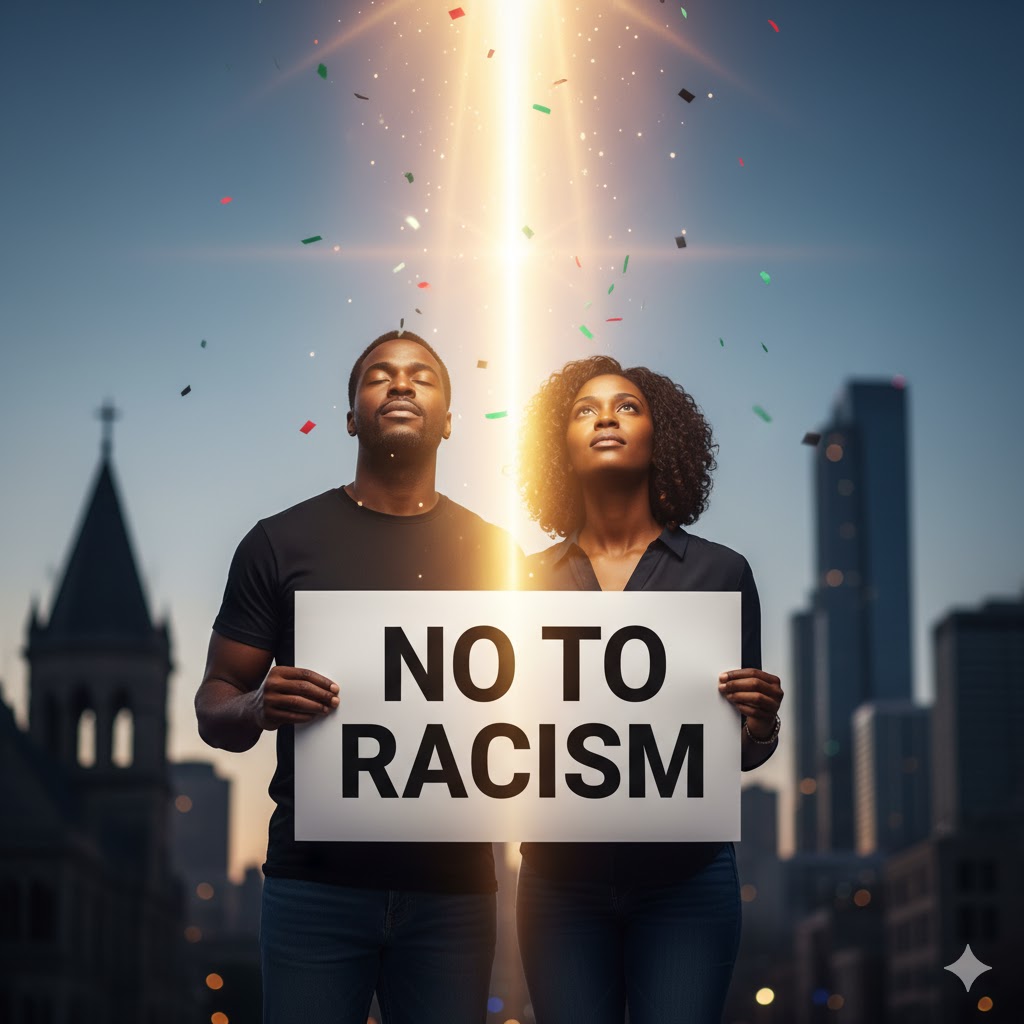
Racism is more than individual prejudice—it is a system of power, privilege, and oppression that shapes every level of society. It is the belief, whether conscious or unconscious, that one race is superior to another, and this ideology has fueled centuries of injustice toward Black people and other nonwhite groups. Denial of racism, therefore, is a form of complicity. It allows prejudice to persist unchecked, normalizing discrimination under the illusion of equality. In modern America, this denial manifests not only in speech and policy but also in symbols—especially racist mascots that trivialize entire cultures for entertainment and profit (Tatum, 2017).

Racist mascots are public symbols, images, or characters that depict racial or ethnic groups through stereotypes. They include sports team names, cartoon logos, and advertising imagery that caricature people of color, particularly Indigenous, Asian, and Black individuals. The purpose of such mascots has historically been to create a sense of fun or team spirit, but beneath the surface lies the dehumanization of real people. These mascots perpetuate racism by turning living identities into costumes or cartoons, mocking heritage and reinforcing white dominance (King, Davis-Delano, Staurowsky, & Baca, 2006).

Examples of racist mascots include the Washington Redskins (now Commanders), Cleveland Indians (now Guardians), and the use of Native caricatures like “Chief Wahoo.” In addition, Black caricatures such as “Aunt Jemima,” “Uncle Ben,” and the “Sambo” figures have long stood as consumer symbols rooted in slavery and Jim Crow imagery. These depictions present people of color as servile, ignorant, or primitive—images designed to comfort white audiences while reminding Black people of their social “place” (Pilgrim, 2012).

The denial of racism allows these symbols to persist under the justification of “tradition” or “harmless fun.” Yet such arguments ignore the historical and emotional damage caused by these portrayals. To deny racism is to silence the voices of those who endure its consequences. White individuals who resist the removal of racist mascots often do so because acknowledging their harm would mean confronting uncomfortable truths about privilege and the legacies of colonization (Sue et al., 2019).

For Black people, racism manifests not only through overt hatred but also through the cultural symbols that reinforce inferiority. Racist mascots, jokes, and media portrayals perpetuate the myth of white superiority, making it harder for Black individuals to assert pride and dignity. These representations influence how others perceive them—affecting hiring decisions, media representation, and even internalized self-worth. When a culture is continually mocked or minimized, it becomes a psychological burden that echoes across generations (Williams & Mohammed, 2009).

The psychological effect of racist imagery cannot be overstated. Studies show that exposure to racial caricatures can reinforce stereotypes, reduce empathy toward minority groups, and diminish the sense of belonging among young people of color. For Black children, seeing racist imagery in public life communicates a painful message: that their identity is a joke, their culture a costume, and their history unworthy of respect. The harm of these images is cumulative and intergenerational (Clark, 2019).

White supremacy, the ideology that whiteness is inherently superior, underpins both the denial of racism and the creation of racist mascots. It is the invisible hand guiding policies, media narratives, and cultural norms that prioritize white comfort over Black liberation. White supremacy thrives in denial—it insists that racism is a relic of the past while continuing to shape the present. It operates through coded language like “heritage” and “pride,” which often mask bigotry behind nostalgia (Kendi, 2019).

The most blatant expression of white supremacy in American history is the Ku Klux Klan (KKK). Founded after the Civil War, the KKK terrorized Black communities through violence, lynchings, and intimidation. Its mission was to maintain white dominance in political, social, and economic spheres. Members of the Klan saw themselves as defenders of a “pure” America, using fear and brutality to suppress Black advancement. Their robes, burning crosses, and public parades became symbols of white terror and racial hatred (Alexander, 2010).

The impact of the KKK on Black people was devastating. Generations were traumatized by violence and systemic exclusion. Families were torn apart, homes burned, and entire towns destroyed under the pretext of racial purity. Even today, the Klan’s legacy persists in modern hate groups, racial profiling, and police violence. The ideology never died—it evolved into new forms of systemic control such as mass incarceration and economic disenfranchisement.

White supremacy continues to hurt Black people by limiting access to wealth, education, and justice. Redlining, discriminatory hiring, and unequal school funding are structural extensions of the same mindset that birthed the KKK and racist mascots. These systems rely on the same falsehood—that Black people are less deserving of opportunity. By denying racism’s existence, society allows these injustices to flourish behind the facade of fairness (Bonilla-Silva, 2018).

Denial of racism often appears as “colorblindness.” When white individuals claim they “don’t see race,” they erase the lived experiences of Black people who face racism daily. Colorblindness is not equality—it is avoidance. It refuses to confront historical trauma or acknowledge current inequalities. This denial maintains white innocence and blocks progress toward reconciliation and justice (Wise, 2010).

Racist mascots are powerful tools of denial because they hide oppression behind art and entertainment. They turn centuries of suffering into amusement, trivializing racism itself. By normalizing these caricatures, society teaches future generations to see racism as exaggerated or irrelevant. The mascot becomes a smiling mask covering a violent history of enslavement and dehumanization (Fryberg et al., 2008).

To overcome this, institutions must replace symbols of oppression with those of truth and empowerment. Education is key—students should learn the origins of these images and why they are harmful. Removing racist mascots and replacing them with culturally respectful symbols is not “erasing history,” but correcting it. True history must expose oppression, not celebrate it.

Community conversations about race and symbolism are also essential. Many white Americans cling to racist mascots because they lack understanding of their impact. Honest dialogue, paired with empathy and accountability, can transform ignorance into awareness. This process requires humility—the willingness to listen rather than defend.

Faith-based and moral frameworks remind us that racism is a sin of pride. The Bible teaches that all people are created in the image of God (Genesis 1:27, KJV). To deny racism or perpetuate racist symbols is to deny God’s design for equality and justice. The work of dismantling white supremacy is therefore both a social and spiritual responsibility.

For Black people, confronting racist mascots is an act of liberation. It is a declaration that identity will no longer be mocked or commodified. Cultural restoration begins with reclaiming representation—telling stories from within rather than allowing others to define Blackness from without. Every statue removed, logo retired, and stereotype challenged marks a step toward collective healing.

The denial of racism also prevents national unity. A country that refuses to face its truth cannot heal from it. Reconciliation requires repentance—an acknowledgment of harm and a commitment to change. Only when the truth of racism is faced with courage can justice begin to take root.

Ultimately, racist mascots are symptoms of a deeper disease: the refusal to see Black humanity. The denial of racism enables the disease to spread unchecked, poisoning institutions and relationships. Challenging these symbols is not about political correctness—it is about moral clarity. Racism cannot die where denial lives.

The path forward requires truth-telling, accountability, and love rooted in justice. Dismantling racist mascots, confronting white supremacy, and rejecting the lies of the KKK are not acts of division—they are acts of restoration. The goal is not revenge but righteousness. As James Baldwin wrote, “Not everything that is faced can be changed, but nothing can be changed until it is faced.”

References
Alexander, M. (2010). The new Jim Crow: Mass incarceration in the age of colorblindness. The New Press.
Bonilla-Silva, E. (2018). Racism without racists: Color-blind racism and the persistence of racial inequality in America. Rowman & Littlefield.
Clark, C. R. (2019). Psychological impact of racial imagery on youth. Journal of Black Psychology, 45(2), 105–122.
Fryberg, S. A., Markus, H. R., Oyserman, D., & Stone, J. M. (2008). Of warrior chiefs and Indian princesses: The psychological consequences of American Indian mascots. Basic and Applied Social Psychology, 30(3), 208–218.
Kendi, I. X. (2019). How to be an antiracist. One World.
King, C. R., Davis-Delano, L. R., Staurowsky, E. J., & Baca, L. (2006). The Native American mascot controversy: A handbook. Scarecrow Press.
Pilgrim, D. (2012). Understanding Jim Crow: Using racist memorabilia to teach tolerance and promote social justice. Ferris State University.
Sue, D. W., Alsaidi, S., Awad, M. N., Calle, C. Z., & Mendez, N. (2019). Disarming racial microaggressions: Microintervention strategies for targets, White allies, and bystanders. American Psychologist, 74(1), 128–142.
Tatum, B. D. (2017). Why are all the Black kids sitting together in the cafeteria? Basic Books.
Wise, T. (2010). Colorblind: The rise of post-racial politics and the retreat from racial equity. City Lights Books.
Williams, D. R., & Mohammed, S. A. (2009). Discrimination and racial disparities in health: Evidence and needed research. Journal of Behavioral Medicine, 32(1), 20–47.
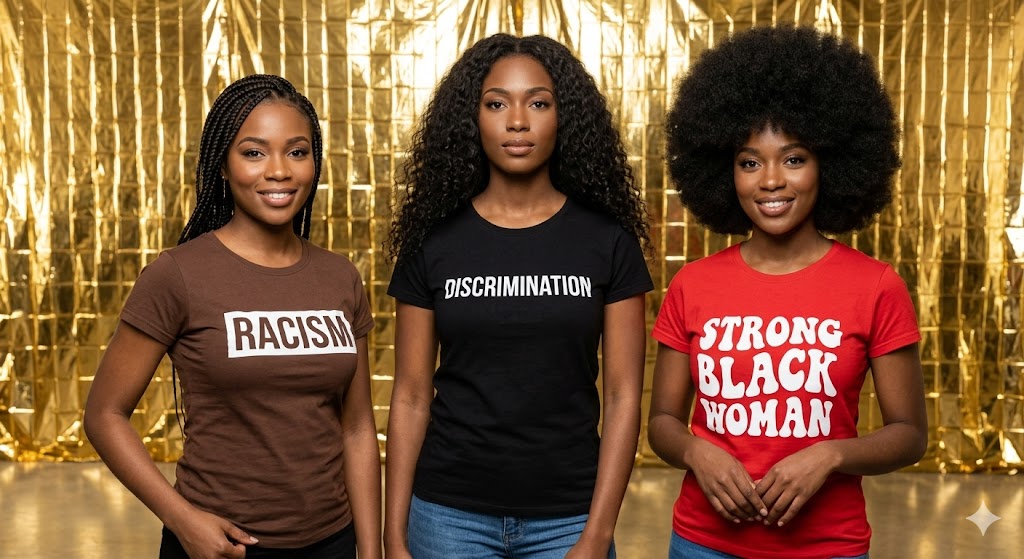
Strength and Struggle: Examining the Social Pressures Placed on Black Women.

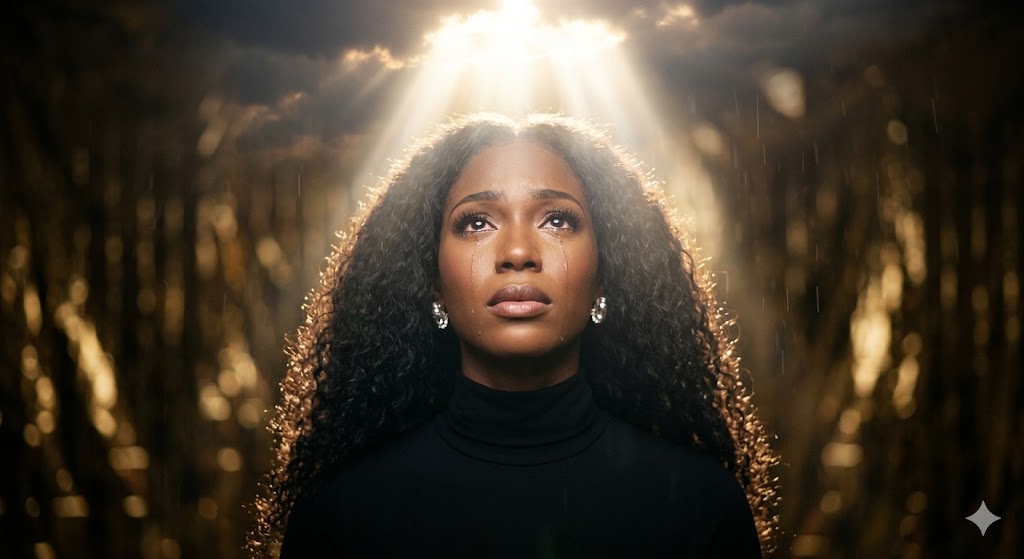
Black women in the United States occupy a unique social position shaped by the intersection of race, gender, and historical inequality. Their experiences are influenced by centuries of systemic discrimination, cultural expectations, and social pressures that affect economic opportunities, health outcomes, and societal perceptions. Understanding the realities facing Black women requires examining the historical and structural forces that shape their daily lives.

One of the most significant frameworks used to analyze these experiences is intersectionality, a concept introduced by legal scholar Kimberlé Crenshaw. Intersectionality explains how different forms of discrimination—particularly racism and sexism—interact simultaneously. For Black women, this means facing social barriers that cannot be fully explained by race alone or gender alone but by the combination of both.

Historically, Black women have endured unique forms of labor exploitation and social marginalization. During slavery in the United States, Black women were forced to perform both agricultural labor and domestic work while also being subjected to sexual exploitation. These conditions created enduring stereotypes that portrayed Black women as either excessively strong or morally deviant.

These stereotypes evolved into several harmful archetypes that continue to influence public perception. The “mammy,” “jezebel,” and “angry Black woman” stereotypes emerged from historical narratives that sought to justify inequality and control. These caricatures have persisted in popular culture, shaping how Black women are viewed in workplaces, media, and social institutions.

Economic inequality represents another major pressure affecting Black women. Despite high levels of labor participation, Black women frequently encounter wage disparities compared with white men, white women, and sometimes Black men. Data from the U.S. Bureau of Labor Statistics consistently demonstrates a persistent racial and gender wage gap.

The consequences of wage inequality extend beyond individual income. Lower earnings reduce opportunities for homeownership, savings, and wealth accumulation. Over time, these disparities contribute to the broader racial wealth gap observed across American society.

Education has been an area where Black women have demonstrated remarkable progress. In recent decades, Black women have become one of the fastest-growing groups earning college and advanced degrees. Despite these achievements, barriers to leadership roles and executive positions remain prevalent in many industries.

Healthcare disparities also represent a critical concern. Studies conducted by the Centers for Disease Control and Prevention show that Black women face significantly higher maternal mortality rates than women from other racial groups. These disparities have been linked to unequal access to healthcare, implicit bias among medical providers, and systemic inequalities in the healthcare system.

Mental health pressures are also significant. Many Black women report experiencing high levels of stress related to workplace discrimination, financial responsibilities, and caregiving obligations. Yet cultural expectations often encourage them to appear emotionally resilient regardless of the circumstances.

This expectation is commonly referred to as the “Strong Black Woman” trope. While resilience is often celebrated, scholars argue that the expectation of constant strength can discourage Black women from seeking emotional support or mental health care when needed.

Black feminist scholars have played a central role in analyzing these dynamics. Intellectual leaders such as Patricia Hill Collins and bell hooks have written extensively about the ways Black women resist oppression while simultaneously navigating complex social expectations.

Media representation also shapes how Black women are perceived. Historically, film and television often depicted Black women through narrow stereotypes. Although representation has improved, scholars continue to debate whether contemporary portrayals adequately reflect the diversity and complexity of Black womanhood.

Another significant pressure involves beauty standards and colorism. Western beauty ideals have historically favored lighter skin tones and European features, often marginalizing darker-skinned women. Colorism can influence opportunities in employment, media representation, and social relationships.

Black women are also deeply involved in community leadership and social activism. Throughout American history, they have organized movements advocating for civil rights, gender equality, and social justice. Their leadership has often been underrecognized despite its profound impact.

Figures such as Harriet Tubman, Ida B. Wells, and Shirley Chisholm exemplify the tradition of Black female leadership in American history. Their contributions helped reshape political and social landscapes.

Family and community responsibilities also create unique pressures. Black women frequently play central roles in caregiving, household leadership, and community support networks. These responsibilities often exist alongside professional obligations, creating additional demands on time and emotional energy.

Religious and spiritual institutions have historically provided important support systems. Churches and faith-based organizations have served as spaces where Black women could find community, leadership opportunities, and emotional resilience.

Despite these pressures, Black women have demonstrated extraordinary cultural influence. Their contributions to literature, music, fashion, and art have profoundly shaped American culture and global artistic expression.

Scholars emphasize that understanding the experiences of Black women requires recognizing both the challenges they face and the strength they demonstrate. Their resilience reflects not only personal determination but also collective strategies developed within communities to resist inequality.

Addressing the social pressures facing Black women requires policy reforms that promote economic equity, healthcare access, educational opportunity, and fair representation in leadership positions.

Ultimately, examining the experiences of Black women reveals broader truths about inequality within American society. By acknowledging these realities and addressing systemic barriers, society can move toward a more inclusive and equitable future.


References

Collins, P. H. (2000). Black feminist thought: Knowledge, consciousness, and the politics of empowerment. Routledge.

Crenshaw, K. (1989). Demarginalizing the intersection of race and sex. University of Chicago Legal Forum.

hooks, b. (1981). Ain’t I a woman: Black women and feminism. South End Press.

Jones, C. P. (2000). Levels of racism: A theoretical framework and a gardener’s tale. American Journal of Public Health.

Centers for Disease Control and Prevention. (2023). Racial and ethnic disparities in maternal health.

U.S. Bureau of Labor Statistics. (2023). Labor force statistics by race and gender.

Beyond Stereotypes: The Social and Structural Challenges Affecting Black Women.

“The biggest problem with Black women” is extremely broad, and scholars caution against framing issues in a way that blames an entire group. Most research instead examines systemic challenges and social pressures that disproportionately affect Black women in the United States. These issues are rooted in historical inequalities, structural racism, gender bias, and economic disparities.

Intersectional Discrimination

One of the most widely discussed issues is intersectional discrimination, a concept introduced by legal scholar Kimberlé Crenshaw. Intersectionality explains how Black women often face discrimination that combines both racism and sexism simultaneously. This dual burden can affect employment opportunities, healthcare experiences, legal protections, and social perceptions.


The “Strong Black Woman” Stereotype

Another major concern is the cultural expectation often described as the “Strong Black Woman” stereotype. While strength and resilience are positive qualities, scholars note that this stereotype can pressure Black women to suppress vulnerability, emotional needs, or mental health struggles. The expectation to remain strong in the face of adversity sometimes leads to untreated stress and burnout.


Economic Inequality

Black women are also disproportionately affected by economic inequality. According to data from the U.S. Bureau of Labor Statistics, Black women historically earn less than both white men and white women in the United States. This wage gap reflects broader systemic issues such as occupational segregation, hiring discrimination, and unequal access to high-paying industries.


Health Disparities

Public health research shows significant disparities affecting Black women’s health outcomes. For example, maternal mortality rates among Black women are significantly higher than those of other racial groups. Studies by the Centers for Disease Control and Prevention attribute this disparity to factors including unequal healthcare access, medical bias, and chronic stress related to systemic racism.


Colorism and Beauty Standards

Colorism—the preferential treatment of lighter skin tones within communities of color—also impacts Black women socially and professionally. Darker-skinned women often report facing bias in media representation, employment opportunities, and dating dynamics. These issues are widely examined within sociology and cultural studies.


Media Representation

Black women have historically been portrayed through limited stereotypes in film and television, including tropes such as the “mammy,” the “angry Black woman,” or hypersexualized depictions. Media scholars argue that these portrayals influence public perception and contribute to bias in social institutions.


Educational and Professional Barriers

Despite significant educational achievements—Black women are among the fastest-growing groups earning college degrees—many still face barriers to leadership positions in corporate and political spaces. Structural inequality and workplace bias often limit advancement opportunities.


Relationship and Family Dynamics

Sociologists also examine how historical factors such as mass incarceration, economic inequality, and employment instability affect family structures within Black communities. These broader systemic issues influence relationship dynamics, marriage rates, and household stability.


Mental Health Stigma

Mental health stigma within many communities can discourage individuals from seeking professional help. Black women may feel pressure to maintain emotional strength while dealing with racism, sexism, and economic stressors. This can delay treatment for anxiety, depression, or trauma-related conditions.


Structural Inequality

Ultimately, many scholars argue that the biggest challenges facing Black women are not individual flaws but structural inequalities embedded within social systems. These include disparities in housing, healthcare, employment, and education that developed over centuries of discrimination.


Resilience and Leadership

Despite these challenges, Black women have historically demonstrated remarkable resilience and leadership. Figures such as Harriet Tubman, Ida B. Wells, and Shirley Chisholm played critical roles in social justice movements, civil rights advocacy, and political progress in the United States.


Conclusion

Rather than identifying a single “problem” with Black women, most scholars emphasize examining the structural conditions that shape their experiences. Addressing disparities in healthcare, economic opportunity, education, and representation can help reduce inequalities and support the well-being of Black women in society.


References

Crenshaw, K. (1989). Demarginalizing the intersection of race and sex. University of Chicago Legal Forum.

Collins, P. H. (2000). Black feminist thought: Knowledge, consciousness, and the politics of empowerment. Routledge.

Centers for Disease Control and Prevention. Maternal mortality and racial disparities in the United States.

Jones, C. P. (2000). Levels of racism: A theoretical framework. American Journal of Public Health.

U.S. Bureau of Labor Statistics. (2023). Labor force statistics by race and gender.

Healing. Honor. High Value.

Photo by Abdulkadir muhammad sani on Pexels.com

Healing is the foundation of restoration. Psalm 147:3 declares, “He healeth the broken in heart, and bindeth up their wounds.” Emotional, spiritual, and relational healing allows individuals—particularly women of color—to reclaim their identity, purpose, and voice in a world that often devalues them.

Honor flows from God’s design. Proverbs 3:35 teaches, “The wise shall inherit glory: but shame shall be the promotion of fools.” When a person aligns with God’s truth, they walk in dignity that no worldly measure can diminish.

High value originates in divine creation. Psalm 139:14 affirms, “I will praise thee; for I am fearfully and wonderfully made: marvellous are thy works; and that my soul knoweth right well.” Recognizing intrinsic worth rooted in God’s craftsmanship fosters confidence, resilience, and purpose.

Healing nurtures spiritual growth. James 5:16 exhorts, “Confess your faults one to another, and pray one for another, that ye may be healed. The effectual fervent prayer of a righteous man availeth much.” Community and prayer are vital components in restoration.

Honor shapes relationships. Romans 12:10 teaches, “Be kindly affectioned one to another with brotherly love; in honour preferring one another.” Treating oneself and others with respect reinforces godly influence.

High value guides decision-making. Proverbs 4:7 affirms, “Wisdom is the principal thing; therefore get wisdom: and with all thy getting get understanding.” Awareness of personal worth informs choices that align with God’s purpose.

Healing restores identity. Isaiah 61:1 declares, “The Spirit of the Lord GOD is upon me; because the LORD hath anointed me to preach good tidings unto the meek…” Restoration begins when spiritual truth reshapes perception of self.

Honor manifests in integrity. Proverbs 10:9 teaches, “He that walketh uprightly walketh surely: but he that perverteth his ways shall be known.” Dignity grows when actions align with God’s principles.

High value empowers advocacy. Proverbs 31:26 affirms, “She openeth her mouth with wisdom; and in her tongue is the law of kindness.” Speaking truth and establishing boundaries reflect self-worth and divine guidance.

Healing strengthens resilience. Romans 5:3-4 teaches, “…tribulation worketh patience; And patience, experience; and experience, hope.” Overcoming past wounds develops character and fortitude.

Honor amplifies influence. 1 Peter 2:17 exhorts, “Honour all men. Love the brotherhood. Fear God. Honour the king.” Respect for self and others fosters leadership and legacy.

High value sustains purpose. Colossians 3:23 commands, “And whatsoever ye do, do it heartily, as to the Lord, and not unto men.” Valuing oneself in accordance with God’s standards inspires excellence.

Healing restores voice. Psalm 34:18 declares, “The LORD is nigh unto them that are of a broken heart; and saveth such as be of a contrite spirit.” Emotional restoration empowers expression and authenticity.

Honor reflects divine reflection. Ephesians 4:32 teaches, “And be ye kind one to another, tenderhearted, forgiving one another, even as God for Christ’s sake hath forgiven you.” Treating others with reverence mirrors God’s character.

High value nurtures leadership. Proverbs 31:25 states, “Strength and honour are her clothing; and she shall rejoice in time to come.” Recognizing worth strengthens confidence, influence, and legacy.

Healing requires intentionality. Matthew 11:28 encourages, “Come unto me, all ye that labour and are heavy laden, and I will give you rest.” Seeking restoration through Christ sustains transformation.

Honor sustains relationships. Romans 12:18 teaches, “If it be possible, as much as lieth in you, live peaceably with all men.” Living honorably fosters trust, respect, and collaboration.

High value inspires boundaries. Proverbs 25:28 warns, “He that hath no rule over his own spirit is like a city that is broken down, and without walls.” Recognizing worth ensures protection of self and integrity.

Healing cultivates wholeness. 1 Peter 5:7 exhorts, “Casting all your care upon him; for he careth for you.” Spiritual surrender releases burdens, allowing restoration to flourish.

Ultimately, healing, honor, and high value converge as a blueprint for living authentically and purposefully. Psalm 1:3 promises, “And he shall be like a tree planted by the rivers of water, that bringeth forth his fruit in his season; his leaf also shall not wither; and whatsoever he doeth shall prosper.” Wholeness, dignity, and worth are cultivated in alignment with God’s truth.

Ode to the shades of Brown

Oh, the shades of brown, rich as the earth,
From the deepest mahogany to the honeyed warmth of birth.
You tell stories of ancestry, of kings and queens,
Of rivers crossed and lands unseen.

Your skin, a tapestry woven by God’s own hand,
A palette divine, too vast to understand.
Every tone a hymn, every hue a song,
A testament of resilience, proud and strong.

In sunlight, you shimmer like burnished gold,
A brilliance no lens nor mirror can hold.
In shadow, you speak of depth and grace,
Of sacred histories, time cannot erase.

Oh, chestnut, cocoa, and espresso hues,
Each a reflection of ancient truths.
Each freckle, each mole, a jewel to behold,
A story of courage, of valor untold.

Caramel whispers of warmth and light,
Mocha radiates quiet power in sight.
Amber gleams with a gentle fire,
Chestnut glows with ancestral desire.

The shades of brown, both subtle and bold,
Carry legacies neither bought nor sold.
From slave cabins to palaces, from fields to streets,
Your beauty defies oppression, never retreats.

KJV Truth sings in your radiant skin:
Psalm 139:14 – “I am fearfully and wonderfully made.”
Every shade, every tone, every nuance,
A reflection of God’s artistry, perfect and true.

Celebrate your brown, in all its delight,
From dawn’s soft glow to the velvet of night.
No pigment dictates your worth or your place,
Your brown is divine, imbued with God’s grace.

Oh, the shades of brown, a spectrum so vast,
From subtle taupe to the boldest cast.
You are power, beauty, endurance, and art,
A masterpiece woven straight from God’s heart.

So rise, brown daughters, with pride in your skin,
Let no world’s bias define what’s within.
Your shade is a crown, your hue is a song,
In the orchestra of creation, you alone belong.

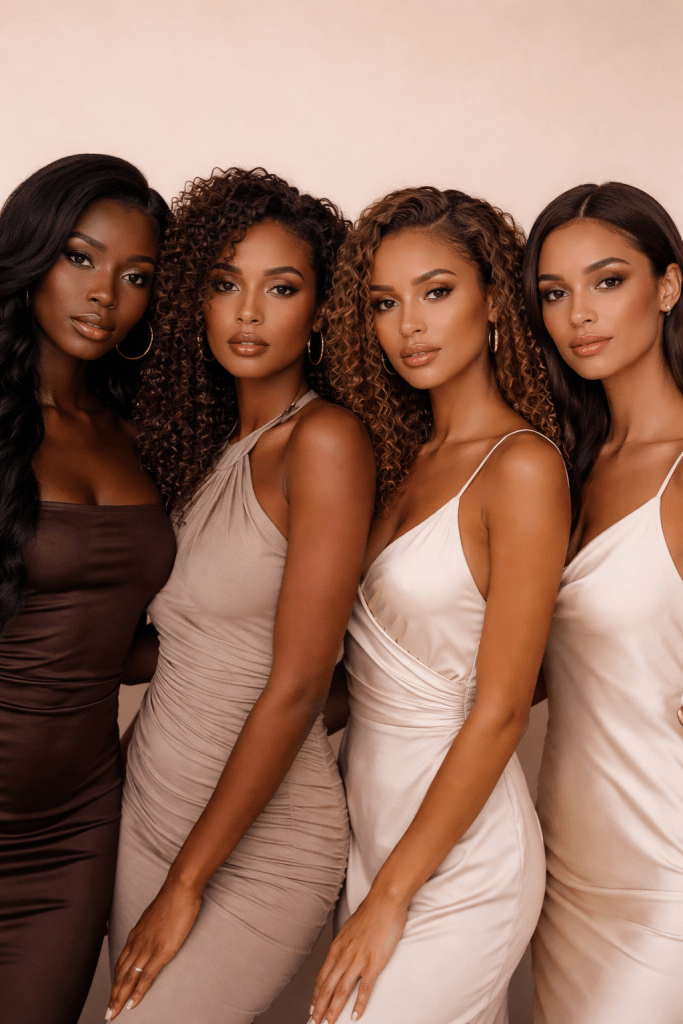
The phrase “shades of brown” reflects more than just physical variation in skin tone—it represents a complex social reality shaped by history, power, and perception. Across the African diaspora and other communities of color, differences in skin tone have been given meaning within systems that rank and assign value to people based on how light or dark they appear. This phenomenon, known as Colorism, continues to influence identity, opportunity, and self-perception.

Colorism has deep roots in the history of slavery and colonialism. During the transatlantic slave trade, lighter-skinned enslaved individuals—many of whom were of mixed ancestry—were sometimes given preferential treatment, such as working in the house rather than in the fields. These divisions were not accidental; they reinforced a hierarchy that placed whiteness, and proximity to it, at the top. Over time, these patterns became internalized within communities, creating lasting divisions based on complexion.

The legacy of these practices can still be seen today. Lighter skin is often associated with beauty, success, and desirability, while darker skin is unfairly stigmatized. This bias is reinforced through media representation, where lighter-skinned individuals are frequently overrepresented in leading roles, advertisements, and positions of influence. As a result, societal standards of beauty often reflect a narrow range of features tied to Eurocentric ideals.

From a sociological perspective, colorism operates as a learned norm within Sociology, passed down through generations and reinforced by institutions such as media, education, and family structures. Individuals absorb these messages early in life, shaping how they view themselves and others. Children, for example, may begin to associate lighter skin with positive traits and darker skin with negative ones, even without explicit instruction.

The psychological impact of colorism is significant. Studies have shown that individuals with darker skin tones may experience lower self-esteem, higher levels of discrimination, and reduced access to opportunities in areas such as employment and education. This aligns with Social Identity Theory, which explains how people derive part of their self-worth from how their group is perceived in society. When darker skin is devalued, it can negatively affect individual identity and confidence.

In addition to its psychological effects, colorism also has economic consequences. Research suggests that lighter-skinned individuals, on average, earn higher incomes and are more likely to be perceived as professional or trustworthy. These disparities highlight how deeply embedded color bias is within social and institutional structures.

The concept of “shades of brown” also intersects with ideas of mixed race and racial ambiguity. Individuals with lighter or racially ambiguous features are often treated differently, sometimes receiving privileges not afforded to darker-skinned individuals. However, this can also come with its own challenges, including questions about identity and belonging.

The Media continues to play a central role in reinforcing color hierarchies. Through film, television, and social media, certain looks are elevated while others are marginalized. The lack of diverse representation contributes to a limited understanding of beauty and perpetuates harmful stereotypes.

At the same time, there has been a growing movement to challenge colorism and celebrate darker skin tones. Campaigns promoting inclusivity and representation have begun to shift public perception, encouraging a broader and more authentic definition of beauty. Social media, while part of the problem, has also become a platform for advocacy and empowerment.

Education and awareness are key to addressing colorism. By understanding its historical roots and recognizing its modern impact, individuals and communities can begin to dismantle these biases. Conversations about colorism help to bring attention to an issue that is often overlooked but deeply felt.

Ultimately, the “shades of brown” are a testament to human diversity, not a hierarchy of value. Skin tone variation is a natural result of genetic adaptation and ancestry, not a measure of worth. Challenging colorism requires both individual reflection and collective action to redefine standards and promote equity.

The journey toward dismantling colorism is ongoing, but it begins with recognizing that all shades carry equal beauty, dignity, and significance. By confronting these biases, society can move closer to a more inclusive and just understanding of identity.


References

Hunter, M. (2007). The persistent problem of colorism: Skin tone, status, and inequality. Sociology Compass, 1(1), 237–254.

Keith, V. M., & Herring, C. (1991). Skin tone and stratification in the Black community. American Journal of Sociology, 97(3), 760–778.

Monk, E. P. (2015). The cost of color: Skin color, discrimination, and health among African Americans. American Journal of Sociology, 121(2), 396–444.

Dixon, T. L., & Telles, E. E. (2017). Skin color and colorism: Global research, concepts, and measurement. Annual Review of Sociology, 43, 405–424.

Hall, R. E. (2018). The Bleaching Syndrome: African Americans’ Response to Cultural Domination. Springer.

When Melanin Isn’t Enough

Photo by Daryl Johnson on Pexels.com

To be cloaked in melanin is to carry the history of a people, the beauty of creation, and the strength of survival. Yet for many, that sacred covering has not always guaranteed belonging, protection, or peace. When Melanin Isn’t Enough explores the painful paradox of being richly pigmented in a world that celebrates Black culture but resists Black humanity. It is a confession and a lament—a recognition that melanin, though powerful, cannot shield the heart from systems designed to wound it.

Melanin was meant to be glory. It is the pigment that absorbs sunlight and turns it into strength, a biological brilliance that protects, preserves, and radiates. Yet society, poisoned by racism and colonial beauty ideals, has turned that divine gift into a social marker of inferiority. For centuries, Blackness has been commodified and criminalized—embraced when fashionable, erased when inconvenient. The contradiction leaves many asking: if my skin carries the sun, why must I still fight to prove my worth under its light?

The struggle begins early. In classrooms and playgrounds, darker-skinned children often face ridicule, while lighter tones are subtly praised. These small moments plant seeds of self-doubt that blossom into lifelong insecurities. The child learns that melanin is both identity and liability, and the world’s mixed messages fracture the soul. “Am I too dark to be loved? Too Black to be accepted?” These questions echo long after childhood, haunting the adult who must unlearn the lies planted in innocence.

For the Black woman, melanin becomes both armor and target. She is admired when her features fit aesthetic trends, but dismissed when her authenticity challenges Eurocentric comfort. Her beauty is borrowed by fashion and filtered by media, yet she is often denied the credit for the culture she creates. When melanin isn’t enough, her humanity becomes conditional—validated only when it entertains or conforms.

The Black man, too, feels this contradiction deeply. His melanin, symbolizing ancestral might, is perceived through a lens of fear. His strength becomes threat; his presence, politicized. No matter how articulate, accomplished, or gentle he becomes, his skin too often writes his story before he speaks. He must navigate the exhausting tightrope between pride and safety, power and perception.

Melanin should have been a bridge of unity, but within the Black community, it sometimes becomes a border. Colorism, born from colonial residue, divides sisters and brothers into categories of worth. Light-skinned privilege and dark-skinned pain intersect in cycles of jealousy, guilt, and misunderstanding. This internal division weakens collective power, fulfilling the enemy’s agenda of disunity. Scripture warns, “Every kingdom divided against itself is brought to desolation” (Matthew 12:25, KJV). Healing requires honest reckoning with these inherited wounds.

Spiritually, when melanin isn’t enough, it is because the war is not of flesh but of perception. The world has misnamed Blackness—calling divine what is pale and calling inferior what is holy. Yet the Word declares, “I am fearfully and wonderfully made” (Psalm 139:14, KJV). The Creator, who formed man from the dust of the ground, did not err in His design. Melanin was God’s intentional artistry, not a cosmic afterthought. The error lies not in the pigment but in the gaze that refuses to see it as divine.

The emotional toll of that misperception is immense. Many who are richly melanated still feel unseen—rejected in corporate spaces, romantic relationships, and even faith communities. Society consumes the aesthetic of Blackness but denies its depth. From music to fashion to slang, melanin is celebrated in fragments while its full humanity is ignored. The world wants Black culture without Black people.

In this tension, faith becomes refuge. The believer learns that divine validation transcends social opinion. The Bible reminds us in 1 Samuel 16:7 that “man looketh on the outward appearance, but the Lord looketh on the heart.” When melanin isn’t enough to earn human acceptance, grace becomes the garment that restores identity. The faithful must remember that worth is not measured by shade or status, but by spiritual alignment.

History reveals that melanin alone did not save our ancestors from oppression—but their faith did sustain them. Enslaved Africans sang songs of deliverance even while bound, trusting a God who saw their pain beyond their pigmentation. Their melanin was their mark of identity, but their endurance was their proof of divinity. It reminds us that liberation is both physical and spiritual; the chains on the body can break faster than the chains on the mind.

Modernity presents a new kind of bondage—the bondage of performance. Blackness has become commodified, reduced to trends and tokens. Melanin-rich influencers are celebrated online, but the same society often neglects justice for the oppressed. Aesthetic appreciation without moral accountability is hollow. When melanin becomes a brand instead of a birthright, identity becomes performance rather than truth.

Healing begins with revelation. Melanin is enough—when seen through the eyes of God. It is enough when rooted in purpose, not performance. But it cannot bear the full burden of validation in a world still blind to its worth. The solution lies in balance: to love the skin without idolizing it, to embrace heritage without becoming enslaved to it, and to seek wholeness that begins within.

Community restoration depends on collective healing. When melanin-rich people affirm one another across shades and experiences, they dismantle centuries of divide-and-rule. Love becomes the new language of liberation. “Above all these things put on charity, which is the bond of perfectness” (Colossians 3:14, KJV). Only love—divine and communal—can make melanin more than enough.

Ultimately, When Melanin Isn’t Enough is a call to transcend pigment politics and embrace spiritual purpose. Melanin may be our covering, but it is not our completion. Our identity is not limited to skin but rooted in spirit. We are more than color—we are covenant. More than beautiful—we are chosen. The world may not always recognize that truth, but Heaven already has.

References

  • The Holy Bible, King James Version. (1611).
  • Banks, T. A. (2019). Colorism and the politics of beauty. Journal of Black Studies, 50(3), 243–261.
  • Hunter, M. (2007). The persistent problem of colorism: Skin tone, status, and inequality. Sociology Compass, 1(1), 237–254.
  • Walker-Barnes, C. (2020). Too heavy a yoke: Black women and the burden of strength. Cascade Books.
  • hooks, b. (1992). Black looks: Race and representation. South End Press.
  • West, C. (1993). Race matters. Beacon Press.

The Brown Girl Dilemma: #teamlightskin #teamdarkskin — The Loss of Identity

Photo by kings ent shot on Pexels.com

The conversation around skin tone in the Black community has long been fraught with pain, division, and misunderstanding. The rise of social media hashtags such as #teamlightskin and #teamdarkskin has amplified old wounds under the guise of humor, preference, and cultural pride. Yet beneath these digital expressions lies a centuries-old dilemma—the fragmentation of identity for brown-skinned women navigating the intersections of race, gender, and colorism. This dilemma is not simply about complexion; it is about the loss of identity and the ongoing negotiation of worth in societies shaped by white supremacy and internalized oppression.

Historically, the preference for lighter skin among Black populations is rooted in the legacy of slavery and colonialism. Enslaved Africans with lighter skin were often granted privileges, sometimes working inside homes while darker-skinned individuals endured harsher field labor (Hunter, 2007). These divisions created an internal hierarchy that continues to reverberate in modern times. For the brown girl—often caught in the middle of these divisions—her identity becomes fractured, leaving her struggling to find where she belongs.

The hashtags #teamlightskin and #teamdarkskin perpetuate these divisions by forcing women to align with one category or another. While intended by some as playful banter, they reinforce harmful binaries that pit Black women against each other. For brown girls, who do not neatly fit into either category, these labels become restrictive. They are reminded constantly that their beauty, desirability, and even value are measured not only against whiteness but also within a racialized color hierarchy.

This loss of identity manifests in social, psychological, and relational ways. Psychologically, colorism has been linked to decreased self-esteem, internalized shame, and identity confusion (Keith & Herring, 1991). Brown girls often feel they are “not light enough” to benefit from color privilege and “not dark enough” to claim solidarity with darker-skinned peers. This creates a liminal space of invisibility where their identity feels erased.

In social contexts, these divisions play out in dating preferences, media representation, and peer dynamics. Research has shown that lighter-skinned women are more likely to be idealized in media portrayals and considered more desirable in dating (Monk, 2014). Meanwhile, darker-skinned women are often subject to stereotypes of strength or undesirability. Brown-skinned women, suspended between these polarities, often face erasure—their stories and representations diminished because they do not fit neatly into either category.

Culturally, these divisions are exacerbated by music, entertainment, and social media. Hip-hop lyrics frequently highlight “redbones” or “yellow bones,” reinforcing the desirability of light-skinned women (Stephens & Few, 2007). At the same time, movements celebrating dark-skinned beauty, such as #melaninpoppin, emphasize resistance to colorist standards but can still inadvertently leave brown girls feeling sidelined. This cultural polarization means that the brown girl is constantly negotiating her place in conversations about beauty, desirability, and identity.

Theologically, this dilemma represents a distortion of God’s creation. Scripture affirms that humanity was created in the image of God (Genesis 1:27), and Acts 17:26 (KJV) reminds us that God “hath made of one blood all nations of men.” Yet colorism corrupts this truth, dividing sisters against each other and breeding insecurity. Instead of celebrating diversity in melanin as divine artistry, the #teamlightskin vs. #teamdarkskin divide reduces identity to shade categories that deny the fullness of Black womanhood.

Brown girls often internalize these divisions as pressure to prove themselves. Some attempt to emphasize their lightness in certain contexts while downplaying it in others, depending on the cultural capital of the moment. Others lean toward embracing dark-skinned solidarity to escape accusations of privilege, only to feel dismissed by those who view them as not “dark enough.” This constant shifting creates identity fatigue and emotional exhaustion.

At the heart of this dilemma is the colonial mentality that equates proximity to whiteness with value. Frantz Fanon (1952/2008) argued that colonized people often internalize the desire to embody whiteness, whether through skin tone, hair texture, or cultural assimilation. Brown girls navigating this reality often feel caught between rejecting whiteness and not fully being embraced by Black communities divided by color lines. Their loss of identity, then, is both imposed by society and perpetuated within the community itself.

The effects of this dilemma are intergenerational. Mothers, grandmothers, and peers pass down explicit and implicit messages about skin tone, often reinforcing preferences rooted in colonial history (Russell et al., 2013). Brown girls grow up hearing phrases like “stay out of the sun” or “you’re lucky you’re not too dark,” which embed colorist logic into their sense of self. This inheritance ensures that the dilemma persists across generations unless intentionally confronted and dismantled.

Mental health consequences for brown girls cannot be overlooked. Research links experiences of colorism with depression, body dysmorphia, and even disordered eating (Thompson & Keith, 2001). The constant scrutiny of their skin tone and the pressure to fit into light or dark categories leave brown girls without a stable sense of self. This crisis of identity reflects the trauma of cultural erasure and the weight of impossible beauty standards.

Education and media representation play critical roles in either reinforcing or challenging this dilemma. When classrooms, textbooks, and films predominantly showcase lighter-skinned or Eurocentric standards of beauty, brown girls internalize the message that they are less visible and less valued. Conversely, inclusive representation that highlights the full spectrum of Black beauty can provide affirmation and belonging.

Social media, while often amplifying divisions, can also be harnessed to dismantle them. Hashtags that celebrate all shades of melanin, such as #BrownSkinGirl popularized by Beyoncé, can offer visibility and affirmation to brown girls who otherwise feel invisible. Yet these movements must move beyond aesthetics to address the deeper psychological and structural roots of colorism.

Breaking free from the brown girl dilemma requires intentional identity reconstruction. This means redefining beauty and worth beyond color hierarchies, rooting identity in culture, heritage, and divine value rather than arbitrary shade categories. It also requires challenging internalized colonial logic and choosing solidarity across the Black spectrum rather than competition.

Churches, schools, and families must be proactive in teaching young girls the truth of their worth. Biblical texts such as Psalm 139:14 affirm that we are “fearfully and wonderfully made.” Such affirmations, when reinforced in community, help brown girls resist the lies of colorism. Mentorship programs and intergenerational conversations can also equip them to navigate identity struggles with resilience and pride.

Communal healing also depends on dismantling the false binaries of light and dark. The reality is that Black identity is not monolithic but expansive, encompassing a wide range of shades, textures, and experiences. Celebrating this diversity rather than segmenting it is crucial for rebuilding collective identity. As Audre Lorde (1984) argued, difference should be a source of strength rather than division.

Ultimately, the brown girl dilemma symbolizes a broader cultural crisis—the fragmentation of identity under oppressive systems. By confronting colorism, rejecting shade hierarchies, and affirming every shade of Black beauty, communities can restore what has been lost. The brown girl, no longer forced to choose between #teamlightskin or #teamdarkskin, can embrace her full identity without compromise.

In conclusion, the hashtags #teamlightskin and #teamdarkskin reveal the persistence of colorism in digital spaces but also highlight the urgent need for healing. The brown girl dilemma underscores the psychological, social, and spiritual costs of dividing identity along shade lines. Only through intentional cultural, educational, and spiritual transformation can the loss of identity be restored, allowing brown girls—and all Black women—to flourish in their full humanity.


References

  • Fanon, F. (2008). Black skin, white masks. Grove Press. (Original work published 1952)
  • Hunter, M. (2007). The persistent problem of colorism: Skin tone, status, and inequality. Sociology Compass, 1(1), 237–254.
  • Keith, V. M., & Herring, C. (1991). Skin tone and stratification in the Black community. American Journal of Sociology, 97(3), 760–778.
  • Lorde, A. (1984). Sister outsider: Essays and speeches. Crossing Press.
  • Monk, E. P. (2014). Skin tone stratification among Black Americans, 2001–2003. Social Forces, 92(4), 1313–1337.
  • Russell, K., Wilson, M., & Hall, R. (2013). The color complex: The politics of skin color among African Americans. Anchor Books.
  • Stephens, D. P., & Few, A. L. (2007). Hip hop honey or video ho: African American preadolescents’ understanding of female sexual scripts in hip hop culture. Sexuality & Culture, 11(4), 48–69.
  • Thompson, M. S., & Keith, V. M. (2001). The Blacker the berry: Gender, skin tone, self-esteem, and self-efficacy. Gender & Society, 15(3), 336–357.

Boy Meets Girl Series: Episode 2 — The First Look

The first look was not born of haste, but of recognition. It carried weight, not urgency, as though something ancient stirred beneath the surface of the moment. He did not see her as a conquest to be claimed, but as a mystery to be honored. In that first exchange, the spirit spoke before the flesh ever dared to respond.

From the beginning, God established that union is His idea, not man’s invention. When Adam first beheld Eve, his words were not lustful, but revelatory: “This is now bone of my bones, and flesh of my flesh” (Genesis 2:23, KJV). The first look in Scripture was a moment of divine unveiling, not indulgence, showing that recognition precedes possession.

Adam did not search the garden for Eve; God brought her to him. This pattern matters. Man does not manufacture covenant by desire alone. Scripture is clear that God is the one who presents, aligns, and authorizes union. “And the LORD God said, It is not good that the man should be alone” (Genesis 2:18, KJV). The solution came from God, not from Adam’s effort.

In a culture that encourages self-selection driven by appetite, the Word offers correction. One cannot simply pick a spouse apart from divine order. “A man that findeth a wife findeth a good thing, and obtaineth favour of the LORD” (Proverbs 18:22, KJV). Finding, in biblical context, is discovery through obedience, not impulsive choosing.

The first look, therefore, must be guarded. What begins in the eyes often seeks permission in the heart. Scripture warns that desire unrestrained becomes destruction. “Flee fornication” (1 Corinthians 6:18, KJV) is not fear-based instruction, but wisdom that protects the covenant before it forms.

Avoiding fornication preserves clarity. When intimacy is rushed, discernment is clouded. God’s design calls for restraint so that love may mature without contamination. “For this is the will of God, even your sanctification” (1 Thessalonians 4:3, KJV). Purity keeps the first look holy rather than hungry.

True love mirrors Christ’s posture toward the Church. It is sacrificial, patient, and protective. Scripture commands, “Husbands, love your wives, even as Christ also loved the church, and gave himself for it” (Ephesians 5:25, KJV). This kind of love does not take; it gives. It does not rush; it waits.

A man who looks with covenant in mind will not reduce a woman to her body. He understands that beauty without character fades, but a virtuous heart endures. “Favour is deceitful, and beauty is vain: but a woman that feareth the LORD, she shall be praised” (Proverbs 31:30, KJV).

Her true beauty is revealed not by cosmetics but by conduct. Peter writes that adornment should not merely be external, but rooted in “the hidden man of the heart” (1 Peter 3:3–4, KJV). The first look must therefore look deeper, beyond symmetry and shape, into spirit and substance.

Character cannot be manufactured to match desire. No amount of attraction can compensate for misalignment of values. Scripture asks plainly, “Can two walk together, except they be agreed?” (Amos 3:3, KJV). Agreement in faith and purpose matters more than physical chemistry.

God promises to bring what He ordains. Isaac did not wander in search of Rebekah; she was brought to him through prayer and obedience (Genesis 24). This reinforces a timeless truth: when God brings your spouse, peace accompanies the process, not confusion or compromise.

The first look, when guided by God, is gentle rather than demanding. It respects boundaries because it anticipates a covenant. It understands that the body belongs to the Lord before it belongs to another. “Know ye not that your body is the temple of the Holy Ghost?” (1 Corinthians 6:19, KJV).

Lust demands immediacy, but love exercises discipline. Lust asks what it can take; love asks what it must protect. This distinction defines whether the first look leads toward life or loss. “Charity suffereth long, and is kind” (1 Corinthians 13:4, KJV).

What God joins together begins with recognition, not consumption. The first look is a sacred threshold where reverence must outweigh impulse. When eyes are submitted to God, they become instruments of discernment rather than desire.

Thus, the first look is not the beginning of possession, but of prayer. It is the quiet acknowledgment that if this is of God, He will bring it to pass in His time and His way. Until then, the eyes remain guarded, the heart remains patient, and faith remains steadfast, trusting the Most High to bring together what He alone has ordained.


References

The Holy Bible, King James Version. (1769/2017). Cambridge University Press.

Scriptures referenced:
Amos 3:3; Ephesians 5:25; Genesis 2:18, 2:23; Genesis 24; Proverbs 18:22; Proverbs 31:30; 1 Corinthians 6:18–19; 1 Corinthians 13:4; 1 Peter 3:3–4; 1 Thessalonians 4:3.

Dilemmas

The biggest dilemma Black people face in the United States and globally is not a single issue—it is a complex intersection of systemic racism, historical oppression, and structural inequality. Scholars, historians, and social scientists generally agree that these challenges are interconnected, affecting economic opportunity, health, education, justice, and political representation simultaneously. Here’s a breakdown of the major dimensions of this dilemma:

The Weight of Structural Oppression: The Biggest Dilemma Black People Face

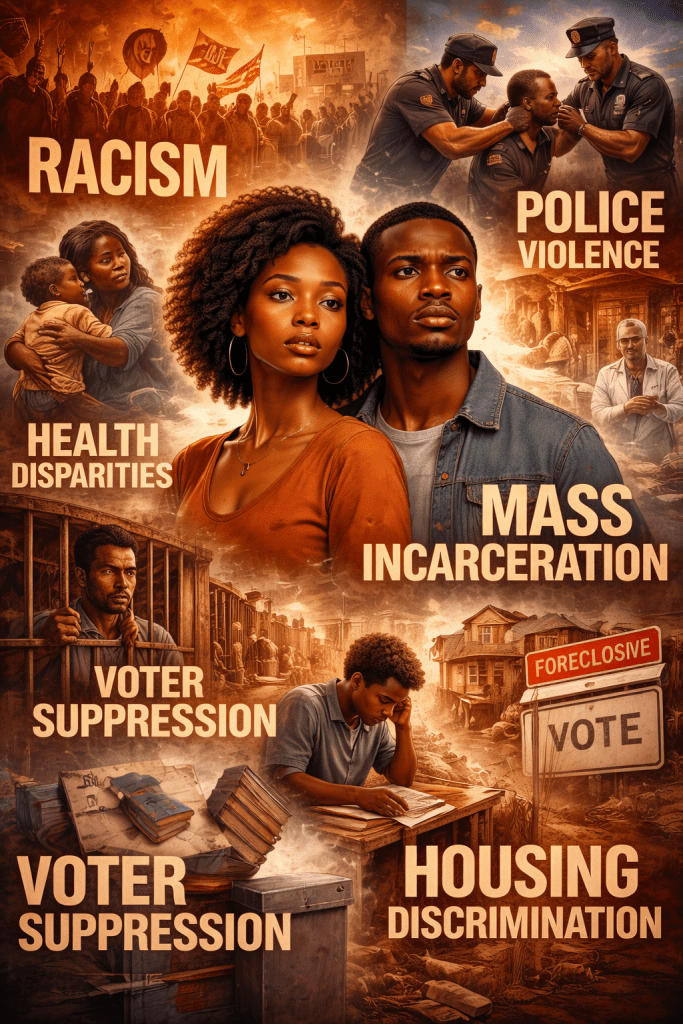
Black people in the United States face a complex web of challenges shaped by centuries of systemic racism, economic inequality, and social marginalization. These intersecting factors have created structural barriers that affect nearly every aspect of life, from housing and education to healthcare and political participation. Understanding the depth of this dilemma requires an examination of historical patterns and contemporary consequences.

Systemic Racism

Systemic or structural racism refers to the ways in which laws, policies, and social institutions create and perpetuate inequality based on race. This includes discriminatory practices in housing, education, employment, and criminal justice. Examples include:

  • Redlining and housing discrimination – Black families were historically denied access to mortgages and homeownership, creating generational wealth gaps.
  • Urban renewal and “Negro removal” – Black neighborhoods were destroyed for highways and development, displacing communities.

2. Economic Inequality

Black people consistently face disparities in income, wealth, and access to employment opportunities. According to Federal Reserve data:

  • The median wealth of Black families is significantly lower than that of white families.
  • Access to high-paying jobs is restricted by both educational and systemic barriers, including bias in hiring and promotion.

Economic inequality compounds other challenges, like housing, healthcare, and education.


3. Criminal Justice and Mass Incarceration

The U.S. criminal justice system disproportionately targets Black individuals:

  • Black Americans are more likely to be stopped, arrested, convicted, and given longer sentences than white Americans for similar offenses.
  • Systems like convict leasing historically re-enslaved Black men after emancipation, while modern mass incarceration continues this legacy in a more subtle form.

This creates cycles of poverty, family disruption, and social stigma.


4. Health Disparities

Black people experience disproportionate health challenges, both from systemic barriers and social determinants:

  • Higher rates of chronic disease, infant mortality, and maternal mortality.
  • Less access to quality healthcare and insurance.
  • The legacy of medical exploitation, such as the Tuskegee Syphilis Study, contributes to mistrust of medical institutions.

5. Educational Inequality

Education is a key pathway to social mobility, yet Black students often face:

  • Segregated schools due to district zoning and residential patterns.
  • Underfunded schools with fewer resources, larger class sizes, and limited access to advanced programs.
  • Bias in curriculum and disciplinary practices that disproportionately penalize Black students.

6. Cultural Stereotypes and Social Perceptions

Black people are frequently subjected to harmful stereotypes:

  • Men: “threatening,” “criminal,” or “hyper-masculine” tropes.
  • Women: “angry,” “jezebel,” or “mammy” archetypes.
  • These stereotypes affect employment, policing, mental health, and social interactions.

7. Political Disenfranchisement

Efforts to suppress Black votes through gerrymandering, voter ID laws, and intimidation continue to limit political influence. Without political power, communities struggle to advocate for systemic change in housing, education, and law enforcement.


8. Intergenerational Trauma

The cumulative effect of slavery, segregation, discrimination, and systemic oppression has created intergenerational trauma. This affects:

  • Mental health outcomes
  • Economic behaviors and financial stability
  • Family structures and community cohesion

One of the most pervasive forces shaping Black life is systemic racism. This form of oppression is embedded within institutions, laws, and social practices that disadvantage Black individuals collectively. Systemic racism manifests in policies that limit access to economic resources, enforce segregation, and perpetuate disparities across generations.

Housing discrimination has historically reinforced racial inequality. Practices such as redlining, blockbusting, and contract selling restricted Black families’ access to safe neighborhoods and homeownership. Redlining, for example, denied mortgages to residents in predominantly Black neighborhoods, preventing them from accumulating wealth through property ownership.

Urban renewal projects in the mid-twentieth century, often referred to as “Negro removal,” further disrupted Black communities. Entire neighborhoods were demolished for highways, commercial developments, and government buildings, displacing families and erasing community networks. These policies reinforced segregation while simultaneously enriching developers and local governments.

Economic inequality remains a central challenge. Black Americans experience higher unemployment rates and lower wages compared with white counterparts. This disparity is compounded by limited intergenerational wealth, which restricts opportunities for education, homeownership, and investment. As a result, economic mobility is often constrained by systemic barriers beyond individual control.

Education is similarly affected by structural inequities. School district zoning often ties educational resources to property taxes, leaving Black students in underfunded schools with fewer academic opportunities. Segregated schools continue to produce gaps in achievement and limit access to higher education and professional careers.

Healthcare disparities also exemplify systemic inequities. Black individuals experience higher rates of chronic illnesses, maternal mortality, and limited access to quality care. Historical exploitation, such as the Tuskegee Syphilis Study, has fostered mistrust toward medical institutions, further complicating healthcare outcomes for Black communities.

Criminal justice disparities are another critical component of structural oppression. Black Americans are disproportionately targeted for policing, incarceration, and harsher sentencing. Practices such as convict leasing in the post-Civil War South and contemporary mass incarceration policies have created cycles of poverty and social instability, particularly affecting Black men.

The labor market has not been immune to racial inequities. Occupational segregation, hiring discrimination, and wage gaps limit economic opportunities for Black workers. Even with equal qualifications, Black individuals frequently face systemic barriers that affect promotions, career progression, and job security.

Political disenfranchisement continues to hinder Black communities. Gerrymandering, voter suppression laws, and historical exclusion from voting limit the ability to influence policies that affect housing, education, healthcare, and criminal justice. This reduces accountability and reinforces systemic inequities.

Cultural and media representation also shapes social experiences. Black people are often portrayed through stereotypes that influence perceptions in employment, law enforcement, and interpersonal interactions. These portrayals contribute to bias, discrimination, and the psychological burden of navigating misrepresentation.

Intergenerational trauma compounds these structural challenges. The cumulative effects of slavery, segregation, and systemic discrimination influence mental health, economic behavior, family dynamics, and community cohesion. This trauma persists across generations, creating challenges that extend beyond immediate social conditions.

Health outcomes are further affected by social determinants such as neighborhood safety, food access, and environmental hazards. Many Black communities live in areas with limited resources, higher exposure to pollution, and reduced access to recreational spaces, exacerbating health disparities.

Despite these challenges, Black communities have demonstrated resilience and agency. Historically, Black churches, civic organizations, and grassroots movements have provided support networks, leadership opportunities, and platforms for advocacy. These institutions have played a critical role in fostering community cohesion and social advancement.

Cultural contributions by Black Americans, from music and literature to art and entrepreneurship, have not only enriched society but also served as forms of resistance and empowerment. Cultural production has allowed Black communities to assert identity, challenge oppression, and build intergenerational pride.

Family and community structures within Black communities have historically been sites of strength. Extended kin networks, cooperative child-rearing, and communal support have mitigated the effects of systemic oppression while fostering resilience.

Economic strategies, including mutual aid, cooperative business ventures, and community investment, have also served as tools to counter structural inequality. These efforts, while often limited by systemic barriers, demonstrate agency and resourcefulness in the face of adversity.

Policy interventions are essential to addressing the multifaceted challenges facing Black Americans. Measures to reduce income inequality, expand access to quality education and healthcare, reform the criminal justice system, and combat discriminatory housing practices are critical to creating equitable opportunities.

Understanding the Black experience requires recognizing both systemic barriers and the resilience of the community. Black Americans navigate a society that historically and continuously marginalizes them, yet they maintain cultural, economic, and social strength that contributes to societal advancement.

The overarching dilemma is that Black people are forced to navigate systems designed historically to exclude them. Every aspect of life—education, work, healthcare, criminal justice, housing—is influenced by these systemic barriers. While resilience, cultural strength, and community networks have enabled survival and progress, the structural challenges continue to create cycles of inequality that affect generations.

In short, the biggest dilemma Black people face is systemic oppression combined with persistent structural inequities, which compound across generations to limit access to opportunity, safety, and wealth.

Ultimately, the biggest dilemma facing Black people is not a matter of individual shortcomings but of persistent systemic inequality and structural oppression. Addressing these interrelated challenges requires comprehensive policy reforms, societal commitment to racial equity, and recognition of the historical context that created these disparities.


References

Alexander, M. (2012). The new Jim Crow: Mass incarceration in the age of colorblindness. The New Press.

Blackmon, D. A. (2008). Slavery by another name: The re-enslavement of Black Americans from the Civil War to World War II. Anchor Books.

Collins, P. H. (2000). Black feminist thought: Knowledge, consciousness, and the politics of empowerment. Routledge.

Crenshaw, K. (1989). Demarginalizing the intersection of race and sex. University of Chicago Legal Forum.

Foner, E. (1988). Reconstruction: America’s unfinished revolution, 1863–1877. Harper & Row.

Hirsch, A. R. (1983). Making the second ghetto: Race and housing in Chicago 1940–1960. University of Chicago Press.

Rothstein, R. (2017). The color of law: A forgotten history of how our government segregated America. Liveright Publishing.

Sugrue, T. J. (2014). The origins of the urban crisis: Race and inequality in postwar Detroit. Princeton University Press.

U.S. Department of Housing and Urban Development. (2023). History of housing discrimination and segregation in the United States.

Wingfield, A. H. (2013). No more invisible man: Race and gender in men’s work. Temple University Press.

The Dilemma of the Black Man and the Black Woman.

The dilemma of the Black man and Black woman is a spiritual, historical, and cultural paradox. Chosen by God, endowed with divine purpose and ancestral greatness, yet marginalized, oppressed, and misrepresented by the world. “For the Lord shall judge His people, and repent Himself for His servants, when He seeth that their power is gone” (Deuteronomy 32:36, KJV). Our divine worth has often clashed with societal perception.

Black men are called to leadership, protection, and spiritual headship. Scripture shows that a godly man is disciplined, righteous, and sacrificial. “He that ruleth his spirit is better than he that taketh a city” (Proverbs 16:32, KJV). Yet, society often diminishes his authority, questions his integrity, and criminalizes his presence. This creates tension between divine calling and worldly expectation.

Black women are called to honor, nurture, and uphold righteousness. The virtuous woman is praised for her fear of God and strength of character. “Who can find a virtuous woman? for her price is far above rubies” (Proverbs 31:10, KJV). Yet, she is often stereotyped, undervalued, and overburdened. The world demands perfection while failing to recognize her godly worth.

The dilemma begins in history. Black men and women have been enslaved, colonized, and systematically oppressed. They were denied education, autonomy, and wealth, yet their spiritual and cultural legacies endured. “They that wait upon the Lord shall renew their strength” (Isaiah 40:31, KJV). Faith sustained their identity through oppression.

For the Black man, societal misrepresentation often targets masculinity. His leadership and strength are viewed with suspicion rather than admiration. Scripture calls men to love and lead with humility: “Husbands, love your wives, even as Christ also loved the church” (Ephesians 5:25, KJV). Yet society frequently equates Black masculinity with aggression or threat.

For the Black woman, the world often reduces her worth to physical appearance or labor. She is resilient, yet society demands emotional perfection. Scripture reminds women of their eternal value: “Favour is deceitful, and beauty is vain: but a woman that feareth the Lord, she shall be praised” (Proverbs 31:30, KJV). Her worth is divine, not superficial.

The dilemma extends to relationships. The Black man struggles to lead spiritually, financially, and morally in a world that often undermines his authority. The Black woman struggles to honor God and maintain dignity in a culture that diminishes her voice. Yet Scripture instructs unity, obedience to God, and mutual respect: “Likewise, ye husbands, dwell with them according to knowledge, giving honour unto the wife” (1 Peter 3:7, KJV).

Education is another battlefield. Black men and women have historically had access denied, yet have produced scholars, thinkers, and inventors. “The heart of the prudent getteth knowledge; and the ear of the wise seeketh knowledge” (Proverbs 18:15, KJV). The dilemma is access and recognition despite capability.

Economically, Black men and women face systemic barriers. They are often denied fair wages, business opportunities, and generational wealth. Yet Scripture teaches diligence and provision: “If any provide not for his own, and specially for those of his own house, he hath denied the faith” (1 Timothy 5:8, KJV). Faith and persistence remain their anchors.

Spiritually, the Black man may wrestle with societal judgment while maintaining leadership and integrity. The Black woman may wrestle with societal objectification while nurturing faith and family. Scripture affirms that God’s view defines true worth: “Man looketh on the outward appearance, but the Lord looketh on the heart” (1 Samuel 16:7, KJV).

Cultural misrepresentation further complicates identity. Black men are often stereotyped as aggressive; Black women as angry or hypersexualized. Both distortions obscure God’s design. The Bible warns against judging by appearance or hearsay: “Judge not according to the appearance, but judge righteous judgment” (John 7:24, KJV).

Health disparities create another layer. Black men face high rates of disease, incarceration, and early mortality. Black women face maternal and systemic health inequities. Yet spiritual endurance sustains them: “Even the youths shall faint and be weary, and the young men shall utterly fall: But they that wait upon the Lord shall renew their strength” (Isaiah 40:30-31, KJV).

Black men and women are often forced to overperform to prove worth. Excellence is expected; failure is punished. Yet Scripture encourages perseverance and faith-driven identity: “But let patience have her perfect work, that ye may be perfect and entire, wanting nothing” (James 1:4, KJV).

The dilemma is compounded by colorism within the community. Lighter skin may be praised; darker skin criticized. Yet beauty and value are rooted in divine creation, not pigment. “So God created man in his own image, in the image of God created he him; male and female created he them” (Genesis 1:27, KJV).

Black men and women must navigate family dynamics where generational trauma persists. Healing and restoration require wisdom and faith. “Train up a child in the way he should go: and when he is old, he will not depart from it” (Proverbs 22:6, KJV). Spiritual and emotional nurturing is central.

The dilemma also affects love and partnership. Black men may struggle to lead without being misjudged. Black women may struggle to honor themselves while nurturing others. Godly love, patience, and discernment are the remedy: “Charity suffereth long, and is kind; charity envieth not; charity vaunteth not itself” (1 Corinthians 13:4, KJV).

Community expectation weighs heavily. Success is celebrated selectively; failure is amplified. Both men and women carry burdens not of their choosing. Scripture encourages unity and support: “Bear ye one another’s burdens, and so fulfil the law of Christ” (Galatians 6:2, KJV).

Despite these dilemmas, God equips His people with purpose. Black men and women are called to honor, wisdom, and influence. “And he said unto me, My grace is sufficient for thee: for my strength is made perfect in weakness” (2 Corinthians 12:9, KJV). Weakness is a canvas for divine strength.

Education, faith, family, and community become tools to navigate systemic obstacles. Black men lead with humility; Black women nurture with resilience. Both serve God’s higher calling while confronting societal injustice. “Trust in the Lord with all thine heart; and lean not unto thine own understanding” (Proverbs 3:5, KJV).

Ultimately, the dilemma is temporal; God’s perspective is eternal. Black identity, when rooted in divine truth, transcends cultural misrepresentation. “For I know the thoughts that I think toward you, saith the Lord, thoughts of peace, and not of evil, to give you an expected end” (Jeremiah 29:11, KJV).

Black men and women are divine reflections, created with purpose, intelligence, and sacred value. Their struggle is real, but their legacy is eternal. “Therefore all things whatsoever ye would that men should do to you, do ye even so to them” (Matthew 7:12, KJV). Treating oneself and each other with Godly love affirms identity.

The dilemma of the Black man and Black woman is multi-layered: historical, social, psychological, and spiritual. Yet, through faith, perseverance, and adherence to God’s Word, it becomes a pathway to triumph, restoration, and divine fulfillment. “Be strong and of a good courage, fear not, nor be afraid of them: for the Lord thy God, he it is that doth go with thee” (Deuteronomy 31:6, KJV).

Biblical References (KJV)

  • Genesis 1:27 — God created man in His image
  • Proverbs 3:5 — Trust in the Lord
  • Proverbs 16:32 — Self-control is better than conquering a city
  • Proverbs 18:15 — The heart of the prudent seeks knowledge
  • Proverbs 22:6 — Train up a child in the way he should go
  • Proverbs 31:10, 30 — The virtuous woman is above rubies
  • Isaiah 40:30-31 — Renewal of strength
  • Isaiah 54:17 — No weapon formed against thee shall prosper
  • Jeremiah 29:11 — God’s thoughts for peace and purpose
  • Matthew 7:12 — The Golden Rule
  • Ephesians 5:25 — Husbands love your wives as Christ loved the church
  • 1 Corinthians 13:4-6 — Charity suffereth long
  • 1 Peter 2:9 — Chosen generation, royal priesthood
  • 1 Peter 3:7 — Husbands dwell with knowledge, giving honor to wives
  • 2 Corinthians 12:9 — God’s strength made perfect in weakness
  • Galatians 6:2 — Bear one another’s burdens
  • Deuteronomy 31:6 — Be strong and courageous
  • Deuteronomy 32:36 — God judges His people
  • Psalm 68:31 — Ethiopia shall stretch out her hands to God
  • Exodus 5:1 — Let my people go

References

Asante, M. K. (1988). Afrocentricity: The theory of social change. African American Images.

Bell, D. (1992). Faces at the bottom of the well: The permanence of racism. Basic Books.

Diop, C. A. (1974). The African origin of civilization: Myth or reality. Lawrence Hill Books.

Du Bois, W. E. B. (1903). The souls of Black folk. A. C. McClurg & Co.

Fanon, F. (1967). Black skin, white masks. Grove Press.

hooks, b. (1995). Killing rage: Ending racism. Henry Holt and Co.

Muhammad, K. G. (2010). The condemnation of Blackness: Race, crime, and the making of modern urban America. Harvard University Press.

Woodson, C. G. (1933). The mis-education of the Negro. Associated Publishers.

Karenga, M. (2002). Introduction to Black studies (3rd ed.). University of Sankore Press.

Oyěwùmí, O. (1997). The invention of women: Making an African sense of Western gender discourses. University of Minnesota Press.