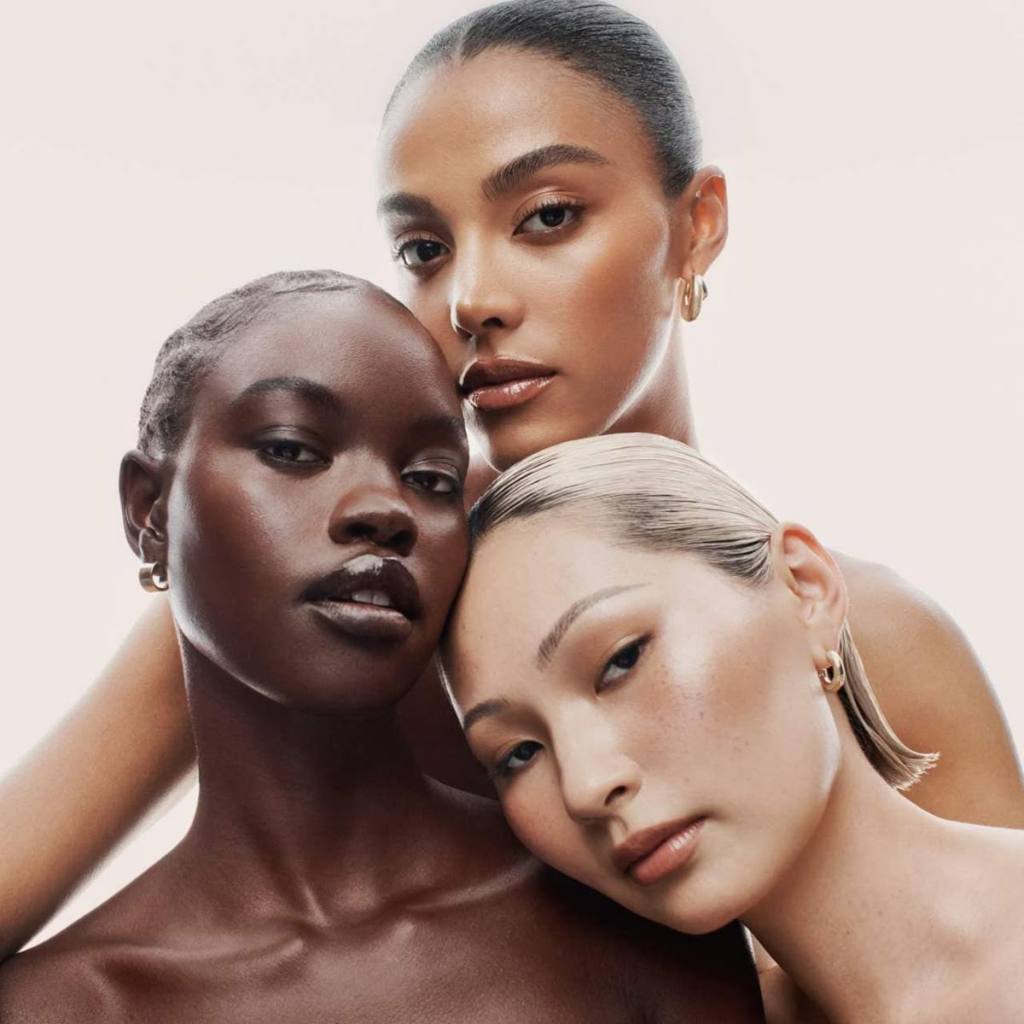
Category Archives: the brown girl dilemma

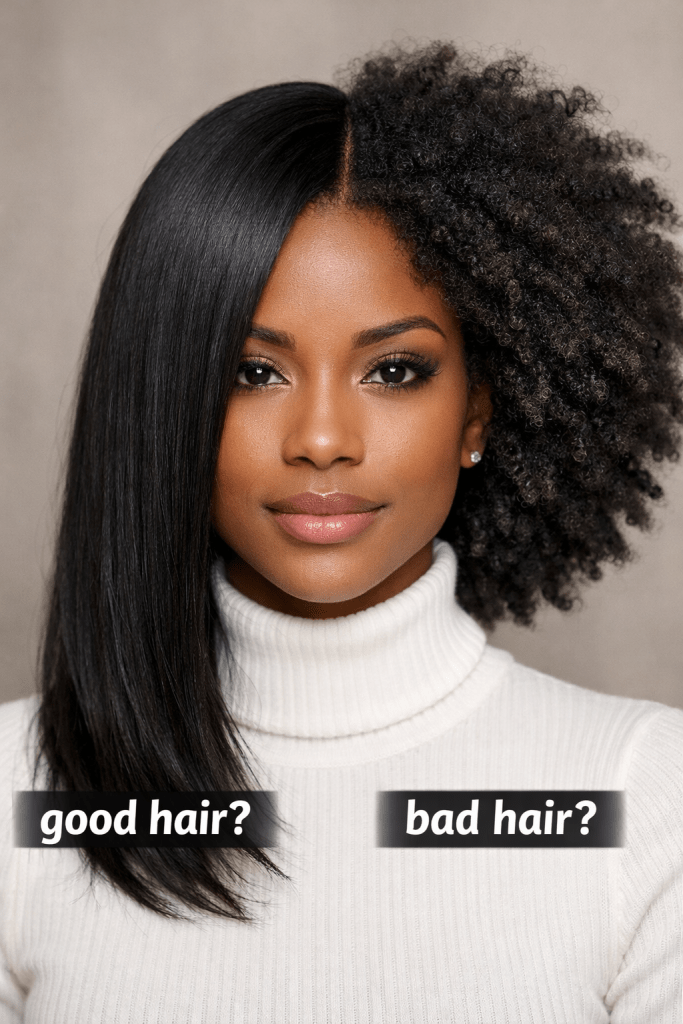
Good Hair Vs Bad Hair

The conversation around “good hair” and “bad hair” has long been a source of tension, pride, and pain within the Black community. The term “good hair” often refers to straighter, silkier textures associated with European standards of beauty, while “bad hair” is used to describe tightly coiled, kinky textures often associated with African heritage. But what does the Bible say about hair, and how can we reclaim a healthy, godly perspective?

The Bible affirms that all hair is good because it is created by God. Matthew 10:30 (KJV) declares, “But the very hairs of your head are all numbered.” This scripture shows the Most High’s care and intentionality regarding hair. There is no biblical basis for labeling one texture as superior to another. Instead, hair is seen as a natural part of God’s design, a symbol of identity, and, in many cases, a spiritual covering (1 Corinthians 11:15, KJV).
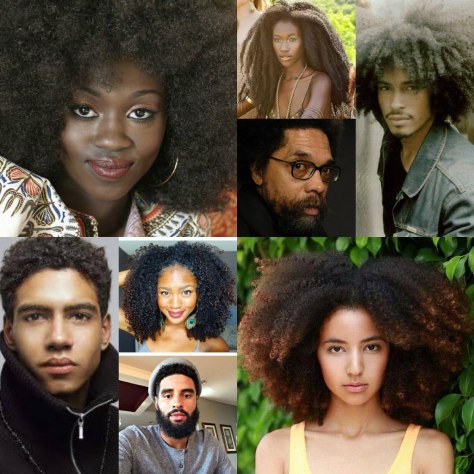
All photographs are the property of their respective owners. No copyright infringement intended.

The notion of “bad hair” largely stems from the legacy of slavery and colonialism. During slavery in America, Africans’ natural hair was often ridiculed and seen as “wild” or “unkempt” by European enslavers. This ridicule was strategic—it sought to strip enslaved Africans of pride in their natural appearance, to convince them that European features and styles were superior.

Psychologically, this produced internalized racism. Over time, many Black people began to associate straight hair with beauty, respectability, and even success. This association was reinforced in media, workplaces, and schools that penalized or banned natural hairstyles. Such systemic discrimination can lead to what scholars call “cultural trauma,” where a group learns to devalue aspects of its own identity.

The term “nappy” historically was used as a derogatory word. It mocked the tight coils and kinks of African hair, equating them with roughness or uncleanliness. The phrase “nappy-headed” became a slur that reinforced the idea that natural Black hair was undesirable. This is a psychological residue of enslavement that still impacts Black self-esteem today.

In truth, there is no such thing as “bad hair.” All hair grows according to the genetic blueprint given by God. Psalm 139:14 (KJV) reminds us, “I will praise thee; for I am fearfully and wonderfully made.” The texture, thickness, and curl pattern of one’s hair is divinely designed, not a mistake.

The love-hate relationship with hair in the Black community also reveals a longing for acceptance. Many Black people invest heavily in hair products, wigs, and chemical treatments to conform to mainstream standards. This is not just vanity—it is often a survival mechanism in a society that discriminates based on appearance.

Hollywood, advertising, and fashion industries have historically promoted Eurocentric beauty ideals, making straight hair the default standard of attractiveness. This has led to generations of Black children growing up believing that their natural hair was unprofessional or unattractive unless it was altered.

The Bible warns against adopting the world’s standard of beauty. 1 Samuel 16:7 (KJV) says, “For man looketh on the outward appearance, but the Lord looketh on the heart.” God is not concerned with whether hair is curly, straight, or coiled—He is concerned with the condition of our spirit.

Hair is also deeply symbolic in the Bible. Samson’s hair represented his covenant with God (Judges 16:17, KJV). The Nazarites were instructed not to cut their hair as a sign of consecration (Numbers 6:5, KJV). These examples remind us that hair has spiritual meaning, but no texture or style makes one holier than another.

Solutions to the “good hair” vs. “bad hair” divide must begin with education and affirmation. Parents can teach children from an early age to embrace their natural hair textures, using affirmations and showing them examples of beauty that look like them. Representation matters.

The natural hair movement has been one powerful response to centuries of hair-shaming. By wearing afros, locs, braids, and twists proudly, Black people reclaim their heritage and reject the lie that straight hair is superior. This movement echoes Romans 12:2 (KJV): “And be not conformed to this world: but be ye transformed by the renewing of your mind.”

Workplaces and schools must also be challenged. Laws like the CROWN Act, which bans hair discrimination, are steps toward justice. Discrimination against natural hair is not merely a fashion issue—it is a civil rights issue rooted in systemic racism.

Spiritually, the solution also involves repentance and deliverance from self-hatred. Generational trauma and the colonial mindset must be broken. Believers can pray for a renewed mind and ask God to restore confidence in His design.

Men must also be part of this conversation. In many cases, Black men have been conditioned to prefer straight hair on women, reinforcing Eurocentric standards. Re-educating men about the beauty and versatility of natural hair is part of community healing.

Media creators and influencers have a responsibility to showcase diverse hair textures positively. When children see actresses, news anchors, and professionals wearing natural styles proudly, it normalizes their beauty. This can shift psychological perceptions over time.

The church can play a role by teaching that hair should not be a source of pride, shame, or division. James 2:1-4 (KJV) warns against showing partiality based on outward appearance. The body of Christ should be the first place where people of all textures feel celebrated.

Healing the Next Generation

The conversation around hair identity must address its impact on children, because early experiences with hair-shaming or affirmation often shape a child’s self-image for life. Developmental psychology teaches that children form a sense of self-worth between ages 3 and 7. If a child repeatedly hears that their hair is “nappy,” “ugly,” or “unprofessional,” those words can leave a deep emotional wound that lasts into adulthood.

Hair bullying is a real issue. In many schools, Black children have been suspended or sent home for wearing braids, locs, or afros—styles that are natural and culturally significant. These incidents teach children that who they are is unacceptable unless they conform to Eurocentric beauty standards. This form of discrimination not only harms self-esteem but also creates anxiety and shame.

From a psychological standpoint, children who internalize negative messages about their hair often struggle with identity development. They may wish they looked different, leading to feelings of inadequacy. Erik Erikson’s theory of psychosocial development identifies this as an “identity vs. role confusion” stage—when children are trying to discover who they are, acceptance plays a critical role.

Biblically, this issue is critical because self-hatred contradicts God’s design. Psalm 8:5 (KJV) declares, “For thou hast made him a little lower than the angels, and hast crowned him with glory and honour.” Every child is made in God’s image (Genesis 1:27, KJV) and should be celebrated as such. Teaching children to love their hair is teaching them to love God’s creation.

Parents play the most important role in reversing the harm of “good hair vs. bad hair” conditioning. Affirmations like “Your hair is beautiful just the way God made it” can help children internalize positive messages. Taking time to gently care for and style their hair with love turns grooming into a time of bonding and affirmation.

Representation in books, toys, and media is also crucial. When children see dolls, superheroes, and princesses with afros, braids, and coils, they learn that beauty comes in many forms. Christian parents can incorporate Bible lessons on diversity and God’s intentional creation to reinforce this truth.
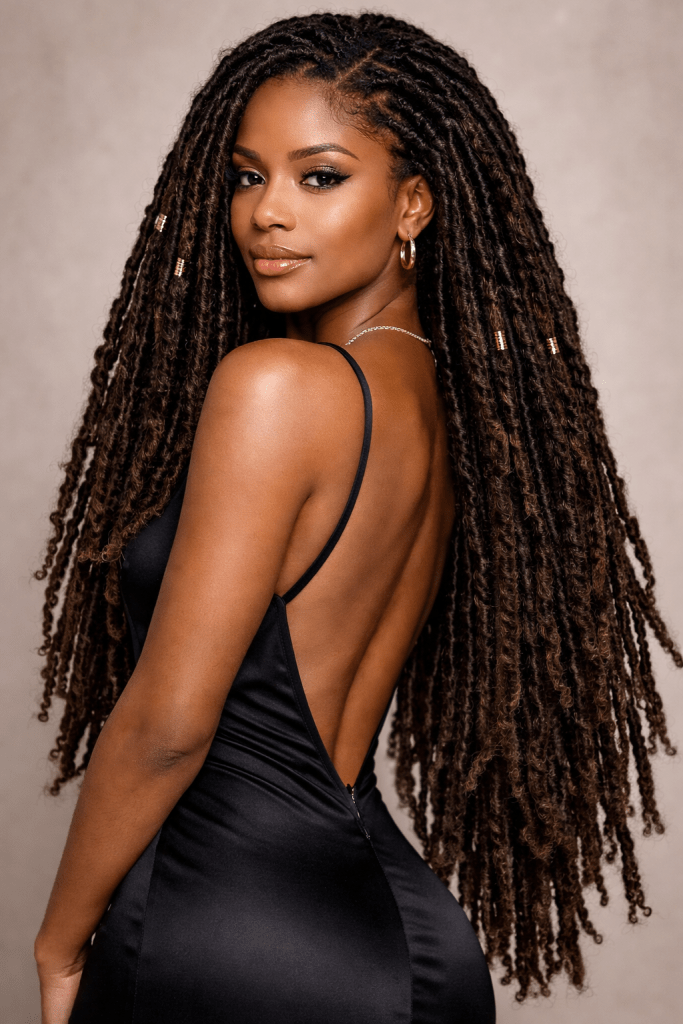
People must create spaces where natural beauty is affirmed rather than criticized. Sadly, some church cultures have pressured women and girls to straighten their hair to look “presentable” for service. Instead, churches should teach that modesty and holiness are about the heart (1 Peter 3:3-4, KJV), not about imitating European hairstyles.

Schools need cultural sensitivity training to prevent hair discrimination. The CROWN Act (Creating a Respectful and Open World for Natural Hair) is now law in several U.S. states and should be advocated for everywhere. This legislation protects children from unfair discipline or exclusion based on hair.

Psychologists recommend early intervention when children experience hair-based bullying. Parents should validate the child’s feelings, teach coping strategies, and involve teachers if necessary. Healing from these experiences prevents long-term damage to self-esteem.

Mentorship programs can also make a difference. When children see older peers or adults proudly rocking natural hair, they have role models to look up to. This helps normalize natural hair and removes the stigma.

Hair care education is another solution. Many parents and teachers simply do not know how to care for natural hair, which can lead to frustration or neglect. Workshops on proper styling, maintenance, and products empower families to care for their hair healthily.

From a community perspective, celebrating natural hair through events like hair shows, heritage days, or social media campaigns can build pride. These events allow children to see that their hair is not just normal—it is special and worth celebrating.

Men and fathers have a special responsibility to speak life into their daughters. A father who compliments his daughter’s natural hair can shield her from seeking validation from harmful sources. Proverbs 18:21 (KJV) reminds us that “death and life are in the power of the tongue.”

Mental health support is also important. If a child’s self-esteem has been deeply harmed, counseling can help them rebuild a healthy self-image. Christian counseling can integrate biblical truths with therapeutic strategies to restore confidence.

The natural hair conversation should also extend to young boys. Boys with locs or afros have been stereotyped as “unprofessional” or even “criminal.” Parents must teach their sons that their hair is not a marker of delinquency but of heritage, creativity, and pride.

Psychologically, embracing natural hair is part of decolonizing the mind. It is a way of rejecting oppressive beauty standards and embracing cultural authenticity. Romans 12:2 (KJV) calls us to “be transformed by the renewing of your mind.” Renewing the mind means unlearning lies that say Blackness must be hidden or altered to be acceptable.

Education on African history is also a solution. When children learn about ancient African civilizations—Egypt, Kush, Mali—and their rich culture, they develop pride in their heritage. This context reframes hair as part of a royal, powerful legacy rather than something to be ashamed of.

Finally, prayer and community support are vital. Families can pray over their children’s self-esteem and ask God to protect them from the spirit of rejection. James 5:16 (KJV) promises that “the effectual fervent prayer of a righteous man availeth much.” Community support groups can also provide encouragement and resources for families committed to embracing natural beauty.

In conclusion, healing the next generation from the trauma of “good hair vs. bad hair” is not just a beauty issue—it is a spiritual and cultural mission. By affirming children early, reforming schools and churches, and providing mentorship and representation, we can raise a generation that celebrates what God has given them. When we teach children that all hair is good hair, we teach them that they themselves are good—fearfully and wonderfully made.

Ultimately, the conversation about “good hair” vs. “bad hair” is about much more than hair. It is about freedom—freedom from colonial thinking, from internalized racism, and from societal pressure to conform. True freedom comes from knowing who you are in Christ and embracing every part of your God-given identity.

In conclusion, all hair is good hair. It is numbered by God, designed with purpose, and worthy of care and respect. The challenge before us is to uproot the lies of slavery, colonization, and white supremacy that taught generations of Black people to hate what God made. Only then can we walk fully in the truth that we are fearfully and wonderfully made—kinks, curls, coils, and all.
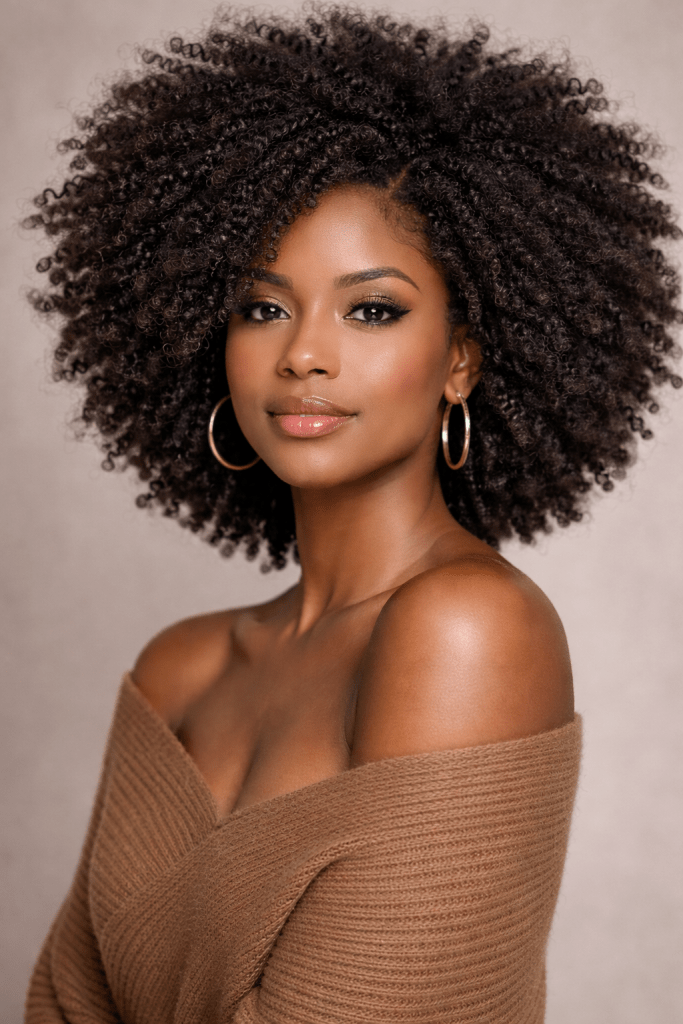
Good Hair? YES


References

  • Banks, I. (2000). Hair Matters: Beauty, Power, and Black Women’s Consciousness. NYU Press.
  • Byrd, A., & Tharps, L. (2014). Hair Story: Untangling the Roots of Black Hair in America. St. Martin’s Griffin.
  • hooks, b. (1992). Black Looks: Race and Representation. South End Press.
  • DeGruy, J. (2005). Post Traumatic Slave Syndrome. Joy DeGruy Publications.

Key KJV Scriptures: Matthew 10:30; 1 Corinthians 11:15; Psalm 139:14; 1 Samuel 16:7; Judges 16:17; Numbers 6:5; Romans 12:2; James 2:1-4.
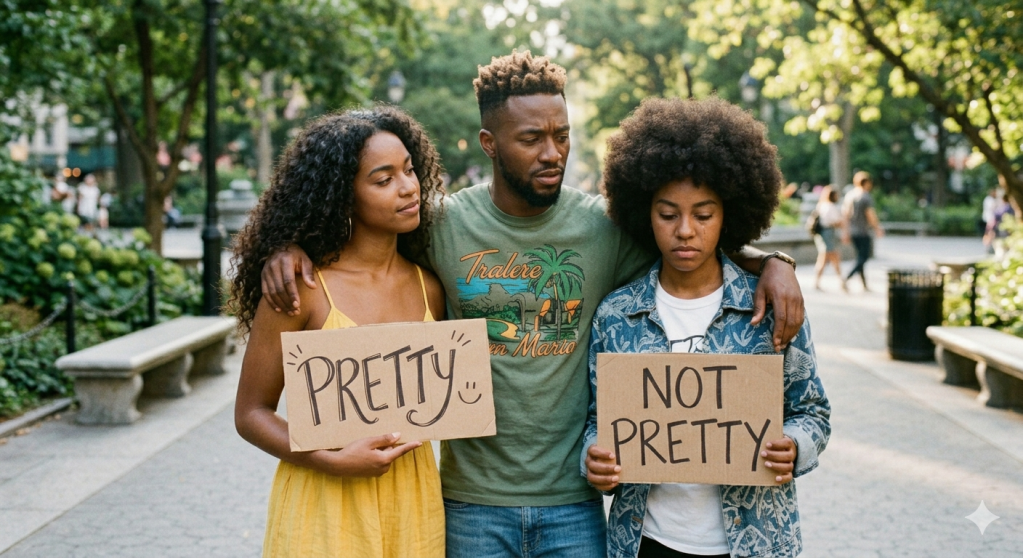

The Colorism Series: Conditioned to Compare.

Colorism is not merely an external system of bias—it is an internalized framework that conditions individuals to constantly measure themselves and others against a hierarchy of skin tone. “Conditioned to compare” reflects a learned behavior, one shaped by generations of socialization, media influence, and historical oppression.

From early childhood, individuals are subtly taught to associate lighter skin with beauty, goodness, and success, while darker skin is often unfairly linked to negativity or inferiority. These associations are reinforced through family dynamics, peer interactions, and institutional messaging (Hunter, 2007).

This conditioning is deeply rooted in colonial history, where European standards of beauty and worth were imposed on colonized populations. Over time, these standards became normalized, embedding themselves into the cultural psyche and influencing how individuals perceive themselves and others.

Within the Black community, this has created a complex and often painful dynamic where individuals are not only judged by external groups but also within their own communities. Comparisons based on skin tone can affect friendships, relationships, and social standing.

The media plays a significant role in reinforcing these comparisons. Lighter-skinned individuals are often overrepresented in film, television, and advertising, creating a narrow standard of beauty that excludes a wide range of natural diversity.

Public figures such as Lupita Nyong’o have spoken candidly about overcoming internalized colorism, sharing how societal messages once made them question their own beauty. Her journey highlights the psychological impact of constant comparison.

Similarly, Viola Davis has addressed the limited roles available to darker-skinned women and the implicit comparisons that shape casting decisions, emphasizing the systemic nature of these biases.

The concept of social comparison theory helps explain this phenomenon. Proposed by Leon Festinger, this theory posits that individuals determine their self-worth by comparing themselves to others, making them particularly vulnerable to societal hierarchies such as colorism (Festinger, 1954).

When these comparisons are based on skin tone, they can lead to internalized inferiority among darker-skinned individuals and a false sense of superiority among lighter-skinned individuals. Both outcomes are harmful, perpetuating division and inequality.

Family environments can unintentionally reinforce these comparisons. Comments about complexion, preferences for lighter-skinned children, or even seemingly harmless jokes can leave lasting impressions that shape self-perception (Thompson & Keith, 2001).

In educational settings, colorism can influence teacher expectations and peer interactions, further embedding comparative thinking. Students may internalize these biases, which can affect their confidence and academic performance.

Romantic relationships are another domain where comparison is prevalent. Studies suggest that lighter-skinned individuals are often perceived as more desirable, reinforcing the idea that love and acceptance are tied to complexion (Banks, 2000).

Economically, the effects of being conditioned to compare are also evident. Lighter-skinned individuals often receive preferential treatment in hiring and promotions, reinforcing the belief that their appearance is inherently more valuable (Goldsmith, Hamilton, & Darity, 2007).

The role of implicit bias is critical in sustaining these patterns. Even individuals who consciously reject colorism may still unconsciously engage in comparative thinking shaped by societal conditioning (Greenwald & Krieger, 2006).

Social media has intensified this phenomenon, providing a constant stream of images that promote specific beauty standards. Filters, editing tools, and curated content often favor lighter complexions, further distorting perceptions of beauty.

The psychological consequences of constant comparison are significant. Individuals may experience anxiety, depression, and low self-esteem as they strive to meet unattainable standards or feel inadequate in comparison to others.

However, there is a growing movement to disrupt this conditioning. Advocacy campaigns, educational initiatives, and cultural shifts are encouraging individuals to reject comparison and embrace self-acceptance.

Representation is key in this transformation. When diverse skin tones are celebrated and normalized in media and leadership, it challenges the hierarchy that fuels comparison and promotes inclusivity.

Faith-based perspectives also offer a powerful counter-narrative, emphasizing that human worth is not determined by outward appearance but by inner character and divine purpose (1 Samuel 16:7, KJV).

Breaking free from the cycle of comparison requires intentional unlearning. It involves recognizing internalized biases, challenging societal norms, and cultivating a sense of self-worth that is independent of external validation.

Ultimately, “Conditioned to Compare” is both a diagnosis and a call to action. By acknowledging the forces that shape our perceptions, individuals and communities can begin to dismantle the harmful hierarchies of colorism and move toward a more unified and equitable future.


References

Banks, I. (2000). Hair matters: Beauty, power, and Black women’s consciousness. New York University Press.

Festinger, L. (1954). A theory of social comparison processes. Human Relations, 7(2), 117–140.

Goldsmith, A. H., Hamilton, D., & Darity, W. (2007). From dark to light: Skin color and wages among African Americans. Journal of Human Resources, 42(4), 701–738.

Greenwald, A. G., & Krieger, L. H. (2006). Implicit bias: Scientific foundations. California Law Review, 94(4), 945–967.

Hunter, M. (2007). The persistent problem of colorism: Skin tone, status, and inequality. Sociology Compass, 1(1), 237–254.

Thompson, M. S., & Keith, V. M. (2001). The blacker the berry: Gender, skin tone, self-esteem, and self-efficacy. Gender & Society, 15(3), 336–357.

Dilemma: Racialized Double Consciousness

The concept of racialized double consciousness, first articulated by W. E. B. Du Bois remains one of the most enduring frameworks for understanding the psychological and social realities of Black life in America. It describes the internal conflict experienced by Black individuals who must navigate their own cultural identity while simultaneously viewing themselves through the lens of a dominant society that has historically marginalized them. This dual awareness is not merely theoretical; it is lived, embodied, and passed down through generations.

At its core, racialized double consciousness reflects a fractured sense of self. Black individuals are often compelled to reconcile who they are with how they are perceived. This tension produces a heightened awareness of identity, one that requires constant adjustment depending on the social environment. It is both a survival mechanism and a psychological burden, shaping how one speaks, behaves, and even thinks.

The historical roots of this phenomenon are deeply embedded in the legacy of slavery and segregation in the United States. From the era of bondage to the aftermath of the American Civil War, Black identity was constructed in opposition to a dominant white framework that denied full humanity. Even after emancipation, systems of exclusion such as Jim Crow laws reinforced a dual existence—one public and constrained, the other private and authentic.

During the early twentieth century, Du Bois argued that Black Americans were “gifted with second sight,” a profound awareness that allowed them to see both their own world and the world of the dominant culture. While this duality could foster resilience and insight, it also created a persistent sense of internal division. This division continues to shape contemporary experiences of race and identity.

In modern society, racialized double consciousness manifests in professional spaces, where Black individuals often feel pressure to code-switch to conform to dominant cultural norms. This adaptation can involve altering speech, appearance, or behavior to be perceived as acceptable or non-threatening. While effective in navigating systemic barriers, it can also lead to emotional exhaustion and a diminished sense of authenticity.

Education systems also play a significant role in reinforcing this dual awareness. Curricula that center Eurocentric perspectives can marginalize Black history and contributions, forcing Black students to engage with knowledge that does not fully reflect their lived experiences. This dissonance contributes to a fragmented educational identity and underscores the broader societal imbalance.

The media further amplifies racialized double consciousness by perpetuating stereotypes that distort Black identity. From film to news coverage, representations often oscillate between hypervisibility and invisibility. Influential figures such as Lupita Nyong’o have spoken openly about the psychological impact of colorism and representation, highlighting how external perceptions shape internal self-worth.

In addition to media, economic structures reinforce this duality. Wealth disparities, employment discrimination, and limited access to resources create an environment where Black individuals must constantly navigate structural inequities. The tension between aspiration and systemic limitation deepens the conundrum of identity and opportunity.

Racialized double consciousness is also evident in interactions with law enforcement and the criminal justice system. The need to be hyper-aware of one’s behavior in order to avoid suspicion or harm reflects a lived reality rooted in historical and contemporary injustice. This awareness is not abstract; it is often a matter of survival.

Within interpersonal relationships, this duality can influence how Black individuals relate to others, both within and outside their communities. The pressure to conform to external expectations can create internal conflict, particularly when those expectations conflict with cultural values or personal authenticity.

Despite its challenges, racialized double consciousness can also be a source of strength. The ability to navigate multiple cultural frameworks fosters adaptability, resilience, and a nuanced understanding of the world. This “double vision” can empower individuals to challenge dominant narratives and advocate for change.

The Black intellectual tradition has long engaged with this concept, expanding upon Du Bois’s original framework. Scholars have examined how gender, class, and other intersecting identities complicate the experience of double consciousness. Black women, for instance, often navigate multiple layers of marginalization, resulting in a more complex form of dual awareness.

Spirituality and faith traditions also provide a lens through which to understand and cope with this duality. For many, biblical narratives of exile, struggle, and redemption resonate deeply with the Black experience. These frameworks offer both comfort and a means of interpreting historical and contemporary realities.

Artistic expression has become a powerful outlet for articulating the tensions of double consciousness. Through music, literature, and visual art, Black creators explore themes of identity, belonging, and resistance. These expressions not only reflect individual experiences but also contribute to a collective cultural narrative.

The civil rights movement brought national attention to the realities of racial injustice and the internal conflicts it produces. Leaders and activists sought to dismantle the structures that necessitated double consciousness, advocating for a society in which Black identity could exist without compromise.

In contemporary discourse, the concept remains highly relevant. Movements for racial justice continue to highlight the psychological and structural dimensions of inequality. The persistence of systemic racism ensures that double consciousness is not a relic of the past but an ongoing reality.

Global perspectives further enrich the understanding of racialized double consciousness. Black individuals in different parts of the world experience similar tensions, though shaped by distinct cultural and historical contexts. This global dimension underscores the व्यापक impact of racial hierarchies.

The digital age has introduced new dimensions to this experience. Social media platforms allow for both self-expression and surveillance, creating spaces where identity can be affirmed or contested. The visibility afforded by these platforms can amplify both empowerment and scrutiny.

Ultimately, racialized double consciousness speaks to the enduring complexity of Black identity in a world structured by racial inequality. It is a testament to both the resilience and the vulnerability of those who navigate its demands daily.

As society continues to grapple with issues of race and justice, the insights offered by Du Bois remain profoundly relevant. Understanding and addressing the conditions that produce double consciousness is essential to creating a more equitable and inclusive world.

References

Du Bois, W. E. B. (1903). The Souls of Black Folk. Chicago, IL: A. C. McClurg & Co.

Lupita Nyong’o. (2014). Speech on beauty and colorism at Essence Black Women in Hollywood.

Alexander, M. (2010). The New Jim Crow: Mass Incarceration in the Age of Colorblindness. New York, NY: The New Press.

Coates, T.-N. (2015). Between the World and Me. New York, NY: Spiegel & Grau.

Fanon, F. (1952). Black Skin, White Masks. Paris, France: Éditions du Seuil.

Global Reflections: How Women Around the World See Black Women.

This photograph is the property of its respective owner. No copyright infringement intended.

The perceptions of Black women around the world are diverse and complex, shaped by history, culture, media, and personal experiences. While generalizations are never universal, patterns emerge in how Black women are viewed globally. Here’s a nuanced overview:


Beauty and Physical Features

Globally, Black women are often admired for their distinctive beauty—dark skin, natural hair textures, curvaceous figures, and bold features. In many African and Caribbean countries, this beauty is celebrated as a connection to heritage and identity.

However, Eurocentric beauty standards prevalent in Western media often marginalize these traits, promoting lighter skin, straighter hair, and thinner bodies as the “ideal.” This has led to colorism both within and outside Black communities, where lighter-skinned women may be more widely accepted or idealized in certain societies (Hunter, 2007; Rooks, 2021).


Strength and Resilience

Across cultures, Black women are frequently recognized for their resilience. Historical struggles with slavery, colonialism, systemic racism, and sexism have cultivated an image of Black women as strong, resourceful, and independent. Many women worldwide see Black women as role models of endurance and courage, though this sometimes becomes a stereotype that overlooks vulnerability and emotional needs (Collins, 2000).


Intelligence and Leadership

Black women are increasingly acknowledged for their brilliance, creativity, and leadership. From scholars, politicians, and entrepreneurs to artists and activists, women globally recognize Black women as innovators and change-makers. Still, racial and gender biases sometimes undermine or overlook their accomplishments, particularly in predominantly white or male-dominated spaces.


Cultural Influence

Black women have immense influence in music, fashion, and popular culture worldwide. From Beyoncé and Lupita Nyong’o to Rihanna and Naomi Campbell, women globally admire Black women’s style, artistry, and confidence. In many regions, this cultural impact elevates Black women as trendsetters and symbols of empowerment.


Stereotypes and Misconceptions

Unfortunately, global perceptions are not always positive. Common stereotypes persist: the “angry Black woman,” the hypersexualized Black woman, or the overly strong and independent figure who needs no support. Such narratives are perpetuated by media, literature, and historical bias, often overshadowing the nuanced realities of Black women’s experiences (West, 1995).


Intersection of Race and Gender

Women around the world understand that Black women navigate both racism and sexism, making their experiences unique. In multicultural settings, Black women are often lauded for their strength, yet simultaneously face discrimination that challenges their professional, social, and personal lives.


Admiration and Solidarity

Many women, especially women of color, express admiration for Black women’s courage, beauty, and achievements. There is a growing movement of global solidarity, celebrating Black womanhood through media, literature, and social campaigns like #BlackGirlMagic, which highlights the brilliance, resilience, and creativity of Black women.

Global Voices on Black Womanhood

Africa

  • Perception: Black women are celebrated for their beauty, heritage, and cultural pride. Natural hair, traditional attire, and skin tone are often embraced as symbols of identity.
  • Quote: “In my community, a woman’s strength and ability to hold family and society together is admired. Her beauty is in her resilience and her wisdom.” – Nigerian woman, Lagos.
  • Observation: African societies often value community-oriented leadership and motherhood, with Black women seen as pillars of family and social structure.

Caribbean

  • Perception: Black women are recognized for confidence, style, and creative expression. Their bodies, music, and fashion sense are celebrated globally.
  • Quote: “Black women here are queens. We have rhythm, grace, and strength in everything we do.” – Jamaican woman, Kingston.
  • Observation: Caribbean women often emphasize self-expression through dance, music, and art, reinforcing the global influence of Black culture.

United States

  • Perception: Black women are admired for resilience and achievements in education, politics, and culture. Yet, stereotypes like the “angry Black woman” or hypersexualization persist.
  • Quote: “We are often seen as strong, but people forget we need support too. Our strength doesn’t make us invincible.” – African American woman, Atlanta.
  • Observation: Movements like #BlackGirlMagic and campaigns celebrating Black women’s accomplishments highlight empowerment and counter negative stereotypes.

Europe

  • Perception: Black women are increasingly recognized for beauty and cultural contribution, but they often face systemic racism and exoticization.
  • Quote: “People admire our fashion and skin tone, but sometimes it feels like they only see us as different, not equal.” – British woman of African descent, London.
  • Observation: European societies tend to appreciate aesthetic traits but often struggle with fully valuing Black women’s intellect, leadership, and humanity.

Latin America

  • Perception: Black women’s beauty is celebrated in some regions, but colorism is highly prevalent, favoring lighter skin and European features.
  • Quote: “Our dark skin is beautiful, but society still values lighter women more. It’s a constant struggle for recognition.” – Afro-Brazilian woman, Salvador.
  • Observation: While Afro-Latin culture embraces African roots, historical legacies of colonialism and slavery influence societal perceptions and opportunities for dark-skinned women.

Asia

  • Perception: Black women are admired for fashion, confidence, and cultural uniqueness but are often exoticized or misunderstood.
  • Quote: “They think we are mysterious or strong, but they rarely understand the depth of our experiences.” – Black woman in Japan.
  • Observation: Media representation of Black women is limited, leading to fascination with physical traits rather than acknowledgment of intellect or character.

Global Trends

  • Admiration: Across the world, Black women are increasingly celebrated for beauty, creativity, resilience, and leadership.
  • Challenges: Persistent stereotypes, colorism, exoticization, and structural inequalities remain.
  • Empowerment Movements: #BlackGirlMagic, Afrofuturism, natural hair movements, and global social campaigns amplify Black women’s voices, accomplishments, and culture.

Summary Insight:
Women globally recognize Black women as strong, beautiful, and influential, yet societal biases affect perception and opportunities. Celebrations of culture, resilience, and achievement are growing, empowering Black women to reclaim narratives and redefine global beauty, leadership, and identity standards.


References

Collins, P. H. (2000). Black feminist thought: Knowledge, consciousness, and the politics of empowerment (2nd ed.). New York, NY: Routledge.

Hunter, M. L. (2007). The persistent problem of colorism: Skin tone, status, and inequality. Sociology Compass, 1(1), 237–254. https://doi.org/10.1111/j.1751-9020.2007.00006.x

Rooks, N. (2021). Hair politics: Beauty, culture, and Black identity. New York, NY: Beacon Press.

West, C. M. (1995). Mammy, Sapphire, and Jezebel: Historical images of Black women and their implications for psychotherapy. Psychotherapy: Theory, Research, Practice, Training, 32(3), 458–466. https://doi.org/10.1037/0033-3204.32.3.458

The Unseen Black Woman

The unseen Black woman lives at the intersection of power and pain, shaped by histories that sought to silence her and a world that often refuses to acknowledge her presence. Her story is one of resilience, complexity, and unshakable dignity—a story too often misinterpreted or completely ignored. From the days of enslavement to contemporary society, the Black woman remains both foundational and marginalized, desired yet devalued, visible only when convenient yet erased when truth is required. She is the cultural womb of nations, and yet she continues to battle the shadows of invisibility.

Historically, Black women have been overlooked and unprotected by social structures that elevate others while dismissing their humanity. During slavery, their labor and bodies were exploited without recognition or care, laying the foundation for stereotypes that still persist today. This invisibility is not accidental but systematically produced through institutions that benefit from her silence. Scholars have long noted that the Black woman is rarely seen as the standard of beauty, intelligence, or femininity in mainstream society, despite her profound contributions (Collins, 2000).

Rejection by other races, particularly within a white-dominated beauty and social hierarchy, has created layers of psychological warfare against the Black woman’s self-worth. Colorism—rooted in colonialism—has placed lighter skin on a pedestal while disregarding darker-skinned women. Media representation has amplified this hierarchy, rewarding proximity to whiteness and punishing features deeply tied to African ancestry. The Black woman’s rejection is not just personal; it is structural, echoing across fashion, film, workplace settings, and even healthcare outcomes.

Yet perhaps even more painful is the rejection she often experiences within her own community. Internalized racism and colorism, taught across generations, have led some Black men and women to subconsciously prefer lighter skin or Eurocentric features. This is not natural or innate—it is learned behavior shaped by centuries of conditioning. Enslavers strategically favored lighter-skinned enslaved people for domestic labor and created hierarchies among the enslaved that persist today. These psychological wounds have evolved but not disappeared.

Despite this, the Black woman’s beauty remains unmatched and deeply rooted in cultural, genetic, and ancestral strength. Her beauty defies narrow Western standards and emerges in endless forms—in tightly coiled hair, deep brown hues, high cheekbones, full lips, and regal posture. Studies on global beauty standards are increasingly recognizing the universality of features traditionally associated with African women, challenging outdated paradigms (Wade, 2017). Black beauty has not only survived exclusion; it has reshaped global culture, influencing art, fashion, language, and music.

The unseen Black woman is the backbone of movements, families, and spiritual communities, often leading without acknowledgment. She nurtured children who weren’t her own during slavery. She pioneered movements for civil rights while others received the spotlight. She protected her community, advocated for justice, and birthed cultural revolutions only to be written out of the narrative. Even today, Black women are the most educated demographic in America yet remain underpaid and under-promoted (NCES, 2022). This contradiction shows a society eager to benefit from her labor but unwilling to reward her leadership.

Her invisibility also appears in modern love dynamics. Many Black women face rejection on dating apps, in media pairings, and in social perceptions. Studies reveal that Black women are the most marginalized demographic in online dating algorithms (Hobbs et al., 2019). The social myth that Black women are “too strong,” “too independent,” or “undesirable” is not only untrue but dehumanizing. These narratives shape how the world interacts with Black women and how Black women learn to navigate relationships, often feeling unseen or undervalued.

But the unseen Black woman is not just a victim of rejection. She is a survivor who has learned to adapt, rebuild, and reimagine herself. She creates communities of healing—sister circles, natural hair movements, maternal health activism, and artistic spaces where she can breathe freely. She redefines beauty on her own terms, crafts new languages of empowerment, and challenges the structures that diminish her. She is not waiting for validation from society because she recognizes her worth internally.

Her spirituality has long been a source of strength. From traditional African religions to Christianity and modern spiritual practices, the Black woman’s connection to the divine has given her clarity and purpose. She understands suffering and redemption not as abstract concepts but lived realities. Her prayers have carried families, her faith has sustained movements, and her moral compass has shaped entire communities.

Black women have also served as cultural innovators, setting trends that the world imitates yet rarely credits. Hairstyles, fashion, vernacular, music, and social movements all bear the imprint of Black womanhood. The global appropriation of Black culture, without acknowledgment or respect, further demonstrates how she can be hyper-visible in influence yet invisible in recognition.

The unseen Black woman continues to face stereotypes—angry, loud, aggressive—labels manufactured to control her. These stereotypes mask her real emotions, preventing her from expressing pain, frustration, or vulnerability. They create barriers in workplaces, where she must work twice as hard while navigating biases that others do not face. They silence her in medical settings, where her pain is dismissed, leading to disproportionate maternal mortality rates.

Yet she persists. She continues to rise in academic fields, corporate leadership, entrepreneurship, and political influence. From Kamala Harris to Viola Davis, from everyday mothers to grassroots organizers, Black women are shaping the future. They are rewriting the narrative in real time, proving that invisibility is not destiny but a condition imposed by others.

Despite rejection from society, Black women remain deeply connected to one another. The solidarity found among Black women is powerful, nurturing, and healing. Within these bonds, they see each other fully. They uplift, affirm, and celebrate what the world ignores. In those circles, the unseen Black woman becomes seen again.

This invisibility has generational roots, but modern generations are actively dismantling it. Social media has allowed Black women to tell their own stories, challenge Eurocentric standards, and build platforms that center their experiences. From beauty influencers to scholars, Black women now control narratives once dictated by others.

The unseen Black woman is learning to rest, prioritize her mental health, and unlearn survival mode. She is healing from generational trauma, redefining femininity, and embracing softness without fear. She is discovering that her worth is inherent, not earned through suffering or sacrifice.

She is also demanding accountability—from media, corporations, governments, healthcare, and within her own communities. Black women are no longer silent about colorism, misogynoir, or the ways they have been mistreated. This new era is one of self-advocacy and bold truth-telling.

The unseen Black woman is not unseen because she lacks brilliance or beauty—she is unseen because society refuses to acknowledge what it cannot control. But she is rising, reclaiming her power, name by name, voice by voice. She carries the legacy of ancestors who walked through fire and still birthed nations. Her story is not one of defeat but victory.

Ultimately, the unseen Black woman is becoming the most visible she has ever been. She is taking her place in history and demanding that the world recognize her. Her resilience, beauty, intellect, and spiritual depth are undeniable. She is no longer waiting to be seen—she is choosing to be seen, loudly and unapologetically. And in doing so, she transforms not only her world but the world around her.

References

Collins, P. H. (2000). Black feminist thought: Knowledge, consciousness, and the politics of empowerment. Routledge.
Hobbs, L., Owen, J., & Gerstenberger, K. (2019). Online dating preferences and racial biases. Journal of Social and Personal Relationships, 36(7), 1992–2013.
National Center for Education Statistics. (2022). Status and trends in the education of racial and ethnic groups.
Wade, L. (2017). Beauty standards and race: A sociocultural analysis. Sociology Compass, 11(6), e12482.

The Baby Mama Culture

Baby-mama culture refers to a normalized social framework where motherhood and fatherhood occur outside of marriage, often detached from covenantal stability, economic cooperation, and spiritual accountability (Reid-Merritt, 2016). In many communities, particularly those shaped by historical ruptures in family structure, children are born into relational instability rather than covenantal unity.

The phenomenon begins at its root—sexual relations without marital commitment. Scripture frames sex as sacred and covenant-bound: “Marriage is honourable in all, and the bed undefiled: but whoremongers and adulterers God will judge” (Hebrews 13:4, KJV). The biblical worldview denies neutrality—sexual union creates consequence, whether lifelong or burdensome.

Rather than husband and wife, the terms baby-mama and baby-father replace covenant language with consumer-relationship labels, stripping parental identity from spiritual foundation. Proverbs warns that this erosion begins in the mouth and heart: “Keep thy heart with all diligence; for out of it are the issues of life” (Proverbs 4:23, KJV).

Without marriage, co-parenting often shifts into legal co-management rather than spiritual stewardship, introducing child-support systems as substitutes for shared responsibility. “The borrower is servant to the lender” (Proverbs 22:7, KJV) applies symbolically—dependency on state-enforced support turns family matters into institutional debt.

In many cases, fathers become associated more with financial obligation than household presence. While child support can enforce provision, it cannot enforce fatherhood. The Bible asserts a father is more than a provider—he is a guide: “And ye fathers, provoke not your children to wrath: but bring them up in the nurture and admonition of the Lord” (Ephesians 6:4, KJV).

For many Black fathers today, systemic barriers compound cultural misalignment. The family dislocation introduced through slavery makes this conversation generational—Black fathers historically were denied legal marriage and paternal rights, creating historical precedent for fractured kinship models (Franklin, 2010).

Thus, baby-mama culture is not only moral—it is structural and historical. “The fathers have eaten sour grapes, and the children’s teeth are set on edge” (Jeremiah 31:29, KJV) symbolizes generational consequence, though scripture later clarifies personal accountability is required moving forward.

Child-support culture often traps fathers in economic survival mode, where wages are garnished, employment is limited, and housing or credit is compromised. Deuteronomy prophetically warns what disobedience to the covenant brings: “He shall lend to thee, and thou shalt not lend to him: he shall be the head, and thou shalt be the tail” (Deuteronomy 28:44, KJV).

Many fathers still fight to make it. Some hold multiple jobs, trades, delivery routes, construction shifts, night work, entrepreneurial side hustles, hustling not from irresponsibility but from necessity. Paul affirms provision is required, even without cultural praise: “But if any provide not for his own…he hath denied the faith” (1 Timothy 5:8, KJV).

The pressure on these fathers is immense. They serve as financial pillars but emotional ghosts, absent from many narratives, holidays, school mornings, and prayers at night. This imbalance creates psychological distance even when provision is technically met (Payne, 2023).

Mothers also carry burdens. Raising children without marital structure often forces women into masculine economic roles without masculine protection, reversing divine design. Peter outlines the feminine posture that cultivates peace: “Let it not be that outward adorning only…but a meek and quiet spirit” (1 Peter 3:3-4, KJV).

Many relationships collapse into resentment because they begin without covenant alignment. Jesus clarifies what foundationless unions lack: “For out of the abundance of the heart the mouth speaketh” (Matthew 12:34, KJV). When love is thin, words grow sharp, accusations louder than agreements.

Children become unintended theologians of family dysfunction, internalizing instability as normal. Solomon says training begins early: “Train up a child in the way he should go…” (Proverbs 22:6, KJV). A child trained without a model may grow mastered by the culture that raised him.

Community implications extend beyond the household. When men are isolated from fatherhood identity, they often seek validation in alpha culture, street brotherhood, clubs, charisma, cars, and currency, rather than wives and wisdom (Dyson, 2004).

Paul teaches the danger of ungoverned desire: “Flee also youthful lusts…” (2 Timothy 2:22, KJV). Lust builds children but does not build kingdoms, legacies, or homes. Desire without discipleship produces responsibility without reverence.

Many fathers spiritually collapse not because they reject God but because they reject God’s order first, then wonder why life rejects them back. James warns that disordered living destabilizes every direction: “A double-minded man is unstable in all his ways” (James 1:8, KJV).

Healing begins when men reclaim identity beyond economy and court systems. David prayed for restoration not externally but inwardly: “Create in me a clean heart, O God…” (Psalm 51:10, KJV). Restoration requires spiritual re-centring, not just relationship repair.

Fatherhood also demands discipline over the tongue, accountability in + out of conflict. Solomon says: “Death and life are in the power of the tongue” (Proverbs 18:21, KJV). Fathers must speak identity into children, not hostility into mothers.

Likewise, women must discern love from loneliness to prevent repeating cycles. Ruth found covering before the creation of the legacy. Boaz represented the covenant before the seed (Ruth 4, KJV). Biblical design demands “wife first, then womb”, not womb then warfare.

Child support may ensure bread, but Bible culture ensures blessing. Isaac and Rebekah built a legacy through a covenant, not courts (Genesis 25:20-21, KJV). When covenant governs creation, provision flows naturally, not forcefully.

Many fathers survive—but survival is not scripture’s endgame. God calls men into government, legacy, and lineage: “The glory of children is their fathers” (Proverbs 17:6, KJV). God never said the glory of checks is their fathers ‘ presence, name, guidance, or covering.

To dismantle baby-mama culture, the counterculture must be covenant revival, identity restoration, sexual discipline, shared spiritual stewardship, and fathers elevated beyond economic footnotes into apostolic heads of household again (Malachi 4:6, KJV): “And he shall turn the heart of the fathers to the children, and the heart of the children to their fathers…”


References

Dyson, M. (2004). The Michael Eric Dyson Reader. Basic Civitas.
Franklin, J. H. (2010). From Slavery to Freedom. McGraw-Hill.
Reid-Merritt, P. (2016). Fallen Daughters of Eve. Kensington.
Reid, M., & Cazenave, N. (2023). Black family cultural analysis. Journal of Black Family Studies.
Payne, R. (2023). Economic strain on non-custodial fathers. Urban Social Economics Review.

The Skin Equation: Value, Beauty, and Bias. #thebrownpeopledilemma

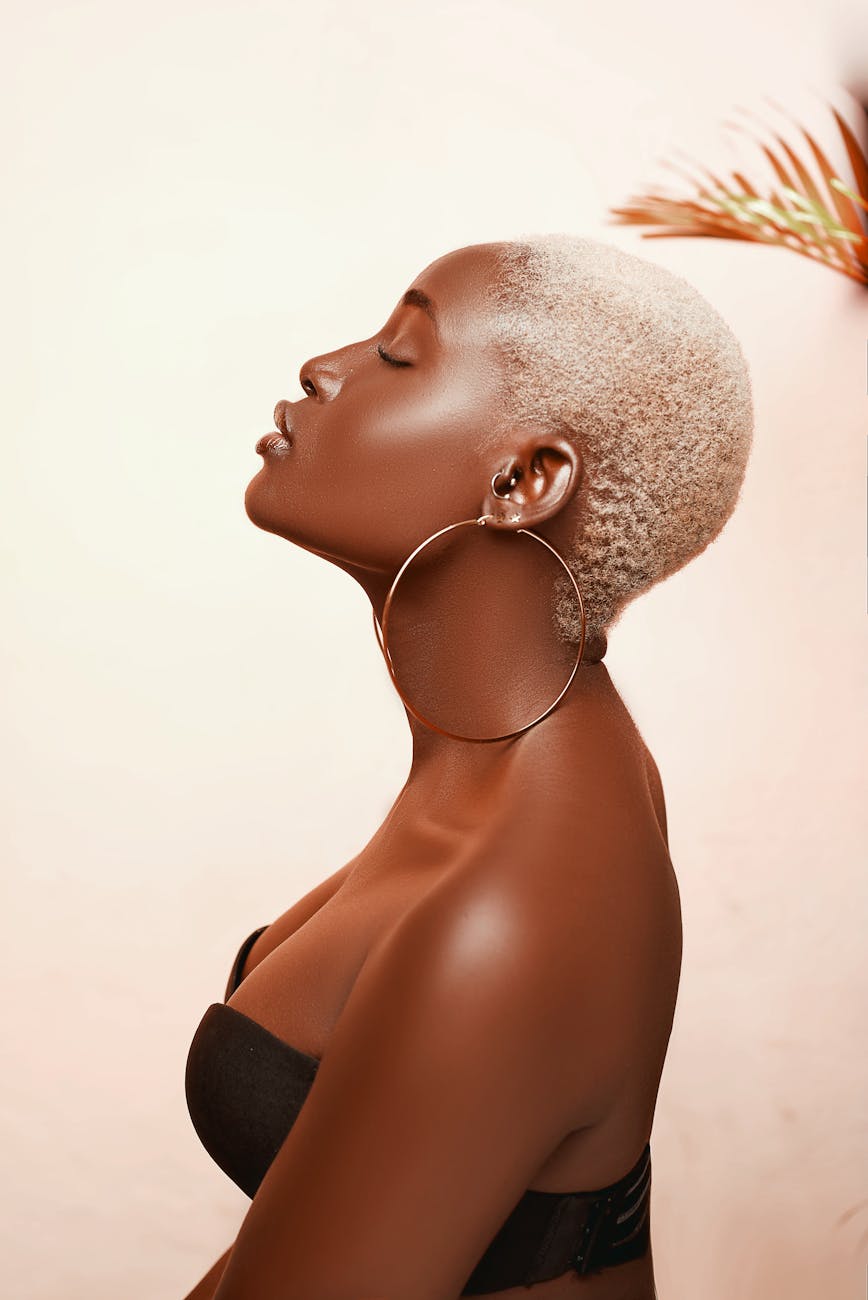
Photo by Bolaji Balogun on Pexels.com

The politics of skin color remains one of the most enduring social hierarchies across the world. Within the spectrum of human diversity, the color of one’s skin has historically functioned as a social equation — determining beauty, value, and belonging. This “skin equation” reflects not only aesthetic preferences but also deep-rooted power dynamics forged through colonialism, slavery, and systemic racism. In modern times, it continues to shape how people of color, particularly within the African diaspora, perceive themselves and others.

Skin tone has become a social currency, an unspoken determinant of privilege and opportunity. In post-slavery societies, lighter skin was often associated with freedom, education, and proximity to whiteness — while darker skin became stigmatized as a visual marker of servitude and inferiority (Hunter, 2007). This hierarchy birthed what is now known as colorism, a phenomenon that exists both within and outside of racial boundaries, influencing social mobility, media representation, and romantic desirability.

Beauty standards, largely shaped by Eurocentric ideals, perpetuate the marginalization of darker complexions. Historically, the Western world’s definition of beauty has been tethered to lightness — straight hair, thin noses, and pale skin. These features were systemically glorified in art, advertising, and cinema, creating a global aesthetic code that devalued African features. As a result, many individuals internalized color-based bias, linking lighter skin with attractiveness and success.

This internalized bias, as theorized by Frantz Fanon in Black Skin, White Masks (1952), results in psychological fragmentation. The colonized subject learns to desire the oppressor’s image, wearing a metaphorical “white mask” in pursuit of acceptance. Fanon’s analysis highlights that colorism is not merely an aesthetic issue but a form of psychological violence, teaching the oppressed to despise their reflection.

In the Americas, color hierarchies were institutionalized through systems like the “one-drop rule” and the “mulatto caste,” where mixed-race individuals were placed above darker-skinned Africans. This practice reinforced racial purity ideologies and divided the Black community along pigment lines. Even after emancipation, these divisions persisted — visible in employment discrimination, political leadership, and media representation (Russell, Wilson, & Hall, 1992).

The entertainment industry further amplifies the bias of the skin equation. Light-skinned actors and models are often cast as romantic leads or beauty icons, while darker-skinned individuals are relegated to roles of servitude or aggression. This pattern, sometimes called “color-coded casting,” communicates to audiences that lightness equates to worthiness and desirability. It becomes a subconscious pedagogy — teaching viewers which shades deserve empathy and admiration.

However, the rise of digital media has sparked a counter-narrative. Movements like #MelaninMagic and #BlackGirlMagic have redefined beauty through the celebration of dark skin tones. Social media platforms have allowed creators to subvert Eurocentric imagery by showcasing diverse complexions in their natural splendor. This reclamation of aesthetic autonomy represents a cultural resistance — an act of rewriting the visual narrative of beauty.

The “skin equation” also extends to economics. In numerous studies, lighter-skinned individuals have been shown to earn higher wages, receive shorter prison sentences, and be perceived as more intelligent or trustworthy than their darker-skinned peers (Maddox & Gray, 2002). These disparities indicate that colorism functions as an economic bias as much as a cultural one.

In the realm of dating and marriage, skin tone continues to influence desirability politics. Research shows that lighter skin correlates with perceptions of femininity and gentleness in women, and with professionalism and status in men. These notions, deeply entrenched in colonial logic, sustain social hierarchies even within intra-racial relationships.

Globally, skin lightening remains a billion-dollar industry, particularly in regions like Africa, Asia, and the Caribbean. The marketing of bleaching products often implies that success, romance, and prestige are achievable through lightness. Such campaigns perpetuate a colonial beauty mindset — convincing the consumer that transformation toward whiteness equals empowerment, when in truth it is an extension of self-erasure (Glenn, 2008).

Colorism’s impact on identity development is particularly harmful among children and adolescents. Studies reveal that darker-skinned children often face more bullying and internalized shame, resulting in lower self-esteem (Wilder, 2010). This early conditioning establishes a lifelong struggle between self-acceptance and societal rejection, producing adults who must heal from inherited bias.

Religious and spiritual imagery has also played a role in reinforcing skin hierarchies. The portrayal of divine figures as white — from angels to Christ — encoded whiteness as holiness and blackness as sinfulness. This theological distortion produced what some scholars call “pigment theology,” where color became synonymous with morality (Cone, 1970). Such images continue to shape subconscious associations of purity and impurity.

In African and Caribbean contexts, the colonial past lingers in linguistic and cultural symbols that favor lightness — phrases like “fair and lovely” or “bright and clean” carry subtle biases. In these societies, color becomes both a marker of postcolonial trauma and an indicator of social aspiration. The residue of empire thus lives on in the language of beauty and respectability.

Despite these systemic issues, the reclamation of dark skin as divine and regal has gained momentum in recent decades. Artists, theologians, and activists have sought to reframe Blackness as sacred — connecting it to African spirituality, biblical lineage, and ancestral royalty. This reimagining restores balance to the skin equation by asserting that melanin is not a curse but a crown.

From a psychological perspective, the deconstruction of colorism requires reprogramming collective self-image. Healing involves education, representation, and the dismantling of media-driven hierarchies. When people of all shades see themselves reflected positively in culture, they begin to rewrite the equation of value and beauty from within.

Sociologically, the persistence of colorism reveals how racism mutates over time. As overt racial segregation wanes, colorism operates subtly — maintaining inequality through aesthetics rather than legislation. This covert discrimination is harder to detect but equally destructive to communal unity.

Educational reform also plays a role in dismantling the skin equation. Curriculums that include African civilizations, Black inventors, and darker-skinned beauty icons broaden the definition of excellence. When children learn to associate dark skin with intelligence, creativity, and leadership, they internalize empowerment rather than shame.

The media’s future lies in the intentional elevation of diverse skin tones — in fashion campaigns, film casting, and advertising. Representation must move beyond tokenism toward genuine inclusivity, celebrating the full range of human hues. Only through visual equity can we begin to repair centuries of aesthetic injustice.

Ultimately, the “skin equation” reflects a collective moral test. It challenges societies to confront the hidden mathematics of bias that equate whiteness with worth and darkness with deficiency. The dismantling of this formula is both a spiritual and cultural act — requiring truth, love, and liberation. When we learn to see beauty not as a spectrum of shade but as a manifestation of soul, the equation balances at last.


References

Cone, J. H. (1970). A Black theology of liberation. Orbis Books.

Fanon, F. (1952). Black skin, white masks. Grove Press.

Glenn, E. N. (2008). Yearning for lightness: Transnational circuits in the marketing and consumption of skin lighteners. Gender & Society, 22(3), 281–302.

Hunter, M. (2007). The persistent problem of colorism: Skin tone, status, and inequality. Sociology Compass, 1(1), 237–254.

Maddox, K. B., & Gray, S. A. (2002). Cognitive representations of Black Americans: Reexploring the role of skin tone. Personality and Social Psychology Bulletin, 28(2), 250–259.

Russell, K., Wilson, M., & Hall, R. (1992). The color complex: The politics of skin color among African Americans. Anchor Books.

Welfare Over Fathers: Policy, Power, and the Fragmentation of the Black Family.

The relationship between welfare policy and the structure of the Black family in the United States has long been a subject of intense debate, scholarship, and controversy. The phrase “welfare over fathers” reflects a critique that certain government assistance programs historically incentivized the absence of Black men from the home. To understand this claim, it is necessary to examine the origins of welfare, its regulations, and the broader historical forces that shaped Black family life.

The foundation of modern welfare policy can be traced to the New Deal era under Franklin D. Roosevelt, particularly through the Social Security Act of 1935. One of its key provisions, Aid to Dependent Children (ADC), was designed to provide financial assistance to single mothers. While initially intended for widowed white women, the program gradually expanded to include Black women, especially during the mid-twentieth century.

However, the expansion of welfare to Black families did not occur without conditions. Local welfare agencies, particularly in the South, imposed strict and often discriminatory rules that governed eligibility. One of the most controversial policies was the “man-in-the-house” rule, which denied benefits to households where an able-bodied adult male was present.

This rule effectively forced many Black families into a painful choice: receive financial assistance necessary for survival or maintain a two-parent household. In practice, this meant that Black fathers were often excluded from the home, either physically or officially, to ensure that mothers and children could qualify for aid.

The enforcement of these policies disproportionately impacted Black communities, where economic opportunities for men were already severely limited due to systemic racism. Employment discrimination, segregation, and unequal access to education made it difficult for Black men to fulfill the traditional role of provider, increasing reliance on welfare systems.

The roots of this dynamic can be traced back even further to slavery. Under slavery, Black families were routinely separated, with husbands, wives, and children sold to different plantations. The institution itself disrupted family bonds and undermined the stability of Black households, creating a legacy of forced fragmentation.

After emancipation, Black families sought to reunite and establish stable households, but they faced new forms of systemic interference. Jim Crow laws, economic exploitation, and racial violence continued to destabilize Black communities, limiting opportunities for family cohesion and economic independence.

The introduction of welfare policies in the twentieth century must be understood within this broader historical context. While these programs provided essential support, they also operated within a system that had long devalued Black fatherhood and autonomy. The “man-in-the-house” rule became a modern mechanism that echoed earlier patterns of separation.

Scholars such as Daniel Patrick Moynihan brought national attention to the issue with the 1965 report The Negro Family: The Case for National Action. Moynihan argued that the rise in single-parent households, particularly among Black families, was a central factor in economic and social challenges. However, his conclusions were widely debated and criticized for placing blame on Black families rather than systemic conditions.

Critics of welfare policy argue that these regulations created perverse incentives that discouraged marriage and father involvement. By tying financial support to the absence of a male figure, the system may have unintentionally reinforced family separation, particularly in economically vulnerable communities.

Others contend that this perspective oversimplifies the issue, ignoring the structural inequalities that limit opportunities for Black men. High unemployment rates, mass incarceration, and educational disparities have all contributed to the challenges faced by Black families, independent of welfare policy.

The War on Poverty under Lyndon B. Johnson expanded welfare programs in the 1960s, increasing access to aid for low-income families. While these initiatives helped reduce poverty, they also intensified debates about dependency, family structure, and government intervention.

The “man-in-the-house” rule was eventually challenged in court and deemed unconstitutional in the 1968 Supreme Court case King v. Smith. This ruling marked a significant shift, removing one of the most explicit barriers to father presence in welfare-recipient households.

Despite these legal changes, the cultural and structural impacts of earlier policies continued to reverberate. Generations of families had already been shaped by systems that discouraged or penalized the presence of Black men in the home, contributing to long-term social and psychological effects.

The question of whether welfare “destroyed” the Black family is complex and contested. Some scholars argue that it played a significant role in altering family dynamics, while others emphasize that systemic racism and economic inequality are the primary drivers of family instability.

Mass incarceration, particularly from the late twentieth century onward, further compounded the issue. Policies that disproportionately targeted Black men removed them from their families and communities, reinforcing patterns of absence that had historical roots.

Today, welfare policy has evolved significantly, with programs such as Temporary Assistance for Needy Families (TANF) emphasizing work requirements and time limits. These changes reflect a shift toward encouraging employment and reducing long-term dependency.

Public perception of welfare and Black family structure remains deeply influenced by stereotypes and political narratives. Media portrayals have often reinforced negative images of Black motherhood and absent fathers, obscuring the structural realities behind these issues.

At the same time, there has been a growing recognition of the importance of father involvement and family stability. Community organizations, faith-based initiatives, and policy reforms increasingly seek to support holistic family structures rather than undermine them.

Understanding the historical relationship between welfare and the Black family requires a nuanced approach that considers both policy and context. It is not merely a question of individual choices but of systems that have shaped those choices over generations.

Ultimately, the story of “welfare over fathers” is not just about policy but about power—who defines family, who controls resources, and whose lives are shaped by those decisions. It calls for a critical examination of the past and a commitment to building policies that strengthen, rather than divide, families.

References

Acs, G., & Nelson, S. (2004). Changes in welfare caseloads and the status of black families. Urban Institute.

Daniel Patrick Moynihan. (1965). The Negro Family: The Case for National Action. U.S. Department of Labor.

Katz, M. B. (2013). The Undeserving Poor: America’s Enduring Confrontation with Poverty. Oxford University Press.

King v. Smith, 392 U.S. 309 (1968).

Mincy, R. B. (2006). Black Males Left Behind. Urban Institute Press.

Franklin D. Roosevelt. (1935). Social Security Act.

Lyndon B. Johnson. (1964). War on Poverty Speech.

Dilemma: Denial of Racism and the Racist Mascots.

Racism is more than individual prejudice—it is a system of power, privilege, and oppression that shapes every level of society. It is the belief, whether conscious or unconscious, that one race is superior to another, and this ideology has fueled centuries of injustice toward Black people and other nonwhite groups. Denial of racism, therefore, is a form of complicity. It allows prejudice to persist unchecked, normalizing discrimination under the illusion of equality. In modern America, this denial manifests not only in speech and policy but also in symbols—especially racist mascots that trivialize entire cultures for entertainment and profit (Tatum, 2017).

Racist mascots are public symbols, images, or characters that depict racial or ethnic groups through stereotypes. They include sports team names, cartoon logos, and advertising imagery that caricature people of color, particularly Indigenous, Asian, and Black individuals. The purpose of such mascots has historically been to create a sense of fun or team spirit, but beneath the surface lies the dehumanization of real people. These mascots perpetuate racism by turning living identities into costumes or cartoons, mocking heritage and reinforcing white dominance (King, Davis-Delano, Staurowsky, & Baca, 2006).

Examples of racist mascots include the Washington Redskins (now Commanders), Cleveland Indians (now Guardians), and the use of Native caricatures like “Chief Wahoo.” In addition, Black caricatures such as “Aunt Jemima,” “Uncle Ben,” and the “Sambo” figures have long stood as consumer symbols rooted in slavery and Jim Crow imagery. These depictions present people of color as servile, ignorant, or primitive—images designed to comfort white audiences while reminding Black people of their social “place” (Pilgrim, 2012).

The denial of racism allows these symbols to persist under the justification of “tradition” or “harmless fun.” Yet such arguments ignore the historical and emotional damage caused by these portrayals. To deny racism is to silence the voices of those who endure its consequences. White individuals who resist the removal of racist mascots often do so because acknowledging their harm would mean confronting uncomfortable truths about privilege and the legacies of colonization (Sue et al., 2019).

For Black people, racism manifests not only through overt hatred but also through the cultural symbols that reinforce inferiority. Racist mascots, jokes, and media portrayals perpetuate the myth of white superiority, making it harder for Black individuals to assert pride and dignity. These representations influence how others perceive them—affecting hiring decisions, media representation, and even internalized self-worth. When a culture is continually mocked or minimized, it becomes a psychological burden that echoes across generations (Williams & Mohammed, 2009).

The psychological effect of racist imagery cannot be overstated. Studies show that exposure to racial caricatures can reinforce stereotypes, reduce empathy toward minority groups, and diminish the sense of belonging among young people of color. For Black children, seeing racist imagery in public life communicates a painful message: that their identity is a joke, their culture a costume, and their history unworthy of respect. The harm of these images is cumulative and intergenerational (Clark, 2019).

White supremacy, the ideology that whiteness is inherently superior, underpins both the denial of racism and the creation of racist mascots. It is the invisible hand guiding policies, media narratives, and cultural norms that prioritize white comfort over Black liberation. White supremacy thrives in denial—it insists that racism is a relic of the past while continuing to shape the present. It operates through coded language like “heritage” and “pride,” which often mask bigotry behind nostalgia (Kendi, 2019).

The most blatant expression of white supremacy in American history is the Ku Klux Klan (KKK). Founded after the Civil War, the KKK terrorized Black communities through violence, lynchings, and intimidation. Its mission was to maintain white dominance in political, social, and economic spheres. Members of the Klan saw themselves as defenders of a “pure” America, using fear and brutality to suppress Black advancement. Their robes, burning crosses, and public parades became symbols of white terror and racial hatred (Alexander, 2010).

The impact of the KKK on Black people was devastating. Generations were traumatized by violence and systemic exclusion. Families were torn apart, homes burned, and entire towns destroyed under the pretext of racial purity. Even today, the Klan’s legacy persists in modern hate groups, racial profiling, and police violence. The ideology never died—it evolved into new forms of systemic control such as mass incarceration and economic disenfranchisement.

White supremacy continues to hurt Black people by limiting access to wealth, education, and justice. Redlining, discriminatory hiring, and unequal school funding are structural extensions of the same mindset that birthed the KKK and racist mascots. These systems rely on the same falsehood—that Black people are less deserving of opportunity. By denying racism’s existence, society allows these injustices to flourish behind the facade of fairness (Bonilla-Silva, 2018).

Denial of racism often appears as “colorblindness.” When white individuals claim they “don’t see race,” they erase the lived experiences of Black people who face racism daily. Colorblindness is not equality—it is avoidance. It refuses to confront historical trauma or acknowledge current inequalities. This denial maintains white innocence and blocks progress toward reconciliation and justice (Wise, 2010).

Racist mascots are powerful tools of denial because they hide oppression behind art and entertainment. They turn centuries of suffering into amusement, trivializing racism itself. By normalizing these caricatures, society teaches future generations to see racism as exaggerated or irrelevant. The mascot becomes a smiling mask covering a violent history of enslavement and dehumanization (Fryberg et al., 2008).

To overcome this, institutions must replace symbols of oppression with those of truth and empowerment. Education is key—students should learn the origins of these images and why they are harmful. Removing racist mascots and replacing them with culturally respectful symbols is not “erasing history,” but correcting it. True history must expose oppression, not celebrate it.

Community conversations about race and symbolism are also essential. Many white Americans cling to racist mascots because they lack understanding of their impact. Honest dialogue, paired with empathy and accountability, can transform ignorance into awareness. This process requires humility—the willingness to listen rather than defend.

Faith-based and moral frameworks remind us that racism is a sin of pride. The Bible teaches that all people are created in the image of God (Genesis 1:27, KJV). To deny racism or perpetuate racist symbols is to deny God’s design for equality and justice. The work of dismantling white supremacy is therefore both a social and spiritual responsibility.

For Black people, confronting racist mascots is an act of liberation. It is a declaration that identity will no longer be mocked or commodified. Cultural restoration begins with reclaiming representation—telling stories from within rather than allowing others to define Blackness from without. Every statue removed, logo retired, and stereotype challenged marks a step toward collective healing.

The denial of racism also prevents national unity. A country that refuses to face its truth cannot heal from it. Reconciliation requires repentance—an acknowledgment of harm and a commitment to change. Only when the truth of racism is faced with courage can justice begin to take root.

Ultimately, racist mascots are symptoms of a deeper disease: the refusal to see Black humanity. The denial of racism enables the disease to spread unchecked, poisoning institutions and relationships. Challenging these symbols is not about political correctness—it is about moral clarity. Racism cannot die where denial lives.

The path forward requires truth-telling, accountability, and love rooted in justice. Dismantling racist mascots, confronting white supremacy, and rejecting the lies of the KKK are not acts of division—they are acts of restoration. The goal is not revenge but righteousness. As James Baldwin wrote, “Not everything that is faced can be changed, but nothing can be changed until it is faced.”

References
Alexander, M. (2010). The new Jim Crow: Mass incarceration in the age of colorblindness. The New Press.
Bonilla-Silva, E. (2018). Racism without racists: Color-blind racism and the persistence of racial inequality in America. Rowman & Littlefield.
Clark, C. R. (2019). Psychological impact of racial imagery on youth. Journal of Black Psychology, 45(2), 105–122.
Fryberg, S. A., Markus, H. R., Oyserman, D., & Stone, J. M. (2008). Of warrior chiefs and Indian princesses: The psychological consequences of American Indian mascots. Basic and Applied Social Psychology, 30(3), 208–218.
Kendi, I. X. (2019). How to be an antiracist. One World.
King, C. R., Davis-Delano, L. R., Staurowsky, E. J., & Baca, L. (2006). The Native American mascot controversy: A handbook. Scarecrow Press.
Pilgrim, D. (2012). Understanding Jim Crow: Using racist memorabilia to teach tolerance and promote social justice. Ferris State University.
Sue, D. W., Alsaidi, S., Awad, M. N., Calle, C. Z., & Mendez, N. (2019). Disarming racial microaggressions: Microintervention strategies for targets, White allies, and bystanders. American Psychologist, 74(1), 128–142.
Tatum, B. D. (2017). Why are all the Black kids sitting together in the cafeteria? Basic Books.
Wise, T. (2010). Colorblind: The rise of post-racial politics and the retreat from racial equity. City Lights Books.
Williams, D. R., & Mohammed, S. A. (2009). Discrimination and racial disparities in health: Evidence and needed research. Journal of Behavioral Medicine, 32(1), 20–47.

Strength and Struggle: Examining the Social Pressures Placed on Black Women.

Black women in the United States occupy a unique social position shaped by the intersection of race, gender, and historical inequality. Their experiences are influenced by centuries of systemic discrimination, cultural expectations, and social pressures that affect economic opportunities, health outcomes, and societal perceptions. Understanding the realities facing Black women requires examining the historical and structural forces that shape their daily lives.

One of the most significant frameworks used to analyze these experiences is intersectionality, a concept introduced by legal scholar Kimberlé Crenshaw. Intersectionality explains how different forms of discrimination—particularly racism and sexism—interact simultaneously. For Black women, this means facing social barriers that cannot be fully explained by race alone or gender alone but by the combination of both.

Historically, Black women have endured unique forms of labor exploitation and social marginalization. During slavery in the United States, Black women were forced to perform both agricultural labor and domestic work while also being subjected to sexual exploitation. These conditions created enduring stereotypes that portrayed Black women as either excessively strong or morally deviant.

These stereotypes evolved into several harmful archetypes that continue to influence public perception. The “mammy,” “jezebel,” and “angry Black woman” stereotypes emerged from historical narratives that sought to justify inequality and control. These caricatures have persisted in popular culture, shaping how Black women are viewed in workplaces, media, and social institutions.

Economic inequality represents another major pressure affecting Black women. Despite high levels of labor participation, Black women frequently encounter wage disparities compared with white men, white women, and sometimes Black men. Data from the U.S. Bureau of Labor Statistics consistently demonstrates a persistent racial and gender wage gap.

The consequences of wage inequality extend beyond individual income. Lower earnings reduce opportunities for homeownership, savings, and wealth accumulation. Over time, these disparities contribute to the broader racial wealth gap observed across American society.

Education has been an area where Black women have demonstrated remarkable progress. In recent decades, Black women have become one of the fastest-growing groups earning college and advanced degrees. Despite these achievements, barriers to leadership roles and executive positions remain prevalent in many industries.

Healthcare disparities also represent a critical concern. Studies conducted by the Centers for Disease Control and Prevention show that Black women face significantly higher maternal mortality rates than women from other racial groups. These disparities have been linked to unequal access to healthcare, implicit bias among medical providers, and systemic inequalities in the healthcare system.

Mental health pressures are also significant. Many Black women report experiencing high levels of stress related to workplace discrimination, financial responsibilities, and caregiving obligations. Yet cultural expectations often encourage them to appear emotionally resilient regardless of the circumstances.

This expectation is commonly referred to as the “Strong Black Woman” trope. While resilience is often celebrated, scholars argue that the expectation of constant strength can discourage Black women from seeking emotional support or mental health care when needed.

Black feminist scholars have played a central role in analyzing these dynamics. Intellectual leaders such as Patricia Hill Collins and bell hooks have written extensively about the ways Black women resist oppression while simultaneously navigating complex social expectations.

Media representation also shapes how Black women are perceived. Historically, film and television often depicted Black women through narrow stereotypes. Although representation has improved, scholars continue to debate whether contemporary portrayals adequately reflect the diversity and complexity of Black womanhood.

Another significant pressure involves beauty standards and colorism. Western beauty ideals have historically favored lighter skin tones and European features, often marginalizing darker-skinned women. Colorism can influence opportunities in employment, media representation, and social relationships.

Black women are also deeply involved in community leadership and social activism. Throughout American history, they have organized movements advocating for civil rights, gender equality, and social justice. Their leadership has often been underrecognized despite its profound impact.

Figures such as Harriet Tubman, Ida B. Wells, and Shirley Chisholm exemplify the tradition of Black female leadership in American history. Their contributions helped reshape political and social landscapes.

Family and community responsibilities also create unique pressures. Black women frequently play central roles in caregiving, household leadership, and community support networks. These responsibilities often exist alongside professional obligations, creating additional demands on time and emotional energy.

Religious and spiritual institutions have historically provided important support systems. Churches and faith-based organizations have served as spaces where Black women could find community, leadership opportunities, and emotional resilience.

Despite these pressures, Black women have demonstrated extraordinary cultural influence. Their contributions to literature, music, fashion, and art have profoundly shaped American culture and global artistic expression.

Scholars emphasize that understanding the experiences of Black women requires recognizing both the challenges they face and the strength they demonstrate. Their resilience reflects not only personal determination but also collective strategies developed within communities to resist inequality.

Addressing the social pressures facing Black women requires policy reforms that promote economic equity, healthcare access, educational opportunity, and fair representation in leadership positions.

Ultimately, examining the experiences of Black women reveals broader truths about inequality within American society. By acknowledging these realities and addressing systemic barriers, society can move toward a more inclusive and equitable future.


References

Collins, P. H. (2000). Black feminist thought: Knowledge, consciousness, and the politics of empowerment. Routledge.

Crenshaw, K. (1989). Demarginalizing the intersection of race and sex. University of Chicago Legal Forum.

hooks, b. (1981). Ain’t I a woman: Black women and feminism. South End Press.

Jones, C. P. (2000). Levels of racism: A theoretical framework and a gardener’s tale. American Journal of Public Health.

Centers for Disease Control and Prevention. (2023). Racial and ethnic disparities in maternal health.

U.S. Bureau of Labor Statistics. (2023). Labor force statistics by race and gender.