Category Archives: slavery

The Freedman’s Bank: A Broken Promise of Freedom.

The story of the Freedman’s Savings Bank is one of hope, betrayal, and systemic injustice. Established in the aftermath of the American Civil War, the bank was intended to provide newly freed Black Americans with a secure place to deposit their earnings and begin building generational wealth.

Founded in 1865, the Freedman’s Bank emerged during the Reconstruction Era, a time when millions of formerly enslaved people were navigating freedom for the first time. With little to no access to financial institutions, the bank appeared as a beacon of opportunity.

The bank was backed by the U.S. Congress, which gave it a sense of legitimacy and trustworthiness. Many Black Americans believed their money was protected by the federal government, though in reality, the institution operated privately without direct federal guarantees.

For formerly enslaved individuals who had labored for generations without wages, the ability to save money represented dignity, autonomy, and hope. Depositors included soldiers, laborers, domestic workers, and families striving for economic independence.

At its peak, the Freedman’s Bank had over 60,000 depositors and held millions of dollars in assets. Branches were established in major cities across the South, reflecting widespread trust among Black communities.

However, this trust would soon be shattered. The bank’s leadership—primarily white trustees—engaged in reckless and speculative investments, including risky railroad ventures and real estate schemes.

Instead of safeguarding deposits, bank officials used funds to finance high-risk projects, many of which failed. This mismanagement reflected not only poor financial judgment but also a disregard for the livelihoods of Black depositors.

One of the most notable figures associated with the bank was Frederick Douglass, who became its president in 1874. Douglass hoped to restore confidence and stabilize the institution, but by then, the damage was already irreversible.

Douglass himself later expressed regret, acknowledging that he had underestimated the extent of the corruption and mismanagement within the bank. His involvement, though well-intentioned, could not save it from collapse.

In 1874, less than a decade after its founding, the Freedman’s Bank failed. The collapse resulted in the loss of approximately $3 million—equivalent to tens of millions today—wiping out the savings of thousands of Black families.

For many depositors, this loss was devastating. These were not excess funds but life savings—money earned through hard labor in the fragile early years of freedom.

The failure of the bank exposed a harsh reality: Black Americans were systematically excluded from secure financial systems and left vulnerable to exploitation. The promise of economic empowerment had been betrayed.

The collapse also reinforced cycles of poverty within Black communities. Without access to capital, many families were unable to invest in land, education, or businesses—opportunities that could have altered generational trajectories.

The Freedman’s Bank is often cited as one of the earliest examples of institutional financial exploitation of Black Americans. It set a precedent for future injustices, including discriminatory lending practices and redlining.

The psychological impact of this betrayal cannot be overstated. Trust in financial institutions was deeply eroded, a sentiment that has echoed across generations.

This event also highlights the broader failures of Reconstruction. While legal freedom was granted, economic justice was largely denied, leaving Black Americans to navigate a system still rooted in inequality.

The Freedman’s Bank did not fail in isolation—it was part of a larger pattern of systemic neglect and exploitation. Its downfall symbolized the fragility of Black progress in a nation unwilling to fully honor its promises.

Despite this history, Black communities have continued to demonstrate resilience, creating alternative systems of support such as mutual aid societies, churches, and Black-owned banks.

Modern discussions about reparations and economic justice often reference the Freedman’s Bank as a foundational injustice. The loss of wealth during this period has had long-term implications for the racial wealth gap in America.

Understanding the history of the Freedman’s Bank is essential for recognizing how systemic inequities were built and maintained. It serves as both a warning and a call to address historical wrongs.

Ultimately, the “Free” Man’s Bank was free in name but costly in consequence. Its legacy reminds us that true freedom must include economic security, accountability, and justice.

References

Baradaran, M. (2017). The Color of Money: Black Banks and the Racial Wealth Gap. Harvard University Press.

Du Bois, W. E. B. (1907). Economic Co-operation Among Negro Americans. Atlanta University Press.

Osthaus, C. (1976). Freedmen, philanthropy, and fraud: A history of the Freedman’s Savings Bank. Journal of Southern History, 42(1), 1–26.

Savage, B. (1999). Standing Soldiers, Kneeling Slaves: Race, War, and Monument in Nineteenth-Century America. Princeton University Press.

Sherraden, M. (1991). Assets and the Poor: A New American Welfare Policy. M.E. Sharpe.

The Haitian Revolution: Freedom Forged in Fire and the Price of Liberation.

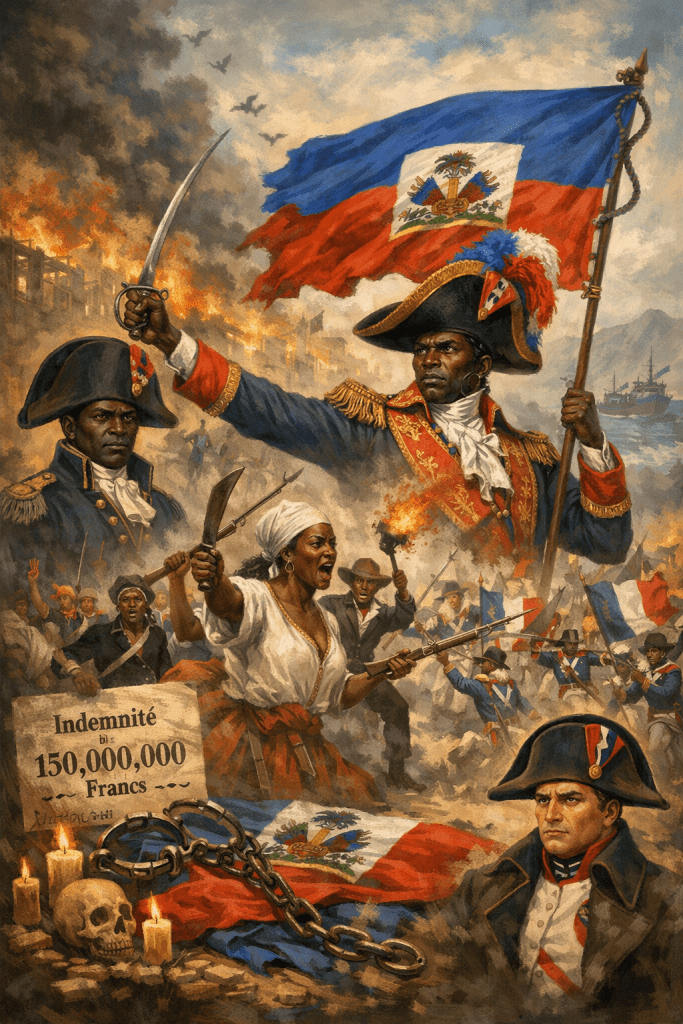
The Haitian Revolution stands as one of the most transformative uprisings in world history, culminating in 1804 with the birth of the first Black republic. It was a revolution unlike any other, led by enslaved Africans who not only resisted their bondage but dismantled an entire colonial system built on racial exploitation.

Before the revolution, Haiti—then known as Saint-Domingue—was a French colony and one of the wealthiest territories in the Caribbean. France’s prosperity was deeply tied to the brutal labor of enslaved Africans who cultivated sugar, coffee, and indigo under inhumane conditions. This economic success came at a devastating human cost.

The population of Saint-Domingue was sharply divided along racial and social lines. White French colonists, known as grands blancs and petits blancs, occupied the highest tier, while free people of color and enslaved Africans endured systemic oppression. These divisions created tension that would eventually ignite a revolution.

The enslaved population, largely composed of West and Central Africans, brought with them rich cultural traditions, spiritual systems, and languages. Many Haitians today trace their ancestry to regions such as Dahomey, the Congo, and Senegal, carrying forward a legacy of resilience and cultural continuity.

The revolution began in 1791 with a massive slave uprising in the northern plains. Inspired in part by the ideals of the French Revolution, enslaved Africans demanded liberty, equality, and justice. However, unlike in France, these ideals had to be seized through bloodshed and resistance.

One of the most prominent leaders to emerge during the revolution was Toussaint Louverture, a formerly enslaved man who became a brilliant military strategist. Louverture organized disciplined armies and fought against French, Spanish, and British forces, seeking autonomy for the colony.

Louverture’s leadership laid the groundwork for independence, though he was eventually captured by French forces under Napoleon Bonaparte and died in a French prison. His vision, however, did not perish with him.

Following Louverture’s capture, leadership passed to Jean-Jacques Dessalines, who would ultimately declare Haiti’s independence on January 1, 1804. This marked the successful end of the revolution and the beginning of a new nation forged through sacrifice.

The victory of Haiti sent shockwaves throughout the world. It was the first time enslaved people had overthrown a colonial power and established a sovereign state. For enslaved populations across the Americas, Haiti became a symbol of hope and resistance.

However, Haiti’s independence came at a steep and unjust price. In 1825, France demanded that Haiti pay an indemnity as compensation for lost property, including enslaved people. This demand was formalized under King Charles X of France.

The indemnity imposed on Haiti was initially set at 150 million francs, later reduced to 90 million. This staggering debt crippled the nation’s economy for generations, forcing Haiti into a cycle of poverty and dependency that persisted well into the 20th century.

This “compensation” was, in reality, a punishment for Black liberation. Haiti was forced to pay its former oppressors for the loss of their enslaved labor force, an act widely regarded by historians as one of the greatest economic injustices in modern history.

The language of Haiti reflects its complex colonial past. Today, Haitians primarily speak Haitian Creole, a language rooted in French but enriched with African linguistic influences. French is also an official language, used in formal settings and government.

Haitian Creole emerged as a unifying language among enslaved Africans from diverse ethnic backgrounds. It became a powerful symbol of identity, resistance, and cultural survival, bridging the gap between multiple African traditions and the imposed French structure.

Religion in Haiti also reflects this blending of cultures. Many Haitians practice a combination of Christianity and Vodou, a spiritual system with deep African roots. Vodou played a significant role in the revolution, offering both spiritual guidance and communal strength.

Despite its historical significance, Haiti has often been marginalized in global narratives. Western powers, particularly France and the United States, isolated the nation diplomatically and economically due to fears of slave rebellions spreading.

The legacy of the Haitian Revolution continues to influence discussions on race, freedom, and justice. It challenges dominant historical narratives by centering the agency and humanity of enslaved Africans who fought for their liberation.

Modern Haiti still grapples with the consequences of its past, including economic instability and political challenges. Many scholars argue that the indemnity imposed by France significantly hindered Haiti’s development and should be acknowledged and addressed.

The revolution also redefined concepts of citizenship and human rights. Haiti’s constitution declared that all citizens, regardless of color, were Black—a radical assertion of unity and resistance against racial hierarchy.

In understanding the Haitian Revolution, one must recognize both its triumph and its trials. It is a story of courage, resilience, and the relentless pursuit of freedom against overwhelming odds.

Ultimately, the Haitian Revolution is not just a chapter in history—it is a testament to the enduring spirit of a people who refused to remain in chains and reshaped the course of the modern world.

References

Dubois, L. (2004). Avengers of the New World: The Story of the Haitian Revolution. Harvard University Press.

Geggus, D. P. (2002). Haitian Revolutionary Studies. Indiana University Press.

James, C. L. R. (1989). The Black Jacobins: Toussaint L’Ouverture and the San Domingo Revolution. Vintage Books.

Popkin, J. D. (2010). You Are All Free: The Haitian Revolution and the Abolition of Slavery. Cambridge University Press.

Trouillot, M.-R. (1995). Silencing the Past: Power and the Production of History. Beacon Press.

Constructed Identities: The Politics, Genetics, and Legacy of Mixed Race.

The story of mixed race is not merely a matter of biology, but a deeply layered narrative shaped by power, conquest, identity, and survival. What we call “mixed race” today emerged from historical systems that sought to divide humanity into categories, assigning value and status based on appearance. These divisions were not natural; they were constructed.

The modern conception of race was developed during the rise of European colonialism. Scholars in anthropology widely agree that race has no fixed biological basis. Instead, it was created as a social hierarchy to justify slavery, land theft, and domination over non-European peoples.

In contrast, ethnicity refers to cultural identity—shared language, customs, ancestry, and traditions. While race is often imposed externally, ethnicity is more closely tied to how people understand themselves and their heritage. The confusion between these two concepts has contributed to centuries of misunderstanding about identity.

The transatlantic slave trade marked a turning point in how race was defined and enforced. During this period, millions of Africans were forcibly transported to the Americas, where rigid racial systems were established. Within this system, people of mixed ancestry were given special classifications that both elevated and restricted them.

Many mixed-race individuals were born from deeply unequal relationships, often involving coercion or outright violence. European enslavers frequently fathered children with enslaved African women, creating a population that did not fit neatly into the binary racial categories of the time. These individuals became central to the development of complex racial hierarchies.

One of the most common terms used during slavery was Mulatto, referring to someone with one African and one European parent. The term itself reflects the dehumanizing logic of the era, as it is derived from a word historically associated with animal breeding.

Other classifications attempted to quantify ancestry with disturbing precision. A Quadroon referred to someone with one Black grandparent, while an Octoroon described someone even further removed. These labels were not casual descriptors—they determined a person’s legal rights, social status, and opportunities.

In Spanish and Portuguese colonies, an elaborate system known as the Casta System categorized individuals based on detailed mixtures of African, Indigenous, and European ancestry. Paintings from this era visually depicted these categories, reinforcing the idea that identity could be measured and ranked.

Terms like Mestizo and Zambo further illustrate how colonial societies attempted to map human diversity into rigid frameworks. Each category carried different social implications, often tied to proximity to whiteness.

In the United States, racial classification took on a particularly rigid form through the development of the One-Drop Rule. This principle erased the complexity of mixed identities by categorizing anyone with African ancestry as Black, reinforcing white supremacy and limiting social mobility.

Within plantation life, mixed-race individuals were often assigned roles that reflected their perceived proximity to whiteness. Some worked as house servants, while others labored in the fields. This distinction contributed to the development of colorism—a system that privileges lighter skin within communities of color.

Colorism has had long-lasting psychological and social effects. Lighter-skinned individuals were sometimes granted limited privileges, such as access to education or less physically demanding labor, while darker-skinned individuals faced harsher conditions. These divisions created internal hierarchies that persist today.

From a scientific perspective, however, the idea of distinct races collapses under scrutiny. Advances in Genetics reveal that all humans share approximately 99.9% of their DNA. The differences that do exist are gradual and do not align with traditional racial categories.

Mixed-race individuals are simply expressions of genetic diversity, resulting from the blending of ancestral populations over time. This process, known as admixture, is a natural part of human history. Migration, trade, and interaction have always led to the mixing of populations.

There is no single genetic marker that defines race. Traits like skin color are influenced by a small number of genes and can vary widely even within the same family. This explains why mixed-race individuals can have a broad range of appearances.

Physically, mixed-race individuals may exhibit a combination of features associated with different ancestral groups. These can include variations in skin tone, hair texture, facial structure, and eye color. However, these traits are not predictable and do not follow simple patterns.

The perception of a “mixed-race look” is largely shaped by societal expectations rather than biological reality. People often project assumptions onto individuals based on their appearance, reinforcing stereotypes about what mixed race should look like.

The psychological experience of being mixed race has often been marked by tension and contradiction. Many individuals have historically been forced to navigate multiple identities, sometimes feeling that they do not fully belong to any one group.

This sense of in-betweenness has been described as both a burden and a unique perspective. While some experience alienation, others embrace their mixed heritage as a source of strength and cultural richness.

A powerful case study can be found in the history of Creole communities in Louisiana. These communities, often composed of individuals with African, European, and sometimes Indigenous ancestry, developed distinct cultural identities that blended language, religion, and tradition.

Creoles occupied a unique social position, sometimes enjoying more rights than enslaved Africans but still facing discrimination. Their existence challenged rigid racial categories and demonstrated the fluidity of identity.

Another important case study is the Melungeon population of Appalachia. These communities, with mixed African, European, and Indigenous roots, lived on the margins of society and were often subjected to suspicion and discrimination due to their ambiguous appearance.

In the Caribbean, particularly in places like Haiti and the Dominican Republic, mixed-race populations became central to national identity. However, color hierarchies persisted, often privileging lighter skin and European features.

The legacy of mixed race is also visible in modern celebrity culture. Public figures of mixed ancestry are often celebrated for their appearance while simultaneously being subjected to scrutiny about their identity and authenticity.

Historically, mixed-race individuals have also been used symbolically in media and literature, sometimes portrayed as tragic figures caught between worlds. These narratives reflect broader societal anxieties about race and belonging.

A Construct Born of Power, Not Biology

The concept of “mixed race” cannot be understood apart from the historical invention of race itself. Race is not a biological reality but a social construct, developed largely during European colonial expansion to justify hierarchy, slavery, and domination . In contrast, ethnicity refers to shared culture, language, ancestry, and heritage—not physical traits alone.

Thus, “mixed race” is less about genetics and more about how societies have historically categorized, controlled, and stratified human beings.


The Origins of Race and Ethnicity

  • Race: A classification system based primarily on physical traits (skin color, hair texture, facial features), developed during colonialism to rank human populations.
  • Ethnicity: A cultural identity tied to shared traditions, language, ancestry, and historical experience.

The modern racial system emerged between the 16th–18th centuries alongside the transatlantic slave trade. Europeans created rigid categories (White, Black, Indigenous) and then constructed intermediate labels to classify people of mixed ancestry.


Slavery and the Creation of Mixed-Race Classes

During slavery in the Americas, mixed-race individuals were often the result of coercive relationships between European enslavers and African women . These children occupied a complex and often contradictory social position:

  • Sometimes granted limited privileges (education, lighter labor)
  • Often still enslaved and denied full humanity
  • Used as a buffer class between enslaved Africans and White elites

House Slaves vs Field Slaves

  • House slaves: Often lighter-skinned or mixed ancestry; worked inside homes; perceived as “closer” to whiteness
  • Field slaves: Typically darker-skinned; subjected to harsher labor conditions

This division reinforced colorism, a system privileging lighter skin within Black communities—a legacy that persists today.


Historical Terms for Mixed Race (and Their Meanings)

Colonial societies created dozens of terms to classify people by fractions of ancestry. These were not neutral—they were tools of control.

African + European Ancestry

  • Mulatto: One Black parent, one White parent
  • Quadroon: 1/4 African ancestry
  • Octoroon: 1/8 African ancestry
  • Griffe: 3/4 African, 1/4 European

African + Indigenous

  • Zambo: African + Indigenous ancestry

European + Indigenous

  • Mestizo: European + Indigenous ancestry

Tri-Racial or Complex Mixtures

  • Pardo: Mixed African, European, and Indigenous ancestry
  • Marabou: Haitian term for mixed African, European, and Indigenous lineage

Colonial System

  • Casta System: A hierarchical classification system in Spanish colonies assigning social status based on racial mixture

These labels were tied to legal rights, social status, and even freedom.


The “One-Drop Rule” and Racial Policing

In the United States, racial identity became even more rigid under laws like the one-drop rule, where any African ancestry classified a person as Black. This erased the complexity of mixed identity and reinforced white supremacy.


Genetics of Mixed Race: What Science Actually Says

From a biological standpoint:

  • All humans share 99.9% of their DNA
  • Genetic variation exists gradually across populations (not in rigid racial boxes)
  • Mixed-race individuals simply reflect genetic admixture—the blending of ancestral populations over time

Key points:

  • There is no gene for race
  • Traits like skin color are influenced by a small number of genes
  • Mixed ancestry often increases genetic diversity, which can be beneficial for health

Physical Features of Mixed-Race Individuals

There is no single “mixed-race look,” but some commonly observed features (depending on ancestry) include:

  • Varying skin tones (light brown to deep brown)
  • Curly, wavy, or loosely coiled hair textures
  • Facial feature blending (nose shape, lip fullness, eye shape)
  • Lighter eye colors (in some African-European mixes)

However, phenotype (appearance) is unpredictable due to genetic recombination.


The Psychological and Social “Tragedy”

The “tragedy” of mixed race is not biological—it is social and historical:

1. Identity Fragmentation

Mixed individuals have often been forced to “choose” one identity over another.

2. Rejection from Both Sides

Historically:

  • Not fully accepted by White society
  • Sometimes viewed with suspicion in Black communities

3. Colorism and Privilege

Mixed individuals have sometimes been:

  • Privileged due to proximity to whiteness
  • Simultaneously marginalized and fetishized

4. Historical Trauma

Many mixed-race lineages originate from violence, coercion, and exploitation during slavery.


Modern Language: Moving Away from Colonial Labels

Today, terms like:

  • Biracial
  • Multiracial
  • Mixed

are preferred over colonial classifications like “mulatto,” which is widely considered outdated or offensive in the United States.


Beyond Labels

Mixed race is not a biological anomaly—it is a human reality shaped by migration, empire, and survival. The tragedy lies not in the mixture, but in the systems that:

  • Created hierarchies of human value
  • Weaponized identity
  • Divided people by appearance

In truth, mixed-race people expose a deeper reality: the artificial nature of racial boundaries themselves.

The so-called “tragedy” of mixed race is not inherent to the individuals themselves but arises from the systems that have sought to define and limit them. It is a tragedy rooted in exclusion, not in identity.

In contemporary society, language around mixed race has evolved. Terms like “biracial” and “multiracial” are now commonly used, reflecting a shift toward more inclusive and self-defined identities.

Despite this progress, challenges remain. Mixed-race individuals still navigate complex social dynamics, including questions of authenticity, representation, and belonging.

At the same time, the growing visibility of multiracial identities is reshaping how society understands race. Increasingly, people are recognizing that racial categories are fluid, overlapping, and deeply interconnected.

Ultimately, the history of mixed race reveals a fundamental truth: the boundaries we draw between people are neither natural nor fixed. They are the product of human decisions, shaped by history and power.

In this sense, mixed-race individuals do not complicate the idea of race—they expose its limitations. Their existence challenges us to rethink how we define identity and to move beyond the divisions of the past.

The future of racial identity may lie not in rigid categories but in a more nuanced understanding of human diversity—one that acknowledges both our shared humanity and the richness of our differences.


References

Encyclopaedia Britannica. (2026). Mulatto.
Encyclopaedia Britannica. (2026). Race (human classification).
Pew Research Center. (2015). Multiracial in America: Proud, diverse, and growing in numbers.
Omi, M., & Winant, H. (2015). Racial Formation in the United States. Routledge.
Smedley, A., & Smedley, B. D. (2005). Race as biology is fiction, racism as a social problem is real. American Psychologist, 60(1), 16–26.
Marks, J. (2010). Ten Facts about Human Variation. In Biological Anthropology.
Nash, G. B. (1992). Forbidden Love: The Secret History of Mixed-Race America.
Davis, F. J. (2001). Who Is Black? One Nation’s Definition. Penn State Press.
Hollinger, D. A. (2003). Amalgamation and hypodescent. Journal of American History, 89(4), 1363–1390.

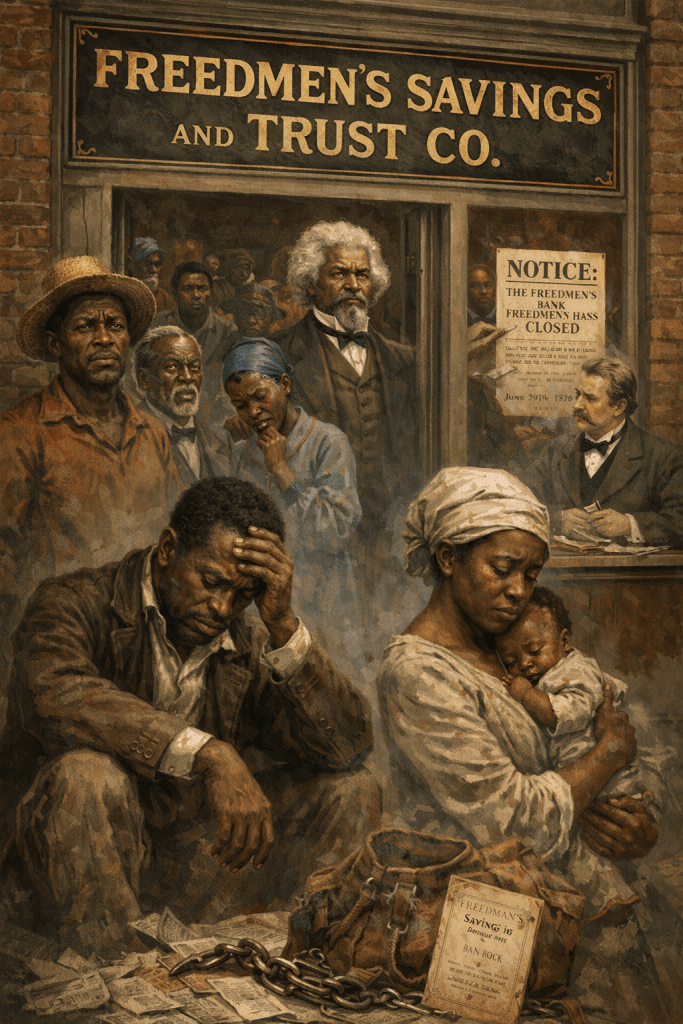
The Richmond Horror: Enslavement, and the Myth (Alleged) of the “Most Handsome Slave.”

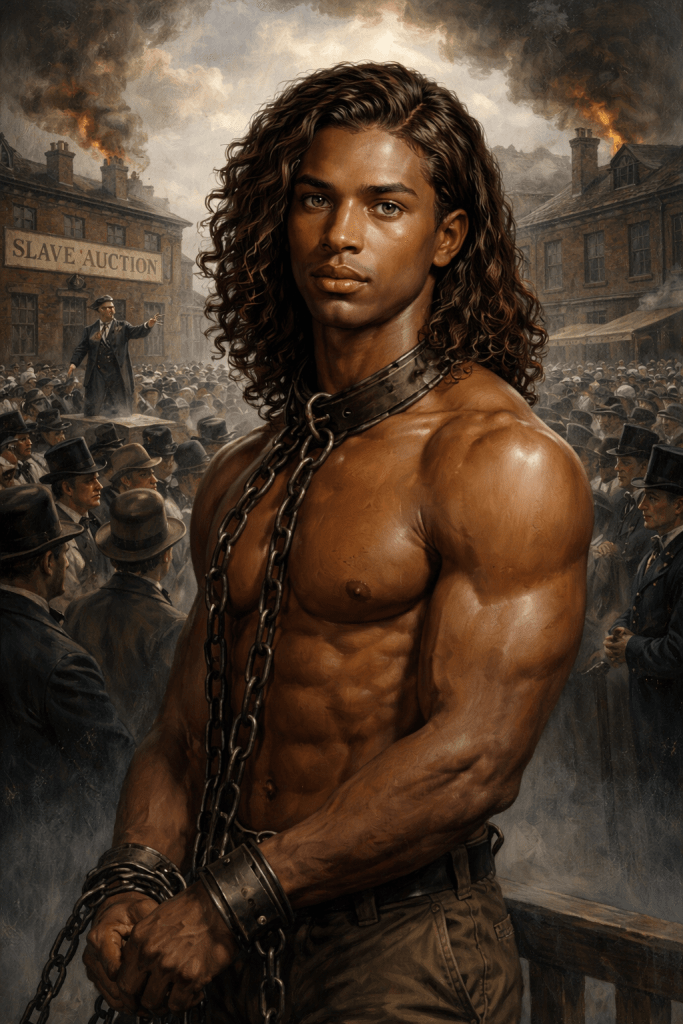
The phrase “The Richmond Horror” has circulated in various historical anecdotes and online retellings connected to the slave markets of Richmond, Virginia, during the nineteenth century. The story typically centers on an enslaved man described as extraordinarily handsome, whose appearance allegedly caused a dramatic spectacle at a slave auction. While the account is often repeated in popular storytelling, historians emphasize that the broader context of Richmond’s slave markets reveals the true horror: the commodification of human beings, where physical appearance, strength, and perceived desirability determined a person’s price and fate.

During the antebellum period, Richmond, Virginia, became one of the most significant hubs of the domestic slave trade in the United States. After the federal government banned the transatlantic slave trade in 1808, the internal trade expanded dramatically. Enslaved people were sold from Upper South states such as Virginia and Maryland to plantation regions in the Deep South, including Mississippi, Louisiana, and Alabama. Richmond’s geographic position and its transportation connections made it a central marketplace for this trade.

Within Richmond, the district known as Shockoe Bottom became infamous as a center for slave auctions, slave jails, and trading offices. Enslaved men, women, and children were held in confined quarters before being publicly sold to the highest bidder. Buyers evaluated individuals based on perceived physical attributes such as strength, youth, fertility, and sometimes physical attractiveness. The market logic of slavery reduced human bodies to commodities, assigning monetary value to traits that slaveholders believed would increase productivity or status.

Stories like the so-called Richmond Horror draw attention to the way enslaved people were objectified during these auctions. In many slave narratives and historical accounts, observers described auctions where potential buyers inspected enslaved individuals closely—checking teeth, muscles, posture, and complexion. Enslaved men who were tall, strong, and physically striking were often sold at particularly high prices because they were expected to perform intense labor or serve in visible household roles.

The legend of the “most handsome slave” describes a moment when a young man was brought to auction and stunned the crowd with his appearance. According to the story, wealthy buyers competed aggressively to purchase him, driving the price unusually high. In the narrative, the bidding war escalated into a spectacle of greed and obsession, highlighting the moral corruption embedded in the slave system. The horror, according to the story, lies in the grotesque contrast between admiration for the man’s beauty and the simultaneous willingness to treat him as property.

Although this specific anecdote is not firmly verified in archival records, it reflects a broader reality documented in historical scholarship. Slave auctions frequently turned human lives into public entertainment. Crowds gathered to watch the sale of enslaved individuals, and newspapers occasionally advertised people with descriptive language emphasizing physical traits. The emphasis on bodily features mirrored the pseudoscientific racial thinking of the nineteenth century, which attempted to categorize people based on physical appearance.

Richmond’s slave-trading infrastructure made such spectacles possible on a large scale. Traders operated offices, holding pens, and prisons where enslaved people were detained before sale. One of the most notorious facilities was Lumpkin’s Jail, sometimes called “the Devil’s Half Acre.” This compound served as a private slave jail where individuals were confined under harsh conditions while traders arranged their sale or transport to other states.

Conditions inside these slave jails were often brutal. Enslaved people were chained, crowded into small spaces, and deprived of adequate food or sanitation. Many were awaiting forced transport to plantations in the Deep South, where demand for labor was expanding alongside the growth of cotton cultivation. Richmond functioned as a staging ground for these forced migrations.

Another horror associated with the Richmond slave trade was the systematic separation of families. Parents were sold away from children, spouses from one another, and siblings from siblings. Auction blocks became sites where lifelong bonds were permanently severed in moments of financial transaction. Numerous narratives written by formerly enslaved individuals describe the emotional trauma of watching loved ones being sold to distant plantations.

The commodification of beauty within this system was not limited to men. Enslaved women were often evaluated not only for labor but also for their perceived attractiveness. This objectification exposed them to sexual exploitation and abuse by slaveholders and traders. The valuation of physical traits within the slave market thus intersected with broader systems of racial hierarchy and gendered violence.

While the exact details of the Richmond Horror story remain uncertain, its enduring presence in cultural memory reflects a deeper truth about slavery. The institution did not merely exploit labor; it transformed human beings into objects whose worth could be measured, inspected, and purchased. The fascination with the appearance of an enslaved man—combined with the eagerness to own him—captures the disturbing contradictions at the heart of the slave system.

Several enslaved people connected to the slave trade and resistance in Richmond, Virginia, are historically documented. Unlike the anonymous figure in the “Richmond Horror” legend, their names and actions appear in historical records and have become important parts of American history.


1. Gabriel Prosser

One of the most well-known enslaved men connected to Richmond was Gabriel Prosser, an enslaved blacksmith who organized a large slave rebellion in 1800. Gabriel was highly skilled and literate, which allowed him to move somewhat freely in the city and communicate with other enslaved workers.

He planned a massive uprising that would involve enslaved people from plantations surrounding Richmond. The plan was to seize weapons, capture the city, and demand freedom. Gabriel reportedly adopted the slogan “Death or Liberty.”

However, heavy rain delayed the planned revolt, and informants revealed the plot to authorities. Gabriel was captured and later executed in Richmond. Although the rebellion failed, his resistance became one of the earliest major organized revolts against American slavery.


2. Henry Box Brown

Another remarkable figure connected to Richmond was Henry Brown, later known as “Henry Box Brown.” He was an enslaved man who worked in a tobacco warehouse.

In 1849, desperate to escape slavery after his wife and children were sold away, Brown devised an extraordinary plan. With the help of abolitionist friends, he shipped himself in a wooden crate by mail from Richmond to Philadelphia. The journey took about 27 hours.

When the box was opened by abolitionists in Philadelphia, Brown reportedly stood up and began singing a hymn of freedom. His daring escape made him famous among abolitionists, and he later became a public speaker advocating against slavery.


3. John Jasper

John Jasper was born into slavery in Virginia but later became one of the most influential Black preachers of the nineteenth century.

After emancipation, Jasper founded the Sixth Mount Zion Baptist Church in Richmond, where he became a powerful orator. Thousands attended his sermons, and he became known throughout the region for his charismatic preaching and strong theological messages.

His life reflected the transition from slavery to freedom and the leadership roles many formerly enslaved people assumed in Black communities after the Civil War.


The Real Horror of Richmond

While legends like the “Richmond Horror” circulate online, the verified history of Richmond’s slave trade reveals a much deeper tragedy. The district known as Shockoe Bottom served as one of the largest slave markets in the United States. Enslaved people were imprisoned in facilities such as Lumpkin’s Jail, where traders held men, women, and children before selling them to plantations in the Deep South.

Historians estimate that hundreds of thousands of enslaved people were sold or transported through Virginia during the domestic slave trade. Families were separated, individuals were chained together in forced marches called coffles, and human beings were treated as commodities.

Today, Richmond continues to confront this past through historical research, memorialization, and preservation efforts that honor the lives of those who endured slavery and fought for freedom.

Modern historians emphasize that the true horror of Richmond lies not in a single dramatic auction but in the scale of the trade that occurred there. Historians estimate that hundreds of thousands of enslaved people were transported out of Virginia through the domestic slave trade during the nineteenth century. Richmond played a central role in that forced migration, sending countless individuals to plantations throughout the American South.

Today, scholars, archaeologists, and community activists work to preserve the historical memory of places like Shockoe Bottom. Efforts have been made to protect burial grounds, interpret historical sites, and educate the public about Richmond’s role in the domestic slave trade. These initiatives aim to ensure that the experiences of the enslaved are not erased or forgotten.

The legend of the Richmond Horror, whether literal or symbolic, ultimately reminds us of the dehumanizing nature of slavery. In a system where beauty, strength, and youth could raise the price of a human being, admiration and cruelty coexisted in the same moment. The spectacle of an auction—where a person’s body could inspire awe while simultaneously being sold—reveals the moral contradictions that defined the institution of slavery in the United States.


References

Berlin, I. (2003). Generations of captivity: A history of African-American slaves. Harvard University Press.

Campbell, E. B. (2007). Richmond’s unhealed history. Brandylane Publishers.

Fogel, R. W., & Engerman, S. L. (1995). Time on the cross: The economics of American Negro slavery. W.W. Norton & Company.

Johnson, W. (1999). Soul by soul: Life inside the antebellum slave market. Harvard University Press.

Rothman, A. (2005). Slave country: American expansion and the origins of the Deep South. Harvard University Press.

Tarter, B. (2016). The Grandees of government: The origins and persistence of undemocratic politics in Virginia. University of Virginia Press.

National Park Service. (n.d.). Shockoe Bottom and the Richmond slave trade. U.S. Department of the Interior.

Johnson, W. (1999). Soul by soul: Life inside the antebellum slave market. Harvard University Press.

Library of Virginia. (n.d.). Gabriel’s Conspiracy (1800). Retrieved from https://www.lva.virginia.gov

Library of Virginia. (n.d.). Henry “Box” Brown. Retrieved from https://www.lva.virginia.gov

National Park Service. (n.d.). Shockoe Bottom and the Richmond slave trade. U.S. Department of the Interior.

Smithsonian Institution. (2013). Lumpkin’s Jail and the slave trade in Richmond. Smithsonian Magazine.

Black Stereotype Series: Mammy – The Origins and Legacy of a Controlling Image.

The “Mammy” stereotype is one of the most enduring and harmful caricatures in American culture, representing Black women as loyal, nurturing, and subservient caretakers of white families. This stereotype has its roots in the era of slavery, evolving into a pervasive image in popular media, advertising, and literature that distorted the realities of Black womanhood.

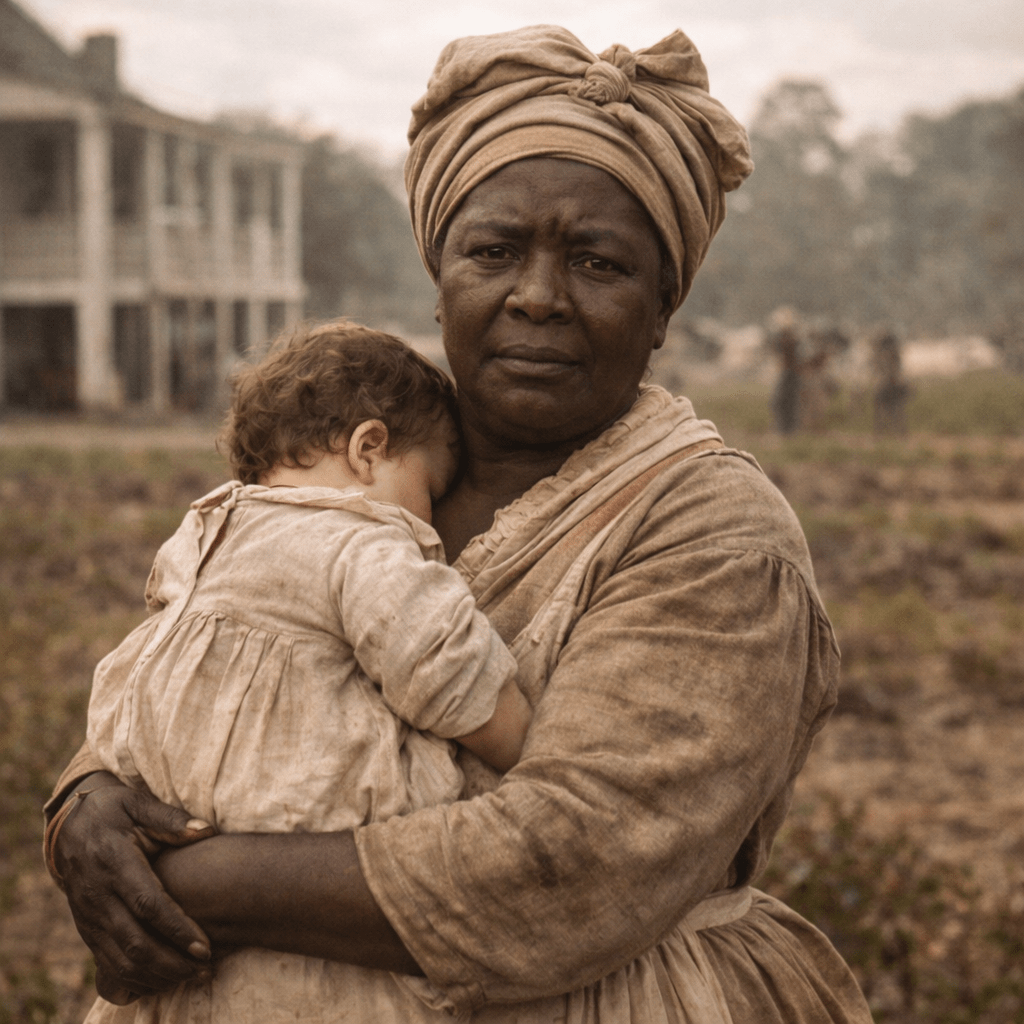
Historically, a mammy was a Black woman employed by a white household, often enslaved, responsible for raising white children, cooking, cleaning, and managing domestic labor. The role required complete obedience, selflessness, and emotional labor while denying the woman autonomy over her own life.

During slavery, the mammy’s existence was shaped by oppression and survival. While she was sometimes positioned as a maternal figure for white children, she was denied motherhood of her own children, who might be sold, abused, or neglected. This forced nurturing role was a form of psychological control that reinforced white supremacy.

Physical characteristics were often exaggerated in the Mammy stereotype. Popular culture depicted mammies as overweight, dark-skinned, elderly women with wide noses, large eyes, and hair tied in a scarf or kerchief. These features were contrasted against ideals of European beauty to emphasize their “otherness” and justify subservience.

The image of the mammy was not simply descriptive—it was prescriptive. It suggested that Black women were naturally suited for servitude, domestic labor, and caretaking, thereby legitimizing both slavery and racial hierarchies. The mammy became a comforting figure for white society, masking the brutality of slavery behind the illusion of loyalty and affection.

In the post-slavery era, the mammy stereotype persisted in media and advertising. The most famous example is Aunt Jemima, a brand that used a smiling, maternal Black woman as its mascot for pancake syrup and other products. The character reinforced notions that Black women existed to serve white households, normalizing racial subordination for generations.

The creation of the mammy stereotype had multiple causes. It served to ease white guilt over the horrors of slavery, rationalize the economic dependence on enslaved labor, and infantilize Black women as harmless, loyal, and nonthreatening. It also reinforced gendered expectations of women as domestic nurturers, but only within a racialized hierarchy.

Slavery itself created conditions for the mammy figure. Enslaved Black women were separated from their families, forced to work in domestic settings, and denied personal agency. These social realities became simplified and romanticized in cultural narratives, which erased the violence and coercion underlying their labor.

The mammy stereotype also had a visual codification in film and literature. Characters such as Hattie McDaniel in Gone with the Wind epitomized the trope, showing Black women as loyal, jolly, and devoted entirely to white families while remaining sexually desexualized. This image became a template for portrayals of Black women for decades.

Treatment of real-life mammies varied, but it was often harsh and exploitative. While some might have had close bonds with children they cared for, their labor was uncompensated or minimally compensated, and they were frequently subjected to physical punishment, verbal abuse, and systemic neglect.

The stereotype persists in subtle ways in modern culture. Contemporary media still sometimes portrays Black women in caregiving or service-oriented roles, emphasizing nurturing or subservient qualities while neglecting complexity, independence, and agency. These echoes of the mammy reinforce racialized expectations.

A defining aspect of the mammy figure is the emotional labor expected of her. She was imagined as endlessly patient, self-sacrificing, and cheerful regardless of mistreatment or abuse. In reality, enslaved and working Black women often carried immense emotional and physical burdens with no recognition or reward.

The mammy’s image was also carefully codified through dress and posture. Headscarves, aprons, and loose-fitting clothing became shorthand for subservience, domesticity, and age, creating a visual language that signaled loyalty to white households while denying Black women individuality or beauty.

Racist ideologies reinforced the stereotype. By presenting Black women as content in servitude, white society justified ongoing racial hierarchies and minimized the brutality of slavery. The mammy figure served as propaganda, comforting white audiences while erasing Black women’s struggles and resistance.

Advertising and branding further entrenched the mammy stereotype. From Aunt Jemima to various domestic product mascots, corporations leveraged the image of a smiling, motherly Black woman to sell products, perpetuating a reductive and exploitative representation for profit.

The mammy stereotype also intersects with gender oppression. By portraying Black women as caretakers first and individuals second, society denied them sexual, economic, and social autonomy. Their identity was flattened into a role that served white households, leaving little space for recognition of personal aspirations or desires.

Efforts to challenge and dismantle the mammy stereotype have increased in contemporary scholarship and activism. Scholars and cultural critics highlight the harm of these images and advocate for nuanced representations that honor the complexity, strength, and humanity of Black women.

In literature, cinema, and history, Black women’s voices reveal a different narrative than the mammy trope suggests. Enslaved and free women resisted domination in countless ways, asserting their dignity, creating cultural expressions, and protecting families despite systemic oppression.

The mammy stereotype exemplifies how race, gender, and labor intersected under slavery and beyond. It illustrates how visual and cultural symbols can enforce social hierarchies while shaping perceptions of entire communities. Understanding this history is critical to dismantling persistent racial stereotypes.

Ultimately, the mammy figure is not a reflection of reality but a tool of control and propaganda. Recognizing its origins, effects, and ongoing influence helps to contextualize contemporary struggles for representation, equity, and the reclamation of Black women’s narratives and beauty.


References

Giddings, P. (1984). When and Where I Enter: The Impact of Black Women on Race and Sex in America. HarperCollins.

Pilgrim, D. (2012). The Mammy Caricature. Jim Crow Museum of Racist Memorabilia, Ferris State University. Retrieved from https://www.ferris.edu/HTMLS/news/jimcrow/mammies/

Wallace-Sanders, K. (2008). Mammy: A Century of Race, Gender, and Southern Memory. University of Michigan Press.

Hine, D. C., Hine, W. C., & Harrold, S. (2009). The African American Odyssey. Pearson Higher Ed.

Pilgrim, D. (2000). Aunt Jemima and the Mammy Figure. Retrieved from https://www.ferris.edu/HTMLS/news/jimcrow/mammies/

West, C. M. (1995). Mammy, Jezebel, Sapphire, and Their Homegirls: Developing an “Oppositional Gaze” Toward the Images of Black Women. In Black Women in America (pp. 28–42). Indiana University Press.

Hall, K. (1992). Hair as Power: Cultural Identity and Resistance in African American History. Journal of American History, 79(3), 921–939.

Dilemma: The Modern & Slave Plantations

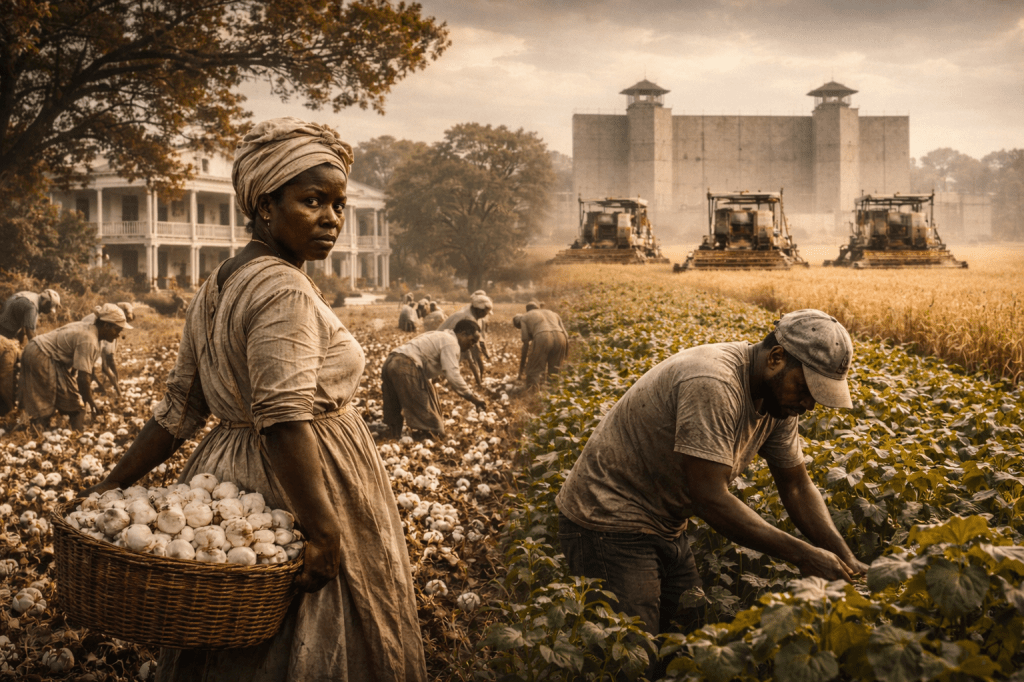
The legacy of slavery continues to shape the modern world in ways that are often overlooked. While chattel slavery in the United States officially ended in 1865, its economic, social, and psychological structures persist in subtle yet profound forms. Modern “plantations” manifest not only as historical sites but also as systemic systems of exploitation that disproportionately impact Black communities.

During the antebellum period, plantations were economic engines built on the labor of enslaved Africans. They relied on dehumanization, control, and violence to maintain productivity, wealth, and social hierarchy. The plantation system created lasting inequities in land ownership, education, and wealth accumulation.

Enslaved individuals were subjected to grueling labor from dawn to dusk, often under extreme conditions in the fields or as domestic workers. Families were torn apart, and basic human rights were denied. The psychological and cultural impact of this trauma has resonated across generations, creating long-lasting challenges in Black communities.

Plantations were also centers of cultural erasure. Enslaved Africans were forbidden from speaking their native languages, practicing their religions, or maintaining cultural traditions. This forced assimilation sought to strip individuals of identity while normalizing the supremacy of white culture.

The “modern plantation” can be understood metaphorically in terms of systemic oppression. Mass incarceration, exploitative labor practices, and economic marginalization of Black Americans are frequently described as contemporary forms of plantation-like control. While the methods differ, the underlying structures of surveillance, discipline, and economic extraction remain.

Historically, plantations relied on racialized hierarchies to maintain control. White supremacy dictated who could own property, access education, or participate in governance. These hierarchies have influenced social and institutional structures into the 21st century, contributing to persistent racial disparities in wealth, health, and political representation.

The psychological effects of plantation life continue to manifest in generational trauma. Studies on epigenetics suggest that stress and trauma experienced by enslaved ancestors may impact the mental and physical health of descendants, contributing to disparities in mental health, chronic illness, and resilience.

Education on plantation history often sanitizes the brutality experienced by enslaved individuals. Museums and historical sites sometimes focus on the architecture, wealth, or “heritage” of plantation owners while minimizing the suffering, resistance, and humanity of the enslaved population. This selective narrative reinforces systemic racism by erasing the lived experiences of Black Americans.

Labor exploitation continues in modern industries. Many low-wage sectors disproportionately employ Black workers under precarious conditions, echoing the economic dependency that existed on plantations. Farm labor, domestic work, and service industries reveal structural patterns reminiscent of historical exploitation.

Slavery and modern oppression are also interconnected through wealth disparities. The descendants of enslaved individuals were denied the ability to accumulate land, start businesses, or inherit wealth for generations. In contrast, many modern corporations and institutions trace their wealth back to slavery, creating intergenerational inequities that persist today.

Plantations were not only economic sites but also spaces of resistance and culture. Enslaved Africans preserved languages, songs, spiritual practices, and social networks, which formed the foundation of Black American culture. This resilience contrasts sharply with the narrative of passive subjugation often presented in history.

Modern parallels are visible in prison labor systems, where predominantly Black populations are employed for minimal wages. Scholars argue that this represents a continuation of the plantation logic: controlled labor extracted under constrained autonomy, producing profit for others while restricting freedom.

Cultural representations of plantations also shape perceptions. Films, literature, and tourism often romanticize plantation life, masking the violence and oppression that defined the institution. This misrepresentation perpetuates myths about the benevolence of slavery and undermines the acknowledgment of Black suffering and agency.

Plantations in the modern imagination can also refer to economic environments where Black workers are overexploited, surveilled, and restricted in mobility. Corporations, supply chains, and gig economies sometimes mirror the control mechanisms of historical plantations through low wages, lack of benefits, and limited upward mobility.

Land ownership remains a critical issue. After emancipation, Black farmers and landowners faced systemic barriers through discriminatory lending practices, violence, and legal maneuvers, preventing them from achieving economic independence. This mirrors the historical denial of land and wealth that characterized the plantation economy.

The plantation metaphor extends to education. Schools in under-resourced Black communities often suffer from overcrowding, poor facilities, and limited access to quality instruction. These conditions reflect structural neglect that echoes the constraints placed on enslaved individuals, shaping long-term outcomes.

Healthcare disparities also reflect plantation legacies. Limited access to medical services, environmental injustices, and systemic bias within healthcare institutions continue to disproportionately affect Black communities, echoing the neglect and exploitation of enslaved populations.

Understanding the link between historical plantations and modern inequalities is critical for policy and social justice. Recognizing systemic patterns enables more effective interventions, targeted support, and reparative measures that address the roots of inequity rather than treating symptoms superficially.

Resistance has always been part of the story. Enslaved Africans organized revolts, preserved cultural practices, and forged communities of resilience. Today, activism, scholarship, and advocacy continue this legacy, challenging modern forms of oppression and advocating for racial equity.

Ultimately, the dilemma of modern plantations reminds society that the end of slavery did not end its effects. The structures, ideologies, and systems established during slavery continue to shape economic, social, and cultural realities for Black Americans. Addressing this requires critical awareness, structural reform, and historical reckoning.


References

Berlin, I. (2003). Generations of Captivity: A History of African-American Slaves. Belknap Press.

Davis, A. Y. (2003). Are Prisons Obsolete? Seven Stories Press.

Kolchin, P. (2003). American Slavery, 1619–1877. Hill and Wang.

Wood, P. H. (1999). Black Majority: Negroes in Colonial South Carolina from 1670 through the Stono Rebellion. W. W. Norton & Company.

Alexander, M. (2010). The New Jim Crow: Mass Incarceration in the Age of Colorblindness. The New Press.

White, D. G. (1999). Ar’n’t I a Woman? Female Slaves in the Plantation South. W. W. Norton & Company.

Finkelman, P. (2009). Slavery and the Founders: Race and Liberty in the Age of Jefferson. M.E. Sharpe.

Gates, H. L., Jr., & Higginbotham, E. B. (2010). African American Lives. Oxford University Press.

Black History: Black Millionaires They Tried to Erase from History.

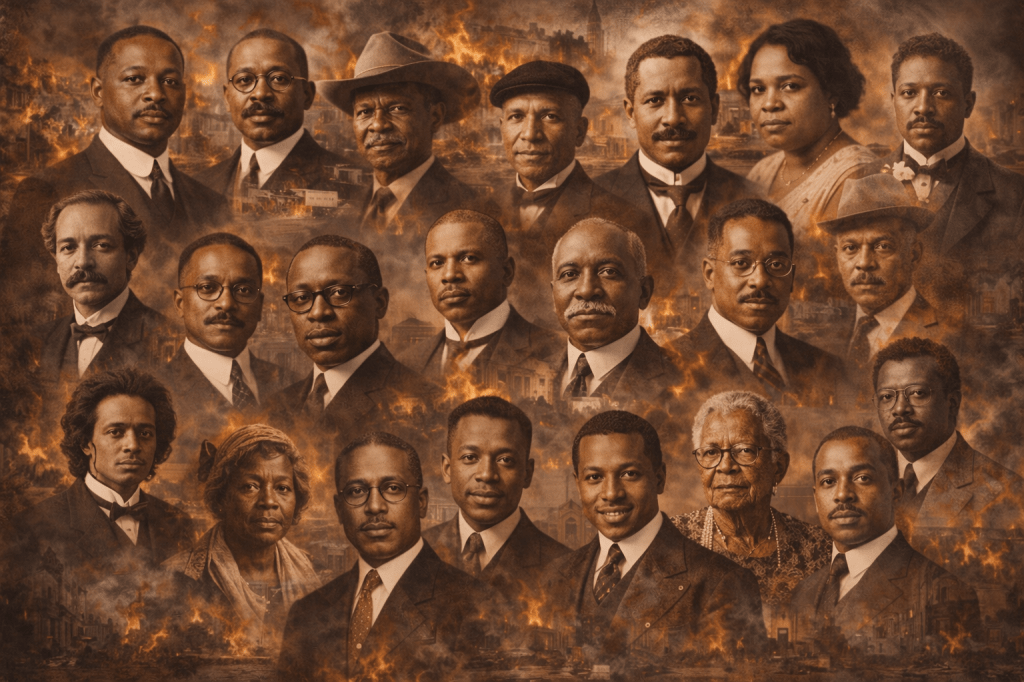
In early 20th‑century America, Black entrepreneurs in segregated communities defied racism by generating unprecedented wealth. These men and women built thriving businesses, owned property, and created entire economic ecosystems — only to have their legacies diminished, erased, or violently destroyed by systemic racism and white supremacist violence.

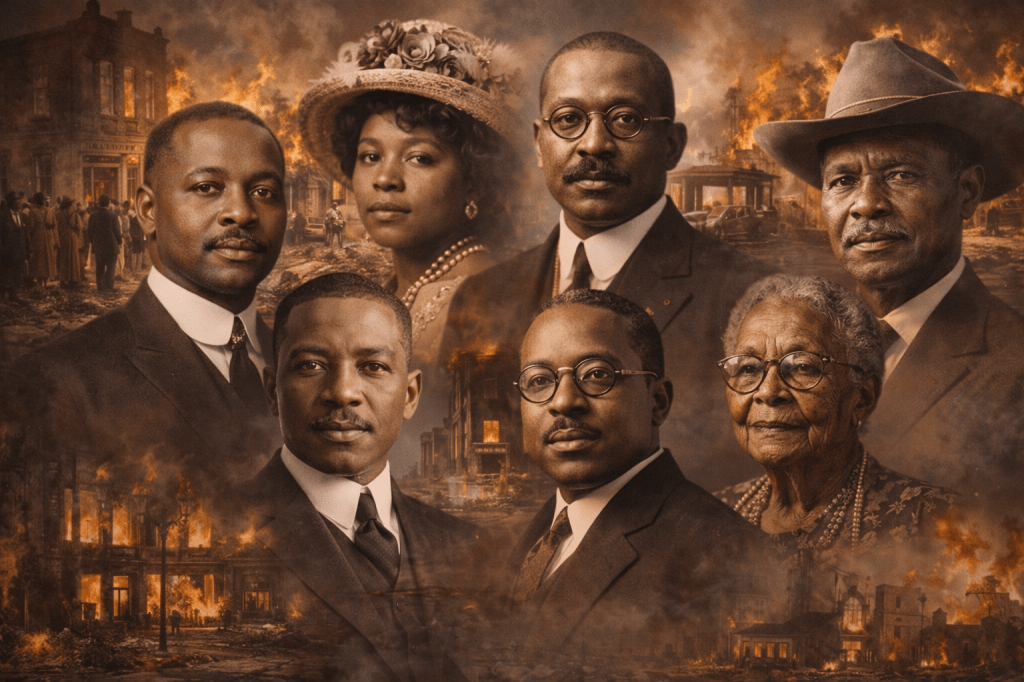
In Tulsa, Oklahoma, the Greenwood district — known as “Black Wall Street” — was one of the most remarkable examples of Black prosperity in American history. Founded by visionary Black businessmen and professionals, Greenwood became a symbol of independence, economic self‑sufficiency, and community resilience.

Among Greenwood’s earliest millionaires was O.W. Gurley, a real‑estate developer and entrepreneur. Born to formerly enslaved parents in Alabama, Gurley moved to Tulsa and purchased land designated for Black ownership. He built hotels, apartment buildings, a grocery store, and sponsored other local businesses, accumulating an estimated net worth that translated into the millions in today’s dollars.

Gurley’s success helped inspire others to invest in Greenwood. J.B. Stradford, another eminent figure, was the son of an emancipated slave who became a lawyer, real‑estate magnate, and hotelier. His crowning achievement was the Stradford Hotel, the largest Black‑owned hotel in the United States at the time. It offered luxury services equal to those in white Tulsa and hosted a thriving social life, attracting wealthy travelers and local elites.

John and Loula Williams were another Black power couple in Greenwood. They owned multiple businesses — including the Dreamland Theatre, a confectionary, and a rooming house — and became among the wealthiest Black residents. Loula was a partner in these ventures, showing how women also played central roles in building Black wealth.

Greenwood was far more than a collection of storefronts: it had its own bank, schools, hospital, newspaper, and even private transportation networks, all built and operated by Black entrepreneurs. The Tulsa Star, founded by A.J. Smitherman, became a prominent voice advocating civil rights, economic empowerment, and community solidarity.

Despite this economic miracle, Greenwood was targeted by white supremacists fearful of Black success. From May 31 to June 1, 1921, a white mob attacked the district in what is now known as the Tulsa Race Massacre, burning businesses, homes, and churches to the ground. Up to 300 Black residents were killed and roughly 1,200 homes destroyed. This coordinated assault erased generational wealth in a matter of hours.

The destruction of Greenwood exemplifies how racial violence was used to prevent Black Americans from maintaining wealth and influence. Millionaires like Gurley and Stradford lost everything; there was no restitution for survivors or descendants for decades. Their stories, once widely known locally, faded from mainstream historical memory.

Beyond Tulsa, there were other Black millionaires whose achievements were overshadowed or forgotten due to systemic racism. Jake Simmons Jr., an oilman from Oklahoma, became one of the most successful Black oil entrepreneurs in the mid‑20th century, partnering with major petroleum companies and opening opportunities in Africa’s energy sector. His rise showcased Black leadership in the global industry, yet his legacy remains underrecognized.

Black businesspeople in areas outside Tulsa also built considerable wealth during Jim Crow. In many segregated towns and cities, Black physicians, lawyers, educators, and merchants created thriving practices serving Black customers, generating stable incomes and propelling local economies. However, many were omitted from national business histories, minimized by the dominant narrative.

Black Millionaires Who Were Erased or Forgotten

  1. O.W. Gurley – Real estate developer and founder of Greenwood, Tulsa (“Black Wall Street”). Built hotels, grocery stores, and a thriving Black community before the Tulsa Race Massacre destroyed his fortune.
  2. J.B. Stradford – Lawyer and entrepreneur; owner of the Stradford Hotel, the largest Black-owned hotel in the U.S. before 1921. Lost property in the Tulsa Race Massacre.
  3. John and Loula Williams – Business power couple in Greenwood, owning multiple enterprises including theaters, confectionaries, and rooming houses.
  4. A.J. Smitherman – Publisher of the Tulsa Star, the influential newspaper in Greenwood that advocated Black economic empowerment and civil rights.
  5. Jake Simmons Jr. – Oklahoma oil tycoon and international businessman; instrumental in opening opportunities in Africa’s oil sector.
  6. Moses Austin – Early 19th-century businessman who invested in land and local enterprises; lesser-known due to records focusing on white counterparts.
  7. Paul Cuffe – African American entrepreneur and shipowner in the late 18th and early 19th centuries; financed Black migration to Sierra Leone and traded globally.
  8. Madam C.J. Walker – First female self-made millionaire in America through haircare and beauty products; her story was overshadowed for decades despite her philanthropy.
  9. Robert Reed Church – Memphis real estate mogul; accumulated wealth through investments and urban development in the post-Civil War South.
  10. Anthony Overton – Entrepreneur and publisher; owned the Overton Hygienic Company and the Chicago Bee newspaper.
  11. Alonzo Herndon – Founder of Atlanta Life Insurance Company; born enslaved and became one of the wealthiest Black men in the U.S.
  12. Norbert Rillieux – Inventor and businessman; revolutionized sugar refining and built wealth that was largely unrecognized in mainstream history.
  13. John H. Johnson – Founder of Johnson Publishing Company (Ebony, Jet); a 20th-century millionaire whose financial influence in media is often underappreciated.
  14. Viola Fletcher – Survivor and symbolic figure of Tulsa’s Greenwood, representing families who had generational wealth destroyed in the massacre.
  15. Samuel Coleridge-Taylor (U.S. connections) – Composer and businessman in music ventures; recognized in Europe but often omitted from U.S. economic history discussions.
  16. Mary Ellen Pleasant – Wealthy Black entrepreneur and philanthropist in San Francisco during the 19th century; aided civil rights causes but was historically obscured.
  17. Madison Jones – Oil and landowner in the early 20th century; wealth erased through discriminatory policies and lack of historical recognition.
  18. John Merrick – Founder of North Carolina Mutual Life Insurance Company; amassed wealth but is often only recognized regionally.
  19. Robert W. Johnson – Entrepreneur in early 1900s Chicago; built wealth in real estate and business before being written out of mainstream histories.
  20. Frederick McGhee – Lawyer and businessman; helped build economic infrastructure for Black communities in Minneapolis but largely forgotten in national narratives.

The erasure of these figures was not accidental. Throughout U.S. history, Black success has been met with legislative discrimination, economic exclusion, violence, and historical suppression. After the massacre, Greenwood’s rebuilt community prospered again for decades — only to be dismantled a second time in the mid‑20th century through “urban renewal” projects and highway construction that obliterated much of the neighborhood.

The consequences of this erasure persist. Without preservation and education about these Black millionaires, their contributions are excluded from textbooks, newspapers, and national consciousness. This has furthered false narratives that Black communities did not achieve economic success prior to the Civil Rights Movement.

Historians and activists today work to recover these stories, ensuring that Gurley, Stradford, the Williamses, Simmons, and many more are acknowledged as pioneers of Black wealth in America. Their legacy demonstrates profound resilience and innovation under adversity.

Black Wall Street’s destruction also disrupted generational wealth transfer; properties and businesses never regained their pre‑1921 value, and families were denied inheritance opportunities that could have sustained future prosperity.

In recent years, Tulsa has taken steps to confront its history. Reparations efforts, educational initiatives, and public memorialization aim to restore recognition for Greenwood’s lost entrepreneurs and honor survivors like Viola Fletcher, who testified about the massacre’s enduring impact.

The story of these Black millionaires is a reminder that racial oppression targeted not only individual lives but collective economic power. Their erasure from history reflects broader social resistance to acknowledging Black achievement.

Engaging with these histories allows for a more accurate understanding of American capitalism, one that includes both Black contributions and the violence used to undermine them.

Recognizing Black millionaires lost to history also challenges contemporary narratives about wealth, race, and opportunity, showing clearly that Black success was possible — and existed — long before today’s conversations about equity and inclusion.

These narratives also inspire modern generations of Black entrepreneurs, emphasizing the importance of legacy, community investment, and perseverance despite systemic barriers.

Understanding the erased histories of Black millionaires is vital not only for historical accuracy but for framing present discussions about wealth inequality, reparations, and racial justice in the United States.


References

National Geographic Society. (n.d.). Before the Tulsa Race Massacre, Black business was booming in Greenwood. National Geographic. https://www.nationalgeographic.com/history/history-magazine/article/before-tulsa-race-massacre-black-business-booming-greenwood

History.com Editors. (n.d.). 9 Entrepreneurs Who Helped Build Tulsa’s “Black Wall Street”. HISTORY. https://www.history.com/articles/black-wall-street-tulsa-visionaries

CNBC. (2020). What Is “Black Wall Street”? History of the community and its massacre. CNBC. https://www.cnbc.com/2020/07/04/what-is-black-wall-street-history-of-the-community-and-its-massacre.html

ABC7 New York. (n.d.). Tulsa Race Massacre: Story behind Black Wall Street destroyed by racist mob. https://abc7ny.com/tulsa-race-massacre-1921-black-wall-street-greenwood/10707747

Wikipedia contributors. (n.d.). Greenwood District, Tulsa. Wikipedia. https://en.wikipedia.org/wiki/Greenwood_District%2C_Tulsa

Wikipedia contributors. (n.d.). Jake Simmons. Wikipedia. https://en.wikipedia.org/wiki/Jake_Simmons

Wikipedia contributors. (n.d.). Viola Fletcher. Wikipedia. https://en.wikipedia.org/wiki/Viola_Fletcher

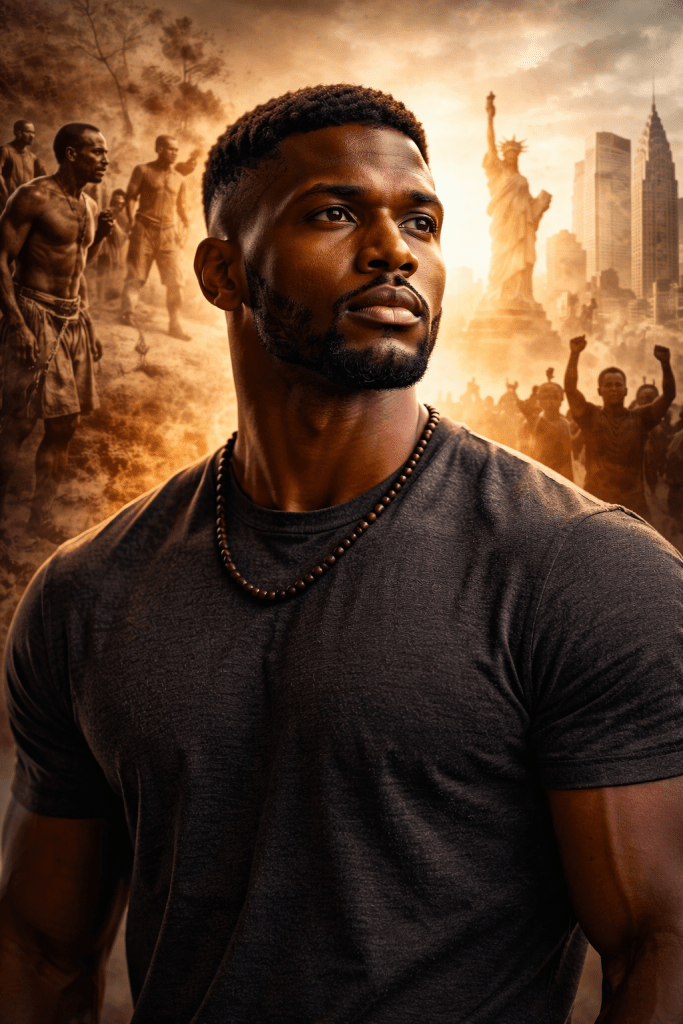
The Male Files: From Enslavement to Empowerment.

The psychological and spiritual formation of Black masculinity cannot be understood apart from the historical reality of enslavement and its ongoing consequences in modern society. Chattel slavery in the Americas was not merely an economic institution, but a comprehensive system of psychological domination designed to dismantle identity, authority, and manhood itself. Black men were systematically stripped of autonomy, kinship power, literacy, and bodily sovereignty, reducing their existence to labor and control rather than personhood created in the image of God (Patterson, 1982).

Biblically, this condition mirrors the logic of bondage found throughout Scripture. The enslavement of the Israelites in Egypt reveals how oppression functions to erase memory, dignity, and covenant identity (Exodus 1). Pharaoh’s strategy—forced labor, family disruption, and the targeting of male offspring—parallels the transatlantic slave system and its destruction of Black male lineage. Yet the biblical narrative affirms that bondage is never God’s final word: “I have surely seen the affliction of my people… and I am come down to deliver them” (Exodus 3:7–8, KJV).

Psychologically, slavery produced what sociologists describe as social death—the erasure of ancestry, honor, and recognized humanity (Patterson, 1982). For Black men, this resulted in intergenerational trauma expressed through emotional suppression, hypervigilance, fractured fatherhood, and conflicted identity formation. Contemporary trauma research confirms that the psychological effects of historical violence persist through epigenetic stress responses and inherited survival behaviors (DeGruy, 2005; Yehuda et al., 2016). These conditions continue to shape the mind of the modern Black man.

Post-emancipation systems such as Jim Crow, racial terror lynching, convict leasing, and mass incarceration functioned as re-enslavement mechanisms. As Alexander (2010) argues, the modern prison system operates as a racialized structure of social control, disproportionately criminalizing Black male existence. Sociologically, Black masculinity has been constructed as threatening, hypersexual, and deviant—narratives engineered to justify surveillance, economic exclusion, and institutional neglect. These scripts shape how Black men see themselves and how society perceives them.

At the same time, the modern man faces a broader psychological crisis. Western masculinity is increasingly defined by emotional suppression, performative strength, sexual conquest, and economic dominance—what Connell (2005) terms hegemonic masculinity. Psychological studies show that these norms contribute to high rates of depression, anxiety, substance abuse, and suicide among men (APA, 2018). For Black men, these struggles are intensified by racial stress, identity fragmentation, and what scholars call racial battle fatigue (Smith et al., 2007).

Digitally, the modern male psyche is further shaped by social media, pornography, and hyper-visual culture. Men are conditioned to measure self-worth through appearance, sexual access, and economic performance. This creates a fragmented identity between the authentic self and the performed self—a phenomenon aligned with Goffman’s (1959) theory of social performance. The mind becomes overstimulated but undernourished, informed by algorithms rather than wisdom.

Biblically, however, the mind of man is framed through spiritual orientation rather than cultural conditioning. Scripture teaches that psychological transformation is inseparable from spiritual renewal: “Be not conformed to this world: but be ye transformed by the renewing of your mind” (Romans 12:2, KJV). The biblical man is called to cultivate wisdom, emotional discipline, humility, and moral clarity rather than dominance or ego (Proverbs 4:23; Galatians 5:22–23).

Christ offers the ultimate model of liberated masculinity. He rejects the world’s archetype of man as conqueror and instead embodies man as servant, healer, and sacrificial leader (Mark 10:45). His emotional expressiveness—grief, compassion, vulnerability—directly challenges modern masculinity’s emotional repression. In Christ, power is redefined as self-mastery, and leadership as moral responsibility: “He that ruleth his spirit is better than he that taketh a city” (Proverbs 16:32).

Empowerment, therefore, must be understood as both psychological and spiritual restoration. Psychologically, it involves reclaiming agency, emotional literacy, and coherent identity beyond imposed stereotypes (hooks, 2004). Spiritually, it requires deliverance from internalized oppression and alignment with divine purpose: “The righteous are bold as a lion” (Proverbs 28:1). Empowerment is not domination over others, but governance of the self.

Ultimately, From Enslavement to Empowerment – The Mind of Modern Man argues that Black male liberation is an unfinished sacred project. It requires historical truth, trauma healing, spiritual renewal, and structural justice. The journey from chains to consciousness, from captivity to clarity, is not merely political—it is theological and psychological. The modern Black man’s crisis is not a lack of strength, but a loss of meaning. His restoration lies not in external validation, but in internal alignment—between history, mind, soul, and God.


References

Alexander, M. (2010). The new Jim Crow: Mass incarceration in the age of colorblindness. The New Press.

American Psychological Association. (2018). Guidelines for psychological practice with boys and men. APA.

Connell, R. W. (2005). Masculinities (2nd ed.). University of California Press.

DeGruy, J. (2005). Post traumatic slave syndrome: America’s legacy of enduring injury and healing. Uptone Press.

Goffman, E. (1959). The presentation of self in everyday life. Anchor Books.

hooks, b. (2004). We real cool: Black men and masculinity. Routledge.

Patterson, O. (1982). Slavery and social death: A comparative study. Harvard University Press.

Smith, W. A., Hung, M., & Franklin, J. D. (2007). Racial battle fatigue and the miseducation of Black men. Journal of Black Studies, 37(4), 551–578.

Yehuda, R., Daskalakis, N. P., Bierer, L. M., Bader, H. N., Klengel, T., Holsboer, F., & Binder, E. B. (2016). Holocaust exposure induced intergenerational effects on FKBP5 methylation. Biological Psychiatry, 80(5), 372–380.

The Holy Bible, King James Version. (1611/2017). Cambridge University Press.

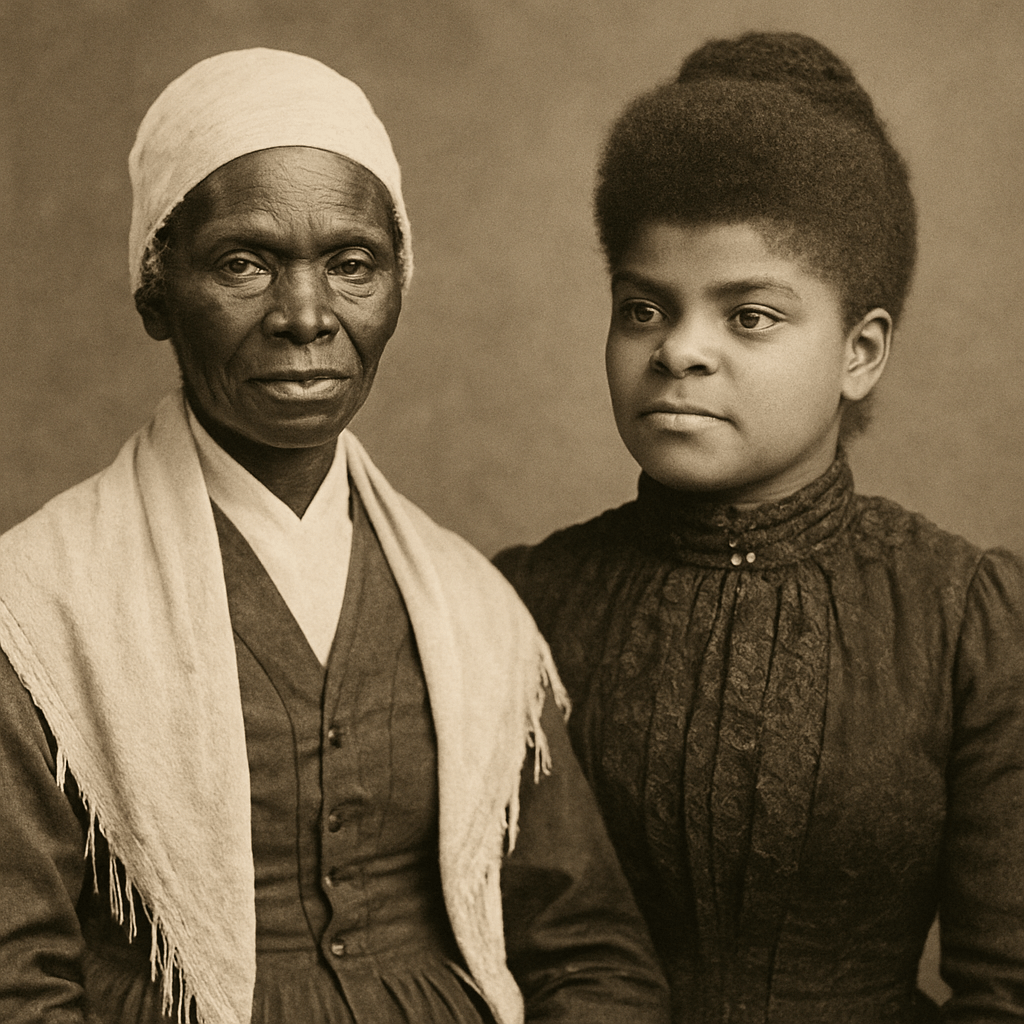
The Slave Files: Sojourner Truth & Ida B. Wells

Sojourner Truth and Ida B. Wells stand as two towering figures in the long arc of Black resistance, each shaped by the wounds of enslavement and the fire of righteous indignation. Though they lived in different generations, their lives intersected through a shared mandate: to speak truth in the face of terror, to defend the dignity of Black people, and to challenge a nation built on contradictions. Their voices became instruments of liberation, courageously confronting the systems that sought to silence them.

Sojourner Truth, born into slavery in 1797 in Ulster County, New York, came into the world as Isabella Baumfree. Her earliest memories were of being owned, sold, and separated from her family—experiences that seared into her consciousness the cruelty of American slavery. Yet she carried within her an unbreakable faith, a spiritual assurance that God had called her to something greater. Her escape from slavery in 1826 marked the beginning of a life mission grounded in preaching, abolition, womanhood, and divine justice.

Her transition from Isabella Baumfree to Sojourner Truth in 1843 signified a spiritual rebirth and a public declaration of purpose. She believed she was commissioned by God to “travel up and down the land” to testify against slavery and advocate for the rights of Black people and women. Her now-famous speech, “Ain’t I a Woman?”, delivered in 1851, challenged racial and gender hierarchies with striking clarity. Though often misquoted, the heart of the message remains a masterwork of intersectional truth spoken long before the term existed.

Sojourner Truth’s activism extended far beyond oratory. She recruited Black troops during the Civil War, advocated for land grants for freedmen, and confronted federal leaders with fearless determination. Her life encapsulated the struggle of a woman surviving slavery, reclaiming her name, and resisting systems that attempted to diminish her humanity. She became a mother of five children, though the brutalities of slavery tore them apart; her fight to regain her son Peter through the courts made her one of the first Black women to successfully challenge a white man in court.

Ida B. Wells, born into slavery in 1862 in Holly Springs, Mississippi, entered the world during the final throes of enslavement. Her parents, James and Elizabeth Wells, valued education deeply and helped establish a school for freed people after Emancipation. Their early influence shaped Ida’s intellectual discipline, but tragedy struck when both parents died during a yellow fever epidemic. At just sixteen, Ida stepped into adulthood as caretaker for her siblings, forging a resilience that would define her future.

Wells became a teacher and later a journalist, using her pen as a weapon against racial violence. Her investigative reporting on lynching remains one of the most significant journalistic contributions in American history. At a time when newspapers routinely justified mob violence, she documented the truth: that lynching was not the result of alleged crimes but a tool of racial terror and economic control. Her groundbreaking pamphlets, such as “Southern Horrors” and “The Red Record,” exposed the hypocrisy of America’s moral claims.

Her boldness came with enormous risk. In 1892, after her friends were lynched in Memphis, she wrote articles condemning the mob. White supremacists destroyed her newspaper office and threatened her life, forcing her to flee to Chicago. Yet even in exile, she refused silence. She traveled internationally, speaking in Britain and Scotland, rallying global outrage against racial violence in America. Her advocacy extended to women’s suffrage, civil rights, and the founding of the NAACP.

Ida B. Wells also lived a rich personal life. In 1895, she married attorney Ferdinand L. Barnett, and together they raised a blended family of six children. Wells balanced motherhood and activism with remarkable efficiency, often taking her infants along to speaking engagements. Her life defied the stereotype that Black women had to choose between public leadership and domestic life.

Where Sojourner Truth fought through the vernacular tradition of preaching and testimony, Wells engaged through print culture and political organizing. Both methods struck deeply at the structural injustices of their eras. Together, their contributions showcase the evolution of Black resistance—from the spiritual abolitionist rhetoric of the antebellum period to the empirical, investigative strategies of the post-Reconstruction era.

Sojourner Truth’s legacy in abolition and women’s rights left an enduring imprint on national consciousness. Her presence forced both abolitionists and suffragists to confront their own racial biases. She preached self-reliance, faith, and the sacredness of Black womanhood at a time when society offered no such validation. Her portrait, sold to fund her activism, famously bore the caption, “I sell the shadow to support the substance,” a profound commentary on self-determination.

Ida B. Wells’ legacy lives in her fearless reporting and organizing. She opened America’s eyes to the brutality of lynching, forcing the nation to reckon with its lies. Her activism laid foundational work that later movements—civil rights, women’s rights, and anti-racism campaigns—built upon. She exemplified what it meant to confront power without apology.

The Underground Railroad, though more closely associated with Tubman, also forms part of the larger backdrop against which Sojourner Truth lived. While Truth was not a conductor in the same formal sense, she provided aid, fellowship, and advocacy for freedom seekers. Her spiritual authority and abolitionist networks contributed significantly to the broader anti-slavery movement. Wells, emerging in a later era, chronicled the legacies of such movements while challenging new forms of racial oppression.

Both women were deeply rooted in spiritual conviction. Truth, shaped by charismatic religion and visions, understood her calling as divinely orchestrated. Wells, raised by devout parents, grounded her activism in moral responsibility and Christian duty. Their faith fueled their courage, their willingness to confront unjust laws, and their unwavering belief in the dignity of their people.

In the realm of education, Sojourner Truth had no formal schooling; slavery denied her literacy. Yet she leveraged her oratory, her memory, and her God-given insight to become one of the most iconic public speakers of the century. Wells, by contrast, received a formal education and became a teacher before entering journalism, using writing as her battlefield. Both approaches illuminate the diverse intellectual traditions within Black womanhood.

Their stories reveal the breadth of Black resistance—from the spiritual mother who walked out of slavery guided by divine intuition to the investigative journalist who fought systemic violence armed with facts and documentation. Each woman carved a distinct path yet arrived at a shared destination: truth-telling as liberation.

In examining their lives, we find a blueprint for modern activism. Truth teaches the power of testimony, the necessity of faith, and the courage to speak even when the world refuses to listen. Wells teaches the power of data, documentation, and organized political pressure. Together, they form a powerful dialectic—spirit and strategy, revelation and research.

Their names are etched into the annals of American memory not because the nation freely honored them but because they demanded recognition. They confronted systems designed to erase them, subvert them, or diminish their voices. Yet they persisted, creating narratives that outlived those who tried to silence them.

Today, the lives of Sojourner Truth and Ida B. Wells remain essential reading in the story of Black freedom. Their legacy informs contemporary movements for justice, from racial equity to gender rights. They bear witness to the fact that Black women have always stood at the forefront of the fight for liberation.

Ultimately, their stories remind us that freedom is never given—it is fought for. Truth and Wells fought with every tool available to them: speeches, testimonies, lawsuits, pamphlets, journalism, and relentless courage. And because of them, generations inherited a more truthful account of America and a more hopeful vision for the future.

They carved their names into history with faith, fire, and unyielding truth. And though the Slave Files record centuries of pain, it is women like Sojourner Truth and Ida B. Wells who illuminate the path of deliverance. Their legacy stands as a permanent reminder that no system of oppression can silence a voice committed to liberation.


References

Andrews, W. L. (2020). African American biography: Collective lives of resistance. Oxford University Press.
Giddings, P. (2008). Ida: A sword among lions. Amistad.
McMurray, S. (2014). Sojourner Truth: A life, a symbol. W. W. Norton.
Washington, B. T. (2019). The legacy of Black abolitionists. Beacon Press.
Wells, I. B. (1892). Southern horrors: Lynch law in all its phases. New York Age.
Wells, I. B. (1895). The red record. New York Age.
Yellin, J. F. (1996). Women and sisters: The struggle for African American liberation. Harvard University Press.

From Chains to Challenges: The Black Journey from Slavery to Modern Struggle.

The story of Black people in the Americas is a long arc of suffering, survival, and strength. Slavery was one of the most devastating atrocities in human history, yet it became the soil out of which resilience, culture, and faith blossomed. To understand where we stand today, we must revisit the beginning—how slavery started, how it ended, and what challenges remain in the present day. This narrative is not merely about the past; it is about the enduring struggle for freedom, dignity, and equality.

Black History Timeline: From Slavery to Modern Struggle

  • 1619 – First enslaved Africans arrive in Virginia, marking the beginning of chattel slavery in the English colonies.
  • 1863 – President Abraham Lincoln issues the Emancipation Proclamation, declaring enslaved people in Confederate states free.
  • 1865 – The 13th Amendment is ratified, officially abolishing slavery in the United States.
  • 1868 – The 14th Amendment grants citizenship and equal protection under the law to formerly enslaved people.
  • 1870 – The 15th Amendment grants Black men the right to vote.
  • 1896Plessy v. Ferguson Supreme Court decision establishes “separate but equal,” legalizing racial segregation.
  • 1954Brown v. Board of Education Supreme Court decision declares school segregation unconstitutional.
  • 1964 – The Civil Rights Act is passed, outlawing discrimination based on race, color, religion, sex, or national origin.
  • 1965 – The Voting Rights Act is signed into law, protecting Black Americans’ right to vote.
  • 2008 – Barack Obama is elected the first Black President of the United States.
  • 2013 – The Black Lives Matter movement is founded in response to police violence and systemic racism.
  • 2020 – Global protests erupt after the murder of George Floyd, sparking renewed calls for racial justice worldwide.

The transatlantic slave trade began in the 15th century when European powers discovered the economic potential of African labor for their colonies in the Americas. Enslaved Africans were kidnapped, sold, and shipped under brutal conditions across the Atlantic in what became known as the Middle Passage. Millions perished along the way, their bodies thrown overboard. Those who survived were forced into chattel slavery, treated as property with no rights, and subjected to physical abuse, family separation, and cultural erasure (Smallwood, 2007).

Slavery in the United States was particularly harsh because it was racialized and hereditary. The legal system ensured that children born to enslaved mothers were automatically slaves, cementing generational bondage (Baptist, 2014). Plantations thrived on cotton, sugar, and tobacco, and the wealth of the American South—and much of the North—depended on unpaid African labor. This institution became so entrenched that it divided the nation politically, socially, and economically.

Resistance was always present. Enslaved people rebelled in overt and covert ways, from uprisings like Nat Turner’s rebellion to everyday acts of defiance such as breaking tools, escaping via the Underground Railroad, or maintaining African traditions in music and religion. These acts of resistance preserved Black humanity and spirit even in the face of dehumanization (Berlin, 2003).

The formal end of slavery in the United States came with the Civil War (1861–1865). President Abraham Lincoln’s Emancipation Proclamation in 1863 declared freedom for enslaved people in Confederate states, though true liberation came only with the Union victory and the ratification of the 13th Amendment in 1865. Yet freedom was only partial—many enslavers resisted, and newly freed people faced systemic violence and oppression (Foner, 2014).

Reconstruction (1865–1877) was a critical but short-lived moment of hope. Freedmen’s schools were established, Black men gained the right to vote, and several Black politicians were elected to office. However, white supremacist backlash soon reversed these gains through Black Codes, sharecropping systems, and domestic terrorism by groups such as the Ku Klux Klan. Reconstruction’s collapse ushered in the era of Jim Crow segregation (Litwack, 1998).

Jim Crow laws legally enforced racial segregation, keeping Black Americans in a second-class status for nearly a century. Public spaces, schools, and neighborhoods were divided, with Black people denied equal access to education, housing, and voting rights. Lynchings became a tool of terror, and entire communities were burned to the ground, as in Tulsa’s 1921 massacre (Gates, 2019). Despite this, Black Americans built their own thriving institutions, from HBCUs to churches that became pillars of community life.

The Civil Rights Movement of the 1950s and 1960s was a turning point. Leaders like Martin Luther King Jr., Rosa Parks, and Malcolm X challenged racial injustice through marches, boycotts, and powerful speeches. Landmark victories included the Brown v. Board of Education decision (1954), the Civil Rights Act (1964), and the Voting Rights Act (1965). These legal changes dismantled de jure segregation, though de facto inequalities persisted (Branch, 1988).

Key Figures Who Made a Difference

  • Abraham Lincoln – Issued the Emancipation Proclamation and pushed for the 13th Amendment to abolish slavery.
  • Frederick Douglass – Escaped slave, abolitionist, writer, and orator who advocated for freedom and equality.
  • Harriet Tubman – Led hundreds to freedom through the Underground Railroad, symbolizing courage and liberation.
  • Sojourner Truth – Abolitionist and women’s rights advocate, known for her “Ain’t I a Woman?” speech.
  • W.E.B. Du Bois – Scholar and co-founder of the NAACP, championed civil rights and Pan-African unity.
  • Marcus Garvey – Advocated Black pride, economic independence, and Pan-Africanism.
  • Martin Luther King Jr. – Leader of the Civil Rights Movement, preached nonviolent resistance and racial equality.
  • Malcolm X – Spokesman for Black empowerment and self-defense, encouraged pride in African heritage.
  • Rosa Parks – Sparked the Montgomery Bus Boycott by refusing to give up her seat, inspiring nationwide action.
  • Thurgood Marshall – First Black Supreme Court Justice, fought segregation through legal challenges.
  • Ida B. Wells – Journalist and anti-lynching crusader, raised awareness of racial terror.
  • Barack Obama – First Black President of the United States, symbolizing progress and representation.

After the Civil Rights era, there were significant advances: greater representation in politics, the election of mayors, governors, and, eventually, President Barack Obama. Economic opportunities slowly expanded, but wealth disparities, mass incarceration, and systemic racism remained. The War on Drugs disproportionately targeted Black communities, leading to generations of Black men being imprisoned and families being destabilized (Alexander, 2010).

In today’s world, slavery no longer wears chains but manifests economically and psychologically. Financial bondage can be seen in predatory lending, wage disparities, and a lack of generational wealth. Black households, on average, hold a fraction of the wealth of white households due to historical exclusion from homeownership programs like the GI Bill and redlining practices (Oliver & Shapiro, 2006).

One of the clearest examples of modern-day economic slavery is student debt. Black students are more likely to take on loans for college and graduate with higher debt burdens than their white counterparts, limiting their ability to buy homes, invest, and build wealth (Scott-Clayton & Li, 2016). Education, once seen as a tool of liberation, can trap graduates in decades of repayment, mirroring the cycle of sharecropping debt from the Reconstruction era.

Prison labor is another form of present-day slavery. The 13th Amendment abolished slavery “except as punishment for crime,” allowing prisons to exploit incarcerated individuals for little to no pay. Many major corporations profit from prison labor, making mass incarceration an economic engine that disproportionately affects Black men (Davis, 2003). This system echoes the convict leasing programs of the late 19th century, where newly freed Black men were arrested for minor infractions and leased out to plantations and factories.

Corporate exploitation also plays a role in the new slavery. Many Black communities are targeted by payday lenders, fast-food chains, and predatory retailers who profit from economic desperation. Food deserts—neighborhoods with little access to fresh produce—force residents to rely on unhealthy options, contributing to poor health outcomes and reinforcing a cycle of dependency (Walker et al., 2010).

Employment discrimination continues to be a barrier. Studies have shown that resumes with “Black-sounding” names receive fewer callbacks than those with “white-sounding” names despite identical qualifications (Bertrand & Mullainathan, 2004). This systemic bias reinforces cycles of poverty and limits access to economic mobility.

Education remains a battleground. Predominantly Black schools often receive less funding, leading to fewer resources, overcrowded classrooms, and lower graduation rates. Yet, despite these challenges, Black students continue to excel, breaking barriers in academia, science, and entrepreneurship (Ladson-Billings, 2006).

Cultural slavery persists in the form of media stereotypes that shape perceptions of Black identity. From harmful tropes of the “thug” or “angry Black woman” to colorism within the Black community, these narratives influence hiring decisions, policing, and self-esteem. Representation in media, however, is slowly shifting, with more nuanced and empowering portrayals emerging.

Financial literacy has become a tool of modern liberation. Black entrepreneurs, activists, and educators are teaching about credit, investments, and ownership. Movements like #BuyBlack encourage the circulation of dollars within Black communities to build sustainable economic power (Anderson, 2017).

Social justice movements have reignited the fight against systemic oppression. These movements use technology and social media to expose police brutality, advocate for criminal justice reform, and mobilize global solidarity. The digital age has given new tools to an old struggle for freedom.

Spiritually, many in the Black community turn to faith as a source of endurance. Churches remain hubs for organizing, political activism, and community care. The Black church has historically been a place where the enslaved could sing freedom songs, where civil rights leaders could strategize, and where today’s generation continues to find hope.

Globally, the African diaspora faces similar challenges. In places like Brazil, the Caribbean, and the UK, Afro-descendant communities grapple with racial inequality, police violence, and underrepresentation. The struggle for Black liberation is international, linking us to a global human rights movement.

Despite the challenges, the Black journey is marked by incredible achievements in arts, science, sports, politics, and beyond. The cultural contributions of African Americans—from jazz to hip-hop, from literature to fashion—have transformed the world and redefined what it means to be resilient.

Today, being “enslaved” can also mean mental enslavement: internalized racism, self-hate, and the pursuit of material validation rather than true freedom. Breaking free requires education, healing, and a reorientation toward self-love and community empowerment.

This journey is not only about survival but about thriving. The legacy of slavery can be transformed into a legacy of greatness when knowledge, faith, and economic empowerment are combined. The fight is not over, but the foundation has been laid by those who came before us.


References
Alexander, M. (2010). The new Jim Crow: Mass incarceration in the age of colorblindness. The New Press.
Anderson, C. (2017). PowerNomics: The national plan to empower Black America. PowerNomics Corporation of America.
Baptist, E. (2014). The half has never been told: Slavery and the making of American capitalism. Basic Books.
Berlin, I. (2003). Generations of captivity: A history of African-American slaves. Harvard University Press.
Bertrand, M., & Mullainathan, S. (2004). Are Emily and Greg more employable than Lakisha and Jamal? American Economic Review, 94(4), 991–1013.
Branch, T. (1988). Parting the waters: America in the King years 1954-63. Simon & Schuster.
Davis, A. (2003). Are prisons obsolete? Seven Stories Press.
Foner, E. (2014). Reconstruction: America’s unfinished revolution, 1863-1877. Harper Perennial.
Gates, H. L. (2019). Stony the road: Reconstruction, white supremacy, and the rise of Jim Crow. Penguin Press.
Ladson-Billings, G. (2006). From the achievement gap to the education debt: Understanding achievement in U.S. schools. Educational Researcher, 35(7), 3–12.
Litwack, L. F. (1998). Trouble in mind: Black southerners in the age of Jim Crow. Vintage.
Oliver, M. L., & Shapiro, T. M. (2006). Black wealth/white wealth: A new perspective on racial inequality. Routledge.
Scott-Clayton, J., & Li, J. (2016). Black-white disparity in student loan debt more than triples after graduation. Brookings Institution.
Smallwood, S. (2007). Saltwater slavery: A middle passage from Africa to American diaspora. Harvard University Press.
Walker, R. E., Keane, C. R., & Burke, J. G. (2010). Disparities and access to healthy food in the United States: A review of food deserts literature. Health & Place, 16(5), 876–884.