Category Archives: racism

Dilemma: The “N” Word

The N‑word is a linguistic atomic bomb: it is capable of inflicting instantaneous injury, yet its power depends on historical context, speaker identity, and audience. It embodies centuries of subjugation, hatred, and oppression, and no neutral intent can erase that history.”
— Randall Kennedy, The N Word: Who Can Say It, Who Shouldn’t, and Why (2007, Beacon Press)

The word commonly referred to as the “N‑word” occupies one of the most charged spaces in the English language, carrying with it a history of slavery, segregation, dehumanisation, and ongoing racial violence. Its use, whether overt or subtle, signals more than mere insult—it implicates power, identity, culture, and memory. The dilemma lies in how the term continues to resonate, be contested, be reclaimed, and to injure.

Originally derived from the Latin niger (black), the term entered the English lexicon as “negro” (black person) and then evolved into “nigger”, a pejorative term whose first recorded uses as a slur date back to the seventeenth century. AAIHS+3PBS+3AA Registry+3 Even though a linguistic transformation occurred, the historic weight of racialised domination never abated. The term became embedded within the lexicon of white supremacy as a tool of dehumanisation.

In its historic usage, the slur served to mark Black persons as inferior, as property, as objects of violence and contempt. Through slavery, lynching, Jim Crow segregation, and systemic disenfranchisement, the word was more than an insult—it was an instrument of terror. AAIHS+2The Washington Post+2 To call someone this word was to place them at the lowest rung of society, to deny their humanity, to reduce them to a racialised subordinate.

Its meaning, however, is not fixed. Recent scholarship emphasises that context matters: the same lexical form may carry different pragmatic values depending on speaker identity, target, setting, intonation and community. A study of various uses of the slur in film and African American intra‑group settings argues that context determines nuance. PMC+1 In other words, the slur’s semantics are entangled with social and cultural dynamics.

When a non‑Black person uses the word towards a Black person, the meaning is rarely neutral. Given the historical legacy, it almost always signals contempt, racial threat or dominance. The slur thus acts as a linguistic embodiment of racial hierarchy—reinforcing what scholar Randall Kennedy called the “atomic bomb of racial slurs.” PBS+1 The emotional weight carried by the utterance cannot be divorced from the structural history.

Within the Black community, some use a variant ending in “‑a” (i.e., “nigga”) as a form of intra‑group address, signalling camaraderie, shared suffering, and cultural belonging. But this intra‑group appropriation remains contested. On one hand, it is reclamation; on the other, it is still rooted in a lexicon of oppression. PMC+1 This duality captures the complexity of language, identity, and power.

From a sociolinguistic and psychological perspective, the impact of the slur is substantial. Hearing or being addressed with the word has been associated with increased stress, lowered self‑esteem, internalised stigma, and social alienation. A qualitative study of African Americans’ feelings toward the word found strong negative reactions when used by non‑Black persons, and ambivalent or contextually bounded responses when used within the Black community. ScholarWorks The marker of difference and devaluation is thus deeply internalised.

The ethical and theological dimensions are equally weighty. If humanity is grounded in the imago Dei (Genesis 1:27) and dignity is recognized as universal, then the use of a slur that denies that dignity is a moral wrong. The N‑word becomes not merely a linguistic issue but a theological one: the denial of image, the denial of voice, the denial of equal worth. The Christian prophetic tradition that calls for justice (Isaiah 1:17; Amos 5:24) compels an interrogation of how language participates in oppression.

At a cultural level, the proliferation of the slur in media, music (especially hip‑hop), literature, and everyday speech complicates its mitigation. One analysis noted that the N‑word appears half a million times a day in social‑media use of the variant “nigga”. The Washington Post+1 This saturation suggests the word is both hyper‑present and normalized in certain contexts, even as it remains banned or taboo in others.

This juxtaposition—between taboo and normalization—underscores the dilemma. For many youth, especially across racial lines, the word may carry diminished sting or may function as slang. Yet for many older generations and for persons subjected to its historical brutality, the word still evokes chains, lynchings, segregation, and racial terror. The generational and intra‑community divide is thus real and significant. Learning for Justice

Moreover, the double standard inherent in discourse is explicit. Many educators and scholars note that Black persons may face fewer consequences (or different ones) when using the variant among themselves, whereas non‑Black persons often face condemnation, social censure, or institutional discipline. Lester, for instance, taught a college‐level course on the N‑word and observed that discussions often revolved around this double standard. Learning for Justice+1 The question of who may legitimately say the word is itself a question of power and membership.

In workplaces, educational institutions, and legal settings, the slur can trigger claims of hostile work environment, harassment, or discriminatory bias. Courts have grappled with whether intra‑racial use by Black workers can also constitute actionable harassment, demonstrating that the slur remains legally potent. Digital Commons@DePaul The law recognises that language can be a vehicle of structural oppression.

Language scholarship emphasises that slurs are performative: they do things—they wound, intimidate, exclude, subordinate. The N‑word performs historical violence, racial demotion, and cultural silencing. It enacts through sound and symbol what structural racism does through policy and practice. The reclamation rhetoric tries to invert that performance, to transform a scar into a badge—but the original wound remains.

Why do people use the N‑word today? Several motivations exist. Some non‑Black speakers may use it in ignorance of its history, other speakers may use it deliberately as taunt or threat. Sometimes it is used for shock, rebellion or humour (though harm remains). Within the Black community, usage may serve as marker of intimacy or cultural identity. But the asymmetry of power remains: when the speaker is non‑Black, the word seldom escapes the baggage of hate. The refusal of some non‑Black persons to recognise the word’s history is itself an expression of racial insensitivity.

When directed at Black persons in peer or social settings by non‑Black persons, the word often functions as a racial insult, an invocation of threat, or a reaffirmation of inferior status. Its use is fundamentally interlinked with racial hostility because of the long history of its deployment in violence, exclusion and demeaning treatment. It is an instrument of racial harm.

In interpersonal relations it also fosters distrust, emotional injury and intergenerational trauma. The repeated hearing or expectation of the word can condition psychological hyper‑vigilance, identity stress and a sense of perpetual othering. The phenomenon of “racial battle fatigue” resonates here: Black individuals develop cumulative stress responses to recurrent micro‑ and macro‑aggressions, among which the N‑word is a symbolic anchor.

At the community level, the ubiquity of the word among youth, popular culture and digital spaces intersects with structural inequalities and racial hierarchies. The word’s presence signals that racial devaluation remains socially acceptable in many contexts. This undermines collective efforts to build inclusive institutions and equal dignity. The normalization of the slur—especially when used casually—reduces the social impetus for change.

From a historical vantage, the N‑word is deeply tied to structural racism: from its evolution during the era of slavery, where it served as a descriptor of enslaved Africans, to the post‑emancipation era where it reinforced segregation and Jim Crow disenfranchisement, to the present where it persists in linguistic and cultural domains. The scholarly review of its history emphasises its continuity across centuries of racial subordination. AA Registry+1

Critically, the mere elimination of the word does not eliminate the racism behind it. Some commentators argue that focusing solely on “banning the word” distracts from addressing the power structures that allowed the word to thrive. One scholar argued that eradicationists confuse the form of the word with the conditions of its use. PMC In other words, the slur is a symptom, not the root, of racial devaluation.

In light of your interest in theology, genetics, identity and historical injustice, the N‑word invites reflection on how language intersects with inherited trauma, communal identity and racialised bodies. For example, when Black lineages (including Y‑DNA haplogroups such as E1b1a) are reclaimed and celebrated, the presence of a slur undermines the narrative of dignity restoration, reminding us that language remains a battleground for identity.

In conclusion, the dilemma of the N‑word is not simply a lexical matter—it is deeply social, historical, psychological, cultural and structural. Its significance lies in the interplay of language and power, identity and trauma, resistance and reclamation. Addressing the issue meaningfully requires attention not only to who uses the word, but the reasons behind its use, the relational context, the historical weight, and the healing work that must accompany language transformation.

References
Lester, N. A. (2011). Straight talk about the N‑word. Learning for Justice. Retrieved from https://www.learningforjustice.org/magazine/fall-2011/straight-talk-about-the-nword Learning for Justice
Rahman, J. (2014). Contextual determinants on the meaning of the N word. Philosophy & Social Criticism, 40(2), 123‑141. https://doi.org/10.1177/0191453714550430 PMC
Kennedy, R. (2007). The N Word: Who Can Say It, Who Shouldn’t, and Why. Beacon Press. (Referenced in Kennedy’s public commentary). Digital Commons@DePaul+1
National Association for the Advancement of Colored People. (2014). NAACP official position on the use of the word “nigger” and the “N‑word.” Retrieved from https://naacp.org/resources/naacp-official-position-use-word-nigger-and-n-word NAACP
“Analysis of the Reclamation and Spread of the N‑word in Pop Culture.” (n.d.). Undergraduate Showcase. Retrieved from https://www.journals.uc.edu/index.php/Undergradshowcase/article/download/4116/3123 Journals at UC
“A brief history: The word nigger.” African American Registry. (n.d.). Retrieved from https://aaregistry.org/story/nigger-the-word-a-brief-history/ AA Registry
Colorism in the Fashion Industry: Breaking the Bias.

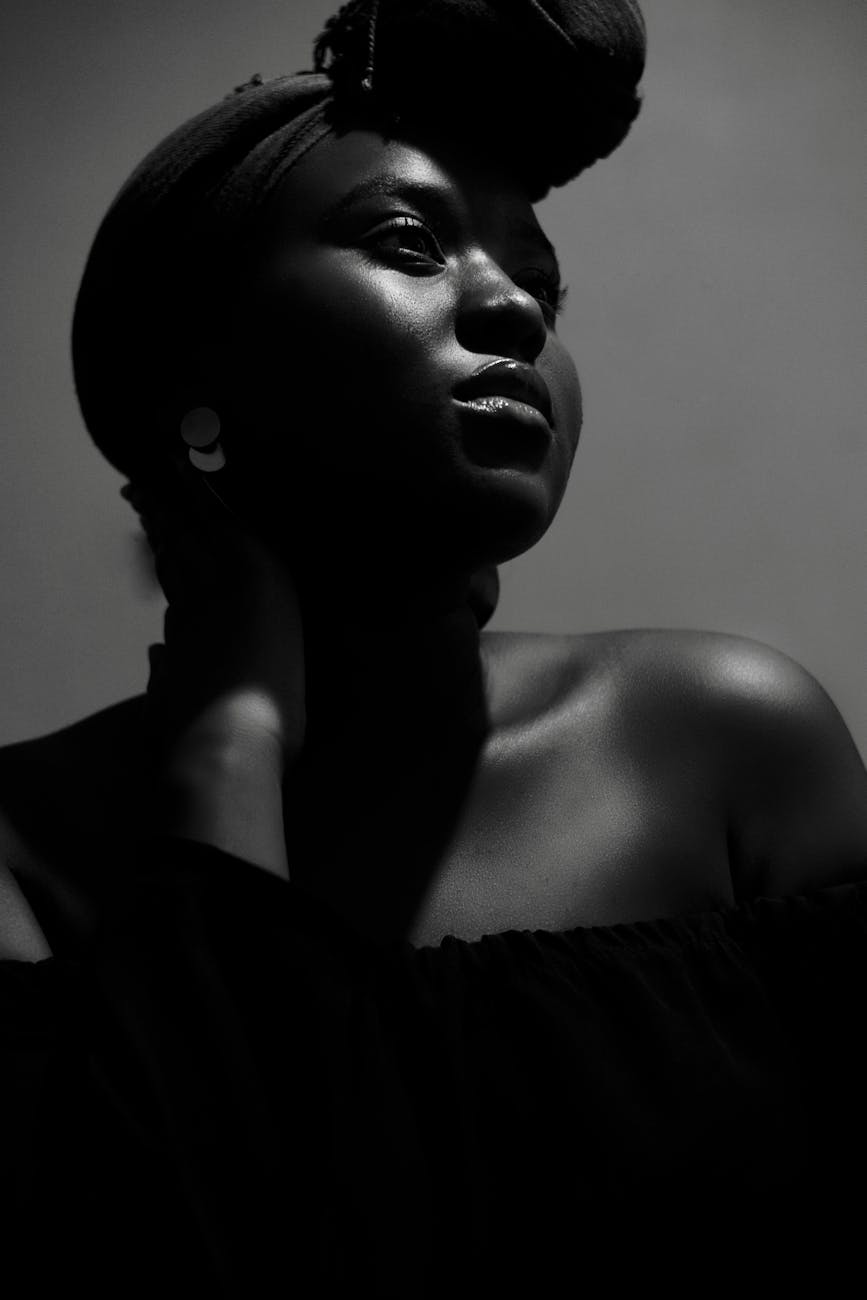
Photo by Bash Mutumba on Pexels.com

Colorism—the privileging of lighter skin tones over darker ones within the same racial group—has deep historical roots and contemporary consequences in global society. Within the fashion industry, colorism functions not only as a discriminatory practice but also as a mechanism that shapes visibility, opportunity, and representation. Fashion, as both an art form and a business, reflects and reinforces cultural hierarchies. Thus, the underrepresentation of dark-skinned models and the preference for lighter-skinned ones underscores the persistence of Eurocentric beauty ideals in an industry that prides itself on innovation and inclusivity.


Historical Roots of Colorism in Fashion

The origins of colorism trace back to slavery and colonialism, where lighter skin was often associated with proximity to whiteness, privilege, and desirability (Hunter, 2007). In the United States, enslaved individuals with lighter complexions were sometimes favored for domestic work, while darker-skinned individuals were relegated to harsher labor. This hierarchical system established a cultural preference for lighter skin that extended into media, beauty, and eventually fashion. As the fashion industry developed, Eurocentric beauty standards became codified in runway shows, advertising, and editorial spreads, marginalizing darker-skinned women and men.


The Runway and Editorial Exclusion

Runways and fashion magazines have historically privileged models with lighter skin, straighter hair, and Eurocentric features. Even within “diverse” campaigns, darker-skinned Black models often remain tokenized. For instance, Naomi Campbell, despite her status as one of the most famous supermodels of all time, revealed she had to fight harder for opportunities that her white counterparts received effortlessly (Campbell, 2016). Dark-skinned models such as Alek Wek and Duckie Thot broke barriers, but their presence has often been treated as exceptions rather than norms. This reveals the systemic nature of colorism: representation is granted selectively and sparingly, rather than broadly embraced.

Case Study – Naomi Campbell, Alek Wek, and Adut Akech

Naomi Campbell (1980s–Present)

Naomi Campbell emerged in the late 1980s as one of the first globally recognized Black supermodels. While she reached heights few models—regardless of race—could achieve, Campbell herself revealed that she often had to fight harder for opportunities that her white peers received with ease. She once said, “I was never picked for certain shows—not because I couldn’t do the job, but because of the color of my skin” (Campbell, 2016). Her career symbolizes both the barriers imposed by colorism and the resilience required to break through them.


Alek Wek (1990s)

In the 1990s, South Sudanese model Alek Wek revolutionized the industry by unapologetically showcasing her deep dark skin, natural hair, and African features. When she rose to prominence, many Western critics doubted whether her look could be commercially viable. Yet Wek’s success redefined beauty and inspired a new generation of young women, particularly dark-skinned Black girls, to embrace their appearance. Her visibility disrupted Eurocentric norms and served as a cultural turning point in fashion’s global aesthetic (Hall, 2010).


Adut Akech (2010s–Present)

Adut Akech, another South Sudanese model, continues to advance the legacy of dark-skinned representation in fashion. A refugee turned international supermodel, Akech has walked for major houses like Valentino and Chanel, becoming a muse for designers while advocating for refugee rights. She has spoken openly about colorism and racism in the fashion world, noting that makeup artists are often unprepared to work with her skin tone (Lewis, 2011). Akech’s presence represents both progress and the work yet to be done in dismantling systemic biases.


Comparative Analysis

These three women represent different eras of struggle and triumph in the face of colorism. Campbell fought for inclusion, often being the lone dark-skinned figure on global stages. Wek expanded the vision of Black beauty, embodying features once excluded from mainstream fashion. Akech, in the digital age, uses her platform to not only model but also advocate for social justice. Collectively, they embody resilience and redefine beauty standards, proving that dark skin is not only viable but invaluable in fashion’s ongoing evolution.


Colorism in Advertising and Branding

Advertising campaigns often reinforce a narrow vision of Black beauty by privileging lighter-skinned women in mainstream branding. Lighter skin is frequently equated with “universality,” while darker skin is portrayed as “niche.” This not only affects representation but also market access: darker-skinned models are underbooked, underpaid, and less visible, despite global recognition of Black culture’s influence on fashion trends (Lewis, 2011). The commodification of “acceptable” Blackness perpetuates an insidious cycle where lighter-skinned women are celebrated as symbols of diversity, while darker-skinned women remain marginalized.


Psychological Effects of Colorism in Fashion

The exclusion and marginalization of darker-skinned models create lasting psychological effects. Research shows that colorism contributes to internalized racism, self-esteem struggles, and body image issues among Black women (Hall, 2010). For young women aspiring to careers in fashion, the lack of role models who reflect their skin tone signals that beauty and desirability are tethered to lightness. Scripture warns against such vanity and distorted perceptions of beauty: “For the LORD seeth not as man seeth; for man looketh on the outward appearance, but the LORD looketh on the heart” (1 Samuel 16:7, KJV). This biblical reminder challenges the industry to move beyond surface-level valuations of beauty.


Resistance and Breaking the Bias

Despite systemic barriers, dark-skinned women have reclaimed space in fashion. Alek Wek’s rise in the 1990s challenged Eurocentric ideals by celebrating her Sudanese heritage and skin tone, inspiring countless young women globally. More recently, the success of models like Adut Akech and Nyakim Gatwech demonstrates the possibility of breaking entrenched biases. Additionally, designers and makeup brands such as Rihanna’s Fenty Beauty and Thebe Magugu have embraced darker tones and African aesthetics as integral, not peripheral, to their visions. These efforts represent resistance against colorism, although structural changes in casting, marketing, and pay equity remain necessary.


The Role of Social Media Activism

Social media has been a powerful tool in challenging colorism. Hashtags like #MelaninPoppin and #DarkSkinMagic celebrate darker skin tones, countering narratives that have historically marginalized them. Models bypass traditional gatekeepers by building platforms directly with audiences, forcing brands to acknowledge and adapt to consumer demands for inclusivity. This digital activism represents a democratization of fashion, where consumers and creators hold institutions accountable for bias.


A Biblical and Ethical Challenge

From a biblical perspective, the challenge to colorism in fashion is not merely about inclusion but about justice and truth. James 2:1 warns against favoritism: “My brethren, have not the faith of our Lord Jesus Christ, the Lord of glory, with respect of persons.” Favoring lighter skin over darker skin perpetuates a false hierarchy that contradicts the truth of human equality before God. Thus, breaking the bias in fashion is not only socially progressive but also spiritually imperative.


Conclusion: Toward True Inclusivity

Colorism in the fashion industry reveals how deeply embedded Eurocentric ideals remain in structures of representation. While progress has been made, particularly through the visibility of dark-skinned models and consumer-driven activism, systemic inequities persist. Breaking the bias requires structural reform, cultural accountability, and a commitment to genuine inclusivity rather than tokenism. For Black women, the reclamation of dark skin beauty in fashion is not just a trend—it is a revolution that affirms dignity, identity, and divine worth.


References

Campbell, N. (2016). Interview with the Guardian on race and modeling. Guardian Media Group.
Hall, R. E. (2010). An historical analysis of skin color discrimination in America: Victimism among victim group populations. Springer.
Hunter, M. (2007). The persistent problem of colorism: Skin tone, status, and inequality. Sociology Compass, 1(1), 237–254.
Lewis, R. (2011). Race, representation, and fashion media: Shaping Blackness in cultural industries. Fashion Theory, 15(2), 153–174.
The Holy Bible, King James Version. (1611/2017). Thomas Nelson.

Beauty in the Eyes of Truth: Debunking Satoshi Kanazawa’s Racist “Study” on Black Women.

When Satoshi Kanazawa published his article, “Why Are Black Women Less Physically Attractive Than Other Women?” in 2011 on Psychology Today’s blog The Scientific Fundamentalist, he set off a firestorm of global outrage. His so-called “research” claimed that Black women were “objectively less attractive” than women of other races based on statistical data. What he called “scientific evidence” was, in reality, a misuse of data, steeped in racial bias, colonial beauty standards, and poor methodology.

Kanazawa drew from a database called the Add Health survey, which included self-reported ratings of physical attractiveness by interviewers. However, these interviewers were not trained in objective aesthetic assessment — they were individuals influenced by their own biases, cultural norms, and Eurocentric ideals of beauty. Instead of acknowledging this obvious flaw, Kanazawa treated subjective opinions as biological fact, thereby perpetuating pseudoscience.

The title alone — “Why Are Black Women Less Physically Attractive” — betrayed a racist premise. It positioned Black women as a scientific question to be explained rather than human beings deserving of dignity. This type of racial pseudoscience has roots in 19th-century eugenics, which sought to justify white supremacy through “biology.” In Kanazawa’s case, the problem wasn’t science — it was the misuse of science to validate prejudice.

The article provoked an immediate global backlash. Black women scholars, writers, and readers flooded Psychology Today with demands for its removal. Within days, the post was taken down and disavowed by the publication. The London School of Economics publicly condemned Kanazawa’s statements, suspended him from teaching duties, and launched an investigation into his conduct. Psychology Today later issued an apology for publishing the article at all, acknowledging that it failed editorial standards and promoted harmful racial stereotypes.

Satoshi Kanazawa was not a random internet blogger — he was a university lecturer and evolutionary psychologist who often courted controversy. He had previously published inflammatory posts suggesting that African nations were “less intelligent” due to genetics, and that men were “more rational” than women. His work consistently displayed a pattern of racial and gender bias disguised as evolutionary psychology, leading many experts to label his theories as “scientific racism.”

But why did he specifically target Black women? Because Black women have historically been positioned at the intersection of both racism and sexism — where both systems of oppression overlap. Kanazawa’s post reflected a broader societal narrative that devalues Black womanhood while glorifying Eurocentric beauty. From slavery-era stereotypes of the “mammy” and “jezebel” to modern media’s glorification of lighter skin and straighter hair, his article fed into a centuries-old lie: that whiteness equals beauty, and Blackness does not.

Yet the truth is exactly the opposite. The concept of beauty is not objective, and it certainly cannot be reduced to statistical averages. Beauty is in the eye of the beholder, as Proverbs 31:30 (KJV) reminds us: “Favour is deceitful, and beauty is vain: but a woman that feareth the Lord, she shall be praised.” The Most High never created one standard of beauty — He created diversity as a reflection of His glory.

The melanin-rich skin of Black women is a divine masterpiece of strength and radiance. Scientifically, melanin protects against ultraviolet radiation, delays aging, and carries powerful antioxidant properties. Spiritually, melanin symbolizes resilience and divine design — “I am black, but comely,” declares the Shulamite woman in Song of Solomon 1:5 (KJV), affirming that her dark skin is beautiful in the eyes of God.

Kanazawa’s so-called “findings” crumble under both scientific and spiritual truth. Studies since then have proven that perceptions of beauty are culturally constructed and heavily influenced by exposure, familiarity, and societal power dynamics. When media and academia have long centered white features as the norm, it’s no surprise that biases emerge in subjective surveys. The real issue is not the appearance of Black women — it’s the conditioning of the observers.

The damage from Kanazawa’s article, however, was not purely academic. It caused emotional harm to millions of Black women and girls who saw themselves being demeaned in the name of science. But out of that pain came power — Black women writers, scholars, and activists began challenging not just Kanazawa, but the entire structure of racialized beauty standards. Movements like #BlackGirlMagic and The Melanin Movement emerged to celebrate the uniqueness, intelligence, and glory of Black femininity.

The Bible teaches that every human is “fearfully and wonderfully made” (Psalm 139:14, KJV). There is no hierarchy in God’s creation, only purpose. The notion that any race of women could be “less attractive” defies both the natural order and divine truth. God does not rank beauty — He defines it by character, spirit, and righteousness.

Satoshi Kanazawa’s downfall serves as a lesson in accountability. His attempt to use science to degrade a people group backfired and exposed how racism still lurks in academic institutions. The removal of his article and suspension from LSE marked an important moment in the fight against institutional racism disguised as research.

To this day, Psychology Today has never republished the post, and Kanazawa’s reputation remains stained by his unethical approach. His legacy is a warning: intelligence without morality becomes manipulation. Data without empathy becomes oppression.

The truth is simple — Black women do not need validation from biased scientists or manipulated statistics. Their worth is intrinsic, God-given, and undeniable. Their features — full lips, textured hair, radiant skin — are not deviations from beauty but divine blueprints of creation.

In a world still influenced by Eurocentric ideals, it is critical to remember that beauty is not comparative — it is collective. Every shade and feature tells the story of a God who delights in variety.

Satoshi Kanazawa’s article was not science; it was prejudice cloaked in data. Its removal was an act of justice. And its legacy reminds us that truth and beauty cannot be measured by biased eyes — only by the Creator who made all flesh in His image.

Black Women Are Divine: The Truth About Melanin and Beauty Beyond Eurocentrism

For centuries, the beauty of the Black woman has been misunderstood, misrepresented, and mischaracterized. Western ideals — rooted in colonialism and white supremacy — have attempted to distort what God Himself called “good.” Yet, the truth remains: the Black woman is not an accident of biology, nor a deviation from beauty’s standard. She is divine design — formed with intention, wrapped in melanin, and crowned with resilience.

The Eurocentric gaze has long defined beauty through a narrow lens — lighter skin, straight hair, delicate features. But this standard was born not of truth, but of hierarchy. It emerged during colonization when European men sought to establish dominance by devaluing darker skin. To elevate whiteness, they had to diminish Blackness. And so, the war against Black womanhood became not just physical, but psychological.

But the Most High made no mistake. Genesis 2:7 (KJV) says, “And the LORD God formed man of the dust of the ground, and breathed into his nostrils the breath of life.” The dust of the ground is brown — the color of earth, rich in nutrients and minerals. In the same way, the skin of the Black woman carries the essence of creation itself. Her melanin is not a flaw; it is the fingerprint of God’s first masterpiece.

Melanin is the biological evidence of divine wisdom. It absorbs light, protects from radiation, preserves youth, and enhances the body’s connection to natural energy. Spiritually, it symbolizes endurance and divine covering. Isaiah 60:2 (KJV) proclaims, “For, behold, the darkness shall cover the earth… but the LORD shall arise upon thee, and his glory shall be seen upon thee.” The darkness that covers the Black woman is not a curse — it is glory manifested.

Every curl, every coil, every shade of brown tells a sacred story. Black hair, often stigmatized under European ideals, is in fact a marvel of design — coiled to protect the scalp, regulate heat, and retain moisture in tropical climates. It grows toward the heavens as a living symbol of strength and connection to the divine. 1 Corinthians 11:15 (KJV) declares, “If a woman have long hair, it is a glory to her.” Black hair, in all its natural forms, is an expression of that glory.

The lie of Eurocentric beauty has long told Black women they must alter themselves to be accepted — straighten their hair, lighten their skin, shrink their bodies, and quiet their voices. But these are not acts of self-love; they are symptoms of systemic programming. Romans 12:2 (KJV) warns, “And be not conformed to this world: but be ye transformed by the renewing of your mind.” To renew the mind is to remember divine truth: that you were already perfect in the eyes of your Creator.

Science, when freed from bias, testifies to the same truth. Melanin not only defines skin tone but also enhances vision, strengthens the immune system, and synchronizes the body’s natural rhythm with the sun. It is, quite literally, life-giving carbon — the same element found in stars, soil, and all living things. To possess melanin is to carry the universe within.

The Black woman’s lips, full and expressive, symbolize nourishment and truth. Her hips, wide and strong, represent creation and continuation of life. Her eyes, deep and radiant, reflect wisdom and empathy. Her skin, luminous and resilient, tells the story of survival through centuries of oppression — yet still she glows. Isaiah 61:3 (KJV) calls her a woman “to give unto them beauty for ashes.” She has walked through fire, yet she remains gold.

Historically, European colonialism labeled African features as “primitive” while simultaneously fetishizing them. This hypocrisy continues in modern media, where non-Black women are praised for features that originate in Black beauty — full lips, curvy bodies, sun-kissed skin. Yet when the Black woman bears them naturally, she is too often told she is “too much.” This contradiction exposes the world’s envy of what it cannot reproduce: divine authenticity.

To understand the sacredness of melanin is to understand covenant. Deuteronomy 7:6 (KJV) declares, “For thou art an holy people unto the LORD thy God: the LORD thy God hath chosen thee to be a special people unto himself.” The melanin in the Black woman is more than pigment — it is purpose. It connects her to the elements of the earth and the energy of creation. She embodies both survival and sanctity.

The Black woman is also the cradle of civilization. Archaeological and genetic evidence affirms that humanity’s maternal ancestry traces back to Africa — to the very women whose descendants are still walking the earth. The mitochondrial DNA of all humans today originates from an African mother scientists call “Mitochondrial Eve.” Long before Eurocentric ideals existed, the Black woman was the standard — the mother of nations.

Yet despite being the mother of humanity, she has been vilified, hypersexualized, and devalued. But God always restores what man destroys. Psalm 113:7 (KJV) reminds us, “He raiseth up the poor out of the dust, and lifteth the needy out of the dunghill.” The modern awakening of Black womanhood — in faith, culture, and scholarship — is that divine lifting in action.

To the Black woman, you are not defined by social metrics or colonial constructs. You are defined by the Word of God and the truth of creation. Your strength does not make you hard; your beauty does not make you vain; your melanin does not make you less. It makes you chosen.

Black woman, your skin is anointed with the same carbon that fuels the stars. Your heart beats with the rhythm of ancient drums. Your voice carries the tone of prophets and poets. Your presence testifies that the Creator’s design is intentional, balanced, and breathtaking.

Let no man or magazine define you. Let no algorithm rank you. Let no false science demean you. For you were not created to fit into the mold of European fantasy — you were shaped by divine reality. You are living evidence of God’s brilliance and endurance.

In a world obsessed with imitation, your authenticity is rebellion. In a society obsessed with whiteness, your blackness is truth. And in a culture obsessed with erasure, your existence is resistance. You are, and always will be, the living expression of the Most High’s creativity.

As Psalm 45:13 (KJV) says, “The king’s daughter is all glorious within: her clothing is of wrought gold.” Black woman, your skin is that gold. It shines not because others approve of it, but because Heaven does.

The world’s definition of beauty is fleeting, but yours is eternal. Your melanin, your essence, your truth — all are divine signatures. You are not less than. You are the blueprint.

KJV References:
Genesis 2:7; Isaiah 60:2; 1 Corinthians 11:15; Romans 12:2; Psalm 139:14; Song of Solomon 1:5; Deuteronomy 7:6; Psalm 113:7; Isaiah 61:3; Psalm 45:13; Proverbs 31:30; Revelation 7:9. Genesis 1:27; Psalm 139:14; Song of Solomon 1:5; Proverbs 31:30; Romans 2:11; James 2:1; 1 Samuel 16:7; Galatians 3:28; Revelation 7:9.

Dilemma: Racial Slurs

Photo by cottonbro studio on Pexels.com

Racial slurs are more than just words—they are weapons. They are verbal instruments of dehumanization that have been used for centuries to belittle, divide, and destroy. Every slur carries historical trauma, echoing systems of slavery, segregation, and racial oppression. The Bible teaches that “death and life are in the power of the tongue” (Proverbs 18:21, KJV), reminding us that language can either build or break the human spirit.

The most common racial slurs used against Black people, Asians, Indigenous peoples, Latinos, and others vary across cultures, but their roots are similar—they seek to strip identity and dignity. For educational clarity, common examples include the N-word against African Americans, “coon,” “monkey,” and “jigaboo.” Against other groups, terms such as “chink” (Asian), “spic” (Latino), “redskin” (Native American), and “terrorist” or “sand n****r” (Middle Eastern descent) are often used. These terms are not repeated here for hate, but for awareness—so that truth can confront ignorance.

The origin of many racial slurs is found in colonialism and white supremacy, which classified people according to color and physical features to justify domination. Language became a tool of hierarchy. Genesis 11:1–9 (KJV) reminds us that language once unified humanity, but sin brought division. Racial slurs are a modern manifestation of that same pride and separation.

When an oppressor uses a racial slur, they reaffirm an ideology of superiority. These words are meant to remind the target of their “place” in a social hierarchy that was never God-ordained. Yet Scripture declares in Acts 17:26, “And hath made of one blood all nations of men for to dwell on all the face of the earth.” There is no hierarchy in the kingdom of God—only equality in creation.

Psychologically, racial slurs wound deeply because they attack one’s core identity—the self-image shaped by culture, history, and ancestry. They cause internalized shame, self-hatred, and disconnection from one’s heritage. The emotional pain is not just momentary; it can imprint generational trauma. James 3:8 calls the tongue “an unruly evil, full of deadly poison,” which captures the lethal nature of racialized speech.

Sociologically, racial slurs function as control mechanisms. By labeling someone with a degrading name, a person or group exerts power. During slavery, slurs were used to reduce Africans to property; during segregation, they enforced social barriers. These words became linguistic chains.

The solution to racial slurs is both moral and spiritual. Morally, society must commit to education, accountability, and empathy. Spiritually, hearts must be renewed by the Spirit of God. Romans 12:2 (KJV) says, “Be ye transformed by the renewing of your mind.” Without internal transformation, laws and campaigns can only treat the symptoms, not the root.

Healing begins with acknowledgment—acknowledging that these words are not harmless jokes but symptoms of sin and hatred. Then comes repentance, not only from those who speak them, but also from those who silently tolerate them. Proverbs 31:8–9 calls the righteous to “open thy mouth for the dumb… and plead the cause of the poor and needy.”

Another part of the solution is education. Teaching history honestly—about slavery, Jim Crow, and racial colonization—equips future generations to understand why slurs exist and how to resist them. Silence only perpetuates ignorance. Hosea 4:6 warns, “My people are destroyed for lack of knowledge.”

Media accountability also plays a role. Popular culture often normalizes racialized language for humor or shock value. When slurs are sung, posted, or repeated carelessly, they lose their perceived harm but not their actual power. The children who hear them inherit desensitization.

Empathy training in schools, workplaces, and faith communities can bridge divides. The more we interact with those different from ourselves, the less we depend on stereotypes. Galatians 3:28 teaches that “there is neither Jew nor Greek… for ye are all one in Christ Jesus.” This verse doesn’t erase ethnicity; it erases enmity.

Racial slurs also persist because of fear—fear of the other, fear of loss of dominance, fear of change. Fear breeds hatred, but 1 John 4:18 declares, “Perfect love casteth out fear.” Love is not a weak response; it is a powerful act of defiance against bigotry.

The psychological solution involves reclaiming identity. When those targeted by slurs embrace their divine design—skin tone, culture, and heritage—they disarm the insult. Psalm 139:14 reminds, “I will praise thee; for I am fearfully and wonderfully made.” Knowing who you are in God makes you immune to those who call you less.

Community unity among people of color and allies is essential. Racism thrives in division. When Black, Brown, and Indigenous voices rise together in truth and dignity, the power of racist language weakens. Ecclesiastes 4:12 affirms, “A threefold cord is not quickly broken.”

Restorative justice also plays a part—allowing offenders to learn, grow, and make amends rather than simply be punished. Forgiveness does not excuse the offense, but it frees the victim from carrying its poison. Ephesians 4:32 urges believers to “be kind one to another… forgiving one another, even as God for Christ’s sake hath forgiven you.”

Yet, forgiveness must not silence truth. Racial slurs must be confronted directly, with courage and clarity. Jesus confronted the hypocrisy of His time with both grace and fire (Matthew 23). Righteous anger, when guided by love, leads to justice.

Ultimately, the tongue must be sanctified. James 3:10 reminds, “Out of the same mouth proceedeth blessing and cursing. My brethren, these things ought not so to be.” We must re-learn how to speak life—to name people as God names them: beloved, chosen, and worthy.

Each racial slur is a curse—but every curse can be broken by truth. When we replace slurs with affirmations, we reverse the narrative. Calling someone “brother,” “sister,” or “child of God” restores their dignity.

The vision is a redeemed language, where every nation and tongue praises together. Revelation 7:9 paints the heavenly picture: “A great multitude… of all nations, and kindreds, and people, and tongues, stood before the throne.” Heaven’s speech is unity. Earth’s must learn to echo it.


List (Educational and Analytical Context Only): Common Racial Slurs and Groups Targeted
(Note: These are cited for sociological study and anti-racism awareness, not for use.)

  • Against Black people: the “N-word,” “coon,” “monkey,” “jigaboo,” “boy,” “slave,” “colored.”
  • Against Latino/Hispanic people: “spic,” “wetback,” “beaner.”
  • Against Asian people: “chink,” “gook,” “yellow,” “oriental” (outdated and offensive).
  • Against Indigenous peoples: “redskin,” “savage.”
  • Against Middle Eastern people: “terrorist,” “camel jockey,” “sand n****r.”
  • Against Jewish people: “k**e,” “Christ killer.”
  • Against white people (though historically less systemic): “cracker,” “redneck.”

Each word represents centuries of pain, prejudice, and inequality—reminding us that the solution is not silence, but sanctified speech.


Biblical References (KJV)
Proverbs 18:21; Acts 17:26; James 3:8–10; Romans 12:2; Proverbs 31:8–9; Hosea 4:6; Galatians 3:28; Psalm 139:14; Ephesians 4:32; 1 John 4:18; Revelation 7:9.

When I See You, I Don’t See Black — And Other Microaggressions of Erasure”

Photo by Vitor Diniz on Pexels.com

It is a curious thing to be told, “When I see you, I don’t see Black.” On the surface, it sounds like a compliment — a supposed sign of acceptance. But beneath those words lies a deep and painful reality: erasure. To “not see Black” is to refuse to see a person fully. Blackness is not an insult that must be airbrushed away. It is a heritage, a culture, and a divine design that carries resilience, beauty, and history.

The phrase “What are you mixed with?” often accompanies this colorblind assertion. It suggests that the person’s beauty, intelligence, or refinement must have come from something other than pure African ancestry. This is the residue of white supremacy — the idea that to be fully Black is to be less than, and that any perceived excellence must be explained by proximity to whiteness (Bell, 1992).

These phrases are examples of racial microaggressions, subtle verbal slights that communicate bias, even when unintended (Sue et al., 2007). “I don’t see color” is often framed as a way to express equality, but research shows that colorblindness actually perpetuates racial inequality by ignoring structural racism (Neville et al., 2013). To deny race is to deny racism — and thus to deny the need for justice.

Biblically, God is not colorblind. Revelation 7:9 (KJV) paints a vision of heaven where “a great multitude… of all nations, and kindreds, and people, and tongues” stand before the throne. God sees color, ethnicity, and culture — and calls it good. To erase Blackness is to erase part of the divine mosaic of humanity.

For many Black people, hearing “When I see you, I don’t see Black” is a reminder that Blackness is still considered something one must look past in order to value someone. “It felt like they were saying, ‘I only respect you because you’re not like the others,’” said Renee, 28. “As if being Black is inherently negative.” This is a classic case of the “exceptional Negro” trope — praising an individual while degrading the group.

Similarly, “What are you mixed with?” is a coded way of expressing surprise that a Black person could be attractive or articulate. “People ask me that all the time,” said Marcus, 31. “When I tell them I’m just Black, they look confused, like I should apologize for not having some exotic backstory.” This curiosity reveals a hierarchy of desirability rooted in colorism — the privileging of light skin and mixed features over darker skin and African features (Hunter, 2007).

The historical roots of this hierarchy run deep. During slavery, lighter-skinned enslaved people — often the children of white masters — were sometimes given preferential treatment, fueling division within the Black community (Williamson, 1980). This legacy lingers, as seen in modern media where lighter-skinned actors, models, and musicians are often elevated as the “acceptable” face of Blackness.

Celebrities have spoken out about this painful phenomenon. Actress Lupita Nyong’o shared that she once prayed for lighter skin, believing it would make her beautiful. “I was teased and taunted about my dark skin,” she said in her powerful 2014 speech on beauty. “And my one prayer to God was that I would wake up lighter-skinned.” Nyong’o’s testimony underscores the damage caused by a culture that treats dark skin as undesirable.

Other celebrities have shared their personal experiences with these exact microaggressions. Meghan Markle has spoken openly about being asked repeatedly, “What are you?” growing up. In her interview with Oprah Winfrey, she revealed how her biracial identity was scrutinized both by the media and behind palace walls, with questions about how dark her son’s skin might be (Winfrey, 2021). Her story illustrates how curiosity about mixed heritage can carry undertones of fear and exclusion.

Zendaya has also used her platform to discuss colorism and the privilege of being a lighter-skinned Black woman in Hollywood. In interviews, she has admitted that her lighter complexion has allowed her access to roles and opportunities that darker-skinned actresses are often denied. “I have to be honest about my privilege,” she said, “and make sure I’m using my platform to showcase darker-skinned women too” (Robinson, 2018).

Colin Kaepernick, who is biracial, has shared how his identity was questioned from both sides. In his Netflix series Colin in Black & White, he recalls being constantly asked what he was “mixed with” and feeling like an outsider in both Black and white spaces. This experience reflects Du Bois’ (1903) concept of double-consciousness — the constant negotiation of identity in a society that categorizes by race.

The question “What are you mixed with?” can also exoticize and objectify. It turns identity into a guessing game, as if the person must justify their existence. “I’m not a math equation,” said Jasmine, 25. “I don’t owe anyone a breakdown of my ancestry so they can decide how to treat me.”

This line of questioning also erases the beauty of being fully African-descended. Psalm 68:31 (KJV) prophetically declares, “Princes shall come out of Egypt; Ethiopia shall soon stretch out her hands unto God.” African heritage is not a stain to be diluted but a glory to be embraced.

The deeper harm is that these statements normalize whiteness as the default and Blackness as the deviation. Saying “I don’t see you as Black” implies that Black is something negative to overcome. It also denies the lived reality of racism. As Dr. Beverly Daniel Tatum argues, to say you are colorblind is to close your eyes to injustice — and people who claim not to see race are less likely to notice or confront discrimination (Tatum, 2017).

Moreover, these phrases pressure Black individuals to perform a palatable version of Blackness. They subtly reward assimilation, encouraging people to soften their dialect, straighten their hair, or distance themselves from stereotypical “Blackness” to gain approval. This double-consciousness, as W.E.B. Du Bois (1903) called it, is the struggle to see oneself through both one’s own eyes and the eyes of a society that devalues you.

Some people genuinely believe they are being kind when they say these things. They intend to affirm equality, but true equality does not erase difference — it celebrates it. Paul’s words in 1 Corinthians 12:18 (KJV) remind us that “God set the members every one of them in the body, as it hath pleased him.” Diversity is divine design, not a problem to be solved.

The work of dismantling this erasure requires both education and empathy. Non-Black people must learn why colorblindness harms rather than heals. They must also recognize how fetishizing mixed heritage reinforces harmful hierarchies. Black people must reclaim their identity unapologetically, refusing to let others define their worth by proximity to whiteness.

Representation plays a crucial role here. When Blackness is portrayed in its full spectrum — from deep mahogany to golden brown — it challenges the idea that only certain shades are beautiful or acceptable. Campaigns like #MelaninPoppin and #BlackGirlMagic have helped shift cultural narratives, reminding the world that Blackness needs no qualifier to be celebrated.

Healing from these microaggressions is both personal and collective. It means telling children that their Blackness is not something to overcome but something to rejoice in. It means calling out subtle biases when they occur, with both grace and truth. It means creating spaces where Black identity can be expressed in all its complexity — natural hair, vernacular speech, cultural traditions — without apology.

The next time someone says, “I don’t see Black,” we must gently but firmly reply: “See me fully — my Blackness included.” To be truly seen is to be known, and to be known is to be loved. And when someone asks, “What are you mixed with?” we can answer with pride: “I am fearfully and wonderfully made — fully, beautifully, unapologetically who God created me to be.”


References

  • Bell, D. (1992). Faces at the bottom of the well: The permanence of racism. Basic Books.
  • Du Bois, W. E. B. (1903). The souls of Black folk. A.C. McClurg & Co.
  • Hunter, M. (2007). The persistent problem of colorism: Skin tone, status, and inequality. Sociology Compass, 1(1), 237–254.
  • Neville, H. A., Awad, G. H., Brooks, J. E., Flores, M. P., & Bluemel, J. (2013). Color-blind racial ideology: Theory, training, and measurement implications in psychology. American Psychologist, 68(6), 455–466.
  • Sue, D. W., Capodilupo, C. M., Torino, G. C., Bucceri, J. M., Holder, A. M. B., Nadal, K. L., & Esquilin, M. (2007). Racial microaggressions in everyday life: Implications for clinical practice. American Psychologist, 62(4), 271–286.
  • Tatum, B. D. (2017). Why are all the Black kids sitting together in the cafeteria? (Rev. ed.). Basic Books.
  • Williamson, J. (1980). New people: Miscegenation and mulattoes in the United States. Free Press.

How Do White Women Perceive Black Women?

The perception of Black women by white women is deeply shaped by history, culture, and media narratives. From the days of slavery to modern pop culture, these perceptions have been complex, often influenced by competition, envy, or internalized societal hierarchies, rather than direct understanding.

During slavery, white women were both enforcers and victims of a racialized system. Black women were often positioned as laborers, caregivers, and even objects of sexual exploitation, which bred tension and jealousy. White women sometimes resented the resilience and strength of Black women, seeing them as a threat to their social status within the household hierarchy.

Historical beauty standards rooted in European ideals also influenced perception. Features such as dark skin, fuller lips, and naturally textured hair were devalued, while fair skin and straight hair were celebrated. This created a subconscious lens through which white women judged Black women, linking beauty to social acceptance rather than inherent worth.

Romantic dynamics further complicated these perceptions. White women have historically been socialized to see Black women dating Black men or successful partners as competition. Envy could be triggered by traits such as confidence, attractiveness, or assertiveness, particularly when societal narratives suggested that Black women were “less desirable” or should occupy a lower social position.

Media representation has reinforced stereotypes and shaped perception over generations. Reality TV shows like The Real Housewives of Atlanta often highlight conflict, portraying Black women as confrontational or loud. White female audiences consuming these narratives may unconsciously internalize these depictions, perceiving Black women through a lens of stereotype rather than reality.

Conversely, positive media portrayals have the power to shift perception. Films like Black Panther feature Black women as intelligent, elegant, and powerful figures. Characters such as Nakia and Okoye demonstrate strength, grace, and heroism, allowing white women audiences to admire Black women as equals in intellect, beauty, and moral courage.

Social media amplifies perceptions in subtle and explicit ways. On Instagram and TikTok, Black women showcase fashion, hair, and beauty that celebrates natural features. White women engaging with these platforms may respond with admiration or envy, reflecting historical conditioning as well as personal biases. Viral moments, such as Lupita Nyong’o’s red carpet appearances or Beyoncé’s visual albums, exemplify how Black women’s beauty can inspire global recognition and sometimes mixed reactions.

Celebrity culture complicates perception further. Serena Williams, for instance, is both admired for her athletic prowess and critiqued for traits that are celebrated in white athletes but stereotyped in Black women. White women’s admiration can coexist with subtle judgment, revealing the persistent influence of racialized standards.

In dating contexts, white women sometimes view Black women through stereotypes connected to sexuality. The Jezebel myth, which hypersexualized Black women during slavery, continues to influence how white women interpret Black women’s romantic relationships. Media portrayals in shows like Scandal or Empire can unintentionally reinforce notions of Black women as overly sexual or aggressive.

Colorism adds another layer to perception. Lighter-skinned Black women are often viewed as more socially acceptable or attractive, reflecting both historical hierarchies and media preferences. White women may unconsciously perceive lighter-skinned Black women with admiration or envy, while darker-skinned women face compounded biases.

Workplace dynamics mirror these societal trends. Assertive Black women may be labeled “aggressive” or “intimidating” by colleagues, whereas similar behavior by white women is praised. White women’s perceptions are influenced by cultural conditioning and media framing, which historically cast Black women as threats to social and professional order.

Perception is also affected by exposure and familiarity. White women with direct relationships or friendships with Black women often develop more nuanced and positive perceptions, appreciating beauty, intelligence, and character rather than relying on stereotypes. Media literacy and cross-cultural experience help break down historical biases.

Historical myths, like the “angry Black woman” stereotype, continue to inform perception. These myths originated as tools of control during slavery, designed to justify harsh treatment and limit social power. White women today may unknowingly adopt these narratives, perceiving Black women as confrontational or overly dominant.

Media influence remains pervasive. Reality TV, news coverage, and social media highlight Black women in conflict or competition, reinforcing biases. Shows like Love & Hip Hop often depict drama among Black women, affecting both white and Black viewers’ understanding of female relationships and social dynamics.

Positive media representation challenges these stereotypes. The Netflix series Self Made, portraying Madam C.J. Walker, showcases entrepreneurship, beauty, and intelligence. White women watching such portrayals can develop respect and admiration, seeing Black women as multi-dimensional and accomplished rather than one-dimensional stereotypes.

Social media trends celebrating natural hair, such as the #BlackGirlMagic movement, allow white women to witness Black women embracing texture, style, and individuality. These cultural moments promote admiration, inspire fashion and beauty trends, and challenge Eurocentric standards.

White women’s perceptions also intersect with social class and status. Black women in positions of influence, such as politicians, entertainers, or CEOs, may be viewed with admiration or jealousy depending on the observer’s insecurities and exposure to stereotypes. Media often amplifies these perceptions through coverage and commentary.

Celebrity fashion moments continue to shape perception. Lupita Nyong’o’s glowing red carpet appearances or Rihanna’s beauty empire highlight the elegance, radiance, and versatility of Black female beauty. White women witnessing these moments may experience both inspiration and societal-conditioned envy.

Ultimately, perception reflects both historical influence and personal bias. White women’s views of Black women are shaped by slavery-era hierarchies, colorism, media representation, and cultural narratives. While some perceptions stem from envy or stereotyping, education, exposure, and authentic interaction can transform perception into admiration and respect.

Bridging perception requires visibility, storytelling, and authentic representation. Media that uplifts Black women’s beauty, talent, and intellect challenges historical biases and promotes mutual understanding. White women who engage critically with media, build relationships, and reflect on historical context are more likely to perceive Black women with respect and appreciation rather than judgment.

Perception evolves as history, culture, and media awareness intersect. When white women encounter Black women outside stereotypes—in friendship, workplace, or media—they can witness the richness of Black beauty, intellect, and resilience. Understanding historical roots, challenging media myths, and celebrating authentic excellence fosters genuine admiration, transforming centuries-old bias into recognition and respect.

Historical References (Slavery and Perception)

  • White, Deborah Gray. (1999). Ar’n’t I a Woman?: Female Slaves in the Plantation South. W.W. Norton & Company.
  • Davis, Angela Y. (1983). Women, Race & Class. Random House.
  • Franklin, John Hope, & Moss, Alfred A. (2000). From Slavery to Freedom: A History of African Americans. McGraw-Hill Education.
  • Painter, Nell Irvin. (2002). Creating Black Americans: African-American History and Its Meanings, 1619 to the Present. Oxford University Press.

Media and Cultural Studies References

  • Collins, Patricia Hill. (2000). Black Feminist Thought: Knowledge, Consciousness, and the Politics of Empowerment. Routledge.
  • hooks, bell. (1992). Black Looks: Race and Representation. South End Press.
  • Byrd, Ayana D., & Tharps, Lori L. (2014). Hair Story: Untangling the Roots of Black Hair in America. St. Martin’s Press.
  • Gray, Herman. (2005). Cultural Moves: African Americans and the Politics of Representation. University of California Press.
  • Entman, Robert M., & Rojecki, Andrew. (2000). The Black Image in the White Mind: Media and Race in America. University of Chicago Press.

Dating, Social Perception, and Psychology References

  • Buchanan, T., & Seligman, L. (2013). Interracial Dating Attitudes and Racial Stereotypes: A Sociopsychological Analysis. Journal of Social Issues.
  • Hunter, Margaret L. (2011). Buying Racial Capital: Skin-Bleaching and Cosmetic Surgery in Black and African Communities. Social Text.
  • Lewis, J., & Lockwood, E. (2018). Colorism, Beauty, and Media: Social Perceptions of Black Women. Journal of African American Studies.

Media Examples Cited

  • The Real Housewives of Atlanta (Bravo, 2008–present) – Reality TV portrayal of Black women in social and conflict-driven narratives.
  • Scandal (ABC, 2012–2018) – Portrayal of strong, ambitious, and often sexualized Black female characters.
  • Black Panther (Marvel Studios, 2018) – Positive representation of Black women as intelligent, courageous, and regal.
  • Self Made: Inspired by the Life of Madam C.J. Walker (Netflix, 2020) – Highlighting entrepreneurship, beauty, and intelligence.
  • Social Media: #BlackGirlMagic (Instagram/TikTok) – Movement celebrating Black women’s natural beauty, talent, and achievements.
  • Celebrity Case Studies: Beyoncé, Lupita Nyong’o, Rihanna, Serena Williams – Examples of Black female beauty, cultural influence, and public perception.

Light Skin Warfare, Dark Skin Denial

Colorism has been a pervasive force in Black communities for centuries, originating during slavery when European colonizers assigned value and privilege based on proximity to whiteness. Lighter-skinned enslaved people often received marginally better treatment, from less grueling labor to domestic positions, creating a hierarchy that placed darker-skinned individuals at the bottom. This historical legacy of “light skin preference” seeded deep psychological wounds, shaping self-perception and community dynamics for generations. The battle over skin tone, often internalized, has been aptly described as “light skin warfare,” where lighter skin is idolized, and darker skin is undervalued or denied.

The psychological consequences of this internalized hierarchy are profound. Dark-skinned individuals often experience lower self-esteem, social marginalization, and even economic disadvantage due to preferential treatment of lighter skin. Research in sociology and psychology underscores that colorism affects educational opportunities, workplace advancement, and social mobility. Dark-skinned children frequently internalize negative messages about their worth, perpetuating cycles of self-doubt and identity suppression.

Media representation amplifies these disparities. Historically, films, television, and advertisements have disproportionately cast lighter-skinned Black actors and models in prominent roles while relegating darker-skinned individuals to stereotypical or subservient characters. This visual reinforcement of light skin as ideal perpetuates what sociologists call “cultural hegemony,” conditioning societies to equate beauty, intelligence, and value with proximity to whiteness.

The Bible addresses the consequences of favoring outward appearance over spiritual truth. 1 Samuel 16:7 (KJV) reminds, “The Lord seeth not as man seeth; for man looketh on the outward appearance, but the Lord looketh on the heart.” This scripture underscores the spiritual principle that intrinsic worth and character surpass superficial traits such as skin tone. Yet, when communities internalize light skin as superior, they violate this divine precept, creating divisions that echo generational trauma.

Light skin warfare also manifests socially in interpersonal relationships. In dating, marriage, and social networks, preference for lighter skin often guides choices, sometimes subconsciously. Darker-skinned individuals are frequently denied opportunities for love, acceptance, or recognition. The resulting emotional toll contributes to mental health disparities within Black communities, fostering resentment, envy, and self-alienation.

Historically, the transatlantic slave trade reinforced these divisions. European colonizers’ policies exploited mixed-race offspring to weaken solidarity among enslaved Africans, creating internal conflicts along color lines. Plantation owners often positioned lighter-skinned individuals in supervisory roles over darker-skinned laborers, embedding a hierarchy that normalized self-denial for darker-skinned people and unearned privilege for lighter-skinned peers.

Colorism has persisted in modern times through the beauty and cosmetic industry, which frequently promotes skin-lightening products targeted at darker-skinned populations. This commercial exploitation reinforces the notion that lighter skin equates to social advantage, perpetuating cycles of shame, self-rejection, and assimilationist ideals. This form of cultural warfare damages self-love and spiritual identity, undermining biblical principles of dignity and divine creation.

Culturally, music, film, and social media perpetuate light skin worship. Popular music lyrics often celebrate fair skin while vilifying dark skin, and social media filters and editing apps enable the erasure of natural melanin-rich features. Dark-skinned individuals are compelled to modify or deny their authentic appearance to gain societal approval. This denial is a subtle yet potent form of oppression, internalizing the colonizer’s value system.

Dark-skinned resistance has always existed, however. From early Black literature and arts to contemporary movements celebrating dark-skinned beauty, activists, writers, and cultural icons have championed self-love, authenticity, and pride. Figures like Lupita Nyong’o, Cicely Tyson, and Rashida Strober have publicly confronted colorism, reframing dark skin as powerful, beautiful, and divinely designed. Their advocacy embodies the principle that recognition of God’s creation supersedes societal bias.

The biblical perspective further affirms this truth. Genesis 1:27 (KJV) teaches, “So God created man in his own image, in the image of God created he him; male and female created he them.” Skin tone, therefore, is an aspect of divine artistry, not a measure of value. To deny dark skin is to reject God’s intentional design, a spiritual error as much as a social one.

Education is critical in dismantling light skin warfare. Teaching children and adults about the historical roots of colorism, alongside biblical affirmations of intrinsic worth, can interrupt cycles of preference and self-denial. Social programs, mentorship, and media representation that celebrate dark-skinned excellence help cultivate pride and resilience.

Psychologically, affirmations of dark-skinned beauty counteract internalized oppression. Counseling and therapy that address colorism equip individuals to reject societal biases, embrace their natural complexion, and cultivate healthy self-esteem. Encouraging self-love and spiritual grounding strengthens identity in ways that appearance-based validation cannot.

Economically, colorism can influence opportunities in careers, promotions, and social capital. Research shows that darker-skinned professionals face wage disparities and are underrepresented in leadership roles. This modern extension of historical privilege requires conscious institutional reform, alongside individual empowerment.

Communities must actively recognize and challenge light skin preference. Family dynamics often perpetuate subtle biases, from complimenting lighter-skinned children more frequently to encouraging them to pursue higher social status. Awareness and intentional action can prevent perpetuation of self-denial among darker-skinned youth.

Social media campaigns and contemporary art have become powerful tools for challenging light skin warfare. Viral movements celebrating melanin-rich beauty and historical awareness of colorism empower younger generations to reject internalized bias, fostering collective healing and pride.

Religious institutions can play a role by teaching scripture-based affirmations of worth. Churches and faith-based organizations emphasizing that God values the heart above outward appearance help counter societal norms that glorify light skin. Preaching against colorism aligns with spiritual principles of equality and justice.

Mentorship from dark-skinned leaders, entertainers, and entrepreneurs reinforces positive identity. When children and young adults see dark-skinned individuals achieving excellence, it disrupts stereotypes and encourages self-belief. Representation matters not only in media but in everyday life.

Self-expression through fashion, hair, and culture also combats denial. Celebrating natural hairstyles, traditional dress, and melanin-positive imagery strengthens cultural pride and challenges imposed beauty hierarchies. These visual affirmations serve as both rebellion and healing.

Finally, light skin warfare is a battle not just of aesthetics but of the soul. To overcome it, communities must embrace God’s vision of equality and honor the divine in every shade. When dark skin is denied, the spirit is diminished. When it is celebrated, identity, pride, and faith are strengthened. Colorism is not inevitable; with education, representation, and biblical grounding, Black communities can dismantle internalized hierarchies and honor the full spectrum of God’s creation.

References

  • The Holy Bible, King James Version (KJV) – 1 Samuel 16:7; Genesis 1:27
  • Hunter, M. (2016). Race, Gender, and the Politics of Skin Tone. Routledge.
  • Hall, R. E., & Carter, R. T. (2006). Skin Color, Psychological Functioning, and Black Identity. Journal of Black Psychology, 32(3), 319–346.
  • Strober, R. (2020). Colorism: The Psychological and Social Effects. Essence Magazine.
  • Russell-Cole, K., Wilson, M., & Hall, R. E. (2013). The Color Complex: The Politics of Skin Color in a New Millennium. Anchor Books.

The Mulatto: The Complex Legacy of Mixed-Race Identity in Slavery.

During the transatlantic slave trade and the centuries of chattel slavery that followed in the Americas, a tragic and complex racial hierarchy emerged. At its center was the “Mulatto”—a person of mixed African and European ancestry. The term itself, derived from the Spanish and Portuguese mulato, meaning “young mule,” was intended to signify something unnatural—a mix between species. This offensive origin reveals the dehumanizing way in which enslaved people were viewed, even those who bore the blood of their enslavers.

Mulattoes often came into existence through non-consensual sexual relationships between white male slave owners and enslaved African women. These unions were rarely romantic or voluntary; they were products of exploitation, coercion, and the unchecked power of white patriarchy. The children of these unions occupied an ambiguous social status. They were visibly lighter and sometimes given privileges over darker-skinned Africans, yet they were still enslaved and denied full humanity.

Economically, lighter-skinned slaves were often valued more highly in the slave markets. Auction records from New Orleans, Charleston, and the Caribbean show that Mulattoes, Quadroons, and Octoroons—terms denoting fractions of African ancestry—were sold for higher prices due to their perceived proximity to whiteness. In some cases, a beautiful light-skinned woman could fetch thousands of dollars—sometimes twice the price of a strong field laborer (Berry, 2007).

The hierarchy extended as follows: a Mulatto was half African, half European; a Quadroon was one-quarter African; and an Octoroon was one-eighth African. Each degree of whiteness supposedly brought refinement, beauty, and docility, qualities European buyers associated with superiority. This false racial science was a cornerstone of both slavery and early American eugenics.

Quadroon and Octoroon women, especially in New Orleans and parts of Louisiana, were sometimes groomed for what was known as the “plaçage” system. Under this arrangement, wealthy white men entered into unofficial unions with mixed-race women who were often educated, well-dressed, and trained in European manners. These relationships were not legal marriages but resembled concubinage. In exchange for companionship, these women received homes, money, and privileges denied to field slaves (Clark, 2013).

Plantation wives often felt deep resentment and humiliation over their husbands’ relationships with these women. The presence of mixed-race children—who sometimes lived in close proximity to the white household—served as constant reminders of betrayal. Historical letters and diaries reveal the rage, jealousy, and psychological torment many white women endured as they silently tolerated this hypocrisy (White, 1999).

Mulattoes, Quadroons, and Octoroons often worked inside the master’s home as cooks, maids, and nurses rather than in the fields. Their lighter complexion was falsely associated with higher intelligence and beauty. They became symbols of white men’s domination over both Black bodies and the institution of the family. This system reinforced colorism—a social order that persists even today.

Despite their elevated positions, these individuals lived under the same oppressive laws as all enslaved Africans. The “one-drop rule” in America classified anyone with African ancestry as Black, ensuring that even the lightest Octoroon remained enslaved if born to an enslaved mother. This legal principle ensured that slavery perpetuated itself across generations, regardless of physical appearance.

Mulattoes also faced rejection from both sides of society. They were often too “Black” to be accepted by whites, and too “white” to be fully trusted by darker-skinned slaves. This liminal identity created a painful dual consciousness—one that mirrored W.E.B. Du Bois’s later description of the “two-ness” of being both Black and American.

The valuation of mixed-race people as commodities is evident in slave ledgers and advertisements. For example, in the 1850s, a young Octoroon woman could sell for up to $3,000—a staggering sum when a skilled field hand might sell for $1,000 (Johnson, 1999). The intersection of race, beauty, and sex created a disturbing marketplace of human trafficking.

In urban centers like New Orleans, Charleston, and Havana, mixed-race women became central to elite social scenes. Some even gained temporary freedoms or wealth, though their status was always precarious. Freedom papers could be revoked, and any sign of rebellion risked severe punishment.

The plantation economy used these women as both workers and instruments of control. Their presence created divisions among enslaved people—divisions based on skin tone that mirrored European racial ideologies. This psychological warfare weakened unity among the enslaved, reinforcing white supremacy.

Christianity was also manipulated to justify this system. Slaveholders preached obedience while violating every moral tenet of the Bible. Yet enslaved people, including Mulattoes, found in Scripture the promise of deliverance. The story of Moses, the Exodus, and Deuteronomy 28 became powerful symbols of hope and identity.

After emancipation, colorism continued to shape Black communities. Some mixed-race families gained social advantages through education, passing, or wealth. Others were caught between worlds—accepted by neither the white elite nor the broader Black population.

The legacy of the Mulatto is thus deeply ambivalent. It reveals both the violence of racial oppression and the resilience of identity. The beauty, intelligence, and strength of mixed-race descendants are testimonies not to European “refinement” but to African endurance and divine grace.

The language of “Quadroon” and “Octoroon” has since been rejected as racist pseudoscience. Yet the scars of this history remain visible in modern discussions of beauty standards, social hierarchy, and representation in media.

For plantation wives, the mixed-race presence was a symbol of both moral failure and racial anxiety. For white men, it represented unchecked power. For the enslaved, it was a daily reminder of a world built on sexual exploitation and systemic cruelty.

Ultimately, the story of the Mulatto is not about privilege but pain—a reflection of how slavery corrupted family, faith, and love. It reveals the perverse intersection of race and desire that shaped America’s social fabric.

Today, scholars revisit these histories not merely to recount suffering, but to reclaim truth. The bloodlines of the enslaved, the Mulatto, the Quadroon, and the Octoroon tell a story of survival—one written not by choice, but by resilience and faith in freedom’s promise.

References

Berry, D. R. (2007). The Price for Their Pound of Flesh: The Value of the Enslaved from Womb to Grave, in the Building of a Nation. Beacon Press.

Clark, E. (2013). The Strange History of the American Quadroon: Free Women of Color in the Revolutionary Atlantic World. University of North Carolina Press.

Johnson, W. (1999). Soul by Soul: Life Inside the Antebellum Slave Market. Harvard University Press.

White, D. G. (1999). Ar’n’t I a Woman?: Female Slaves in the Plantation South. W.W. Norton & Company.

Rebirth: Rising from the Ashes of Injustice.

Photo by PNW Production on Pexels.com

The story of Black people across the diaspora is one of divine endurance amidst a systematic erasure of identity. From the shores of Africa to the plantations of America, from segregation to mass incarceration, we have endured centuries of deliberate dehumanization. Yet even as the world sought to define us by chains and color, God defined us by covenant and purpose. The loss of identity among Black people did not happen overnight—it was a calculated dismantling of history, memory, and spiritual heritage.

When the first Africans were stolen from their homelands, they were not only enslaved in body but stripped of name, language, and lineage. Generations were born without the knowledge of tribe or ancestry, left to inherit an identity crafted by their oppressors. This manufactured identity was meant to destroy self-worth and disconnect us from divine origin. The oppressors’ strategy was clear: if you erase a people’s memory, you can control their destiny. Yet Scripture reminds us, “My people are destroyed for lack of knowledge” (Hosea 4:6, KJV).

White supremacy, disguised as civilization and Christianity, became the justification for centuries of cruelty. From the transatlantic slave trade to Jim Crow segregation, white institutions created a theology of dominance that placed Black people outside the circle of humanity. Enslavers misused the Bible, weaponizing Scripture to legitimize injustice. But truth cannot be silenced forever. Just as Pharaoh learned in Egypt, “Let my people go” (Exodus 5:1, KJV) was not merely a command—it was divine prophecy.

Racism in its purest form is not just hatred; it is a spiritual sickness—a delusion of superiority that blinds the oppressor to God’s image in others. The white system of dominance taught Black people that to be Black was to be cursed, when in fact, it was a reflection of divine beauty. Genesis 1:27 declares, “So God created man in his own image.” To hate the Black image is, therefore, to despise the image of God Himself.

The psychological impact of racism birthed a deep identity crisis. For centuries, Black people were told that they were inferior, uncivilized, and cursed descendants of Ham. This false doctrine seeded generational trauma and internalized oppression. Even after emancipation, the freed were still mentally enslaved by a society that controlled their access to opportunity, dignity, and justice.

Jim Crow laws, lynchings, and segregation reinforced a message of rejection. “White Only” signs were more than social barriers—they were psychological shackles. They said to an entire race, “You are less.” The spirit of inferiority became the silent chain many still carry today. Yet Christ declared, “The last shall be first, and the first last” (Matthew 20:16, KJV). What the world despised, God destined.

The loss of identity also manifested in cultural disconnection. African names were replaced with slave names, tribal histories were replaced with plantation stories, and indigenous spiritualities were demonized. The very rhythm of the drum—a heartbeat of Africa—was banned because it carried freedom in its sound. In trying to silence the song, white oppressors hoped to silence the soul. But the spirit of God cannot be bound.

Through centuries of violence, Black resilience became our resistance. Every time we prayed, sang, and survived, we reclaimed a fragment of our stolen selves. The Black church became both womb and weapon—a place of worship and warfare. It reminded the community that our worth was not defined by man’s laws but by divine decree. The enslaved could not read, but they could feel God’s presence in the fire, and they knew that deliverance was promised.

The systemic racism of white America continues to evolve. From plantation overseers to police brutality, the tools have changed but the spirit remains. Modern racism hides behind policies and institutions rather than whips and chains. It appears in discriminatory hiring practices, school funding inequities, and biased judicial systems. The knee on the neck of George Floyd became a global symbol of the centuries-old weight of white supremacy pressing against Black existence.

This consistent devaluation leads to spiritual fatigue—a numbness that makes many wonder if change is even possible. But faith calls us higher. Romans 8:37 declares, “Nay, in all these things we are more than conquerors through him that loved us.” Even when the world denies our humanity, heaven affirms it.

The loss of identity among Black people has also created internal division—colorism, classism, and the rejection of our own features as “less beautiful.” These are the psychological scars of colonization. When a people begin to despise their own reflection, the enemy’s work is complete. Yet, we are reminded that “I am black, but comely” (Song of Solomon 1:5, KJV). Our skin is not a curse but a crown.

White racism did not only target the body—it sought to corrupt the soul. It told Black men they were predators and Black women they were property. It told children that their history began in chains, not in kingdoms. It told a people made in God’s image that they were inferior. But God is a restorer. Joel 2:25 promises, “And I will restore to you the years that the locust hath eaten.” The restoration of Black identity begins when truth replaces lies.

The rebirth of identity is spiritual before it is social. It requires reconnection with our true origin—not slavery, but royalty; not oppression, but divine election. When we rediscover who we are in God, we become immune to the lies of white supremacy. The rebirth begins in the heart, where the Spirit testifies that we are children of the Most High.

Healing from the trauma of racism also demands forgiveness—not to excuse the oppressor, but to free the oppressed. Unforgiveness becomes another form of bondage. Yet, forgiveness without justice is incomplete. True reconciliation requires repentance. Luke 19:8 reminds us of Zacchaeus, who repented and restored fourfold what he had stolen. Likewise, America must face the moral debt of slavery and racism with truth and restitution.

The Black community must also heal from within. We must stop measuring ourselves by white standards of success or beauty. Our identity is divine, not derivative. Our heritage is ancient, not accidental. When we love our features, our culture, and our God-given uniqueness, we dethrone the false gods of whiteness that have ruled for centuries.

Education becomes a key to rebirth. When we study our history—the kingdoms of Mali, Kush, and Songhai; the scholars of Timbuktu; the prophets of Ethiopia—we recover the memory of greatness. Proverbs 4:7 says, “Wisdom is the principal thing; therefore get wisdom.” Knowledge of self is knowledge of God’s handiwork.

The rebirth also requires collective responsibility. We cannot wait for white acceptance to affirm Black excellence. We must build, create, and uplift from within. Every Black entrepreneur, teacher, and activist becomes a prophet of restoration. Each act of love within our community repairs what racism tried to destroy.

Racism may have burned our homes, but not our hope. The ashes of injustice become the soil of rebirth. Out of centuries of oppression rises a people who still sing, still dream, and still believe in redemption. Like the phoenix, we rise from the fire renewed, not ruined.

This rebirth calls us back to faith. It calls us to see ourselves through the eyes of God, not through the lens of those who despised us. It calls us to rebuild our families, reclaim our history, and restore our spiritual foundations. Isaiah 61:3 promises that God will give us “beauty for ashes, the oil of joy for mourning.”

In the end, the rebirth of Black identity is the fulfillment of divine prophecy. What was once buried will rise. What was once broken will be healed. What was once forgotten will be remembered. The kingdom that was scattered will be gathered again.

So we rise—out of oppression, out of miseducation, out of despair. We rise because our story is not defined by racism, but by resurrection. And when the world asks how we survived, we will say: “Because greater is he that is in us, than he that is in the world” (1 John 4:4, KJV).

Our rebirth is not revenge—it is revelation. We are the descendants of kings and prophets, not slaves. We are the chosen of God, reborn from the ashes of injustice, standing tall in the light of truth. The fire did not destroy us—it revealed us.


References

  • The Holy Bible, King James Version (KJV).
  • Alexander, M. (2010). The New Jim Crow: Mass Incarceration in the Age of Colorblindness. The New Press.
  • Du Bois, W. E. B. (1903). The Souls of Black Folk. A. C. McClurg & Co.
  • Cone, J. H. (1970). A Black Theology of Liberation. Orbis Books.
  • Asante, M. K. (2003). Afrocentricity: The Theory of Social Change. African American Images.
  • Fanon, F. (1952). Black Skin, White Masks. Grove Press.
  • hooks, b. (1992). Black Looks: Race and Representation. South End Press.
  • Wilkerson, I. (2020). Caste: The Origins of Our Discontents. Random House.

Dilemma: Spiritually Shell-Shocked.

Spiritual Prisoners of War.

Photo by Nicola Barts on Pexels.com

In the landscape of American history, the Black experience remains a story marked by both divine endurance and deep trauma. The spiritual and psychological wounds inflicted by systemic racism, economic disenfranchisement, police brutality, and the remnants of Jim Crow laws have created generations that are spiritually shell-shocked—alive yet aching, breathing yet broken. The dilemma lies in navigating faith amid oppression, maintaining hope in a society designed to erode it, and remembering God’s promises when the world appears to forget justice.

From slavery to segregation, the Black soul has endured centuries of assault. The spiritual shell-shock of oppression echoes through time, a collective PTSD that manifests in our communities, churches, and identities. Just as soldiers return from war carrying invisible wounds, so too do descendants of the enslaved carry inherited pain. The difference is that this war was not fought overseas—it was fought on American soil, in cotton fields, courtrooms, and city streets.

Systemic racism operates not merely as prejudice, but as a structured power that undermines entire communities. It infiltrates schools, healthcare, housing, and employment, creating barriers that cripple progress. This machinery of inequity causes spiritual fatigue—a despair that whispers, “You are less than.” Yet Scripture declares otherwise: “I will praise thee; for I am fearfully and wonderfully made” (Psalm 139:14, KJV). This biblical truth must combat societal lies.

The economics of racial inequality further deepen the wound. The wealth gap between Black and white families is not accidental but a continuation of the theft of labor, land, and opportunity. During Reconstruction, promises like “forty acres and a mule” dissolved into betrayal, leaving many freedmen impoverished and powerless. The spiritual result was disillusionment—a people free in name but bound by poverty.

This cycle of economic despair is a modern plantation, disguised as urban poverty and wage disparity. Financial oppression strips dignity and fosters hopelessness. Yet the Bible reminds us that “The borrower is servant to the lender” (Proverbs 22:7, KJV). The struggle for economic liberation, therefore, is not only political but deeply spiritual—a fight for self-determination and divine restoration.

Police brutality represents the contemporary form of public terror once embodied by lynching. The televised deaths of unarmed Black men and women mirror the postcards of hangings sent during Jim Crow. The uniform replaced the hood, but the system remains. When another Black life is unjustly taken, the community collectively grieves—not just the person, but the persistence of evil.

This trauma accumulates. Every hashtag and protest becomes another reminder of a system that sees our skin as a weapon. For many, faith becomes both refuge and rebellion. It is the cry of Psalm 13:1—“How long wilt thou forget me, O Lord? forever? how long wilt thou hide thy face from me?” This ancient lament still echoes in our streets.

Jim Crow’s ghost still walks among us, haunting courtrooms, schools, and neighborhoods. Though its laws were repealed, its logic endures—in redlining, mass incarceration, and inequitable education. The spiritual dilemma emerges when those once oppressed by the whip now face oppression by the pen and policy.

Violence—both physical and structural—has long been a tool of control. From slave patrols to modern policing, from bombed Black churches to mass shootings, violence serves as a reminder that progress is fragile. This constant threat instills a collective fear, a hypervigilance that mirrors soldiers in combat. Spiritually, it breeds exhaustion and distrust, even toward divine promises.

The community’s resilience, however, is nothing short of miraculous. The same Bible that slaveholders misused to justify bondage became the source of liberation for the enslaved. The Exodus story, with Moses leading the Israelites from Egypt, became the heartbeat of the Black spiritual imagination. “Let my people go” (Exodus 5:1, KJV) was not only a biblical command but a declaration of human dignity.

Churches became sanctuaries for both the soul and the movement. Spiritual shell-shock was met with sacred song, protest, and prayer. The Negro spirituals—“Go Down, Moses,” “Swing Low, Sweet Chariot”—carried coded messages of freedom and theological hope. These songs were both therapy and theology, merging lament with resistance.

Yet in today’s world, the faith of our ancestors collides with a modern crisis of belief. Many young Black men and women question God’s justice in the face of persistent inequality. The dilemma deepens: How does one trust a God who allows suffering? But Scripture reminds us that “The sufferings of this present time are not worthy to be compared with the glory which shall be revealed in us” (Romans 8:18, KJV).

This verse reframes pain as purpose. What we endure is not meaningless, but molding. Oppression has refined our faith, producing resilience that outlasts empires. Every attempt to destroy us has revealed God’s sustaining hand. The survival of Black faith is a miracle greater than any political reform.

Education, too, has been weaponized and redeemed. During segregation, Black excellence flourished in spite of systemic neglect. Teachers and parents instilled divine worth in children the world rejected. Today, the erosion of that moral foundation contributes to spiritual shell-shock. The mind cannot heal if it is constantly fed inferiority.

Media and pop culture compound this by distorting Black identity. The glorification of violence, hypersexuality, and materialism numbs spiritual awareness. It’s a different kind of warfare—psychological colonization. Romans 12:2 urges, “Be not conformed to this world: but be ye transformed by the renewing of your mind.” This transformation is critical for our collective healing.

The Black home once stood as a fortress of love and resilience. However, systemic pressures—from mass incarceration to economic hardship—have fractured family structures. Absentee fathers, struggling mothers, and disillusioned youth form the triad of generational pain. This fragmentation contributes to our spiritual disorientation.

Healing, therefore, must be both individual and communal. It begins with acknowledgment—confessing that we are wounded yet worthy, broken yet beloved. Psalm 34:18 assures us, “The Lord is nigh unto them that are of a broken heart; and saveth such as be of a contrite spirit.”

True liberation requires spiritual reawakening. Policy changes may improve conditions, but only divine renewal can restore identity. When people recognize that their worth is not defined by systems but by God, they reclaim the power once stripped away.

The dilemma of being spiritually shell-shocked also exposes the hypocrisy of America’s Christian conscience. The same nation that quotes Scripture to justify its actions often ignores the Bible’s call for justice: “Learn to do well; seek judgment, relieve the oppressed, judge the fatherless, plead for the widow” (Isaiah 1:17, KJV).

Economic justice is a biblical command, not a political suggestion. The prophets denounced exploitation and greed. Amos cried, “Let judgment run down as waters, and righteousness as a mighty stream” (Amos 5:24, KJV). Martin Luther King Jr. echoed this cry, linking faith with civil rights, spirituality with social action.

Racial reconciliation cannot occur without repentance. America must confront its original sins of slavery and genocide with humility, not denial. Forgiveness without truth is false peace. Healing requires both justice and grace, both accountability and compassion.

Mental health, often stigmatized in the Black community, is another battlefield. The trauma of racism manifests as depression, anxiety, and despair. Churches must evolve into spaces of both prayer and therapy, merging spiritual and psychological care. For faith without healing is fragile.

As generational trauma lingers, hope becomes revolutionary. The very act of believing in God’s goodness amid injustice defies despair. Hebrews 11:1 declares, “Now faith is the substance of things hoped for, the evidence of things not seen.” Black faith, in this sense, is radical—it believes when the world gives no reason to.

The modern civil rights struggle continues through education, protest, and policy, but it must also continue through prayer. Spiritual warfare demands spiritual weapons: truth, righteousness, and perseverance. Ephesians 6:12 reminds us that “we wrestle not against flesh and blood, but against principalities, against powers, against the rulers of the darkness of this world.”

To be spiritually shell-shocked is not to be defeated—it is to be aware of the cost of survival. It is the weariness of a people who have prayed, marched, and bled for centuries, yet still believe. That belief is the bridge between trauma and triumph.

Every generation must decide whether to remain wounded or to walk toward wholeness. Healing demands confrontation—with history, with injustice, and with ourselves. But as 2 Chronicles 7:14 promises, “If my people, which are called by my name, shall humble themselves, and pray… then will I hear from heaven, and will forgive their sin, and will heal their land.”

The Healing of the Shell: Faith After the Fire

After centuries of endurance, the Black spirit stands at a crossroads—scarred but not destroyed, wounded but still whispering songs of survival. “We are troubled on every side, yet not distressed; we are perplexed, but not in despair” (2 Corinthians 4:8, KJV). These words encapsulate the paradox of our condition: to have walked through fire and yet to still reach toward heaven. Healing the spiritual shell-shock of oppression requires not only remembrance of the pain but the reclaiming of divine purpose that outlasts it.

The shell, once a defense mechanism, is also a symbol of transformation. It represents the hardened exterior formed by centuries of struggle, the thick skin we developed to survive injustice. Yet true healing calls for the courage to shed that shell—to allow vulnerability, forgiveness, and faith to reemerge. For too long, survival has been mistaken for healing. Now, the time has come for restoration.

The first step toward healing is truth. Healing cannot occur where denial persists. The nation must confront its sins, and individuals must acknowledge their pain. As Christ said, “Ye shall know the truth, and the truth shall make you free” (John 8:32, KJV). The truth liberates both the oppressed and the oppressor, for only through confession can grace begin its work.

Healing also requires remembrance without reliving. To remember is to honor our ancestors who carried crosses not of their choosing. To relive, however, is to remain bound by yesterday’s trauma. Faith becomes the bridge between memory and freedom. It transforms lament into legacy.

Forgiveness remains one of the hardest lessons. How can a people forgive centuries of cruelty? The answer is not found in excusing evil but in freeing the heart from its grip. Christ’s command to forgive seventy times seven (Matthew 18:22, KJV) was not meant to minimize injustice, but to preserve the soul from bitterness. To forgive is to reclaim control over one’s spirit.

Economic and psychological restoration must accompany spiritual healing. Poverty is not only material but mental—a conditioned belief in lack. The renewed Black mind must recognize that abundance begins in purpose, not possessions. Deuteronomy 8:18 reminds us, “But thou shalt remember the Lord thy God: for it is he that giveth thee power to get wealth.” True wealth is wisdom, faith, and community.

Education becomes both the sword and the salve. Where ignorance once enslaved, knowledge now emancipates. Every degree earned, every book read, every child taught is an act of spiritual warfare. Hosea 4:6 warns, “My people are destroyed for lack of knowledge.” Education is not merely academic—it is divine awakening.

The Black Church, though wounded, remains a pillar of healing. It must evolve beyond emotional worship to holistic restoration—addressing mental health, family stability, and financial literacy alongside prayer. A healed church produces healed people, and healed people transform nations.

Prayer, too, takes on new meaning after the fire. No longer the desperate cry of the oppressed, it becomes the steady declaration of the redeemed. Prayer changes posture—it lifts bowed heads and strengthens weary hearts. Philippians 4:6–7 teaches, “Be careful for nothing; but in every thing by prayer and supplication with thanksgiving let your requests be made known unto God.” Gratitude after grief is evidence of divine maturity.

Generational trauma must meet generational transformation. The pain inherited from slavery, segregation, and systemic racism must end where revelation begins. When we teach our children who they are—royalty, not remnants—we disrupt the cycle. Psalm 127:3 reminds us, “Lo, children are an heritage of the Lord.” Healing, therefore, is not just for us, but for those who come after.

Black love is also a revolutionary form of healing. To love oneself in a world that taught you to hate your reflection is an act of holy defiance. To love one another, beyond pain and prejudice, restores the image of God in humanity. 1 John 4:7 declares, “Beloved, let us love one another: for love is of God.” Love becomes our new language of deliverance.

Art, music, and storytelling continue to serve as instruments of spiritual recovery. Every poem, painting, and melody created from the ashes of struggle is testimony that beauty still lives in us. The creative spirit is sacred—it mirrors the Creator’s power to bring light out of darkness.

Faith must also be paired with works. James 2:17 reminds us, “Faith, if it hath not works, is dead.” The healing of our communities requires action—voting, mentoring, organizing, and building. Spirituality must step out of the sanctuary and into the streets. Healing is faith in motion.

Black women, as the backbone of resilience, deserve rest as part of healing. Too long have they carried the dual burdens of race and gender, faith and fatigue. Their healing is essential for the restoration of families and nations. Proverbs 31 describes a virtuous woman, but she must also be valued beyond her labor—honored for her soul.

Black men, too, must rediscover their divine identity beyond trauma. They are not statistics or stereotypes, but kings in covenant with God. The healing of their minds and spirits restores balance to homes and communities. Psalm 82:6 declares, “Ye are gods; and all of you are children of the most High.” The rediscovery of this truth breaks the curse of inferiority.

Community healing requires unity. Division—by class, colorism, or creed—only prolongs our pain. Christ’s prayer in John 17:21 was for oneness: “That they all may be one; as thou, Father, art in me, and I in thee.” Healing begins when we see each other not as rivals, but as reflections.

Healing after the fire also means redefining justice. Justice is not revenge but restoration—repairing what was broken and returning what was stolen. The call for reparations is not greed but biblical righteousness. Exodus 22:1 shows that restitution follows wrongdoing. A healed people must also be a just people.

Our relationship with God deepens through suffering. Pain teaches empathy, dependence, and humility. The scars of our history become testimonies of grace. As Joseph told his brothers, “Ye thought evil against me; but God meant it unto good” (Genesis 50:20, KJV). Our collective suffering has birthed divine wisdom.

Faith after the fire demands hope beyond sight. Hebrews 10:23 declares, “Let us hold fast the profession of our faith without wavering; (for he is faithful that promised).” The promise is not that the fire will not come, but that it will refine, not consume.

Healing also requires joy. After centuries of lament, we must learn to laugh again, to celebrate victories both great and small. Psalm 30:5 promises, “Weeping may endure for a night, but joy cometh in the morning.” That morning has not yet fully come, but dawn is near.

Cultural healing emerges when we reclaim the narratives once stolen from us. The story of the African diaspora is not solely one of suffering, but of strength, innovation, and divine purpose. We are not victims of history—we are vessels of prophecy.

The healing journey is incomplete without gratitude. Gratitude acknowledges that despite everything—chains, whips, and systemic cruelty—we are still here. Gratitude is a weapon of faith. It transforms trauma into triumph, sorrow into song.

In the ashes of oppression, new seeds of purpose take root. Out of the pain of racism grows the fruit of resilience; out of exile comes excellence. The fire was never meant to destroy us—it was meant to purify us for destiny.

Each generation must decide whether to inherit pain or pursue peace. Healing is a choice, one made daily in the face of adversity. Joshua 24:15 declares, “Choose you this day whom ye will serve.” To choose healing is to choose God’s will over generational wounds.

Ultimately, the healing of the shell represents resurrection. The same God who raised Christ from the dead can revive a people once buried under oppression. Romans 8:11 promises, “He that raised up Christ from the dead shall also quicken your mortal bodies by his Spirit.” Our spirits, too, are being quickened.

The fire has passed. The smoke still lingers, but so does the song. We rise not as victims, but as visionaries. Our shells may be cracked, but light now shines through them. The healing has begun—not just for a people, but for the soul of a nation.

And when the world asks how we survived, our answer will be simple: because grace never left us. “But they that wait upon the Lord shall renew their strength; they shall mount up with wings as eagles” (Isaiah 40:31, KJV). The spiritually shell-shocked have become spiritually restored—healed after the fire, whole by faith.

That healing is the hope of the spiritually shell-shocked. Despite every injustice, we endure. Despite every wound, we rise. The dilemma of our suffering becomes the testimony of our faith: that though the world may bruise the body, it cannot break the spirit.


References

  • The Holy Bible, King James Version (KJV).
  • Alexander, M. (2010). The New Jim Crow: Mass Incarceration in the Age of Colorblindness. The New Press.
  • Du Bois, W. E. B. (1903). The Souls of Black Folk. A. C. McClurg & Co.
  • Cone, J. H. (1970). A Black Theology of Liberation. Orbis Books.
  • King Jr., M. L. (1963). Letter from Birmingham Jail.
  • Wilkerson, I. (2020). Caste: The Origins of Our Discontents. Random House.
  • West, C. (1993). Race Matters. Beacon Press.
  • Thurman, H. (1949). Jesus and the Disinherited. Abingdon Press.