Category Archives: melanin

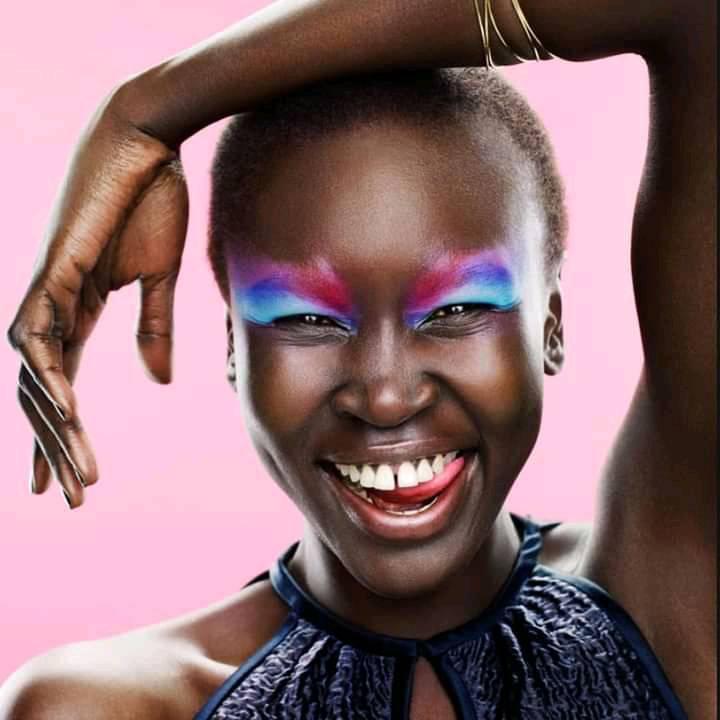
The Ebony Dolls: Alek Wek

Sudanese Supermodel and Icon of Unconventional Beauty
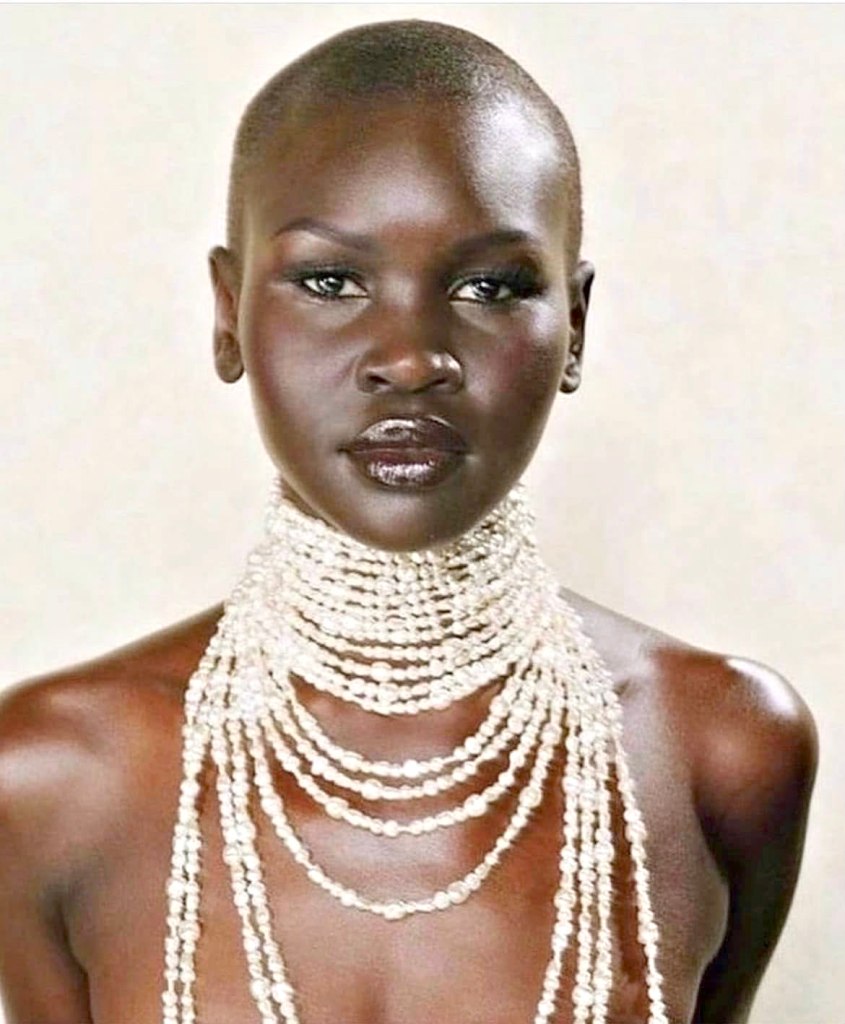
This photograph is the property of its respective owner. No copyright infringement intended.

Alek Wek is a Sudanese-British supermodel and cultural icon whose emergence in the global fashion industry transformed dominant conceptions of beauty, race, and representation. Born on April 16, 1977, in Wau, South Sudan, Wek became one of the first African models to achieve international supermodel status in the late 1990s, celebrated not for conformity to Western standards but for her distinctly African features and richly melanated skin.

Wek’s early life was shaped by political violence and displacement. During the Second Sudanese Civil War, her family fled to London as refugees when she was 14 years old. This experience of forced migration profoundly shaped her worldview and later humanitarian advocacy, grounding her public identity in resilience and survival.

She was discovered in 1995 at an outdoor market in Crystal Palace, London, by a modeling scout from Models 1 agency. At the time, Wek had no prior connection to fashion and did not fit the conventional industry image of beauty. Her height, deep ebony skin, shaved head, and Nilotic facial features were considered “unmarketable” by traditional standards—yet these exact traits would soon redefine global beauty culture.

Wek’s breakthrough came in 1996 when she appeared in the iconic Calvin Klein Obsession fragrance campaign, photographed by Steven Meisel. The campaign was revolutionary, positioning a dark-skinned African woman at the center of a luxury brand’s visual identity. This marked one of the first times a Sudanese model was presented as the global face of high fashion.

Her runway career quickly flourished, with appearances for elite designers including Chanel, Jean Paul Gaultier, Moschino, Givenchy, Donna Karan, Valentino, and Victoria’s Secret. She graced the covers of Vogue, Elle, Harper’s Bazaar, Allure, and i-D, becoming one of the most visible Black models of her generation.

Alek Wek is particularly celebrated for her “unconventional beauty,” a term often used to describe her departure from Eurocentric norms. Her elongated limbs, high cheekbones, almond eyes, sculptural facial structure, and shaved head embodied an Afrocentric aesthetic that was rarely elevated in Western fashion prior to her rise.

Her rich ebony dark skin became her most radical form of beauty capital. In an industry long dominated by lighter skin tones and racial assimilation, Wek’s melanation symbolized a form of aesthetic resistance. She did not soften her African features to fit Western ideals—she forced Western ideals to expand.
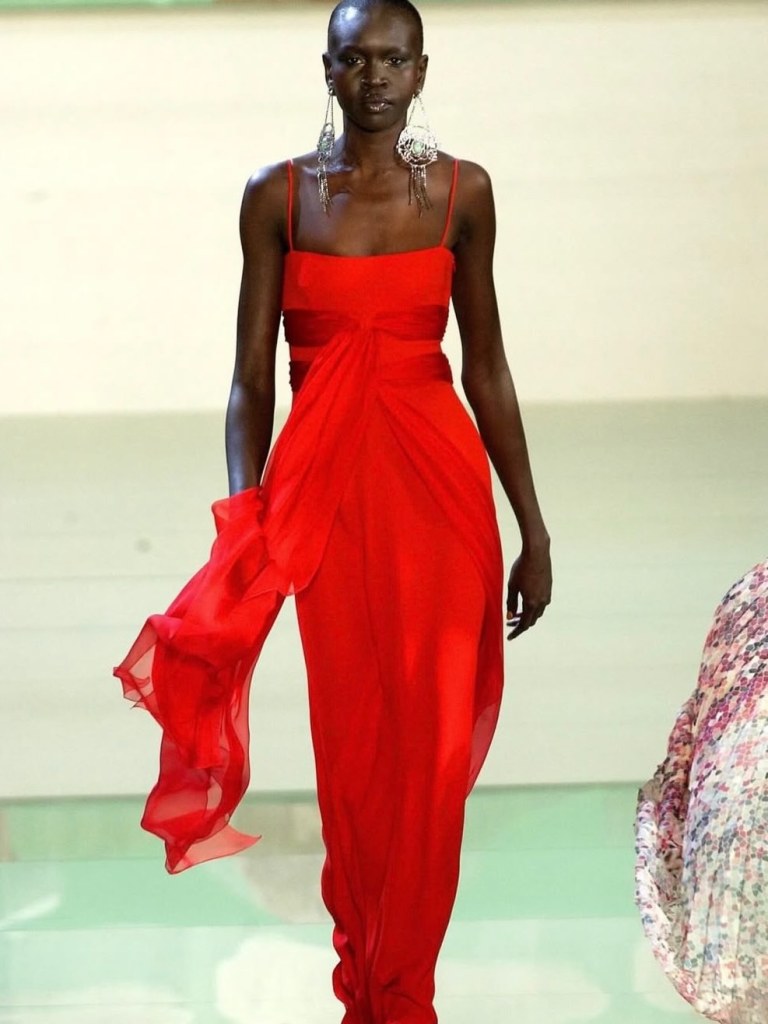
This photograph is the property of its respective owner. No copyright infringement intended.

Wek’s impact extended beyond modeling into cultural politics. She became a symbol of racial pride, particularly for dark-skinned Black women and African girls who had rarely seen themselves reflected in elite beauty spaces. Her visibility disrupted global color hierarchies and helped normalize deeply melanated beauty.

In 1997, Alek Wek was named MTV’s Model of the Year, and in 1998 she won Elle Magazine’s Model of the Year Award. These recognitions confirmed her status as not just a novelty, but a dominant fashion force.

She also transitioned into acting, appearing in films such as The Four Feathers (2002), further expanding her influence into global media representation. Her presence on screen continued the work of decolonizing visual narratives of African women.

Alek Wek has no publicly known husband and has remained largely private about her romantic life. She does not have children. Her public identity has been centered more on cultural leadership, advocacy, and representation than on traditional celebrity domestic narratives.

In 2013, Wek was appointed a UNHCR Goodwill Ambassador, using her refugee experience to advocate for displaced people worldwide. She has worked extensively with the United Nations, raising awareness about refugee rights, humanitarian aid, and African development.

Wek’s humanitarian mission aligns with her broader legacy: using beauty as a tool for social consciousness rather than commercial consumption. She reframes modeling as a platform for ethical visibility rather than mere spectacle.

In cultural theory, Alek Wek represents what scholars describe as “decolonial beauty.” Her image dismantles colonial hierarchies that positioned African features as inferior or primitive. Instead, she embodies African aesthetics as classical, regal, and sovereign.

As an “Ebony Doll,” Alek Wek symbolizes the highest form of Black feminine archetype—not sexualized, not exoticized, but monumental. The term here reflects a symbolic elevation: beauty that is iconic, ancestral, and spiritually grounded.
This photograph is the property of its respective owner. No copyright infringement intended.

Her shaved head became a signature aesthetic, challenging Eurocentric femininity that equates beauty with long hair and softness. Wek’s minimalism emphasized bone structure, skin, and presence, redefining femininity through strength and abstraction.

She is celebrated in academic, fashion, and cultural spaces as a pioneer of Afrocentric representation. Designers, photographers, and scholars frequently cite her as the model who made space for later figures like Nyakim Gatwech, Duckie Thot, Adut Akech, and Anok Yai.

Alek Wek’s legacy lies not in trend, but in transformation. She did not simply enter the fashion system—she altered its symbolic architecture.

Ultimately, Alek Wek is an Ebony Doll because she embodies what had long been denied: the idea that African features, dark skin, and refugee identity are not marginal, but magnificent. Her beauty is not decorative—it is historical.

She stands as a living monument to Black aesthetics, African resilience, and the global redefinition of what beauty means.


References

Wek, A. (2015). Alek: From Sudanese refugee to international supermodel. HarperCollins.

UNHCR. (2013). Goodwill Ambassador: Alek Wek biography. United Nations High Commissioner for Refugees.

Calvin Klein. (1996). Obsession fragrance campaign featuring Alek Wek.

Elle Magazine. (1998). Model of the Year Awards.

Banks, I. (2015). Black bodies in fashion: Representation and resistance. Fashion Theory, 19(3), 267–289.

Hunter, M. (2007). The persistent problem of colorism. Sociology Compass, 1(1), 237–254.

Bourdieu, P. (1986). The forms of capital. In J. Richardson (Ed.), Handbook of theory and research for the sociology of education (pp. 241–258). Greenwood.

Crenshaw, K. (1991). Mapping the margins: Intersectionality and identity politics. Stanford Law Review, 43(6), 1241–1299.

Entwistle, J. (2009). The aesthetic economy of fashion: Models and symbolic capital. Berg.
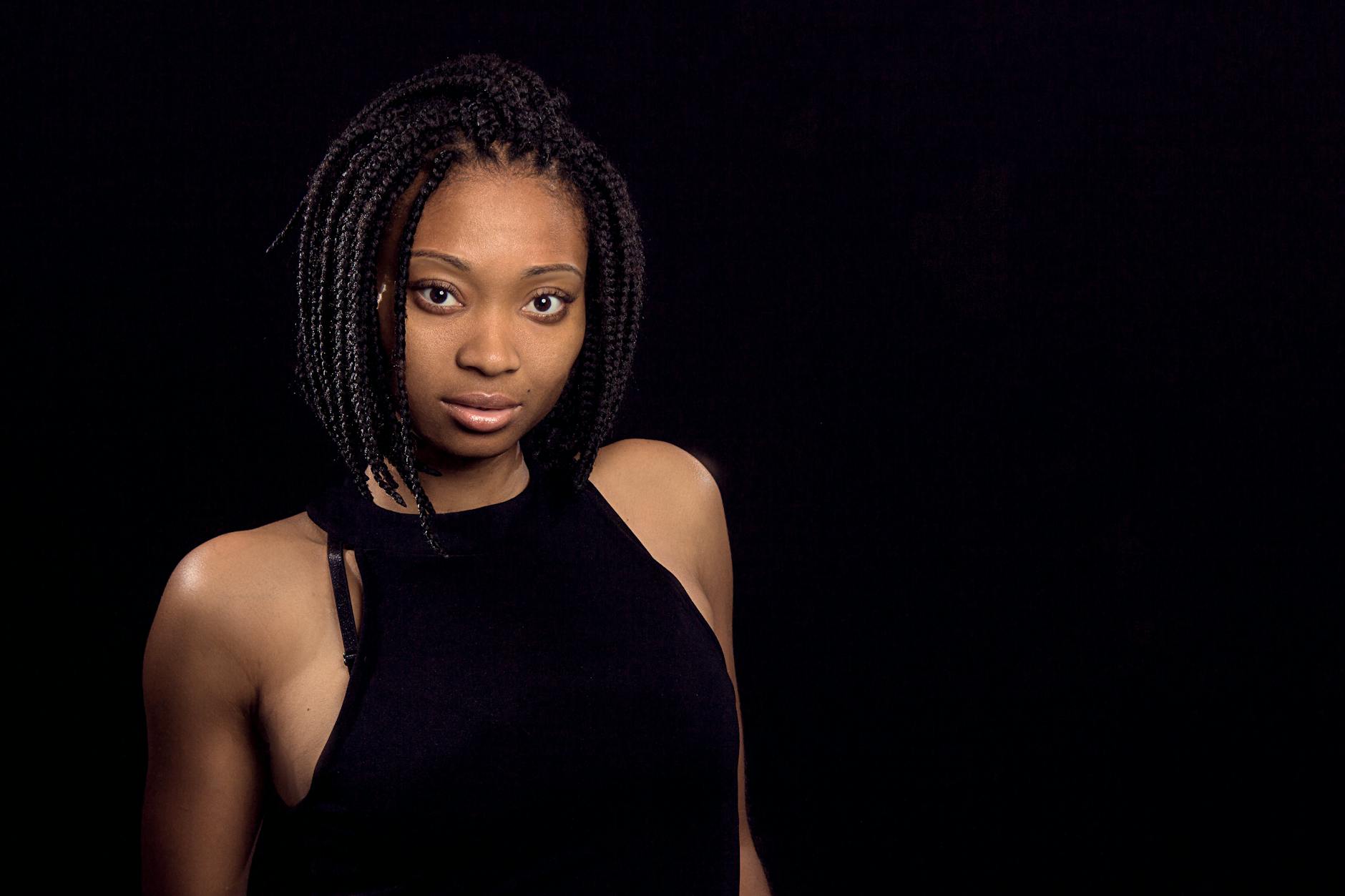
Living in the Middle Hue

Photo by Dellon Thomas on Pexels.com

To live in the middle hue is to exist in a space that is simultaneously visible and invisible. Brown-skinned women occupy a unique position within the color spectrum of Black beauty, standing between the lighter complexions that society often privileges and the darker complexions that increasingly symbolize resistance and resilience. This positioning creates a distinctive lived experience marked by tension, invisibility, and resilience.

Historically, colorism has shaped the trajectory of Black identity in profound ways. During slavery, skin tone was a marker of social hierarchy, with lighter-skinned individuals often placed in domestic roles and darker-skinned individuals subjected to field labor (Hunter, 2007). Brown-skinned women often stood somewhere in between, navigating ambiguous roles that reflected neither full privilege nor complete marginalization.

The legacy of these hierarchies remains. Contemporary psychology shows that skin tone significantly influences perceptions of attractiveness, intelligence, and competence (Hill, 2002). Brown-skinned women frequently find themselves overlooked, as if their shade renders them “neutral”—not exalted, not despised, but quietly ignored. This invisibility defines much of the “middle hue” experience.

Celebrities like Gabrielle Union, Nia Long, Sanaa Lathan, and Regina King exemplify this dynamic. Each has built a successful career, yet their complexions have not been consistently framed as cultural standards of beauty. Instead, they are remembered for talent, relatability, or resilience—qualities that, while admirable, subtly reflect society’s tendency to place brown-skinned women in the background rather than at the center.

The Bible offers an antidote to these hierarchies. Song of Solomon 1:5 (KJV) declares: “I am black, but comely, O ye daughters of Jerusalem.” The Shulamite’s affirmation reminds us that all shades of melanin, including the middle hues, are divinely beautiful. God’s design resists society’s categories, declaring beauty where humanity places division.

The psychological toll of colorism cannot be ignored. Social identity theory suggests that individuals derive worth from group belonging (Tajfel & Turner, 1986). When brown-skinned women are neither fully included in the praise of light skin nor in the pride of dark skin, they experience a fractured sense of belonging, resulting in anxiety, insecurity, and disconnection.

This fractured identity is especially pronounced in adolescence. Many young brown-skinned girls grow up hearing remarks such as, “You’re not light enough to be pretty” or “You’re not dark enough to be bold.” These microaggressions plant seeds of confusion and create internal struggles with identity. Living in the middle hue becomes a quiet battle for self-worth.

Romantic dynamics further illustrate this struggle. Research demonstrates that skin tone plays a role in partner preference and marriage patterns (Keith & Herring, 1991). Light-skinned women are often idealized as “trophy wives,” while dark-skinned women are increasingly celebrated for embodying cultural pride. Brown-skinned women, however, are frequently relegated to the “safe” or “average” category, reinforcing the pain of invisibility.

Yet, living in the middle hue also fosters resilience. Brown-skinned women often cultivate strength in navigating spaces that fail to affirm them. Celebrities like Regina King demonstrate this resilience, using their influence to expand representation and redefine what beauty, leadership, and artistry look like for women in the middle hue.

In popular culture, the erasure of brown skin persists. Spike Lee’s School Daze highlighted the tension between light and dark, but women of middle hues were largely sidelined, reflecting society’s reluctance to acknowledge their struggle. The middle hue continues to be minimized, even when discussions of colorism are at the forefront.

Anthropology describes this as liminality—existing on thresholds without belonging fully to either category (Turner, 1969). Brown-skinned women embody this liminal state, straddling two poles but never fully claimed by either. Living in the middle hue is, therefore, a cultural limbo marked by complexity and nuance.

Theologically, this liminality contradicts God’s design. Genesis 1:27 (KJV) affirms, “So God created man in his own image.” This declaration dismantles any human-created hierarchies. In God’s view, brown skin is not “middle” or secondary—it is equally part of His image, carrying the fullness of divine artistry.

Healing begins when brown-skinned women embrace this truth. Spiritual grounding reminds them that they are “fearfully and wonderfully made” (Psalm 139:14, KJV). Psychology echoes this, emphasizing that self-affirmation practices empower marginalized groups to resist internalized bias (Steele, 1988). Living in the middle hue can shift from invisibility to empowerment when women affirm their worth daily.

Representation in media is essential for healing. When brown-skinned women are centered as protagonists, love interests, and cultural icons, they redefine the narrative. Icons like Gabrielle Union, who has spoken openly about her experiences, help dismantle the silence surrounding the middle hue.

Intergenerational affirmation also plays a critical role. Brown-skinned mothers and mentors must teach young girls that their skin tone is not a compromise but a crown. Affirmation at home combats the cultural messages that reinforce invisibility, ensuring that the next generation lives confidently in their middle hue.

Community is another vital tool. Sisterhood spaces, where women affirm one another regardless of complexion, dismantle color hierarchies. Ecclesiastes 4:9-10 (KJV) emphasizes the power of support: “For if they fall, the one will lift up his fellow.” Healing requires unity, not competition, across the spectrum of Black womanhood.

The middle hue also represents balance. Brown skin carries the warmth of light tones and the richness of dark ones, embodying a harmony that reflects cultural wholeness. Rather than existing as a compromise, the middle hue symbolizes the blending of beauty across the spectrum.

Ultimately, living in the middle hue is both a challenge and an opportunity. The challenge lies in navigating invisibility, stereotypes, and comparison. The opportunity lies in embracing resilience, balance, and divine affirmation. Brown-skinned women represent a richness that society must learn to celebrate, not sideline.

In the end, living in the middle hue is not about being “in between”—it is about standing in fullness. Brown-skinned women are not halfway to beauty, nor shadows of extremes. They are radiant in their own right, carrying the glory of divine creation. When this truth is embraced, the blues of invisibility give way to the joy of affirmation.


References

  • Hill, M. E. (2002). Skin color and the perception of attractiveness among African Americans: Does gender make a difference? Social Psychology Quarterly, 65(1), 77–91.
  • Hunter, M. (2007). The persistent problem of colorism: Skin tone, status, and inequality. Sociology Compass, 1(1), 237–254.
  • Keith, V. M., & Herring, C. (1991). Skin tone and stratification in the Black community. American Journal of Sociology, 97(3), 760–778.
  • Steele, C. M. (1988). The psychology of self-affirmation: Sustaining the integrity of the self. Advances in Experimental Social Psychology, 21, 261–302.
  • Tajfel, H., & Turner, J. (1986). The social identity theory of intergroup behavior. In S. Worchel & L. W. Austin (Eds.), Psychology of intergroup relations (pp. 7–24). Nelson-Hall.
  • Turner, V. (1969). The ritual process: Structure and anti-structure. Aldine.
  • The Holy Bible, King James Version.

The Dark-Skinned Queens: Restoring the Crown to Melanin’s Deep Majesty.

The Dark-Skinned Queen stands as a living monument to ancestral glory—her skin a sacred archive of history, divinity, and resilience. Yet the world has not always treated her as such. For centuries, she has been positioned at the bottom of a racialized beauty hierarchy, burdened by the shadows of colonialism, anti-Blackness, and internal color prejudice. But the truth remains unshaken: her beauty is ancient, sovereign, and cosmic. She is not emerging—she has always been, and the world is finally remembering what was never lost.

Historically, deep melanin was revered across civilizations. In ancient Kemet, Nubia, and Kush, dark-skinned queens were worshipped as embodiments of divinity, fertility, royalty, and cosmic order. Stone carvings and temple art bear witness—deep brown skin was not merely beautiful; it was sacred. Civilization began in melanin-rich lands, and thus, the Dark-Skinned Goddess represents origin and power, not deviation or rarity.

Colonialism sought to rewrite this truth, weaponizing beauty to fracture identity. European expansion brought a violent inversion of values, casting darker skin as undesirable, uncivilized, or inferior. These lies were institutionalized through enslavement, missionary propaganda, and global media. The goal was psychological domination: if the world could be convinced that the darkest skin was the least valuable, then the original people could be controlled. Beauty became a battlefield.

Through history, dark-skinned women bore double violence—racism and colorism. Their labor was exploited, their beauty ignored or mocked, and their femininity questioned. Those wounds still echo today when darker-skinned girls struggle with visibility, self-esteem, and belonging. Yet even in oppression, the Dark-Skinned Goddess remained unbroken. Her existence is resistance. Her radiance survived the lie.

In modern media, her representation remains limited, though rising. When women like Lupita Nyong’o, Viola Davis, Khoudia Diop, and Nia Long appear, they disrupt centuries of curated beauty narratives. Their presence is not simply aesthetic—it is political. Their faces tell new stories and correct historical distortions. Their visibility is cultural restoration, not a trend.

Socially, the Dark-Skinned Goddess is often underestimated before she is known. People assume toughness, attitude, or aggression before recognizing grace, intelligence, softness, or elegance. Stereotypes cling to her not because she lacks depth, but because the world fears her power. Mischaracterization is the weapon of the intimidated.

Romantically, she has faced long-standing biases shaped by colonial beauty scripts. Some men once sought lighter-skinned partners to access false proximity to privilege. Others fetishized her body while disregarding her heart. Yet her value never depended on preference—it exists independent of perception. She is not validated by desire; she is complete by design.

Spiritually, melanin symbolizes divine creation. Scripture reminds: “I am black, but comely” (Song of Solomon 1:5, KJV). This verse is not an apology—it is a declaration. Darkness in biblical text is associated with mystery, depth, and holiness. God formed humanity from rich, fertile earth, not pale, dry dust. Melanin is not an accident—it is intentional artistry.

Psychologically, reclamation requires healing. Dark-skinned women have internal battles shaped by external rejection. They learn to love themselves in societies slow to love them back. But healing blooms when she sees the truth of her reflection—not through distortion, but revelation. Confidence, when rooted in reality rather than validation, becomes unshakable.

Within the community, colorism has damaged sisterhood. Dark-skinned girls were often teased, underestimated, or overlooked. Some developed armor; others developed silence. Yet the new era demands empathy, not competition. When beauty becomes communal instead of comparative, we rise together. No shade of Blackness needs apology—only acknowledgement.

Culturally, she carries the memory of her ancestors in her skin. Each melanin cell is a testament to sun-kissed lands and royal lineage. She does not darken in inferiority—she glows in origin. Melanin is cosmic technology—absorbing light, storing warmth, preserving youth. It is biological excellence, not burden.

Economically, she often had to work twice as hard to be seen as equal to lighter peers. Her competence was tested more; her mistakes judged harsher. Yet she consistently excelled, not because she had privilege, but because she possessed perseverance. Strength became her inheritance, not her choice. And yet, she still seeks the right to softness.

Emotionally, she navigates constant contrast—admired aesthetically in one breath, overlooked socially in another. She is celebrated on runways but ignored in workplaces. Praised in songs yet harmed in systems. This paradox teaches her discernment, depth, and inner worth. She learns that true beauty transcends environment and expectation.

The world imitates her body yet denies her humanity. Full lips, curvaceous hips, rich skin, coily hair—once mocked, now monetized. Her features trend on those without her struggle. But imitation will never equal essence. She is the blueprint, not the beneficiary of borrowed beauty.

Yet a renaissance rises. She is reclaiming beauty narratives, rewriting cultural scripts, and building new worlds where she doesn’t have to prove anything. She stands not in reaction to bias, but in revelation of identity. Her presence demands reverence, not permission.

Her beauty is not merely visual—it is metaphysical. It radiates history, intellect, intuition, empathy, and fire. Beauty is not her burden—it is her birthright. Society once tried to dim her glow; now the world adjusts its eyes to her brilliance. She is not emerging—she is unveiling.

The Dark-Skinned Queen does not seek comparison. She is not the opposite of light—she is the embodiment of depth. She is the eternal night sky, ancient soil, divine mystery, royal lineage. Her beauty is not subtractive; it is sovereign.

For she is fearfully and wonderfully made (Psalm 139:14, KJV). Not despite her shade, but because of it. Melanin is crown. Darkness is splendor. She is not defined by struggle—she is defined by glory.

And now, she does not rise alone. She rises with every shade beside her. Her divinity does not eclipse others; it illuminates the truth: Black beauty is infinite. But among its many expressions, the Dark-Skinned Goddess remains the beginning, the memory, and the majesty.

May she walk not with apology, but authority. Not seeking validation, but embodying revelation. For she is not reclaiming beauty—she is beauty, rediscovered.


References

Hunter, M. (2007). The persistent problem of colorism: Skin tone, status, and inequality. Sociology Compass, 1(1), 237–254.

Russell, K., Wilson, M., & Hall, R. (2013). The color complex: The politics of skin color in a new millennium. Anchor Books.

Wade, P. (2020). Race, nature and culture: An anthropological perspective. Pluto Press.

Song of Solomon 1:5 (KJV); Psalm 139:14 (KJV).

Shades of Power: Celebrating the Beauty of Brown Skin. #Shadesofglory

This photograph is the property of its respective owner.

Brown skin has long been a symbol of resilience, beauty, and cultural heritage. Across the African diaspora, it embodies a spectrum of history, identity, and pride, reflecting both ancestral lineage and lived experiences. From deep mahogany to honey tones, brown skin carries with it a narrative of survival, creativity, and empowerment. Its beauty is not merely aesthetic; it is political, cultural, and psychological—a declaration of self-worth in a world that has often devalued it.

The Science and Psychology of Melanin

Melanin, the pigment responsible for brown skin, offers more than visual appeal. Scientifically, it provides protection against ultraviolet rays, reducing risks of certain skin cancers while preserving youthful skin. Psychologically, research shows that people with higher melanin levels may experience a unique sense of identity formation, pride, and cultural belonging (Hunter, 2007). Yet, this very characteristic has been historically targeted through colorism, slavery, and systemic oppression, positioning brown skin at the intersection of beauty and societal prejudice.

Historical Reverence and Cultural Representation

Globally, brown skin has inspired admiration and reverence. In ancient African civilizations such as Nubia and Mali, darker skin was celebrated as a symbol of divine ancestry and nobility (Diop, 1974). Today, figures like Naomi Campbell, Adut Akech, and Morris Chestnut exemplify the global recognition of melanated beauty, blending talent, poise, and representation. Across art, literature, and media, brown skin has become both a canvas and a statement—asserting the legitimacy of Black excellence and aesthetic power.

Shades and Diversity

Brown skin is not monolithic. The spectrum includes deep espresso, warm caramel, golden bronze, and light almond tones. Each shade reflects complex genetic histories, from Sub-Saharan Africa to the Caribbean and Latin America. This diversity is a reminder of the richness within Black communities and challenges narrow standards of beauty that have historically marginalized darker tones. Embracing these variations strengthens cultural identity and encourages a more inclusive understanding of beauty.

The Biblical Perspective

Scripturally, beauty is celebrated in the context of God’s creation. The Bible emphasizes the intrinsic value of human beings, often referencing the beauty of skin and complexion as part of divine craftsmanship (Song of Solomon 1:5 KJV: “I am black, but comely, O ye daughters of Jerusalem”). Such affirmations counter societal devaluation, reminding communities of the inherent dignity and power embedded in melanin-rich skin.

Colorism and Societal Challenges

Despite its beauty, brown skin faces societal bias and systemic discrimination. Colorism, rooted in colonialism and slavery, perpetuates hierarchies within communities and cultures. Darker shades are often unjustly associated with negative stereotypes, affecting self-esteem, opportunities, and social perception. Addressing these challenges requires education, representation, and the celebration of all shades as inherently valuable.

Empowerment Through Representation

Representation matters. The rise of Black influencers, entrepreneurs, and creatives has shifted narratives around brown skin. By showcasing the diversity of melanated beauty in fashion, media, and leadership, these figures challenge entrenched biases and inspire younger generations. They redefine beauty not as a narrow, Eurocentric standard but as an expansive, inclusive celebration of identity.

The Spectrum of Power: Celebrating the Shades of Brown Skin

Brown skin comes in a stunning variety of hues, each with its own story, beauty, and cultural significance. By exploring these shades, we celebrate both the science of melanin and the lived experiences of those who wear it with pride.

1. Deep Espresso
Deep espresso skin embodies richness and resilience. It often carries historical significance, reflecting ancestry rooted in Sub-Saharan Africa.
Notable Figures: Lupita Nyong’o, Viola Davis, Idris Elba
Why it’s powerful: Deep tones challenge societal biases, offering a bold declaration of beauty that defies Eurocentric standards.

2. Rich Chocolate
Warm and velvety, chocolate tones are both elegant and versatile, often celebrated in media and fashion.
Notable Figures: Naomi Campbell, Morris Chestnut, Gabrielle Union
Why it’s powerful: These shades are often associated with sophistication and strength, embodying a balance of natural beauty and global recognition.

3. Caramel Glow
Caramel skin carries a golden warmth that radiates vibrancy and energy. Its luminous undertones are often highlighted in photography and fashion.
Notable Figures: Beyoncé, Zendaya, Kerry Washington
Why it’s powerful: Caramel skin bridges communities across the diaspora, symbolizing adaptability, visibility, and modern beauty.

4. Honey Bronze
Honey bronze represents a lighter, sun-kissed hue that glows with health and vitality. It reflects diversity within Black communities and mixed heritage.
Notable Figures: Rihanna, Janelle Monáe, Adut Akech
Why it’s powerful: This shade exemplifies versatility and creativity, highlighting the wide spectrum of melanin-rich skin tones.

5. Almond Radiance
Soft almond tones are subtle yet captivating, often perceived as delicate but deeply rooted in cultural pride.
Notable Figures: Tracee Ellis Ross, Lupita Tsimba, Issa Rae
Why it’s powerful: Almond skin celebrates understated beauty and reminds us that every tone deserves recognition and admiration.

Why Celebrating All Shades Matters

Every shade of brown tells a story of ancestry, survival, and empowerment. In a world that often favors lighter skin, showcasing the full spectrum combats colorism and affirms self-worth. It reminds communities that melanin is a crown, not a limitation.

Science and Spirituality

Melanin provides physical protection, while brown skin embodies spiritual and cultural significance. Biblically, dark and brown skin has been celebrated as comely and honorable (Song of Solomon 1:5 KJV). By embracing these hues, people of the diaspora reclaim pride, confidence, and legacy.

Conclusion

“Shades of Power” is more than a celebration—it is a reclamation. Brown skin embodies resilience, legacy, and excellence. Its diverse hues reflect history, science, and culture, affirming that beauty transcends societal limitations. By embracing, representing, and celebrating the richness of brown skin, communities empower themselves and reshape the world’s understanding of aesthetic, cultural, and spiritual worth. From deep espresso to almond radiance, brown skin is more than a shade—it’s a statement. Each tone is a testament to heritage, resilience, and beauty. Celebrating the spectrum empowers individuals, strengthens communities, and reshapes the global narrative about Black excellence and aesthetics..


References

  • Diop, C. A. (1974). The African Origin of Civilization: Myth or Reality. Chicago: Lawrence Hill Books.
  • Hunter, M. (2007). The Persistent Problem of Colorism: Skin Tone, Status, and Inequality. Sociology Compass, 1(1), 237–254.
  • The Holy Bible, King James Version. (1611). Song of Solomon 1:5.

The Brown Girl #thebrowngirldilemma

Photo by Jonatan Galvis on Pexels.com

A Journey Through Struggle, Faith, and Resilience

Photo by Godisable Jacob on Pexels.com

The Weight and Wonder of Brownness

Photo by nappy on Pexels.com

To be a brown girl in a world that has long worshiped whiteness is to live within a paradox. She is both invisible and hyper-visible, overlooked yet over-scrutinized, diminished and yet desired. Her skin tells a story before she even speaks, a story marked by colonial history, racial hierarchies, and cultural misrepresentation. But her melanin also tells another story—one of divine design, resilience, and sacred inheritance.

This manuscript, The Brown Girl Dilemma, seeks to unpack the layered experiences of brown girls across eight lenses: beauty, faith, psychology, representation, and resilience. Each essay acts as both a mirror and a window—reflecting the inner struggles of brown girls while revealing their undeniable strength to the world.


Beyond the Mirror: Unpacking the Brown Girl Dilemma

Photo by Bigshow Lamar Campton on Pexels.com

The mirror often becomes a battleground for the brown girl. Staring back at her is not only her reflection but centuries of imposed ideals that privilege lighter skin and Eurocentric beauty standards. In this space, the question of worth arises: Is she beautiful enough? Desirable enough? Human enough?

Yet, beyond the mirror lies truth: she is not defined by imposed ideals but by divine design. Psalm 139:14 reminds her that she is “fearfully and wonderfully made.” The brown girl dilemma, then, is not truly about her inadequacy but about the world’s blindness. Beyond the mirror, she rediscovers herself—not as broken, but as whole, chosen, and radiant.


Beauty, Bias, and the Brown Girl Battle

Photo by Marcelo Dias on Pexels.com

The brown girl’s beauty is often weaponized against her. Colorism, both outside and within her community, creates hierarchies that distort identity. Lighter skin is praised, darker shades are devalued, and the cycle perpetuates insecurity. This bias is reinforced by media, where brown girls are either erased or cast into stereotypical roles.

But this battle is not fought in vain. Brown girls resist by embracing natural hair, celebrating melanin, and refusing to shrink. They redefine beauty on their own terms, proving that their worth is not determined by bias but by boldness. Like the Shulamite woman who declared, “I am black, but comely” (Song of Solomon 1:5, KJV), the brown girl learns to affirm her own beauty in the face of cultural denial.


Sacred Shades: A Theological Look at the Brown Girl Dilemma

Photo by Monstera Production on Pexels.com

Faith offers the brown girl an anchor. Theology, when read through her lens, reveals the beauty of her creation and the dignity of her calling. The Bible affirms her worth: she is God’s workmanship, a vessel of divine glory. Too often, theology has been weaponized to justify slavery, segregation, and sexism. But a liberating theology restores her identity as a daughter of Zion, beloved and chosen.

In reclaiming sacred shades, the brown girl learns that her melanin is not a curse but a crown. Her skin is not incidental but intentional—woven into her being by the Creator Himself. Theological reflection allows her to shift from shame to sacredness, from seeing her brownness as a burden to embracing it as a blessing.


Brown Skin, Heavy Crown: The Weight of Representation

Photo by Guilherme Almeida on Pexels.com

Representation is both privilege and pressure. For the brown girl who “makes it” into spaces of visibility—whether Hollywood, academia, politics, or business—her presence carries the weight of her entire community. She is expected to perform flawlessly, lest her mistakes be generalized onto all who look like her.

This heavy crown is both exhausting and empowering. It exhausts because it demands perfection, but it empowers because it signals that she is breaking barriers. The brown girl bears this weight with grace, reminding the world that she does not merely represent her community—she represents excellence, resilience, and possibility.


Invisible Yet Hyper-Visible: The Brown Girl Paradox

Photo by Mikhail Nilov on Pexels.com

One of the most painful dilemmas is the paradox of invisibility and hyper-visibility. In professional and social settings, brown girls are often overlooked—passed over for promotions, excluded from conversations, their voices minimized. Yet, in other contexts, their bodies are over-scrutinized, hyper-sexualized, or exotified.

This paradox creates a psychological tug-of-war. But the brown girl learns to navigate it with strategic resilience—raising her voice where silence is imposed, reclaiming her body where objectification occurs. She refuses invisibility and rejects hyper-visibility, instead demanding authentic visibility—to be seen for who she truly is.


The Skin They Can’t Ignore: Brown Girls in a World of Whiteness

Photo by Godisable Jacob on Pexels.com

In societies where whiteness is normalized as the standard, the brown girl cannot fade into the background. Her skin announces her difference before she speaks. This difference has historically made her a target of exclusion, discrimination, and violence. Yet, paradoxically, this same difference becomes her power.

Her skin, the one thing the world cannot ignore, becomes her testimony. It is the evidence of survival, the shade of heritage, and the hue of strength. What was once used to marginalize her now becomes a mark of distinction. She stands unapologetically brown in a world that demands assimilation, embodying both resistance and pride.


From Colorism to Confidence: Redefining the Brown Girl Dilemma

Photo by Yury Oliveira on Pexels.com

The journey from struggle to strength is never linear. For the brown girl, healing requires confronting colorism—the internalized wounds of comparison, rejection, and exclusion. It also requires unlearning the false narratives whispered by society.

Confidence is cultivated through affirmation, community, and faith. As she grows, the brown girl redefines her dilemma: it is no longer about whether she fits into society’s mold, but about how she chooses to shatter it. Her confidence is not arrogance but liberation—the freedom to exist without apology, to celebrate her skin without shame.


Shades of Struggle, Shades of Strength: The Brown Girl Experience

Photo by Ante Emmanuel on Pexels.com

The brown girl experience is a tapestry of both burden and blessing. She carries the struggle of systemic racism, sexism, and colorism, yet she transforms these struggles into sources of strength. Her resilience is not accidental but ancestral, inherited from women who endured and overcame.

Her shades of struggle are inseparable from her shades of strength. They coexist, shaping her into a woman of wisdom, compassion, and courage. She is not merely surviving the brown girl dilemma—she is rewriting it, turning wounds into wisdom, battles into breakthroughs, and silence into song.


Conclusion: From Dilemma to Destiny

The brown girl dilemma is not the end of the story—it is the beginning of transformation. Each essay in this collection testifies that the brown girl is not defined by her struggles but refined by them. She is both the question and the answer, both the wound and the healing.

In a world that often misunderstands her, she emerges as a living paradox of power: invisible yet undeniable, burdened yet unbreakable, questioned yet chosen. She carries within her the reflection of divine creativity and the legacy of unyielding resilience.

The brown girl dilemma, then, is not her curse. It is her canvas. And on it, she is painting a masterpiece of survival, beauty, and destiny.

References

Collins, P. H. (2000). Black feminist thought: Knowledge, consciousness, and the politics of empowerment. Routledge.

Cone, J. H. (2010). A Black theology of liberation. Orbis Books.

Craig, M. L. (2006). Race, beauty, and the tangled knot of a guilty pleasure. Feminist Theory, 7(2), 159–177. https://doi.org/10.1177/1464700106064415

Glenn, E. N. (2008). Yearning for lightness: Transnational circuits in the marketing and consumption of skin lighteners. Gender & Society, 22(3), 281–302. https://doi.org/10.1177/0891243208316089

Harris, A., & Khanna, N. (2010). Black is, Black ain’t: Biracials, middle-class Blacks, and the social construction of Blackness. Sociological Spectrum, 30(1), 99–120. https://doi.org/10.1080/02732170903495892

hooks, b. (1992). Black looks: Race and representation. South End Press.

Hunter, M. (2016). Colorism in the classroom: How skin tone stratifies African American and Latina/o students. Theory Into Practice, 55(1), 54–61. https://doi.org/10.1080/00405841.2016.1119019

King, D. K. (2005). Multiple jeopardy, multiple consciousness: The context of a Black feminist ideology. Signs: Journal of Women in Culture and Society, 14(1), 42–72. https://doi.org/10.1086/494491

Russell, K., Wilson, M., & Hall, R. (2013). The color complex: The politics of skin color in a new millennium. Anchor Books.

Williams, D. S. (2013). Sisters in the wilderness: The challenge of womanist God-talk. Orbis Books.

Wingfield, A. H. (2019). Flatlining: Race, work, and health care in the new economy. University of California Press.

The Aesthetic of Black Beauty: Genetics, Psychology, and Divine Design.

Black beauty is not a single expression but a spectrum of genetic diversity that manifests in facial features, body composition, skin tone, hair texture, and overall presence. From African roots to diasporic populations across the globe, these features convey strength, resilience, and divine artistry. Understanding this beauty requires an exploration of genetics, psychology, history, and spirituality.

Melanin-rich skin is one of the most defining features of Black beauty. High melanin content provides natural protection against ultraviolet radiation, contributes to a radiant glow, and displays a spectrum of shades from deep ebony to golden brown. The Bible celebrates skin as a divine creation: “Thou art all fair, my love; there is no spot in thee” (Song of Solomon 4:7, KJV). This scripture underscores the inherent perfection of pigmentation.

Facial structure in Black populations varies widely but often includes high cheekbones, broad noses, and full lips, reflecting African and Egyptian ancestry. These features have evolved over millennia to adapt to environmental factors, providing functional benefits such as enhanced oxygenation and protection from the sun. Anthropologists note that these structures also contribute to facial symmetry, a key element of perceived beauty (Rhodes, 2006).

The eyes, often large and expressive, are framed by naturally arched brows and long eyelashes. Psychologically, eye contact conveys dominance, confidence, and emotional depth. “The eyes of the LORD are in every place, beholding the evil and the good” (Proverbs 15:3, KJV) reminds us that vision, both literal and figurative, carries spiritual significance.

Nose shapes within the Black diaspora range from wide and rounded to straight and sculpted, reflecting genetic variation and admixture. Broad noses historically helped with humid climates and enhanced nasal airflow. Full lips, often prominent, serve not only as markers of identity but are aesthetically celebrated in global beauty paradigms.

Hair is one of the most versatile and culturally significant features. Excessively curly or coiled hair, typical in many African-descended populations, reflects high genetic diversity in hair follicle shape (Powell et al., 2012). Hair texture has symbolic importance: it represents ancestry, resilience, and adaptability. In the Bible, hair often signifies strength and identity, as in Samson’s story (Judges 16:17, KJV).

The jawline and chin provide structural strength and character. Strong jawlines in Black populations are often linked to evolutionary pressures for durability and facial symmetry. This contributes to psychological perceptions of leadership, power, and assertiveness (Little et al., 2011).

Skin elasticity and body composition vary, with many Black populations exhibiting mesomorphic or athletic builds. Muscle density, bone strength, and proportionality have both functional and aesthetic implications, highlighting physical resilience and adaptability. Scripture recognizes the body as God’s creation: “I praise thee; for I am fearfully and wonderfully made” (Psalm 139:14, KJV).

Neck and shoulder structures contribute to posture and perceived presence. Broad shoulders and muscular necks convey strength and authority, signaling both evolutionary fitness and cultural ideals of masculinity.

Hand and finger morphology, often graceful yet strong, plays roles in artistry, physical labor, and nonverbal communication. In African cultures, hands are celebrated for their expressive and functional capacities, bridging work and identity.

Torso structure varies across African and diasporic populations. A well-proportioned torso, often associated with endurance and physical capability, is both aesthetically admired and functionally advantageous. The body becomes a living testament to evolutionary adaptation and divine engineering.

Legs and lower body features display powerful musculature and athleticism, reflective of both lifestyle and genetic adaptation. Longer limbs relative to the torso, common in certain African populations, facilitate agility and endurance. Psychologically, these features contribute to perceptions of vitality and grace.

Visual “Feature Map” of Black Beauty

1. Skin Tone (Melanin Spectrum)

  • Deep ebony
  • Brown
  • Golden caramel
  • Tan/olive
    (Illustrates melanin diversity and natural protection)

2. Hair Texture

  • Coily / kinky (Type 4)
  • Curly (Type 3)
  • Wavy (Type 2)
    (Shows versatility and genetic variation across African and diasporic populations)

3. Facial Features

  • High cheekbones
  • Broad to medium noses
  • Full lips
  • Almond-shaped or rounded eyes
  • Defined jawline and chin
    (Highlights evolutionary adaptation, aesthetic symmetry, and Egyptian influence)

4. Body Proportions

  • Mesomorphic build (muscular, athletic)
  • Broad shoulders, strong neck
  • Proportional torso
  • Long, strong legs
    (Represents strength, endurance, and functional beauty)

5. Cultural and Historical Notes

  • Egyptian elongation of faces and noses
  • African sculpted features
  • Diaspora adaptations across Caribbean, Americas, and Europe

6. Psychological & Spiritual Layer

  • Confidence and presence linked to symmetry
  • Expressive eyes signaling emotional depth
  • Biblical affirmation: Psalm 139:13-14 (KJV)

Genetic diversity across the African continent explains the variation in features globally. From the Nilotic peoples of East Africa to West African populations and Egyptian descendants, phenotypes differ due to historical migration, environmental adaptation, and admixture. Melanin-rich skin, hair texture, and facial structure are markers of evolutionary resilience and aesthetic value.

Egyptian features, often admired historically and across cultures, include elongated faces, almond-shaped eyes, and slender noses. Art and sculpture from ancient Egypt preserve these features, which influenced Mediterranean and African aesthetics. The spread of Egyptian traits across Africa reflects both migration and intermixing of populations.

Beyond physiology, the psychology of Black beauty is tied to self-perception and societal validation. Internalized biases from colonialism and slavery have historically devalued African features, creating psychological stress and colorism. Embracing ancestral aesthetics restores dignity and affirms identity (Hunter, 2007).

Cultural adornments, including hair styling, body art, and jewelry, enhance perceived beauty while preserving heritage. Hairstyles such as braids, locs, and twists are both aesthetic expressions and cultural statements, linking identity to ancestry.

The symmetry of facial features plays a key role in attractiveness. Across populations, symmetrical faces are psychologically associated with health, genetic fitness, and beauty. African-descended populations often display facial symmetry enhanced by pronounced features, which contributes to aesthetic appeal (Rhodes, 2006).

Height and overall proportions vary widely, yet commonality lies in the harmony of features. Balanced proportions, combined with melanin-rich skin and expressive facial characteristics, create a sense of visual coherence and presence.

Eyes and facial expression are central to perceived beauty. Expressiveness conveys emotion, intelligence, and social engagement. Psychological studies show that expressive eyes increase interpersonal attraction and perceived trustworthiness.

Ultimately, Black beauty reflects a combination of genetics, evolutionary adaptation, cultural heritage, and divine design. As the Bible reminds us, each individual is crafted with intentionality and wonder: “Thou hast possessed my reins: thou hast covered me in my mother’s womb. I will praise thee; for I am fearfully and wonderfully made” (Psalm 139:13-14, KJV). Recognizing, celebrating, and understanding these features fosters pride, identity, and self-worth across the diaspora.


References

Clark, K., & Clark, M. (1947). Racial identification and preference in Negro children. Journal of Negro Education, 16(3), 169–175.

Hunter, M. (2007). The persistent problem of colorism: Skin tone, status, and inequality. Sociology Compass, 1(1), 237–254. https://doi.org/10.1111/j.1751-9020.2007.00006.x

Little, A. C., Jones, B. C., & DeBruine, L. M. (2011). Facial attractiveness: Evolutionary based research. Philosophical Transactions of the Royal Society B: Biological Sciences, 366(1571), 1638–1659. https://doi.org/10.1098/rstb.2010.0404

Powell, B., Shriver, M. D., & Parra, E. J. (2012). Genetic variation and the evolution of African hair texture. American Journal of Physical Anthropology, 149(1), 1–14. https://doi.org/10.1002/ajpa.22195

Rhodes, G. (2006). The evolutionary psychology of facial beauty. Annual Review of Psychology, 57, 199–226. https://doi.org/10.1146/annurev.psych.57.102904.190208

The Holy Bible, King James Version. (1611). Thomas Nelson.

The Brown Girl Dilemma: Navigating Identity, the Weight of Melanin, Colorism, and Worth. #thebrowngirldilemma

Photo by Bave Pictures on Pexels.com

The Brown Girl Dilemma is a silent struggle faced by many young women whose skin tone does not conform to society’s often Eurocentric beauty ideals. From childhood, brown-skinned girls are confronted with implicit messages that lighter skin is more desirable, more loved, and more successful. This constant messaging can create internal conflict, where identity and self-worth are measured not by character or ability, but by melanin content. The Bible reminds us that God values the heart above appearance: “Man looketh on the outward appearance, but the Lord looketh on the heart” (1 Samuel 16:7, KJV).

Colorism, or bias based on skin tone within the same racial or ethnic group, has significant psychological impacts. Research shows that darker-skinned women experience higher levels of anxiety, depression, and low self-esteem compared to their lighter-skinned counterparts (Hunter, 2007). This “shade-based bias” creates a hierarchy that marginalizes brown girls, affecting their confidence, social interactions, and even opportunities in education and career. Over time, internalizing these societal preferences can lead to self-doubt and identity confusion.

The weight of melanin is often felt more acutely when media, fashion, and popular culture idolize lighter skin tones. Children absorb these cultural standards early, forming implicit biases about what is beautiful or desirable. Psychological theory suggests that repeated exposure to such biased imagery can reinforce negative self-concepts (Bandura, 2001). For brown girls, this can manifest in attempts to change natural hair, skin tone, or other features in order to gain acceptance, highlighting the intersection of cultural, psychological, and emotional pressures.

Spiritual guidance offers a powerful antidote to these pressures. Scripture teaches, “I will praise thee; for I am fearfully and wonderfully made” (Psalm 139:14, KJV). Embracing this truth allows brown girls to affirm their value independent of societal approval. When identity is anchored in God’s perspective rather than in shifting cultural standards, young women can cultivate self-worth, resilience, and confidence, seeing themselves as complete and beloved in God’s eyes.

Psychologically, interventions such as mindfulness, journaling, and counseling can help brown girls challenge internalized colorist beliefs. Cognitive Behavioral Therapy (CBT) techniques, for example, teach individuals to identify and restructure negative thought patterns about appearance, worth, and social acceptance. Therapy and spiritual reflection together promote holistic healing, allowing young women to reconcile identity, heritage, and personal worth.

Relationships are also influenced by colorism. Brown girls may experience bias in romantic, social, or professional contexts, where lighter skin is unconsciously preferred. This can impact self-esteem and relational choices. James 1:19 (KJV) encourages us to be “swift to hear, slow to speak, slow to wrath,” emphasizing discernment and patience. Recognizing bias, setting healthy boundaries, and surrounding oneself with affirming relationships help counteract the negative relational effects of colorism.

In educational and workplace settings, colorism can influence perceptions of competence, leadership potential, and opportunity. Studies indicate that lighter-skinned individuals often receive preferential treatment in hiring and promotions (Maddox & Perry, 2017). However, persistence, skill, and faithfulness remain powerful tools for overcoming systemic bias. Proverbs 16:3 (KJV) teaches, “Commit thy works unto the Lord, and thy thoughts shall be established,” reminding brown girls that dedication and integrity are ultimately recognized and rewarded by God.

Action Guide: Overcoming the Brown Girl Dilemma

Affirm Your Worth Daily
Start each day by speaking or meditating on Scriptures that affirm your value. Verses like Psalm 139:14 (“I am fearfully and wonderfully made”) and 1 Samuel 16:7 (“The Lord looketh on the heart”) remind you that God measures your worth by your character, not your skin tone.

Surround Yourself with Affirming Community
Build friendships, mentorships, and support networks that celebrate brown-skinned beauty and achievement. Social support increases self-esteem and buffers against internalized colorism (Cohen & Wills, 1985). Choose relationships that encourage, uplift, and reflect God’s love.

Engage in Self-Reflection and Healing
Practice journaling, prayer, or mindfulness to process negative experiences related to colorism. Cognitive Behavioral Therapy (CBT) can help identify and reframe harmful thoughts about appearance and self-worth. Combining psychological and spiritual reflection fosters emotional resilience.

Celebrate Your Natural Beauty
Embrace your natural hair, skin tone, and cultural features. Wearing your authentic appearance reinforces self-love and counters societal pressures to conform. Recognize that your unique beauty is a reflection of God’s creative design.

Educate Yourself and Others
Learn about the history of colorism and its effects on communities of color. Open conversations about bias, representation, and identity can dismantle harmful narratives and empower younger brown girls to embrace their identity.

Focus on Purpose Over Approval
Invest in your talents, education, and spiritual gifts rather than seeking validation from others. Proverbs 31:30 reminds us, “Favour is deceitful, and beauty is vain: but a woman that feareth the Lord, she shall be praised.” True worth is measured by faithfulness and integrity, not societal admiration.

Set Healthy Boundaries
In social, romantic, or professional contexts, learn to recognize microaggressions or biased treatment and protect your mental and emotional health. James 1:19 advises being “swift to hear, slow to speak, slow to wrath,” guiding thoughtful and respectful boundary-setting.

Seek Professional and Spiritual Guidance
If colorism impacts your mental health, consult qualified counselors or therapists, preferably those familiar with racial identity issues. Pair this with prayer, meditation, and fellowship to address both emotional and spiritual needs for holistic healing.

Ultimately, the Brown Girl Dilemma requires both personal resilience and societal awareness. Healing involves embracing one’s natural beauty, cultivating self-worth through spiritual and psychological support, and challenging systemic and cultural biases wherever possible. By anchoring identity in God’s truth and fostering pride in one’s heritage, brown girls can navigate a color-conscious world with strength, dignity, and confidence, turning what was once a silent battle into a testimony of courage and self-acceptance.


References

  • Holy Bible, King James Version
  • Bandura, A. (2001). Social cognitive theory: An agentic perspective. Annual Review of Psychology, 52(1), 1–26.
  • Hunter, M. (2007). The persistent problem of colorism: Skin tone, status, and inequality. Sociology Compass, 1(1), 237–254.
  • Maddox, K. B., & Perry, J. L. (2017). Skin tone, race, and the psychology of colorism. American Psychologist, 72(9), 996–1006.
  • Williams, M. T., & Lewis, J. A. (2019). Microaggressions and discrimination: The experience of people of color. American Psychologist, 74(1), 77–89.
  • Cohen, S., & Wills, T. A. (1985). Stress, social support, and the buffering hypothesis. Psychological Bulletin, 98(2), 310–357.

Your Dark Skin is Powerful. Your Natural Beauty is Divine. Your Worth is Eternal.

Photo by Chidimma peace on Pexels.com

Your dark skin tells a story of resilience, ancestry, and divine creation. It is not a flaw, a problem to fix, or a limitation to overcome. God Himself painted you in rich, deep hues, crafting a masterpiece that reflects His glory.

Society has long attempted to define beauty by Eurocentric standards, often erasing the brilliance of melanin-rich skin. Yet, those standards are man-made and temporal, while God’s design is eternal and perfect.

Dark-skinned women have historically been undervalued, both in our communities and in the world at large. But your worth is not dictated by society’s approval; it is written by the Creator Himself.

KJV Reference: Genesis 1:27 – “So God created man in his own image… male and female created he them.” God sees you as His image-bearer, worthy of love, honor, and reverence.

Your skin, your features, and your natural beauty are not mistakes. Every curve of your lips, the depth of your eyes, and the richness of your complexion are intentional works of art.

Colorism and beautyism may try to make you feel less than, but the truth is that your melanin is a crown. It carries the legacy of your ancestors who survived slavery, oppression, and marginalization with dignity.

Dark skin is powerful because it reflects endurance. It has withstood societal rejection, systemic racism, and cultural erasure, yet it remains radiant, resilient, and unbroken.

Your natural beauty is divine because it is a reflection of God’s creativity. No filter, no cosmetic, and no societal standard can replicate the perfection of His design.

KJV Reference: Psalm 139:14 – “I will praise thee; for I am fearfully and wonderfully made…” Your dark skin is a testament to His wondrous works.

Your worth is eternal because it is anchored in God’s love, not in fleeting trends or worldly definitions of beauty. Even when ignored or undervalued, your value does not diminish.

The world may try to pit shades against each other, but remember that beauty is not a competition—it is a divine gift for all skin tones. You are fully complete in your God-given hue.

To those who say lighter is better, your response is simple: God’s vision is perfect. He made you exactly as you should be, for His purpose, and for His glory.

Your dark skin invites confidence, pride, and empowerment. It is a shield against societal pressures that try to convince you to change. Stand firm, knowing your beauty is original, authentic, and sacred.

Celebrate yourself daily. Let your presence, your walk, and your voice reflect the power and divine beauty God placed within you.

Your worth is not measured by media, magazines, or social media likes. It is measured by obedience to God, faithfulness to His Word, and the love you extend to others.

KJV Reference: 1 Samuel 16:7 – “Man looketh on the outward appearance, but the LORD looketh on the heart.” Your beauty is multidimensional—heart, mind, spirit, and skin all shining together.

Every time you embrace your dark skin, you honor generations who were not allowed to see themselves as beautiful. You break cycles of internalized colorism and teach future generations that melanin is a gift, not a barrier.

Let your beauty be a testimony. Let it speak to young girls, dark-skinned women, and even men, that divinely designed beauty transcends societal definitions.

Do not apologize for the shade you were born with. Do not compromise for acceptance. Do not dim your glow for the comfort of those who cannot see true beauty.

Your dark skin is powerful. Your natural beauty is divine. Your worth is eternal. And when you walk in that truth, you walk in freedom, joy, and God’s perfect vision for your life.

The Rebirth of Brown: From Marginalized to Magnificent.

This photo is the property of its respective owners. No copyright infringement intended.

Throughout history, the concept of beauty has been manipulated, racialized, and hierarchized, leaving brown-skinned women in a liminal space between admiration and exclusion. The “rebirth of brown” signifies a profound cultural awakening—an emergence from centuries of internalized inferiority toward unapologetic self-celebration. This renaissance is not just aesthetic; it is spiritual, intellectual, and political. It represents the reclamation of a divine identity once diminished by colonial narratives and white supremacist beauty standards.

Colorism, the preferential treatment of lighter skin tones within communities of color, is one of the most insidious remnants of slavery and colonial rule. For generations, brown and dark-skinned women have been marginalized in favor of those with Eurocentric features. This marginalization extended into media, religion, and economics, shaping how entire populations viewed themselves (Hunter, 2007). Yet today, there is a growing movement of resistance, one that elevates the brown complexion as a symbol of resilience, heritage, and power.

The rebirth of brown begins with unlearning. For centuries, Black and brown girls were taught to see their features as flaws. They were told their skin was “too dark,” their hair “too coarse,” and their lips “too full.” Such language was not mere critique—it was psychological warfare designed to sever people of African descent from their sense of divine creation. The process of rebirth, therefore, is an act of healing—a spiritual resurrection of self-worth that challenges centuries of lies.

Representation has played a pivotal role in this transformation. When actresses like Lupita Nyong’o and Viola Davis graced magazine covers and red carpets, they did more than represent diversity; they shattered barriers that had long confined Black beauty to narrow ideals. Their success redefined global perceptions of elegance, creating space for brown girls worldwide to see themselves as inherently valuable.

The spiritual aspect of this rebirth cannot be ignored. In the Bible, the Song of Solomon declares, “I am black, but comely” (Song of Solomon 1:5, KJV). This verse has long been misinterpreted, yet in its true form, it celebrates melanin-rich beauty as divine. The reclamation of this scriptural affirmation reconnects brown women to their God-given identity—one that is not defined by colonial impositions but by divine design.

Historically, systems of oppression weaponized beauty as a means of control. During slavery and segregation, lighter skin often meant better treatment, education, or social mobility (Russell, Wilson, & Hall, 1992). This created divisions within the Black community that persist today. However, the rebirth movement dismantles this internalized oppression, asserting that beauty cannot be ranked or quantified—it is a reflection of culture, ancestry, and divine creativity.

The global reach of colorism—from Africa to Asia to Latin America—reveals how deeply colonial beauty ideals have been ingrained. Yet across the diaspora, brown women are reclaiming their narratives through art, film, fashion, and scholarship. Social media campaigns like #MelaninMagic and #UnfairAndLovely highlight this revolution of self-acceptance and solidarity. These movements remind the world that brown is not a compromise—it is completeness.

Education and visibility are key to sustaining this transformation. When school curriculums include diverse histories and celebrate African civilizations such as Kush, Nubia, and Mali, young brown students learn to associate their skin tone with greatness, not shame. The rebirth of brown, therefore, begins in the mind and blossoms through awareness and pride.

Media portrayal also plays a major role. For decades, films and advertisements favored fair-skinned women as love interests or symbols of sophistication. The “brown girl” was often cast as the friend, the sidekick, or the struggle narrative. Today, this trend is shifting. Black-owned media outlets and independent creators are producing content that centers brown-skinned women as protagonists—complex, desirable, and multidimensional.

The psychological effects of colorism run deep. Studies show that skin tone can influence self-esteem, social mobility, and even mental health (Hall, 2010). Overcoming this requires intentional affirmations of worth and systemic change in industries that profit from insecurity. The beauty industry, for example, must diversify its marketing and stop equating fairness with flawlessness.

Fashion has also become a battlefield of representation. Designers now celebrate brown hues as luxury tones, naming them “mocha,” “espresso,” and “caramel.” While this may seem commercial, it subtly repositions brownness as aspirational. The same tones once mocked are now coveted—a cultural reversal that illustrates the power of visibility.

Yet, this rebirth is not without tension. Some accuse movements of “melanin pride” of reversing discrimination or fostering exclusion. However, self-love among the historically oppressed is not supremacy—it is survival. As theologian Howard Thurman (1949) emphasized, affirming one’s dignity in a dehumanizing world is an act of divine resistance.

The economic implications of this renaissance are equally significant. Black-owned beauty and fashion brands—such as Fenty Beauty and The Lip Bar—have revolutionized inclusivity, proving that authenticity and diversity are profitable. The rebirth of brown extends beyond empowerment; it is also about reclaiming financial power in industries that once excluded us.

In literature, authors like Toni Morrison and Alice Walker have long chronicled the pain and power of brown womanhood. Their works remind readers that the journey toward self-acceptance is both personal and political. Morrison’s The Bluest Eye remains a haunting portrayal of how colorism can destroy the psyche, yet its continued relevance shows how necessary rebirth remains.

Religious imagery has also shifted. The traditional portrayal of a white Jesus, for instance, contributed to subconscious color bias in spiritual spaces. Reclaiming Afrocentric biblical imagery aligns theology with truth, reinforcing the sacredness of brownness. When faith affirms melanin, healing becomes holistic.

Social activism continues to be a driving force. Brown women at the forefront of movements like #BlackLivesMatter and #SayHerName demonstrate that visibility is not vanity—it is liberation. Their courage transforms pain into purpose, proving that brown women are not passive victims but powerful change-makers.

Healing generational trauma requires both community and consciousness. Support groups, cultural programs, and mentorship initiatives create safe spaces for brown girls to discuss self-image and identity without judgment. Collective affirmation rebuilds what centuries of oppression tried to destroy.

The rebirth of brown is not merely about complexion—it symbolizes the resurrection of truth. It is about remembering that brown women carry the DNA of queens, warriors, and scholars. Their existence defies erasure and reclaims glory. This awakening represents the intersection of beauty, history, and divine purpose.

In the future, the rebirth of brown will inspire a new cultural standard—one rooted in authenticity and pride. The next generation of brown girls will grow up seeing reflections of themselves in every field, from politics to entertainment, knowing they are magnificent by design.

From marginalized to magnificent, the brown woman’s story is one of redemption. She is no longer the shadow, but the light—radiant, regal, and reborn.


References

  • Hall, R. E. (2010). An Historical Analysis of Skin Color Discrimination in America: Victimism in the Color Complex. Springer.
  • Hunter, M. (2007). The Persistent Problem of Colorism: Skin Tone, Status, and Inequality. Sociology Compass, 1(1), 237–254.
  • Russell, K., Wilson, M., & Hall, R. (1992). The Color Complex: The Politics of Skin Color Among African Americans. Anchor Books.
  • Thurman, H. (1949). Jesus and the Disinherited. Beacon Press.
  • The Holy Bible, King James Version (KJV).

The Color of Success: Melanin, Skin Tone, and Social Perception in Black Communities.

This photograph is the property of its respective owner. No copyright infringement intended.

Skin tone has long been a significant factor in shaping social dynamics within Black communities. The phenomenon of colorism—discrimination based on skin tone—has profound implications for individuals’ experiences and opportunities. This paper explores how melanin levels influence social perceptions, opportunities, and interpersonal relationships among Black individuals.Verywell Mind


Historical Context of Colorism

Colorism has roots in colonial and slavery-era ideologies that privileged lighter skin as a marker of European ancestry and higher social status. Practices like the “brown paper bag test” in Black social institutions exemplify how these biases were institutionalized within the community. Such historical precedents have perpetuated a hierarchy of skin tones, influencing societal perceptions and interactions.Verywell Mind+1Wikipedia


Skin Tone and Social Perception

Research indicates that lighter-skinned Black individuals often receive preferential treatment in various social contexts. For instance, studies have shown that lighter-skinned Black women tend to have advantages in employment and educational settings. Conversely, darker-skinned individuals may face biases that affect their social mobility and access to resources.


Psychosocial Impact of Colorism

The internalization of colorist ideals can lead to significant psychological effects. Darker-skinned individuals may experience lower self-esteem and increased susceptibility to mental health issues due to societal devaluation. Conversely, lighter-skinned individuals might grapple with identity conflicts and the pressure to conform to Eurocentric beauty standards.


Colorism in Media and Representation

Media portrayals often reinforce colorist biases by favoring lighter-skinned actors and models, thereby marginalizing darker-skinned individuals. This lack of representation can perpetuate stereotypes and limit opportunities for darker-skinned Black individuals in the entertainment industry.


Case Studies:

Colorism, the preferential treatment of lighter skin within Black communities, impacts both public figures and everyday individuals, shaping perceptions, opportunities, and self-esteem. A powerful example is Academy Award-winning actress Lupita Nyong’o, who has openly discussed her experiences growing up in Kenya with dark skin. From a young age, Nyong’o internalized societal and community biases, praying for lighter skin and believing that it would make her more beautiful and accepted. Her perspective began to shift when she encountered role models such as supermodel Alek Wek, whose prominence in the fashion industry challenged Eurocentric beauty standards. Nyong’o’s rise to global acclaim through films like 12 Years a Slave (2013) and Black Panther (2018) not only validated her personal worth but also sent a powerful message to dark-skinned individuals worldwide. She further leveraged her platform to advocate against skin bleaching and promote self-acceptance through her children’s book Sulwe (2019), providing younger generations with tools to resist internalized colorism and embrace their natural beauty.

Similarly, colorism deeply affects the daily lives of non-celebrities, as illustrated by the experiences of Maya Thompson, a 27-year-old African American woman from Atlanta. Growing up in a predominantly Black neighborhood, Thompson observed that lighter-skinned peers often received praise and attention from teachers and community members, while darker-skinned students, including herself, faced stereotypes associating their complexion with negative traits. These early experiences contributed to self-consciousness and internalized bias. As an adult, Thompson encountered subtle forms of colorism in professional settings, noticing that lighter-skinned colleagues were more likely to be promoted and treated favorably by clients. The psychological toll of these biases led her to pursue therapy and participate in mentorship and community programs designed to combat colorism and build self-esteem. By engaging in cultural initiatives celebrating darker skin tones and advocating for inclusive representation, Thompson gradually reclaimed her sense of identity and confidence.

Together, the experiences of Nyong’o and Thompson demonstrate the pervasive and multifaceted nature of colorism. While Nyong’o’s celebrity status provides visibility that can inspire broad societal change, Thompson’s story highlights the everyday psychological, social, and professional challenges faced by countless dark-skinned individuals. Both narratives underscore the importance of representation, mentorship, community support, and self-acceptance in confronting colorist attitudes and fostering resilience within Black communities.

Economic Implications of Skin Tone

Skin tone can influence economic opportunities and outcomes. Lighter-skinned individuals may have better job prospects and higher salaries, while darker-skinned individuals might face discrimination that hinders their economic advancement. These disparities contribute to the broader socioeconomic inequalities within Black communities.


Combating Colorism: Strategies and Initiatives

Efforts to address colorism include promoting diverse representation in media, implementing anti-discrimination policies, and fostering community dialogues about the impact of skin tone biases. Educational programs that challenge colorist attitudes and celebrate all shades of Blackness are essential in dismantling these ingrained prejudices.Verywell Mind


Conclusion

Colorism remains a pervasive issue within Black communities, affecting various aspects of life, from personal relationships to professional opportunities. Addressing colorism requires a multifaceted approach that includes education, representation, and systemic change. By confronting these biases, society can move towards greater equity and inclusivity for all Black individuals, regardless of skin tone.


References

  1. Assari, S., & Caldwell, C. H. (2022). How Skin Tone Influences Relationships Between Discrimination and Health: A Study of Black Adolescents. PMC. Retrieved from https://pmc.ncbi.nlm.nih.gov/articles/PMC9683503/
  2. Maddox, K. B., & Gray, S. A. (2002). Cognitive Representations of Black Americans: Re-examining the Role of Skin Tone. Personality and Social Psychology Bulletin, 28(2), 250-259.
  3. Hall, R. E. (2010). An Historical Analysis of Skin Color Discrimination. Journal of Black Studies, 40(1), 5-24.
  4. Dixon, T. L. (2017). Racism in the United States: Implications for Media Representation. Journal of Social Issues, 73(1), 1-17.
  5. Hall, R. E. (1995). Dark Skin and the Cultural Ideal of Masculinity. Journal of African American Studies, 1(3), 37-62.
  6. Hall, R. E. (1992). Bias Among African Americans Regarding Skin Color: Implications for Social Work Practice. Research on Social Work Practice, 2(4), 479-486.
  7. Hall, R. E. (2010). An Historical Analysis of Skin Color Discrimination. Journal of Black Studies, 40(1), 5-24.
  8. Hall, R. E. (1995). Dark Skin and the Cultural Ideal of Masculinity. Journal of African American Studies, 1(3), 37-62.
  9. Hall, R. E. (1992). Bias Among African Americans Regarding Skin Color: Implications for Social Work Practice. Research on Social Work Practice, 2(4), 479-486.
  10. Hall, R. E. (2010). An Historical Analysis of Skin Color Discrimination. Journal of Black Studies, 40(1), 5-24.

Essence. (2014, March 4). Lupita Nyong’o’s inspiring speech on beauty that everyone should hear. Retrieved from https://www.essence.com

Nyong’o, L. (2019). Sulwe. New York: Simon & Schuster Books for Young Readers.

Hall, R. E. (2010). An historical analysis of skin color discrimination. Journal of Black Studies, 40(1), 5–24.

Hunter, M. (2007). The persistent problem of colorism: Skin tone, status, and inequality. Sociology Compass, 1(1), 237–254.

  • Essence. (2014, March 4). Lupita Nyong’o’s inspiring speech on beauty that everyone should hear. Retrieved from https://www.essence.com
  • Nyong’o, L. (2019). Sulwe. New York: Simon & Schuster Books for Young Readers.
  • Keith, V., & Herring, C. (1991). Skin tone and stratification in the Black community. American Journal of Sociology, 97(3), 760–778.
  • Glenn, E. N. (2009). Yearning for lightness: Transnational circuits in the marketing and consumption of skin lighteners. Gender & Society, 23(3), 281–302.