Category Archives: love

The Bible Series: “”Ruth and Boaz”” : A Covenant Love That Endures.

This artwork is the property of its respective owner. No copyright infringement intended.

“Two souls divinely woven in time,
One from sorrow, one steadfast and kind.
She gleaned in the fields with faith as her guide,
He opened his heart, with honor as pride.
Their love was not sudden, but rooted in grace,
A story eternal no culture can replace.
Ruth and Boaz, a union so pure,
A testament of love that forever endures.”

The love story of Ruth and Boaz is among the most beautiful narratives of covenant faith, devotion, and divine providence in the Bible. Ruth was a Moabite woman, widowed after her marriage to Mahlon, the son of Elimelech and Naomi (Ruth 1:2-5, KJV). After her husband’s death, Ruth chose to remain faithful to Naomi, declaring, “whither thou goest, I will go; and where thou lodgest, I will lodge: thy people shall be my people, and thy God my God” (Ruth 1:16, KJV). Boaz, on the other hand, was a wealthy landowner of Bethlehem, a kinsman of Elimelech, known for his honor, kindness, and godly character.

From the beginning of the account, Ruth’s loyalty sets her apart. Though she could have returned to her own family and gods, she committed herself to Naomi and to the God of Israel. This choice was more than a gesture of affection—it was a declaration of faith and identity. In leaving Moab, she symbolically left behind idolatry and embraced the covenant people of God. This shows how love and faith intertwine; Ruth’s devotion was not just emotional, but deeply spiritual.

When Ruth and Naomi returned to Bethlehem during barley harvest, Ruth went to glean in the fields, an act permitted by Mosaic law for the poor and strangers (Leviticus 19:9-10, KJV). Providence guided her steps to the field of Boaz, where she would not only find provision, but also destiny. Boaz immediately noticed her diligence, humility, and grace, even before knowing her full story. His first words to her were words of protection and kindness, instructing her to remain in his fields and assuring her safety (Ruth 2:8-9, KJV).

Boaz’s actions reflected a man of noble character. He was a protector, provider, and a man sensitive to God’s law. Unlike many who could have ignored Ruth’s plight as a poor foreigner, Boaz went beyond obligation and showed compassion. He even commanded his reapers to leave extra grain for her (Ruth 2:15-16, KJV). His treatment of Ruth demonstrates that true love is not predatory or self-seeking, but nurturing, honorable, and rooted in respect.

Ruth, in turn, demonstrated her humility and gratitude. She asked Boaz why he would show her such kindness as a stranger, to which he responded that he had heard of her loyalty to Naomi and her faithfulness after her husband’s death (Ruth 2:11-12, KJV). This exchange highlights how character and reputation play a role in forming godly unions. Ruth’s heart and actions preceded her, and Boaz valued her inner beauty as much as her outward grace.

Naomi, recognizing the favor Ruth had found, instructed her in the custom of the kinsman-redeemer (Leviticus 25:25, KJV). A close relative of a deceased man could redeem the widow, securing lineage and inheritance. Naomi guided Ruth to approach Boaz at the threshing floor, a symbolic and delicate act of trust. Ruth obeyed, laying herself at Boaz’s feet, a gesture of humility and request for covering (Ruth 3:7-9, KJV). Her request was not one of seduction, but of covenant—seeking the shelter of his role as redeemer.

Boaz, again proving his integrity, did not take advantage of her vulnerability. Instead, he blessed her for her kindness and noble character. He promised to fulfill his duty, yet also acknowledged there was a nearer kinsman who had first right (Ruth 3:12-13, KJV). This shows his righteousness in following the law of God rather than rushing into desire. Even in love, he placed honor and God’s order above personal inclination.

The next day, Boaz presented the matter before the elders at the gate. The nearer kinsman declined, unwilling to jeopardize his own inheritance, thereby leaving the right to Boaz. In the presence of witnesses, Boaz formally redeemed Ruth, securing her as his wife and perpetuating the name of her late husband (Ruth 4:9-10, KJV). This moment marked the union of love, law, and legacy.

Their marriage was blessed not only by the community but by God. Ruth bore Obed, who became the father of Jesse, and the grandfather of King David (Ruth 4:17, KJV). This makes Ruth a part of the direct lineage of Christ, underscoring the divine significance of her love story. A Moabite widow, once an outsider, became central in God’s redemptive plan.

The love story of Ruth and Boaz teaches many timeless lessons. First, it shows the beauty of faithfulness and loyalty, as Ruth’s devotion positioned her for blessings beyond imagination. Second, it highlights the importance of character, as Boaz’s integrity and compassion made him a man worthy of trust. Third, it demonstrates that true love is grounded in covenant, not just emotion—it is about responsibility, faith, and legacy.

For modern relationships, Ruth and Boaz serve as the ultimate example. They remind us that love should be God-centered, respectful, and marked by patience. Boaz did not rush the process, and Ruth did not manipulate the outcome. Instead, both walked in faith, and God orchestrated their union at the right time. Their story assures us that when love is aligned with God’s will, it leads not just to romance, but to generational blessings.

The poetic beauty of Ruth and Boaz is that their love was never just about themselves. It was about God’s larger plan of redemption. What began as sorrow and loss for Ruth became the pathway to hope and restoration. Her story teaches that God can turn grief into joy, emptiness into fullness, and ordinary faithfulness into extraordinary legacy.

Ruth and Boaz’s story also elevates the dignity of women. Ruth was not seen as a mere possession or burden, but as a woman of virtue. Boaz acknowledged her worth and honored her as such. This narrative challenges cultures that devalue women and instead celebrates the woman of strength and loyalty as precious in God’s sight.

The legacy of their love continues to inspire because it was rooted not in superficial attraction but in covenant. Unlike many modern relationships that emphasize fleeting passion, their union stood on respect, faith, and divine timing. Theirs is not only a love story—it is a God story.

In the end, Ruth and Boaz show us what happens when faith and love meet in obedience. It is a reminder that love, when consecrated by God, becomes more than personal satisfaction—it becomes part of divine history. Their union produced not only joy for themselves but hope for the world, culminating in the birth of Christ centuries later.

As the book of Ruth concludes, the once-bitter Naomi rejoiced, the widowed Ruth was restored, and the honorable Boaz was blessed. Their story reminds us of the words of 1 Corinthians 13:13 (KJV): “And now abideth faith, hope, charity, these three; but the greatest of these is charity.” Their love was charity in action—faithful, enduring, and eternal.


📖 KJV Bible References

  • Ruth 1:2-5, 16
  • Ruth 2:8-12, 15-16
  • Ruth 3:7-13
  • Ruth 4:9-10, 17
  • Leviticus 19:9-10
  • Leviticus 25:25
  • 1 Corinthians 13:13

When Ebony Meets Onyx: The Dance of Us 🖤✨

Photo by NOVEMBER IMAGE on Pexels.com

Black love is a sacred rhythm. When Ebony meets Onyx, two distinct yet harmonizing souls begin a dance that is both ancient and revolutionary. This is not just romance—it is the joining of histories, traumas, dreams, and futures. It is a dance choreographed by survival and softened by grace.

The meeting of Black men and Black women is layered with complexity. History has not been kind to their love. Colonialism and slavery sought to dismantle the Black family, separating husbands from wives and children from parents. Yet, love persisted. Secret marriages, whispered promises, and broom-jumping ceremonies were acts of defiance and devotion (King, 2011).

Today, the dance continues, but new obstacles appear. Mass incarceration disproportionately removes Black men from homes, while societal pressures burden Black women with the expectation of endless strength (Alexander, 2010). The result is a relational tension that sometimes feels like a dance with one partner missing.

Psychologically, this dance is about healing attachment wounds. Black couples often carry intergenerational trauma that affects how they trust, communicate, and show affection. Research in trauma psychology shows that secure relationships can actually rewire the brain, restoring safety where there was once fear (Siegel, 2012).

The dance is also spiritual. The union of man and woman is a reflection of divine love. Genesis 2:24 declares, “Therefore shall a man leave his father and his mother, and shall cleave unto his wife: and they shall be one flesh.” When Ebony and Onyx dance in unity, they become a living parable of God’s covenant.

But this dance is not always smooth. Gender wars fueled by stereotypes create friction. Black men are labeled as irresponsible or absent, while Black women are stereotyped as angry or domineering (Collins, 2000). These caricatures must be unlearned for authentic intimacy to flourish.

Communication is the rhythm that keeps the dance flowing. Without honest dialogue, couples misstep and collide. Healthy Black relationships require vulnerability—Black men opening up despite societal messaging that equates emotions with weakness, and Black women finding safe spaces to rest from the pressure of perfection.

Forgiveness is the choreography that keeps the dance alive. Every relationship encounters pain—whether from betrayal, disappointment, or misunderstanding. Forgiveness, both of self and of one’s partner, resets the rhythm and allows the dance to continue (Matthew 6:14–15).

Economics also affects the dance. Financial stress can strain even the strongest relationships. Studies show that economic stability contributes to marital satisfaction (Conger et al., 2010). When Ebony and Onyx build together—saving, investing, and dreaming—they turn their dance floor into an empire.

Culture fuels the soundtrack of Black love. From slow jams to spoken word, from soul food dinners to Sunday mornings in church, culture provides the music that guides each step. Black love is celebrated in everything from gospel duets to R&B ballads to street art murals. 🎶

Representation matters, too. Seeing images of Black couples thriving in media helps rewrite the narrative. Films like Love Jones and shows like Queen Sugar capture the nuance, passion, and vulnerability of Black relationships, showing the world that this dance is beautiful.

Raising children is one of the most powerful parts of the dance. When sons see their fathers lead with integrity and daughters see their mothers loved well, they learn the steps to healthy relationships. This is how generational cycles are broken and re-scripted for the better.

Spiritually, prayer can reset the dance floor. Couples who pray together have higher levels of relational satisfaction and resilience (Mahoney et al., 2013). Prayer invites God to lead, making Him the DJ of the dance.

Ultimately, when Ebony meets Onyx, they teach the world about resilience, about passion, about grace. Their dance is not just for themselves but for the generations watching, waiting, and learning. This is a dance that refuses to die, no matter how often history has tried to silence its music.

And so, the dance continues—sometimes tender, sometimes fierce, always sacred. Ebony and Onyx, hand in hand, moving together toward healing, wholeness, and legacy. Their dance is the sound of survival turning into celebration.


References

  • Alexander, M. (2010). The new Jim Crow: Mass incarceration in the age of colorblindness. The New Press.
  • Collins, P. H. (2000). Black feminist thought: Knowledge, consciousness, and the politics of empowerment. Routledge.
  • Conger, R. D., Conger, K. J., & Martin, M. J. (2010). Socioeconomic status, family processes, and individual development. Journal of Marriage and Family, 72(3), 685–704.
  • King, W. (2011). Stolen childhood: Slave youth in nineteenth-century America. Indiana University Press.
  • Mahoney, A., Pargament, K. I., Murray-Swank, A., & Murray-Swank, N. (2013). Religion and the sanctification of family relationships. Review of Religious Research, 44(3), 220–236.
  • Siegel, D. J. (2012). The developing mind: How relationships and the brain interact to shape who we are. Guilford Press.

Cocoa & Crown: The Story of Black Love 👑🤎

Photo by Enock Mensah on Pexels.com

Black love is more than romance—it is revolution. In a world that has systematically tried to dismantle Black families, Black love stands as a testimony of survival and hope. From the plantations where love was forbidden, to the present day where media often distorts images of Black relationships, every Black couple that chooses each other is participating in a radical act of restoration. ✊🏾🤎

Historically, the love between Black men and women has been under attack. Enslavement ripped husbands from wives and sold children away from mothers. Marriage among enslaved Africans was often not legally recognized, leaving couples vulnerable to forced separation (King, 2011). Yet even then, they jumped the broom, exchanged secret vows, and carved out sacred spaces for intimacy despite the chains. This resilience was the earliest chapter of Cocoa & Crown.

After Emancipation, the Black family became a target for Jim Crow laws, systemic poverty, and racial violence. Sociologists note that Black love survived despite mass incarceration, economic deprivation, and social disinvestment (Alexander, 2010). Black couples built churches, schools, and businesses together, proving that their love was both personal and political. 👑🏾

Psychologically, Black love carries intergenerational trauma but also intergenerational strength. Epigenetic research suggests that trauma can leave biological imprints, yet so can resilience (Yehuda et al., 2016). This means Black love is not just about two people—it is about rewriting genetic memory, passing on healing instead of pain.

Gender dynamics complicate this story. Black men have been stereotyped as absentee fathers or hypersexual predators, while Black women have been portrayed as angry, emasculating, or undesirable (Collins, 2000). These harmful narratives create division and distrust, shaping how Black men and women approach love. Cocoa & Crown calls for breaking those stereotypes and rediscovering each other’s humanity.

Spiritually, Black love is a reflection of God’s covenant love. Marriage was designed as a picture of Christ and the Church (Ephesians 5:25–33), meaning that when a Black man loves a Black woman well, it is a sermon to the world about God’s faithfulness. When a Black woman honors and supports her Black man, she reflects the beauty and strength of the Bride of Christ. This is why spiritual warfare often targets Black unions—they carry prophetic power. ✝️🤎

Healing must begin with honest dialogue. Black men must face the wounds they carry from systemic emasculation and the pressures of hypermasculinity. Black women must process the pain of being expected to be “strong” to the point of self-neglect. Together, they must create safe spaces to be vulnerable and rebuild trust. 💬🏾

Forgiveness is a cornerstone of Cocoa & Crown. Many relationships carry scars from betrayal, misunderstanding, and generational baggage. Forgiveness allows couples to move forward rather than remain chained to past hurts (Matthew 18:21–22). Therapy, prayer, and mentorship can all play a role in this healing process.

Economically, Black love thrives when partners support each other’s growth. Couples who build together—saving, investing, and creating generational wealth—turn love into legacy. This is how Cocoa & Crown becomes more than passion; it becomes partnership. 💼👑

Representation matters. Seeing images of Black couples who love each other deeply, publicly, and without apology inspires others to do the same. Television shows like Black Love (OWN) and films like Love Jones and Queen & Slim offer alternative narratives to the toxic stereotypes that flood mainstream media. 🎥🤎

Culturally, Black love is flavored by music, language, and shared struggle. It is the way we dance together at cookouts, the way we grieve together at funerals, the way we pray together during hard times. It is romance rooted in rhythm, tenderness born of trial. 🎶✊🏾

Raising children within Black love is also revolutionary. When sons see their fathers loving their mothers well, they learn what true manhood looks like. When daughters see their mothers respected and cherished, they learn what love they should accept. Strong Black unions become training grounds for future generations of kings and queens. 👑👶🏾

Black love must also transcend competition. Sometimes colonial conditioning pits Black men and women against one another, turning relationships into battlegrounds for power. True love is not about domination but mutual submission (Ephesians 5:21). It is about laying down ego to build something greater than the sum of two individuals.

Ultimately, Cocoa & Crown is a story of restoration. It is a call to honor the beauty, vulnerability, and sacredness of Black love. It is a reminder that despite centuries of attempts to erase it, this love remains. It blooms in protest, prays through pain, and dances in joy. It wears its crown proudly. 👑🤎

The story is still being written. Every time a Black man and woman choose each other, choose forgiveness, choose partnership, they add another chapter. Cocoa & Crown is not just a love story—it is a legacy story. And it is one the world needs to see.


References

  • Alexander, M. (2010). The new Jim Crow: Mass incarceration in the age of colorblindness. The New Press.
  • Collins, P. H. (2000). Black feminist thought: Knowledge, consciousness, and the politics of empowerment. Routledge.
  • King, W. (2011). Stolen childhood: Slave youth in nineteenth-century America. Indiana University Press.
  • Yehuda, R., Daskalakis, N. P., Lehrner, A., et al. (2016). Influences of maternal and paternal PTSD on epigenetic regulation of the glucocorticoid receptor gene in Holocaust survivor offspring. American Journal of Psychiatry, 173(8), 856–864.

Recognizing False Concepts of Love

Photo by Kamila Rodrigues on Pexels.com

Love ❤️ is one of the most powerful forces in human experience, yet it is also one of the most misunderstood. Society often distorts the true meaning of love, presenting counterfeits 💔 that leave individuals emotionally wounded and spiritually depleted. Recognizing false concepts of love is essential for maintaining healthy relationships 💞, spiritual growth 🙏, and psychological well-being 🧠. The Bible reminds us that “God is love” (1 John 4:8, KJV), establishing that real love reflects God’s character. Anything contrary to His nature is not love but deception.

💔 What is not love must first be identified to understand love correctly. Infatuation, control, abuse, and selfishness masquerade as love but fail the test of patience, kindness, and selflessness found in 1 Corinthians 13:4-7 (KJV). When a person manipulates, isolates, or demands rather than gives, this is not love but bondage. Psychology agrees 🧠 that love cannot thrive where coercion or fear 😨 is present, as love promotes safety, trust 🤝, and mutual respect (Hendrick & Hendrick, 2006).

🎭 Trickery of love often comes in the form of words without actions. Many people say “I love you” ❤️, but their behavior contradicts their statement. Love is not simply a feeling or a phrase—it is verified by actions 💪. Jesus taught, “If ye love me, keep my commandments” (John 14:15, KJV). Likewise, true love in human relationships is demonstrated through consistency, loyalty 🛡️, and care. Empty words or “love bombing” 💣 followed by neglect or abuse are signs of manipulation rather than affection.

🔥 Lust vs. Love is a confusion many face. Lust seeks to consume, while love seeks to serve 🌱. Lust is self-centered, focusing on gratification, whereas love is other-centered, seeking the highest good for the beloved. In psychology, this distinction is clear: lust is primarily a biological drive, whereas love involves emotional bonding 🫂, commitment 💍, and long-term investment (Fisher, 2016). The Bible warns against lust, teaching that it leads to sin and spiritual death ☠️ (James 1:14-15, KJV).

💔 Toxic concepts of love are prevalent in music 🎶, movies 🎬, and social media 📱. They glorify possessiveness, jealousy 😠, and unhealthy dependency as if they were signs of passion. In reality, these behaviors often lead to emotional abuse and cycles of dysfunction. Psychology categorizes these as “anxious” or “disorganized” attachment styles, which stem from unresolved trauma 💭 and lead to unstable bonds (Mikulincer & Shaver, 2019). Love is not supposed to drain a person but to nurture them 🌸.

⚠️ False ideas about love open individuals up to dangerous relationships with narcissists 😈, manipulators 🎭, and fakers 🤥. When a person believes love means enduring any treatment, they may tolerate disrespect, dishonesty, and emotional neglect. Scripture warns believers to “be not unequally yoked together with unbelievers” (2 Corinthians 6:14, KJV), which extends to aligning with people who do not embody godly love.

💪 Love is an action word. Biblical love is not passive but actively seeks to build 🏗️, protect 🛡️, and heal 🩹. The parable of the Good Samaritan (Luke 10:33-34, KJV) shows love as compassion in action—caring for the wounded, sacrificing time ⏳ and resources 💰, and demonstrating mercy. In psychological terms, love manifests through pro-social behaviors such as empathy 🫶, sacrifice, and support (Batson, 2011).

✨ Almost always, there is a sign from true love that sets it apart from counterfeit affection. True love produces peace ☮️, not chaos. It encourages personal growth 🌱, not diminishment. It respects boundaries 🚦 and celebrates individuality. When love is genuine, it aligns with the fruits of the Spirit—love ❤️, joy 😊, peace 🕊️, longsuffering, gentleness 🤗, goodness, faith 🙌, meekness, and temperance (Galatians 5:22-23, KJV).

🔗 Soul ties significantly affect relationships, particularly those formed through sexual intimacy. The Bible teaches that “the two shall be one flesh” (Genesis 2:24, KJV), meaning that sexual union bonds individuals physically 🫀, emotionally 💭, and spiritually 🙏. When these bonds are created outside of marriage 💔, they can tether individuals to toxic partners and hinder future relationships. Psychology confirms that repeated breakups after sexual involvement can lead to emotional fragmentation 🧩 and trust issues (Lehmiller, 2018).

🚩 Toxic people in relationships drain emotional energy ⚡ and leave psychological scars. They may gaslight, manipulate, or belittle their partners, leaving them feeling confused 😵 and unworthy. Recognizing red flags early is critical. Proverbs 4:23 (KJV) advises, “Keep thy heart with all diligence; for out of it are the issues of life.” Protecting one’s emotional and spiritual health requires setting boundaries ✋ and, when necessary, walking away 🚶‍♀️ from harmful relationships.

👨‍👧 Lack of father involvement in a child’s life deeply affects their ability to give and receive love later on. Children who grow up without a nurturing father often struggle with attachment and trust issues 💔. Biblically, fathers are instructed to “bring them up in the nurture and admonition of the Lord” (Ephesians 6:4, KJV). Psychology supports this, showing that paternal absence is linked to higher rates of depression 😢, delinquency, and insecure attachment in adulthood (Allen & Daly, 2007).

💬 Lack of affirmations during childhood can distort one’s understanding of love. When children are not affirmed, they may grow up seeking validation through unhealthy relationships 💔. The Bible shows God affirming Jesus publicly: “This is my beloved Son, in whom I am well pleased” (Matthew 3:17, KJV). This affirmation was identity-shaping 🌱, just as verbal affirmation is critical in human development (Chapman, 2015).

🕊️ Love must be grounded in truth. Lies, deceit 🕸️, and half-truths erode trust and compromise the foundation of a relationship. True love “rejoiceth not in iniquity, but rejoiceth in the truth” (1 Corinthians 13:6, KJV). A love that hides, manipulates, or deceives is not love but selfishness seeking to protect its own interest.

🤍 Forgiveness is also a mark of true love, but forgiveness does not mean allowing repeated harm. The Bible calls us to forgive (Matthew 6:14-15, KJV) but also to walk in wisdom 🦉. Psychology notes that boundaries are essential for relational health—love without boundaries often leads to codependency 🔗 and burnout (Cloud & Townsend, 2016).

🌱 Healthy love encourages growth and maturity. It challenges destructive behaviors, offers accountability 📖, and helps each person become their best self. Hebrews 10:24 (KJV) exhorts believers to “provoke unto love and to good works,” indicating that real love inspires positive action.

🛠️ The world frequently tells people that love should be effortless, but love requires work 🧱 and commitment 🫂. Even in marriage 💍, the effort to communicate, forgive, and stay faithful must be intentional. Research shows that relationship satisfaction is highest when both partners actively invest ❤️ in maintaining the bond (Gottman & Silver, 2015).

🧭 Recognizing false concepts of love requires discernment. Discernment comes from aligning one’s mind with Scripture 📖 and renewing the mind (Romans 12:2, KJV). The believer must weigh every relationship and every claim of love against God’s standard of holiness and selflessness.

🪞 Psychologically, self-awareness is key to breaking cycles of toxic love. Therapy 🛋️, counseling, and introspection can help individuals identify harmful patterns and heal from past wounds 🩹. Spiritually, prayer 🙏 and seeking God’s wisdom offer clarity about who belongs in one’s life.

🎯 In conclusion, love is more than a feeling or fleeting passion. It is rooted in God’s character, expressed through consistent actions 🤲, and evidenced by its fruits 🍇. Recognizing false love protects one from heartache 💔, deception 🎭, and spiritual harm. By combining biblical truth 📖 with psychological insight 🧠, individuals can learn to give and receive love in ways that heal rather than harm.

💖 True love builds, heals, and restores. False love wounds, manipulates, and destroys. The task for every believer is to discern the difference 🔎, guard their heart 🛡️, and pursue love ❤️ that reflects God’s design—holy, patient, kind, and enduring.


References

  • Allen, S., & Daly, K. (2007). The effects of father involvement: A summary of the research evidence. Father Involvement Research Alliance.
  • Batson, C. D. (2011). Altruism in humans. Oxford University Press.
  • Chapman, G. (2015). The 5 love languages: The secret to love that lasts. Northfield Publishing.
  • Fisher, H. (2016). Anatomy of love: A natural history of mating, marriage, and why we stray. W. W. Norton & Company.
  • Gottman, J., & Silver, N. (2015). The seven principles for making marriage work. Harmony Books.
  • Hendrick, C., & Hendrick, S. (2006). Measuring respect in close relationships. Journal of Social and Personal Relationships, 23(6), 881–899.
  • Lehmiller, J. (2018). The psychology of human sexuality. Wiley-Blackwell.
  • Mikulincer, M., & Shaver, P. R. (2019). Attachment in adulthood: Structure, dynamics, and change. Guilford Press.
  • The Holy Bible, King James Version.

Boy Meets Girl Series: Dating in the 21st Century

Photo by Polina Tankilevitch on Pexels.com

Meeting Someone in Today’s World

In the 21st century, people meet through a variety of channels: social events, mutual friends, educational or work settings, and increasingly, online dating platforms. Psychology identifies social environments, shared interests, and physical proximity as key predictors for initial attraction (Finkel et al., 2012). The Bible encourages relationships formed in the context of righteousness and community: “Be ye not unequally yoked together with unbelievers: for what fellowship hath righteousness with unrighteousness?” (2 Corinthians 6:14, KJV). Meeting someone in godly environments, such as church or faith-based social gatherings, increases the likelihood of shared values and compatibility.

Types of Dating and Success Rates

Modern dating includes casual dating, serious relationships, and online dating. Psychological research suggests that online dating has mixed success rates, with many connections ending due to misrepresentation or unrealistic expectations (Rosenfeld & Thomas, 2012). Face-to-face interactions often allow better evaluation of character and compatibility. Other forms of dating, such as group activities or mentorship-based introductions, foster safer and more meaningful connections.

Online Dating: Pitfalls and Precautions

While online dating can expand one’s pool of potential partners, it carries notable risks. Catfishing, deception, and short-term motivations are common. Success depends on discernment and clear communication. Psychologically, individuals can overemphasize physical attraction or profile presentation, ignoring red flags or mismatched values. Proverbs 4:23 warns, “Keep thy heart with all diligence; for out of it are the issues of life” (KJV), emphasizing vigilance in evaluating intentions.

Attracting Someone in Person

Attractiveness is not only physical but also rooted in character, confidence, and social intelligence. Body language, active listening, humility, and kindness are consistently linked with positive social perception (Riggio, 2010). Biblically, inner beauty is paramount: “Whose adorning let it not be that outward adorning of plaiting the hair, and of wearing of gold, or of putting on of apparel; But let it be the hidden man of the heart, in that which is not corruptible, even the ornament of a meek and quiet spirit, which is in the sight of God of great price” (1 Peter 3:3-4, KJV).

Biblical Outlook on Dating and Purity

Scripture calls believers to abstinence and sexual purity. Fleeing fornication protects both physical and emotional well-being: “Flee fornication. Every sin that a man doeth is without the body; but he that committeth fornication sinneth against his own body” (1 Corinthians 6:18, KJV). Dating with the goal of marriage and godly companionship aligns with these principles, emphasizing respect, accountability, and covenantal intent.

Warning Signs of a Bad Person and Testing Motives

Identifying character early in dating is critical. Warning signs include dishonesty, manipulation, disrespect, selfishness, and disregard for spiritual or moral values. Testing motives can involve observing consistency, accountability to family or church, and responses to challenges or disagreements. Proverbs 22:1 states, “A good name is rather to be chosen than great riches, and loving favour rather than silver and gold” (KJV). Evaluating character over superficial traits is essential.

Expectations: Good and Bad People

Not everyone in dating is compatible or trustworthy. Psychologically, individuals bring their past experiences, attachment styles, and emotional intelligence to relationships. Biblically, believers are encouraged to discern wisely, pray for guidance, and seek counsel from mentors or spiritual leaders (Proverbs 15:22, KJV). Recognizing both positive and negative traits allows individuals to make informed, prudent decisions and avoid destructive relationships.

Dating Checklist: Navigating Relationships Wisely

1. Where to Meet People

  • In Public, Faith-based events, or community gatherings (2 Corinthians 6:14, KJV).
  • Educational or work settings with shared values.
  • Social or hobby groups that align with personal interests.
  • Caution: Online dating is possible but requires discernment (Rosenfeld & Thomas, 2012).

2. Testing Motives

  • Observe consistency: Are words and actions aligned over time?
  • Accountability: Do they respect family, mentors, or spiritual authority?
  • Conflict response: How do they handle disagreements or stress?
  • Transparency: Are they honest about past relationships and intentions?
  • Motivation: Do they value a God-centered relationship or self-gratification?

3. Warning Signs of a Bad Partner

  • Dishonesty or frequent exaggeration.
  • Disrespect for your boundaries or values.
  • Self-centeredness or lack of empathy.
  • Pressuring for physical intimacy or ignoring your convictions (1 Corinthians 6:18, KJV).
  • Negative influence on your spiritual or emotional growth.

4. Attracting Someone God’s Way

  • Focus on inner beauty: kindness, humility, patience, and faith (1 Peter 3:3-4, KJV).
  • Practice confidence, good communication, and active listening.
  • Engage in meaningful activities and community service—shared purpose attracts like-minded people.

5. Dating Boundaries and Purity

  • Abstain from premarital sex and sexualized behavior (1 Corinthians 6:18, KJV).
  • Protect emotional and spiritual intimacy until readiness for marriage.
  • Avoid excessive physical or emotional dependency.

6. Evaluating Compatibility

  • Shared values: faith, family orientation, life goals.
  • Communication styles: can you resolve conflicts and understand each other?
  • Emotional intelligence: empathy, patience, and resilience.
  • Spiritual alignment: do you encourage each other’s walk with God?

7. Expectations in a Relationship

  • Not every connection will lead to marriage; be prepared to walk away from mismatches.
  • Focus on growth, discernment, and mutual respect.
  • Trust God’s guidance and seek counsel when uncertain (Proverbs 15:22, KJV).

8. Red Flags Checklist

  • Pushes boundaries or pressures physical intimacy.
  • Shows manipulation or controlling behavior.
  • Lack of accountability or transparency.
  • Repeated patterns of dishonesty or irresponsibility.

9. Positive Indicators

  • Consistency and honesty in words and actions.
  • Respect for boundaries and faith.
  • Shared spiritual vision and life goals.
  • Encouragement, support, and emotional stability.

Conclusion

Dating in the 21st century presents both opportunities and challenges. Balancing psychological insight with biblical wisdom helps navigate relationships responsibly. Meeting people in godly environments, pursuing purity, evaluating character, and seeking divine guidance ensures that dating aligns with long-term spiritual and emotional health. By understanding motives, testing character, and prioritizing inner beauty and godly compatibility, individuals increase the likelihood of forming healthy, lasting relationships.


References

Biblical References (KJV)

  • 2 Corinthians 6:14
  • Proverbs 4:23
  • 1 Peter 3:3-4
  • 1 Corinthians 6:18
  • Proverbs 22:1
  • Proverbs 15:22

Psychology and Sociology References
Finkel, E. J., Eastwick, P. W., Karney, B. R., Reis, H. T., & Sprecher, S. (2012). Online dating: A critical analysis from the perspective of psychological science. Psychological Science in the Public Interest, 13(1), 3–66.

Rosenfeld, M. J., & Thomas, R. J. (2012). Searching for a mate: The rise of the Internet as a social intermediary. American Sociological Review, 77(4), 523–547.

Riggio, R. E. (2010). Introduction to communication: Behavioral and social science perspectives. Routledge.

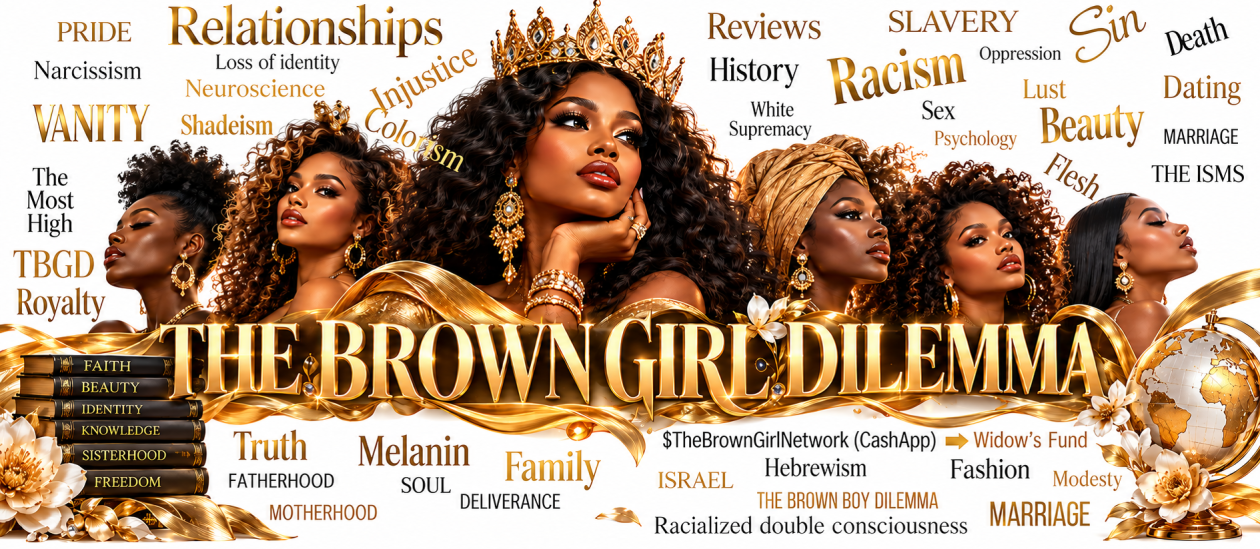
When Love Looks Different: Brown Girls and Men’s Standards. #thebrowngirldilemma

Photo by Diovana Pereira on Pexels.com

Love is often defined through cultural scripts, expectations, and standards—standards that rarely emerge in a vacuum. For Brown girls, these standards of love are shaped not only by individual men but also by legacies of racism, sexism, and colorism that have long dictated who is worthy of affection and how love should be expressed. When men’s standards collide with the lived realities of Brown girls, love can look very different—sometimes distorted by bias, sometimes strengthened by resilience.

Historically, the beauty and worth of Black and Brown women have been measured against Eurocentric ideals. Slavery and colonialism positioned lighter skin, straighter hair, and softer features as more “desirable,” leaving darker-skinned women devalued within both White and Black communities. These standards infiltrated love and partnership, creating hierarchies where Brown girls were too often overlooked or asked to compromise their selfhood to fit narrow molds of desirability. Thus, love for them has often come with an unspoken weight: proving they are “enough” in a world that tells them otherwise.

The Bible speaks against such partiality. James 2:9 (KJV) declares, “But if ye have respect to persons, ye commit sin, and are convinced of the law as transgressors.” Men’s standards that elevate some women while diminishing others based on skin tone or appearance reflect a bias that Scripture identifies as sinful. True love, biblically, is not bound by superficial preferences but by covenantal commitment, sacrifice, and respect (1 Corinthians 13:4–7). For Brown girls, this distinction is crucial: love must be measured not by societal validation but by the character and integrity of the one offering it.

Psychologically, the weight of biased standards creates what researchers call “internalized colorism.” Many Brown girls internalize messages that they are less attractive or less marriageable, leading to lower self-esteem and difficulties in relationships (Hunter, 2007). These psychological scars often surface when men, influenced by these same standards, express preference for lighter skin or Eurocentric beauty features. In such cases, Brown girls are not only navigating romantic rejection but also confronting centuries of systemic devaluation packaged as “personal preference.”

Yet, despite these wounds, Brown girls continue to redefine love on their own terms. Many resist the pressure to conform to men’s biased standards, instead embracing natural hair, deep skin tones, and cultural pride. In doing so, they model resilience and challenge the very hierarchies that once excluded them. Psychology affirms that this kind of self-acceptance can strengthen resilience and foster healthier relationships, since individuals with higher self-regard are less likely to settle for unhealthy or one-sided partnerships (Neff, 2011).

At the same time, some men are unlearning inherited biases and embracing broader, healthier definitions of love. They are recognizing that true beauty lies in authenticity, that a partner’s value is not determined by external standards but by inner strength, faith, and shared vision. When men remove the filter of bias, love between Brown girls and men becomes transformative, rooted not in the shadows of prejudice but in mutual respect and care.

For families and communities, the challenge lies in teaching young men and women to reject harmful standards and to build relationships grounded in God’s word rather than cultural distortions. Romans 12:2 (KJV) calls believers to resist conformity to worldly patterns and to be transformed by the renewing of the mind. When applied to love, this means rethinking how attraction, standards, and commitment are shaped—not by superficiality but by the spiritual and psychological health of both partners.

Ultimately, when love looks different for Brown girls, it is not a reflection of their lack but of the brokenness of societal standards. By unmasking the biases that shape men’s standards, embracing God’s vision for love, and practicing psychological resilience, Brown girls can step into relationships that affirm their worth rather than question it. In doing so, they not only heal personal wounds but also dismantle generational lies about who is worthy of love.


References

  • The Holy Bible, King James Version.
  • Hunter, M. (2007). The persistent problem of colorism: Skin tone, status, and inequality. Sociology Compass, 1(1), 237–254.
  • Neff, K. D. (2011). Self-compassion: The proven power of being kind to yourself. HarperCollins.

Black Men, Black Women, and the Silent Wars of Love. #thebrowngirldilemma

Photo by Kalzud83dudcf8ud83cuddfaud83cuddec Michael on Pexels.com

Love between Black men and Black women has always existed within a context of both beauty and battle. The bonds of affection, intimacy, and shared struggle are often tested by external forces—racism, economic inequality, systemic injustice—and internal wounds that have been passed down through generations. What often results are silent wars: unspoken conflicts, misunderstandings, and resentments that simmer beneath the surface of Black love. These struggles are not always visible, but they shape how Black men and women relate to one another in family, community, and society.

Historically, the system of slavery fractured Black families and redefined love under oppression. Enslaved men were stripped of their authority as protectors and providers, while women were forced into roles of survival, often enduring sexual violence at the hands of slaveholders. This history planted seeds of mistrust and imbalance, where love was shadowed by trauma. Even after emancipation, Jim Crow laws, mass incarceration, and economic discrimination continued to challenge Black relationships, creating conditions where survival often outweighed romance.

The Bible acknowledges both the trials of love and the call to unity. “Two are better than one; because they have a good reward for their labour. For if they fall, the one will lift up his fellow” (Ecclesiastes 4:9–10, KJV). God designed relationships as a place of healing and strength. Yet, when systemic oppression and internalized pain intrude, couples may find themselves at odds, not against each other by choice, but against the lingering shadows of history. The silent wars of love emerge when healing is postponed, and unspoken pain replaces honest conversation.

From a psychological perspective, these conflicts often stem from unaddressed trauma and gender expectations. Black men, conditioned by society to suppress vulnerability, may struggle to express affection or emotional needs. Black women, who have historically carried the role of both nurturer and fighter, may feel unsupported or unheard. These tensions can manifest as power struggles, mistrust, or withdrawal in relationships (Wingfield, 2009). When silence replaces dialogue, resentment builds, and what should be a partnership becomes a battlefield without words.

Examples of these silent wars are seen in family structures, where fathers may withdraw due to financial pressure or incarceration, and mothers overcompensate with strength that society praises but secretly drains them. In dating and marriage, silent wars appear as financial disagreements, unmet expectations of loyalty, or struggles over gender roles. At times, these conflicts are not openly acknowledged because of pride, cultural norms, or the fear of reinforcing negative stereotypes about Black love. Yet the silence itself becomes destructive.

Healing these silent wars requires both spiritual and psychological intervention. Biblically, couples are reminded to “submit yourselves one to another in the fear of God” (Ephesians 5:21, KJV). Mutual respect, sacrificial love, and communication are antidotes to division. Psychologists emphasize the importance of vulnerability, emotional literacy, and therapy in helping couples dismantle cycles of trauma (hooks, 2000). When silence is broken by truth and empathy, love is no longer a battlefield but a sanctuary.

Despite the challenges, Black men and women continue to create powerful legacies of love that endure. From the marriages of activists like Coretta Scott King and Martin Luther King Jr. to everyday couples who build families and businesses together, the strength of Black love is undeniable. It resists division, heals wounds, and becomes a model of resilience. Though silent wars exist, they are not the end of the story—they are opportunities for transformation, where honesty, faith, and commitment can restore unity.

Ultimately, the story of Black men and Black women in love is a story of survival and hope. The silent wars may wound, but they also reveal the depth of what is at stake. When love is nurtured with forgiveness, communication, and faith, it becomes a revolutionary act. Against the weight of history and the challenges of the present, Black love remains both a refuge and a rebellion—a declaration that despite the wars, love still wins.


References

  • The Holy Bible, King James Version.
  • hooks, b. (2000). All about love: New visions. HarperCollins.
  • Wingfield, A. H. (2009). Racializing the glass escalator: Reconsidering men’s experiences with women’s work. Gender & Society, 23(1), 5–26.

Is Divorce Always a Sin?


Photo by Alex Green on Pexels.com

Divorce is the legal and relational dissolution of a marriage covenant between a husband and wife. In Scripture, marriage is presented not merely as a social contract but as a divine covenant ordained by God. Malachi 2:16 declares, “For the LORD, the God of Israel, saith that he hateth putting away” (KJV), showing that divorce grieves the heart of God because it disrupts the sacred bond He established. While civil courts may recognize divorce as final, biblically, marriage is a covenant that reflects God’s faithfulness to His people.

Is Divorce Always a Sin?

Divorce itself is not always labeled as sin in Scripture, but it often results from human sin such as unfaithfulness, neglect, or hardness of heart. Jesus stated, “Moses because of the hardness of your hearts suffered you to put away your wives: but from the beginning it was not so” (Matthew 19:8, KJV). This shows that God’s original design was lifelong union, but divorce was permitted in certain circumstances because of human weakness. Divorce becomes sinful when pursued for selfish or unbiblical reasons, rather than as a response to covenant-breaking sins such as adultery or abandonment.

Picking the Best Mate

To avoid the pain of divorce, Scripture calls believers to carefully discern whom they marry. 2 Corinthians 6:14 warns, “Be ye not unequally yoked together with unbelievers” (KJV), urging Christians to seek spouses who share their faith. Beyond shared belief, wisdom in selecting a spouse includes looking for godly character, integrity, and the fruits of the Spirit. Proverbs 18:22 reminds, “Whoso findeth a wife findeth a good thing, and obtaineth favour of the LORD” (KJV). Choosing the right mate is not about physical attraction or material wealth, but about shared values rooted in God’s Word.

Should You Wait on God?

The decision of whom to marry must be bathed in prayer and patience. Psalm 27:14 instructs, “Wait on the LORD: be of good courage, and he shall strengthen thine heart: wait, I say, on the LORD” (KJV). Waiting on God prevents hasty decisions driven by loneliness or pressure. God’s timing ensures that believers are joined with someone who will help fulfill His divine purposes. By waiting on God, individuals align their marriages with His will rather than their own desires.

Divorce and Remarriage

The New Testament provides clear but difficult teaching on remarriage. Jesus taught, “And I say unto you, Whosoever shall put away his wife, except it be for fornication, and shall marry another, committeth adultery” (Matthew 19:9, KJV). This indicates that remarriage after divorce, unless the divorce was caused by sexual immorality, results in adultery. Paul also reinforces the sanctity of marriage in Romans 7:2-3, stating that a woman is bound to her husband as long as he lives. While culture permits multiple remarriages, Scripture places a high standard on marital fidelity and permanence.

Adultery After Divorce

Adultery is one of the most serious concerns associated with divorce and remarriage. Jesus’ words in Mark 10:11-12 are uncompromising: “Whosoever shall put away his wife, and marry another, committeth adultery against her. And if a woman shall put away her husband, and be married to another, she committeth adultery” (KJV). This reveals that God views marriage vows as binding, and the casual breaking of them leads to sin. Adultery after divorce not only harms individuals but also violates God’s holy standard for marriage.

God’s Grace in Broken Marriages

While the Bible sets high standards, it also reveals God’s grace for those who have fallen short. Jesus met the Samaritan woman at the well, who had five husbands and was living with a man outside of marriage (John 4:17-18). Rather than condemn her, He offered her living water—spiritual renewal and forgiveness. Likewise, those who have suffered through divorce or failed marriages can experience restoration through repentance and faith. God does not abandon His children but calls them into healing and redemption.

Conclusion

Divorce is never part of God’s original design but was allowed because of human sin and hardness of heart. While not always sinful in itself, divorce carries serious consequences, particularly when followed by remarriage outside of biblical grounds. Believers are therefore called to seek God’s will diligently in choosing a mate, to wait on His timing, and to honor the marriage covenant with faithfulness. Yet even in brokenness, God’s grace offers forgiveness and new life. The biblical standard for marriage remains holiness, permanence, and covenant love, reflecting Christ’s union with His Church.


References

Biblical References (KJV)

  • Malachi 2:16. King James Version.
  • Matthew 19:8-9. King James Version.
  • Mark 10:11-12. King James Version.
  • Romans 7:2-3. King James Version.
  • Proverbs 18:22. King James Version.
  • 2 Corinthians 6:14. King James Version.
  • Psalm 27:14. King James Version.
  • John 4:17-18. King James Version.

Secondary Sources
Keller, T. (2011). The Meaning of Marriage: Facing the Complexities of Commitment with the Wisdom of God. Dutton.

Piper, J., & Grudem, W. (2006). Recovering Biblical Manhood and Womanhood. Crossway.

Collins, A. (2018). Biblical Marriage and Gender Roles: A Historical Perspective. Zondervan Academic.


Girl Talk Series: 💍❤️💍How to Know If A Man is Your Husband. 💍❤️💍

Photo by Pavel Danilyuk on Pexels.com

💍❤️💍

Ladies, let me speak to your heart for a moment. Too often, we as women are told to wait until the ring is on our finger to know if a man is serious, but the truth is, you can see whether a man has the heart of a husband long before the wedding day. A real husband doesn’t just show up at the altar—he reveals himself in the way he treats you, the way he honors God, and the way he carries himself in love, patience, and responsibility. If you pay attention, you’ll notice the difference between a man who only wants your body and a man who wants your future. I want to help you discern that difference so you don’t waste time on counterfeit love when God has called you to covenant love.

💍❤️💍 Discerning Covenant Love: Biblical and Psychological Signs That a Man Is Truly a Husband Before the Wedding 💍❤️💍

The search for a life partner is one of the most important journeys a woman can undertake. In today’s world of shallow relationships, performative affection, and counterfeit love, women must learn how to discern a man’s true intentions. The truth is, a man does not become a husband on the wedding day; he demonstrates the heart of a husband long before vows are exchanged. Scripture reminds us, “Whoso findeth a wife findeth a good thing, and obtaineth favour of the LORD” (Proverbs 18:22, KJV). Psychology also supports this principle: love is not merely an emotional feeling but a pattern of consistent behaviors, sacrifice, and long-term investment (Sternberg, 1986).

This article will guide women in identifying the qualities of a man who is a husband at heart—biblically, psychologically, and practically—while also exposing counterfeit traits of men who disguise lust or selfish ambition as love.


A Husband Is Known Before the Wedding

A genuine husband is not revealed by rings or ceremonies but by his character, actions, and devotion.

1. He Loves With Sacrifice, Not Lust

A man who is truly a husband does not pursue a woman merely for physical pleasure. He demonstrates self-control and values her purity, echoing Paul’s teaching: “Husbands, love your wives, even as Christ also loved the church, and gave himself for it” (Ephesians 5:25, KJV). This kind of love is sacrificial, patient, and nurturing.

2. He Provides and Protects

One of the clearest marks of a husband is his willingness to provide stability. Even before marriage, he shows generosity with his time, money, and efforts. In psychology, this aligns with attachment theory, where secure partners naturally give support and consistency (Mikulincer & Shaver, 2016).

3. He Honors and Respects You

Respect is a cornerstone of biblical manhood. A man with a husband’s heart honors a woman’s dignity and does not belittle, insult, or manipulate. Peter instructs, “Likewise, ye husbands, dwell with them according to knowledge, giving honour unto the wife, as unto the weaker vessel, and as being heirs together of the grace of life” (1 Peter 3:7, KJV).

4. He Is Emotionally Available

Emotionally unavailable men are not ready for marriage. A true husband learns his partner’s needs, listens deeply, and builds trust. Modern psychology defines this as empathic attunement, where a man can sense, validate, and respond to his partner’s emotions (Gottman & Silver, 1999).

5. He Demonstrates Commitment Early

A counterfeit man keeps a woman in confusion, offering words but not actions. A genuine husband makes his intentions clear from the beginning. He “locks it down” with exclusivity, declaring his desire for covenant without ambiguity.


Other Traits of a True Husband Before the Wedding

  • Consistency: He does what he says and keeps promises.
  • Visionary Leadership: He has direction for his life and includes you in it.
  • Humility: He is correctable, not prideful or controlling.
  • Prayer and Godliness: He seeks God and desires a spiritual foundation.
  • Selflessness: He prioritizes your well-being over his temporary desires.
  • Honest Communication: He tells the truth even when it costs him.
  • Protective Boundaries: He shields you from harm, rather than exposing you to it.

The Counterfeit: Signs He Is Not a Husband But a Deceiver

The Bible warns of men who appear godly but deny the power of true love. Paul cautions against those who are “lovers of pleasures more than lovers of God” (2 Timothy 3:4, KJV). Common red flags include:

  • He speaks of love but shows no consistent action.
  • He pressures you sexually outside of covenant.
  • He avoids conversations about the future.
  • He isolates you from family or community.
  • He borrows or exploits finances instead of giving.
  • He uses manipulation, guilt, or control to keep you bound.

Biblical Women and the Men Who Pursued Them

Scripture provides examples of men who showed husband qualities:

  • Boaz (Ruth 2–4): A man of provision, honor, and protection.
  • Isaac (Genesis 24): Patiently waited and prayed, receiving Rebekah with love.
  • Jacob (Genesis 29): Worked 14 years for Rachel, demonstrating commitment.

These examples show that true husbands are marked by sacrifice, honor, patience, and covenant love, not selfish ambition.


Conclusion: Learning to Discern Covenant Love

A husband before the wedding is revealed by his heart, his habits, and his honor toward God and women. Women must use both spiritual discernment and psychological awareness to separate genuine covenant love from counterfeit desire.

Instead of chasing empty promises, focus on observing consistency, sacrifice, and godliness. A true husband will show you long before he marries you that his love is not for your body alone but for your soul, your spirit, and your future together.

As Proverbs 31:10 reminds us: “Who can find a virtuous woman? for her price is far above rubies.” A man who is truly a husband knows your worth—and treats you accordingly.


📚 References

  • Gottman, J., & Silver, N. (1999). The Seven Principles for Making Marriage Work. Crown.
  • Mikulincer, M., & Shaver, P. R. (2016). Attachment in Adulthood: Structure, Dynamics, and Change. Guilford Press.
  • Sternberg, R. J. (1986). A triangular theory of love. Psychological Review, 93(2), 119–135.
  • The Holy Bible, King James Version.