Category Archives: fornication

The Woman Diaries: Why Waiting Until Marriage Is Beneficial to a Woman.

Flee fornication

(1 Corinthians 6:18, KJV)

Is a direct and urgent admonition found in Scripture, reminding believers to avoid sexual immorality because of its profound spiritual and physical implications. The apostle Paul emphasizes that sexual sin is uniquely significant because it is committed against one’s own body, which God has created with sacred purpose and design. For women in particular, this biblical instruction calls for wisdom, discernment, and the guarding of one’s personal and spiritual integrity.

A woman should therefore be mindful to guard her essence, recognizing the sacred value of her body and spirit. From both a theological and moral perspective, the female body is not merely physical but deeply spiritual in nature. Scripture teaches that the body is the temple of the Holy Spirit (1 Corinthians 6:19–20, KJV), emphasizing that it is to be treated with reverence, discipline, and honor. Within this framework, a woman’s physical being carries divine significance and should not be approached casually or without discernment.

Women are uniquely designed to receive, nurture, and cultivate life—physically, emotionally, and spiritually. Because of this profound capacity, the intimate act of sexual union holds deeper implications than simple physical pleasure. It is an exchange that involves emotional bonding, spiritual connection, and psychological attachment. For this reason, guarding one’s intimacy is an act of wisdom and self-respect, acknowledging that such a union was divinely intended to occur within the covenant of marriage.

To safeguard one’s body is therefore to safeguard one’s dignity, identity, and spiritual well-being. A woman’s body is precious, worthy of honor, and deserving of protection. Within biblical teaching, the fullness of physical intimacy is reserved for the sacred bond between husband and wife, where love, commitment, and covenant provide the proper foundation for such a profound union. In this sense, a woman who guards her intimacy affirms both her intrinsic worth and the divine purpose for which her body was created.

In a culture that often promotes instant gratification and casual relationships, the idea of waiting until marriage for sexual intimacy can seem outdated or “old-fashioned.” Yet for many women—both young and mature—this decision remains deeply meaningful. Waiting is not merely about tradition or religious rules; it is about emotional health, spiritual alignment, personal dignity, and long-term well-being.

For women exploring relationship and life choices, the conversation about sexual boundaries deserves thoughtful reflection rather than social pressure. Understanding how intimacy affects the body, mind, and spirit can empower women to make decisions that honor themselves and their values. From a biblical perspective, the body is sacred before God, and sexual union was designed to exist within the covenant of marriage (1 Corinthians 6:18–20; Hebrews 13:4, King James Version).

Waiting until marriage is therefore not a limitation—it can be a powerful act of self-respect and wisdom.


Understanding What Happens During Sexual Intimacy

Sexual intimacy is not merely physical. It involves complex biological, psychological, and emotional processes that affect men and women differently.

Research shows that the female brain releases bonding hormones such as oxytocin and vasopressin during sexual intimacy. Oxytocin is sometimes called the “bonding hormone” because it increases emotional attachment and trust between partners (Carter, 1998). This means that sexual activity can naturally deepen a woman’s emotional connection to a partner, even if the relationship itself lacks stability or commitment.

Men, however, are often socialized differently in many cultures. While men also release bonding hormones, evolutionary psychology research suggests that men may experience sexual encounters with less immediate emotional bonding compared to women (Fisher, 2004). This difference does not mean men do not care, but it highlights how intimacy can impact women’s emotional well-being more intensely.

When a woman becomes sexually involved with a man outside the covenant of marriage, the emotional attachment formed may not always be reciprocated with equal commitment. This imbalance can lead to heartbreak, confusion, and emotional wounds.

From a biblical standpoint, sexual intimacy is intended to unite two people in covenant. Scripture teaches that sexual union creates a “one flesh” bond (Genesis 2:24). When this union occurs outside marriage, it can create emotional and spiritual conflict because the relationship lacks the covenantal protection God designed.


Three Research-Supported Benefits of Waiting Until Marriage

1. Stronger Emotional and Relationship Stability

Women who wait until marriage often report greater relationship satisfaction and stability.

A study from the Institute for Family Studies found that couples who waited until marriage to have sex reported higher levels of marital satisfaction and communication compared to those who were sexually involved earlier in the relationship (Busby, Carroll, & Willoughby, 2010).

Benefits include:

  • Deeper emotional intimacy before physical intimacy
  • Stronger communication and trust
  • Reduced comparison with previous partners
  • Greater long-term relationship satisfaction

When intimacy is reserved for marriage, couples often build a stronger foundation of friendship, shared values, and spiritual connection first. These elements are essential for lasting relationships.

From a biblical perspective, patience in relationships reflects wisdom and self-control, qualities praised throughout scripture (Proverbs 4:7; Galatians 5:22–23).


2. Protection from Physical Health Risks

Waiting until marriage also significantly reduces exposure to sexually transmitted infections (STIs) and other health risks.

According to the Centers for Disease Control and Prevention, nearly 20 million new sexually transmitted infections occur each year in the United States, with young adults representing a large portion of new cases (CDC, 2023).

Some of these infections include:

  • Human papillomavirus (HPV)
  • Chlamydia
  • Gonorrhea
  • HIV
  • Herpes

Certain infections can lead to long-term health complications such as infertility, cervical cancer, and chronic illness. While modern medicine offers treatment options, prevention remains the safest approach.

Waiting until marriage with a committed partner greatly reduces these risks and allows both partners to enter intimacy with greater health security.

The biblical principle behind sexual boundaries also emphasizes protection. Scripture repeatedly warns against fornication because it harms the body and spirit (1 Corinthians 6:18).


3. Greater Self-Worth and Personal Empowerment

Contrary to the idea that waiting is restrictive, many women find that setting sexual boundaries strengthens their sense of self-worth.

Choosing to wait can help women:

  • Maintain control over their bodies and life choices
  • Avoid emotional entanglements that hinder personal growth
  • Focus on education, career, and spiritual development
  • Seek partners who value commitment and respect

Women who establish clear boundaries often attract partners who are serious about long-term commitment rather than temporary pleasure.

From a spiritual perspective, the Bible teaches that the body is a temple of the Holy Spirit (1 Corinthians 6:19). Viewing the body as sacred encourages women to treat themselves with dignity and purpose.

Waiting until marriage becomes an expression of self-respect rather than a restriction imposed by society.


Addressing Common Misconceptions

“Waiting Until Marriage Is Old Fashioned”

Some argue that waiting until marriage is outdated in modern society. However, personal values are not determined by cultural trends. Many women today intentionally choose this path because it aligns with their emotional, spiritual, and personal goals.

True empowerment involves making choices that reflect one’s values rather than simply following societal expectations.

“Sex Is Necessary to Test Compatibility”

Another common argument suggests that couples must have sex before marriage to determine compatibility. Yet research indicates that communication, shared values, emotional intimacy, and conflict resolution skills are far stronger predictors of relationship success than sexual experience alone (Stanley, Rhoades, & Markman, 2006).

Healthy marriages are built on trust, respect, and commitment—not experimentation.


Building Strong Emotional and Spiritual Foundations

Waiting until marriage encourages women to cultivate relationships that prioritize emotional and spiritual connection first.

This process may include:

  • Developing meaningful friendships within the relationship
  • Praying and seeking spiritual guidance
  • Learning communication and conflict resolution skills
  • Establishing mutual respect and shared goals

When physical intimacy finally occurs within marriage, it becomes a celebration of covenant rather than a source of confusion or regret.

The Bible emphasizes the beauty of intimacy within marriage, describing it as honorable and blessed (Hebrews 13:4).


Final Thoughts: Honoring Your Sacred Worth

Every woman deserves love that is committed, respectful, and honorable. Waiting until marriage is not about shame, restriction, or judgment—it is about protecting the heart, honoring the body, and building relationships rooted in trust and covenant.

Key takeaways include:

  • Sexual intimacy creates powerful emotional bonds.
  • Waiting until marriage can strengthen relationships and reduce emotional harm.
  • It protects physical health and reduces exposure to disease.
  • It reinforces self-respect and spiritual alignment.

Your body is sacred before God, and the choices you make about intimacy carry both emotional and spiritual significance.

For women navigating the complexities of modern relationships, choosing patience and discernment can be one of the most empowering decisions you make. Waiting is not weakness—it is wisdom, dignity, and faith in action.

And when the right covenant relationship arrives, intimacy becomes not just physical pleasure, but a profound union blessed by love, commitment, and God.


References

Busby, D. M., Carroll, J. S., & Willoughby, B. J. (2010). Compatibility or restraint? The effects of sexual timing on marriage relationships. Journal of Family Psychology, 24(6), 766–774.

Carter, C. S. (1998). Neuroendocrine perspectives on social attachment and love. Psychoneuroendocrinology, 23(8), 779–818.

Centers for Disease Control and Prevention. (2023). Sexually transmitted infections surveillance report. https://www.cdc.gov

Fisher, H. (2004). Why we love: The nature and chemistry of romantic love. Henry Holt.

Stanley, S. M., Rhoades, G. K., & Markman, H. J. (2006). Sliding versus deciding: Inertia and the premarital cohabitation effect. Family Relations, 55(4), 499–509.

The Holy Bible, King James Version. (1611/2017).

Alters of Lust: Fornication

Soul Ties, and the Sacredness of the Body

The human body is often described in Scripture as sacred, a dwelling place for spiritual purposes and divine order. In the Bible, the body is repeatedly referred to as a temple meant to honor God rather than indulge uncontrolled desires. Within this theological framework, sexual intimacy is not merely a physical act but a deeply spiritual covenant designed for marriage. When this sacred design is ignored, Scripture warns that individuals may unknowingly build “altars of lust,” places where desire replaces discipline and temporary pleasure replaces spiritual integrity.

Fornication is one of the central moral warnings throughout the Bible. The term traditionally refers to sexual relations outside the covenant of marriage between a man and a woman. In the First Corinthians 6:18 (KJV), the apostle Paul writes, “Flee fornication. Every sin that a man doeth is without the body; but he that committeth fornication sinneth against his own body.” This statement highlights the unique spiritual and psychological consequences that Scripture associates with sexual immorality.

Biblical teaching presents sexual intimacy as a covenantal act intended exclusively for marriage. In Genesis 2:24, the text explains that a man shall leave his father and mother and “cleave unto his wife: and they shall be one flesh.” This union is not merely symbolic; it represents a spiritual joining that binds two individuals physically, emotionally, and spiritually.

Because sexual intimacy creates this profound union, many theological traditions refer to the concept of “soul ties.” Although the phrase itself does not appear explicitly in Scripture, it is often used to describe the emotional and spiritual bonds formed through sexual relationships. These bonds can make separation difficult, particularly when intimacy occurs outside of commitment or covenant.

Lust functions psychologically as a powerful motivational force rooted in desire, imagination, and biological impulse. While attraction itself is natural, lust involves the intentional pursuit of sexual gratification without regard for moral or spiritual boundaries. Scripture addresses this internal struggle in Matthew 5:28, where Jesus Christ teaches that even looking at someone with lustful intent can be considered a form of adultery within the heart.

The Bible consistently calls believers to discipline their desires. In First Thessalonians 4:3–4 (KJV), the text states, “For this is the will of God, even your sanctification, that ye should abstain from fornication.” This passage frames sexual restraint not as repression but as spiritual maturity and obedience.

One of the most practical commands given in Scripture regarding sexual temptation is the instruction to flee. Unlike other temptations where believers are encouraged to resist or stand firm, sexual immorality is something the Bible instructs people to physically and emotionally avoid. Fleeing means removing oneself from environments, conversations, or relationships that encourage sexual compromise.

Relationships themselves can become catalysts for temptation. Scripture warns that companionship with people who normalize or encourage sexual immorality can erode moral discipline over time. Both men and women may experience pressures from peers, romantic partners, or media influences that promote casual intimacy rather than covenant commitment.

Lustful behavior often thrives in environments where boundaries are weak. Cultural influences such as pornography, hypersexualized entertainment, and casual dating norms can normalize behaviors that conflict with biblical teachings. These influences can gradually shape attitudes toward intimacy and commitment.

From a theological perspective, God designed sex to be a sacred expression of unity within marriage. The biblical model consistently describes marriage as a covenant between a man and a woman, a union intended to reflect fidelity, love, and mutual responsibility. Within this framework, sexual intimacy becomes an act of trust and covenant rather than impulse.

Biblical law also includes prohibitions against behaviors considered outside this divine design. In passages such as Leviticus 18 and Romans 1, the text addresses various forms of sexual conduct, including homosexual acts and bestiality, presenting them as violations of the moral boundaries established in biblical law.

Beyond spiritual consequences, modern psychological research suggests that sexual intimacy can create emotional attachment through the release of bonding hormones such as oxytocin and vasopressin. These biochemical processes can strengthen emotional bonds between partners, even in relationships that lack long-term commitment.

When relationships formed through sexual intimacy end, individuals may experience feelings of loss, confusion, or shame. These emotional responses are sometimes intensified when intimacy occurs outside a context of trust or commitment. In such cases, the emotional residue of past relationships can affect future bonds.

Shame is another powerful psychological consequence often associated with sexual behavior that conflicts with personal or spiritual values. Individuals who feel they have violated their beliefs may struggle with guilt or diminished self-worth, particularly if they perceive their actions as irreversible.

However, the message of Scripture also emphasizes redemption and forgiveness. In First John 1:9 (KJV), believers are reminded that “If we confess our sins, he is faithful and just to forgive us our sins.” This passage highlights the theological principle that repentance opens the path to restoration.

Breaking free from patterns of sexual temptation often requires intentional steps. These may include establishing clear boundaries, seeking supportive community, avoiding triggering environments, and cultivating spiritual practices such as prayer and meditation on Scripture.

Here are practical and spiritual steps to break free from fornication, combining biblical guidance (KJV) with psychological discipline and lifestyle changes. These steps focus on self-control, spiritual renewal, and healthy boundaries.


1. Flee Sexual Temptation Immediately

The Bible does not say to fight sexual temptation—it says to run from it. In First Corinthians 6:18 (KJV), Paul the Apostle writes, “Flee fornication.”
If a situation, person, or environment encourages sexual sin, physically and emotionally distance yourself from it.


2. Repent and Confess to God

Repentance means sincerely turning away from sin. In First John 1:9 (KJV), Scripture teaches that God forgives those who confess their sins.
True repentance involves acknowledging wrongdoing and making a commitment to change.


3. Set Clear Physical Boundaries

Avoid situations that can easily lead to sexual activity, such as:

  • Being alone late at night with someone you are attracted to
  • Sleeping in the same bed
  • Visiting private spaces like bedrooms

Boundaries help protect emotional and spiritual discipline.


4. Separate from People Who Encourage Lust

If someone pressures you into sexual activity, they are not supporting your spiritual well-being. Healthy relationships respect your convictions and boundaries.


5. Avoid Sexualized Media

Pornography, explicit music, and hypersexualized entertainment stimulate the brain’s reward system and increase sexual urges. Limiting exposure helps retrain the mind toward discipline.


6. Renew Your Mind with Scripture

Regular reading of Scripture can reshape thinking patterns. Verses about purity, self-control, and holiness strengthen spiritual awareness and conviction.


7. Practice Self-Control and Discipline

Self-control is described as a spiritual virtue in Galatians 5:22–23.
Develop habits that strengthen discipline, such as:

  • Exercise
  • Structured routines
  • Goal setting

8. Understand the Emotional Consequences of Casual Sex

Sex creates emotional bonding through brain chemicals like oxytocin. When intimacy occurs outside commitment, it can produce emotional confusion, attachment, or heartbreak.

Recognizing this can strengthen motivation to abstain.


9. Pray for Strength and Wisdom

Prayer allows individuals to seek spiritual guidance when temptation arises. Many believers use prayer as a way to redirect thoughts and regain emotional balance.


10. Surround Yourself with Supportive Community

Healthy friendships, mentors, or faith communities can help reinforce values of discipline and accountability.


11. Focus on Purpose and Personal Growth

When life goals, education, career ambitions, and spiritual growth become priorities, impulsive behaviors often lose their power.


12. Replace Temptation with Healthy Activities

Idle time often increases temptation. Productive activities such as studying, exercising, volunteering, or creative work redirect energy into constructive outlets.


13. Guard Your Thoughts

Lust often begins in the mind before it becomes action. Monitoring thoughts and redirecting them when they become sexualized can prevent behavior from escalating.


14. Date with Intentionality

If you choose to date, focus on long-term compatibility and character, not only physical attraction. This reduces the likelihood of relationships driven purely by sexual desire.


15. Remember the Sacredness of Your Body

Scripture teaches that the body is a temple in First Corinthians 6:19.
Viewing the body as sacred encourages respect for oneself and others.


16. Forgive Yourself and Start Again

Breaking habits can take time. If someone falls into sexual sin again, the biblical message emphasizes grace and renewal rather than permanent condemnation.


17. Avoid Situations That Trigger Desire

Common triggers include:

  • Alcohol or drugs lowering inhibition
  • Sexual conversations
  • Physical affection that escalates intimacy

Learning personal triggers helps prevent relapse.


18. Cultivate Patience While Waiting for Marriage

Waiting until marriage can strengthen emotional maturity, self-respect, and trust within future relationships.


19. Strengthen Spiritual Identity

When individuals see themselves as people created with purpose and dignity, they are more likely to protect their values and boundaries.


20. Seek Counseling or Mentorship if Needed

For some individuals, repeated patterns of sexual behavior may involve deeper emotional issues such as loneliness, trauma, or low self-esteem. Professional counseling or pastoral guidance can help address these roots.


Key Principle:
Breaking free from fornication involves changing environments, strengthening spiritual discipline, and renewing the mind. It is a process of growth rather than a single moment of perfection.

Personal transformation also involves renewing one’s understanding of identity and purpose. When individuals view their bodies as sacred rather than disposable, their perspective on intimacy can shift from impulsive gratification to thoughtful stewardship.

For many believers, waiting until marriage becomes an act of discipline and faith. Rather than being framed as deprivation, abstinence can be understood as a conscious decision to honor the spiritual and emotional significance of sexual union.

The biblical narrative ultimately presents sexuality not as shameful but as sacred when practiced within its intended covenantal context. Marriage becomes the space where intimacy is celebrated without fear, secrecy, or guilt.

In this sense, resisting lust and avoiding fornication are not merely moral restrictions but invitations to experience relationships rooted in commitment, trust, and spiritual alignment. By honoring the sacredness of the body and the covenant of marriage, individuals seek to protect both their spiritual integrity and emotional well-being.


References

American Psychological Association. (2018). Human sexuality and attachment research.

Holy Bible. (1611/King James Version).

Laaser, M. (2004). Healing the wounds of sexual addiction. Zondervan.

Stanley, S. M., & Markman, H. J. (1992). Assessing commitment in personal relationships. Journal of Marriage and Family.

Strong, J., & Cohen, T. (2014). The marriage and family experience. Cengage Learning.

Wheat, E. (2010). Intended for pleasure: Sex technique and sexual fulfillment in Christian marriage. Revell.

Fleeing the Chains of Lust: Sexual Morality, Fornication, and Adultery in Black America.

Photo by Teddy tavan on Pexels.com

Sexual immorality remains a pressing issue in modern society, with profound social, psychological, and spiritual consequences. In Black America, patterns of fornication and adultery are intertwined with historical, cultural, and familial influences, often exacerbated by media portrayals, systemic challenges, and social pressures. These behaviors not only violate moral and spiritual standards but also affect mental health, interpersonal relationships, and generational stability. The Bible provides clear guidance on sexual morality, warning against lust, fornication, and adultery, emphasizing self-control, purity, and fidelity (1 Corinthians 6:18; Hebrews 13:4, KJV).


Defining Fornication and Its Biblical Implications
Fornication, defined as sexual intercourse between unmarried individuals, is explicitly condemned in the Bible as a sin against one’s own body (1 Corinthians 6:18). The act carries both spiritual and psychological ramifications, as it often results in emotional attachment, guilt, and a weakened capacity for self-discipline. From a sociological perspective, patterns of premarital sexual behavior in Black communities are influenced by cultural norms, peer pressure, and historical trauma stemming from disrupted family structures.


Adultery: Betrayal of Trust and Spiritual Integrity
Adultery, sexual relations with someone outside of one’s marital union, is considered a grave sin in the Bible (Exodus 20:14, Matthew 5:27-28). Spiritually, adultery represents not just a physical act but also a betrayal of covenantal trust, analogous to turning away from God. Psychologically, it often induces shame, anxiety, and relational instability, affecting both the individual and their family. Research indicates that adultery contributes to broken homes, financial instability, and intergenerational trauma in affected communities (Glass & Wright, 1992).


Lust and Its Role in Sexual Sin
Lust functions as a precursor to both fornication and adultery. Jesus warns that looking at a woman to lust after her constitutes committing adultery in the heart (Matthew 5:28, KJV). Lust creates a cycle of objectification, emotional detachment, and moral compromise. Psychologically, habitual indulgence in lust can lead to compulsive sexual behavior, desensitization, and difficulties forming meaningful intimate relationships. In Black America, media, music, and social environments often amplify sexualized imagery, making the fight against lust particularly challenging.


Historical and Sociocultural Factors
The legacy of slavery, systemic oppression, and economic marginalization in Black communities has historically destabilized family structures, influencing patterns of sexual behavior. Studies indicate that communities with higher rates of single-parent households and economic stressors exhibit greater prevalence of premarital sex and marital infidelity (Furstenberg et al., 1999). While these factors do not justify sexual immorality, they contextualize its persistence and underscore the need for culturally sensitive interventions.


Consequences of Sexual Immorality
Fornication and adultery carry physical, emotional, and social consequences. Sexually transmitted infections (STIs) such as HIV, herpes, and gonorrhea disproportionately affect Black Americans, often exacerbated by premarital or extramarital sexual behavior (CDC, 2022). Emotionally, sexual immorality can lead to attachment disorders, lowered self-esteem, and long-term relational challenges. Spiritually, these sins disrupt communion with God and violate scriptural mandates for purity and fidelity (1 Thessalonians 4:3-5, KJV).


Case Studies:

Urban Young Adults and Fornication
In a study by Carver et al. (2017), urban Black young adults reported that peer pressure and neighborhood norms heavily influenced sexual behavior. One participant, a 22-year-old male, described engaging in multiple premarital sexual relationships due to social expectations and the perception that sexual activity conferred social status. This led to emotional burnout, distrust in partners, and regret, illustrating the psychological and relational consequences of fornication.

Adultery and Family Disruption
A sociological study in Chicago by Amato (2010) documented a 35-year-old married Black woman who discovered her husband’s extramarital affairs. The infidelity caused severe emotional trauma, including anxiety, depression, and a breakdown of familial trust. Children in the household experienced behavioral challenges, demonstrating the ripple effects of adultery on family units. Intervention through counseling and community support eventually facilitated reconciliation and spiritual realignment, though relational scars remained.


Overcoming Lust, Fornication, and Adultery
The Bible prescribes practical steps for resisting sexual immorality: fleeing temptation (1 Corinthians 6:18), practicing self-control, and maintaining spiritual accountability. Psychological strategies include cognitive restructuring, mindfulness, and seeking therapy for compulsive sexual behaviors. Community support through faith-based programs, mentorship, and culturally relevant counseling can reinforce moral behavior and help individuals develop healthier relational patterns.


Abstinence, Marriage, and Sexual Integrity
Abstinence until marriage remains the most effective biblical and social approach to preventing fornication and adultery. Hebrews 13:4 (KJV) affirms the sanctity of the marital bed, emphasizing fidelity and mutual satisfaction within marriage. Maintaining sexual integrity involves cultivating healthy emotional connections, prioritizing spiritual growth, and committing to lifelong partnership. For Black Americans, fostering strong family units and culturally informed sexual education can reinforce these principles.


Healing and Restoration
For those who have fallen into sexual sin, the Bible offers guidance on repentance and restoration. Confession, forgiveness, and recommitment to God’s commandments facilitate spiritual healing (1 John 1:9, KJV). Counseling and accountability partnerships further aid in breaking patterns of sexual immorality, addressing underlying emotional trauma, and rebuilding trust in relationships. Healing involves not only personal transformation but also the restoration of community and family integrity.


Conclusion
Fornication, adultery, and lust are persistent challenges in Black America, influenced by historical, cultural, and societal factors. The Bible provides clear moral guidance, emphasizing purity, self-control, and fidelity. Overcoming these sins requires a holistic approach that integrates spiritual discipline, psychological insight, and community support. By fleeing temptation, embracing abstinence, and fostering strong relational bonds, individuals can break free from the chains of sexual immorality and cultivate lives of moral integrity, spiritual fulfillment, and communal stability.


References

  • Centers for Disease Control and Prevention (CDC). (2022). Sexually transmitted infections prevalence among African Americans. Retrieved from https://www.cdc.gov
  • Glass, S. P., & Wright, T. L. (1992). Attributions for marital infidelity: A review and critique. Journal of Family Issues, 13(4), 491–518.
  • Furstenberg, F. F., Cook, T. D., Eccles, J., Elder, G. H., & Sameroff, A. (1999). Managing to make it: Urban families and adolescent success. University of Chicago Press.
  • The Holy Bible, King James Version (KJV).
  • American Psychological Association. (2017). Sexual health and morality: Implications for mental health.

Amato, P. R. (2010). Research on divorce: Continuing trends and new developments. Journal of Marriage and Family, 72(3), 650–666.

Carver, K., Joyner, K., & Udry, J. R. (2017). National survey of adolescent sexual behavior: Peer and environmental influences. Journal of Youth and Adolescence, 46(7), 1431–1448.

Wilcox, W. B., & Wolfinger, N. H. (2016). Soul mates: Religion, sex, love, and marriage among African Americans and Latinos. Oxford University Press.

The Holy Bible, King James Version (KJV).

American Psychological Association. (2017). Sexual health and morality: Implications for mental health.

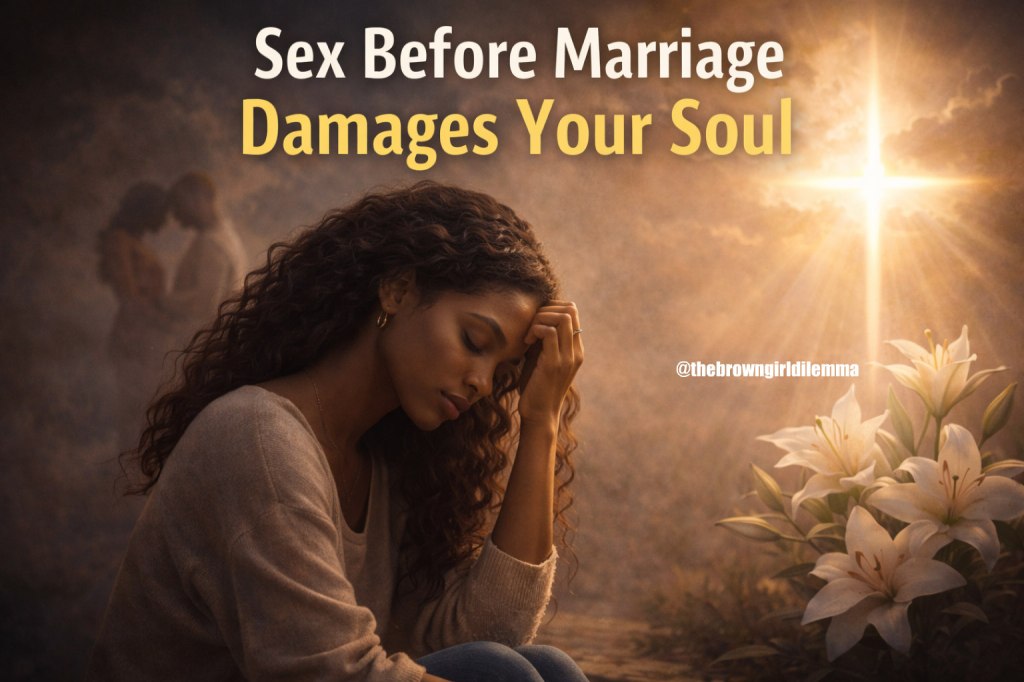
Why Sex Before Marriage Damages Your Soul

Sex is a sacred gift, designed by God to unite a husband and wife in covenantal love. When engaged in outside of God’s ordained framework, it can have spiritual, emotional, and relational consequences. In today’s culture, casual sex is often normalized, yet Scripture reveals the profound purpose of sexual intimacy and the danger of misusing it.

1. Sexual Intimacy is Sacred

Hebrews 13:4 (KJV) states: “Marriage is honourable in all, and the bed undefiled: but whoremongers and adulterers God will judge.”
Sex is intended to be a sacred act within the covenant of marriage. Engaging sexually outside of marriage defiles what God designed to be holy and intimate. The soul is affected because sin leaves a spiritual imprint that separates us from God (Isaiah 59:2, KJV).

2. Premarital Sex Can Lead to Emotional Bonding and Heartbreak

Psychologists have noted that sexual intimacy releases oxytocin and dopamine, chemicals associated with bonding and attachment (Fisher, 1998). When sex occurs outside of marriage, emotional attachment may form without the stability and commitment of covenantal love, often leading to heartbreak, regret, and long-term emotional scars.

3. Spiritual Consequences of Sexual Sin

1 Corinthians 6:18–20 (KJV) warns: “Flee fornication. Every sin that a man doeth is without the body; but he that committeth fornication sinneth against his own body. What? know ye not that your body is the temple of the Holy Ghost…?”
Premarital sex dishonors the body, which is the temple of God. Spiritual damage occurs because the soul experiences guilt, shame, and separation from God’s intended plan, affecting both emotional and spiritual health.

4. Impacts on Self-Worth and Identity

Sex outside marriage can distort self-perception. When intimacy is casual or transactional, individuals may equate sexual activity with value, approval, or validation. Proverbs 31:30 (KJV) reminds us: “Favor is deceitful, and beauty is vain: but a woman that feareth the Lord, she shall be praised.” True worth comes from godliness, not sexual expression.

5. Relationships Are Compromised

Engaging sexually before marriage can create unhealthy patterns in relationships. Expectations, attachments, and relational dynamics can be misaligned when intimacy precedes covenantal commitment. Genesis 2:24 (KJV) teaches: “Therefore shall a man leave his father and his mother, and shall cleave unto his wife: and they shall be one flesh.” Sex is meant to solidify an already committed bond, not create one prematurely.

6. Soul Healing Requires God’s Guidance

Psalm 51:10 (KJV) teaches: “Create in me a clean heart, O God; and renew a right spirit within me.” For those who have engaged in premarital sex, spiritual restoration is possible through repentance, prayer, and realignment with God’s Word. Forgiveness and renewal restore the soul and prepare it for covenantal love.

Conclusion

Sex before marriage can damage the soul spiritually, emotionally, and relationally. It defiles the sacredness of the body, binds hearts prematurely, and can distort self-worth. God’s design for sexual intimacy within marriage is a gift that protects the soul, nurtures emotional health, and strengthens relational bonds. Choosing purity honors God, preserves self-respect, and aligns with eternal purpose.


References

Fisher, H. (1998). Why we love: The nature and chemistry of romantic love. Henry Holt and Company.

Grudem, W. (2004). Systematic theology: An introduction to biblical doctrine. Inter-Varsity Press.

Johnston, W. (2019). Sexual ethics in a modern culture. Zondervan Academic.

The Holy Bible, King James Version. (1769/2017). Cambridge University Press.

The Dating Series: When Chemistry Sparks.

Attraction between a man and a woman can be powerful, magnetic, and intoxicating. Physical chemistry is natural, but it does not grant permission to act without discernment. The Bible cautions against giving in to fleshly desires outside the covenant of marriage, emphasizing purity, self-control, and intentionality in relationships (1 Corinthians 6:18-20, KJV). Recognizing that chemistry is not inherently wrong, but unbridled indulgence can lead to spiritual, emotional, and physical consequences.

When feelings ignite, it is important to acknowledge them honestly. Denial or repression can lead to confusion, frustration, and eventual moral compromise. Proverbs reminds us that “the heart is deceitful above all things, and desperately wicked” (Jeremiah 17:9, KJV). Honest recognition allows for conscious decision-making rather than reactive behavior.

Avoiding fornication requires intentional boundaries. Physical contact, sexualized speech, or suggestive situations should be limited or avoided entirely until marriage. Touch, prolonged private time, or flirtation can escalate desire beyond the capacity for self-control. Boundaries protect both heart and spirit.

Equally important is mental discipline. Avoid dwelling on sexual thoughts or fantasies about the person you are attracted to. Meditating on scripture, prayer, and spiritual reflection redirects energy and fosters purity. Philippians 4:8 (KJV) encourages believers to focus on whatsoever things are true, honest, just, pure, lovely, and of good report.

Friendship with intentionality is a wise strategy. Building emotional connection without sexual tension allows a relationship to grow in depth and understanding. Shared interests, values, and goals can form a foundation that respects God’s timing and plan for intimacy.

Tempting situations must be anticipated and avoided. Spending time alone in private spaces, excessive late-night communication, or social environments conducive to sexual temptation creates unnecessary risk. Proverbs 22:3 (KJV) reminds us that a prudent person foresees danger and avoids it.

Physical attraction should never overshadow spiritual compatibility. Chemistry is temporary; character and shared faith endure. A relationship grounded in Christ-centered values is more likely to withstand temptation and remain healthy over time.

Communication is essential. Discussing boundaries and expectations early in a relationship helps prevent misunderstandings and promotes accountability. Both parties should be committed to honoring God and respecting each other’s purity.

Avoiding alcohol or substances that lower inhibitions in each other’s presence is a practical measure. Impaired judgment increases the risk of fornication, emotional regret, and spiritual compromise. Maintaining clarity ensures adherence to moral standards.

Modesty in dress and demeanor helps prevent temptation. While attraction is natural, intentionally provoking sexual desire through clothing, gestures, or language can place both individuals in spiritually dangerous territory (1 Timothy 2:9-10, KJV).

Accountability partners are valuable. Trusted mentors, pastors, or mature Christians can provide guidance, correction, and encouragement in navigating attraction. Speaking openly about temptation reduces isolation and reinforces commitment to purity.

Avoid the slippery slope of emotional infatuation. Strong feelings can cloud judgment and lead to rationalizing behavior that violates biblical instruction. Keep perspective and maintain spiritual and moral discernment in the heat of chemistry.

Prayer is a vital tool for self-control. Asking God for strength, wisdom, and discipline nurtures a heart aligned with His will. James 1:5 (KJV) teaches that God gives wisdom liberally to those who ask, enabling righteous decision-making.

Social media and digital communication require caution. Texting, video calls, and private messaging can create intimacy that simulates physical closeness. Boundaries in virtual spaces are as important as those in real life.

Remember that sexual sin has consequences. Beyond spiritual guilt, fornication can lead to emotional pain, unplanned pregnancy, disease, and relational complications. Scripture warns that sin against the body is sin against God (1 Corinthians 6:18-20, KJV).

Recognize that self-respect and respect for the other person are intertwined. Maintaining boundaries demonstrates love, care, and reverence for both God’s law and the other individual’s dignity. Compromise in these areas diminishes mutual respect.

When chemistry sparks, channel energy into wholesome activities. Exercise, creative projects, service, and shared faith-based experiences strengthen the relationship without inviting sin. Purposeful engagement fosters growth and connection while preserving integrity.

Avoid isolation with the person to whom you are attracted. Group settings reduce temptation and create accountability. Being alone increases the likelihood of compromising decisions and moral failure.

Celebrate emotional and spiritual intimacy over physical attraction. Deepening understanding, empathy, and shared faith strengthens the bond while keeping the relationship aligned with God’s design.

Finally, trust God’s timing. Attraction may be strong, but intimacy is ordained within marriage. By respecting His plan, both individuals cultivate self-control, honor, and a foundation for lasting, godly love (Hebrews 13:4, KJV). Patience, discipline, and spiritual focus are the greatest safeguards when chemistry sparks.


References

The Holy Bible, King James Version. (1611). 1 Corinthians 6:18-20; Philippians 4:8; Proverbs 22:3; 1 Timothy 2:9-10; James 1:5; Hebrews 13:4.

Chastity and dating guides: Grenz, S. J., & Smith, J. R. (2001). Created for intimacy: Restoring the biblical view of relationships. Baker Academic.

DeYoung, K., & Belcher, B. (2011). Sexual purity: Embracing God’s plan for your body. Crossway.

Hendricks, W., & Hendricks, M. (2004). Love, sex, and marriage: A biblical guide to intimacy. Multnomah Publishers.

The Dating Playbook: Staying Pure Until Marriage.

Dating in the modern world is a complex landscape where desire, emotion, and spiritual conviction collide. In an age when intimacy is often rushed and physical connection is seen as the foundation of romance, maintaining purity stands as a countercultural act of strength. The commitment to abstain from sex until marriage is not merely a rule—it is a spiritual discipline, a boundary rooted in wisdom, dignity, and divine order. The Dating Playbook invites believers to approach relationships with intention, clarity, and holiness.

Purity begins with identity. When a person sees themselves as God sees them—valuable, sacred, and chosen—they are less likely to compromise. Scripture reminds, “you are bought with a price” (1 Corinthians 6:20, KJV), signaling that the body is not a casual vessel but a temple worth protecting. This understanding shapes self-worth, and self-worth shapes behavior.

In dating, purity flourishes when both partners share the same vision. Amos 3:3 asks, “Can two walk together, except they be agreed?” (KJV). When couples hold different expectations about intimacy, pressure grows, boundaries blur, and emotional instability emerges. An agreement establishes peace. Mutual conviction establishes strength.

Staying pure requires emotional intelligence. Physical boundaries are easily broken when emotional boundaries are ignored. Deep late-night conversations, loneliness, unresolved trauma, and unaddressed attraction can invite temptation. Healthy dating includes awareness of emotional triggers and the discipline to engage them with honesty and prayer.

Purity is also rooted in purpose. The goal of dating is not entertainment but discernment—discovering whether two people are compatible for covenant. Purpose-driven dating slows the pace, elevates standards, and shifts the focus from physical gratification to spiritual and emotional connection. Couples who date with purpose invest time in shared values, communication, character evaluation, and vision alignment.

The Bible provides clear instructions on sexual integrity. “Flee fornication” is not a suggestion but a command (1 Corinthians 6:18, KJV). Scripture encourages distance from temptation, not negotiation with it. Joseph demonstrated this when he fled Potiphar’s wife, revealing that purity sometimes requires dramatic action—leaving environments, turning off devices, or cutting off unhealthy bonds.

Purity also protects clarity. Sexual intimacy creates soul ties that blur judgment, making it harder to see red flags or regulate emotions. Neuropsychology research shows that sexual activity releases bonding hormones like oxytocin and vasopressin, which create emotional attachment even in unhealthy relationships. Abstaining preserves emotional clarity and strengthens decision-making.

The Dating Playbook emphasizes accountability. No one maintains purity alone. Wise couples surround themselves with mentors, pastors, or mature friends who can provide counsel and support. Proverbs teaches, “In the multitude of counsellors there is safety” (Proverbs 11:14, KJV). Accountability transforms purity from an isolated battle into a shared pursuit of holiness.

Boundaries become essential tools. Couples should agree on practical guidelines: avoiding private overnight visits, limiting physical affection, engaging in group settings, and prioritizing spiritual activities. Boundaries are not signs of weakness—they are expressions of commitment and respect.

Staying pure also builds trust. When both partners honor the relationship’s spiritual foundation, they communicate reliability, self-control, and integrity. A person who honors God is more likely to honor their spouse. A person who can manage desire before marriage can steward intimacy responsibly within marriage.

The Dating Playbook teaches that purity is not absence—it is preparation. By refraining from sexual involvement, couples can focus on building friendship, communication skills, conflict resolution, and emotional compatibility. These foundations determine the long-term health of the relationship far more than physical passion.

Temptation is inevitable, but temptation is not sin. Jesus Himself experienced temptation. What matters is response. Couples can combat temptation through prayer, fasting, open dialogue, and real-time honesty. When partners confess to struggle instead of hiding it, darkness loses its power.

Purity is a spiritual act of worship. Romans 12:1 calls believers to present their bodies “a living sacrifice, holy, acceptable unto God” (KJV). Saying “no” to sexual temptation is saying “yes” to God’s plan. It is a declaration of faith, obedience, and reverence.

Purity also challenges cultural narratives. The world glorifies sexual experience, but God honors sexual covenant. The world promotes casual intimacy, but God promotes lifelong devotion. Couples who wait testify that love can thrive without compromise and that marriage can begin with peace, not regret.

Dating with purity enhances emotional safety. Without the pressure of sexual expectations, partners feel freer to express themselves, ask questions, and define deal-breakers. Purity removes performance anxiety and creates space for authenticity. In that openness, love grows more honestly.

Purity also strengthens spiritual alignment. Couples who prioritize prayer, Bible study, and worship create relationships rooted in shared faith. Spiritual compatibility becomes the foundation for future parenting, problem-solving, and purpose. A couple that can pray together can endure together.

The Dating Playbook reminds couples of God’s grace. Purity is not only for those with a perfect past. God restores, renews, and redeems. Anyone can choose purity today. Forgiveness erases shame. Commitment establishes a new direction. Grace empowers change.

Waiting until marriage transforms intimacy into celebration rather than complication. When a couple marries with a clean conscience, they begin their union with joy, trust, and God’s blessing. Sex becomes sacred instead of stressful. Covenant transforms intimacy into worship.

Ultimately, purity is not about repression—it is about reverence. It is the belief that love is strongest when built on discipline, devotion, and divine wisdom. The Dating Playbook invites couples to honor God, honor themselves, and honor each other by choosing purity as a pathway to deeper, healthier, and holier love.

References
Holy Bible, King James Version: 1 Corinthians 6:18–20; 1 Corinthians 6:13; 1 Thessalonians 4:3–5; Proverbs 11:14; Amos 3:3; Romans 12:1; Genesis 2:24.
Cloud, H., & Townsend, J. (1992). Boundaries in Dating.
McDowell, J. (2011). The Bare Facts: The Truth About Sex, Love, and Relationships.
Balswick, J., & Balswick, J. (2006). A Model for Marriage: Covenant, Grace, Empowerment & Intimacy.
Garcia, J. R., & Reiber, C. (2008). Hook-up behavior and bonding hormones. Journal of Sex Research.

Dilemma: Fornication & Baby-Mama Culture

Fornication culture describes the widespread normalization of sexual intimacy outside of the biblical marriage covenant, forming one of the greatest moral, spiritual, and sociological dilemmas of this generation (Foster, 2019). It does not exist in isolation—it partners with baby-mama culture, where motherhood and fatherhood emerge without covenantal structure, shared governance, or spiritual oversight.

Though culture may call it “freedom,” the Bible calls fornication flight-worthy: “Flee fornication. Every sin that a man doeth is without the body; but he that committeth fornication sinneth against his own body” (1 Corinthians 6:18, KJV). Scripture frames it not simply as a mistake but a corruption of the self, spiritually, physically, and psychologically.

When sex becomes common, covenant becomes optional. Yet scripture does not treat sexual union casually: “Marriage is honourable in all, and the bed undefiled: but whoremongers and adulterers God will judge” (Hebrews 13:4, KJV). The bed is divine, but only when the ring governs engagement.

Culture now teaches that commitment can follow sex, but scripture teaches that marriage prevents fornication, not results from it: “Nevertheless, to avoid fornication, let every man have his own wife, and let every woman have her own husband” (1 Corinthians 7:2, KJV). Marriage is covering, not cleanup.

Fornication removes structure from relationships, replacing wife and husband with labels that feel lighter than vows. Proverbs warns that results follow doctrines of the heart: “Keep thy heart with all diligence; for out of it are the issues of life” (Proverbs 4:23, KJV). The culture in the heart becomes the society in the home.

When relationships begin without covenant, trust is thin and rupture is thick. Jesus explains: “A good man out of the good treasure of the heart bringeth forth good things…” (Matthew 12:35, KJV). Treasureless foundations produce unstable emotional economy.

Rather than spiritual stewardship, co-parenting often becomes government-mediated guardianship, legal oversight, and financial arbitration. “Except the Lord build the house, they labour in vain that build it” (Psalm 127:1, KJV) remains the great indictment—families work harder when God works less in them.

Children conceived through fornication often inherit instability long before articulation. Scripture declared children are heritage: “Lo, children are an heritage of the Lord…” (Psalm 127:3, KJV). Yet heritage without covenant becomes struggle before identity, survival before vision.

A father is meant to be more than finance; he is meant to be formation: “And ye fathers, provoke not your children to wrath: but bring them up in the nurture and admonition of the Lord” (Ephesians 6:4, KJV). Legal systems may extract checks, but only fathers deposit consciousness.

Many fathers become known more for child-support documents than household discipleship. Paul warns that lack of provision is denial of faith, yet provision without presence creates distortion: “But if any provide not for his own…he hath denied the faith…” (1 Timothy 5:8, KJV).

Generational wounds compound the story. Black families were historically denied marriage, fatherhood, and kinship rights during slavery, creating structural precedent for relational rupture (Franklin, 2010). “The fathers have eaten sour grapes, and the children’s teeth are set on edge” (Jeremiah 31:29, KJV) captures the symbolic multi-generation effect.

Many mothers live the double weight of motherhood without wifehood, raising children as economic heads without spiritual covering. Scripture affirms feminine spiritual posture heals rather than retaliates: “Let it not be that outward adorning only…but a meek and quiet spirit…” (1 Peter 3:3-4, KJV).

Men also carry consequence when seed is created without structure. Deuteronomy warns covenant disorder results in economic vulnerability: “He shall lend to thee, and thou shalt not lend to him…he shall be the tail” (Deuteronomy 28:44, KJV). This is the arithmetic of covenantlessness.

Child-support culture enters as a legal remedy, yet without covenant, it can feel like punishment instead of responsibility. Many men work multiple jobs, wages garnished, time extracted, identity exhausted, carrying provision but not paternal story honor (Payne, 2023).

Disordered desire creates disordered communication. Jesus clarifies: “For out of the abundance of the heart the mouth speaketh…” (Matthew 12:34, KJV). Accusation becomes the language when accountability isn’t the lifestyle.

Fornication culture fuels relationship turnover, not relational endurance. Proverbs warns sexual recklessness brings dishonor: “He shall get a wound and dishonour…” (Proverbs 6:32-33, KJV). The wound is emotional, economic, and communal.

When marriage is removed, relationships function on desire—not design. Paul instructs the correct escape: “Flee also youthful lusts…” (2 Timothy 2:22, KJV). Lust builds moments, not mountains.

Society absorbs fatherlessness as social identity diffusion, gang affiliation, emotional displacement, hyper-masculine defense scripting, and unanchored familial belonging (Anderson, 2023). When fathers exit the home, society adopts the survivors.

The community promotes sexual access over covenantal alignment, making relationships emotionally expensive and spiritually cheap. Proverbs rebukes imbalance as abomination: “A false balance is abomination to the Lord…” (Proverbs 11:1, KJV).

Healing begins when men reclaim identity beyond economy, and women reclaim identity beyond emotional aftermath, covenant before creation, covering before consequence. Malachi gives the vision: “And he shall turn the heart of the fathers to the children…” (Malachi 4:6, KJV). This is restoration, not retaliation.

God calls family to revival, not mere survival. Fatherhood is glory, guidance, government: “The glory of children are their fathers…” (Proverbs 17:6, KJV). Glory lives in presence, not enforcement.

Thus, the answer to fornication culture is covenant culture—marriage before mother, God before seed, father before finance, order before womb, kingdom before courts. This is the counterculture: God-built homes, father-turned hearts, and covenant-rooted legacies.


References

Anderson, E. (2023). Fatherlessness and community identity construction. Urban Family Psychology Review.
Franklin, J. H. (2010). From Slavery to Freedom. McGraw-Hill.
Foster, T. (2019). Sexual ethics and cultural normalization. Journal of Faith & Society.
Payne, R. (2023). Economic survival among non-custodial fathers. Urban Social Economics Review.
Rhodes, G. (2006). Facial beauty and identity perception. Annual Review of Psychology.

The Dating Series: Sanctified Sexuality

Photo by Gustavo Fring on Pexels.com

In a world where sexual freedom is often mistaken for personal empowerment, the biblical principle of sanctified sexuality stands as a divine countercultural truth. God designed sex to be sacred—a covenantal act reserved for the marriage bed, not a recreational experience detached from spiritual responsibility. Scripture declares in Hebrews 13:4 (KJV), “Marriage is honourable in all, and the bed undefiled: but whoremongers and adulterers God will judge.” Sanctified sexuality calls believers to honor God with their bodies and to view intimacy not as casual pleasure, but as covenant worship.

The word “sanctified” means set apart for holy use. In the context of sexuality, it means that a believer’s body is dedicated to God’s purpose, not carnal indulgence. 1 Corinthians 6:19-20 (KJV) reminds us, “Know ye not that your body is the temple of the Holy Ghost… ye are not your own? For ye are bought with a price.” This understanding shifts intimacy from being merely physical to deeply spiritual. When one understands that the Holy Spirit dwells within, fornication and adultery become more than moral failures—they become acts of spiritual defilement.

Modern dating culture often encourages people to “try before they buy,” normalizing sexual relations before marriage. Yet, Scripture is clear that fornication—sexual activity outside the marriage covenant—is sin. 1 Thessalonians 4:3 (KJV) declares, “For this is the will of God, even your sanctification, that ye should abstain from fornication.” Sanctified sexuality is not about repression; it is about reverence. It is understanding that waiting is not weakness—it is worship.

Soul ties are another profound aspect of sexual relationships. When two individuals engage in sexual intimacy, they form a spiritual bond that connects their souls and emotions. This bond is meant to unite husband and wife in covenant, but outside of marriage, it leads to emotional confusion, spiritual contamination, and bondage. Genesis 2:24 (KJV) says, “Therefore shall a man leave his father and his mother, and shall cleave unto his wife: and they shall be one flesh.” Outside of God’s order, these soul ties can leave individuals fragmented, carrying pieces of others within them long after the physical relationship ends.

The aftermath of ungodly soul ties often manifests as guilt, depression, or difficulty bonding in future relationships. Many find themselves haunted by memories of past partners, unable to experience true intimacy in marriage. The Bible warns of this in Proverbs 6:27 (KJV): “Can a man take fire in his bosom, and his clothes not be burned?” Every illicit connection leaves a spiritual residue that must be broken through repentance and deliverance. Sanctified sexuality calls believers to cleanse themselves from past entanglements and renew their covenant with God.

Adultery, likewise, violates not just marital vows but divine trust. It wounds the soul and corrupts the sanctity of the covenant. Exodus 20:14 (KJV) gives the clear command: “Thou shalt not commit adultery.” The world may romanticize infidelity in movies and music, but Scripture views it as treachery against both God and spouse. When David sinned with Bathsheba, his deepest grief was spiritual—“Against thee, thee only, have I sinned,” he confessed in Psalm 51:4 (KJV). Sanctified sexuality acknowledges that every act of impurity is first a sin against a holy God.

Sexual sin also dulls spiritual sensitivity. It clouds discernment and weakens prayer life because sin creates separation between humanity and God. Isaiah 59:2 (KJV) affirms, “But your iniquities have separated between you and your God.” This is why many believers find it difficult to grow spiritually while entangled in fornication or adultery. Sanctification requires separation—cutting ties with anything that draws one away from holiness.

In contrast, sanctified sexuality strengthens both spiritual and emotional intimacy within marriage. The marriage bed is not a place of shame but a space for mutual love, pleasure, and unity. 1 Corinthians 7:3-5 (KJV) encourages spouses to render “due benevolence” to one another and not to deprive each other, lest Satan tempt them for lack of self-control. God designed marital intimacy as protection against temptation and as a reflection of divine oneness.

Fasting and prayer are powerful tools in maintaining sanctified sexuality. When single, they help subdue the flesh and align desire with divine timing. When married, they fortify intimacy through shared spiritual focus. Matthew 26:41 (KJV) warns, “Watch and pray, that ye enter not into temptation: the spirit indeed is willing, but the flesh is weak.” Fasting disciplines the body while strengthening the spirit, teaching believers to let God govern their desires rather than lust.

Many Christians struggle with lust because they feed the flesh more than the spirit. The media glorifies sensuality, and social platforms thrive on physical allure. Yet Scripture commands in Romans 13:14 (KJV), “Make not provision for the flesh, to fulfil the lusts thereof.” Sanctified sexuality demands boundaries—guarding eyes, ears, and heart from unholy influences. True purity is not just abstinence from sin but avoidance of its seduction.

Pornography and self-gratification have also corrupted modern relationships. These acts create false expectations and distort the sacredness of intimacy. Jesus said in Matthew 5:28 (KJV), “Whosoever looketh on a woman to lust after her hath committed adultery with her already in his heart.” Sanctified sexuality teaches that sin begins in the mind, and thus the battle must be fought in thought before it becomes action.

True love is patient and disciplined. It seeks covenant, not convenience. The world teaches instant gratification, but the Spirit teaches delayed satisfaction for eternal reward. Galatians 5:16 (KJV) urges believers to “Walk in the Spirit, and ye shall not fulfil the lust of the flesh.” Sanctified sexuality is the manifestation of walking in the Spirit, denying temporary pleasures for eternal intimacy with God.

When believers yield to temptation, repentance remains the door of restoration. God’s grace is sufficient to cleanse and restore those who fall. 1 John 1:9 (KJV) promises, “If we confess our sins, he is faithful and just to forgive us our sins, and to cleanse us from all unrighteousness.” Sanctified sexuality does not shame the fallen; it calls them to rise again in righteousness, renewed by grace.

God’s design for sex is redemptive, not destructive. Within marriage, it symbolizes the covenant between Christ and His Church. Paul writes in Ephesians 5:31-32 (KJV) that marriage is a “great mystery,” reflecting Christ’s love for the Church. Thus, sexual purity is not merely moral—it is theological. It mirrors divine fidelity, intimacy, and fruitfulness.

For singles, sanctified sexuality means waiting with purpose. It is a season of preparation—learning to love oneself and God fully before uniting with another. Psalm 37:4 (KJV) encourages, “Delight thyself also in the Lord: and he shall give thee the desires of thine heart.” The one who delights in God becomes the one ready for a godly relationship.

For married couples, sanctified sexuality means nurturing mutual respect and intimacy. It requires communication, prayer, and love rooted in Christ. Ephesians 5:25 (KJV) commands, “Husbands, love your wives, even as Christ also loved the church.” In sanctified union, pleasure and purpose coexist, glorifying God through oneness and covenant loyalty.

The danger of casual dating and “situationships” is that they mimic commitment without covenant. Such relationships breed confusion and heartbreak. Proverbs 14:12 (KJV) warns, “There is a way which seemeth right unto a man, but the end thereof are the ways of death.” Sanctified sexuality calls for clarity—relationships rooted in truth, not emotion.

Jealousy, lust, and emotional manipulation are often fruits of unsanctified bonds. They come from trying to fill spiritual voids with fleshly connections. Only God’s love can satisfy the soul’s deepest longing. John 4:14 (KJV) affirms that whoever drinks of Christ’s water “shall never thirst.” Sanctified sexuality begins by drinking from that eternal well.

In sanctified love, boundaries are not burdens—they are blessings. They protect what is holy from being trampled by the profane. Song of Solomon 2:7 (KJV) beautifully advises, “Stir not up, nor awake my love, till he please.” Love and intimacy flourish most beautifully in God’s timing.

Breaking ungodly soul ties requires prayer, repentance, and often fasting. Believers must verbally renounce past sexual and emotional connections, asking the Holy Spirit to sever every unholy bond. James 4:7 (KJV) instructs, “Submit yourselves therefore to God. Resist the devil, and he will flee from you.” Submission to God is the key to freedom.

Sanctified sexuality also demands accountability. Surrounding oneself with godly mentors, church family, and prayer partners provides strength against temptation. Ecclesiastes 4:9-10 (KJV) teaches, “Two are better than one… for if they fall, the one will lift up his fellow.” Spiritual community reinforces purity through love and support.

Parents and leaders have a duty to teach sanctified sexuality to the next generation. Silence breeds ignorance, and ignorance breeds sin. Teaching biblical boundaries helps youth build lives of moral integrity. Proverbs 22:6 (KJV) instructs, “Train up a child in the way he should go.” Education rooted in Scripture preserves purity for generations.

God’s view of sexuality is not prudish but purposeful. He created pleasure within boundaries to reflect divine joy and unity. Sin distorts pleasure into addiction, but sanctification restores it into blessing. Psalm 16:11 (KJV) says, “At thy right hand there are pleasures for evermore.” True fulfillment comes from the presence of God, not the indulgence of lust.

Forgiveness and healing are available for all who repent. No matter how far one has fallen, God’s mercy can restore wholeness. Sanctified sexuality is not about perfection—it’s about progression. It is choosing holiness daily, one thought and one action at a time.

When believers live in sanctified sexuality, they reflect the holiness of Christ in their relationships. They become witnesses of God’s redemptive love in a world enslaved to passion. Their restraint, purity, and joy stand as light in dark places.

Ultimately, sanctified sexuality points back to divine order—sex as worship, love as covenant, and marriage as ministry. The body, soul, and spirit unite under God’s authority to glorify Him through intimacy rooted in holiness.

To walk in sanctified sexuality is to reclaim what sin distorted—to see the body not as an object of lust but as a vessel of divine glory. In doing so, believers fulfill Romans 12:1 (KJV): “Present your bodies a living sacrifice, holy, acceptable unto God, which is your reasonable service.”

References (KJV Bible)
Hebrews 13:4; 1 Corinthians 6:19-20; 1 Thessalonians 4:3; Genesis 2:24; Proverbs 6:27; Exodus 20:14; Psalm 51:4; Isaiah 59:2; 1 Corinthians 7:3-5; Matthew 26:41; Romans 13:14; Matthew 5:28; Galatians 5:16; 1 John 1:9; Ephesians 5:31-32; Psalm 37:4; Ephesians 5:25; Proverbs 14:12; John 4:14; Song of Solomon 2:7; James 4:7; Ecclesiastes 4:9-10; Proverbs 22:6; Psalm 16:11; Romans 12:1.

The Dangers of Pre-Marital Sex: A Biblical Warning Against Fornication.

Photo by MART PRODUCTION on Pexels.com

Pre-marital sex has become normalized in modern culture, often viewed as a rite of passage or an expression of love outside the covenant of marriage. However, Scripture consistently warns against fornication, not because God wants to withhold joy, but because He desires to protect His people from destruction. The dangers of pre-marital sex are not merely physical; they extend into the spiritual, emotional, and relational realms.

The Word of God clearly identifies fornication as sin. Paul admonishes believers to “Flee fornication. Every sin that a man doeth is without the body; but he that committeth fornication sinneth against his own body” (1 Corinthians 6:18, KJV). Unlike many other sins, sexual sin uniquely harms the body, soul, and spirit, leaving behind scars that are not easily erased.

From the beginning, God designed sex as a sacred gift within marriage. Genesis 2:24 declares, “Therefore shall a man leave his father and his mother, and shall cleave unto his wife: and they shall be one flesh.” The act of becoming “one flesh” was never intended to be casual but covenantal. Pre-marital sex distorts this divine union, creating bonds outside of God’s will.

One major danger of pre-marital sex is the spiritual bondage it creates through soul ties. When two people engage in intimacy, they are joined in a union deeper than the physical. Paul reinforces this truth: “What? know ye not that he which is joined to an harlot is one body? for two, saith he, shall be one flesh” (1 Corinthians 6:16, KJV). Such ungodly unions can lead to confusion, guilt, and emotional entanglement.

Pre-marital sex also opens the door to God’s judgment. Hebrews 13:4 reminds us: “Marriage is honourable in all, and the bed undefiled: but whoremongers and adulterers God will judge.” When sex occurs outside of marriage, it becomes defiled, bringing dishonor to both the body and the relationship. God’s design for intimacy is not meant to be played with.

Culturally, fornication often leads to broken relationships. What may begin with passion often ends with pain, betrayal, or abandonment. Without the commitment of marriage, many couples are left vulnerable to mistrust, jealousy, and heartache. Proverbs 6:32 warns, “But whoso committeth adultery with a woman lacketh understanding: he that doeth it destroyeth his own soul.” Though directed at adultery, the principle also applies to fornication—sexual sin destroys.

Pre-marital sex also carries the danger of physical consequences. Sexual diseases, unintended pregnancies, and broken homes are direct outcomes of ignoring God’s design. Galatians 6:7 declares, “Be not deceived; God is not mocked: for whatsoever a man soweth, that shall he also reap.” Those who sow seeds of fornication often reap painful harvests.

Emotionally, fornication leaves deep wounds. Many experience guilt, shame, and regret long after the act. Instead of love, sex outside marriage often brings emptiness. The Bible calls us to purity because it safeguards the heart. 1 Thessalonians 4:3–4 states, “For this is the will of God, even your sanctification, that ye should abstain from fornication: That every one of you should know how to possess his vessel in sanctification and honour.”

Pre-marital sex also hinders spiritual growth. Sin creates separation from God. Isaiah 59:2 says, “But your iniquities have separated between you and your God, and your sins have hid his face from you, that he will not hear.” Fornication creates a barrier in prayer and weakens one’s relationship with Christ.

Another danger is the loss of trust and respect in relationships. When intimacy is pursued before marriage, the foundation of commitment is shaky. Many couples who indulge in fornication before marriage struggle with infidelity and distrust later. God’s way is always meant to secure lasting peace and stability.

The Bible also highlights that pre-marital sex dishonors the temple of the Holy Spirit. Paul states, “Know ye not that your body is the temple of the Holy Ghost which is in you, which ye have of God, and ye are not your own?” (1 Corinthians 6:19, KJV). Fornication desecrates this temple and grieves the Spirit within.

Furthermore, pre-marital sex damages one’s witness as a believer. Christians are called to be holy and separate. Romans 12:1–2 urges us to present our bodies as living sacrifices, holy and acceptable to God. When believers compromise with fornication, it undermines their testimony to the world.

God offers a better way. In marriage, intimacy is pure, safe, and blessed. Proverbs 5:18–19 celebrates marital love: “Let thy fountain be blessed: and rejoice with the wife of thy youth… let her breasts satisfy thee at all times; and be thou ravished always with her love.” This is the joy and safety that God intended—love rooted in covenant.

The devil, however, seeks to corrupt God’s gift by tempting people into pre-marital sex. John 10:10 warns, “The thief cometh not, but for to steal, and to kill, and to destroy.” Fornication steals innocence, destroys relationships, and kills destinies. Recognizing this, believers must resist the enemy’s schemes.

The pressure of modern society makes chastity seem outdated, but God’s Word never changes. Malachi 3:6 declares, “For I am the LORD, I change not.” His standards for holiness remain the same regardless of shifting cultural values. True believers must choose obedience over conformity.

Those struggling with pre-marital sex are not without hope. God offers forgiveness and restoration. 1 John 1:9 assures us, “If we confess our sins, he is faithful and just to forgive us our sins, and to cleanse us from all unrighteousness.” Through repentance and surrender, God heals the broken and restores purity.

Another safeguard is accountability. Believers are called to encourage one another in holiness. Hebrews 10:24–25 reminds us to provoke one another unto love and good works. Walking with godly friends, mentors, and spiritual leaders strengthens the commitment to purity.

Paul also offers practical wisdom in 1 Corinthians 7:9: “But if they cannot contain, let them marry: for it is better to marry than to burn.” Marriage is God’s ordained solution to sexual desire, and it protects against the dangers of fornication. Choosing marriage honors God’s design and prevents unnecessary pain.

Ultimately, pre-marital sex is dangerous because it undermines God’s perfect plan for humanity. While the world promotes it as freedom, Scripture reveals it as bondage. True freedom comes in Christ, who empowers believers to live holy lives, walking in righteousness rather than sin.

In conclusion, pre-marital sex is not harmless entertainment—it is a destructive sin with spiritual, emotional, and physical consequences. God calls His people to flee fornication, to guard their hearts, and to honor marriage. By choosing purity, believers not only protect themselves but also glorify God with their bodies, which belong to Him.

References (KJV Bible):

  • “Flee fornication. Every sin that a man doeth is without the body; but he that committeth fornication sinneth against his own body.” (1 Corinthians 6:18, KJV)
  • “Marriage is honourable in all, and the bed undefiled: but whoremongers and adulterers God will judge.” (Hebrews 13:4, KJV)
  • “For this is the will of God, even your sanctification, that ye should abstain from fornication.” (1 Thessalonians 4:3, KJV)
  • “Know ye not that your bodies are the members of Christ? shall I then take the members of Christ, and make them the members of an harlot? God forbid.” (1 Corinthians 6:15, KJV)
  • “Let us walk honestly, as in the day; not in rioting and drunkenness, not in chambering and wantonness, not in strife and envying.” (Romans 13:13, KJV)
  • “But if they cannot contain, let them marry: for it is better to marry than to burn.” (1 Corinthians 7:9, KJV

The Dating Series: Fornication and Physical Touch.

This photo is the property of its respective owner. No copyright infringement is intended.

In a culture that glorifies physical affection outside of covenant, believers must pause and reconsider what Scripture teaches about fornication and physical touch. While the world says “follow your heart,” the Word of God reminds us that “the heart is deceitful above all things, and desperately wicked: who can know it?” (Jeremiah 17:9, KJV). Emotional closeness and physical intimacy are powerful, but without the covering of marriage, they become snares that lead many into sin.

Fornication, in its simplest definition, is sexual intimacy outside of marriage. Paul writes, “Flee fornication. Every sin that a man doeth is without the body; but he that committeth fornication sinneth against his own body” (1 Corinthians 6:18, KJV). This is a direct command, not a gentle suggestion. Unlike other temptations, fornication requires not negotiation but flight. To linger around physical temptation is to play with fire, and Scripture warns, “Can a man take fire in his bosom, and his clothes not be burned?” (Proverbs 6:27, KJV).

Physical touch in dating often begins innocently. Holding hands, hugging, and small displays of affection may seem harmless. Yet these gestures, when left unchecked, can escalate into lustful desires and actions. James reminds us that “when lust hath conceived, it bringeth forth sin: and sin, when it is finished, bringeth forth death” (James 1:15, KJV). What begins as a “little” touch can awaken passions that God designed to be reserved only for marriage.

Lust is a silent destroyer. Jesus declared, “But I say unto you, That whosoever looketh on a woman to lust after her hath committed adultery with her already in his heart” (Matthew 5:28, KJV). This means sin doesn’t begin with the act but in the imagination. When two people in a relationship indulge in lustful touch, they are cultivating sin in their hearts long before it manifests in their bodies. This is why believers must guard not only their actions but their thoughts.

Intimacy is a gift from God, but it is holy only in the right context. “Marriage is honourable in all, and the bed undefiled: but whoremongers and adulterers God will judge” (Hebrews 13:4, KJV). God blesses physical intimacy when it is between husband and wife, but outside of that covenant, it becomes defilement. What the world markets as love and pleasure is often just lust and sin repackaged.

Physical boundaries are necessary in relationships. Paul advises young Timothy, “Flee also youthful lusts: but follow righteousness, faith, charity, peace” (2 Timothy 2:22, KJV). A couple that desires to honor God must agree to maintain purity together. This means avoiding prolonged kissing, intimate caressing, or lying in compromising positions. These actions stir the flesh and make it harder to resist sin.

Fornication also has lasting consequences beyond the spiritual. It damages trust, purity, and emotional stability. Paul explains that when we sin sexually, we sin “against our own body” (1 Corinthians 6:18, KJV). Brokenness, regret, and soul ties often follow acts of fornication. God forgives, but the scars remain, teaching us why His way is always best from the beginning.

In contrast, waiting until marriage builds a foundation of trust, respect, and holiness. Couples who guard their purity demonstrate discipline and faith in God’s timing. Proverbs 3:5–6 (KJV) reminds us: “Trust in the Lord with all thine heart; and lean not unto thine own understanding. In all thy ways acknowledge him, and he shall direct thy paths.” Trusting God in the area of relationships includes honoring His boundaries for intimacy.

The Holy Spirit gives strength to resist temptation. Galatians 5:16 (KJV) instructs, “Walk in the Spirit, and ye shall not fulfil the lust of the flesh.” When believers prioritize prayer, worship, and accountability, they equip themselves to withstand moments of weakness. Purity is not only about abstaining from sex—it is about walking daily in the Spirit, keeping our minds and bodies submitted to God.

Accountability is key for couples. Having trusted spiritual mentors or godly friends to provide guidance helps couples stay on track. Ecclesiastes 4:9–10 (KJV) says, “Two are better than one… For if they fall, the one will lift up his fellow.” Godly accountability protects us from compromise and reminds us that we are not walking this path alone.

Another critical truth is that physical purity glorifies God with our bodies. Paul writes, “For ye are bought with a price: therefore glorify God in your body, and in your spirit, which are God’s” (1 Corinthians 6:20, KJV). To engage in fornication is to misuse what belongs to God. But to walk in purity is to declare that Christ is Lord over every part of our lives, including our relationships.

The danger of fornication is not simply the act but the spiritual blindness it creates. Sin hardens the heart and dulls sensitivity to the Spirit. Hebrews 3:13 (KJV) warns that “the deceitfulness of sin” can harden us. Many who continually indulge in fornication find it harder to hear God’s voice or pursue His purpose. Purity, on the other hand, keeps our hearts soft and open to divine guidance.

Choosing purity also testifies to the world. Romans 12:2 (KJV) urges, “And be not conformed to this world: but be ye transformed by the renewing of your mind.” When couples resist physical temptation, they shine as lights in a culture that worships lust. Their obedience speaks louder than words, pointing others toward Christ’s holiness.

In the end, physical touch and intimacy are not evil—but their timing matters. God in His wisdom created them for the sanctity of marriage. Song of Solomon 2:7 (KJV) advises, “I charge you… that ye stir not up, nor awake my love, till he please.” This verse reminds us to wait until God’s appointed season, where intimacy brings blessing instead of regret.

Fornication is not love; it is lust. True love waits, sacrifices, and protects. Couples who surrender their desires to God honor Him and each other. They walk in a higher calling, proving that purity is possible through Christ. “Now unto him that is able to keep you from falling, and to present you faultless before the presence of his glory with exceeding joy” (Jude 1:24, KJV). God is faithful to keep His children pure if they yield to Him.