Category Archives: colorism

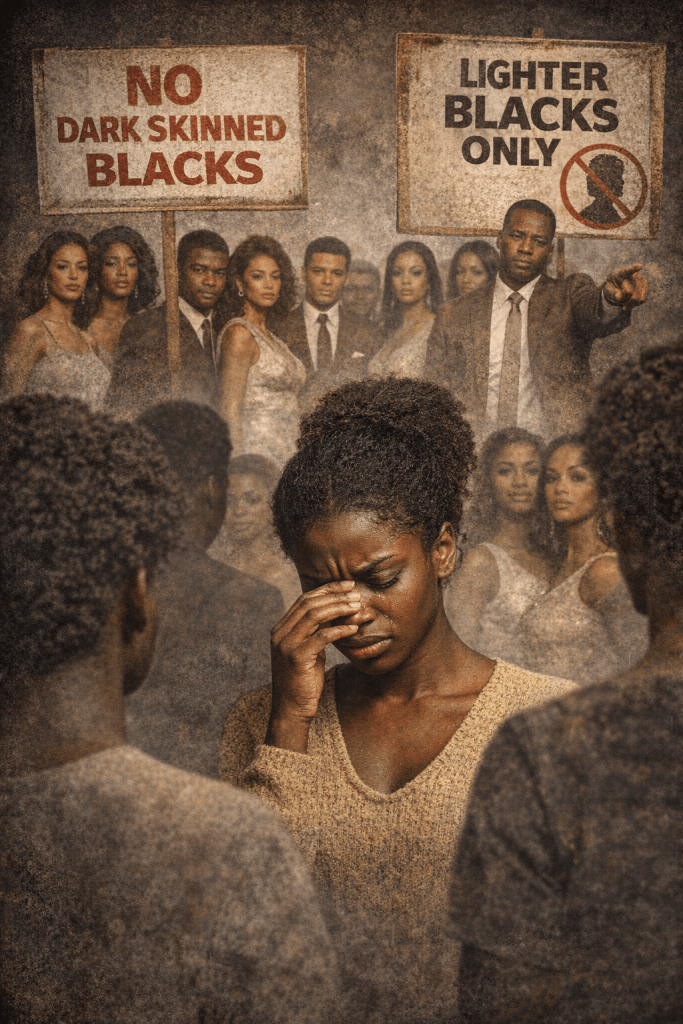
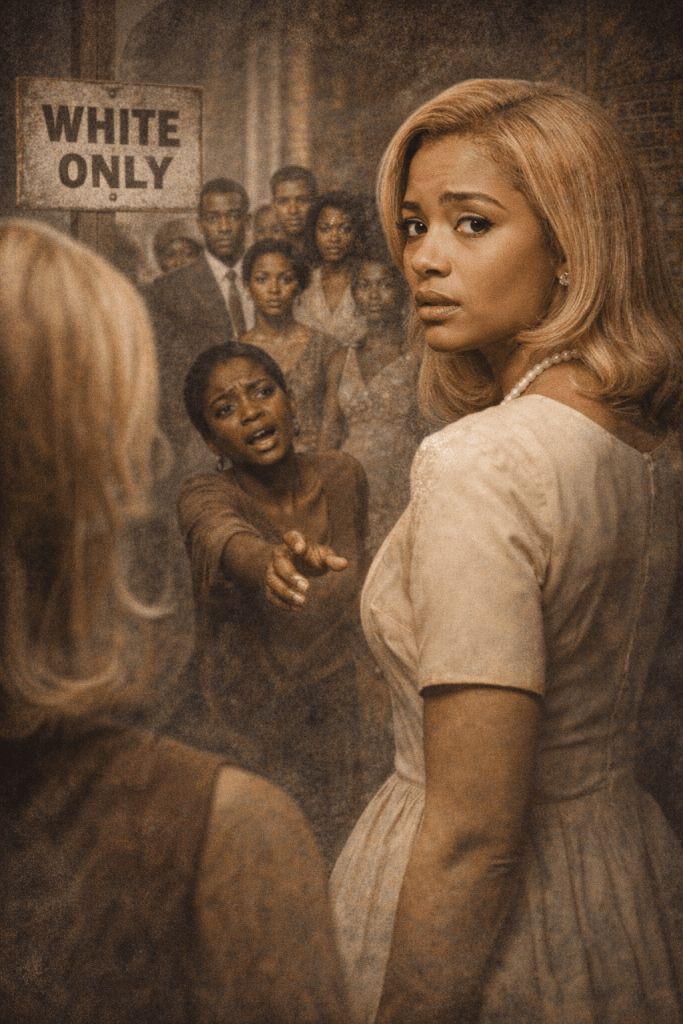
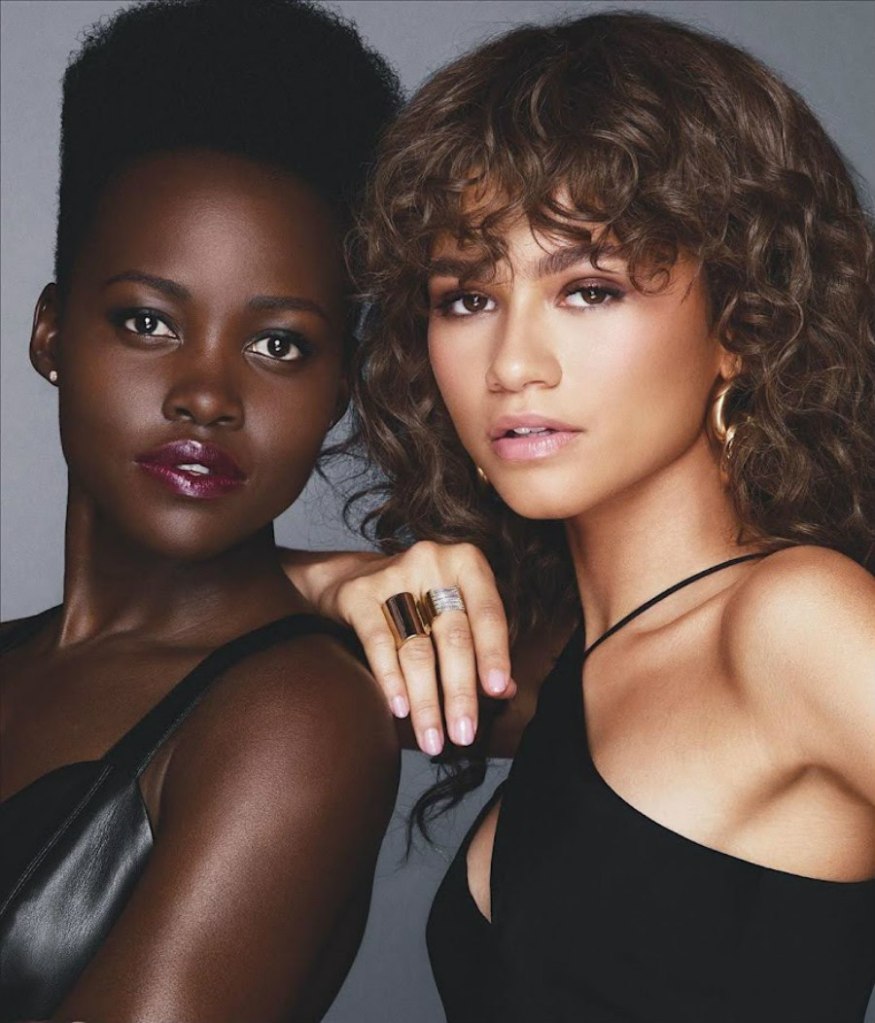
A Shade Too Much: Surviving Prejudice on Both Sides #thebrowngirldilemma

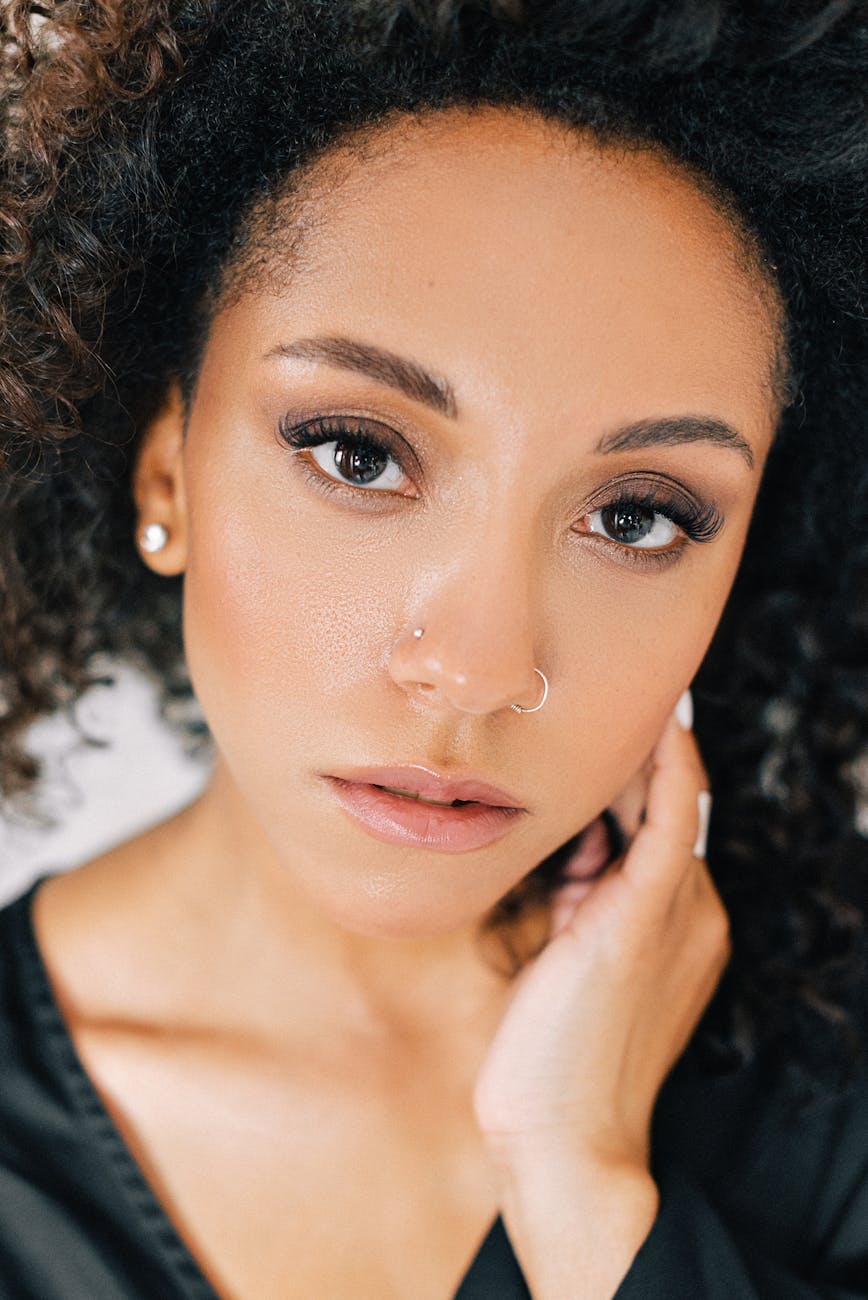
Photo by Mikhail Nilov on Pexels.com

To be “a shade too much” is to live in a world where skin becomes a battleground. It is to experience prejudice from both sides—discrimination from the larger society for being Black and rejection from one’s own community for not fitting an unspoken standard of acceptability. This is the painful duality of existing in a society obsessed with measuring worth by skin tone.

Colorism, the preference for lighter skin over darker skin within communities of color, has its roots in slavery and colonialism. Enslaved Africans with lighter complexions were sometimes given privileges, such as working in the house rather than the fields, which created a hierarchy that persists today (Hunter, 2007). This has left many dark-skinned individuals feeling stigmatized, while lighter-skinned people are accused of being privileged, “not Black enough,” or disconnected from the struggles of the Black experience.

For a brown-skinned or light-skinned woman, this can mean enduring a lifetime of suspicion, jealousy, or accusations of arrogance. Darker-skinned women often endure microaggressions that suggest they are less feminine or attractive (Hill, 2002). Lighter-skinned women, on the other hand, are sometimes ostracized, accused of thinking they are “better” or of benefiting from color-based favoritism. Both wounds are real, and both are deep.

The pain intensifies when the rejection comes from one’s own community. Internalized racism manifests as horizontal hostility, where oppressed people turn their pain inward and against each other rather than at the system that created the hierarchy in the first place (hooks, 1992). This creates an environment where those who are already targeted by racism must also navigate intra-community competition for validation.

Psychologically, this constant negotiation of identity can lead to identity confusion and lower self-esteem. Research has found that intraracial discrimination can have similar mental health effects as external racism, contributing to anxiety, depressive symptoms, and social withdrawal (Keith et al., 2017). It can also create a hyperawareness of one’s appearance—skin tone, hair texture, and features—making self-acceptance an ongoing battle.

Men are not exempt from this dilemma. Light-skinned men may be stereotyped as weak or “soft,” while dark-skinned men are stereotyped as threatening or aggressive (Monk, 2015). These biases affect dating dynamics, employment opportunities, and how Black men are perceived by law enforcement and media. Thus, “a shade too much” becomes not just a personal issue but a sociopolitical one with life-altering consequences.

The church should have been a refuge, but historically, colorism found its way even into pews and pulpits. During slavery, some congregations separated worshippers by complexion, privileging mixed-race members over darker-skinned members (Cone, 1997). Healing must therefore include a theological reclamation: affirming that all shades are equally made in the image of God (Genesis 1:27) and equally loved by Him.

Surviving prejudice on both sides requires a strong sense of identity. This means decoupling self-worth from shade hierarchies and rejecting the false dichotomy of “too light” versus “too dark.” It means affirming, “I am enough,” whether one is honey, caramel, chocolate, or mahogany. As Psalm 139:14 reminds us, we are “fearfully and wonderfully made.”

Community healing is crucial. Honest conversations about colorism must take place in families, schools, and churches. Mothers and fathers must be careful with the language they use around children, resisting the temptation to praise or shame one shade over another. Representation matters—children must see beautiful, intelligent, successful people across the entire spectrum of Blackness.

Media also plays a role. Dark-skinned women must be cast as heroines, CEOs, and romantic leads. Light-skinned women must be portrayed without always being reduced to exotic love interests or “pretty but empty” stereotypes. Stories must reflect the complexity of Black life beyond color-based tropes.

Spiritually, healing comes from seeing oneself as God sees us. God does not measure beauty by shade but by heart (1 Samuel 16:7). The gospel dismantles hierarchies of worth and declares every person equally valuable. In Christ, there is no “less Black” or “too Black”—there is only beloved humanity.

Surviving prejudice on both sides also requires empathy. Dark-skinned women must understand the privilege lighter-skinned women may carry, while lighter-skinned women must understand the pain and systemic disadvantage darker-skinned women often endure. Solidarity grows when both acknowledge the wound yet refuse to deepen it.

To be “a shade too much” is to reclaim one’s power and refuse to shrink for the comfort of others. It is to stand proudly, saying, “My shade is not too much—it is exactly what God intended.” In this way, survival becomes victory, and the struggle becomes a testimony.

When we heal, we break the cycle for the next generation. Children grow up free to love their skin and each other. The burden of proving one’s worth fades, replaced by collective pride. Then we will no longer ask, “Am I too light?” or “Am I too dark?” Instead, we will declare together: We are enough.


References

  • Cone, J. H. (1997). God of the oppressed. Orbis Books.
  • Hill, M. (2002). Skin color and the perception of attractiveness among African Americans: Does gender make a difference? Social Psychology Quarterly, 65(1), 77–91.
  • hooks, b. (1992). Black looks: Race and representation. South End Press.
  • Hunter, M. (2007). The persistent problem of colorism: Skin tone, status, and inequality. Sociology Compass, 1(1), 237–254.
  • Keith, V. M., Lincoln, K. D., Taylor, R. J., & Jackson, J. S. (2017). Discrimination, racial identity, and psychological well-being among African Americans. Cultural Diversity and Ethnic Minority Psychology, 23(2), 165–175.
  • Monk, E. P. (2015). The cost of color: Skin color, discrimination, and health among African-Americans. American Journal of Sociology, 121(2), 396–444.
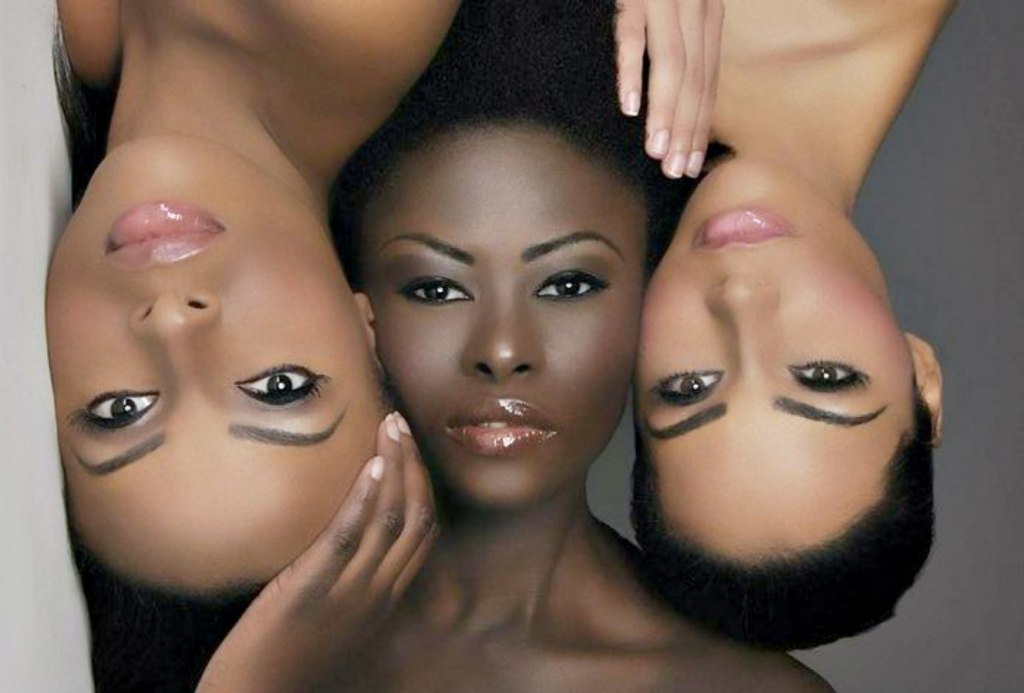
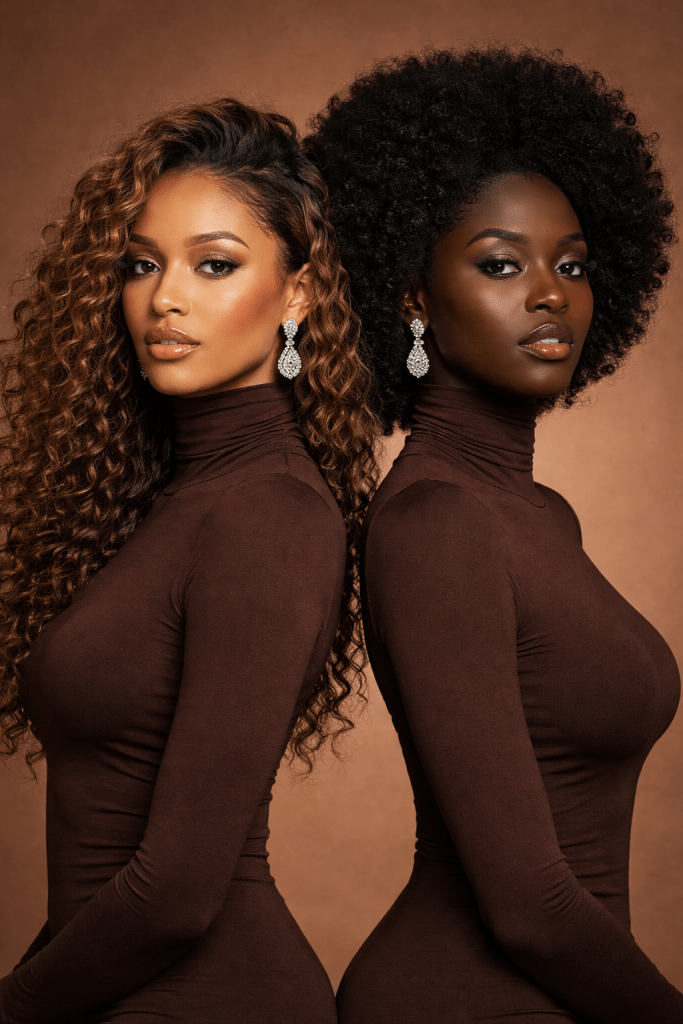
The Plantation Palette: How Colorism Was Painted Into Our DNA.

Colorism is not simply a social construct—it is a historical wound written into the subconscious of the African diaspora. It is the shadow of slavery that lingers in how we perceive beauty, worth, and belonging. The plantation, once a site of brutal labor and exploitation, became the first workshop where shades of brown were turned into symbols of hierarchy. Within its cruel order, skin color was not just biology—it became social destiny.

The origins of colorism in the Americas lie in the cruel logic of white supremacy. During slavery, the European masters created a false dichotomy between “house slaves” and “field slaves.” Those with lighter complexions, often the offspring of rape and coercion by white men, were assigned domestic work and treated marginally better. Darker-skinned Africans, whose features reflected their full heritage, were confined to the fields. This system cultivated resentment, insecurity, and self-hatred—ingredients that would harden into generational trauma.

On the plantation, color became code. It signified proximity to whiteness and, therefore, proximity to privilege. The masters engineered this system deliberately, knowing that internal division among the enslaved would ensure control. This was psychological warfare disguised as social order. What began as survival-based favoritism evolved into a culture of comparative value, one that still haunts descendants today.

This plantation palette—the gradation of complexion from light to dark—became the foundation of a pigment hierarchy that endured long after slavery’s abolition. Freedmen’s societies, post-slavery fraternities, and even churches sometimes practiced exclusion based on complexion. The “paper bag test,” requiring one’s skin to be lighter than a brown paper bag, institutionalized colorism within Black spaces. The oppressor’s palette became the people’s poison.

In a cruel twist of history, this bias was internalized. Enslaved and freed Black communities began to mirror the hierarchies imposed upon them. The lighter the skin, the closer one appeared to the master class. The darker the tone, the further one was deemed from beauty, intelligence, and refinement. It was not merely prejudice—it was the plantation’s psychological residue replicated in every generation.

Science and pseudo-genetics in the 19th and 20th centuries gave colorism false legitimacy. Phrenologists and eugenicists claimed that lighter skin signified evolutionary advancement, while darker tones represented savagery. These racist pseudosciences seeped into textbooks, media, and art. Even after slavery, the plantation’s palette painted the world’s perception of Blackness in gradients of acceptance and rejection.

The entertainment industry perpetuated this pigment hierarchy. Early Hollywood refused to cast dark-skinned Black actors in leading roles, preferring “passing” or lighter-toned performers who could fit Eurocentric ideals. In music, Motown executives polished their artists’ images to appeal to white audiences, often selecting those whose skin was “marketable.” The plantation’s palette had evolved from whip to camera, from overseer to director’s chair.

In beauty culture, skin bleaching became a global epidemic. From the Caribbean to Africa to South Asia, the false promise of lighter skin as a ticket to success spread like a virus. Colonialism exported colorism as cultural infection, linking “fairness” to purity and status. Advertisements equating lightness with virtue were not new—they were modern echoes of the plantation’s visual code.

Psychologically, colorism is a form of inherited trauma. Epigenetic studies suggest that stress and oppression can influence gene expression across generations (Yehuda & Bierer, 2009). While color preference itself is cultural, the social stress tied to darker skin—exclusion, discrimination, invisibility—can shape self-perception at a cellular level. Thus, colorism is not merely learned; it is embodied.

The plantation painted identity with a cruel precision: lightness equaled potential, darkness equaled labor. This message infiltrated the bloodstream of the diaspora, turning self-recognition into self-negotiation. Every time a child is told they are “too dark” or “too light,” the plantation speaks again. Its brushstrokes still stain the canvas of our collective consciousness.

However, the story of the plantation palette is also one of resistance. Black communities have long challenged these hierarchies through cultural affirmation. The Harlem Renaissance, the Negritude Movement, and the Black Arts Movement reclaimed the beauty of darkness as divine. Writers like Langston Hughes and Aimé Césaire shattered the myth of inferiority by celebrating melanin as majesty.

Spiritually, the lie of colorism collapses under divine truth. Scripture declares, “I will praise thee; for I am fearfully and wonderfully made” (Psalm 139:14, KJV). The Creator did not craft shades of humanity to rank them, but to reflect His boundless creativity. Melanin is not a mistake—it is a masterpiece. To reclaim our beauty is to reclaim the truth of divine intention.

Sociologically, colorism continues to influence education, employment, and dating patterns. Studies show that lighter-skinned individuals often receive higher income, lighter sentencing, and more favorable treatment in professional and romantic contexts (Hochschild & Weaver, 2007). The plantation may be gone, but its paint still dries unevenly across modern institutions.

Media representation remains a battleground. When dark-skinned women like Lupita Nyong’o, Viola Davis, and Danai Gurira rise to prominence, they challenge centuries of aesthetic bias. Their visibility restores balance to the narrative, reminding the world that beauty does not fade with depth—it deepens. The plantation palette can be repainted when darker hues are centered, celebrated, and seen.

Education is one of the most powerful solvents against colorism. Teaching young people the origins of complexion bias empowers them to unlearn it. When students understand that colorism was manufactured to divide, they begin to heal. Knowledge restores agency; truth restores dignity. The palette can be reclaimed through re-education.

In the realm of relationships, colorism continues to distort love. Preferences shaped by colonial beauty ideals still define desirability in the modern age. Healing requires that both men and women confront these biases honestly—understanding that love conditioned by shade is not love at all, but indoctrination. Liberation begins with reprogramming affection to mirror authenticity.

Culturally, art has always been the great redeemer. Black painters, photographers, and filmmakers are repainting the narrative, giving dark skin the glory it was denied. Through rich tones, shadows, and light, they rewrite the visual language of worth. Every portrait of a dark-skinned figure bathed in golden light is an act of rebellion against the plantation palette.

Economically, industries that profit from color bias must be held accountable. The global skin-lightening market, projected to surpass $12 billion, thrives on the insecurity of colonized beauty ideals (Statista, 2023). Dismantling colorism means dismantling the profit systems built upon it. Freedom is not just emotional—it is financial.

Ultimately, the plantation palette reminds us that identity has been painted, but it can also be repainted. Each generation holds the brush. When we celebrate every shade of brown as sacred, we undo the work of centuries. Our skin becomes testimony, not tragedy. Our reflection becomes revolution.

Colorism was painted into our DNA through trauma, but through truth, it can be washed clean. The time has come to reclaim our palette—to turn shame into pride, division into unity, and pain into art. What was once used to divide us will now define us as divine. We are not products of the plantation; we are the pigments of paradise, unchained and unashamed.

References

  • The Holy Bible, King James Version (Psalm 139:14).
  • Hochschild, J. L., & Weaver, V. (2007). The Skin Color Paradox and the American Racial Order. Social Forces, 86(2), 643–670.
  • Yehuda, R., & Bierer, L. M. (2009). The Relevance of Epigenetics to PTSD: Implications for the DSM-V. Journal of Traumatic Stress, 22(5), 427–434.
  • hooks, b. (1992). Black Looks: Race and Representation. South End Press.
  • Russell, K., Wilson, M., & Hall, R. (1992). The Color Complex: The Politics of Skin Color Among African Americans. Doubleday.
  • Morrison, T. (1992). Playing in the Dark: Whiteness and the Literary Imagination. Vintage.
  • Tate, S. (2009). Black Beauty: Aesthetics, Stylization, Politics. Routledge.
  • Craig, M. L. (2002). Ain’t I a Beauty Queen?: Black Women, Beauty, and the Politics of Race. Oxford University Press.
  • Hall, S. (1997). Representation: Cultural Representations and Signifying Practices. Sage.
  • Davis, A. (1981). Women, Race, & Class. Random House.

My Light-Skinned Privilege, Her Dark-Skinned Disadvantage.

From a Light Brown Girl, To all Brown Girls

I walk through doors,
They open wide for me,
A shade lighter, a step brighter,
The world smiles differently on me.

Her skin, kissed by night,
Absorbs the sun, absorbs the stares,
She carries the weight of centuries,
Of whispers, judgments, and unseen bars.

I’ve tasted doors that swung freely,
Opportunities served on silver plates,
She knocks, waits, sometimes bleeds,
The world is unsure if she belongs at all.

I see her in mirrors, in classrooms,
In magazines that promise beauty
But only echo my reflection back,
Ignoring her rich, radiant hue.

We share the same blood, the same roots,
But the world measures our worth differently,
She’s exotic, she’s dangerous, she’s wrong,
While I float, almost invisible, in favor.

I want to hug her, lift her, tell her—
The color of her skin is not a curse,
Though the world has learned to punish it,
We must learn to celebrate it.

Her darkness is not a shadow,
Not a fault, not a mistake;
It’s the soil from which strength blooms,
It’s the sun that refuses to fade.

I feel guilt in my privilege,
A heaviness I cannot ignore,
For every door that opens for me,
I remember one that stayed shut for her.

Still, we are sisters in melanin,
Bound by love and shared history,
I will use my lighter shade as leverage,
To fight for her, lift her, honor her.

Brown girl, do not bow to the bias,
Do not shrink, do not fade;
Your hue is power, your skin is glory,
And together, we rewrite the story.

Colorism, the preferential treatment of lighter-skinned individuals within the same racial or ethnic group, is a pervasive and often unspoken issue in society. Growing up as a light-skinned Black woman, I have noticed the subtle advantages afforded to me: from assumptions of intelligence and beauty to greater social acceptance and professional opportunities. My complexion has often allowed me to navigate spaces more easily, receiving compliments and access that my darker-skinned peers, particularly women, frequently do not. These advantages, though sometimes invisible to me, are real and cumulative, shaping opportunities and perceptions over a lifetime.

Conversely, darker-skinned Black women often face systemic biases that limit their visibility and opportunities. From media representation to workplace dynamics, society tends to privilege lighter complexions, equating them with beauty, sophistication, and competence. My darker-skinned sisters encounter microaggressions, exclusion, and negative stereotypes that are often justified as personal preference but rooted in historical oppression. This disparity highlights not only societal prejudice but also the internalized hierarchies that continue to divide and marginalize within our communities.

The tension between light and dark skin is further complicated by interpersonal relationships and professional networking. I have witnessed situations where lighter-skinned colleagues are promoted faster, receive more public recognition, or are perceived as more approachable, while darker-skinned peers are overlooked despite equal or superior skill. These inequities reinforce a system where privilege operates quietly yet powerfully, subtly shaping careers, friendships, and social mobility. Understanding this dynamic requires acknowledgment of both historical factors and contemporary manifestations of colorism, recognizing that the skin tone divide has tangible and lasting effects.

Addressing these disparities requires both awareness and action. Those of us with light-skinned privilege must consciously leverage our advantages to uplift darker-skinned peers rather than perpetuate subtle hierarchies. Celebrating the beauty, intellect, and leadership of darker-skinned individuals, challenging biased perceptions, and advocating for equity in representation and opportunity are essential steps. By examining the dual realities of light-skinned privilege and dark-skinned disadvantage, we can confront the insidious ways colorism shapes our communities and begin fostering a culture of genuine inclusivity.

References

Hunter, M. L. (2007). The persistent problem of colorism: Skin tone, status, and inequality. Sociology Compass, 1(1), 237–254. https://doi.org/10.1111/j.1751-9020.2007.00006.x

Keith, V. M., & Herring, C. (1991). Skin tone and stratification in the black community. American Journal of Sociology, 97(3), 760–778. https://doi.org/10.1086/229750

Russell-Cole, K., Wilson, M., & Hall, R. E. (2013). The color complex: The politics of skin color among African Americans (2nd ed.). Harper Perennial.

Maddox, K. B., & Gray, S. A. (2002). Cognitive representations of Black Americans: Re-examining the role of skin tone. Personality and Social Psychology Bulletin, 28(2), 250–259. https://doi.org/10.1177/0146167202282008

Hill, M. L. (2017). Beauty, privilege, and colorism in Black communities. Journal of African American Studies, 21(3), 243–262. https://doi.org/10.1007/s12111-017-9345-0

Self-Hating Blacks Banned Darker Blacks

Self-hatred within the Black community is one of the most tragic psychological legacies of slavery, colonialism, and white supremacy. It is a condition where Black people unconsciously absorb anti-Black ideologies and then reproduce those same systems of hierarchy and exclusion among themselves. One of the clearest manifestations of this internalized racism is colorism, where darker-skinned Black people are marginalized, excluded, or deemed inferior by lighter-skinned Black people who have been socially conditioned to associate proximity to whiteness with value, intelligence, beauty, and success.

Colorism did not originate within the Black community. It was engineered through slavery, where lighter-skinned enslaved people, often the offspring of enslaved women and white slave masters, were granted closer proximity to the house, while darker-skinned Africans were relegated to the fields. This created a racial caste system within Blackness itself, embedding the idea that lighter skin meant higher status, better treatment, and greater access to resources.

Over time, this system evolved beyond physical labor into a psychological hierarchy. Lighter-skinned Blacks were often given better education, more opportunities, and greater representation in media, while darker-skinned Blacks were systematically portrayed as aggressive, undesirable, unintelligent, or hypersexual. These narratives were not accidental; they were tools of social control designed to fracture Black unity and create internal competition instead of collective resistance.

Self-hating Blacks did not create these structures, but many unconsciously enforced them. By adopting Eurocentric beauty standards and internalizing anti-Black imagery, some Black people became gatekeepers of whiteness within Black spaces. This is why darker Blacks were often excluded from leadership roles, romantic desirability, media representation, and even religious platforms, despite being the most genetically and historically African.

In many Black communities, darker-skinned children grow up receiving different treatment than their lighter-skinned peers. They are disciplined more harshly, praised less frequently, and rarely affirmed as beautiful. Meanwhile, lighter-skinned children are often subconsciously favored, described as “pretty,” “articulate,” or “well-behaved,” reinforcing a psychological message that darkness is a deficit.

This internal hierarchy becomes even more visible in dating and marriage patterns. Numerous sociological studies show that lighter-skinned Black women are more likely to be perceived as attractive and marriageable, while darker-skinned women are more likely to be stereotyped as aggressive or undesirable. This has nothing to do with biology and everything to do with centuries of racial conditioning.

Dark-skinned Black men are similarly affected, often being hypersexualized, criminalized, or depicted as dangerous. Yet lighter-skinned Black men are more likely to be portrayed as romantic leads, intellectuals, or socially acceptable partners. The result is a racial double consciousness where Blackness is tolerated only when diluted.

Media has played a major role in this psychological warfare. For decades, Black magazines, music videos, television shows, and advertisements overwhelmingly featured light-skinned models and actors, reinforcing the idea that success and beauty required proximity to whiteness. Darker Blacks were either erased or reduced to background characters, comic relief, or symbols of dysfunction.

This phenomenon produced what Frantz Fanon described as the “colonized mind,” where the oppressed adopt the values and worldview of the oppressor. In this condition, Black people begin to see themselves through white eyes and judge their own people according to white standards. The darkest among them become the most dehumanized.

Self-hatred becomes structural when Black institutions themselves participate in this exclusion. Churches, schools, social clubs, sororities, fraternities, and professional networks have historically favored lighter-skinned Blacks, creating social filters that replicate colonial hierarchies even in supposedly Black-controlled spaces.

This is why darker Blacks were often banned from certain social circles, beauty contests, modeling agencies, and elite organizations. Not officially, but psychologically and culturally. They were “too dark,” “not the right look,” or “not marketable,” which are simply coded ways of saying not close enough to whiteness.

The tragedy is that darker-skinned Blacks are the closest living descendants to the original African populations from which all humans originate. Genetically, melanated skin is the ancestral human phenotype. Yet through racial conditioning, this biological truth was inverted into a social lie where darkness became associated with inferiority.

This internal division weakened Black collective power. Instead of uniting against systemic racism, Black communities were fractured into internal hierarchies of worth. Lighter Blacks were taught to distance themselves from darker Blacks, while darker Blacks were taught to aspire toward lighter identity, leading to generational psychological trauma.

Colorism also created economic consequences. Darker Blacks face higher rates of unemployment, lower wages, harsher sentencing in the criminal justice system, and reduced access to healthcare and housing. These outcomes are not random; they reflect how deeply skin tone influences institutional decision-making.

The most devastating effect of this system is spiritual. When Black people internalize self-hatred, they disconnect from their ancestral identity, cultural memory, and collective purpose. They begin to measure their worth by standards that were never designed for their liberation, only their management.

This is why self-hating Blacks often police darker Blacks more harshly than white people do. They become enforcers of respectability politics, assimilation, and aesthetic conformity. In psychological terms, this is called identification with the oppressor.

Dark-skinned Blacks, in turn, are forced to develop double resilience: resisting external racism while also surviving internal rejection. Many grow up with deep wounds around self-worth, desirability, and visibility, despite being the very foundation of Black history and genetic continuity.

The modern movement of Black consciousness seeks to reverse this damage. It rejects Eurocentric beauty standards and re-centers African aesthetics, melanin, natural hair, and cultural authenticity as sources of pride rather than shame. It exposes colorism as a colonial weapon, not a natural preference.

Healing requires collective psychological decolonization. Black people must unlearn the lies embedded in their subconscious and recognize that all shades of Blackness are sacred, powerful, and historically significant. Darkness is not a defect; it is the original human design.

Until Black communities dismantle internalized racism, they will continue reproducing the same systems that were designed to destroy them. Self-hating Blacks banning darker Blacks is not just a social issue; it is a spiritual crisis rooted in colonial trauma.

True Black liberation begins when Black people stop measuring themselves against whiteness and start honoring the full spectrum of their own identity. Only then can the community heal the internal fractures created by slavery, colonialism, and psychological warfare.

Colorism is not about preference. It is about power, history, and psychological conditioning. And the first step toward freedom is telling the truth about how deeply it has shaped Black self-perception.

The ultimate irony is that the darkest Blacks, once marginalized and excluded, are now leading the global reawakening of Black identity, pride, and ancestral remembrance. What was once rejected is now being reclaimed as divine.

This is not a coincidence. It is historical correction.


References

Fanon, F. (1967). Black skin, white masks. Grove Press.

Harrison, M. S., & Thomas, K. M. (2009). The hidden prejudice in selection: A research investigation on skin color bias. Journal of Applied Social Psychology, 39(6), 1346–1364.

Hunter, M. (2007). The persistent problem of colorism: Skin tone, status, and inequality. Sociology Compass, 1(1), 237–254.

Hunter, M. (2011). Buying racial capital: Skin-bleaching and cosmetic surgery in a globalized world. The Journal of Pan African Studies, 4(4), 142–164.

Keith, V. M., & Herring, C. (1991). Skin tone and stratification in the Black community. American Journal of Sociology, 97(3), 760–778.

Russell, K., Wilson, M., & Hall, R. (2013). The color complex: The politics of skin color among African Americans. Anchor Books.

Tummala-Narra, P. (2007). Conceptualizing colorism and its implications for mental health. American Psychologist, 62(4), 352–360.

Walker, S. (2002). Style and status: Selling beauty to African American women, 1920–1975. University Press of Kentucky.

Wilkerson, I. (2020). Caste: The origins of our discontents. Random House.

Byrd, R. P., & Gates, H. L. Jr. (2009). The Black intellectual tradition. Harvard University Press.

PASSING as White

Passing as White is one of the most psychologically complex survival strategies produced by racism in America. It refers to the act of a Black person presenting themselves as white to escape racial oppression, gain social mobility, or avoid discrimination. While often discussed as a historical phenomenon, passing is fundamentally a psychological condition rooted in fear, internalized racism, and the desire for safety in a white supremacist society.

Psychologically, passing is not merely about skin tone or physical appearance; it is about identity suppression. It requires the individual to constantly perform whiteness—altering speech, behavior, social circles, family history, and even emotional expression. The person must erase their Blackness not only from public view, but from their own self-concept to survive the performance.

Looking white becomes a form of social camouflage. Lighter skin, straighter hair, ambiguous features, and European phenotypes allow some Black people to “blend in” within white spaces. However, this blending comes at a profound cost: the continuous denial of one’s ancestry, culture, and lived reality.

Passing emerges from racial terror. In societies where Blackness is punished economically, socially, and physically, passing becomes a method of protection. It is an adaptation to violence. Instead of confronting racism directly, the individual attempts to escape it by exiting Blackness altogether.

This phenomenon was powerfully dramatized in the film Imitation of Life, which tells the story of a light-skinned Black woman who rejects her Black mother to live as white. The film exposes the emotional devastation of passing: the shame, the secrecy, the grief, and the permanent sense of unbelonging.

What happens psychologically when white people discover that someone who has been passing is actually Black is often catastrophic. The individual is typically met with betrayal, hostility, disgust, or expulsion. White acceptance is conditional, and once racial truth is revealed, the person is stripped of the social privileges they had gained.

This moment of “discovery” often triggers identity collapse. The passer is rejected by the white world they tried to assimilate into, while also feeling disconnected from the Black world they abandoned. They become socially homeless—belonging fully to neither group.

Self-hatred is at the core of passing. It is not simply strategic; it is an internalized ideology. The person has absorbed the belief that Blackness is inferior, dangerous, or shameful, and that proximity to whiteness equals safety, value, and humanity.

Passing also produces chronic psychological stress. The individual lives in constant fear of exposure. Every conversation, family detail, photograph, or social interaction becomes a potential threat. This creates a life of hypervigilance, anxiety, and emotional isolation.

One of the most famous real-life examples of passing is Anatole Broyard, a highly respected literary critic and writer who lived as a white man for most of his life. Broyard concealed his Black identity even from his own children and wife, believing that revealing his ancestry would destroy his career and social standing.

After his death, his children discovered the truth, leading to deep emotional consequences. Broyard’s life became a symbol of the tragic cost of passing—success built on erasure, achievement built on denial, and legacy built on silence.

Passing not only distorts how others see one; it also distorts how one experiences love, intimacy, and belonging. Romantic relationships become performances. Friendships become guarded. Family becomes a threat to exposure. The passer must constantly choose between truth and survival.

This creates what psychologists call identity fragmentation. The person splits themselves into parts: the public self and the hidden self. Over time, the hidden self becomes increasingly suppressed, producing depression, dissociation, and internal conflict.

Passing also reinforces white supremacy at a structural level. It validates the idea that whiteness is the ultimate form of social legitimacy, while Blackness is something to escape. Each individual act of passing becomes a silent confirmation of racial hierarchy.

Historically, passing was most common during Jim Crow, when Black people faced segregation, lynching, housing discrimination, and legal exclusion. For some, passing was the only way to access education, employment, or physical safety. It was not always about shame; sometimes it was about survival.

However, survival strategies can become psychological prisons. What begins as protection can evolve into permanent self-rejection. Over time, the person may forget how to exist authentically, even in private.

The modern version of passing still exists, but in more subtle forms. It appears in aesthetic assimilation, name changes, cultural distancing, anti-Black rhetoric, and identity ambiguity. Some people no longer pass racially, but culturally and ideologically.

At its deepest level, passing is a spiritual crisis. It represents a rupture between the self and its origins. The person disconnects from ancestral memory, collective identity, and historical truth in exchange for conditional acceptance.

Many who once passed later experience a psychological awakening. As they age, they begin to feel the emptiness of erasure. They realize that no amount of assimilation can replace the loss of authentic identity. What was gained socially is lost existentially.

Reclaiming Black identity after passing often involves grief. Grief for the years spent hiding, for the relationships built on falsehood, and for the self that was denied. It is not simply a return—it is a reconstruction.

The desire to now “be who you are” represents a form of psychological decolonization. It is the rejection of internalized racism and the re-embrace of ancestral truth. It is a recognition that safety without authenticity is not freedom.

True healing from passing requires confronting the ideology that made it necessary. It requires dismantling the belief that whiteness equals humanity and Blackness equals limitation. Until that belief is destroyed, passing will continue to exist.

Passing as White is not just a historical curiosity. It is a mirror held up to a society that made Black identity something people felt they had to escape in order to live.

The tragedy is not that some people passed.
The tragedy is that a world existed where passing felt necessary.


References

Fanon, F. (1967). Black skin, white masks. Grove Press.

Gates, H. L. Jr. (1996). Thirteen ways of looking at a Black man. Random House.

Hobbs, A. (2014). A chosen exile: A history of racial passing in American life. Harvard University Press.

Larsen, N. (1929). Passing. Alfred A. Knopf.

Rockquemore, K. A., & Brunsma, D. L. (2002). Beyond Black: Biracial identity in America. Rowman & Littlefield.

Smith, S. M. (2006). The performance of race: Passing and the aesthetics of identity. Cultural Critique, 63, 1–27.

Sollors, W. (1997). Neither Black nor white yet both: Thematic explorations of interracial literature. Oxford University Press.

Broyard, B. (2007). One drop: My father’s hidden life—A story of race and family secrets. Little, Brown and Company.

Wilkerson, I. (2020). Caste: The origins of our discontents. Random House.

Du Bois, W. E. B. (1903). The souls of Black folk. A.C. McClurg & Co.

Passing Series: Walter White

This photograph is the property of its respective owners. No copyright infringement intended.

Walter White stands as one of the most extraordinary figures in American racial history, not because he abandoned Black identity, but because he weaponized whiteness against white supremacy. His life represents a rare inversion of racial passing, where appearing white became a tool of resistance rather than assimilation. In a society structured around racial terror, White used his phenotype to survive, infiltrate, and expose the very systems designed to destroy Black life.

Born in 1893 in Atlanta, Georgia, Walter Francis White was legally classified as Black, though he possessed blond hair, blue eyes, and fair skin. Both of his parents were African American of mixed ancestry, and despite his appearance, White identified fully and consciously as a Black man throughout his life. His physical ability to pass was not chosen, but inherited, and it placed him in a unique and dangerous position within Jim Crow America.

White joined the National Association for the Advancement of Colored People (NAACP) in 1918 and eventually became its executive secretary, serving from 1929 to 1955. During this period, he transformed the organization into a national civil rights force, expanding its reach, political influence, and investigative power in the fight against racial violence and segregation.

What made White historically distinct was his use of passing as an investigative weapon. He routinely entered segregated Southern towns posing as a white journalist, government official, or insurance agent. White supremacists, assuming he was white, openly spoke about lynchings, racial terror, and anti-Black violence in front of him, unknowingly confessing their crimes to a Black civil rights leader.

White personally investigated over forty lynchings, often visiting crime scenes within hours or days of the violence. He gathered testimonies from perpetrators, law enforcement, and witnesses, documenting patterns of racial murder that the federal government refused to acknowledge. His reports became some of the most important records of racial terrorism in early twentieth-century America.

This photograph is the property of its respective owners. No copyright infringement intended.

The psychological burden of this form of passing was immense. White had to listen to racist hatred, violent fantasies, and confessions of murder while maintaining the performance of white solidarity. At any moment, discovery could mean torture or death. His passing was not cosmetic; it was a constant negotiation with mortality.

Unlike Hollywood passing, White’s was not rooted in self-hatred or aspiration toward whiteness. He did not deny his family, ancestry, or community. Instead, he used racial ambiguity strategically to penetrate spaces that were otherwise lethal to Black people. This represents a form of radical racial espionage.

White also passed in elite white political circles, using his appearance to meet with senators, presidents, and power brokers who would have refused to speak to a visibly Black man. He advised multiple U.S. presidents on civil rights issues, including Franklin D. Roosevelt and Harry S. Truman, shaping national policy from behind a racial mask.

However, his ability to pass created internal tension within the Black community. Some critics accused him of being disconnected from the daily realities of darker-skinned Black Americans. Others questioned whether his appearance insulated him from the full psychological weight of racism. White himself acknowledged this contradiction and wrote extensively about the moral complexity of his position.

White’s life embodies W.E.B. Du Bois’ concept of double consciousness at its most extreme. He lived simultaneously as a Black man and as a perceived white man, navigating two incompatible realities. Yet unlike most cases of passing, his double consciousness was not an identity crisis, but a strategic consciousness.

His autobiography, A Man Called White, reveals how deeply he understood the absurdity and violence of racial classification. He described race as a social fiction enforced by terror, where identity was less about ancestry and more about power and perception.

Despite his contributions, White’s story remains largely absent from mainstream historical memory. This erasure reflects how uncomfortable American history is with narratives that destabilize racial categories and expose whiteness as a fragile social performance.

White died in 1955, just as the modern Civil Rights Movement was gaining momentum. His investigative methods, political strategies, and use of racial passing laid the groundwork for later activists and journalists who would expose institutional racism through documentation and infiltration.

Ultimately, Walter White represents the most radical form of passing in history. He did not pass to escape Blackness, but to dismantle the systems that criminalized it. His life proves that racial identity is not simply something you are, but something society forces you to perform, often under threat of death.

His story reframes passing not as betrayal, but as survival and resistance in a world where race was a weapon. Walter White did not become white to be free. He became “white” to make Black people free.


References

Bogle, D. (2016). Toms, coons, mulattoes, mammies, and bucks: An interpretive history of Blacks in American films (5th ed.). Bloomsbury.

Du Bois, W. E. B. (2007). The souls of Black folk. Oxford University Press. (Original work published 1903)

White, W. (1948). A man called White: The autobiography of Walter White. Viking Press.

Wilkerson, I. (2010). The warmth of other suns: The epic story of America’s Great Migration. Random House.

Litwack, L. F. (2009). Trouble in mind: Black southerners in the age of Jim Crow. Knopf.

The Disturbing Truth Behind the Blue Vein Society and Gilded Age Colorism.

This photograph is the property of its respective owner. No copyright infringement intended.

During the late 19th and early 20th centuries, a shadow of division quietly crept into the African American community. While the chains of slavery had been legally broken, psychological and social hierarchies still persisted. One of the most insidious manifestations of this post-slavery prejudice was the emergence of the “Blue Vein Society”—a secretive social circle that privileged lighter-skinned African Americans whose veins were visible through their pale complexion (Williamson, 1980). This phenomenon mirrored the racial stratification of white America and revealed the deep scars of internalized racism within Black society.

The Blue Vein Societies were born during the Gilded Age—a period characterized by industrial growth, wealth disparity, and rampant racial segregation (Painter, 2010). African Americans who had achieved education and modest prosperity sought to establish social institutions mirroring those of the white elite. Yet, these institutions often excluded darker-skinned Blacks, reinforcing a caste system based not on merit or morality, but on melanin. The societies became symbols of self-preservation and self-hatred, embodying the psychological damage of colonial color hierarchies.

Membership in the Blue Vein Society was said to require that one’s veins be visible through the skin—a euphemism for having very light or near-white skin (Gatewood, 1990). In an era when proximity to whiteness determined access to privilege, these societies became a means for some African Americans to distance themselves from the stigma of “blackness.” This reflected how deeply colonial standards of beauty and worth had been internalized, even among the descendants of the enslaved.

The root of such divisions can be traced back to plantation hierarchies. During slavery, lighter-skinned individuals—often the mixed-race children of white masters and enslaved women—were given preferential treatment, often working indoors or receiving limited education (Hunter, 2005). This created a generational mindset that associated lightness with refinement and darkness with inferiority. After Emancipation, this mentality did not vanish; it evolved into social clubs, fraternities, sororities, and churches that subtly practiced “paper bag tests.”

The Blue Vein Societies were not unique but were part of a broader pattern of colorist exclusion. These groups, primarily found in northern cities like Philadelphia, Boston, and Chicago, sought to maintain a certain “respectability” that aligned with white middle-class norms (Higginbotham, 1993). Members prided themselves on “proper” speech, education, and decorum, but often at the expense of racial solidarity.

This internalized hierarchy represented what Frantz Fanon (1952) later described as “epidermalization”—the process by which colonized people internalize the oppressor’s value system, judging themselves and others through the lens of white supremacy. The Blue Vein Society was, in essence, a tragic manifestation of Fanon’s theory—a social structure that perpetuated colonial poison under the guise of Black advancement.

The Gilded Age, with its illusions of progress, masked deep racial inequities. While white elites flaunted wealth and luxury, Black Americans continued to battle economic and social exclusion. Within this struggle, colorism became both a weapon and a wound. For lighter-skinned African Americans, aligning with whiteness offered a semblance of protection, while for darker-skinned individuals, it deepened a sense of marginalization.

The existence of such societies also reveals how European standards of beauty became entrenched across the African diaspora. Straight hair, narrow noses, and fair skin were viewed as desirable attributes. These features were valorized not because they had intrinsic worth, but because they signified proximity to whiteness (Russell, Wilson, & Hall, 1992).

As a result, these beauty ideals infiltrated every sphere of life—from marriage prospects to employment opportunities. The Blue Vein Society not only dictated social status but also influenced the reproduction of colorism across generations. Parents encouraged their children to “marry light,” believing that each union could “improve the race.”

Such ideologies were devastating to racial unity. They fractured communities, creating an invisible caste system among a people already suffering under white supremacy. The irony was cruel: African Americans, who should have been bound by shared struggle and history, found themselves divided by shades of brown.

The Black elite of the Gilded Age—doctors, teachers, preachers, and business owners—often viewed lighter skin as a sign of civilization and intelligence. This belief was not simply vanity; it was a survival mechanism in a society that systematically devalued Blackness (Du Bois, 1903). However, this “double consciousness” produced a spiritual conflict—a yearning for white acceptance while simultaneously grappling with Black identity.

The Blue Vein Society became a metaphor for the fractured soul of post-slavery America. It represented the desperate attempt of a traumatized people to navigate a racist society while unknowingly perpetuating its ideologies. In this sense, colorism was both a symptom and a strategy—a misguided attempt to survive within a system designed to dehumanize.

By the early 20th century, these societies began to wane as new waves of Black consciousness arose. The Harlem Renaissance (1920s) celebrated Black beauty, art, and intellect in all shades. Writers like Langston Hughes and Zora Neale Hurston rejected colorist standards and affirmed the richness of dark skin as a symbol of resilience and creativity.

However, the legacy of the Blue Vein Society lingers. Even today, lighter-skinned privilege continues to shape opportunities in media, beauty, and relationships (Hall, 2010). The colonial poison that once divided plantation slaves now manifests in modern colorist bias within global Black communities.

Understanding the Blue Vein Society requires confronting the painful reality that oppression often breeds mimicry. In the words of Paulo Freire (1970), “The oppressed, instead of striving for liberation, tend to become oppressors of the oppressed.” Within this tragic paradox, we see how systemic racism reproduces itself internally.

It also reveals the long-term psychological toll of slavery and colonization. Generations of African Americans inherited a fractured sense of self—torn between pride in their Blackness and shame imposed by Eurocentric norms.

The Gilded Age’s obsession with refinement and class offered no true liberation. It merely repackaged racism within a Black context. The Blue Vein Society, with all its exclusivity, was not progress—it was assimilation.

Today, scholars and activists call for a reclaiming of identity that honors all shades of African heritage. True empowerment lies not in conforming to colonial aesthetics, but in dismantling them.

In reclaiming “Mama Africa’s legacy,” we must reject the toxic residues of colorism and remember that the measure of worth is not skin tone but spirit, integrity, and faith. The disturbing truth of the Blue Vein Society serves as both a warning and a lesson: healing begins when we confront the mirror of our history without denial.

Ultimately, the story of the Blue Vein Society is a cautionary tale—a reminder that colonialism’s greatest victory was not physical enslavement, but mental division. Only through truth, unity, and cultural reclamation can that legacy finally be undone.


References

Du Bois, W. E. B. (1903). The Souls of Black Folk. Chicago: A.C. McClurg.
Fanon, F. (1952). Black Skin, White Masks. Grove Press.
Freire, P. (1970). Pedagogy of the Oppressed. Herder and Herder.
Gatewood, W. B. (1990). Aristocrats of Color: The Black Elite, 1880–1920. University of Arkansas Press.
Hall, R. E. (2010). The Melanin Millennium: Skin Color as 21st Century International Discourse. Springer.
Higginbotham, E. B. (1993). Righteous Discontent: The Women’s Movement in the Black Baptist Church, 1880–1920. Harvard University Press.
Hunter, M. (2005). Race, Gender, and the Politics of Skin Tone. Routledge.
Painter, N. I. (2010). The History of White People. W. W. Norton.
Russell, K., Wilson, M., & Hall, R. (1992). The Color Complex: The Politics of Skin Color among African Americans. Harcourt Brace.
Williamson, J. (1980). New People: Miscegenation and Mulattoes in the United States. Louisiana State University Press.

The Brown Boy Dilemma: Colorism

This photograph is the property of its respective owner. No copyright infringement intended.

Colorism—the prejudice or discrimination against individuals with darker skin tones, often within the same racial group—has long been recognized as a pervasive issue affecting Black communities. While much attention has been given to the experiences of Black women, it’s crucial to examine how colorism impacts Black men, whether differently or similarly, and to understand the nuances of this phenomenon.

Understanding Colorism and Its Origins

Colorism is rooted in historical and societal structures that have privileged lighter skin tones, often associating them with beauty, intelligence, and higher social status. This bias has been perpetuated through various means, including media representation, employment opportunities, and social interactions. The Guardian

The Impact of Colorism on Black Men

Black men, like their female counterparts, experience colorism, though the manifestations and societal perceptions may differ. Studies have shown that darker-skinned Black men often face challenges in areas such as employment and social acceptance. ScholarWorks

Media Representation and Stereotyping

In media portrayals, Black men with darker skin tones are frequently depicted in roles that emphasize aggression or criminality, reinforcing negative stereotypes. Conversely, lighter-skinned Black men may be portrayed in more favorable or diverse roles, contributing to a skewed representation that favors lighter skin tones. Verywell Mind

Colorism in Dating and Relationships

Within the dating scene, preferences often lean towards lighter-skinned individuals, a bias that extends to Black men. This preference can lead to feelings of inadequacy or rejection among darker-skinned Black men, affecting their self-esteem and social interactions. Frontiers

Internalized Colorism Among Black Men

Some Black men may internalize colorist attitudes, leading to a preference for lighter-skinned partners or associates. This internalization can perpetuate the cycle of colorism within the community, as individuals may unconsciously uphold and propagate these biases. Medium

Colorism in Professional Environments

In professional settings, lighter-skinned Black men may experience advantages in hiring and promotions due to perceived proximity to Eurocentric beauty standards. Darker-skinned Black men, on the other hand, may face biases that hinder their career advancement, despite equal qualifications. Verywell Mind

The Role of Family and Community

Family and community dynamics can either challenge or reinforce colorism. In some cases, darker-skinned Black men may receive support and affirmation from their families, helping to counteract societal biases. In other instances, families may unknowingly perpetuate colorist attitudes, influencing the individual’s self-perception. The Guardian

Intersectionality and the Experience of Colorism

The experience of colorism among Black men is also shaped by other intersecting factors such as socioeconomic status, education, and geographic location. These intersections can amplify or mitigate the effects of colorism, leading to diverse experiences within the community. Verywell Mind

Addressing Colorism: Steps Toward Equity

Combatting colorism requires a multifaceted approach, including education, media reform, and community engagement. Initiatives aimed at promoting diversity and inclusion can help challenge colorist norms and create a more equitable society for all Black individuals. The Guardian

Conclusion

Colorism affects Black men in complex and multifaceted ways, often intersecting with other forms of discrimination and bias. While the experiences may differ from those of Black women, the underlying issue remains the same: a societal preference for lighter skin tones that marginalizes those with darker complexions. Addressing colorism requires collective effort and a commitment to dismantling the structures that perpetuate these biases.

References:

The Dark-Skinned Queens: Restoring the Crown to Melanin’s Deep Majesty.

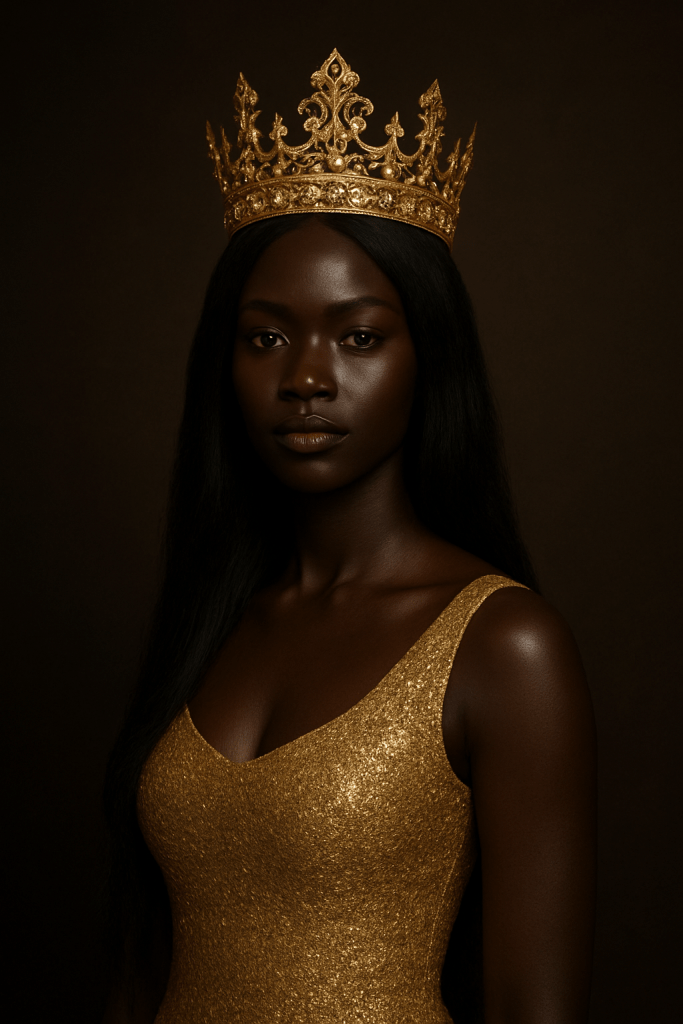
The Dark-Skinned Queen stands as a living monument to ancestral glory—her skin a sacred archive of history, divinity, and resilience. Yet the world has not always treated her as such. For centuries, she has been positioned at the bottom of a racialized beauty hierarchy, burdened by the shadows of colonialism, anti-Blackness, and internal color prejudice. But the truth remains unshaken: her beauty is ancient, sovereign, and cosmic. She is not emerging—she has always been, and the world is finally remembering what was never lost.

Historically, deep melanin was revered across civilizations. In ancient Kemet, Nubia, and Kush, dark-skinned queens were worshipped as embodiments of divinity, fertility, royalty, and cosmic order. Stone carvings and temple art bear witness—deep brown skin was not merely beautiful; it was sacred. Civilization began in melanin-rich lands, and thus, the Dark-Skinned Goddess represents origin and power, not deviation or rarity.

Colonialism sought to rewrite this truth, weaponizing beauty to fracture identity. European expansion brought a violent inversion of values, casting darker skin as undesirable, uncivilized, or inferior. These lies were institutionalized through enslavement, missionary propaganda, and global media. The goal was psychological domination: if the world could be convinced that the darkest skin was the least valuable, then the original people could be controlled. Beauty became a battlefield.

Through history, dark-skinned women bore double violence—racism and colorism. Their labor was exploited, their beauty ignored or mocked, and their femininity questioned. Those wounds still echo today when darker-skinned girls struggle with visibility, self-esteem, and belonging. Yet even in oppression, the Dark-Skinned Goddess remained unbroken. Her existence is resistance. Her radiance survived the lie.

In modern media, her representation remains limited, though rising. When women like Lupita Nyong’o, Viola Davis, Khoudia Diop, and Nia Long appear, they disrupt centuries of curated beauty narratives. Their presence is not simply aesthetic—it is political. Their faces tell new stories and correct historical distortions. Their visibility is cultural restoration, not a trend.

Socially, the Dark-Skinned Goddess is often underestimated before she is known. People assume toughness, attitude, or aggression before recognizing grace, intelligence, softness, or elegance. Stereotypes cling to her not because she lacks depth, but because the world fears her power. Mischaracterization is the weapon of the intimidated.

Romantically, she has faced long-standing biases shaped by colonial beauty scripts. Some men once sought lighter-skinned partners to access false proximity to privilege. Others fetishized her body while disregarding her heart. Yet her value never depended on preference—it exists independent of perception. She is not validated by desire; she is complete by design.

Spiritually, melanin symbolizes divine creation. Scripture reminds: “I am black, but comely” (Song of Solomon 1:5, KJV). This verse is not an apology—it is a declaration. Darkness in biblical text is associated with mystery, depth, and holiness. God formed humanity from rich, fertile earth, not pale, dry dust. Melanin is not an accident—it is intentional artistry.

Psychologically, reclamation requires healing. Dark-skinned women have internal battles shaped by external rejection. They learn to love themselves in societies slow to love them back. But healing blooms when she sees the truth of her reflection—not through distortion, but revelation. Confidence, when rooted in reality rather than validation, becomes unshakable.

Within the community, colorism has damaged sisterhood. Dark-skinned girls were often teased, underestimated, or overlooked. Some developed armor; others developed silence. Yet the new era demands empathy, not competition. When beauty becomes communal instead of comparative, we rise together. No shade of Blackness needs apology—only acknowledgement.

Culturally, she carries the memory of her ancestors in her skin. Each melanin cell is a testament to sun-kissed lands and royal lineage. She does not darken in inferiority—she glows in origin. Melanin is cosmic technology—absorbing light, storing warmth, preserving youth. It is biological excellence, not burden.

Economically, she often had to work twice as hard to be seen as equal to lighter peers. Her competence was tested more; her mistakes judged harsher. Yet she consistently excelled, not because she had privilege, but because she possessed perseverance. Strength became her inheritance, not her choice. And yet, she still seeks the right to softness.

Emotionally, she navigates constant contrast—admired aesthetically in one breath, overlooked socially in another. She is celebrated on runways but ignored in workplaces. Praised in songs yet harmed in systems. This paradox teaches her discernment, depth, and inner worth. She learns that true beauty transcends environment and expectation.

The world imitates her body yet denies her humanity. Full lips, curvaceous hips, rich skin, coily hair—once mocked, now monetized. Her features trend on those without her struggle. But imitation will never equal essence. She is the blueprint, not the beneficiary of borrowed beauty.

Yet a renaissance rises. She is reclaiming beauty narratives, rewriting cultural scripts, and building new worlds where she doesn’t have to prove anything. She stands not in reaction to bias, but in revelation of identity. Her presence demands reverence, not permission.

Her beauty is not merely visual—it is metaphysical. It radiates history, intellect, intuition, empathy, and fire. Beauty is not her burden—it is her birthright. Society once tried to dim her glow; now the world adjusts its eyes to her brilliance. She is not emerging—she is unveiling.

The Dark-Skinned Queen does not seek comparison. She is not the opposite of light—she is the embodiment of depth. She is the eternal night sky, ancient soil, divine mystery, royal lineage. Her beauty is not subtractive; it is sovereign.

For she is fearfully and wonderfully made (Psalm 139:14, KJV). Not despite her shade, but because of it. Melanin is crown. Darkness is splendor. She is not defined by struggle—she is defined by glory.

And now, she does not rise alone. She rises with every shade beside her. Her divinity does not eclipse others; it illuminates the truth: Black beauty is infinite. But among its many expressions, the Dark-Skinned Goddess remains the beginning, the memory, and the majesty.

May she walk not with apology, but authority. Not seeking validation, but embodying revelation. For she is not reclaiming beauty—she is beauty, rediscovered.


References

Hunter, M. (2007). The persistent problem of colorism: Skin tone, status, and inequality. Sociology Compass, 1(1), 237–254.

Russell, K., Wilson, M., & Hall, R. (2013). The color complex: The politics of skin color in a new millennium. Anchor Books.

Wade, P. (2020). Race, nature and culture: An anthropological perspective. Pluto Press.

Song of Solomon 1:5 (KJV); Psalm 139:14 (KJV).

The Psychology of Colorism: The Light vs Dark Skin.

This photograph is the property of its respective owner. No copyright infringement intended.

Colorism is the prejudice or preferential treatment based on skin tone, typically favoring lighter skin over darker skin within the same racial or ethnic group. Unlike racism, which discriminates across different races, colorism operates within a racial or ethnic community, creating hierarchies based on proximity to Eurocentric features. The term was first popularized by Alice Walker in 1983, though the phenomenon has existed for centuries.

Within the Black community, colorism has deep historical roots. It emerged during slavery, when lighter-skinned enslaved individuals—often the children of white slave owners—were given preferential treatment, such as working inside the house rather than laboring in the fields. These house slaves often had access to better food, clothing, and education, whereas field slaves endured harsher conditions (Hunter, 2007). The social stratification created lasting intergenerational psychological effects.

Psychologically, colorism affects self-esteem, identity, and social mobility. Studies show that darker-skinned Black individuals often experience lower self-worth, fewer professional opportunities, and heightened internalized racism compared to lighter-skinned peers (Hunter, 2007; Keith & Herring, 1991). The preference for lighter skin is associated with societal ideals of beauty and success that are tied to European features.

The influence of colorism extends beyond the Black community. In India, the caste system and historical colonization reinforced the belief that lighter skin denotes higher social status, leading to widespread use of skin-lightening products (Tajfel & Turner, 1979). Among Hispanic and Latinx populations, mestizo identity and European ancestry are often valorized over Indigenous or Afro-descendant heritage. Similarly, in East and Southeast Asia, lighter skin has been historically associated with wealth, nobility, and refinement, while darker skin has been linked to laboring in the sun.

Colorism also intersects with gender, disproportionately affecting women. In the Black community, lighter-skinned women have historically been deemed more attractive, more marriageable, and more socially desirable, both by men within and outside the community (Hunter, 2007). This preference can exacerbate divisions and reinforce patriarchal hierarchies, leaving darker-skinned women marginalized and undervalued.

The psychological effects are compounded by media and cultural representation. Hollywood and Western media often present lighter-skinned Black women in leading roles while marginalizing dark-skinned women to background or stereotypical roles. This reinforces internalized colorism, creating a cycle of self-devaluation and desire for features associated with whiteness (Russell-Cole et al., 2013).

Biblically, the issue of valuing outward appearance over inward worth is cautioned against. 1 Samuel 16:7 (KJV) states, “For the LORD seeth not as man seeth; for man looketh on the outward appearance, but the LORD looketh on the heart.” Colorism, in this light, reflects human fallibility in valuing skin tone over character, faith, and spiritual depth.

Historical slavery significantly entrenched colorism in the United States. House slaves—usually lighter-skinned—were sometimes granted privileges unavailable to darker-skinned field slaves, leading to internal hierarchies and divisions within the enslaved community. Lighter-skinned children born to slave owners often had ambiguous status, creating both resentment and survival strategies that persist across generations.

During slavery, lighter-skinned Black women were often sexualized by white men, a tragic legacy that has influenced modern perceptions of beauty and desirability. This history contributes to the psychological phenomenon where Black men may consciously or unconsciously favor lighter-skinned women, associating them with beauty, status, or social capital (Hunter, 2007; Keith & Herring, 1991).

Psychology explains this as a combination of social learning, internalized bias, and reinforcement. Preferences for lighter-skinned partners may reflect both historical conditioning and the influence of media and society. Social Identity Theory (Tajfel & Turner, 1979) suggests that individuals derive self-esteem by favoring traits aligned with dominant societal standards, even within their own ethnic group.

Colorism contributes to intragroup discrimination, where darker-skinned individuals face bias not just from society but from within their own communities. This can manifest in reduced dating prospects, employment bias, or social exclusion. Studies indicate that darker-skinned women are often less likely to marry lighter-skinned men, and darker-skinned men may experience similar disadvantages in partner selection (Russell-Cole et al., 2013).

Globally, colorism intersects with class, wealth, and cultural capital. In India, lighter-skinned individuals are more likely to receive better job offers and marriage prospects. Among Latinx and Asian communities, skin tone can influence perceptions of intelligence, civility, and social mobility. These dynamics show that colorism is a global phenomenon, shaped by historical, economic, and cultural forces.

Changing colorism requires both individual and collective action. Education about the historical roots of skin-based hierarchies is essential. Communities can promote media representation that celebrates all skin tones, and religious or cultural teachings can emphasize inner worth over outward appearance. 1 Samuel 16:7 (KJV) reminds communities to value heart and character above skin tone.

In the Black community, self-affirmation and visibility of darker-skinned leaders, celebrities, and role models can counteract internalized bias. Campaigns that celebrate melanin-rich skin, such as #UnfairAndLovely or #DarkIsBeautiful, provide psychological reinforcement of worth and beauty beyond lightness.

Within family structures, parents can raise children to value character, intelligence, and faith rather than skin tone. Proverbs 22:6 (KJV) states, “Train up a child in the way he should go: and when he is old, he will not depart from it.” By instilling these values early, communities can challenge intergenerational colorist beliefs.

Colorism also intersects with religion and spirituality. Black women who embrace their natural skin often find empowerment in biblical teachings that emphasize inner beauty and God-given identity. 1 Peter 3:3–4 (KJV) instructs, “Whose adorning let it not be that outward adorning of plaiting the hair… but the hidden man of the heart, in that which is not corruptible, even the ornament of a meek and quiet spirit, which is in the sight of God of great price.”

Psychologists emphasize that internalized colorism can be mitigated through cognitive restructuring, affirmations, and representation. Therapy, mentorship, and community engagement can help individuals recognize their inherent value, countering messages from media and historical oppression.

For Black men, confronting preferences that favor lighter-skinned women requires self-reflection and awareness of historical conditioning. Biblical teachings on equality and righteousness, coupled with psychological education, can foster appreciation for all women regardless of skin tone. Galatians 3:28 (KJV) reminds us, “There is neither Jew nor Greek, there is neither bond nor free, there is neither male nor female: for ye are all one in Christ Jesus.”

Ultimately, colorism is not simply a matter of preference; it is a systemic, historical, and psychological issue that affects self-esteem, relationships, and social cohesion. Addressing it requires education, representation, cultural affirmation, and spiritual guidance. Communities must recognize the divisive impact of skin-tone hierarchies and actively work to celebrate all shades of beauty and worth.

The Psychology of Colorism

Title: Colorism: Light vs Dark Skin – History, Psychology, and Social Impact

1. Historical Origins (Slavery & Colonization)

  • House Slaves (Lighter Skin): Privileged treatment, access to education, better food, and closer to slave owners.
  • Field Slaves (Darker Skin): Hard labor, harsher conditions, social marginalization.
  • Impact: Created an intra-racial hierarchy based on skin tone.

2. Psychological Effects

  • Internalized Colorism: Lower self-esteem for darker-skinned individuals.
  • Identity & Self-Worth: Lighter skin associated with beauty, success, and desirability.
  • Behavioral Consequences: Preference for lighter-skinned partners, social mobility advantages.

3. Cultural & Global Impact

  • Black Community: Preference for light-skinned women; media representation reinforces bias.
  • India: Fair skin linked to social status; widespread use of skin-lightening products.
  • Hispanic/Latinx Communities: European ancestry valorized over Indigenous/Afro-descendant heritage.
  • East/Southeast Asia: Lighter skin historically linked to nobility and social class.

4. Gender Dynamics

  • Women: Most affected; lighter-skinned women often deemed more attractive and marriageable.
  • Men: Preferences shaped by history, culture, and media influence; some favor lighter-skinned partners.

5. Biblical & Moral Perspective

  • 1 Samuel 16:7 (KJV): God values the heart, not outward appearance.
  • Galatians 3:28 (KJV): Equality in Christ; skin tone irrelevant in spiritual worth.

6. Solutions & Interventions

  • Education: Teach history and psychological impact of colorism.
  • Media Representation: Highlight darker-skinned individuals in positive roles.
  • Community Affirmation: Encourage pride in melanin-rich skin.
  • Spiritual Guidance: Emphasize biblical truths about inner worth and godly character.
  • Parental Guidance: Raise children to value character and faith over skin tone.

The legacy of slavery, colonialism, and Eurocentric beauty standards continues to shape colorist perceptions today. By acknowledging history, valuing inner character, and promoting inclusivity, communities can gradually dismantle the hierarchy of light versus dark skin. Psychology, cultural studies, and biblical principles converge in emphasizing that true value lies not in complexion but in character, faith, and actions.


References

  • Hunter, M. (2007). The Persistent Problem of Colorism: Skin Tone, Status, and Inequality. Sociology Compass, 1(1), 237–254.
  • Keith, V., & Herring, C. (1991). Skin Tone and Stratification in the Black Community. American Journal of Sociology, 97(3), 760–778.
  • Russell-Cole, K., Wilson, M., & Hall, R. (2013). The Color Complex: The Politics of Skin Color in a New Millennium. HarperCollins.
  • Tajfel, H., & Turner, J. (1979). An Integrative Theory of Intergroup Conflict. In W. Austin & S. Worchel (Eds.), The Social Psychology of Intergroup Relations. Brooks/Cole.
  • The Holy Bible, King James Version (KJV).