Category Archives: Blackness

Constructed Identities: The Politics, Genetics, and Legacy of Mixed Race.

The story of mixed race is not merely a matter of biology, but a deeply layered narrative shaped by power, conquest, identity, and survival. What we call “mixed race” today emerged from historical systems that sought to divide humanity into categories, assigning value and status based on appearance. These divisions were not natural; they were constructed.

The modern conception of race was developed during the rise of European colonialism. Scholars in anthropology widely agree that race has no fixed biological basis. Instead, it was created as a social hierarchy to justify slavery, land theft, and domination over non-European peoples.

In contrast, ethnicity refers to cultural identity—shared language, customs, ancestry, and traditions. While race is often imposed externally, ethnicity is more closely tied to how people understand themselves and their heritage. The confusion between these two concepts has contributed to centuries of misunderstanding about identity.

The transatlantic slave trade marked a turning point in how race was defined and enforced. During this period, millions of Africans were forcibly transported to the Americas, where rigid racial systems were established. Within this system, people of mixed ancestry were given special classifications that both elevated and restricted them.

Many mixed-race individuals were born from deeply unequal relationships, often involving coercion or outright violence. European enslavers frequently fathered children with enslaved African women, creating a population that did not fit neatly into the binary racial categories of the time. These individuals became central to the development of complex racial hierarchies.

One of the most common terms used during slavery was Mulatto, referring to someone with one African and one European parent. The term itself reflects the dehumanizing logic of the era, as it is derived from a word historically associated with animal breeding.

Other classifications attempted to quantify ancestry with disturbing precision. A Quadroon referred to someone with one Black grandparent, while an Octoroon described someone even further removed. These labels were not casual descriptors—they determined a person’s legal rights, social status, and opportunities.

In Spanish and Portuguese colonies, an elaborate system known as the Casta System categorized individuals based on detailed mixtures of African, Indigenous, and European ancestry. Paintings from this era visually depicted these categories, reinforcing the idea that identity could be measured and ranked.

Terms like Mestizo and Zambo further illustrate how colonial societies attempted to map human diversity into rigid frameworks. Each category carried different social implications, often tied to proximity to whiteness.

In the United States, racial classification took on a particularly rigid form through the development of the One-Drop Rule. This principle erased the complexity of mixed identities by categorizing anyone with African ancestry as Black, reinforcing white supremacy and limiting social mobility.

Within plantation life, mixed-race individuals were often assigned roles that reflected their perceived proximity to whiteness. Some worked as house servants, while others labored in the fields. This distinction contributed to the development of colorism—a system that privileges lighter skin within communities of color.

Colorism has had long-lasting psychological and social effects. Lighter-skinned individuals were sometimes granted limited privileges, such as access to education or less physically demanding labor, while darker-skinned individuals faced harsher conditions. These divisions created internal hierarchies that persist today.

From a scientific perspective, however, the idea of distinct races collapses under scrutiny. Advances in Genetics reveal that all humans share approximately 99.9% of their DNA. The differences that do exist are gradual and do not align with traditional racial categories.

Mixed-race individuals are simply expressions of genetic diversity, resulting from the blending of ancestral populations over time. This process, known as admixture, is a natural part of human history. Migration, trade, and interaction have always led to the mixing of populations.

There is no single genetic marker that defines race. Traits like skin color are influenced by a small number of genes and can vary widely even within the same family. This explains why mixed-race individuals can have a broad range of appearances.

Physically, mixed-race individuals may exhibit a combination of features associated with different ancestral groups. These can include variations in skin tone, hair texture, facial structure, and eye color. However, these traits are not predictable and do not follow simple patterns.

The perception of a “mixed-race look” is largely shaped by societal expectations rather than biological reality. People often project assumptions onto individuals based on their appearance, reinforcing stereotypes about what mixed race should look like.

The psychological experience of being mixed race has often been marked by tension and contradiction. Many individuals have historically been forced to navigate multiple identities, sometimes feeling that they do not fully belong to any one group.

This sense of in-betweenness has been described as both a burden and a unique perspective. While some experience alienation, others embrace their mixed heritage as a source of strength and cultural richness.

A powerful case study can be found in the history of Creole communities in Louisiana. These communities, often composed of individuals with African, European, and sometimes Indigenous ancestry, developed distinct cultural identities that blended language, religion, and tradition.

Creoles occupied a unique social position, sometimes enjoying more rights than enslaved Africans but still facing discrimination. Their existence challenged rigid racial categories and demonstrated the fluidity of identity.

Another important case study is the Melungeon population of Appalachia. These communities, with mixed African, European, and Indigenous roots, lived on the margins of society and were often subjected to suspicion and discrimination due to their ambiguous appearance.

In the Caribbean, particularly in places like Haiti and the Dominican Republic, mixed-race populations became central to national identity. However, color hierarchies persisted, often privileging lighter skin and European features.

The legacy of mixed race is also visible in modern celebrity culture. Public figures of mixed ancestry are often celebrated for their appearance while simultaneously being subjected to scrutiny about their identity and authenticity.

Historically, mixed-race individuals have also been used symbolically in media and literature, sometimes portrayed as tragic figures caught between worlds. These narratives reflect broader societal anxieties about race and belonging.

A Construct Born of Power, Not Biology

The concept of “mixed race” cannot be understood apart from the historical invention of race itself. Race is not a biological reality but a social construct, developed largely during European colonial expansion to justify hierarchy, slavery, and domination . In contrast, ethnicity refers to shared culture, language, ancestry, and heritage—not physical traits alone.

Thus, “mixed race” is less about genetics and more about how societies have historically categorized, controlled, and stratified human beings.


The Origins of Race and Ethnicity

  • Race: A classification system based primarily on physical traits (skin color, hair texture, facial features), developed during colonialism to rank human populations.
  • Ethnicity: A cultural identity tied to shared traditions, language, ancestry, and historical experience.

The modern racial system emerged between the 16th–18th centuries alongside the transatlantic slave trade. Europeans created rigid categories (White, Black, Indigenous) and then constructed intermediate labels to classify people of mixed ancestry.


Slavery and the Creation of Mixed-Race Classes

During slavery in the Americas, mixed-race individuals were often the result of coercive relationships between European enslavers and African women . These children occupied a complex and often contradictory social position:

  • Sometimes granted limited privileges (education, lighter labor)
  • Often still enslaved and denied full humanity
  • Used as a buffer class between enslaved Africans and White elites

House Slaves vs Field Slaves

  • House slaves: Often lighter-skinned or mixed ancestry; worked inside homes; perceived as “closer” to whiteness
  • Field slaves: Typically darker-skinned; subjected to harsher labor conditions

This division reinforced colorism, a system privileging lighter skin within Black communities—a legacy that persists today.


Historical Terms for Mixed Race (and Their Meanings)

Colonial societies created dozens of terms to classify people by fractions of ancestry. These were not neutral—they were tools of control.

African + European Ancestry

  • Mulatto: One Black parent, one White parent
  • Quadroon: 1/4 African ancestry
  • Octoroon: 1/8 African ancestry
  • Griffe: 3/4 African, 1/4 European

African + Indigenous

  • Zambo: African + Indigenous ancestry

European + Indigenous

  • Mestizo: European + Indigenous ancestry

Tri-Racial or Complex Mixtures

  • Pardo: Mixed African, European, and Indigenous ancestry
  • Marabou: Haitian term for mixed African, European, and Indigenous lineage

Colonial System

  • Casta System: A hierarchical classification system in Spanish colonies assigning social status based on racial mixture

These labels were tied to legal rights, social status, and even freedom.


The “One-Drop Rule” and Racial Policing

In the United States, racial identity became even more rigid under laws like the one-drop rule, where any African ancestry classified a person as Black. This erased the complexity of mixed identity and reinforced white supremacy.


Genetics of Mixed Race: What Science Actually Says

From a biological standpoint:

  • All humans share 99.9% of their DNA
  • Genetic variation exists gradually across populations (not in rigid racial boxes)
  • Mixed-race individuals simply reflect genetic admixture—the blending of ancestral populations over time

Key points:

  • There is no gene for race
  • Traits like skin color are influenced by a small number of genes
  • Mixed ancestry often increases genetic diversity, which can be beneficial for health

Physical Features of Mixed-Race Individuals

There is no single “mixed-race look,” but some commonly observed features (depending on ancestry) include:

  • Varying skin tones (light brown to deep brown)
  • Curly, wavy, or loosely coiled hair textures
  • Facial feature blending (nose shape, lip fullness, eye shape)
  • Lighter eye colors (in some African-European mixes)

However, phenotype (appearance) is unpredictable due to genetic recombination.


The Psychological and Social “Tragedy”

The “tragedy” of mixed race is not biological—it is social and historical:

1. Identity Fragmentation

Mixed individuals have often been forced to “choose” one identity over another.

2. Rejection from Both Sides

Historically:

  • Not fully accepted by White society
  • Sometimes viewed with suspicion in Black communities

3. Colorism and Privilege

Mixed individuals have sometimes been:

  • Privileged due to proximity to whiteness
  • Simultaneously marginalized and fetishized

4. Historical Trauma

Many mixed-race lineages originate from violence, coercion, and exploitation during slavery.


Modern Language: Moving Away from Colonial Labels

Today, terms like:

  • Biracial
  • Multiracial
  • Mixed

are preferred over colonial classifications like “mulatto,” which is widely considered outdated or offensive in the United States.


Beyond Labels

Mixed race is not a biological anomaly—it is a human reality shaped by migration, empire, and survival. The tragedy lies not in the mixture, but in the systems that:

  • Created hierarchies of human value
  • Weaponized identity
  • Divided people by appearance

In truth, mixed-race people expose a deeper reality: the artificial nature of racial boundaries themselves.

The so-called “tragedy” of mixed race is not inherent to the individuals themselves but arises from the systems that have sought to define and limit them. It is a tragedy rooted in exclusion, not in identity.

In contemporary society, language around mixed race has evolved. Terms like “biracial” and “multiracial” are now commonly used, reflecting a shift toward more inclusive and self-defined identities.

Despite this progress, challenges remain. Mixed-race individuals still navigate complex social dynamics, including questions of authenticity, representation, and belonging.

At the same time, the growing visibility of multiracial identities is reshaping how society understands race. Increasingly, people are recognizing that racial categories are fluid, overlapping, and deeply interconnected.

Ultimately, the history of mixed race reveals a fundamental truth: the boundaries we draw between people are neither natural nor fixed. They are the product of human decisions, shaped by history and power.

In this sense, mixed-race individuals do not complicate the idea of race—they expose its limitations. Their existence challenges us to rethink how we define identity and to move beyond the divisions of the past.

The future of racial identity may lie not in rigid categories but in a more nuanced understanding of human diversity—one that acknowledges both our shared humanity and the richness of our differences.


References

Encyclopaedia Britannica. (2026). Mulatto.
Encyclopaedia Britannica. (2026). Race (human classification).
Pew Research Center. (2015). Multiracial in America: Proud, diverse, and growing in numbers.
Omi, M., & Winant, H. (2015). Racial Formation in the United States. Routledge.
Smedley, A., & Smedley, B. D. (2005). Race as biology is fiction, racism as a social problem is real. American Psychologist, 60(1), 16–26.
Marks, J. (2010). Ten Facts about Human Variation. In Biological Anthropology.
Nash, G. B. (1992). Forbidden Love: The Secret History of Mixed-Race America.
Davis, F. J. (2001). Who Is Black? One Nation’s Definition. Penn State Press.
Hollinger, D. A. (2003). Amalgamation and hypodescent. Journal of American History, 89(4), 1363–1390.


The Beautiful Burden of Being Black

The beautiful burden of being Black is a paradox the world rarely understands. It is to carry a history lined with wounds and still walk with a grace that defies logic. It is to bear the weight of collective memory while radiating a joy that refuses to die. This burden is heavy, yet it glows—because Blackness, with all its complexity, is both a cross and a crown.

The burden is beautiful because it begins in brilliance. Before oppression, before colonization, before forced migration, there were nations of power: Kush, Axum, Kemet, Mali, Songhai, and countless others. These civilizations remind the descendants of Africa that their story started with royalty, scholarship, architecture, and spiritual depth. The weight of this legacy is not a hindrance; it is a gift.

Yet the burden became heavier as the transatlantic slave trade ripped families apart and scattered a people across continents. The trauma was immeasurable, the loss irreparable. Still, the burden did not break them. Even within the darkness of the Middle Passage, survival itself became a form of defiance. The beauty lies in the unimaginable strength it took for a people to endure what should have destroyed them.

The burden of being Black in America means carrying the memory of ancestors who labored without recognition, whose brilliance was masked by oppression, and whose identities were reduced to numbers on auction blocks. Yet the descendants of these same people walk with dignity, build communities, shape culture, and preserve faith. This resilience is sacred.

There is beauty in the burden because it forged a spiritual fortitude that becomes evident in every generation. Enslaved Africans found in the Bible a God who saw them, heard them, and walked with them through affliction. They clung to stories of Moses, David, Job, and Christ, discovering divine solidarity in suffering. Their theology, born in the shadows, would one day spark movements of liberation.

The burden is felt in every stereotype overcome, every barrier broken, every expectation exceeded. The world often expects Black people to shrink, yet they expand. They excel. They innovate. This persistent rising—whether in education, art, music, ministry, or activism—is a testimony that hardship cannot extinguish destiny. The beauty emerges in the excellence developed under pressure.

The burden also comes wrapped in the responsibility of representation. To be Black is often to be seen not as an individual but as a symbol—expected to stand strong, be flawless, succeed despite obstacles, and carry the weight of entire communities. This expectation is heavy. Yet the beauty is that Black people continue to rise to the moment, redefining greatness on their own terms.

The burden carries an inherited sorrow, a quiet ache passed down through generations. It lives in stories told around dinner tables, in photographs of relatives who lived through segregation, in the coded warnings parents give their children about how to move safely in the world. Yet even this sorrow is paired with joy—the laughter that fills family gatherings, the resilience that turns pain into poetry, and the hope that refuses to fade.

The beautiful burden is evident in art. From the spirituals of the enslaved to the blues of the Delta, from the jazz of Harlem to the soul of Motown, from hip-hop’s global influence to today’s cinematic masterpieces—Black creativity has always transformed pain into beauty. Art becomes a refuge, a witness, a rebellion, a healing balm.

The burden is felt in the fight for justice, where Black people have long stood at the front lines of movements for equality—not only for themselves but for the world. The Civil Rights Movement, the anti-lynching campaigns, the push for voting rights, and modern racial justice activism all reveal a people deeply committed to righteousness and human dignity. This burden is heavy, yet profoundly beautiful.

There is a burden in knowing that one’s history has been distorted or erased, that one’s ancestors are often misrepresented in textbooks or omitted altogether. Yet the beauty lies in the reclaiming. Black scholars, writers, theologians, and community leaders are restoring the narrative, gathering the fragments of history, and piecing together the truth with authority and pride.

The beautiful burden is carried in the body—melanin rich, historically politicized, culturally celebrated, spiritually significant. Blackness is admired, imitated, criticized, and commodified, often at the same time. The burden is navigating a world that covets Black culture but not Black people. Yet the beauty is in wearing one’s identity with pride in the face of contradiction.

The burden shows up in the constant need to explain, educate, and advocate, even when exhausted. Yet the beauty manifests in the strength of community: generations pouring into each other, sharing wisdom, building networks, and creating safe spaces where identity is affirmed and celebrated.

There is a burden in the existential fear passed down since slavery—the awareness that safety is never guaranteed. Yet the beauty is in the collective determination to protect, nurture, and advocate for life. Black families, churches, and communities become sanctuaries of healing, strength, and love.

The beautiful burden also includes the call to dream. To dream in a world that once outlawed Black literacy, Black autonomy, and Black mobility is revolutionary. Every Black achievement becomes both a personal triumph and a generational victory. Dreams carry the weight of ancestors but also the wings of possibility.

Ultimately, the beautiful burden of being Black is a paradox of power and pain. It is a story soaked in suffering yet overflowing with strength. It is an inheritance shaped by injustice yet crowned with glory. It is a testimony of a people who refused to be broken, whose voices echo across centuries, whose presence transforms nations, and whose identity shines with divine purpose.

The burden is beautiful because it proves that Blackness is not merely a category—it is a calling. A calling to endure. To rise. To create. To liberate. To love fiercely. To shine unapologetically. And to walk in the legacy of ancestors whose sacrifices laid the foundation for every step forward.

The beautiful burden of being Black is, ultimately, a sacred responsibility: to remember, to honor, to rise, and to continue telling a story too powerful for the world to ignore.

References:
Genesis 15:13–14 (KJV); Psalm 68:31; Isaiah 61:1–4; Deuteronomy 32:10–12; Franklin, J. H. From Slavery to Freedom; Diop, C. A. The African Origin of Civilization; Anderson, C. White Rage; Raboteau, A. Slave Religion; Hooks, B. Ain’t I a Woman?; Gates, H. L. The African Americans: Many Rivers to Cross.

Dilemma: Blackness

Photo by Wavy_ revolution on Pexels.com

The concept of Blackness embodies both divine purpose and societal marginalization. This paper explores the paradoxical experience of Black people: exalted by God yet diminished by the world. Drawing from Scripture, African historical scholarship, and sociocultural studies, the paper examines how Black identity has been misrepresented, appropriated, and simultaneously celebrated. The discussion addresses historical, psychological, and spiritual dimensions of Blackness, highlighting resilience, chosenness, and divine destiny.


Blackness represents more than a physical characteristic; it is a spiritual, cultural, and historical identity that has shaped civilizations, contributed to global progress, and faced systemic oppression. Historically, African civilizations such as Kemet, Mali, and Ethiopia exemplified innovation, scholarship, and governance, demonstrating Black excellence prior to European colonial interventions (Diop, 1974). Yet, contemporary social structures often fail to acknowledge this legacy, producing tension between inherent value and societal perception. This tension can be conceptualized as the “dilemma of Blackness”: exalted by God, yet diminished by human systems.


Divine Identity and Chosenness

Scripture affirms the divine purpose inherent in Black identity. “Ye are a chosen generation, a royal priesthood” (1 Peter 2:9, KJV). The Bible situates African peoples as integral to God’s plan, as evidenced in references to Cush, Ethiopia, and Egypt (Psalm 68:31, KJV; Acts 8:27, KJV). This divine chosenness establishes a spiritual framework for resilience, dignity, and legacy.


Historical Context of Oppression

Despite divine design, Black people have endured centuries of systemic oppression. Enslavement, colonialism, and institutionalized racism sought to erase cultural memory, distort identity, and suppress potential (Muhammad, 2010; Du Bois, 1903). Enslaved Africans were denied literacy, property, and familial autonomy, yet preserved spiritual practices and communal solidarity, demonstrating both resistance and divine fidelity (Fanon, 1967).


Cultural Appropriation and Misrepresentation

A critical facet of the dilemma is the simultaneous appropriation and marginalization of Black culture. Music, fashion, language, and spirituality have been widely adopted by global societies while the creators remain undervalued (Asante, 1988; hooks, 1995). This contradiction reinforces the paradoxical experience of Black identity: celebrated superficially but denied authentic acknowledgment.


Psychological Dimensions

The internalization of societal bias has produced psychological tension, as theorized by Du Bois (1903) in the concept of double consciousness. Black individuals navigate dual realities: embracing inherent worth while confronting misperceptions and prejudice. Psychological resilience emerges through community, faith, and cultural continuity, facilitating coping mechanisms in the face of persistent marginalization.


The Role of Faith

Faith has historically anchored Black identity. Spirituality and religion provided a lens for understanding suffering and endurance. The enslaved relied on faith-based songs, prayers, and scripture to sustain hope (“Let my people go”, Exodus 5:1, KJV). Contemporary Black communities continue to rely on biblical principles to navigate systemic inequities, affirming God as the ultimate arbiter of worth (Isaiah 54:17, KJV).


Resistance and Resilience

Blackness embodies resilience. Resistance has manifested through education, civil rights activism, entrepreneurship, and cultural preservation (Bell, 1992; Woodson, 1933). This resilience aligns with prophetic scripture: “No weapon that is formed against thee shall prosper” (Isaiah 54:17, KJV). Through trials, Black communities have transformed oppression into cultural, intellectual, and spiritual advancement.


Identity and Modern Society

In contemporary contexts, Black identity is often commodified. Social media, entertainment, and consumer culture showcase Black excellence aesthetically while minimizing structural support or historical context (Karenga, 2002). This commodification reflects a persistent societal discomfort with authentic Black power, echoing historical patterns of marginalization.


The Dilemma of Recognition

The tension between visibility and invisibility characterizes the dilemma. Black contributions are integral to global progress, yet Black people remain underrepresented in leadership, academia, and economic control (Muhammad, 2010; Asante, 1988). Recognition is partial, conditional, and often superficial, reinforcing the ongoing paradox.


The Spiritual Imperative

Spirituality provides a counter-narrative to worldly diminishment. By centering God as the source of identity, Black people navigate societal misunderstanding with divine perspective. “The steps of a good man are ordered by the Lord” (Psalm 37:23, KJV). Blackness is reframed not as a social liability but as a divine blessing and instrument of purpose.


Conclusion

Blackness represents both a historical challenge and a divine calling. The dilemma lies not in identity but in the world’s inability to reconcile with it. Black people embody resilience, creativity, and divinely ordained worth. The reconciliation of societal misperception with spiritual truth is ongoing. As the world struggles to comprehend Black excellence, faith and historical awareness provide the foundation for self-definition, legacy, and empowerment.


References

Asante, M. K. (1988). Afrocentricity: The theory of social change. African American Images.

Bell, D. (1992). Faces at the bottom of the well: The permanence of racism. Basic Books.

Diop, C. A. (1974). The African origin of civilization: Myth or reality. Lawrence Hill Books.

Du Bois, W. E. B. (1903). The souls of Black folk. A. C. McClurg & Co.

Fanon, F. (1967). Black skin, white masks. Grove Press.

hooks, b. (1995). Killing rage: Ending racism. Henry Holt and Co.

Karenga, M. (2002). Introduction to Black studies (3rd ed.). University of Sankore Press.

Muhammad, K. G. (2010). The condemnation of Blackness: Race, crime, and the making of modern urban America. Harvard University Press.

Woodson, C. G. (1933). The mis-education of the Negro. Associated Publishers.

Holy Bible, King James Version (KJV).

The Global Allure: What Makes Black Women Beautiful? #blackbeauty

Beauty is often described as both universal and culturally specific, yet when it comes to Black women, their beauty holds a transcendent quality that blends strength, heritage, and physical distinctiveness. Across history and continents, the attributes of Black women’s appearance have not only been celebrated within their own communities but also mimicked and admired around the world. From their radiant skin tones to their sculpted bone structures and captivating eyes, Black women embody an aesthetic that challenges and redefines global standards of beauty.

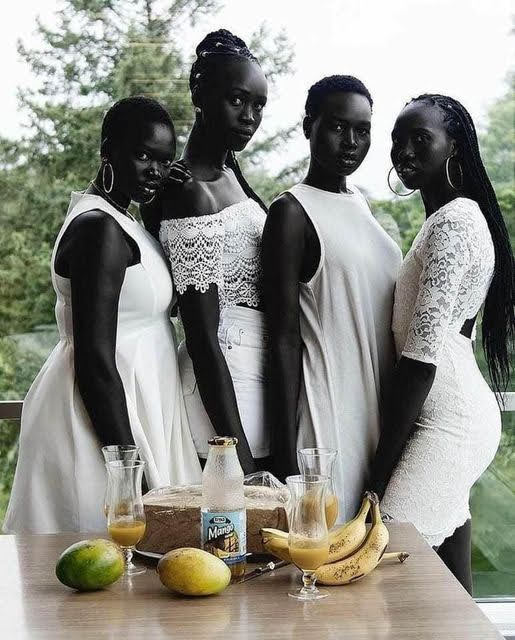
One of the most celebrated attributes of Black women is their skin tone. Ranging from deep ebony to warm café au lait, their melanin-rich complexions are often associated with vitality, health, and timeless youthfulness (Russell, Wilson, & Hall, 2013). In fact, many cosmetic brands now attempt to market products that replicate the “glow” of melanin. Another defining feature is the diversity of facial structures—high cheekbones, expressive almond-shaped eyes, and full lips—which create a sense of balance and harmony that aligns with principles of facial symmetry often linked to attractiveness (Little et al., 2011).

Globally, women of other races have long sought to mimic elements of Black women’s physicality. In the West, the pursuit of full lips has become one of the most obvious examples, with lip fillers and cosmetic procedures inspired by the natural beauty of Black women. Additionally, curvaceous body types—once marginalized—are now celebrated, with emphasis on rounded hips, narrow waists, and toned figures, reflecting the global fascination with Black women’s natural silhouettes (Patton, 2006). Hairstyles, too, have been widely imitated, with braids, twists, and natural textures moving from cultural tradition to global fashion trends.

Around the world, the admiration often focuses on both face and body, though in different contexts. Western beauty markets tend to idolize Black women’s curves, while fashion and modeling industries highlight their striking facial features and versatility in style. This dual admiration underscores the holistic nature of Black beauty—embodying both power and delicacy, sensuality and elegance.

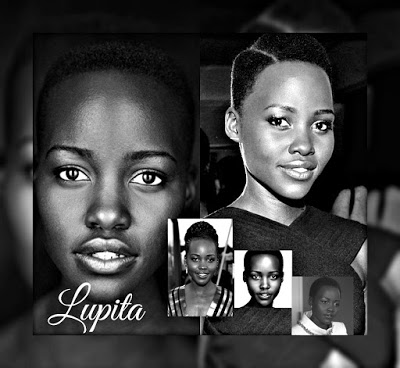
Hollywood has offered a stage where the beauty of Black women has shone in diverse ways. Consider Lupita Nyong’o, whose deep, luminous skin and regal bone structure epitomize classic African beauty; her features challenge Eurocentric ideals while affirming natural radiance. Kenya Moore, celebrated for her pageant-winning beauty, combines high cheekbones with a radiant smile that exudes confidence and allure. Halle Berry, often hailed as one of the most beautiful women in the world, blends striking hazel eyes, a delicate nose, and flawless symmetry, making her a symbol of crossover appeal.

Nia Long embodies girl-next-door charm with soulful eyes and a glowing complexion, while Gabrielle Union is admired for her timeless smile and smooth, youthful skin that seems untouched by time. Vanessa L. Williams, the first Black Miss America, captivated audiences with her green-blue eyes and luminous skin, offering a rare blend of features that challenged stereotypical norms of beauty. Salli Richardson dazzles with her elegant bone structure and silky complexion, while Stacey Dash became a 90s icon with her doll-like features and expressive eyes.

Completing this constellation of Hollywood beauty are Sanaa Lathan, with her soft yet commanding features and effortlessly natural look, and Sandra Justice, a model and actress whose statuesque frame and bold facial features reflect both strength and sophistication. Together, these women demonstrate the range of Black beauty, from delicate to striking, natural to glamorous, affirming that there is no single definition—only a celebration of diversity.

Ultimately, the beauty of Black women lies not only in their physical appearance but in the way their features embody history, resilience, and cultural pride. Their influence is seen in the global beauty industry, fashion runways, and popular culture, where elements of Black aesthetics are both imitated and celebrated. As the world continues to expand its definitions of beauty, Black women remain at the forefront—timeless, trendsetting, and undeniably powerful.


References

Little, A. C., Jones, B. C., & DeBruine, L. M. (2011). Facial attractiveness: Evolutionary based research. Philosophical Transactions of the Royal Society B: Biological Sciences, 366(1571), 1638–1659.

Patton, T. O. (2006). Hey girl, am I more than my hair?: African American women and their struggles with beauty, body image, and hair. NWSA Journal, 18(2), 24–51.

Russell, K., Wilson, M., & Hall, R. (2013). The Color Complex: The Politics of Skin Color in a New Millennium. Anchor.

Melanin: The Golden Fleece

This photograph is the property of its respective owner. No copyright infringement intended.

Melanin has long been viewed through a social, aesthetic, and at times oppressive lens, yet beneath surface narratives lies profound biological, historical, and spiritual significance. Melanin is not merely pigment—it is a biochemical treasure, a molecular shield, and a marker of resilience. To speak of melanin is to enter a conversation about identity, memory, divinity, and survival.

Biologically, melanin is a natural polymer responsible for skin, hair, and eye color. It exists in eumelanin, pheomelanin, and neuromelanin forms, each with precise biological functions (Simon et al., 2009). Eumelanin produces rich brown and black hues, functioning as the body’s natural armor against ultraviolet radiation. Those richly endowed with melanin possess enhanced protection from sun damage and oxidative stress.

The molecular properties of melanin have led many scholars and thinkers to call it a biochemical jewel. It absorbs and transforms light, protects DNA, neutralizes free radicals, and supports cellular stability (Hill, 1992). It is a biological blessing—an evolutionary adaptation honed to thrive under intense sunlight. In this way, melanin becomes symbolic of ancestral endurance in equatorial regions, where ancient civilizations flourished.

Neuromelanin—found in the brain—invites deeper conversation. It is concentrated in regions associated with movement, memory, and emotional regulation (Zecca et al., 2008). The presence of melanin in neural structures has fueled scientific curiosity and cultural pride. Though still under study, neuromelanin may play a role in neurological health, stress resilience, and cognitive processes.

The historical framing of melanin diverges sharply from its biological brilliance. Colonial narratives weaponized skin tone, divorcing melanin from its scientific majesty. People with higher melanin content were cast into artificial hierarchies designed to devalue their humanity and legacy. Yet the very trait used to marginalize Black people is one of nature’s greatest evolutionary triumphs.

Melanin’s perceived mystical value predates colonial discourse. Ancient African civilizations viewed dark skin as a sign of divine power, lineage, and sacred connection to the sun. In Kemet (Egypt), the term Khem symbolized Blackness, fertility, and sacred life (Diop, 1974). To be melanated was to be spiritually potent and cosmically aligned.

Thus arises the metaphor of melanin as “the Golden Fleece.” In Greek mythology, the Golden Fleece symbolized royalty, cosmic blessing, and divine right. To liken melanin to the Golden Fleece is to reclaim the narrative—it is a crown, not a curse. This metaphor challenges societies to re-evaluate the value systems that commodified white aesthetics and vilified Black embodiment.

Spiritually, melanin carries a symbolic weight in Black consciousness movements. The Bible proclaims, “I am black, but comely” (Song of Solomon 1:5, KJV), affirming beauty and dignity in dark skin. Scripture often references dark skin in contexts of royalty, ancestral lineage, and divine intimacy. Spiritual identity and physical identity intertwine.

Social narratives around melanin continue to evolve. The reclamation of Black beauty, culture, and identity represents a collective unshackling from Eurocentric paradigms. Melanin becomes not simply a biological trait, but a cultural banner—a reminder of ancestral legacy and global influence. It is an emblem of survival in systems designed to erase it.

Psychologically, embracing melanin strengthens self-concept and mental resilience. When individuals internalize pride in their natural features—skin, hair, facial structure—they reclaim agency from colorist and racist conditioning (Banks, 2010). The mind becomes liberated when the body is no longer viewed as inferior.

Colorism remains a lingering shadow over melanin discourse. Preference for lighter skin persists globally, rooted in colonial history and social stratification. Yet the global shift toward celebrating dark skin disrupts this narrative, signaling a cultural renaissance. The body becomes a site of revolution and rebirth.

Social media contributes to this awakening. While it has perpetuated beauty hierarchies, it has also become a platform for melanated celebration. Campaigns honoring dark skin tones challenge historical erasure and elevate diverse aesthetics. Visibility becomes liberation.

Scientifically, melanin may hold future technological and medical promise. Research explores melanin’s potential in radiation shielding, bioelectronics, and regenerative medicine (Kim et al., 2019). The same pigment marginalized socially may become a key to future innovation. Such irony underscores the disconnect between perception and reality.

Economically, “melanin markets” emerge in beauty and media spaces. The world profits from Black style, culture, and features even as Black bodies fight for recognition and safety. To claim melanin’s value is to demand equity, representation, and ownership in industries enriched by Black aesthetics.

The spiritual dimension remains profound. Melanin symbolizes creation, depth, and cosmic mystery. It evokes earth, night, and universe—the fertile darkness from which life emerges. In Genesis, creation begins in darkness before light. Darkness is not absence; it is origin.

To honor melanin is not to elevate one group above another, but to correct historical lies. It is a restoration of dignity and truth. Melanin becomes metaphor, biology, legacy, and prophecy—a reminder that identity is both physical and sacred.

The Golden Fleece metaphor anchors melanin as treasure, not because others lack value, but because Blackness has been historically undervalued. To value melanin is to heal collective wounds and uplift future generations. The world flourishes when every hue is honored.

Ultimately, melanin embodies resilience and radiance. It reflects sunlight, history, struggle, and triumph. Those who carry it inherit a story of survival and sacredness. Melanin is memory written into flesh.

To know melanin is to honor the past and walk boldly into the future. It is a science, a symbol, and a song. It is the Golden Fleece—rare, royal, radiant.


References

Banks, K. H. (2010). African American college students’ experiences with racial discrimination and the role of racism socialization. Journal of Applied Social Psychology, 40(6).
Diop, C. A. (1974). The African origin of civilization: Myth or reality. Lawrence Hill Books.
Hill, H. Z. (1992). The function of melanin or six blind people examine an elephant. BioEssays, 14(1).
Kim, Y. J., et al. (2019). Melanin’s applications in bioelectronics and medicine. Biomaterials, 214.
Simon, J. D., Peles, D., & Wakamatsu, K. (2009). Current challenges in understanding melanogenesis. Pigment Cell & Melanoma Research, 22(5).
Zecca, L., et al. (2008). The role of neuromelanin in neurological disorders. Journal of Neural Transmission, 115(11).

The Legacy of Black Excellence: From Ancestry to Modern Influence

Black excellence is not a new phenomenon; it is rooted in ancestral achievement, resilience, and intellect. From ancient African kingdoms to contemporary leaders, Black people have consistently demonstrated creativity, leadership, and innovation.

Ancient African civilizations, such as Egypt, Mali, and Songhai, illustrate early examples of Black excellence. Scholars, architects, and leaders established governance, education, and culture that influenced the world for centuries.

Mansa Musa of Mali exemplifies wealth, diplomacy, and vision. His pilgrimage to Mecca in the 14th century demonstrated both economic and spiritual influence, leaving a legacy of leadership and philanthropy that inspires to this day.

Black excellence also manifests in scholarship. Thinkers like W.E.B. Du Bois and Carter G. Woodson challenged oppressive narratives, documented history, and created intellectual foundations for future generations.

In the arts, Black people have transformed music, literature, and visual culture. The Harlem Renaissance marked a period where artists like Langston Hughes and Zora Neale Hurston defined cultural expression and intellectual pride.

Science and innovation reveal Black excellence in problem-solving and creativity. Katherine Johnson’s calculations were critical to NASA missions, while George Washington Carver revolutionized agriculture through research and innovation.

Athletics has provided another platform for Black excellence. Athletes like Jackie Robinson, Serena Williams, and Usain Bolt have combined talent with resilience, breaking barriers while inspiring global audiences.

In politics, figures such as Nelson Mandela and Barack Obama have reshaped leadership paradigms. Mandela’s struggle against apartheid demonstrated moral and strategic excellence, while Obama’s presidency represented historic achievement on a global scale.

Black excellence is spiritual as well as practical. Leaders like Martin Luther King Jr. and Fannie Lou Hamer combined faith with activism, demonstrating that moral courage and spiritual conviction are integral to leadership.

In entertainment, actors, musicians, and filmmakers have redefined representation. Figures like Sidney Poitier, Lupita Nyong’o, and Kendrick Lamar have showcased Black creativity, storytelling, and cultural depth.

Education remains a key area of influence. Historically Black Colleges and Universities (HBCUs) have nurtured excellence for generations, producing scholars, leaders, and professionals who continue to shape society.

Entrepreneurship highlights resilience and ingenuity. Black-owned businesses, past and present—from the Greenwood District of Tulsa to modern ventures—demonstrate wealth creation, innovation, and community empowerment.

Fashion and beauty illustrate cultural influence. Black designers and models have challenged Eurocentric standards, celebrating diversity, creativity, and aesthetic innovation while inspiring global trends.

Literature continues to shape thought and culture. Contemporary writers like Chimamanda Ngozi Adichie, Ta-Nehisi Coates, and Colson Whitehead explore identity, history, and social critique, continuing a legacy of intellectual excellence.

Black excellence is global. From African leaders to diasporic creatives, Black influence spans continents, demonstrating a shared heritage of achievement and innovation that transcends borders.

Technology and STEM fields are modern arenas of Black excellence. Innovators in AI, medicine, and engineering challenge stereotypes and contribute meaningfully to global progress while inspiring the next generation.

Black excellence is also communal. Mentorship, advocacy, and activism show that achievement is not just personal but collective. Leaders invest in the growth and empowerment of others, ensuring that excellence multiplies across generations.

The spiritual dimension of excellence emphasizes integrity, vision, and resilience. True Black excellence harmonizes personal talent with service, using gifts for community upliftment and societal transformation.

Black excellence endures despite adversity. Generations of oppression, discrimination, and marginalization have not diminished Black brilliance; they have refined it, producing leaders, creatives, and thinkers of exceptional character.

Ultimately, the legacy of Black excellence is both inspiration and responsibility. It reminds communities and the world that Black people have always contributed to civilization, culture, and human progress, and they continue to shape the future through intellect, creativity, and resilience.


References

Diop, C. A. (1989). The African origin of civilization: Myth or reality. Lawrence Hill Books.

Gates, H. L. (2011). In search of our roots: How 19 extraordinary African Americans reclaimed their past. Crown.

Hine, D. C., McCluskey, A. T., & McDaniel, A. (2012). The African American odyssey. Pearson.

Woodson, C. G. (2021). The mis-education of the Negro. Dover.

West, C. (2017). Race matters. Beacon Press.

Tutu, D., & Tutu, M. (2014). The book of forgiving: The fourfold path for healing ourselves and our world. HarperOne.

The Phenomenon of Blackness

Blackness is not merely a skin color; it is a lived experience, a cultural identity, a historical journey, and a spiritual inheritance. It carries the weight of ancestry, the rhythm of heritage, and the resilience of a people who have endured centuries of oppression and still flourish.

The phenomenon of Blackness is both visible and invisible. It is seen in skin, hair, and features, but its essence is found in culture, knowledge, spirituality, and shared memory. Blackness embodies history and identity simultaneously.

Historically, Blackness has been racialized and criminalized, shaped by the transatlantic slave trade, colonialism, and systemic oppression. Yet, despite these forces, Black people have maintained a sense of collective self and cultural continuity.

Blackness is an expression of resistance. From revolts on slave ships to the civil rights movement, it has embodied the refusal to be erased. Its power lies in the persistent assertion of dignity, intellect, and humanity in the face of dehumanization.

Spiritually, Blackness has been a vehicle of survival. Enslaved Africans and their descendants transformed suffering into faith. Spirituals, hymns, and religious gatherings sustained the soul, creating a framework of hope that transcended the physical hardships of bondage.

The phenomenon of Blackness is artistic. Music, dance, literature, and visual arts have always been vessels for expression, protest, and storytelling. Jazz, blues, hip-hop, and African diasporic art forms are not merely entertainment—they are cultural testimony.

Blackness also carries a linguistic richness. From African languages adapted in the diaspora to African American Vernacular English, speech has been a tool of identity, solidarity, and resistance. Language preserves memory, encodes history, and signals belonging.

Culturally, Blackness fosters community. Families, neighborhoods, and churches have historically been sanctuaries of support and education. The collective ethos emphasizes survival, teaching, mentorship, and protection, which has enabled Black communities to flourish despite systemic obstacles.

Blackness intersects with science and genetics. Studies of Y-DNA haplogroups, such as E1B1A, trace the lineage and migrations of African peoples, revealing resilience in continuity and adaptation across continents and centuries. Biological identity reinforces cultural and historical identity.

The phenomenon of Blackness is political. Black communities have historically mobilized to secure rights, challenge oppression, and redefine narratives. Leaders like Marcus Garvey, Malcolm X, and Fannie Lou Hamer exemplify the political consciousness inherent in Black identity.

Blackness is also intellectual. Black scholars, scientists, and thinkers have made profound contributions to global knowledge. Despite educational barriers, Black intellectualism has persisted, forming a continuous legacy of inquiry, creativity, and excellence.

Colorism, within and outside of the Black community, has complicated the perception of Blackness. Shades of skin carry social meanings shaped by colonial hierarchies, but true Black identity transcends pigment, existing as an internalized consciousness of heritage and self-worth.

Blackness manifests in spirituality beyond organized religion. African spiritual traditions, rituals, and cosmologies survived the Middle Passage and influenced diasporic religious practices. These systems provided moral, ethical, and cosmological frameworks that sustained communities.

Blackness is global. From the Americas to Europe, the Caribbean, and Africa, the Black experience is interconnected. The diaspora carries shared histories of struggle, resistance, and triumph that transcend national borders.

The phenomenon of Blackness is generational. Ancestral memory, oral traditions, and historical knowledge link generations. African Americans and Africans alike draw strength from the wisdom and resilience of forebears, creating a bridge between past and future.

Blackness is also aesthetic. Beauty standards, fashion, hairstyles, and adornment reflect cultural pride and identity. These expressions communicate dignity, creativity, and self-affirmation, challenging Eurocentric ideals.

Economically, Blackness has navigated systemic barriers to achieve entrepreneurship, wealth creation, and innovation. From Black Wall Street to contemporary Black-owned businesses, economic resilience is central to the ongoing expression of Black identity.

Blackness is emotional and psychological. The legacy of trauma intersects with pride, hope, and joy. This duality—pain tempered by celebration—reflects a complex consciousness that is both historical and present, personal and collective.

The phenomenon of Blackness continues to evolve. Migration, globalization, and digital media have expanded the expression of culture, creating new avenues for cultural exchange, identity formation, and social influence. Blackness remains dynamic, resilient, and adaptive.

Ultimately, Blackness is a testament to endurance, creativity, and divine purpose. It embodies a spiritual, cultural, and historical continuum that cannot be erased. To study Blackness is to witness resilience, intelligence, artistry, and faith manifested over centuries.


References

Diop, C. A. (1989). The African origin of civilization: Myth or reality. Lawrence Hill Books.

Gates, H. L. (2011). In search of our roots: How 19 extraordinary African Americans reclaimed their past. Crown.

Graves, J. L. (2017). The emperor’s new clothes: Biological theories of race at the millennium. Rutgers University Press.

Hine, D. C., McCluskey, A. T., & McDaniel, A. (2012). The African American odyssey. Pearson.

Woodson, C. G. (2021). The mis-education of the Negro. Dover.

West, C. (2017). Race matters. Beacon Press.

The Wrath of Black Resilience

Black resilience is not a gentle force; it is a righteous wrath forged through centuries of pressure, pain, and perseverance. It is the fire that refuses to be extinguished, the power that rises from ashes with dignity still intact. This resilience is both a shield and a sword, shaped by generational survival and spiritual endurance.

The wrath of Black resilience is not destructive—it is transformative. It is the fierce determination to exist in a world that has tried, repeatedly, to erase, distort, or diminish Black life. This resilience emerges from the collision of suffering and hope, forming a strength unmatched in its depth and sacred in its origin.

This wrath carries memory. It remembers slave ships, plantations, whips, auctions, and chains. It remembers the cries of mothers whose children were torn from their arms and the prayers whispered in dark cabins to a God who seemed far yet remained present. Memory sharpens resilience into conviction.

It is a wrath tempered by wisdom. Black people have learned to survive without surrendering their humanity. The resilience that flows through the diaspora is a testimony to what happens when faith meets fire and refuses to break. It is refusal wrapped in courage—refusal to bow, to be silent, or to disappear.

The wrath of Black resilience is seen in the unyielding pursuit of justice. It is the righteous anger that propelled rebellions, marches, sit-ins, and court battles. It is the same spirit that fueled leaders like Malcolm X, Fannie Lou Hamer, Marcus Garvey, and Ida B. Wells—individuals who understood that survival alone was not enough; liberation was the goal.

It is a sacred wrath, aligned with the God of the oppressed. Scripture affirms that the Most High hears the cries of the afflicted. Black resilience draws strength from this divine truth, knowing that justice is not merely a human demand but a spiritual inheritance. This wrath becomes a holy resistance against systems of exploitation and dehumanization.

Yet, Black resilience also holds tenderness. Despite centuries of brutality, Black communities created art, music, family, culture, and spiritual practices that nourished life. This duality—wrath against injustice, tenderness toward each other—is the secret to its power.

This resilience is generational. From enslaved ancestors to modern activists, the flame of endurance has been passed down like a torch. Each generation fans it into something greater—revival, rebellion, restoration. The wrath of resilience ensures that the trauma of the past does not silence the future.

It also manifests in economic creativity. From sharecropping to Black Wall Street, from entrepreneurship to global influence, Black communities have repeatedly built and rebuilt despite sabotage and systemic barriers. This relentless reconstruction is a form of wrathful hope—hope that refuses to die.

The wrath of Black resilience is poetic. It sings through spirituals and hip-hop, dances through jazz and blues, and speaks through literature, sermons, and scholarship. Art becomes protest; creativity becomes survival; expression becomes liberation.

It is seen in Black love—the protective, enduring, healing love that withstands external assault. Black families have survived legal restrictions, targeted destabilization, and economic pressure. Yet the love still blossoms. That love is an act of defiance.

This resilience is intellectual as well. Black scholars have dismantled false histories, reconstructed truth, and reclaimed identity. The wrath here is quiet but profound—a refusal to let lies prevail. Knowledge becomes warfare, and scholarship becomes a pathway to cultural redemption.

The wrath of Black resilience also operates spiritually. Through Christianity, Islam, African traditional religions, and Hebrew Israelite faith practices, Black communities cultivated belief systems that affirmed their worth when the world denied it. Faith became resistance; prayer became strategy.

This resilience is communal. It is seen in mutual aid networks, church gatherings, neighborhood protection, and intergenerational mentorship. Black communities have learned that survival is collective work. Their wrath is unified; their resilience, intertwined.

Even in grief, Black resilience rises. Mourning becomes movement; sorrow becomes strategy. Whether after lynchings, massacres, police brutality, or generational trauma, the community finds a way to speak, march, organize, and heal without losing its soul.

The wrath of Black resilience is global. In Africa, the Caribbean, South America, and throughout the diaspora, colonization could not destroy the spirit of the people. Revolutions erupted; cultures survived; languages adapted; identities persisted. The global Black experience is one of endurance and rebirth.

This resilience is also prophetic. It does not simply react to injustice—it anticipates liberation. It sees beyond present oppression to future restoration. Black resilience believes in the possibility of a world made right, and it fights relentlessly until that vision becomes reality.

The wrath of resilience is not rage without direction—it is purpose wrapped in fire. It is the sharpened edge of survival and the disciplined determination to rise above systems built for destruction. It is righteousness standing firm against wickedness.

Ultimately, the wrath of Black resilience is a divine inheritance. It is the echo of ancestors, the strength of the present generation, and the promise of those yet to come. It is the collective heartbeat of a people who refuse to die, refuse to bend, and refuse to be forgotten.


References

Alexander, M. (2012). The new Jim Crow: Mass incarceration in the age of colorblindness. The New Press.

Cone, J. H. (1975). God of the oppressed. Orbis Books.

Davis, A. (2016). Freedom is a constant struggle: Ferguson, Palestine, and the foundations of a movement. Haymarket Books.

Gates, H. L. (2019). Stony the road: Reconstruction, white supremacy, and the rise of Jim Crow. Penguin Press.

Wells, I. B. (2020). Crusade for justice: The autobiography of Ida B. Wells. University of Chicago Press.

West, C. (2017). Race matters. Beacon Press.

Redefining Radiance: Brown Girls Claiming Their Narrative + Shade, Strength, and Self-Love: Tools for the Brown Girl Experience.

Photo by Brett Sayles on Pexels.com

Brown girls have historically been subjected to cultural narratives that devalue their natural beauty, heritage, and potential. From colonialism to modern media, societal standards have often privileged lighter skin, Eurocentric features, and conformity to Western ideals. Redefining radiance requires Brown girls to reclaim their narratives, celebrate melanin-rich skin, natural hair textures, and culturally distinctive features, and assert agency over how they are seen and valued in society (Hunter, 2007).

Media representation plays a pivotal role in shaping perceptions. While light-skinned women like Yara Shahidi, Salli Richardson, and Mari Morrow frequently dominate visibility, dark-skinned women such as Lupita Nyong’o, Issa Rae, and Kenya Moore are redefining what beauty, talent, and influence look like on a global stage. Their prominence challenges Eurocentric beauty norms, providing young Brown girls with relatable role models who validate their identity and aesthetics (Byrd & Tharps, 2014).

Education and mentorship serve as critical tools for narrative reclamation. Programs like Black Girls CODE, Girls Who Code, and culturally responsive curricula equip Brown girls with skills, confidence, and networks to thrive academically and professionally. These initiatives foster critical thinking, resilience, and self-efficacy, allowing girls to navigate societal biases while asserting their value and potential (Banks, 2015).

Cultural affirmation strengthens the reclaiming of narratives. Celebrating heritage, history, and art rooted in African and diasporic traditions cultivates pride and counters internalized bias. Workshops, storytelling sessions, and community events provide platforms for Brown girls to explore identity, share experiences, and amplify their voices in spaces that have historically marginalized them (Hunter, 2007).

Psychologically, embracing one’s narrative promotes self-esteem and resilience. Internalizing societal preference for lighter skin can erode confidence, but representation, mentorship, and cultural affirmation foster pride and authenticity. Social comparison theory illustrates how exposure to positive role models reduces the negative impact of biased media, empowering girls to redefine beauty and success on their own terms (Festinger, 1954; Fardouly et al., 2015).

Faith and spiritual grounding offer an enduring framework. Proverbs 31:30 (KJV) teaches, “Favour is deceitful, and beauty is vain: but a woman that feareth the LORD, she shall be praised.” Anchoring identity in character, integrity, and divine purpose empowers Brown girls to value themselves beyond societal or media-driven hierarchies, embracing both talent and aesthetics with confidence.

Redefining radiance requires a multi-dimensional approach that integrates media literacy, mentorship, cultural affirmation, education, and spiritual grounding. By claiming their narrative, Brown girls challenge historical biases, assert agency over representation, and inspire future generations to embrace melanin-rich beauty, talent, and identity with pride. Through this reclamation, true radiance emerges—not merely as a reflection of physical appearance, but as a manifestation of confidence, resilience, and authenticity.

The Brown girl experience is shaped by the dual forces of cultural celebration and systemic bias. Colorism, media representation, and societal expectations have historically devalued darker complexions, creating barriers to self-esteem, visibility, and opportunity. Yet empowerment is possible when girls cultivate shade-conscious pride, personal strength, and intentional self-love, supported by practical tools, mentorship, and cultural affirmation (Hunter, 2007).

Self-love begins with recognizing inherent worth beyond external validation. Darker-skinned girls often internalize biases from media, peer comparison, and societal preference for lighter skin. Affirming one’s beauty, intellect, and capability counters these pressures, fostering psychological resilience and positive identity formation. Techniques such as journaling, affirmations, and self-reflection encourage internalization of these values (Festinger, 1954).

Mentorship is a powerful tool for growth. Connecting with successful role models like Lupita Nyong’o, Issa Rae, and Kenya Moore provides guidance, inspiration, and a tangible example of achievement and visibility. Mentors can teach skills, navigate systemic challenges, and model confidence, reinforcing that self-worth is not determined by skin tone but by talent, resilience, and authenticity (Banks, 2015).

Cultural literacy and affirmation cultivate pride in heritage. Brown girls benefit from learning about African and diasporic history, art, and achievements, fostering identity rooted in context rather than imposed narratives. Community programs, storytelling sessions, and cultural workshops validate experiences and features historically marginalized, reinforcing pride in melanin-rich skin, hair textures, and features (Byrd & Tharps, 2014).

Media literacy equips Brown girls to critically navigate biased content. Social media and mainstream media often reinforce Eurocentric ideals, but teaching girls to deconstruct these messages promotes agency. Recognizing algorithmic biases, challenging stereotypical representations, and seeking diverse role models allow girls to embrace authentic beauty and reject internalized colorism (Fardouly et al., 2015).

Spiritual grounding enhances both resilience and ethical self-conception. Proverbs 31:30 (KJV) reminds, “Favour is deceitful, and beauty is vain: but a woman that feareth the LORD, she shall be praised.” Faith emphasizes character and virtue over superficial metrics, enabling Brown girls to navigate societal pressures with confidence, integrity, and grounded self-worth. Spiritual practices, prayer, and scriptural study provide reinforcement of identity beyond appearance.

Finally, practical lifestyle strategies reinforce self-love. Skincare routines, embracing natural hair, personal style, and physical wellness practices allow Brown girls to celebrate their bodies while enhancing confidence. These tangible expressions of self-care reinforce internal affirmation and act as outward markers of pride in identity, heritage, and aesthetic beauty.

In conclusion, tools for the Brown girl experience encompass self-love, mentorship, cultural affirmation, media literacy, spiritual grounding, and practical self-care. By integrating these strategies, Brown girls can navigate systemic bias, reclaim narratives of beauty and worth, and cultivate resilience, pride, and authenticity. Shade, strength, and self-love become interconnected pillars, ensuring that identity, talent, and melanin-rich beauty are celebrated fully and unapologetically.


References

Banks, J. A. (2015). Cultural diversity and education: Foundations, curriculum, and teaching. Routledge.

Byrd, A. D., & Tharps, L. L. (2014). Hair Story: Untangling the Roots of Black Hair in America. St. Martin’s Press.

Fardouly, J., Diedrichs, P. C., Vartanian, L. R., & Halliwell, E. (2015). Social comparisons on social media: The impact of Facebook on young women’s body image concerns and mood. Body Image, 13, 38–45.

Festinger, L. (1954). A theory of social comparison processes. Human Relations, 7(2), 117–140.

Hunter, M. (2007). The persistent problem of colorism: Skin tone, status, and inequality. Sociology Compass, 1(1), 237–254.

🌸 Rooted in Strength: Community, Resilience, and Generational Triumphs of Black Women 🌸

Photo by RDNE Stock project on Pexels.com

The lives of Black women have historically been shaped not only by individual strength but by the networks of community that surround them. From family structures and church congregations to mentorship programs and cultural organizations, community acts as both a protective force and a springboard for generational success. These collective bonds foster resilience, impart wisdom, and cultivate the spiritual and psychological resources necessary to navigate systemic oppression while achieving extraordinary accomplishments.

Historically, the Black church has been a central pillar in shaping Black women’s identities. From the era of slavery through the civil rights movement, church communities offered spiritual guidance, social support, and leadership training. Women such as Septima Clark, who established citizenship schools to educate and empower Black communities, exemplify how communal efforts translate into generational progress. Scripture underscores the importance of collective strength: “Two are better than one; because they have a good reward for their labour. For if they fall, the one will lift up his fellow” (Ecclesiastes 4:9–10, KJV). In this way, spiritual and social support within a community nurtures resilience and ensures continuity of success across generations.

Mentorship and familial networks play a similarly transformative role. Psychological research indicates that individuals with strong social support systems demonstrate higher self-esteem, better stress management, and increased goal attainment (Cohen & Wills, 1985). Black women raised in supportive communities often benefit from role models, shared knowledge, and encouragement that transcend generational barriers. For example, the influence of matriarchal figures such as Coretta Scott King and Mary McLeod Bethune demonstrates how guidance from pioneering women cultivates leadership skills and societal influence among younger generations. These women’s legacies ripple through time, illustrating how community shapes identity, ambition, and achievement.

Communities also foster resilience in the face of systemic oppression. The psychological concept of “collective efficacy” refers to a group’s shared belief in its capability to organize and achieve desired outcomes, even in challenging circumstances. For Black women, this manifests in cultural organizations, sororities, advocacy groups, and grassroots movements that reinforce self-worth, nurture talent, and protect mental health. Modern examples include Black Girl Magic collectives and mentorship programs for young Black women in STEM and the arts, which provide opportunities and encouragement that individual effort alone might not secure.

Generational triumphs are evident in families and lineages that demonstrate upward mobility, educational attainment, and community leadership despite historical adversity. For instance, the legacy of the Du Bois family and other multigenerational scholars highlights the role of education and communal support in achieving long-term societal impact. Similarly, artistic dynasties such as the Staples and Collins families demonstrate cultural preservation and excellence passed down through shared mentorship and encouragement. Each triumph story exemplifies how communal structures empower Black women to break cycles of oppression while instilling values, work ethic, and vision in future generations.

🌟 Generational Triumph Spotlight: Black Women and Their Legacies

Septima Poinsette Clark (1898–1987)

  • Legacy: Established citizenship schools during the Civil Rights Movement, educating generations of Black Americans to vote and advocate for justice.
  • Impact: Her work empowered communities, fostering leadership and civic engagement that transcended her lifetime.

Mary McLeod Bethune (1875–1955)

  • Legacy: Founder of Bethune-Cookman University and leader in education for Black youth.
  • Impact: Mentored countless students, emphasizing education, self-worth, and community responsibility across generations.

Coretta Scott King (1927–2006)

  • Legacy: Civil rights activist and advocate for education, peace, and equality.
  • Impact: Inspired younger leaders, including her children, and strengthened community-based movements for social justice.

Ella Baker (1903–1986)

  • Legacy: Influential organizer in the NAACP, SCLC, and SNCC.
  • Impact: Advocated grassroots leadership, empowering local communities and fostering intergenerational activism.

Oprah Winfrey (b. 1954)

  • Legacy: Media mogul, philanthropist, and mentor to emerging Black leaders.
  • Impact: Through her platform and charitable work, she provides inspiration, mentorship, and resources for young Black women across generations.

Angela Davis (b. 1944)

  • Legacy: Scholar, activist, and author focused on social justice, prison reform, and Black liberation.
  • Impact: Her activism and writings have shaped movements and inspired young women to pursue education and justice-oriented careers.

The Du Bois Family

  • Legacy: William Edward Burghardt Du Bois and descendants emphasized scholarship, leadership, and civil rights.
  • Impact: Generational academic and civic contributions reflect the role of familial mentorship and community values in shaping societal leaders.

Misty Copeland (b. 1982)

  • Legacy: First African American principal dancer at American Ballet Theatre and advocate for arts education.
  • Impact: Inspires young dancers and artists, promoting access, representation, and mentorship across generations.

The Collins and Staples Families

  • Legacy: Families with multi-generational achievements in music, education, and cultural preservation.
  • Impact: Demonstrates how cultural knowledge, artistic talent, and community pride are nurtured and passed down through generations.

Amanda Gorman (b. 1998)

  • Legacy: Poet and activist whose work emphasizes justice, resilience, and youth leadership.
  • Impact: Inspires a new generation to value literacy, expression, and civic engagement.

Scripture further reinforces the power of community in nurturing resilience and leadership. Proverbs 31 celebrates a woman whose strength, wisdom, and influence benefit both her household and the broader community: “She openeth her mouth with wisdom; and in her tongue is the law of kindness” (Proverbs 31:26, KJV). Black women who thrive within strong communal networks often mirror this biblical ideal, balancing self-mastery with nurturing, teaching, and leading others.

Ultimately, the interplay between community, resilience, and generational triumph illustrates a cycle of empowerment. When Black women are supported spiritually, socially, and emotionally, they are better equipped to overcome adversity, achieve personal and collective goals, and pass down legacies of excellence. Their stories—ranging from pioneers in education, activism, and arts to contemporary leaders in politics, business, and science—demonstrate that triumph is rarely solitary; it is deeply rooted in the collective strength of community.


References

  • Cohen, S., & Wills, T. A. (1985). Stress, social support, and the buffering hypothesis. Psychological Bulletin, 98(2), 310–357.
  • Kendi, I. X. (2016). Stamped from the Beginning: The Definitive History of Racist Ideas in America. Nation Books.
  • Bible (KJV). Ecclesiastes 4:9–10; Proverbs 31:26.
  • Morris, A. D. (1999). Women’s Work: The Civil Rights Movement and the Politics of Gender. University of North Carolina Press.