Category Archives: black community

The Politics of Lightism in the Black Community: Power, Perception, and the Legacy of Color Hierarchies.

Lightism, often referred to as colorism, is a deeply embedded social hierarchy within the Black community that privileges lighter skin tones over darker ones. While racism operates externally, colorism functions internally, shaping perceptions of beauty, worth, and social mobility. This phenomenon is not accidental but is rooted in historical systems of oppression that date back to slavery and colonialism.

The origins of lightism can be traced to the institution of slavery in the United States, where lighter-skinned enslaved individuals—often the mixed-race children of enslaved Black women and white slave owners—were sometimes given preferential treatment. They were more likely to work in the house rather than the fields, creating a visible hierarchy tied to proximity to whiteness. This early distinction laid the groundwork for enduring social divisions within the Black community.

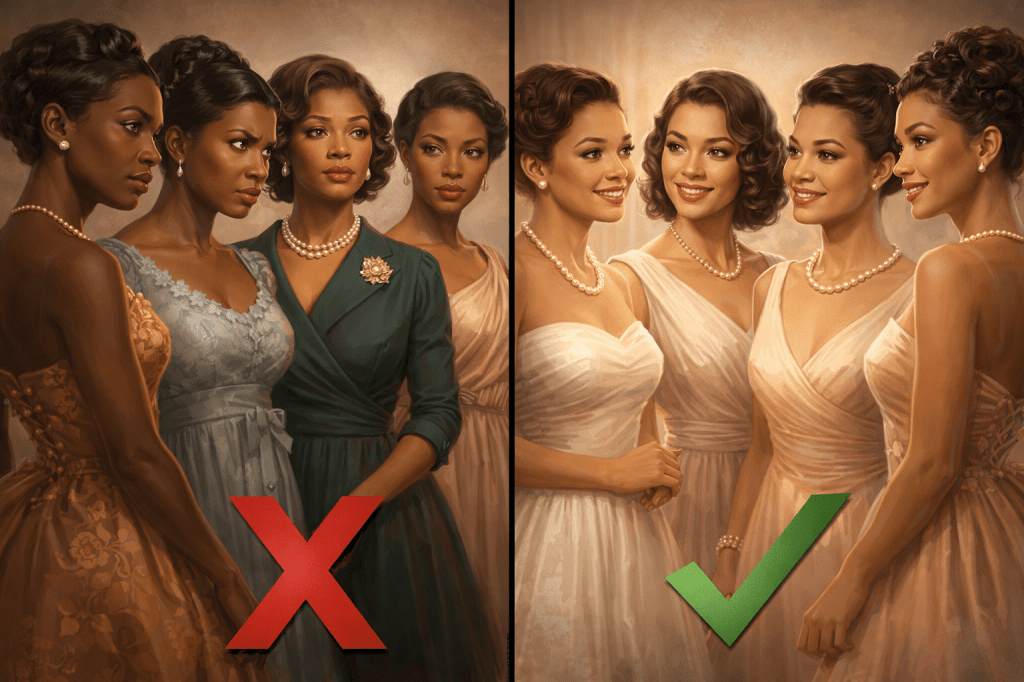
During the post-slavery era, these divisions were reinforced through social institutions such as the “paper bag test,” which informally determined access to certain social clubs, churches, and educational opportunities. Individuals whose skin tone was lighter than a brown paper bag were often granted entry, while darker-skinned individuals were excluded. This practice institutionalized color-based discrimination within Black spaces themselves.

Lightism has also been perpetuated through media representation, where lighter-skinned Black individuals are more frequently depicted as desirable, successful, or socially acceptable. Film, television, and advertising industries have historically favored Eurocentric features, reinforcing the notion that beauty is aligned with proximity to whiteness. This has had lasting psychological effects on both light- and dark-skinned individuals.

Scholars such as Alice Walker have been instrumental in bringing attention to colorism. Walker is credited with popularizing the term “colorism,” defining it as prejudicial or preferential treatment of same-race people based solely on their skin color. Her work illuminated how internalized racism manifests within marginalized communities.

Psychologically, lightism can contribute to issues of self-esteem, identity conflict, and internalized inferiority among darker-skinned individuals. Studies have shown that darker-skinned Black women, in particular, often face compounded discrimination based on both race and skin tone, affecting their opportunities in employment, relationships, and media visibility.

Conversely, lighter-skinned individuals may experience unearned privilege within the community, though this privilege is often complicated by questions of identity and authenticity. This dynamic creates tension and division, as individuals navigate a system that simultaneously elevates and scrutinizes them.

The politics of lightism extend into economic outcomes as well. Research indicates that lighter-skinned individuals, on average, earn higher incomes and receive more educational and professional opportunities than their darker-skinned counterparts. These disparities mirror broader systemic inequalities while also reflecting intra-community biases.

In the realm of beauty and fashion, lightism has historically dictated standards that marginalize darker skin tones. From foundation shades to magazine covers, the underrepresentation of dark-skinned beauty has reinforced narrow definitions of attractiveness. However, recent movements have begun to challenge these norms, advocating for greater inclusivity.

Social media has played a dual role in the conversation around lightism. On one hand, it has amplified harmful stereotypes and colorist rhetoric; on the other, it has provided a platform for dark-skinned voices to reclaim narratives of beauty and empowerment. Hashtags and digital activism have become tools for resistance and awareness.

The legacy of colonialism also plays a significant role in shaping global perceptions of skin color. In many parts of the world, lighter skin is associated with wealth, education, and modernity, while darker skin is unfairly linked to poverty and labor. These associations are remnants of colonial power structures that continue to influence contemporary societies.

Religious and cultural narratives have sometimes been misinterpreted to justify color hierarchies, further entrenching lightism within communities. These interpretations often distort historical and biblical contexts, contributing to harmful ideologies that equate lightness with purity and darkness with inferiority.

Education is a critical tool in dismantling lightism. By teaching accurate histories of slavery, colonialism, and racial formation, individuals can better understand the origins of color-based bias. Awareness fosters critical thinking and challenges internalized beliefs that perpetuate division.

Representation matters deeply in shifting perceptions. The increased visibility of dark-skinned actors, models, and public figures has begun to redefine beauty standards and challenge longstanding biases. This cultural shift is essential in promoting equity and self-acceptance.

Community dialogue is equally important. Open conversations about colorism allow individuals to share experiences, confront biases, and build solidarity. These discussions can be uncomfortable but are necessary for collective healing and growth.

The intersection of gender and colorism reveals that Black women are disproportionately affected by lightism. Beauty standards, dating preferences, and professional opportunities often place darker-skinned women at a disadvantage, highlighting the need for intersectional analysis.

Resistance to lightism can be seen in movements that celebrate melanin-rich skin and African features. Campaigns, art, and literature have emerged to affirm the beauty and value of darker skin, countering centuries of negative messaging.

Ultimately, the politics of lightism are about power—who holds it, who is denied it, and how it is maintained. Challenging this system requires both individual introspection and collective action to dismantle deeply ingrained biases.

The journey toward equity within the Black community involves recognizing and addressing the harm caused by colorism. It calls for a redefinition of beauty, value, and identity that is not based on proximity to whiteness but rooted in authenticity and diversity.

By confronting lightism, the Black community can move toward greater unity and empowerment, honoring the full spectrum of its beauty and strength. This work is not only social but deeply psychological and cultural, requiring sustained commitment across generations.

References

Hunter, M. (2007). The persistent problem of colorism: Skin tone, status, and inequality. Sociology Compass, 1(1), 237–254. https://doi.org/10.1111/j.1751-9020.2007.00006.x

Keith, V. M., & Herring, C. (1991). Skin tone and stratification in the Black community. American Journal of Sociology, 97(3), 760–778.

Walker, A. (1983). In Search of Our Mothers’ Gardens: Womanist Prose. Harcourt Brace Jovanovich.

Wilder, J. (2015). Color Stories: Black Women and Colorism in the 21st Century. Temple University Press.
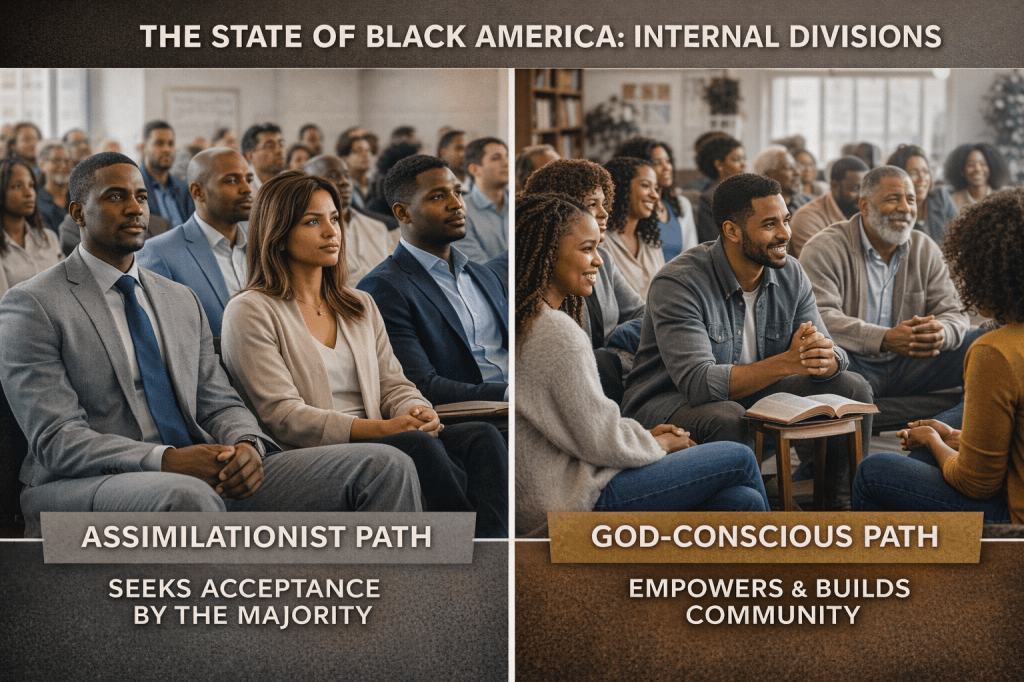

2 Paths Within the Black Community: Assimilation, Identity, and God-Conscious Restoration

Throughout history, oppressed communities have wrestled with two primary survival responses: assimilation into the dominant power structure or resistance through identity preservation and collective empowerment. Within the African American experience in the United States, this tension has manifested in visible ideological and behavioral distinctions shaped by slavery, segregation, systemic racism, and theological interpretation.

The legacy of American chattel slavery created not only economic devastation but psychological fractures. Scholars such as Frantz Fanon (1967) argued that colonized people often internalize the worldview of the colonizer as a survival mechanism. This internalization can result in identification with the dominant culture as a means of perceived safety or advancement.

In the American context, the character “Uncle Tom,” from Harriet Beecher Stowe’s novel Uncle Tom’s Cabin, became a cultural symbol—though often misinterpreted—of perceived submission to white authority. Over time, the term evolved into a pejorative label describing individuals believed to prioritize white approval over communal solidarity.

Assimilation, however, must be examined sociologically rather than emotionally. Sociologist W.E.B. Du Bois described “double consciousness” as the tension Black Americans feel between their African heritage and American citizenship (Du Bois, 1903). For some, minimizing racial conflict or denying systemic racism is not necessarily ignorance but an adaptation strategy shaped by generational trauma.

Research in racial identity development theory, particularly by William E. Cross Jr., shows that Black identity formation progresses through stages. Some individuals remain in earlier phases characterized by assimilationist leanings or a preference for proximity to dominant culture standards.

Internalized racism, defined as the acceptance of societal beliefs about Black inferiority, has been documented extensively in psychological literature (Pyke, 2010). These dynamics often manifest in beauty standards, speech patterns, cultural preferences, and political alignments.

At the same time, it is overly simplistic to categorize individuals as entirely unaware of racism. Many who emphasize cross-racial harmony may genuinely believe that integration and meritocracy are viable pathways toward equality.

Conversely, there exists another path rooted in cultural preservation, spiritual consciousness, and collective empowerment. This path emphasizes group solidarity, historical awareness, and theological identity.

The Black church historically functioned as the epicenter of resistance and social organization. Leaders such as Martin Luther King Jr. articulated liberation through Christian ethics grounded in agape love and justice.

Similarly, figures like Malcolm X emphasized self-respect, self-defense, and psychological decolonization. Though their methods differed, both leaders promoted dignity and communal uplift.

Theologically, many Black faith traditions interpret biblical narratives as parallel to the African American experience. The Exodus story and passages like Deuteronomy 28 have been understood as frameworks for interpreting suffering and covenant identity.

God-conscious empowerment emphasizes spiritual rebirth alongside cultural restoration. It teaches that liberation is not merely political but moral and spiritual.

Community builders focus on economic cooperation, educational advancement, and intergenerational teaching. The philosophy echoes the principles of collective economics articulated by Marcus Garvey and the Universal Negro Improvement Association.

Intra-community conflict, however, often undermines these efforts. Social dominance theory suggests marginalized groups can replicate hierarchical thinking internally (Sidanius & Pratto, 1999).

The call for unity does not mean uniformity. It requires shared goals centered on dignity, spiritual awareness, and structural progress.

Teaching children cultural literacy and historical truth is central to empowerment. Scholars like Carter G. Woodson argued that miseducation perpetuates subjugation.

Spiritual formation also plays a role. Biblical anthropology emphasizes identity in both flesh and spirit, reinforcing inherent worth beyond societal labels.

God-conscious frameworks encourage reconciliation within the community before external transformation.

This perspective rejects self-hatred while also avoiding racial supremacism. It affirms dignity without dehumanizing others.

Economic empowerment initiatives, cooperative models, and entrepreneurship align with this restorative vision.

Psychologically, collective pride correlates with higher resilience and well-being among marginalized populations (Neblett et al., 2012).

Faith-based empowerment movements often stress repentance from destructive behaviors such as internal violence, colorism, and fragmentation.

The metaphor of “needles in a haystack” captures the rarity of individuals fully committed to spiritual discipline and communal sacrifice.

Such builders prioritize generational legacy over short-term validation.

They recognize racism as structural rather than merely interpersonal, supported by scholarship from Michelle Alexander in The New Jim Crow.

At the same time, they resist fatalism. Faith sustains hope amid systemic obstacles.

Christ-centered identity reframes suffering through redemptive theology rather than victimhood.

Recognizing oneself as chosen does not imply superiority but covenant responsibility.

The call to stop fighting one another echoes both biblical admonition and sociological necessity.

Group progress historically required strategic unity, as evidenced during the Civil Rights Movement.

Yet even within movements, ideological differences persisted, illustrating the complexity of Black thought.

Ultimately, these two paths are not fixed identities but developmental positions shaped by history, psychology, and theology.

Healing requires compassion, education, and spiritual maturity.

Rather than condemnation, transformation must be the goal.

The future of Black empowerment lies not in caricatures but in consciousness, character, and Christ-centered community building.


References

Alexander, M. (2010). The New Jim Crow.

Cross, W. E. (1991). Shades of Black: Diversity in African-American Identity.

Du Bois, W. E. B. (1903). The Souls of Black Folk.

Fanon, F. (1967). Black Skin, White Masks.

Neblett, E. W., et al. (2012). Racial identity and psychological health.

Pyke, K. (2010). What is internalized racial oppression? Sociological Perspectives, 53(4), 551–572.

Sidanius, J., & Pratto, F. (1999). Social Dominance: An Intergroup Theory of Social Hierarchy and Oppression.

Woodson, C. G. (1933). The Mis-Education of the Negro.

Dilemma: The Pros and Cons of Being Black in Society.

The experience of being Black in modern society is multifaceted, complex, and deeply influenced by historical, social, and systemic factors. While there are many sources of pride, cultural richness, and resilience within Black communities, these are often juxtaposed with enduring structural inequalities, societal prejudices, and personal dilemmas that affect daily life. Understanding this duality requires both historical context and contemporary analysis.

Historically, the Black experience has been marked by the transatlantic slave trade, colonization, and systemic oppression. These historical realities have shaped social structures, economic opportunities, and cultural perceptions in ways that continue to affect Black individuals today. Deuteronomy 28:43-44 (KJV) warns that disobedience leads to subjugation, which resonates metaphorically in discussions of generational oppression and societal marginalization.

One prominent challenge is systemic racism, which manifests in employment, housing, healthcare, and education. Despite decades of civil rights advancements, Black individuals frequently encounter barriers that limit social mobility. Studies show that Black applicants are less likely to be called for job interviews compared to White applicants with identical resumes (Bertrand & Mullainathan, 2004). Such disparities illustrate that merit alone does not eliminate discrimination.

Another societal challenge is criminal justice bias. Black communities are disproportionately targeted by law enforcement, resulting in higher arrest and incarceration rates. According to the NAACP, Black Americans are incarcerated at more than five times the rate of White Americans. This over-policing contributes to cycles of poverty, familial disruption, and community distrust, creating profound social dilemmas for Black families.

Education represents both a challenge and a source of opportunity. Historically underfunded schools in Black neighborhoods often provide fewer resources, which perpetuates educational inequities. Yet, Black students who overcome these obstacles demonstrate remarkable resilience and achievement, often excelling academically and culturally despite systemic disadvantages. Proverbs 22:6 (KJV) emphasizes the importance of early training and guidance, highlighting the potential power of nurturing and support.

Cultural pride and identity are undeniable pros of being Black. From music and art to fashion and language, Black culture has enriched global society. The spread of hip-hop, Afrobeat, and literature by Black authors showcases creativity and influence that transcends racial boundaries. This cultural visibility fosters empowerment and serves as a reminder of a rich ancestral heritage.

Community solidarity is another significant advantage. Black communities often demonstrate strong family bonds, church networks, and mutual support systems. Churches, historically central to Black life, provide spiritual guidance, social activism, and a sense of belonging. Psalm 133:1 (KJV) celebrates unity, which resonates with the communal cohesion often observed in Black societies.

Yet, colorism within the Black community itself presents internal dilemmas. Preference for lighter skin tones often mirrors societal biases inherited from colonialism and slavery. This internalized prejudice can affect self-esteem, social perception, and personal relationships, creating tension within communities that otherwise share cultural pride.

Representation in media is a double-edged sword. While more Black faces appear in entertainment, sports, and politics, the industry often emphasizes stereotypical roles, beauty standards, and tokenism. While visibility can inspire, it can also impose limiting expectations. The struggle for authentic portrayal remains ongoing, reflecting broader societal dilemmas.

Economic disparities remain a persistent challenge. The racial wealth gap shows that Black households typically hold a fraction of the assets of White households. This gap affects homeownership, business investment, and generational wealth accumulation. Proverbs 21:20 (KJV) highlights the wisdom of prudent resource management, a principle made more challenging under systemic economic disadvantage.

Health disparities compound these challenges. Black communities face higher rates of chronic illnesses, limited access to quality healthcare, and environmental health hazards. COVID-19, for example, disproportionately affected Black populations due to preexisting health inequities and socioeconomic vulnerabilities. These disparities illustrate the tangible consequences of systemic neglect.

Despite these challenges, Black excellence is increasingly recognized globally. Figures in politics, science, business, and the arts exemplify achievement that counters negative stereotypes. Celebrating such accomplishments fosters pride, aspiration, and resilience, reinforcing the potential for success even amid adversity.

Spiritual resilience is another advantage. Many Black individuals find strength and guidance through faith. Biblical teachings, such as Isaiah 40:31 (KJV), provide hope and endurance: “They that wait upon the Lord shall renew their strength.” Faith often serves as a stabilizing force amid societal challenges, offering both solace and motivation.

Black identity often fosters creativity, adaptability, and problem-solving skills. Navigating systemic obstacles requires ingenuity and resourcefulness, traits that are highly valuable in both personal and professional contexts. These adaptive skills can empower individuals to excel even in restrictive environments.

Interpersonal relationships are shaped by societal perceptions. While some Black individuals experience bias or exclusion, strong mentorship, networking, and cultural affinity can counteract isolation. These relationships foster opportunity, guidance, and resilience, highlighting the importance of social capital in overcoming systemic barriers.

Experiences of discrimination often instill a heightened awareness of social justice issues. Black individuals frequently become advocates for equity, education, and reform, contributing to broader societal change. This activist orientation demonstrates both the burden and the empowerment that can arise from lived experience.

However, microaggressions—subtle, often unintentional slights—permeate daily life. These can erode mental health, self-esteem, and overall well-being. Black individuals often must navigate these invisible challenges while maintaining composure, a psychological burden that underscores the complexity of societal interaction.

Cultural legacy provides a profound source of pride. Knowledge of African ancestry, historical resilience, and contributions to civilization empowers Black individuals to claim identity and dignity. Works by historians such as Cheikh Anta Diop and Molefi Kete Asante illuminate the rich heritage often overlooked by mainstream narratives.

The intersectionality of identity adds layers to the dilemma. Gender, sexuality, socioeconomic status, and nationality intersect with race to shape individual experiences. Black women, for instance, navigate compounded biases in both racial and gendered contexts, highlighting the multifaceted nature of oppression and resilience.

Finally, being Black in society is both a challenge and an opportunity. While systemic inequities, bias, and historical trauma present undeniable obstacles, the cultural richness, resilience, and global influence of Black communities demonstrate profound strength. Navigating this duality requires awareness, advocacy, and faith.

In conclusion, the dilemma of being Black in society reflects a tension between oppression and empowerment, struggle and resilience, exclusion and recognition. Understanding both the pros and cons encourages empathy, informed action, and a celebration of Black identity while confronting persistent inequities. As Psalm 34:18 (KJV) reminds, “The Lord is nigh unto them that are of a broken heart,” offering hope and justice amid societal challenges.

References

  • Bertrand, M., & Mullainathan, S. (2004). Are Emily and Greg more employable than Lakisha and Jamal? A field experiment on labor market discrimination. American Economic Review, 94(4), 991–1013.
  • NAACP. (2020). Criminal justice fact sheet.
  • Diop, C. A. (1974). The African origin of civilization: Myth or reality. Lawrence Hill & Company.
  • Asante, M. K. (1991). The Afrocentric idea. Temple University Press.
  • Holy Bible, King James Version.

Racism Through Multiple Lenses.

Photo by Andrea Piacquadio on Pexels.com

Historical-Political Lens
Racism, as a historical and political construct, has been deeply tied to the legacy of colonialism and slavery. European colonizers justified the transatlantic slave trade by constructing a racial hierarchy that dehumanized African people, reducing them to property while elevating whiteness as a marker of superiority. This ideology became embedded in legal and political systems, shaping institutions from plantation economies to segregation laws. Jim Crow legislation in the United States, apartheid in South Africa, and colonial laws across the Caribbean and Africa exemplify how racism was codified into structures that controlled land, labor, and liberty. The ripple effect of these policies continues to impact education, wealth distribution, and incarceration rates, leaving a deep scar on the Black diaspora.

Psychological-Social Lens
Racism also functions as a psychological weapon, embedding inferiority in the minds of the oppressed while sustaining superiority in the oppressor. Socially, it manifests in stereotypes, microaggressions, and discriminatory practices that mark Blackness as “less than.” The theory of internalized racism explains how marginalized people sometimes adopt negative beliefs about their own group, perpetuating self-doubt and division (Pyke, 2010). Colorism, an internal byproduct of racism, privileges lighter skin tones and stigmatizes darker ones, creating hierarchies within the Black community itself. This psychological warfare produces identity conflicts, where individuals grapple with reconciling pride in their heritage with the societal messages that devalue it.

Faith-Based Lens
From a biblical perspective, racism stands in direct contradiction to God’s creation. Scripture affirms that all people are made in the image of God: “So God created man in his own image… male and female created he them” (Genesis 1:27, KJV). Racism is not only a social evil but a spiritual one, seeking to divide what God has united. For covenant people, racism echoes the warnings of Deuteronomy 28, where disobedience would lead to scattering, oppression, and subjugation under foreign nations. Yet the Bible also provides a vision of hope: “There is neither Jew nor Greek… for ye are all one in Christ Jesus” (Galatians 3:28, KJV). This does not erase cultural or ethnic identity but calls covenant people to rise above the divisions imposed by man and reclaim their God-given dignity.

Contemporary Lens
In today’s world, racism persists in both overt and subtle forms. While laws against segregation and discrimination exist, systemic inequities remain. Policing disparities, environmental racism, and unequal access to healthcare and education demonstrate how racism evolves with the times. Social media has become a double-edged sword: on one hand, it exposes racist incidents and provides platforms for movements like Black Lives Matter; on the other, it amplifies racist rhetoric and misinformation. Capitalism, too, has commodified Black culture, profiting from music, fashion, and language while often excluding Black creators from ownership and wealth. Racism adapts to modern contexts, proving it is not a relic of the past but a present-day reality that demands vigilance.

Restorative Lens
Healing from racism requires both collective and personal restoration. On a societal level, it involves dismantling oppressive systems and addressing the structural inequalities that perpetuate racial disparities. On a personal and communal level, it demands confronting internalized racism, affirming Black identity, and fostering pride in heritage. Spiritually, healing is rooted in reconciliation with God’s design, remembering that oppression was never His intent. Unity must be cultivated within the Black community, bridging divisions of color, class, and status. As Scripture declares, “How good and how pleasant it is for brethren to dwell together in unity!” (Psalm 133:1, KJV). True restoration involves reclaiming history, reshaping narratives, and building a future where dignity is no longer denied but celebrated.


📖 References

  • Holy Bible, King James Version.
  • Pyke, K. D. (2010). What is internalized racial oppression and why don’t we study it? Sociological Perspectives, 53(4), 551–572.

Healthcare Inequity: Why Black Lives Are Still at Risk in the Medical System?

Photo by Pixabay on Pexels.com

Despite advancements in medical science and technology, Black Americans continue to face significant disparities in healthcare access, quality, and outcomes. These inequities are deeply rooted in historical and systemic racism, manifesting in various aspects of the healthcare system. This essay explores the multifaceted nature of healthcare inequity affecting Black communities, examining factors such as access to care, quality of treatment, and the broader social determinants of health.


Historical Context of Healthcare Disparities

The legacy of slavery, segregation, and discriminatory policies has left an indelible mark on the healthcare experiences of Black Americans. From the exploitation of Black bodies in medical experimentation to the establishment of separate and unequal healthcare facilities, the history of medicine in the United States is fraught with racial injustice. These historical injustices have contributed to a mistrust of the medical system within Black communities, further exacerbating existing disparities.


Access to Healthcare Services

Access to healthcare is a fundamental determinant of health, yet many Black Americans encounter significant barriers. Factors such as lack of health insurance, transportation challenges, and the scarcity of healthcare providers in predominantly Black neighborhoods contribute to limited access. In urban areas, Black-majority census tracts are more likely to be located in trauma care deserts, with residents facing longer distances to emergency medical services .Wikipedia


Quality of Care and Patient-Provider Relationships

Even when Black patients access healthcare services, the quality of care they receive is often subpar. Studies have shown that Black patients are less likely to receive pain management, have their symptoms taken seriously, or be treated with the same respect as their white counterparts. A survey found that 55% of Black adults reported at least one negative experience with healthcare providers, including being treated with less respect or having to speak up to receive proper care .Pew Research Center


Implicit Bias and Structural Racism

Implicit bias among healthcare providers plays a significant role in perpetuating disparities. Unconscious stereotypes can influence clinical decisions, leading to misdiagnoses, delayed treatments, and inadequate care for Black patients. Structural racism within healthcare institutions, such as discriminatory policies and practices, further entrenches these inequities .PMC


Social Determinants of Health

Beyond clinical care, social determinants such as education, employment, housing, and environmental factors significantly impact health outcomes. Black Americans are more likely to experience poverty, food insecurity, and substandard housing, all of which contribute to poorer health. These social inequities are compounded by systemic racism, creating a cycle of disadvantage that is difficult to break .


Maternal and Infant Health Disparities

Black women face disproportionately high maternal and infant mortality rates. In 2024, Mississippi declared a public health emergency after its infant mortality rate surged to 9.7 deaths per 1,000 live births, nearly double the national average. This alarming rise is attributed to disparities in access to healthcare, systemic racism, and socioeconomic inequalities .The Economic Times


Chronic Diseases and Preventive Care

Chronic conditions such as hypertension, diabetes, and heart disease are more prevalent among Black Americans. Access to preventive care and early intervention is crucial in managing these diseases; however, disparities in healthcare access and quality hinder effective management. The American Heart Association has highlighted that disease management is less effective among African Americans, contributing to higher mortality rates .Pfizer


Mental Health and Healthcare Access

Mental health is often overlooked in discussions about healthcare disparities. Black Americans face challenges in accessing mental health services due to stigma, lack of culturally competent care, and economic barriers. These challenges are compounded by systemic racism, leading to untreated mental health conditions and a lack of support within the healthcare system.


Healthcare Workforce Diversity

The lack of diversity among healthcare providers contributes to disparities in care. With only 5% of doctors identifying as Black, there is a significant underrepresentation of Black professionals in the medical field. This lack of representation can affect patient-provider relationships and the cultural competence of care provided .TIME


Policy and Systemic Reforms

Addressing healthcare inequities requires comprehensive policy reforms. Recommendations include expanding access to health insurance, increasing funding for healthcare services in underserved communities, implementing anti-racism training for healthcare providers, and promoting diversity within the healthcare workforce. The Commonwealth Fund’s report on advancing racial equity in U.S. healthcare provides a framework for such reforms .Commonwealth Fund


Community-Led Health Initiatives

Community organizations play a vital role in addressing healthcare disparities. Initiatives such as mobile health clinics, health education programs, and community health workers help bridge gaps in care and empower Black communities to take control of their health. These grassroots efforts are essential in creating sustainable change and improving health outcomes.


The Role of Technology in Reducing Disparities

Telemedicine and digital health tools have the potential to expand access to care, particularly in underserved areas. However, disparities in internet access and digital literacy must be addressed to ensure that Black Americans can benefit from these technologies. Equitable access to digital health resources is crucial in reducing healthcare disparities.


Education and Health Literacy

Health literacy is a critical factor in managing health and navigating the healthcare system. Educational disparities and language barriers can impede understanding of medical information and adherence to treatment plans. Improving health literacy through community education and accessible resources is essential in empowering Black patients.


Research and Data Collection

Accurate data collection is fundamental in identifying and addressing healthcare disparities. However, underreporting and misclassification of race and ethnicity in medical records can obscure the extent of inequities. Standardizing data collection and ensuring accurate representation are necessary steps in addressing disparities .PMC


Advocacy and Public Awareness

Raising public awareness about healthcare disparities is crucial in driving change. Advocacy efforts by organizations and individuals can influence policy decisions and promote accountability within the healthcare system. Public awareness campaigns can also reduce stigma and encourage individuals to seek care.


Conclusion

Healthcare inequity remains a pressing issue for Black Americans, rooted in historical and systemic racism. Addressing these disparities requires a multifaceted approach, including policy reforms, community engagement, and systemic changes within the healthcare system. By acknowledging and actively working to dismantle the structures that perpetuate inequities, society can move toward a more equitable healthcare system for all.


References

  • “Racism, Inequality, and Health Care for African Americans.” The Century Foundation. The Century Foundation+1
  • “Understanding and Addressing Racial Disparities in Health Care.” National Center for Biotechnology Information. PMC
  • “Health Disparities in Black or African American People.” Centers for Disease Control and Prevention. CDC
  • “Advancing Racial Equity in U.S. Health Care.” Commonwealth Fund. Commonwealth Fund
  • “Implicit Bias and Racial Disparities in Health Care.” American Bar Association. American Bar Association
  • “Healthcare Disparities Among African Americans.” Pfizer. Pfizer
  • “How Recognizing Health Disparities for Black People is Important for Change.” Kaiser Family Foundation. KFF+1
  • “Medical Deserts in the United States.” Wikipedia. Wikipedia
  • “He Was Shot by a Stranger but Treated Like a Criminal When He Reached the ER.” Time. TIME
  • “Why Infant Death Rates Have Doubled in Mississippi and Are Rising Across the US.” Economic Times. The Economic Times
  • “Pregnancy is Deadlier in the US Than in Other Wealthy Countries. But We Could Fix That.” Live Science. PMC+4Live Science+4Pew Research Center+4
  • “Green Spaces Are Key to Combating Record Heat in Marginalized Communities.” Associated Press. AP News
  • “Institutional Racism in Historical and Modern US Health Care

Eugenics – History, Meaning, and Impact on Black Communities

Eugenics is a social philosophy and movement that seeks to improve the genetic quality of a human population through selective breeding. It emerged in the late 19th century as scientists and social reformers debated how to apply principles of heredity to human societies. Proponents believed that traits such as intelligence, health, and moral character could be enhanced while undesirable traits could be reduced.

The modern concept of eugenics was popularized by Francis Galton, a British scientist and cousin of Charles Darwin, in the 1880s. Galton argued that human intelligence and morality were hereditary and that society should encourage reproduction among people with “desirable” traits and discourage it among those with “undesirable” traits.

The American Eugenics Society (AES) was one of the main organizations promoting eugenics in the United States, and its founders included prominent figures such as Madison Grant, Harry H. Laughlin, Charles Davenport, and others. These eugenics advocates actively pushed for sterilization laws, restrictive marriage policies, and other social measures that disproportionately harmed marginalized communities, particularly those deemed “unfit” by their standards. Alan F. Guttmacher, who later became president of Planned Parenthood, was also deeply involved in the eugenics movement, serving as vice-president of the American Eugenics Society. Other early proponents included Raymond Pearl, a biologist who promoted the application of eugenic principles to public health to improve the so-called “hereditary quality” of populations.

In the United States, eugenics gained traction in the early 20th century. Organizations promoted sterilization laws and marriage restrictions targeting people deemed “unfit.” This included those with mental illness, disabilities, or criminal records. Eugenics became intertwined with public health, social policy, and notions of racial hierarchy.

The eugenics movement reached its extreme in Nazi Germany, where the ideology justified forced sterilizations, euthanasia programs, and the Holocaust. The pseudoscientific principles of eugenics were used to legitimize genocide under the guise of improving the human race.

In the U.S., eugenics was applied through policies that disproportionately affected Black people, Indigenous communities, and other marginalized groups. Forced sterilizations in the South often targeted Black women, limiting reproductive freedom and reinforcing systemic racism. These programs were justified as public health measures but were deeply rooted in racial prejudice.

Eugenics is not just a historical concept; modern debates around genetics, reproductive technologies, and population control carry echoes of eugenic thinking. Some critics argue that policies promoting selective reproduction or targeting certain populations continue to have racial and social implications.

Bill Gates has been associated with modern population and health initiatives that some critics claim have eugenic undertones. Gates’ funding of global vaccination programs and reproductive health initiatives in developing countries has been controversial, with conspiracy theories misrepresenting these efforts as attempts to control population growth.

Despite controversy, Gates and his foundation emphasize voluntary health care, vaccination, and family planning programs to reduce preventable deaths, improve maternal health, and promote economic development. Mainstream public health experts generally reject eugenic interpretations of these programs, framing them as humanitarian efforts.

The term “eugenics” carries negative connotations because of its historical misuse to justify oppression, discrimination, and genocide. It highlights the dangers of applying genetic ideas to social policy without ethical safeguards or respect for human rights.

Historically, eugenics has been used to reinforce white supremacy. In the U.S., laws inspired by eugenic thinking sought to limit reproduction among Black communities, portraying them as genetically “inferior” while promoting reproduction among white populations.

Eugenic ideology often masked economic and social control as scientific progress. By presenting sterilization, restrictive marriage laws, and contraception as scientific measures, governments and organizations could legitimize discriminatory policies.

In the early 20th century, the American Eugenics Society and similar organizations lobbied for sterilization laws that disproportionately targeted Black women in states like North Carolina, Virginia, and Alabama. These programs continued into the 1970s.

The history of eugenics demonstrates how science can be misapplied when combined with prejudice. Policies that appear neutral can have devastating effects on marginalized populations if they are grounded in biased assumptions about genetic worth.

Modern genetics and reproductive technologies present ethical challenges reminiscent of past eugenics programs. Discussions around gene editing, CRISPR, and designer babies raise questions about equity, consent, and the value of human life.

Eugenics also influenced early birth control movements. Figures like Margaret Sanger used eugenic arguments to promote contraception, arguing that controlling reproduction could improve society. Critics highlight that these campaigns often targeted Black and poor communities disproportionately.

Racialized medical experimentation, including the Tuskegee Syphilis Study, can be viewed in the broader context of eugenic thinking. Black Americans were frequently subjected to coercive medical interventions justified by claims of improving population health.

The concept of “population control” has historically been entangled with eugenics. Policies aimed at reducing birth rates among poor or marginalized groups have often mirrored earlier eugenic logic.

What Bill Gates Has Actually Said About Population Control

  1. The Key Quote
    • In a 2010 TED Talk (“Innovating to Zero”), Gates said: “The world today has 6.8 billion people. That’s headed up to about nine billion. Now, if we do a really great job on new vaccines, health care, reproductive health services, we could lower that by, perhaps, 10 or 15 percent.” PolitiFact+1
    • He was not saying he wants to kill people, but that improving health could reduce future population growth by reducing child mortality. AAP+1
  2. What He Means by “Lowering” Population Growth
    • According to him, improved health (via vaccines, healthcare, reproductive health) means fewer children die, and when parents are confident their children will survive, they tend to have smaller families. Snopes+2Yahoo+2
    • This is a common demographic pattern: as child mortality drops, birth rates often decline. PolitiFact+1
  3. Clarifications & Misinterpretations
    • Multiple fact-checkers (e.g., PolitiFact, Africa Check) say that Gates has been misquoted or misrepresented: he’s not advocating for forced population reduction, but explaining a long-term demographic trend. PolitiFact+1
    • AAP FactCheck notes that the viral “population control” clip is taken out of context, and he was talking about future population growth, not reducing the current population by 15%. AAP
    • LeadStories also reports that there is no evidence Gates said he wanted to do population reduction in a malicious or coercive way; rather, his focus is on health programs that may indirectly slow growth. Lead Stories
  4. Why He Brings It Up
    • In his TED Talk, population is one factor in his equation for reducing carbon emissions. He’s making a broader argument: sustainable development involves not just energy, but health and social systems. PolitiFact
    • He has said improving public health is part of his philanthropy goals — not to “shrink humanity,” but to improve quality of life so that demographic transitions naturally occur. Snopes
  5. Historical Comments on “Population Control”
    • In a 1997 interview in George magazine, Gates talked about “population control,” but again in the sense of improving health rather than reducing population by force. Snopes
    • In fact, his foundation has invested heavily in both vaccines and reproductive health services. These efforts reflect a strategy to help people control their fertility voluntarily — not through coercion.

Why Some People Think He Meant Something Else

  • Some conspiracy theories misrepresent his comments as advocating genocide or forced mass sterilizations.
  • These theories often splice together clips (e.g., his TED Talk) to suggest he is admitting to a sinister “depopulation” plan.
  • But credible fact-checkers point out that these are distortions: his statements focus on lowering growth rates, not killing people. FactCheck.org+2Snopes+2

  • Yes, Gates has spoken about “lowering population growth” — but in the context of public health, not killing or coercive methods.
  • His argument is that when more children survive (because of vaccines, healthcare), families choose to have fewer children, which over time stabilizes or slows population growth.
  • Many of the more sinister interpretations (like “populations will be reduced by 15% through vaccines”) misunderstand or misrepresent what he said, according to independent fact-checkers.

Eugenics is a philosophy and social movement that seeks to improve human populations through selective reproduction. While proponents claimed it was a scientific effort to “enhance” society, in practice it disproportionately targeted marginalized groups, especially Black communities. The ideology framed Black bodies as inferior and their reproduction as a social problem, reinforcing systemic racism under the guise of science.

In the United States, eugenics gained popularity in the early 20th century. Policies included forced sterilizations, marriage restrictions, and institutionalization of those labeled “unfit.” Black women were disproportionately targeted, often sterilized without consent, reflecting the racialized hierarchy underpinning these laws. Such acts violated the biblical principle that every human life is made in God’s image (Genesis 1:27) and worthy of dignity and protection.

The American Eugenics Society and state governments used eugenic rhetoric to justify these measures. Black communities were portrayed as genetically inferior, while white populations were encouraged to reproduce freely. This racialized approach echoes the warnings in Proverbs 31:8-9 to defend the rights of the oppressed and speak up for those who cannot protect themselves.

Medical experimentation on Black Americans, such as the Tuskegee Syphilis Study, is another manifestation of eugenics’ racial impact. Black men were denied treatment for syphilis to observe disease progression, illustrating how pseudoscientific reasoning dehumanized Black bodies. Such practices violated the biblical call to justice, compassion, and protection for the vulnerable (Psalm 82:3-4).

The reproductive health movement, including early birth control advocacy, was also intertwined with eugenic ideology. Figures like Margaret Sanger promoted contraception using eugenic reasoning, targeting poor and Black communities under the guise of social reform. Although presented as “empowerment,” these efforts often reinforced control over Black reproduction, echoing systemic oppression rather than offering genuine autonomy.

Eugenics also influenced family planning policies in the mid-20th century. Black women were coerced or pressured into sterilization programs in states such as North Carolina, Virginia, and Alabama. These programs were presented as public health initiatives but were racially discriminatory, reflecting social prejudice and a disregard for human dignity, in direct contradiction to biblical justice (Micah 6:8).

The concept of “population control” has historically carried eugenic undertones. Black communities were often seen as overpopulated or “problematic” in policy discourse, and interventions such as forced sterilization and targeted contraception perpetuated racial inequality. Scripture consistently condemns oppression and injustice (Isaiah 1:17), highlighting the moral failure of these programs.

Modern reproductive and genetic technologies, while potentially beneficial, risk echoing historical patterns if ethical safeguards are ignored. Conversations about gene editing, population health, and family planning must consider racial equity, ensuring that Black communities are not coerced or marginalized in the name of scientific progress.

Bill Gates’ public statements about “reducing population growth” have been controversial, particularly among critics who see echoes of eugenic logic. Gates has clarified that he refers to voluntary health interventions that reduce child mortality, which naturally leads to smaller family sizes, not coercion or extermination. However, the historical context of Black communities experiencing population control measures underscores the need for vigilance and ethical oversight.

Education about the history of eugenics is essential for Black communities. Understanding how policies and medical programs have been used to control Black bodies helps communities make informed decisions about healthcare, reproductive choices, and consent. Proverbs 2:6 reminds us that knowledge and wisdom are key to discernment and protection from harm.

The legacy of eugenics in Black communities extends beyond individual harm. It has shaped public health, social policy, and trust in medical institutions. Generational trauma and skepticism toward healthcare interventions often stem from historical abuses, reinforcing the need for ethical, transparent, and community-centered health initiatives.

Religious and moral frameworks provide guidance for evaluating these issues. The Bible emphasizes the sanctity of life, the equality of all humans, and the responsibility to defend the vulnerable. Oppression, coercion, and discrimination in the name of science violate these principles, making eugenics fundamentally incompatible with Christian ethics (James 2:1-4; Matthew 25:40).

Eugenic rhetoric often framed Black people as a social problem rather than as individuals with inherent worth. This dehumanization facilitated policies that stripped reproductive rights, health autonomy, and basic dignity from Black communities, contradicting God’s command to love our neighbors and protect the weak (Luke 10:27).

Community advocacy and historical reckoning are critical. Recognizing the abuses of eugenics helps Black communities assert reproductive sovereignty, demand accountability from institutions, and resist policies that perpetuate racial inequality. Scripture repeatedly affirms that justice must be pursued and wrongs addressed (Isaiah 58:6-7).

The intersection of race, science, and ethics underscores the importance of consent, transparency, and equity in health and reproductive policies. Eugenics demonstrates how scientific authority can be misused to reinforce social hierarchies, highlighting the ongoing need for vigilance and moral guidance.

Modern population health initiatives must be evaluated critically to prevent unintended echoes of historical eugenics. Policies should prioritize voluntary access, informed consent, and the welfare of all individuals, particularly marginalized communities, aligning with biblical principles of justice and mercy (Micah 6:8; Proverbs 31:8-9).

Public health, when guided by ethics and respect for human dignity, can empower Black communities rather than oppress them. Historical awareness ensures that innovations in medicine, genetics, and reproductive health do not repeat past harms.

Ultimately, understanding eugenics from the Black perspective reveals the deep intersection of race, science, and morality. It challenges us to confront historical injustices, defend human dignity, and ensure that ethical and biblical principles guide all policies affecting reproduction and health.


  • Ethical reflection on eugenics emphasizes the importance of consent, equity, and human dignity. Modern societies must critically evaluate reproductive and genetic technologies to avoid repeating historical injustices.

Public understanding of eugenics is essential to ensure that scientific advancements benefit all humans without discrimination. Education, transparency, and ethical oversight are key to preventing abuses.

In contemporary discourse, references to eugenics serve as warnings about the misuse of science for social engineering. Awareness of its history is vital to recognize and resist modern forms of racial and reproductive oppression.

Eugenics remains a powerful example of how science can be co-opted to justify inequality. Studying its history helps societies navigate the complex intersections of genetics, ethics, and social policy, particularly regarding marginalized populations.


References

  • Wikipedia, “Eugenics” (en.wikipedia.org)
  • Wikipedia, “Francis Galton” (en.wikipedia.org)
  • Stern, A.M. (2005). Eugenic Nation: Faults and Frontiers of Better Breeding in Modern America. University of California Press.
  • Lombardo, P.A. (2011). Three Generations, No Imbeciles: Eugenics, the Supreme Court, and Buck v. Bell. Johns Hopkins University Press.
  • Kevles, D.J. (1995). In the Name of Eugenics: Genetics and the Uses of Human Heredity. Harvard University Press.
  • Planned Parenthood and Eugenics historical overview (plannedparenthood.org)
  • Gates Foundation, Global Health Initiatives (gatesfoundation.org)
  • Roberts, D. (1997). Killing the Black Body: Race, Reproduction, and the Meaning of Liberty. Vintage Books. FactCheck.org, “Video Targets Gates With Old Clip, Misleading Edit” FactCheck.org
  • PolitiFact, “Bill Gates didn’t say he wanted to use vaccines to reduce the population” PolitiFact
  • Snopes, “Bill Gates ‘Admit’ Vaccinations Are Designed So Governments Can ‘Depopulate’ the World?” Snopes
  • Africa Check, “No, Bill Gates is not practising population control through vaccines” Africa Check
  • AAP FactCheck, “Bill Gates vaccination TED Talk hasn’t been ‘scrubbed’” AAP
  • LeadStories, “Fact Check: Bill Gates Did NOT Discuss Population Reduction …” Lead Stories
  • Snopes, “Did Bill Gates Tell George Magazine … Over-Populated Planet …” Snopes
  • Yahoo / Fact‑check, “Missing context on Bill Gates 2010 quote about population sustainability” Yahoo Roberts, D. (1997). Killing the Black Body: Race, Reproduction, and the Meaning of Liberty. Vintage Books.
  • Wikipedia, “Eugenics” (en.wikipedia.org)
  • Stern, A.M. (2005). Eugenic Nation: Faults and Frontiers of Better Breeding in Modern America. University of California Press.
  • Lombardo, P.A. (2011). Three Generations, No Imbeciles: Eugenics, the Supreme Court, and Buck v. Bell. Johns Hopkins University Press.
  • Wikipedia, “Francis Galton” (en.wikipedia.org)
  • Gates Foundation, Global Health Initiatives (gatesfoundation.org)
  • PolitiFact, “Bill Gates Didn’t Say He Wanted to Use Vaccines to Reduce the Population” (politifact.com)
  • Snopes, “Bill Gates ‘Admit’ Vaccinations Are Designed So Governments Can ‘Depopulate’ the World?” (snopes.com) Wikipedia, “Eugenics” (https://en.wikipedia.org/wiki/Eugenics)
  • Wikipedia, “American Eugenics Society” (https://en.wikipedia.org/wiki/American_Eugenics_Society)
  • Wikipedia, “Alan F. Guttmacher” (https://en.wikipedia.org/wiki/Alan_Frank_Guttmacher)
  • Wikipedia, “Raymond Pearl” (https://en.wikipedia.org/wiki/Raymond_Pearl)

The Rise of Black Digital Influence: Culture, Commerce, and Community

The digital era has ushered in unprecedented opportunities for Black voices to shape culture, commerce, and community globally. Platforms such as TikTok, Instagram, YouTube, and podcasts have provided unprecedented visibility, allowing Black creators to redefine aesthetics, narratives, and influence in ways previously constrained by traditional gatekeepers.

Black digital influence is first and foremost cultural. Social media has amplified Afrocentric beauty, hairstyles, fashion, and music, creating a global dialogue that celebrates Black identity. From natural hair movements to streetwear trends, Black creators are driving culture forward while reclaiming representation.

Historically, Black creativity was often commodified without proper recognition or compensation. Digital platforms now allow Black creators to assert ownership, narrate their stories, and monetize their craft independently, transforming cultural influence into economic empowerment.

The rise of Black influencers in music exemplifies this cultural and commercial convergence. TikTok, in particular, has propelled songs by Black artists to viral status, shaping charts, influencing mainstream media, and allowing independent artists to compete with major labels.

Fashion and beauty industries have experienced profound disruption. Black models, designers, and stylists utilize social media to challenge Eurocentric beauty standards, normalize diversity, and directly market products to global audiences. Platforms bypass traditional gatekeeping, giving Black creatives control over brand narrative.

Black digital influence also serves as a form of historical and cultural education. Creators use social media to teach African and African American history, genealogy, and social justice issues, providing accessible knowledge and fostering community awareness.

Podcasts and YouTube channels led by Black hosts have become platforms for intellectual discourse, storytelling, and entrepreneurship. Figures such as Tiffany Aliche (the Budgetnista) or content creators focusing on Black history and culture expand knowledge while creating wealth and visibility.

Entrepreneurship has flourished through digital influence. Black-owned businesses now reach global markets via e-commerce, digital marketing, and online services. The ability to sell directly to consumers allows creators to bypass traditional barriers in retail and finance.

Digital finance, including cryptocurrency and NFTs, has further expanded avenues for Black economic empowerment. Innovators are using blockchain technology to create wealth, preserve intellectual property, and invest in community-driven projects, demonstrating the convergence of technology and culture.

Social media has amplified activism. Movements like #BlackLivesMatter have demonstrated the power of digital platforms in mobilizing communities, influencing legislation, and shaping global conversations around racial justice and accountability.

The rise of Black digital influence also strengthens intergenerational knowledge transfer. Younger creators draw on ancestral narratives, cultural memory, and historical resilience while innovating content, products, and platforms for a modern audience.

Representation is another critical aspect. Black digital creators provide aspirational figures for youth, illustrating that cultural pride, entrepreneurship, and intellectual contribution can coexist with influence and wealth in a digital-first world.

Digital influence is not without challenges. Algorithmic bias, cyberbullying, content theft, and platform censorship can disproportionately affect Black creators. Navigating these obstacles requires both strategic knowledge and community solidarity.

Black digital communities have formed networks of support. Collaborative projects, cross-promotion, and mentorship among creators amplify reach and provide protection against exploitation, ensuring sustainability of influence and commerce.

Cultural appropriation remains a concern. Black creators must continually assert ownership over cultural products and narratives, educating global audiences while safeguarding the integrity of Black cultural expression.

Despite challenges, Black digital influence demonstrates resilience, creativity, and innovation. It transforms pain into art, oppression into opportunity, and visibility into empowerment. Black creators are setting trends, defining aesthetics, and reclaiming narratives at an unprecedented pace.

The intersection of faith and digital influence is also notable. Some creators incorporate spiritual guidance, moral frameworks, and community values into their content, blending cultural empowerment with ethical leadership.

Black digital entrepreneurship challenges traditional economic barriers. Influencers, content creators, and business owners leverage platforms to build brands, create jobs, and circulate wealth within Black communities, contributing to broader social and economic mobility.

Globalization amplifies Black influence. Creators in the diaspora connect with audiences worldwide, fostering cross-cultural exchange, solidarity, and shared identity, illustrating the universal impact of Black creativity and innovation.

Ultimately, the rise of Black digital influence reflects the ongoing evolution of Black excellence. It merges culture, commerce, and community into a powerful force for visibility, education, and empowerment, creating a legacy that is both digital and enduring.


References

Gates, H. L. (2011). In search of our roots: How 19 extraordinary African Americans reclaimed their past. Crown.

West, C. (2017). Race matters. Beacon Press.

Tutu, D., & Tutu, M. (2014). The book of forgiving: The fourfold path for healing ourselves and our world. HarperOne.

Noble, S. U. (2018). Algorithms of oppression: How search engines reinforce racism. NYU Press.

McKelvey, F., & Mulla, D. (2022). Digital Blackness: The power and politics of Black social media. Routledge.

Walker, K., & Brooks, C. (2021). Black digital entrepreneurship: Culture, commerce, and community. Palgrave Macmillan.

Stereotypes of Black Men: Fallacies, Facts, and Faith + Stereotypes of Black Women: Myths, Misrepresentations, and the Truth

Photo by Muhammad-Taha Ibrahim on Pexels.com

BLACK MEN:

Stereotypes of Black men have historically been used as powerful tools of oppression, rooted in slavery and colonial propaganda. Myths of hypersexuality, laziness, violence, and irresponsibility continue to frame perceptions, shaping public policy, media portrayals, and personal relationships. These stereotypes are not harmless—they carry devastating effects on how Black men are treated within society.

One of the most common stereotypes is that Black men are inherently violent or criminal. This image was popularized during the Jim Crow era and reinforced through biased media coverage and criminal justice policies such as “stop and frisk” and mass incarceration. In truth, studies show crime rates are linked more strongly to poverty and systemic inequality than to race.

Another destructive fallacy is that Black men are “deadbeat fathers.” This stereotype suggests Black men abandon their families at higher rates than other groups. However, research from the Centers for Disease Control reveals that Black fathers who live with their children are more involved in daily child-rearing than fathers of other racial groups. This finding challenges the myth and underscores the need to dismantle false narratives.

The marriage rate stereotype further complicates matters. Critics claim Black men are unwilling to marry, pointing to lower marriage rates in the African American community. While it is true that marriage rates are lower, this is not due to a lack of commitment but rather to economic instability, systemic barriers, and historical disruptions of family structures from slavery onward.

Divorce among Black men is also misrepresented. Statistics indicate higher divorce rates in Black communities, but these outcomes are often tied to financial stressors, unemployment, and discrimination that place strain on marriages. The stereotype that Black men are poor partners is misleading, as the root issue is societal and structural rather than individual.

Another stereotype is that Black men are uneducated or intellectually inferior. This belief has roots in pseudoscientific racism of the 19th century. Today, although disparities exist due to unequal access to quality education, Black men continue to excel academically in multiple disciplines, earning advanced degrees, contributing to STEM, and leading in arts, politics, and theology.

The hypersexualization of Black men is one of the most enduring myths. Dating back to slavery, enslaved Black men were portrayed as dangerous predators to justify lynchings and segregation. In modern times, this stereotype persists in media portrayals of athletes, entertainers, and even news coverage. This myth erases the humanity of Black men and devalues their roles as husbands, leaders, and fathers.

Employment stereotypes also persist, portraying Black men as lazy or dependent. This fallacy ignores the structural racism in hiring practices, wage disparities, and generational economic disadvantages. Despite barriers, Black men have historically shown resilience, from building thriving Black Wall Street communities to excelling in diverse professions.

Prejudice against Black men often takes subtle forms, known as microaggressions. Questions like “What are you mixed with?” or assumptions about aggression reveal ingrained stereotypes. These daily slights damage self-esteem, create stress, and perpetuate societal inequality.

Statistically, Black men face higher rates of unemployment and incarceration, not because of inherent flaws, but because of systemic racism, discriminatory laws, and biased policing. These statistics are often weaponized to reinforce negative stereotypes rather than addressing the true structural causes that produce these disparities.

Within family life, Black men often serve as strong anchors. Contrary to myths, studies show that many Black men take pride in fatherhood, mentorship, and marriage. This reality, however, is underreported, as negative narratives sell better in mainstream media.

Racism also creates distorted realities where the sins of a few are placed upon the many. When one Black man commits a crime, it becomes a commentary on the entire race, unlike in white communities where crimes are individualized. This collective stereotyping is an injustice that Black men bear daily.

The myth of emotional detachment further harms Black men. Society often portrays them as stoic, unfeeling, or emotionally unavailable. Yet, studies in psychology show Black men experience the same depth of love, grief, and vulnerability as anyone else but often mask emotions due to survival in a hostile society.

The biblical perspective contradicts these harmful stereotypes. The Bible affirms the value of men as providers, protectors, and leaders in righteousness. “Lo, children are an heritage of the Lord: and the fruit of the womb is his reward” (Psalm 127:3 KJV). Many Black men live faithfully to this calling despite societal barriers.

Scripture also challenges the stereotype of laziness. “In all labour there is profit: but the talk of the lips tendeth only to penury” (Proverbs 14:23 KJV). Black men, historically and presently, have labored tirelessly, from building the foundations of America under slavery to contributing to modern industries.

Racism in stereotypes is also exposed by the Bible’s teaching on justice and truth. “Judge not according to the appearance, but judge righteous judgment” (John 7:24 KJV). To judge an entire group of men based on appearance or isolated cases is unrighteous and perpetuates inequality.

Marriage and fatherhood stereotypes are dismantled by Scripture, which upholds the husband as the head of the home in love and sacrifice. “Husbands, love your wives, even as Christ also loved the church, and gave himself for it” (Ephesians 5:25 KJV). Many Black men embrace this calling, serving their families faithfully, even amid economic and social hardships.

The truth about Black men cannot be summarized in statistics alone. While challenges exist, they are not inherent flaws of character but reflections of centuries of systemic inequality. The resilience, faith, and brilliance of Black men defy the shallow narratives imposed upon them.

Moving forward requires challenging these stereotypes head-on. Education, community advocacy, and faith-based initiatives can help dismantle lies and build healthier narratives. Uplifting stories of Black men as leaders, scholars, and fathers must be centered more often.

Ultimately, the fallacies about Black men are not only harmful but false. The truth, supported by data and Scripture, is that Black men are human beings with complexity, resilience, and divine worth. Society must reject false labels and embrace the reality of Black men as image-bearers of God, capable of love, leadership, and greatness.

Photo by Mwabonje Ringa on Pexels.com

BLACK WOMEN:

The stereotypes of Black women are deeply entrenched in historical racism, dating back to slavery, colonialism, and early media portrayals. These images have reduced Black women to caricatures, stripping them of individuality and humanity. Myths such as the “angry Black woman,” the “Jezebel,” the “Mammy,” and the “Strong Black Woman” continue to shape how society perceives and interacts with them.

One of the most damaging stereotypes is the “angry Black woman.” This trope portrays Black women as loud, irrational, and hostile, silencing their legitimate grievances against racism and sexism. In truth, Black women often express justified frustration in contexts where they face compounded injustices, yet society labels them unfairly to dismiss their concerns.

The “Jezebel” stereotype hypersexualizes Black women, framing them as promiscuous and immoral. This myth was created during slavery to justify the sexual exploitation of Black women by enslavers. Today, it is perpetuated in music videos, movies, and fashion narratives, often reducing Black women to sexual objects rather than recognizing their dignity.

The “Mammy” stereotype paints Black women as self-sacrificing caretakers whose sole purpose is to serve white families. While rooted in slavery and domestic servitude, this image still lingers in portrayals of Black women as “strong” and endlessly nurturing, often at the expense of their own well-being.

The “Strong Black Woman” stereotype seems positive on the surface but is equally harmful. It assumes Black women can endure limitless suffering without support, placing unfair expectations upon them. While resilience is a reality in Black women’s lives, it should not erase their right to vulnerability and care.

Marriage rates among Black women are often scrutinized in public debates, sometimes weaponized as evidence of broken families. While studies show Black women marry at lower rates than other groups, this is not due to unwillingness but to systemic factors like imbalanced gender ratios, economic instability, and incarceration rates among Black men.

Divorce rates for Black women are similarly inflated in stereotype discourse. While Black women experience higher divorce rates, much of this stems from the economic and racial pressures that strain marriages, rather than personal failings. To reduce this issue to a stereotype ignores structural inequities.

Another fallacy is that Black women do not value education. In reality, Black women are among the fastest-growing groups in higher education. According to the National Center for Education Statistics, Black women consistently enroll in and graduate from colleges and universities at higher rates than their male counterparts, often carrying their communities forward academically.

Motherhood stereotypes also distort reality. Society has painted the image of the “welfare queen,” a derogatory myth suggesting Black women exploit government systems. This stereotype was heavily pushed during the Reagan era, despite evidence that the majority of welfare recipients were white. Black mothers, in truth, often work tirelessly to support and nurture their children under difficult circumstances.

In terms of parenting, Black women are frequently cast as single mothers who cannot raise successful children. Yet statistics show many children of single Black mothers excel academically, professionally, and spiritually. This truth contradicts the stereotype of dysfunction and highlights resilience.

The stereotype of Black women as “loud” is another form of silencing. Their voices are often policed in professional, educational, and social spaces. Yet the assertiveness of Black women should be understood as confidence and strength rather than reduced to a negative trope.

The stereotype of Black women as less beautiful than other women is also pervasive, rooted in Eurocentric beauty standards. Media often privileges light skin, straight hair, and Eurocentric features, while devaluing darker skin and natural textures. Yet global movements toward natural beauty, melanin celebration, and cultural pride are dismantling these lies.

Biblically, beauty is not defined by Eurocentric features but by God’s creation. “I will praise thee; for I am fearfully and wonderfully made: marvellous are thy works; and that my soul knoweth right well” (Psalm 139:14 KJV). This verse affirms that Black women’s natural hair, skin, and features are divinely crafted.

The Jezebel stereotype is particularly contradicted by Scripture. The Bible honors women who walk in purity and dignity. “In like manner also, that women adorn themselves in modest apparel, with shamefacedness and sobriety” (1 Timothy 2:9 KJV). Black women are called to live in holiness, not to embody society’s sexualized caricatures.

The Mammy stereotype is equally unbiblical. While caregiving is noble, no woman’s worth should be reduced to servitude. The virtuous woman of Proverbs 31 demonstrates balance—she provides, nurtures, manages, and honors God, reflecting complexity rather than one-dimensionality.

The “angry Black woman” trope also crumbles under biblical truth. Anger in Scripture is not inherently wrong; it is righteous when directed against injustice. “Be ye angry, and sin not: let not the sun go down upon your wrath” (Ephesians 4:26 KJV). Black women’s anger at oppression is often righteous and should be respected as a call for justice.

Another truth that dispels stereotypes is the spiritual leadership of Black women. Historically, they have been the backbone of churches, movements, and families, carrying faith and culture forward. This reality contradicts the stereotype of weakness or dysfunction.

The truth about Black women cannot be defined by stereotypes, statistics alone, or media portrayals. Black women embody resilience, beauty, intellect, faith, and creativity. Their experiences cannot be reduced to tropes rooted in racism and sexism.

Ultimately, stereotypes of Black women are both false and harmful. They erase individuality, diminish worth, and perpetuate racism. Society must reject these lies and embrace the truth: Black women are fearfully and wonderfully made, image-bearers of God, and vital to the flourishing of family, church, and community.

References

Alexander, M. (2010). The New Jim Crow: Mass Incarceration in the Age of Colorblindness. The New Press.
Centers for Disease Control and Prevention. (2013). Fathers’ Involvement With Their Children: United States, 2006–2010.
Western, B., & Pettit, B. (2010). Incarceration & social inequality. Daedalus, 139(3), 8–19.
Wilson, W. J. (2012). The Truly Disadvantaged: The Inner City, the Underclass, and Public Policy. University of Chicago Press.
The Holy Bible, King James Version (KJV).Alexander, M. (2010). The New Jim Crow: Mass Incarceration in the Age of Colorblindness. The New Press.
Collins, P. H. (2000). Black Feminist Thought: Knowledge, Consciousness, and the Politics of Empowerment. Routledge.
Harris-Perry, M. (2011). Sister Citizen: Shame, Stereotypes, and Black Women in America. Yale University Press.
National Center for Education Statistics. (2022). Digest of Education Statistics.
The Holy Bible, King James Version (KJV).

🌸 Rooted in Strength: Community, Resilience, and Generational Triumphs of Black Women 🌸

Photo by RDNE Stock project on Pexels.com

The lives of Black women have historically been shaped not only by individual strength but by the networks of community that surround them. From family structures and church congregations to mentorship programs and cultural organizations, community acts as both a protective force and a springboard for generational success. These collective bonds foster resilience, impart wisdom, and cultivate the spiritual and psychological resources necessary to navigate systemic oppression while achieving extraordinary accomplishments.

Historically, the Black church has been a central pillar in shaping Black women’s identities. From the era of slavery through the civil rights movement, church communities offered spiritual guidance, social support, and leadership training. Women such as Septima Clark, who established citizenship schools to educate and empower Black communities, exemplify how communal efforts translate into generational progress. Scripture underscores the importance of collective strength: “Two are better than one; because they have a good reward for their labour. For if they fall, the one will lift up his fellow” (Ecclesiastes 4:9–10, KJV). In this way, spiritual and social support within a community nurtures resilience and ensures continuity of success across generations.

Mentorship and familial networks play a similarly transformative role. Psychological research indicates that individuals with strong social support systems demonstrate higher self-esteem, better stress management, and increased goal attainment (Cohen & Wills, 1985). Black women raised in supportive communities often benefit from role models, shared knowledge, and encouragement that transcend generational barriers. For example, the influence of matriarchal figures such as Coretta Scott King and Mary McLeod Bethune demonstrates how guidance from pioneering women cultivates leadership skills and societal influence among younger generations. These women’s legacies ripple through time, illustrating how community shapes identity, ambition, and achievement.

Communities also foster resilience in the face of systemic oppression. The psychological concept of “collective efficacy” refers to a group’s shared belief in its capability to organize and achieve desired outcomes, even in challenging circumstances. For Black women, this manifests in cultural organizations, sororities, advocacy groups, and grassroots movements that reinforce self-worth, nurture talent, and protect mental health. Modern examples include Black Girl Magic collectives and mentorship programs for young Black women in STEM and the arts, which provide opportunities and encouragement that individual effort alone might not secure.

Generational triumphs are evident in families and lineages that demonstrate upward mobility, educational attainment, and community leadership despite historical adversity. For instance, the legacy of the Du Bois family and other multigenerational scholars highlights the role of education and communal support in achieving long-term societal impact. Similarly, artistic dynasties such as the Staples and Collins families demonstrate cultural preservation and excellence passed down through shared mentorship and encouragement. Each triumph story exemplifies how communal structures empower Black women to break cycles of oppression while instilling values, work ethic, and vision in future generations.

🌟 Generational Triumph Spotlight: Black Women and Their Legacies

Septima Poinsette Clark (1898–1987)

  • Legacy: Established citizenship schools during the Civil Rights Movement, educating generations of Black Americans to vote and advocate for justice.
  • Impact: Her work empowered communities, fostering leadership and civic engagement that transcended her lifetime.

Mary McLeod Bethune (1875–1955)

  • Legacy: Founder of Bethune-Cookman University and leader in education for Black youth.
  • Impact: Mentored countless students, emphasizing education, self-worth, and community responsibility across generations.

Coretta Scott King (1927–2006)

  • Legacy: Civil rights activist and advocate for education, peace, and equality.
  • Impact: Inspired younger leaders, including her children, and strengthened community-based movements for social justice.

Ella Baker (1903–1986)

  • Legacy: Influential organizer in the NAACP, SCLC, and SNCC.
  • Impact: Advocated grassroots leadership, empowering local communities and fostering intergenerational activism.

Oprah Winfrey (b. 1954)

  • Legacy: Media mogul, philanthropist, and mentor to emerging Black leaders.
  • Impact: Through her platform and charitable work, she provides inspiration, mentorship, and resources for young Black women across generations.

Angela Davis (b. 1944)

  • Legacy: Scholar, activist, and author focused on social justice, prison reform, and Black liberation.
  • Impact: Her activism and writings have shaped movements and inspired young women to pursue education and justice-oriented careers.

The Du Bois Family

  • Legacy: William Edward Burghardt Du Bois and descendants emphasized scholarship, leadership, and civil rights.
  • Impact: Generational academic and civic contributions reflect the role of familial mentorship and community values in shaping societal leaders.

Misty Copeland (b. 1982)

  • Legacy: First African American principal dancer at American Ballet Theatre and advocate for arts education.
  • Impact: Inspires young dancers and artists, promoting access, representation, and mentorship across generations.

The Collins and Staples Families

  • Legacy: Families with multi-generational achievements in music, education, and cultural preservation.
  • Impact: Demonstrates how cultural knowledge, artistic talent, and community pride are nurtured and passed down through generations.

Amanda Gorman (b. 1998)

  • Legacy: Poet and activist whose work emphasizes justice, resilience, and youth leadership.
  • Impact: Inspires a new generation to value literacy, expression, and civic engagement.

Scripture further reinforces the power of community in nurturing resilience and leadership. Proverbs 31 celebrates a woman whose strength, wisdom, and influence benefit both her household and the broader community: “She openeth her mouth with wisdom; and in her tongue is the law of kindness” (Proverbs 31:26, KJV). Black women who thrive within strong communal networks often mirror this biblical ideal, balancing self-mastery with nurturing, teaching, and leading others.

Ultimately, the interplay between community, resilience, and generational triumph illustrates a cycle of empowerment. When Black women are supported spiritually, socially, and emotionally, they are better equipped to overcome adversity, achieve personal and collective goals, and pass down legacies of excellence. Their stories—ranging from pioneers in education, activism, and arts to contemporary leaders in politics, business, and science—demonstrate that triumph is rarely solitary; it is deeply rooted in the collective strength of community.


References

  • Cohen, S., & Wills, T. A. (1985). Stress, social support, and the buffering hypothesis. Psychological Bulletin, 98(2), 310–357.
  • Kendi, I. X. (2016). Stamped from the Beginning: The Definitive History of Racist Ideas in America. Nation Books.
  • Bible (KJV). Ecclesiastes 4:9–10; Proverbs 31:26.
  • Morris, A. D. (1999). Women’s Work: The Civil Rights Movement and the Politics of Gender. University of North Carolina Press.

The NAACP: History, Mission, Leadership, and Impact.

Photo by Pavel Danilyuk on Pexels.com

The National Association for the Advancement of Colored People (NAACP) is one of the most influential civil rights organizations in American history. Founded on February 12, 1909, in New York City, the NAACP was created in response to the ongoing violence and systemic discrimination faced by African Americans. The catalyst for its formation was the 1908 Springfield Race Riot in Illinois, which shocked the nation and revealed the urgent need for a coordinated civil rights movement (Lewis, 2009). The organization’s early founders included prominent Black and white activists such as W. E. B. Du Bois, Ida B. Wells-Barnett, Mary White Ovington, Moorfield Storey, and Oswald Garrison Villard (Meier & Rudwick, 1976). Together, they sought to combat racial prejudice, secure voting rights, and promote social equality through litigation, public advocacy, and grassroots mobilization.

The NAACP’s mission centers on ensuring the political, educational, social, and economic equality of rights for all persons, while eliminating race-based discrimination. Historically, the NAACP has played a crucial role in landmark legal victories for civil rights, most notably Brown v. Board of Education (1954), in which the Supreme Court declared racial segregation in public schools unconstitutional (Klarman, 2004). Over the decades, the organization has advocated for voting rights, challenged discriminatory laws, and fought against economic disparities that disproportionately affect the Black community.

In addition to its political and legal advocacy, the NAACP has sought to celebrate and uplift African American achievements through the NAACP Image Awards. First held in 1967, the awards honor outstanding performances in film, television, music, and literature, as well as achievements in activism and humanitarian efforts. Categories include Outstanding Actor/Actress in a Motion Picture, Outstanding Literary Work, Outstanding Comedy Series, and Entertainer of the Year. Artists such as Beyoncé, Denzel Washington, and Angela Bassett have won multiple NAACP awards, with Beyoncé holding the record for the most wins. This event not only celebrates excellence in Black artistry but also reinforces the NAACP’s mission to promote positive representation and challenge harmful stereotypes in media (Smith, 2017).

A significant chapter in the NAACP’s modern history involves the leadership of Kweisi Mfume, who served as President and CEO from 1996 to 2004. Born Frizzell Gerard Tate in Baltimore, Maryland, Mfume overcame a difficult childhood marked by poverty and dropping out of high school, later earning his GED and pursuing higher education. Before joining the NAACP, he served five terms in the U.S. House of Representatives and chaired the Congressional Black Caucus (Morrison, 2002). When Mfume took the helm of the NAACP, the organization was deeply in debt and struggling with internal governance issues. He implemented fiscal discipline, launched aggressive fundraising campaigns, and revitalized the NAACP’s advocacy efforts, focusing on voting rights, economic equity, and youth engagement. His tenure is credited with restoring the organization’s financial stability and public credibility during a critical period in its history.

Currently, the NAACP is led by Derrick Johnson, who became President and CEO in 2017. Johnson has continued the fight for civil rights in the modern era, addressing issues such as police brutality, voter suppression, and economic disparities in Black communities. The NAACP also remains active in high-profile legal cases, advocating for criminal justice reform and defending the Voting Rights Act in court. Throughout its existence, the NAACP has been at the forefront of securing civil rights legislation, providing legal defense in discrimination cases, and offering a platform for marginalized voices.

The NAACP’s enduring relevance lies in its adaptability—addressing systemic racism in each generation’s unique context while maintaining a steadfast commitment to equality. Its leaders, past and present, have embodied resilience, vision, and dedication to advancing justice for African Americans. From its legal triumphs to cultural recognition through the Image Awards, the NAACP stands as a testament to the power of organized advocacy in transforming society.


References

Klarman, M. J. (2004). From Jim Crow to civil rights: The Supreme Court and the struggle for racial equality. Oxford University Press.
Lewis, D. L. (2009). W. E. B. Du Bois: A biography. Henry Holt and Company.
Meier, A., & Rudwick, E. (1976). Along the color line: Explorations in the Black experience. University of Illinois Press.
Morrison, T. (2002). Conversations with African American leaders: Insights and perspectives. Black Classic Press.
Smith, S. (2017). Black excellence: The history and cultural impact of the NAACP Image Awards. HarperCollins.