
All posts by The Brown Girl Dilemma

I welcome everyone— women and men of all nationalities—to read, reflect, and gather insight across the many topics about black people explored here. To the Brown girl and the Brown boy who walk into rooms already carrying history, beauty, and burden—this space is for you. You stand at the intersection of visibility and erasure, desirability and disregard, reverence and resistance, often praised, questioned, desired, dismissed, and debated all at once. In a world that studies your skin more than your soul and distorts what God designed with intention, may truth, healing, and divine purpose meet you here. This is a conversation created to name your journey without silencing your truth, to restore what society has tried to redefine, and to remind you that your worth was never the problem—only the world’s inability to honor it.

What does She have that I don’t have?

The question “What does she have that I don’t have?” echoes in the minds of women across cultures, ages, and social classes. It surfaces in boardrooms, classrooms, churches, social gatherings, and digital spaces. At its core, the question reflects comparison—a deeply human tendency to measure oneself against others. Yet comparison rarely produces clarity. More often, it cultivates insecurity, envy, and internal unrest.

Psychologist Leon Festinger (1954) explains through social comparison theory that individuals evaluate their own worth by assessing others. While this process can inspire growth, it can also distort perception. Social media intensifies upward comparison, presenting polished versions of beauty, marriage, success, and motherhood without revealing struggle, sacrifice, or discipline. What appears superior may simply be curated.

Confidence, however, is not something another woman “has” that you inherently lack. Research indicates that stable self-esteem develops gradually through competence, resilience, and internalized values rather than external validation (Orth & Robins, 2014). The woman who appears secure has often cultivated her identity intentionally. Confidence is built, not bestowed.

One pillar of lasting confidence is self-respect. Self-respect influences decisions about relationships, boundaries, and intimacy. Scripture teaches in 1 Corinthians 6:18 (KJV), found in the Bible, to “flee fornication.” Sexual integrity is not about shame but about stewardship—protecting emotional, spiritual, and physical well-being. Choosing purity fosters clarity and reduces the emotional entanglements that often erode confidence.

Keeping oneself pure extends beyond physical intimacy. It includes mental and emotional purity—guarding what one consumes through media, conversations, and environments. Philippians 4:8 (KJV) encourages focusing on things that are true, honest, just, pure, lovely, and of good report. What a woman allows into her mind shapes her self-concept and standards.

Another distinguishing trait often admired in women is composure. Walking in silence does not mean suppressing one’s voice; it means refusing to broadcast every insecurity or react to every provocation. A quiet strength reflects emotional regulation. Daniel Goleman (1995) identifies self-regulation as a key component of emotional intelligence, directly connected to leadership and relational stability.

Gossip and tearing down others are common byproducts of insecurity. When a woman diminishes another’s character, appearance, or success, she momentarily masks her own self-doubt. Yet Proverbs 16:28 (KJV), also within the Bible, warns that gossip separates close relationships. True confidence does not require another woman’s humiliation.

Building oneself requires discipline. Discipline in education, career preparation, spiritual development, physical health, and financial literacy cultivates independence. Independence reduces desperation. When a woman invests in herself, she shifts from seeking validation to embodying value.

Loving oneself is not narcissism; it is acknowledgment of inherent worth. Psychological research emphasizes that self-compassion correlates with emotional resilience and lower levels of anxiety and depression (Neff, 2003). Self-love allows a woman to extend grace to herself during failure rather than spiraling into comparison.

Boundaries are another marker of self-worth. Cloud and Townsend (1992) explain that healthy boundaries protect emotional well-being and clarify responsibility. A woman who says “no” when necessary may appear selective or distant, but in truth she is preserving her standards. Standards create stability.

The woman who seems admirable may also possess purpose. Purpose anchors identity beyond appearance or relationship status. When a woman understands her calling—whether in career, motherhood, ministry, entrepreneurship, scholarship, or artistry—she becomes less distracted by what others are doing. Purpose narrows focus and fuels discipline.

Silence paired with confidence often reflects discernment. Not every opportunity deserves acceptance; not every invitation deserves attendance. Wisdom involves choosing environments that align with one’s goals and values. Selectivity reduces unnecessary drama and preserves energy for meaningful growth.

Keeping oneself pure also involves relational discernment. Emotional entanglements with individuals who lack integrity can destabilize self-worth. Choosing partners and friends who respect boundaries reinforces confidence rather than undermines it. Healthy relationships reflect mutual honor.

Moreover, comparison diminishes gratitude. Gratitude shifts perspective from scarcity to abundance. Instead of asking what another woman possesses, gratitude asks what strengths and opportunities already exist within. This shift fosters contentment without suppressing ambition.

Ultimately, what she “has” is often alignment—alignment between values and behavior, words and actions, goals and habits. Confidence grows when integrity is consistent. A woman who walks in silence, refuses gossip, guards her purity, loves herself, and builds her skills does not compete—she evolves.

The question then transforms. Rather than asking, “What does she have that I don’t have?” a more empowering inquiry emerges: “What can I cultivate within myself?” Growth replaces envy. Discipline replaces doubt. Self-respect replaces comparison. And in that transformation, every woman has access to the confidence she once believed belonged to someone else.


References

Cloud, H., & Townsend, J. (1992). Boundaries: When to say yes, how to say no to take control of your life. Zondervan.

Festinger, L. (1954). A theory of social comparison processes. Human Relations, 7(2), 117–140.

Goleman, D. (1995). Emotional intelligence. Bantam Books.

Neff, K. D. (2003). Self-compassion: An alternative conceptualization of a healthy attitude toward oneself. Self and Identity, 2(2), 85–101.

Orth, U., & Robins, R. W. (2014). The development of self-esteem. Current Directions in Psychological Science, 23(5), 381–387.

Bible. (1769/2017). King James Version. (Original work published 1611).

Smart Money Series: Stop Feeding the System—How Discipline Builds Wealth

Modern economic systems thrive not on wisdom but on impulse. Corporations are sustained by consumers who spend reflexively, upgrade unnecessarily, and mistake convenience for necessity. To “feed the system” is to participate unconsciously in cycles that extract wealth rather than build it. True financial freedom begins with discipline—the deliberate refusal to be governed by appetite, comparison, and urgency.

Discipline is the foundation of wealth because it governs behavior long before money accumulates. Scripture affirms this principle, teaching that “he that hath no rule over his own spirit is like a city that is broken down, and without walls” (Proverbs 25:28, KJV). A person without financial discipline is equally exposed—vulnerable to debt, stress, and perpetual lack.

The system is fed daily through impulse spending, engineered by marketing psychology. Retail environments, digital ads, and social media influencers are designed to provoke emotional responses rather than rational evaluation. Behavioral economists note that humans are predictably irrational, often prioritizing short-term pleasure over long-term benefit (Kahneman, 2011). Discipline interrupts this cycle by slowing decision-making and restoring intentionality.

One of the most powerful acts of resistance is spending less than you earn. This principle is deceptively simple yet rarely practiced. Many households increase spending alongside income, a phenomenon known as lifestyle inflation. Scripture warns against this pattern, stating, “There is that maketh himself rich, yet hath nothing” (Proverbs 13:7, KJV). Wealth is not measured by appearance but by margin.

Discipline also manifests in delayed gratification. Investing rather than consuming requires patience and trust in future reward. Compounding—whether financial or spiritual—rewards consistency, not haste. Proverbs 21:5 reminds us that “the thoughts of the diligent tend only to plenteousness” (KJV), emphasizing planning over impulse.

To stop feeding the system, one must opt out of constant upgrading. Phones, cars, appliances, and wardrobes are marketed as obsolete long before their usefulness expires. Discipline resists manufactured dissatisfaction and values function over novelty. This posture aligns with biblical contentment, which teaches that sustenance and covering are sufficient (1 Timothy 6:8, KJV).

Another critical discipline is intentional consumption—buying only what aligns with purpose and values. Every dollar spent is a vote, either reinforcing systems of excess or supporting sustainability and stewardship. Conscious spending transforms money from a reactionary tool into a strategic resource.

Debt is one of the system’s most effective chains. High-interest consumer debt feeds financial institutions while weakening households. Scripture cautions plainly, “The borrower is servant to the lender” (Proverbs 22:7, KJV). Discipline prioritizes debt avoidance and repayment, restoring autonomy and peace.

Cooking at home, carrying snacks, and avoiding convenience spending may seem minor, but these habits represent daily acts of discipline. Small leaks sink great ships. Financial freedom is often lost not through catastrophe but through neglect. Luke 16:10 affirms that faithfulness in small matters governs larger outcomes.

Discipline also requires confronting covetousness and comparison, especially in a digital age where curated lifestyles distort reality. Envy drives unnecessary spending and erodes gratitude. Scripture commands restraint: “Let your conversation be without covetousness; and be content with such things as ye have” (Hebrews 13:5, KJV).

Importantly, discipline does not reject enjoyment—it reorders it. Wealth built through discipline produces peace, not anxiety. It allows for generosity without strain and provision without panic. Proverbs 11:25 teaches that “the liberal soul shall be made fat” (KJV), but generosity is sustainable only when rooted in wisdom.

Stopping the flow of money into exploitative systems does not require isolation from society, but mastery within it. Those who govern their appetites, plan their resources, and resist emotional spending quietly build wealth while others remain trapped in cycles of consumption.

Ultimately, discipline builds wealth because it aligns action with truth. It restores the individual as the decision-maker rather than the product. In an economy that profits from disorder, discipline is both a financial strategy and a moral stance.

Those who stop feeding the system do not merely accumulate money—they reclaim power, peace, and purpose.


References

Bodie, Z., Kane, A., & Marcus, A. J. (2021). Investments (12th ed.). McGraw-Hill Education.

Collins, J. L. (2016). The simple path to wealth: Your road map to financial independence and a rich, free life. JL Collins LLC.

Kahneman, D. (2011). Thinking, fast and slow. Farrar, Straus and Giroux.

Thaler, R. H., & Sunstein, C. R. (2009). Nudge: Improving decisions about health, wealth, and happiness. Penguin Books.

The Holy Bible, King James Version. (1611/2017). Cambridge University Press.

Black & Blooming

Photo by Darina Belonogova on Pexels.com

To be Black and blooming is to flourish despite the trials of the world. It is a declaration of resilience, rooted in divine purpose and identity. Jeremiah 29:11 reminds us, “For I know the thoughts that I think toward you, saith the Lord, thoughts of peace, and not of evil, to give you an expected end.” Blooming is not by chance—it is by God’s design.

The Black individual who blooms recognizes inherent worth and dignity. Psalm 139:14 declares, “I will praise thee; for I am fearfully and wonderfully made: marvellous are thy works; and that my soul knoweth right well.” Self-acknowledgment of God’s craftsmanship fosters confidence and purpose.

Flourishing begins with faith. Trust in God provides strength when the world seeks to diminish or marginalize. Proverbs 3:5-6 exhorts, “Trust in the Lord with all thine heart; and lean not unto thine own understanding. In all thy ways acknowledge him, and he shall direct thy paths.” Faith guides growth and sustains hope.

Blooming is marked by resilience in adversity. Trials refine character and deepen spiritual maturity. James 1:2-4 reminds, “My brethren, count it all joy when ye fall into divers temptations; Knowing this, that the trying of your faith worketh patience. But let patience have her perfect work, that ye may be perfect and entire, wanting nothing.” Challenges become catalysts for growth.

Education and knowledge are tools for blooming. Proverbs 4:7 teaches, “Wisdom is the principal thing; therefore get wisdom: and with all thy getting get understanding.” Knowledge empowers and equips for influence and leadership.

A Black individual who blooms demonstrates integrity in all spheres of life. Proverbs 10:9 notes, “He that walketh uprightly walketh surely: but he that perverteth his ways shall be known.” Integrity protects legacy and cultivates trust in relationships.

Creativity and talent reflect God’s glory. Whether in art, business, or scholarship, the Black individual blossoms when gifts are nurtured and shared. Exodus 31:3-5 describes God’s endowment of skill and creativity: “And I have filled him with the spirit of God, in wisdom, and in understanding, and in knowledge, and in all manner of workmanship…”

Community and kinship are central to blooming. Ecclesiastes 4:9-10 teaches, “Two are better than one; because they have a good reward for their labour. For if they fall, the one will lift up his fellow…” Flourishing occurs in solidarity and mutual support.

Spiritual devotion fuels continued growth. Prayer, worship, and study of Scripture anchor identity and purpose. Psalm 1:3 affirms, “And he shall be like a tree planted by the rivers of water, that bringeth forth his fruit in his season; his leaf also shall not wither; and whatsoever he doeth shall prosper.” Spiritual nourishment sustains bloom.

Black and blooming means embracing culture and heritage. Exodus 3:22 celebrates God’s chosen people: “And ye shall spoil the Egyptians.” Recognizing historical roots affirms identity and instills pride.

Self-care and wellness are integral. Blooming requires attention to body, mind, and spirit. 1 Corinthians 6:19-20 reminds, “What? know ye not that your body is the temple of the Holy Ghost…glorify God in your body, and in your spirit, which are God’s.” Holistic care honors God and supports growth.

A blooming life involves generosity and mentorship. Proverbs 11:25 teaches, “The liberal soul shall be made fat: and he that watereth shall be watered also himself.” Sharing wisdom and resources amplifies impact and legacy.

Patience and perseverance allow full bloom to manifest. Galatians 6:9 encourages, “And let us not be weary in well doing: for in due season we shall reap, if we faint not.” Growth unfolds in God’s timing, requiring endurance.

Blooming is an act of joy and celebration. Psalm 118:24 declares, “This is the day which the Lord hath made; we will rejoice and be glad in it.” Joy is both a spiritual posture and an expression of victory.

Faithful stewardship of gifts ensures lasting bloom. Luke 16:10 reminds, “He that is faithful in that which is least is faithful also in much…” Stewardship multiplies influence and reflects God’s glory.

A Black individual who blooms exercises courage and vision. Joshua 1:9 commands, “Be strong and of a good courage; be not afraid, neither be thou dismayed: for the Lord thy God is with thee whithersoever thou goest.” Courage fosters new paths and opportunities.

Black and blooming embodies excellence in character, intellect, and spirituality. 1 Peter 2:9 proclaims, “But ye are a chosen generation, a royal priesthood, an holy nation, a peculiar people; that ye should shew forth the praises of him who hath called you out of darkness into his marvellous light.” Excellence is a reflection of divine calling.

Blooming thrives in gratitude and reflection. 1 Thessalonians 5:18 teaches, “In every thing give thanks: for this is the will of God in Christ Jesus concerning you.” Gratitude nurtures contentment and spiritual flourishing.

Faith-driven activism and influence mark full bloom. Isaiah 58:12 promises, “…thou shalt be called, The repairer of the breach, The restorer of paths to dwell in.” Blooming is purposeful and transforms community.

Ultimately, to be Black and blooming is to live fully in God’s purpose, celebrating identity, nurturing gifts, and cultivating spiritual, mental, and emotional excellence. Psalm 92:12-14 illustrates, “The righteous shall flourish like the palm tree…they shall still bring forth fruit in old age; they shall be fat and flourishing.” Flourishing is eternal, intentional, and divinely ordained.

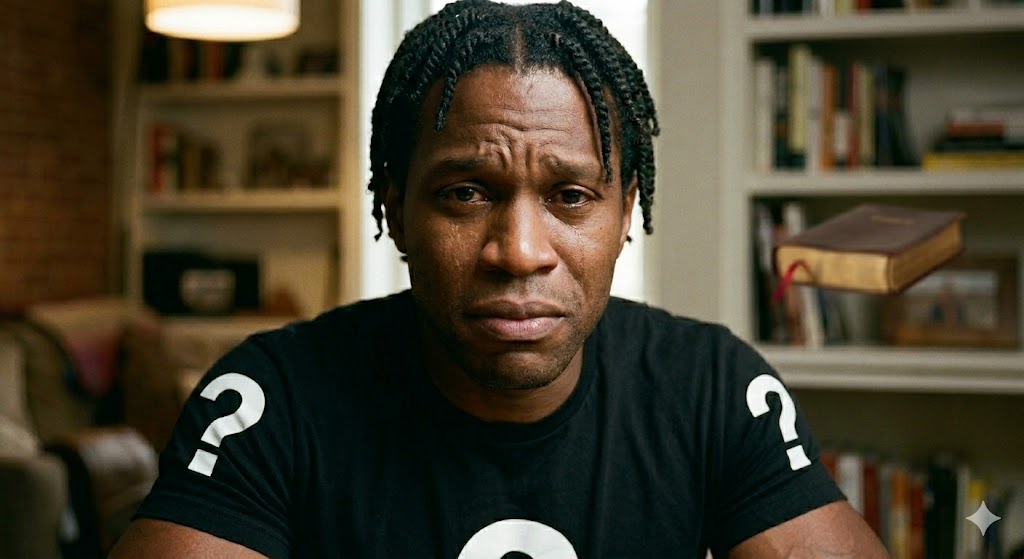
What Do You Do When the “?” Is Taped to Your Chest in Your Life?

The answer read below…..

Life often presents moments of uncertainty so heavy that it feels like a literal question mark has been taped to your chest. You may have prayed fervently, sought guidance, and begged God for clarity about your purpose, relationships, career, or calling, yet the silence seems deafening. This season of ambiguity can test faith, patience, and resilience. How should a believer respond when the answers are not immediately clear, when you have asked God with sincerity and humility, and yet, hear nothing in return?

The first principle is patience. Waiting on God is not passive; it is an active stance of trust, faith, and preparedness. Psalm 27:14 (KJV) exhorts, “Wait on the Lord: be of good courage, and he shall strengthen thine heart: wait, I say, on the Lord.” Waiting involves maintaining spiritual discipline, continuing to pray, worship, and live according to God’s principles even when clarity seems distant.

Prayer is foundational, but it must be consistent and intentional. Philippians 4:6–7 (KJV) advises, “Be careful for nothing; but in every thing by prayer and supplication with thanksgiving let your requests be made known unto God. And the peace of God, which passeth all understanding, shall keep your hearts and minds through Christ Jesus.” Continual prayer with thanksgiving, even in silence, establishes a rhythm of dependence and aligns your heart with divine timing.

Silence from God does not signify abandonment. Isaiah 30:18 (KJV) reminds us, “And therefore will the Lord wait, that he may be gracious unto you, and therefore will he be exalted, that he may have mercy upon you: for the Lord is a God of judgment: blessed are all they that wait for him.” His timing is perfect, and periods of waiting often refine character, deepen faith, and clarify motives.

When seeking answers, humility is crucial. Ask God for guidance with expectation, not arrogance. James 4:6 (KJV) states, “But he giveth more grace. Wherefore he saith, God resisteth the proud, but giveth grace unto the humble.” The posture of a humble heart opens one to receive direction while preventing frustration or pride from clouding judgment.

Pay attention to peace. The Bible teaches that peace is a guide to discernment. Colossians 3:15 (KJV) instructs, “And let the peace of God rule in your hearts, to the which also ye are called in one body; and be ye thankful.” When faced with a “?” in life, notice the paths that bring peace, the choices that ease the tension in your spirit. Peace becomes a compass when words, visions, or immediate clarity are absent.

Daily discipline in prayer, meditation, and scripture reading strengthens discernment. Romans 12:2 (KJV) exhorts believers, “And be not conformed to this world: but be ye transformed by the renewing of your mind, that ye may prove what is that good, and acceptable, and perfect, will of God.” Transformation occurs in these quiet, consistent practices, allowing God to shape understanding over time.

Faith often grows most during seasons of unanswered questions. Hebrews 11:1 (KJV) defines faith as “the substance of things hoped for, the evidence of things not seen.” Trusting in God’s guidance before receiving clarity strengthens reliance on Him rather than on one’s own understanding. Proverbs 3:5–6 (KJV) further emphasizes, “Trust in the Lord with all thine heart; and lean not unto thine own understanding. In all thy ways acknowledge him, and he shall direct thy paths.”

While waiting, it is essential to examine the heart’s posture. Are prayers motivated by desperation, self-interest, or genuine desire for God’s will? Psalm 37:4 (KJV) assures, “Delight thyself also in the Lord: and he shall give thee the desires of thine heart.” True alignment with God’s desires produces clarity and contentment while awaiting external confirmation.

The psychological dimension of waiting is also significant. Research on uncertainty demonstrates that prolonged ambiguity increases stress and can lead to anxiety or impulsive decisions (Carleton, 2016). Maintaining routines, mindfulness, and prayerful reflection helps manage this tension and prevents hasty actions that may contradict God’s plan.

Discernment often requires active listening. Beyond spoken prayer, pay attention to subtle confirmations—peace, recurring themes in scripture, wise counsel, or gentle nudges from the Spirit. These may be overlooked if one expects overt signs or dramatic visions. Proverbs 20:27 (KJV) notes, “The spirit of man is the candle of the Lord, searching all the inward parts of the belly.” Inner awareness is a channel for divine guidance.

Community plays a role in interpreting life’s “?” moments. Seek counsel from spiritually mature, trusted individuals. Proverbs 11:14 (KJV) teaches, “Where no counsel is, the people fall: but in the multitude of counsellors there is safety.” Honest dialogue with mentors or peers can illuminate paths previously unseen while maintaining accountability and humility.

Actions matter as much as reflection. While waiting, engage in productive, purposeful activities aligned with your values and God’s principles. Micah 6:8 (KJV) reminds, “He hath shewed thee, O man, what is good; and what doth the Lord require of thee, but to do justly, and to love mercy, and to walk humbly with thy God?” Consistent action cultivates readiness for opportunities when clarity arrives.

Resisting impatience is critical. Luke 21:19 (KJV) counsels, “In your patience possess ye your souls.” Impatience can prompt compromise, poor decision-making, or settling for alternatives that undermine long-term purpose. Waiting, while difficult, is an act of obedience and trust.

Acknowledging emotions is healthy. Feelings of frustration, fear, or confusion are natural. Express these honestly in prayer without demanding immediate answers. Psalm 62:8 (KJV) encourages, “Trust in him at all times; ye people, pour out your heart before him: God is a refuge for us.” Vulnerable, honest prayer does not weaken faith; it deepens it.

Testing assumptions is essential. Sometimes, the absence of answers signals the need for growth, preparation, or discernment. James 1:3 (KJV) notes, “Knowing this, that the trying of your faith worketh patience.” Life’s questions often require inner transformation before external solutions are revealed.

Spiritual journaling can aid clarity. Recording prayers, insights, and experiences allows reflection over time, highlighting patterns or guidance previously unnoticed. It aligns with Habakkuk 2:2 (KJV): “Write the vision, and make it plain upon tables, that he may run that readeth it.” Writing encourages focused reflection and retention of God’s subtle responses.

Faithful consistency nurtures trust in the unseen. Galatians 6:9 (KJV) states, “And let us not be weary in well doing: for in due season we shall reap, if we faint not.” Continuing to act with integrity, kindness, and obedience positions the believer to recognize God’s direction when it appears.

Ultimately, the answer may come as a gentle whisper of intuition, a sense of peace, or an unexpected opportunity. Isaiah 30:21 (KJV) affirms, “And thine ears shall hear a word behind thee, saying, This is the way, walk ye in it, when ye turn to the right hand, and when ye turn to the left.” Peace is often the clearest sign that a path aligns with God’s will.

In conclusion, when the “?” is taped to your chest, your response is guided by prayer, humility, patience, and attentiveness to peace. Seek guidance without arrogance, maintain daily communion with God, and act in alignment with His principles. Trust that clarity will come in due season. Waiting is not inactivity; it is preparation, refinement, and cultivation of discernment until God’s direction becomes unmistakable.


References

Carleton, R. N. (2016). Fear of the unknown: One fear to rule them all? Journal of Anxiety Disorders, 41, 5–21.

Goleman, D. (1995). Emotional intelligence. Bantam Books.

Bible. (1769/2017). King James Version. (Original work published 1611).

Psalm 27:14; 37:4, 37:7, 62:8; Proverbs 3:5–6; 11:14; 20:27; 29:18; Isaiah 30:21; Micah 6:8; Hebrews 11:1; Philippians 4:6–7; Colossians 3:15; Romans 12:2; James 1:3, 4:6; Luke 21:19; Galatians 6:9; 1 Thessalonians 5:17; Ephesians 4:32.

Wisdom Alert! Anger is a Trap!

Anger is a powerful emotion that can feel justified in moments of injustice, betrayal, or personal offense. Yet unchecked, it becomes a snare that enslaves the mind, poisons the spirit, and damages relationships. The scripture warns repeatedly against anger, highlighting its potential to mislead and destroy. Proverbs 14:29 (KJV) states, “He that is slow to wrath is of great understanding: but he that is hasty of spirit exalteth folly.” Wisdom requires patience and discernment rather than immediate retaliation.

Psychology supports this ancient warning. Research shows that chronic anger increases the risk of cardiovascular disease, hypertension, and impaired immune function (Chida & Steptoe, 2009). Beyond physical health, anger affects cognitive clarity, decision-making, and social connections. The mind under anger narrows, focusing on perceived threats rather than long-term solutions.

The Bible situates anger within moral and spiritual frameworks. Ephesians 4:26 (KJV) advises, “Be ye angry, and sin not: let not the sun go down upon your wrath.” This passage acknowledges that anger is a natural response but cautions against allowing it to produce sin. Unchecked anger often leads to actions or words that violate ethical principles, creating regret and relational rupture.

Psychological studies similarly distinguish between constructive and destructive anger. Constructive anger motivates problem-solving and boundary-setting, while destructive anger produces aggression, resentment, and impulsive behaviors (Deffenbacher, 2011). Awareness of this distinction is crucial in navigating emotional responses healthily.

Anger often arises from perceived disrespect or violation of expectations. Cognitive-behavioral psychology highlights that our interpretation of events—not just the events themselves—triggers emotional responses (Beck, 2011). Misinterpretation or magnification of perceived slights can intensify anger unnecessarily. Controlling interpretation is as important as controlling reaction.

Righteous anger, as modeled in scripture, is distinguished by purpose and restraint. Jesus expressed anger in the temple when confronting injustice, yet it was measured and directed at sin, not personal vendettas (Matthew 21:12–13, KJV). Observing boundaries, restraint, and clarity ensures that anger serves justice rather than ego.

Holding onto anger allows it to fester. Ephesians 4:31 (KJV) instructs, “Let all bitterness, and wrath, and anger, and clamor, and evil speaking, be put away from you, with all malice.” Chronic resentment corrodes the soul, creating psychological rigidity and preventing reconciliation. Forgiveness is a proactive antidote, freeing both parties from the cycle of reactivity.

From a psychological standpoint, rumination is a dangerous companion of anger. Persistent focus on grievances strengthens neural pathways associated with stress and hostility, making future anger responses easier to trigger (Nolen-Hoeksema, 2000). Mindfulness, journaling, or structured reflection can break this pattern, promoting emotional regulation.

Anger also impedes effective communication. When emotionally charged, individuals are more likely to misinterpret intentions, exaggerate offenses, and escalate conflicts (Gottman & Levenson, 1992). A measured approach allows for dialogue, reconciliation, and problem-solving rather than destruction.

Spiritual disciplines complement psychological strategies. Prayer, meditation on scripture, and seeking godly counsel redirect focus from self-centered indignation to constructive action. Psalm 37:8 (KJV) admonishes, “Cease from anger, and forsake wrath: fret not thyself in any wise to do evil.” Patience, rooted in faith, fosters emotional and moral clarity.

Anger often masks deeper emotions such as fear, hurt, or insecurity. Recognizing these underlying feelings allows one to address core issues rather than lashing out at surface provocations. Psychological interventions like emotion-focused therapy emphasize understanding and validating these hidden layers to prevent misdirected anger (Greenberg, 2010).

Forgiveness does not require forgetting, nor does it mean condoning wrong behavior. Rather, it releases personal bondage to anger. Colossians 3:13 (KJV) reminds, “Forbearing one another, and forgiving one another, if any man have a quarrel against any: even as Christ forgave you, so also do ye.” Forgiveness preserves mental and spiritual health.

Self-control is an essential skill in managing anger. Proverbs 16:32 (KJV) observes, “He that is slow to anger is better than the mighty; and he that ruleth his spirit than he that taketh a city.” Strength lies not in forceful retaliation but in restraint, discernment, and wisdom. The ability to rule the spirit is a form of power often overlooked.

Cognitive-behavioral techniques, such as reframing negative thoughts, can be effective in transforming anger into constructive energy (Beck, 2011). Reinterpreting provocations as opportunities for growth or as reflections of others’ limitations reduces emotional reactivity, fostering resilience.

Anger can also be contagious. Social psychology indicates that exposure to angry individuals increases one’s own anger, reinforcing cycles of hostility (Barsade, 2002). Avoiding toxic environments and engaging in calm, supportive relationships protects emotional balance and promotes positive influence.

The dangers of suppressed anger should not be ignored. Bottled anger manifests physically through tension, anxiety, and psychosomatic symptoms. Psychologists recommend safe outlets such as physical exercise, creative expression, or structured reflection to prevent internal harm while maintaining ethical conduct.

Developing empathy counters anger’s destructive tendencies. Understanding the perspectives and struggles of others reduces automatic blame and promotes compassion. Romans 12:17–21 (KJV) encourages believers not to repay evil with evil but to overcome evil with good, integrating moral wisdom with emotional regulation.

Prayer and spiritual reflection provide perspective beyond personal grievances. By seeking divine guidance, individuals can respond to provocation with discernment rather than reactive emotion. James 1:19 (KJV) counsels, “Let every man be swift to hear, slow to speak, slow to wrath,” emphasizing measured response over impulsive reaction.

The cumulative effect of uncontrolled anger is relational, emotional, and spiritual degradation. Friendships, marriages, workplaces, and communities suffer when reactive hostility prevails. Conversely, managing anger with wisdom, patience, and self-discipline fosters trust, respect, and long-term harmony.

Ultimately, wisdom teaches that anger itself is not the problem—it is the mismanagement of anger that ensnares. By combining scriptural principles with psychological insights, individuals can recognize triggers, regulate emotions, and act with discernment. Anger, when understood and controlled, becomes a signal for reflection, not destruction.

Anger is a trap—but awareness, self-control, forgiveness, and patience provide the keys to freedom. The Bible and psychology converge on this truth: mastery over the spirit, calm in adversity, and measured action preserve life, health, and relationships. Wise individuals choose restraint over reaction, understanding over impulse, and love over wrath.


References

Barsade, S. G. (2002). The ripple effect: Emotional contagion and its influence on group behavior. Administrative Science Quarterly, 47(4), 644–675.

Beck, J. S. (2011). Cognitive behavior therapy: Basics and beyond (2nd ed.). Guilford Press.

Chida, Y., & Steptoe, A. (2009). The association of anger and hostility with future coronary heart disease: A meta-analytic review of prospective evidence. Journal of the American College of Cardiology, 53(11), 936–946.

Deffenbacher, J. L. (2011). Cognitive-behavioral conceptualization and treatment of anger. Cognitive and Behavioral Practice, 18(1), 88–97.

Gottman, J. M., & Levenson, R. W. (1992). Marital processes predictive of later dissolution: Behavior, physiology, and health. Journal of Personality and Social Psychology, 63(2), 221–233.

Greenberg, L. S. (2010). Emotion-focused therapy: Theory and practice. American Psychological Association.

Nolen-Hoeksema, S. (2000). The role of rumination in depressive disorders and mixed anxiety/depressive symptoms. Journal of Abnormal Psychology, 109(3), 504–511.

Bible. (1769/2017). King James Version. (Original work published 1611).
The Brown Girl Playbook: “Study to Shew Thyself Approved” — A KJV Blueprint for Faith, Discipline, and Divine Purpose

The Brown Girl Playbook is more than a devotional reflection; it is a disciplined manifesto rooted in sacred text and lived experience. Anchored in 2 Timothy 2:15 (KJV), this blueprint calls the brown-skinned daughter of the diaspora to intellectual rigor, spiritual maturity, and divine alignment. In a world that often measures her worth by aesthetics, performance, or proximity to power, scripture redirects her gaze upward—toward God’s approval rather than human applause.

The apostle Paul’s exhortation to Timothy, preserved in the Bible, declares: “Study to shew thyself approved unto God, a workman that needeth not to be ashamed, rightly dividing the word of truth.” This passage is not passive encouragement; it is an imperative. The Greek term spoudazo implies diligence, zeal, and intentional effort. For the brown girl navigating intersecting systems of race, gender, and class, diligence becomes both spiritual obedience and social resistance.

To “study” in this context transcends academic accumulation. It is the cultivation of discernment. It is the refusal to internalize narratives shaped by colonialism, patriarchy, and colorism. Study becomes liberation. As Black feminist scholars have long argued, knowledge production is power, particularly for marginalized women (Collins, 2000). Thus, to study is to reclaim agency over theology, identity, and destiny.

The phrase “shew thyself approved” suggests presentation. Approval is not granted by trend cycles or social media validation but by divine scrutiny. The Brown Girl Playbook challenges its reader to consider: Who is the ultimate audience of your life? In an era of curated identities, the scripture centers authenticity before God rather than performance before society.

“A workman that needeth not to be ashamed” evokes labor. Faith is work. Character is work. Healing generational trauma is work. The brown girl is often expected to labor silently—emotionally, professionally, spiritually—without acknowledgment. Yet Paul reframes labor as sacred craftsmanship. Her work, when grounded in truth, becomes an offering rather than exploitation.

The instruction to “rightly divide the word of truth” speaks to hermeneutics. Historically, biblical texts have been weaponized against Black bodies and women’s autonomy. To rightly divide is to interpret responsibly. It demands historical context, linguistic precision, and spiritual humility. It rejects both blind literalism and reckless distortion. The Brown Girl Playbook insists that theological literacy is a form of self-defense.

Faith without discipline dissolves into sentimentality. Discipline without faith becomes legalism. This blueprint holds both in tension. Spiritual practices—prayer, fasting, study, reflection—are not rituals of restriction but rhythms of alignment. They train the mind and subdue the ego, fostering resilience amid societal pressures.

For the brown girl in academic spaces, professional arenas, or creative industries, excellence becomes witness. Not perfectionism born of trauma, but excellence born of devotion. When she studies, prepares, and refines her craft, she reflects divine order. Discipline becomes a spiritual aesthetic—structured, intentional, luminous.

The Playbook also confronts internalized shame. Many brown girls inherit narratives of inadequacy tied to skin tone, hair texture, or socioeconomic origin. Yet scripture dismantles shame through divine approval. If God approves the diligent seeker, then inferiority loses authority. Spiritual identity reorients psychological self-concept.

Divine purpose is not discovered through comparison but consecration. The Brown Girl Playbook invites solitude for clarity. Study produces revelation; revelation produces direction. In silence, she hears vocation more clearly than in the noise of competition. Purpose unfolds not as spectacle but as stewardship.

Moreover, this blueprint affirms community. While study is personal, approval is not isolation. Brown girls thrive in networks of mentorship, sisterhood, and intergenerational wisdom. The disciplined woman does not hoard knowledge; she multiplies it. She becomes both student and teacher, embodying legacy.

In confronting systemic injustice, disciplined faith becomes prophetic. To study scripture deeply is to encounter themes of liberation, justice, and covenant. The same text that calls for diligence also calls for righteousness. Therefore, the Brown Girl Playbook integrates spirituality with social consciousness, refusing to divorce devotion from justice.

This blueprint also reclaims femininity as intellectual. The stereotype that beauty and brilliance cannot coexist collapses under disciplined study. The brown girl may adorn herself, excel academically, and cultivate spiritual authority simultaneously. Faith refines identity rather than restricting it.

Ultimately, “Study to shew thyself approved” is an invitation to sacred ambition. It does not encourage striving for worldly dominance but for eternal alignment. Approval before God reorders priorities, tempers ego, and stabilizes identity. It offers peace that applause cannot sustain.

The Brown Girl Playbook, then, is a covenantal commitment—to study with zeal, to live without shame, and to pursue divine purpose with disciplined faith. In doing so, the brown girl does not merely survive cultural currents; she transcends them. She becomes a workman approved, rightly dividing truth, and walking boldly in destiny.


References

Collins, P. H. (2000). Black feminist thought: Knowledge, consciousness, and the politics of empowerment (2nd ed.). Routledge.

Bible. (1769/2017). King James Version. (Original work published 1611).

Beauty Series: The Halo Effect – How Attractiveness Shapes Perception

The concept of the “halo effect” has fascinated psychologists, sociologists, and everyday observers for decades. At its core, the halo effect describes a cognitive bias whereby one prominent positive trait, such as physical attractiveness, influences the perception of other unrelated traits. In other words, when someone appears beautiful, people often assume they are also intelligent, kind, successful, or trustworthy, even without evidence.

The halo effect was first formally studied by psychologist Edward Thorndike in 1920, who observed that commanding officers in the military rated subordinates more positively across unrelated categories if they excelled in one area. While Thorndike’s research did not focus on physical attractiveness, it laid the groundwork for understanding how first impressions can distort judgment across traits.

Later research explicitly explored how beauty generates this cognitive bias. Dion, Berscheid, and Walster (1972) coined the phrase “what is beautiful is good,” showing that physically attractive individuals were perceived as more socially competent, morally upright, and even happier than less attractive peers. Their experiments highlighted the enduring psychological power of appearance.

The halo effect operates unconsciously. People are rarely aware that their assessments are influenced by attractiveness. This automatic bias can affect evaluations in nearly every area of life, from employment decisions and leadership selection to dating preferences and legal judgments.

One of the most striking examples of the halo effect occurs in the workplace. Attractive employees are often assumed to be more competent and capable of leadership, even when performance metrics are identical. Studies show that attractive individuals receive better performance reviews, higher starting salaries, and more promotional opportunities.

In education, teachers may unconsciously give more favorable evaluations to students they perceive as attractive. This subtle form of bias reinforces social inequalities and demonstrates that the halo effect has tangible consequences beyond social perception.

The halo effect is not limited to positive traits. A single negative feature or action can produce a “horn effect,” in which one perceived flaw leads observers to assume other negative qualities. Both effects illustrate the same cognitive shortcut: humans generalize from salient cues to form overall impressions.

Physical attractiveness is closely tied to evolutionary psychology. Humans are wired to perceive health, symmetry, and vitality as indicators of genetic fitness. These evolutionary preferences amplify the halo effect, making beautiful people appear more capable or desirable.

Modern research expands the halo effect to digital spaces. Social media, filters, and photo-editing software amplify attractiveness cues, often creating inflated perceptions of competence, confidence, or social status. Gulati et al. (2024) demonstrate that AI-enhanced beauty can exacerbate the halo effect, influencing online hiring, social influence, and even dating behavior.

Cultural standards of beauty further shape the halo effect. What is considered attractive in one society may differ in another, yet the cognitive bias persists universally. Studies show that while facial symmetry and skin clarity are often valued cross-culturally, attributes such as height, body proportion, and grooming also contribute to halo-based judgments.

Celebrities and public figures benefit disproportionately from the halo effect. Actors, musicians, and politicians who are conventionally attractive often receive amplified media coverage, favorable reviews, and greater public trust, regardless of their actual competence or achievements.

The halo effect also influences judicial outcomes. Research indicates that defendants who are physically attractive receive more lenient sentences and more favorable juror assessments than less attractive defendants. This underscores how subconscious biases can infiltrate systems of justice.

In romantic relationships, attractiveness plays a dual role. Attractive individuals are often assumed to possess positive personality traits, leading to increased attention, dating opportunities, and perceived compatibility. However, these assumptions are not always accurate, and reliance on the halo effect can lead to misjudgment and disappointment.

Educational institutions, workplaces, and legal systems have developed training and awareness programs to mitigate the halo effect. By making evaluators conscious of their biases, organizations aim to reduce the disproportionate influence of attractiveness on decisions that should rely on objective criteria.

Despite its negative consequences, the halo effect can also have positive social functions. It can facilitate smoother social interactions, foster trust, and encourage prosocial behavior when applied unconsciously in small, everyday encounters. The challenge lies in balancing instinctual perceptions with critical assessment.

Media representation further entrenches halo-driven biases. Television, advertising, and film often equate beauty with moral virtue, intelligence, and social desirability, reinforcing societal beliefs about the link between appearance and character. These portrayals perpetuate stereotypes that extend the halo effect beyond personal observation.

The halo effect intersects with gender and race. Studies reveal that attractive women often experience both advantage and heightened scrutiny, while attractive men are perceived as more competent and dominant. Cultural biases also affect how attractiveness is perceived across different racial groups, revealing the interplay between beauty standards and systemic inequality.

Beauty standards evolve over time, yet the halo effect remains consistent. From Renaissance portraits to modern Instagram filters, humans are inclined to generalize from visible cues of beauty to judgments about competence, character, and social value.

Awareness of the halo effect empowers individuals to question first impressions. By actively seeking objective evidence and critically evaluating assumptions, people can reduce the unconscious influence of attractiveness on decisions, creating fairer evaluations in education, employment, and social judgment.

Ultimately, the halo effect demonstrates the profound power of perception in shaping human interactions. Beauty influences how people are treated, what opportunities they receive, and how society interprets their value. Recognizing this bias is a first step toward creating equitable systems that honor true merit over appearance.


References

Dion, K., Berscheid, E., & Walster, E. (1972). What is beautiful is good. Journal of Personality and Social Psychology, 24(3), 285–290.

Thorndike, E. L. (1920). A constant error in psychological ratings. Journal of Applied Psychology, 4(1), 25–29.

Talamas, S. N., Mavor, K. I., & Perrett, D. I. (2016). Blinded by beauty: Attractiveness bias and accurate perceptions of academic performance. PLoS ONE, 11(2), e0148284.

Gulati, A., Martínez-Garcia, M., Fernández, D., Lozano, M. A., Lepri, B., & Oliver, N. (2024). What is beautiful is still good: The attractiveness halo effect in the era of beauty filters. Computers in Human Behavior, 152, 107034.

Fiske, S. T., & Taylor, S. E. (2013). Social cognition: From brains to culture (2nd ed.). Sage Publications.

Nisbett, R. E., & Wilson, T. D. (1977). The halo effect: Evidence for unconscious alteration of judgments. Journal of Personality and Social Psychology, 35(4), 250–256.

Rosen, S., & Grossman, J. (2020). Attractiveness bias: Implications for education, employment, and justice. Social Science Review, 42(3), 112–128.

The Beautiful Lie: How Society Profits from Insecurity.

Photo by Anchau on Pexels.com

Beauty, once a divine reflection of the Creator’s artistry, has been reduced to a calculated illusion—a “beautiful lie” designed to manipulate desire, monetize insecurity, and manufacture self-doubt. In today’s global marketplace, appearance has become currency, and perfection is the most profitable deception of all. Beneath the gloss of glamour lies a darker truth: entire industries thrive because people have been taught to hate themselves.

The business of insecurity is one of the most lucrative empires in history. From cosmetic conglomerates to social media platforms, corporations profit from the human yearning to feel valuable. Advertisers do not sell products—they sell the promise of acceptance. Their genius lies in first convincing consumers that something is wrong with them, then offering a remedy. As Jean Kilbourne famously noted, advertising doesn’t just reflect culture—it creates it. The beauty industry’s success depends on perpetual dissatisfaction.

From a young age, people are conditioned to equate worth with appearance. Billboards, television ads, and digital influencers bombard the psyche with unrealistic standards. Women are told that youth equals beauty and that aging is failure. Men are taught that strength equals worth and vulnerability equals weakness. This conditioning shapes self-perception long before individuals are conscious of it. In essence, society manufactures insecurity, then monetizes the cure.

The “beautiful lie” is reinforced through repetition and aspiration. The more we see an image, the more we internalize it as truth. The faces on magazine covers, filtered social media feeds, and cosmetic advertisements become the blueprint for desirability. Yet these images are often digitally manipulated, creating an unattainable ideal. When people fail to live up to these illusions, they blame themselves instead of the system designed to deceive them.

In this way, insecurity becomes an economic engine. The global beauty and self-improvement industry generates hundreds of billions annually, feeding off dissatisfaction. Each wrinkle cream, diet pill, or surgical enhancement is marketed as liberation, yet it only deepens bondage. As Naomi Wolf (1991) argued, the beauty myth keeps people, especially women, distracted from power by keeping them preoccupied with appearance. What masquerades as empowerment often conceals economic exploitation.

Social media has intensified this cycle by transforming self-presentation into performance. Platforms like Instagram and TikTok reward conformity to specific aesthetics. Filters erase imperfections, while algorithms amplify idealized content. Users learn to edit their own faces and lives in real time, curating an image that aligns with societal approval. This performative culture traps millions in digital mirrors—comparing, competing, and consuming in pursuit of validation that never satisfies.

For communities of color, the beautiful lie carries an additional layer of violence. Eurocentric standards have long defined beauty as whiteness, rendering African, Asian, and Indigenous features “other.” Colorism, hair discrimination, and body shaming are not accidental—they are the residual tools of colonialism, weaponized to enforce inferiority. The global skin-lightening industry, worth billions, proves that racialized beauty standards remain profitable centuries after slavery’s end.

The irony is that the traits once mocked—full lips, darker skin, textured hair—are now commodified when worn by non-Black bodies. This cultural theft exposes how beauty capitalism does not celebrate diversity; it exploits it. By extracting elements of Blackness without acknowledging Black humanity, society continues to profit from the same features it historically oppressed. The beautiful lie thus perpetuates both aesthetic and racial inequality.

Psychologically, this system operates like an addiction. Each purchase offers temporary relief from insecurity but deepens dependency on external validation. The mirror becomes a site of anxiety rather than appreciation. As bell hooks (1992) observed, this psychological colonization convinces people to view themselves through the eyes of the oppressor. True liberation requires breaking the gaze—learning to see oneself as God intended, not as marketing demands.

Spiritually, the beautiful lie represents the fall of humanity’s original design. In Genesis 1:27, Scripture declares that mankind was created in the image of God. This divine image (imago Dei) bestowed inherent worth and beauty upon every soul. Yet the serpent’s deception in the Garden of Eden was rooted in the same strategy that drives today’s marketing: convincing people that what God made was not enough. The modern beauty industry continues this ancient lie—“You will be better if you buy.”

When appearance replaces character as the measure of worth, society loses its moral compass. The culture of comparison breeds envy, pride, and despair. People are no longer content to be; they must appear. This illusion of perfection erodes authenticity and replaces identity with branding. In this context, beauty becomes not an expression of individuality, but a performance for approval.

The consequences extend beyond the psychological to the economic. Billions are spent annually on products and procedures that promise transformation but deliver dependence. Corporations profit most when consumers are never satisfied. The model is designed not for fulfillment but for repetition. Insecurity is thus not a flaw of the system—it is the system. Without self-doubt, capitalism would lose one of its most reliable markets.

In the African diaspora, the rejection of this system has become an act of resistance. Movements like “Black is Beautiful,” “Melanin Magic,” and “Love Your Hair” reclaim identity from colonial deception. They remind the world that beauty is not the property of whiteness but the reflection of divine diversity. To love oneself as God created is a radical act in a world that profits from self-hate.

For men, too, the lie is evolving. The rise of male beauty industries and gym culture has produced a new kind of insecurity. Men are now taught to chase hypermasculine physiques and external success at the expense of emotional wholeness. The result is silent suffering masked by muscle and materialism. Cosmetic capitalism thus exploits all genders, reshaping the soul through the scalpel of profit.

Breaking free from the beautiful lie requires reclaiming truth. The truth that beauty is not a currency, but a calling. That self-worth is not purchased, but inherited from divine origin. The book of Psalms declares, “I will praise thee; for I am fearfully and wonderfully made” (Psalm 139:14, KJV). This is not poetic sentiment—it is spiritual revelation. To accept oneself as God made is the ultimate rejection of the capitalist lie.

Communities, educators, and faith leaders must play a role in restoring healthy identity. Teaching children to value character over cosmetics, and purpose over popularity, reclaims the narrative from corporations that exploit innocence. Spiritual formation must replace self-marketing; self-acceptance must triumph over self-alteration. In this way, beauty becomes testimony, not transaction.

Ultimately, the beautiful lie thrives only as long as people believe they are broken. The moment individuals rediscover their divine reflection, the illusion collapses. The mirrors of capitalism shatter when faced with the light of truth. True beauty—rooted in integrity, compassion, and divine creation—cannot be sold, filtered, or franchised. It is freedom made visible.

In rejecting the beautiful lie, humanity rediscovers its original design: whole, worthy, and radiant in the image of God. When we stop buying insecurity and start living truth, beauty ceases to be an industry—and becomes what it was always meant to be: the visible echo of the Creator’s love.


References

Blay, Y. (2017). Pretty. Period.: The politics of being Black and beautiful. Blackprint Press.
Davis, A. Y. (1981). Women, race, & class. Random House.
Fanon, F. (1952). Black skin, white masks. Grove Press.
hooks, b. (1992). Black looks: Race and representation. South End Press.
Kilbourne, J. (1999). Can’t buy my love: How advertising changes the way we think and feel. Touchstone.
Mercer, K. (1994). Welcome to the jungle: New positions in Black cultural studies. Routledge.
Nyong’o, L. (2014). Lupita Nyong’o’s speech on beauty and self-love [Video]. Essence Black Women in Hollywood.
Tate, S. (2016). Black beauty: Aesthetics, stylization, politics. Routledge.
Thomas, C. (2019). God, image, and identity: Reclaiming beauty from a biblical lens. Faith & Reason Press.
Walker, A. (1983). In search of our mothers’ gardens: Womanist prose. Harcourt Brace Jovanovich.
Wilkerson, I. (2020). Caste: The origins of our discontents. Random House.
Wolf, N. (1991). The beauty myth: How images of beauty are used against women. HarperCollins.
Wynter, S. (2003). Unsettling the coloniality of being/power/truth/freedom. The New Centennial Review, 3(3), 257–337.
The Holy Bible, King James Version. (1611). Thomas Nelson.
West, C. (1993). Race matters. Beacon Press.
Johnson, K. (2021). Beauty in resistance: Black aesthetics and cultural power. Duke University Press.

Girl Therapy: Never Let a Man….

Girl therapy begins with the radical act of remembering your worth. Many women are socialized to tolerate emotional neglect, disrespect, and instability in the name of love. Yet, both psychology and scripture affirm that healthy relationships are built on mutual respect, truth, and dignity. To accept mistreatment is not humility; it is a gradual erosion of the self.

Never let a man treat you like dirt. Emotional abuse, contempt, and dismissive behavior are strongly associated with lowered self-esteem, anxiety, and depressive symptoms in women (Gottman & Silver, 2015). The Bible reinforces this standard of respect: “Husbands, love your wives, and be not bitter against them” (Colossians 3:19, KJV). Love that humiliates is not love—it is control disguised as intimacy.

Never let a man cheat on you and normalize betrayal. Infidelity fractures trust and activates trauma responses in the brain similar to post-traumatic stress (Gordon, Baucom, & Snyder, 2004). Scripture is unequivocal: “Thou shalt not commit adultery” (Exodus 20:14, KJV). Betrayal is not a mistake of passion; it is a violation of covenant and character.

Never let a man have sex with you before marriage if it contradicts your values. Psychological research consistently shows that women who engage in emotionally uncommitted sexual relationships report higher levels of attachment anxiety and emotional dissatisfaction (Vrangalova, 2015). Biblically, sexual intimacy is framed as sacred and covenantal: “Flee fornication… your body is the temple of the Holy Ghost” (1 Corinthians 6:18–19, KJV).

Never let a man lie to you and call it privacy. Chronic deception undermines relational security and creates what psychologists call “epistemic mistrust,” where the nervous system remains hypervigilant and unsafe (Fonagy & Allison, 2014). Scripture teaches, “Lying lips are abomination to the Lord” (Proverbs 12:22, KJV). Truth is not optional in love; it is foundational.

Never let a man steal your peace. Relationships characterized by emotional chaos, unpredictability, and conflict dysregulate the nervous system and contribute to chronic stress and burnout (Sapolsky, 2004). The Bible states, “God is not the author of confusion, but of peace” (1 Corinthians 14:33, KJV). Peace is not a luxury—it is a spiritual and psychological necessity.

Never let a man make you feel less than. Emotional invalidation erodes self-concept and reinforces internalized inferiority (Rogers, 1961). Scripture counters this narrative: “I will praise thee; for I am fearfully and wonderfully made” (Psalm 139:14, KJV). Love should expand your sense of self, not shrink it.

Never let a man manipulate you. Psychological manipulation—gaslighting, guilt-tripping, or emotional coercion—is a form of relational abuse that distorts reality and damages identity (Sweet, 2019). The Bible warns, “For Satan himself is transformed into an angel of light” (2 Corinthians 11:14, KJV), reminding us that harm often arrives disguised as charm.

Never let a man sleep with other women and still claim access to you. This dynamic fosters what attachment theory identifies as anxious-preoccupied bonding, where a woman remains emotionally invested in an unavailable partner (Hazan & Shaver, 1987). Scripture affirms exclusivity: “A man shall cleave unto his wife: and they shall be one flesh” (Genesis 2:24, KJV).

Never let a man move into your space without commitment. Cohabitation without clear relational intention is linked to lower relationship satisfaction and higher breakup rates, especially for women (Stanley, Rhoades, & Markman, 2006). Biblically, shared dwelling symbolizes covenant, not convenience.

Never let a man spend your money without reciprocity. Financial exploitation is a subtle form of power imbalance that undermines autonomy and security (Postmus et al., 2012). Scripture warns, “The borrower is servant to the lender” (Proverbs 22:7, KJV). Economic boundaries are spiritual boundaries.

Never let a man drain your emotional labor while offering no emotional presence. Women disproportionately carry relational maintenance, often at the cost of their own needs (Hochschild, 1983). Love without reciprocity becomes emotional servitude.

Never let a man keep you in limbo. Ambiguity in relationships increases anxiety and emotional dependency (Knobloch & Solomon, 2002). The Bible teaches clarity: “Let your communication be, Yea, yea; Nay, nay” (Matthew 5:37, KJV).

Never let a man define your identity. Self-concept rooted in another person rather than intrinsic worth leads to codependency and loss of agency (Beattie, 1992). Scripture states, “Ye are bought with a price; be not ye the servants of men” (1 Corinthians 7:23, KJV).

The solution begins with boundaries. Psychological research consistently affirms that clear boundaries predict higher self-esteem, relational satisfaction, and mental health outcomes (Linehan, 2014). Boundaries are not walls; they are filters for self-respect.

The solution is discernment. Observe patterns, not promises. Character is revealed in consistency, accountability, and behavior under pressure. “By their fruits ye shall know them” (Matthew 7:16, KJV).

The solution is celibacy or intentional intimacy. Choosing not to give your body where there is no covenant protects emotional attachment and spiritual alignment. This is not repression; it is preservation.

The solution is financial independence. Economic autonomy reduces vulnerability to manipulation and increases relational bargaining power (Kabeer, 1999). A woman who can sustain herself chooses love, not survival.

What Not to Ever Let a Man Do

Never let a man disrespect you—mock your feelings, belittle your intelligence, or speak to you with contempt.

Never let a man cheat on you and call it a mistake, a phase, or “just sex.”

Never let a man have sexual access to your body without commitment, covenant, and emotional safety.

Never let a man lie to you, omit the truth, or live a double life.

Never let a man manipulate you through guilt, fear, gaslighting, or emotional pressure.

Never let a man steal your peace with chaos, inconsistency, or emotional instability.

Never let a man make you feel replaceable, optional, or easily discarded.

Never let a man keep you in situationships, ambiguity, or indefinite waiting.

Never let a man sleep with other women while expecting loyalty from you.

Never let a man move into your space without marriage-level commitment and responsibility.

Never let a man use your money, credit, or resources without reciprocity and accountability.

Never let a man drain your emotional labor while offering no emotional presence.

Never let a man isolate you from friends, family, or your support system.

Never let a man control your decisions, appearance, voice, or autonomy.

Never let a man project his trauma onto you and call it love.

Never let a man cross your boundaries and then blame you for reacting.

Never let a man lower your standards to match his lack of discipline.

Never let a man treat you like a convenience instead of a priority.

Never let a man normalize disrespect and call it “real love.”

Never let a man access your womb, your wallet, or your spirit without honoring your worth.


Core Principle (Psychology + Scripture)

If a man costs you:

  • your self-esteem
  • your mental health
  • your peace
  • your values
  • your identity

He is not a partner.
He is a liability.

“Above all else, guard thy heart; for out of it are the issues of life.”
Proverbs 4:23, KJV

This list is not about being harsh.
It is about being so psychologically healthy and spiritually grounded that dysfunction cannot take root in your life.

Boundaries are not bitterness.
They are self-respect made visible.

The solution is emotional regulation and healing. Unhealed attachment wounds attract familiar dysfunction (Levine & Heller, 2010). Therapy, prayer, and self-reflection recalibrate what you tolerate.

Ultimately, girl therapy is about sovereignty. It is the reclamation of the self from cultural narratives that glorify suffering in the name of love. A woman who knows her worth does not beg for consistency, tolerate betrayal, or barter her peace for affection. She understands, both psychologically and spiritually, that love is not proven by pain—but by safety, truth, and honor.


References

Beattie, M. (1992). Codependent no more: How to stop controlling others and start caring for yourself. Hazelden.

Fonagy, P., & Allison, E. (2014). The role of mentalizing and epistemic trust in the therapeutic relationship. Psychotherapy, 51(3), 372–380.

Gordon, K. C., Baucom, D. H., & Snyder, D. K. (2004). An integrative intervention for promoting recovery from extramarital affairs. Journal of Marital and Family Therapy, 30(2), 213–231.

Gottman, J. M., & Silver, N. (2015). The seven principles for making marriage work. Harmony.

Hazan, C., & Shaver, P. (1987). Romantic love conceptualized as an attachment process. Journal of Personality and Social Psychology, 52(3), 511–524.

Hochschild, A. R. (1983). The managed heart: Commercialization of human feeling. University of California Press.

Kabeer, N. (1999). Resources, agency, achievements: Reflections on the measurement of women’s empowerment. Development and Change, 30(3), 435–464.

Knobloch, L. K., & Solomon, D. H. (2002). Intimacy and the magnitude and experience of episodic uncertainty. Communication Monographs, 69(2), 122–143.

Levine, A., & Heller, R. (2010). Attached: The new science of adult attachment. TarcherPerigee.

Linehan, M. M. (2014). DBT skills training manual. Guilford Press.

Postmus, J. L., Plummer, S. B., McMahon, S., Murshid, N. S., & Kim, M. S. (2012). Understanding economic abuse in the lives of survivors. Journal of Interpersonal Violence, 27(3), 411–430.

Rogers, C. R. (1961). On becoming a person. Houghton Mifflin.

Sapolsky, R. M. (2004). Why zebras don’t get ulcers. Holt.

Sweet, P. L. (2019). The sociology of gaslighting. American Sociological Review, 84(5), 851–875.

Vrangalova, Z. (2015). Does casual sex harm college students’ well-being? Archives of Sexual Behavior, 44(4), 945–959.

The Holy Bible, King James Version. (1611/2017). Cambridge University Press.

Shadows of Survival: Cultural and Historical Angles of Poverty.

Photo by Timur Weber on Pexels.com

Poverty is not merely an economic condition—it is a historical inheritance and a cultural construct woven into the fabric of human civilization. Across time, the experience of poverty has been defined and redefined by systems of power, colonization, race, and class. To understand poverty in its fullest form, one must trace its origins not only through material deprivation but also through the narratives that have justified and perpetuated inequality across centuries.

Historically, poverty has always been linked to social hierarchy. In ancient societies, such as Egypt, Greece, and Rome, class divisions were considered natural and divinely ordained. The wealthy and ruling elites viewed the poor as necessary laborers to sustain their prosperity. Poverty was moralized, seen as either the result of divine punishment or personal failure. This moral framing laid the foundation for later ideologies that blamed the poor for their condition rather than recognizing structural injustice.

The transatlantic slave trade and European colonization marked one of the most defining periods in the global history of poverty. Colonized peoples were stripped not only of resources but of cultural wealth, languages, and social systems that sustained communal prosperity. Colonial powers imposed foreign economic structures that redirected wealth to Europe, leaving indigenous and African nations impoverished. The plantation economies, driven by slave labor, created a wealth gap so vast that its echoes still define global inequality today (Rodney, 1972).

Poverty among African-descended populations in the Americas cannot be understood apart from the legacy of slavery. Enslaved Africans built the economic foundation of Western wealth through cotton, sugar, and tobacco, yet were denied ownership, education, and dignity. After emancipation, systemic poverty was maintained through sharecropping, Jim Crow laws, and exclusion from property and credit. This structural design ensured that Black Americans remained economically dependent and socially constrained, creating generational poverty that persists in many communities (Massey & Denton, 1993).

Colonialism also reshaped the global map of poverty. In Africa, Asia, and Latin America, European empires extracted natural and human resources while imposing artificial borders that fractured indigenous governance. The introduction of cash economies replaced traditional systems of trade and reciprocity. Poverty thus became not an accident but an intentional outcome of colonial policy—a mechanism to maintain global control and cheap labor (Nkrumah, 1965).

The Industrial Revolution transformed the nature of poverty in Europe and America. While it generated immense wealth for the few, it created a working class that lived in squalid conditions. Urban poverty, marked by overcrowded housing, child labor, and pollution, became the visible cost of progress. Karl Marx’s critique of capitalism highlighted this disparity, arguing that the concentration of wealth in the hands of the bourgeoisie required the perpetual impoverishment of the proletariat (Marx & Engels, 1848).

Culturally, poverty has often been stigmatized through language, art, and religion. In Western Christian traditions, wealth was sometimes equated with divine favor, while poverty symbolized moral failure. Yet paradoxically, scripture also honored the poor, as seen in Christ’s teaching that “Blessed are the poor in spirit” (Matthew 5:3, KJV). This tension between compassion and condemnation reflects how societies have oscillated between viewing the poor as victims to be pitied and as burdens to be managed.

In African and indigenous worldviews, however, poverty was historically understood differently. Wealth was not individual accumulation but communal well-being. Before colonization, many African societies practiced economic systems based on reciprocity, where wealth circulated to ensure collective survival. The concept of Ubuntu—“I am because we are”—challenged the isolation and greed that define modern capitalism. Thus, colonial disruption did more than drain resources; it dismantled spiritual and cultural frameworks of shared prosperity.

During the 20th century, poverty became a central theme in liberation movements across the world. Figures like Martin Luther King Jr., Kwame Nkrumah, and Nelson Mandela recognized that racial and political freedom without economic justice was incomplete. King (1968) declared that “the curse of poverty has no justification in our age,” emphasizing that poverty is man-made and can be eradicated through restructuring values and systems.

The cultural psychology of poverty reveals deep internal effects. When generations are taught to see their struggles as inevitable or self-inflicted, they internalize inferiority. This “poverty of spirit,” as Paulo Freire (1970) described, leads to fatalism—the belief that one’s circumstances cannot change. Education, in this context, becomes not only a tool of empowerment but a form of psychological liberation.

In America, poverty intersects with race, geography, and gender. Black and Indigenous communities continue to experience disproportionately high poverty rates due to structural inequalities in education, housing, and employment. Women, particularly single mothers, face “the feminization of poverty,” where systemic sexism and wage disparity keep them in economic precarity (Pearce, 1978). These patterns reveal that poverty is not random but patterned along lines of social exclusion.

Media and culture play critical roles in shaping public perception of poverty. Hollywood often portrays the poor as either criminal, lazy, or helpless—rarely as intelligent, dignified, or resilient. Such imagery reinforces stereotypes that justify economic inequality. By contrast, cultural expressions in music, poetry, and art—particularly within the African diaspora—have served as acts of resistance, celebrating survival amid scarcity.

Hip-hop, gospel, and blues emerged as cultural responses to poverty. These art forms transformed pain into creativity, turning oppression into expression. They remind the world that even within impoverished conditions, there exists cultural richness, ingenuity, and hope. Poverty may restrict material access, but it cannot extinguish the human spirit.

The psychological consequences of poverty extend beyond financial stress. Chronic exposure to deprivation creates a state of hyper-vigilance and emotional exhaustion. Studies show that children raised in poverty experience higher rates of anxiety, trauma, and reduced cognitive development due to limited resources and environmental stressors (Evans, 2004). Poverty, therefore, is both an external and internal crisis—a condition of the mind as much as of the wallet.

Culturally, poverty shapes identity through shame and resilience. In communities that valorize wealth and consumption, being poor becomes a stigma. Yet within oppressed populations, shared struggle often builds solidarity. This paradox—of pain and pride coexisting—defines much of the cultural experience of poverty in Black and brown communities.

Historically, the myth of meritocracy has perpetuated the moralization of poverty. Capitalist societies glorify the self-made individual, suggesting that hard work alone ensures success. This narrative obscures the systemic barriers that prevent equal opportunity. It erases historical trauma—such as redlining, mass incarceration, and wage theft—that sustain economic inequity across generations.

Globally, poverty today reflects the aftershocks of colonization and globalization. Nations once stripped of their resources now struggle under debt, inflation, and environmental exploitation by the same powers that once enslaved them. The World Bank and International Monetary Fund, though framed as benevolent institutions, have often imposed austerity measures that deepen inequality in developing nations (Escobar, 1995).

Culturally, the poor have become both invisible and hyper-visible. They are displayed in charity campaigns yet excluded from policy decisions. Their stories are told by others, not by themselves. The cultural voice of poverty, when reclaimed, demands not pity but justice. It reminds societies that poverty is not simply the absence of money but the absence of fairness.

To address poverty requires cultural transformation as much as economic reform. It requires redefining wealth as collective well-being rather than individual success. Education must teach empathy, history, and critical consciousness. Policy must address not only income but dignity, ensuring access to housing, healthcare, and meaningful work.

Faith traditions, particularly in African and diasporic contexts, often frame poverty as a test of endurance and faith. Yet modern theology increasingly views justice as divine work—arguing that ending poverty honors the Creator’s design for equity and community. Thus, spirituality becomes not an escape from poverty but a moral engine for its eradication.

Culturally, healing from poverty’s trauma involves storytelling—restoring lost narratives of abundance, resilience, and ancestral strength. When people remember who they are and where they come from, they begin to dismantle the lies that poverty told them about their worth.

Ultimately, the historical and cultural dimensions of poverty reveal it to be not a flaw in individuals but in systems. To fight poverty is to confront history itself—to heal from the wounds of slavery, colonization, and capitalism. In that healing lies the restoration of dignity, the renewal of community, and the reawakening of humanity’s shared responsibility for one another.

References

Escobar, A. (1995). Encountering development: The making and unmaking of the Third World. Princeton University Press.

Evans, G. W. (2004). The environment of childhood poverty. American Psychologist, 59(2), 77–92.

Freire, P. (1970). Pedagogy of the oppressed. Continuum.

King, M. L., Jr. (1968). Where do we go from here: Chaos or community? Beacon Press.

Massey, D. S., & Denton, N. A. (1993). American apartheid: Segregation and the making of the underclass. Harvard University Press.

Marx, K., & Engels, F. (1848). The Communist Manifesto. Penguin Classics.

Nkrumah, K. (1965). Neo-colonialism: The last stage of imperialism. Thomas Nelson & Sons.

Pearce, D. M. (1978). The feminization of poverty: Women, work, and welfare. Urban and Social Change Review, 11(1–2), 28–36.

Rodney, W. (1972). How Europe underdeveloped Africa. Bogle-L’Ouverture Publications.