
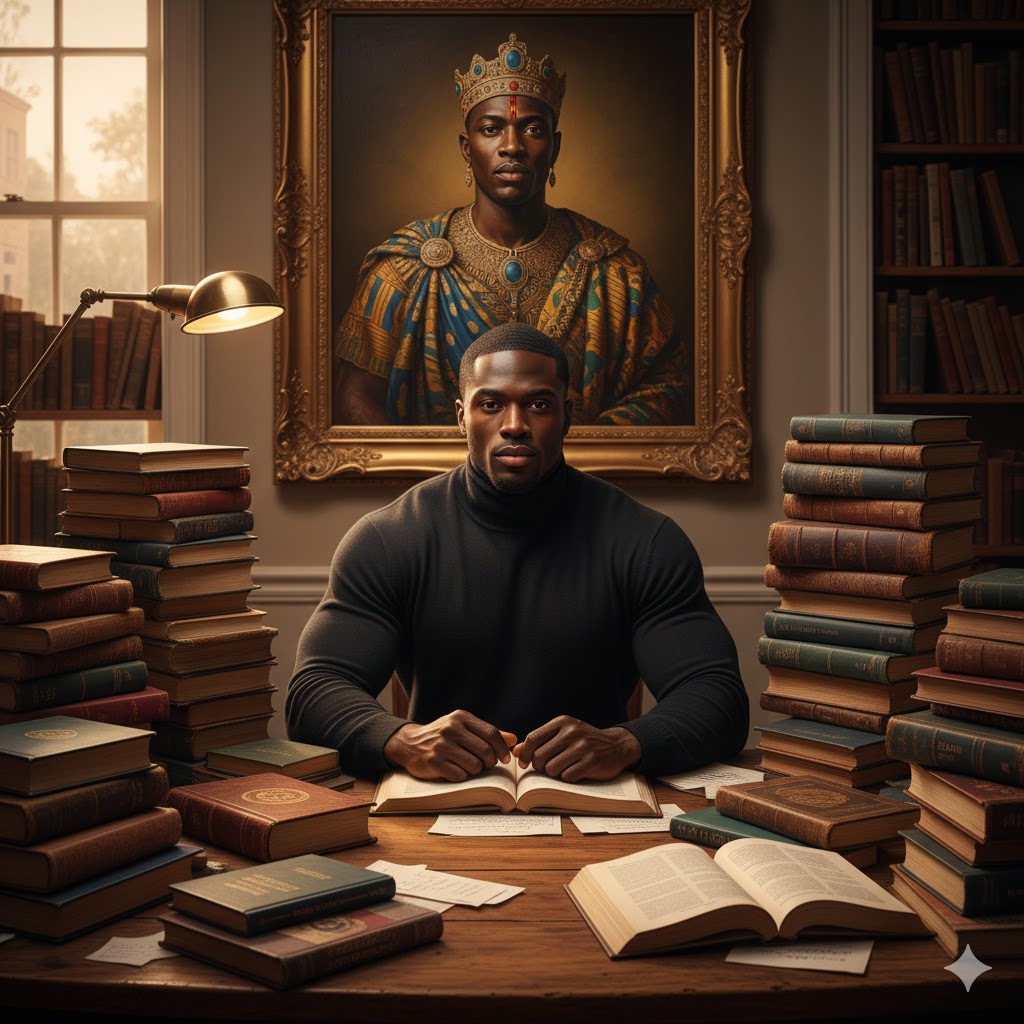
Black history in America has always been more than a chapter—it is the spine of the national narrative. Yet for centuries, this story has been edited, erased, softened, or rewritten to soothe the conscience of a nation deeply shaped by the labor, blood, and brilliance of a people it tried to silence. Still, despite redactions and revisions, the truth endures: we are the story America cannot edit.
This story begins long before ships touched the Atlantic coast. It begins in African kingdoms where art, astronomy, architecture, and theology flourished. The brilliance of the ancestors did not begin in bondage; it began in royalty, innovation, and legacy. No revisionist textbook can erase the origins of a people whose civilizations helped advance global knowledge.
When the Middle Passage shattered families and scattered bodies across the ocean, America inherited a people it tried to dehumanize but could not destroy. The nation wrote laws to silence Black voices, but those voices survived. They survived in spirituals, in whispered prayers, in maroon communities, in the coded footsteps of escape routes carved in the night. The ink of this story was not blacklisted—it was carved in courage.
America tried to enslave people into subservience, but instead they became prophets, builders, warriors, and liberators. Harriet Tubman turned the Underground Railroad into a living testament of freedom. Frederick Douglass transformed literacy into a revolution. Sojourner Truth took the podium and shook the conscience of a country pretending not to hear her. These names refuse erasure.
The Civil War and Reconstruction wrote a brief chapter of possibility—Black senators, congressmen, teachers, and landowners rose swiftly. But America attempted another revision: Jim Crow. Segregation, lynching, and systemic disenfranchisement were designed to rewrite the Black story into one of subjugation. Yet the people refused the edits. Every protest, every church meeting, every organizing circle was a declaration that the pen of oppression could not overrule the pen of destiny.
The Civil Rights Movement authored a new wave of transformation. Martin Luther King Jr.’s dream, Malcolm X’s fire, Rosa Parks’ quiet firmness, and Fannie Lou Hamer’s thunderous truth-telling exposed the nation’s moral contradictions. Their lives demonstrate that Black people did not just endure history—they shaped it. They re-inked the American narrative with justice.
America has long tried to reduce Black identity to struggle, but Black culture refuses to be footnoted. Jazz, gospel, blues, soul, hip-hop, theatre, literature, and film—all are chapters written in brilliance, not brokenness. These art forms do not ask permission; they testify. They preserve memory. They uplift. They correct the historical record by embodying the power and creativity of a people the nation tried to underestimate.
Black resilience has always been inconvenient for America’s preferred storyline. It challenges myths of meritocracy, exposes the violence of past and present systems, and proves that progress was never given—only won. This is why so many attempts have been made to censor, dilute, or distort Black history. Yet truth has a way of resurfacing, even through the cracks of suppression.
The story America cannot edit also includes everyday heroes—grandmothers who kept families together, fathers who worked two and three jobs, children who dared to learn in schools that did not want them, freedom fighters whose names never made headlines, teachers who planted dreams in young minds, and church mothers who prayed communities through storms. These lives are sacred scripture for a people who built resilience into their DNA.
Even today, as political forces attempt to ban books, restrict curriculum, or sanitize the past, the story resists. Black scholars, artists, pastors, activists, and youth are documenting the truth in new ways—through digital archives, spoken word, classrooms, podcasts, and movements for justice. The story is not just preserved; it is expanding.
We are the story America cannot edit because our existence defies the narrative of inferiority that once dominated the national imagination. Every achievement in science, politics, sports, education, business, and ministry disproves the lies that once served as historical “facts.” Black excellence is not an anomaly—it is a continuation of ancestral greatness.
We are the story America cannot edit because the evidence is everywhere. It is in the economic foundation Black labor built. It is in the culture Black creativity shaped. It is in the democracy Black activism strengthened. It is in the global influence Black innovation commands. America has benefitted too deeply from Black genius to pretend it did not exist.
Our story remains uneditable because it is woven into Scripture as well as history. From Cush to Ethiopia, from the Queen of Sheba to the early church, the Bible itself records the presence, power, and purpose of African-descended people. The sacred text affirms what oppression tried to deny: that Blackness has always been part of God’s design and destiny.
We are the story America cannot edit because the truth is living, breathing, and continually unfolding. It shows up in every generation—Black children with brilliance in their eyes, Black elders carrying the wisdom of survivors, Black communities redefining strength, joy, and possibility.
Ultimately, America cannot edit what God Himself has preserved. The story of Black people is marked by divine protection, ancestral strength, and spiritual authority. It is a story of survival, transformation, and triumph. It is a story that exposes injustice but also reveals hope. It is a story bigger than slavery, bigger than segregation, bigger than racism.
We are the story America cannot edit because the truth is too powerful, too resilient, too sacred to be silenced. And as long as we continue to speak it, write it, live it, and teach it—the story will remain unaltered, unstoppable, and unforgettable.
References:
Exodus 1–3 (KJV); Psalm 68:31; Acts 8:27–39; Franklin, J. H. From Slavery to Freedom; Gates, H. L. The African Americans: Many Rivers to Cross; Hannah-Jones, N. The 1619 Project; Litwack, L. Trouble in Mind; Stevenson, B. Just Mercy; Anderson, C. White Rage; Raboteau, A. Slave Religion.
Discover more from THE BROWN GIRL DILEMMA
Subscribe to get the latest posts sent to your email.
 THE BROWN GIRL DILEMMA