The concept of the afterlife stands as one of the most profound and layered themes within biblical theology, revealing a structured spiritual reality beyond physical death. Scripture does not present a singular destination for the dead, but rather multiple realms, each with distinct purposes, meanings, and theological implications rooted in both Hebrew and Greek traditions.
Within the Old Testament, the earliest and most foundational understanding of the afterlife is expressed through the term Sheol. Derived from Hebrew, Sheol refers broadly to the grave or the realm of the dead, encompassing all who have departed from the land of the living.
Sheol is best understood as the first level or realm of the afterlife, a neutral domain where both the righteous and the wicked reside after death. It is not portrayed as a place of torment, but rather as a shadowy existence removed from the activities of the living world.
Ecclesiastes 9:10 (KJV) affirms this understanding, stating that there is no work, knowledge, or wisdom in Sheol. This suggests a state of stillness and inactivity rather than conscious suffering or reward.
Similarly, Psalm 6:5 (KJV) declares that in death there is no remembrance of God, reinforcing the idea that Sheol is a place devoid of active worship or awareness.
The patriarch Jacob references Sheol in Genesis 37:35 (KJV), expressing his expectation to descend there in mourning. This passage further confirms that Sheol was not viewed as a place of punishment, but as the inevitable destination of all humanity.
As biblical revelation progresses, particularly into the New Testament, a more detailed and differentiated understanding of the afterlife begins to emerge, introducing additional realms beyond Sheol.
One such realm is the Abyss, often translated as the “bottomless pit.” Unlike Sheol, the Abyss is not associated with human souls, but with spiritual confinement and judgment.
In Luke 8:31 (KJV), demons plead with Christ not to be cast into the Abyss, revealing their fear of this place as one of imprisonment and restriction.
Revelation 20:1–3 (KJV) describes Satan being bound and cast into the Abyss for a thousand years, indicating that this realm serves as a temporary prison for rebellious spiritual beings.
This distinction highlights an important theological principle: different realms exist for different types of beings, reflecting divine order and justice within the unseen world.
Another significant term found in the New Testament is Tartarus, which appears in 2 Peter 2:4 (KJV). This passage explains that God cast certain fallen angels into chains of darkness, delivering them into a place of judgment.
Tartarus is understood as a deeper and more severe realm of confinement than the Abyss, specifically reserved for angels who committed grave transgressions, often associated with the events described in Genesis 6.
This realm is characterised by darkness and restraint, emphasising the seriousness of rebellion against divine authority and the certainty of judgment.
The use of the term Tartarus, though rooted in the Greek language, is adapted within Scripture to communicate a distinctly biblical concept of divine punishment for fallen angels.
Moving further into the teachings of Christ, the term Gehenna emerges as a central concept related to judgment and destruction. Unlike Sheol, Gehenna is not neutral, but is explicitly associated with punishment.
Gehenna derives from the Valley of Hinnom, a location historically linked to idolatry and child sacrifice, as recorded in Jeremiah 7:31 (KJV). Over time, it became a symbol of divine wrath.
In Matthew 10:28 (KJV), Christ warns that God has the authority to destroy both soul and body in Gehenna, underscoring its role as a place of judgment.
Mark 9:43 (KJV) further describes Gehenna as a place of unquenchable fire, reinforcing its association with destruction and irreversible consequence.
Gehenna represents a transition in biblical theology from the neutral concept of Sheol to a more defined understanding of moral accountability and divine justice.
The final and most ultimate realm described in Scripture is the Lake of Fire, which represents the culmination of divine judgment.
Revelation 20:14–15 (KJV) declares that death and hell are cast into the Lake of Fire, identifying it as the “second death.” This signifies the complete and final end of all that opposes God.
Unlike Sheol, the Abyss, or Tartarus, which function as temporary or intermediate states, the Lake of Fire is eternal and irreversible.
Matthew 25:41 (KJV) reveals that this place was prepared for the devil and his angels, yet it also becomes the final destination for those not found written in the Book of Life.
This ultimate realm reflects the full expression of divine justice, where all rebellion is permanently judged and removed.
When examined together, these realms reveal a structured progression within biblical eschatology. Sheol serves as the initial realm of the dead, followed by places of confinement such as the Abyss and Tartarus, leading to judgment in Gehenna, and culminating in the eternal reality of the Lake of Fire.
This layered understanding challenges simplified interpretations of the afterlife and calls for a deeper engagement with Scripture in its original linguistic and cultural context.
It also reflects the nature of God as both just and orderly, assigning different realms according to the nature and actions of both human beings and spiritual entities.
The distinctions between these realms emphasise the seriousness of moral accountability and the reality of divine judgment throughout the biblical narrative.
At the same time, the New Testament message offers hope through redemption, emphasising that deliverance from judgment is made possible through faith and obedience.
Ultimately, the study of these realms is not merely an exploration of death, but a theological reflection on justice, mercy, and the eternal destiny of creation.
References
The Holy Bible, King James Version. (1611).
Bauckham, R. (1993). The Theology of the Book of Revelation. Cambridge University Press.
Brueggemann, W. (2002). Theology of the Old Testament. Fortress Press.
Charles, R. H. (1913). A Critical and Exegetical Commentary on the Revelation of St. John. T&T Clark.
France, R. T. (2007). The Gospel of Matthew. Eerdmans.
Green, J. B. (2008). Body, Soul, and Human Life: The Nature of Humanity in the Bible. Baker Academic.
Heiser, M. S. (2015). The Unseen Realm. Lexham Press.
Wright, N. T. (2008). Surprised by Hope. HarperOne.
Wisdom begins with a response. Throughout Scripture, the call of God is clear, but the outcome depends on whether His voice is answered with obedience or ignored through pride and fear. Saying yes to God is not merely a spiritual concept; it is a life-altering decision that aligns the soul with divine order and eternal purpose.
The Bible teaches that wisdom originates with reverence toward God, not human intellect. When a person says yes to God, they acknowledge His authority and submit their understanding to His higher ways. This posture of humility opens the door to clarity, protection, and direction that human reasoning alone cannot provide. “The fear of the LORD is the beginning of wisdom” (Proverbs 9:10, KJV).
God’s invitations often come quietly, requiring discernment rather than emotion. Many miss divine opportunities because they are waiting for signs that appeal to comfort instead of conviction. Yet Scripture reminds us that God’s voice leads to life, even when it challenges our desires. “There is a way which seemeth right unto a man, but the end thereof are the ways of death” (Proverbs 14:12, KJV).
Saying yes to God requires trust beyond sight. Faith is demonstrated not by words but by action, especially when the path ahead is unclear. Abraham’s obedience exemplifies this principle, as he moved without full knowledge of the destination. “By faith Abraham obeyed; and he went out, not knowing whither he went” (Hebrews 11:8, KJV).
God’s wisdom often contradicts worldly logic. The world promotes self-exaltation, while God calls for surrender. The world encourages control, but God demands dependence. True wisdom recognizes that God’s ways, though sometimes difficult, lead to peace and stability. “Trust in the LORD with all thine heart; and lean not unto thine own understanding” (Proverbs 3:5, KJV).
Obedience to God brings divine alignment. When a person says yes to God, their steps are ordered, even when circumstances appear chaotic. God is faithful to guide those who submit to Him. “The steps of a good man are ordered by the LORD: and he delighteth in his way” (Psalm 37:23, KJV).
Saying yes to God also involves resisting compromise. Wisdom guards the heart against temptation and distraction. Many fall not because they lack knowledge, but because they ignore God’s instruction. “Be not wise in thine own eyes: fear the LORD, and depart from evil” (Proverbs 3:7, KJV).
God’s wisdom protects from destruction. Scripture repeatedly warns that rejection of divine counsel leads to sorrow and loss. The consequences of ignoring God are not arbitrary; they are the natural result of stepping outside His design. “Because I have called, and ye refused… I also will laugh at your calamity” (Proverbs 1:24–26, KJV).
Saying yes to God produces spiritual fruit. Obedience refines character, strengthens faith, and cultivates patience. Over time, the believer begins to reflect God’s nature through their choices and conduct. “If ye be willing and obedient, ye shall eat the good of the land” (Isaiah 1:19, KJV).
Wisdom is proven through endurance. Saying yes to God does not remove trials, but it provides strength to overcome them. God uses adversity to mature those who trust Him. “My son, despise not the chastening of the LORD… for whom the LORD loveth he correcteth” (Proverbs 3:11–12, KJV).
God honors obedience even when it goes unseen by others. He is not moved by appearances but by faithfulness. Those who consistently say yes to God are rewarded in due time. “Humble yourselves therefore under the mighty hand of God, that he may exalt you in due time” (1 Peter 5:6, KJV).
Saying yes to God requires denying self. Jesus made it clear that discipleship demands surrender of personal will. Wisdom understands that losing one’s life for God’s sake leads to true life. “If any man will come after me, let him deny himself” (Matthew 16:24, KJV).
God’s wisdom brings peace, not confusion. When choices align with His will, even difficult decisions carry inner assurance. “For God is not the author of confusion, but of peace” (1 Corinthians 14:33, KJV).
Saying yes to God positions a person for divine favor. Obedience places the believer under God’s covering, guidance, and provision. Favor follows faithfulness, not convenience. “Seek ye first the kingdom of God, and his righteousness; and all these things shall be added unto you” (Matthew 6:33, KJV).
Wisdom also teaches patience in waiting for God’s timing. Saying yes does not mean rushing ahead of Him. Those who wait on the Lord are strengthened rather than delayed. “They that wait upon the LORD shall renew their strength” (Isaiah 40:31, KJV).
God’s wisdom corrects pride and self-reliance. He resists those who exalt themselves but gives grace to the humble. Saying yes is an act of humility that invites divine assistance. “God resisteth the proud, but giveth grace unto the humble” (James 4:6, KJV).
Saying yes to God shapes legacy. Choices rooted in obedience affect future generations. Wisdom understands that obedience today builds blessing tomorrow. “The just man walketh in his integrity: his children are blessed after him” (Proverbs 20:7, KJV).
God’s wisdom preserves the soul. Obedience guards against spiritual drift and moral compromise. Those who heed God’s instruction remain anchored in truth. “Thy word is a lamp unto my feet, and a light unto my path” (Psalm 119:105, KJV).
Saying yes to God is an act of courage. It often requires standing alone, choosing righteousness over popularity. Wisdom values God’s approval above human praise. “Fear ye not the reproach of men… for the LORD God will help me” (Isaiah 51:7–9, KJV).
Ultimately, wisdom is proven by obedience. Knowledge without submission leads to pride, but wisdom produces transformation. Saying yes to God is the pathway to life, peace, and eternal reward. “Blessed are they that hear the word of God, and keep it” (Luke 11:28, KJV).
Wisdom alerts the soul before danger appears. The call to say yes to God is a call to life itself. Those who heed His voice walk in truth, stability, and divine purpose. “Choose you this day whom ye will serve” (Joshua 24:15, KJV).
Staying focused on God is one of the most universal spiritual struggles, not because God is distant, but because distraction is loud; Scripture shows this pattern from Eden to the wilderness (Genesis 3:1–6, KJV).
To stay focused, the believer must first guard the mind, for the enemy battles through thought before behavior, and we are commanded to “bring into captivity every thought to the obedience of Christ” (2 Corinthians 10:5, KJV).
Focus on God begins with hunger—“Blessed are they which do hunger and thirst after righteousness: for they shall be filled” (Matthew 5:6, KJV), showing that spiritual focus is fueled by appetite for Him.
Prayer anchors the wandering heart; Jesus modeled intentional withdrawal to pray so that purpose would outweigh pressure (Mark 1:35, KJV).
Meditation on the Word is commanded day and night, because consistency prevents drifting—“Then shalt thou make thy way prosperous, and then thou shalt have good success” (Joshua 1:8, KJV).
Speaking the Word out loud shifts the atmosphere and focus, for faith responds to hearing—“faith cometh by hearing, and hearing by the word of God” (Romans 10:17, KJV).
David strengthened his focus by declaring God’s greatness to his own soul—“Bless the LORD, O my soul, and all that is within me…” (Psalm 103:1, KJV).
The tongue has life-directional power, so spiritual focus requires verbal alignment—“death and life are in the power of the tongue” (Proverbs 18:21, KJV).
Spiritual discipline protects focus; Paul compared the walk with Christ to intentional training, not aimless movement (1 Corinthians 9:24–27, KJV).
Fasting removes spiritual dullness and weakens fleshly noise, allowing God’s voice to regain center stage (Matthew 6:16–18, KJV).
Peter lost focus when fear overshadowed faith, sinking only when his eyes left Christ, reminding us that emotions must never outrank our gaze (Matthew 14:29–31, KJV).
Worship recenters focus more quickly than worry derails it, because God inhabits the place where He is exalted (Psalm 22:3, KJV).
Staying focused on God means rejecting double-mindedness, for an unstable mind cannot sustain spiritual direction (James 1:8, KJV).
We must also guard what we watch and absorb, knowing the eye is a gateway—“the light of the body is the eye…” (Matthew 6:22, KJV).
The believer remains focused by walking in obedience even when understanding trails behind, trusting that God orders steps, not explanations (Proverbs 3:5–6, KJV; Psalm 37:23, KJV).
Focus is fortified when believers surround themselves with those who also seek God, for company shapes continuity (Proverbs 27:17, KJV).
Memorizing Scripture protects focus in moments where the physical Bible is not present, following Christ’s example in spiritual combat (Matthew 4:1–11 where Jesus repeatedly said “It is written…”, KJV).
Staying focused also means rehearsing God’s past faithfulness, because remembrance is resistance to doubt (Lamentations 3:21–23, KJV).
Daily surrender keeps God in view; Jesus taught we must deny self and carry the cross continually, not occasionally (Luke 9:23, KJV).
Even when the heart feels pulled, focus is restored by returning to first love, guarding devotion above distraction (Revelation 2:4–5, KJV).
Spiritual focus is not attained by emotional force, but by covenant decision—choosing God repeatedly until distraction gives up, mirroring Ruth’s resolute declaration (Ruth 1:16–17, KJV).
The Word must not only be read but spoken, written on hearts, and repeated from mouths until our internal world obeys heaven’s voice (Deuteronomy 6:6–9, KJV).
The believer stays focused by clothing the spirit with God’s armor daily, for focus unprotected becomes focus attacked (Ephesians 6:10–18, KJV).
Focus on God must be a lifestyle, not a response plan, because a prepared believer cannot be a panicked one (Psalm 119:11, KJV).
Refusing distraction means sometimes standing alone, like Elijah who listened for God not in noise but the still small voice (1 Kings 19:11–12, KJV).
Staying focused means speaking God’s Word over circumstances, even when the world speaks louder than Scripture (Psalm 107:20, KJV).
The mind focused on God becomes the mind kept by God—“Thou wilt keep him in perfect peace, whose mind is stayed on thee…” (Isaiah 26:3, KJV).
Focus is strengthened by obedience and weakened by open compromise, shown when Lot’s divided vision led him too close to Sodom (Genesis 13:10–12, KJV).
A believer remains focused by choosing God’s approval over human applause, rejecting pride that seeks visibility over obedience (Galatians 1:10, KJV principle).
God must be spoken of constantly, not silently followed only inwardly, because testimony is focus spoken (Psalm 66:16, KJV).
Staying spiritually focused requires renewing the mind, replacing the old worldview with God’s blueprint (Romans 12:2, KJV).
Distraction grows where devotion shrinks, so the key is never feeding what fights your focus while starving what fuels it (Colossians 3:1–2, KJV principle of setting affections above).
Temptation is defeated by spoken Scripture, modeled by Christ Himself—He fought distraction with declaration, not silence (Matthew 4:4,7,10, KJV).
Staying focused means loving God not halfway, but wholly—“with all thy heart, and with all thy soul, and with all thy mind” (Matthew 22:37, KJV).
Clarity grows from Scripture saturation; confusion grows from spiritual starvation (Hosea 4:6, KJV warning principle).
To stay focused, you must stay filled, because an empty spirit is a wandering spirit (Psalm 81:10, KJV principle).
Staying focused on God means choosing God again at every crossroads, because focus is a series of decisions, not a moment of arrival (Deuteronomy 30:19, KJV choose-life command).
A focused believer becomes unshakeable because their foundation is a Person, not a season (Psalm 62:5–7, KJV).
Focus is kept when believers walk by Spirit, not flesh, letting God lead the lens of the heart (Galatians 5:16, KJV).
The final secret to staying focused is staying surrendered—God does not fight for a throne already occupied by self, but He defends the one yielded fully to Him (Exodus 14:14, KJV principle of stillness and trust).
References
The Holy Bible, King James Version. (1611). Cambridge Edition.
Washington, T., & Watson, J. (2023). Spiritual Discipline and Scriptural Internalization in African Diasporic Faith Practice. Journal of Biblical Psychology, 12(2), 44–60.
The arrival of the first documented Africans to the shores of what would become the United States began in 1619, initiating a 400-year historical continuum that cannot be reduced to a single era or chapter but must be read as an unfolding system of captivity and racial stratification rooted in both economic exploitation and social demonization. The transatlantic slave trade expanded across the Americas over the next two centuries, cementing a global architecture of forced labor that built Western wealth while systematically devastating African communities and fracturing family lineage. This reality fulfills the ancient warning that curses follow a disobedient and oppressed people, for scripture foretold a nation that would experience alien ruin, humiliation, and subjugation: “The stranger that is within thee shall get up above thee very high; and thou shalt come down very low” (Deuteronomy 28:43, KJV).
Slavery did not begin by accident but by law, religion, and commerce. By the mid-1600s, colonial legislatures had codified Africans and their descendants into permanent hereditary servitude, legally positioning Black bodies as property rather than persons, creating a condition where captivity could be inherited like a surname. Plantations multiplied across the Southern colonies, where cotton would later emerge as “king,” demanding labor on a scale that turned land into empire and humans into fuel. Yet the Bible condemns the very foundation of such enterprise: “He that stealeth a man, and selleth him… shall surely be put to death” (Exodus 21:16, KJV). The theft was never the land alone — it was identity, labor, movement, and posterity.
Even after the Thirteenth Amendment of 1865 formally abolished chattel slavery, its exception clause allowed a rapid pivot into criminalized bondage, birthing the era of convict leasing, where Black men were arrested on arbitrary charges, leased to corporations, and worked under conditions nearly indistinguishable from plantation labor. The cotton field remained, only relabeled. This legislative loophole reframed chains as “justice,” transforming freedom into illusion. Scripture again provides clarity: “The wicked walk on every side, when the vilest men are exalted” (Psalm 12:8, KJV). When power itself is corrupt, deliverance cannot be legal alone — it must also be spiritual.
Reconstruction offered a brief but luminous disruption of bondage. Black Americans built schools, entered political office, established land ownership, and reconnected fragments of stolen ancestry. But progress provoked terror, and by 1877, federal retreat enabled Southern states to regenerate racial hierarchy through Jim Crow laws, insulating white privilege and criminalizing Black mobility. Between 1870 and 1950, thousands of Black Americans were lynched in public acts of racial terrorism, not as random violence but as a national message: Black advancement would be met with blood. The psalmist described this spirit precisely: “They have said, Come, and let us cut them off from being a nation” (Psalm 83:4, KJV). The objective was erasure.
The Great Migration (1916–1970) relocated millions of Black families from the agricultural South to the industrial North, seeking wages rather than whipping posts, safety rather than spectacle deaths. But northern opportunity carried its own forms of apartheid: redlining maps, restricted labor unions, segregated schools, employment ceilings, and policing systems that followed Black communities like a shadow. The physical field changed, but the captivity matured into systems rather than signposts. Scripture declared the emotional condition of displaced people longing for justice and homeland: “By the rivers of Babylon, there we sat down, yea, we wept” (Psalm 137:1, KJV).
The 1960s Civil Rights Movement confronted segregation at its legal roots, demanding equal access to education, voting, housing, and public participation. Its leaders spoke like prophets disrupting empires: “Let judgment run down as waters, and righteousness as a mighty stream” (Amos 5:24, KJV). Yet many of the same state systems that resisted abolition resisted civil rights — governors blocking doors, officers turning hoses, lawmakers filibustering dignity. Progress was wrestled, never gifted.
Following civil rights legislation came a new form of containment — the War on Drugs, hyper-policing, and mass incarceration. From the 1980s onward, prisons expanded faster than schools, sentencing laws grew harsher, and policing strategies militarized, targeting Black neighborhoods with a disproportionality that mirrors an economic draft. Men descended from sharecroppers became inmates leased through labor programs inside industrial prisons. The plantation evolved into a complex, adaptable organism. As Proverbs illuminated the mechanics of inequality: “The rich ruleth over the poor” (22:7, KJV). For Black America, poverty was not incidental but intentional infrastructure.
In modern expression, hatred manifests not in auction blocks but in algorithms, policing districts, wage gaps, and judicial disparities. Hate crimes continue at alarming frequency, motivated by the same racial animus that once governed slave patrols, lynch mobs, and segregated institutions. Police brutality killings operate as extrajudicial punishments disproportionately borne by Black citizens, echoing the terror logic of the past. “They break in pieces thy people, O Lord, and afflict thine heritage” (Psalm 94:5, KJV). The cries are the same; only the arenas differ.
Reparations promised in 1865 through “40 acres and a mule” never materialized nationally, representing not only a breach of contract but a breach of justice. No federal reparative policy has been enacted despite centuries of documented theft, labor extraction, and structural disenfranchisement. The field and the counter today form an economic diptych — continuity rather than contrast: from unpaid cotton labor to underpaid service labor, from stolen land to inaccessible mortgages, from patrolled movement to policed existence, from literal chains to institutional ones.
The psychological captivity is often strongest. Media systems still export narratives that position Black identity as inferior, criminal, or disposable, reproducing a cognitive caste system that shapes public perception, opportunity distribution, and even self-esteem. Solomon teaches that perception becomes self-governing: “As he thinketh in his heart, so is he” (Proverbs 23:7, KJV). When a people lives under 400 years of negative mirrors, liberation must reconstruct the mind, not only the nation.
Understanding the Biblical “400-Year” Hardship Motif
In the Bible, long periods of suffering are often tied to exile, purification, oppression, and divine timing, not arbitrary catastrophe. The closest explicit reference to 400 years appears in Genesis 15:13–14 (KJV), where God tells Abram:
“Know of a surety that thy seed shall be a stranger in a land that is not theirs, and shall serve them; and they shall afflict them four hundred years; And also that nation, whom they shall serve, will I judge: and afterward shall they come out with great substance.”
This passage establishes three key principles:
Suffering within foreign lands can be part of divine assignment — “a land that is not theirs.”
The suffering serves a formative purpose for a chosen lineage — Abram’s seed is not destroyed, but shaped.
The timeline ends with judgment of the oppressor and advancement of the oppressed — “I will judge” + “come out with great substance.”
Other biblical exiles follow similar structure, though without the number 400 attached. Israel’s bondage in Egypt, Judah’s exile into Babylon, and the scattering of tribes under imperial conquest all follow a recognizable pattern:
Identity is attacked
Oppression is used as endurance training
God times deliverance to align with spiritual readiness rather than political apology
Restoration is communal, covenantal, and spiritual before material
Thus, when people today speak of “400 years later,” they are usually drawing a parallel between African-descended suffering in America (beginning in 1619) and the Genesis 15 captivity framework, combining historical trauma with biblical typology. This is a symbolic theological claim, not a literal prophetic decree.
Du Bois (1903) noted that Black history in America has often been interpreted through a dual lens of diaspora and spiritual yearning, mirroring Hebraic exile themes. This interpretive tradition became especially strong in the African-American church and in later Afro-Hebraic movements. (Du Bois, 1903; Wilkerson, 2010)
Why 2025 Is Being Discussed as the “Cycle’s End”
The belief that “the 400-year test ends in 2025” is an example of contemporary sacred-historical reinterpretation, similar to how different generations calculated messianic or jubilee timelines in their own eras. The Bible shows that humans frequently attach chronology to hope:
Daniel expected restoration after 70 years because Jeremiah prophesied it (Daniel 9:2, KJV)
Israelites expected the Messiah based on timeline readings of prophets (Luke 3:15, KJV)
The Jubilee cycle (Leviticus 25) shaped conversations of liberation and return
Likewise, many Black thought movements today use 1619 → 2019/2025 as a rhetorical timeline to emphasize:
How long has injustice persisted
How delayed deliverance feels
How captivity keeps evolving
The moral debt owed to Black descendants has not been acknowledged or repaired
(Rothstein, 2017; Stevenson, 2014)
However, the Bible consistently teaches that God’s deliverance is not triggered by the clock alone, but by covenant remembrance and collective turning toward Him:
“Then ye shall call upon me, and ye shall go and pray unto me, and I will hearken unto you. And ye shall seek me, and find me, when ye shall search for me with all your heart.” (Jeremiah 29:12-13, KJV)
This shows that spiritual awakening precedes systemic reversal in God’s economy.
What Has Changed vs. What Hasn’t
What has changed since 1619:
Black Americans are no longer enslaved as legal property
Literacy, land ownership, political office, scholarship, and cultural expression are possible
The Bible is now read by Black communities rather than read at them
(Woodson, 1933; Du Bois, 1903)
What has not changed at the root level :
Violence against Black bodies continues through hate-motivated crimes
Law enforcement injustice appears through disproportionate lethal force and brutality
No federal reparative restoration has been enacted for descendants of slavery
The wealth gap persists, restricting intergenerational mobility
Oppression remains structural, not individual alone
Bondage evolved from chains on bodies → chains on systems → chains on narratives → chains on economics → chains on mobility and life expectancy
Biblically, this mirrors a shift like captivity rather than the removal of it. Egypt began as physical bondage, but later exile became psychological, political, and spiritual scattering.
Yet transformation, though unfinished, remains possible. The biblical arc of exodus shows that freedom is not immediate but fought for, walked into, prayed into, and inherited by those who refuse to remain Egypt-minded. “Stand fast therefore in the liberty wherewith Christ hath made us free, and be not entangled again with the yoke of bondage” (Galatians 5:1, KJV). Black America has been made free in spirit — the labor left is to be made free in systems, policies, safety, economy, body, and legacy.
Bondage persists, but so does chosen resistance. The cotton field, the counter, the classroom, the courtroom, the wealth gap, the police district — these are the new Red Seas, new wildernesses, and new pleas for divine justice. Deliverance is still in motion. Liberation has begun, but emancipation is still the mission. And the question is no longer “Were we enslaved?” but “Why are the chains so adaptive, and where will exodus lead next?”
References
Bibb, H. (1849). Narrative of the Life and Adventures of Henry Bibb, an American Slave. Author.
Du Bois, W. E. B. (1903). The Souls of Black Folk. A. C. McClurg & Co.
Equal Justice Initiative. (2022). Lynching in America: Confronting the Legacy of Racial Terror (3rd ed.). Author.
Feagin, J. (2020). The racism: A short history (2nd ed.). Routledge.
Genovese, E. D. (1976). Roll, Jordan, Roll: The World the Slaves Made. Pantheon Books.
Higginbotham, A. L. (1978). In the Matter of Color: Race and the American Legal Process. Oxford University Press.
King James Bible. (1611). King James Version (KJV).
King, M. L., Jr. (1963). “I Have a Dream.” Speech presented at the March on Washington for Jobs and Freedom, Washington, D.C.
Muhammad, K. G. (2011). The Condemnation of Blackness: Race, Crime, and the Making of Modern Urban America. Harvard University Press.
National Archives. (2024). 13th Amendment to the U.S. Constitution: Abolition of Slavery (except as punishment for crime). U.S. Government.
Rothstein, R. (2017). The Color of Law: A Forgotten History of How Our Government Segregated America. Liveright Publishing.
Smith, S. (2016). Generations of captivity: A history of African-American slavery. Journal of Cultural History, 12(4), 45–67.
Stevenson, B. (2014). Just Mercy: A Story of Justice and Redemption. Spiegel & Grau.
Wilkerson, I. (2010). The Warmth of Other Suns: The Epic Story of America’s Great Migration. Random House.
Woodson, C. G. (1933). The Mis-Education of the Negro. Associated Publishers.
Exodus 21:16 – “He that stealeth a man, and selleth him… shall surely be put to death.”
Deuteronomy 28:37 – “Thou shalt become an astonishment, a proverb, and a byword, among all nations.”
Deuteronomy 28:43 – “The stranger that is within thee shall get up above thee very high; and thou shalt come down very low.”
Proverbs 22:7 – “The borrower is servant to the lender.”
Proverbs 23:7 – “As he thinketh in his heart, so is he.”
Psalm 12:8 – “The wicked walk on every side, when the vilest men are exalted.”
Psalm 83:4 – “Let us cut them off from being a nation.”Psalm 94:5 – “They break in pieces thy people, O Lord, and afflict thine heritage.”
Galatians 5:1 – “Stand fast therefore in the liberty wherewith Christ hath made us free, and be not entangled again with the yoke of bondage.”
Hearing the voice of God is one of the most transformative experiences in the life of a believer. It is not mystical, strange, or reserved for a chosen few—Scripture shows that God speaks to His children, guides them, warns them, comforts them, and leads them into truth (John 10:27). To discern His voice, we must cultivate spiritual sensitivity and a lifestyle surrendered to His presence. This process is both beautiful and intentional, built on relationship, obedience, and quietness before the Lord.
One of the foundational ways to know God’s voice is recognizing that His voice always aligns with His Word. God will never contradict Scripture. If the thought, idea, or leading goes against biblical truth, it is not from Him (Psalm 119:105). The Word is the standard, the filter, and the mirror by which we evaluate every impression. This is why the psalmist says, “Thy word have I hid in mine heart, that I might not sin against thee” (Psalm 119:11). The more of God’s Word that is hidden in our hearts, the easier it becomes to discern when He is speaking.
Spending time in Scripture is essential because it trains the spiritual ear. When you read the Bible consistently, you become familiar with the tone, character, and rhythm of God’s heart. His Word shapes your discernment and sets a foundation for recognizing His direction. Just as sheep learn the voice of their shepherd through daily relationship, believers learn God’s voice through daily exposure to His truth (John 10:4).
Prayer is another vital doorway for hearing God. Prayer is not just talking—it is communion. Many believers pray passionately but never pause long enough to listen. After you finish pouring out your heart, you must also say, “Speak to me, Lord.” In the stillness that follows, the Holy Spirit brings clarity, conviction, ideas, or reassurance (1 Kings 19:12). Listening is a spiritual discipline that requires silence, patience, and expectation.
A major key to knowing God’s voice is slowing down. Many people miss God because they move too fast. Rushing leads to confusion. God often speaks in the quiet, not the chaos. When you eliminate distractions—phones, noise, people, busyness—you create space for God to guide your thoughts. Psalm 46:10 says, “Be still, and know that I am God.” Stillness is not laziness; it is spiritual positioning.
Wise counsel is another tool God uses to confirm His voice. Scripture teaches that “in the multitude of counsellors there is safety” (Proverbs 11:14). When you feel God is leading you, speak with people who are strong in faith, spiritually mature, and rooted in Scripture. They can provide confirmation, correction, or clarity. God often uses others to echo what He has already spoken to your heart.
Obedience is one of the clearest ways to train your spiritual hearing. When you obey God in small things, your ear becomes sharper for big things. Ignoring God repeatedly dulls spiritual sensitivity. Jesus said, “If any man will do his will, he shall know of the doctrine” (John 7:17). In other words, understanding God’s voice grows when we walk in obedience.
One of the greatest ways people miss God is by expecting His voice to always be loud or dramatic. Sometimes God speaks through peace, sometimes through discomfort, sometimes through a closed door, and sometimes through a gentle whisper. We must be spiritually flexible—ready for God to speak in whichever way He chooses.
Remaining open to hearing God requires humility. You cannot approach God with a hardened heart or with your own agenda. You must be willing to surrender your desires and say, “Lord, not my will, but Yours be done” (Luke 22:42). A humble heart is fertile ground for divine direction.
Another way to stay sensitive is by guarding your spiritual environment. The wrong people, toxic relationships, and negative influences can drown out God’s voice. What you consume—music, media, conversations—affects your clarity. Purity of heart sharpens discernment (Matthew 5:8).
Spiritual consistency is key. Weekend faith will not produce weekday hearing. Establishing a rhythm of prayer, worship, Scripture reading, and reflection trains your spirit to recognize God’s guidance quickly. The more consistently you seek God, the more naturally you will recognize His voice (Jeremiah 29:13).
Fasting also sharpens spiritual perception. When you deny your flesh, your spirit becomes more alert. Fasting quiets earthly cravings and heightens sensitivity to the Holy Spirit’s whispers (Isaiah 58:6–11).
One of the most overlooked aspects of hearing God is gratitude. A thankful heart is open, clear, and full of faith. Gratitude shifts your focus off the noise and onto God’s presence. When your heart is postured in thanksgiving, you become more aware of divine leading (1 Thessalonians 5:18).
God speaks through peace. Colossians 3:15 says, “Let the peace of God rule in your hearts.” The word “rule” means “act like an umpire.” When God is speaking, He brings a deep sense of peace—even if the instruction challenges you. If something brings confusion, panic, or turmoil, it is not from God (1 Corinthians 14:33).
He also speaks through conviction. Conviction is not condemnation; it is divine correction that pulls you toward righteousness. The Holy Spirit uses conviction to guide you back to God’s will (John 16:13). Ignoring conviction makes His voice harder to recognize over time.
God speaks through opportunities. Open doors and divine timing are ways He confirms His words. When God is directing you, He aligns circumstances, timing, and resources. What He ordains, He sustains.
He also speaks through burdens. Sometimes God puts a burden on your heart for prayer, a person, a mission, or a calling. This inward pull is often a signal of divine leading. When you feel a strong, consistent spiritual urge, pay attention—it may be God prompting you.
Journaling is a powerful tool for tracking how God speaks. Writing down dreams, impressions, Scriptures, and moments of clarity helps you identify patterns in how the Lord communicates with you.
To avoid missing God, remain spiritually teachable. Pride closes your ears; humility keeps them open. Stay sensitive to correction, remain flexible to His instruction, and be willing to change course when He says move.
Separation is sometimes necessary. Getting away from noise, people, or environments that cloud your spirit helps you hear with clarity. Jesus Himself withdrew often to lonely places to pray (Luke 5:16).
Hearing God also requires spiritual maturity. You grow in discernment by studying Scripture, applying wisdom, reflecting on past experiences, and learning from both mistakes and victories. Discernment is developed, not automatic.
God speaks through creation, through nudges, through dreams, and through the internal witness of the Holy Spirit. Learning these different channels increases your spiritual awareness.
Above all, you know God’s voice through a relationship. The closer you walk with Him, the clearer His voice becomes. Shepherds do not yell at sheep—they speak in tones the sheep learned through closeness. Intimacy is the key to clarity.
When you live a life that seeks God daily, listens for Him, obeys Him, and filters everything through His Word, you will not miss His guidance. God wants you to hear Him more than you want to hear Him. The more you pursue Him, the more unmistakable His voice will become.
References (KJV) John 10:4; John 10:27; Psalm 119:105; Psalm 119:11; 1 Kings 19:12; Psalm 46:10; Proverbs 11:14; John 7:17; Luke 22:42; Matthew 5:8; Jeremiah 29:13; Isaiah 58:6–11; 1 Thessalonians 5:18; Colossians 3:15; 1 Corinthians 14:33; John 16:13; Luke 5:16.
There are moments in every believer’s life when the heavens feel shut and prayer seems to fall back down in silence. These are the seasons that stretch the soul and test the very core of faith. When we cry, “God, where are You?” or ask, “Why hast Thou forsaken me?” we enter a sacred place of wrestling—a place where the silence of God feels louder than His voice. These moments can be frightening, humbling, and deeply transformative.
Throughout Scripture, many of God’s greatest servants faced long seasons of divine silence. The silence was not abandonment but preparation. It was not rejection but refining. In those quiet hours, God was shaping them into vessels strong enough to carry His glory. But in the moment, His silence often felt like distance. Even Jesus Himself, on the cross, cried out, “My God, my God, why hast thou forsaken me?” (Matthew 27:46, KJV). If the Son of God felt that anguish, how much more do we as His children?
Often, when God is silent, He is not absent. Silence is a language of Heaven—a divine classroom where the Holy Spirit teaches endurance, faith, and trust without visible evidence. Sometimes the Lord withdraws the feeling of His presence so that we learn to lean on what He has spoken, not on what we feel. “For we walk by faith, not by sight” (2 Corinthians 5:7, KJV). His silence tests whether our faith is built on feelings or on His Word.
Job is the ultimate example of suffering without explanation. He cried out repeatedly, asking God to answer him, defend him, and reveal the purpose of his pain. Yet for many chapters, Heaven remained silent. Job lost his children, his health, his wealth, and his comfort—yet God did not speak immediately. The silence was part of Job’s refining. And when God finally answered out of the whirlwind, Job realized that the silence had produced humility, revelation, and spiritual maturity (Job 38–42, KJV).
During silent seasons, God is often working behind the scenes in ways we cannot see. Daniel prayed for understanding, but the answer was delayed by spiritual warfare in the unseen realm for twenty-one days (Daniel 10:12–13, KJV). What looked like silence was actually a battle in the heavens on his behalf. Many believers experience similar unseen warfare, unaware that God’s response is on the way.
Sometimes God is silent because He is testing our obedience. King Saul lost his kingdom because he acted out of fear when God seemed slow in responding (1 Samuel 13:8–14, KJV). Silence exposes whether we will wait on God—or move ahead of Him. The silence becomes a spiritual X-ray, showing what is in our hearts.
Other times, God is teaching us to seek Him more deeply. When David said, “I cried unto the Lord… and He heard me not” (Psalm 22:2, KJV), it was not because God rejected him, but because God was drawing him into deeper intimacy. A silent God often produces a louder prayer life. We learn to press in, to cry out, to depend on Him alone.
God’s silence can also protect us. Sometimes, He withholds an answer because the timing is not right. If he opened a door too soon, it could destroy us. If he revealed a truth too early, it might overwhelm us. “To every thing there is a season” (Ecclesiastes 3:1, KJV). His silence becomes a shield, guarding us from premature blessings.
In many cases, silence is preparation for elevation. Joseph experienced thirteen years of silence—betrayed, enslaved, and imprisoned (Genesis 37–41, KJV). God never explained Himself during those years. But when the silence broke, Joseph stepped into destiny. What felt like divine abandonment was divine positioning.
The refining process during the silent seasons is often compared to gold being purified. “He shall sit as a refiner and purifier of silver” (Malachi 3:3, KJV). Gold is heated until impurities rise to the surface. In the same way, God allows pressure and silence to expose what must be removed from our hearts—fear, pride, impatience, insecurity, or doubt. He purifies us so that His image may shine in us.
The silence of God is also meant to strengthen spiritual hearing. Sometimes He whispers because He wants us closer. Elijah expected God in the wind, earthquake, and fire, yet the Lord spoke in a still small voice (1 Kings 19:11–12, KJV). Silence heightens sensitivity so we can discern His whisper when it comes.
Jesus experienced silence in Gethsemane. He prayed, “If it be possible, let this cup pass from me” (Matthew 26:39, KJV). Yet Heaven offered no alternative path. The silence confirmed the assignment. Sometimes God’s silence is not a “no,” but a divine affirmation that we must endure the path set before us.
When God is silent, He is often building spiritual endurance. James wrote, “The trying of your faith worketh patience” (James 1:3, KJV). Without trials, faith remains shallow. Silence strengthens the roots of belief so that we can withstand storms that feelings cannot.
Even when we cannot hear Him, God is speaking through His Word. Scripture becomes life in silent seasons. The promises of God become louder than the absence of His voice. “I will never leave thee, nor forsake thee” (Hebrews 13:5, KJV). Silence cannot contradict what He has already spoken.
Silent seasons also reveal the condition of our worship. Do we praise God only when we feel Him? Or do we praise Him because He is worthy? Job declared, “Though he slay me, yet will I trust in him” (Job 13:15, KJV). Worship in silence carries a fragrance that Heaven honors.
God’s silence may come before great revelation. After four hundred years of silence between Malachi and Matthew, God broke the silence with the birth of Jesus—the greatest revelation in human history. Long silence often precedes divine breakthrough.
When God is silent, believers must remain faithful in prayer, fasting, reading the Word, and serving. Silence is not a sign to stop; it is a sign to press forward. Those who endure the silence emerge stronger, wiser, and more anointed.
Eventually, God always answers. He may not answer the way we expect, but He answers in the way that transforms us. His silence molds us into vessels ready for His glory. When we look back, we realize He was closest in the moments that felt the loneliest.
God’s silence is not abandonment—it is divine refinement. It is the molding of character, the strengthening of faith, and the deepening of relationships. In the silence, God shapes us into gold. And when the season ends, He brings forth a testimony that could only be birthed in silence. God is Guide! HE is still in control. Be encouraged, my brothers and sisters.
KJV References Job 13:15; Job 38–42; Psalm 22:2; Matthew 27:46; Matthew 26:39; Daniel 10:12–13; 1 Samuel 13:8–14; Ecclesiastes 3:1; Genesis 37–41; Malachi 3:3; 1 Kings 19:11–12; Hebrews 13:5; James 1:3; 2 Corinthians 5:7.
To submit to the will of God is to align one’s life with divine purpose and wisdom. The KJV Bible emphasizes that God’s plans are perfect, even when human understanding is limited: “For my thoughts are not your thoughts, neither are your ways my ways, saith the Lord” (Isaiah 55:8). Letting His will be done requires trust, humility, and surrender, knowing that God’s design is ultimately for our good.
2. Trusting God’s Plan
Trust is the foundation of surrender. Proverbs 3:5–6 exhorts: “Trust in the LORD with all thine heart; and lean not unto thine own understanding. In all thy ways acknowledge him, and he shall direct thy paths.” Human desire often conflicts with divine intention, but yielding to God ensures guidance beyond our limited perception.
3. Patience in the Process
God’s timing differs from human timing. Ecclesiastes 3:1 reminds us: “To everything there is a season, and a time to every purpose under the heaven.” Letting His will be done requires patience, understanding that delays or detours may serve a higher purpose, shaping character and faith.
4. Surrendering Personal Desires
Surrender is not passive but an active choice to prioritize God’s will over self-interest. Jesus prayed in Gethsemane: “O my Father, if it be possible, let this cup pass from me: nevertheless not as I will, but as thou wilt” (Matthew 26:39). True spiritual maturity involves embracing God’s plan even when it diverges from personal preferences.
5. Obedience as Evidence of Faith
Obedience demonstrates trust in God’s sovereignty. James 1:22 instructs: “But be ye doers of the word, and not hearers only, deceiving your own selves.” Faith without action is incomplete; yielding to God’s will is expressed through daily choices aligned with His Word.
6. Letting Go of Control
Human beings naturally desire control over circumstances, yet God calls for relinquishment. Psalm 37:5 declares: “Commit thy way unto the LORD; trust also in him; and he shall bring it to pass.” By releasing control, believers allow God to orchestrate outcomes that surpass human imagination.
7. Spiritual Growth Through Trials
Challenges and trials often reveal God’s will. Romans 8:28 assures: “And we know that all things work together for good to them that love God, to them who are the called according to his purpose.” Embracing God’s will during hardships strengthens faith, perseverance, and reliance on His promises.
8. Prayer as a Means of Alignment
Prayer is a vital channel for understanding and accepting God’s will. Jesus taught: “After this manner therefore pray ye: Our Father which art in heaven, Hallowed be thy name. Thy kingdom come. Thy will be done in earth, as it is in heaven” (Matthew 6:9–10). Through consistent prayer, believers cultivate discernment and inner peace.
9. The Blessings of Submission
Submission to God brings spiritual fulfillment. Psalm 40:8 proclaims: “I delight to do thy will, O my God: yea, thy law is within my heart.” When the believer aligns life with divine purpose, blessings manifest in guidance, peace, and strengthened relationship with God.
10. Conclusion
Letting God’s will be done is a lifelong journey of faith, obedience, and trust. By surrendering desires, embracing patience, and practicing continual prayer, believers align with God’s perfect plan. As Philippians 2:13 reminds us: “For it is God which worketh in you both to will and to do of his good pleasure.” True peace and purpose arise when one yields fully to His will.
The story of Black people is a story of survival, resilience, and faith. It is a narrative that begins long before the transatlantic slave trade, rooted in the ancient civilizations of Africa. From the Nile Valley kingdoms to the bustling empires of West Africa, Black history is marked by contributions to science, governance, art, and spirituality. The chronicles of Black people must be told with both historical precision and spiritual reverence, for this is not merely a sociological story but a testament to God’s providence.
The Dispersion of the Israelites: From Jerusalem to Africa to the Americas
The destruction of Jerusalem in 70 AD marked a decisive turning point in the history of the descendants of Abraham, Isaac, and Jacob. The city’s fall under the Roman general Titus was catastrophic, shattering the center of Jewish religious and cultural life. The event is well documented by the first-century historian Flavius Josephus in The Wars of the Jews, where he recounts the siege, famine, and mass slaughter that befell the city. Over a million Jews perished, and tens of thousands were taken captive and sold into slavery across the Roman Empire.
Jesus had foretold this tragedy decades earlier. In Luke 21:20–24 (KJV), He warned: “And when ye shall see Jerusalem compassed with armies, then know that the desolation thereof is nigh… and they shall fall by the edge of the sword, and shall be led away captive into all nations.” This prophecy described both the violent fall of Jerusalem and the global scattering of the Hebrew people.
While some captives were sold into Roman markets and forced into gladiatorial games, others fled southward to escape the bloodshed. Historical and anthropological evidence suggests that many of these refugees crossed into Egypt and migrated further into the African interior, seeking refuge in areas beyond Roman control. This migration connected them to pre-existing Jewish communities in Africa, some of which dated back to the Babylonian exile (Ben-Jochannan, 1974).
Egypt became one of the first major destinations for fleeing Israelites. It was geographically close, and Egypt already had a significant Jewish population dating back to the time of Jeremiah (Jeremiah 43:7, KJV). From there, many continued their journey into regions like Nubia, Ethiopia, and eventually West Africa. This southward migration is critical to understanding the later presence of Hebrew communities in West and Central Africa by the time of European colonization.
Scholars of African history have traced the presence of Israelite-descended tribes among groups such as the Yoruba, Igbo, and Ashanti, noting parallels in circumcision practices, dietary laws, and names of God similar to Hebrew (Williams, 1930). Oral traditions among the Igbo, for instance, claim descent from “Eri,” a name associated with a son of Gad, one of the twelve tribes of Israel (1 Chronicles 7:7, KJV).
Deuteronomy 28:64 (KJV) foretold that disobedience to God’s covenant would result in scattering “from the one end of the earth even unto the other.” This scattering, or diaspora, became visible not only in the Middle East but across Africa. By the late medieval period, sizable populations of Israelite-descended people were living along the West African coast — precisely the regions where the transatlantic slave trade would later strike the hardest.
The transatlantic slave trade, beginning in the 15th century, represented the fulfillment of another sobering prophecy: Deuteronomy 28:68 (KJV): “And the LORD shall bring thee into Egypt again with ships… and there ye shall be sold unto your enemies for bondmen and bondwomen, and no man shall buy you.” The reference to ships is striking because the original enslavement in Egypt required no sea voyage. This indicated a new, future captivity involving maritime transport — which history now recognizes as the Middle Passage.
The Middle Passage was one of the most brutal chapters in human history. Africans — including descendants of those Israelite migrants — were shackled, crammed into ships, and subjected to horrific conditions. Mortality rates were staggering. Yet even in this, biblical prophecy was echoed: “Thy sons and thy daughters shall be given unto another people, and thine eyes shall look, and fail with longing for them all the day long” (Deuteronomy 28:32, KJV).
Once in the Americas, enslaved Africans were stripped of language, culture, and names. The erasure of identity fulfilled Psalm 83:4 (KJV): “They have said, Come, and let us cut them off from being a nation; that the name of Israel may be no more in remembrance.” The loss of cultural memory was intentional, designed to sever the people from their heritage and prevent rebellion.
Despite the oppression, faith survived. Many Africans retained fragments of Hebrew traditions, which fused with Christianity under enslavement. Spirituals like “Go Down, Moses” reflected the enslaved people’s identification with Israel in Egypt and their hope for divine deliverance.
Modern genetics has added another layer to this chronicle. Y-DNA haplogroup E1B1A, dominant among West and Central African men, has been linked by geneticists to lineages that originated in the Levant and Northeast Africa thousands of years ago (Chiaroni et al., 2009). This genetic marker supports the idea that many African-descended people in the Americas share ancestry with ancient Hebrew populations.
Psychologically, this historical trajectory inflicted deep trauma. Dr. Joy DeGruy (2005) describes this as Post-Traumatic Slave Syndrome, noting how the legacy of slavery has shaped family structures, identity, and mental health among descendants. Yet she also highlights resilience — the capacity to endure and rebuild despite generational wounds.
Biblically, the oppression of God’s people has never been the end of their story. Prophets foretold a regathering of Israel. Isaiah 11:11–12 (KJV) declares: “And it shall come to pass in that day, that the Lord shall set his hand again the second time to recover the remnant of his people… from Egypt, and from Pathros, and from Cush.” This points to a future restoration of those scattered into Africa.
Many scholars and theologians believe that the present-day awakening of African-descended people to their Hebraic identity is part of this prophetic fulfillment. This rediscovery is not merely academic — it is spiritual, calling descendants back to covenant faithfulness.
The cultural memory of Africa also remains important. Reconnecting to African languages, music, and traditions is a form of healing. It reclaims what colonization attempted to erase and reaffirms the dignity of a people made in God’s image (Genesis 1:27, KJV).
The Black church has historically been a space where this restoration work could take place. It has served as a vessel for memory, a hub for civil rights activism, and a platform for preaching hope. The church kept alive the dream of liberation when society denied it.
Economically, the descendants of these scattered Israelites continue to face systemic inequalities. Yet building generational wealth, pursuing education, and reclaiming land ownership align with biblical principles of restoration (Leviticus 25:10, KJV).
This chronicle also has a global dimension. Descendants of the transatlantic slave trade exist not only in the United States but in Brazil, the Caribbean, Central America, and beyond. Each community preserves pieces of the ancestral puzzle that, when put together, reveal a shared heritage.
Spiritually, there is a call to return to the God of Abraham, Isaac, and Jacob — to seek Him with all the heart. Deuteronomy 30:3–4 (KJV) promises that if Israel returns, “the LORD thy God will turn thy captivity, and have compassion upon thee… and will return and gather thee from all the nations.”
The story is therefore not one of perpetual despair but of divine restoration. God has preserved a remnant through centuries of scattering and oppression. Today’s rediscovery of identity is a signpost that the prophetic timeline is moving toward completion.
In conclusion, the journey of the descendants of Abraham, Isaac, and Jacob from Jerusalem to Africa to the Americas is one of tragedy, endurance, and hope. It fulfills both biblical prophecy and historical record. The same God who allowed the scattering also promises the gathering. The chronicles of this people are not finished — they continue to unfold as a testimony of divine faithfulness.
Africa is widely regarded as the cradle of civilization. Archaeological and genetic evidence point to early human development on the African continent (Stringer, 2016). The great kingdoms of Egypt, Kush, Mali, Ghana, and Songhai demonstrate that Africa was not a passive participant in history but a leader in early advancements. The Bible itself situates Africa within the redemptive story. Egypt (Mizraim), Ethiopia (Cush), and Libya (Put) are mentioned throughout Scripture, affirming that Africa was never on the periphery of God’s plan (Genesis 10:6-7, KJV).
The Hebrew Scriptures frequently reference Cush and its people with honor. The prophet Amos asks, “Are ye not as children of the Ethiopians unto me, O children of Israel?” (Amos 9:7, KJV). This verse reminds us that Blackness was never a mark of inferiority in the biblical narrative but part of God’s diverse creation. Moses married a Cushite woman (Numbers 12:1, KJV), and when Miriam spoke against her, God punished Miriam with leprosy — a divine rebuke against prejudice.
Despite this rich heritage, the colonization of Africa disrupted cultural memory. European imperial powers divided Africa’s resources and enslaved millions of its people, initiating one of the most devastating forced migrations in history. The transatlantic slave trade ripped families apart and subjected African men, women, and children to centuries of dehumanization (Thornton, 1998). Yet even in the holds of slave ships, faith survived. Spiritual songs and oral traditions became a way to encode hope and resistance.
The Middle Passage was one of the most horrific chapters in human history. Enslaved Africans endured overcrowded, disease-ridden ships where death was common. Yet many sang songs to God, cried out for deliverance, and clung to ancestral prayers. Psalm 137:1-4 (KJV) captures this sentiment: “By the rivers of Babylon, there we sat down, yea, we wept, when we remembered Zion.” For many, Africa became their Zion — a lost homeland.
On the plantations of the Americas, Black people forged a theology of survival. They identified with Israel in Egypt, believing that God would one day send a Moses to deliver them. The spiritual “Go Down, Moses” was not merely a song but a coded declaration of faith and hope. This is the birth of the Black church — the first autonomous institution for African Americans and a cornerstone of cultural preservation and liberation theology (Raboteau, 2004).
The Black church became a center of education, community organizing, and political mobilization. It taught enslaved and freed people to read, often beginning with the Bible. It was here that enslaved Africans learned that the God of Scripture heard the cry of the oppressed (Exodus 3:7, KJV). This knowledge empowered them to resist oppression and to fight for freedom.
The Emancipation Proclamation of 1863 did not end the struggle but opened a new chapter. Reconstruction was a period of rebuilding, yet white supremacist terror sought to erase Black progress through lynchings, Jim Crow laws, and systemic disenfranchisement (Litwack, 1998). Despite this, Black people built schools, businesses, and thriving communities such as Tulsa’s Greenwood District — known as “Black Wall Street.”
The destruction of Black Wall Street in the 1921 Tulsa Massacre illustrates the lengths to which white supremacy would go to crush Black economic independence. But even after this devastation, the spirit of Black entrepreneurship persisted. The chronicles of Black people show that each time they were pushed down, they rose again.
The Harlem Renaissance of the 1920s and 1930s represented a cultural reawakening. Writers like Langston Hughes, Zora Neale Hurston, and Claude McKay celebrated Black life, art, and identity. Jazz and blues became global art forms, showcasing the genius of Black creativity. This was a time of reclaiming dignity and rewriting the narrative of Black existence.
Psychologists argue that this reclaiming of cultural pride is vital for collective healing (Cross, 1991). Internalized racism and generational trauma can only be countered by affirming the value and beauty of Black identity. This is why movements such as “Black is Beautiful” in the 1960s were so revolutionary — they directly challenged centuries of psychological conditioning that taught Black people to despise themselves.
The Civil Rights Movement of the 1950s and 1960s was a modern-day Exodus. Leaders such as Dr. Martin Luther King Jr. drew explicitly from Scripture, declaring that justice would “roll down like waters” (Amos 5:24, KJV). Rosa Parks’ quiet defiance sparked a movement that changed the course of American history. Freedom was not handed over — it was fought for with blood, sweat, and prayer.
Globally, the chronicles of Black people include the fight against apartheid in South Africa, led by Nelson Mandela and Desmond Tutu. Their vision of reconciliation reminds us that liberation is not just about political freedom but about healing the soul of a nation. This mirrors Christ’s teaching on forgiveness and peacemaking (Matthew 5:9, KJV).
Today, Black people continue to face systemic racism, police brutality, and economic inequality. Movements like Black Lives Matter have emerged as a modern prophetic voice, declaring that Black life is sacred and must be protected. These movements echo the biblical cry for justice: “Learn to do well; seek judgment, relieve the oppressed” (Isaiah 1:17, KJV).
The chronicles of Black people also celebrate contributions to science, medicine, and technology. Figures like Dr. Charles Drew (blood banking pioneer), Katherine Johnson (NASA mathematician), and George Washington Carver (agricultural innovator) remind the world that Black brilliance is boundless.
The psychological toll of oppression cannot be ignored. Intergenerational trauma affects mental health, creating cycles of poverty and pain (DeGruy, 2005). Yet faith remains a powerful coping mechanism. Prayer, church fellowship, and cultural rituals provide a framework for resilience and post-traumatic growth.
One of the most beautiful elements of the Black chronicle is the music. Spirituals, gospel, blues, hip-hop, and Afrobeats all carry a spiritual and cultural memory. These art forms express lament, hope, joy, and resistance — much like the Psalms of David. They remind us that joy is an act of defiance in the face of suffering (Psalm 30:5, KJV).
Another vital thread is the restoration of African history and genealogy. DNA testing has allowed many to trace their roots back to specific tribes and regions in Africa, reestablishing a sense of belonging. This mirrors the biblical importance of genealogy in affirming identity (Matthew 1:1-17, KJV).
Education remains a battleground. Efforts to suppress Black history in schools are attempts to silence the chronicles of Black people. But God commands His people to remember and teach future generations (Deuteronomy 6:7, KJV). Preserving history is an act of obedience and survival.
Economically, supporting Black businesses and practicing financial literacy are modern forms of resistance. Proverbs 13:22 (KJV) declares, “A good man leaveth an inheritance to his children’s children.” Building generational wealth is a way to break the cycles of systemic poverty.
Spiritually, the chronicle calls for faithfulness. It is not enough to remember the past; there must be a commitment to living in righteousness and seeking God’s kingdom (Matthew 6:33, KJV). Black people have always been a deeply spiritual people, and this must remain central to the path forward.
Ultimately, the chronicles of Black people testify to a God who sustains His children. Through slavery, segregation, and suffering, He has preserved a remnant who continue to sing, create, build, and resist. The story is not over — it is still being written by a new generation determined to walk in freedom.
The final chapter will be one of restoration. Revelation 7:9 (KJV) envisions a great multitude “of all nations, and kindreds, and people, and tongues” standing before the throne. In that day, Blackness will no longer be despised but celebrated as part of the redeemed tapestry of humanity.
References
Cross, W. E. (1991). Shades of Black: Diversity in African-American Identity. Temple University Press.
DeGruy, J. (2005). Post Traumatic Slave Syndrome: America’s Legacy of Enduring Injury and Healing. Joy DeGruy Publications.
Litwack, L. F. (1998). Trouble in Mind: Black Southerners in the Age of Jim Crow. Vintage.
Raboteau, A. J. (2004). Slave Religion: The “Invisible Institution” in the Antebellum South. Oxford University Press.
Stringer, C. (2016). The origin and evolution of Homo sapiens. Philosophical Transactions of the Royal Society B, 371(1698).
Thornton, J. (1998). Africa and Africans in the Making of the Atlantic World, 1400-1800. Cambridge University Press.
Ben-Jochannan, Y. A. A. (1974). Africa: Mother of Western Civilization. Alkebu-Lan Books.
Chiaroni, J., Underhill, P. A., & Cavalli-Sforza, L. L. (2009). Y chromosome diversity, human expansion, drift, and cultural evolution. PNAS, 106(48), 20174–20179.
Josephus, Flavius. (75 AD). The Wars of the Jews.
Williams, J. (1930). Hebrewisms of West Africa. Lushena Books.
In modern discourse, the phrase “leveling up” often describes personal growth, self-improvement, and the intentional pursuit of higher standards in one’s life. While secular definitions may focus on financial status, aesthetics, or social capital, within the biblical framework, “leveling up” as a wife is rooted in character, spiritual maturity, and the ability to nurture a godly and harmonious home. Proverbs 18:22 (KJV) declares, “Whoso findeth a wife findeth a good thing, and obtaineth favour of the Lord.” This statement highlights not only the blessing of marriage but also the intrinsic value of a godly wife to her husband’s life, mission, and spiritual walk.
The Meaning of “Leveling Up” in a Biblical Marriage
“Leveling up” in the context of biblical womanhood is the intentional act of aligning one’s actions, mindset, and spirit with God’s standards for marriage. This involves spiritual growth (2 Peter 3:18), emotional maturity (Proverbs 31:25), and the cultivation of virtues such as kindness, humility, and wisdom. It is not about material perfection but about embodying the qualities that make a wife a source of stability, inspiration, and strength.
Biblical Principles of Being a Wife
The Bible presents a multi-dimensional view of the role of a wife. Key passages include:
Submission and Respect:“Wives, submit yourselves unto your own husbands, as unto the Lord” (Ephesians 5:22, KJV). Biblical submission is not about oppression but about honoring the divine order and supporting the husband’s leadership.
Helper and Partner: Genesis 2:18 identifies the wife as a “help meet,” meaning a suitable helper, complementing her husband’s mission and vision.
Virtue and Diligence: Proverbs 31 describes a wife who is industrious, wise, and compassionate, managing her home well and caring for her household’s needs.
Faithfulness: Hebrews 13:4 emphasizes marital fidelity as a covenant before God.
Practical Ways to Level Up as a Wife
Listening and Communication Skills – James 1:19 advises being “swift to hear, slow to speak.” Effective listening fosters trust, minimizes conflict, and helps a wife better understand her husband’s emotional and spiritual needs.
Culinary and Home Management Skills – Providing healthy, well-prepared meals (Proverbs 31:15) and maintaining a clean, peaceful home environment demonstrate care and respect for the family.
Supportive Partnership – A wife’s encouragement can uplift a man in moments of doubt (Ecclesiastes 4:9–10). She helps him focus on his calling by providing stability and reassurance.
Emotional and Spiritual Encouragement – Praying together and for each other strengthens the spiritual bond (1 Thessalonians 5:11).
Choosing a Husband: Beyond Looks
The Bible warns against relying solely on appearances: “Favour is deceitful, and beauty is vain: but a woman that feareth the Lord, she shall be praised” (Proverbs 31:30). Compatibility, shared faith, integrity, and a man’s commitment to God’s purpose are more important than physical attraction alone.
What Godly Men Look For
Research and biblical teaching suggest that godly men often value:
Spiritual maturity (Proverbs 31:10–12)
Trustworthiness
Emotional support
Intellectual companionship
Respect and admiration
The Five Love Languages in Marriage
Dr. Gary Chapman (1992) identifies five primary ways people express and receive love:
Words of Affirmation
Acts of Service
Receiving Gifts
Quality Time
Physical Touch
Understanding a husband’s primary love language allows a wife to meet his emotional needs more effectively, fostering deeper intimacy and connection.
Conclusion
Leveling up as a wife means committing to personal growth, aligning with biblical values, and becoming a partner who nurtures her husband’s well-being spiritually, emotionally, and physically. Proverbs 18:22 is not merely a poetic line but a reminder that a godly wife is both a blessing and a source of divine favor. By embracing biblical principles, practical skills, and emotional intelligence, a wife can create a marriage that reflects God’s design and thrives in love and unity.
References
Chapman, G. (1992). The five love languages: How to express heartfelt commitment to your mate. Northfield Publishing.
Holy Bible, King James Version.
Peters, R. (2020). Marriage God’s Way: A Biblical Recipe for Healthy, Joyful Relationships. Christian Focus Publications.
Thomas, G. (2015). Sacred marriage: What if God designed marriage to make us holy more than to make us happy? Zondervan.
The Ten Commandments – A Detailed Biblical Study Guide
(Exodus 20:1–17, KJV)
1. “Thou shalt have no other gods before me.”(Exodus 20:3)
Original Hebrew Meaning: The Hebrew phrase “לֹא־יִהְיֶה לְךָ אֱלֹהִים אֲחֵרִים עַל־פָּנָיַ” (Lo yiheye lekha elohim acherim al panay) literally means, “You shall not have other gods before My face.” It implies exclusive loyalty and devotion, rejecting all forms of polytheism and spiritual competition.
Modern Application: God must be first in every area—relationships, ambitions, finances, and decisions. Worship is not just religious ritual but placing trust, love, and obedience in Him above all.
Common Modern Violations:
Prioritizing career, money, fame, or relationships over God.
Seeking identity in culture, politics, or personal achievements before God’s truth.
Following spiritual movements (New Age, occult) instead of God’s Word.
2. “Thou shalt not make unto thee any graven image…”(Exodus 20:4–5)
Original Hebrew Meaning: The Hebrew term for “graven image” is pesel (פֶסֶל), meaning a carved, sculpted, or manufactured idol. God forbids making physical representations for worship because no image can capture His essence (Deuteronomy 4:15–16).
Modern Application: Worship God as Spirit (John 4:24), not through objects, symbols, or traditions. Avoid giving human-made things the reverence only God deserves.
Common Modern Violations:
Treating religious statues, crosses, or paintings as magical.
Idolizing technology, possessions, or even a church leader.
Allowing objects to take emotional/spiritual priority over God’s truth.
3. “Thou shalt not take the name of the LORD thy God in vain.”(Exodus 20:7)
Original Hebrew Meaning: The Hebrew phrase “לֹא תִשָּׂא אֶת־שֵׁם־יְהוָה אֱלֹהֶיךָ לַשָּׁוְא” means “You shall not lift up/carry the name of Yahweh your God for emptiness/falseness.” It includes speech, oaths, and actions that dishonor His name.
Modern Application: Speak of God with respect, integrity, and truth. Represent His character accurately in word and deed.
Common Modern Violations:
Using God’s name as a curse or casual exclamation.
Swearing false oaths “in God’s name.”
Claiming to follow God while living in open hypocrisy.
4. “Remember the sabbath day, to keep it holy.”(Exodus 20:8–11)
Original Hebrew Meaning: “Sabbath” comes from shabbat (שַׁבָּת), meaning “rest” or “cease.” God’s command was to set apart the seventh day as sacred—resting from work and dedicating it to Him.
Modern Application: Set aside time each week for worship, spiritual renewal, and rest. Trust God’s provision instead of working endlessly.
Common Modern Violations:
Neglecting worship to pursue business or entertainment.
Treating God’s day as just another workday.
Using rest days selfishly with no focus on God.
5. “Honour thy father and thy mother…”(Exodus 20:12)
Original Hebrew Meaning: The Hebrew word kabed (כַּבֵּד) means “to give weight to” or “treat as important.” This is about valuing parents with respect, obedience, and care.
Modern Application: Speak respectfully, listen to godly guidance, and care for parents in their needs. This commandment includes showing honor to all God-ordained authority structures.
Common Modern Violations:
Speaking rudely to parents.
Ignoring parents in old age.
Rejecting authority simply out of pride.
6. “Thou shalt not kill.”(Exodus 20:13)
Original Hebrew Meaning: The word ratsach (רָצַח) refers specifically to murder—the unlawful taking of innocent life, not self-defense or war in certain biblical contexts.
Modern Application: Value and protect human life from hatred, violence, and destruction. Jesus expanded this to include anger and contempt (Matthew 5:21–22).
Common Modern Violations:
Murder and violence.
Harboring hatred and bitterness.
Devaluing human life through neglect or abuse.
7. “Thou shalt not commit adultery.”(Exodus 20:14)
Original Hebrew Meaning: The word na’aph (נָאַף) means breaking a marriage covenant by sexual relations with someone other than your spouse.
Modern Application: Remain faithful in thought, word, and action. Protect purity before and within marriage.
Common Modern Violations:
Physical or emotional affairs.
Pornography and lustful fantasies.
Flirting with others while committed.
8. “Thou shalt not steal.”(Exodus 20:15)
Original Hebrew Meaning: The term ganav (גָּנַב) means taking something without right or permission, whether tangible or intangible.
Modern Application: Respect others’ property, ideas, and time. Work honestly and give fairly.
Common Modern Violations:
Shoplifting, fraud, identity theft.
Taking credit for someone’s work.
Wasting an employer’s time while on the clock.
9. “Thou shalt not bear false witness against thy neighbour.”(Exodus 20:16)
Original Hebrew Meaning: The Hebrew ed shaker (עֵד שָׁקֶר) means “false testimony” in legal contexts, but applies to all lying that harms others.
Modern Application: Speak truthfully and protect others’ reputations. Avoid twisting facts or spreading unverified claims.
Common Modern Violations:
Gossip and slander.
False accusations.
Misrepresenting someone to gain an advantage.
10. “Thou shalt not covet…”(Exodus 20:17)
Original Hebrew Meaning: The Hebrew chamad (חָמַד) means an intense, selfish desire for something belonging to another, driven by discontent.
Modern Application: Be content with what God has given, trusting Him for needs and desires. Celebrate others’ blessings without envy.
Common Modern Violations:
Envying someone’s house, spouse, success, or lifestyle.
Comparing yourself constantly on social media.
Obsessing over “keeping up” with others materially.
Introduction: Love God, Love Others
In Luke 10:27, Jesus says:
“Thou shalt love the Lord thy God with all thy heart, and with all thy soul, and with all thy strength, and with all thy mind; and thy neighbour as thyself.”
This verse captures the spirit of the Ten Commandments.
The first four commandments teach us how to honor and love God.
The last six commandments teach us how to respect and love others.
Now, let’s explore each commandment:
🌟 The First Four: How to Love and Honor God
1. “Thou shalt have no other gods before me.” (Exodus 20:3)
Meaning: God must come first—no idols, false religions, or distractions should take His place.
How to keep it: Place God above everything—money, fame, relationships, or self. Worship Him alone.
2. “Thou shalt not make unto thee any graven image…” (Exodus 20:4-6)
Meaning: Don’t worship idols or physical representations of God.
How to keep it: Worship God in spirit and truth—not through statues or rituals, but with reverence and obedience.
3. “Thou shalt not take the name of the Lord thy God in vain…” (Exodus 20:7)
Meaning: God’s name is holy—don’t misuse it with profanity, false promises, or disrespect.
How to keep it: Speak God’s name with reverence. Represent Him with integrity.
4. “Remember the sabbath day, to keep it holy.” (Exodus 20:8-11)
Meaning: Set aside one day a week to rest and focus on God.
How to keep it: Dedicate time each week for worship, rest, and reflection—avoiding unnecessary work or worldly distractions.
❤️ The Last Six: How to Love and Treat Others
5. “Honor thy father and thy mother…” (Exodus 20:12)
Meaning: Respect and obey your parents and elders.
How to keep it: Show gratitude, care, and honor to your parents, even when it’s difficult.
6. “Thou shalt not kill.” (Exodus 20:13)
Meaning: Respect life—physically and emotionally.
How to keep it: Avoid hate, violence, or bitterness. Value human life and practice peace.
7. “Thou shalt not commit adultery.” (Exodus 20:14)
Meaning: Be faithful in marriage and keep your body and thoughts pure.
How to keep it: Honor your spouse, avoid lust, and stay committed in love and truth.
8. “Thou shalt not steal.” (Exodus 20:15)
Meaning: Don’t take what isn’t yours.
How to keep it: Be honest and content. Work hard and respect the property of others.
9. “Thou shalt not bear false witness…” (Exodus 20:16)
Meaning: Don’t lie or slander others.
How to keep it: Speak truthfully. Avoid gossip and protect others’ reputations.
10. “Thou shalt not covet…” (Exodus 20:17)
Meaning: Don’t be envious of others’ possessions, relationships, or status.
How to keep it: Practice gratitude and contentment. Trust that God provides what you need.
💬 Summary:
Commandments
What They Teach
How to Keep Them
1–4
Love and worship God above all
Prioritize God, worship in truth, honor His name, set time aside for Him
5–10
Treat others with love, respect, and honesty
Respect parents, protect life, honor marriage, be honest, content, and kind
💡 Living Out the Commandments Today
To truly keep the Ten Commandments, we must:
Seek a heart transformation—not just outward obedience.
Let love be the motive—just as Jesus taught.
Walk in faith—relying on the Holy Spirit for guidance.
📜 The Ten Commandments Explained with Examples and Scriptures
Exodus Chapter 20 (KJV) Divided into Loving God (Commandments 1–4) and Loving Others (Commandments 5–10) Reference to Luke 10:27 – “Love the Lord thy God… and thy neighbour as thyself.”
✝️ The First Four: Commandments About Loving and Honoring God
1. “Thou shalt have no other gods before me.”
📖 Exodus 20:3
Meaning: The Most High God of Israel demands exclusive worship—no other deities, spirits, or beliefs should rival Him.
Modern Examples:
Putting careers, money, celebrities, or self before God.
Trusting in horoscopes, astrology, or ancestors instead of God.
How to Keep It:
Worship the one true God (YHWH), pray only to Him, and follow His commandments.
2. “Thou shalt not make unto thee any graven image…”
📖 Exodus 20:4–6
Meaning: Do not create or worship idols—physical objects meant to represent God or other deities.
Modern Examples:
Statues of Jesus, Mary, saints, or angels used in worship.
Crosses, images of “white Jesus,” or “sacred” objects believed to carry divine power.
Religious icons in churches or homes that are bowed to, kissed, or prayed to.
How to Keep It:
Worship God in spirit and truth (John 4:24).
Avoid using or venerating religious images as tools of worship.
3. “Thou shalt not take the name of the LORD thy God in vain…”
📖 Exodus 20:7
Meaning: Don’t misuse or disrespect God’s holy name (YHWH).
Modern Examples:
Saying “Oh my God!” casually or in anger.
Swearing falsely “I swear to God…” or cursing using God’s name.
Using His name in jokes, lies, or profanity.
How to Keep It:
Speak His name with reverence.
Represent Him truthfully in word and action.
4. “Remember the sabbath day, to keep it holy.”
📖 Exodus 20:8–11
Meaning: The Sabbath is the seventh day—Saturday, not Sunday. It is a sacred day of rest and worship.
Biblical Sabbath:
Begins Friday at sunset and ends Saturday at sunset (Genesis 1:5, Leviticus 23:32).
Jesus kept the Sabbath (Luke 4:16), and so did the apostles (Acts 17:2).
Modern Misunderstanding:
Sunday worship originated from Roman tradition (Constantine, 321 AD), not Scripture.
How to Keep It:
Avoid work, business, and distractions.
Rest, study Scripture, pray, gather with believers (if possible), and honor God.
❤️ The Last Six: Commandments About Loving Others
5. “Honor thy father and thy mother…”
📖 Exodus 20:12
Meaning: Respect your parents and elders; obey them and care for them.
Modern Examples:
Ignoring or yelling at parents.
Neglecting them in old age.
Disrespecting their wisdom or guidance.
How to Keep It:
Speak kindly, listen, care for them, and uphold their dignity.
6. “Thou shalt not kill.”
📖 Exodus 20:13
Meaning: Do not unlawfully take human life.
Expanded Meaning (Matthew 5:21–22):
Jesus said hating or being angry without cause is murder in the heart.
Modern Examples:
Abortion, gang violence, domestic abuse.
Character assassination or driving someone to emotional harm.
How to Keep It:
Promote peace, forgiveness, and reconciliation.
Value life and protect it.
7. “Thou shalt not commit adultery.”
📖 Exodus 20:14
Meaning: Remain faithful in marriage. Adultery includes physical and emotional betrayal.
Jesus Expands (Matthew 5:27–28):
“Whosoever looketh on a woman to lust after her hath committed adultery with her already in his heart.”
Modern Examples:
Cheating on a spouse.
Watching pornography or lusting after someone else.
Flirting with someone while in a committed relationship.
How to Keep It:
Be faithful emotionally and physically.
Stay pure in thought, action, and intention.
8. “Thou shalt not steal.”
📖 Exodus 20:15
Meaning: Do not take what isn’t yours.
Modern Examples:
Shoplifting, tax fraud, embezzlement.
Downloading pirated content.
Taking credit for someone else’s work.
How to Keep It:
Work honestly.
Be generous and respectful of others’ property.
9. “Thou shalt not bear false witness…”
📖 Exodus 20:16
Meaning: Do not lie, especially to harm someone else.
Modern Examples:
Spreading rumors or gossip.
Lying on job applications or in court.
Twisting facts to manipulate or protect yourself.
How to Keep It:
Always speak the truth, even when it’s hard.
Build others up, not tear them down with lies.
10. “Thou shalt not covet…”
📖 Exodus 20:17
Meaning: Don’t envy what others have—homes, spouses, jobs, cars, etc.
Modern Examples:
Scrolling social media and feeling bitter or jealous.
Desiring someone else’s partner, life, or success.
Obsessing over what others have instead of being grateful.
How to Keep It:
Practice contentment (Philippians 4:11).
Thank God for what you have and pray for others to be blessed.
🧭 Summary Table
Commandment
Focus
Modern Example
Scripture
1
Worship God alone
Making money or fame your idol
Exodus 20:3
2
No graven images
Statues used in worship
Exodus 20:4–6
3
Honor God’s name
Using His name in vain
Exodus 20:7
4
Keep Sabbath holy
Saturday, not Sunday worship
Exodus 20:8–11
5
Honor parents
Neglecting elders
Exodus 20:12
6
Do not kill
Hate, abortion, violence
Exodus 20:13
7
No adultery
Cheating, lust, porn
Exodus 20:14
8
Don’t steal
Fraud, theft, pirated media
Exodus 20:15
9
Don’t lie
Gossip, perjury
Exodus 20:16
10
Don’t covet
Jealousy, envy
Exodus 20:17
📖 Final Thoughts
The Ten Commandments are not just ancient laws—they are eternal principles for righteous living. They show us how to:
Honor God (first 4)
Love others (last 6)
Live holy and free from sin (Romans 7:12)
Jesus fulfilled the law (Matthew 5:17), but didn’t abolish it. He made it deeper—showing it applies not only to actions but to the heart.
Where faith, history, and truth illuminate the Black experience.




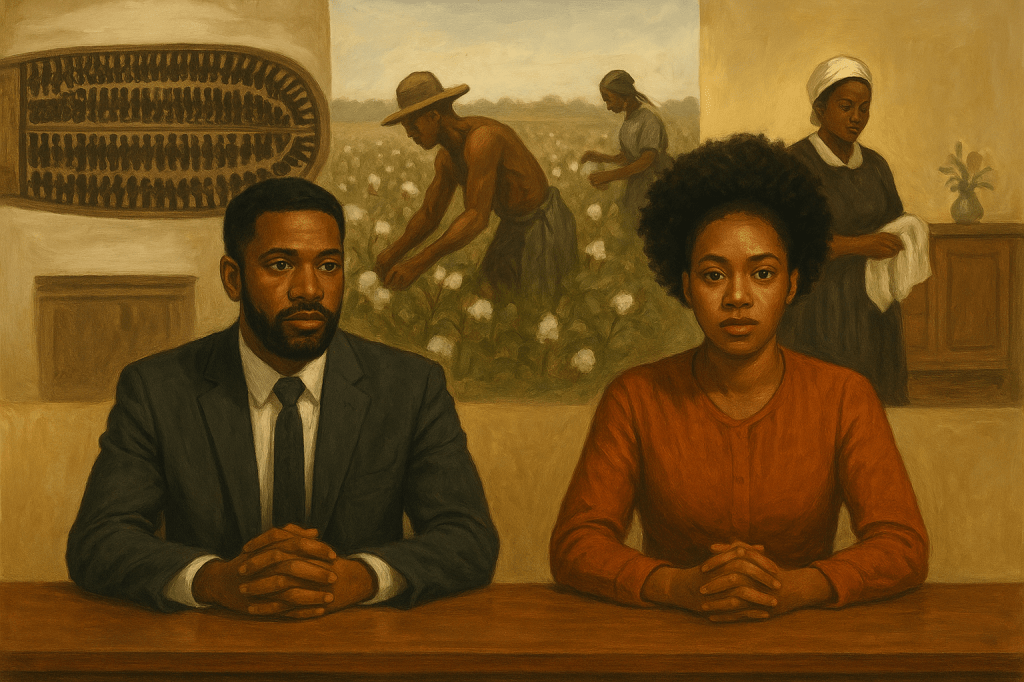



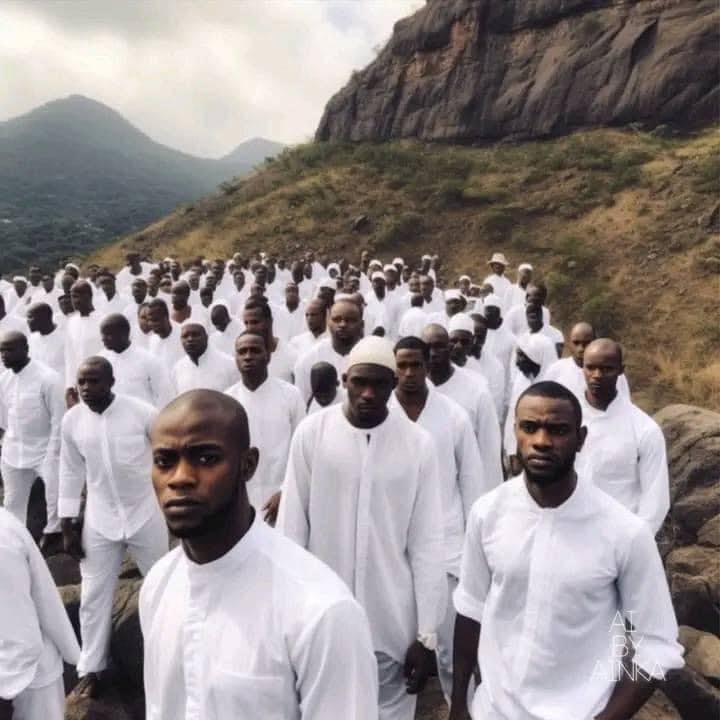
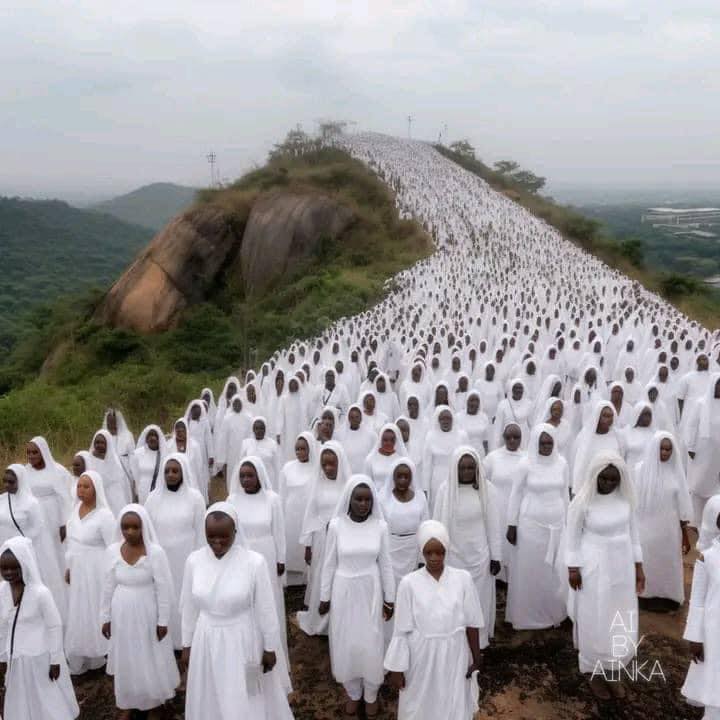

 THE BROWN GIRL DILEMMA