Tag Archives: Yah

Realms of the Afterlife: A Biblical Exploration of Sheol, the Abyss, Tartarus, Gehenna, and the Lake of Fire.

The concept of the afterlife stands as one of the most profound and layered themes within biblical theology, revealing a structured spiritual reality beyond physical death. Scripture does not present a singular destination for the dead, but rather multiple realms, each with distinct purposes, meanings, and theological implications rooted in both Hebrew and Greek traditions.

Within the Old Testament, the earliest and most foundational understanding of the afterlife is expressed through the term Sheol. Derived from Hebrew, Sheol refers broadly to the grave or the realm of the dead, encompassing all who have departed from the land of the living.

Sheol is best understood as the first level or realm of the afterlife, a neutral domain where both the righteous and the wicked reside after death. It is not portrayed as a place of torment, but rather as a shadowy existence removed from the activities of the living world.

Ecclesiastes 9:10 (KJV) affirms this understanding, stating that there is no work, knowledge, or wisdom in Sheol. This suggests a state of stillness and inactivity rather than conscious suffering or reward.

Similarly, Psalm 6:5 (KJV) declares that in death there is no remembrance of God, reinforcing the idea that Sheol is a place devoid of active worship or awareness.

The patriarch Jacob references Sheol in Genesis 37:35 (KJV), expressing his expectation to descend there in mourning. This passage further confirms that Sheol was not viewed as a place of punishment, but as the inevitable destination of all humanity.

As biblical revelation progresses, particularly into the New Testament, a more detailed and differentiated understanding of the afterlife begins to emerge, introducing additional realms beyond Sheol.

One such realm is the Abyss, often translated as the “bottomless pit.” Unlike Sheol, the Abyss is not associated with human souls, but with spiritual confinement and judgment.

In Luke 8:31 (KJV), demons plead with Christ not to be cast into the Abyss, revealing their fear of this place as one of imprisonment and restriction.

Revelation 20:1–3 (KJV) describes Satan being bound and cast into the Abyss for a thousand years, indicating that this realm serves as a temporary prison for rebellious spiritual beings.

This distinction highlights an important theological principle: different realms exist for different types of beings, reflecting divine order and justice within the unseen world.

Another significant term found in the New Testament is Tartarus, which appears in 2 Peter 2:4 (KJV). This passage explains that God cast certain fallen angels into chains of darkness, delivering them into a place of judgment.

Tartarus is understood as a deeper and more severe realm of confinement than the Abyss, specifically reserved for angels who committed grave transgressions, often associated with the events described in Genesis 6.

This realm is characterised by darkness and restraint, emphasising the seriousness of rebellion against divine authority and the certainty of judgment.

The use of the term Tartarus, though rooted in the Greek language, is adapted within Scripture to communicate a distinctly biblical concept of divine punishment for fallen angels.

Moving further into the teachings of Christ, the term Gehenna emerges as a central concept related to judgment and destruction. Unlike Sheol, Gehenna is not neutral, but is explicitly associated with punishment.

Gehenna derives from the Valley of Hinnom, a location historically linked to idolatry and child sacrifice, as recorded in Jeremiah 7:31 (KJV). Over time, it became a symbol of divine wrath.

In Matthew 10:28 (KJV), Christ warns that God has the authority to destroy both soul and body in Gehenna, underscoring its role as a place of judgment.

Mark 9:43 (KJV) further describes Gehenna as a place of unquenchable fire, reinforcing its association with destruction and irreversible consequence.

Gehenna represents a transition in biblical theology from the neutral concept of Sheol to a more defined understanding of moral accountability and divine justice.

The final and most ultimate realm described in Scripture is the Lake of Fire, which represents the culmination of divine judgment.

Revelation 20:14–15 (KJV) declares that death and hell are cast into the Lake of Fire, identifying it as the “second death.” This signifies the complete and final end of all that opposes God.

Unlike Sheol, the Abyss, or Tartarus, which function as temporary or intermediate states, the Lake of Fire is eternal and irreversible.

Matthew 25:41 (KJV) reveals that this place was prepared for the devil and his angels, yet it also becomes the final destination for those not found written in the Book of Life.

This ultimate realm reflects the full expression of divine justice, where all rebellion is permanently judged and removed.

When examined together, these realms reveal a structured progression within biblical eschatology. Sheol serves as the initial realm of the dead, followed by places of confinement such as the Abyss and Tartarus, leading to judgment in Gehenna, and culminating in the eternal reality of the Lake of Fire.

This layered understanding challenges simplified interpretations of the afterlife and calls for a deeper engagement with Scripture in its original linguistic and cultural context.

It also reflects the nature of God as both just and orderly, assigning different realms according to the nature and actions of both human beings and spiritual entities.

The distinctions between these realms emphasise the seriousness of moral accountability and the reality of divine judgment throughout the biblical narrative.

At the same time, the New Testament message offers hope through redemption, emphasising that deliverance from judgment is made possible through faith and obedience.

Ultimately, the study of these realms is not merely an exploration of death, but a theological reflection on justice, mercy, and the eternal destiny of creation.


References

The Holy Bible, King James Version. (1611).

Bauckham, R. (1993). The Theology of the Book of Revelation. Cambridge University Press.

Brueggemann, W. (2002). Theology of the Old Testament. Fortress Press.

Charles, R. H. (1913). A Critical and Exegetical Commentary on the Revelation of St. John. T&T Clark.

France, R. T. (2007). The Gospel of Matthew. Eerdmans.

Green, J. B. (2008). Body, Soul, and Human Life: The Nature of Humanity in the Bible. Baker Academic.

Heiser, M. S. (2015). The Unseen Realm. Lexham Press.

Wright, N. T. (2008). Surprised by Hope. HarperOne.

Wisdom Alert! Say YES to GOD.

Wisdom begins with a response. Throughout Scripture, the call of God is clear, but the outcome depends on whether His voice is answered with obedience or ignored through pride and fear. Saying yes to God is not merely a spiritual concept; it is a life-altering decision that aligns the soul with divine order and eternal purpose.

The Bible teaches that wisdom originates with reverence toward God, not human intellect. When a person says yes to God, they acknowledge His authority and submit their understanding to His higher ways. This posture of humility opens the door to clarity, protection, and direction that human reasoning alone cannot provide. “The fear of the LORD is the beginning of wisdom” (Proverbs 9:10, KJV).

God’s invitations often come quietly, requiring discernment rather than emotion. Many miss divine opportunities because they are waiting for signs that appeal to comfort instead of conviction. Yet Scripture reminds us that God’s voice leads to life, even when it challenges our desires. “There is a way which seemeth right unto a man, but the end thereof are the ways of death” (Proverbs 14:12, KJV).

Saying yes to God requires trust beyond sight. Faith is demonstrated not by words but by action, especially when the path ahead is unclear. Abraham’s obedience exemplifies this principle, as he moved without full knowledge of the destination. “By faith Abraham obeyed; and he went out, not knowing whither he went” (Hebrews 11:8, KJV).

God’s wisdom often contradicts worldly logic. The world promotes self-exaltation, while God calls for surrender. The world encourages control, but God demands dependence. True wisdom recognizes that God’s ways, though sometimes difficult, lead to peace and stability. “Trust in the LORD with all thine heart; and lean not unto thine own understanding” (Proverbs 3:5, KJV).

Obedience to God brings divine alignment. When a person says yes to God, their steps are ordered, even when circumstances appear chaotic. God is faithful to guide those who submit to Him. “The steps of a good man are ordered by the LORD: and he delighteth in his way” (Psalm 37:23, KJV).

Saying yes to God also involves resisting compromise. Wisdom guards the heart against temptation and distraction. Many fall not because they lack knowledge, but because they ignore God’s instruction. “Be not wise in thine own eyes: fear the LORD, and depart from evil” (Proverbs 3:7, KJV).

God’s wisdom protects from destruction. Scripture repeatedly warns that rejection of divine counsel leads to sorrow and loss. The consequences of ignoring God are not arbitrary; they are the natural result of stepping outside His design. “Because I have called, and ye refused… I also will laugh at your calamity” (Proverbs 1:24–26, KJV).

Saying yes to God produces spiritual fruit. Obedience refines character, strengthens faith, and cultivates patience. Over time, the believer begins to reflect God’s nature through their choices and conduct. “If ye be willing and obedient, ye shall eat the good of the land” (Isaiah 1:19, KJV).

Wisdom is proven through endurance. Saying yes to God does not remove trials, but it provides strength to overcome them. God uses adversity to mature those who trust Him. “My son, despise not the chastening of the LORD… for whom the LORD loveth he correcteth” (Proverbs 3:11–12, KJV).

God honors obedience even when it goes unseen by others. He is not moved by appearances but by faithfulness. Those who consistently say yes to God are rewarded in due time. “Humble yourselves therefore under the mighty hand of God, that he may exalt you in due time” (1 Peter 5:6, KJV).

Saying yes to God requires denying self. Jesus made it clear that discipleship demands surrender of personal will. Wisdom understands that losing one’s life for God’s sake leads to true life. “If any man will come after me, let him deny himself” (Matthew 16:24, KJV).

God’s wisdom brings peace, not confusion. When choices align with His will, even difficult decisions carry inner assurance. “For God is not the author of confusion, but of peace” (1 Corinthians 14:33, KJV).

Saying yes to God positions a person for divine favor. Obedience places the believer under God’s covering, guidance, and provision. Favor follows faithfulness, not convenience. “Seek ye first the kingdom of God, and his righteousness; and all these things shall be added unto you” (Matthew 6:33, KJV).

Wisdom also teaches patience in waiting for God’s timing. Saying yes does not mean rushing ahead of Him. Those who wait on the Lord are strengthened rather than delayed. “They that wait upon the LORD shall renew their strength” (Isaiah 40:31, KJV).

God’s wisdom corrects pride and self-reliance. He resists those who exalt themselves but gives grace to the humble. Saying yes is an act of humility that invites divine assistance. “God resisteth the proud, but giveth grace unto the humble” (James 4:6, KJV).

Saying yes to God shapes legacy. Choices rooted in obedience affect future generations. Wisdom understands that obedience today builds blessing tomorrow. “The just man walketh in his integrity: his children are blessed after him” (Proverbs 20:7, KJV).

God’s wisdom preserves the soul. Obedience guards against spiritual drift and moral compromise. Those who heed God’s instruction remain anchored in truth. “Thy word is a lamp unto my feet, and a light unto my path” (Psalm 119:105, KJV).

Saying yes to God is an act of courage. It often requires standing alone, choosing righteousness over popularity. Wisdom values God’s approval above human praise. “Fear ye not the reproach of men… for the LORD God will help me” (Isaiah 51:7–9, KJV).

Ultimately, wisdom is proven by obedience. Knowledge without submission leads to pride, but wisdom produces transformation. Saying yes to God is the pathway to life, peace, and eternal reward. “Blessed are they that hear the word of God, and keep it” (Luke 11:28, KJV).

Wisdom alerts the soul before danger appears. The call to say yes to God is a call to life itself. Those who heed His voice walk in truth, stability, and divine purpose. “Choose you this day whom ye will serve” (Joshua 24:15, KJV).

The Man God Built

The man God builds is not shaped by the world but by divine purpose. He is called to reflect God’s nature through character, faith, and steadfastness. As Scripture declares, God desires a man after His own heart, one who seeks righteousness above worldly gain (Acts 13:22). This type of man recognizes that true strength is measured in obedience to God, not in personal acclaim.

A man built by God is anchored in integrity. Integrity is the framework that aligns his actions with God’s Word. Proverbs 10:9 says, “He that walketh uprightly walketh surely: but he that perverteth his ways shall be known.” The godly man’s decisions are consistent, whether seen by many or by none, for he knows that God’s eyes are upon him.

Such a man is humble, understanding that authority is stewardship, not entitlement. Humility allows him to submit to God’s guidance while leading others with wisdom and compassion. James 4:10 affirms, “Humble yourselves in the sight of the Lord, and he shall lift you up.” Humility is thus both a shield and a crown in a godly man’s life.

Faith is the foundation of his life. A man after God’s own heart walks in trust, even when circumstances appear daunting. Hebrews 11:6 reminds us, “But without faith it is impossible to please him: for he that cometh to God must believe that he is, and that he is a rewarder of them that diligently seek him.” Faith propels him to act rightly, not merely to believe passively.

The man God builds pursues wisdom above all earthly knowledge. Wisdom distinguishes the temporary from the eternal, guiding him in decision-making and leadership. Proverbs 4:7 declares, “Wisdom is the principal thing; therefore get wisdom: and with all thy getting get understanding.” In every choice, a godly man seeks God’s discernment.

Courage marks the man God constructs. He does not shrink from moral challenges or spiritual battles. Joshua 1:9 commands, “Be strong and of a good courage; be not afraid, neither be thou dismayed: for the Lord thy God is with thee whithersoever thou goest.” Courage is born of trust in God’s presence and promises.

Responsibility defines his every endeavor. A man built by God does not shirk duty but embraces accountability in family, work, and community. Luke 16:10 teaches, “He that is faithful in that which is least is faithful also in much.” Faithfulness in small matters reflects readiness for greater responsibilities.

A man after God’s own heart is prayerful, maintaining constant communion with his Creator. Prayer is the lifeline that sustains his soul and informs his actions. Philippians 4:6 exhorts, “Be careful for nothing; but in every thing by prayer and supplication with thanksgiving let your requests be made known unto God.” Through prayer, he aligns his will with God’s.

Compassion flows naturally from the man God shapes. He bears the burdens of others and acts justly, especially toward the vulnerable. Micah 6:8 instructs, “He hath shewed thee, O man, what is good; and what doth the Lord require of thee, but to do justly, and to love mercy, and to walk humbly with thy God?” Mercy strengthens his relationships and his testimony.

The man God builds practices self-control. His emotions, desires, and impulses are tempered by the Spirit. Proverbs 25:28 warns, “He that hath no rule over his own spirit is like a city that is broken down, and without walls.” Self-discipline ensures his influence is constructive, not destructive.

Vision defines his journey. A man after God’s own heart has clarity of purpose rooted in divine calling. Proverbs 29:18 affirms, “Where there is no vision, the people perish: but he that keepeth the law, happy is he.” His foresight guides his family, community, and spiritual legacy.

The godly man demonstrates resilience, standing firm amidst trials. Job exemplifies this, maintaining faith under suffering. James 1:12 reminds, “Blessed is the man that endureth temptation: for when he is tried, he shall receive the crown of life, which the Lord hath promised to them that love him.” Resilience is nurtured through unwavering trust in God.

A man God builds is honest in all dealings. Truthfulness strengthens his credibility and honors God. Proverbs 12:22 declares, “Lying lips are abomination to the Lord: but they that deal truly are his delight.” His words align with reality and righteousness.

Generosity marks his interactions. He gives willingly to meet needs, reflecting God’s providence. Acts 20:35 notes, “It is more blessed to give than to receive.” The godly man’s generosity is not performative but a reflection of divine love.

He is discerning, understanding that appearances may deceive. 1 Thessalonians 5:21 instructs, “Prove all things; hold fast that which is good.” Discernment protects him from manipulation and allows him to shepherd others wisely.

The man God shapes values family and nurtures those entrusted to him. Ephesians 5:25 commands, “Husbands, love your wives, even as Christ also loved the church, and gave himself for it.” He protects, provides, and models godly leadership in the home.

A man after God’s own heart is a servant-leader, not seeking dominance but service. Mark 10:45 reminds, “For even the Son of man came not to be ministered unto, but to minister, and to give his life a ransom for many.” Leadership is defined by humility and sacrifice.

He cultivates patience, understanding that growth is gradual and challenges are refining. Romans 5:3-4 teaches, “…we glory in tribulations also: knowing that tribulation worketh patience; And patience, experience; and experience, hope.” Patience strengthens character and faith.

A man God builds maintains purity of thought and action, avoiding moral compromise. Philippians 4:8 instructs, “Whatsoever things are true, whatsoever things are honest, whatsoever things are just…think on these things.” Purity ensures his life is a testimony of righteousness.

Finally, the man God builds lives with eternal perspective. Colossians 3:2 advises, “Set your affection on things above, not on things on the earth.” His priorities, decisions, and ambitions are aligned with God’s kingdom, leaving a legacy that honors heaven more than man.

References

Acts 13:22 – “And when he had removed him, he raised up unto them David to be their king; to whom also he gave testimony, and said, I have found David the son of Jesse, a man after mine own heart, which shall fulfil all my will.”

Proverbs 10:9 – “He that walketh uprightly walketh surely: but he that perverteth his ways shall be known.”

James 4:10 – “Humble yourselves in the sight of the Lord, and he shall lift you up.”

Hebrews 11:6 – “But without faith it is impossible to please him: for he that cometh to God must believe that he is, and that he is a rewarder of them that diligently seek him.”

Proverbs 4:7 – “Wisdom is the principal thing; therefore get wisdom: and with all thy getting get understanding.”

Joshua 1:9 – “Have not I commanded thee? Be strong and of a good courage; be not afraid, neither be thou dismayed: for the Lord thy God is with thee whithersoever thou goest.”

Luke 16:10 – “He that is faithful in that which is least is faithful also in much: and he that is unjust in the least is unjust also in much.”

Philippians 4:6 – “Be careful for nothing; but in every thing by prayer and supplication with thanksgiving let your requests be made known unto God.”

Micah 6:8 – “He hath shewed thee, O man, what is good; and what doth the Lord require of thee, but to do justly, and to love mercy, and to walk humbly with thy God?”

Proverbs 25:28 – “He that hath no rule over his own spirit is like a city that is broken down, and without walls.”

Proverbs 29:18 – “Where there is no vision, the people perish: but he that keepeth the law, happy is he.”

James 1:12 – “Blessed is the man that endureth temptation: for when he is tried, he shall receive the crown of life, which the Lord hath promised to them that love him.”

Proverbs 12:22 – “Lying lips are abomination to the Lord: but they that deal truly are his delight.”

Acts 20:35 – “I have shewed you all things, how that so labouring ye ought to support the weak, and to remember the words of the Lord Jesus, how he said, It is more blessed to give than to receive.”

1 Thessalonians 5:21 – “Prove all things; hold fast that which is good.”

Ephesians 5:25 – “Husbands, love your wives, even as Christ also loved the church, and gave himself for it.”

Mark 10:45 – “For even the Son of man came not to be ministered unto, but to minister, and to give his life a ransom for many.”

Romans 5:3-4 – “And not only so, but we glory in tribulations also: knowing that tribulation worketh patience; And patience, experience; and experience, hope.”

Philippians 4:8 – “Finally, brethren, whatsoever things are true, whatsoever things are honest, whatsoever things are just, whatsoever things are pure, whatsoever things are lovely, whatsoever things are of good report; if there be any virtue, and if there be any praise, think on these things.”

Colossians 3:2 – “Set your affection on things above, not on things on the earth.”

Dilemma: 400 years later…

The arrival of the first documented Africans to the shores of what would become the United States began in 1619, initiating a 400-year historical continuum that cannot be reduced to a single era or chapter but must be read as an unfolding system of captivity and racial stratification rooted in both economic exploitation and social demonization. The transatlantic slave trade expanded across the Americas over the next two centuries, cementing a global architecture of forced labor that built Western wealth while systematically devastating African communities and fracturing family lineage. This reality fulfills the ancient warning that curses follow a disobedient and oppressed people, for scripture foretold a nation that would experience alien ruin, humiliation, and subjugation: “The stranger that is within thee shall get up above thee very high; and thou shalt come down very low” (Deuteronomy 28:43, KJV).

Slavery did not begin by accident but by law, religion, and commerce. By the mid-1600s, colonial legislatures had codified Africans and their descendants into permanent hereditary servitude, legally positioning Black bodies as property rather than persons, creating a condition where captivity could be inherited like a surname. Plantations multiplied across the Southern colonies, where cotton would later emerge as “king,” demanding labor on a scale that turned land into empire and humans into fuel. Yet the Bible condemns the very foundation of such enterprise: “He that stealeth a man, and selleth him… shall surely be put to death” (Exodus 21:16, KJV). The theft was never the land alone — it was identity, labor, movement, and posterity.

Even after the Thirteenth Amendment of 1865 formally abolished chattel slavery, its exception clause allowed a rapid pivot into criminalized bondage, birthing the era of convict leasing, where Black men were arrested on arbitrary charges, leased to corporations, and worked under conditions nearly indistinguishable from plantation labor. The cotton field remained, only relabeled. This legislative loophole reframed chains as “justice,” transforming freedom into illusion. Scripture again provides clarity: “The wicked walk on every side, when the vilest men are exalted” (Psalm 12:8, KJV). When power itself is corrupt, deliverance cannot be legal alone — it must also be spiritual.

Reconstruction offered a brief but luminous disruption of bondage. Black Americans built schools, entered political office, established land ownership, and reconnected fragments of stolen ancestry. But progress provoked terror, and by 1877, federal retreat enabled Southern states to regenerate racial hierarchy through Jim Crow laws, insulating white privilege and criminalizing Black mobility. Between 1870 and 1950, thousands of Black Americans were lynched in public acts of racial terrorism, not as random violence but as a national message: Black advancement would be met with blood. The psalmist described this spirit precisely: “They have said, Come, and let us cut them off from being a nation” (Psalm 83:4, KJV). The objective was erasure.

The Great Migration (1916–1970) relocated millions of Black families from the agricultural South to the industrial North, seeking wages rather than whipping posts, safety rather than spectacle deaths. But northern opportunity carried its own forms of apartheid: redlining maps, restricted labor unions, segregated schools, employment ceilings, and policing systems that followed Black communities like a shadow. The physical field changed, but the captivity matured into systems rather than signposts. Scripture declared the emotional condition of displaced people longing for justice and homeland: “By the rivers of Babylon, there we sat down, yea, we wept” (Psalm 137:1, KJV).

The 1960s Civil Rights Movement confronted segregation at its legal roots, demanding equal access to education, voting, housing, and public participation. Its leaders spoke like prophets disrupting empires: “Let judgment run down as waters, and righteousness as a mighty stream” (Amos 5:24, KJV). Yet many of the same state systems that resisted abolition resisted civil rights — governors blocking doors, officers turning hoses, lawmakers filibustering dignity. Progress was wrestled, never gifted.

Following civil rights legislation came a new form of containment — the War on Drugs, hyper-policing, and mass incarceration. From the 1980s onward, prisons expanded faster than schools, sentencing laws grew harsher, and policing strategies militarized, targeting Black neighborhoods with a disproportionality that mirrors an economic draft. Men descended from sharecroppers became inmates leased through labor programs inside industrial prisons. The plantation evolved into a complex, adaptable organism. As Proverbs illuminated the mechanics of inequality: “The rich ruleth over the poor” (22:7, KJV). For Black America, poverty was not incidental but intentional infrastructure.

In modern expression, hatred manifests not in auction blocks but in algorithms, policing districts, wage gaps, and judicial disparities. Hate crimes continue at alarming frequency, motivated by the same racial animus that once governed slave patrols, lynch mobs, and segregated institutions. Police brutality killings operate as extrajudicial punishments disproportionately borne by Black citizens, echoing the terror logic of the past. “They break in pieces thy people, O Lord, and afflict thine heritage” (Psalm 94:5, KJV). The cries are the same; only the arenas differ.

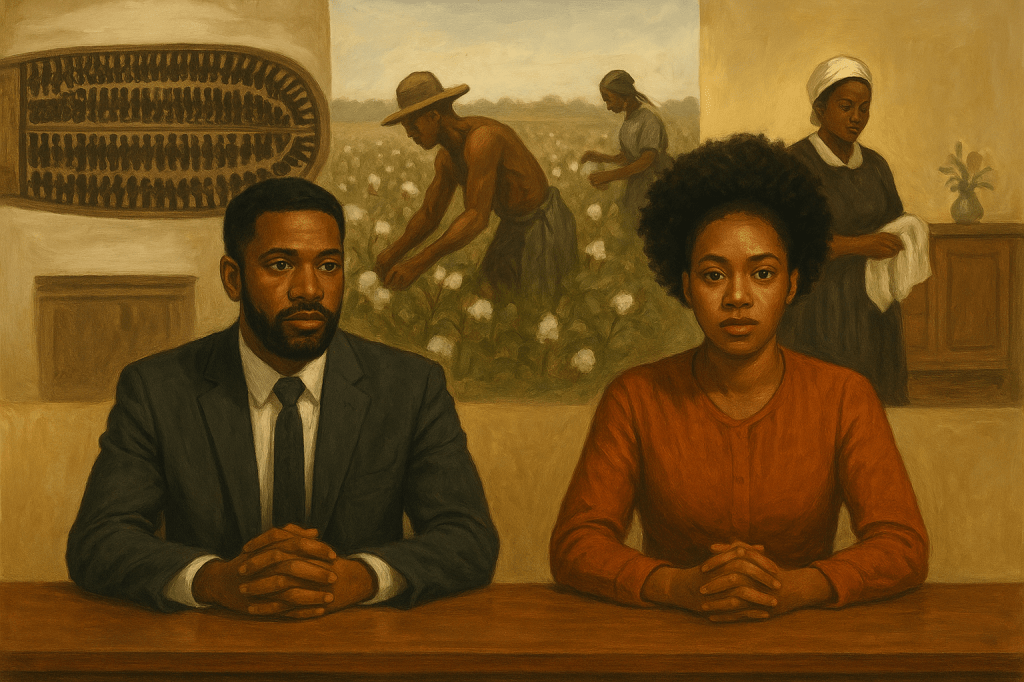
Reparations promised in 1865 through “40 acres and a mule” never materialized nationally, representing not only a breach of contract but a breach of justice. No federal reparative policy has been enacted despite centuries of documented theft, labor extraction, and structural disenfranchisement. The field and the counter today form an economic diptych — continuity rather than contrast: from unpaid cotton labor to underpaid service labor, from stolen land to inaccessible mortgages, from patrolled movement to policed existence, from literal chains to institutional ones.

The psychological captivity is often strongest. Media systems still export narratives that position Black identity as inferior, criminal, or disposable, reproducing a cognitive caste system that shapes public perception, opportunity distribution, and even self-esteem. Solomon teaches that perception becomes self-governing: “As he thinketh in his heart, so is he” (Proverbs 23:7, KJV). When a people lives under 400 years of negative mirrors, liberation must reconstruct the mind, not only the nation.

Understanding the Biblical “400-Year” Hardship Motif

In the Bible, long periods of suffering are often tied to exile, purification, oppression, and divine timing, not arbitrary catastrophe. The closest explicit reference to 400 years appears in Genesis 15:13–14 (KJV), where God tells Abram:

“Know of a surety that thy seed shall be a stranger in a land that is not theirs, and shall serve them; and they shall afflict them four hundred years; And also that nation, whom they shall serve, will I judge: and afterward shall they come out with great substance.”

This passage establishes three key principles:

  1. Suffering within foreign lands can be part of divine assignment — “a land that is not theirs.”
  2. The suffering serves a formative purpose for a chosen lineage — Abram’s seed is not destroyed, but shaped.
  3. The timeline ends with judgment of the oppressor and advancement of the oppressed — “I will judge” + “come out with great substance.”

Other biblical exiles follow similar structure, though without the number 400 attached. Israel’s bondage in Egypt, Judah’s exile into Babylon, and the scattering of tribes under imperial conquest all follow a recognizable pattern:

  • Identity is attacked
  • Oppression is used as endurance training
  • God times deliverance to align with spiritual readiness rather than political apology
  • Restoration is communal, covenantal, and spiritual before material

(Deuteronomy 30:3–5, Jeremiah 29:10–14, Psalm 126:1-3, KJV)

Thus, when people today speak of “400 years later,” they are usually drawing a parallel between African-descended suffering in America (beginning in 1619) and the Genesis 15 captivity framework, combining historical trauma with biblical typology. This is a symbolic theological claim, not a literal prophetic decree.

Du Bois (1903) noted that Black history in America has often been interpreted through a dual lens of diaspora and spiritual yearning, mirroring Hebraic exile themes. This interpretive tradition became especially strong in the African-American church and in later Afro-Hebraic movements. (Du Bois, 1903; Wilkerson, 2010)


Why 2025 Is Being Discussed as the “Cycle’s End”

The belief that “the 400-year test ends in 2025” is an example of contemporary sacred-historical reinterpretation, similar to how different generations calculated messianic or jubilee timelines in their own eras. The Bible shows that humans frequently attach chronology to hope:

  • Daniel expected restoration after 70 years because Jeremiah prophesied it (Daniel 9:2, KJV)
  • Israelites expected the Messiah based on timeline readings of prophets (Luke 3:15, KJV)
  • The Jubilee cycle (Leviticus 25) shaped conversations of liberation and return

Likewise, many Black thought movements today use 1619 → 2019/2025 as a rhetorical timeline to emphasize:

  • How long has injustice persisted
  • How delayed deliverance feels
  • How captivity keeps evolving
  • The moral debt owed to Black descendants has not been acknowledged or repaired

(Rothstein, 2017; Stevenson, 2014)

However, the Bible consistently teaches that God’s deliverance is not triggered by the clock alone, but by covenant remembrance and collective turning toward Him:

“Then ye shall call upon me, and ye shall go and pray unto me, and I will hearken unto you. And ye shall seek me, and find me, when ye shall search for me with all your heart.”
(Jeremiah 29:12-13, KJV)

This shows that spiritual awakening precedes systemic reversal in God’s economy.


What Has Changed vs. What Hasn’t

What has changed since 1619:

  • Black Americans are no longer enslaved as legal property
  • Literacy, land ownership, political office, scholarship, and cultural expression are possible
  • The Bible is now read by Black communities rather than read at them

(Woodson, 1933; Du Bois, 1903)

What has not changed at the root level :

  • Violence against Black bodies continues through hate-motivated crimes
  • Law enforcement injustice appears through disproportionate lethal force and brutality
  • No federal reparative restoration has been enacted for descendants of slavery
  • The wealth gap persists, restricting intergenerational mobility
  • Oppression remains structural, not individual alone
  • Bondage evolved from chains on bodies → chains on systems → chains on narratives → chains on economics → chains on mobility and life expectancy

(Muhammad, 2011; Rothstein, 2017; Stevenson, 2014)

Biblically, this mirrors a shift like captivity rather than the removal of it. Egypt began as physical bondage, but later exile became psychological, political, and spiritual scattering.


Yet transformation, though unfinished, remains possible. The biblical arc of exodus shows that freedom is not immediate but fought for, walked into, prayed into, and inherited by those who refuse to remain Egypt-minded. “Stand fast therefore in the liberty wherewith Christ hath made us free, and be not entangled again with the yoke of bondage” (Galatians 5:1, KJV). Black America has been made free in spirit — the labor left is to be made free in systems, policies, safety, economy, body, and legacy.

Bondage persists, but so does chosen resistance. The cotton field, the counter, the classroom, the courtroom, the wealth gap, the police district — these are the new Red Seas, new wildernesses, and new pleas for divine justice. Deliverance is still in motion. Liberation has begun, but emancipation is still the mission. And the question is no longer “Were we enslaved?” but “Why are the chains so adaptive, and where will exodus lead next?”

References

Bibb, H. (1849). Narrative of the Life and Adventures of Henry Bibb, an American Slave. Author.

Du Bois, W. E. B. (1903). The Souls of Black Folk. A. C. McClurg & Co.

Equal Justice Initiative. (2022). Lynching in America: Confronting the Legacy of Racial Terror (3rd ed.). Author.

Feagin, J. (2020). The racism: A short history (2nd ed.). Routledge.

Genovese, E. D. (1976). Roll, Jordan, Roll: The World the Slaves Made. Pantheon Books.

Higginbotham, A. L. (1978). In the Matter of Color: Race and the American Legal Process. Oxford University Press.

King James Bible. (1611). King James Version (KJV).

King, M. L., Jr. (1963). “I Have a Dream.” Speech presented at the March on Washington for Jobs and Freedom, Washington, D.C.

Muhammad, K. G. (2011). The Condemnation of Blackness: Race, Crime, and the Making of Modern Urban America. Harvard University Press.

National Archives. (2024). 13th Amendment to the U.S. Constitution: Abolition of Slavery (except as punishment for crime). U.S. Government.

Rothstein, R. (2017). The Color of Law: A Forgotten History of How Our Government Segregated America. Liveright Publishing.

Smith, S. (2016). Generations of captivity: A history of African-American slavery. Journal of Cultural History, 12(4), 45–67.

Stevenson, B. (2014). Just Mercy: A Story of Justice and Redemption. Spiegel & Grau.

Wilkerson, I. (2010). The Warmth of Other Suns: The Epic Story of America’s Great Migration. Random House.

Woodson, C. G. (1933). The Mis-Education of the Negro. Associated Publishers.

Exodus 21:16 – “He that stealeth a man, and selleth him… shall surely be put to death.”

Deuteronomy 28:37 – “Thou shalt become an astonishment, a proverb, and a byword, among all nations.”

Deuteronomy 28:43 – “The stranger that is within thee shall get up above thee very high; and thou shalt come down very low.”

Proverbs 22:7 – “The borrower is servant to the lender.”

Proverbs 23:7 – “As he thinketh in his heart, so is he.”

Psalm 12:8 – “The wicked walk on every side, when the vilest men are exalted.”

Psalm 83:4 – “Let us cut them off from being a nation.”Psalm 94:5 – “They break in pieces thy people, O Lord, and afflict thine heritage.”

Galatians 5:1 – “Stand fast therefore in the liberty wherewith Christ hath made us free, and be not entangled again with the yoke of bondage.”

How to know God’s Voice…

Speak, God, for your servant is listening.

Hearing the voice of God is one of the most transformative experiences in the life of a believer. It is not mystical, strange, or reserved for a chosen few—Scripture shows that God speaks to His children, guides them, warns them, comforts them, and leads them into truth (John 10:27). To discern His voice, we must cultivate spiritual sensitivity and a lifestyle surrendered to His presence. This process is both beautiful and intentional, built on relationship, obedience, and quietness before the Lord.

One of the foundational ways to know God’s voice is recognizing that His voice always aligns with His Word. God will never contradict Scripture. If the thought, idea, or leading goes against biblical truth, it is not from Him (Psalm 119:105). The Word is the standard, the filter, and the mirror by which we evaluate every impression. This is why the psalmist says, “Thy word have I hid in mine heart, that I might not sin against thee” (Psalm 119:11). The more of God’s Word that is hidden in our hearts, the easier it becomes to discern when He is speaking.

Spending time in Scripture is essential because it trains the spiritual ear. When you read the Bible consistently, you become familiar with the tone, character, and rhythm of God’s heart. His Word shapes your discernment and sets a foundation for recognizing His direction. Just as sheep learn the voice of their shepherd through daily relationship, believers learn God’s voice through daily exposure to His truth (John 10:4).

Prayer is another vital doorway for hearing God. Prayer is not just talking—it is communion. Many believers pray passionately but never pause long enough to listen. After you finish pouring out your heart, you must also say, “Speak to me, Lord.” In the stillness that follows, the Holy Spirit brings clarity, conviction, ideas, or reassurance (1 Kings 19:12). Listening is a spiritual discipline that requires silence, patience, and expectation.

A major key to knowing God’s voice is slowing down. Many people miss God because they move too fast. Rushing leads to confusion. God often speaks in the quiet, not the chaos. When you eliminate distractions—phones, noise, people, busyness—you create space for God to guide your thoughts. Psalm 46:10 says, “Be still, and know that I am God.” Stillness is not laziness; it is spiritual positioning.

Wise counsel is another tool God uses to confirm His voice. Scripture teaches that “in the multitude of counsellors there is safety” (Proverbs 11:14). When you feel God is leading you, speak with people who are strong in faith, spiritually mature, and rooted in Scripture. They can provide confirmation, correction, or clarity. God often uses others to echo what He has already spoken to your heart.

Obedience is one of the clearest ways to train your spiritual hearing. When you obey God in small things, your ear becomes sharper for big things. Ignoring God repeatedly dulls spiritual sensitivity. Jesus said, “If any man will do his will, he shall know of the doctrine” (John 7:17). In other words, understanding God’s voice grows when we walk in obedience.

One of the greatest ways people miss God is by expecting His voice to always be loud or dramatic. Sometimes God speaks through peace, sometimes through discomfort, sometimes through a closed door, and sometimes through a gentle whisper. We must be spiritually flexible—ready for God to speak in whichever way He chooses.

Remaining open to hearing God requires humility. You cannot approach God with a hardened heart or with your own agenda. You must be willing to surrender your desires and say, “Lord, not my will, but Yours be done” (Luke 22:42). A humble heart is fertile ground for divine direction.

Another way to stay sensitive is by guarding your spiritual environment. The wrong people, toxic relationships, and negative influences can drown out God’s voice. What you consume—music, media, conversations—affects your clarity. Purity of heart sharpens discernment (Matthew 5:8).

Spiritual consistency is key. Weekend faith will not produce weekday hearing. Establishing a rhythm of prayer, worship, Scripture reading, and reflection trains your spirit to recognize God’s guidance quickly. The more consistently you seek God, the more naturally you will recognize His voice (Jeremiah 29:13).

Fasting also sharpens spiritual perception. When you deny your flesh, your spirit becomes more alert. Fasting quiets earthly cravings and heightens sensitivity to the Holy Spirit’s whispers (Isaiah 58:6–11).

One of the most overlooked aspects of hearing God is gratitude. A thankful heart is open, clear, and full of faith. Gratitude shifts your focus off the noise and onto God’s presence. When your heart is postured in thanksgiving, you become more aware of divine leading (1 Thessalonians 5:18).

God speaks through peace. Colossians 3:15 says, “Let the peace of God rule in your hearts.” The word “rule” means “act like an umpire.” When God is speaking, He brings a deep sense of peace—even if the instruction challenges you. If something brings confusion, panic, or turmoil, it is not from God (1 Corinthians 14:33).

He also speaks through conviction. Conviction is not condemnation; it is divine correction that pulls you toward righteousness. The Holy Spirit uses conviction to guide you back to God’s will (John 16:13). Ignoring conviction makes His voice harder to recognize over time.

God speaks through opportunities. Open doors and divine timing are ways He confirms His words. When God is directing you, He aligns circumstances, timing, and resources. What He ordains, He sustains.

He also speaks through burdens. Sometimes God puts a burden on your heart for prayer, a person, a mission, or a calling. This inward pull is often a signal of divine leading. When you feel a strong, consistent spiritual urge, pay attention—it may be God prompting you.

Journaling is a powerful tool for tracking how God speaks. Writing down dreams, impressions, Scriptures, and moments of clarity helps you identify patterns in how the Lord communicates with you.

To avoid missing God, remain spiritually teachable. Pride closes your ears; humility keeps them open. Stay sensitive to correction, remain flexible to His instruction, and be willing to change course when He says move.

Separation is sometimes necessary. Getting away from noise, people, or environments that cloud your spirit helps you hear with clarity. Jesus Himself withdrew often to lonely places to pray (Luke 5:16).

Hearing God also requires spiritual maturity. You grow in discernment by studying Scripture, applying wisdom, reflecting on past experiences, and learning from both mistakes and victories. Discernment is developed, not automatic.

God speaks through creation, through nudges, through dreams, and through the internal witness of the Holy Spirit. Learning these different channels increases your spiritual awareness.

Above all, you know God’s voice through a relationship. The closer you walk with Him, the clearer His voice becomes. Shepherds do not yell at sheep—they speak in tones the sheep learned through closeness. Intimacy is the key to clarity.

When you live a life that seeks God daily, listens for Him, obeys Him, and filters everything through His Word, you will not miss His guidance. God wants you to hear Him more than you want to hear Him. The more you pursue Him, the more unmistakable His voice will become.

References (KJV)
John 10:4; John 10:27; Psalm 119:105; Psalm 119:11; 1 Kings 19:12; Psalm 46:10; Proverbs 11:14; John 7:17; Luke 22:42; Matthew 5:8; Jeremiah 29:13; Isaiah 58:6–11; 1 Thessalonians 5:18; Colossians 3:15; 1 Corinthians 14:33; John 16:13; Luke 5:16.

God, Where Are You? – Why Hast Thou Forsaken Me? #themosthighgodofIsrael

There are moments in every believer’s life when the heavens feel shut and prayer seems to fall back down in silence. These are the seasons that stretch the soul and test the very core of faith. When we cry, “God, where are You?” or ask, “Why hast Thou forsaken me?” we enter a sacred place of wrestling—a place where the silence of God feels louder than His voice. These moments can be frightening, humbling, and deeply transformative.

Throughout Scripture, many of God’s greatest servants faced long seasons of divine silence. The silence was not abandonment but preparation. It was not rejection but refining. In those quiet hours, God was shaping them into vessels strong enough to carry His glory. But in the moment, His silence often felt like distance. Even Jesus Himself, on the cross, cried out, “My God, my God, why hast thou forsaken me?” (Matthew 27:46, KJV). If the Son of God felt that anguish, how much more do we as His children?

Often, when God is silent, He is not absent. Silence is a language of Heaven—a divine classroom where the Holy Spirit teaches endurance, faith, and trust without visible evidence. Sometimes the Lord withdraws the feeling of His presence so that we learn to lean on what He has spoken, not on what we feel. “For we walk by faith, not by sight” (2 Corinthians 5:7, KJV). His silence tests whether our faith is built on feelings or on His Word.

Job is the ultimate example of suffering without explanation. He cried out repeatedly, asking God to answer him, defend him, and reveal the purpose of his pain. Yet for many chapters, Heaven remained silent. Job lost his children, his health, his wealth, and his comfort—yet God did not speak immediately. The silence was part of Job’s refining. And when God finally answered out of the whirlwind, Job realized that the silence had produced humility, revelation, and spiritual maturity (Job 38–42, KJV).

During silent seasons, God is often working behind the scenes in ways we cannot see. Daniel prayed for understanding, but the answer was delayed by spiritual warfare in the unseen realm for twenty-one days (Daniel 10:12–13, KJV). What looked like silence was actually a battle in the heavens on his behalf. Many believers experience similar unseen warfare, unaware that God’s response is on the way.

Sometimes God is silent because He is testing our obedience. King Saul lost his kingdom because he acted out of fear when God seemed slow in responding (1 Samuel 13:8–14, KJV). Silence exposes whether we will wait on God—or move ahead of Him. The silence becomes a spiritual X-ray, showing what is in our hearts.

Other times, God is teaching us to seek Him more deeply. When David said, “I cried unto the Lord… and He heard me not” (Psalm 22:2, KJV), it was not because God rejected him, but because God was drawing him into deeper intimacy. A silent God often produces a louder prayer life. We learn to press in, to cry out, to depend on Him alone.

God’s silence can also protect us. Sometimes, He withholds an answer because the timing is not right. If he opened a door too soon, it could destroy us. If he revealed a truth too early, it might overwhelm us. “To every thing there is a season” (Ecclesiastes 3:1, KJV). His silence becomes a shield, guarding us from premature blessings.

In many cases, silence is preparation for elevation. Joseph experienced thirteen years of silence—betrayed, enslaved, and imprisoned (Genesis 37–41, KJV). God never explained Himself during those years. But when the silence broke, Joseph stepped into destiny. What felt like divine abandonment was divine positioning.

The refining process during the silent seasons is often compared to gold being purified. “He shall sit as a refiner and purifier of silver” (Malachi 3:3, KJV). Gold is heated until impurities rise to the surface. In the same way, God allows pressure and silence to expose what must be removed from our hearts—fear, pride, impatience, insecurity, or doubt. He purifies us so that His image may shine in us.

The silence of God is also meant to strengthen spiritual hearing. Sometimes He whispers because He wants us closer. Elijah expected God in the wind, earthquake, and fire, yet the Lord spoke in a still small voice (1 Kings 19:11–12, KJV). Silence heightens sensitivity so we can discern His whisper when it comes.

Jesus experienced silence in Gethsemane. He prayed, “If it be possible, let this cup pass from me” (Matthew 26:39, KJV). Yet Heaven offered no alternative path. The silence confirmed the assignment. Sometimes God’s silence is not a “no,” but a divine affirmation that we must endure the path set before us.

When God is silent, He is often building spiritual endurance. James wrote, “The trying of your faith worketh patience” (James 1:3, KJV). Without trials, faith remains shallow. Silence strengthens the roots of belief so that we can withstand storms that feelings cannot.

Even when we cannot hear Him, God is speaking through His Word. Scripture becomes life in silent seasons. The promises of God become louder than the absence of His voice. “I will never leave thee, nor forsake thee” (Hebrews 13:5, KJV). Silence cannot contradict what He has already spoken.

Silent seasons also reveal the condition of our worship. Do we praise God only when we feel Him? Or do we praise Him because He is worthy? Job declared, “Though he slay me, yet will I trust in him” (Job 13:15, KJV). Worship in silence carries a fragrance that Heaven honors.

God’s silence may come before great revelation. After four hundred years of silence between Malachi and Matthew, God broke the silence with the birth of Jesus—the greatest revelation in human history. Long silence often precedes divine breakthrough.

When God is silent, believers must remain faithful in prayer, fasting, reading the Word, and serving. Silence is not a sign to stop; it is a sign to press forward. Those who endure the silence emerge stronger, wiser, and more anointed.

Eventually, God always answers. He may not answer the way we expect, but He answers in the way that transforms us. His silence molds us into vessels ready for His glory. When we look back, we realize He was closest in the moments that felt the loneliest.

God’s silence is not abandonment—it is divine refinement. It is the molding of character, the strengthening of faith, and the deepening of relationships. In the silence, God shapes us into gold. And when the season ends, He brings forth a testimony that could only be birthed in silence. God is Guide! HE is still in control. Be encouraged, my brothers and sisters.


KJV References
Job 13:15; Job 38–42; Psalm 22:2; Matthew 27:46; Matthew 26:39; Daniel 10:12–13; 1 Samuel 13:8–14; Ecclesiastes 3:1; Genesis 37–41; Malachi 3:3; 1 Kings 19:11–12; Hebrews 13:5; James 1:3; 2 Corinthians 5:7.

The Bible Series: The Temple of the Holy Spirit

The Temple of the Holy Spirit

(1 Corinthians 6:19–20 KJV)

“What? know ye not that your body is the temple of the Holy Ghost which is in you, which ye have of God, and ye are not your own?”

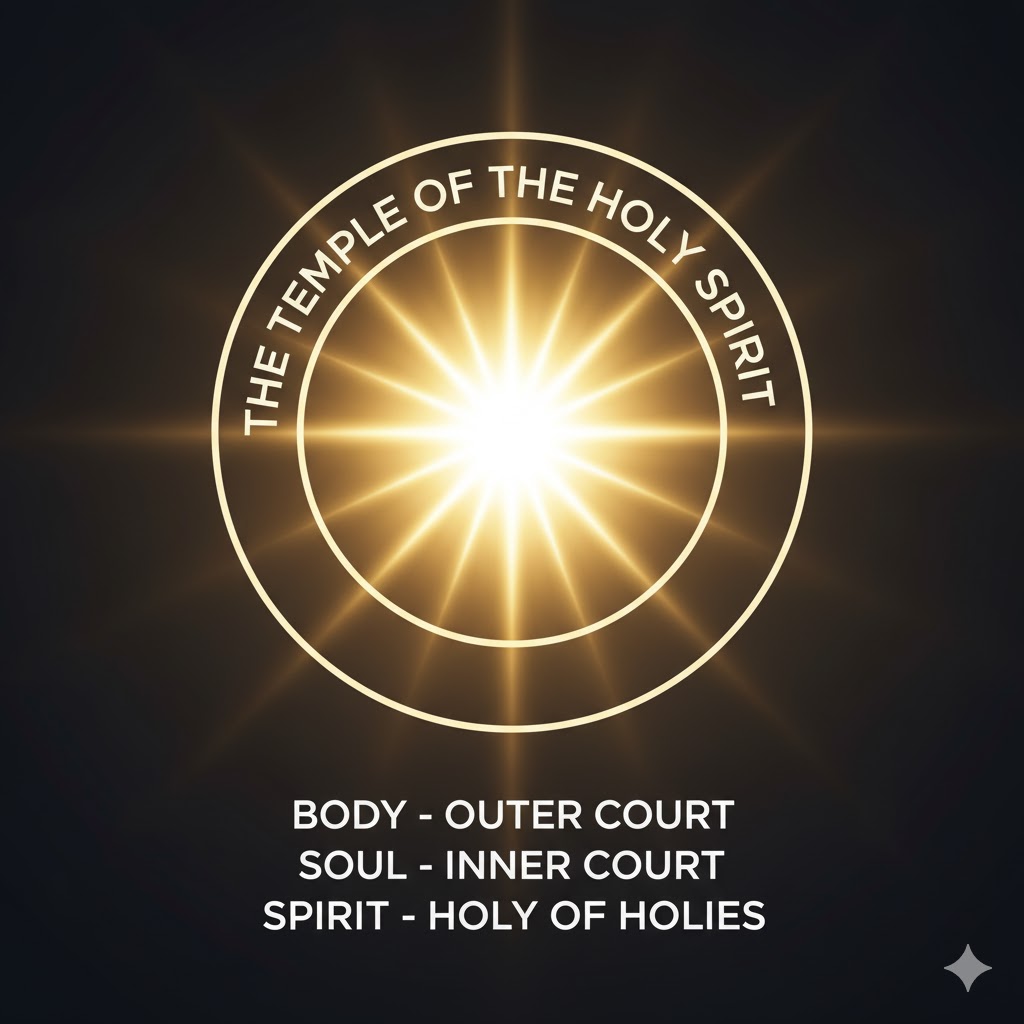
The human being is a sacred temple composed of three divine courtsthe body (outer court), the soul (inner court), and the spirit (Holy of Holies). Each has spiritual “gates” that must be guarded, purified, and dedicated to God.


🕊 Holy Spirit Gates (The Holy of Holies)

The dwelling place of the presence of God; where communion, revelation, and transformation occur.

  1. Truth Gate – The Spirit of truth guides believers into all understanding.
    • John 16:13: “When he, the Spirit of truth, is come, he will guide you into all truth.”
    • This gate opens discernment and alignment with God’s Word, rejecting deception.
  2. Revelation Gate – Unlocks divine mysteries and heavenly insight.
    • Ephesians 1:17: “That the God of our Lord Jesus Christ… may give unto you the spirit of wisdom and revelation in the knowledge of him.”
    • When open, this gate allows divine secrets to be revealed to the heart.
  3. Intuition Gate – The inner knowing that transcends logic.
    • 1 John 2:27: “Ye need not that any man teach you… the same anointing teacheth you of all things.”
    • The Spirit communicates through an inner sense or divine impression.
  4. Prayer Gate – Connects heaven and earth through constant communion.
    • 1 Thessalonians 5:17: “Pray without ceasing.”
    • This gate fuels spiritual life, keeping the fire of the altar burning within.
  5. Reverence Gate – Produces humility and awe before God’s holiness.
    • Psalm 111:10: “The fear of the LORD is the beginning of wisdom.”
    • Reverence guards against pride, keeping the temple pure and submissive.
  6. Faith Gate – The doorway to the supernatural.
    • Hebrews 11:6: “Without faith it is impossible to please him.”
    • Faith activates miracles and allows the believer to walk in divine authority.
  7. Hope Gate – Sustains endurance through trials.
    • Romans 15:13: “Now the God of hope fill you with all joy and peace in believing.”
    • Hope keeps the spirit alive and focused on God’s promises.
  8. Worship Gate – The highest expression of divine intimacy.
    • John 4:24: “God is a Spirit: and they that worship him must worship him in spirit and in truth.”
    • Worship sanctifies the atmosphere of the spirit, aligning the believer with heaven.
  9. Fear of God Gate – Protects from sin and awakens holiness.
    • Proverbs 14:27: “The fear of the LORD is a fountain of life, to depart from the snares of death.”
    • This gate anchors reverence, obedience, and purity in the believer’s spirit.

💠 Soul Gates (The Inner Court)

The seat of the mind, will, and emotions—where choices are made and spiritual warfare often occurs.

  1. Conscience Gate – The moral compass of the soul.
    • Romans 9:1: “My conscience also bearing me witness in the Holy Ghost.”
    • When pure, it warns against sin; when seared, it allows moral confusion.
  2. Reason Gate – The faculty of understanding and interpretation.
    • Proverbs 3:5–6: “Trust in the LORD… and lean not unto thine own understanding.”
    • This gate must be submitted to divine wisdom rather than worldly logic.
  3. Imagination Gate – The creative and visionary center of the soul.
    • Genesis 6:5: “Every imagination of the thoughts of his heart was only evil continually.”
    • When sanctified, imagination allows believers to visualize God’s glory and promises.
  4. Mind Gate – Governs thoughts, memory, and meditation.
    • Romans 12:2: “Be ye transformed by the renewing of your mind.”
    • A renewed mind brings the soul into harmony with the will of God.
  5. Will Gate – The power of choice and surrender.
    • Deuteronomy 30:19: “Choose life, that both thou and thy seed may live.”
    • This gate determines whether one obeys God or yields to the flesh.
  6. Emotions Gate – The realm of feelings and affections.
    • Proverbs 4:23: “Keep thy heart with all diligence; for out of it are the issues of life.”
    • Emotions must be ruled by the Spirit, not by circumstance.
  7. Choices Gate – Where decisions shape destiny.
    • Joshua 24:15: “Choose you this day whom ye will serve.”
    • Every choice opens or closes access to spiritual blessings.
  8. Will (as Dominion Gate) – Represents alignment of human will with divine purpose.
    • Luke 22:42: “Not my will, but thine, be done.”
    • This final gate in the soul ensures complete surrender to God’s plan.

🕯 Body Gates (The Outer Court)

The physical realm that interacts with the world—where obedience, discipline, and holiness must govern.

  1. Flesh Gate – Represents the fallen nature that seeks its own desires.
    • Galatians 5:17: “The flesh lusteth against the Spirit.”
    • The believer must crucify the flesh daily to keep the temple pure.
  2. Touch Gate – The sense of contact and intimacy.
    • 2 Corinthians 6:17: “Touch not the unclean thing; and I will receive you.”
    • This gate calls for purity and discernment in physical and spiritual connections.
  3. Taste Gate – Governs appetite, both physical and spiritual.
    • Psalm 34:8: “O taste and see that the LORD is good.”
    • Discipline in what one consumes symbolizes satisfaction in God, not excess.
  4. Smell Gate – Symbolic of spiritual discernment and worship.
    • Ephesians 5:2: “A sweet smelling savour.”
    • The anointing oil and incense of worship in the Old Testament mirror this gate’s holiness.
  5. Sight Gate – Controls vision and perception.
    • Job 31:1: “I made a covenant with mine eyes.”
    • What one watches or observes either sanctifies or corrupts the heart.
  6. Hearing Gate – Governs what influences faith and belief.
    • Romans 10:17: “Faith cometh by hearing, and hearing by the word of God.”
    • The ears determine what teachings, music, or words shape the soul.

When the Holy Spirit Gates are active, the believer walks in revelation and divine connection.
When the Soul Gates are renewed, the believer’s emotions, mind, and will align with truth.
When the Body Gates are disciplined, the believer’s actions reflect holiness.

Together, these gates form the Temple of the Holy Spirit—a living, breathing sanctuary through which God manifests His glory.

1 Thessalonians 5:23 (KJV): “And the very God of peace sanctify you wholly; and I pray God your whole spirit and soul and body be preserved blameless unto the coming of our Lord Jesus Christ.”

The human being is a divine masterpiece crafted in the image of God, designed to be a dwelling place for His presence. According to 1 Corinthians 6:19 (KJV), “What? know ye not that your body is the temple of the Holy Ghost which is in you, which ye have of God, and ye are not your own?” This scripture establishes a sacred truth: the human body, soul, and spirit are not merely biological or emotional structures, but holy vessels that mirror the very order of God’s tabernacle.

In the Old Testament, the temple of God had three parts: the outer court, the inner court, and the Holy of Holies. Each part symbolically represents a dimension of our being—the body, the soul, and the spirit. The outer court corresponds to the body, the inner court to the soul, and the Holy of Holies to the spirit. This divine structure reveals that true worship begins within, from the spirit, moving outward to influence the soul and body.

The body is the outer court, the physical representation of the inner life. It interacts with the world through five gates—touch, taste, smell, sight, and hearing. These gates determine what enters and exits, affecting the purity of the temple. 1 Corinthians 9:27 (KJV) says, “But I keep under my body, and bring it into subjection,” reminding believers that the flesh must be disciplined so it does not corrupt what is sacred.

The gate of sight determines vision—what one allows the eyes to behold. Job made a covenant with his eyes (Job 31:1), understanding that the eyes can either glorify God or lead one into temptation. Similarly, the gate of hearing must be guarded, for “faith cometh by hearing” (Romans 10:17), and what we listen to shapes belief and action.

The gate of taste influences appetite and desire. Proverbs 23:2 warns against overindulgence, teaching self-control in what one consumes. The touch gate represents intimacy and connection, reminding believers to “touch not the unclean thing” (2 Corinthians 6:17). Finally, the gate of smell connects to discernment—sensing what is holy versus profane, for in Exodus 30, God gave Moses instructions for the holy anointing oil, a sweet fragrance representing divine worship.

Beyond the body lies the soul, the inner court of human existence. The soul is where thoughts, emotions, and decisions are born. It is the seat of the mind, will, and emotions—the realm where spiritual battles occur. In Luke 21:19, Christ declares, “In your patience possess ye your souls.” This means the believer must govern the soul with divine wisdom and endurance.

The mind gate processes reasoning, imagination, and memory. Romans 12:2 instructs, “Be ye transformed by the renewing of your mind,” because the mind must be renewed daily through Scripture and prayer. The imagination gate, when sanctified, allows believers to envision God’s promises; but when corrupted, it becomes a tool of deception (Genesis 6:5).

The will gate represents choice—the power to obey or disobey. Deuteronomy 30:19 declares, “I have set before you life and death… therefore choose life.” The will determines which voice—God’s or the flesh’s—governs the temple. The emotion gate is deeply tied to worship, for God desires hearts that love Him sincerely. Proverbs 4:23 (KJV) says, “Keep thy heart with all diligence; for out of it are the issues of life.”

The conscience acts as a moral compass, bearing witness with the Spirit to what is right or wrong (Romans 9:1). When the conscience is purified by the blood of Christ, the soul becomes a place of peace and discernment. But if defiled, it leads to confusion and spiritual blindness (Titus 1:15).

The reason gate is where understanding is formed. Proverbs 3:5-6 (KJV) teaches, “Trust in the LORD with all thine heart; and lean not unto thine own understanding.” Reason must be submitted to revelation; for human wisdom alone cannot grasp divine truth.

The deepest part of the human temple is the spirit, the Holy of Holies. Here, communion with God occurs through the indwelling of the Holy Spirit. The spirit has its own gates—faith, reverence, prayer, revelation, intuition, worship, and the fear of God—each essential for divine connection.

The faith gate activates the believer’s trust in God. Hebrews 11:6 declares, “Without faith it is impossible to please Him.” The prayer gate keeps communication open between heaven and earth (1 Thessalonians 5:17). Prayer maintains the fire of the altar within the Holy of Holies, where God’s glory abides.

The revelation gate opens divine mysteries to those who seek truth. Ephesians 1:17 speaks of “the spirit of wisdom and revelation in the knowledge of Him.” The intuition gate allows one to perceive spiritual truths without human logic; it is the inner knowing that comes from the Spirit of God (1 John 2:27).

The reverence gate reflects holy respect and submission before the Lord. Psalm 111:10 declares, “The fear of the LORD is the beginning of wisdom.” Reverence keeps the spirit humble and the heart tender toward God.

The worship gate is the ultimate purpose of the temple—to glorify the Creator. John 4:24 reminds, “God is a Spirit: and they that worship him must worship him in spirit and in truth.” Worship purifies the temple and aligns every gate with heaven’s harmony.

Finally, the fear of God gate establishes holiness. Proverbs 14:27 declares, “The fear of the LORD is a fountain of life.” When this gate is open, sin cannot dominate, and the believer becomes a living sanctuary of divine power.

Thus, the temple of the Holy Spirit is a complete structure—body, soul, and spirit working together in divine order. When every gate is consecrated, the believer lives in alignment with heaven, walking as a vessel of light in a dark world.

The restoration of this temple begins with repentance and ends with transformation. Romans 8:11 declares that the Spirit that raised Jesus from the dead will quicken our mortal bodies. This quickening power renews the entire being, sanctifying each court and gate for God’s use.

Ultimately, the believer’s goal is not mere moral purity, but divine habitation. When the body, soul, and spirit operate in harmony under the authority of the Holy Spirit, heaven finds expression on earth. As Paul writes in 1 Thessalonians 5:23, “And the very God of peace sanctify you wholly; and I pray God your whole spirit and soul and body be preserved blameless unto the coming of our Lord Jesus Christ.”

References
1 Corinthians 6:19–20; Romans 12:1–2; Proverbs 4:23; 1 Thessalonians 5:23; John 4:24; Hebrews 11:6; Deuteronomy 30:19; Psalm 111:10; Ephesians 1:17; Romans 8:11 (KJV).

Lakita Garth: A Legacy of Purity, Power, and Purpose.

Virtue and Victory: Lakita Garth’s Stand for Purity

All photographs are the property of their respective owners. No copyright infringement intended.

Lakita Garth is a shining beacon in a society where the flesh rules and sex without marriage is glorified, while moral values are dismissed as outdated. Radiant in resolve, she stands as a living testimony that true beauty flows from within—a reflection of purity, strength, and unwavering faith. Her grace, intelligence, and conviction remind the world that virtue is not weakness but power under discipline. In an age where compromise is celebrated, Lakita’s steadfast message of abstinence and godly love shines as a sacred light of hope and holiness.

Lakita Garth’s story is one of courage, conviction, and countercultural grace. Born and raised in Los Angeles as the youngest of five children, she was molded by both hardship and faith. Her father, a 27-year Air Force veteran, passed away from cancer when she was just eleven, leaving her mother to raise the family in one of the city’s most dangerous neighborhoods. Yet, out of that adversity, Garth emerged with a fierce commitment to integrity and self-worth—a message she would later carry to stages across the nation.

The Lovely Lakita stands as one of the most prominent voices in the modern abstinence and purity movement. Known for her poise, eloquence, and unapologetic moral stance, she rose to prominence as a speaker, author, and former beauty queen. Her journey from pageantry to purpose embodies the balance of external beauty and inner conviction, reminding young people that true virtue radiates from within. Garth’s message has resonated globally, challenging cultural norms that equate freedom with sexual indulgence and redefining what it means to live a life set apart for God.

From her youth, Garth adopted a radical stance on sexuality in a society obsessed with physical pleasure. Inspired by her grandfather’s lifelong devotion to his late wife, she decided early to remain abstinent until marriage. That personal vow became the cornerstone of her mission: to teach young people that purity is not repression, but empowerment. Her voice rose as a clarion call in an era when virginity was mocked, redefining abstinence as an act of dignity, discipline, and self-respect.

In 1995, Garth’s poise and beauty earned her the title of Miss Black California and second runner-up in the Miss Black America pageant. Her grace on stage was matched by the substance of her message off it. She used her platform not for fame, but to advocate for sexual integrity and moral leadership among youth. Publications such as Vogue, Seventeen, and Cosmopolitan featured her, recognizing a woman who could embody both elegance and ethical strength. Lakita Garth’s early life was marked by academic excellence and a deep commitment to faith. After winning the title of Miss Black California, she used her platform not merely for glamour but to promote moral integrity and self-respect among youth. She attended the University of Southern California, where she graduated with honors, showing that intelligence and virtue can walk hand in hand. Her rise to national recognition came not from controversy but from conviction—a rare feat in an age where public attention is often tied to scandal.

Her breakthrough moment came through public speaking. Garth became one of the most sought-after abstinence educators in America, addressing thousands of students, parents, and leaders nationwide. She has testified before the U.S. Congress, appeared on major television programs such as Politically Incorrect with Bill Maher and MTV’s Sex in the ’90s, and has spoken at countless universities, churches, and conferences. Her charisma, intelligence, and unapologetic conviction allowed her to bridge both secular and faith-based audiences.

Garth’s central message was that abstinence is not just about saying “no” to sex—it is about saying “yes” to purpose, power, and self-respect. In her bestselling book The Naked Truth: Real Talk About Sex, Shame, and Transparency, she lays out a four-phase decision-making framework to help young people navigate relationships with clarity. Her approach balanced biblical truth with practical insight, encouraging both women and men to pursue holiness and healthy relationships rooted in self-control.

Throughout her career, Garth has been a sought-after motivational speaker, addressing thousands of students and adults across the United States and abroad. She has spoken at universities, churches, and conferences, delivering messages grounded in biblical truth. Her lectures often reference 1 Corinthians 6:19-20 (KJV)—“What? know ye not that your body is the temple of the Holy Ghost… therefore glorify God in your body, and in your spirit, which are God’s.” This scripture became the cornerstone of her message, reminding audiences that purity is not repression but reverence.

Garth’s impact extended beyond the pulpit and stage. As an author and media commentator, she appeared on major networks including MTV, BET, and CNN, where she fearlessly defended abstinence and moral clarity in a culture obsessed with sexual expression. Her ability to articulate biblical principles with intelligence and humor made her one of the few Christian voices respected in both secular and faith-based arenas. She emphasized that purity was not simply about abstaining from sex, but about guarding the heart, as commanded in Proverbs 4:23 (KJV)—“Keep thy heart with all diligence; for out of it are the issues of life.”

Her message was particularly influential among young women who struggled with societal pressure to conform to hypersexualized ideals. Garth championed modesty and discipline not as restrictions, but as divine protection. She often declared that “true power comes from self-control,” echoing Galatians 5:22-23 (KJV), which lists temperance as a fruit of the Spirit. In a world where the lines between love and lust were blurred, Garth’s bold stance reminded youth that spiritual and emotional purity are essential for holistic growth.

However, her message was not without opposition. Critics accused her of promoting outdated ideals and restricting young people’s freedom. Some media commentators labeled her teachings as “unrealistic” or “judgmental,” particularly in the wake of the sexual liberation movements. Yet, Garth remained undeterred. She countered with biblical wisdom, citing Romans 12:2 (KJV)—“And be not conformed to this world: but be ye transformed by the renewing of your mind.” Her resilience against criticism demonstrated that standing for righteousness often invites rejection from a culture steeped in moral compromise.

Despite negative remarks, many praised her authenticity and grace. Lakita’s beauty, both physical and spiritual, drew admiration even from those who disagreed with her. Unlike many public figures who folded under scrutiny, she exemplified 1 Peter 3:3-4 (KJV)—“Whose adorning let it not be that outward adorning… but let it be the hidden man of the heart.” Her ability to remain poised and gracious under criticism reflected divine strength and character.

Her influence extended into community leadership and mentorship programs, where she worked to empower youth through education and moral guidance. Garth’s workshops and seminars encouraged self-worth, teaching that every individual has inherent value given by God. Through her initiatives, she sought to break cycles of promiscuity, fatherlessness, and low self-esteem that plague many communities. Her message of purity thus became a movement of restoration and empowerment.

In the realm of Christian leadership, Garth’s voice remains one of steadfast truth. She continues to be cited by purity advocates, youth ministers, and educators who use her teachings as a blueprint for moral education. Her unwavering faith and courage embody Philippians 4:13 (KJV)—“I can do all things through Christ which strengtheneth me.” Lakita Garth’s life reminds believers that holiness is not antiquated—it is timeless truth wrapped in grace and purpose.

Ultimately, Lakita Garth’s legacy transcends beauty and fame. She is a living testament that spiritual integrity can coexist with elegance and ambition. Her life challenges believers to rise above compromise and reflect the light of Christ in all they do. Through her example, she redefined what it means to be a woman of virtue in a modern age, proving that purity is not the absence of passion, but the redirection of passion toward divine purpose.

Her advocacy has had a measurable impact. Evaluations of youth programs led by Garth found significant shifts in perspective: after hearing her speak, 92% of students affirmed the advantages of abstinence, and 80% said they felt more capable of saying no to sexual pressure. These outcomes demonstrated that her approach—rooted in compassion and conviction—resonated powerfully with the next generation.

In 2005, at the age of 36, Lakita Garth married Jeffrey Wright, remaining a virgin until her wedding day. She famously shared that her first kiss was reserved for her husband at the altar—a testimony that shocked some and inspired many. Her marriage became a symbol of the fulfillment of her faith-based commitment, proving that waiting is possible and worth it. Her story encouraged thousands of women to believe that self-restraint could coexist with beauty, ambition, and joy.

Throughout her career, Garth has been honored with numerous awards and accolades for her service and advocacy. She received recognition from the U.S. Congress, faith-based organizations, and educational boards for her work in character development and abstinence education. She also served as a consultant for the California Department of Health and was featured in documentaries and news specials addressing youth morality, self-esteem, and sexual ethics.

Yet, her message has not been without criticism. Some commentators have accused abstinence-only education of promoting unrealistic standards or reinforcing the so-called “purity myth.” Secular outlets such as Rewire News argued that the emphasis on virginity before marriage might stigmatize those who fall short of that ideal. Others questioned whether abstinence programs adequately addressed the complexities of sexual health and identity. Still, Garth stood firm, responding with grace and conviction, often reminding critics that her message was not about shame—but about choice, discipline, and spiritual empowerment.

Even amidst debate, Lakita Garth’s legacy remains profound. Her influence stretches far beyond classrooms and auditoriums; it has become part of a larger cultural movement toward reclaiming moral clarity in a confused world. Her beauty and brilliance remind many that strength and femininity need not be at odds. Through her life, she has shown that true confidence is born from conviction, and real freedom is found not in indulgence, but in obedience to divine wisdom. Her story continues to inspire young women to live with purpose, protect their worth, and wait for love that mirrors God’s perfect design.

References

The Marriage Series: The Bed Undefiled.

Photo by MART PRODUCTION on Pexels.com

Marriage is a divine covenant established by God as the foundation for human intimacy, procreation, and companionship. Within this sacred union, sexual intimacy is not only permitted but celebrated as pure when expressed within the bounds of marriage. The Scripture declares, “Marriage is honourable in all, and the bed undefiled: but whoremongers and adulterers God will judge” (Hebrews 13:4, KJV). This verse sets the tone for a biblical understanding of physical intimacy—not as something shameful or sinful—but as a holy act of love and unity sanctioned by God Himself.

The term “undefiled” in the Greek text connotes purity, cleanliness, and moral integrity. In the marital context, it signifies that sexual relations between husband and wife are honorable when kept within the covenantal boundaries. God designed marital intimacy as an expression of oneness, echoing the words of Genesis 2:24: “Therefore shall a man leave his father and his mother, and shall cleave unto his wife: and they shall be one flesh.” This “one flesh” union encompasses emotional, spiritual, and physical dimensions, symbolizing divine harmony.

However, in today’s culture, the sanctity of the marital bed is often polluted by lust, infidelity, and emotional neglect. When couples fail to honor their vows or deprive one another of affection, the marriage becomes vulnerable to spiritual attack. The Apostle Paul addresses this with clarity: “Defraud ye not one the other, except it be with consent for a time, that ye may give yourselves to fasting and prayer; and come together again, that Satan tempt you not for your incontinency” (1 Corinthians 7:5, KJV). Paul’s exhortation emphasizes that marital intimacy should be consistent and mutual to safeguard the relationship from temptation.

The phrase “defraud ye not” reveals that withholding intimacy without mutual consent can be seen as a form of spiritual neglect. Paul recognized that both husband and wife possess physical and emotional needs, and regular intimacy helps maintain trust and unity. The only acceptable reason to abstain, according to Scripture, is for a period of fasting and prayer—a time of consecration and spiritual alignment. Even then, the couple must reunite promptly to prevent Satan from exploiting the absence of affection.

“Due benevolence,” as mentioned in 1 Corinthians 7:3, captures the heart of marital reciprocity: “Let the husband render unto the wife due benevolence: and likewise also the wife unto the husband.” This concept implies kindness, affection, and sexual responsibility. The Greek term eunoia conveys goodwill and loving obligation. Each spouse owes the other not merely physical intimacy but emotional attentiveness and spiritual partnership. Marriage thrives when love is expressed through intentional acts of care, communication, and touch.

Fasting within marriage serves as a sacred discipline that strengthens spiritual intimacy. It is not a denial of pleasure for its own sake but a redirection of desire toward God. When couples fast together, they align their spirits, discern God’s will, and invite divine protection over their home. Yet Paul cautions that fasting should be temporary and consensual; extended separation without agreement can lead to resentment, loneliness, or temptation.

The marital bed thus symbolizes both sanctity and surrender. It is where love becomes tangible, where forgiveness is practiced, and where two souls reconnect beyond words. When approached with reverence, intimacy becomes a form of worship—an acknowledgment that every good and perfect gift, including pleasure, comes from above (James 1:17, KJV). Within the boundaries of marriage, sex becomes not just physical but sacramental.

Society has corrupted the perception of sexual intimacy, often presenting it as transactional or self-serving. The biblical model, however, restores sex to its rightful place as an act of covenantal love. When the marital bed is kept pure, it nurtures both the body and the soul, reflecting the relationship between Christ and the Church (Ephesians 5:25–32). Just as Christ gives Himself sacrificially, so too should spouses give themselves wholly to one another.

A defiled bed, conversely, can manifest not only through infidelity but also through emotional withdrawal, pornography, or unfaithful thoughts. Jesus’ warning in Matthew 5:28—“That whosoever looketh on a woman to lust after her hath committed adultery with her already in his heart”—reminds believers that purity begins within. Thus, guarding the marriage bed also involves protecting the mind and heart from outside influences that corrupt the covenant.

In practical terms, couples must cultivate communication and transparency. Talking openly about desires, expectations, and boundaries prevents resentment and secrecy. The Song of Solomon celebrates this openness, portraying love as both poetic and passionate. “Let him kiss me with the kisses of his mouth: for thy love is better than wine” (Song of Solomon 1:2, KJV). Such intimacy is not merely sensual—it is relational, built upon trust and divine blessing.

Regular intimacy is not a burden but a blessing. It reaffirms commitment, reduces stress, and reinforces the bond that marriage was designed to sustain. When neglected, the enemy seizes the opportunity to plant seeds of dissatisfaction and distraction. Spiritual warfare often enters through emotional distance, making consistent affection a defense mechanism ordained by God.

Moreover, the mutual consent emphasized by Paul reflects the equality within marriage. Though the husband is called to lead, and the wife to submit (Ephesians 5:22–25), both share equal rights over one another’s bodies. “The wife hath not power of her own body, but the husband: and likewise also the husband hath not power of his own body, but the wife” (1 Corinthians 7:4, KJV). This verse underlines that marital authority is reciprocal, not oppressive.

Fasting and intimacy must coexist in divine order. Fasting purifies the spirit; intimacy sanctifies the flesh. Together, they sustain balance—spiritual focus without carnal neglect, and affection without idolatry. A marriage that prays and plays together stays spiritually grounded and emotionally satisfied.

When the marital bed is undefiled, it becomes a fortress against temptation. Adultery, fornication, and pornography lose their appeal when genuine love is nourished at home. Husbands and wives who honor God in private moments invite His favor into their public lives. The presence of God dwells where holiness and love coexist.

Holiness in marriage extends beyond sexual fidelity; it encompasses emotional and spiritual faithfulness. Being “one flesh” also means being one in purpose, prayer, and passion. As Ecclesiastes 4:12 (KJV) declares, “A threefold cord is not quickly broken.” The third cord—God—holds the union together through trials, temptations, and time.

It is crucial to remember that Satan attacks marriages to fracture families and weaken communities. A strong marriage built on prayer, communication, and consistent intimacy resists those attacks. Couples who fast together, study Scripture together, and make love regularly embody divine unity. Their covenant becomes both a ministry and a testimony.

Thus, the undefiled bed is not merely about sexual purity but about holistic harmony. It represents a marriage where love is expressed through faithfulness, where bodies and spirits are devoted to one another, and where God reigns as the central bond. Every act of love becomes a reflection of divine creation—sacred, satisfying, and sanctified.

In conclusion, marriage is God’s sacred covenant, and the bed is His chosen altar of intimacy. It is where divine purpose meets human passion, where the spiritual and physical unite in holy union. As believers honor this design through fasting, prayer, and due benevolence, they safeguard their marriages from temptation and glorify the Creator who declared, “It is not good that the man should be alone” (Genesis 2:18, KJV). Indeed, when the marriage bed is kept undefiled, it becomes a sanctuary of love, purity, and divine presence.

References

  • The Holy Bible, King James Version (KJV)
  • Hebrews 13:4
  • 1 Corinthians 7:3–5
  • Genesis 2:24
  • Ephesians 5:22–32
  • Song of Solomon 1:2
  • Ecclesiastes 4:12
  • Matthew 5:28
  • James 1:17

Dilemma: Spiritually Shell-Shocked.

Spiritual Prisoners of War.

Photo by Nicola Barts on Pexels.com

In the landscape of American history, the Black experience remains a story marked by both divine endurance and deep trauma. The spiritual and psychological wounds inflicted by systemic racism, economic disenfranchisement, police brutality, and the remnants of Jim Crow laws have created generations that are spiritually shell-shocked—alive yet aching, breathing yet broken. The dilemma lies in navigating faith amid oppression, maintaining hope in a society designed to erode it, and remembering God’s promises when the world appears to forget justice.

From slavery to segregation, the Black soul has endured centuries of assault. The spiritual shell-shock of oppression echoes through time, a collective PTSD that manifests in our communities, churches, and identities. Just as soldiers return from war carrying invisible wounds, so too do descendants of the enslaved carry inherited pain. The difference is that this war was not fought overseas—it was fought on American soil, in cotton fields, courtrooms, and city streets.

Systemic racism operates not merely as prejudice, but as a structured power that undermines entire communities. It infiltrates schools, healthcare, housing, and employment, creating barriers that cripple progress. This machinery of inequity causes spiritual fatigue—a despair that whispers, “You are less than.” Yet Scripture declares otherwise: “I will praise thee; for I am fearfully and wonderfully made” (Psalm 139:14, KJV). This biblical truth must combat societal lies.

The economics of racial inequality further deepen the wound. The wealth gap between Black and white families is not accidental but a continuation of the theft of labor, land, and opportunity. During Reconstruction, promises like “forty acres and a mule” dissolved into betrayal, leaving many freedmen impoverished and powerless. The spiritual result was disillusionment—a people free in name but bound by poverty.

This cycle of economic despair is a modern plantation, disguised as urban poverty and wage disparity. Financial oppression strips dignity and fosters hopelessness. Yet the Bible reminds us that “The borrower is servant to the lender” (Proverbs 22:7, KJV). The struggle for economic liberation, therefore, is not only political but deeply spiritual—a fight for self-determination and divine restoration.

Police brutality represents the contemporary form of public terror once embodied by lynching. The televised deaths of unarmed Black men and women mirror the postcards of hangings sent during Jim Crow. The uniform replaced the hood, but the system remains. When another Black life is unjustly taken, the community collectively grieves—not just the person, but the persistence of evil.

This trauma accumulates. Every hashtag and protest becomes another reminder of a system that sees our skin as a weapon. For many, faith becomes both refuge and rebellion. It is the cry of Psalm 13:1—“How long wilt thou forget me, O Lord? forever? how long wilt thou hide thy face from me?” This ancient lament still echoes in our streets.

Jim Crow’s ghost still walks among us, haunting courtrooms, schools, and neighborhoods. Though its laws were repealed, its logic endures—in redlining, mass incarceration, and inequitable education. The spiritual dilemma emerges when those once oppressed by the whip now face oppression by the pen and policy.

Violence—both physical and structural—has long been a tool of control. From slave patrols to modern policing, from bombed Black churches to mass shootings, violence serves as a reminder that progress is fragile. This constant threat instills a collective fear, a hypervigilance that mirrors soldiers in combat. Spiritually, it breeds exhaustion and distrust, even toward divine promises.

The community’s resilience, however, is nothing short of miraculous. The same Bible that slaveholders misused to justify bondage became the source of liberation for the enslaved. The Exodus story, with Moses leading the Israelites from Egypt, became the heartbeat of the Black spiritual imagination. “Let my people go” (Exodus 5:1, KJV) was not only a biblical command but a declaration of human dignity.

Churches became sanctuaries for both the soul and the movement. Spiritual shell-shock was met with sacred song, protest, and prayer. The Negro spirituals—“Go Down, Moses,” “Swing Low, Sweet Chariot”—carried coded messages of freedom and theological hope. These songs were both therapy and theology, merging lament with resistance.

Yet in today’s world, the faith of our ancestors collides with a modern crisis of belief. Many young Black men and women question God’s justice in the face of persistent inequality. The dilemma deepens: How does one trust a God who allows suffering? But Scripture reminds us that “The sufferings of this present time are not worthy to be compared with the glory which shall be revealed in us” (Romans 8:18, KJV).

This verse reframes pain as purpose. What we endure is not meaningless, but molding. Oppression has refined our faith, producing resilience that outlasts empires. Every attempt to destroy us has revealed God’s sustaining hand. The survival of Black faith is a miracle greater than any political reform.

Education, too, has been weaponized and redeemed. During segregation, Black excellence flourished in spite of systemic neglect. Teachers and parents instilled divine worth in children the world rejected. Today, the erosion of that moral foundation contributes to spiritual shell-shock. The mind cannot heal if it is constantly fed inferiority.

Media and pop culture compound this by distorting Black identity. The glorification of violence, hypersexuality, and materialism numbs spiritual awareness. It’s a different kind of warfare—psychological colonization. Romans 12:2 urges, “Be not conformed to this world: but be ye transformed by the renewing of your mind.” This transformation is critical for our collective healing.

The Black home once stood as a fortress of love and resilience. However, systemic pressures—from mass incarceration to economic hardship—have fractured family structures. Absentee fathers, struggling mothers, and disillusioned youth form the triad of generational pain. This fragmentation contributes to our spiritual disorientation.

Healing, therefore, must be both individual and communal. It begins with acknowledgment—confessing that we are wounded yet worthy, broken yet beloved. Psalm 34:18 assures us, “The Lord is nigh unto them that are of a broken heart; and saveth such as be of a contrite spirit.”

True liberation requires spiritual reawakening. Policy changes may improve conditions, but only divine renewal can restore identity. When people recognize that their worth is not defined by systems but by God, they reclaim the power once stripped away.

The dilemma of being spiritually shell-shocked also exposes the hypocrisy of America’s Christian conscience. The same nation that quotes Scripture to justify its actions often ignores the Bible’s call for justice: “Learn to do well; seek judgment, relieve the oppressed, judge the fatherless, plead for the widow” (Isaiah 1:17, KJV).

Economic justice is a biblical command, not a political suggestion. The prophets denounced exploitation and greed. Amos cried, “Let judgment run down as waters, and righteousness as a mighty stream” (Amos 5:24, KJV). Martin Luther King Jr. echoed this cry, linking faith with civil rights, spirituality with social action.

Racial reconciliation cannot occur without repentance. America must confront its original sins of slavery and genocide with humility, not denial. Forgiveness without truth is false peace. Healing requires both justice and grace, both accountability and compassion.

Mental health, often stigmatized in the Black community, is another battlefield. The trauma of racism manifests as depression, anxiety, and despair. Churches must evolve into spaces of both prayer and therapy, merging spiritual and psychological care. For faith without healing is fragile.

As generational trauma lingers, hope becomes revolutionary. The very act of believing in God’s goodness amid injustice defies despair. Hebrews 11:1 declares, “Now faith is the substance of things hoped for, the evidence of things not seen.” Black faith, in this sense, is radical—it believes when the world gives no reason to.

The modern civil rights struggle continues through education, protest, and policy, but it must also continue through prayer. Spiritual warfare demands spiritual weapons: truth, righteousness, and perseverance. Ephesians 6:12 reminds us that “we wrestle not against flesh and blood, but against principalities, against powers, against the rulers of the darkness of this world.”

To be spiritually shell-shocked is not to be defeated—it is to be aware of the cost of survival. It is the weariness of a people who have prayed, marched, and bled for centuries, yet still believe. That belief is the bridge between trauma and triumph.

Every generation must decide whether to remain wounded or to walk toward wholeness. Healing demands confrontation—with history, with injustice, and with ourselves. But as 2 Chronicles 7:14 promises, “If my people, which are called by my name, shall humble themselves, and pray… then will I hear from heaven, and will forgive their sin, and will heal their land.”

The Healing of the Shell: Faith After the Fire

After centuries of endurance, the Black spirit stands at a crossroads—scarred but not destroyed, wounded but still whispering songs of survival. “We are troubled on every side, yet not distressed; we are perplexed, but not in despair” (2 Corinthians 4:8, KJV). These words encapsulate the paradox of our condition: to have walked through fire and yet to still reach toward heaven. Healing the spiritual shell-shock of oppression requires not only remembrance of the pain but the reclaiming of divine purpose that outlasts it.

The shell, once a defense mechanism, is also a symbol of transformation. It represents the hardened exterior formed by centuries of struggle, the thick skin we developed to survive injustice. Yet true healing calls for the courage to shed that shell—to allow vulnerability, forgiveness, and faith to reemerge. For too long, survival has been mistaken for healing. Now, the time has come for restoration.

The first step toward healing is truth. Healing cannot occur where denial persists. The nation must confront its sins, and individuals must acknowledge their pain. As Christ said, “Ye shall know the truth, and the truth shall make you free” (John 8:32, KJV). The truth liberates both the oppressed and the oppressor, for only through confession can grace begin its work.

Healing also requires remembrance without reliving. To remember is to honor our ancestors who carried crosses not of their choosing. To relive, however, is to remain bound by yesterday’s trauma. Faith becomes the bridge between memory and freedom. It transforms lament into legacy.

Forgiveness remains one of the hardest lessons. How can a people forgive centuries of cruelty? The answer is not found in excusing evil but in freeing the heart from its grip. Christ’s command to forgive seventy times seven (Matthew 18:22, KJV) was not meant to minimize injustice, but to preserve the soul from bitterness. To forgive is to reclaim control over one’s spirit.

Economic and psychological restoration must accompany spiritual healing. Poverty is not only material but mental—a conditioned belief in lack. The renewed Black mind must recognize that abundance begins in purpose, not possessions. Deuteronomy 8:18 reminds us, “But thou shalt remember the Lord thy God: for it is he that giveth thee power to get wealth.” True wealth is wisdom, faith, and community.

Education becomes both the sword and the salve. Where ignorance once enslaved, knowledge now emancipates. Every degree earned, every book read, every child taught is an act of spiritual warfare. Hosea 4:6 warns, “My people are destroyed for lack of knowledge.” Education is not merely academic—it is divine awakening.

The Black Church, though wounded, remains a pillar of healing. It must evolve beyond emotional worship to holistic restoration—addressing mental health, family stability, and financial literacy alongside prayer. A healed church produces healed people, and healed people transform nations.

Prayer, too, takes on new meaning after the fire. No longer the desperate cry of the oppressed, it becomes the steady declaration of the redeemed. Prayer changes posture—it lifts bowed heads and strengthens weary hearts. Philippians 4:6–7 teaches, “Be careful for nothing; but in every thing by prayer and supplication with thanksgiving let your requests be made known unto God.” Gratitude after grief is evidence of divine maturity.

Generational trauma must meet generational transformation. The pain inherited from slavery, segregation, and systemic racism must end where revelation begins. When we teach our children who they are—royalty, not remnants—we disrupt the cycle. Psalm 127:3 reminds us, “Lo, children are an heritage of the Lord.” Healing, therefore, is not just for us, but for those who come after.

Black love is also a revolutionary form of healing. To love oneself in a world that taught you to hate your reflection is an act of holy defiance. To love one another, beyond pain and prejudice, restores the image of God in humanity. 1 John 4:7 declares, “Beloved, let us love one another: for love is of God.” Love becomes our new language of deliverance.

Art, music, and storytelling continue to serve as instruments of spiritual recovery. Every poem, painting, and melody created from the ashes of struggle is testimony that beauty still lives in us. The creative spirit is sacred—it mirrors the Creator’s power to bring light out of darkness.

Faith must also be paired with works. James 2:17 reminds us, “Faith, if it hath not works, is dead.” The healing of our communities requires action—voting, mentoring, organizing, and building. Spirituality must step out of the sanctuary and into the streets. Healing is faith in motion.

Black women, as the backbone of resilience, deserve rest as part of healing. Too long have they carried the dual burdens of race and gender, faith and fatigue. Their healing is essential for the restoration of families and nations. Proverbs 31 describes a virtuous woman, but she must also be valued beyond her labor—honored for her soul.

Black men, too, must rediscover their divine identity beyond trauma. They are not statistics or stereotypes, but kings in covenant with God. The healing of their minds and spirits restores balance to homes and communities. Psalm 82:6 declares, “Ye are gods; and all of you are children of the most High.” The rediscovery of this truth breaks the curse of inferiority.

Community healing requires unity. Division—by class, colorism, or creed—only prolongs our pain. Christ’s prayer in John 17:21 was for oneness: “That they all may be one; as thou, Father, art in me, and I in thee.” Healing begins when we see each other not as rivals, but as reflections.

Healing after the fire also means redefining justice. Justice is not revenge but restoration—repairing what was broken and returning what was stolen. The call for reparations is not greed but biblical righteousness. Exodus 22:1 shows that restitution follows wrongdoing. A healed people must also be a just people.

Our relationship with God deepens through suffering. Pain teaches empathy, dependence, and humility. The scars of our history become testimonies of grace. As Joseph told his brothers, “Ye thought evil against me; but God meant it unto good” (Genesis 50:20, KJV). Our collective suffering has birthed divine wisdom.

Faith after the fire demands hope beyond sight. Hebrews 10:23 declares, “Let us hold fast the profession of our faith without wavering; (for he is faithful that promised).” The promise is not that the fire will not come, but that it will refine, not consume.

Healing also requires joy. After centuries of lament, we must learn to laugh again, to celebrate victories both great and small. Psalm 30:5 promises, “Weeping may endure for a night, but joy cometh in the morning.” That morning has not yet fully come, but dawn is near.

Cultural healing emerges when we reclaim the narratives once stolen from us. The story of the African diaspora is not solely one of suffering, but of strength, innovation, and divine purpose. We are not victims of history—we are vessels of prophecy.

The healing journey is incomplete without gratitude. Gratitude acknowledges that despite everything—chains, whips, and systemic cruelty—we are still here. Gratitude is a weapon of faith. It transforms trauma into triumph, sorrow into song.

In the ashes of oppression, new seeds of purpose take root. Out of the pain of racism grows the fruit of resilience; out of exile comes excellence. The fire was never meant to destroy us—it was meant to purify us for destiny.

Each generation must decide whether to inherit pain or pursue peace. Healing is a choice, one made daily in the face of adversity. Joshua 24:15 declares, “Choose you this day whom ye will serve.” To choose healing is to choose God’s will over generational wounds.

Ultimately, the healing of the shell represents resurrection. The same God who raised Christ from the dead can revive a people once buried under oppression. Romans 8:11 promises, “He that raised up Christ from the dead shall also quicken your mortal bodies by his Spirit.” Our spirits, too, are being quickened.

The fire has passed. The smoke still lingers, but so does the song. We rise not as victims, but as visionaries. Our shells may be cracked, but light now shines through them. The healing has begun—not just for a people, but for the soul of a nation.

And when the world asks how we survived, our answer will be simple: because grace never left us. “But they that wait upon the Lord shall renew their strength; they shall mount up with wings as eagles” (Isaiah 40:31, KJV). The spiritually shell-shocked have become spiritually restored—healed after the fire, whole by faith.

That healing is the hope of the spiritually shell-shocked. Despite every injustice, we endure. Despite every wound, we rise. The dilemma of our suffering becomes the testimony of our faith: that though the world may bruise the body, it cannot break the spirit.


References

  • The Holy Bible, King James Version (KJV).
  • Alexander, M. (2010). The New Jim Crow: Mass Incarceration in the Age of Colorblindness. The New Press.
  • Du Bois, W. E. B. (1903). The Souls of Black Folk. A. C. McClurg & Co.
  • Cone, J. H. (1970). A Black Theology of Liberation. Orbis Books.
  • King Jr., M. L. (1963). Letter from Birmingham Jail.
  • Wilkerson, I. (2020). Caste: The Origins of Our Discontents. Random House.
  • West, C. (1993). Race Matters. Beacon Press.
  • Thurman, H. (1949). Jesus and the Disinherited. Abingdon Press.