
Tag Archives: wisdom

The Psychology of Texting: Communication, Intimacy, and Emotional Intelligence in Romantic Relationships

Texting has become one of the most dominant forms of communication in modern romantic relationships. What once required handwritten letters or phone calls is now compressed into short digital messages, emojis, and voice notes. Despite its simplicity, texting carries deep psychological implications for how people experience love, attachment, validation, conflict, and emotional security. From a psychological perspective, texting is not merely about exchanging information; it is about regulating intimacy, managing expectations, and negotiating emotional bonds in a digital environment.

At its core, texting activates fundamental human needs for connection and belonging. According to attachment theory, individuals seek emotional reassurance from romantic partners, especially during periods of uncertainty or distance (Bowlby, 1988). Text messages serve as micro-signals of availability, care, and commitment. A simple “Good morning” or “Thinking about you” can function as an attachment cue, reinforcing emotional safety and relational stability.

In relationships, texting often becomes a primary way of expressing affection. For women, psychological research suggests that consistent emotional communication—affirmation, reassurance, and verbal appreciation—plays a major role in perceived relational satisfaction (Reis & Shaver, 1988). Messages that validate feelings, express admiration, and communicate presence (“I appreciate you,” “I’m proud of you,” “How are you feeling today?”) tend to strengthen emotional intimacy.

For men, expressions of love through texting often benefit from clarity, respect, and appreciation. Research on male communication styles shows that men often value affirmation of competence, loyalty, and trust (Levant & Richmond, 2007). Texts such as “I trust you,” “I admire your discipline,” or “I feel safe with you” reinforce emotional bonding while respecting masculine identity needs.

The psychology of “what to say” in texting revolves around emotional intelligence. Emotionally intelligent communication involves empathy, attunement, and timing (Goleman, 1995). Healthy texting includes active listening, emotional responsiveness, and supportive language. This means acknowledging feelings rather than dismissing them, asking open-ended questions, and avoiding defensive or passive-aggressive replies.

Equally important is “what not to say.” Psychologically harmful texting includes sarcasm, ambiguous silence, emotional manipulation, guilt-tripping, and excessive criticism. Studies on digital conflict show that negative emotional tone in texting escalates misunderstandings more than face-to-face communication due to lack of vocal cues and body language (Walther, 2011). Texting is a poor medium for intense conflict because emotional nuance is easily misinterpreted.

One of the most common questions in relationships is: Should you text right away? The answer depends less on “rules” and more on attachment style and emotional regulation. Securely attached individuals tend to respond naturally, without overanalyzing response times. Anxiously attached individuals may over-text or panic over delayed replies, while avoidant individuals may withdraw or delay communication (Hazan & Shaver, 1987).

From a psychological standpoint, healthy texting is not about playing games or appearing unavailable. It is about emotional consistency. Responding in a timely but balanced manner communicates interest without desperation. Emotional security is built not through speed, but through reliability and authenticity.

Texting etiquette in relationships involves boundaries, respect, and intentionality. Proper etiquette includes not using texting as a substitute for serious conversations, not ghosting, not using silence as punishment, and not oversharing during emotional dysregulation. Texting should support the relationship, not replace emotional presence.

Another key psychological dimension is the role of dopamine and validation. Every incoming message triggers small dopamine responses in the brain, reinforcing emotional dependence and reward-seeking behavior (Montag et al., 2019). This explains why people become emotionally attached to texting patterns and feel anxiety when communication decreases.

However, over-reliance on texting can lead to emotional illusion. Psychologists warn that digital intimacy can create a false sense of closeness without deep relational substance (Turkle, 2011). Real intimacy still requires voice, presence, vulnerability, and shared lived experiences. Texting should complement emotional connection, not replace it.

Healthy couples use texting as a tool for emotional maintenance rather than emotional control. They send messages of encouragement, prayer, humor, and daily check-ins. These micro-interactions accumulate into long-term relational trust and emotional safety.

In romantic psychology, “love languages” also influence texting behavior. Individuals whose primary love language is words of affirmation tend to place greater emotional weight on text messages, while those oriented toward quality time or physical touch may find texting emotionally insufficient (Chapman, 1992). Understanding each other’s emotional needs prevents misinterpretation of texting habits.

Spiritual and moral frameworks also influence texting ethics. In faith-based psychology, communication should reflect honesty, patience, self-control, and emotional responsibility (Proverbs 15:1; Ephesians 4:29). Texting becomes not just relational, but ethical—an extension of character and integrity.

In conflict situations, psychologically healthy texting avoids emotional flooding. Research shows that emotionally aroused individuals process information less rationally and are more likely to misinterpret tone (Gottman, 1999). This is why emotionally mature couples delay texting during conflict and resume communication after emotional regulation.

Another psychological principle is mirroring. People unconsciously adapt their texting frequency and tone to match their partner’s style (Chartrand & Bargh, 1999). When one partner consistently invests more emotional energy through texting, relational imbalance may emerge, leading to emotional fatigue or resentment.

From a gender psychology perspective, women often interpret texting frequency as emotional investment, while men may view it as logistical communication. This difference can cause misalignment unless expectations are openly discussed (Tannen, 1990).

Digital Intimacy, Sexual Boundaries, and Purity in a Hypersexual Culture

One of the most critical yet often neglected aspects of the psychology of texting is the issue of sexual boundaries, particularly the normalization of sending nude or sexually explicit images. From a psychological perspective, “sexting” creates a false sense of intimacy that can bypass emotional safety, spiritual discernment, and long-term relational responsibility. While it may feel empowering or romantic in the moment, research shows that sharing explicit images increases vulnerability to emotional harm, exploitation, regret, anxiety, and loss of self-respect (Drouin et al., 2013).

Neuroscientifically, sexting activates the same dopamine-reward pathways associated with impulsivity and short-term gratification. This makes individuals more likely to make decisions based on arousal rather than wisdom, discernment, or emotional maturity (Montag et al., 2019). In many cases, what is framed as “confidence” is actually a form of digital validation-seeking rooted in insecurity and attachment anxiety.

Psychologically, sending nude images can disrupt healthy attachment by replacing emotional bonding with sexual performance. Instead of building trust, communication becomes centered on appearance, desirability, and erotic validation. This often leads to objectification—where a person is valued more for their body than their character, soul, or emotional depth (Fredrickson & Roberts, 1997).

From a relational standpoint, sexting also carries irreversible risks. Once an image is sent, control is lost. It can be saved, shared, manipulated, leaked, or weaponized, even within relationships that once felt safe. Studies show that digital sexual content is a leading contributor to post-breakup harassment, revenge behavior, and long-term psychological distress (Walker & Sleath, 2017).

From a spiritual and theological perspective, the call to purity is not rooted in shame, but in dignity, self-respect, and divine identity. Scripture emphasizes that the body is sacred and not meant to be commodified for temporary pleasure or external validation:

“Know ye not that your body is the temple of the Holy Ghost which is in you… and ye are not your own?” (1 Corinthians 6:19, KJV).

Purity in digital communication means refusing to reduce oneself or others to sexual images. It means honoring emotional and spiritual intimacy over visual exposure. It means understanding that love is demonstrated through patience, consistency, respect, and covenant—not through nudity or erotic access.

In biblical psychology, love is defined by self-control, discipline, and reverence for God:

“For this is the will of God, even your sanctification, that ye should abstain from fornication.” (1 Thessalonians 4:3, KJV)

Sexting before marriage mirrors the same psychological dynamics as physical fornication—it creates emotional bonding without covenant, intimacy without protection, and vulnerability without responsibility. Both psychology and theology converge on the same truth: premature sexual exposure leads to emotional fragmentation, attachment confusion, and spiritual disconnection.

For those seeking emotionally healthy and God-centered relationships, proper texting etiquette includes refusing sexual images, avoiding explicit conversations, and establishing clear digital boundaries. Instead of sending bodies, couples are encouraged to send prayers, encouragement, affirmations, and words of emotional presence.

A man who truly loves a woman does not ask for access to her body; he protects her dignity. A woman who values herself does not market her body for attention; she preserves her worth. In psychological terms, this reflects secure attachment and high self-esteem. In spiritual terms, it reflects obedience, holiness, and identity in God.

Ultimately, staying pure in a digital age is not about repression—it is about alignment. Alignment between emotional health, psychological wisdom, and divine purpose. Texting becomes a tool for building character, trust, and spiritual intimacy rather than lust, impulsivity, and emotional exploitation.

Ultimately, the psychology of texting reveals that communication is not about quantity, but quality. Secure love is expressed through emotional clarity, not constant messaging. Healthy texting nurtures peace, trust, and emotional presence rather than anxiety, dependency, or control.

Texting, when used wisely, becomes a modern form of communication—a digital extension of emotional intelligence, spiritual character, and psychological maturity. It reflects how individuals love, form attachments, regulate emotions, and treat others’ hearts in an age when intimacy is mediated by screens.


References

Bowlby, J. (1988). A secure base: Parent-child attachment and healthy human development. Basic Books.

Chapman, G. (1992). The five love languages: How to express heartfelt commitment to your mate. Northfield Publishing.

Chartrand, T. L., & Bargh, J. A. (1999). The chameleon effect: The perception–behavior link and social interaction. Journal of Personality and Social Psychology, 76(6), 893–910. https://doi.org/10.1037/0022-3514.76.6.893

Drouin, M., Vogel, K. N., Surbey, A., & Stills, J. R. (2013). Let’s talk about sexting, baby: Computer-mediated sexual behaviors among young adults. Computers in Human Behavior, 29(5), A25–A30. https://doi.org/10.1016/j.chb.2012.12.030

Fredrickson, B. L., & Roberts, T. A. (1997). Objectification theory: Toward understanding women’s lived experiences and mental health risks. Psychology of Women Quarterly, 21(2), 173–206. https://doi.org/10.1111/j.1471-6402.1997.tb00108.x

Goleman, D. (1995). Emotional intelligence. Bantam Books.

Gottman, J. M. (1999). The marriage clinic: A scientifically based marital therapy. W. W. Norton.

Hazan, C., & Shaver, P. R. (1987). Romantic love conceptualized as an attachment process. Journal of Personality and Social Psychology, 52(3), 511–524. https://doi.org/10.1037/0022-3514.52.3.511

Levant, R. F., & Richmond, K. (2007). A review of research on masculinity ideologies using the Male Role Norms Inventory. The Journal of Men’s Studies, 15(2), 130–146.

Montag, C., Lachmann, B., Herrlich, M., & Zweig, K. (2019). Addictive features of social media/messenger platforms and freemium games against the background of psychological and economic theories. International Journal of Environmental Research and Public Health, 16(14), 2612.

Reis, H. T., & Shaver, P. (1988). Intimacy as an interpersonal process. In S. Duck (Ed.), Handbook of personal relationships (pp. 367–389). Wiley.

Tannen, D. (1990). You just don’t understand: Women and men in conversation. Ballantine Books.

Turkle, S. (2011). Alone together: Why we expect more from technology and less from each other. Basic Books.

The Holy Bible, King James Version. (1611/2017). Cambridge University Press.

Walker, K., & Sleath, E. (2017). A systematic review of the current knowledge regarding revenge pornography and non-consensual sharing of sexually explicit media. Aggression and Violent Behavior, 36, 9–24. https://doi.org/10.1016/j.avb.2017.06.010
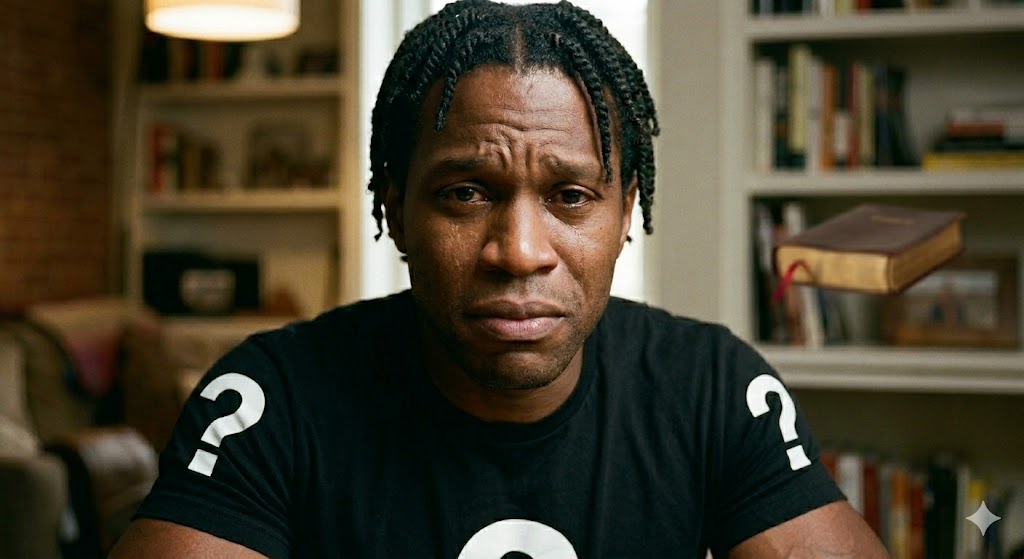
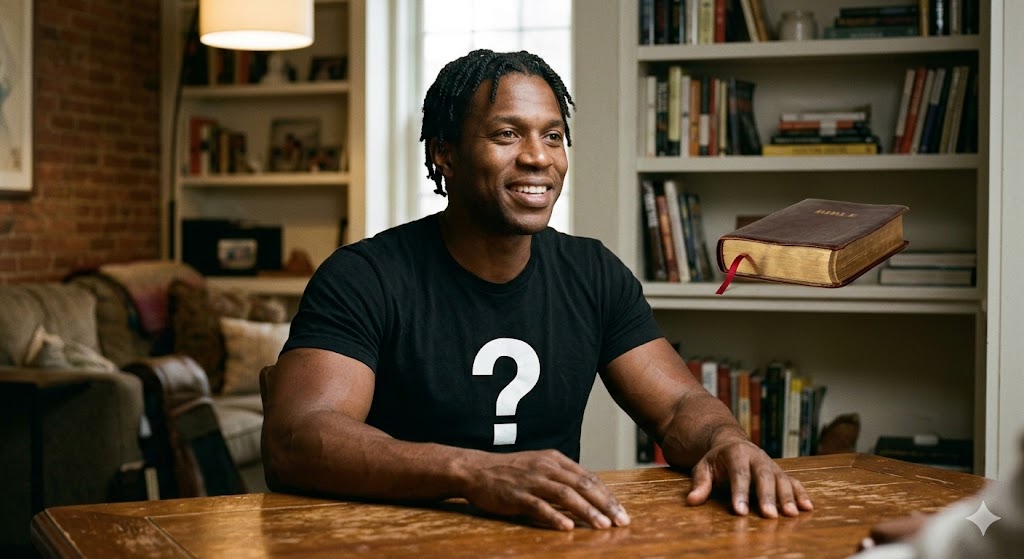
What Do You Do When the “?” Is Taped to Your Chest in Your Life?

The answer read below…..

Life often presents moments of uncertainty so heavy that it feels like a literal question mark has been taped to your chest. You may have prayed fervently, sought guidance, and begged God for clarity about your purpose, relationships, career, or calling, yet the silence seems deafening. This season of ambiguity can test faith, patience, and resilience. How should a believer respond when the answers are not immediately clear, when you have asked God with sincerity and humility, and yet, hear nothing in return?

The first principle is patience. Waiting on God is not passive; it is an active stance of trust, faith, and preparedness. Psalm 27:14 (KJV) exhorts, “Wait on the Lord: be of good courage, and he shall strengthen thine heart: wait, I say, on the Lord.” Waiting involves maintaining spiritual discipline, continuing to pray, worship, and live according to God’s principles even when clarity seems distant.

Prayer is foundational, but it must be consistent and intentional. Philippians 4:6–7 (KJV) advises, “Be careful for nothing; but in every thing by prayer and supplication with thanksgiving let your requests be made known unto God. And the peace of God, which passeth all understanding, shall keep your hearts and minds through Christ Jesus.” Continual prayer with thanksgiving, even in silence, establishes a rhythm of dependence and aligns your heart with divine timing.

Silence from God does not signify abandonment. Isaiah 30:18 (KJV) reminds us, “And therefore will the Lord wait, that he may be gracious unto you, and therefore will he be exalted, that he may have mercy upon you: for the Lord is a God of judgment: blessed are all they that wait for him.” His timing is perfect, and periods of waiting often refine character, deepen faith, and clarify motives.

When seeking answers, humility is crucial. Ask God for guidance with expectation, not arrogance. James 4:6 (KJV) states, “But he giveth more grace. Wherefore he saith, God resisteth the proud, but giveth grace unto the humble.” The posture of a humble heart opens one to receive direction while preventing frustration or pride from clouding judgment.

Pay attention to peace. The Bible teaches that peace is a guide to discernment. Colossians 3:15 (KJV) instructs, “And let the peace of God rule in your hearts, to the which also ye are called in one body; and be ye thankful.” When faced with a “?” in life, notice the paths that bring peace, the choices that ease the tension in your spirit. Peace becomes a compass when words, visions, or immediate clarity are absent.

Daily discipline in prayer, meditation, and scripture reading strengthens discernment. Romans 12:2 (KJV) exhorts believers, “And be not conformed to this world: but be ye transformed by the renewing of your mind, that ye may prove what is that good, and acceptable, and perfect, will of God.” Transformation occurs in these quiet, consistent practices, allowing God to shape understanding over time.

Faith often grows most during seasons of unanswered questions. Hebrews 11:1 (KJV) defines faith as “the substance of things hoped for, the evidence of things not seen.” Trusting in God’s guidance before receiving clarity strengthens reliance on Him rather than on one’s own understanding. Proverbs 3:5–6 (KJV) further emphasizes, “Trust in the Lord with all thine heart; and lean not unto thine own understanding. In all thy ways acknowledge him, and he shall direct thy paths.”

While waiting, it is essential to examine the heart’s posture. Are prayers motivated by desperation, self-interest, or genuine desire for God’s will? Psalm 37:4 (KJV) assures, “Delight thyself also in the Lord: and he shall give thee the desires of thine heart.” True alignment with God’s desires produces clarity and contentment while awaiting external confirmation.

The psychological dimension of waiting is also significant. Research on uncertainty demonstrates that prolonged ambiguity increases stress and can lead to anxiety or impulsive decisions (Carleton, 2016). Maintaining routines, mindfulness, and prayerful reflection helps manage this tension and prevents hasty actions that may contradict God’s plan.

Discernment often requires active listening. Beyond spoken prayer, pay attention to subtle confirmations—peace, recurring themes in scripture, wise counsel, or gentle nudges from the Spirit. These may be overlooked if one expects overt signs or dramatic visions. Proverbs 20:27 (KJV) notes, “The spirit of man is the candle of the Lord, searching all the inward parts of the belly.” Inner awareness is a channel for divine guidance.

Community plays a role in interpreting life’s “?” moments. Seek counsel from spiritually mature, trusted individuals. Proverbs 11:14 (KJV) teaches, “Where no counsel is, the people fall: but in the multitude of counsellors there is safety.” Honest dialogue with mentors or peers can illuminate paths previously unseen while maintaining accountability and humility.

Actions matter as much as reflection. While waiting, engage in productive, purposeful activities aligned with your values and God’s principles. Micah 6:8 (KJV) reminds, “He hath shewed thee, O man, what is good; and what doth the Lord require of thee, but to do justly, and to love mercy, and to walk humbly with thy God?” Consistent action cultivates readiness for opportunities when clarity arrives.

Resisting impatience is critical. Luke 21:19 (KJV) counsels, “In your patience possess ye your souls.” Impatience can prompt compromise, poor decision-making, or settling for alternatives that undermine long-term purpose. Waiting, while difficult, is an act of obedience and trust.

Acknowledging emotions is healthy. Feelings of frustration, fear, or confusion are natural. Express these honestly in prayer without demanding immediate answers. Psalm 62:8 (KJV) encourages, “Trust in him at all times; ye people, pour out your heart before him: God is a refuge for us.” Vulnerable, honest prayer does not weaken faith; it deepens it.

Testing assumptions is essential. Sometimes, the absence of answers signals the need for growth, preparation, or discernment. James 1:3 (KJV) notes, “Knowing this, that the trying of your faith worketh patience.” Life’s questions often require inner transformation before external solutions are revealed.

Spiritual journaling can aid clarity. Recording prayers, insights, and experiences allows reflection over time, highlighting patterns or guidance previously unnoticed. It aligns with Habakkuk 2:2 (KJV): “Write the vision, and make it plain upon tables, that he may run that readeth it.” Writing encourages focused reflection and retention of God’s subtle responses.

Faithful consistency nurtures trust in the unseen. Galatians 6:9 (KJV) states, “And let us not be weary in well doing: for in due season we shall reap, if we faint not.” Continuing to act with integrity, kindness, and obedience positions the believer to recognize God’s direction when it appears.

Ultimately, the answer may come as a gentle whisper of intuition, a sense of peace, or an unexpected opportunity. Isaiah 30:21 (KJV) affirms, “And thine ears shall hear a word behind thee, saying, This is the way, walk ye in it, when ye turn to the right hand, and when ye turn to the left.” Peace is often the clearest sign that a path aligns with God’s will.

In conclusion, when the “?” is taped to your chest, your response is guided by prayer, humility, patience, and attentiveness to peace. Seek guidance without arrogance, maintain daily communion with God, and act in alignment with His principles. Trust that clarity will come in due season. Waiting is not inactivity; it is preparation, refinement, and cultivation of discernment until God’s direction becomes unmistakable.


References

Carleton, R. N. (2016). Fear of the unknown: One fear to rule them all? Journal of Anxiety Disorders, 41, 5–21.

Goleman, D. (1995). Emotional intelligence. Bantam Books.

Bible. (1769/2017). King James Version. (Original work published 1611).

Psalm 27:14; 37:4, 37:7, 62:8; Proverbs 3:5–6; 11:14; 20:27; 29:18; Isaiah 30:21; Micah 6:8; Hebrews 11:1; Philippians 4:6–7; Colossians 3:15; Romans 12:2; James 1:3, 4:6; Luke 21:19; Galatians 6:9; 1 Thessalonians 5:17; Ephesians 4:32.

Wisdom Alert! Anger is a Trap!

Anger is a powerful emotion that can feel justified in moments of injustice, betrayal, or personal offense. Yet unchecked, it becomes a snare that enslaves the mind, poisons the spirit, and damages relationships. The scripture warns repeatedly against anger, highlighting its potential to mislead and destroy. Proverbs 14:29 (KJV) states, “He that is slow to wrath is of great understanding: but he that is hasty of spirit exalteth folly.” Wisdom requires patience and discernment rather than immediate retaliation.

Psychology supports this ancient warning. Research shows that chronic anger increases the risk of cardiovascular disease, hypertension, and impaired immune function (Chida & Steptoe, 2009). Beyond physical health, anger affects cognitive clarity, decision-making, and social connections. The mind under anger narrows, focusing on perceived threats rather than long-term solutions.

The Bible situates anger within moral and spiritual frameworks. Ephesians 4:26 (KJV) advises, “Be ye angry, and sin not: let not the sun go down upon your wrath.” This passage acknowledges that anger is a natural response but cautions against allowing it to produce sin. Unchecked anger often leads to actions or words that violate ethical principles, creating regret and relational rupture.

Psychological studies similarly distinguish between constructive and destructive anger. Constructive anger motivates problem-solving and boundary-setting, while destructive anger produces aggression, resentment, and impulsive behaviors (Deffenbacher, 2011). Awareness of this distinction is crucial in navigating emotional responses healthily.

Anger often arises from perceived disrespect or violation of expectations. Cognitive-behavioral psychology highlights that our interpretation of events—not just the events themselves—triggers emotional responses (Beck, 2011). Misinterpretation or magnification of perceived slights can intensify anger unnecessarily. Controlling interpretation is as important as controlling reaction.

Righteous anger, as modeled in scripture, is distinguished by purpose and restraint. Jesus expressed anger in the temple when confronting injustice, yet it was measured and directed at sin, not personal vendettas (Matthew 21:12–13, KJV). Observing boundaries, restraint, and clarity ensures that anger serves justice rather than ego.

Holding onto anger allows it to fester. Ephesians 4:31 (KJV) instructs, “Let all bitterness, and wrath, and anger, and clamor, and evil speaking, be put away from you, with all malice.” Chronic resentment corrodes the soul, creating psychological rigidity and preventing reconciliation. Forgiveness is a proactive antidote, freeing both parties from the cycle of reactivity.

From a psychological standpoint, rumination is a dangerous companion of anger. Persistent focus on grievances strengthens neural pathways associated with stress and hostility, making future anger responses easier to trigger (Nolen-Hoeksema, 2000). Mindfulness, journaling, or structured reflection can break this pattern, promoting emotional regulation.

Anger also impedes effective communication. When emotionally charged, individuals are more likely to misinterpret intentions, exaggerate offenses, and escalate conflicts (Gottman & Levenson, 1992). A measured approach allows for dialogue, reconciliation, and problem-solving rather than destruction.

Spiritual disciplines complement psychological strategies. Prayer, meditation on scripture, and seeking godly counsel redirect focus from self-centered indignation to constructive action. Psalm 37:8 (KJV) admonishes, “Cease from anger, and forsake wrath: fret not thyself in any wise to do evil.” Patience, rooted in faith, fosters emotional and moral clarity.

Anger often masks deeper emotions such as fear, hurt, or insecurity. Recognizing these underlying feelings allows one to address core issues rather than lashing out at surface provocations. Psychological interventions like emotion-focused therapy emphasize understanding and validating these hidden layers to prevent misdirected anger (Greenberg, 2010).

Forgiveness does not require forgetting, nor does it mean condoning wrong behavior. Rather, it releases personal bondage to anger. Colossians 3:13 (KJV) reminds, “Forbearing one another, and forgiving one another, if any man have a quarrel against any: even as Christ forgave you, so also do ye.” Forgiveness preserves mental and spiritual health.

Self-control is an essential skill in managing anger. Proverbs 16:32 (KJV) observes, “He that is slow to anger is better than the mighty; and he that ruleth his spirit than he that taketh a city.” Strength lies not in forceful retaliation but in restraint, discernment, and wisdom. The ability to rule the spirit is a form of power often overlooked.

Cognitive-behavioral techniques, such as reframing negative thoughts, can be effective in transforming anger into constructive energy (Beck, 2011). Reinterpreting provocations as opportunities for growth or as reflections of others’ limitations reduces emotional reactivity, fostering resilience.

Anger can also be contagious. Social psychology indicates that exposure to angry individuals increases one’s own anger, reinforcing cycles of hostility (Barsade, 2002). Avoiding toxic environments and engaging in calm, supportive relationships protects emotional balance and promotes positive influence.

The dangers of suppressed anger should not be ignored. Bottled anger manifests physically through tension, anxiety, and psychosomatic symptoms. Psychologists recommend safe outlets such as physical exercise, creative expression, or structured reflection to prevent internal harm while maintaining ethical conduct.

Developing empathy counters anger’s destructive tendencies. Understanding the perspectives and struggles of others reduces automatic blame and promotes compassion. Romans 12:17–21 (KJV) encourages believers not to repay evil with evil but to overcome evil with good, integrating moral wisdom with emotional regulation.

Prayer and spiritual reflection provide perspective beyond personal grievances. By seeking divine guidance, individuals can respond to provocation with discernment rather than reactive emotion. James 1:19 (KJV) counsels, “Let every man be swift to hear, slow to speak, slow to wrath,” emphasizing measured response over impulsive reaction.

The cumulative effect of uncontrolled anger is relational, emotional, and spiritual degradation. Friendships, marriages, workplaces, and communities suffer when reactive hostility prevails. Conversely, managing anger with wisdom, patience, and self-discipline fosters trust, respect, and long-term harmony.

Ultimately, wisdom teaches that anger itself is not the problem—it is the mismanagement of anger that ensnares. By combining scriptural principles with psychological insights, individuals can recognize triggers, regulate emotions, and act with discernment. Anger, when understood and controlled, becomes a signal for reflection, not destruction.

Anger is a trap—but awareness, self-control, forgiveness, and patience provide the keys to freedom. The Bible and psychology converge on this truth: mastery over the spirit, calm in adversity, and measured action preserve life, health, and relationships. Wise individuals choose restraint over reaction, understanding over impulse, and love over wrath.


References

Barsade, S. G. (2002). The ripple effect: Emotional contagion and its influence on group behavior. Administrative Science Quarterly, 47(4), 644–675.

Beck, J. S. (2011). Cognitive behavior therapy: Basics and beyond (2nd ed.). Guilford Press.

Chida, Y., & Steptoe, A. (2009). The association of anger and hostility with future coronary heart disease: A meta-analytic review of prospective evidence. Journal of the American College of Cardiology, 53(11), 936–946.

Deffenbacher, J. L. (2011). Cognitive-behavioral conceptualization and treatment of anger. Cognitive and Behavioral Practice, 18(1), 88–97.

Gottman, J. M., & Levenson, R. W. (1992). Marital processes predictive of later dissolution: Behavior, physiology, and health. Journal of Personality and Social Psychology, 63(2), 221–233.

Greenberg, L. S. (2010). Emotion-focused therapy: Theory and practice. American Psychological Association.

Nolen-Hoeksema, S. (2000). The role of rumination in depressive disorders and mixed anxiety/depressive symptoms. Journal of Abnormal Psychology, 109(3), 504–511.

Bible. (1769/2017). King James Version. (Original work published 1611).

The Phenomenal Black Man

The Black man stands as one of the most complex and misunderstood figures in modern society—shaped by historical trauma, systemic barriers, and cultural misrepresentation, yet continually producing excellence, innovation, and leadership. His story is not one of deficiency, as dominant narratives often suggest, but of resilience: surviving institutions that were never designed for his success while still cultivating identity, dignity, and generational hope.

Historically, Black men were foundational to the construction of the modern world. From forced labor during enslavement to skilled craftsmanship, engineering, agriculture, and military service, Black men have contributed materially to global economies while being excluded from the political and financial rewards of their labor. This historical displacement from power did not erase their leadership capacity—it delayed its recognition.

In education, Black men face some of the most significant structural barriers of any demographic group, including school discipline disparities, underfunded institutions, and racialized tracking systems. Yet despite these obstacles, Black men continue to excel in higher education, producing scholars, scientists, theologians, engineers, physicians, and legal minds who challenge the myth of intellectual inferiority.

The intellectual legacy of Black men includes some of the most influential thinkers of modern history. Figures such as W.E.B. Du Bois, James Baldwin, Martin Luther King Jr., Malcolm X, Frantz Fanon, and Carter G. Woodson reshaped sociology, political theory, psychology, theology, and cultural studies. Their work remains foundational to understanding race, power, identity, and human liberation.

Economically, Black men are increasingly asserting entrepreneurial agency. From tech startups and financial services to fashion, real estate, sports management, and media production, Black men are building independent economic infrastructures. Entrepreneurship has become both a form of resistance to labor market discrimination and a strategy for generational wealth creation.

The Black man is also a cultural architect. Music, fashion, language, and global aesthetics have been profoundly shaped by Black male creativity—from jazz and blues to hip-hop, from streetwear to luxury fashion, from spoken word to film and digital media. Black men continuously produce cultural capital that fuels global industries.

Spiritually, the Black man has served as a prophet, preacher, teacher, and revolutionary theologian. The Black church, Islamic movements, and Afrocentric spiritual systems have provided Black men with frameworks for moral leadership, communal healing, and resistance to psychological colonization. Faith has often been a survival technology in a hostile world.

Psychologically, Black men navigate a unique terrain of racialized masculinity. They are frequently socialized to suppress vulnerability, emotional expression, and mental health needs in order to survive in environments that criminalize their bodies and silence their pain. Yet Black men are increasingly reclaiming emotional literacy, therapy, and self-awareness as tools of empowerment.

In family life, the narrative of the “absent Black father” has been one of the most damaging cultural myths. Research consistently shows that Black fathers are among the most involved fathers across racial groups when structural barriers such as incarceration and economic exclusion are accounted for. Black men actively participate in caregiving, emotional bonding, and moral instruction.

The Black man’s body has historically been framed as a site of fear and criminality. From slavery patrols to modern policing, Black male bodies have been surveilled, punished, and politicized. Yet the Black man continues to reclaim his body as sacred—through health, fitness, discipline, self-care, and spiritual grounding.

Politically, Black men have been central to liberation movements worldwide. From abolition and anti-colonial struggles to civil rights and Pan-Africanism, Black men have organized, theorized, and mobilized resistance against racial oppression. Their political consciousness has shaped democratic ideals globally.

The Black man’s relationship to labor has been one of both exploitation and mastery. Despite being overrepresented in physically demanding and dangerous occupations, Black men have also excelled in professional, technical, and intellectual fields, redefining what Black masculinity looks like beyond brute survival.

In relationships and intimacy, Black men are often burdened by stereotypes of emotional detachment, hypersexuality, or instability. Yet many Black men actively seek emotional depth, spiritual connection, and partnership grounded in respect and mutual growth. They are redefining masculinity beyond dominance toward responsibility and presence.

Culturally, Black men serve as intergenerational bridges. They carry ancestral memory, oral history, and survival strategies passed down through fathers, grandfathers, and community elders. Their identity is not isolated—it is collective, historical, and deeply rooted in lineage.

The modern Black man is increasingly invested in self-development. He studies financial literacy, mental health, spirituality, fitness, and purpose. He reads, builds, mentors, and heals. This shift represents a quiet revolution in Black male consciousness.

The Black man is also a mentor and protector. Whether through coaching, teaching, community organizing, or informal leadership, Black men invest in the next generation, offering guidance in environments where institutional support is often absent.

Despite structural violence, Black men continue to love—deeply, creatively, and spiritually. They love their families, their communities, their cultures, and their futures. Love becomes an act of resistance in a world that expects their emotional absence.

The phenomenal Black man is not defined by pathology but by possibility. He is a survivor of historical trauma and a carrier of ancestral wisdom. He is a thinker, a builder, a father, a lover, a leader, and a visionary.

An ode to the Black man is an ode to perseverance. He exists in the tension between vulnerability and strength, memory and future, pain and purpose. His presence is not accidental—it is historical, spiritual, and revolutionary.

The phenomenal Black man is not waiting to be redeemed by society—he is redeeming himself through consciousness, discipline, faith, and collective responsibility. He is not a problem to be solved, but a force to be understood, honored, and supported.


References

American Psychological Association. (2018). Boys and men of color: Implications for academic success. https://www.apa.org/monitor/2018/07/boys-men-color

Anderson, E. (1999). Code of the street: Decency, violence, and the moral life of the inner city. W. W. Norton.

Bonilla-Silva, E. (2014). Racism without racists: Color-blind racism and the persistence of racial inequality in America (4th ed.). Rowman & Littlefield.

Du Bois, W. E. B. (1903). The souls of Black folk. A.C. McClurg & Co.

Edin, K., Tach, L., & Mincy, R. (2009). Claiming fatherhood: Race and the dynamics of paternal involvement. The ANNALS of the American Academy of Political and Social Science, 621(1), 149–177. https://doi.org/10.1177/0002716208325548

Fanon, F. (1952). Black skin, white masks. Grove Press.

Harper, S. R. (2012). Black male student success in higher education. ASHE Higher Education Report, 38(3), 1–140. https://doi.org/10.1002/aehe.20002

National Center for Education Statistics. (2022). Status and trends in the education of racial and ethnic groups. https://nces.ed.gov/

Pew Research Center. (2018). Black fathers more involved than other dads. https://www.pewresearch.org/social-trends/2018/06/14/fathers-day-2018/

U.S. Department of Justice. (2021). Contacts between police and the public. https://bjs.ojp.gov/

U.S. Small Business Administration. (2023). Black-owned business statistics. https://www.sba.gov/

Woodson, C. G. (1933). The mis-education of the Negro. Associated Publishers.

World Economic Forum. (2020). The future of jobs report. https://www.weforum.org/reports/

Smart Money Series: Stocks, Bonds, IRAs, and Investing — Building Wealth With Wisdom

Investing is not gambling; it is disciplined participation in ownership, lending, and long-term economic growth. At its core, investing is about putting money to work so that it produces value over time rather than sitting idle and losing purchasing power to inflation. For individuals seeking financial stability and generational wealth, understanding the basic investment vehicles is not optional—it is essential.

The foundation of investing begins with mindset. Before purchasing any asset, an investor must first commit to patience, consistency, and education. Wealth is rarely built through speed but through steady, intentional decisions repeated over time. Scripture echoes this principle: “He that gathereth by labour shall increase” (Proverbs 13:11, KJV).

Stocks represent ownership. When you buy a stock, you are purchasing a share in a company and becoming a partial owner of its profits and losses. This ownership is what separates investing from saving. Stocks allow individuals to participate in innovation, productivity, and corporate growth across the economy.

Historically, stocks have produced higher long-term returns than most other asset classes, though they come with volatility. Market fluctuations are not signs of failure but natural movements of a living economic system. Wise investors learn to expect volatility rather than fear it.

Bonds, by contrast, represent lending. When you buy a bond, you are lending money to a government or corporation in exchange for interest payments over time. Bonds are generally less volatile than stocks and provide predictable income, making them valuable for stability and capital preservation.

While bonds typically offer lower returns than stocks, they play a critical role in risk management. A balanced portfolio often includes both stocks and bonds to reduce exposure to market swings while maintaining growth potential.

Retirement accounts such as IRAs exist to encourage long-term investing with tax advantages. A Traditional IRA allows contributions to grow tax-deferred, while a Roth IRA allows withdrawals to be tax-free in retirement. Choosing between them depends on income level, tax strategy, and future expectations.

IRAs are not investments themselves but containers that hold investments. Many people misunderstand this distinction and leave their money in cash within an IRA, unintentionally missing years of growth. Funding an IRA without investing the funds inside it is like planting seeds and never watering them.

Investing should always begin with clarity of purpose. Short-term goals require different strategies than long-term goals. Emergency funds belong in liquid savings, not in the stock market. Long-term wealth, however, thrives on time and compound growth.

Compound interest is one of the most powerful forces in finance. Small, consistent investments made early can outperform large investments made later. This principle rewards discipline more than income level and is accessible to ordinary people who start early and stay consistent.

One of the most common questions new investors ask is where to begin. The simplest answer is broad-market exposure. Instead of attempting to predict individual winners, investors can participate in the overall market through diversified instruments.

This leads to the discussion of ETFs versus individual stocks. Exchange-Traded Funds, or ETFs, are collections of stocks or bonds packaged into a single investment. They provide instant diversification and reduce the risk associated with single-company failure.

ETFs are particularly well-suited for beginners because they spread risk across many companies or sectors. A single ETF can represent hundreds or even thousands of businesses, offering exposure that would otherwise require significant capital.

Individual stocks, on the other hand, allow for targeted ownership. Investors who study businesses deeply may choose specific companies they believe will outperform the market. This approach requires time, research, emotional discipline, and a tolerance for higher risk.

Neither ETFs nor individual stocks are inherently better. The choice depends on the investor’s knowledge, temperament, and time commitment. For most long-term investors, a combination of both provides balance between stability and opportunity.

Index ETFs, which track market benchmarks such as the S&P 500, have consistently outperformed most actively managed funds over time. This challenges the assumption that complexity equals superiority and reinforces the value of simplicity.

Understanding fees is critical. High expense ratios quietly erode returns over time. One of the advantages of ETFs is their generally low costs, allowing more of the investor’s money to remain invested and compounding.

Knowing who to watch in investing does not mean following hype-driven personalities. Wisdom comes from studying disciplined investors who emphasize fundamentals, long-term thinking, and risk management. Figures such as Warren Buffett are respected not for speed but for consistency and restraint.

However, no investor should blindly imitate another. Each financial situation is unique, and strategies must align with individual income, obligations, and values. Comparison without context often leads to poor decisions.

A common mistake is attempting to time the market. Evidence consistently shows that time in the market matters more than timing the market. Investors who remain invested through downturns often outperform those who move in and out based on fear.

Diversification is not merely a technical concept but a form of financial humility. It acknowledges that no one can perfectly predict outcomes and therefore spreads exposure across many opportunities. Ecclesiastes reflects this wisdom: “Give a portion to seven, and also to eight; for thou knowest not what evil shall be upon the earth” (Ecclesiastes 11:2, KJV).

Risk tolerance must be honestly assessed. Emotional reactions to loss often reveal more than theoretical comfort with risk. An investment strategy should allow an investor to sleep at night, not constantly monitor markets in anxiety.

Automation is one of the most effective tools in modern investing. Regular, automatic contributions remove emotion and ensure consistency. This discipline mirrors biblical stewardship principles of order and faithfulness.

Investing is not reserved for the wealthy. Accessibility has expanded through low-cost platforms, fractional shares, and educational resources. The barrier today is less about money and more about knowledge and discipline.

Long-term investors must also understand inflation. Money that does not grow loses value over time. Investing is not about greed but about preservation of purchasing power and future provision.

Ethical considerations also matter. Investors can choose to align portfolios with personal and spiritual values. Stewardship involves responsibility, not just profit maximization.

Wealth accumulation without wisdom often leads to pride, while wealth guided by wisdom enables service. Scripture warns against misplaced trust in riches while encouraging diligence and foresight (1 Timothy 6:17–19, KJV).

📈 Top Stocks Analysts Are Watching for 2026

Major Large-Cap & Tech Leaders

These are widely held stocks with strong analyst ratings, broad business models, and long-term growth potential.

  • Nvidia (NVDA) – Leading AI and GPU chipmaker with strong analyst bullishness for AI demand. Investors
  • Microsoft (MSFT) – Cloud, AI, and enterprise software growth engine. Investing.com
  • Amazon (AMZN) – E-commerce, AWS cloud, and AI integration. Nasdaq
  • Alphabet (GOOG / GOOGL) – AI, cloud, search, and ads. The Motley Fool
  • Meta Platforms (META) – Social media & metaverse/AI monetization. Investing.com

Specialized or Sector Growth Picks

These stocks benefit from specific macro trends such as AI, clean energy, semiconductors, or healthcare.

  • ASML Holding (ASML) – Dominant semiconductor lithography equipment maker. Barron’s
  • Taiwan Semiconductor (TSMC) – World’s largest chip foundry. Barron’s
  • SoFi Technologies (SOFI) – Digital banking & finance growth stock among top 2026 picks. Nasdaq
  • Nu Holdings (NU) – Digital bank expanding globally. Nasdaq
  • American Express (AXP) – Consumer payments and financial services. Nasdaq
  • W.R. Berkley (WRB) & Chubb (CB) – Insurance/value stocks with analyst “buy” signals. WTOP News
  • Lockheed Martin (LMT) – Defense and aerospace sector exposure. WTOP News

Sector Themes to Watch

Rather than one company, these represent broad areas analysts favor:

Technology / AI / Cloud

  • PC components & software (Microsoft, Alphabet, Nvidia)
  • Networking/enterprise tech (Arista, Palo Alto Networks) Reddit

Energy & Materials

  • Energy stocks continue gaining due to global demand shifts. Reuters
  • Clean energy & renewable names show potential tailwinds. Business Insider

Healthcare & Pharma

  • Big pharma and innovative drug companies often perform defensively and with growth. Wall Street Journal

Financials

  • Digital banking and fintech leaders like SoFi and Nu. Nasdaq

🧠 Where Should You Invest?

1. Sectors With Strong “Buy” Ratings

According to a recent FactSet analysis of Wall Street ratings:

  • Information Technology – Most buy ratings among sectors.
  • Energy & Communication Services – Very high positive sentiment.
  • Healthcare & Materials – Strong analyst support. Investing.com

Strategic investing often means picking 2–3 sectors you understand well and investing within ETFs or stocks in those areas.


📊 Why Diversification Matters

Instead of picking only single stocks, a diversified approach reduces risk:

ETFs (Exchange-Traded Funds)

Benefits

  • Instant diversification across many companies.
  • Lower cost than many managed mutual funds.
  • Historically strong core investment like broad market ETFs (e.g., S&P 500).

Examples to consider

  • Technology ETFs – For AI, cloud, and tech growth.
  • Clean Energy ETFs – For renewable and sustainability trends.
  • Healthcare ETFs – For stability and defensive investing.

ETFs often outperform individual stock picks over time because they reduce the impact of one company’s poor performance. They’re especially useful for beginners or long-term investors.


🧾 Quick Watchlist Summary

Tech & AI Leaders

  • Nvidia (NVDA)
  • Microsoft (MSFT)
  • Amazon (AMZN)
  • Alphabet (GOOG)
  • Meta (META)

Growth & Specialized Plays

  • ASML Holding (ASML)
  • TSMC (TSM)
  • SoFi (SOFI)
  • Nu Holdings (NU)
  • American Express (AXP)

Sector & Fundamental Plays

  • W.R. Berkley (WRB)
  • Chubb (CB)
  • Lockheed Martin (LMT)
  • Select Energy & Pharma stocks

📌 Important Investing Principles

  • Always do your own research (DYOR) before buying.
  • Consider risk tolerance (how much loss you can endure).
  • Think long-term rather than short-term speculation.
  • Don’t invest money you may need within the next few years.

WHAT TO INVEST IN (CORE ETFs)

These ETFs are widely used because they are diversified, low-cost, and historically strong.

Broad Market (Foundation of Any Portfolio)

These should make up the largest portion of your investments.

VTI – Total U.S. Stock Market
Owns thousands of U.S. companies (big, mid, small). Very stable long-term core.

VOO or SPY – S&P 500
Tracks the 500 largest U.S. companies (Apple, Microsoft, Amazon, etc.).

ITOT – Total U.S. Market (alternative to VTI)

If you only picked one ETF, VTI or VOO would already outperform most investors.


International Exposure (Global Balance)

These protect you from being U.S.-only dependent.

VXUS – Total International Stock Market
Developed + emerging markets outside the U.S.

VEA – Developed markets (Europe, Japan, etc.)


Bonds (Stability + Risk Control)

Bonds reduce volatility and protect capital during downturns.

BND – Total U.S. Bond Market
AGG – Core bond exposure

Younger investors need fewer bonds; older investors need more.


Growth / Technology (Higher Risk, Higher Reward)

These add upside but should not dominate the portfolio.

QQQ – Nasdaq 100 (tech-heavy)
VGT – Technology sector ETF


Dividend / Income ETFs (Cash Flow Focus)

Good for long-term income and stability.

VTI + SCHD combo is very popular
SCHD – High-quality dividend companies
VYM – Dividend yield focus


SAMPLE PORTFOLIO ALLOCATIONS

Conservative (Low Risk, Stability Focus)

Best for people close to retirement or very risk-averse.

• 40% VTI or VOO
• 20% VXUS
• 30% BND
• 10% SCHD


Balanced (Most People Should Be Here)

Long-term growth with protection.

• 50% VTI or VOO
• 20% VXUS
• 20% BND
• 10% QQQ or VGT


Growth (Younger / Long Time Horizon)

More volatility, more upside.

• 60% VTI or VOO
• 20% QQQ or VGT
• 10% VXUS
• 10% BND


Simple 3-Fund Portfolio (Extremely Popular)

This alone beats most active investors.

• VTI – 60%
• VXUS – 20%
• BND – 20%

No stress. No overthinking.


SHOULD YOU BUY INDIVIDUAL STOCKS TOO?

Yes — but only as a small portion.

A smart rule:
70–90% ETFs
10–30% individual stocks

Strong Long-Term Stock Categories (Not Hype)

Technology leaders
Consumer staples
Healthcare giants
Financial institutions

Examples to study (not blindly buy):
• Microsoft
• Apple
• Nvidia
• Amazon
• Alphabet
• Johnson & Johnson
• Berkshire Hathaway

ETFs first. Stocks second.


WHERE TO INVEST (PLATFORMS)

Look for low fees + automation.

Popular long-term platforms:
• Fidelity
• Vanguard
• Charles Schwab

Use:
Roth IRA first (tax-free growth)
• Then brokerage account


HOW TO INVEST (STEP-BY-STEP)

Open account
Fund monthly (automatic deposits)
Buy ETFs consistently
Ignore short-term market noise
Rebalance once a year

Do not:
• Chase trends
• Panic sell
• Watch markets daily


KEY WISDOM PRINCIPLE

Most people lose money not because of bad investments, but because of bad behavior.

Patience beats intelligence.
Consistency beats timing.
Discipline beats hype.

Ultimately, investing is a tool. It reflects the character and priorities of the person using it. When guided by patience, humility, and purpose, investing becomes a means of stability rather than stress.

The goal is not to chase trends but to build foundations. Markets rise and fall, but disciplined strategies endure. Long-term investing rewards those who value consistency over excitement.

Financial education transforms fear into confidence. Each concept learned reduces dependence on speculation and empowers informed decision-making.

The Smart Money approach is not about perfection but progress. Mistakes may occur, but lessons compound just as capital does.

True financial wisdom recognizes that money is a servant, not a master. Investing wisely allows individuals to plan, give, and build without anxiety.

In the end, the question is not whether investing involves risk, but whether failing to invest risks the future more. Wisdom chooses preparation over procrastination.

A well-structured investment plan becomes an act of stewardship—one that honors foresight, discipline, and responsibility across generations.


SMART MONEY MASTER PLAN: INVESTING WITH CLARITY, DISCIPLINE, AND PURPOSE

THE BIG PICTURE

Investing is not about getting rich quickly. It is about positioning yourself wisely over time so money serves your life rather than controls it. The market rewards patience, humility, and consistency—qualities aligned with both sound economics and biblical stewardship.

“Moreover it is required in stewards, that a man be found faithful” (1 Corinthians 4:2, KJV).


PART I: PERSONALIZED PORTFOLIO FRAMEWORK (AGE + RISK)

If You Are Under 35

You have time on your side. Volatility is not your enemy—inaction is.

Core focus: Growth

• 65% Total U.S. Market ETF (VTI or VOO)
• 20% Growth / Tech ETF (QQQ or VGT)
• 10% International ETF (VXUS)
• 5% Bonds (BND)


If You Are 35–50

You balance growth with protection.

Core focus: Growth + stability

• 55% VTI or VOO
• 15% QQQ or VGT
• 15% VXUS
• 15% BND


If You Are 50+

Preservation becomes more important than aggressive growth.

Core focus: Stability + income

• 40% VTI or VOO
• 20% VXUS
• 30% BND
• 10% Dividend ETF (SCHD)


PART II: ROTH IRA INVESTING PLAN (MOST IMPORTANT ACCOUNT)

A Roth IRA is one of the most powerful wealth tools available.

Why it matters:
• Contributions grow tax-free
• Withdrawals in retirement are tax-free
• No required minimum distributions

Many people fund a Roth IRA but never invest the money inside it. That is a silent wealth killer.

Simple Roth IRA Setup

Inside your Roth IRA, buy:

• 60% VTI or VOO
• 20% VXUS
• 20% BND

Set automatic monthly contributions. Rebalance once per year. Do not trade.

“The plans of the diligent lead surely to abundance” (Proverbs 21:5, KJV).


PART III: INVESTING WITH $50–$100 A MONTH

You do not need a large income to invest successfully. You need consistency.

$50/month example

• Buy fractional shares of VTI
• Automatic monthly deposit
• Ignore market noise

Over decades, this builds real wealth.

$100/month example

• $70 VTI
• $20 VXUS
• $10 BND

Compound growth favors those who start, not those who wait.


PART IV: INDIVIDUAL STOCKS (OPTIONAL, NOT REQUIRED)

Stocks should be a small portion of your plan.

Rule of wisdom:
• 70–90% ETFs
• 10–30% individual stocks (maximum)

Categories to Focus On (Not Trends)

Technology leaders
Healthcare giants
Consumer staples
Financial institutions

Examples to study:
• Microsoft
• Apple
• Amazon
• Alphabet
• Nvidia
• Berkshire Hathaway
• Johnson & Johnson

Never invest in a company you do not understand.


PART V: WHERE TO INVEST (PLATFORMS)

Choose boring, reputable platforms with low fees.

Best long-term platforms:
• Fidelity
• Vanguard
• Charles Schwab

Avoid platforms that gamify trading or encourage constant buying and selling.


PART VI: FAITH-ALIGNED INVESTING PRINCIPLES

Biblical investing is not anti-wealth—it is anti-idolatry.

Money becomes dangerous when it replaces trust in God.

“Charge them that are rich… that they trust not in uncertain riches, but in the living God”
(1 Timothy 6:17, KJV).

Principles:
• Avoid greed-driven speculation
• Favor long-term ownership over quick profit
• Use wealth as a tool for provision and generosity

Diversification reflects humility. Discipline reflects wisdom.


PART VII: COMMON INVESTING TRAPS TO AVOID

Trying to time the market
Chasing hot stocks or social media hype
Selling during downturns
Overtrading
Ignoring fees
Leaving cash uninvested

Most losses come from emotional decisions, not bad assets.

“He that hasteth to be rich hath an evil eye” (Proverbs 28:22, KJV).


PART VIII: HOW TO MAINTAIN PEACE WHILE INVESTING

Check accounts quarterly, not daily.
Automate contributions.
Rebalance once a year.
Ignore headlines.

The market rewards calm obedience to a plan.


PART IX: SIMPLE RULES THAT BUILD WEALTH

Start early
Invest consistently
Diversify broadly
Keep costs low
Stay invested

These rules outperform complexity almost every time.


PART X: FINAL WISDOM

Investing is not about control—it is about stewardship.

A wise investor builds slowly, gives generously, and sleeps peacefully.

“Wealth gotten by vanity shall be diminished: but he that gathereth by labour shall increase”
(Proverbs 13:11, KJV).


References:

Bogle, J. C. (2017). The little book of common sense investing. Wiley.

Malkiel, B. G. (2019). A random walk down Wall Street. W. W. Norton & Company.

U.S. Securities and Exchange Commission. (2023). Investor.gov: Investing basics.

Holy Bible, King James Version. (1769).

Bogle, J. C. (2017). The little book of common sense investing (10th anniversary ed.). Wiley.

Buffett, W. E. (2014). Berkshire Hathaway shareholder letters. Berkshire Hathaway Inc.

Ecclesiastes 11:2, Proverbs 13:11, 1 Timothy 6:17–19. (1769). King James Version Bible.

Malkiel, B. G. (2019). A random walk down Wall Street (12th ed.). W. W. Norton & Company.

U.S. Securities and Exchange Commission. (2023). Investor.gov: Introduction to investing.

Vanguard Group. (2022). Principles for investing success.

Wisdom before Knowledge…

Wisdom is the highest form of understanding, and it comes from God alone. Knowledge can be gathered, studied, memorized, and pursued, but wisdom must be received. Scripture makes this clear: “For the LORD giveth wisdom: out of his mouth cometh knowledge and understanding” (Proverbs 2:6, KJV). Wisdom is not just information—it is revelation. It is the divine ability to see beyond the surface and discern the truth behind all things.

Knowledge without wisdom can be dangerous. A person may know facts, theories, or skills, but without God’s guidance, those things can be misused. Wisdom teaches you how to apply knowledge, when to speak, when to move, when to stay silent, and when to wait. It teaches you timing, discernment, humility, and righteousness. It aligns your decisions with the Most High’s purpose.

Wisdom is a spiritual gift. It cannot be purchased, forced, or faked. It is cultivated through obedience, humility, and the fear of the Lord. “The fear of the LORD is the beginning of wisdom” (Proverbs 9:10, KJV). To fear God is to honor Him, submit to Him, and recognize His supremacy. That posture opens the heart to divine instruction.

Knowledge fills the mind, but wisdom guards the soul. Knowledge trains your intellect; wisdom trains your character. Knowledge tells you what something is; wisdom tells you what it means. Knowledge reveals the mechanics of a situation; wisdom reveals the purpose behind it. This is why God encourages His people to pursue wisdom above riches or achievement.

Wisdom protects you. It shields you from foolish decisions, destructive relationships, and spiritual deception. Many people make choices that seem right logically but lead to heartbreak because they lack wisdom. Proverbs 14:12 reminds us, “There is a way which seemeth right unto a man, but the end thereof are the ways of death.” Wisdom keeps you from walking blindly into traps.

Wisdom brings peace. It quiets the mind and settles the heart. A wise person is not easily shaken because they see with spiritual clarity. They are grounded in truth, not emotion. They understand seasons, patterns, and principles. Their stability comes from hearing God’s voice and trusting His direction.

Knowledge can be obtained through study, but wisdom is gained through experience with God. Every trial, test, and transition becomes a classroom where God teaches you deeper truths. He uses challenges to sharpen your discernment, purge your flesh, and strengthen your spirit. Over time, wisdom grows like a tree with deep roots.

Wisdom teaches restraint. It shows you that not every opportunity is divine, not every open door should be walked through, and not every emotion should be acted on. Wise people know when to pause, pray, and wait. They understand that haste leads to regret, but patience leads to clarity.

Wisdom teaches humility. It reminds you that no matter how intelligent you are, you still need God. It exposes the limits of human understanding and the perfection of divine guidance. A wise person remains teachable, correctable, and surrendered.

Wisdom strengthens relationships. It helps you communicate with compassion, listen with empathy, and forgive with maturity. It keeps you from reacting in anger and teaches you to respond in righteousness. Knowledge can tell you someone’s words; wisdom shows you their heart.

Wisdom also governs speech. Scripture says, “A fool uttereth all his mind” (Proverbs 29:11, KJV). People with knowledge may talk excessively, but wise people choose their words intentionally. They understand the power of the tongue and speak life, not chaos.

Wisdom gives vision. It allows you to see beyond your current circumstances and understand where God is taking you. Knowledge may help you plan, but wisdom helps you align your plans with the will of God. Wise people do not make impulsive decisions—they walk in destiny.

Wisdom leads to prosperity—not just financial, but emotional, spiritual, and relational prosperity. Proverbs 3:13–14 says that wisdom is more valuable than silver or gold. When you walk in wisdom, the blessings of God begin to flow naturally because your steps are aligned with His instruction.

Wisdom purifies your motives. It exposes pride, selfishness, and hidden intentions. It helps you make decisions that honor God, not just yourself. Knowledge may improve your reputation, but wisdom transforms your heart.

Wisdom develops spiritual maturity. It keeps you from being tossed by every trend, doctrine, or belief. You become rooted in truth and able to discern what is from God and what is not. This discernment is essential in a world full of deception.

Wisdom teaches patience. It shows you that God’s timing is perfect and that rushing ahead of Him leads to unnecessary suffering. Wise people trust the process. They understand that what God builds lasts—and what man builds collapses.

Wisdom creates legacy. A wise person leaves behind more than possessions—they leave behind principles, values, and spiritual inheritance. Their children and community benefit from their choices long after they are gone.

Wisdom draws you closer to God. The more wisdom you gain, the more you realize your dependence on Him. You begin to see life through His eyes and walk in alignment with His spirit. Wisdom is intimacy with the Most High.

Ultimately, wisdom comes before knowledge because it teaches you how to use knowledge righteously. It puts everything into its proper place. It orders your steps, guards your way, and shapes your destiny. It is one of the greatest gifts God gives—and one of the greatest treasures you can seek.


References (KJV)

Proverbs 2:6; Proverbs 9:10; Proverbs 14:12; Proverbs 31; Proverbs 29:11; Proverbs 3:13–14.

She Speaks: Wisdom for the Modern Queen.

In a world where women are often pressured to conform, the voice of a modern queen is both revolutionary and restorative. She Speaks: Wisdom for the Modern Queen centers on cultivating discernment, confidence, and purpose, enabling women to navigate life with grace, authority, and spiritual alignment. A modern queen speaks with intentionality, guided by wisdom, faith, and experience.

Wisdom begins with self-awareness. A queen understands her strengths, acknowledges her weaknesses, and continually seeks growth. Proverbs 4:7 (KJV) emphasizes, “Wisdom is the principal thing; therefore get wisdom: and with all thy getting get understanding.” Knowledge paired with discernment empowers her to make decisions that reflect integrity and purpose.

Faith anchors her voice. A modern queen relies on God’s guidance in all matters, knowing that divine counsel surpasses human opinion. Isaiah 11:2 (KJV) reminds us that the Spirit of wisdom and understanding, counsel and might, knowledge and fear of the LORD, equips leaders to act decisively and justly.

Confidence is cultivated through experience, reflection, and resilience. Life’s challenges test her character, but a queen responds with poise and strength. Psalm 27:1 (KJV) affirms, “The LORD is my light and my salvation; whom shall I fear? The LORD is the strength of my life; of whom shall I be afraid?” Confidence rooted in God transcends societal pressures and fear of judgment.

Discernment allows her to recognize truth from deception. A queen evaluates situations carefully, seeks wise counsel, and avoids impulsive decisions. Proverbs 3:21-23 (KJV) teaches that discretion preserves life and protects the path of the faithful.

Leadership is a hallmark of modern queenship. She influences others not through coercion, but by example, integrity, and empowerment. Titus 2:3-5 (KJV) underscores the importance of guiding others with wisdom and nurturing mentorship, creating a legacy of impact.

Communication is central to her power. The modern queen speaks with clarity, conviction, and compassion. Her words build up, instruct, and inspire. Proverbs 16:24 (KJV) reminds us, “Pleasant words are as an honeycomb, sweet to the soul, and health to the bones.” Her voice is a tool for encouragement, advocacy, and transformation.

Emotional intelligence strengthens her reign. A queen manages her emotions, empathizes with others, and maintains grace under pressure. Proverbs 15:1 (KJV) teaches, “A soft answer turneth away wrath: but grievous words stir up anger.” Emotional mastery enables influence without domination.

Vision guides her actions. The modern queen is strategic, goal-oriented, and proactive in shaping her life and community. Habakkuk 2:2 (KJV) encourages writing the vision clearly, ensuring clarity and focus in pursuit of purpose.

Resilience is cultivated through adversity. Challenges and setbacks are inevitable, yet a queen transforms trials into growth, strength, and wisdom. James 1:2-4 (KJV) emphasizes that trials produce perseverance, which matures character and prepares one for greater responsibility.

Legacy is a measure of true queenship. A modern queen empowers others, uplifts communities, and inspires the next generation. Proverbs 31:28 (KJV) celebrates women whose children rise up and call her blessed, reflecting the enduring influence of wisdom and virtue.

Self-care and personal boundaries are essential. A queen values her mental, physical, and spiritual well-being, ensuring she can serve effectively without depletion. 1 Corinthians 6:19-20 (KJV) reminds her that her body is a temple, requiring stewardship and care.

Integrity defines her reputation. A queen’s word, actions, and character are aligned, fostering trust and respect. Proverbs 10:9 (KJV) affirms, “He that walketh uprightly walketh surely: but he that perverteth his ways shall be known.” Consistency in integrity reinforces influence.

Courage is inherent in her voice. A modern queen confronts injustice, advocates for the marginalized, and pursues truth, even when it is unpopular or risky. Joshua 1:9 (KJV) encourages strength and fearlessness, reminding her that God’s presence fortifies her steps.

Humility balances her authority. While she exudes confidence and influence, a queen remains teachable, reflective, and grounded in service. Philippians 2:3-4 (KJV) instructs valuing others above self, fostering leadership rooted in love rather than pride.

Gratitude shapes her perspective. Recognizing blessings, mentors, and divine guidance cultivates contentment, joy, and poise. 1 Thessalonians 5:18 (KJV) teaches giving thanks in all circumstances as a pathway to wisdom and serenity.

Adaptability allows her to thrive amid change. A queen navigates evolving circumstances with grace, learning from experiences and remaining steadfast in purpose. Ecclesiastes 3:1 (KJV) emphasizes that there is a season for every purpose under heaven, underscoring discernment in timing and action.

Faithful relationships enhance her kingdom. Surrounding herself with wise counsel, supportive allies, and spiritually aligned peers reinforces growth, accountability, and collective impact. Proverbs 13:20 (KJV) reminds her that association shapes destiny.

Modern Queen Wisdom: Principles & Practice

PrincipleScripture Reference (KJV)Actionable StepsReflection Prompt
Self-AwarenessProverbs 4:7Identify your strengths and weaknesses; journal personal insightsHow well do I know my strengths, and where do I need growth?
Faith & Spiritual GroundingIsaiah 11:2Daily prayer, Bible study, and meditation on God’s guidanceHow am I seeking God’s wisdom in my decisions today?
ConfidencePsalm 27:1Step into leadership roles; affirm your worth dailyWhen have I doubted myself, and how can I act with faith instead?
DiscernmentProverbs 3:21-23Pause before decisions; seek counsel from trusted mentorsAm I acting with clarity or reacting impulsively?
LeadershipTitus 2:3-5Mentor others, serve your community, lead by exampleHow am I using my influence to uplift others?
CommunicationProverbs 16:24Speak truth with kindness; actively listenAre my words building up or tearing down those around me?
Emotional IntelligenceProverbs 15:1Practice empathy, manage emotions, and resolve conflicts calmlyHow do I handle frustration or disagreement with grace?
VisionHabakkuk 2:2Set clear, measurable goals for personal and professional growthWhat steps am I taking to fulfill my long-term purpose?
ResilienceJames 1:2-4Reflect on challenges; identify lessons and growth opportunitiesHow have I grown stronger through adversity?
LegacyProverbs 31:28Contribute positively to family, community, and cultureWhat lasting impact do I want to leave?
Self-Care & Boundaries1 Corinthians 6:19-20Prioritize mental, physical, and spiritual health; set limitsWhere in my life do I need to say “no” to protect my well-being?
IntegrityProverbs 10:9Align actions with values; keep commitmentsAre my actions consistent with the woman I aspire to be?
CourageJoshua 1:9Face fears boldly; take principled standsWhat fear is holding me back from my God-given purpose?
HumilityPhilippians 2:3-4Seek counsel; acknowledge contributions of othersHow can I remain teachable while leading confidently?
Gratitude1 Thessalonians 5:18Daily reflections on blessings; express thanksWhat am I grateful for today, and how does it shape my perspective?
AdaptabilityEcclesiastes 3:1Embrace change; learn from new experiencesHow do I respond to change: with fear or with faith?
Faithful RelationshipsProverbs 13:20Surround yourself with mentors and spiritually aligned peersAre my relationships supporting my growth and purpose?

Vision, courage, integrity, and wisdom converge in her voice. The modern queen embodies the ability to inspire, empower, and lead, modeling strength for future generations. Her influence extends beyond herself, shaping families, communities, and culture.

Ultimately, She Speaks: Wisdom for the Modern Queen is both a guide and a declaration. It empowers women to embrace authority rooted in wisdom, faith, and integrity. Her voice is her crown, her discernment her scepter, and her legacy an eternal testimony to the power of godly queenship.


References

Holy Bible, King James Version. (1611). Thomas Nelson.

Guthrie, D. (1994). The NIV application commentary: Proverbs. Grand Rapids, MI: Zondervan.

Wright, C. J. H. (2002). Old Testament ethics for the people of God. Downers Grove, IL: InterVarsity Press.

Harris, T. (2019). Black girls rising: A roadmap to excellence and empowerment. Chicago, IL: University of Chicago Press.

Rooks, N. (2021). Hair politics: Beauty, culture, and Black identity. New York, NY: Beacon Press.

Stop Looking for Applause, Validation, and Support from Others.

Photo by RDNE Stock project on Pexels.com

Life has a way of teaching us that not everyone who claps for you is clapping because they are genuinely happy for you. Often, applause is hollow—performed, superficial, and fleeting. The Bible warns us about this kind of vanity: “Woe unto you, when all men shall speak well of you! for so did their fathers to the false prophets” (Luke 6:26, KJV). Seeking applause from others sets us up for disappointment, because what we are chasing is not rooted in truth but in perception.

Fake friends often surround those who shine, not because they love the person, but because they love what they can get from them. Psychology calls this instrumental friendship—relationships where people associate with others primarily for personal gain (Aristotle, trans. 2009). The Bible describes such companions: “Wealth maketh many friends; but the poor is separated from his neighbour” (Proverbs 19:4, KJV). When your resources dry up, so do their loyalties.

Authenticity becomes the rare jewel in a world obsessed with appearances. Psychology teaches us that living authentically leads to greater life satisfaction and mental health (Wood et al., 2008). The Bible agrees: “Provide things honest in the sight of all men” (Romans 12:17, KJV). True authenticity means standing firm in your God-given identity, whether people celebrate you or ignore you.

Fake support often feels like a pat on the back but is secretly a dagger behind it. Many people will cheer for you in public but harbor resentment in private. This duplicity reflects the proverb: “Faithful are the wounds of a friend; but the kisses of an enemy are deceitful” (Proverbs 27:6, KJV). Psychology notes that passive-aggressive behavior, often masked as support, damages relationships and erodes trust (Williams, 2019).

Don’t lean too heavily on others, for they are human, frail, and imperfect. The Bible says: “It is better to trust in the LORD than to put confidence in man” (Psalm 118:8, KJV). From a psychological perspective, people who develop internal locus of control—believing their outcomes depend more on their own actions than on others—experience less stress and greater resilience (Rotter, 1966).

Envy and jealousy lurk in many circles, even among those we consider close. Envy is an insidious emotion, rooted in comparison and insecurity. The Bible warns: “Wrath is cruel, and anger is outrageous; but who is able to stand before envy?” (Proverbs 27:4, KJV). Psychologists note that envy often emerges from social comparison and can poison relationships if unchecked (Smith & Kim, 2007).

Many people are waiting for a “green light” from others before they move forward with their calling or dream. But waiting for external approval delays destiny. Paul reminds us: “Do I seek to please men? for if I yet pleased men, I should not be the servant of Christ” (Galatians 1:10, KJV). Psychologically, self-determination theory argues that autonomy—the ability to act without external validation—is key to personal growth and motivation (Deci & Ryan, 1985).

Self-trust is one of the greatest weapons against discouragement. When David was abandoned and distressed, he “encouraged himself in the LORD his God” (1 Samuel 30:6, KJV). He did not wait for applause or cheerleaders. Psychology confirms that self-efficacy—belief in one’s ability to succeed—strongly predicts achievement and resilience (Bandura, 1997).

Some people only remain in your life because of what you can do for them. As long as you provide resources, influence, or opportunities, they are near. But once the benefits stop, so does their loyalty. Proverbs 14:20 (KJV) states: “The poor is hated even of his own neighbour: but the rich hath many friends.” These conditional relationships leave many feeling used and discarded.

You have to become your own cheerleader, speaking life into yourself when no one else will. This is not arrogance, but survival. “Death and life are in the power of the tongue” (Proverbs 18:21, KJV). Affirming yourself creates positive self-talk, which psychologists identify as a tool to combat depression and build confidence (Beck, 1979).

Not everyone has a strong support system, and sometimes God allows that isolation to strengthen your dependence on Him. “When my father and my mother forsake me, then the LORD will take me up” (Psalm 27:10, KJV). Psychology also recognizes that adversity can foster resilience, teaching individuals to rely on inner resources (Bonanno, 2004).

Beware of friends who only celebrate you when you are beneath them but grow silent when you excel. Such “frenemies” smile at your struggles but cannot stomach your success. The Bible warns of those who “rejoice at the calamity of others” (Proverbs 17:5, KJV). Psychology labels this schadenfreude, the enjoyment of another’s misfortune, which is often fueled by insecurity.

People often offer counterfeit encouragement—words laced with subtle doubt. They may say, “I’m happy for you, but don’t get too excited.” This backhanded support is designed to shrink your confidence. James 3:10 (KJV) reminds us: “Out of the same mouth proceedeth blessing and cursing. My brethren, these things ought not so to be.”

The applause of men is temporary. Crowds who cheer today may mock you tomorrow. Jesus Himself experienced this when the same people who shouted “Hosanna” later cried “Crucify him” (Matthew 21:9; 27:22, KJV). Psychology also warns that chasing external validation creates dependency and anxiety (Baumeister & Leary, 1995).

Sometimes silence is your greatest ally. Not everyone needs to know your dreams, because premature disclosure invites premature sabotage. Joseph learned this when sharing his dreams provoked his brothers’ jealousy (Genesis 37:5-8, KJV). Psychologists call this concept boundary management—protecting your goals from toxic influences.

Comparison kills joy. Seeking validation through competition with others traps us in an endless cycle of inadequacy. Paul teaches: “For we dare not make ourselves of the number, or compare ourselves with some that commend themselves” (2 Corinthians 10:12, KJV). Psychology calls this the comparison trap, which fosters dissatisfaction and depression (Festinger, 1954).

External applause is addictive. Like dopamine from social media likes, it gives a temporary high but leaves emptiness afterward. Jesus warned against doing good works “to be seen of men” (Matthew 6:1, KJV). Psychology likens this to extrinsic motivation—where actions depend on external rewards rather than internal conviction (Deci & Ryan, 1985).

True strength is moving forward when no one notices, praises, or thanks you. Colossians 3:23 (KJV) reminds: “And whatsoever ye do, do it heartily, as to the Lord, and not unto men.” Internal motivation, according to psychology, sustains long-term effort and prevents burnout.

The desire for validation often comes from childhood experiences of neglect or criticism. Many carry those wounds into adulthood, seeking in friends and lovers what they never received at home. The Bible acknowledges this brokenness, yet offers healing: “He healeth the broken in heart, and bindeth up their wounds” (Psalm 147:3, KJV).

Jealousy can even manifest in family. Jesus’ own brothers did not believe in Him (John 7:5, KJV). Sometimes, the people closest to you struggle most to accept your growth. Psychologically, this reflects sibling rivalry and family systems theory, where roles and expectations resist change.

Don’t wait for others to push you into your calling. God has already given you the authority. Paul exhorts Timothy: “Stir up the gift of God, which is in thee” (2 Timothy 1:6, KJV). Psychology emphasizes self-activation—the ability to initiate action without external prodding—as a hallmark of effective leaders.

People-pleasing is a dangerous trap. It keeps us enslaved to opinions instead of obedience. Proverbs 29:25 (KJV) warns: “The fear of man bringeth a snare: but whoso putteth his trust in the LORD shall be safe.” Psychology identifies codependency as this unhealthy dependence on approval (Beattie, 1989).

When you stop craving applause, you discover peace. Your worth is no longer tied to shifting opinions but to the unchanging truth of God’s Word. “Ye are bought with a price; be not ye the servants of men” (1 Corinthians 7:23, KJV). Psychologists agree that self-acceptance is a key predictor of well-being (Ryff, 1989).

Even betrayal cannot destroy you if you anchor yourself in God. Judas’ kiss was not the end of Jesus’ purpose but the beginning of His victory (Luke 22:48, KJV). Psychology teaches that betrayal trauma can be devastating, but reframing it as growth leads to post-traumatic resilience (Freyd, 1996).

In the end, stop looking for applause, validation, and support from others, because your destiny is not tied to their approval. You are called, chosen, and anointed by God Himself. Let your validation come from heaven: “Well done, thou good and faithful servant” (Matthew 25:21, KJV). True fulfillment comes not from the claps of men, but from the smile of God.


References

  • Aristotle. (2009). Nicomachean Ethics (W. D. Ross, Trans.). Oxford University Press.
  • Bandura, A. (1997). Self-efficacy: The exercise of control. Freeman.
  • Baumeister, R. F., & Leary, M. R. (1995). The need to belong. Psychological Bulletin, 117(3), 497–529.
  • Beck, A. T. (1979). Cognitive therapy of depression. Guilford Press.
  • Beattie, M. (1989). Codependent no more. Hazelden.
  • Bonanno, G. A. (2004). Loss, trauma, and human resilience. American Psychologist, 59(1), 20–28.
  • Deci, E. L., & Ryan, R. M. (1985). Intrinsic motivation and self-determination in human behavior. Springer.
  • Festinger, L. (1954). A theory of social comparison processes. Human Relations, 7(2), 117–140.
  • Freyd, J. J. (1996). Betrayal trauma: The logic of forgetting childhood abuse. Harvard University Press.
  • Rotter, J. B. (1966). Generalized expectancies for internal versus external control. Psychological Monographs, 80(1), 1–28.
  • Smith, R. H., & Kim, S. H. (2007). Comprehending envy. Psychological Bulletin, 133(1), 46–64.
  • Williams, K. D. (2019). Ostracism and passive aggression. Current Directions in Psychological Science, 28(6), 493–499.
  • Wood, A. M., Linley, P. A., Maltby, J., Baliousis, M., & Joseph, S. (2008). The authentic personality. Journal of Counseling Psychology, 55(3), 385–399.
  • Ryff, C. D. (1989). Happiness is everything, or is it? Journal of Personality and Social Psychology, 57(6), 1069–1081.

50 Hard Truths I Learned from Men and Coaching Women.

Photo by August de Richelieu on Pexels.com

Over years of personal observation, counseling, and coaching women, I have discovered patterns in male behavior that are both sobering and enlightening. These truths have been affirmed through conversation, heartbreak, coaching sessions, and prayer. Men and women often speak different emotional languages, yet there are recurring realities that, once understood, empower women to make wiser relational decisions. These insights are not meant to vilify men but to bring clarity. As Jesus said in John 8:32 (KJV), “And ye shall know the truth, and the truth shall make you free.”


50 Hard Truths

1. Men know what they want early.
Within the first few conversations, most men have decided whether they see you as wife material, girlfriend material, or simply someone they want to sleep with (Finkel et al., 2013).

2. Men lie — often to protect your feelings or their access.
Many men will tell women what they want to hear to avoid conflict or rejection. Proverbs 12:22 (KJV) says, “Lying lips are abomination to the Lord.”

3. Men love to pursue.
Most men are naturally wired for pursuit. When women chase, it can kill attraction (Baumeister & Vohs, 2004).

4. If he wants you, he will make time.
Men show priority by action, not words. If he’s too busy, he likely isn’t interested enough.

5. Men compartmentalize emotions.
Unlike women, men can separate physical intimacy from emotional connection, which can lead to heartbreak if women confuse sex for love.

6. Men respect what they work for.
If everything is given too easily — attention, intimacy, commitment — many men lose respect (Cloud & Townsend, 2002).

7. Men are visual.
Appearance strongly influences men’s attraction, but this does not mean compromising modesty or self-respect. 1 Timothy 2:9 (KJV) reminds women to “adorn themselves in modest apparel.”

8. Men fear rejection deeply.
This is why some hesitate to approach or commit — their ego and self-worth are at stake.

9. Men appreciate feminine energy.
Softness, kindness, and gentleness often inspire them to lead, love, and provide (1 Peter 3:4, KJV).

10. Some men confuse lust for love.
Lust is immediate and selfish; love is patient and self-sacrificial (1 Corinthians 13:4-7, KJV).

11. Men will test boundaries.
If a woman doesn’t hold her standards, some men will push for more than she is willing to give.

12. A man’s character is revealed by consistency.
Watch what he does over time, not just what he says.

13. Men are solution-oriented.
They often want to fix problems rather than just listen, which can frustrate women who seek empathy.

14. Some men enjoy the chase, not the catch.
Once they’ve “won,” interest can fade if they were motivated by conquest rather than connection.

15. Men are territorial.
Even casual partners may display jealousy if they see another man interested — this is not always love but ego.

16. Men often marry when ready, not when in love.
Timing and readiness often determine whether he commits (Glenn & Marquardt, 2001).

17. Men can be intimidated by strong women.
Some fear being emasculated or made to feel unnecessary.

18. A man’s friends reveal his character.
“Be not deceived: evil communications corrupt good manners” (1 Corinthians 15:33, KJV).

19. Men communicate through actions.
If his words and actions don’t match, believe the actions.

20. Men crave respect even more than love.
Ephesians 5:33 (KJV) instructs wives to respect their husbands — it fuels their masculinity.

21. Men love admiration.
Praise from a woman makes a man feel valued and motivated.

22. Some men will waste your time.
If he isn’t serious, he may keep you as an option while seeking someone else.

23. Men struggle with emotional vulnerability.
Cultural conditioning teaches them to hide feelings, which can lead to emotional distance.

24. Men like to feel needed.
When a woman is completely self-sufficient, some men feel unnecessary and withdraw.

25. Men have fragile egos.
Criticism can wound deeply, even if unintended.

26. Some men don’t want commitment — ever.
No amount of convincing will change a man who has no intention of marrying.

27. Men can sense desperation.
Neediness can push them away; confidence is magnetic.

28. Men are not mind readers.
Clear communication is necessary; unspoken expectations lead to disappointment.

29. Men notice emotional security.
Women who manage their emotions attract men seeking peace, not chaos.

30. Men are affected by past hurts.
Heartbreak or betrayal can make them cautious or even avoidant in future relationships.

31. Men love peace.
A contentious spirit in the home drives them away (Proverbs 21:19, KJV).

32. Men will follow a woman’s lead morally.
If she sets a standard of purity, some men will respect and follow it.

33. Men crave physical intimacy in marriage.
Sex is a primary way they feel loved (1 Corinthians 7:3-5, KJV).

34. Men notice loyalty.
A woman who defends him in public but corrects him privately gains trust.

35. Men value submission when mutual respect exists.
Submission is not weakness but order (Ephesians 5:22-24, KJV).

36. Men appreciate support in their purpose.
Helping him fulfill his calling makes him feel partnered, not opposed.

37. Men don’t always process as fast as women.
Patience is often required in decision-making.

38. Some men only want access, not responsibility.
They may pursue intimacy without intention to provide, protect, or commit.

39. Men will compete for a high-value woman.
Healthy competition makes them step up their efforts.

40. Men often fear failure.
If they cannot provide, they may avoid serious relationships.

41. Men appreciate women who inspire them to grow.
Challenge can be healthy if done with respect and encouragement.

42. Men respect women who respect themselves.
Boundaries communicate worth.

43. Men are not perfect leaders.
They need grace as they grow into their role.

44. Men sometimes marry for convenience.
Not every marriage is based on deep love — some are practical decisions.

45. Men value freedom.
Over-controlling or smothering behavior can drive them away.

46. Men notice femininity.
Grace, softness, and warmth inspire them to be masculine.

47. Men are drawn to peace over drama.
The “strong, loud, independent” trope can repel if it communicates combativeness.

48. Men are not projects.
Trying to “fix” a man rarely works and can breed resentment.

49. Men need accountability.
Good men surround themselves with mentors or brothers who sharpen them (Proverbs 27:17, KJV).

50. Men appreciate women who let them lead — but still have a voice.
Partnership is healthiest when both contribute to decision-making.


Conclusion

These 50 hard truths are not meant to discourage women but to equip them. Understanding male psychology, spiritual order, and human nature allows women to discern intentions and protect their hearts. Proverbs 4:7 (KJV) reminds us, “Wisdom is the principal thing; therefore get wisdom: and with all thy getting get understanding.” Knowing these truths helps women make informed choices, set godly standards, and pursue relationships that reflect God’s design for love, respect, and unity.


References

  • Baumeister, R. F., & Vohs, K. D. (2004). Sexual economics: Sex as female resource for social exchange in heterosexual interactions. Personality and Social Psychology Review, 8(4), 339-363.
  • Cloud, H., & Townsend, J. (2002). Boundaries in dating. Zondervan.
  • Finkel, E. J., Eastwick, P. W., & Matthews, J. (2013). Speed-dating as an invaluable tool for studying romantic attraction: A methodological primer. Personal Relationships, 14(1), 149–166.
  • Glenn, N. D., & Marquardt, E. (2001). Hooking up, hanging out, and hoping for Mr. Right. Institute for American Values.
  • Holy Bible, King James Version.

Commanding Respect: Biblical, Psychological, and Practical Strategies for Influence.

Photo by Monstera Production on Pexels.com

Respect is not demanded — it is cultivated through consistent character, presence, and actions. People who seem to effortlessly command respect — whether leaders of nations, influential CEOs, or revered spiritual figures — have mastered the art of walking in authority without arrogance. In the Bible, Joseph rose from slavery to second-in-command of Egypt, earning respect because “the LORD was with Joseph, and he was a prosperous man” (Genesis 39:2, KJV). Modern research supports this principle: respect is granted to those who combine competence, confidence, and moral integrity (Porath, 2017).

Examples of People Who Command Respect

  • Biblical: Joseph (Genesis 41), Daniel (Daniel 6), Deborah (Judges 4–5), Paul (Acts 26).
  • Modern: Nelson Mandela, Oprah Winfrey, Barack Obama, Maya Angelou.

List: Practical Ways to Command Respect

  1. Walk with confidence – Straight posture, steady pace, firm handshake.
  2. Speak clearly and thoughtfully – Avoid gossip, use measured words.
  3. Dress intentionally – Choose clothing that communicates professionalism.
  4. Maintain integrity – Keep your word, admit when wrong, stay consistent.
  5. Set boundaries – Respect yourself enough to say no when necessary.
  6. Listen actively – Show others their voice matters, gain their trust.
  7. Stay calm under pressure – People respect those who bring peace, not chaos.
  8. Serve others – Lead by helping, not just commanding.
  9. Keep learning – Growth-minded people inspire respect and credibility.
  10. Live by values – Align decisions with faith and principles.

Commanding respect begins with inner confidence. Proverbs 28:1 teaches, “The righteous are bold as a lion.” Confidence is rooted in knowing your identity, purpose, and values. People are drawn to those who project assurance without arrogance. Psychologists note that body language accounts for more than 50% of how others perceive us. A straight posture, eye contact, and controlled gestures convey strength and credibility before you speak a word.

Second, respect is built on integrity and consistency. People respect those whose words align with their actions. In the Bible, Daniel earned respect in Babylon because he refused to compromise his convictions (Daniel 1:8–20). Today, integrity means keeping promises, admitting mistakes, and living authentically. This creates trust, the foundation for lasting respect.

Third, to command respect, one must develop emotional intelligence — the ability to regulate one’s emotions and respond wisely to others. Jesus exemplified this by remaining calm in crises, speaking with authority, and never being ruled by fear or anger (Matthew 8:26). Leaders with high emotional intelligence are seen as steady and dependable, qualities that naturally inspire confidence and respect.

Fourth, respect is tied to appearance and presentation. While respect should not depend solely on clothing, first impressions matter. In biblical times, Joseph’s change of garments before meeting Pharaoh (Genesis 41:14) symbolized preparation and dignity. Today, dressing appropriately for your setting, maintaining good grooming, and carrying yourself with professionalism communicates self-respect — which encourages others to respect you as well.

Fifth, respect requires mental discipline and vision. Those in the top 1% often think strategically, set high standards, and focus on solutions rather than problems. The apostle Paul modeled this by pressing “toward the mark for the prize” (Philippians 3:14), showing perseverance and purpose-driven living. When people see that you have a clear direction, they are more likely to follow your lead.

Finally, respect is earned through service and humility. Jesus, though the Son of God, washed His disciples’ feet (John 13:13–15), demonstrating that greatness is tied to serving others. Modern examples like Nelson Mandela and Dr. Martin Luther King Jr. commanded respect not by demanding it but by sacrificing for a greater good. True respect is not fear-based but admiration-based — people respect those who uplift others rather than dominate them.


References (APA Style)

  • Porath, C. (2017). Mastering Civility: A Manifesto for the Workplace. Grand Central Publishing.
  • Goleman, D. (2006). Emotional Intelligence: Why It Can Matter More Than IQ. Bantam Books.
  • Maxwell, J. C. (2007). The 21 Irrefutable Laws of Leadership. Thomas Nelson.
  • The Holy Bible, King James Version. (1769/2023). (Genesis 39:2; Genesis 41:14; Daniel 1:8–20; Matthew 8:26; John 13:13–15; Philippians 3:14).