
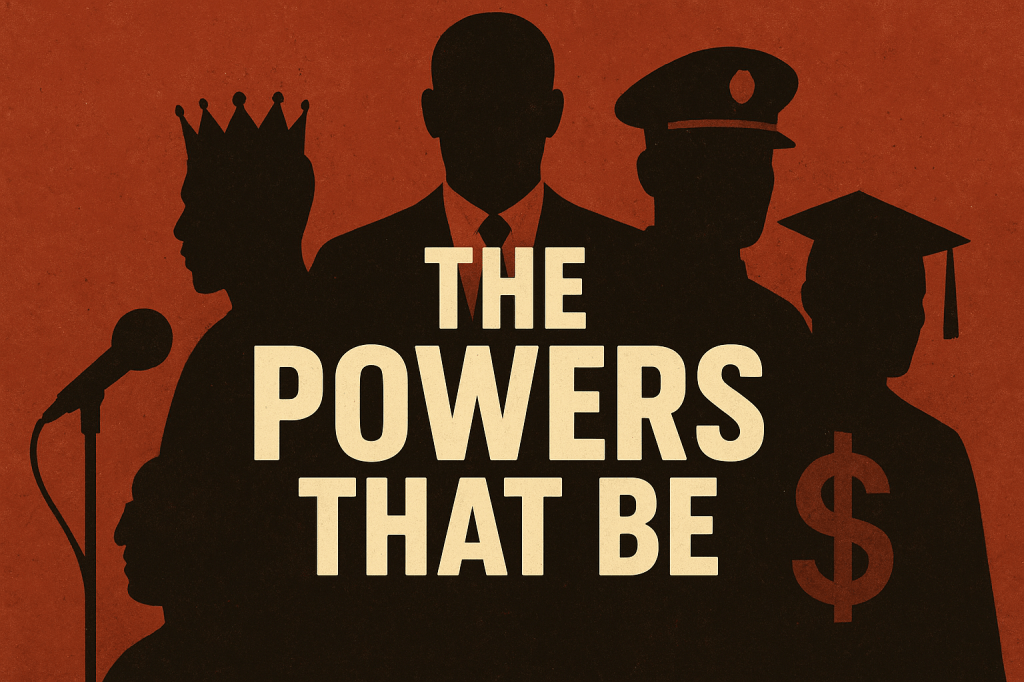
The question “Who are the powers that be?” stretches beyond casual curiosity; it is a theological, historical, and sociopolitical inquiry that reveals how authority functions in the seen and unseen realms. Throughout Scripture and human history, “the powers that be” refer to those forces—spiritual and earthly—that shape societies, influence human behavior, and govern the direction of nations. Understanding these powers is essential for discerning justice, oppression, liberation movements, and the spiritual battles believers face daily.
In the biblical world, authority is never viewed as random or accidental. Romans 13:1 teaches that “the powers that be are ordained of God,” signaling that all structure in the world, whether righteous or corrupted, sits under divine sovereignty. Yet Scripture also warns that earthly authority can become distorted when leaders reject righteousness. Pharaoh, Nebuchadnezzar, and Herod stand as reminders that political power can be manipulated for the harm of the vulnerable. These opposing realities—divine order and human corruption—frame the ongoing tension around who truly holds power.
Afrocentric & Hebraic–Israelite Perspective)
The question “Who are the powers that be?” resonates deeply within the collective memory of African-descended people and the biblical heritage of the scattered Israelites. It is more than a political inquiry—it is a spiritual and historical decoding of how ruling forces have shaped the destiny, identity, and suffering of Black people across generations. Through an Afrocentric and Hebraic-Israelite lens, the “powers that be” refer not only to governments and institutions but also to empires, spiritual hierarchies, colonial systems, and prophetic cycles that influence the lives of the chosen people.
Scripture presents authority as both divine and contested. Romans 13:1 states that “the powers that be are ordained of God,” indicating that rulers operate within the boundaries of divine sovereignty. Yet throughout the Bible, oppressive rulers—from Pharaoh to Nebuchadnezzar—were permitted to rise as instruments of judgment or refinement for Israel. This pattern echoes across African diaspora history, where colonial powers, enslavers, and Western institutions wielded authority that reshaped nations and scattered peoples. In this reading, oppression becomes a sign not of abandonment but of prophecy unfolding.
A Hebraic-Israelite interpretation identifies the descendants of the transatlantic slave trade as the children of Israel under the curses of Deuteronomy 28. Here, “the powers that be” become the nations that rose to dominance through slavery, colonization, and exploitation of African bodies and labor. Their economic and political power reflected the biblical warning that Israel would become “a proverb and a byword” among all nations (Deut. 28:37). The systems that oppressed Black people were not random; they were part of a prophesied cycle of captivity that marked Israel’s disobedience and exile.
From an Afrocentric perspective, the phrase “powers that be” includes empires that rewrote African history, erased indigenous spiritual knowledge, and dismantled pre-colonial civilizations. West African societies such as Mali, Ghana, Songhai, and Dahomey once possessed enormous wealth, governance systems, and spiritual sophistication. Yet Western powers wielded military technology, religious propaganda, and economic manipulation to dominate African nations. This manufactured dominance became codified into racist ideologies, leading to centuries of systemic oppression that still persists today.
The Bible reveals that human rulers rarely operate alone; they are influenced by spiritual principalities. Ephesians 6:12 identifies an unseen hierarchy—principalities, powers, rulers of darkness—that governs nations and institutions. Hebraic-Israelite thinkers see these spiritual forces working behind political systems that uphold white supremacy, capitalism, and global inequality. These powers influence legislation, policing, education, media, and economic policy. Their purpose is to perpetuate cycles of captivity and confusion among Israel, preventing awakening, unity, and cultural restoration.
Modern institutions—banks, corporations, governments, and entertainment industries—become extensions of these powers. They shape reality, dictate beauty standards, control narratives, and reinforce hyper-consumerism. For Black people, these institutions have historically limited access to wealth and visibility while exploiting creative labor, natural resources, and cultural expression. This manipulation mirrors ancient Israel’s frequent confrontation with foreign empires—Egypt, Assyria, Babylon, Rome—whose political dominance flowed from spiritual corruption and divine timing.
Understanding who the powers that be truly are also requires revisiting the question of identity. Since the transatlantic slave trade, Western systems have deliberately obscured Black people’s heritage, stripping them of language, history, and spiritual lineage. The power to define identity is one of the greatest tools of domination. Hebraic-Israelite thought argues that reclaiming biblical identity is an act of liberation from these powers. It breaks psychological chains and restores dignity, purpose, and covenant consciousness.
Yet spiritual awakening does not eliminate the reality of earthly oppression. Even in Scripture, Israel endured captivity while maintaining divine identity. Daniel served in Babylon, Joseph in Egypt, and Esther under Persia. Each navigated hostile systems while remaining loyal to their heritage and God’s law. These examples suggest that the children of Israel can survive and even flourish within oppressive structures without losing sight of their calling.
Afrocentric and Hebraic readings converge on one truth: the powers that be are temporary. Empires rise and crumble, and spiritual forces eventually face divine judgment. Psalm 2 depicts earthly rulers plotting in vain against God’s anointed. Isaiah 14 describes the fall of oppressive kings. Revelation portrays the collapse of global systems that exploit nations and traffic in human souls. These texts speak directly to the suffering of Black people and signal the approaching reversal of centuries of oppression.
Discernment becomes essential. People who understand the powers that be can resist manipulation, challenge false narratives, and restore cultural and spiritual identity. Hebraic-Israelite consciousness empowers individuals to see their history as prophecy, not coincidence, and to recognize their place in a divine timeline where suffering is followed by restoration.
Ultimately, “the powers that be” include earthly rulers, spiritual hierarchies, and societal systems that shape global order. But the highest power remains Yah, the Most High, who sets up kings and removes them. For the children of Israel, awakening to this truth brings clarity and courage. It affirms that while earthly powers influence circumstances, they do not define destiny. The Most High determines the rise and fall of nations, the liberation of His people, and the restoration of their identity.
This understanding transforms how Afrocentric and Israelite communities interpret history, engage society, and prepare for the future. It calls for unity, spiritual discipline, and cultural reclamation. And it reminds the dispersed descendants of Israel that although they live under the powers that be, they are ultimately governed by the Power who will be.
Historically, “the powers that be” include monarchies, empires, colonial rulers, slaveholders, corporate elites, political structures, and Western institutions that have shaped global culture. For Black communities across the African diaspora, the phrase carries a specific resonance: it evokes memories of transatlantic slavery, segregation, racial hierarchy, and the global systems that still dictate access to wealth, resources, education, and justice. The legacy of these powers still influences economic inequality, policing, healthcare disparities, and the psychological narrative of inferiority imposed upon people of African descent.
In the spiritual realm, Scripture reveals that “principalities, powers, and the rulers of the darkness of this world” (Ephesians 6:12) exert influence over nations and institutions. These are unseen forces—spiritual systems—that inspire human rebellion, pride, violence, and the oppression of the vulnerable. Thus, “the powers that be” cannot be understood solely by looking at governments or corporations; one must also acknowledge the spiritual forces working behind them. The Bible presents a cosmic hierarchy that affects the social one.
Christians are reminded that earthly power is temporary. empires rise and fall, yet God’s kingdom remains unmoved. This is why believers are commanded to use discernment when interacting with the world’s systems. Scripture calls followers to “test the spirits” (1 John 4:1), recognize injustice, and speak truth to power like the prophets of old. Jeremiah, Isaiah, Amos, and Micah consistently challenged kings and rulers whose policies harmed the poor and distorted justice. Their example teaches that righteous authority protects, while corrupt authority oppresses.
In a modern context, “the powers that be” show up in quieter but equally impactful ways: media conglomerates that shape public opinion, financial institutions that determine generational wealth, political systems that allocate justice unevenly, and cultural forces that define beauty, morality, and success. These powers manifest in boardrooms, legislative chambers, digital algorithms, and economic structures that influence billions daily. They are not always elected, visible, or accountable—yet they hold extraordinary influence over human behavior.
For Black communities, the question of power is also a question of identity. Who holds the authority to define history, culture, and truth? For centuries, Western powers controlled the narrative—portraying African civilizations as primitive, erasing contributions to science and theology, and distorting biblical imagery. Recovering historical truth becomes an act of resistance against such powers. This reclamation aligns with biblical themes of remembering one’s heritage and refusing to accept distorted versions of identity imposed by oppressive systems.
Yet Scripture consistently points to a higher truth: while human powers influence the world, they do not define destiny. Even in times of captivity—whether Babylonian exile or transatlantic slavery—God preserved remnants, elevated leaders, and overturned systems. Moses confronted Pharaoh. Esther confronted Haman. Daniel outlasted empires. Christ confronted the religious and political powers of His day. Each represents divine disruption against unjust authority.
Understanding “the powers that be” also requires humility, because human beings—even the righteous—can misuse authority. Power tests character. It magnifies motives. It exposes hidden pride. This is why Jesus taught that true greatness is found in service, not domination (Mark 10:42–45). Power divorced from righteousness becomes tyranny, but power rooted in God’s truth becomes protection, leadership, and justice.
Ultimately, “the powers that be” include three interconnected realms: spiritual authority, human governance, and cultural influence. These realms interact constantly, shaping laws, social norms, and moral direction. The believer’s task is not to fear these powers but to understand and navigate them wisely. Knowledge of spiritual warfare, historical truth, political awareness, and personal discernment empowers individuals to stand firm in a world influenced by both visible and invisible forces.
Christ’s resurrection demonstrates that no earthly or spiritual power can override God’s authority. His victory disarmed principalities (Colossians 2:15) and established a kingdom that outlasts every empire. This kingdom invites believers to walk in purpose, justice, and spiritual clarity even while living within earthly systems. Thus, the answer to the question “Who are the powers that be?” is layered, complex, and deeply spiritual. It reminds us that while power shapes the world, God shapes destiny.
The believer must remain watchful, prayerful, discerning, and courageous. Understanding the powers that be allows one to resist manipulation, recognize injustice, reclaim identity, and align with the higher authority of God’s kingdom. In every generation, those who understand power can transform communities and challenge systems that were designed to oppress. And ultimately, true power belongs not to governments or institutions, but to the One who reigns over heaven and earth.
References
Holy Bible, King James Version. (1769/2017). Cambridge University Press.
Paul, R. (2010). The politics of power and authority in biblical literature. Journal of Ancient Studies, 22(3), 145–162.
Sloan, T. (2018). Spiritual warfare and the unseen realm: A theological exploration. Christian Academic Press.
Williams, C. (2016). Race, empire, and systems of power: Understanding historical oppression. Diaspora Research Review, 14(2), 89–112.
Wright, J. (2020). The powers that be: Government, empire, and the kingdom of God. Theological Horizons, 7(1), 33–57.
 THE BROWN GIRL DILEMMA