
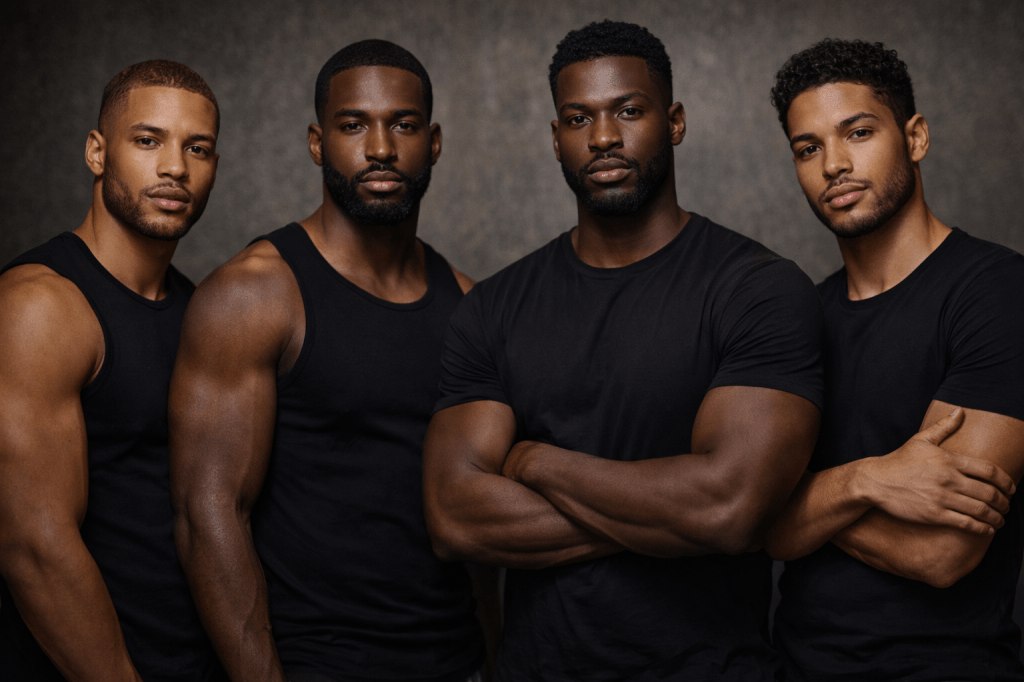
Black men are often spoken about but rarely spoken with. Narratives about Black masculinity tend to oscillate between extremes—either demonized or romanticized—leaving little room for truth, vulnerability, or complexity. This article seeks to articulate what many Black men desire Black women to understand, not from a place of superiority, but from a longing for peace, partnership, and mutual respect.
At the core, many Black men want to be seen as human before they are judged as providers, protectors, or problems. Scripture affirms that God looks on the heart rather than outward performance (1 Samuel 16:7, KJV). Yet culturally, Black men are often valued only for what they can produce, not who they are becoming. This pressure can lead to emotional withdrawal rather than emotional absence.
Respect matters deeply. While love is often emphasized in conversations about relationships, respect is frequently the language through which men experience love. Ephesians 5:33 instructs wives to respect their husbands, not as subjugation, but as acknowledgment of dignity and role. Many Black men desire to feel trusted, honored, and not constantly corrected or compared.
Black men also want Black women to understand that silence does not always mean indifference. For many, silence is a learned survival strategy. Historical trauma, racial profiling, and cultural expectations have taught Black men that emotional exposure can be dangerous (Majors & Billson, 1992). What appears as emotional unavailability is often emotional self-protection.
Partnership, not competition, is another recurring desire. Genesis 2:18 frames woman as a helper suitable—not inferior, but complementary. Many Black men long for relationships where strengths are shared rather than weaponized, where differences are balanced rather than exploited. Constant power struggles erode intimacy.
Black men also want it understood that provision is more than money. While financial stability matters, men also desire to provide leadership, spiritual covering, presence, and consistency. Ecclesiastes 4:9–12 emphasizes unity and cooperation as strength. When provision is reduced solely to income, men who are growing—but not yet established—may feel disqualified from love.
Healing is an unspoken need. Many Black men carry unresolved wounds from absent fathers, broken homes, systemic racism, and public humiliation. bell hooks (2004) notes that patriarchy teaches men to suppress pain rather than process it. Black men want space to heal without being shamed for needing it.
Faith plays a critical role in how many Black men understand manhood. Colossians 3:19 warns men not to be harsh, revealing that God expects emotional discipline, not domination. At the same time, men desire spiritual alignment—a partner who respects their walk with God and does not undermine their authority or growth.
Black men also want Black women to know that affirmation matters. In a world where they are often criminalized, overlooked, or disrespected, words of encouragement can restore strength. Proverbs 18:21 reminds us that life and death are in the power of the tongue. Many men remember words spoken over them—both harmful and healing.
Trust is another fragile area. Past betrayals, public criticism, and lack of discretion can make men guarded. 1 Peter 3:7 instructs men to dwell with women with understanding, implying that understanding must be mutual. Men desire emotional safety as much as women do.
Importantly, this is not a call to excuse wrongdoing. Accountability, growth, and maturity are essential. Black men want to be challenged—but not belittled; corrected—but not disrespected; supported—but not enabled. Love that builds is firm yet fair.
Ultimately, Black men want Black women to know that they desire peace. Not passivity, but peace. A home that feels like refuge rather than a battleground. Amos 3:3 asks, “Can two walk together, except they be agreed?” Agreement begins with listening.
Black love has always existed under pressure. Yet it has also endured through faith, forgiveness, and intentional communication. When Black men and Black women commit to understanding rather than assuming, healing becomes possible.
The Male Files is not a final word—it is an opening conversation. One rooted in truth, humility, and the hope that Black relationships can be places of rest, growth, and divine alignment.
References
Franklin, A. J. (2004). From brotherhood to manhood: How Black men rescue their relationships and dreams from the invisibility syndrome. Wiley.
hooks, b. (2004). We real cool: Black men and masculinity. Routledge.
Majors, R., & Billson, J. M. (1992). Cool pose: The dilemmas of Black manhood in America. Lexington Books.
Gottman, J. M., & Silver, N. (2015). The seven principles for making marriage work. Harmony Books.
Edin, K., & Nelson, T. J. (2013). Doing the best I can: Fatherhood in the inner city. University of California Press.
The Holy Bible, King James Version. (1769/2017). Cambridge University Press.
 THE BROWN GIRL DILEMMA