Tag Archives: vanity

The Ebony Dolls: Vanity (Denise Matthews)

From Canadian beauty queen and pop icon to born-again Christian minister

This photograph is the property of its respective owners. No copyright infringement intended

She looked like a mirror of me. I saw her and thought, that’s me in female form.” — — Prince

Denise Matthews, known to the world as Vanity, embodied a rare and arresting form of beauty—one that felt almost mythic. With her almond-shaped eyes, glowing skin, racially ambiguous features, and effortless beauty, she represented the archetype of the 1980s “Ebony Doll”: a woman whose presence commanded attention before she ever spoke a word. Vanity was not merely admired; she was desired, elevated into fantasy, and projected onto screens and stages as an icon of glamour and Black feminine mystique.

Yet the most profound chapter of her life unfolded far from the spotlight. After years of fame, addiction, and near-death, Vanity experienced a spiritual awakening that led her to renounce celebrity culture entirely. She publicly surrendered her stage name, calling it a false identity, and dedicated the rest of her life to Jesus Christ and Christian ministry. In doing so, she became one of the rare figures in pop history whose legacy is not defined only by beauty and desire, but by repentance, faith, and radical transformation—an “Ebony Doll” who walked away from the world to choose God.

Denise Katherine Matthews (January 4, 1959 – February 15, 2016), professionally known as Vanity, was a Canadian model, singer, songwriter, actress, and later a Christian evangelist. She rose to global fame in the early 1980s as the frontwoman of the provocative pop-funk group Vanity 6, created and produced by Prince. Her life became a powerful narrative of beauty, fame, addiction, redemption, and spiritual rebirth.


Denise Matthews was born in Niagara Falls, Ontario, Canada. She was of mixed racial heritage, with a Black father and a mother of German and Jewish descent. From a young age, Denise gravitated toward modeling and performance. She entered beauty competitions and gained national recognition when she won Miss Niagara Hospitality (1977) and later competed in Miss Canada (1978). These early achievements established her as a rising figure in Canadian beauty culture and opened doors to professional modeling. She was one of the most beautiful celebrities.


This photograph is the property of its respective owners. No copyright infringement intended

Following her pageant success, Matthews relocated to New York City, where she signed with the prestigious Zoli Model Agency. Though she did not fit traditional high-fashion height standards, her magnetic presence, camera appeal, and sensual confidence made her highly marketable. She appeared in commercials, print advertisements, and international modeling campaigns, including work in Japan.

Her early image combined innocence and eroticism, foreshadowing the bold persona she would later embody as Vanity.


Denise’s career took a dramatic turn after meeting Prince at the 1980 American Music Awards. Prince saw in her a female reflection of his own artistic identity and envisioned her as the centerpiece of a new musical project.

Originally, Prince proposed highly explicit stage names, but Denise refused one of them and accepted “Vanity” instead. The name symbolized both beauty and self-obsession—qualities that became central to her public persona.

USA Today

Prince formed Vanity 6, a three-woman group that blended sexual imagery, synth-funk music, and provocative performance aesthetics. The group’s lingerie-styled outfits and explicit lyrics made them cultural lightning rods.

Their breakout hit “Nasty Girl” (1982) became a defining anthem of the decade, reaching #1 on the U.S. Billboard Dance Chart and turning Vanity into a global sex symbol.


After leaving Vanity 6, Denise signed with Motown Records and launched a solo career. She released two albums:

  • Wild Animal (1984)
  • Skin on Skin (1986)

Her single “Under the Influence” charted on Billboard’s R&B and Dance rankings.

In parallel, she pursued acting, appearing in major films including:

  • The Last Dragon (1985)
  • 52 Pick-Up (1986)
  • Never Too Young to Die (1986)
  • Action Jackson (1988)

Vanity became one of the most visible Black female celebrities of the era, blending beauty, sexuality, and pop culture power.

This photograph is the property of its respective owners. No copyright infringement intended

Vanity’s beauty and fame attracted high-profile relationships throughout the 1980s, including musicians and rock stars. However, behind the glamorous image were deep struggle with substance abuse.

In 1995, she married former NFL player Anthony Smith after a brief courtship. The marriage ended in divorce, and Smith later became infamous after being convicted of multiple murders and receiving life imprisonment. This period marked a traumatic chapter in her personal life.


By the early 1990s, Vanity’s cocaine addiction had devastated her health. In 1994, she suffered near-fatal kidney failure. During her hospitalization, she reported a spiritual encounter with Jesus Christ, which she described as a divine intervention that saved her life.

She immediately renounced the “Vanity” persona, abandoned secular entertainment, and became a born-again Christian evangelist.

This photograph is the property of its respective owners. No copyright infringement intended

Denise founded Pure Hearts Ministries in California and dedicated her life to preaching, counseling, and sharing her testimony about spiritual transformation, repentance, and redemption.

She later published her autobiography:
Blame It On Vanity: Hollywood, Hell and Heaven (2010), detailing her journey from fame to faith.


Years of substance abuse permanently damaged her kidneys. She underwent a kidney transplant in 1997 and later suffered from sclerosing encapsulating peritonitis, a rare and painful abdominal disease.

After multiple surgeries and long-term dialysis, Denise Matthews died on February 15, 2016, at age 57, in Fremont, California, from kidney failure.


Vanity remains a symbol of Black feminine beauty, erotic power, and cultural transformation. As an “Ebony Doll,” she embodied the intersection of beauty, visibility, and spirituality—first as a singer-actress and later as a woman who publicly rejected celebrity culture in favor of faith.

Her life stands as a rare testimony of radical personal change within the entertainment industry, illustrating the spiritual cost of fame and the possibility of redemption.


References

Matthews, D. (2010). Blame It On Vanity: Hollywood, Hell and Heaven. Destiny Image Publishers.

Vanity. (n.d.). In Wikipedia. https://en.wikipedia.org/wiki/Vanity_(singer)

Vanity 6. (n.d.). In Wikipedia. https://en.wikipedia.org/wiki/Vanity_6

Nasty Girl (Vanity 6 song). (n.d.). In Wikipedia. https://en.wikipedia.org/wiki/Nasty_Girl_(Vanity_6_song)

Time Magazine. (2016). Vanity, singer and actress, dies at 57. https://time.com/4225112/vanity-denise-mathews-dead/

The Washington Post. (2016). Denise Matthews, troubled pop singer known as Vanity, dies at 57.

Vogue. (2016). Vanity’s legacy: Prince, pop culture, and the erotic imagination.

AOL Entertainment. (2016). Denise “Vanity” Matthews dies at 57.

Billboard. (1984–1986). Chart history for “Under the Influence”.

The Vanity Trap: When Outer Beauty Hides Inner Emptiness.

Photo by Gustavo Almeida on Pexels.com

In contemporary society, the pursuit of physical beauty has become a dominant cultural preoccupation. Yet, behind the allure of aesthetic perfection lies a pervasive emptiness, as individuals often equate outward appearance with personal worth, neglecting the cultivation of inner life.

Vanity, defined as excessive pride in or concern with one’s appearance, can function as both a protective and performative mechanism. Individuals may invest in beauty to gain social approval, masking insecurity, trauma, or unmet emotional needs (Cash & Pruzinsky, 2002).

Media perpetuates the myth that beauty equals success, happiness, and moral virtue. From advertising to social media, the constant display of idealized bodies encourages the internalization of unrealistic standards, fostering dissatisfaction and superficial self-evaluation (Tiggemann & Slater, 2014).

Psychologically, this focus on appearance can contribute to body dysmorphic disorders, low self-esteem, and anxiety. When self-worth is tethered to external validation, individuals may experience perpetual inadequacy, regardless of how closely they meet cultural beauty norms (Grogan, 2016).

The vanity trap is particularly pronounced in cultures that equate youthfulness and symmetry with moral or social value. Such frameworks obscure the importance of character, wisdom, and relational depth, leading to a distorted sense of identity (Etcoff, 1999).

Historically, beauty has been leveraged as a form of social capital. Women and men with “desirable” features were often granted privileges, while those who diverged from these norms faced marginalization. This reinforces the notion that beauty is not only aesthetic but also transactional (Wolf, 1991).

Social comparison intensifies the vanity trap. In environments saturated with images of curated perfection, individuals measure themselves against often unattainable ideals, reinforcing feelings of inadequacy and fostering envy (Fardouly et al., 2015).

The psychological effects of vanity extend to relationships. When outward appearance becomes the primary measure of worth, individuals may struggle with intimacy, emotional vulnerability, and authentic connection, as relational bonds are predicated on superficial criteria (Fredrickson & Roberts, 1997).

Beauty obsession can also distract from personal growth. Time, energy, and resources invested in achieving aesthetic ideals may eclipse pursuits of intellectual, spiritual, and emotional development, leaving a hollow sense of accomplishment (Cash & Pruzinsky, 2002).

The cultural reinforcement of vanity intersects with gendered expectations. Women historically bear disproportionate pressure to maintain appearance, while men increasingly face expectations to cultivate physical fitness and style. Both groups risk internalizing external validation as self-definition (Grogan, 2016).

Social media magnifies these pressures. Platforms that prioritize visual content encourage performative beauty, where likes, comments, and followers become proxies for self-worth, often obscuring authentic personal identity (Fardouly et al., 2015).

Vanity can serve as a coping mechanism for deeper emotional wounds. Individuals may pursue perfection in appearance to compensate for rejection, neglect, or trauma, using beauty as a shield to avoid confronting inner pain (Cash & Pruzinsky, 2002).

Religious and spiritual traditions emphasize the primacy of inner virtue over external appearance. Scriptures, such as 1 Samuel 16:7, highlight that God values the condition of the heart, not outward appearances, challenging societal obsessions with beauty. This perspective offers a pathway to reconcile identity with moral and spiritual integrity.

Therapeutic interventions can address the inner emptiness associated with vanity. Cognitive-behavioral therapy, mindfulness, and narrative therapy help individuals disentangle self-worth from appearance, fostering internal validation and emotional resilience (Cash & Pruzinsky, 2002).

Community and relational contexts are crucial. Mentorship, authentic friendships, and supportive family structures provide mirrors for self-worth based on character and action, rather than appearance, reducing the compulsion toward superficial validation (Ward & Brown, 2015).

Art and creative expression can redirect focus from appearance to inner life. Through writing, painting, music, and performance, individuals can explore identity, emotions, and purpose, cultivating fulfillment that transcends external aesthetics (Etcoff, 1999).

The vanity trap is cyclical, often reinforced across generations. Children observing parental preoccupation with appearance may internalize similar values, perpetuating an endless pursuit of external approval at the expense of emotional and spiritual depth (Danieli, 1998).

Cultural critique highlights the intersection of consumerism and vanity. Beauty industries capitalize on insecurities, creating demand for products and services that promise perfection but rarely deliver lasting satisfaction, commodifying self-esteem (Wolf, 1991).

Reclaiming self-worth requires deliberate introspection. Recognizing the limits of beauty, embracing imperfection, and investing in internal growth can counter the emptiness produced by vanity. True confidence stems from alignment of values, purpose, and character with lived experience.

Ultimately, confronting the vanity trap entails a paradigm shift: valuing inner beauty, moral integrity, emotional depth, and relational authenticity over transient physical ideals. This reorientation fosters holistic well-being, resilient self-esteem, and meaningful human connection.


References

  • Cash, T. F., & Pruzinsky, T. (2002). Body image: A handbook of theory, research, and clinical practice. Guilford Press.
  • Danieli, Y. (1998). International handbook of multigenerational legacies of trauma. Plenum Press.
  • Etcoff, N. (1999). Survival of the prettiest: The science of beauty. Doubleday.
  • Fardouly, J., Diedrichs, P. C., Vartanian, L. R., & Halliwell, E. (2015). Social comparisons on social media: The impact of Facebook on young women’s body image concerns and mood. Body Image, 13, 38–45.
  • Fredrickson, B. L., & Roberts, T.-A. (1997). Objectification theory: Toward understanding women’s lived experiences and mental health risks. Psychology of Women Quarterly, 21(2), 173–206.
  • Grogan, S. (2016). Body image: Understanding body dissatisfaction in men, women, and children. Routledge.
  • Tiggemann, M., & Slater, A. (2014). NetGirls: The Internet, Facebook, and body image concern in adolescent girls. International Journal of Eating Disorders, 47(6), 630–643.
  • Ward, E., & Brown, R. L. (2015). Mental health stigma and African Americans. Journal of African American Studies, 19(2), 137–152.
  • Wolf, N. (1991). The beauty myth: How images of beauty are used against women. HarperCollins.

Altars of Vanity

Photo by RDNE Stock project on Pexels.com

In today’s world, beauty and self-image have become a form of worship. Society has constructed modern “altars of vanity,” where women and men alike sacrifice time, money, and self-worth to the false gods of appearance, status, and attention. Social media has become the temple, the mirror the priest, and the self the idol. Yet, Scripture warns us in Exodus 20:3 (KJV), “Thou shalt have no other gods before me.” When our reflection becomes our obsession, we step into idolatry disguised as self-love.

The altar of vanity demands constant offerings—new outfits, flawless photos, and endless validation. It whispers that you are only as valuable as your last post or compliment. But this altar is deceptive, feeding insecurity while pretending to heal it. Vanity is a cruel master that promises fulfillment but delivers emptiness. Proverbs 31:30 (KJV) reminds us, “Favour is deceitful, and beauty is vain: but a woman that feareth the Lord, she shall be praised.”

The Most High never designed beauty to be worshiped. He created it to reflect His glory. When we turn beauty inward, we distort its purpose. The heart that once desired to please God begins to crave the applause of men. Like Lucifer, who fell because of pride in his own splendor (Ezekiel 28:17 KJV), we too fall when we exalt our image above our Creator.

Modern culture celebrates vanity as empowerment, but it’s a spiritual trap. The endless pursuit of perfection breeds discontentment, comparison, and pride. Women are taught to flaunt rather than to flourish; men are conditioned to lust rather than to lead. In this cycle, the soul becomes starved, while the flesh is endlessly fed. The Apostle John warned, “For all that is in the world, the lust of the flesh, and the lust of the eyes, and the pride of life, is not of the Father” (1 John 2:16 KJV).

When we seek validation through likes, followers, or compliments, we unknowingly build altars to ourselves. We sacrifice authenticity for attention and peace for popularity. But the Word of God calls us to crucify the flesh, not glorify it. Galatians 5:24 (KJV) declares, “And they that are Christ’s have crucified the flesh with the affections and lusts.”

True beauty is not found in how much skin you show, but in how much love and humility your spirit reveals. The woman of God carries herself with quiet dignity; her confidence comes not from approval but from anointing. Her altar is one of prayer, not pride. Her mirror is the Word, not the world.

At the altar of vanity, many have traded modesty for attention, wisdom for trendiness, and holiness for applause. Yet, every idol eventually demands more than it gives. The more you feed vanity, the more it consumes your peace. The Most High calls His daughters to come away from these false altars and return to the sacred space of purity and purpose.

In ancient times, Israel fell because they worshiped idols made of gold, silver, and stone. Today, those idols have screens and filters. But the sin is the same—self-exaltation. Romans 1:25 (KJV) speaks of those “Who changed the truth of God into a lie, and worshipped and served the creature more than the Creator.” The creature—ourselves—has become the new idol.

The altar of vanity also breeds competition and envy. Women tear each other down to be seen as more desirable, while men chase illusions of perfection. But true beauty doesn’t compare—it complements. The Kingdom woman knows her reflection is sacred because it carries divine purpose. She understands that the glory of man is temporary, but the glory of God is eternal.

The seductive power of vanity is subtle. It begins with self-care and morphs into self-obsession. The heart becomes enslaved to mirrors and metrics. The Most High calls us to examine where our devotion lies. Is your reflection an idol, or is it a vessel for His light? The heart of a true worshiper bows to God alone.

Breaking free from the altar of vanity requires repentance and renewal. Romans 12:2 (KJV) urges, “And be not conformed to this world: but be ye transformed by the renewing of your mind.” Transformation begins when you no longer see yourself through the eyes of society but through the eyes of your Creator.

The woman who destroys her altar of vanity rebuilds an altar of virtue. She adorns herself with grace, not garments; with peace, not pride. Her beauty reflects the fruit of the Spirit—love, joy, and gentleness. She does not need the validation of men because she walks in the approval of God.

Vanity is temporary; holiness is eternal. Outer beauty fades, but a pure heart remains radiant forever. The Most High beautifies the humble and resists the proud. He replaces pride with peace, self-idolatry with sanctity, and insecurity with divine confidence.

We must teach the next generation of young women that their worth is not in their reflection but in their righteousness. Let them know that modesty is not oppression—it is divine expression. To be clothed in humility is to be robed in strength.

When you stand before the altar of vanity, remember that every idol demands sacrifice. Ask yourself—what are you giving up for beauty? Your peace? Your purity? Your purpose? The Most High calls you to tear down that altar and rebuild one that honors Him.

To worship God in spirit and truth means surrendering vanity for virtue, flesh for faith, and pride for purpose. Your true reflection is not in glass but in grace. When the Most High is at the center of your heart, you no longer need validation—the Creator Himself calls you beautiful.

Let every woman remember that beauty without righteousness is hollow. But righteousness wrapped in humility is eternal glory. Psalm 29:2 (KJV) says, “Give unto the Lord the glory due unto his name; worship the Lord in the beauty of holiness.” That is the only altar worth bowing before.

The Most High is restoring His daughters from the deception of vanity. He is calling them to rise, not as idols of beauty, but as instruments of His light. The ashes of pride will be replaced with crowns of purpose. The vanity will fade, but virtue will remain.

So, sisters, step away from the altar of vanity and kneel before the throne of grace. For in His presence, you will find a beauty that never fades, a peace that never wavers, and a love that never ends.

References
Holy Bible, King James Version. (1611). Exodus 20:3; Proverbs 31:30; Ezekiel 28:17; 1 John 2:16; Galatians 5:24; Romans 1:25; Romans 12:2; Psalm 29:2.

How Luxury Brands Brainwash You to Buy.

In today’s consumer-driven culture, luxury brands like Hermès, Louis Vuitton, and Gucci have mastered the art of psychological manipulation. The Hermès Birkin bag, in particular, has become an emblem of exclusivity and desire, symbolizing far more than craftsmanship—it represents power, wealth, and social validation. Yet behind the allure of luxury lies a calculated strategy designed to condition consumers to equate material possessions with self-worth. This psychological phenomenon is deeply intertwined with human pride, vanity, and the biblical warnings against idolizing worldly riches (1 John 2:16, KJV).

Luxury marketing exploits the psychology of scarcity and exclusivity. The Birkin bag, for instance, is intentionally made difficult to purchase, creating a sense of privilege among those who can obtain one. This taps into FOMO—the fear of missing out—a powerful psychological motivator. Social psychologist Robert Cialdini (2007) identified scarcity as a principle that increases desire: people want what they cannot easily have. This concept aligns with Ecclesiastes 5:10 (KJV), which warns, “He that loveth silver shall not be satisfied with silver; nor he that loveth abundance with increase.”

Consumers are subtly indoctrinated into believing luxury equals success. Advertising imagery and celebrity endorsements cultivate emotional connections, creating the illusion that luxury ownership can fill psychological voids such as insecurity, loneliness, or inadequacy. These desires often stem from early conditioning where self-esteem is tied to external validation. In biblical terms, this is the “lust of the eyes” and “the pride of life” (1 John 2:16, KJV)—the craving for possessions to affirm one’s identity.

Hermès and similar brands design their stores and marketing to evoke emotional responses. The minimalist interiors, warm lighting, and personal service experience create a sense of belonging to an elite community. This sensory manipulation mirrors the tactics of cult-like systems where psychological conditioning leads individuals to conform. Through repeated exposure, the consumer’s brain links luxury items with feelings of superiority and fulfillment, a form of cognitive conditioning identified by Pavlovian psychology.

Social status also plays a major role in the brainwashing process. Thorstein Veblen (1899) coined the term conspicuous consumption to describe buying luxury goods to publicly display wealth and prestige. This behavior is not about utility but identity construction. Similarly, Proverbs 16:18 (KJV) warns, “Pride goeth before destruction, and an haughty spirit before a fall.” Luxury brands weaponize this pride, turning human weakness into profit.

Hermès intentionally limits supply to maintain a psychological illusion of rarity. This artificial scarcity drives irrational consumer behavior, causing people to spend tens of thousands of dollars or even get on waiting lists. Studies in behavioral economics show that scarcity triggers the brain’s reward system, increasing dopamine production (Tversky & Kahneman, 1974). The same neural circuits involved in addiction are activated, turning shopping into a cycle of desire and temporary satisfaction.

Social media has intensified this luxury obsession. Platforms like Instagram and TikTok amplify the visibility of elite lifestyles, perpetuating envy and imitation. Influencers flaunting Birkin bags or Cartier bracelets create subconscious cues that link luxury with happiness and importance. Psychologists refer to this as social proof, another of Cialdini’s (2007) persuasion principles, where people assume that if others value something, it must be worthwhile. The Bible, however, cautions against comparing oneself to others (Galatians 6:4-5, KJV).

This brainwashing extends into the realm of emotional manipulation. Luxury brands associate their products with love, beauty, and success—concepts deeply rooted in human desire. When consumers buy a Birkin, they are not merely purchasing leather; they are buying into a story, an identity. Jesus warned in Matthew 6:19-21 (KJV), “Lay not up for yourselves treasures upon earth… For where your treasure is, there will your heart be also.” The heart becomes enslaved to possessions, and possessions become idols.

In psychological terms, this form of material worship reflects symbolic self-completion theory (Wicklund & Gollwitzer, 1982), where individuals use possessions to complete their sense of identity. A Birkin bag, then, is not just a status symbol—it’s a psychological prosthetic for insecurity. The luxury industry exploits this need for self-completion by linking products to personal worth.

Moreover, the high price of luxury goods triggers what psychologists call the price-quality heuristic—the assumption that expensive items are superior. This cognitive bias leads consumers to believe that exclusivity equals excellence. Yet often, the true value lies in perception, not production. Isaiah 55:2 (KJV) questions this deception: “Wherefore do ye spend money for that which is not bread? and your labour for that which satisfieth not?”

Luxury branding also manipulates gender psychology. Women are often targeted with emotional narratives connecting femininity and desirability to luxury items. A Hermès Birkin becomes a symbol of womanhood achieved—a mark of status and validation in a patriarchal society. This form of marketing feeds on psychological vulnerability, reinforcing the notion that value lies in appearance rather than substance.

Men, too, are not exempt from the luxury illusion. Male consumers are targeted through brands like Rolex, Bentley, or tailored suits that promise dominance and prestige. These messages mirror the worldly concept of masculinity defined by possessions, contrasting sharply with biblical manhood grounded in humility and service (Philippians 2:3-4, KJV). Luxury’s gospel is one of self-exaltation, not self-denial.

The luxury industry also thrives on delayed gratification. The “Birkin waiting list” creates a ritualistic experience, making ownership feel like a reward for perseverance. This psychological manipulation strengthens emotional attachment to the product. The Bible, however, teaches contentment rather than covetousness: “Be content with such things as ye have” (Hebrews 13:5, KJV).

Even the resale market plays into the illusion of investment. By framing luxury goods as “assets,” consumers justify excessive spending as financial wisdom. Yet in truth, the emotional satisfaction fades quickly, leading to an endless cycle of consumption—a psychological treadmill known as the hedonic adaptation effect (Brickman & Campbell, 1971).

Luxury branding transforms materialism into identity worship. People are conditioned to see their possessions as extensions of themselves. This aligns with what Paul warned against in Romans 12:2 (KJV): “Be not conformed to this world: but be ye transformed by the renewing of your mind.” Renewing the mind means breaking free from the world’s hypnotic materialism.

The Hermès phenomenon reveals how luxury can enslave the soul under the guise of freedom. What begins as admiration becomes obsession, and what once seemed aspirational becomes idolatrous. Jesus cautioned that “No man can serve two masters… Ye cannot serve God and mammon” (Matthew 6:24, KJV). The worship of wealth is spiritual bondage disguised as sophistication.

At its core, luxury brainwashing is a modern form of sorcery—manipulating perception, emotion, and desire through illusion. Revelation 18:11-13 (KJV) foretells merchants mourning over Babylon’s fall, lamenting the loss of luxury and excess. It is a prophetic mirror to today’s luxury-driven culture, built on pride, envy, and exploitation.

Breaking free from luxury’s psychological spell requires mindfulness and spiritual awareness. Recognizing how brands manipulate emotions through scarcity, beauty, and status allows one to reclaim autonomy. The renewing of the mind (Romans 12:2) is not just spiritual but psychological liberation from material conditioning.

In conclusion, luxury brands like Hermès have perfected the art of psychological and spiritual seduction. They exploit human insecurities, pride, and the innate longing for significance. Yet the Bible teaches that true worth comes not from possessions but from purpose and faith. As Proverbs 11:28 (KJV) reminds, “He that trusteth in his riches shall fall: but the righteous shall flourish as a branch.” Luxury may promise elevation, but only wisdom and humility bring peace to the soul.


References

  • Brickman, P., & Campbell, D. T. (1971). Hedonic relativism and planning the good society. In M. H. Appley (Ed.), Adaptation-level theory (pp. 287–305). Academic Press.
  • Cialdini, R. B. (2007). Influence: The Psychology of Persuasion. Harper Business.
  • Tversky, A., & Kahneman, D. (1974). Judgment under uncertainty: Heuristics and biases. Science, 185(4157), 1124–1131.
  • Veblen, T. (1899). The Theory of the Leisure Class. Macmillan.
  • Wicklund, R. A., & Gollwitzer, P. M. (1982). Symbolic self-completion. Lawrence Erlbaum.
  • Holy Bible, King James Version (KJV).

The Glory of Self: Spirit of Vanity.

Photo by Pavel Danilyuk on Pexels.com

A woman once said to me, “If I had your face and body, I would look at myself all the time. I would be a total narcissist.” Her words struck me deeply. I thought to myself: what is it about fleshly beauty that makes people willing to sell their soul to obtain it? Beauty is an opinion, shaped by culture and time, yet so many live and die by it. True beauty is not measured by the opinions of others or by trends that change with every generation. Scripture reminds us that “man looketh on the outward appearance, but the Lord looketh on the heart” (1 Samuel 16:7, KJV). Yet, we live in a world consumed by the lust of the eyes, the lust of the flesh, and the pride of life (1 John 2:16, KJV).

To be beautiful, by worldly standards, is often to be admired for physical traits, symmetry, or style. Looking into a mirror and admiring what you see is not inherently sinful—after all, God made humans in His image (Genesis 1:27). But when admiration becomes obsession, when self-focus turns into idolatry, it crosses into vanity. Vanity is excessive pride in or admiration of one’s appearance or achievements, a trait warned against in Ecclesiastes 1:2, which declares, “Vanity of vanities, saith the Preacher, vanity of vanities; all is vanity.”

Social media has amplified this spirit of vanity to a global scale. Platforms like Instagram, TikTok, and Snapchat encourage people to curate a perfect image of themselves, leading to comparison, competition, and envy. Psychologists call this phenomenon “self-objectification,” where individuals begin to view themselves primarily as objects to be looked at, rather than as whole persons with intrinsic worth (Fredrickson & Roberts, 1997). The result is often anxiety, depression, and low self-esteem—ironically the opposite of what many seek through validation online.

Self-worship is the elevation of the self to a position of ultimate importance. It is idolatry of the highest order, replacing God with the image in the mirror. Paul warned about this in 2 Timothy 3:2-4, describing the last days as a time when people would be “lovers of their own selves… proud, blasphemers… lovers of pleasures more than lovers of God.” The spirit of self-worship is seductive, whispering that we are enough without God, that we can glorify ourselves rather than glorifying Him.

Narcissism, conceit, arrogance, and haughtiness are related but distinct expressions of this spirit. Narcissism, as defined in psychology, is characterized by grandiosity, a need for admiration, and a lack of empathy (American Psychiatric Association, 2013). Conceit is excessive pride in oneself, arrogance is an overbearing sense of superiority, and haughtiness is a disdainful pride that looks down on others. All four are condemned in Scripture: “A man’s pride shall bring him low: but honour shall uphold the humble in spirit” (Proverbs 29:23, KJV).

This “neon demon” of self-glorification is often born out of deep wounds. Childhood neglect, rejection, or lack of affirmation can create a desperate hunger to be seen and validated. When this hunger goes unchecked, it may evolve into an insatiable desire for attention—manifesting as vanity, narcissism, or arrogance. Psychology notes that many narcissistic tendencies stem from fragile self-esteem and attempts to overcompensate (Miller et al., 2011).

The origin of this self-obsession can be traced back to Lucifer, who was cast out of heaven because of pride. Ezekiel 28:17 (KJV) declares, “Thine heart was lifted up because of thy beauty, thou hast corrupted thy wisdom by reason of thy brightness.” The devil was the first being to be consumed by self-worship, and humanity has followed suit ever since.

The danger of glorifying oneself is that it displaces God. Isaiah 42:8 reminds us that God will not share His glory with another. When humans exalt themselves, they place themselves in competition with their Creator, leading to spiritual downfall. Pride was the first sin and remains one of the most destructive forces in human relationships, leading to envy, strife, and brokenness.

Body worship is a modern form of idolatry where physical appearance, fitness, or sexual allure becomes the ultimate pursuit. This can be seen in the booming industries of plastic surgery, cosmetic enhancements, and influencer culture. Psychology research shows that body image dissatisfaction is linked to disordered eating, anxiety, and depression (Neumark-Sztainer et al., 2006). Spiritually, body worship shifts our focus from presenting our bodies as “a living sacrifice, holy, acceptable unto God” (Romans 12:1, KJV) to presenting them as trophies for human applause.

The psychology of self-worship reveals that behind the polished selfies and staged perfection often lies deep insecurity. Many who crave validation online are actually longing for love, acceptance, and belonging. This is why likes and comments can become addictive, stimulating dopamine release in the brain (Sherman et al., 2016). The danger is that this creates a cycle of dependency on external affirmation, which can never truly satisfy.

The deep insecurity of wanting others to think you are something you are not can be emotionally exhausting. It fosters a false self that must be maintained at all costs, leaving little room for authenticity. Jesus warned against this performative living in Matthew 23:28 (KJV): “Even so ye also outwardly appear righteous unto men, but within ye are full of hypocrisy and iniquity.”

Both men and women are affected by this spirit of vanity, though it manifests differently. Women may feel pressured to achieve physical perfection, while men may focus on status, wealth, or dominance as measures of worth. Both genders can fall into the trap of living for human approval rather than divine purpose, forgetting that “the fear of man bringeth a snare” (Proverbs 29:25, KJV).

An example of this worship can be seen in celebrity culture. Stars who are idolized often become prisoners of their own image, resorting to extreme measures to maintain their looks and relevance. Their lives are meticulously curated, yet many report profound loneliness and depression. This is a sobering reminder that glorying in the flesh leads to emptiness.

Social media influencers, fitness models, and beauty icons have become modern idols, with millions seeking to emulate them. The danger is not merely in admiring beauty but in prioritizing it above character, integrity, and faith. This creates a generation of people chasing a standard they can never fully attain.

Scripture consistently warns that pride goes before destruction (Proverbs 16:18). Those who worship themselves risk eternal separation from God because they refuse to bow to Him. The call of the believer is to deny oneself, take up the cross, and follow Christ (Luke 9:23).

Vanity not only destroys individuals but also relationships. When a person is consumed with self-image, they may neglect the needs of others, becoming emotionally unavailable or demanding. This leads to relational breakdowns, resentment, and isolation.

Psychologically, living for self-glory can create anxiety and burnout. Constant comparison and competition keep the nervous system in a heightened state, contributing to stress-related illnesses. Spiritually, it can dull one’s ability to hear God’s voice, because the noise of self is so loud.

The antidote to vanity is humility and gratitude. Gratitude allows us to appreciate beauty as a gift from God rather than a tool for self-exaltation. Humility allows us to place others before ourselves, reflecting the attitude of Christ who “made himself of no reputation” (Philippians 2:7, KJV).

Practically, believers can combat vanity by limiting social media use, focusing on acts of service, and cultivating inner character through prayer and fasting. This shifts the focus from outward appearance to inward transformation.

We must remember that beauty fades (Proverbs 31:30) but a heart surrendered to God grows more radiant with time. This is why Peter exhorts women to focus on “the hidden man of the heart… even the ornament of a meek and quiet spirit, which is in the sight of God of great price” (1 Peter 3:4, KJV).

Ultimately, the glory belongs to God alone. When we live to glorify Him rather than ourselves, we find true joy and fulfillment. Our worth is not in the mirror, not in likes, not in followers, but in being children of the Most High.


References

  • American Psychiatric Association. (2013). Diagnostic and statistical manual of mental disorders (5th ed.). APA.
  • Fredrickson, B. L., & Roberts, T. A. (1997). Objectification theory. Psychology of Women Quarterly, 21(2), 173–206.
  • Miller, J. D., et al. (2011). Narcissistic personality disorder and self-esteem. Journal of Abnormal Psychology, 120(2), 343–354.
  • Neumark-Sztainer, D., et al. (2006). Body dissatisfaction and unhealthy weight control behaviors. Journal of Adolescent Health, 39(2), 244–251.
  • Sherman, L. E., et al. (2016). The power of the like. Psychological Science, 27(7), 1027–1035.

Key KJV Scriptures: 1 Samuel 16:7; 1 John 2:16; Ecclesiastes 1:2; 2 Timothy 3:2-4; Ezekiel 28:17; Isaiah 42:8; Romans 12:1; Proverbs 29:25; Proverbs 31:30; 1 Peter 3:4; Philippians 2:7; Luke 9:23; Proverbs 16:18; Matthew 23:28.

From Vanity to Victory: The Redemption Story of Denise Katrina Matthews

Photo courtesy of Steve Landis, the photographer used with his permission.

“When you’re empty on the inside, it doesn’t matter how beautiful you are on the outside.” – Denise Matthews (Vanity)


Introduction: Beauty, Fame, and the Battle Within

Denise Katrina Matthews—widely known by her stage name Vanity—was a striking beauty, a singer, actress, and model who captivated the world in the 1980s. With an exotic allure and a voice that blended sensuality and soul, Vanity became a pop culture icon during the height of Prince’s musical empire. Yet, beneath the surface of stardom and seduction, Denise battled addiction, identity confusion, and spiritual emptiness. Her journey from sex symbol to servant of Christ is one of profound transformation and testimony.

All photographs are the property of their respective owners. No infringement intended.

Early Life and Mixed Heritage

Denise Matthews was born on January 4, 1959, in Niagara Falls, Ontario, Canada. Of African-American, German-Jewish, and Polynesian descent, her mixed-race heritage contributed to her “exotic” beauty that would later become her ticket to the entertainment industry—and, paradoxically, her curse. Standing at about 5’6”, she was admired for her radiant skin, bone structure, and seductive onstage presence. Her early experiences, however, were not glamorous; Denise came from a turbulent household marked by abuse and instability. These early wounds left deep scars that influenced many of her later choices.


Rise to Fame: Vanity 6 and Prince

In the early 1980s, Denise moved to the United States to pursue a career in modeling and acting. She participated in beauty pageants and was even crowned Miss Niagara Hospitality. Her path shifted dramatically when she met Prince, the enigmatic musical genius. He renamed her “Vanity,” claiming she was the female version of himself—a reflection of his own vanity.

Together, they created the girl group Vanity 6, which became famous for their hit “Nasty Girl” in 1982. Clad in lingerie, the group embodied Prince’s provocative style, and Vanity became the face of erotic empowerment in pop culture. Though their chemistry was palpable, Vanity and Prince’s relationship was tumultuous, complicated by control issues and emotional turmoil. Vanity once said:

“Prince and I lived together. We were in love. But I had to walk away to find myself.”

Their relationship ended before the release of Purple Rain, a role Prince had initially written for her but gave to Apollonia Kotero after Vanity’s departure. Many fans speculated rivalry between Vanity and Apollonia, but Vanity later denied ill will, stating that she had outgrown that world.


Hollywood Fame and Drug Addiction

Vanity transitioned to acting, starring in films such as The Last Dragon (1985), Action Jackson (1988), and 52 Pick-Up (1986). Her sultry image became her brand, and she was often featured on “Most Beautiful Women” lists in magazines. She dated Rick James, a fellow icon of funk and excess, whose wild lifestyle mirrored her own. Their relationship was destructive, filled with drugs, sex, and volatility. Rick James later admitted that their bond was fueled by cocaine and chaos.

Fame, however, could not fill the void Denise felt. By the late 1980s, her drug use escalated, and her health began to decline. She overdosed in 1994, suffering near-fatal kidney failure. Doctors gave her three days to live.


A Radical Transformation: From Vanity to Denise Matthews

Facing death, Denise cried out to God. That moment of desperation became her spiritual awakening. She renounced her stage name and identity as Vanity and gave her life to Jesus Christ. Her conversion was not superficial; she walked away from Hollywood, cut ties with former friends and lovers, and devoted herself fully to evangelism. She once declared:

“Vanity is dead. Denise lives for Christ now.”

Denise became a preacher, Christian speaker, and evangelist, traveling across the U.S. and Canada to share her testimony of deliverance from drugs, sexual sin, and vanity. She described her fame as a form of idolatry and warned others about the traps of fame and seduction.


Her Book: Blame It On Vanity

In 2010, Denise published her memoir “Blame It On Vanity”, a raw, honest, and spiritual account of her life. The book detailed her early trauma, rise to stardom, abuse, overdose, and spiritual rebirth. She was vulnerable about her failures, yet triumphant in describing how God saved her. She emphasized the emptiness of fame, saying:

“Fame is like a drug—it makes you feel high, important, untouchable. But it’s all a lie.”


Personal Life: Marriage and Ministry

In 1995, Denise married former NFL player Anthony Smith, though the marriage ended in divorce. She had no children but often referred to the youth and young women she mentored as her spiritual children. She battled with kidney issues for the rest of her life and was on dialysis.

Despite her physical decline, Denise remained bold in her faith, never compromising her beliefs. She lived modestly and refused to return to the entertainment industry, despite offers.


Death and Tributes

Denise Matthews passed away on February 15, 2016, at age 57, from kidney failure caused by years of drug abuse. Just two months later, Prince also died. Upon hearing of her death, Prince paid tribute to her during a concert in Australia, dedicating “Little Red Corvette” to her and reportedly mourning deeply. He stated:

“She loved the Lord, and now she’s home.”

Other celebrities also expressed admiration and sadness. Apollonia Kotero wrote on social media:

“You were my sister. Your light will never dim.”


Conclusion: Beauty Redeemed by Grace

Denise Matthews’ life is a modern parable—a stunning woman who had it all in the world’s eyes but found true life in surrendering to Christ. Her journey from Vanity to virtuous womanhood serves as a powerful reminder that external beauty, fame, and riches are fleeting. The only glory that lasts is the one rooted in the eternal.


References

Matthews, D. (2010). Blame It On Vanity. CreateSpace Independent Publishing.

James, R. (2007). Memoirs of a Super Freak. Amber Books.

Holy Bible. (1611). King James Version.

George, N. (2004). The Life and Times of Prince. Da Capo Press.

Kotero, A. (2016). [Social Media Tribute]. Twitter.

Dilemma: Modesty

Photo by Speak Media Uganda on Pexels.com

Modest dressing refers to clothing choices that express dignity, humility, and self-respect, avoiding overly revealing or provocative attire. It is a conscious effort to present oneself in a way that does not draw sexual attention or objectify the body, but instead honors one’s character, values, and spiritual identity.

From a biblical and moral standpoint, modesty is not merely about how much skin is covered—it is about intention, discretion, and the desire to reflect inner virtue. Modesty embodies a heart posture of reverence, especially before God.

“In like manner also, that women adorn themselves in modest apparel, with shamefacedness and sobriety; not with broided hair, or gold, or pearls, or costly array; but (which becometh women professing godliness) with good works.”
1 Timothy 2:9–10, KJV

Cultural Application & a Modern Example

In the age of hypersexualized media, modesty can feel countercultural. Yet, some women in the public eye maintain elegance and dignity through modest fashion.

One example is Meghan Markle, Duchess of Sussex (especially during her early royal years). She is often praised for wearing sophisticated, understated outfits—dresses with high necklines, long sleeves, and below-the-knee lengths—demonstrating that class and beauty are not mutually exclusive. Another consistent example is Lupita Nyong’o, whose red carpet appearances often exude grace, simplicity, and cultural pride while honoring her body and heritage.

Other notable figures include:

  • Kate Middleton (Princess of Wales)
  • Yuna (Malaysian singer) – who wears a hijab and stylish, full-coverage outfits
  • Tabitha Brown – actress and influencer known for combining spirituality, kindness, and a modest appearance

These women illustrate that fashion can be beautiful and bold without being revealing.

The Power of Modesty: Respect from Men

When a woman dresses modestly, she often commands a different kind of attention—not one based on lust or fantasy, but on admiration, respect, and curiosity about her mind, values, and personality.

Modest clothing sends a message: “I am not for consumption—I am for covenant.”
It distinguishes a woman not by how much she reveals, but by what she reserves for the sacred.

“Let thine eyes look right on, and let thine eyelids look straight before thee. Ponder the path of thy feet, and let all thy ways be established.”
Proverbs 4:25–26, KJV

A God-fearing man—one with integrity and vision—will be drawn to a woman’s discretion, not her display. He values character, not curves alone. When a woman covers her body, it invites honorable conversation, deeper connection, and reinforces self-worth.

The Apocrypha echoes this ideal:

“A modest wife adds charm to charm, and no balance can weigh the value of a chaste soul.”
Ecclesiasticus (Sirach) 26:15, RSVCE / Similar in KJV Apocrypha

In an era where minimal clothing is often mistaken for confidence and empowerment, I find myself drawn to a different standard—one rooted in elegance, restraint, and self-respect. As Ayesha Curry once remarked, “Everyone’s into barely wearing clothes these days, huh? Not my style. I like to keep the good stuff covered up for the one who matters.” Her words echo a truth rarely celebrated in modern culture: modesty is not repression—it is discernment.

The classy woman still exists, even in the age of social media where visibility is often equated with value, and the exposure of skin is seen as a currency for attention. While such displays may attract fleeting admiration or superficial engagement, one must ask: how many of these individuals embody the qualities that build lasting relationships, emotional depth, or covenant-level commitment?

Rather than allowing Hollywood or popular culture to define femininity, I look to women like Audrey Hepburn, whose timeless style and modest sophistication continue to inspire across generations. I first encountered Hepburn in the late 1990s, unaware of her legacy, but her grace, poise, and understated beauty captivated me. She exemplifies a kind of feminine dignity that transcends trends—a quiet power rooted not in exposure, but in character.


In today’s culture, women are often encouraged to equate their value with physical beauty, sensuality, and the strategic display of their bodies. Society subtly—and at times overtly—suggests that a woman’s influence lies in the sway of her hips, the exposure of her curves, and the ability to captivate a man’s attention with a single provocative glance. Even more troubling, this narrative is sometimes perpetuated by other women—even mothers—who advise young women to dress seductively as a means of gaining male validation.

Yet, there is something deeply admirable, even revolutionary, about a woman who chooses to present herself with humility, modesty, and reverence in a world obsessed with external appearance. To maintain dignity amid the noise of a culture that tells you to perform as if you have no Creator, no compass, and no soul—that is the mark of a rare and radiant spirit. Such a woman is a light in darkness, a witness to something greater than herself. Though she may be few in number, she exists—I am living proof.

To the woman who finds no shame in exposing her body through tight, revealing garments that draw attention to her chest, thighs, or even her intimate anatomy—please take a moment to reflect. Ask yourself honestly: What spirit is motivating these choices? Our actions, attire, and attitudes not only reflect our inner condition, but they influence others—especially the younger, more impressionable women and girls who look up to us, even if silently. Every young sister should be viewed as a daughter whose soul is worth protecting.

There is no virtue in flaunting what is common to all women. Breasts, thighs, and curves are not unique—what distinguishes you is not the physical, but the quality of your character. A man can find physical appeal anywhere, but what he cannot easily find is a woman who embodies both strength and virtue—a woman whose life reflects the attributes of the Most High. As the Scripture says:

“Favour is deceitful, and beauty is vain: but a woman that feareth the Lord, she shall be praised.”
Proverbs 31:30, KJV

Character will sustain a relationship where physical attraction alone cannot. If you observe closely, many women who project overt sensuality often lack stability in their relationships and homes. By contrast, a woman clothed in wisdom and modesty not only honors herself but fosters spiritual order and generational influence.

Clothing that leaves nothing to the imagination—tight jeans, leggings, short dresses—does not empower. Rather, it reduces a woman to mere visual consumption. This kind of gratuitous exposure is the fashion equivalent of oversharing, and while it may attract attention, it rarely commands respect. We must recognize this: you know what you are doing, and so does the Most High, who sees the heart and will judge accordingly.

“In like manner also, that women adorn themselves in modest apparel, with shamefacedness and sobriety…”
1 Timothy 2:9, KJV

Fashion, while often defended as self-expression, can be an outward manifestation of inner brokenness or rebellion. When our clothing choices are designed to provoke lust or manipulate attention, they reveal not freedom, but a spiritual disorder—a departure from our original, sacred design.

Let us then return to modesty, not as repression, but as a form of worship, a testimony of self-respect, and a reflection of the image of the Most High within us. May our beauty be inward, incorruptible, and timeless.

 
To be treated like a lady you must dress like a lady. Mothers teach your daughters to be respectful ladies to cover their bodies which is pleasing in the eyes of the Most High. This photograph is the property of its respective owners.


A Hidden Wisdom: Virtue Above Vanity

Let me unveil a timeless yet often unspoken truth: the superficial admiration of men—whether in social media comments or passing glances—does not equate to genuine respect. A multitude of likes from lustful men, mesmerized by curves, painted faces, and exposed thighs, does not signify honor. In reality, such attention frequently degrades rather than uplifts; in their carnal minds, the woman becomes not a cherished vessel of virtue, but an object for consumption—a “whore,” a “thot,” or a fleeting fantasy in the thoughts of whoremongers.

“Give not thy mind over to harlots, that thou lose not thine inheritance.”
Ecclesiasticus (Sirach) 9:6, KJV Apocrypha

Many women today desire to feel beautiful and admired—it is natural. But the pursuit of respect, dignity, and lasting love must surpass the fleeting thrill of sexual validation. Beauty, in its most noble and sacred form, is found in modesty. A righteous man, one who fears the Most High, will never truly love a woman whose value is solely rooted in physical display. For a man who honors God seeks not the body alone, but the mind, the soul, and the spirit of a woman.

“Favour is deceitful, and beauty is vain: but a woman that feareth the Lord, she shall be praised.”
Proverbs 31:30, KJV

Let this be known: true power is not found in the revealing of one’s body, but in the concealing of one’s worth for one deserving. A woman does not need to parade her flesh to prove her femininity. She need not sleep with a man to earn affection, nor should she raise her voice to be heard, nor lower a man to feel elevated. She does not need to argue to demonstrate intelligence, nor seduce to gain appreciation. Her worth is affirmed in silence, in virtue, and in her pursuit of righteousness.

“There is a shame which bringeth sin; and there is a shame which is glory and grace.”
Ecclesiasticus (Sirach) 4:21, KJV Apocrypha

The woman of virtue is not moved by temporary admiration but is rooted in sacred discipline. She treasures chastity, guards her body, and seeks wisdom as her adornment.

“As the sun when it ariseth in the high heaven; so is the beauty of a good wife in the ordering of her house.”
Ecclesiasticus (Sirach) 26:16, KJV Apocrypha

Dear sister, understand this: a man of God—a true king—does not chase sensual images. He is drawn to the woman who knows her worth and walks in the commandments of the Most High. He seeks a helpmeet, not a harlot; a Proverbs 31 woman, not an Instagram model.

“A silent and loving woman is a gift of the Lord; and there is nothing so much worth as a mind well instructed.”
Ecclesiasticus (Sirach) 26:14, KJV Apocrypha

You do not need to unbutton your blouse to open a man’s heart. You do not need to spread your legs to be cherished. But you must open your Bible and saturate yourself in the Word of Life—for in that discipline, your king will find you.

True queens are not self-proclaimed—they are heaven-ordained.


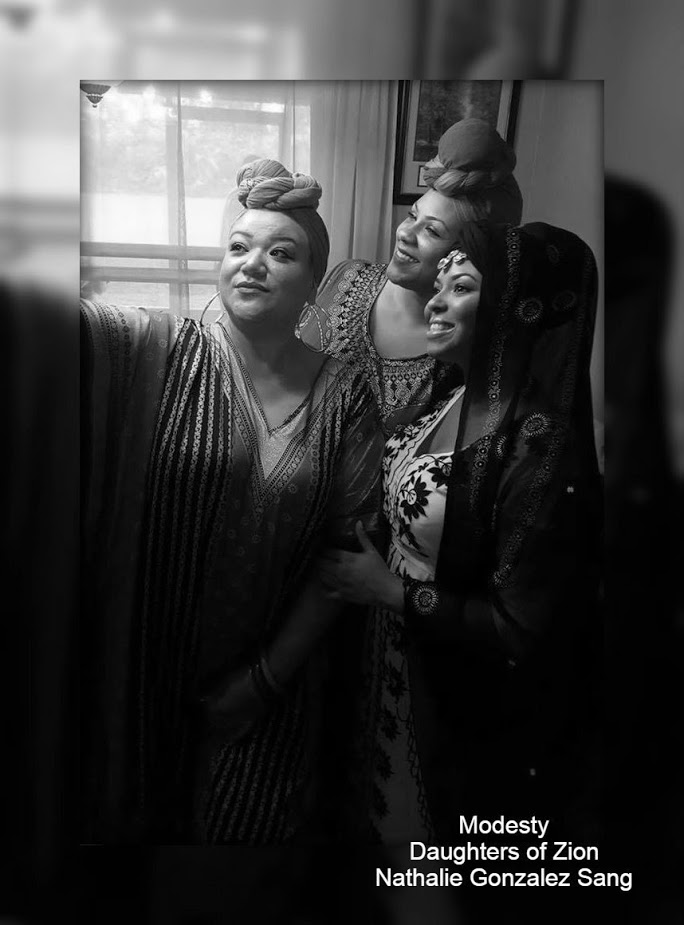
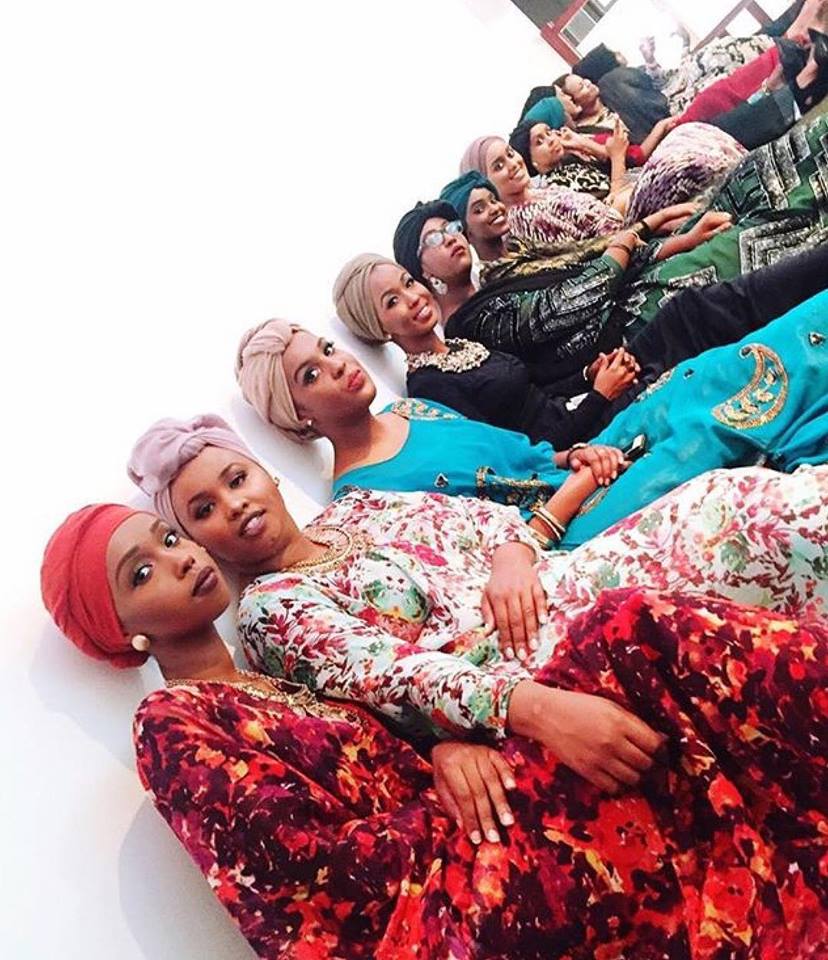
Examples of “Modest Dressing”


All photographs are the property of their respective owners.


Conclusion

Modesty is not oppression; it is protection, preservation, and proclamation of one’s inner worth. In a world obsessed with exposure, the woman who veils her body unveils her value. She is a beacon of wisdom in a culture of vanity.