
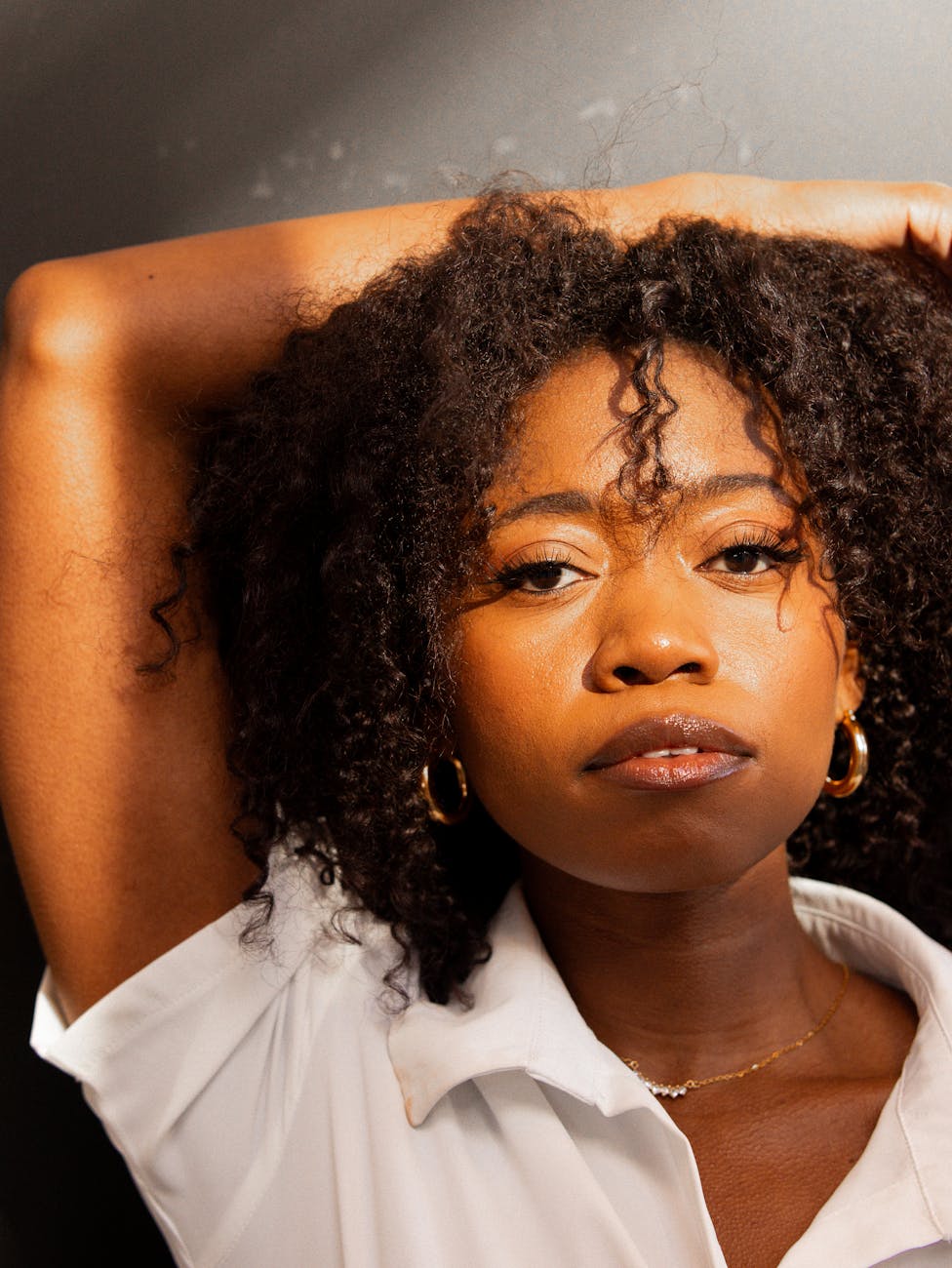
Color has always been more than a visual spectrum; it is a social construct, a mirror, and a measure of worth. Within the global Black community, skin tone occupies a complex intersection between identity, desirability, and belonging. From the honey tones of the Caribbean to the deep, blue-black hues of the African continent, melanin has been both a mark of pride and a point of prejudice. “The Tone Dilemma” explores how shades shape not only perception but also selfhood in a world that still clings to colonial hierarchies of beauty.
Historically, lighter complexions were often privileged under systems of slavery and colonization. House slaves, typically of mixed ancestry, were afforded proximity to power and comfort, while darker-skinned laborers toiled in the fields. This social stratification created an enduring internalized bias within the Black diaspora—one that subtly persists in contemporary beauty standards, employment opportunities, and media representation (Hunter, 2007).
Media remains a powerful amplifier of these hierarchies. Mainstream entertainment often uplifts lighter-skinned actors and models as the “universal” standard of Black beauty. The visibility of women like Zendaya or Halle Bailey is often celebrated, yet darker-skinned counterparts face limited opportunities or hyper-stereotyping. These imbalances reaffirm a color-coded aesthetic ideal that devalues richness of tone in favor of proximity to whiteness (Monk, 2014).
In social contexts, skin tone still dictates desirability. Studies show that lighter-skinned Black individuals are often perceived as more intelligent, trustworthy, and attractive by both non-Black and Black evaluators (Keith & Herring, 1991). Such associations stem from centuries of racial conditioning that tied whiteness to purity and darkness to danger. These implicit biases are not simply aesthetic—they influence dating preferences, hiring decisions, and even police encounters.
The internal dialogue among Black individuals about color is often unspoken yet deeply felt. Many recall being teased for being “too dark” or “not dark enough.” In some cases, light-skinned people are accused of privilege or arrogance, while dark-skinned individuals battle invisibility. This circular wound fractures unity and obscures the collective beauty of the Black experience.
Colorism’s impact extends beyond self-esteem; it affects access to resources. Research shows that darker-skinned individuals within the same racial group often experience lower socioeconomic mobility and harsher sentencing in criminal justice systems (Viglione et al., 2011). The shade of one’s skin, thus, becomes a determinant not just of beauty but of life outcomes.
Social media has introduced both remedy and risk. Movements like #MelaninMagic and #BlackGirlMagic have helped reframe narratives by celebrating darker tones and rejecting Eurocentric norms. Yet, even within these digital affirmations, filters and curated imagery can reinforce unrealistic expectations. The quest for validation remains intertwined with the politics of color.
Historically, beauty rituals have also reflected these tensions. The global market for skin-lightening products, estimated at billions annually, exposes how deep the wound runs. These creams—often harmful—represent both aspiration and alienation: a longing to belong to a beauty paradigm that was never designed to include melanin (Glenn, 2008).
Within the African diaspora, however, there is a growing reclamation of color as divine art. The warm siennas, golden ambers, and deep obsidians of Black skin reflect ancestry, geography, and resilience. In African spiritual traditions, darker skin was often viewed as sacred, symbolizing closeness to the earth and the Creator’s fire.
Yet healing from colorism requires confrontation. It demands acknowledging how internalized whiteness seeps into love, art, and identity. Conversations about skin tone must be honest, not accusatory—spaces where both pain and pride coexist.
Educators and parents play a crucial role in reprogramming young minds. Teaching children that melanin is both science and soul—a biological blessing and a cultural crown—can shift generational narratives. Representation in dolls, books, and media also matters, shaping how future generations define “beautiful.”
The psychology of shade preference has roots in colonial trauma but thrives through modern reinforcement. The more society commodifies lightness, the more darkness must be defended, not as a counter-ideal but as an equal truth.
Artists and photographers have become crucial in this cultural renaissance. Through visual storytelling, they depict the full tonal spectrum of Blackness as poetry—each shade a note in a larger symphony of identity. Their work challenges the myth of uniformity and celebrates diversity within the diaspora.
In romantic relationships, the tone dilemma also manifests subtly. Some individuals admit to “preferences” shaped not by attraction but by social conditioning. To unlearn such biases is to rediscover love as something unbound by colonial logic.
Faith communities have also begun addressing the color divide. Biblical texts remind believers that humanity was created in God’s image—an image that encompasses the full range of human color. Reclaiming this theology can restore spiritual balance where self-hatred once lingered.
Educational curricula can integrate lessons about colorism into racial justice education. When students learn that skin shade variation is a natural adaptation to sunlight exposure and not a hierarchy of worth, science becomes liberation.
Psychologists encourage affirmations, visibility, and community healing spaces to dismantle tone-based trauma. Group dialogues and art therapy allow individuals to rewrite their narratives, transforming shame into self-acceptance.
Ultimately, the tone dilemma is not simply about pigment—it is about power, perception, and pride. To transcend it, we must see skin not as a scale but as a spectrum of strength.
When Black skin, in all its hues, is celebrated as divine design rather than divided by degrees, the world will finally begin to reflect its true beauty—a beauty that was never meant to be measured, only marveled at.
References
Glenn, E. N. (2008). Yearning for lightness: Transnational circuits in the marketing and consumption of skin lighteners. Gender & Society, 22(3), 281–302.
Hunter, M. (2007). The persistent problem of colorism: Skin tone, status, and inequality. Sociology Compass, 1(1), 237–254.
Keith, V. M., & Herring, C. (1991). Skin tone and stratification in the Black community. American Journal of Sociology, 97(3), 760–778.
Monk, E. P. (2014). Skin tone stratification among Black Americans, 2001–2003. Social Forces, 92(4), 1313–1337.
Viglione, J., Hannon, L., & DeFina, R. (2011). The impact of light skin on prison time for Black female offenders. The Social Science Journal, 48(1), 250–258.
 THE BROWN GIRL DILEMMA