Tag Archives: The Most High

The Chosen Ones Series: The Battles That The Most High God told You to Avoid.

For those who believe they are called, appointed, or set apart by God, life often comes with a heightened awareness of spiritual responsibility. Many individuals who walk a faith-centered path feel compelled to intervene in every conflict, defend every injustice, and solve every problem they encounter. Yet scripture repeatedly teaches that not every battle belongs to us. Some conflicts are spiritual tests of restraint, humility, and trust in divine justice.

The Bible reminds believers that God Himself is the ultimate judge and avenger. In a world filled with offense, betrayal, and misunderstanding, the temptation to retaliate or defend one’s honor can be powerful. However, spiritual maturity requires the discipline to release personal revenge and allow God to act according to His perfect will and timing.

Personal revenge may feel justified when someone has been wronged, but scripture clearly warns against it. The human desire to settle scores can easily lead to bitterness, anger, and destructive cycles of retaliation. The Apostle Paul instructed believers to resist this urge and instead trust that God sees every injustice.

In Romans 12:19, the Apostle Paul writes, “Dearly beloved, avenge not yourselves, but rather give place unto wrath: for it is written, Vengeance is mine; I will repay, saith the Lord.” This passage reminds believers that retaliation is not their responsibility. Divine justice operates beyond human perception, and God ultimately restores balance in ways people cannot.

Many spiritual people exhaust themselves trying to prove their worth to others. Seeking approval, admiration, or validation from people can become a quiet spiritual trap. When individuals base their identity on the opinions of others, they become emotionally dependent on external affirmation.

The desire for admiration often stems from a deeper need for acceptance and belonging. Social media culture, public recognition, and societal pressures encourage people to measure their value through applause and popularity. Yet spiritual identity is not determined by human approval but by divine purpose.

Jesus Himself warned against living for public admiration. In Matthew 6:1, He cautioned His followers to avoid performing acts of righteousness merely to be seen by others. Faith, according to Christ, is meant to be genuine and sincere, not a performance for applause.

People pleasing can quietly drain the spirit. When a person constantly adjusts their behavior to keep everyone happy, they sacrifice their own emotional and spiritual well-being. This cycle creates exhaustion because no human being can satisfy every expectation placed upon them.

Those who feel spiritually chosen often believe they must carry everyone’s burdens. They feel responsible for fixing every broken situation, mediating every conflict, and rescuing others from their problems. While compassion is a noble quality, assuming the role of savior for everyone is neither healthy nor biblical.

Scripture teaches that God alone is the ultimate burden bearer. Believers are called to help others, but they are not responsible for solving every problem. Attempting to carry burdens that belong to God often leads to burnout, anxiety, and spiritual fatigue.

Jesus invites believers to release their burdens in Matthew 11:28 when He says, “Come unto me, all ye that labour and are heavy laden, and I will give you rest.” This invitation reflects a central principle of faith: God does not expect His followers to carry the weight of the world alone.

The battle of self often proves more difficult than conflicts with others. Internal struggles such as pride, insecurity, and the need for validation can become spiritual obstacles. These inner battles require humility and self-reflection rather than confrontation with others.

Many conflicts that people engage in are rooted in ego rather than righteousness. The need to prove oneself right, defend reputation, or win arguments often disguises itself as moral courage. In reality, these battles can distract believers from their spiritual calling.

Wisdom involves discerning which battles are worth fighting. The Book of Proverbs frequently emphasizes restraint, teaching that wise individuals avoid unnecessary conflict. Silence, patience, and humility can often be more powerful than confrontation.

In Proverbs 20:3, scripture declares, “It is an honour for a man to cease from strife: but every fool will be meddling.” This verse highlights the virtue of restraint. Walking away from certain conflicts is not weakness but wisdom.

Another draining battle is the constant need to explain oneself. People often feel pressured to justify their decisions, beliefs, or boundaries to everyone around them. Yet spiritually grounded individuals understand that not everyone will understand their path.

Jesus Himself faced misunderstanding and criticism throughout His ministry. Despite this, He did not spend His time trying to win over every skeptic or satisfy every critic. Instead, He remained focused on His mission.

When individuals attempt to gain universal approval, they often lose sight of their purpose. The Apostle Paul acknowledged this tension in Galatians 1:10 when he wrote that seeking the approval of people rather than God would make him a servant of men rather than a servant of Christ.

Another hidden battle is the pressure to always be strong for others. People who are viewed as spiritually mature or emotionally resilient are often expected to carry the emotional weight of everyone around them. This expectation can become overwhelming.

Even the strongest spiritual leaders needed rest and solitude. Throughout the Gospels, Jesus frequently withdrew from crowds to pray and restore His strength. These moments reveal that spiritual renewal requires intentional withdrawal from constant demands.

Trying to fight battles that do not belong to you can drain both emotional energy and spiritual clarity. When individuals become entangled in every conflict around them, they lose the ability to focus on their own spiritual growth.

Boundaries are essential for spiritual health. Recognizing which battles belong to you and which belong to God requires discernment and humility. Not every injustice requires your intervention.

There are moments when silence is more powerful than argument. Walking away from conflict allows God to intervene in ways that human confrontation cannot achieve.

Spiritual wisdom involves trusting God’s timing. Immediate retaliation may feel satisfying, but divine justice often unfolds in ways that require patience and faith.

When believers release the need for revenge, validation, and approval, they experience freedom. Their identity becomes rooted in God rather than the shifting opinions of others.

Learning to surrender battles to God requires faith. It involves trusting that God sees every injustice, hears every prayer, and understands every hidden struggle.

The process of surrender is not passive; it is an act of spiritual discipline. It requires resisting the urge to intervene where God has instructed patience.

When individuals stop fighting unnecessary battles, they conserve their strength for the battles that truly matter—those involving justice, truth, faith, and righteousness.

Peace often arrives when people release the need to control outcomes. By allowing God to carry burdens that were never meant for human shoulders, believers experience spiritual clarity and emotional relief.

Ultimately, the chosen path is not about fighting every battle but about discerning the ones God has called you to face. Some battles are meant to be fought with courage, while others are meant to be surrendered in faith.

The wisdom of the faithful lies in knowing the difference.


References

The Holy Bible, King James Version.

Cloud, H., & Townsend, J. (2017). Boundaries: When to Say Yes, How to Say No to Take Control of Your Life. Zondervan.

Peterson, E. H. (2002). The Message: The Bible in Contemporary Language. NavPress.

Willard, D. (1998). The Divine Conspiracy: Rediscovering Our Hidden Life in God. HarperOne.

Smedes, L. B. (1996). Forgive and Forget: Healing the Hurts We Don’t Deserve. HarperOne.
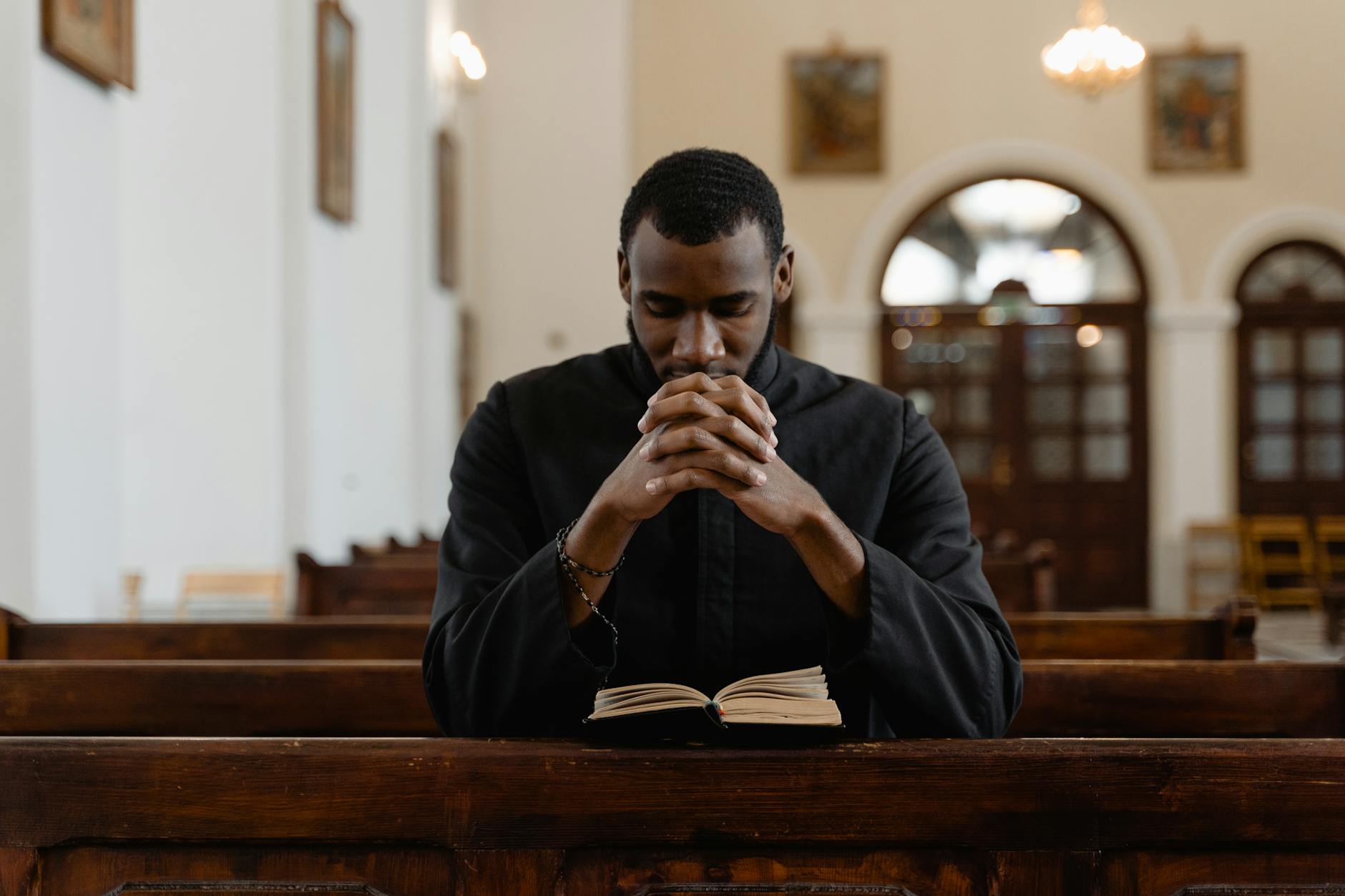
Men Who Pray: Reclaiming Spiritual Authority Through Faith.

Photo by MART PRODUCTION on Pexels.com

Prayer is a defining act that connects men to divine guidance, moral clarity, and spiritual authority. In a world where traditional masculine power is often measured by wealth, status, or physical prowess, prayer offers a transformative avenue for men to reclaim authentic authority rooted in humility, obedience, and purpose. Men Who Pray explores how spiritual disciplines restore leadership, integrity, and influence.

Historically, men in scripture exemplified spiritual authority through prayer. Figures such as Moses, David, and Solomon demonstrated that true leadership depends on communion with God rather than solely on human wisdom or strength (1 Samuel 12:23; 2 Chronicles 1:7–12, KJV). Prayer was both a tool and a testimony of divine empowerment.

Modern society often marginalizes men’s spiritual development. Cultural narratives emphasize independence and emotional stoicism, discouraging men from seeking divine counsel. This neglect undermines their ability to lead ethically in family, community, and professional spheres. Prayer serves as a corrective to these distortions, restoring alignment with God’s will.

Prayer cultivates humility, a hallmark of spiritual authority. Recognizing dependence on God fosters self-awareness and accountability. Men who pray acknowledge that ultimate power is God-given, not self-invented, allowing them to exercise influence responsibly and justly (Proverbs 3:5–6, KJV).

Intercessory prayer is a mechanism for communal leadership. Men who pray on behalf of families, communities, and nations demonstrate stewardship, empathy, and moral courage. Their spiritual advocacy nurtures social cohesion and inspires trust, reflecting the biblical mandate to shepherd and protect (James 5:16).

Consistent prayer shapes character and integrity. Daily spiritual discipline reinforces patience, self-control, and discernment. Men who commit to regular prayer internalize values that guide decisions, manage conflict, and uphold justice, strengthening both personal and societal moral frameworks.

Spiritual authority through prayer transcends hierarchical power. Unlike worldly dominance, divine authority is relational, ethical, and enduring. Men who cultivate this authority gain influence through respect, wisdom, and service, echoing the biblical principle that “the greatest among you shall be your servant” (Matthew 23:11, KJV).

Prayer combats moral and emotional vulnerability. Life’s pressures—temptation, stress, and adversity—challenge men’s integrity. Prayer provides guidance, fortification, and clarity, enabling men to navigate these trials without succumbing to destructive behaviors or compromised ethics (Psalm 5:11–12, KJV).

Mentorship and modeling are amplified through prayer. Men who prioritize spiritual practice serve as role models for younger generations, demonstrating that true strength emerges from faithfulness and obedience rather than aggression or coercion. This transmission of spiritual discipline preserves cultural and moral continuity.

Faith-driven leadership strengthens families. Fathers who pray cultivate homes grounded in moral clarity, spiritual resilience, and mutual respect. Children witness that authority is inseparable from accountability, compassion, and devotion, fostering well-rounded spiritual development (Ephesians 6:4, KJV).

Prayer also reinforces community engagement. Men who pray for societal welfare demonstrate active stewardship and ethical responsibility. This outward focus bridges personal spirituality with social action, reinforcing the biblical principle of love for neighbor and advocacy for justice (Micah 6:8, KJV).

The discipline of prayer enhances discernment. Through reflection and spiritual attunement, men learn to identify truth, avoid deception, and make decisions aligned with divine wisdom. This discernment underpins ethical leadership and strengthens relational trust.

Spiritual authority challenges destructive cultural norms of masculinity. Men who embrace prayer redefine strength, modeling courage, vulnerability, and ethical stewardship as complementary rather than opposing forces. This redefinition fosters healthier communities and family structures.

Prayer provides resilience against societal oppression. For men facing systemic injustice or marginalization, spiritual practice serves as a source of inner strength and hope. Biblical examples, such as Daniel and Joseph, demonstrate how prayer sustains moral integrity amidst adversity (Daniel 6:10, KJV).

Education on the power of prayer is essential. Teaching young men to integrate spiritual practice with daily life equips them to navigate modern challenges with integrity, purpose, and leadership grounded in faith rather than social approval or material gain.

Mental and emotional health benefit from prayer. Regular spiritual reflection fosters peace, emotional regulation, and clarity, countering stress, anger, or despair. Men who pray cultivate resilience, enabling them to lead without succumbing to personal turmoil (Philippians 4:6–7, KJV).

Corporate prayer—engaging with others in faith communities—strengthens relational bonds and collective purpose. Men who participate model collaboration, humility, and mutual support, reinforcing the social dimensions of spiritual authority.

Prayer aligns men with God’s covenant promises. Acknowledging divine guidance affirms identity, purpose, and destiny, anchoring men in a moral and spiritual framework that transcends temporal challenges (Jeremiah 29:11, KJV).

Consistency in prayer transforms character over time. Spiritual authority is not instantaneous but cultivated through persistent devotion, reflection, and obedience. Men who commit to this discipline demonstrate reliability, ethical fortitude, and lasting influence.

In conclusion, Men Who Pray illustrates that spiritual authority is reclaimed not through dominance, aggression, or societal expectation, but through prayer, humility, and faithful alignment with God. Men who embrace this path become builders of ethical families, communities, and legacies, embodying strength intertwined with spiritual wisdom and divine purpose.


References

The Holy Bible, King James Version. (n.d.). 1 Samuel 12:23; 2 Chronicles 1:7–12; Proverbs 3:5–6; James 5:16; Matthew 23:11; Psalm 5:11–12; Ephesians 6:4; Micah 6:8; Daniel 6:10; Philippians 4:6–7; Jeremiah 29:11. King James Bible Online. https://www.kingjamesbibleonline.org

Ferguson, R. A. (2019). The spiritual lives of African American men: Faith, family, and resilience. Routledge.

Pruett, K. (2017). Faithful fathers: The role of prayer and spirituality in fatherhood. Journal of Men’s Studies, 25(3), 310–326. https://doi.org/10.1177/1060826517720998

Watson, N. (2015). Masculinity and spirituality: Redefining strength through faith. Palgrave Macmillan.

We are Dust with his Breath

In the beginning of creation, humanity is introduced not as an accident of nature but as a deliberate act of divine intention. Scripture teaches that God formed man from the dust of the ground and breathed into his nostrils the breath of life, and man became a living soul (Genesis 2:7, KJV). This verse establishes a foundational theological truth: without the breath of God, humanity remains lifeless matter, no different from the soil beneath our feet.

The imagery of dust is deeply symbolic. Dust represents human fragility, limitation, and mortality. It reminds us that no matter how advanced civilization becomes, humanity remains dependent on divine power for existence. The breath of God transforms dust into life, meaning that human dignity does not originate from intellect, wealth, or status, but from divine impartation (Psalm 103:14).

The breath of life is not merely biological respiration; it is spiritual animation. In Hebrew, the word for breath, ruach, also means spirit or wind, indicating that life itself is sustained by the Spirit of God. This suggests that humanity is not self-sustaining but continuously upheld by divine presence (Ezekiel 37:5).

Without God’s breath, human existence loses its sacred meaning. Modern society often elevates human autonomy and self-sufficiency, yet scripture consistently reminds us that life is borrowed, not owned. Every heartbeat and breath testifies to divine mercy rather than human control (Acts 17:25).

The Most High God of Israel is portrayed throughout scripture as the giver and sustainer of life. He is not distant from creation but intimately involved in its continuation. Job acknowledges this truth when he declares that the Spirit of God has made him and the breath of the Almighty gives him life (Job 33:4).

To cherish the Creator is to recognize the source of one’s existence. Gratitude becomes a spiritual posture when one understands that life is a divine gift rather than a human achievement. Worship, therefore, is not ritualistic obligation but an acknowledgment of existential dependence (Psalm 150:6).

Human pride often blinds people to this reality. Scientific advancement has led many to believe that life can be explained without God, yet even science cannot produce consciousness from nothing. The mystery of life still points back to divine origin rather than mechanical causation (Collins, 2006).

In biblical theology, breath is also associated with renewal and restoration. In the valley of dry bones, God commands breath to enter lifeless bodies, and they rise again, symbolizing spiritual revival and national restoration (Ezekiel 37:9–10). This narrative reinforces that without divine breath, there is no resurrection, no hope, and no future.

The breath of God also signifies moral responsibility. If life comes from God, then life belongs to God. Humanity is therefore accountable to divine standards, not self-created ethics. This challenges modern individualism, which promotes self-definition without divine authority (Romans 14:7–8).

To say “we are dust without His breath” is to affirm human humility. It dismantles the illusion of self-made identity and replaces it with sacred dependency. Even kings and empires return to dust, but God’s breath remains eternal (Ecclesiastes 12:7).

The Most High is not merely a creator but a sustainer. He does not abandon what He forms. Scripture portrays God as continually involved in the world, sustaining all things by His word and power (Hebrews 1:3). Life is not a past miracle but an ongoing one.

Cherishing the Creator involves living in awareness of divine presence. It transforms daily life into a sacred experience. Eating, breathing, thinking, and loving become acts of worship when viewed through the lens of divine origin (Colossians 3:17).

The concept of breath also connects to divine communication. God’s breath produces His word, and His word produces life. The same God who breathed into Adam later breathed scripture into prophets and apostles, making His word living and powerful (2 Timothy 3:16).

From a theological perspective, denying God as the source of life leads to spiritual alienation. When humanity forgets its Creator, it begins to worship creation, self, and materialism. This reversal of order results in moral decay and existential emptiness (Romans 1:21–25).

The breath of God also represents divine intimacy. Unlike other creatures, humanity receives life through direct divine interaction. God does not speak humans into existence; He breathes into them, suggesting relational closeness rather than distant creation (Brueggemann, 2010).

Life therefore carries sacred responsibility. If God’s breath animates humanity, then every human life possesses inherent worth, regardless of race, class, or ability. This foundation supports biblical human dignity and justice (Genesis 1:27).

The Most High God of Israel reveals Himself not only as powerful but as compassionate. He breathes life into fragile dust and remains patient with human failure. His mercy sustains those who constantly fall short of divine perfection (Lamentations 3:22–23).

Even death in scripture does not represent divine abandonment. The return of breath to God signifies transition, not annihilation. The soul returns to its source, awaiting divine judgment and restoration (Ecclesiastes 12:7).

In this sense, breath becomes eschatological. It points beyond physical life to eternal reality. God’s breath does not merely create time-bound existence but prepares humanity for everlasting communion (John 20:22).

Ultimately, the statement “we are dust without His breath” is not a message of despair but of sacred truth. It reminds humanity that life is not meaningless, accidental, or random. Life is divine, purposeful, and sustained by the Most High God of Israel.

To cherish the Creator is to live in reverence, humility, and gratitude. Every breath becomes a testimony of divine mercy, and every moment becomes an opportunity to acknowledge the One who turns dust into living souls.


References

Brueggemann, W. (2010). Genesis: Interpretation: A Bible commentary for teaching and preaching. Westminster John Knox Press.

Collins, F. S. (2006). The language of God: A scientist presents evidence for belief. Free Press.

The Holy Bible, King James Version. (1611/2017). Cambridge University Press.

Wright, N. T. (2012). How God became king: The forgotten story of the Gospels. HarperOne.

Walton, J. H. (2009). The lost world of Genesis one: Ancient cosmology and the origins debate. InterVarsity Press.

She is Light: A Celebration of the Beauty God Gave Black Women

She is light. Not because the world crowned her, but because God placed radiance in her before her first breath. The beauty of a Black woman is not an accident, not an afterthought, not an alternate version of anything else. It is intentional, divine, and woven with the fingerprints of a Creator who makes no mistakes. Her melanin is not simply a pigment; it is a reflection of God’s artistry, absorbing light, reflecting warmth, and telling a story thousands of years old.

Her beauty was never meant to be measured by the standards of societies that once denied her humanity. Her light predates oppression, predates Western ideals, predates any system designed to diminish her. Long before colorism or colonialism, the Black woman was already crowned with dignity, already adorned with strength, already declared “good” by God in Eden. She was never created to compete—only to shine.

Her skin, rich with depth and dimension, testifies of resilience and royalty. Melanin is protective, powerful, and majestic—evidence of survival, adaptation, and divine engineering. It glows under the sun, holds warmth in winter, and remains a symbol of strength across generations. When Scripture says, “I am black, but comely” (Song of Solomon 1:5, KJV), it is not a concession—it is a declaration. Beautiful and Black have always belonged in the same sentence.

Her hair, coiled like the rivers of Eden, holds its own testimony. Whether tightly curled, loosely waved, loc’d, braided, pressed, or natural, her hair defies gravity and rules. It stretches when pulled and shrinks when free—it expands and contracts like creation itself. Every curl is a fingerprint of identity, a crown that changes form but never loses its glory. God designed her hair to hold history, culture, versatility, and pride all at once.

Her features—full lips, broad nose, high cheekbones, deep eyes—were crafted with intention, artistry, and balance. These traits have traveled from ancient kingdoms, adorned queens, and birthed nations. What some once mocked, the world now imitates. What was dismissed as “too much” is now desired globally. The features of a Black woman are a reminder that nothing about her needs shrinking, altering, or apologizing for. She is already enough.

Psychologically, Black women have endured centuries of messages suggesting their beauty is conditional, rare, or negotiable. Yet despite that, they rise with a knowing that cannot be erased. The internal strength it takes to love oneself in a world that profits from insecurity is itself a testimony of divine resilience. She learns to heal from inherited pain, to reject generational comparisons, and to embrace the full truth of who she is.

Her beauty is not merely external—it is spiritual. Scripture calls her “fearfully and wonderfully made” (Psalm 139:14, KJV), meaning she is constructed with reverence and awe. She carries light not only in her appearance but in her spirit, compassion, intuition, wisdom, and emotional depth. Her beauty radiates in her ability to nurture, lead, feel, empathize, and discern. She is a vessel of both softness and fire.

Society has often feared the Black woman’s light because it cannot be contained. It is too powerful, too rich, too ancient. Attempts to dilute that light—through colorism, misogynoir, erasure, and standards that were never made with her in mind—were never successful. She is still here. Still glowing. Still redefining beauty on her own terms.

Her walk carries confidence that comes from ancestors who survived storms. Her smile carries joy that cannot be taken. Her presence shifts atmospheres because her essence carries history, promise, and creativity. She is not simply seen—she is felt. Whole rooms brighten when she embraces who she is.

In relationships, families, friendships, and sisterhood, her light offers refuge. She encourages, uplifts, and heals with a word, a touch, a look. Her beauty is not vain; it is functional. It restores. It nourishes. It inspires. It teaches the world what divine femininity looks like in motion. Her spirit mirrors the Proverbs 31 woman in strength, wisdom, and dignity.

Even in adversity, she shines. She turns pain into purpose, obstacles into innovations, and wounds into wisdom. Her beauty is seen in her survival, her laughter, her voice, and her refusal to let darkness dim her brilliance. She is a living reflection of Isaiah 61:3—the one who brings forth “beauty for ashes.”

When she loves herself, she becomes magnetic. When she embraces her identity, she becomes unstoppable. When she honors her body, her skin, her hair, her voice, her story—she becomes a force too powerful to erase. Her beauty becomes a declaration of victory over everything meant to silence her.

Spiritually, her beauty has always been connected to purpose. God never designed beauty without intention. The Black woman’s beauty speaks of strength, spiritual discernment, nurturing, leadership, and sacred femininity. She carries the reflection of African matriarchs, biblical mothers, and modern queens who shaped nations with their presence.

She is light when she walks into a room. She is light when she prays. She is light when she dreams. She is light when she speaks truth. She is light when she heals. She is light because God said she is, and no culture, system, or opinion can override divine affirmation.

Healing from comparison and colorism is the beginning of awakening. She learns that her complexion is not a ranking, but a revelation. Her beauty does not exist in shades, but in essence. Every shade of Black skin is sacred. Every curl pattern is divine. Every feature is intentional. She is not a trend—she is a blueprint.

The world may try to rewrite definitions, but God’s original design stands. When she looks in the mirror, she looks into history, divinity, and promise. She carries the brilliance of galaxies in her skin, the depth of oceans in her eyes, and the artistry of creation in her form. She is not ordinary—she is extraordinary.

The celebration of Black beauty is more than affirmation—it is restoration. It breathes life into what society tried to suppress. It unravels lies and replaces them with truth. It teaches daughters to celebrate themselves long before the world tries to teach them to shrink. It reminds mothers and aunties that they are still beautiful, still chosen, still radiant.

She is light because she was born with light. She is radiant because God called her radiant. She shines not because she tries, but because she is. Her beauty is eternal, spiritual, ancestral, and divine. She is light—and the world is brighter because she is in it.


References

Boylorn, R. M. (2013). Sweetwater: Black women and narratives of resilience. Peter Lang.

Hunter, M. (2007). The persistent problem of colorism: Skin tone, status, and inequality. Sociology Compass, 1(1), 237–254.

Jones, C., & Shorter-Gooden, K. (2003). Shifting: The double lives of Black women in America. HarperCollins.

Robinson-Moore, C. L. (2008). Beauty standards reflect Eurocentric paradigms—A Black female perspective. Journal of Black Studies, 39(2), 326–344.

White, L. (2020). Melanin and the biological benefits of pigmentation. Journal of Dermatological Science, 98(3), 241–250.

The Holy Bible, King James Version. (1769/2023). Cambridge University Press.

Wisdom Alert! Say YES to GOD.

Wisdom begins with a response. Throughout Scripture, the call of God is clear, but the outcome depends on whether His voice is answered with obedience or ignored through pride and fear. Saying yes to God is not merely a spiritual concept; it is a life-altering decision that aligns the soul with divine order and eternal purpose.

The Bible teaches that wisdom originates with reverence toward God, not human intellect. When a person says yes to God, they acknowledge His authority and submit their understanding to His higher ways. This posture of humility opens the door to clarity, protection, and direction that human reasoning alone cannot provide. “The fear of the LORD is the beginning of wisdom” (Proverbs 9:10, KJV).

God’s invitations often come quietly, requiring discernment rather than emotion. Many miss divine opportunities because they are waiting for signs that appeal to comfort instead of conviction. Yet Scripture reminds us that God’s voice leads to life, even when it challenges our desires. “There is a way which seemeth right unto a man, but the end thereof are the ways of death” (Proverbs 14:12, KJV).

Saying yes to God requires trust beyond sight. Faith is demonstrated not by words but by action, especially when the path ahead is unclear. Abraham’s obedience exemplifies this principle, as he moved without full knowledge of the destination. “By faith Abraham obeyed; and he went out, not knowing whither he went” (Hebrews 11:8, KJV).

God’s wisdom often contradicts worldly logic. The world promotes self-exaltation, while God calls for surrender. The world encourages control, but God demands dependence. True wisdom recognizes that God’s ways, though sometimes difficult, lead to peace and stability. “Trust in the LORD with all thine heart; and lean not unto thine own understanding” (Proverbs 3:5, KJV).

Obedience to God brings divine alignment. When a person says yes to God, their steps are ordered, even when circumstances appear chaotic. God is faithful to guide those who submit to Him. “The steps of a good man are ordered by the LORD: and he delighteth in his way” (Psalm 37:23, KJV).

Saying yes to God also involves resisting compromise. Wisdom guards the heart against temptation and distraction. Many fall not because they lack knowledge, but because they ignore God’s instruction. “Be not wise in thine own eyes: fear the LORD, and depart from evil” (Proverbs 3:7, KJV).

God’s wisdom protects from destruction. Scripture repeatedly warns that rejection of divine counsel leads to sorrow and loss. The consequences of ignoring God are not arbitrary; they are the natural result of stepping outside His design. “Because I have called, and ye refused… I also will laugh at your calamity” (Proverbs 1:24–26, KJV).

Saying yes to God produces spiritual fruit. Obedience refines character, strengthens faith, and cultivates patience. Over time, the believer begins to reflect God’s nature through their choices and conduct. “If ye be willing and obedient, ye shall eat the good of the land” (Isaiah 1:19, KJV).

Wisdom is proven through endurance. Saying yes to God does not remove trials, but it provides strength to overcome them. God uses adversity to mature those who trust Him. “My son, despise not the chastening of the LORD… for whom the LORD loveth he correcteth” (Proverbs 3:11–12, KJV).

God honors obedience even when it goes unseen by others. He is not moved by appearances but by faithfulness. Those who consistently say yes to God are rewarded in due time. “Humble yourselves therefore under the mighty hand of God, that he may exalt you in due time” (1 Peter 5:6, KJV).

Saying yes to God requires denying self. Jesus made it clear that discipleship demands surrender of personal will. Wisdom understands that losing one’s life for God’s sake leads to true life. “If any man will come after me, let him deny himself” (Matthew 16:24, KJV).

God’s wisdom brings peace, not confusion. When choices align with His will, even difficult decisions carry inner assurance. “For God is not the author of confusion, but of peace” (1 Corinthians 14:33, KJV).

Saying yes to God positions a person for divine favor. Obedience places the believer under God’s covering, guidance, and provision. Favor follows faithfulness, not convenience. “Seek ye first the kingdom of God, and his righteousness; and all these things shall be added unto you” (Matthew 6:33, KJV).

Wisdom also teaches patience in waiting for God’s timing. Saying yes does not mean rushing ahead of Him. Those who wait on the Lord are strengthened rather than delayed. “They that wait upon the LORD shall renew their strength” (Isaiah 40:31, KJV).

God’s wisdom corrects pride and self-reliance. He resists those who exalt themselves but gives grace to the humble. Saying yes is an act of humility that invites divine assistance. “God resisteth the proud, but giveth grace unto the humble” (James 4:6, KJV).

Saying yes to God shapes legacy. Choices rooted in obedience affect future generations. Wisdom understands that obedience today builds blessing tomorrow. “The just man walketh in his integrity: his children are blessed after him” (Proverbs 20:7, KJV).

God’s wisdom preserves the soul. Obedience guards against spiritual drift and moral compromise. Those who heed God’s instruction remain anchored in truth. “Thy word is a lamp unto my feet, and a light unto my path” (Psalm 119:105, KJV).

Saying yes to God is an act of courage. It often requires standing alone, choosing righteousness over popularity. Wisdom values God’s approval above human praise. “Fear ye not the reproach of men… for the LORD God will help me” (Isaiah 51:7–9, KJV).

Ultimately, wisdom is proven by obedience. Knowledge without submission leads to pride, but wisdom produces transformation. Saying yes to God is the pathway to life, peace, and eternal reward. “Blessed are they that hear the word of God, and keep it” (Luke 11:28, KJV).

Wisdom alerts the soul before danger appears. The call to say yes to God is a call to life itself. Those who heed His voice walk in truth, stability, and divine purpose. “Choose you this day whom ye will serve” (Joshua 24:15, KJV).

How to know God’s Voice…

Speak, God, for your servant is listening.

Hearing the voice of God is one of the most transformative experiences in the life of a believer. It is not mystical, strange, or reserved for a chosen few—Scripture shows that God speaks to His children, guides them, warns them, comforts them, and leads them into truth (John 10:27). To discern His voice, we must cultivate spiritual sensitivity and a lifestyle surrendered to His presence. This process is both beautiful and intentional, built on relationship, obedience, and quietness before the Lord.

One of the foundational ways to know God’s voice is recognizing that His voice always aligns with His Word. God will never contradict Scripture. If the thought, idea, or leading goes against biblical truth, it is not from Him (Psalm 119:105). The Word is the standard, the filter, and the mirror by which we evaluate every impression. This is why the psalmist says, “Thy word have I hid in mine heart, that I might not sin against thee” (Psalm 119:11). The more of God’s Word that is hidden in our hearts, the easier it becomes to discern when He is speaking.

Spending time in Scripture is essential because it trains the spiritual ear. When you read the Bible consistently, you become familiar with the tone, character, and rhythm of God’s heart. His Word shapes your discernment and sets a foundation for recognizing His direction. Just as sheep learn the voice of their shepherd through daily relationship, believers learn God’s voice through daily exposure to His truth (John 10:4).

Prayer is another vital doorway for hearing God. Prayer is not just talking—it is communion. Many believers pray passionately but never pause long enough to listen. After you finish pouring out your heart, you must also say, “Speak to me, Lord.” In the stillness that follows, the Holy Spirit brings clarity, conviction, ideas, or reassurance (1 Kings 19:12). Listening is a spiritual discipline that requires silence, patience, and expectation.

A major key to knowing God’s voice is slowing down. Many people miss God because they move too fast. Rushing leads to confusion. God often speaks in the quiet, not the chaos. When you eliminate distractions—phones, noise, people, busyness—you create space for God to guide your thoughts. Psalm 46:10 says, “Be still, and know that I am God.” Stillness is not laziness; it is spiritual positioning.

Wise counsel is another tool God uses to confirm His voice. Scripture teaches that “in the multitude of counsellors there is safety” (Proverbs 11:14). When you feel God is leading you, speak with people who are strong in faith, spiritually mature, and rooted in Scripture. They can provide confirmation, correction, or clarity. God often uses others to echo what He has already spoken to your heart.

Obedience is one of the clearest ways to train your spiritual hearing. When you obey God in small things, your ear becomes sharper for big things. Ignoring God repeatedly dulls spiritual sensitivity. Jesus said, “If any man will do his will, he shall know of the doctrine” (John 7:17). In other words, understanding God’s voice grows when we walk in obedience.

One of the greatest ways people miss God is by expecting His voice to always be loud or dramatic. Sometimes God speaks through peace, sometimes through discomfort, sometimes through a closed door, and sometimes through a gentle whisper. We must be spiritually flexible—ready for God to speak in whichever way He chooses.

Remaining open to hearing God requires humility. You cannot approach God with a hardened heart or with your own agenda. You must be willing to surrender your desires and say, “Lord, not my will, but Yours be done” (Luke 22:42). A humble heart is fertile ground for divine direction.

Another way to stay sensitive is by guarding your spiritual environment. The wrong people, toxic relationships, and negative influences can drown out God’s voice. What you consume—music, media, conversations—affects your clarity. Purity of heart sharpens discernment (Matthew 5:8).

Spiritual consistency is key. Weekend faith will not produce weekday hearing. Establishing a rhythm of prayer, worship, Scripture reading, and reflection trains your spirit to recognize God’s guidance quickly. The more consistently you seek God, the more naturally you will recognize His voice (Jeremiah 29:13).

Fasting also sharpens spiritual perception. When you deny your flesh, your spirit becomes more alert. Fasting quiets earthly cravings and heightens sensitivity to the Holy Spirit’s whispers (Isaiah 58:6–11).

One of the most overlooked aspects of hearing God is gratitude. A thankful heart is open, clear, and full of faith. Gratitude shifts your focus off the noise and onto God’s presence. When your heart is postured in thanksgiving, you become more aware of divine leading (1 Thessalonians 5:18).

God speaks through peace. Colossians 3:15 says, “Let the peace of God rule in your hearts.” The word “rule” means “act like an umpire.” When God is speaking, He brings a deep sense of peace—even if the instruction challenges you. If something brings confusion, panic, or turmoil, it is not from God (1 Corinthians 14:33).

He also speaks through conviction. Conviction is not condemnation; it is divine correction that pulls you toward righteousness. The Holy Spirit uses conviction to guide you back to God’s will (John 16:13). Ignoring conviction makes His voice harder to recognize over time.

God speaks through opportunities. Open doors and divine timing are ways He confirms His words. When God is directing you, He aligns circumstances, timing, and resources. What He ordains, He sustains.

He also speaks through burdens. Sometimes God puts a burden on your heart for prayer, a person, a mission, or a calling. This inward pull is often a signal of divine leading. When you feel a strong, consistent spiritual urge, pay attention—it may be God prompting you.

Journaling is a powerful tool for tracking how God speaks. Writing down dreams, impressions, Scriptures, and moments of clarity helps you identify patterns in how the Lord communicates with you.

To avoid missing God, remain spiritually teachable. Pride closes your ears; humility keeps them open. Stay sensitive to correction, remain flexible to His instruction, and be willing to change course when He says move.

Separation is sometimes necessary. Getting away from noise, people, or environments that cloud your spirit helps you hear with clarity. Jesus Himself withdrew often to lonely places to pray (Luke 5:16).

Hearing God also requires spiritual maturity. You grow in discernment by studying Scripture, applying wisdom, reflecting on past experiences, and learning from both mistakes and victories. Discernment is developed, not automatic.

God speaks through creation, through nudges, through dreams, and through the internal witness of the Holy Spirit. Learning these different channels increases your spiritual awareness.

Above all, you know God’s voice through a relationship. The closer you walk with Him, the clearer His voice becomes. Shepherds do not yell at sheep—they speak in tones the sheep learned through closeness. Intimacy is the key to clarity.

When you live a life that seeks God daily, listens for Him, obeys Him, and filters everything through His Word, you will not miss His guidance. God wants you to hear Him more than you want to hear Him. The more you pursue Him, the more unmistakable His voice will become.

References (KJV)
John 10:4; John 10:27; Psalm 119:105; Psalm 119:11; 1 Kings 19:12; Psalm 46:10; Proverbs 11:14; John 7:17; Luke 22:42; Matthew 5:8; Jeremiah 29:13; Isaiah 58:6–11; 1 Thessalonians 5:18; Colossians 3:15; 1 Corinthians 14:33; John 16:13; Luke 5:16.

A Biblical View: Come Out and Be Separate.

The Bible repeatedly calls God’s people to a standard of holiness that distinguishes them from the world. In an age where conformity is celebrated, this command remains both radical and relevant. “Wherefore come out from among them, and be ye separate, saith the Lord, and touch not the unclean thing; and I will receive you” (2 Corinthians 6:17, KJV). This verse encapsulates a divine principle: separation is not about superiority, but sanctification. It is about being set apart for the purposes of God.

The Most High never intended His chosen people to blend into systems of corruption, compromise, or sin. From the days of Abraham, God has called His elect to walk a different path. Abraham was commanded to leave his country, his kin, and his father’s house to follow divine instruction (Genesis 12:1). That call was not just geographical—it was spiritual. It represented a break from idolatry, a renunciation of worldly ties that hinder divine purpose.

Throughout Scripture, holiness and separation are inseparable concepts. “Be ye holy; for I am holy” (1 Peter 1:16, KJV). Holiness literally means to be “set apart.” It is a call to moral, spiritual, and cultural distinction from the patterns of this world (Romans 12:2). When believers conform to worldly standards—whether through lust, greed, or pride—they lose their spiritual fragrance and identity. God’s people must therefore maintain purity in both conduct and conviction.

Separation is not isolation. It does not mean withdrawing from the world entirely, but rather refusing to adopt its corrupted values. Christ Himself prayed, “I pray not that thou shouldest take them out of the world, but that thou shouldest keep them from the evil” (John 17:15, KJV). The believer lives in the world, but must not become of it. Like salt in food, or light in darkness, the presence of the righteous should transform, not conform.

In every generation, the people of God have faced the temptation to compromise for acceptance. In ancient Israel, this took the form of idol worship and political alliances with pagan nations. Today, compromise appears as moral relativism, materialism, and cultural assimilation. Yet the Word of God stands unchanging: “Ye cannot drink the cup of the Lord, and the cup of devils” (1 Corinthians 10:21, KJV). The call to come out and be separate remains an act of obedience and courage.

The prophetic voice of Scripture warns against spiritual adultery—the blending of holiness with worldliness. In Revelation 18:4 (KJV), God declares concerning Babylon, “Come out of her, my people, that ye be not partakers of her sins.” Babylon symbolizes the world’s seductive systems of greed, immorality, and false religion. To remain entangled with it is to risk sharing in its judgment. Separation, therefore, is not merely preference; it is protection.

For the descendants of Israel, separation was more than a theological concept—it was a covenant identity. God chose Israel to be “a peculiar treasure unto me above all people” (Exodus 19:5, KJV). That “peculiar” status meant they were to live, worship, and govern differently. Dietary laws, festivals, and moral codes all served as visible reminders of divine distinction. In the same way, today’s believers are called to live visibly different lives marked by righteousness, humility, and truth.

Coming out and being separate also means breaking free from mental and emotional strongholds that bind the soul. Many live in spiritual Babylon—conformed to systems that enslave their minds. True liberation begins when the believer renews the mind with the Word of God (Romans 12:2). Separation begins internally before it manifests externally. A renewed mind leads to a renewed walk.

Too many have mistaken separation for arrogance. But true separation flows from love—love for God, love for truth, and love for purity. When a believer chooses holiness, it is not an act of judgment toward others, but an act of worship toward God. Holiness is the fragrance of a surrendered life. It says, “Lord, I belong to You, not to this world.”

The world often pressures believers to compromise moral standards in the name of progress or acceptance. But Scripture warns that friendship with the world is enmity with God (James 4:4). The believer cannot serve two masters. Just as light and darkness cannot coexist, neither can righteousness and wickedness share the same temple. To “come out” is to take a bold stand for truth, even when it is unpopular.

Separation often requires sacrifice. Those who walk with God must sometimes walk alone. Noah stood apart from his generation when he built the ark. Daniel refused to bow to Babylon’s idols. The three Hebrew boys chose the fiery furnace over compromise. Each act of separation brought divine favor and vindication. God always honors those who honor Him (1 Samuel 2:30).

In modern times, separation also means discerning what we consume—media, music, relationships, and ideologies. The enemy often disguises deception as entertainment or empowerment. But Scripture reminds us, “Abstain from all appearance of evil” (1 Thessalonians 5:22, KJV). Spiritual separation requires discernment, discipline, and devotion to truth.

The principle of separation even extends to the church. The body of Christ must remain distinct from the spirit of the age. When churches begin to mirror worldly culture rather than kingdom culture, they lose spiritual authority. The Church was never meant to entertain—it was meant to enlighten. It is the salt of the earth, not the sugar of society.

Separation also includes a moral refusal to participate in injustice and sin. To “come out” means to reject systems that exploit, oppress, or defile humanity. In Isaiah 52:11 (KJV), the prophet declares, “Depart ye, depart ye, go ye out from thence, touch no unclean thing.” This is both a spiritual and social command—God’s people must not join in the moral decay of the nations.

To be separate is to walk in covenant fidelity. It means guarding the temple of one’s body, mind, and soul. “Know ye not that your body is the temple of the Holy Ghost?” (1 Corinthians 6:19, KJV). A temple cannot be defiled with unholy alliances or habits. Purity attracts the presence of God, while compromise invites chaos.

This call to separation is not only individual—it is communal. The entire nation of Israel was called to be an example to the world, a “light to the Gentiles” (Isaiah 49:6, KJV). Likewise, the modern assembly of believers is called to reflect divine order, love, and integrity in a morally bankrupt world. The higher the calling, the greater the separation required.

Separation is also preparation. Before God can elevate, He must consecrate. When He separated Israel from Egypt, He was not only freeing them from bondage but preparing them for promise. Every separation from sin or ungodly influence is an invitation into greater spiritual power and clarity. God cannot bless what He has not purified.

The ultimate goal of separation is intimacy with God. “I will dwell in them, and walk in them; and I will be their God” (2 Corinthians 6:16, KJV). When we come out from the world’s corruption, we enter into divine communion. The closer we draw to Him, the more distinct we become. Separation is not about exclusion—it’s about elevation into divine presence.

Finally, “coming out and being separate” is not a one-time act, but a lifelong journey. Every day presents choices that either align us with God or pull us toward the world. The believer’s life is a continual exodus from sin toward sanctification. To walk with God requires courage, conviction, and continual cleansing through His Word.

In the end, those who separate themselves unto God will be received as His sons and daughters. “And I will be a Father unto you, and ye shall be my sons and daughters, saith the Lord Almighty” (2 Corinthians 6:18, KJV). This is the divine reward of holiness—fellowship with the Father, protection from the world, and eternal glory with Christ.


References

  • The Holy Bible, King James Version (KJV)
  • Henry, M. (1710). Commentary on the Whole Bible.
  • Tozer, A. W. (1948). The Pursuit of God.
  • Wesley, J. (1765). Sermons on Several Occasions.
  • Moody, D. L. (1899). Secret Power.

God, Where Are You? – Why Hast Thou Forsaken Me? #themosthighgodofIsrael

There are moments in every believer’s life when the heavens feel shut and prayer seems to fall back down in silence. These are the seasons that stretch the soul and test the very core of faith. When we cry, “God, where are You?” or ask, “Why hast Thou forsaken me?” we enter a sacred place of wrestling—a place where the silence of God feels louder than His voice. These moments can be frightening, humbling, and deeply transformative.

Throughout Scripture, many of God’s greatest servants faced long seasons of divine silence. The silence was not abandonment but preparation. It was not rejection but refining. In those quiet hours, God was shaping them into vessels strong enough to carry His glory. But in the moment, His silence often felt like distance. Even Jesus Himself, on the cross, cried out, “My God, my God, why hast thou forsaken me?” (Matthew 27:46, KJV). If the Son of God felt that anguish, how much more do we as His children?

Often, when God is silent, He is not absent. Silence is a language of Heaven—a divine classroom where the Holy Spirit teaches endurance, faith, and trust without visible evidence. Sometimes the Lord withdraws the feeling of His presence so that we learn to lean on what He has spoken, not on what we feel. “For we walk by faith, not by sight” (2 Corinthians 5:7, KJV). His silence tests whether our faith is built on feelings or on His Word.

Job is the ultimate example of suffering without explanation. He cried out repeatedly, asking God to answer him, defend him, and reveal the purpose of his pain. Yet for many chapters, Heaven remained silent. Job lost his children, his health, his wealth, and his comfort—yet God did not speak immediately. The silence was part of Job’s refining. And when God finally answered out of the whirlwind, Job realized that the silence had produced humility, revelation, and spiritual maturity (Job 38–42, KJV).

During silent seasons, God is often working behind the scenes in ways we cannot see. Daniel prayed for understanding, but the answer was delayed by spiritual warfare in the unseen realm for twenty-one days (Daniel 10:12–13, KJV). What looked like silence was actually a battle in the heavens on his behalf. Many believers experience similar unseen warfare, unaware that God’s response is on the way.

Sometimes God is silent because He is testing our obedience. King Saul lost his kingdom because he acted out of fear when God seemed slow in responding (1 Samuel 13:8–14, KJV). Silence exposes whether we will wait on God—or move ahead of Him. The silence becomes a spiritual X-ray, showing what is in our hearts.

Other times, God is teaching us to seek Him more deeply. When David said, “I cried unto the Lord… and He heard me not” (Psalm 22:2, KJV), it was not because God rejected him, but because God was drawing him into deeper intimacy. A silent God often produces a louder prayer life. We learn to press in, to cry out, to depend on Him alone.

God’s silence can also protect us. Sometimes, He withholds an answer because the timing is not right. If he opened a door too soon, it could destroy us. If he revealed a truth too early, it might overwhelm us. “To every thing there is a season” (Ecclesiastes 3:1, KJV). His silence becomes a shield, guarding us from premature blessings.

In many cases, silence is preparation for elevation. Joseph experienced thirteen years of silence—betrayed, enslaved, and imprisoned (Genesis 37–41, KJV). God never explained Himself during those years. But when the silence broke, Joseph stepped into destiny. What felt like divine abandonment was divine positioning.

The refining process during the silent seasons is often compared to gold being purified. “He shall sit as a refiner and purifier of silver” (Malachi 3:3, KJV). Gold is heated until impurities rise to the surface. In the same way, God allows pressure and silence to expose what must be removed from our hearts—fear, pride, impatience, insecurity, or doubt. He purifies us so that His image may shine in us.

The silence of God is also meant to strengthen spiritual hearing. Sometimes He whispers because He wants us closer. Elijah expected God in the wind, earthquake, and fire, yet the Lord spoke in a still small voice (1 Kings 19:11–12, KJV). Silence heightens sensitivity so we can discern His whisper when it comes.

Jesus experienced silence in Gethsemane. He prayed, “If it be possible, let this cup pass from me” (Matthew 26:39, KJV). Yet Heaven offered no alternative path. The silence confirmed the assignment. Sometimes God’s silence is not a “no,” but a divine affirmation that we must endure the path set before us.

When God is silent, He is often building spiritual endurance. James wrote, “The trying of your faith worketh patience” (James 1:3, KJV). Without trials, faith remains shallow. Silence strengthens the roots of belief so that we can withstand storms that feelings cannot.

Even when we cannot hear Him, God is speaking through His Word. Scripture becomes life in silent seasons. The promises of God become louder than the absence of His voice. “I will never leave thee, nor forsake thee” (Hebrews 13:5, KJV). Silence cannot contradict what He has already spoken.

Silent seasons also reveal the condition of our worship. Do we praise God only when we feel Him? Or do we praise Him because He is worthy? Job declared, “Though he slay me, yet will I trust in him” (Job 13:15, KJV). Worship in silence carries a fragrance that Heaven honors.

God’s silence may come before great revelation. After four hundred years of silence between Malachi and Matthew, God broke the silence with the birth of Jesus—the greatest revelation in human history. Long silence often precedes divine breakthrough.

When God is silent, believers must remain faithful in prayer, fasting, reading the Word, and serving. Silence is not a sign to stop; it is a sign to press forward. Those who endure the silence emerge stronger, wiser, and more anointed.

Eventually, God always answers. He may not answer the way we expect, but He answers in the way that transforms us. His silence molds us into vessels ready for His glory. When we look back, we realize He was closest in the moments that felt the loneliest.

God’s silence is not abandonment—it is divine refinement. It is the molding of character, the strengthening of faith, and the deepening of relationships. In the silence, God shapes us into gold. And when the season ends, He brings forth a testimony that could only be birthed in silence. God is Guide! HE is still in control. Be encouraged, my brothers and sisters.


KJV References
Job 13:15; Job 38–42; Psalm 22:2; Matthew 27:46; Matthew 26:39; Daniel 10:12–13; 1 Samuel 13:8–14; Ecclesiastes 3:1; Genesis 37–41; Malachi 3:3; 1 Kings 19:11–12; Hebrews 13:5; James 1:3; 2 Corinthians 5:7.

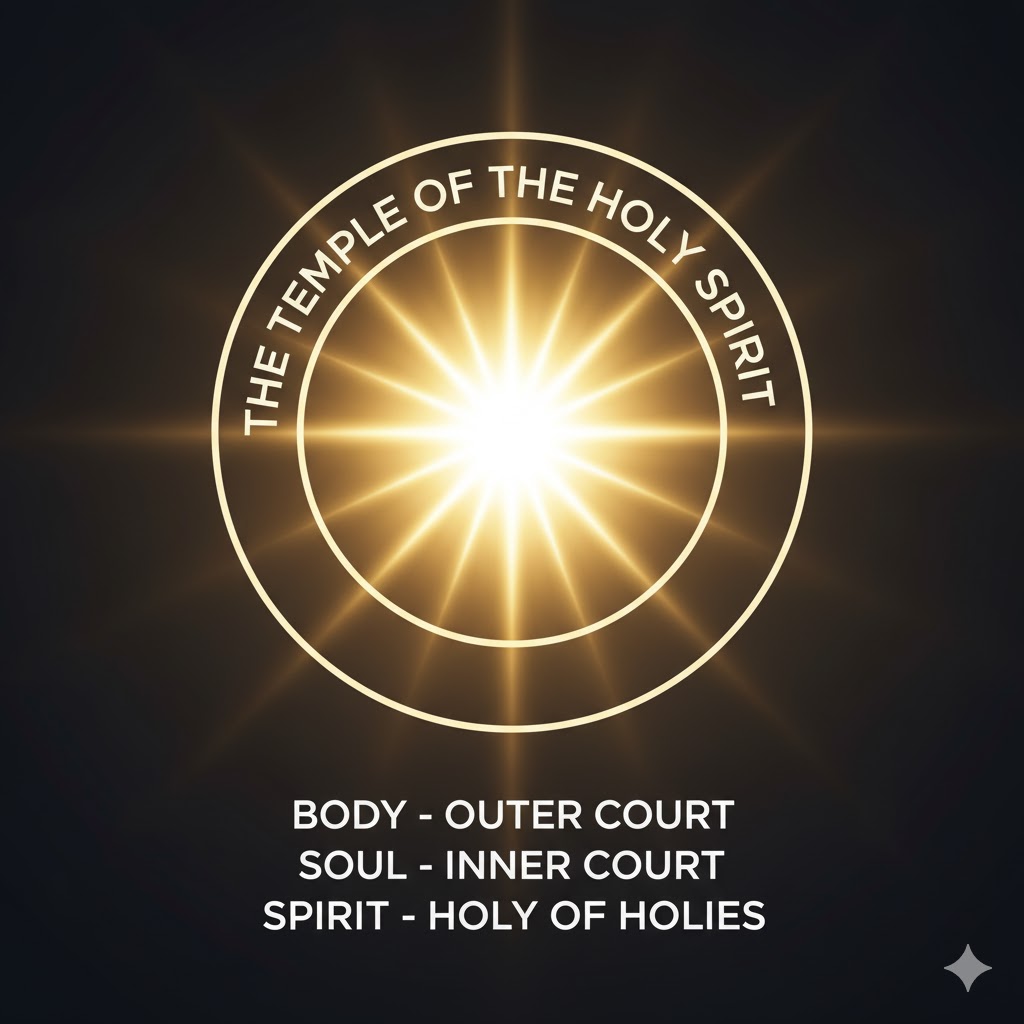
The Bible Series: The Temple of the Holy Spirit

The Temple of the Holy Spirit

(1 Corinthians 6:19–20 KJV)

“What? know ye not that your body is the temple of the Holy Ghost which is in you, which ye have of God, and ye are not your own?”

The human being is a sacred temple composed of three divine courtsthe body (outer court), the soul (inner court), and the spirit (Holy of Holies). Each has spiritual “gates” that must be guarded, purified, and dedicated to God.


🕊 Holy Spirit Gates (The Holy of Holies)

The dwelling place of the presence of God; where communion, revelation, and transformation occur.

  1. Truth Gate – The Spirit of truth guides believers into all understanding.
    • John 16:13: “When he, the Spirit of truth, is come, he will guide you into all truth.”
    • This gate opens discernment and alignment with God’s Word, rejecting deception.
  2. Revelation Gate – Unlocks divine mysteries and heavenly insight.
    • Ephesians 1:17: “That the God of our Lord Jesus Christ… may give unto you the spirit of wisdom and revelation in the knowledge of him.”
    • When open, this gate allows divine secrets to be revealed to the heart.
  3. Intuition Gate – The inner knowing that transcends logic.
    • 1 John 2:27: “Ye need not that any man teach you… the same anointing teacheth you of all things.”
    • The Spirit communicates through an inner sense or divine impression.
  4. Prayer Gate – Connects heaven and earth through constant communion.
    • 1 Thessalonians 5:17: “Pray without ceasing.”
    • This gate fuels spiritual life, keeping the fire of the altar burning within.
  5. Reverence Gate – Produces humility and awe before God’s holiness.
    • Psalm 111:10: “The fear of the LORD is the beginning of wisdom.”
    • Reverence guards against pride, keeping the temple pure and submissive.
  6. Faith Gate – The doorway to the supernatural.
    • Hebrews 11:6: “Without faith it is impossible to please him.”
    • Faith activates miracles and allows the believer to walk in divine authority.
  7. Hope Gate – Sustains endurance through trials.
    • Romans 15:13: “Now the God of hope fill you with all joy and peace in believing.”
    • Hope keeps the spirit alive and focused on God’s promises.
  8. Worship Gate – The highest expression of divine intimacy.
    • John 4:24: “God is a Spirit: and they that worship him must worship him in spirit and in truth.”
    • Worship sanctifies the atmosphere of the spirit, aligning the believer with heaven.
  9. Fear of God Gate – Protects from sin and awakens holiness.
    • Proverbs 14:27: “The fear of the LORD is a fountain of life, to depart from the snares of death.”
    • This gate anchors reverence, obedience, and purity in the believer’s spirit.

💠 Soul Gates (The Inner Court)

The seat of the mind, will, and emotions—where choices are made and spiritual warfare often occurs.

  1. Conscience Gate – The moral compass of the soul.
    • Romans 9:1: “My conscience also bearing me witness in the Holy Ghost.”
    • When pure, it warns against sin; when seared, it allows moral confusion.
  2. Reason Gate – The faculty of understanding and interpretation.
    • Proverbs 3:5–6: “Trust in the LORD… and lean not unto thine own understanding.”
    • This gate must be submitted to divine wisdom rather than worldly logic.
  3. Imagination Gate – The creative and visionary center of the soul.
    • Genesis 6:5: “Every imagination of the thoughts of his heart was only evil continually.”
    • When sanctified, imagination allows believers to visualize God’s glory and promises.
  4. Mind Gate – Governs thoughts, memory, and meditation.
    • Romans 12:2: “Be ye transformed by the renewing of your mind.”
    • A renewed mind brings the soul into harmony with the will of God.
  5. Will Gate – The power of choice and surrender.
    • Deuteronomy 30:19: “Choose life, that both thou and thy seed may live.”
    • This gate determines whether one obeys God or yields to the flesh.
  6. Emotions Gate – The realm of feelings and affections.
    • Proverbs 4:23: “Keep thy heart with all diligence; for out of it are the issues of life.”
    • Emotions must be ruled by the Spirit, not by circumstance.
  7. Choices Gate – Where decisions shape destiny.
    • Joshua 24:15: “Choose you this day whom ye will serve.”
    • Every choice opens or closes access to spiritual blessings.
  8. Will (as Dominion Gate) – Represents alignment of human will with divine purpose.
    • Luke 22:42: “Not my will, but thine, be done.”
    • This final gate in the soul ensures complete surrender to God’s plan.

🕯 Body Gates (The Outer Court)

The physical realm that interacts with the world—where obedience, discipline, and holiness must govern.

  1. Flesh Gate – Represents the fallen nature that seeks its own desires.
    • Galatians 5:17: “The flesh lusteth against the Spirit.”
    • The believer must crucify the flesh daily to keep the temple pure.
  2. Touch Gate – The sense of contact and intimacy.
    • 2 Corinthians 6:17: “Touch not the unclean thing; and I will receive you.”
    • This gate calls for purity and discernment in physical and spiritual connections.
  3. Taste Gate – Governs appetite, both physical and spiritual.
    • Psalm 34:8: “O taste and see that the LORD is good.”
    • Discipline in what one consumes symbolizes satisfaction in God, not excess.
  4. Smell Gate – Symbolic of spiritual discernment and worship.
    • Ephesians 5:2: “A sweet smelling savour.”
    • The anointing oil and incense of worship in the Old Testament mirror this gate’s holiness.
  5. Sight Gate – Controls vision and perception.
    • Job 31:1: “I made a covenant with mine eyes.”
    • What one watches or observes either sanctifies or corrupts the heart.
  6. Hearing Gate – Governs what influences faith and belief.
    • Romans 10:17: “Faith cometh by hearing, and hearing by the word of God.”
    • The ears determine what teachings, music, or words shape the soul.

When the Holy Spirit Gates are active, the believer walks in revelation and divine connection.
When the Soul Gates are renewed, the believer’s emotions, mind, and will align with truth.
When the Body Gates are disciplined, the believer’s actions reflect holiness.

Together, these gates form the Temple of the Holy Spirit—a living, breathing sanctuary through which God manifests His glory.

1 Thessalonians 5:23 (KJV): “And the very God of peace sanctify you wholly; and I pray God your whole spirit and soul and body be preserved blameless unto the coming of our Lord Jesus Christ.”

The human being is a divine masterpiece crafted in the image of God, designed to be a dwelling place for His presence. According to 1 Corinthians 6:19 (KJV), “What? know ye not that your body is the temple of the Holy Ghost which is in you, which ye have of God, and ye are not your own?” This scripture establishes a sacred truth: the human body, soul, and spirit are not merely biological or emotional structures, but holy vessels that mirror the very order of God’s tabernacle.

In the Old Testament, the temple of God had three parts: the outer court, the inner court, and the Holy of Holies. Each part symbolically represents a dimension of our being—the body, the soul, and the spirit. The outer court corresponds to the body, the inner court to the soul, and the Holy of Holies to the spirit. This divine structure reveals that true worship begins within, from the spirit, moving outward to influence the soul and body.

The body is the outer court, the physical representation of the inner life. It interacts with the world through five gates—touch, taste, smell, sight, and hearing. These gates determine what enters and exits, affecting the purity of the temple. 1 Corinthians 9:27 (KJV) says, “But I keep under my body, and bring it into subjection,” reminding believers that the flesh must be disciplined so it does not corrupt what is sacred.

The gate of sight determines vision—what one allows the eyes to behold. Job made a covenant with his eyes (Job 31:1), understanding that the eyes can either glorify God or lead one into temptation. Similarly, the gate of hearing must be guarded, for “faith cometh by hearing” (Romans 10:17), and what we listen to shapes belief and action.

The gate of taste influences appetite and desire. Proverbs 23:2 warns against overindulgence, teaching self-control in what one consumes. The touch gate represents intimacy and connection, reminding believers to “touch not the unclean thing” (2 Corinthians 6:17). Finally, the gate of smell connects to discernment—sensing what is holy versus profane, for in Exodus 30, God gave Moses instructions for the holy anointing oil, a sweet fragrance representing divine worship.

Beyond the body lies the soul, the inner court of human existence. The soul is where thoughts, emotions, and decisions are born. It is the seat of the mind, will, and emotions—the realm where spiritual battles occur. In Luke 21:19, Christ declares, “In your patience possess ye your souls.” This means the believer must govern the soul with divine wisdom and endurance.

The mind gate processes reasoning, imagination, and memory. Romans 12:2 instructs, “Be ye transformed by the renewing of your mind,” because the mind must be renewed daily through Scripture and prayer. The imagination gate, when sanctified, allows believers to envision God’s promises; but when corrupted, it becomes a tool of deception (Genesis 6:5).

The will gate represents choice—the power to obey or disobey. Deuteronomy 30:19 declares, “I have set before you life and death… therefore choose life.” The will determines which voice—God’s or the flesh’s—governs the temple. The emotion gate is deeply tied to worship, for God desires hearts that love Him sincerely. Proverbs 4:23 (KJV) says, “Keep thy heart with all diligence; for out of it are the issues of life.”

The conscience acts as a moral compass, bearing witness with the Spirit to what is right or wrong (Romans 9:1). When the conscience is purified by the blood of Christ, the soul becomes a place of peace and discernment. But if defiled, it leads to confusion and spiritual blindness (Titus 1:15).

The reason gate is where understanding is formed. Proverbs 3:5-6 (KJV) teaches, “Trust in the LORD with all thine heart; and lean not unto thine own understanding.” Reason must be submitted to revelation; for human wisdom alone cannot grasp divine truth.

The deepest part of the human temple is the spirit, the Holy of Holies. Here, communion with God occurs through the indwelling of the Holy Spirit. The spirit has its own gates—faith, reverence, prayer, revelation, intuition, worship, and the fear of God—each essential for divine connection.

The faith gate activates the believer’s trust in God. Hebrews 11:6 declares, “Without faith it is impossible to please Him.” The prayer gate keeps communication open between heaven and earth (1 Thessalonians 5:17). Prayer maintains the fire of the altar within the Holy of Holies, where God’s glory abides.

The revelation gate opens divine mysteries to those who seek truth. Ephesians 1:17 speaks of “the spirit of wisdom and revelation in the knowledge of Him.” The intuition gate allows one to perceive spiritual truths without human logic; it is the inner knowing that comes from the Spirit of God (1 John 2:27).

The reverence gate reflects holy respect and submission before the Lord. Psalm 111:10 declares, “The fear of the LORD is the beginning of wisdom.” Reverence keeps the spirit humble and the heart tender toward God.

The worship gate is the ultimate purpose of the temple—to glorify the Creator. John 4:24 reminds, “God is a Spirit: and they that worship him must worship him in spirit and in truth.” Worship purifies the temple and aligns every gate with heaven’s harmony.

Finally, the fear of God gate establishes holiness. Proverbs 14:27 declares, “The fear of the LORD is a fountain of life.” When this gate is open, sin cannot dominate, and the believer becomes a living sanctuary of divine power.

Thus, the temple of the Holy Spirit is a complete structure—body, soul, and spirit working together in divine order. When every gate is consecrated, the believer lives in alignment with heaven, walking as a vessel of light in a dark world.

The restoration of this temple begins with repentance and ends with transformation. Romans 8:11 declares that the Spirit that raised Jesus from the dead will quicken our mortal bodies. This quickening power renews the entire being, sanctifying each court and gate for God’s use.

Ultimately, the believer’s goal is not mere moral purity, but divine habitation. When the body, soul, and spirit operate in harmony under the authority of the Holy Spirit, heaven finds expression on earth. As Paul writes in 1 Thessalonians 5:23, “And the very God of peace sanctify you wholly; and I pray God your whole spirit and soul and body be preserved blameless unto the coming of our Lord Jesus Christ.”

References
1 Corinthians 6:19–20; Romans 12:1–2; Proverbs 4:23; 1 Thessalonians 5:23; John 4:24; Hebrews 11:6; Deuteronomy 30:19; Psalm 111:10; Ephesians 1:17; Romans 8:11 (KJV).

The Pulse of Divine Intentions

Photo by Ron Lach on Pexels.com

The pulse of divine intentions beats beneath the surface of every life moment, whether joyful or sorrowful, clear or confusing. The Most High moves with purpose, and nothing He ordains is without meaning. When we learn to see beyond the natural and perceive the spiritual rhythm of His will, we realize we are never drifting. We are being directed (Jeremiah 29:11, KJV).

Divine intentions are not accidental; they are shaped by eternal wisdom. What may seem uncertain to us is fully known to Him, for He sees the end from the beginning and orders every step with precision (Isaiah 46:10, KJV). Even when life feels unpredictable, His plan remains steady and unshaken.

The pulse of divine intentions carries us through seasons. Some seasons stretch us, some prune us, and some elevate us. In each season, God is shaping character, purifying motives, and strengthening faith. Nothing is wasted when placed in His hands (Ecclesiastes 3:1, KJV).

Sometimes the Most High allows storms not to destroy, but to reveal. Storms strip away illusions, expose foundations, and push us toward deeper dependency on Him. Through pressure, faith is refined, and trust grows roots (1 Peter 1:6-7, KJV).

Divine intentions often unfold silently. God works behind the scenes, molding hearts and orchestrating connections long before His plan is visible. His timing is perfect, and His silence is never absence—only preparation (Habakkuk 2:3, KJV).

There are moments when divine intentions challenge our comfort. Growth seldom happens in softness alone. Trials and discipline draw us into maturity and obedience, proving His love rather than contradicting it (Hebrews 12:6, KJV).

The pulse of divine intentions invites surrender. We are not commanded to understand everything, but to trust in His wisdom above our own limited sight (Proverbs 3:5-6, KJV). Surrender is not weakness—it is alignment with divine authority.

God leads in ways that protect us, though sometimes we do not see the danger avoided. His denials are protections, His delays are mercies, and His redirections are deliverances. Divine purpose guides even closed doors (Psalm 84:11, KJV).

The pulse of divine intentions beats strongest in the hearts of those who seek Him. As we draw near, our desires transform, and we begin to want what He wants. Prayer becomes not just a request, but a synchronization of spirit and will (Psalm 37:4, KJV).

Divine intentions are rooted in love so deep that it cannot be measured. His love is not fragile or conditional—it is steadfast, patient, and eternal. Even discipline flows from love, not anger (1 John 4:9-10, KJV).

Sometimes divine intentions separate us from people, places, or habits that no longer align with His plan. These separations may hurt, yet they sanctify, protecting destiny from contamination (2 Corinthians 6:17, KJV).

God’s intentions for His children are always righteous. He does not lead into confusion or chaos; He leads into truth, peace, and clarity. When confusion arises, it is not from Him—He is not the author of disorder (1 Corinthians 14:33, KJV).

The pulse of divine intentions strengthens faith through obedience. When we align with His commands, blessings follow—not always material, but always spiritual and eternal (Deuteronomy 28:2, KJV).

Divine intentions shape identity. The world attempts to define us by flaws, failures, or achievements, but God calls us by purpose, destiny, and belovedness. Our identity is secure in Him (1 Peter 2:9, KJV).

Sometimes divine intentions unfold gradually, each step revealing enough light for the moment. Faith is walking when the path ahead is still forming, trusting that God never misguides those who follow Him (Psalm 119:105, KJV).

The pulse of divine intentions reminds us that pain has purpose. Brokenness becomes the soil where glory grows. What the enemy meant for harm, the Most High turns into testimony and triumph (Genesis 50:20, KJV).

Divine intentions call us to holiness. God’s desire is not only to bless us, but to sanctify us, refining our hearts and aligning our lives with His righteousness (1 Thessalonians 4:7, KJV).

The pulse of divine intentions draws us closer to His voice. The more we listen, the clearer His whisper becomes. His sheep know His voice, and they follow Him with confidence (John 10:27, KJV).

In the fulfillment of divine intentions, we witness His glory. When His plans unfold, they reflect His greatness, not ours. Miracles, breakthroughs, and answered prayers remind us that He alone is worthy of praise (Psalm 115:1, KJV).

Ultimately, the pulse of divine intentions leads to eternal hope. Every step in His will draws us closer to His kingdom, His presence, and His promise. The journey is guided, the purpose is sure, and the outcome is victory for those who trust Him (Romans 8:28, KJV).


References
Holy Bible, King James Version.
Ecclesiastes 3:1; Deuteronomy 28:2; Genesis 50:20; Habakkuk 2:3; Hebrews 12:6; Isaiah 46:10; Jeremiah 29:11; John 10:27; 1 Corinthians 14:33; 1 Corinthians 13:4-7; 1 John 4:9-10; 1 Peter 1:6-7; 1 Peter 2:9; 2 Corinthians 6:17; Proverbs 3:5-6; Psalm 37:4; Psalm 84:11; Psalm 115:1; Psalm 119:105; Romans 8:28.