Tag Archives: the male files

The Male Files: Black Men of the Past, History, and Values.

The legacy of Black men throughout history is a chronicle of courage, intellect, and moral strength. Too often, mainstream narratives reduce their contributions to fragments—overlooking the deep values that guided their endurance and brilliance. From the kingdoms of Africa to the modern struggles of identity in America, the Black man has been a central figure in the construction of civilization and the preservation of humanity’s conscience. His story is not just one of survival but of purpose, rooted in ancestral wisdom and spiritual discipline.

The image of the Black man before colonialism was one of leadership and sacred duty. In empires such as Mali, Songhai, and Kemet (Egypt), men were not only warriors and rulers but also philosophers, astronomers, and spiritual guides. Their sense of manhood was inseparable from service to community and reverence for the divine. Mansa Musa of Mali, for instance, exemplified how wealth and faith could coexist under moral responsibility, making him one of history’s most revered kings (Gomez, 1998).

Colonialism, however, disrupted this equilibrium. European imperialists imposed false hierarchies that redefined the African man as primitive, stripping him of dignity and rewriting his identity through the lens of conquest. The transatlantic slave trade transformed men once viewed as protectors and visionaries into property. Yet, even in bondage, the enslaved man retained an inner compass of values—courage, faith, and brotherhood—that sustained his humanity against systematic dehumanization (Franklin & Moss, 2000).

Black men of the antebellum era carried an unspoken theology of resistance. Their faith was both shield and sword, as seen in the spirituals sung under the stars and the coded messages of liberation woven into song. The story of men like Denmark Vesey and Nat Turner reflects the moral paradox of faith and rebellion—where violence was not a lust for power but a cry for freedom born from divine conviction (Aptheker, 1943).

With emancipation came new challenges. The Reconstruction period presented opportunities for leadership and literacy, yet the rise of Jim Crow laws swiftly sought to crush these gains. Black men responded not by despair but by constructing values-based institutions—churches, schools, and fraternal orders—that instilled discipline and dignity. Leaders like Booker T. Washington and W. E. B. Du Bois embodied contrasting yet complementary visions of manhood: one rooted in practical labor and self-reliance, the other in intellectual excellence and cultural pride (Harlan, 1983).

Throughout the 20th century, the Black man became both the conscience and catalyst of social change. The Civil Rights era revealed men whose moral fortitude transcended fear. Martin Luther King Jr. wielded nonviolence as a weapon of divine justice, while Malcolm X called for self-defense and cultural awakening. Despite their differences, both shared the same masculine integrity—the conviction that manhood is not about dominance but discipline, not ego but service (Marable, 2011).

The strength of these men was not limited to their activism; it extended to their private lives as fathers, mentors, and builders. The Black father figure, though often attacked by policy and stereotype, has remained a vital symbol of stability and love. The presence of a guiding father or mentor—whether biological or spiritual—represents a foundational value in the Black male experience: accountability through legacy.

Black artistry has also served as a mirror of male evolution. Jazz, blues, and hip-hop became outlets for emotional expression in a world that often silenced the Black man’s voice. From Louis Armstrong’s trumpet to Kendrick Lamar’s lyrical introspection, these men have embodied vulnerability as strength, challenging toxic models of masculinity. Their art carries ethical messages of perseverance, faith, and cultural self-knowledge (Dyson, 2001).

The value system of the Black man has always been rooted in communal consciousness. In African and diasporic traditions, the concept of “Ubuntu”—I am because we are—captures the essence of his worldview. Manhood is measured not by isolation but by contribution. Even in the face of racism, this communal ethos has survived, inspiring social movements and mentorship programs that uphold integrity, responsibility, and respect as cornerstones of Black male identity.

In academia and philosophy, the Black man has reclaimed intellectual space once denied to him. Thinkers like Cornel West and Molefi Kete Asante have redefined masculinity through Afrocentric and moral frameworks, asserting that to be a man is to be morally awake. This intellectual tradition resists Western individualism by grounding value in collective elevation rather than competition (Asante, 2007).

Spiritually, the Black man’s faith remains one of his most defining values. The pulpit has long been his platform of leadership, where preachers like Richard Allen and T. D. Jakes have spoken truth to power. Even outside the church, his spiritual strength manifests in prayer, meditation, and ancestral reverence. The KJV Bible’s portrayal of righteous men—David, Joseph, Moses—resonates deeply within his cultural narrative, reinforcing the belief that godly character is the highest expression of manhood (Proverbs 20:7, KJV).

The challenges of modernity have not erased these values but tested them. Systemic racism, mass incarceration, and economic disenfranchisement continue to threaten the moral fabric of Black manhood. Yet, new generations of men are reclaiming purpose through mentorship, entrepreneurship, and fatherhood. The rebirth of the “modern griot”—the storyteller who teaches through wisdom—is proof that the value of knowledge endures.

Masculine values within the Black community emphasize balance—strength tempered with humility, courage coupled with compassion. The ideal man is both protector and nurturer, reflecting divine duality. His power is not to control but to sustain, his authority not to dominate but to serve. This ethical framework echoes the ancient African principle of Ma’at, representing truth, justice, and harmony (Karenga, 2004).

In examining historical figures like Frederick Douglass, we see a prototype of moral masculinity—an intellect sharpened by suffering, a leader shaped by conviction. His life embodies a recurring theme: that the Black man’s greatness lies not in what he possesses, but in what he perseveres through. The same can be said for countless unnamed men who labored, prayed, and built legacies under the weight of oppression.

Values such as loyalty, integrity, and faith are not abstract ideals for the Black man—they are survival mechanisms. To navigate a world that questions his humanity, he must cultivate inner peace and moral consistency. In every era, from slavery to the digital age, these values have anchored him, ensuring that his reflection in history’s mirror is not defined by pain alone, but by principle.

The psychological and emotional wellness of the Black man has become a vital modern conversation. Healing from generational trauma requires returning to ancestral values—brotherhood, spiritual grounding, and emotional intelligence. These are not signs of weakness but pathways to restoration. As Proverbs 27:17 teaches, “Iron sharpeneth iron; so a man sharpeneth the countenance of his friend.” Brotherhood remains a sacred practice of renewal.

Education has always been both shield and sword for the Black man. The pursuit of knowledge represents not assimilation but liberation—a means to reclaim narrative and redefine identity. The value of education, both formal and spiritual, transforms oppression into opportunity and silence into strategy.

As history continues to unfold, the story of Black men remains unfinished but unbroken. From ancient kings to modern visionaries, they are the living embodiment of endurance shaped by ethics. The “Male Files” of history reveal not just a pattern of survival, but a symphony of values—faith, resilience, honor, and love—that continue to define their collective soul.

In the mirror of time, the Black man sees more than scars—he sees structure. His reflection is not one of victimhood but vision, not despair but determination. The values that were carried his ancestors now sustain his sons. The beauty of his story is not only in his strength, but in the moral code that gives that strength purpose.


References

Aptheker, H. (1943). American Negro slave revolts. Columbia University Press.
Asante, M. K. (2007). Afrocentricity: The theory of social change. African American Images.
Dyson, M. E. (2001). Holler if you hear me: Searching for Tupac Shakur. Basic Civitas Books.
Franklin, J. H., & Moss, A. A. (2000). From slavery to freedom: A history of African Americans. McGraw-Hill.
Gomez, M. A. (1998). Exchanging our country marks: The transformation of African identities in the colonial and antebellum South. University of North Carolina Press.
Harlan, L. R. (1983). Booker T. Washington: The wizard of Tuskegee, 1901–1915. Oxford University Press.
Karenga, M. (2004). Maat, the moral ideal in ancient Egypt: A study in classical African ethics. Routledge.
Marable, M. (2011). Malcolm X: A life of reinvention. Viking.
The Holy Bible, King James Version. (1611/2017). King James Bible Online. https://www.kingjamesbibleonline.org/
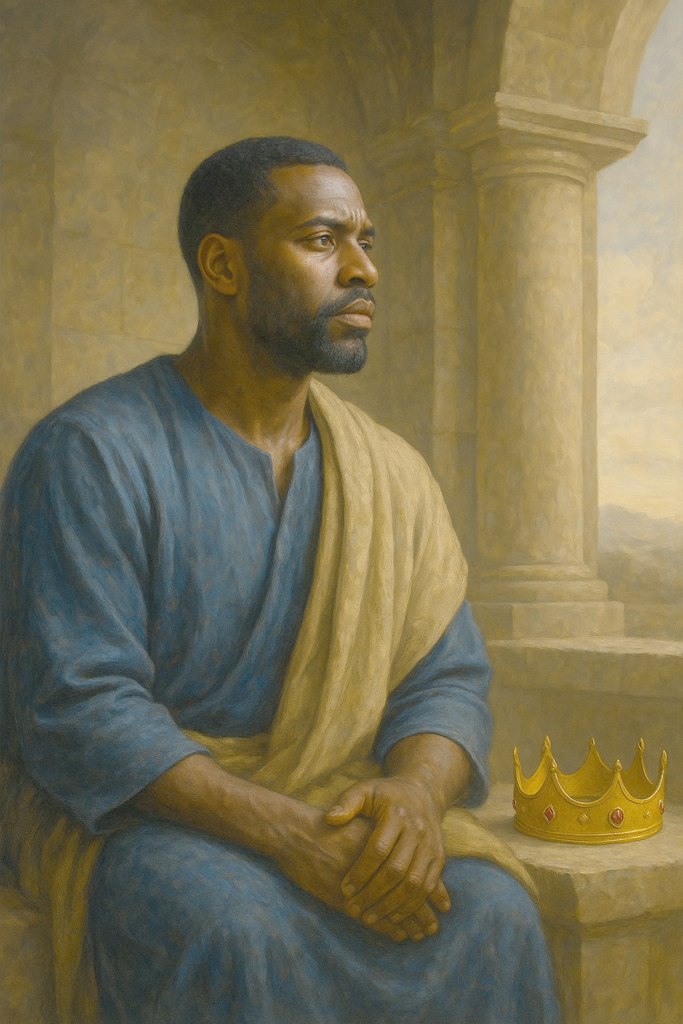

The Male Files: Kings Without Crowns: Restoring the Biblical Role of Men.

In contemporary society, the role of men has become increasingly ambiguous. The pressures of modern life, economic instability, and shifting cultural norms have left many men searching for identity and purpose. Historically, men were seen as protectors, providers, and leaders within their households and communities. Today, however, these roles are often challenged or undervalued, leaving many men feeling powerless and disconnected.

The Bible provides a clear framework for understanding masculinity and the responsibilities of men. From Adam in the Garden of Eden to the patriarchs of Israel, men were called to lead with integrity, courage, and wisdom (Genesis 2:15-17). Leadership in the biblical sense is not about domination but about stewardship: caring for family, guiding with righteousness, and serving with humility.

One of the hallmarks of biblical manhood is responsibility. Men are called to provide for their families materially, emotionally, and spiritually. This provision is not limited to finances but extends to moral guidance and protection from harm. In Proverbs 27:23-24, the importance of knowing and caring for one’s household is emphasized, reinforcing the notion that true leadership requires active engagement.

Spiritual leadership is another core aspect of biblical manhood. Men are expected to guide their households in faith, ensuring that God’s principles shape family decisions and values (Ephesians 6:4). This leadership is rooted in humility and service rather than coercion, reflecting the example of Christ as a servant-leader (Mark 10:45).

Unfortunately, societal pressures have distorted men’s understanding of their roles. The rise of materialism, instant gratification, and shifting gender norms has led many men to equate masculinity with physical strength or financial success alone. This limited view ignores the deeper responsibilities of character, integrity, and spiritual leadership.

Modern men face identity crises exacerbated by media portrayals that often celebrate selfishness, irresponsibility, or emotional detachment as markers of “manliness.” These false narratives contrast sharply with biblical principles, which emphasize self-discipline, accountability, and the pursuit of righteousness (1 Timothy 4:12).

The absence of mentorship and father figures in many communities has compounded these challenges. Without examples of godly leadership, young men struggle to internalize what it means to be responsible, compassionate, and principled. Scriptural wisdom underscores the value of generational teaching, as seen in Deuteronomy 6:6-7, which encourages fathers to guide their children consistently in God’s ways.

Restoring the biblical role of men requires intentionality. Men must embrace their responsibility to lead by example, demonstrating integrity in speech, action, and decision-making. Leadership is cultivated through discipline, prayer, and a commitment to lifelong learning, reflecting the holistic approach to manhood outlined in the Scriptures.

Emotional intelligence is a key component of modern biblical manhood. The Bible portrays men expressing grief, joy, and compassion, suggesting that emotional awareness is not a weakness but a strength (Psalm 34:18; John 11:35). Men who understand and manage their emotions can better lead their families and communities with empathy and wisdom.

Accountability is central to restoring male leadership. Biblical men were often held accountable by peers, elders, or God Himself. Men today benefit from similar structures—mentorship, community, and spiritual fellowship—to ensure their actions align with moral and spiritual principles (Proverbs 27:17).

Service is a defining trait of biblical masculinity. Jesus’ model demonstrates that leadership is inseparable from service (John 13:14-15). Men who prioritize the needs of others, particularly their families and communities, embody the essence of godly leadership. Service fosters respect, trust, and spiritual authority rather than demanding it.

Character formation begins with self-discipline. The apostle Paul frequently exhorts men to control their impulses, pursue righteousness, and cultivate perseverance (1 Corinthians 9:24-27). Discipline in thought, speech, and behavior builds credibility and moral authority—qualities essential for any man seeking to fulfill his biblical role.

Integrity is another critical aspect. Biblical men are called to be honest, reliable, and trustworthy in all areas of life (Proverbs 10:9). Integrity ensures that leadership is not merely positional but earned through consistent demonstration of values, creating a legacy of respect and influence.

Courage, both moral and physical, remains a defining element of biblical manhood. From David confronting Goliath to Daniel standing firm in the lion’s den, courage involves facing fear while upholding truth and justice (Joshua 1:9; Daniel 6:10-23). Modern men must also confront cultural and personal challenges with the same steadfastness.

Men are not intended to operate in isolation. Community involvement, fellowship, and collaboration are integral to the biblical model of manhood. Ecclesiastes 4:9-12 highlights the strength derived from unity, emphasizing that men lead best when supported and accountable to others.

A renewed focus on mentorship can transform generations. Experienced men guiding younger men in faith, character, and practical life skills restore continuity in moral and spiritual leadership. Biblical narratives, including the relationship between Elijah and Elisha, exemplify the power of such mentorship (2 Kings 2:1-15).

Resisting cultural distortion requires discernment. Men must evaluate societal norms against scriptural truth, rejecting notions of masculinity that conflict with God’s design. Critical engagement with culture ensures that men lead with principles rather than conformity to fleeting trends (Romans 12:2).

The restoration of male leadership also entails a renewed understanding of fatherhood. Fathers are called not merely to produce offspring but to nurture, instruct, and exemplify godly living (Psalm 103:13; Proverbs 20:7). Active, loving fatherhood strengthens families and communities alike.

Marriage and partnership reflect the broader call to leadership. Husbands are to love their wives sacrificially, mirroring Christ’s love for the church (Ephesians 5:25-28). Such leadership fosters mutual respect, emotional intimacy, and spiritual growth, dispelling misconceptions that male authority equates to control or dominance.

Finally, the restoration of biblical manhood is a lifelong journey. Men are called to continuous self-examination, growth, and alignment with God’s purposes. By embracing responsibility, service, integrity, and faith, men can reclaim their rightful place as leaders, protectors, and spiritual anchors—kings without crowns, yet empowered to shape families, communities, and generations (Micah 6:8).


References (APA 7th edition)

  • Holy Bible, King James Version. (2000). Thomas Nelson.
  • Deuteronomy 6:6-7.
  • Ephesians 5:25-28; 6:4.
  • Proverbs 10:9; 20:7; 27:17; 27:23-24.
  • Joshua 1:9.
  • Daniel 6:10-23.
  • John 11:35; 13:14-15.
  • Mark 10:45.
  • 1 Corinthians 9:24-27.
  • 1 Timothy 4:12.
  • Micah 6:8.
  • Ecclesiastes 4:9-12.
  • Genesis 2:15-17.
  • 2 Kings 2:1-15.
  • Romans 12:2.
  • Psalm 34:18; 103:13.

The Male Files: Built to Lead — The Spiritual Anatomy of a Godly Man.

Photo by RDNE Stock project on Pexels.com

In a world where manhood is often distorted by cultural confusion, the concept of a Godly man remains both timeless and revolutionary. To be “built to lead” is not a claim of dominance but a divine calling rooted in purpose, discipline, and integrity. The anatomy of such a man is not merely physical—it is spiritual, moral, and psychological, molded by divine principles rather than societal trends (Eldredge, 2001).

A Godly man’s leadership begins in the heart. Scripture teaches that “as he thinketh in his heart, so is he” (Proverbs 23:7, KJV). Leadership is not about external command but internal conviction. It is birthed through humility before God and strengthened through consistent alignment with divine truth. His strength flows not from ego but from surrender.

The anatomy of leadership is first spiritual. The Godly man leads by example, submitting himself to the ultimate authority—God. Like David, he may stumble, yet repentance restores his crown. His leadership is not infallible but accountable. He acknowledges weakness as the soil from which strength grows (2 Corinthians 12:9, KJV).

A Godly man’s mind is disciplined and discerning. He filters thoughts through the wisdom of Scripture, guarding against corruption and confusion. He understands that his greatest battle is not with others but within himself—between flesh and spirit (Galatians 5:17, KJV). Spiritual intelligence, not worldly cunning, defines his decision-making.

The emotional anatomy of a Godly man reveals balance. He feels deeply but governs wisely. He is not stoic nor fragile—his emotions serve purpose, not pride. Christ Himself wept (John 11:35, KJV), proving that divine strength includes compassion. Emotional maturity is a mark of true spiritual leadership.

His character serves as his armor. Honesty, patience, and faithfulness form the framework of his moral anatomy. When temptation comes, his integrity stands firm because it is anchored in the fear of the Lord, which is “the beginning of wisdom” (Proverbs 9:10, KJV). Such wisdom enables him to walk uprightly even when unseen.

The physical body, too, is a vessel of stewardship. The Godly man honors it as the temple of the Holy Spirit (1 Corinthians 6:19–20, KJV). He disciplines his body not for vanity, but for vitality—to serve his purpose with endurance. Health, strength, and self-control reflect spiritual order manifesting in physical form.

In his relationships, the Godly man exemplifies servant leadership. Like Christ washing the disciples’ feet, he leads through love, not domination (John 13:14–15, KJV). In marriage, he loves sacrificially; in friendship, he uplifts; in community, he protects. His leadership builds others rather than exalting himself.

A Godly man’s speech carries weight. His words heal, teach, and direct rather than destroy. “Death and life are in the power of the tongue” (Proverbs 18:21, KJV). Thus, his mouth becomes an instrument of life. What he declares aligns with God’s truth, shaping atmospheres and influencing destinies.

His purpose is divinely assigned, not socially constructed. Each Godly man carries a unique mantle—a divine task to fulfill within family, church, and society. Leadership is not a title he earns but a function he embodies. His confidence comes from knowing who sent him, not from who follows him.

Discipline is the skeleton of his character. Without it, even the strongest calling collapses. Prayer, fasting, study, and service sustain his spiritual frame. These habits forge endurance in seasons of testing. Like a tree rooted in living water, he thrives even when storms arise (Psalm 1:3, KJV).

Courage is the muscle of leadership. The Godly man stands for truth even when unpopular. He defends righteousness not out of pride but conviction. His courage is not reckless—it is refined by faith. He knows that fear cannot coexist with divine purpose (2 Timothy 1:7, KJV).

A Godly man’s vision extends beyond self. He builds legacy. His leadership plants seeds for generations, ensuring that those who follow him will inherit spiritual stability. Like Abraham, he fathers faith before he fathers nations (Genesis 18:19, KJV). His legacy is eternal, not material.

Wisdom is the nervous system of the Godly man—it connects thought to action. Through prayer and discernment, he receives divine instruction. He seeks counsel, studies Scripture, and listens to the Spirit. His choices reflect maturity, foresight, and an unwavering fear of God (James 1:5, KJV).

His faith is the lifeblood that flows through all aspects of his being. Without it, his spiritual anatomy cannot function. Faith empowers his leadership, fortifies his hope, and defines his destiny. It is not blind belief but active trust in divine providence (Hebrews 11:1, KJV).

The Godly man’s leadership is generative. He mentors others, multiplying what God has invested in him. Leadership that hoards is carnal; leadership that gives is divine. He trains others not to depend on him but to depend on God, ensuring the continuity of righteous influence (2 Timothy 2:2, KJV).

Temptation tests the architecture of his soul. The Godly man learns endurance through resistance. He flees immorality, avoids arrogance, and denies compromise. Each victory over sin strengthens his spiritual anatomy. His holiness is not perfection but progression toward divine likeness (Philippians 3:12–14, KJV).

The foundation of his leadership is love. Without love, authority becomes tyranny. Love tempers discipline, informs justice, and defines service. The Godly man mirrors Christ’s heart—firm yet forgiving, just yet merciful. His leadership brings light where there is confusion.

Ultimately, the anatomy of a Godly man reveals divine design. Every aspect—heart, mind, body, and spirit—works in harmony to fulfill God’s will. He is not self-made; he is Spirit-formed. Built to lead, he carries the architecture of heaven within his humanity. His leadership, then, is not performance—it is purpose incarnate.

The world needs such men: those who lead not by might, but by spiritual wisdom; who build homes, communities, and legacies upon divine truth. The Godly man stands as a living testimony that leadership, when rooted in God, restores order, peace, and purpose to the earth.


References (APA Style)

Eldredge, J. (2001). Wild at heart: Discovering the secret of a man’s soul. Thomas Nelson.
The Holy Bible, King James Version. (n.d.). Thomas Nelson.
Lewis, C. S. (1952). Mere Christianity. HarperCollins.
Piper, J. (2001). Desiring God: Meditations of a Christian hedonist. Multnomah.
Wright, N. T. (2010). After you believe: Why Christian character matters. HarperOne.
Wilkinson, B. (2000). The prayer of Jabez: Breaking through to the blessed life. Multnomah.
Voddie Baucham Jr. (2011). Family driven faith: Doing what it takes to raise sons and daughters who walk with God. Crossway.

The Male Files: Because Understanding Him Changes Everything.

Photo by Beniam on Pexels.com

Understanding a man goes beyond surface-level observations; it is about discerning his heart, mind, and soul. When women take the time to truly understand men—their fears, desires, and motivations—relationships transform from conflict and confusion into harmony and growth. Proverbs 20:5 (KJV) reminds us, “Counsel in the heart of man is like deep water; but a man of understanding will draw it out.” Insight changes everything.

Men are often shaped by their experiences, both past and present. Trauma, rejection, and societal expectations inform how they approach love and intimacy. Without understanding these influences, women may misinterpret withdrawal, pride, or silence as disinterest. Recognizing the root of behaviors allows for compassion rather than judgment.

Fear of vulnerability is a core factor in male psychology. Men may struggle to share feelings, fearing judgment, weakness, or rejection. Ecclesiastes 3:7 (KJV) teaches, “a time to keep silence, and a time to speak.” Knowing when to encourage a man to open up—and when to give space—is crucial for deepening intimacy.

Men’s desire for visual attraction is often misunderstood. While the physical may initially draw them, Scripture emphasizes character and fear of God as the foundation for lasting relationships. Proverbs 31:30 (KJV) states, “Favor is deceitful, and beauty is vain: but a woman that feareth the Lord, she shall be praised.” Understanding this balance between visual attraction and spiritual alignment transforms expectations.

Many men seek equitable relationships—partnerships where both contribute, both give, and both grow. Ecclesiastes 4:9 (KJV) explains, “Two are better than one; because they have a good reward for their labour.” Recognizing this desire helps women support collaboration rather than control, fostering mutual respect and shared responsibility.

Insecurities about appearance affect men as much as women. Height, weight, hair loss, or perceived deficiencies can make them hesitant to fully engage emotionally. Psalm 139:14 (KJV) reminds us, “I will praise thee; for I am fearfully and wonderfully made.” Encouragement and affirmation strengthen self-esteem and relational openness.

Men often carry hidden fears—fear of failure, financial inadequacy, or emotional insufficiency. 1 Timothy 6:6–8 (KJV) highlights contentment and godly priorities, “But godliness with contentment is great gain… having food and raiment let us be therewith content.” Understanding these pressures helps women respond with support rather than criticism.

Past hurts shape how men perceive trust and intimacy. Ephesians 4:31–32 (KJV) instructs, “Let all bitterness, and wrath, and anger… be put away from you… and be ye kind one to another, tenderhearted, forgiving one another, even as God for Christ’s sake hath forgiven you.” Women who recognize this can help men navigate wounds safely.

Money is often tied to identity for men. Many feel a duty to provide, and financial insecurity can trigger stress or defensiveness. Proverbs 13:11 (KJV) says, “Wealth gotten by vanity shall be diminished: but he that gathereth by labour shall increase.” Supporting men spiritually and emotionally, rather than solely financially, nurtures relational stability.

Sexual desire is a deeply rooted part of male psychology. Men often struggle with balancing passion and patience, particularly in waiting for marital intimacy. 1 Thessalonians 4:3–5 (KJV) encourages sanctification, “That every one of you should know how to possess his vessel in sanctification and honour; Not in the lust of concupiscence…” Understanding these struggles allows women to provide guidance and partnership rather than judgment.

Men’s silence is frequently misread as indifference. Understanding that introspection or internal processing is part of male nature prevents unnecessary conflict. Proverbs 17:28 (KJV) says, “Even a fool, when he holdeth his peace, is counted wise.” Recognizing this allows space for men to process before sharing.

The fear of rejection drives many male behaviors. A man may hide feelings or act aloof to protect himself from emotional pain. Jeremiah 17:9 (KJV) states, “The heart is deceitful above all things, and desperately wicked: who can know it?” Acknowledging that this fear is natural fosters patience and empathy.

Commitment may feel risky for men because vulnerability exposes their deepest insecurities. Joshua 1:9 (KJV) reminds, “Be strong and of a good courage; be not afraid, neither be thou dismayed: for the LORD thy God is with thee whithersoever thou goest.” Faith provides courage to embrace relational risk.

Understanding men’s desire for independence helps women avoid misinterpretation. Some distance is not disinterest but a need to maintain identity and process emotions. Ecclesiastes 4:12 (KJV) teaches the strength of partnership, “a threefold cord is not quickly broken.” Independence and intimacy coexist in healthy relationships.

Men’s unspoken desires often center on respect, affirmation, and being valued as protectors and providers. 1 Peter 3:7 (KJV) instructs, “Likewise, ye husbands, dwell with them according to knowledge, giving honour unto the wife, as unto the weaker vessel…” Mutual understanding fosters relational harmony.

Fear of inadequacy—emotional, spiritual, or physical—is a frequent male concern. Psalm 34:18 (KJV) offers assurance, “The LORD is nigh unto them that are of a broken heart; and saveth such as be of a contrite spirit.” Understanding this fear allows women to cultivate patience and support rather than criticism.

Men’s need for purpose often guides their decisions. When women understand this, they can partner rather than compete with his goals. Proverbs 16:3 (KJV) states, “Commit thy works unto the LORD, and thy thoughts shall be established.” Encouraging purpose-driven growth enhances relational unity.

Communication styles differ; men may use action over words to express love. Understanding this prevents misinterpretation of intentions. 1 John 3:18 (KJV) instructs, “Let us not love in word, neither in tongue; but in deed and in truth.” Recognizing action as love strengthens relationships.

Understanding men also involves recognizing their spiritual journey. Many wrestle privately with doubts, sin, and temptations. Romans 12:2 (KJV) reminds, “Be not conformed to this world: but be ye transformed by the renewing of your mind…” Spiritual growth transforms relational engagement.

Past relationship patterns shape male expectations. Women who understand these patterns can break cycles of mistrust and fear. Colossians 3:13 (KJV) teaches forgiveness, “Forbearing one another, and forgiving one another, if any man have a quarrel against any…” Healing occurs through grace and patience.

Understanding men’s psychological and spiritual landscapes changes relational dynamics. When women grasp fears, desires, and motivations, they can communicate more effectively, navigate conflict wisely, and foster intimacy. Proverbs 4:7 (KJV) states, “Wisdom is the principal thing; therefore get wisdom: and with all thy getting get understanding.”

Men respond to empathy and encouragement. Recognizing insecurities and validating emotions creates trust and strengthens bonds. Galatians 6:2 (KJV) reminds, “Bear ye one another’s burdens, and so fulfil the law of Christ.” Shared understanding allows love to flourish.

Ultimately, understanding a man is not about control or manipulation; it is about alignment with God’s design for love, respect, and partnership. When women seek to comprehend and support men, relational growth becomes inevitable. Proverbs 3:5–6 (KJV) says, “Trust in the LORD with all thine heart; and lean not unto thine own understanding. In all thy ways acknowledge him, and he shall direct thy paths.” Understanding guided by God transforms everything.

By embracing patience, empathy, and spiritual wisdom, women unlock the mind and heart of their partners. Fear, insecurity, and desire no longer obstruct intimacy. Rather, insight leads to stronger commitment, mutual respect, and spiritual unity. Understanding him changes everything—not by altering him, but by transforming the relational space where love can thrive in Christ-centered ways.


References (KJV)

  • Proverbs 3:5–6; 4:7; 17:28; 20:5; 31:30
  • Ecclesiastes 3:7; 4:9; 4:12; 7:10
  • Psalm 34:18; 139:14; 30:5; 147:3
  • Jeremiah 17:9
  • Joshua 1:9
  • 1 Thessalonians 4:3–5
  • 1 Corinthians 13:4–7; 6:18
  • 1 Peter 3:7
  • Colossians 3:13
  • Romans 12:2
  • Galatians 6:2
  • Ephesians 4:31–32
  • Song of Solomon 4:7