The construct of “self” is multidimensional, but within melanated populations, selfhood is often somatically indexed—experienced and interpreted through embodied markers such as skin pigmentation, hair texture, and phenotypic inheritance. These markers operate both as identity anchors and sociopolitical targets within racialized hierarchies (Cross, 1991).
Human pigmentation is a product of evolutionary epigenetics, wherein melanin concentration reflects adaptive responses to ultraviolet radiation exposure across geographic lineages. The result is not a genetic defect or deviation from beauty, but a biological brilliance that protects DNA integrity and resists photodamage (Jablonski & Chaplin, 2010).
Despite its biological advantages, brownness has historically endured semiotic distortion, recoded within colonial discourse as inferior, primitive, or occupationally servant-bound. This manufactured semiology exemplifies the psychology of domination, where identity scriptwriting becomes an instrument of societal control (DiAngelo, 2018; Fanon, 1952/2008).
In developmental psychology, the internalization of color narratives begins early. The Clarks’ doll studies revealed that children within oppressed groups are psychologically conditioned to prefer dominant-group aesthetics, demonstrating the emotional and cognitive consequences of white supremacist value systems on self-image formation (Clark & Clark, 1947).
The psychological burden of being “othered” is especially pronounced for brown-skinned women, who frequently navigate contradictions between heritage-based belonging and global media infrastructures that elevate whiteness as normative femininity. This is not a deficit in brown women, but an indictment on systems that reward proximity to whiteness and punish distance from it (Hunter, 2007).
From a theological standpoint, Scripture presents a counter-archive to colonial identity distortion. Genesis records humanity being formed from the dust, rooting creation in the brownness of origin. Thus, melanated skin aligns ontologically with the earth-tone prototype of the first human form (Genesis 2:7, KJV).
Further, Psalmic anthropology affirms that God views His craftsmanship not through societal metrics but divine intentionality; melanation is not incidental but God-coded precision (Psalm 139:14, KJV).
Song of Solomon introduces a pivotal exegetical disruption to colorist beauty politics. The Bride self-identifies as “black, but comely,” confronting complexion prejudice with confidence, divine desirability, and aesthetic dignity long before modern identity theory conceptualized affirmation frameworks (Song of Solomon 1:5, KJV).
Melanin also operates symbolically as an ancestral quill, recording collective survival strategies, familial memory, spiritual inheritance, and psychological resistance. It is both ink and armor—a text written on and a shield defending the carriers of the narrative (DeGruy, 2005).
Psychological resilience literature contends that adversity generates identity expansion through adaptive compensation, emotional complexity, spiritual dependency, and cognitive reorganization. In this way, hardship becomes psychological weight-training for destiny (Masten, 2014; Duckworth, 2016).
Scripturally, identity outgrowth follows a death-to-self pattern. Paul’s theology of self-graduation instructs believers to put off the “old man,” implying transformation as identity departure, not identity addition (Ephesians 4:22-24, KJV; Colossians 3:9-10, KJV).
This reflects a divine psychology of change: growth is not the improvement of the old self but burial of it, so God-authentication can govern new existence (Galatians 2:20, KJV).
Cognitive psychology reveals that belief systems operate as identity scaffolding; replacing former mental strongholds reconstructs future self-behavior. Scripture preempts this through meditation and spoken-word cognition, showing that cognitive reframing is not new science but old Scripture (Joshua 1:8, KJV; Proverbs 23:7, KJV).
The racialization of skin tone also created intragroup class stratifications where enslaved Africans were divided by labor assignment and social access. Those in the field received the sun’s unfiltered glare, while those in the house received comparative visual proximity to whiteness, birthing the psychological pathology now called colorism (Byrd & Tharps, 2014).
Modern psychological literature affirms that colorism operates differently than racism, functioning intragroup and extracting value based on gradation rather than race membership itself, producing unique intimacy-based identity harm (Hunter, 2007).
Brown-skinned identity outgrowth constitutes psychological rebellion against narrated misreadings, external hierarchies, aesthetic excommunication, and internalized doubt.
Faith-based identity reclamation exemplifies the psychology of self-authorship; what is spoken over the self repeatedly becomes believed by the self eventually (Romans 10:17, KJV; Beck, 1976).
Suffering, identity contamination, and hiddenness often precede purpose unveiling in Scripture—Joseph was pit-pressed before palace-positioned, Job was stripped before doubled, Christ was crucified before coronated (Genesis 41, KJV; Job 42:10, KJV; Philippians 2:8-11, KJV).
Thus, brownness is both testimony and teleology. The biological ink is ancient, but the story is ongoing, edited by God, interrupted by glory, fortified by hardship, and reclaimed through divine language (Romans 8:28-18, KJV).
The manuscript of melanin cannot be erased—it can only be read, misread, or reclaimed. But the Author Himself is God, and He calls His work “very good” (Genesis 1:31, KJV).
References
Beck, A. T. (1976). Cognitive Therapy and Emotional Disorders. International Universities Press.
Byrd, A. D., & Tharps, L. L. (2014). Hair Story: Untangling the Roots of Black Hair in America. St. Martin’s Press.
Clark, K. B., & Clark, M. P. (1947). Racial identification and preference in Negro children. In T. M. Newcomb & E. L. Hartley (Eds.), Readings in Social Psychology (pp. 169–178). Holt.
Cross, W. E. (1991). Shades of Black: Diversity in African-American Identity. Temple University Press.
DeGruy, J. (2005). Post-Traumatic Slave Syndrome. Uptone Press.
Duckworth, A. L. (2016). Grit: The Power of Passion and Perseverance. Scribner.
Fanon, F. (2008). Black Skin, White Masks. Grove Press. (Original work published 1952)
Hunter, M. (2007). The persistent problem of colorism: Skin tone, status, and inequality. Sociology Compass, 1(1), 237–254.
Jablonski, N. G., & Chaplin, G. (2010). Human skin pigmentation as an adaptation to UV radiation. Journal of Human Evolution, 58(5), 390–397.
The Holy Bible: King James Version (Authorized 1611/1769).
The term Negroid has long been one of the most controversial concepts in the study of human variation. Once used by anthropologists to categorize people of African descent, it has since become emblematic of the pseudo-scientific ideologies that underpinned racism, colonialism, and slavery. Yet, beyond its misuse, the study of African physical diversity, genetics, and spirituality reveals a deeper truth: the African phenotype represents the foundation of humanity itself.
Origins of the Term The classification “Negroid” emerged in the late eighteenth and nineteenth centuries as part of the typological system developed by European naturalists such as Johann Friedrich Blumenbach. Blumenbach (1779) divided humankind into five “races”: Caucasoid, Mongoloid, Malayan, American, and Negroid. These categories, though influential, were based on superficial physical traits such as skin color, hair texture, and cranial measurements—not on actual biological lineage.
Scientific Racism and Colonial Expansion Throughout the nineteenth century, the concept of the Negroid type became weaponized to justify slavery, imperialism, and racial hierarchy. Scientists like Samuel George Morton and Josiah C. Nott collected skulls and measured crania, falsely concluding that Africans had smaller brains and thus lesser intelligence. These ideas, later termed “scientific racism,” provided a veneer of legitimacy to the transatlantic slave trade and segregationist ideologies (Gould, 1996).
The Myth of Racial Purity Racial typologies assumed that human groups were biologically distinct and hierarchically ordered. However, modern genetics has decisively refuted the notion of “pure races.” The Human Genome Project revealed that all humans share over 99.9% of their DNA, and that genetic variation within Africa is greater than that found between all other continents combined (Tishkoff et al., 2009). Thus, Africa is not a singular type, but the cradle of all human diversity.
Anthropological Evolution Contemporary anthropology has moved away from fixed racial typologies toward an understanding of clinal variation—continuous, overlapping patterns of traits shaped by environment and adaptation. Features once associated with the so-called Negroid type—broad noses, full lips, dark skin, and tightly curled hair—are now recognized as adaptive responses to tropical climates, offering protection against ultraviolet radiation and dehydration (Jablonski, 2004).
Reclaiming the African Image Despite its colonial misuse, many Afrocentric scholars have sought to reclaim the imagery associated with African phenotypes. The so-called Negroid features are not markers of inferiority but signatures of ancestral distinction and beauty. From the pyramids of Kemet to the kingdoms of Mali, Songhai, and Benin, these features have been celebrated in sculpture, iconography, and divine representation (Diop, 1974).
Theological Dimensions In biblical interpretation, several theologians and Hebraic scholars suggest that many of the ancient Israelites and patriarchal figures were people of African or Afro-Asiatic descent (Hotep, 2012). Scriptures such as Jeremiah 8:21 and Song of Solomon 1:5 (“I am black but comely”) reflect an awareness of dark skin within sacred contexts. The “Negroid” image thus becomes not merely anthropological but theological—a reflection of divine creation in melanin.
The Melanin Doctrine Melanin, the pigment responsible for skin color, has become central to Afrocentric spirituality and scientific theology. It is viewed not only as a biological substance but as a symbol of resilience, energy absorption, and divine intelligence. Modern science supports its importance as a natural protector against solar radiation and free radicals, granting both physiological and psychological strength (Barnes, 1998).
The Role of Genetics Genetic anthropology has revealed that haplogroups such as E1B1A, prevalent among West and Central Africans, trace back tens of thousands of years and connect to ancient migrations across the Nile Valley and the Levant. This lineage further challenges Eurocentric narratives by demonstrating that African ancestry is central to the genesis of civilization, language, and spirituality (Keita & Boyce, 2005).
African Beauty and the Divine Aesthetic Throughout art, history, and media, features once denigrated under “Negroid typology” have reemerged as powerful symbols of divine beauty. Full lips, coiled hair, and rich melanin have become icons of aesthetic authenticity. Artists, scholars, and theologians alike now celebrate these traits as reflections of the Imago Dei—the image of God expressed through African physiognomy.
The Psychological Aftermath of Typology The lasting effects of racial classification systems manifest in colorism, internalized racism, and self-rejection among people of African descent. The colonial distortion of beauty and worth has caused generational trauma. However, through education, cultural pride, and spiritual renewal, many communities are redefining blackness as a state of sacred dignity rather than inherited shame (hooks, 1992).
Decolonizing Anthropology To move forward, anthropology must continue to deconstruct Eurocentric frameworks and amplify African epistemologies. Decolonized scholarship acknowledges that Africa is not a peripheral contributor to human evolution—it is the epicenter. This perspective redefines the so-called Negroid type not as a scientific label but as an ancestral spectrum of human origin and identity.
The Biblical Lineage of Nations Several biblical genealogies align with African migrations. Ham, the progenitor of Cush, Mizraim, and Canaan, is traditionally associated with African civilizations. Afro-Hebraic interpretations propose that the original Israelites shared ancestral links with these Afro-Asiatic peoples, connecting scriptural heritage to African identity (Ben-Yehuda, 2018).
Africa as Mother of Civilization Civilizations such as ancient Nubia, Egypt, and Ethiopia challenge Western assumptions of white antiquity. These empires exhibited complex governance, literacy, architecture, and theology millennia before Europe’s Renaissance. Thus, the “Negroid” type, once portrayed as primitive, is historically proven to be the architect of civilization itself (Diop, 1974).
The Curse Narrative Debunked The misuse of the biblical “curse of Ham” narrative historically justified slavery and segregation. However, critical exegesis reveals no divine condemnation of blackness; rather, this interpretation was fabricated to sustain white supremacy (Goldenberg, 2003). Modern theology restores the African presence in scripture as one of blessing, innovation, and covenantal purpose.
The Beauty of Diversity Within Africa The African continent hosts immense phenotypic and cultural diversity—from the tall Nilotic peoples to the compact Bantu and the ancient Khoisan. Such variety proves the inadequacy of “Negroid” as a unifying label. Instead, Africa embodies a mosaic of adaptation, creativity, and divine design, representing the full expression of human potential.
The Modern Genetic Synthesis Modern population genetics reinforces that all non-African peoples descend from small groups of Africans who migrated out of the continent roughly 60,000 years ago. Thus, every human phenotype, whether European or Asian, carries ancestral African DNA. Humanity, in essence, is a global expression of African origin (Stringer, 2016).
Cultural Redemption and Reeducation To reclaim African identity, education must confront the falsehoods of racial hierarchy. Cultural and genetic literacy can restore self-worth among diasporic peoples. The truth that humanity originated in Africa dismantles the lie of inferiority and honors the spiritual narrative of creation found in Genesis: “And God formed man of the dust of the ground.”
Spiritual Anthropology Beyond science, spiritual anthropology recognizes that the human form is a vessel of divine wisdom. The so-called Negroid type, with its radiant melanin and ancestral features, becomes a living testimony to divine craftsmanship. Through faith, knowledge, and cultural restoration, African descendants rediscover their sacred lineage as both biological and spiritual heirs of humanity.
Conclusion The term Negroid type should no longer signify a scientific category but a journey—from misclassification to reclamation, from pseudoscience to sacred truth. Africa is not merely the continent of blackness; it is the womb of the world. By reinterpreting the narrative through historical critique, Afrocentric pride, and theological revelation, we affirm that to study the African face is to gaze upon the mirror of creation itself.
References (APA 7th Edition)
Barnes, J. (1998). Melanin: The key to freedom. Black Classic Press. Ben-Yehuda, Y. (2018). Hebrew Israelites and the African connection: An Afrocentric biblical interpretation. Africana Studies Review, 12(3), 45–62. Blumenbach, J. F. (1779). On the natural varieties of mankind. Göttingen. Diop, C. A. (1974). The African origin of civilization: Myth or reality. Lawrence Hill Books. Goldenberg, D. M. (2003). The curse of Ham: Race and slavery in early Judaism, Christianity, and Islam. Princeton University Press. Gould, S. J. (1996). The mismeasure of man. W. W. Norton & Company. hooks, b. (1992). Black looks: Race and representation. South End Press. Hotep, U. (2012). The African origins of the Hebrew people. Kemet University Journal of African Spirituality, 8(2), 33–58. Jablonski, N. G. (2004). The evolution of human skin and skin color. Annual Review of Anthropology, 33, 585–623. Keita, S. O. Y., & Boyce, A. J. (2005). Genetics, history, and identity: The case of the African peoples. American Anthropologist, 107(1), 12–23. Stringer, C. (2016). The origin of our species. Penguin Books. Tishkoff, S. A., et al. (2009). The genetic structure and history of Africans and African Americans. Science, 324(5930), 1035–1044.
Black beauty is a concept far deeper than surface appearance. It is the convergence of science, history, and spirit, revealing how genetics, cultural expression, and aesthetic principles work together to create radiance. To speak of the “golden ratio of melanin” is to acknowledge that Black beauty embodies symmetry, biological adaptation, and cultural meaning. This essay explores the anatomy of Black beauty through genetics, symmetry, cultural aesthetics, and identity, uncovering the scientific and symbolic foundations of its radiance.
Evolutionary Foundations of Black Beauty
The human body is a record of adaptation, and African-descended peoples carry evolutionary traits that reflect millennia of survival in diverse climates. Deeply pigmented skin, rich in eumelanin, developed as protection against ultraviolet radiation, safeguarding folate and reproductive health while allowing adequate vitamin D synthesis (Jablonski & Chaplin, 2010). This evolutionary brilliance demonstrates that beauty is inseparable from function and survival.
The Science of Melanin
Melanin, the pigment responsible for skin, hair, and eye color, holds both biological and symbolic power. Biologically, it provides a shield against UV damage and oxidative stress. Symbolically, it has become a marker of identity and pride, as phrases such as “melanin magic” reclaim the beauty once devalued by colonial systems. The “golden ratio of melanin” metaphorically expresses the balance between biological adaptation and aesthetic radiance embedded in Black bodies.
Facial Symmetry and Aesthetics
Scientific studies show that facial symmetry often influences perceptions of beauty (Little et al., 2011). Yet Black beauty complicates this narrative. While symmetry is biologically associated with health and reproductive fitness, the diversity of African facial structures—from high cheekbones to broad noses—illustrates that beauty cannot be reduced to symmetry alone. The unique harmony of features within African-descended populations reflects both genetic depth and aesthetic variety beyond Eurocentric measures.
Genetics and Diversity
Africa is the most genetically diverse continent, containing the origins of humanity itself (Tishkoff et al., 2009). This genetic variation produces an extraordinary range of phenotypes: skin tones from deep ebony to golden bronze, hair textures from tightly coiled to wavy, and eye colors that include rare shades of amber or green. Such diversity underscores that Black beauty is not singular but multifaceted, shaped by genetic inheritance and expressed across continents and diasporas.
The Psychology of Black Beauty
The psychology of beauty is inseparable from systems of power. For centuries, Eurocentric ideals defined beauty in ways that excluded African features, leading to internalized racism and colorism within Black communities (Hunter, 2007). Yet psychological resilience emerged through cultural movements that reframed beauty. From the “Black is Beautiful” movement to today’s natural hair renaissance, psychology demonstrates that Black beauty is not merely seen but also consciously reclaimed as self-affirmation.
The Cultural Expression of Beauty
Culture shapes how beauty is performed and perceived. Hairstyles, adornment, and fashion within African and diasporic traditions are more than aesthetic—they are carriers of memory, resistance, and identity. Cornrows, locs, and Afro hairstyles, once stigmatized, now stand as global fashion statements while retaining cultural significance (Byrd & Tharps, 2014). Thus, Black beauty is not static but evolves with cultural shifts, asserting both individuality and community.
Historical Erasure and Resistance
Colonialism and slavery systematically devalued Black beauty, portraying African features as inferior while elevating Eurocentric standards. Enslaved Africans were stripped of adornments yet found ways to preserve identity, such as braiding hair with hidden codes for survival. This history demonstrates that beauty was never trivial but a form of cultural survival and resistance against dehumanization.
Representation and Media
Representation in media profoundly influences global perceptions of beauty. For much of history, darker skin and African features were either excluded or caricatured. Yet figures like Cicely Tyson, Naomi Campbell, and Lupita Nyong’o have redefined representation, bringing diverse expressions of Black beauty to global platforms (Craig, 2006). Rihanna’s Fenty Beauty further revolutionized the cosmetics industry by centering inclusivity, making darker shades visible and celebrated in ways previously unseen.
The Aesthetics of Proportion
The “golden ratio,” a mathematical principle often associated with ideal beauty, raises questions about universal aesthetics. While some studies suggest that facial proportions linked to the golden ratio are perceived as attractive, such measures often privilege European features (Pallett et al., 2010). Black beauty challenges and expands this framework, demonstrating that harmony and proportion can be expressed in multiple ways that transcend narrow mathematical formulas.
Identity and Self-Perception
Beauty is inseparable from identity. For Black people, affirming beauty has long been an act of self-definition against imposed inferiority. Identity formation involves embracing melanin, natural features, and cultural aesthetics as sources of pride rather than shame. This reclamation is both personal and collective, as communities cultivate beauty standards that reflect African heritage rather than colonial imposition.
Spiritual Dimensions of Beauty
Scripture affirms that true beauty is rooted in spirit rather than external adornment: “Whose adorning let it not be that outward adorning… but the hidden man of the heart” (1 Peter 3:3–4, KJV). For Black communities, whose external beauty was historically denied, spiritual beauty became a foundation of dignity and resilience. Thus, Black beauty radiates not only through skin and hair but through faith, endurance, and inner strength.
Global Influence of Black Aesthetics
Today, Black aesthetics shape global culture in profound ways. From hip-hop fashion to Afrocentric hairstyles on runways, African-descended styles influence mainstream trends worldwide. Yet appropriation remains a challenge, as Black cultural expression is often commodified without honoring its origins (Patton, 2006). Despite this, the global admiration of Black beauty underscores its undeniable power to shape aesthetics on a universal scale.
Resilience as Radiance
At its core, Black beauty is radiant because it has endured. It has survived slavery, colonialism, and systemic erasure, yet continues to redefine standards on its own terms. This resilience transforms beauty from mere appearance into testimony. Black beauty is not fragile—it is forged in fire, radiant because it resisted dehumanization and emerged with power intact.
Conclusion
The anatomy of Black beauty encompasses genetics, symmetry, and identity, but extends beyond science into culture, psychology, and spirit. It is the golden ratio of melanin: a perfect balance of biological brilliance, cultural resistance, and aesthetic radiance. To study the science of Black beauty is to affirm that it is foundational to humanity, diverse in expression, and sacred in meaning. Black beauty is not just seen—it is lived, survived, and celebrated as resilience made radiant.
References
Byrd, A., & Tharps, L. (2014). Hair story: Untangling the roots of Black hair in America. St. Martin’s Press.
Craig, M. L. (2006). Race, beauty, and the tangled knot of a guilty pleasure. Feminist Theory, 7(2), 159–177.
Hunter, M. (2007). The persistent problem of colorism: Skin tone, status, and inequality. Sociology Compass, 1(1), 237–254.
Jablonski, N. G., & Chaplin, G. (2010). Human skin pigmentation as an adaptation to UV radiation. Proceedings of the National Academy of Sciences, 107(Suppl 2), 8962–8968.
Little, A. C., Jones, B. C., & DeBruine, L. M. (2011). Facial attractiveness: Evolutionary based research. Philosophical Transactions of the Royal Society B: Biological Sciences, 366(1571), 1638–1659.
Pallett, P. M., Link, S., & Lee, K. (2010). New “golden” ratios for facial beauty. Vision Research, 50(2), 149–154.
Patton, T. O. (2006). Hey girl, am I more than my hair? African American women and their struggles with beauty, body image, and hair. NWSA Journal, 18(2), 24–51.
Robins, A. H. (2009). Biological perspectives on human pigmentation. Cambridge University Press.
Tishkoff, S. A., et al. (2009). The genetic structure and history of Africans and African Americans. Science, 324(5930), 1035–1044.
The Golden Fleece, in classical mythology, was a symbol of ultimate power, wealth, and divine favor. While often imagined as a literal object in Greek legend, symbolically, it represents the sacred, coveted essence of life and vitality. In Afrocentric interpretations, the Golden Fleece parallels the natural golden undertones of melanated skin, celebrating the richness, resilience, and uniqueness of Black bodies.
When a Black man or woman emerges from water, sunlight reveals a golden glow, a phenomenon that occurs across the spectrum of dark skin tones. This luminous effect reflects the melanin-rich composition of the skin, which absorbs and diffuses light in ways that give a subtle, warm radiance. The glow has been described as a visual testament to the divine and ancestral heritage carried in every melanated body.
Frances Cress Welsing, in her seminal work The Isis Papers, addresses the psychology of melanated skin, emphasizing how white-dominant societies have historically envied the physical, intellectual, and spiritual capacities associated with Blackness. She posits that melanin is not merely pigment but a symbol of power, and the natural golden glow of the skin is a manifestation of life-force and genetic vitality, evoking both admiration and subconscious fear in societies conditioned to reject Black excellence.
The Golden Fleece, then, becomes a metaphor for the sacred value inherent in Black skin—a treasure of beauty, resilience, and divine design. It is a reminder that melanated bodies are not only aesthetically radiant but spiritually significant, carrying a legacy that cannot be replicated or diminished.
Biblical References (KJV)
Exodus 3:21-22. King James Version.
Deuteronomy 28:12. King James Version.
Psalm 139:14. King James Version.
Secondary Sources
Welsing, F. C. (1991). The Isis Papers: The Keys to the Colors. Third World Press.
Fanon, F. (1967). Black Skin, White Masks. Grove Press.
Grier, W. H., & Cobbs, P. M. (1968). Black Rage. Basic Books.
Harris, S. (2015). The Psychological Effects of Racism on African Americans. American Psychological Association.
The phrase “Black don’t crack” has echoed for generations in Black communities across the globe. It’s more than a catchy saying—it is a cultural truth backed by science, genetics, and ancestral wisdom. While the conversation around aging is often filled with fear and consumerist solutions, Black women have long been the embodiment of timeless beauty, grace, and strength. Their youthful appearance, particularly when compared to other racial groups, has raised both admiration and curiosity. But what’s the science—and the soul—behind it all?
Scientific Explanation: The Role of Melanin in Aging
The slower aging process in Black women is primarily rooted in biology—specifically in the amount and function of melanin in the skin.
1. Melanin as a Natural Sunblock
Melanin is a pigment produced by melanocytes in the skin. It exists in two main forms: eumelanin (dark brown/black) and pheomelanin (red/yellow). Black skin contains more eumelanin, which provides natural protection against ultraviolet (UV) radiation. UV exposure is the number one cause of premature skin aging, including wrinkles, sagging, and sunspots.
Scientific studies show that darker skin can have a natural SPF of up to 13, compared to SPF 3 for lighter skin tones (Taylor, 2002).
This means Black skin is less likely to develop sun-induced damage, which contributes heavily to early signs of aging in lighter-skinned populations.
2. Collagen Density and Structure
Black skin has been found to have a denser and more compact dermis layer (the middle layer of skin where collagen lives). Collagen provides the skin with structure and elasticity. Because of this:
Wrinkles form more slowly in Black skin.
The skin maintains firmness and tightness for longer periods.
3. Oil Production and Hydration
Sebaceous glands (which produce oil) are generally more active in darker skin, offering greater moisture retention. Dry skin leads to fine lines and faster aging. The higher oil content in Black skin helps keep the skin plump and hydrated over time.
4. Antioxidant Properties of Melanin
Melanin isn’t just protective—it’s biologically active. It has antioxidant and free-radical scavenging abilities that help the skin resist inflammation and oxidative stress—both of which contribute to aging (Welsing, 1991).
Biblical Explanation: Divine Design, Beauty, and the Glory of Melanin
The Bible affirms that all humanity was “fearfully and wonderfully made” (Psalm 139:14, KJV), but many scholars, including Hebraic thinkers, assert that melanated people—especially descendants of Shem and Ham—possess a unique divine signature. This isn’t about racial superiority, but about purposeful design and resilience.
1. Melanin and the Image of God
The concept of being made in the image of God (Genesis 1:26–27) speaks to divine intentionality and sacred identity. Melanin, in this sense, can be seen as a marker of divine resilience, power, and spiritual energy. As Dr. Frances Cress Welsing argued, melanin is not only biochemical but symbolic of deep cosmic intelligence and spiritual connectivity (Welsing, 1991).
In biblical thought, Blackness is not a curse but a blessing:
Song of Solomon 1:5 – “I am black and beautiful, O daughters of Jerusalem…”
The Hebrew word for “black” here is “shachor,” denoting richness, depth, and value.
Queen of Sheba (1 Kings 10) and Cushites (Jeremiah 13:23) are celebrated African figures in Scripture associated with wisdom, wealth, and prestige.
2. Preservation Through Affliction
Throughout biblical history, Israel endured suffering, slavery, and dispersion. Yet, as prophesied in Deuteronomy 28, the true Israelites—often identified by many Black scholars as melanated people scattered across the globe—would endure but not be erased. Their bodies, minds, and spirits would be preserved by divine strength.
“They shall be strong in the Lord and in the power of His might” (Ephesians 6:10)—this can be applied not just spiritually but physically, reflecting strength in endurance, health, and aging.
3. The Golden Fleece and Divine Worth
Dr. Welsing’s term “golden fleece” refers to melanin as a sacred covering, a biological inheritance that carries wisdom, spiritual insight, and physical protection. It connects the bearer to cosmic rhythms, ancestral memory, and divine purpose.
This mirrors Exodus 25, where gold symbolizes purity, power, and divine presence in the tabernacle. Similarly, melanated skin carries divine symbolism—a covering of dignity and glory.
Black women, through both science and Scripture, are shown to be resilient, radiant, and rare. Their aging process—graceful and glorious—is not merely aesthetic. It is testimony, evidence of a deeper mystery encoded in their very being.
Why Do Black Women Age Differently?
The primary factor lies in melanin, the pigment responsible for skin, hair, and eye color. Black skin, particularly rich in melanin, offers a built-in defense mechanism against the harmful effects of ultraviolet (UV) rays, which are known to accelerate skin aging. According to dermatological studies, darker skin contains more eumelanin, a type of melanin that acts as a natural sunscreen, blocking up to 80% of UV rays (Taylor, 2002). This means that Black skin is less prone to sunburns, photoaging, and the breakdown of collagen and elastin.
By contrast, lighter-skinned individuals, particularly those of Northern European descent, possess significantly less melanin, making their skin more vulnerable to sun damage, wrinkles, and early signs of aging.
Melanin: The Golden Fleece of Human Biology
In her groundbreaking work The Isis Papers: The Keys to the Colors (1991), Dr. Frances Cress Welsing described melanin as the “golden fleece”—a symbolic and biological treasure. Welsing, a psychiatrist and scholar, argued that melanin is not only a pigment but a biochemical force tied to intelligence, strength, spiritual consciousness, and resilience. To her, the global fascination with Blackness, from tanning trends to lip and body augmentation, speaks to an unspoken admiration for melanated aesthetics and vitality.
Melanin also functions as a powerful antioxidant and free-radical scavenger, protecting against environmental toxins, premature aging, and inflammation. It is no coincidence that melanin-rich individuals, particularly women, tend to retain elasticity and luminosity in their skin far longer than their non-melanated counterparts.
Healthy Foods for Radiant Skin
While genetics and melanin are powerful allies, diet plays a crucial role in preserving skin health and youthful appearance. Here is a list of foods that support glowing, ageless skin—especially for Black women:
Avocados – Rich in healthy fats and vitamin E, promoting elasticity.
Sweet Potatoes – High in beta-carotene, which converts to vitamin A for skin renewal.
Berries – Packed with antioxidants that fight oxidative stress.
Dark Leafy Greens – Contain chlorophyll, iron, and vitamins A and C.
Nuts and Seeds – Provide zinc, selenium, and omega-3 fatty acids for collagen support.
Turmeric – Anti-inflammatory properties help even skin tone.
Water – Essential for hydration and detoxification.
The Cultural Meaning Behind “Black Don’t Crack”
“Black don’t crack” is not just a biological fact; it is a cultural declaration. It celebrates the resilience, grace, and strength of Black women who have endured centuries of systemic oppression, stress, and racism—and yet remain regal and radiant. It’s an acknowledgment of the divine design that allows Black women to thrive and blossom, even in adversity.
Some of the Most Beautiful Black Women Over 50?
Angela Bassett (b. 1958) – A living testament to ageless beauty and strength.
Viola Davis (b. 1965) – Powerfully beautiful with deeply expressive features.
Halle Berry (b. 1966) – Consistently cited among the most beautiful women globally.
Michelle Obama (b. 1964) – Embodying poise, power, and purpose.
Regina King (b. 1971) – A luminous presence in Hollywood and beyond.
Sade Adu (b. 1959) – Her timeless beauty and voice defy age.
Which Races Age the Fastest?
Scientific research generally supports that individuals of African, Southeast Asian, and East Indian descent tend to age more slowly due to higher melanin content and thicker dermal layers. On the other hand, Caucasian skin tends to show signs of aging earliest due to its susceptibility to UV radiation and lower oil production (Rawlings, 2006). This doesn’t imply superiority or inferiority, but rather differences in biological resilience and environmental adaptation.
Are Black Women Desirable to Men?
Absolutely. Black women are deeply desirable—not merely because of physical attributes but because of their strength, intelligence, spirituality, and resilience. However, desirability is often shaped by societal standards and media representations, which historically marginalized or exoticized Black femininity. Thankfully, global perceptions are shifting. A 2020 Pew Research study revealed growing cross-cultural appreciation for Black women’s beauty, with social media platforms amplifying authentic narratives and redefining beauty standards.
Still, Black women’s desirability shouldn’t hinge on trends or external validation. Their power lies in their essence—unapologetically regal, innately divine, and eternally radiant.
Conclusion
To say that Black women age well is to understate a profound biological and spiritual phenomenon. Their melanin—the literal golden fleece—is not just pigment, but power. It preserves them, protects them, and showcases their divine blueprint. In a world obsessed with youth and beauty, Black women remain timeless. Their skin, their wisdom, and their legacy shine brighter with age. From a scientific standpoint, melanin is a natural superpower, slowing the visible effects of aging, protecting from sun damage, and promoting long-term skin health. From a biblical and Afrocentric perspective, melanin is a sacred inheritance—a visible marker of divine craftsmanship, cultural continuity, and ancestral survival.
References
Rawlings, A. V. (2006). Ethnic skin types: Are there differences in skin structure and function? International Journal of Cosmetic Science, 28(2), 79–93.
Taylor, S. C. (2002). Skin of color: Biology, structure, function, and implications for dermatologic disease. Journal of the American Academy of Dermatology, 46(2), S41–S62.
Welsing, F. C. (1991). The Isis Papers: The Keys to the Colors. Chicago: Third World Press.
Pew Research Center. (2020). Race in America: Public attitudes on race relations, racial inequality, and their personal experiences.
Taylor, S. C. (2002). Skin of color: Biology, structure, function, and implications for dermatologic disease. Journal of the American Academy of Dermatology, 46(2), S41–S62.
Rawlings, A. V. (2006). Ethnic skin types: Are there differences in skin structure and function? International Journal of Cosmetic Science, 28(2), 79–93.
Welsing, F. C. (1991). The Isis Papers: The Keys to the Colors. Chicago: Third World Press.
A skin that glistens in the sun, ranging from satin black to golden brown is Melanated skin. Melanin is organic crystallized carbon, it actually runs through your blood, ravages your skin and was created by the Most High God. The dark nations possess it, although, they don’t want to own it, the lighter nations of people try to put it in a bottle to manufacture it through tanning sprays and creams.
All photographs are the property of their respective owners.
Melanin, which is Carbon, is any of a class of insoluble pigments, found in all forms of animal life, that account for the dark color of skin.
According to Dr. Francis Cress Welling on pg 205, in her book “The Isis Papers:, stated, The phrase “Golden Fleece” is made up of two words associated with Black people: “gold,” denoting black or brown skin and “fleece,” denoting lambs wool or kinky hair. The search for the Golden Fleece becomes the search for melanin. J.D. Cirlot’s dictionary of symbols says that the Golden Fleece ” is one of the symbols denoting the conquest of the impossible or the ultra=reasonable.” For white-skinned people, it is impossible to produce melanin or golden brown or black.
There is a golden hue that radiates out from dark skin, it is present no matter how dark the hue is.
The subject of color to most is probably somewhat idiosyncratic. What we think scientifically and historically about the origins of ‘race’ and the complex ways that skin color has influenced our perception of one another. The effects of colorism and racism on society within various communities. Though modern conceptions of ‘white beauty’ have evolved and become progressively more artificial in recent decades, which has led people to believe that having melanated skin is a curse and not a blessing. I must admit that it was very cathartic and endearing for me to write on this topic of “melanin.” Although, I didn’t want to appear to be a narcissist or presumptuous. I think when I first actually, thought of my skin color was when a friend compared me to a sunset, amazed at how the golden hues, brown, and orangey glow radiated from my skin. While others, always assumed that I was wearing pantyhose on my legs or foundation on my face, sorry no such thing that is the power of melanin. I believe that physical beauty is measured by your features and symmetry, not skin color. It’s really in the eye of the beholder literally. I have traveled the world, there are much beautiful dark and light women the world over, all possess one common thing – their facial features are harmony together. So the theory that your skin color makes you attractive only is a fallacy. Not to be believed. The whole premise of a debate of light vs. dark is unsettling and ignorant, and not edifying the unity between women of all shades of brown. Willie Lynch created a prevalent method for teaching slaves divisive behavior and through colonization, people around the world have adopted these self-denigrating issues that white skin is the best and anything that deviates from that theory is not good. Lynch supported division to keep the light slaves against the dark slaves to prevent rebellion and unity among blacks. Still, today that residue from the past has conditioned people around the world to adopt “white skin” as the best. This is a wide worldwide problem not just for black people but many nations face this reality daily in America, India, Africa, Latin American, South America, Brazil, Dominican Republic, the West Indies, Mexico, Puerto Rico, and Cuba just to name a few. In these countries the lighter you are the more beautiful you are perceived as, the smarter, and the nicer. The Darker you are the more you are perceived as a menace to society, evil, and ugly. These stereotypes are far from the truth, people of color are still suffering from strong delusional thinking based on skin color. Most feel that a white person has attained a status, and reached a level of success because they are the progenitors of the European standard of beauty that dark-skinned people could never measure up to. As for the white (Aryan/Nordic) men and women, they don’t have to try, they woke up in privilege. They have been born this way. They have become gods in their own eyes.
Photo Credit: blackexcellence.com
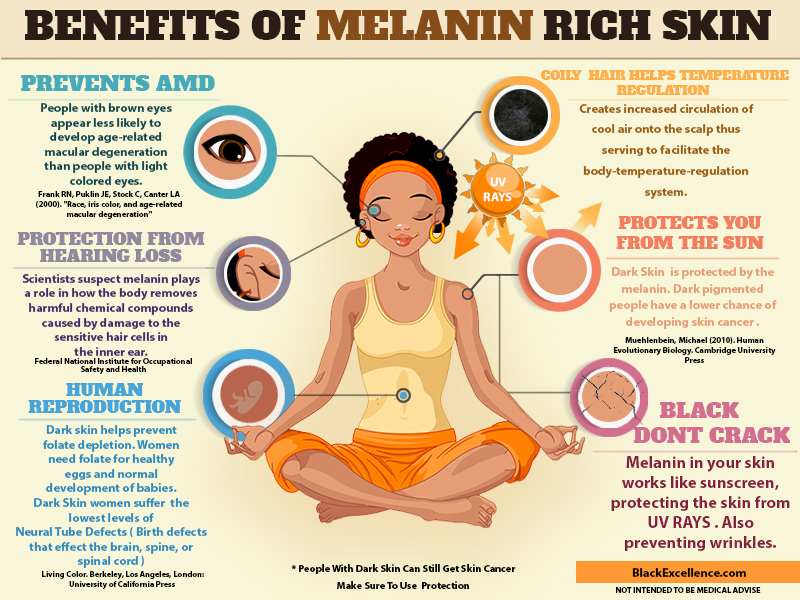
1. BLACK DOESN’T CRACK! The most celebrated quality of possessing melanated skin is its uncanny ability to be anti-aging, whereas, dark skin shows less visible signs of aging when compared to white skin. Dark-skinned people tend to look younger than their chronological age.
2. Protection from the sun, melanated skin has a natural SPF.
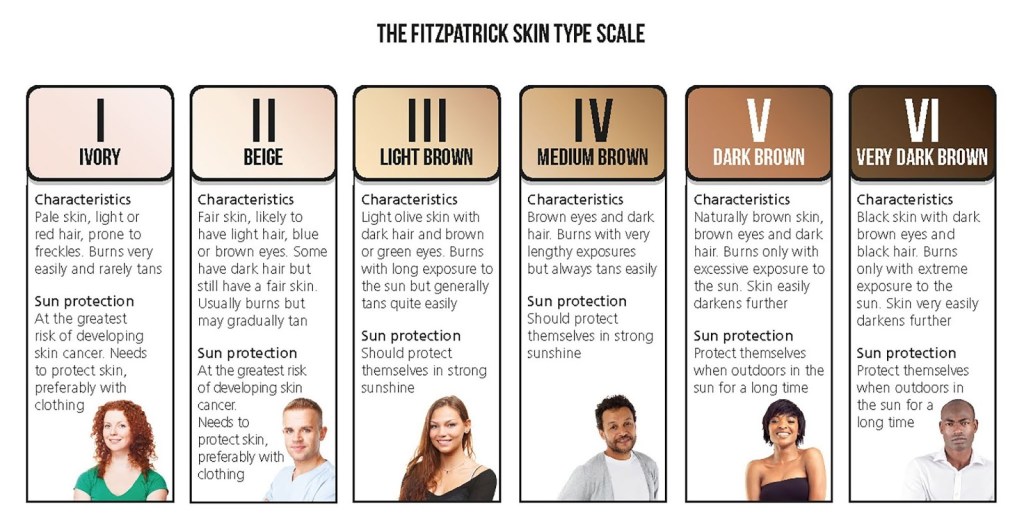
The Fitzpatrick scale (above) is a numerical classification that was created in the 1970s by Thomas Fitzpatrick, an American dermatologist. The study of human skin color underlines the categories of skin color where it relates to how it measures in terms of being exposed to the sun. It identifies that darker skin is less likely to develop skin cancer when exposed to the sun.
In his article, “Why the sun is good for Afrikan people”, Dr. Kwame Osei says,
This lack of melanin cover explains why Europeans/White people especially the albino whites burn in the sun and in the worst circumstances turn pink and get skin cancer- hence why they need to wear sunscreen because their white skin has been damaged by the sun’s UV rays because their pineal gland, an organ between the eyes has been calcified. What this means in effect that they cannot generate energy from the sun’s UV rays due to their lack of melanin. Melanin in its most concentrated form is black. It is black because its chemical structure will not allow any energy to escape once that energy has come in contact with it. This gives us insight and shows that melanin-dominant people do not require the same amount of minerals and nutrients in their diet as people with less melanin.(modernghana.com)
Nearly all black and brown skins are beautiful, but beautiful white skin is rare. Where dark complexions are massed, they make the whites look bleached-out, unwholesome, and sometimes frankly ghastly. I could notice this as a boy, down South in the slavery days before the war. The splendid black satin skin of the South African Zulus of Durban seemed to me to come very close to perfection. The white man’s complexion makes no concealments. It can’t. It seemed to have been designed as a catch-all for everything that can damage it. Ladies have to paint it, and powder it, and cosmetic it, and diet it with arsenic, and enamel it, and be always enticing it, and persuading it, and pestering it, and fussing at it, to make it beautiful; and they do not succeed. But these efforts show what they think of the natural complexion, as distributed. As distributed it needs these helps. The complexion which they try to counterfeit is one that nature restricts to the few–to the very few. To ninety-nine persons, she gives a bad complexion, to the hundredth a good one. The hundredth can keep it–how long? Ten years, perhaps. The advantage is with the Zulu, I think. He starts with a beautiful complexion, and it will last him through. And as for the Indian brown–firm, smooth, blemish free, pleasant, and restful to the eye, afraid of no color, harmonizing with all colors and adding a grace to them all–I think there is no sort of chance for the average white complexion against that rich and perfect tint. — Mark Twain, Skin Deep – Complexions
The Black skin is not a badge of shame, but rather a glorious symbol of national greatness. — Marcus Garvey
The recipients of the phenomenon we know as “MELANIN” are the people, that are referred to as Black, Colored, African, Sub-Saharan, and African American.
In his book, “The Chemical Key to Black Greatness” American Biochemist, Carol Barnes, described melanin as, “a civilizing chemical that acts as a sedative to help keep the black human calm, relaxed, caring, creative, energetic and civilized”. Research also revealed that melanin enables black skin to actively interact with the sun, to produce Vitamin D from a biochemical substance, 7- dehydrocholesterol. The study also detected that, melanin has spiritual dynamics as well as physical, since it acts as a sensory ‘receptor’ and ‘transmitter’; communicating with cosmic energy fields in the vast universe converting light energy to sound energy and back. Dr. Richard King, MD, stated that, “melanin, by its ability to capture light and hold it in a memory mode, reveals that blackness converts light into knowledge”.
All photographs are the property of their respective owners.
Melanin refines the nervous system in such a way that messages from the brain reach other areas of the body most rapidly in dark people, the first race. The abundance of melanin in our skin gives us genetic inferiority. We are physically stronger. Mentally sounder. Spiritually more connected. High absorption of vitamins, full-color range, taste of the full flavor of food, and more intelligence. Melanin (Carbon) is essential to brain, nerve, and organ function it can be found in every part of the body where cells are to reproduce and regenerate. Let’s not forget the anti-aging effects of melanin in dark skin, on average a white-skinned person will look much older than their black counterpart.
“ Melanin (Carbon) is the fundamental unit of the universe and exists in four forms: Cosmic, Planetary, plant kingdom (chlorophyll), and animal kingdom melanin. Melanin is black (carbon) because its chemical structure allows no energy to escape.. making black melanin the super absorber of energy and light. Melanin is found in almost every organ of the body and is necessary in order for the brain and nerves to operate, the eyes to see, and the cells to reproduce. Melanin can rearrange its chemical structure to absorb all energy across the radiant energy spectrum (i.e. sunlight, Xirays, music, sound, radar, radio waves, etc) The black human can charge up his/her melanin just by being in the sun or around the right type of musical sounds or other energy sources. Our body is electrical, with currents of nerves sending signals through our brain daily. Melanin itself, on a philosophical plane, is a black chemical/biological door through which the life force of African spirituality passes in moving from the spirit to the material realm. You will we learn to accept and embrace the fact that Black is not only beautiful but it comes in a variety of different shades, textures, and tones; None of which is better or worse than the other. Proof of a creator? You exist and there are no copies of you anywhere. The facial features of a person of color are more pronounced than any other nation around the world. Did you know that many white people in the Americas tan their skin and are vast consumers of tanning bronzing gels ,etc? Just the other day I saw a white woman at my local market she was as dark as me, but with a orangey tint to her face. So with the lie that states that dark skin is less desired but the hate is more a product of self-hatred and taught behavior, than a total social preference. There is a reason we have been conditioned this way.
As has its advantages dark skin so does dark eyes which can see the full-color range as it is exactly it is.
My conversation with Pascal, a professional photographer from France.
Q: What is it like to work with models/people of color?
Pascal: Let me start with you… photographing you and applying makeup to your face what a pleasure, you have the most beautiful eyes, face, and skin. Up close you are so physically beautiful, physically compelling, I’m hypnotized by your good looks. Your skin is always so soft, smooth, and creamy like churned butter, I love your light skin color. Women of color are the most beautiful creatures on earth, the skin is so deep and rich, they are the best to work with.
Q: Do you have a preference for light or dark?
Pascal: No but in my work, the darker the girl is the more light she becomes to the camera like a rare occurrence with the view. Dark skin really is the best.
Carbon is really the correct word.. but Melanin is the black man’s ace and intelligence. Our skin has the highest amount of Melanin of all nations, also, This is the color of the Savior. And his feet like unto fine brass, as if they burned in a furnace; and his voice as the sound of many waters. Revelation 1:15-17 KJV
Basking in the hot sun for hours While becoming sun-kissed to perfection The salt of our tears raped our face As we picked cotton in the southern heat No other skin could take such a beating Like the Melanin in our skin. Our skin is just like butter burned to make you want to devour it Symbolic of the melting of dark chocolate and How sweet it is Some are like coffee with milk while others are like hot chocolate Only one term to describe the beauty and dimension of the colors of our skin Resplendently Like the melanin in our skin.
The Black skin is not a badge of shame, but rather a glorious symbol of national greatness. — Marcus Garvey
All photographs are the property of their respective owners.
4 things the other nations COVET from us.
1. Lips
So they say that Angelina Jolie made our lips famous? Way before there was Angelina, there were our ancestors that possessed those ancient lumps we call lips, yes full and luscious all the way. Now today with millions of collagen injections being dished out annually for something we have been blessed with.
2. Darker Skin
Who said only white porcelain skin was all the rage with millions of dollars being spent annually on tan salons, bronzing powders, and spray tans all to achieve our sun-kissed skin?
Our melanin is a gift from the Most High God. So cherish it.
3. Our Round Bottoms
It is no secret that black women are known for their big bottoms, but we were born with them. Butt implants have become the norm like brushing your teeth, and many women have become disfigured by infecting fat into their bottoms. Hmmm, wouldn’t have been nice to be born with it.
5. Black Men
Are Truly the most desired men by all nations. The Greatest Gift to the black woman is the black man. So what if so or you are rough around the edges but so are we black women? Everyone can see your greatness, you are our King. So raise and love the black woman back. The other nations may love you, but your roots are with the black woman.
5 Great things about melanin in the skin:
1. Some of the greatest Inventors and Innovators.
Despite such impressive credentials, black people are the innovators and inventors of just about everything on earth from toothpaste to electricity.
2. The Melanin in our Skin.
Beyond a shadow of a doubt, black doesn’t crack, which contributes to our anti-aging, but more importantly, the high concentration of melanin has its benefits such as protection from the sun and produces our Vitamin D.
3. Our hair is unique and fascinating.
Everyone else grows fur. Black hair can maintain its state, whether it be kinky, coily, relaxed, fro, or cornrows can keep its shape in the harsh climates in the world.
4. A black man’s body is superior, genetically stronger than that of any other race.
It has been proven that throughout history that the black man has built the constructs of building and foundations for many nations, including America through slavery, etc.
5. A black woman’s features are highly coveted.
Our skin and facial features are highly coveted by other races, such as our lips, booty, and skin. Many Nordic/Aryan races have emulated our features in mainstream media.
Where faith, history, and truth illuminate the Black experience.



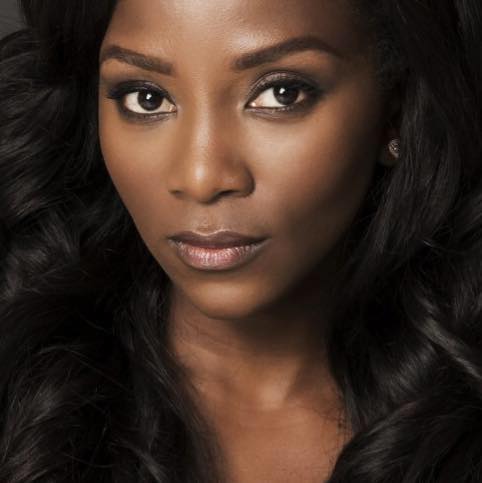

 THE BROWN GIRL DILEMMA