
Tag Archives: The Colorism Series

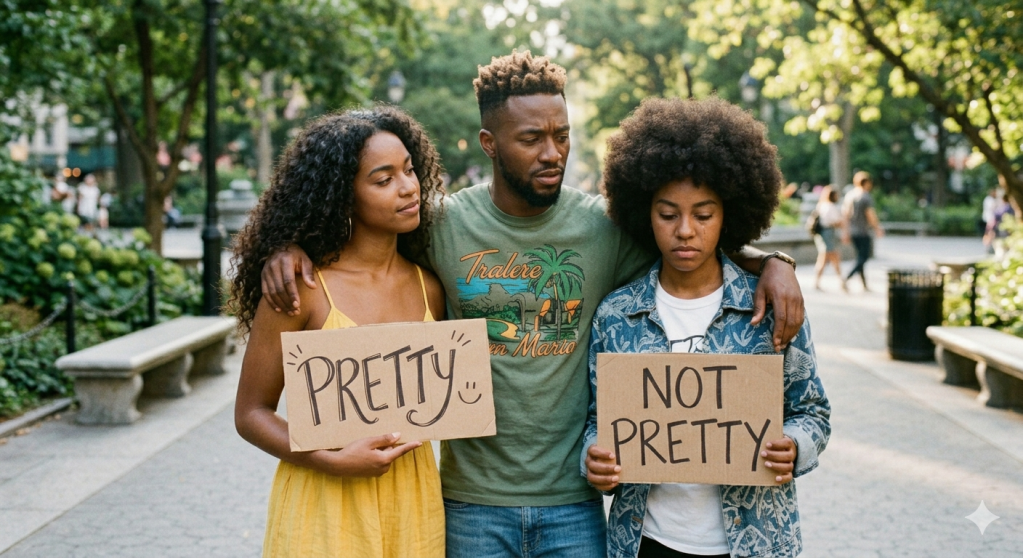
The Colorism Series: Conditioned to Compare.

Colorism is not merely an external system of bias—it is an internalized framework that conditions individuals to constantly measure themselves and others against a hierarchy of skin tone. “Conditioned to compare” reflects a learned behavior, one shaped by generations of socialization, media influence, and historical oppression.

From early childhood, individuals are subtly taught to associate lighter skin with beauty, goodness, and success, while darker skin is often unfairly linked to negativity or inferiority. These associations are reinforced through family dynamics, peer interactions, and institutional messaging (Hunter, 2007).

This conditioning is deeply rooted in colonial history, where European standards of beauty and worth were imposed on colonized populations. Over time, these standards became normalized, embedding themselves into the cultural psyche and influencing how individuals perceive themselves and others.

Within the Black community, this has created a complex and often painful dynamic where individuals are not only judged by external groups but also within their own communities. Comparisons based on skin tone can affect friendships, relationships, and social standing.

The media plays a significant role in reinforcing these comparisons. Lighter-skinned individuals are often overrepresented in film, television, and advertising, creating a narrow standard of beauty that excludes a wide range of natural diversity.

Public figures such as Lupita Nyong’o have spoken candidly about overcoming internalized colorism, sharing how societal messages once made them question their own beauty. Her journey highlights the psychological impact of constant comparison.

Similarly, Viola Davis has addressed the limited roles available to darker-skinned women and the implicit comparisons that shape casting decisions, emphasizing the systemic nature of these biases.

The concept of social comparison theory helps explain this phenomenon. Proposed by Leon Festinger, this theory posits that individuals determine their self-worth by comparing themselves to others, making them particularly vulnerable to societal hierarchies such as colorism (Festinger, 1954).

When these comparisons are based on skin tone, they can lead to internalized inferiority among darker-skinned individuals and a false sense of superiority among lighter-skinned individuals. Both outcomes are harmful, perpetuating division and inequality.

Family environments can unintentionally reinforce these comparisons. Comments about complexion, preferences for lighter-skinned children, or even seemingly harmless jokes can leave lasting impressions that shape self-perception (Thompson & Keith, 2001).

In educational settings, colorism can influence teacher expectations and peer interactions, further embedding comparative thinking. Students may internalize these biases, which can affect their confidence and academic performance.

Romantic relationships are another domain where comparison is prevalent. Studies suggest that lighter-skinned individuals are often perceived as more desirable, reinforcing the idea that love and acceptance are tied to complexion (Banks, 2000).

Economically, the effects of being conditioned to compare are also evident. Lighter-skinned individuals often receive preferential treatment in hiring and promotions, reinforcing the belief that their appearance is inherently more valuable (Goldsmith, Hamilton, & Darity, 2007).

The role of implicit bias is critical in sustaining these patterns. Even individuals who consciously reject colorism may still unconsciously engage in comparative thinking shaped by societal conditioning (Greenwald & Krieger, 2006).

Social media has intensified this phenomenon, providing a constant stream of images that promote specific beauty standards. Filters, editing tools, and curated content often favor lighter complexions, further distorting perceptions of beauty.

The psychological consequences of constant comparison are significant. Individuals may experience anxiety, depression, and low self-esteem as they strive to meet unattainable standards or feel inadequate in comparison to others.

However, there is a growing movement to disrupt this conditioning. Advocacy campaigns, educational initiatives, and cultural shifts are encouraging individuals to reject comparison and embrace self-acceptance.

Representation is key in this transformation. When diverse skin tones are celebrated and normalized in media and leadership, it challenges the hierarchy that fuels comparison and promotes inclusivity.

Faith-based perspectives also offer a powerful counter-narrative, emphasizing that human worth is not determined by outward appearance but by inner character and divine purpose (1 Samuel 16:7, KJV).

Breaking free from the cycle of comparison requires intentional unlearning. It involves recognizing internalized biases, challenging societal norms, and cultivating a sense of self-worth that is independent of external validation.

Ultimately, “Conditioned to Compare” is both a diagnosis and a call to action. By acknowledging the forces that shape our perceptions, individuals and communities can begin to dismantle the harmful hierarchies of colorism and move toward a more unified and equitable future.


References

Banks, I. (2000). Hair matters: Beauty, power, and Black women’s consciousness. New York University Press.

Festinger, L. (1954). A theory of social comparison processes. Human Relations, 7(2), 117–140.

Goldsmith, A. H., Hamilton, D., & Darity, W. (2007). From dark to light: Skin color and wages among African Americans. Journal of Human Resources, 42(4), 701–738.

Greenwald, A. G., & Krieger, L. H. (2006). Implicit bias: Scientific foundations. California Law Review, 94(4), 945–967.

Hunter, M. (2007). The persistent problem of colorism: Skin tone, status, and inequality. Sociology Compass, 1(1), 237–254.

Thompson, M. S., & Keith, V. M. (2001). The blacker the berry: Gender, skin tone, self-esteem, and self-efficacy. Gender & Society, 15(3), 336–357.
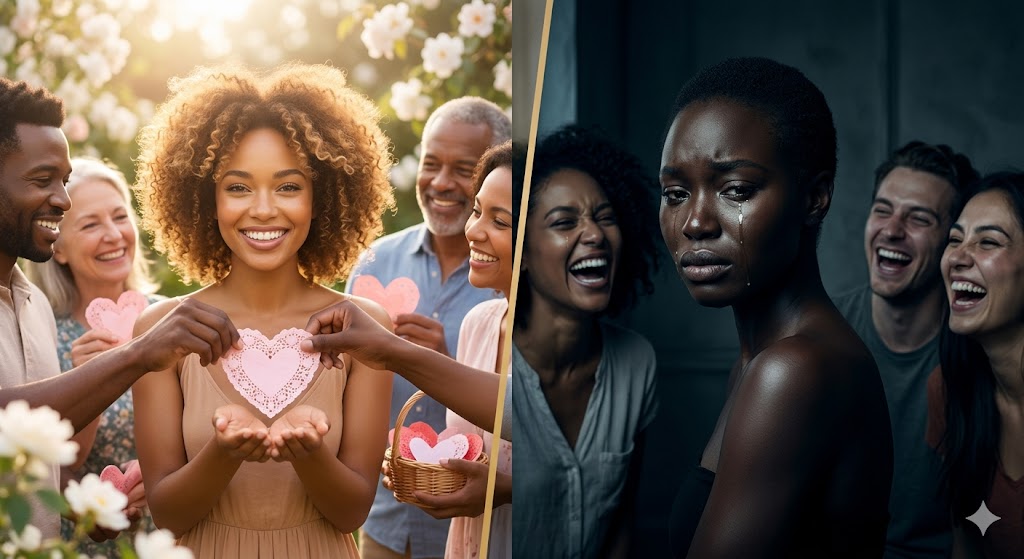

The Colorism Series: Lighter the Love, Darker the Struggle.

Colorism, a deeply embedded social hierarchy privileging lighter skin over darker tones within the same racial group, remains one of the most insidious legacies of colonialism and slavery. It operates not only as a cultural preference but as a structural system that shapes opportunity, identity, and human worth.

The phrase “lighter the love, darker the struggle” encapsulates a painful reality: proximity to whiteness often determines the degree of acceptance, affection, and advantage one receives in society. This dynamic is neither accidental nor modern—it is historically constructed and socially reinforced.

During the era of slavery in the Americas, lighter-skinned enslaved individuals—often the offspring of enslaved women and white enslavers—were frequently assigned domestic labor, while darker-skinned individuals endured harsher field conditions. This division created an early hierarchy based on skin tone that would persist long after emancipation (Hunter, 2007).

The continuation of this hierarchy can be seen in the post-slavery period through practices such as the “paper bag test,” where individuals were judged based on whether their skin tone was lighter than a brown paper bag. Such practices reinforced exclusion even within Black communities (Russell, Wilson, & Hall, 1992).

In contemporary society, colorism manifests in beauty standards that favor lighter skin, straighter hair, and Eurocentric features. These standards are perpetuated by global media, fashion industries, and advertising campaigns, shaping perceptions of desirability and worth.

Public figures like Lupita Nyong’o have spoken openly about their experiences with colorism, highlighting the emotional toll of growing up in a world that often devalues darker skin. Her narrative underscores the internal and external battles faced by many dark-skinned individuals.

Similarly, Viola Davis has addressed the limited opportunities available to dark-skinned actresses, pointing to systemic barriers that extend beyond individual talent or merit.

Colorism also plays a significant role in romantic relationships, where lighter-skinned individuals are often perceived as more desirable partners. Studies suggest that these preferences are influenced by internalized biases shaped by historical and cultural conditioning (Banks, 2000).

Within families, colorism can create divisions, with lighter-skinned children sometimes receiving preferential treatment. These early experiences contribute to long-term psychological effects, including self-esteem issues and identity conflicts (Thompson & Keith, 2001).

Economically, lighter-skinned individuals often experience measurable advantages. Research indicates that they tend to have higher levels of education, increased earning potential, and greater occupational mobility compared to their darker-skinned counterparts (Goldsmith, Hamilton, & Darity, 2007).

The concept of implicit bias helps explain how colorism persists even among individuals who consciously reject racist ideologies. These unconscious preferences influence decisions in hiring, promotion, and social interactions (Greenwald & Krieger, 2006).

Colorism is not limited to the United States; it is a global phenomenon affecting communities across Africa, Asia, Latin America, and the Caribbean. In many regions, skin-lightening products remain a billion-dollar industry, reflecting the widespread desire to conform to lighter beauty ideals.

The psychological burden of colorism is profound. Darker-skinned individuals often report feelings of invisibility, rejection, and the need to overcompensate to gain recognition and respect. This chronic stress can have lasting mental health implications.

Media representation continues to reinforce these disparities by disproportionately showcasing lighter-skinned individuals in leading roles, romantic storylines, and positions of success. This lack of representation shapes societal expectations and individual aspirations.

Despite these challenges, there has been a growing movement to celebrate dark skin and challenge colorist ideologies. Campaigns, literature, and social media movements are reclaiming narratives and affirming the beauty and worth of all skin tones.

Education plays a crucial role in dismantling colorism. By understanding its historical roots and contemporary manifestations, individuals and institutions can begin to challenge the biases that sustain it.

Faith-based perspectives also offer a counter-narrative, emphasizing the inherent value and divine creation of all people regardless of physical appearance. Scriptures remind believers that worth is not determined by outward appearance but by the heart (1 Samuel 16:7, KJV).

Addressing colorism requires intentional action at both individual and systemic levels. This includes challenging personal biases, advocating for inclusive representation, and implementing equitable policies in workplaces and institutions.

Community dialogue is essential in healing the divisions caused by colorism. Open conversations can foster understanding, accountability, and collective growth.

Ultimately, dismantling colorism is about restoring dignity and equity. It requires a rejection of hierarchical thinking and an embrace of diversity in its fullest expression.

“Lighter the love, darker the struggle” is not just a phrase—it is a call to awareness, justice, and transformation. By confronting this reality, society can move closer to a future where love, opportunity, and respect are not determined by the shade of one’s skin.


References

Banks, I. (2000). Hair matters: Beauty, power, and Black women’s consciousness. New York University Press.

Goldsmith, A. H., Hamilton, D., & Darity, W. (2007). From dark to light: Skin color and wages among African Americans. Journal of Human Resources, 42(4), 701–738.

Greenwald, A. G., & Krieger, L. H. (2006). Implicit bias: Scientific foundations. California Law Review, 94(4), 945–967.

Hunter, M. (2007). The persistent problem of colorism: Skin tone, status, and inequality. Sociology Compass, 1(1), 237–254.

Russell, K., Wilson, M., & Hall, R. (1992). The color complex: The politics of skin color among African Americans. Harcourt Brace Jovanovich.

Thompson, M. S., & Keith, V. M. (2001). The blacker the berry: Gender, skin tone, self-esteem, and self-efficacy. Gender & Society, 15(3), 336–357.

The Colorism Series: Office Politics of Skin Tone.

Colorism, a system of inequality that privileges lighter skin tones over darker ones within the same racial or ethnic group, continues to shape workplace dynamics in subtle yet profound ways. Rooted in colonial hierarchies and reinforced through media representation, colorism operates as a silent determinant of perceived professionalism, beauty, and competence.

Colorism operates as a quiet yet powerful force within professional environments, shaping workplace dynamics, opportunities, and perceptions of competence. “Office politics of skin tone” reflects the subtle negotiations of power, favoritism, and bias that occur not just across racial lines, but within them.

Historically rooted in colonial hierarchies and slavery, colorism established a system where lighter skin was associated with proximity to power and privilege. These historical foundations continue to influence modern workplace structures, often in ways that are difficult to detect yet deeply impactful (Hunter, 2007).

In hiring practices, lighter-skinned candidates are frequently perceived as more “professional” or “polished,” reflecting internalized standards tied to Eurocentric beauty ideals. These perceptions are rarely explicit but are reinforced through unconscious decision-making processes.

The role of implicit bias is central to understanding how these dynamics persist. Employers and colleagues may unknowingly favor individuals who align more closely with socially constructed ideals of attractiveness and acceptability (Greenwald & Krieger, 2006).

Once hired, workplace treatment often diverges along color lines. Lighter-skinned employees may receive more mentorship opportunities, positive feedback, and visibility in high-profile projects, all of which are critical for career advancement.

Conversely, darker-skinned employees may face increased scrutiny and harsher evaluations. Their mistakes are more likely to be highlighted, while their achievements may be overlooked or minimized, contributing to slower career progression (Keith & Herring, 1991).

Public figures such as Viola Davis have spoken about being overlooked in favor of lighter-skinned counterparts, illustrating how these biases extend beyond corporate offices into broader professional industries.

Similarly, Lupita Nyong’o has addressed the barriers she faced due to her skin tone, emphasizing the global nature of colorism and its influence on professional recognition.

Office politics often involve informal networks—social gatherings, mentorship circles, and alliances—that play a crucial role in career mobility. Lighter-skinned individuals are more likely to be included in these networks, granting them access to information and opportunities not equally available to others.

Colorism also affects leadership perceptions. Lighter-skinned employees are often seen as more “leadership-ready,” a bias that influences promotion decisions and reinforces disparities in executive representation (Rosette & Dumas, 2007).

In client-facing roles, companies may consciously or unconsciously select lighter-skinned employees to represent their brand, reinforcing narrow definitions of professionalism and appeal. This practice not only marginalizes darker-skinned employees but also perpetuates harmful societal standards.

The economic implications of these dynamics are significant. Research indicates that lighter-skinned individuals within the same racial group often earn higher wages and experience greater occupational mobility (Goldsmith, Hamilton, & Darity, 2007).

The psychological toll on darker-skinned employees is profound. Constant exposure to bias and exclusion can lead to stress, decreased job satisfaction, and a sense of isolation within the workplace (Thompson & Keith, 2001).

Colorism can also create tension and division among employees, as perceived favoritism based on skin tone undermines trust and collaboration. These divisions weaken organizational culture and hinder collective success.

Despite increasing awareness of diversity and inclusion, many corporate initiatives fail to address colorism explicitly. By focusing solely on race, organizations overlook the nuanced ways in which inequality operates within racial groups.

Addressing the office politics of skin tone requires intentional strategies, including bias training that specifically addresses colorism and its manifestations in professional settings.

Transparent evaluation and promotion processes are essential in minimizing subjective judgments influenced by skin tone. Standardized criteria can help ensure that decisions are based on performance rather than perception.

Mentorship and sponsorship programs that prioritize equity can help bridge the gap, providing darker-skinned employees with access to the guidance and opportunities necessary for advancement.

Representation at all levels of leadership is also critical. When diverse skin tones are visible in positions of power, it challenges existing biases and redefines standards of professionalism and success.

Faith-based perspectives offer an additional lens, reminding individuals and organizations that true worth is not determined by outward appearance but by character and integrity (1 Samuel 16:7, KJV).

Ultimately, dismantling the office politics of skin tone requires both individual accountability and systemic change. It demands a commitment to recognizing and challenging biases, fostering inclusivity, and redefining standards of excellence.

Only through deliberate action can workplaces move toward equity—where opportunity is not influenced by complexion, and all individuals are valued for their contributions rather than the shade of their skin.

In many professional environments, lighter-skinned individuals are often unconsciously associated with traits such as approachability, intelligence, and trustworthiness. These perceptions are not accidental but are deeply embedded in historical frameworks that elevated proximity to whiteness as a social advantage (Hunter, 2007).

Scholarly research has consistently demonstrated that lighter-skinned employees, particularly women, are more likely to be hired, promoted, and perceived favorably by employers. This phenomenon reflects what implicit bias scholars identify as unconscious attitudes that influence decision-making processes without deliberate intent (Greenwald & Krieger, 2006).

Within corporate spaces, beauty standards often mirror Eurocentric ideals, privileging straighter hair textures, lighter complexions, and narrower facial features. These standards influence not only hiring decisions but also workplace culture, shaping who is deemed “polished” or “presentable.”

The experiences of darker-skinned women highlight the emotional and professional toll of colorism. Actresses such as Lupita Nyong’o and Viola Davis have publicly discussed how colorism has affected their careers, shedding light on the broader systemic biases that extend beyond Hollywood into corporate America.

Colorism also intersects with gender, creating compounded disadvantages for dark-skinned women. They are often subjected to harsher scrutiny, lower performance evaluations, and fewer leadership opportunities compared to their lighter-skinned counterparts (Keith & Herring, 1991).

In contrast, lighter-skinned employees may benefit from what researchers term the “halo effect,” where physical appearance positively influences perceptions of unrelated traits such as competence and leadership ability (Dion, Berscheid, & Walster, 1972).

The preference for lighter skin can manifest in workplace social dynamics, where lighter-skinned individuals are more likely to be included in networking opportunities, mentorship relationships, and informal social circles that are critical for career advancement.

Historically, these biases can be traced back to slavery and colonial systems, where lighter-skinned individuals were often given preferential treatment due to their proximity to whiteness, sometimes receiving domestic roles instead of field labor. These historical patterns have evolved but not disappeared (Hunter, 2007).

In modern workplaces, colorism may appear in performance reviews, where darker-skinned employees are described with more negative or neutral language, while lighter-skinned employees receive more positive descriptors, even when performance levels are comparable.

Additionally, customer-facing roles often reveal colorist preferences, with lighter-skinned employees more frequently placed in positions that represent the company externally, reinforcing narrow standards of acceptability and professionalism.

The psychological impact of colorism in the workplace cannot be overlooked. Darker-skinned employees may experience decreased self-esteem, increased stress, and a heightened need to overperform to counteract biased perceptions (Thompson & Keith, 2001).

Colorism also affects wage disparities. Studies have shown that lighter-skinned individuals within the same racial group can earn significantly higher wages than their darker-skinned peers, highlighting the economic implications of this bias (Goldsmith, Hamilton, & Darity, 2007).

Corporate diversity initiatives often fail to address colorism explicitly, focusing instead on broader racial categories. This oversight allows intra-racial inequalities to persist unchallenged within organizations.

Media representation continues to reinforce workplace colorism by consistently elevating lighter-skinned individuals as the standard of success and desirability. This cultural messaging influences both employers and employees, shaping expectations and behaviors.

Despite these challenges, there has been a growing movement to confront colorism in professional spaces. Advocacy, research, and open dialogue are beginning to expose these biases and push organizations toward more equitable practices.

Leadership plays a critical role in dismantling colorism. Organizations that actively train managers to recognize and mitigate implicit bias are better positioned to create inclusive environments where all employees can thrive.

Mentorship and sponsorship programs that intentionally include darker-skinned employees can help counteract systemic disadvantages, providing access to opportunities that might otherwise be withheld.

Policy changes, such as standardized hiring practices and transparent promotion criteria, are essential in reducing the influence of subjective biases tied to skin tone.

Ultimately, addressing colorism in the workplace requires a cultural shift that challenges deeply ingrained notions of beauty, professionalism, and worth. It demands accountability from individuals and institutions alike.

By acknowledging and confronting colorism, workplaces can move toward a more just and equitable future—one where success is determined by ability and character rather than the shade of one’s skin.


References

Dion, K., Berscheid, E., & Walster, E. (1972). What is beautiful is good. Journal of Personality and Social Psychology, 24(3), 285–290. https://doi.org/10.1037/h0033731

Goldsmith, A. H., Hamilton, D., & Darity, W. (2007). From dark to light: Skin color and wages among African Americans. Journal of Human Resources, 42(4), 701–738.

Greenwald, A. G., & Krieger, L. H. (2006). Implicit bias: Scientific foundations. California Law Review, 94(4), 945–967.

Hunter, M. (2007). The persistent problem of colorism: Skin tone, status, and inequality. Sociology Compass, 1(1), 237–254.

Keith, V. M., & Herring, C. (1991). Skin tone and stratification in the Black community. American Journal of Sociology, 97(3), 760–778.

Thompson, M. S., & Keith, V. M. (2001). The blacker the berry: Gender, skin tone, self-esteem, and self-efficacy. Gender & Society, 15(3), 336–357.

Rosette, A. S., & Dumas, T. L. (2007). The hair dilemma: Conform to mainstream expectations or emphasize racial identity. Duke Journal of Gender Law & Policy, 14(2), 407–421.