
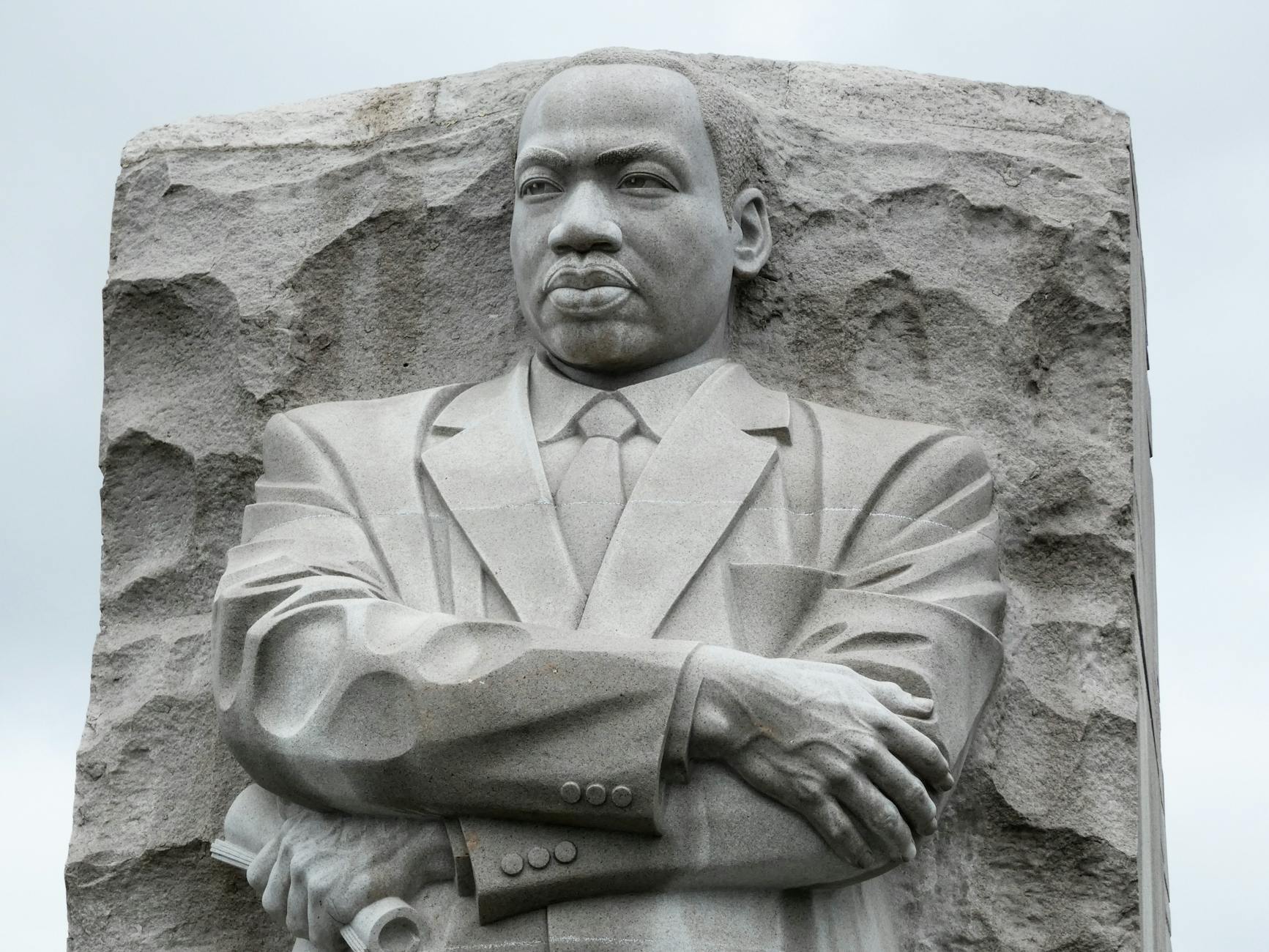
Introduction
The Civil Rights Movement was one of the most transformative periods in American history. Spanning from 1954 to 1968, it represented a moral and legal battle for racial equality, dignity, and justice for Black Americans long oppressed under the shadow of slavery, segregation, and systemic racism. With grassroots courage, spiritual leadership, and national reckoning, the movement dismantled Jim Crow laws, challenged white supremacy, and redefined the conscience of a nation.
Origins of the Movement
The modern Civil Rights Movement began in earnest with the 1954 Brown v. Board of Education decision, in which the U.S. Supreme Court declared segregation in public schools unconstitutional. Yet resistance in the South was fierce, with white politicians, police, and citizens clinging to Jim Crow customs that banned Black people from using the same restrooms, water fountains, buses, restaurants, and schools as white people.
This apartheid-like system was enforced through humiliation, economic retaliation, and police brutality.
Key Leaders and Organizations
Dr. Martin Luther King Jr.
Dr. Martin Luther King Jr. emerged as the moral compass of the movement. A Baptist minister from Atlanta, Georgia, King rose to national prominence during the Montgomery Bus Boycott (1955–56), which followed the arrest of Rosa Parks, a Black woman who refused to give up her seat to a white passenger. King later founded the Southern Christian Leadership Conference (SCLC) and led nonviolent campaigns across the South—including in Birmingham, Selma, and Washington, D.C.
In his iconic “I Have a Dream” speech (1963), King called for a nation where people would not be judged by the color of their skin but by the content of their character. His philosophy of nonviolence, inspired by Jesus and Gandhi, stood in stark contrast to the brutality Black Americans faced.
Rosa Parks
Often called “the mother of the civil rights movement,” Rosa Parks’ simple act of defiance became a catalyst for mass protest. Her arrest sparked the 381-day Montgomery Bus Boycott, which crippled the city’s economy and led to the desegregation of its bus system.
Medgar Evers
Medgar Evers, a World War II veteran and NAACP field secretary in Mississippi, worked tirelessly to investigate lynchings and push for school integration. He was assassinated outside his home in 1963 by white supremacist Byron De La Beckwith, becoming a martyr for the movement.
Jesse Jackson
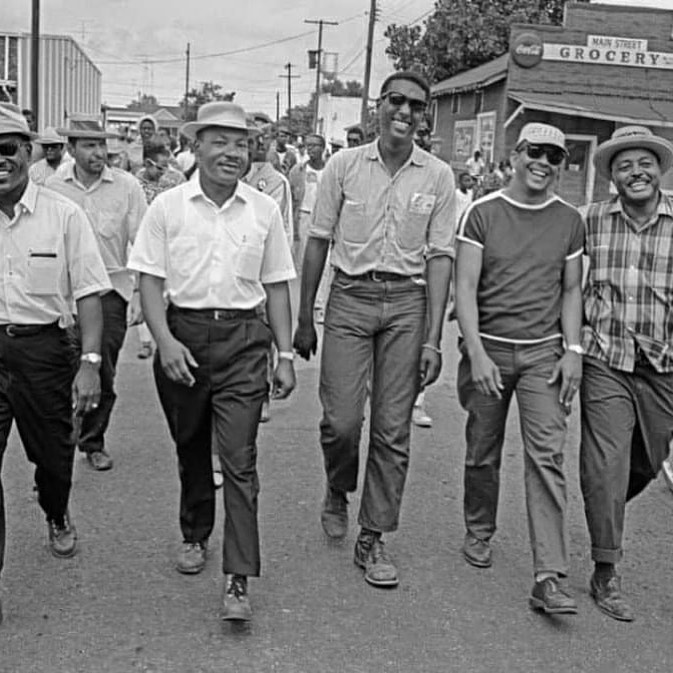
Jesse Jackson, a young activist and close associate of King, founded Operation PUSH and later the Rainbow Coalition, focusing on economic empowerment and political inclusion. He marched with King and continued advocating for civil rights and racial justice for decades.
White Allies
Not all white Americans opposed the movement. Many, including Jewish activists and Christian clergy, joined protests, marches, and even lost their lives—such as Viola Liuzzo, murdered by the Klan after Selma, and Andrew Goodman and Michael Schwerner, killed with James Chaney in Mississippi during Freedom Summer.
Other Influential Groups
Malcolm X
Though not part of the mainstream civil rights leadership, Malcolm X of the Nation of Islam was a vital voice. He criticized the passive approach of nonviolence, advocating for Black self-defense, racial pride, and liberation by any means necessary. His evolution toward Pan-African unity and human rights broadened the scope of the Black struggle.
The Black Panther Party
Founded in 1966 by Huey Newton and Bobby Seale, the Black Panther Party combined militant resistance with community programs—like free breakfasts and medical clinics. They stood against police brutality, which in the 1960s often included attacks with dogs, water hoses, and nightsticks, particularly during protests in Birmingham and Selma.
Police Brutality and Resistance
Black protesters often faced militarized repression. Peaceful marchers in Birmingham (1963) were attacked with police dogs and high-pressure fire hoses, scenes that shocked the world. In Selma (1965), on “Bloody Sunday,” marchers were beaten on the Edmund Pettus Bridge by Alabama state troopers. Police routinely abused, jailed, and sometimes murdered activists. The justice system largely protected white aggressors.
Major Legislative Achievements
The movement forced monumental legal changes:
- Civil Rights Act of 1964 – outlawed segregation and workplace discrimination.
- Voting Rights Act of 1965 – banned literacy tests and protected Black voting rights.
- Fair Housing Act of 1968 – outlawed housing discrimination.
These victories were hard-won through protest, litigation, and bloodshed.
Assassinations and Political Turmoil
Dr. King was assassinated on April 4, 1968, in Memphis, Tennessee, by James Earl Ray. His death sparked nationwide riots and mourning. President John F. Kennedy, who had cautiously supported civil rights and proposed legislation before his assassination in 1963, was killed by Lee Harvey Oswald (officially). His successor, Lyndon B. Johnson, signed many civil rights laws into action.
Controversies and Legacy
FBI files later revealed that J. Edgar Hoover’s COINTELPRO sought to discredit King and other Black leaders. Allegations surfaced of King’s infidelity, possibly manipulated through illegal surveillance. Though claims exist that he was involved with prostitutes, these remain contested and ethically questionable due to FBI tampering. King’s wife, Coretta Scott King, a dignified civil rights leader in her own right, continued his legacy with grace. They had four children and maintained close ties with the gospel community, including Aretha Franklin’s father, Rev. C.L. Franklin, who was a friend of King.
Did It Make a Difference?
Yes—and no. The Civil Rights Movement ended legal segregation and created frameworks for equality. Black voter registration soared, Black elected officials increased, and legal protections were codified. But racism did not end. Today, systemic inequality persists through mass incarceration, housing discrimination, economic disparity, and police violence.
Yet the movement planted seeds of resistance, dignity, and unity that endure in modern movements like Black Lives Matter, and in the resilience of Black communities across America.
Conclusion
The Civil Rights Movement was a righteous uprising against injustice, born of centuries of suffering and sanctified by the blood of martyrs. Led by both preachers and Panthers, men and women, Black and white allies, the movement shattered chains both literal and psychological. It did not end racism—but it changed the law, awakened a nation, and inspired the world.
As King once said, “The arc of the moral universe is long, but it bends toward justice.” The bending continues.
References
- Branch, T. (1988). Parting the Waters: America in the King Years 1954–63. Simon & Schuster.
- Carson, C. (1998). The Autobiography of Martin Luther King, Jr. Warner Books.
- Fairclough, A. (2001). Better Day Coming: Blacks and Equality, 1890-2000. Penguin.
- Garrow, D. J. (1986). Bearing the Cross: Martin Luther King Jr. and the Southern Christian Leadership Conference. Harper Perennial.
- Malcolm X & Haley, A. (1965). The Autobiography of Malcolm X. Grove Press.
- Tyson, T. B. (2004). Blood Done Sign My Name. Crown.
- Williams, J. (2013). Eyes on the Prize: America’s Civil Rights Years, 1954-1965. Penguin Books.
 THE BROWN GIRL DILEMMA