Tag Archives: the brown girl dilemma

Complexion Confessions: Secrets Beneath the Surface of Skin.

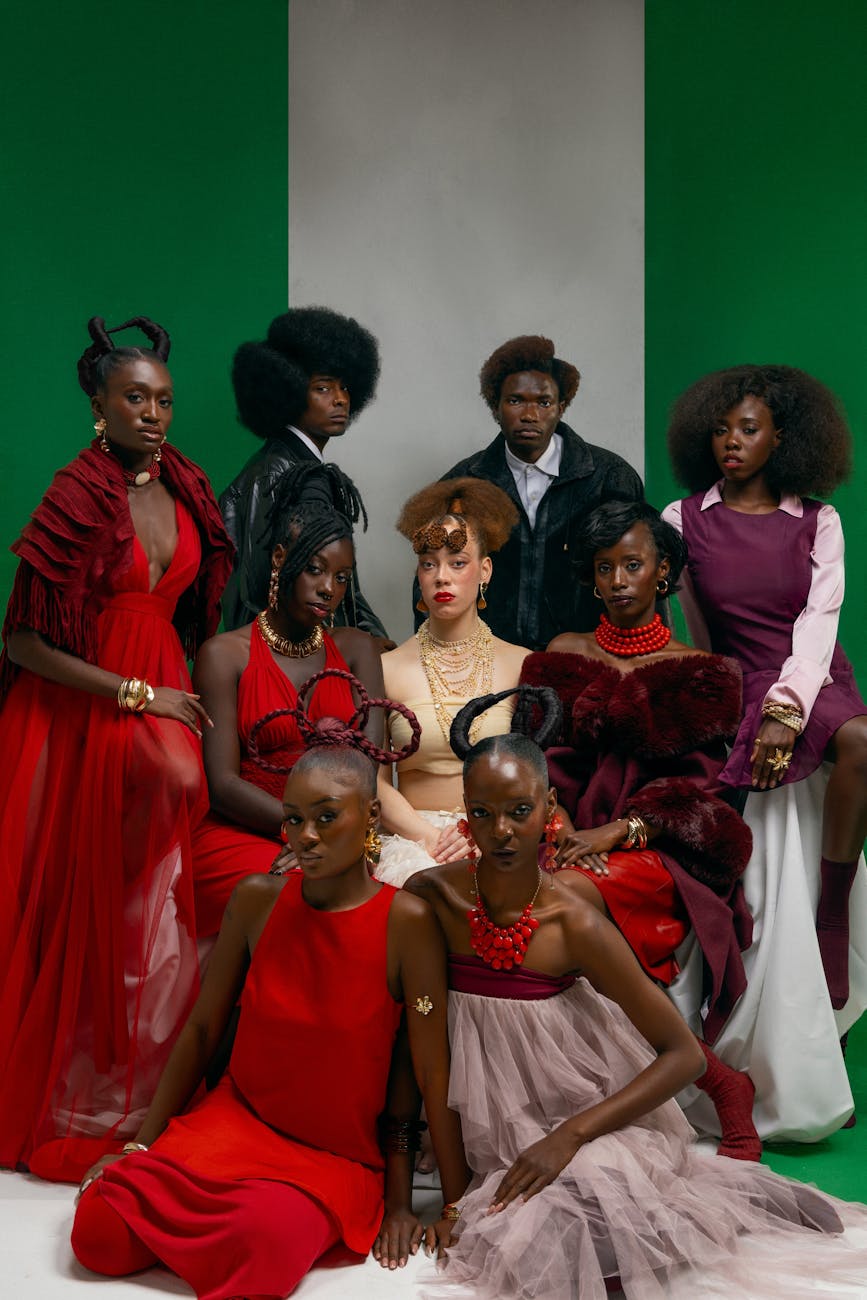
Photo by Gabriel Santos on Pexels.com

Beneath the surface of skin lies a history written in hue—a silent testimony to survival, beauty, and bondage. Complexion has always been more than a biological trait; it is a social code, a passport or a prison depending on the eyes that behold it. In the Black experience, the color of one’s skin has shaped destiny, determining how the world perceives and how one learns to perceive oneself. What lies beneath the surface of skin is not merely pigment—it is memory, trauma, and transcendence woven together in the tapestry of human identity.

The story of complexion begins not in the mirror but in the marketplace. During slavery, skin tone was commodified; lighter skin often brought proximity to the master’s house, while darker skin bore the sun’s scars from the field. The hierarchy of hue became a social order within the Black community itself, planting seeds of internalized bias that still sprout centuries later. What was once a system of oppression became an inherited language of preference, silently dictating beauty, worth, and desirability.

Colorism, a term coined by Alice Walker (1983), remains the unspoken offspring of racism—a form of discrimination within one’s own race. It masquerades as personal taste, yet it echoes centuries of colonial propaganda that idolized whiteness and demonized darkness. These hierarchies not only fractured collective unity but distorted the perception of God’s image within melanin-rich bodies. The complexion became not just a covering but a contested terrain of identity, spirituality, and social survival.

The “paper bag test,” once used by fraternities, sororities, and Black churches, was an open wound disguised as tradition. It revealed how deeply internalized self-rejection had taken root. Acceptance depended on passing for something closer to white. In those subtle rituals of exclusion, Blackness was fragmented, and community bonds were tested against the standards of the oppressor. This legacy still lingers in entertainment, media, and even dating preferences, proving that the colonization of complexion did not end with emancipation.

In the beauty industry, skin tone remains currency. Advertising and social media perpetuate an illusion that lighter equals lovelier, fairer equals favored. The billion-dollar skin-lightening market thrives on this insecurity, particularly in nations with colonial pasts—Africa, the Caribbean, and South Asia. The secret beneath the surface of skin is that capitalism has learned to profit from the psychological residue of oppression. When beauty is filtered through Eurocentric ideals, complexion becomes both a battlefield and a brand.

However, the skin tells a deeper story than beauty alone—it is a shield, a sensor, a record. In every freckle, scar, and undertone lies the imprint of ancestry. Melanin is not a mistake; it is a masterpiece of divine design. It protects against ultraviolet radiation, adapts to geography, and symbolizes survival. Science confirms what the scriptures declared long ago: humanity was formed from the dust of the earth—rich, brown, and sacred (Genesis 2:7, KJV). The soil of Eden shares its color with the sons and daughters of Africa.

Yet for many, the skin has become a source of spiritual warfare. To love one’s complexion in a world that has despised it requires faith and resistance. The psychological toll of colorism manifests in subtle ways: self-doubt, relational tensions, and media-driven inferiority complexes. Beneath the surface lies the quiet ache of those who were told they were too dark to be beautiful or too light to be authentic. The war between shades has left emotional scars deeper than any visible blemish.

Within Black communities, complexion often intersects with privilege. Studies reveal that lighter-skinned individuals are statistically more likely to receive leniency in court, higher wages, and greater visibility in media (Hunter, 2007). This phenomenon—sometimes called “the light-skin advantage”—is not accidental; it is the residue of colonial favor embedded into modern systems. Beneath the surface of skin is a sociological script that continues to play out even when the world pretends not to see.

Artists, activists, and scholars have long sought to unmask these silent hierarchies. Poets like Audre Lorde and Toni Morrison wrote about color as both inheritance and weapon. Lorde’s call for self-definition and Morrison’s portrayal of Pecola Breedlove in The Bluest Eye expose how racialized beauty standards fracture the psyche. Their works serve as confessions—truth-telling about how skin becomes both a site of oppression and revelation.

But amid these confessions lies transformation. The reclamation of melanin as divine, regal, and powerful challenges centuries of degradation. Social media movements like #MelaninMagic and #BlackGirlMagic celebrate the radiance once ridiculed. Photographers, fashion designers, and theologians are redefining the narrative—revealing that the secret beneath the surface is not shame but sacredness. Each shade carries its own rhythm, its own reflection of creation’s spectrum.

The spiritual dimension of complexion invites a reawakening. When one realizes that melanin absorbs light, one sees a metaphor for resilience—the ability to take in the harshness of the world and still shine. The body itself testifies of divine intention. Psalms 139:14 reminds, “I will praise thee; for I am fearfully and wonderfully made.” To internalize this truth is to confess that beauty is not dictated by pigment but by purpose.

Education and cultural awareness are essential to dismantling color hierarchies. Schools, media, and churches must address how the legacy of slavery and colonialism still informs standards of attractiveness and identity. When children learn that beauty is broad, deep, and diverse, they begin to unlearn centuries of bias. Healing begins when history is acknowledged, not erased.

The media bears responsibility in this transformation. Representation matters not as tokenism but as restoration. When darker-skinned women like Lupita Nyong’o, Viola Davis, and Danai Gurira are celebrated for their authenticity, it disrupts the monopoly of Eurocentric ideals. These images are not mere aesthetics—they are acts of revolution. The screen becomes a sanctuary where melanin is no longer muted but magnified.

Yet, the healing process must reach beyond visibility. It must touch the heart. True liberation occurs when individuals reconcile with their reflection. The confession beneath the surface is not simply about skin—it is about self-love resurrected after centuries of rejection. To stand unapologetically in one’s own hue is a form of spiritual warfare, a declaration of identity against the powers of conformity.

The church, too, must engage in this dialogue. Historically complicit in color hierarchies through depictions of a white Christ, the church now faces the opportunity for correction. A theology of melanin—a recognition that the Creator delights in diversity—can reframe the faith experience. Revelation 1:15 describes Christ’s feet as “like unto fine brass, as if they burned in a furnace,” affirming a complexion that mirrors the people of the sun.

In relationships, complexion still shapes perceptions of attraction and status. Media perpetuates the idea that certain shades are more desirable, influencing dating preferences and marriage patterns. Yet, when love is purified of prejudice, it reflects divine order. The confession beneath the surface is that healing must also happen between us—between brothers and sisters divided by shades of the same ancestry.

Psychologists argue that overcoming colorism requires self-awareness and community re-education. Therapy, literature, and art all serve as tools of restoration. When individuals confront their biases, they begin to dismantle the system from within. Healing is a collective act; it requires truth-telling, forgiveness, and courage.

The “confessions” of complexion are, ultimately, sacred testimonies. They are the whispers of generations who survived despite being misjudged by their melanin. Each story, each face, carries ancestral wisdom. When we peel back the layers of bias and shame, we uncover something eternal—a reminder that beneath the surface of skin lies the spirit, unbreakable and divine.

The secret beneath the surface of skin, then, is not pain but power. It is the revelation that every shade of brown, bronze, and black carries the fingerprint of the Creator. To love one’s complexion is to honor God’s artistry, to recognize that beauty is not found in imitation but in embodiment. The true confession of complexion is this: we are more than the surface—we are the story, the soil, and the light.


References

Hunter, M. (2007). The persistent problem of colorism: Skin tone, status, and inequality. Sociology Compass, 1(1), 237–254. https://doi.org/10.1111/j.1751-9020.2007.00006.x

Lorde, A. (1984). Sister outsider: Essays and speeches. Crossing Press.

Morrison, T. (1970). The bluest eye. Holt, Rinehart, and Winston.

Walker, A. (1983). In search of our mothers’ gardens: Womanist prose. Harcourt Brace Jovanovich.

Wilkerson, I. (2020). Caste: The origins of our discontents. Random House.

Wyatt, J. (2022). Colorism in the Black community: Historical trauma and the path to healing. Journal of Black Studies, 53(2), 175–194. https://doi.org/10.1177/00219347211051844

Dilemma: Racist Jokes and Not Challenging Them

Racist jokes have long been disguised as “harmless humor,” but they are one of the most insidious tools used to maintain racial hierarchies and normalize prejudice. These jokes may seem trivial to those who tell them, yet they carry deep historical and psychological implications that wound the dignity of Black people and other marginalized groups. The failure to challenge such jokes allows racism to flourish in silence, turning laughter into complicity. Racist humor is not merely a matter of taste—it is a form of cultural violence that reinforces systemic oppression (Sue et al., 2019).

At the core of racist jokes lies the dehumanization of others. By reducing a person or group to a stereotype, humor becomes a weapon rather than a bridge. It permits white individuals to reaffirm superiority under the guise of comedy. When these jokes target Black people, they often draw on centuries-old caricatures born from slavery and Jim Crow imagery—depicting Black individuals as lazy, violent, hypersexual, or unintelligent (Pilgrim, 2012). Such portrayals have shaped how society perceives and mistreats Black lives.

Silence in the face of racist jokes is a form of passive racism. When bystanders laugh or remain quiet, they send a message that prejudice is acceptable or trivial. This silence validates the racist sentiment, giving it space to thrive in social and professional environments. The failure to challenge these remarks reflects what Martin Luther King Jr. described as the “appalling silence of the good people”—the moral inaction that sustains injustice (King, 1963).

Examples of racist jokes are numerous and often recycled across generations. Some of the most common include:

  1. “What do you call a Black pilot? A good example—because you didn’t expect that!”
  2. “Why don’t Black people like country music? Because every time they say ‘yee-haw,’ someone thinks they’re stealing horses.”
  3. “How do you starve a Black man? Hide his food stamps under his work boots.”
  4. “What’s faster than a Black man running with your TV? His mom cashing the check.”
  5. “Why are Black people afraid of chainsaws? Because they start with the sound ‘Run!’”
  6. “What’s the difference between Batman and a Black man? Batman can go to the store without Robin.”
  7. “Why did the Black guy buy a ladder? To get his credit score up.”
  8. “What do you call a Black man in college? A visitor.”
  9. “Why don’t Black people like swimming? They don’t want to wash off their color.”
  10. “What’s the national bird of Black America? The jailbird.”

These examples are painful to read but necessary to expose. Each joke perpetuates a stereotype rooted in anti-Blackness—whether about crime, poverty, education, or worth. They are not mere words; they echo the same ideologies that justified enslavement, segregation, and mass incarceration. Their humor is drawn from the suffering and systemic oppression of Black people.

When racist jokes go unchallenged, they teach observers—especially youth—that racial bias is acceptable. They create cultural permission for future discrimination. What begins as laughter at a “joke” can evolve into bias in hiring decisions, police interactions, or healthcare treatment. Racist humor trains society to see Black pain as entertainment and to dismiss calls for justice as overreactions (Ford & Ferguson, 2004).

Psychologically, racist jokes inflict harm on Black listeners. They reinforce feelings of alienation, shame, and anger. The experience of being mocked or reduced to a stereotype in public settings activates stress responses similar to trauma. Over time, these repeated microaggressions can lead to racial battle fatigue—a state of chronic emotional exhaustion experienced by many Black people navigating white-dominated environments (Smith, 2004).

Sociologically, racist jokes function as bonding rituals among white people. Laughter becomes a shared signal of racial belonging, reinforcing in-group solidarity at the expense of Black humanity. Those who laugh, even uncomfortably, affirm their membership in whiteness. This is why silence is never neutral—it sides with power, not justice. Every unchallenged joke strengthens the invisible architecture of racism in daily life (Billig, 2001).

To overcome this, people must learn to recognize and interrupt racism in real time. The first step is developing moral courage—the ability to speak up even when it feels socially uncomfortable. This can involve simple but firm responses such as: “That’s not funny,” “Why would you say that?”, or “I don’t tolerate racist jokes.” Silence is easy; resistance requires integrity. When someone disrupts the moment, they break the illusion that everyone agrees with the prejudice.

Education also plays a vital role. People must be taught to understand the historical roots of racist humor and how it connects to larger systems of oppression. Anti-racist training, media literacy, and open discussions about bias can dismantle the ignorance that fuels these “jokes.” Understanding that humor has been a tool of white supremacy helps individuals grasp why such comments are never innocent (Hughey & Byrd, 2013).

Accountability must replace passivity. In workplaces, schools, and families, institutions should create clear policies that address discriminatory remarks and jokes. Anti-racism should not be optional—it should be embedded in codes of conduct and enforced through restorative or disciplinary measures. This sends a message that humor is not exempt from ethics.

Healing from the effects of racist humor also requires community solidarity. Black people need spaces where their pain is validated and their identity celebrated. Laughter within Black spaces, however, serves a different function—it becomes an act of resistance and reclamation. When Black comedians address racism, they invert its power by transforming pain into truth-telling and empowerment. The difference lies in who holds the power to define the narrative.

Spiritual and emotional healing are also vital. Scriptures remind believers that “death and life are in the power of the tongue” (Proverbs 18:21, KJV). Racist jokes speak death—death to empathy, to equality, and to the image of God within Black lives. To overcome them, society must relearn the sacred weight of words and choose speech that uplifts rather than degrades.

For white allies, it is essential to examine why silence feels safer than confrontation. Fear of social rejection often outweighs moral responsibility. But true allyship demands discomfort. It means risking relationships to uphold justice and using privilege as a shield for the oppressed rather than a cloak for cowardice.

For Black people, resilience involves not internalizing the lies behind racist humor. These jokes are reflections of ignorance, not truth. Overcoming them means affirming self-worth, reclaiming identity, and surrounding oneself with affirming voices that speak life into Black existence. Education, faith, and cultural pride all serve as antidotes to the poison of ridicule.

On a societal level, challenging racist jokes is a step toward dismantling the normalization of anti-Blackness. When everyday racism becomes unacceptable in private conversations, society takes a measurable step toward equity. The goal is not to police humor but to purify it—to restore its power to unite rather than divide.

In the end, racist jokes are not about laughter but about control. They remind Black people of their supposed “place” in a racial hierarchy that should have been dismantled long ago. To laugh along is to agree; to stay silent is to consent. The only moral option is to challenge it. Every voice raised in truth breaks a link in the chain of systemic racism.

References
Billig, M. (2001). Humor and hatred: The racist jokes of the Ku Klux Klan. Discourse & Society, 12(3), 267–289.
Ford, T. E., & Ferguson, M. A. (2004). Social consequences of disparagement humor: A prejudiced norm theory. Personality and Social Psychology Review, 8(1), 79–94.
Hughey, M. W., & Byrd, W. C. (2013). The souls of white jokes: Whiteness and humor in social media. Ethnic and Racial Studies, 36(10), 1582–1598.
King, M. L. Jr. (1963). Letter from Birmingham Jail.
Pilgrim, D. (2012). The museum of racist memorabilia: The Jim Crow Museum of Racist Imagery. Ferris State University Press.
Smith, W. A. (2004). Black faculty coping with racial battle fatigue: The campus racial climate in a post–civil rights era. New Directions for Teaching and Learning, 2004(98), 27–37.
Sue, D. W., Alsaidi, S., Awad, M. N., Glaeser, E., Calle, C. Z., & Mendez, N. (2019). Disarming racial microaggressions: Microintervention strategies for targets, White allies, and bystanders. American Psychologist, 74(1), 128–142.

Black History: Tignon Law – When Black Beauty Became a Crime.

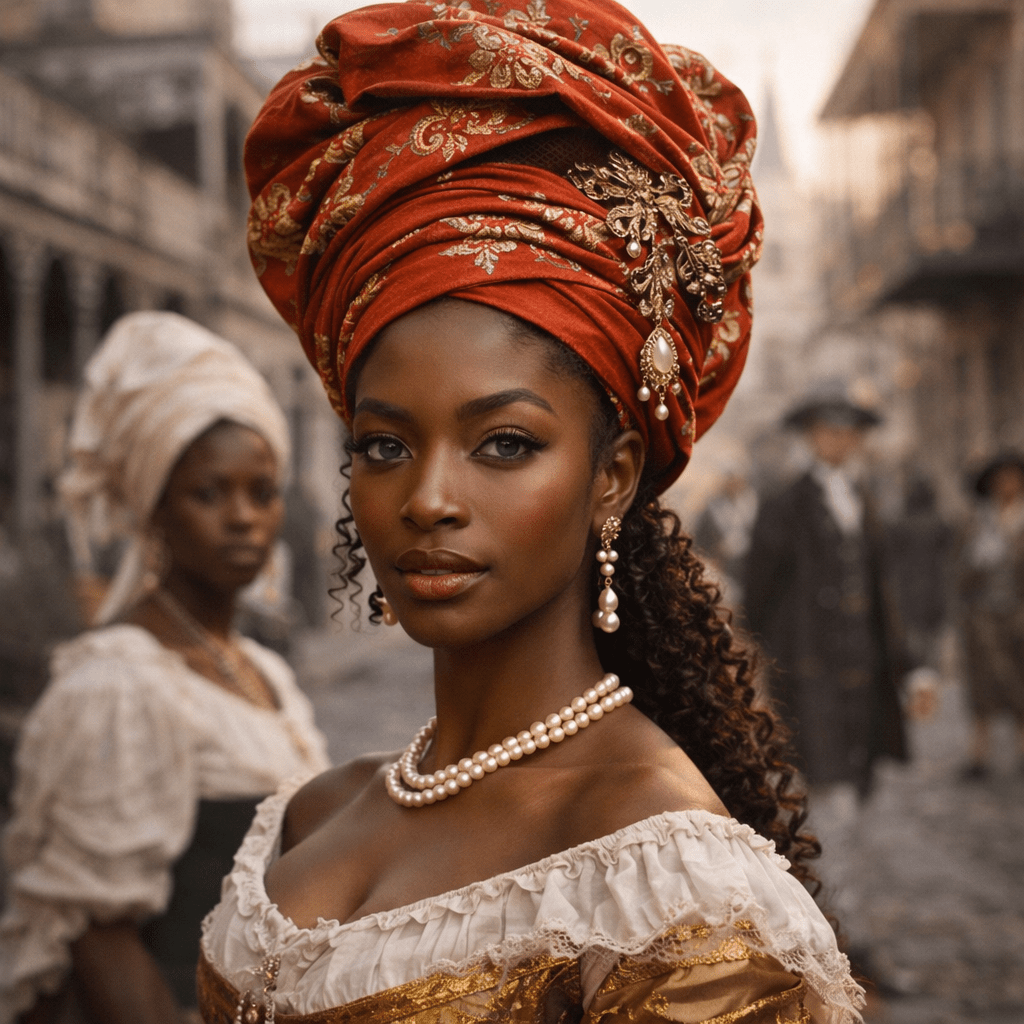
The Tignon Law represents one of the most striking examples of how Black beauty and identity have been policed through legislation. Passed in 1786 in Louisiana, this law required Black women, both free and enslaved, to cover their hair in public with a tignon, a type of headscarf. The law was ostensibly aimed at curbing the allure of Black women, reflecting deep anxieties about race, beauty, and social hierarchy in a colonial society.

The law was enacted during the period of Spanish rule in Louisiana, under the governorship of Esteban Rodríguez Miró. Miró was concerned with the growing social influence of free Black women, particularly the Gens de Couleur Libres, or free women of color, who were achieving economic independence and social prominence. Wealthy and attractive, these women challenged the rigid racial and gender hierarchies of the time.

The Tignon Law was framed as a moral and social regulation. Officials argued that Black women’s natural beauty and fashionable adornments threatened social order and risked attracting attention from white men. By forcing women to cover their hair, the law sought to visibly mark them as subordinate, restricting their ability to express themselves through appearance.

Hair and head wrapping have long been deeply symbolic in African and African diasporic cultures. Hair texture, styles, and adornments signify identity, social status, and cultural heritage. The Tignon Law directly targeted these expressions, attempting to erase visible signs of Black beauty that could empower women socially and economically.

Free Black women in New Orleans were particularly affected. Many were wealthy business owners, property holders, and skilled artisans. Their appearance, including elaborately styled hair and colorful scarves, became symbols of their independence and influence. These displays were seen as threats by a white elite intent on maintaining racial hierarchies.

Despite the law’s oppressive intent, Black women creatively subverted it. They wore tignons in elaborate, colorful, and decorative ways, turning what was intended as a mark of subjugation into a fashion statement. This resistance reflected ingenuity, resilience, and the enduring assertion of beauty and identity under racist constraints.

The law illustrates broader societal anxieties about Black female sexuality and power. White authorities feared that attractive Black women could disrupt social control by challenging assumptions of whiteness as superior and Blackness as subordinate. The Tignon Law is a vivid example of how systemic racism extends beyond economics and politics into the policing of appearance and cultural expression.

The Tignon Law was not only about controlling hair—it was about controlling the body and autonomy of Black women. By regulating visibility and beauty, colonial authorities sought to communicate that Black women could not assert power through self-presentation, wealth, or social influence.

Economic success among free Black women further intensified white anxieties. Many were entrepreneurs, running boarding houses, laundries, or small shops. Their wealth and social presence contradicted prevailing stereotypes of Black women as powerless or submissive, prompting legislative efforts to suppress this visibility.

The law also had implications for enslaved women. While their labor was exploited, enslaved women who displayed beauty or elegance could be accused of seduction or insolence. Hair covering laws reinforced a racialized hierarchy that sought to render all Black women invisible, modest, and socially subordinate.

Head wrapping itself carries a long history in African culture, signaling marital status, social rank, or spiritual devotion. The tignon, while imposed by colonial authorities, was adopted and transformed by Black women into an assertion of cultural pride and defiance.

Racist views underpinning the Tignon Law reflect broader European ideologies that sought to contain Black identity and sexuality. Beauty was racialized as threatening, with Black women punished for attractiveness and personal style in ways that white women were never subjected to.

Despite legal restrictions, Black women used the tignon to communicate status, creativity, and elegance. Some tied elaborate knots, layered multiple scarves, and adorned them with jewels or lace. Their adaptation of the law demonstrates the power of cultural expression to resist oppression.

The Tignon Law also highlights intersections of race, gender, and law. Unlike men, whose economic success might be tolerated or co-opted, Black women’s appearance and autonomy were policed as a threat to social order, revealing gendered dimensions of racial control.

Cultural historians argue that the Tignon Law had unintended consequences. By attempting to suppress Black beauty, it fostered a unique fashion aesthetic that blended African heritage with European influences, influencing Caribbean and American styles for generations.

The law remained in effect throughout the late 18th century, though enforcement was inconsistent. Black women’s ingenuity rendered the law largely symbolic, showing that social power can be expressed through appearance even under legal constraints.

The Tignon Law is a precursor to later codes and social norms that restricted Black women’s hair, such as school bans on natural hairstyles or corporate appearance policies. These contemporary issues echo the same underlying anxieties about Black beauty, professionalism, and visibility.

Understanding the Tignon Law is critical for appreciating the ways Black women have historically resisted aesthetic policing. It highlights their creativity, resilience, and ability to claim beauty as a form of power, even in the face of systemic oppression.

The law also reminds modern audiences that beauty is not superficial—it is political. Black women’s choices regarding hair, adornment, and style have long been sites of resistance, negotiation, and cultural affirmation.

Ultimately, the Tignon Law exemplifies the intersection of race, gender, law, and aesthetics. It serves as a testament to the enduring struggle of Black women to define their identity, assert autonomy, and transform imposed limitations into symbols of pride and cultural resilience.


References

Miller, M. (2017). Wrapped in Pride: African American Women and Head Coverings. University of North Carolina Press.

Foster, T. (2013). The Tignon Law: Policing Black Female Beauty in Colonial Louisiana. Journal of Southern History, 79(2), 287–310.

Reed, A. (2005). The Black Past: New Orleans Free Women of Color and the Tignon Law. African American Review, 39(4), 601–618.

Giddings, P. (1984). When and Where I Enter: The Impact of Black Women on Race and Sex in America. HarperCollins.

Hall, K. (1992). Hair as Power: Cultural Identity and Resistance in African American History. Journal of American History, 79(3), 921–939.

Dominguez, V. (2008). Colonial Laws and Racial Control in Spanish Louisiana. Louisiana Historical Quarterly, 91(1), 45–72.

Scott, R. (2006). Beauty and Subversion: The Politics of Black Female Appearance. Feminist Studies, 32(1), 87–112.

Black Stereotype Series: Mammy – The Origins and Legacy of a Controlling Image.

The “Mammy” stereotype is one of the most enduring and harmful caricatures in American culture, representing Black women as loyal, nurturing, and subservient caretakers of white families. This stereotype has its roots in the era of slavery, evolving into a pervasive image in popular media, advertising, and literature that distorted the realities of Black womanhood.

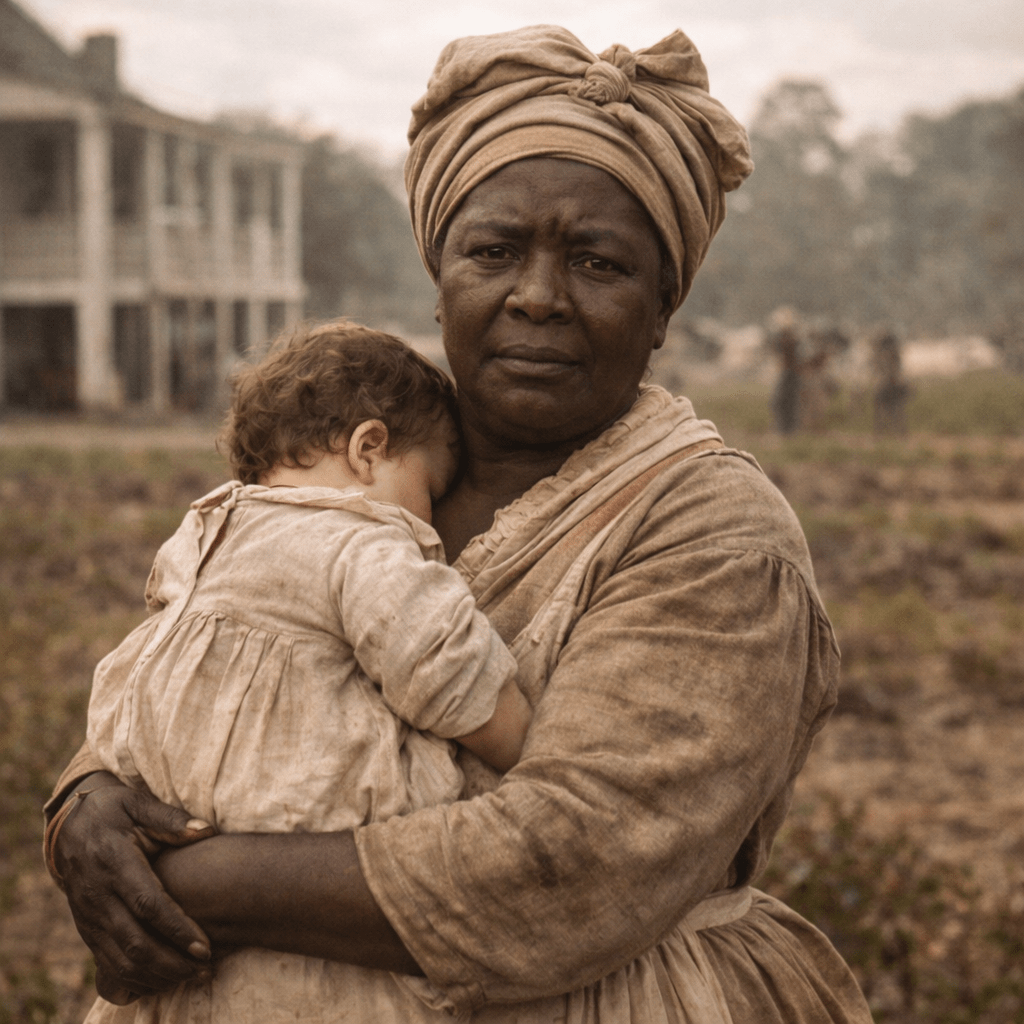
Historically, a mammy was a Black woman employed by a white household, often enslaved, responsible for raising white children, cooking, cleaning, and managing domestic labor. The role required complete obedience, selflessness, and emotional labor while denying the woman autonomy over her own life.

During slavery, the mammy’s existence was shaped by oppression and survival. While she was sometimes positioned as a maternal figure for white children, she was denied motherhood of her own children, who might be sold, abused, or neglected. This forced nurturing role was a form of psychological control that reinforced white supremacy.

Physical characteristics were often exaggerated in the Mammy stereotype. Popular culture depicted mammies as overweight, dark-skinned, elderly women with wide noses, large eyes, and hair tied in a scarf or kerchief. These features were contrasted against ideals of European beauty to emphasize their “otherness” and justify subservience.

The image of the mammy was not simply descriptive—it was prescriptive. It suggested that Black women were naturally suited for servitude, domestic labor, and caretaking, thereby legitimizing both slavery and racial hierarchies. The mammy became a comforting figure for white society, masking the brutality of slavery behind the illusion of loyalty and affection.

In the post-slavery era, the mammy stereotype persisted in media and advertising. The most famous example is Aunt Jemima, a brand that used a smiling, maternal Black woman as its mascot for pancake syrup and other products. The character reinforced notions that Black women existed to serve white households, normalizing racial subordination for generations.

The creation of the mammy stereotype had multiple causes. It served to ease white guilt over the horrors of slavery, rationalize the economic dependence on enslaved labor, and infantilize Black women as harmless, loyal, and nonthreatening. It also reinforced gendered expectations of women as domestic nurturers, but only within a racialized hierarchy.

Slavery itself created conditions for the mammy figure. Enslaved Black women were separated from their families, forced to work in domestic settings, and denied personal agency. These social realities became simplified and romanticized in cultural narratives, which erased the violence and coercion underlying their labor.

The mammy stereotype also had a visual codification in film and literature. Characters such as Hattie McDaniel in Gone with the Wind epitomized the trope, showing Black women as loyal, jolly, and devoted entirely to white families while remaining sexually desexualized. This image became a template for portrayals of Black women for decades.

Treatment of real-life mammies varied, but it was often harsh and exploitative. While some might have had close bonds with children they cared for, their labor was uncompensated or minimally compensated, and they were frequently subjected to physical punishment, verbal abuse, and systemic neglect.

The stereotype persists in subtle ways in modern culture. Contemporary media still sometimes portrays Black women in caregiving or service-oriented roles, emphasizing nurturing or subservient qualities while neglecting complexity, independence, and agency. These echoes of the mammy reinforce racialized expectations.

A defining aspect of the mammy figure is the emotional labor expected of her. She was imagined as endlessly patient, self-sacrificing, and cheerful regardless of mistreatment or abuse. In reality, enslaved and working Black women often carried immense emotional and physical burdens with no recognition or reward.

The mammy’s image was also carefully codified through dress and posture. Headscarves, aprons, and loose-fitting clothing became shorthand for subservience, domesticity, and age, creating a visual language that signaled loyalty to white households while denying Black women individuality or beauty.

Racist ideologies reinforced the stereotype. By presenting Black women as content in servitude, white society justified ongoing racial hierarchies and minimized the brutality of slavery. The mammy figure served as propaganda, comforting white audiences while erasing Black women’s struggles and resistance.

Advertising and branding further entrenched the mammy stereotype. From Aunt Jemima to various domestic product mascots, corporations leveraged the image of a smiling, motherly Black woman to sell products, perpetuating a reductive and exploitative representation for profit.

The mammy stereotype also intersects with gender oppression. By portraying Black women as caretakers first and individuals second, society denied them sexual, economic, and social autonomy. Their identity was flattened into a role that served white households, leaving little space for recognition of personal aspirations or desires.

Efforts to challenge and dismantle the mammy stereotype have increased in contemporary scholarship and activism. Scholars and cultural critics highlight the harm of these images and advocate for nuanced representations that honor the complexity, strength, and humanity of Black women.

In literature, cinema, and history, Black women’s voices reveal a different narrative than the mammy trope suggests. Enslaved and free women resisted domination in countless ways, asserting their dignity, creating cultural expressions, and protecting families despite systemic oppression.

The mammy stereotype exemplifies how race, gender, and labor intersected under slavery and beyond. It illustrates how visual and cultural symbols can enforce social hierarchies while shaping perceptions of entire communities. Understanding this history is critical to dismantling persistent racial stereotypes.

Ultimately, the mammy figure is not a reflection of reality but a tool of control and propaganda. Recognizing its origins, effects, and ongoing influence helps to contextualize contemporary struggles for representation, equity, and the reclamation of Black women’s narratives and beauty.


References

Giddings, P. (1984). When and Where I Enter: The Impact of Black Women on Race and Sex in America. HarperCollins.

Pilgrim, D. (2012). The Mammy Caricature. Jim Crow Museum of Racist Memorabilia, Ferris State University. Retrieved from https://www.ferris.edu/HTMLS/news/jimcrow/mammies/

Wallace-Sanders, K. (2008). Mammy: A Century of Race, Gender, and Southern Memory. University of Michigan Press.

Hine, D. C., Hine, W. C., & Harrold, S. (2009). The African American Odyssey. Pearson Higher Ed.

Pilgrim, D. (2000). Aunt Jemima and the Mammy Figure. Retrieved from https://www.ferris.edu/HTMLS/news/jimcrow/mammies/

West, C. M. (1995). Mammy, Jezebel, Sapphire, and Their Homegirls: Developing an “Oppositional Gaze” Toward the Images of Black Women. In Black Women in America (pp. 28–42). Indiana University Press.

Hall, K. (1992). Hair as Power: Cultural Identity and Resistance in African American History. Journal of American History, 79(3), 921–939.

The Beautiful Burden of Being Black

The beautiful burden of being Black is a paradox the world rarely understands. It is to carry a history lined with wounds and still walk with a grace that defies logic. It is to bear the weight of collective memory while radiating a joy that refuses to die. This burden is heavy, yet it glows—because Blackness, with all its complexity, is both a cross and a crown.

The burden is beautiful because it begins in brilliance. Before oppression, before colonization, before forced migration, there were nations of power: Kush, Axum, Kemet, Mali, Songhai, and countless others. These civilizations remind the descendants of Africa that their story started with royalty, scholarship, architecture, and spiritual depth. The weight of this legacy is not a hindrance; it is a gift.

Yet the burden became heavier as the transatlantic slave trade ripped families apart and scattered a people across continents. The trauma was immeasurable, the loss irreparable. Still, the burden did not break them. Even within the darkness of the Middle Passage, survival itself became a form of defiance. The beauty lies in the unimaginable strength it took for a people to endure what should have destroyed them.

The burden of being Black in America means carrying the memory of ancestors who labored without recognition, whose brilliance was masked by oppression, and whose identities were reduced to numbers on auction blocks. Yet the descendants of these same people walk with dignity, build communities, shape culture, and preserve faith. This resilience is sacred.

There is beauty in the burden because it forged a spiritual fortitude that becomes evident in every generation. Enslaved Africans found in the Bible a God who saw them, heard them, and walked with them through affliction. They clung to stories of Moses, David, Job, and Christ, discovering divine solidarity in suffering. Their theology, born in the shadows, would one day spark movements of liberation.

The burden is felt in every stereotype overcome, every barrier broken, every expectation exceeded. The world often expects Black people to shrink, yet they expand. They excel. They innovate. This persistent rising—whether in education, art, music, ministry, or activism—is a testimony that hardship cannot extinguish destiny. The beauty emerges in the excellence developed under pressure.

The burden also comes wrapped in the responsibility of representation. To be Black is often to be seen not as an individual but as a symbol—expected to stand strong, be flawless, succeed despite obstacles, and carry the weight of entire communities. This expectation is heavy. Yet the beauty is that Black people continue to rise to the moment, redefining greatness on their own terms.

The burden carries an inherited sorrow, a quiet ache passed down through generations. It lives in stories told around dinner tables, in photographs of relatives who lived through segregation, in the coded warnings parents give their children about how to move safely in the world. Yet even this sorrow is paired with joy—the laughter that fills family gatherings, the resilience that turns pain into poetry, and the hope that refuses to fade.

The beautiful burden is evident in art. From the spirituals of the enslaved to the blues of the Delta, from the jazz of Harlem to the soul of Motown, from hip-hop’s global influence to today’s cinematic masterpieces—Black creativity has always transformed pain into beauty. Art becomes a refuge, a witness, a rebellion, a healing balm.

The burden is felt in the fight for justice, where Black people have long stood at the front lines of movements for equality—not only for themselves but for the world. The Civil Rights Movement, the anti-lynching campaigns, the push for voting rights, and modern racial justice activism all reveal a people deeply committed to righteousness and human dignity. This burden is heavy, yet profoundly beautiful.

There is a burden in knowing that one’s history has been distorted or erased, that one’s ancestors are often misrepresented in textbooks or omitted altogether. Yet the beauty lies in the reclaiming. Black scholars, writers, theologians, and community leaders are restoring the narrative, gathering the fragments of history, and piecing together the truth with authority and pride.

The beautiful burden is carried in the body—melanin rich, historically politicized, culturally celebrated, spiritually significant. Blackness is admired, imitated, criticized, and commodified, often at the same time. The burden is navigating a world that covets Black culture but not Black people. Yet the beauty is in wearing one’s identity with pride in the face of contradiction.

The burden shows up in the constant need to explain, educate, and advocate, even when exhausted. Yet the beauty manifests in the strength of community: generations pouring into each other, sharing wisdom, building networks, and creating safe spaces where identity is affirmed and celebrated.

There is a burden in the existential fear passed down since slavery—the awareness that safety is never guaranteed. Yet the beauty is in the collective determination to protect, nurture, and advocate for life. Black families, churches, and communities become sanctuaries of healing, strength, and love.

The beautiful burden also includes the call to dream. To dream in a world that once outlawed Black literacy, Black autonomy, and Black mobility is revolutionary. Every Black achievement becomes both a personal triumph and a generational victory. Dreams carry the weight of ancestors but also the wings of possibility.

Ultimately, the beautiful burden of being Black is a paradox of power and pain. It is a story soaked in suffering yet overflowing with strength. It is an inheritance shaped by injustice yet crowned with glory. It is a testimony of a people who refused to be broken, whose voices echo across centuries, whose presence transforms nations, and whose identity shines with divine purpose.

The burden is beautiful because it proves that Blackness is not merely a category—it is a calling. A calling to endure. To rise. To create. To liberate. To love fiercely. To shine unapologetically. And to walk in the legacy of ancestors whose sacrifices laid the foundation for every step forward.

The beautiful burden of being Black is, ultimately, a sacred responsibility: to remember, to honor, to rise, and to continue telling a story too powerful for the world to ignore.

References:
Genesis 15:13–14 (KJV); Psalm 68:31; Isaiah 61:1–4; Deuteronomy 32:10–12; Franklin, J. H. From Slavery to Freedom; Diop, C. A. The African Origin of Civilization; Anderson, C. White Rage; Raboteau, A. Slave Religion; Hooks, B. Ain’t I a Woman?; Gates, H. L. The African Americans: Many Rivers to Cross.

Forgiveness & Wisdom

Photo by Anna Shvets on Pexels.com

Forgiveness is one of the most powerful acts a believer can choose, yet it is often misunderstood. Many people equate forgiveness with reconciliation, assuming that to forgive means to resume the same relationship or trust level as before. Scripture teaches otherwise. Forgiveness is a command, but reconciliation is conditional. You can release someone from your anger without giving them the same access to your heart.

Jesus modeled this distinction throughout His ministry. While He forgave freely, He also withdrew from people and situations that were harmful or draining. Luke 5:16 tells us that Jesus “withdrew himself into the wilderness, and prayed.” This was not rejection but wisdom — a way of protecting His assignment and maintaining spiritual clarity. Sometimes walking away is necessary for healing and protection.

Forgiveness begins with a decision of the will, not an emotion. Many wait to “feel” forgiving, but Scripture calls us to act in faith. Colossians 3:13 instructs believers to forgive as Christ forgave us. Forgiveness is not minimizing the offense but releasing the offender from the debt they owe you. It frees your heart from bitterness and allows God to be the ultimate Judge (Romans 12:19).

Wisdom, however, requires discernment. Forgiveness does not mean reentering a toxic situation or allowing abuse to continue. Proverbs 22:3 advises, “A prudent man foreseeth the evil, and hideth himself.” Boundaries are not unforgiveness — they are tools for protecting the progress you have made and honoring your own worth in Christ.

One practical tip for forgiveness is journaling prayers of release. Writing down the names of those who hurt you and then surrendering them to God in prayer can be deeply therapeutic. This act mirrors Psalm 55:22: “Cast thy burden upon the Lord, and he shall sustain thee.” Journaling gives form to pain and helps you track your healing journey.

Refusing bitterness is another crucial step. Hebrews 12:15 warns against allowing “any root of bitterness” to grow, as it can defile many. Bitterness poisons not just your emotions but your physical health and relationships. Choosing forgiveness uproots bitterness before it takes hold.

Renewing the mind is central to forgiveness and emotional healing. Romans 12:2 calls believers to be transformed by renewing their minds. When hurtful memories arise, counter them with Scripture: “I am free from anger. I choose peace. I am not a prisoner of the past.” Speaking these truths aloud helps reset your thinking.

Cognitive-behavioral therapy (CBT) aligns well with biblical principles in this area. CBT teaches you to identify distorted thinking (“I’ll never trust anyone again,” “I must get revenge”) and challenge it with healthier alternatives. This is similar to the biblical practice of taking every thought captive (2 Corinthians 10:5).

Spiritual disciplines like fasting, prayer, and meditation on Scripture restore mental clarity and soften the heart. Fasting helps you let go of pride and vengeance, while prayer invites God’s perspective into the situation. Philippians 4:6–7 promises that when we bring our requests to God with thanksgiving, His peace will guard our hearts and minds.

Another helpful tool is practicing empathy — not to excuse the offense, but to see the humanity of the offender. Jesus prayed for those who crucified Him, saying, “Father, forgive them; for they know not what they do” (Luke 23:34). Empathy reframes the hurt and helps you see beyond your pain, opening the door to grace.

It is also wise to seek counsel from spiritually mature believers. Proverbs 11:14 reminds us that “in the multitude of counsellors there is safety.” Trusted mentors, pastors, or therapists can help you navigate the process of forgiveness and make wise decisions about reconciliation.

Choosing forgiveness does not erase consequences. Sometimes relationships end, trust must be rebuilt slowly, or legal actions are necessary for protection. Forgiveness means surrendering the outcome to God and releasing the need to control how justice is carried out.

A key part of healing is gratitude. Thanking God for what you have learned through the trial reframes the pain into growth. James 1:2–4 encourages believers to “count it all joy” when facing trials, because they produce endurance and maturity. Gratitude helps you see the redemptive purpose in suffering.

Over time, forgiveness leads to freedom. The memories may remain, but they lose their power to control you. Your emotional energy is restored, and you become more resilient. Forgiveness transforms pain into testimony, allowing you to comfort others who are walking the same road (2 Corinthians 1:4).

Ultimately, forgiveness is an act of worship. It reflects the heart of Christ, who forgave us when we did not deserve it. When you forgive, you mirror God’s mercy and participate in His redemptive work. Wisdom ensures that you walk in peace without sacrificing safety or dignity. Together, forgiveness and wisdom create a path to wholeness.


References

  • Holy Bible, King James Version (KJV).
  • Beck, J. S. (2021). Cognitive Behavior Therapy: Basics and Beyond. Guilford Press.
  • Cloud, H., & Townsend, J. (2017). Boundaries: When to Say Yes, How to Say No to Take Control of Your Life. Zondervan.
  • Enright, R. D. (2015). Forgiveness Therapy: An Empirical Guide for Resolving Anger and Restoring Hope. American Psychological Association.

Self-Hating Blacks Banned Darker Blacks

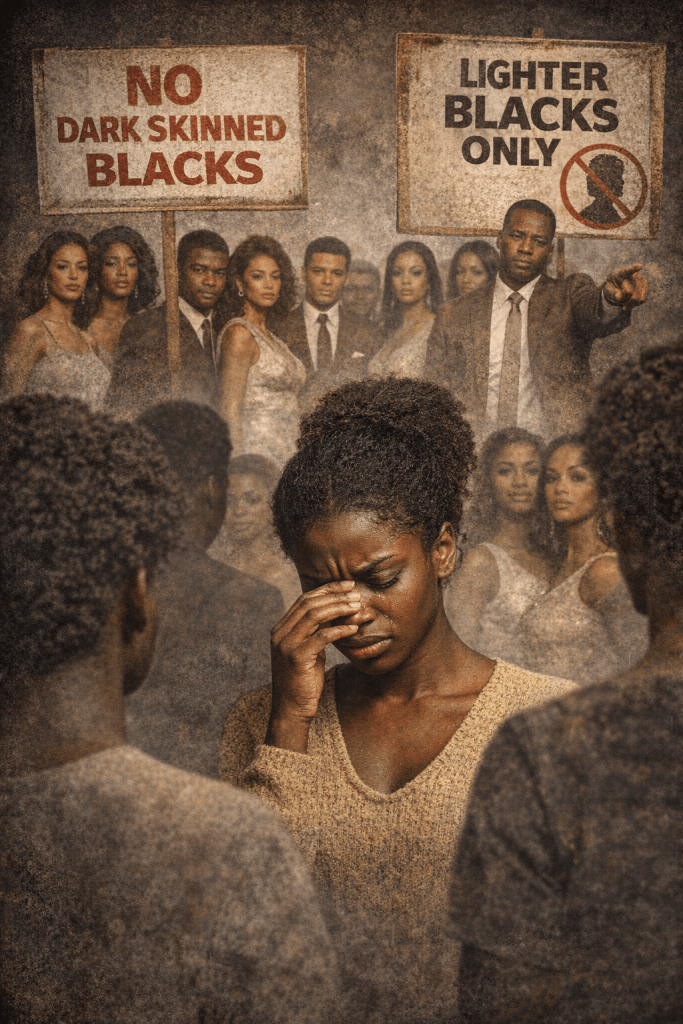
Self-hatred within the Black community is one of the most tragic psychological legacies of slavery, colonialism, and white supremacy. It is a condition where Black people unconsciously absorb anti-Black ideologies and then reproduce those same systems of hierarchy and exclusion among themselves. One of the clearest manifestations of this internalized racism is colorism, where darker-skinned Black people are marginalized, excluded, or deemed inferior by lighter-skinned Black people who have been socially conditioned to associate proximity to whiteness with value, intelligence, beauty, and success.

Colorism did not originate within the Black community. It was engineered through slavery, where lighter-skinned enslaved people, often the offspring of enslaved women and white slave masters, were granted closer proximity to the house, while darker-skinned Africans were relegated to the fields. This created a racial caste system within Blackness itself, embedding the idea that lighter skin meant higher status, better treatment, and greater access to resources.

Over time, this system evolved beyond physical labor into a psychological hierarchy. Lighter-skinned Blacks were often given better education, more opportunities, and greater representation in media, while darker-skinned Blacks were systematically portrayed as aggressive, undesirable, unintelligent, or hypersexual. These narratives were not accidental; they were tools of social control designed to fracture Black unity and create internal competition instead of collective resistance.

Self-hating Blacks did not create these structures, but many unconsciously enforced them. By adopting Eurocentric beauty standards and internalizing anti-Black imagery, some Black people became gatekeepers of whiteness within Black spaces. This is why darker Blacks were often excluded from leadership roles, romantic desirability, media representation, and even religious platforms, despite being the most genetically and historically African.

In many Black communities, darker-skinned children grow up receiving different treatment than their lighter-skinned peers. They are disciplined more harshly, praised less frequently, and rarely affirmed as beautiful. Meanwhile, lighter-skinned children are often subconsciously favored, described as “pretty,” “articulate,” or “well-behaved,” reinforcing a psychological message that darkness is a deficit.

This internal hierarchy becomes even more visible in dating and marriage patterns. Numerous sociological studies show that lighter-skinned Black women are more likely to be perceived as attractive and marriageable, while darker-skinned women are more likely to be stereotyped as aggressive or undesirable. This has nothing to do with biology and everything to do with centuries of racial conditioning.

Dark-skinned Black men are similarly affected, often being hypersexualized, criminalized, or depicted as dangerous. Yet lighter-skinned Black men are more likely to be portrayed as romantic leads, intellectuals, or socially acceptable partners. The result is a racial double consciousness where Blackness is tolerated only when diluted.

Media has played a major role in this psychological warfare. For decades, Black magazines, music videos, television shows, and advertisements overwhelmingly featured light-skinned models and actors, reinforcing the idea that success and beauty required proximity to whiteness. Darker Blacks were either erased or reduced to background characters, comic relief, or symbols of dysfunction.

This phenomenon produced what Frantz Fanon described as the “colonized mind,” where the oppressed adopt the values and worldview of the oppressor. In this condition, Black people begin to see themselves through white eyes and judge their own people according to white standards. The darkest among them become the most dehumanized.

Self-hatred becomes structural when Black institutions themselves participate in this exclusion. Churches, schools, social clubs, sororities, fraternities, and professional networks have historically favored lighter-skinned Blacks, creating social filters that replicate colonial hierarchies even in supposedly Black-controlled spaces.

This is why darker Blacks were often banned from certain social circles, beauty contests, modeling agencies, and elite organizations. Not officially, but psychologically and culturally. They were “too dark,” “not the right look,” or “not marketable,” which are simply coded ways of saying not close enough to whiteness.

The tragedy is that darker-skinned Blacks are the closest living descendants to the original African populations from which all humans originate. Genetically, melanated skin is the ancestral human phenotype. Yet through racial conditioning, this biological truth was inverted into a social lie where darkness became associated with inferiority.

This internal division weakened Black collective power. Instead of uniting against systemic racism, Black communities were fractured into internal hierarchies of worth. Lighter Blacks were taught to distance themselves from darker Blacks, while darker Blacks were taught to aspire toward lighter identity, leading to generational psychological trauma.

Colorism also created economic consequences. Darker Blacks face higher rates of unemployment, lower wages, harsher sentencing in the criminal justice system, and reduced access to healthcare and housing. These outcomes are not random; they reflect how deeply skin tone influences institutional decision-making.

The most devastating effect of this system is spiritual. When Black people internalize self-hatred, they disconnect from their ancestral identity, cultural memory, and collective purpose. They begin to measure their worth by standards that were never designed for their liberation, only their management.

This is why self-hating Blacks often police darker Blacks more harshly than white people do. They become enforcers of respectability politics, assimilation, and aesthetic conformity. In psychological terms, this is called identification with the oppressor.

Dark-skinned Blacks, in turn, are forced to develop double resilience: resisting external racism while also surviving internal rejection. Many grow up with deep wounds around self-worth, desirability, and visibility, despite being the very foundation of Black history and genetic continuity.

The modern movement of Black consciousness seeks to reverse this damage. It rejects Eurocentric beauty standards and re-centers African aesthetics, melanin, natural hair, and cultural authenticity as sources of pride rather than shame. It exposes colorism as a colonial weapon, not a natural preference.

Healing requires collective psychological decolonization. Black people must unlearn the lies embedded in their subconscious and recognize that all shades of Blackness are sacred, powerful, and historically significant. Darkness is not a defect; it is the original human design.

Until Black communities dismantle internalized racism, they will continue reproducing the same systems that were designed to destroy them. Self-hating Blacks banning darker Blacks is not just a social issue; it is a spiritual crisis rooted in colonial trauma.

True Black liberation begins when Black people stop measuring themselves against whiteness and start honoring the full spectrum of their own identity. Only then can the community heal the internal fractures created by slavery, colonialism, and psychological warfare.

Colorism is not about preference. It is about power, history, and psychological conditioning. And the first step toward freedom is telling the truth about how deeply it has shaped Black self-perception.

The ultimate irony is that the darkest Blacks, once marginalized and excluded, are now leading the global reawakening of Black identity, pride, and ancestral remembrance. What was once rejected is now being reclaimed as divine.

This is not a coincidence. It is historical correction.


References

Fanon, F. (1967). Black skin, white masks. Grove Press.

Harrison, M. S., & Thomas, K. M. (2009). The hidden prejudice in selection: A research investigation on skin color bias. Journal of Applied Social Psychology, 39(6), 1346–1364.

Hunter, M. (2007). The persistent problem of colorism: Skin tone, status, and inequality. Sociology Compass, 1(1), 237–254.

Hunter, M. (2011). Buying racial capital: Skin-bleaching and cosmetic surgery in a globalized world. The Journal of Pan African Studies, 4(4), 142–164.

Keith, V. M., & Herring, C. (1991). Skin tone and stratification in the Black community. American Journal of Sociology, 97(3), 760–778.

Russell, K., Wilson, M., & Hall, R. (2013). The color complex: The politics of skin color among African Americans. Anchor Books.

Tummala-Narra, P. (2007). Conceptualizing colorism and its implications for mental health. American Psychologist, 62(4), 352–360.

Walker, S. (2002). Style and status: Selling beauty to African American women, 1920–1975. University Press of Kentucky.

Wilkerson, I. (2020). Caste: The origins of our discontents. Random House.

Byrd, R. P., & Gates, H. L. Jr. (2009). The Black intellectual tradition. Harvard University Press.

PASSING as White

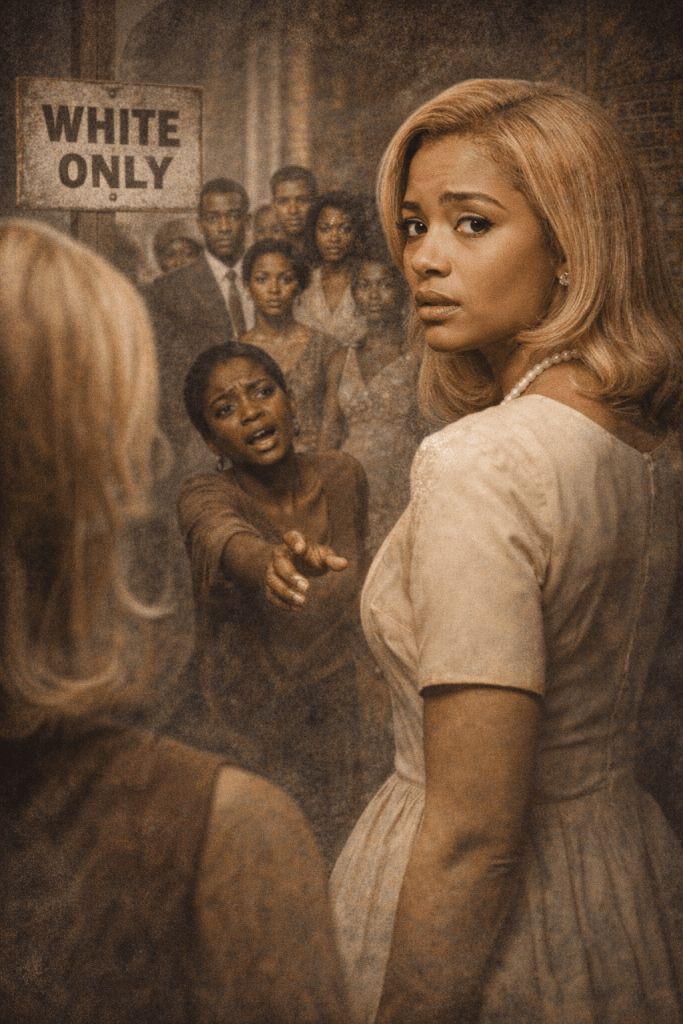
Passing as White is one of the most psychologically complex survival strategies produced by racism in America. It refers to the act of a Black person presenting themselves as white to escape racial oppression, gain social mobility, or avoid discrimination. While often discussed as a historical phenomenon, passing is fundamentally a psychological condition rooted in fear, internalized racism, and the desire for safety in a white supremacist society.

Psychologically, passing is not merely about skin tone or physical appearance; it is about identity suppression. It requires the individual to constantly perform whiteness—altering speech, behavior, social circles, family history, and even emotional expression. The person must erase their Blackness not only from public view, but from their own self-concept to survive the performance.

Looking white becomes a form of social camouflage. Lighter skin, straighter hair, ambiguous features, and European phenotypes allow some Black people to “blend in” within white spaces. However, this blending comes at a profound cost: the continuous denial of one’s ancestry, culture, and lived reality.

Passing emerges from racial terror. In societies where Blackness is punished economically, socially, and physically, passing becomes a method of protection. It is an adaptation to violence. Instead of confronting racism directly, the individual attempts to escape it by exiting Blackness altogether.

This phenomenon was powerfully dramatized in the film Imitation of Life, which tells the story of a light-skinned Black woman who rejects her Black mother to live as white. The film exposes the emotional devastation of passing: the shame, the secrecy, the grief, and the permanent sense of unbelonging.

What happens psychologically when white people discover that someone who has been passing is actually Black is often catastrophic. The individual is typically met with betrayal, hostility, disgust, or expulsion. White acceptance is conditional, and once racial truth is revealed, the person is stripped of the social privileges they had gained.

This moment of “discovery” often triggers identity collapse. The passer is rejected by the white world they tried to assimilate into, while also feeling disconnected from the Black world they abandoned. They become socially homeless—belonging fully to neither group.

Self-hatred is at the core of passing. It is not simply strategic; it is an internalized ideology. The person has absorbed the belief that Blackness is inferior, dangerous, or shameful, and that proximity to whiteness equals safety, value, and humanity.

Passing also produces chronic psychological stress. The individual lives in constant fear of exposure. Every conversation, family detail, photograph, or social interaction becomes a potential threat. This creates a life of hypervigilance, anxiety, and emotional isolation.

One of the most famous real-life examples of passing is Anatole Broyard, a highly respected literary critic and writer who lived as a white man for most of his life. Broyard concealed his Black identity even from his own children and wife, believing that revealing his ancestry would destroy his career and social standing.

After his death, his children discovered the truth, leading to deep emotional consequences. Broyard’s life became a symbol of the tragic cost of passing—success built on erasure, achievement built on denial, and legacy built on silence.

Passing not only distorts how others see one; it also distorts how one experiences love, intimacy, and belonging. Romantic relationships become performances. Friendships become guarded. Family becomes a threat to exposure. The passer must constantly choose between truth and survival.

This creates what psychologists call identity fragmentation. The person splits themselves into parts: the public self and the hidden self. Over time, the hidden self becomes increasingly suppressed, producing depression, dissociation, and internal conflict.

Passing also reinforces white supremacy at a structural level. It validates the idea that whiteness is the ultimate form of social legitimacy, while Blackness is something to escape. Each individual act of passing becomes a silent confirmation of racial hierarchy.

Historically, passing was most common during Jim Crow, when Black people faced segregation, lynching, housing discrimination, and legal exclusion. For some, passing was the only way to access education, employment, or physical safety. It was not always about shame; sometimes it was about survival.

However, survival strategies can become psychological prisons. What begins as protection can evolve into permanent self-rejection. Over time, the person may forget how to exist authentically, even in private.

The modern version of passing still exists, but in more subtle forms. It appears in aesthetic assimilation, name changes, cultural distancing, anti-Black rhetoric, and identity ambiguity. Some people no longer pass racially, but culturally and ideologically.

At its deepest level, passing is a spiritual crisis. It represents a rupture between the self and its origins. The person disconnects from ancestral memory, collective identity, and historical truth in exchange for conditional acceptance.

Many who once passed later experience a psychological awakening. As they age, they begin to feel the emptiness of erasure. They realize that no amount of assimilation can replace the loss of authentic identity. What was gained socially is lost existentially.

Reclaiming Black identity after passing often involves grief. Grief for the years spent hiding, for the relationships built on falsehood, and for the self that was denied. It is not simply a return—it is a reconstruction.

The desire to now “be who you are” represents a form of psychological decolonization. It is the rejection of internalized racism and the re-embrace of ancestral truth. It is a recognition that safety without authenticity is not freedom.

True healing from passing requires confronting the ideology that made it necessary. It requires dismantling the belief that whiteness equals humanity and Blackness equals limitation. Until that belief is destroyed, passing will continue to exist.

Passing as White is not just a historical curiosity. It is a mirror held up to a society that made Black identity something people felt they had to escape in order to live.

The tragedy is not that some people passed.
The tragedy is that a world existed where passing felt necessary.


References

Fanon, F. (1967). Black skin, white masks. Grove Press.

Gates, H. L. Jr. (1996). Thirteen ways of looking at a Black man. Random House.

Hobbs, A. (2014). A chosen exile: A history of racial passing in American life. Harvard University Press.

Larsen, N. (1929). Passing. Alfred A. Knopf.

Rockquemore, K. A., & Brunsma, D. L. (2002). Beyond Black: Biracial identity in America. Rowman & Littlefield.

Smith, S. M. (2006). The performance of race: Passing and the aesthetics of identity. Cultural Critique, 63, 1–27.

Sollors, W. (1997). Neither Black nor white yet both: Thematic explorations of interracial literature. Oxford University Press.

Broyard, B. (2007). One drop: My father’s hidden life—A story of race and family secrets. Little, Brown and Company.

Wilkerson, I. (2020). Caste: The origins of our discontents. Random House.

Du Bois, W. E. B. (1903). The souls of Black folk. A.C. McClurg & Co.

Pretty Privilege Series: Melanin Wars — Fighting for Equality Within Our Own Community.

Photo by Omotayo Samuel on Pexels.com

The history of colorism and shade hierarchies within the Black community reveals deep wounds that continue to shape identity, beauty standards, and opportunities. What some scholars call “melanin wars” are battles fought not against external forces of white supremacy alone, but within our own communities. These struggles reflect centuries of colonialism and slavery, where proximity to whiteness translated into privilege, and darker skin became stigmatized (Hunter, 2007).

Pretty privilege operates along this color spectrum, granting advantages to those with lighter skin tones while imposing disadvantages on those with darker complexions. This privilege manifests in dating, marriage prospects, media representation, and professional advancement. The cost is not just individual insecurity, but a collective fracture that keeps us divided rather than united.

During slavery, lighter-skinned Black people, often the children of enslaved women and white slaveholders, were sometimes afforded “house” roles rather than field labor. Though still enslaved, their perceived closeness to whiteness created hierarchies within Black life itself (Russell, Wilson, & Hall, 1992). These divisions laid the foundation for intra-racial tensions that persist centuries later.

The term “melanin wars” is symbolic of the psychological battles that occur when skin shade becomes the basis for worth. Dark-skinned individuals often report being seen as less attractive, less employable, and less trustworthy compared to lighter-skinned counterparts. Research by Keith and Herring (1991) confirms that skin tone has a measurable impact on socioeconomic outcomes, showing lighter-skinned African Americans tend to have higher incomes and educational attainment.

In the realm of beauty, these wars play out with devastating consequences. Lighter-skinned women are often upheld as the ideal, while darker-skinned women are objectified or marginalized. The phrase “pretty for a dark-skinned girl” encapsulates this bias. Such language reinforces the belief that beauty and melanin are at odds, perpetuating harm that seeps into self-esteem and soul.

For Black men, the melanin wars also hold weight. Darker-skinned men are more likely to be perceived as dangerous or aggressive, while lighter-skinned men may be considered less threatening. These stereotypes shape encounters with law enforcement, workplace dynamics, and even interpersonal relationships (Maddox & Gray, 2002).

These internal battles are not only social but spiritual. Genesis 1:31 (KJV) declares, “And God saw everything that he had made, and, behold, it was very good.” Yet, when communities internalize shade hierarchies, they deny the goodness of God’s creation. Melanin wars, at their root, represent a spiritual attack on identity and unity.

One of the greatest costs of this battle is disunity. Instead of standing together against systemic racism, communities fracture over internal shade differences. Galatians 5:15 (KJV) warns, “But if ye bite and devour one another, take heed that ye be not consumed one of another.” The melanin wars are a distraction that consumes energy which could be used to fight real systems of oppression.

Media representation intensifies the wars. Television, film, and music industries disproportionately cast lighter-skinned individuals in leading or romantic roles, while darker-skinned individuals are often relegated to side characters or villains. This symbolic violence reinforces the idea that worth and desirability are tied to complexion.

Families are not immune to the effects of shade hierarchies. Parents may, knowingly or unknowingly, favor lighter-skinned children, praising them more openly or assuming they will have an easier life. Such favoritism breeds resentment and insecurity, creating trauma that carries into adulthood.

Economically, the melanin wars are exploited by billion-dollar industries such as skin bleaching. In nations across Africa, the Caribbean, and Asia, skin-lightening creams promise social mobility and desirability, at the cost of physical and psychological health (Charles, 2003). The demand for these products reflects the global reach of colorism.

Theologically, the melanin wars are contrary to the vision of the kingdom of God. Revelation 7:9 (KJV) envisions a redeemed community of “all nations, and kindreds, and people, and tongues” united before God’s throne. Shade distinctions hold no eternal relevance in God’s presence, reminding us that human hierarchies are temporary and unjust.

Fighting for equality within our community requires first acknowledging the wounds. Denial only deepens harm, but truth opens the door to healing. John 8:32 (KJV) proclaims, “And ye shall know the truth, and the truth shall make you free.” Recognizing the structures of colorism is the first step toward freedom.

Education is critical in dismantling these hierarchies. By teaching children about the history of colorism, the beauty of all skin tones, and their identity as image-bearers of God, we equip future generations to resist these lies. Proverbs 22:6 (KJV) reminds us, “Train up a child in the way he should go: and when he is old, he will not depart from it.”

Healing also requires media accountability. By demanding diverse representation across shades, communities can push industries to portray the full spectrum of Black beauty. This shift is not just cosmetic but cultural, shaping how young people see themselves and others.

Unity is perhaps the most powerful weapon against melanin wars. When communities intentionally uplift one another, celebrate all shades, and refuse to participate in divisive practices, the chains of colorism weaken. As Ecclesiastes 4:12 (KJV) declares, “And if one prevail against him, two shall withstand him; and a threefold cord is not quickly broken.”

Mentorship also plays a role in healing. When darker-skinned individuals see role models who are thriving in faith, leadership, and influence, it counters narratives of inferiority. Representation in leadership, academia, ministry, and business reshapes expectations of worth and potential.

Spiritually, prayer and the renewing of the mind are essential. Romans 12:2 (KJV) commands, “Be ye transformed by the renewing of your mind.” Breaking free from melanin wars requires deliverance from toxic thought patterns and the embrace of biblical truths about identity.

The fight for equality within our community is ultimately a fight for the soul. Melanin wars wound the heart, divide the body, and distort the image of God. But healing is possible through truth, unity, and love. By confronting the cost of shade and dismantling its privileges, the community can move toward wholeness.

In the end, melanin is not a curse but a crown. The wars we fight against each other can be transformed into victories of solidarity if we choose love over envy, affirmation over insecurity, and unity over division. Equality within the community begins when we refuse to let shade determine worth, and instead, embrace the divine truth that every complexion is a reflection of God’s beauty.


References

  • Charles, C. A. D. (2003). Skin bleachers’ representations of skin color in Jamaica. Journal of Black Studies, 33(6), 711–728.
  • Hunter, M. (2007). The persistent problem of colorism: Skin tone, status, and inequality. Sociology Compass, 1(1), 237–254.
  • Keith, V. M., & Herring, C. (1991). Skin tone and stratification in the Black community. American Journal of Sociology, 97(3), 760–778.
  • Maddox, K. B., & Gray, S. A. (2002). Cognitive representations of Black Americans: Reexploring the role of skin tone. Personality and Social Psychology Bulletin, 28(2), 250–259.
  • Russell, K., Wilson, M., & Hall, R. (1992). The Color Complex: The Politics of Skin Color Among African Americans. Anchor Books.
  • The Holy Bible, King James Version.

The Brown Girl Chronicle: Truth, Trials, and Triumphs.

Photo by Marcelo Chagas on Pexels.com

The story of the Brown girl is one of layered resilience—a quiet strength forged in centuries of misunderstanding, marginalization, and misrepresentation. She stands as a symbol of continuity, bearing the weight of her foremothers’ prayers and the echoes of a culture often silenced. Her truth is not simply personal; it is collective, a reflection of generations who fought to be seen in full color in a world that blurred their brilliance into shadows.

For the Brown girl, beauty has always been both a gift and a battlefield. She was told she was too dark to be delicate, too bold to be beautiful, too strong to be loved. Her complexion became an unspoken social script, assigning her a role that rarely mirrored her reality. From childhood, she learned to navigate the politics of shade—how a few tones lighter could mean acceptance, opportunity, or desirability. This unrelenting calculus of complexion carved scars invisible to the eye but deeply etched in her psyche.

Colorism became a cruel whisper passed down through family lines, often masked as advice or preference. “Stay out of the sun,” some would say, or “you’re pretty for a dark girl.” These words, though softly spoken, carried centuries of colonial distortion that equated light with purity and darkness with inferiority. Yet, beneath this imposed hierarchy, the Brown girl began to unlearn. Her awakening was gradual but powerful—she came to realize that her melanin was not a mark of shame but of divine craftsmanship.

Historically, the Brown girl has been the cornerstone of her community yet seldom its celebrated image. In the fields, in the factories, in the fight for civil rights, her labor built nations while her name remained unsung. Her trials were both economic and emotional, shaped by a system that exploited her body, dismissed her intellect, and commodified her image. Despite these wounds, she rose with the quiet defiance of survival—a survival that redefined what it means to be beautiful and whole.

In modern society, the Brown girl’s narrative continues to evolve amid shifting ideals of representation. The rise of social media has given her a stage, yet also a mirror that reflects society’s unfinished biases. The filters and edits of digital beauty reinforce old hierarchies under new guises. But she is fighting back—with every unfiltered photo, every natural curl, every unapologetic post declaring, “I am enough.” Her voice, once dismissed, now echoes across screens and spaces, demanding to be heard on her own terms.

The trials of the Brown girl are deeply intertwined with the psychological legacies of slavery and colonialism. These systems not only exploited her ancestors’ labor but sought to fracture their sense of self. Through generations, trauma was internalized, manifesting as self-doubt and color bias. Yet, within this pain lies the possibility of transformation—a re-rooting of identity grounded in historical truth and ancestral pride. Healing, for her, is not forgetting but remembering differently.

To speak of her truth is to acknowledge the contradictions she lives with: praised for her strength yet denied tenderness, admired for her resilience yet rarely protected. The world expects her to be unbreakable, but inside, she yearns for softness—the kind that affirms she doesn’t have to always be the strong one. Her triumphs are not always loud; sometimes, they are found in the quiet decision to love herself in a world that profits from her insecurities.

In her career, the Brown girl must work twice as hard for half the recognition. Her tone and texture often determine how she is perceived before her talent is even seen. This intersection of racism, colorism, and lookism shapes not just her professional journey but her emotional health. Yet she persists, embodying excellence in spaces not built for her. Each promotion, each degree, each creative expression is an act of reclamation—a rewriting of history in her favor.

Her trials also find expression in love. Romantic rejection often carries the residue of societal bias, where lighter skin is still coded as more desirable. She learns early that beauty is political, and affection is filtered through centuries of conditioning. Still, she does not surrender to bitterness. Her love becomes revolutionary—rooted in self-acceptance, radiating confidence, and defying the colonial gaze that once defined her worth.

Spiritually, the Brown girl’s journey mirrors the biblical archetypes of endurance and faith. Like Hagar in the wilderness, she has been cast aside yet still seen by God. Her melanin is not merely biological—it is theological. It connects her to the dust from which humanity was formed, to the warmth of the African sun, to the divine imprint of creation itself. In embracing her hue, she honors the Creator who called all things “good.”

Culturally, she represents the heart of the diaspora. Her music, her dance, her language, and her laughter carry fragments of Africa’s rhythm and the Americas’ resilience. Every hairstyle, every garment, every prayer whispered in pain or joy becomes a piece of resistance art. Through her cultural expression, she not only survives but teaches the world what beauty born of struggle looks like.

Her triumphs are not defined by fame or validation but by freedom—the freedom to exist without apology. To wear her natural hair at work without judgment. To be chosen in films, books, and art not as the sidekick or the suffering figure, but as the centerpiece. To see little girls who look like her represented on screens and in classrooms, learning early that brown is not a burden but a blessing.

The Brown girl’s chronicle is one of duality: both fragile and formidable, silenced and outspoken, ordinary and extraordinary. She embodies the tension between societal perception and self-realization. Her story disrupts stereotypes and reclaims narratives long distorted by white supremacy and patriarchy. In her voice lies the testimony of countless others who refused to fade.

Her truth is not a monolith. Brown girls come in a spectrum of shades, shapes, and stories. Some grew up in privilege, others in poverty. Some found affirmation early; others are still searching. Yet all share an unspoken understanding—that their color carries history, pain, and possibility. Together, they form a living archive of endurance and evolution.

Her trials have taught her empathy. She sees through the illusions of beauty standards and the fragility of external validation. Her compassion extends even to those who once looked down upon her, for she understands that their prejudice is learned, not innate. In this way, she rises above bitterness, embodying grace even when the world offers none.

Each triumph, no matter how small, is monumental. The Brown girl who walks into a boardroom wearing her afro is reclaiming space. The one who publishes her poetry, paints her truth, or raises her children with love untouched by shame—each is a monument of healing. Her triumphs are living testimonies of survival transfigured into power.

Psychologically, her evolution represents a return to wholeness. She learns to detach her worth from European beauty ideals and anchor it in self-knowledge. She redefines beauty as authenticity, not conformity. Her confidence becomes contagious, inspiring others to do the same. The mirror, once her enemy, becomes her altar of affirmation.

The Brown girl’s chronicle is also a historical record. It speaks to how media, colonialism, and capitalism have commodified color. From bleaching creams to casting biases, her image has been shaped by profit rather than truth. But as she tells her story, she dismantles those systems one confession at a time.

Her truth is sacred. It reminds us that melanin is not a curse to overcome but a covenant to honor. Her existence itself challenges the lie that whiteness is the measure of beauty or worth. By simply being, she redefines the human aesthetic and restores balance to a world distorted by artificial hierarchies.

Her trials teach endurance, but her triumphs teach transcendence. The Brown girl does not just survive oppression—she transforms it into art, advocacy, and an anthem of hope. Her laughter in the face of pain becomes prophecy. Her joy is resistance. Her beauty, reclaimed and radiant, is her final rebellion.

And so, the chronicle continues—written in her own words, in her own time, in her own tone. She speaks not just for herself but for generations of women who bore silence like armor. Her truth, once hidden, now burns with the brilliance of her skin under the sun. Her trials shaped her, but her triumphs define her. She is the Brown girl, and she is finally free.

References

Banks, T. A. (2019). Colorism and the politics of beauty. Journal of Black Studies, 50(3), 243–261.
Hill, M. (2021). The psychology of colorism: Identity, bias, and belonging. American Journal of Cultural Psychology, 12(4), 411–430.
Hunter, M. (2007). The persistent problem of colorism: Skin tone, status, and inequality. Sociology Compass, 1(1), 237–254.
Russell, K., Wilson, M., & Hall, R. (2013). The color complex: The politics of skin color in a new millennium. Anchor Books.
Walker-Barnes, C. (2020). Too heavy a yoke: Black women and the burden of strength. Cascade Books.
West, C. (1993). Race matters. Beacon Press.