
“A people without the knowledge of their past history, origin, and culture is like a tree without roots.” — Marcus Garvey

The history of Black excellence is far older, richer, and more complex than the version most people encounter in school curricula. The conventional narratives presented in textbooks are often incomplete, diluted, or intentionally altered to support dominant cultural and political agendas. From ancient African civilizations that pioneered mathematics, medicine, and architecture, to intellectual, artistic, and scientific contributions during and after slavery, much of Black history has been systematically erased or reframed. The erasure is not accidental—it is part of an ongoing strategy by those in power to control the collective memory of oppressed peoples, thereby shaping identity, opportunity, and self-worth.
What Has Been Erased from History
Mainstream history often omits or minimizes Africa’s role as the cradle of civilization. The advanced societies of Kemet (ancient Egypt), Kush, Mali, and Songhai are rarely presented as African achievements in the West, despite evidence of their innovations in astronomy, irrigation, architecture, and governance. Figures like Imhotep, the world’s first recorded multi-genius and physician, are seldom highlighted alongside Greek and Roman thinkers, even though his work predated them by millennia. The erasure extends to the transatlantic slave trade narrative, which is often oversimplified into dates and numbers, glossing over the complex political, spiritual, and cultural identities enslaved Africans brought with them. In modern times, the contributions of Black inventors, such as Garrett Morgan (traffic signal, gas mask) or Granville T. Woods (electrical railway improvements), have been under-credited or misattributed.
How People in Power Erase and Dilute History
Erasure occurs through multiple mechanisms:
- Textbook Censorship – School boards and publishers often frame slavery as a “migration” or “labor system” rather than a brutal institution rooted in racial terror.
- Selective Storytelling – Historical figures are stripped of their radical politics; for example, Martin Luther King Jr. is remembered primarily for “I Have a Dream” while his critiques of capitalism and militarism are ignored.
- Eurocentric Framing – Achievements of African civilizations are either ignored or attributed to outside influences, denying African agency.
- Modern Digital Manipulation – Social media algorithms and biased search results bury scholarship that challenges dominant narratives.
This dilution serves the purpose of cultural control. If oppressed groups are denied their true history, they may more easily internalize inferiority and accept their place in a manufactured social order. This aligns with George Orwell’s warning in 1984: “Who controls the past controls the future: who controls the present controls the past.”
Credible Sources to Learn Our History
To reclaim erased histories, credible sources are essential. These include:
- Primary Sources: Archival documents, oral histories, and African artifacts preserved in institutions like the Schomburg Center for Research in Black Culture.
- Scholarly Works: Ivan Van Sertima’s They Came Before Columbus, Cheikh Anta Diop’s The African Origin of Civilization, and Chancellor Williams’ The Destruction of Black Civilization.
- Community Historians: Black churches, grassroots historians, and African cultural organizations often safeguard truths omitted from academic spaces.
- Credible Textbooks: From Slavery to Freedom by John Hope Franklin, Before the Mayflower by Lerone Bennett Jr., and The Mis-Education of the Negro by Carter G. Woodson.
These sources resist the revisionism found in standard education systems and offer counter-narratives rooted in fact.
Biblical Insight into Historical Erasure
The Bible acknowledges the importance of remembering history and warns against its distortion. Deuteronomy 32:7 (KJV) commands, “Remember the days of old, consider the years of many generations: ask thy father, and he will shew thee; thy elders, and they will tell thee.” This mirrors the African oral tradition of passing down wisdom and identity. Psalm 78:4 (KJV) declares, “We will not hide them from their children, shewing to the generation to come the praises of the Lord, and his strength, and his wonderful works that he hath done.” The suppression of history is therefore not only an academic injustice but also a spiritual violation, cutting people off from divine instruction embedded in their collective story.
How the Past Has Been Watered Down
From the 19th century onward, Western historical scholarship often diminished African agency. Textbooks in the early 20th century described slavery as a “civilizing” process for Africans, ignoring the violence, cultural erasure, and systemic exploitation involved. Even today, school curricula often reduce the Civil Rights Movement to a few key events, ignoring the global anti-colonial solidarity movements it inspired. The erasure of radical Black political thought—such as the Pan-Africanism of Marcus Garvey or the anti-imperialism of Malcolm X—waters down the revolutionary potential of these legacies.
Modern-Day Erasure
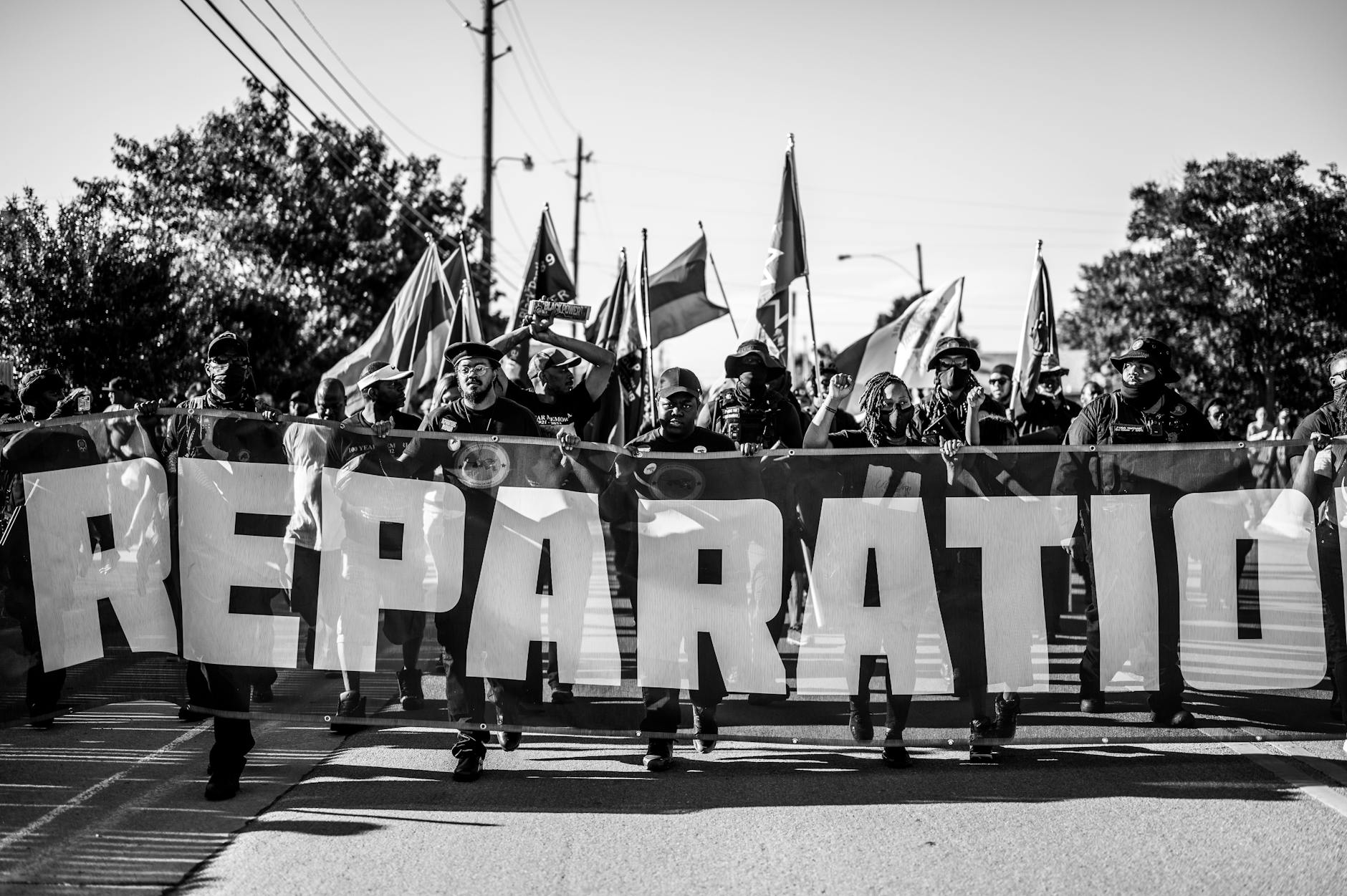
In the 21st century, the erasure of Black history continues through legislative bans on “critical race theory,” the removal of books from school libraries, and the underfunding of African American studies programs. The cultural sanitization of slavery—framing it as “shared history” rather than a system of racialized terror—is a political act intended to protect dominant narratives and prevent structural change. Additionally, media often elevates stories of Black struggle over Black achievement, perpetuating a one-dimensional view of the Black experience.
Keeping Our History Alive
To keep our history alive, we must be proactive and communal in preservation:
- Intergenerational Storytelling: Families should pass down ancestral narratives without dilution.
- Independent Institutions: Support Black-owned publishing houses, museums, and schools that tell the full story.
- Curriculum Reform: Advocate for comprehensive African and African American history in public education.
- Digital Archives: Create accessible online repositories of oral histories, photographs, and documents.
- Spiritual Restoration: Reaffirm the biblical call to remember and honor the legacy of our ancestors as part of our divine inheritance.
Conclusion
The erasure of Black excellence is not simply an omission—it is an intentional act of power designed to weaken identity and unity. But knowledge is a form of liberation. By seeking out credible sources, rejecting diluted narratives, and actively preserving our history, we ensure that future generations stand rooted in truth. Marcus Garvey’s words remind us that without historical consciousness, we are like trees without roots—unable to stand tall or bear fruit. History is not a passive memory; it is a living inheritance, and we must guard it with vigilance, truth, and pride.
References
- Bennett, L., Jr. (1993). Before the Mayflower: A History of the Negro in America, 1619–1992. Penguin Books.
- Diop, C. A. (1974). The African Origin of Civilization: Myth or Reality. Chicago Review Press.
- Franklin, J. H., & Moss, A. A. (2000). From Slavery to Freedom: A History of African Americans (8th ed.). McGraw-Hill.
- Garvey, M. (1920). Philosophy and Opinions of Marcus Garvey. Universal Negro Improvement Association.
- Van Sertima, I. (1976). They Came Before Columbus: The African Presence in Ancient America. Random House.
- Williams, C. (1987). The Destruction of Black Civilization. Third World Press.
- Woodson, C. G. (1933). The Mis-Education of the Negro. Associated Publishers.
- The Holy Bible, King James Version.








 THE BROWN GIRL DILEMMA