Tag Archives: the brown boy dilemma

Dilemma: Jim Crow – The Legacy of Prejudice and Oppression

Jim Crow laws were a system of legalized racial segregation in the United States, primarily in the South, which lasted from the late 19th century until the mid-1960s. These laws enforced the notion that Black Americans were inferior to whites, systematically restricting their access to public spaces, education, voting rights, and economic opportunity. The name “Jim Crow” itself originated from a racist minstrel show character, highlighting the deeply dehumanizing cultural underpinnings of the system.

The origins of Jim Crow can be traced to the post-Reconstruction era, when Southern states sought to maintain white supremacy after the abolition of slavery. Despite the promises of freedom under the 13th, 14th, and 15th Amendments, white elites implemented laws and practices designed to limit Black advancement, ensuring that social, political, and economic power remained concentrated in white hands.

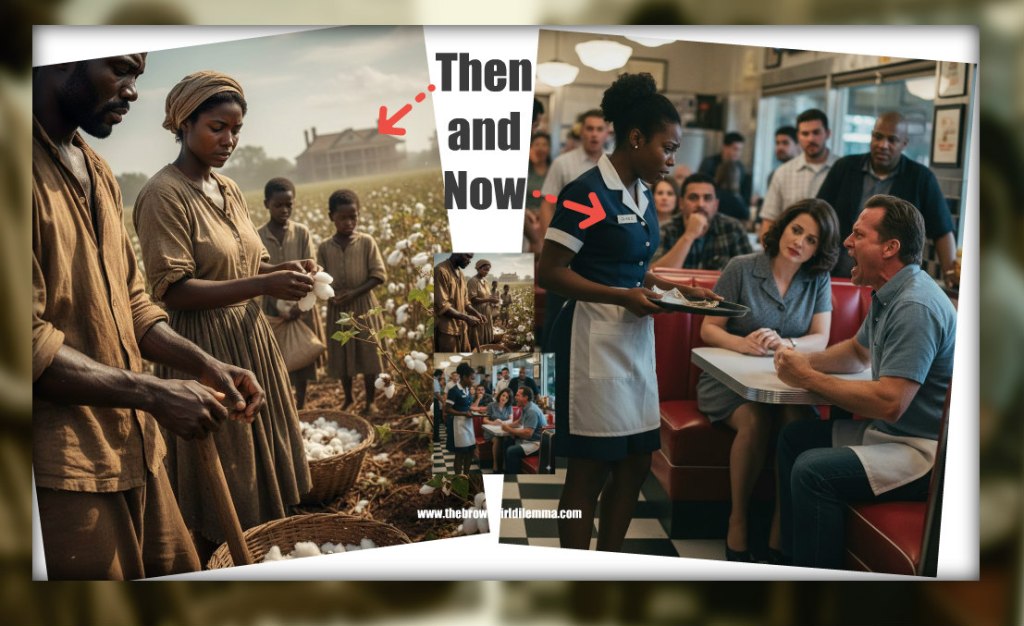
A “White Only” sign in a restaurant during the 1960s was a stark and visible symbol of Jim Crow segregation in the United States. Such signs were legally enforced in many Southern states, designating public spaces—restaurants, theaters, restrooms, water fountains, and more—where Black Americans were either denied entry entirely or relegated to inferior facilities.

These signs were not merely about seating; they reinforced a racial hierarchy, signaling that Black people were considered second-class citizens, unworthy of equal service or treatment. They were part of a broader system designed to maintain white supremacy socially, economically, and politically.

The presence of “White Only” signs had profound psychological and social effects. They dehumanized Black Americans, normalizing exclusion and instilling fear and shame. They also reinforced cultural prejudices in white communities, teaching white patrons that segregation was natural and morally acceptable.

Many Black Americans resisted these injustices through civil rights activism. Sit-ins at “White Only” lunch counters, such as the Greensboro sit-ins in 1960, challenged segregation directly, exposing the cruelty of the system and helping to galvanize national support for desegregation.

Legally, such signs were rendered unenforceable with the passage of the Civil Rights Act of 1964, which outlawed segregation in public accommodations. The removal of these signs symbolized the end of legal segregation, though the social and economic legacies of this discrimination persisted.

In short, a “White Only” sign in a 1960s restaurant was more than a notice—it was a tool of systemic oppression, a daily reminder of racial injustice, and a target for courageous activism in the fight for civil rights.

Under Jim Crow, public facilities were segregated, including schools, transportation, restrooms, restaurants, and theaters. Black citizens were forced into inferior accommodations, often with drastically fewer resources. This system reinforced the message that Black lives were less valuable and less deserving of dignity and opportunity.

Education for Black children under Jim Crow was deliberately underfunded. Schools were overcrowded, lacked textbooks and supplies, and were often housed in dilapidated buildings. This educational inequality limited social mobility, trapping generations of Black Americans in cycles of poverty and exclusion.

Voting rights were systematically restricted through measures such as literacy tests, poll taxes, and grandfather clauses. These tactics effectively disenfranchised most Black citizens in the South, silencing their political voices and denying them the ability to influence policies that affected their communities.

The economic effects of Jim Crow were devastating. Black workers were often relegated to low-paying, unstable jobs while being denied access to higher-paying, skilled labor opportunities. Sharecropping, tenant farming, and discriminatory hiring practices perpetuated economic dependency and vulnerability.

Segregation extended into healthcare, where Black patients faced limited access to hospitals, clinics, and trained physicians. Facilities for Black individuals were often under-resourced, and medical experimentation sometimes targeted Black communities without consent, reflecting the deeply embedded racial prejudice of the era.

Housing discrimination was another major consequence. Redlining and racially restrictive covenants prevented Black families from purchasing homes in certain neighborhoods. This not only limited wealth accumulation but also reinforced social segregation and concentrated poverty.

The legal system was complicit in maintaining Jim Crow. Black Americans were disproportionately targeted, arrested, and harshly sentenced, while white perpetrators often received lenient treatment. Courts upheld segregation and discriminatory laws, cementing structural racism in law and practice.

Social norms under Jim Crow reinforced the ideology of white superiority. Black individuals were subject to constant surveillance, harassment, and intimidation. Even minor perceived infractions of social etiquette could result in violent punishment, including lynching, which was often public and unpunished.

Lynching became a tool of terror used to enforce racial hierarchy. Thousands of Black men and women were murdered or brutally attacked for resisting oppression or simply existing outside the boundaries imposed by white supremacists. These acts were meant to instill fear and reinforce the perceived dominance of whites.

Jim Crow also affected the psychological well-being of Black communities. Continuous exposure to discrimination, exclusion, and violence created trauma that transcended generations. Black individuals internalized societal messages of inferiority, impacting self-esteem, mental health, and aspirations.

Resistance to Jim Crow took many forms. Organizations like the NAACP worked through legal challenges, advocacy, and education to dismantle segregation. Grassroots activism, boycotts, and acts of civil disobedience highlighted the courage and resilience of Black communities under oppression.

The Civil Rights Movement of the 1950s and 1960s directly confronted the injustices of Jim Crow. Landmark legislation, including the Civil Rights Act of 1964 and the Voting Rights Act of 1965, legally ended segregation and restored voting rights. However, the legacy of these laws persists in systemic inequalities and social attitudes.

Jim Crow fostered prejudice not only through law but also through cultural reinforcement. Media, literature, and everyday social interactions perpetuated stereotypes of Black inferiority, laziness, and criminality, creating a society that normalized racial hierarchy.

Racial prejudice under Jim Crow was enforced through both fear and ideology. Black Americans were taught to accept a subordinate status, while whites were socialized to view dominance as natural and justified. This dual reinforcement maintained systemic oppression for decades.

Family life was disrupted by Jim Crow. Economic constraints, restricted mobility, and threats of violence affected Black households, limiting opportunities for generational wealth and stability. Despite this, Black families often cultivated strong networks of support, faith, and community resilience.

Jim Crow shaped urban and rural landscapes. Segregated neighborhoods, schools, and institutions created spatial boundaries that reinforced inequality and restricted access to resources. These patterns of segregation continue to affect cities today.

The legacy of Jim Crow is evident in contemporary racial disparities. Disproportionate incarceration, educational inequities, and wealth gaps trace their roots to the structures and prejudices entrenched during this era. Understanding Jim Crow is essential to addressing these ongoing injustices.

Ultimately, Jim Crow represents the deliberate manipulation of law, culture, and social norms to maintain racial hierarchy. Its effects were profound, extending beyond the immediate physical restrictions to shape generational experiences of Black Americans. The struggle against Jim Crow is a testament to the resilience, courage, and enduring pursuit of justice by Black communities.

References

Woodward, C. V. (2002). The strange career of Jim Crow. Oxford University Press.

Litwack, L. F. (2009). Trouble in mind: Black southerners in the age of Jim Crow. Vintage.

Anderson, J. D. (1988). The education of Blacks in the South, 1860–1935. University of North Carolina Press.

Du Bois, W. E. B. (1935). Black reconstruction in America. Free Press.

Perman, M. (2001). Struggle for mastery: Disfranchisement in the South, 1888–1908. University of North Carolina Press.

Tolnay, S. E., & Beck, E. M. (1995). A festival of violence: An analysis of Southern lynchings, 1882–1930. University of Illinois Press.

Foner, E. (2011). Reconstruction: America’s unfinished revolution, 1863–1877. Harper Perennial.

👑 Girl Talk Series: Cover Me — Why God Gave Men Headship.

Photo by nappy on Pexels.com

Hello Ladies -in a world that screams independence, self-sufficiency, and “I don’t need a man,” many women have forgotten a sacred truth: headship is not oppression — it is God’s protection.

Headship was never designed to crush a woman, but to cover her.

When God gives a man headship, He gives him:

  • Responsibility, not privilege
  • Burden, not bragging rights
  • Duty, not domination
  • Servanthood, not superiority

A true man of God doesn’t lead to control —
he leads to cover, protect, love, and secure.

“For the husband is the head of the wife, even as Christ is the head of the church…”
Ephesians 5:23 (KJV)

Christ’s headship over the church is not tyrannical —
it is loving, sacrificial, and redemptive.

So is godly male leadership.

This is why headship frightens some women:
Not because of what God designed, but because of what the world has distorted.

Broken men abused authority.
So broken women fear leadership.
But God’s order is not the world’s chaos.


👑 Headship Means Covering

To be “covered” means:

  • Someone is praying when you’re tired
  • Someone carries weight you shouldn’t carry alone
  • Someone stands before danger and shields you
  • Someone leads spiritually so you don’t fight life alone
  • Someone provides, protects, and guides

Covering provides peace, safety, and spiritual shelter.

“And the man’s head is Christ”
1 Corinthians 11:3 (KJV)

If Christ covers man, and man covers woman,
that is not a hierarchy of worth
it is a flow of protection.

God → Christ → Husband → Wife → Children
A divine chain of covering and blessing.


🕊️ Headship Is Sacrificial, Not Selfish

A kingdom man leads like Christ:

“Husbands, love your wives, even as Christ also loved the church, and gave himself for it.”
Ephesians 5:25 (KJV)

Christ did not dominate — He died.
Christ did not lord power — He served.
Christ did not demand loyalty — He earned it through love.

A man who reflects Christ does not demand submission;
he creates an environment where a woman feels safe to offer it.


🌸 Submission Is Strength, Not Silence

Submission is not inferiority.
It is trust in God’s design, not a man’s ego.

You submit to his leadership because he submits to God.
You respect his role because God ordained it, not culture.

Submission is not being voiceless —
it is harmonizing, not competing.

A virtuous woman stands beside her husband —
but she stands under God’s order.

“A prudent wife is from the LORD.”
Proverbs 19:14 (KJV)


🌿 The Women Who Reject Covering…

When a woman rejects godly covering, she unknowingly chooses:

  • Spiritual vulnerability
  • Emotional burden alone
  • Warfare without a shield
  • Independence without protection
  • Strength with no rest

Many women today aren’t tired because they’re weak —
they’re tired because they are carrying a man’s role and their own.

God never intended you to be your own head.
He intended you to be treasured, covered, and cared for.


🌟 A Soft Reminder

Sis, headship is not about a man being “over” you —
it is about a man being for you.

A God-ordained head:

  • Prays over you
  • Speaks life into you
  • Guards your heart
  • Carries spiritual weight
  • Provides stability
  • Protects your peace
  • Leads you to God

Choosing a man without headship is choosing a life without covering.
And a house uncovered is vulnerable.


🙏🏽 Prayer

Lord,
Teach me to value Your order.
Prepare my heart to trust godly leadership.
Send a man — or strengthen the man I have —
to lead like Christ, love like Christ, and cover like Christ.

Make me wise, humble, and peaceful under divine covering.
And may my life reflect Your Kingdom design.
Amen.


Would you like the next in this series to be:

  1. “Soft Woman, Strong God: The Power of Femininity Under Covering”
  2. “Counterfeit Kings: How to Discern Men Unfit for Headship”
  3. “The Restful Wife: Finding Peace in Godly Order”

Tell me your choice and I’ll continue.

You said:

Discernment in Dating: Spirit Over Flesh

ChatGPT said:

Discernment in Dating: Spirit Over Flesh

In a culture that glorifies instant attraction, emotional highs, and surface-level chemistry, a woman of God must move differently. While the world teaches us to “follow your heart,” Scripture warns that “the heart is deceitful above all things, and desperately wicked” (Jeremiah 17:9, KJV). True discernment in dating is not about butterflies, jawlines, or the warmth of a good hug — it is about spiritual compatibility, covenant alignment, and kingdom purpose.

Flesh will choose fine.
Spirit will choose faithful.
Flesh will pursue excitement.
Spirit will pursue peace.
Flesh sees a man’s presence.
Spirit seeks a man’s covering.

When feelings become the compass, you risk romanticizing danger and calling it destiny. But when the Holy Spirit becomes your guide, you gain the wisdom to recognize a man’s fruit before you trust his future in your life. “You shall know them by their fruits” (Matthew 7:16, KJV). A man may say he loves God, but does he obey Him? He may attend church, but is he surrendered to Christ? He may pursue you, but can he lead you?

Discernment protects you from counterfeits — men who imitate godliness with intention but lack true transformation. God is not sending you a man who weakens your walk, silences your convictions, or draws you into sin. Attraction without anointing is a trap. Desire without discernment is dangerous. The flesh will always crave what looks appealing, but the spirit recognizes what is God-approved.

Sisters, guard your heart with scripture, not emotions. “Walk in the Spirit, and ye shall not fulfil the lust of the flesh” (Galatians 5:16, KJV). Pray over your desire for companionship. Seek community, wise counsel, and accountability. Evaluate a man’s character when his emotions are calm and his intentions are hidden — not when he is trying to impress you.

Dating for a daughter of the Most High is not recreational; it is preparation for a covenant. Set your standard by the Word, not the world. A righteous man will not be offended by your boundaries — he will honor them. The one God sent for you will pursue you with purity, speak with wisdom, lead with humility, and cover you with prayer.

You don’t need a man who excites your flesh but starves your spirit. You need a man who strengthens your walk, aligns with your calling, and helps you seek the Kingdom first (Matthew 6:33, KJV). Let discernment be your crown. Let the Holy Spirit be your guide. And trust that what God ordains will never require you to compromise your holiness to hold it.

Grace, wisdom, and covering — that is kingdom love.

Beauty and the Beast Within: Reconciling Image and Identity in Men.

Photo Credit: Monte Ellis

Beauty and strength have long been seen as incompatible virtues in men. The “beautiful man” must walk a fine line between confidence and perceived vanity, while the “beast” within him—the primal, instinctive, and unrefined—lurks beneath the polished surface. The tension between these two forces—image and identity—defines the modern masculine experience. To be both admired and authentic, powerful yet tender, is the paradox at the heart of every man who strives to reconcile the external image with the internal truth.

In ancient times, beauty in men was not merely aesthetic—it was moral. The Greeks saw physical beauty (kalos) as a reflection of inner goodness (agathos). A well-formed body symbolized discipline, virtue, and harmony. Yet even then, the line between admiration and arrogance was thin. Narcissus, the mythic figure who fell in love with his reflection, serves as a cautionary tale about self-obsession. His beauty became his undoing, revealing the beast within: the hunger for validation that consumes self-awareness.

As centuries passed, ideals of male beauty shifted from divine symmetry to rugged endurance. The warrior replaced the sculpted god, and the ability to endure pain became more valued than aesthetic grace. The male body was no longer for worship but for labor and war. Yet even in these transformations, beauty persisted as a haunting standard—an invisible expectation shaping how men perceived themselves and were perceived by others.

The Renaissance revived the aesthetic fascination with male form, yet this time, beauty was imbued with humanity. Michelangelo’s David and da Vinci’s anatomical sketches suggested that beauty and intellect could coexist. Man was both beast and divine architect—a thinking creature whose body told the story of his soul. But beneath this artistic idealization lay a profound anxiety: if beauty could be measured, then so could worth.

In modernity, this anxiety has intensified under the gaze of media. The rise of Hollywood, fashion, and digital culture has sculpted men as living statues once more—objects of gaze and desire. The “beast” within now manifests not as savagery, but as silent insecurity. The beautiful man must constantly perform his image—maintaining fitness, style, and charisma—to remain relevant. His mirror becomes a battleground between authenticity and perfection.

Social media magnifies this struggle, transforming self-presentation into survival. The male influencer or actor curates his “brand” as carefully as a sculptor polishes marble. He is expected to appear both approachable and ideal, masculine yet emotionally intelligent. This duality—half human, half projection—echoes the myth of the beast: a creature misunderstood, craving connection but hidden behind his own exterior.

Psychologists have noted that this phenomenon contributes to rising rates of male body dysmorphia and emotional suppression. Men are socialized to deny vulnerability even as they chase unattainable ideals (Bordo, 1999). The more they sculpt the external, the more the internal self fractures. Beauty becomes armor, and the beast within grows restless—yearning to be seen, not just looked at.

The reconciliation of image and identity requires the courage to confront the beast—to acknowledge imperfection as integral to manhood. True transformation begins when the man ceases to perform and begins to reveal. Like the fairytale of Beauty and the Beast, redemption occurs not through the destruction of the beast but through the acceptance of his humanity. It is the gaze of compassion, not criticism, that restores his true form.

This metaphor extends to race as well. The Black man’s beauty, for instance, has historically been framed through lenses of hypermasculinity or exoticism. Western culture often commodifies his physique while silencing his emotions. To be both beautiful and Black is to wrestle with the distortion of gaze—where admiration often coexists with fear and fetishization (hooks, 2004). The reconciliation of image and identity here becomes both personal and political: to reclaim the right to define beauty on one’s own terms.

Faith offers another dimension to this reconciliation. Scripture reminds us that man was “fearfully and wonderfully made” (Psalm 139:14, KJV), not as an aesthetic boast but as a declaration of divine intention. The true image of manhood lies not in muscular perfection but in moral reflection—the ability to mirror the Creator through love, integrity, and purpose. Beauty without righteousness is vanity; strength without compassion is beastliness.

Philosopher Alexander Nehamas (2007) wrote that beauty is “a promise of happiness.” Yet that promise often deceives, leading men to chase admiration rather than wholeness. The modern man’s liberation begins when he breaks the mirror and uses the shards to see himself from multiple angles—not as a flawless image, but as a complete being.

Art and psychology converge on this truth: the beast within is not evil but exiled. It is the raw self, stripped of performance, that hungers for authenticity. When integrated, it restores balance between the physical and spiritual, the admired and the authentic.

Thus, the reconciliation of image and identity is not a process of destruction but integration. To embrace both beauty and beast is to acknowledge that the chisel that shapes us also wounds us. The scars, the imperfections, and the humanity beneath the surface are not flaws—they are fingerprints of experience.

The beautiful man who makes peace with his inner beast ceases to live for the camera or the crowd. He becomes art in motion—a living testament that beauty is not the absence of struggle but the mastery of it. His reflection no longer enslaves him; it testifies of his becoming.

In a world obsessed with surfaces, to be real is revolutionary. To be beautiful and broken, seen and sincere, is divine. The man who reconciles his image with his identity becomes more than a face or physique—he becomes whole. And in his wholeness, he reflects not the ideal, but the eternal.

References

Bordo, S. (1999). The male body: A new look at men in public and in private. Farrar, Straus and Giroux.

hooks, b. (2004). We real cool: Black men and masculinity. Routledge.

Kimmel, M. (2017). Angry white men: American masculinity at the end of an era. Nation Books.

Mulvey, L. (1975). Visual pleasure and narrative cinema. Screen, 16(3), 6–18.

Nehamas, A. (2007). Only a promise of happiness: The place of beauty in a world of art. Princeton University Press.

The Brown Boy Dilemma: Colorism

This photograph is the property of its respective owner. No copyright infringement intended.

Colorism—the prejudice or discrimination against individuals with darker skin tones, often within the same racial group—has long been recognized as a pervasive issue affecting Black communities. While much attention has been given to the experiences of Black women, it’s crucial to examine how colorism impacts Black men, whether differently or similarly, and to understand the nuances of this phenomenon.

Understanding Colorism and Its Origins

Colorism is rooted in historical and societal structures that have privileged lighter skin tones, often associating them with beauty, intelligence, and higher social status. This bias has been perpetuated through various means, including media representation, employment opportunities, and social interactions. The Guardian

The Impact of Colorism on Black Men

Black men, like their female counterparts, experience colorism, though the manifestations and societal perceptions may differ. Studies have shown that darker-skinned Black men often face challenges in areas such as employment and social acceptance. ScholarWorks

Media Representation and Stereotyping

In media portrayals, Black men with darker skin tones are frequently depicted in roles that emphasize aggression or criminality, reinforcing negative stereotypes. Conversely, lighter-skinned Black men may be portrayed in more favorable or diverse roles, contributing to a skewed representation that favors lighter skin tones. Verywell Mind

Colorism in Dating and Relationships

Within the dating scene, preferences often lean towards lighter-skinned individuals, a bias that extends to Black men. This preference can lead to feelings of inadequacy or rejection among darker-skinned Black men, affecting their self-esteem and social interactions. Frontiers

Internalized Colorism Among Black Men

Some Black men may internalize colorist attitudes, leading to a preference for lighter-skinned partners or associates. This internalization can perpetuate the cycle of colorism within the community, as individuals may unconsciously uphold and propagate these biases. Medium

Colorism in Professional Environments

In professional settings, lighter-skinned Black men may experience advantages in hiring and promotions due to perceived proximity to Eurocentric beauty standards. Darker-skinned Black men, on the other hand, may face biases that hinder their career advancement, despite equal qualifications. Verywell Mind

The Role of Family and Community

Family and community dynamics can either challenge or reinforce colorism. In some cases, darker-skinned Black men may receive support and affirmation from their families, helping to counteract societal biases. In other instances, families may unknowingly perpetuate colorist attitudes, influencing the individual’s self-perception. The Guardian

Intersectionality and the Experience of Colorism

The experience of colorism among Black men is also shaped by other intersecting factors such as socioeconomic status, education, and geographic location. These intersections can amplify or mitigate the effects of colorism, leading to diverse experiences within the community. Verywell Mind

Addressing Colorism: Steps Toward Equity

Combatting colorism requires a multifaceted approach, including education, media reform, and community engagement. Initiatives aimed at promoting diversity and inclusion can help challenge colorist norms and create a more equitable society for all Black individuals. The Guardian

Conclusion

Colorism affects Black men in complex and multifaceted ways, often intersecting with other forms of discrimination and bias. While the experiences may differ from those of Black women, the underlying issue remains the same: a societal preference for lighter skin tones that marginalizes those with darker complexions. Addressing colorism requires collective effort and a commitment to dismantling the structures that perpetuate these biases.

References:

The Phenomenal Black Man

The Black man stands as one of the most complex and misunderstood figures in modern society—shaped by historical trauma, systemic barriers, and cultural misrepresentation, yet continually producing excellence, innovation, and leadership. His story is not one of deficiency, as dominant narratives often suggest, but of resilience: surviving institutions that were never designed for his success while still cultivating identity, dignity, and generational hope.

Historically, Black men were foundational to the construction of the modern world. From forced labor during enslavement to skilled craftsmanship, engineering, agriculture, and military service, Black men have contributed materially to global economies while being excluded from the political and financial rewards of their labor. This historical displacement from power did not erase their leadership capacity—it delayed its recognition.

In education, Black men face some of the most significant structural barriers of any demographic group, including school discipline disparities, underfunded institutions, and racialized tracking systems. Yet despite these obstacles, Black men continue to excel in higher education, producing scholars, scientists, theologians, engineers, physicians, and legal minds who challenge the myth of intellectual inferiority.

The intellectual legacy of Black men includes some of the most influential thinkers of modern history. Figures such as W.E.B. Du Bois, James Baldwin, Martin Luther King Jr., Malcolm X, Frantz Fanon, and Carter G. Woodson reshaped sociology, political theory, psychology, theology, and cultural studies. Their work remains foundational to understanding race, power, identity, and human liberation.

Economically, Black men are increasingly asserting entrepreneurial agency. From tech startups and financial services to fashion, real estate, sports management, and media production, Black men are building independent economic infrastructures. Entrepreneurship has become both a form of resistance to labor market discrimination and a strategy for generational wealth creation.

The Black man is also a cultural architect. Music, fashion, language, and global aesthetics have been profoundly shaped by Black male creativity—from jazz and blues to hip-hop, from streetwear to luxury fashion, from spoken word to film and digital media. Black men continuously produce cultural capital that fuels global industries.

Spiritually, the Black man has served as a prophet, preacher, teacher, and revolutionary theologian. The Black church, Islamic movements, and Afrocentric spiritual systems have provided Black men with frameworks for moral leadership, communal healing, and resistance to psychological colonization. Faith has often been a survival technology in a hostile world.

Psychologically, Black men navigate a unique terrain of racialized masculinity. They are frequently socialized to suppress vulnerability, emotional expression, and mental health needs in order to survive in environments that criminalize their bodies and silence their pain. Yet Black men are increasingly reclaiming emotional literacy, therapy, and self-awareness as tools of empowerment.

In family life, the narrative of the “absent Black father” has been one of the most damaging cultural myths. Research consistently shows that Black fathers are among the most involved fathers across racial groups when structural barriers such as incarceration and economic exclusion are accounted for. Black men actively participate in caregiving, emotional bonding, and moral instruction.

The Black man’s body has historically been framed as a site of fear and criminality. From slavery patrols to modern policing, Black male bodies have been surveilled, punished, and politicized. Yet the Black man continues to reclaim his body as sacred—through health, fitness, discipline, self-care, and spiritual grounding.

Politically, Black men have been central to liberation movements worldwide. From abolition and anti-colonial struggles to civil rights and Pan-Africanism, Black men have organized, theorized, and mobilized resistance against racial oppression. Their political consciousness has shaped democratic ideals globally.

The Black man’s relationship to labor has been one of both exploitation and mastery. Despite being overrepresented in physically demanding and dangerous occupations, Black men have also excelled in professional, technical, and intellectual fields, redefining what Black masculinity looks like beyond brute survival.

In relationships and intimacy, Black men are often burdened by stereotypes of emotional detachment, hypersexuality, or instability. Yet many Black men actively seek emotional depth, spiritual connection, and partnership grounded in respect and mutual growth. They are redefining masculinity beyond dominance toward responsibility and presence.

Culturally, Black men serve as intergenerational bridges. They carry ancestral memory, oral history, and survival strategies passed down through fathers, grandfathers, and community elders. Their identity is not isolated—it is collective, historical, and deeply rooted in lineage.

The modern Black man is increasingly invested in self-development. He studies financial literacy, mental health, spirituality, fitness, and purpose. He reads, builds, mentors, and heals. This shift represents a quiet revolution in Black male consciousness.

The Black man is also a mentor and protector. Whether through coaching, teaching, community organizing, or informal leadership, Black men invest in the next generation, offering guidance in environments where institutional support is often absent.

Despite structural violence, Black men continue to love—deeply, creatively, and spiritually. They love their families, their communities, their cultures, and their futures. Love becomes an act of resistance in a world that expects their emotional absence.

The phenomenal Black man is not defined by pathology but by possibility. He is a survivor of historical trauma and a carrier of ancestral wisdom. He is a thinker, a builder, a father, a lover, a leader, and a visionary.

An ode to the Black man is an ode to perseverance. He exists in the tension between vulnerability and strength, memory and future, pain and purpose. His presence is not accidental—it is historical, spiritual, and revolutionary.

The phenomenal Black man is not waiting to be redeemed by society—he is redeeming himself through consciousness, discipline, faith, and collective responsibility. He is not a problem to be solved, but a force to be understood, honored, and supported.


References

American Psychological Association. (2018). Boys and men of color: Implications for academic success. https://www.apa.org/monitor/2018/07/boys-men-color

Anderson, E. (1999). Code of the street: Decency, violence, and the moral life of the inner city. W. W. Norton.

Bonilla-Silva, E. (2014). Racism without racists: Color-blind racism and the persistence of racial inequality in America (4th ed.). Rowman & Littlefield.

Du Bois, W. E. B. (1903). The souls of Black folk. A.C. McClurg & Co.

Edin, K., Tach, L., & Mincy, R. (2009). Claiming fatherhood: Race and the dynamics of paternal involvement. The ANNALS of the American Academy of Political and Social Science, 621(1), 149–177. https://doi.org/10.1177/0002716208325548

Fanon, F. (1952). Black skin, white masks. Grove Press.

Harper, S. R. (2012). Black male student success in higher education. ASHE Higher Education Report, 38(3), 1–140. https://doi.org/10.1002/aehe.20002

National Center for Education Statistics. (2022). Status and trends in the education of racial and ethnic groups. https://nces.ed.gov/

Pew Research Center. (2018). Black fathers more involved than other dads. https://www.pewresearch.org/social-trends/2018/06/14/fathers-day-2018/

U.S. Department of Justice. (2021). Contacts between police and the public. https://bjs.ojp.gov/

U.S. Small Business Administration. (2023). Black-owned business statistics. https://www.sba.gov/

Woodson, C. G. (1933). The mis-education of the Negro. Associated Publishers.

World Economic Forum. (2020). The future of jobs report. https://www.weforum.org/reports/

Black History Is Holy Ground

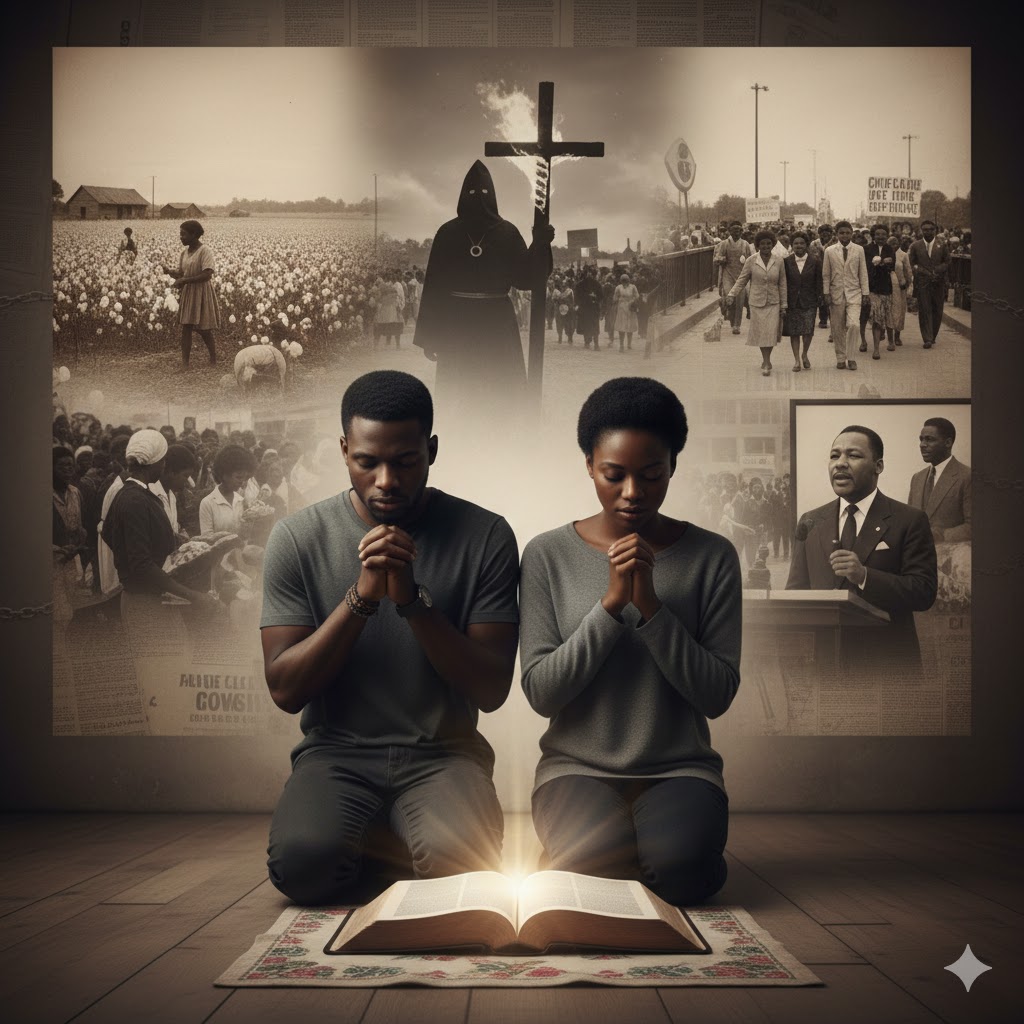
Black history is not merely a sequence of dates or the retelling of oppression; it is sacred terrain. It is a landscape shaped by the footprints of a people who carried faith, culture, dignity, and divine resilience across centuries. To stand in the presence of Black history is to stand on holy ground, because the journey of African-descended people bears witness to a God who walked with them through fire, flood, chains, and liberation.

Black history is holy ground because it begins long before slavery. It stretches back to kingdoms and civilizations where Black people ruled, built, studied, invented, and worshiped. From Nubia to Kush, from Ghana to Songhai, from Kemet to Ethiopia, Africa cultivated intellectual and spiritual traditions that the world still draws from. This heritage elevates Black history beyond pain; it anchors it in glory.

The holiness of this history is also found in its endurance. A people torn from their homeland survived one of the greatest atrocities in human history. They survived not by accident, but by providence. Their survival testifies to a divine hand at work in the shadows of suffering, shaping a remnant that would rise again. Every preserved family line, every song sung in the cotton fields, every whispered prayer in the midnight hour speaks of sacred resilience.

Black history is holy ground because it contains a narrative of faith that never died. Enslaved Africans did not inherit Christianity from their oppressors; they discovered in Scripture a God who understood bondage, deliverance, and covenant. Through the stories of Israel, they recognized themselves. Through the Psalms, they voiced their heartbreak. Through the Gospels, they found a Messiah who stood with the broken. Their faith was not borrowed but reborn.

The holiness of this narrative deepens when we consider the spiritual resistance embedded in Black culture. Spirituals were not just songs; they were coded prayers, liberation messages, and theological declarations. The rhythmic moans of the fields became a liturgy of survival. These traditions laid the foundation for the Black church, a sacred institution that shaped activism, family, and identity for generations.

Black history is holy ground because of its prophets and pioneers. Figures like Harriet Tubman, Frederick Douglass, Sojourner Truth, and countless unnamed leaders operated with a calling that mirrored biblical deliverers. They challenged systems, freed the oppressed, and stood firmly on righteousness. Their bravery was not merely political; it was spiritual warfare.

The holiness of this story extends to the mothers of the movement. Women whose names never made textbooks carried families on their backs. They prayed children into safety, held together broken homes, and passed down wisdom that sustained the community. Their hands were altars, their kitchens sanctuaries, their lives sermons of endurance and love.

Black history is holy ground because it carries the scent of sacrifice. Countless lives were laid down—from the Middle Passage to Jim Crow, from lynching trees to segregated streets. Their blood cries out like Abel’s, reminding the world that injustice is seen by God. Their sacrifices fertilized the soil from which future generations would rise.

That rising continues through the dreamers, scholars, activists, and artists who broadened the path toward freedom. Each breakthrough was a step deeper into holy territory—a reminder that progress is not simply social, but spiritual. Civil rights victories were not just legal milestones; they were manifestations of divine justice.

Black history is holy ground because it illuminates a people who refused to be erased. Despite centuries of oppression, their culture, creativity, and identity could not be destroyed. Instead, they transformed suffering into song, brokenness into brilliance, and hardship into hope. This divine alchemy marks their journey as sacred.

Modern Black life continues this sacredness. Every achievement—from academia to art, from science to business, from ministry to music—is a continuation of a holy lineage. Each accomplishment is a chapter in a story that began thousands of years before American soil ever felt the presence of African feet.

Black history is holy ground because it challenges the world to see humanity through a divine lens. The struggle for justice reflects God’s heart for righteousness. The fight for dignity reflects God’s image within humanity. Every act of resistance is a declaration that Black life is sacred and cannot be diminished.

The sacredness of Black history is also found in its wounds. Healing requires honesty, and Black history invites the world to confront painful truths without running. Yet this truth-telling is not meant to reopen scars but to restore what was lost. There is holiness in remembering, because memory heals and honors.

Black history is holy ground because it holds prophetic power. It warns against repeating the sins of the past, calls nations to repent, and demands transformation. It speaks with the authority of a testimony shaped by centuries of struggle and triumph. It teaches that liberation is a divine mandate, not a political suggestion.

This holiness also lies in the future. Black children today inherit not just a history of suffering but a legacy of brilliance. They stand on the shoulders of kings, queens, scholars, inventors, freedom fighters, and saints. Their existence is a continuation of the sacred promise that a people once enslaved would rise beyond anything intended to destroy them.

Black history is holy ground because it reveals God’s faithfulness. In every generation, He preserved a remnant, raised leaders, empowered movements, and poured creativity into a people who refused to surrender. Their story is evidence of divine purpose. Nothing about their survival is accidental.

To walk through Black history is to walk through a sacred story—one that encompasses creation, covenant, oppression, deliverance, restoration, and glory. It is a story intertwined with Scripture, echoing the journeys of ancient Israel and the hope of future redemption. It is a holy narrative wrapped in melanin and majesty.

Ultimately, Black history is holy ground because it embodies the miracle of endurance. It reveals that no chain is stronger than the human spirit, no system stronger than divine justice, and no hatred stronger than the love planted deep within a people chosen to carry light through centuries of darkness. Black history is not just remembered; it is revered.

And for those who study it, teach it, write it, or live it—it calls them to remove their shoes. For the place where they stand is sacred.

References:
Genesis 15:13–14 (KJV); Exodus 3:5; Psalm 68:31; Isaiah 61:1–4; Luke 4:18; Revelation 7:9; Curtin, P. The Atlantic Slave Trade; Gates, H. L. Africa in World History; Raboteau, A. Slave Religion; Franklin, J. H. From Slavery to Freedom.

Black History Month Exclusive: From the Transatlantic Slave Trade to Modern-Day Slavery.

The history of Black people is deeply intertwined with the global forces of oppression, beginning with the transatlantic slave trade. This system not only uprooted millions from Africa but laid the foundations for systemic racism, economic disparity, and social exclusion that persist to this day (Eltis & Richardson, 2015). Understanding this continuum is critical for confronting modern forms of slavery and exploitation.

Historical Context of the Transatlantic Slave Trade
The transatlantic slave trade, beginning in the 16th century, forcibly transported over 12 million Africans to the Americas (Lovejoy, 2012). African kingdoms were disrupted, familial structures destroyed, and cultural practices suppressed as enslaved people were commodified and dehumanized (Smallwood, 2007).

Black History Timeline: Transatlantic Slave Trade to Modern-Day Slavery

16th–19th Century – Transatlantic Slave Trade

  • Over 12 million Africans were forcibly transported to the Americas.
  • African societies were disrupted; enslaved people were commodified for labor in plantations.

17th–19th Century – Enslavement on Plantations

  • Brutal labor in sugar, cotton, and tobacco fields.
  • Resistance through rebellions, escapes, and spiritual preservation.

Late 18th–Early 19th Century – Abolition Movements

  • Activists like Frederick Douglass, Olaudah Equiano, and William Wilberforce fought to end slavery.
  • Slavery challenged morally, economically, and politically.

1865 – Emancipation (U.S.)

  • Slavery was legally abolished with the 13th Amendment.
  • The Reconstruction era begins; systemic oppression continues through Black Codes.

Late 19th–Early 20th Century – Jim Crow and Lynching

  • Segregation laws institutionalized racial inequality.
  • Ida B. Wells documents lynching and campaigns for justice.

1916–1970s – The Great Migration

  • Millions of Black Americans move from the rural South to northern urban centers.
  • Encounter economic opportunities, yet face housing discrimination and segregation.

1950s–1960s – Civil Rights Movement

  • Landmark legal victories: Brown v. Board of Education, Civil Rights Act.
  • Leaders like Martin Luther King Jr., Rosa Parks, and Medgar Evers advance equality.

Post-1960s – Structural Inequalities

  • Economic disparities persist: redlining, wage gaps, and limited access to quality education.
  • Mass incarceration disproportionately impacts Black communities.

21st Century – Modern-Day Slavery

  • Exploitation continues through human trafficking, forced labor, and systemic oppression.
  • Vulnerable populations, especially women and children, are disproportionately affected.

Contemporary Resistance and Advocacy

  • Organizations combat slavery and exploitation: Polaris Project, Anti-Slavery International, UN initiatives.
  • Education, activism, and policy reform empower communities and promote justice.

Economic Motivations and Colonial Powers
European colonial powers profited immensely from enslaved labor, fueling the growth of plantation economies in the Americas (Inikori, 2002). Sugar, cotton, and tobacco industries relied heavily on Black labor, creating wealth for Europe while entrenching racial hierarchies and economic inequalities.

Resistance and Revolts During Slavery
Despite brutal conditions, enslaved Africans resisted through rebellion, escape, and cultural preservation. Notable revolts such as the Haitian Revolution (1791–1804) demonstrated resilience and challenged notions of racial inferiority (Geggus, 2001).

The Role of Religion and Spirituality
Religion, particularly Christianity, adapted within African traditions, became a tool for both control and resistance. Spirituals, coded messages, and the church provided emotional sustenance and a framework for community solidarity (Raboteau, 2004).

Abolition Movements
Abolitionists, both Black and White, fought to end the transatlantic slave trade. Figures such as Frederick Douglass, Olaudah Equiano, and William Wilberforce highlighted the moral and economic arguments against slavery (Drescher, 2009).

Emancipation and Its Limitations
Even after emancipation in the 19th century, former enslaved people faced systemic discrimination through Black Codes, Jim Crow laws, and sharecropping systems, which perpetuated economic and social marginalization (Litwack, 2009).

The Great Migration and Urban Struggles
The Great Migration of the early 20th century reshaped Black America as millions moved from the rural South to urban centers, seeking opportunity yet encountering new forms of racial segregation and economic exploitation (Wilkerson, 2010).

Racial Violence and Lynching
Lynching and racial terror were pervasive tools of oppression. Ida B. Wells’ investigative journalism exposed the scale of violence, advocating for legal reform and civil rights (Wells-Barnett, 1895/1999).

Civil Rights and Legal Progress
The mid-20th century Civil Rights Movement achieved landmark legal victories, including Brown v. Board of Education and the Civil Rights Act, challenging systemic barriers and inspiring global movements for racial justice (Branch, 1988).

Economic Inequalities Post-Civil Rights
Despite legal progress, Black communities continue to face structural economic disparities. Redlining, discriminatory lending, and wage gaps reflect persistent inequality rooted in historical oppression (Rothstein, 2017).

Modern-Day Slavery Defined
Contemporary slavery includes human trafficking, forced labor, and exploitation in both domestic and global contexts. The International Labour Organization estimates over 40 million people are affected worldwide, with women and children disproportionately impacted (ILO, 2017).

Human Trafficking and Exploitation
Human trafficking networks prey on vulnerability. Migrants, impoverished communities, and marginalized groups are often coerced into labor or sexual exploitation (Bales, 2012). Black communities remain disproportionately affected due to historical legacies of marginalization.

Systemic Racism and Modern Oppression
Modern slavery is intertwined with systemic racism. Structural inequalities, over-policing, and mass incarceration continue patterns reminiscent of historical exploitation (Alexander, 2010).

Global Supply Chains and Labor Exploitation
Modern industries, including agriculture, textiles, and technology, often rely on exploitative labor practices. Ethical consumerism and corporate accountability are critical for addressing contemporary forms of slavery (Crane, 2013).

Intersection of Gender and Race
Black women face compounded vulnerabilities in modern slavery contexts. Gender-based violence, limited access to education, and economic precarity exacerbate exploitation (Amnesty International, 2017).

Education and Empowerment as Resistance
Education remains a crucial tool against exploitation. Historical and contemporary movements emphasize literacy, advocacy, and economic empowerment as pathways to resilience (Gates, 2019).

Global Movements Against Modern Slavery
Organizations like Anti-Slavery International, Polaris Project, and UN initiatives mobilize resources and awareness to combat trafficking and forced labor worldwide (Bales & Soodalter, 2009).

Continuity of Historical Struggles
The legacy of the transatlantic slave trade is not confined to the past. Modern slavery and systemic oppression reflect a continuum of exploitation, demanding sustained advocacy, education, and structural change (Smallwood, 2007).

Conclusion
Black history is a testament to resilience and resistance. From the horrors of the transatlantic slave trade to the challenges of modern-day slavery, understanding this history is essential for dismantling systemic oppression and fostering justice for future generations.


References

Alexander, M. (2010). The new Jim Crow: Mass incarceration in the age of colorblindness. New Press.
Amnesty International. (2017). Women and modern slavery: Understanding vulnerability. Amnesty International Publications.
Bales, K. (2012). Disposable people: New slavery in the global economy (3rd ed.). University of California Press.
Bales, K., & Soodalter, R. (2009). The slave next door: Human trafficking and slavery in America today. University of California Press.
Branch, T. (1988). Parting the waters: America in the King years 1954-63. Simon & Schuster.
Crane, A. (2013). Modern slavery as a management practice: Exploring the conditions and strategies. Journal of Business Ethics, 114(3), 505–518.
Drescher, S. (2009). Abolition: A history of slavery and antislavery. Cambridge University Press.
Eltis, D., & Richardson, D. (2015). Atlas of the transatlantic slave trade. Yale University Press.
Gates, H. L. (2019). Stony the road: Reconstruction, white supremacy, and the rise of Jim Crow. Penguin Press.
Geggus, D. P. (2001). Haitian revolutionary studies. Indiana University Press.
Inikori, J. E. (2002). Africans and the industrial revolution in England: A study in international trade and economic development. Cambridge University Press.
International Labour Organization (ILO). (2017). Global estimates of modern slavery: Forced labour and forced marriage. ILO Publications.
Litwack, L. F. (2009). Trouble in mind: Black southerners in the age of Jim Crow. Knopf.
Lovejoy, P. E. (2012). Transformations in slavery: A history of slavery in Africa (2nd ed.). Cambridge University Press.
Raboteau, A. J. (2004). Slave religion: The “invisible institution” in the antebellum South (20th anniversary ed.). Oxford University Press.
Rothstein, R. (2017). The color of law: A forgotten history of how our government segregated America. Liveright.
Smallwood, S. E. (2007). Saltwater slavery: A middle passage from Africa to American diaspora. Harvard University Press.
Wells-Barnett, I. B. (1999). The Red Record: Tabulated statistics and case histories of lynching in the United States. Dover Publications. (Original work published 1895)
Wilkerson, I. (2010). The warmth of other suns: The epic story of America’s Great Migration. Random House.

The Male Files: A Needle in A Haystack.

In loving memory of my late husband, who was indeed – a needle in a haystack.

In today’s world, finding a good man/Godly man — a man of character, integrity, and divine order — can feel like searching for a needle in a haystack. The term “good man” has become blurred by societal confusion, shifting gender norms, and the rise of self-centered ideologies. Yet, biblically and psychologically, the essence of a good man remains anchored in his role as a protector, provider, and priest of his household. He is not perfect, but principled; not flawless, but faithful. His strength lies not in domination but in devotion — to God, to purpose, and to those he loves.

The foundation of a Godly man begins with his relationship with God. Before Adam was given Eve, he was given responsibility — to work, to guard, and to obey (Genesis 2:15, KJV). This divine order reveals that a true man is defined not by what he possesses, but by what he stewards. His identity is grounded in purpose, not pleasure. The psychology of a good man, therefore, flows from internal alignment — he knows who he is because he knows Who created him.

In psychological terms, the good man exhibits high emotional intelligence and self-regulation. He is not ruled by impulse or ego but guided by wisdom and empathy. The apostle Paul describes such a man in Galatians 5:22–23 (KJV): “But the fruit of the Spirit is love, joy, peace, longsuffering, gentleness, goodness, faith, meekness, temperance.” These traits are not signs of weakness; they are evidence of divine strength under control — the hallmark of godly masculinity.

A good man is rare because his value is not measured by superficial metrics. Society often glorifies wealth, status, and charisma, but Scripture exalts virtue, diligence, and faithfulness. Proverbs 20:6 (KJV) observes, “Most men will proclaim every one his own goodness: but a faithful man who can find?” The good man does not seek applause; he seeks purpose. He is consistent even when unseen, honorable even when unpraised.

The psychology of a provider extends beyond financial security. A good man provides emotionally, spiritually, and mentally. He builds an atmosphere of peace within his home, offering stability in chaos and clarity in confusion. He listens before he reacts, prays before he speaks, and leads by example. His provision is holistic — he feeds the soul as much as the body, recognizing that leadership without love is tyranny.

Scripture commands men to provide because provision is a form of love. 1 Timothy 5:8 (KJV) declares, “But if any provide not for his own, and specially for those of his own house, he hath denied the faith.” Provision, therefore, is not optional — it is a divine duty. The good man understands that to provide is to mirror the heart of God, who daily supplies the needs of His people (Philippians 4:19, KJV).

Psychologically, providing gives a man purpose and identity. Men who are unable to fulfill this role often experience anxiety, shame, or feelings of inadequacy. Yet, true provision is not limited to financial ability — it extends to presence, protection, and prayer. The good man knows that his presence itself is a covering. His voice calms, his actions secure, and his prayers preserve.

In relationships, the good man operates with integrity and transparency. He does not manipulate affection or exploit emotions. Instead, he nurtures love through honor and commitment. Ephesians 5:25 (KJV) instructs, “Husbands, love your wives, even as Christ also loved the church, and gave himself for it.” His love is sacrificial — not possessive. He does not seek to control but to cultivate.

The psychology of a good man is marked by humility and growth. He is teachable, accountable, and self-aware. He acknowledges his flaws without being defined by them. Such humility reflects Proverbs 27:17 (KJV): “Iron sharpeneth iron; so a man sharpeneth the countenance of his friend.” The good man surrounds himself with wise counsel, understanding that maturity is not a destination but a journey.

One of the greatest attributes of a good man is emotional strength — not stoicism, but steadiness. He feels deeply yet manages wisely. He is the calm in the storm, a grounding presence that anchors those around him. Psychologically, this emotional balance stems from secure attachment and spiritual discipline. His peace flows from his connection to the Prince of Peace.

The scarcity of good men in modern times is not due to divine absence but to societal misalignment. Men are often taught to chase success over substance, validation over virtue. Yet, the Word of God offers an antidote: “Seek ye first the kingdom of God, and his righteousness; and all these things shall be added unto you” (Matthew 6:33, KJV). The good man understands that success without spiritual grounding is emptiness disguised as achievement.

A good man’s character is revealed in adversity. Pressure exposes the foundation upon which a man is built. While others crumble under trials, he stands firm, echoing the psalmist’s declaration, “He shall be like a tree planted by the rivers of water” (Psalm 1:3, KJV). His roots go deep, nourished by faith and endurance. He is stable because his source is divine, not circumstantial.

Psychologically, this resilience is linked to purpose and self-discipline. The good man sees challenges not as threats but as opportunities for growth. He processes pain through prayer and transforms disappointment into determination. His mindset reflects Romans 5:3–4 (KJV): “We glory in tribulations also: knowing that tribulation worketh patience; and patience, experience; and experience, hope.”

In his role as a husband and father, the good man reflects the heart of the Heavenly Father. He disciplines with love, leads with fairness, and covers his family with prayer. His presence brings peace; his consistency builds trust. He understands that his role is not to dominate but to demonstrate — to model godliness in action. His family finds safety in his strength because his strength comes from God.

The psychology of a good man also includes stewardship over his emotions, resources, and relationships. He practices restraint and discernment, refusing to squander what God has entrusted to him. This self-control, as described in Proverbs 16:32 (KJV), is a mark of true power: “He that is slow to anger is better than the mighty; and he that ruleth his spirit than he that taketh a city.”

A good man’s vision is generational. He thinks beyond the moment, planting seeds for the future. He leaves a legacy not of possessions but of principles. His life becomes a testimony of faithfulness that his children can follow. Proverbs 13:22 (KJV) affirms this, saying, “A good man leaveth an inheritance to his children’s children.” His impact transcends time because it is rooted in righteousness.

Spiritually, the good man walks in alignment with divine authority. He understands headship not as superiority but as service. Christ modeled leadership through humility, and the good man mirrors that same posture. He bends his knee before God so he can stand upright before men. His authority is effective because it is submitted.

In today’s culture, where broken masculinity is often celebrated, the good man stands out. He does not conform to chaos but embodies order. His silence carries wisdom, and his decisions reflect discernment. He is firm yet gentle, powerful yet peaceful. The world may not easily recognize him, but heaven does. He is the “needle in the haystack” — the remnant of righteous men who walk uprightly before the Lord.

Ultimately, the psychology of a good man is a blend of divine design and disciplined development. He is who he is because of grace, growth, and godly guidance. He is not self-made but Spirit-shaped. His life, though imperfect, points to perfection found only in Christ. He lives not for applause but for purpose, embodying Micah 6:8 (KJV): “He hath shewed thee, O man, what is good; and what doth the LORD require of thee, but to do justly, and to love mercy, and to walk humbly with thy God?”

A needle in the haystack — that’s what he is. Rare, refined, and righteous. The good man is not extinct; he is simply hidden — often overlooked by a world too distracted to value depth. But to the woman of wisdom, the family of faith, and the kingdom of God, he is priceless. For when you find a good man, you have found not luck, but divine favor.

References (KJV):

  • Genesis 2:15
  • Proverbs 20:6
  • Galatians 5:22–23
  • 1 Timothy 5:8
  • Philippians 4:19
  • Ephesians 5:25
  • Proverbs 27:17
  • Psalm 1:3
  • Romans 5:3–4
  • Micah 6:8
  • Proverbs 13:22
  • Matthew 6:33
  • Proverbs 16:32
  • Psalm 37:23
  • 1 Corinthians 16:13
  • Joshua 24:15
  • 1 Peter 3:7
  • Proverbs 12:4
  • Colossians 3:19
  • Psalm 112:1–2

The Degradation of American Culture: The Good, the Bad, and the Ugly – The Niggerization of America!

Race, Media, Internalized Oppression, and the Crisis of Identity in Modern America

What the word is meant to imply (in sociological usage)

When people use the term “niggerization” (usually in polemical or extremist writing), they typically mean:

The perceived process by which a society or group is said to adopt negative stereotypes historically associated with Black people, such as:

  • poverty
  • disorder
  • criminality
  • vulgarity
  • hypersexuality
  • anti-intellectualism
  • cultural dysfunction

So in that usage, it is shorthand for:

“cultural degradation framed through racist stereotypes.”

Why the term itself is intellectually flawed

From a scholarly standpoint, the term is conceptually incoherent and racist, because:

  1. It assumes Blackness itself is synonymous with dysfunction.
  2. It collapses complex social problems into racial essence.
  3. It confuses structural conditions (poverty, trauma, policy, media) with biological or cultural identity.
  4. It reproduces the very colonial logic it claims to critique.

In other words, it racializes social pathology, instead of analyzing:

  • capitalism
  • media systems
  • historical trauma
  • political economy
  • psychological conditioning

The accurate academic concepts instead

In serious sociology and psychology, the phenomena people try to describe with that word are actually studied as:

  • Cultural degradation (Postman, 1985)
  • Internalized oppression (Fanon, 1967)
  • Collective trauma (Herman, 1992)
  • Symbolic violence (Bourdieu, 1991)
  • Cultural pathology under late capitalism
  • Media-induced behavioral normalization

These frameworks explain the same issues without racial essentialism.

Bottom line (the honest answer)

The term “niggerization” means:

“The claim that social or cultural decline is caused by or resembles racist stereotypes of Black people.”

But academically speaking, it is:

  • not a valid concept
  • not used in peer-reviewed scholarship
  • built on racist assumptions
  • and analytically useless for real understanding.

Serious analysis talks about systems, trauma, incentives, power, and psychology — not racialized caricatures.

American culture stands at a paradoxical crossroads. On one hand, it represents unprecedented technological advancement, economic power, and global influence; on the other, it reveals deep moral confusion, cultural fragmentation, and psychological instability. The same society that produced civil rights movements, scientific revolutions, and artistic brilliance now also exports nihilism, hypersexuality, intellectual decline, and cultural self-loathing. This contradiction demands serious analysis, not sentimental nostalgia or ideological denial.

The “good” of American culture lies in its foundational ideals: liberty, education, innovation, and the belief in human potential. The United States historically functioned as a space where marginalized groups—particularly Black Americans—transformed systemic adversity into cultural excellence. From spirituals and jazz to civil rights theology and Black intellectualism, oppressed communities generated some of the most profound moral and artistic contributions in human history.

Black culture, in particular, once operated as a counter-hegemonic force—rooted in church, family structure, discipline, and collective survival. The Black church served not merely as a religious institution but as a psychological refuge, political organizing center, and moral compass. It cultivated literacy, leadership, and resistance, producing figures like Martin Luther King Jr., W.E.B. Du Bois, Malcolm X, and countless unsung educators and theologians.

However, the “bad” emerges when culture shifts from liberation to commodification. Under late-stage capitalism, identity itself becomes a product. Blackness, once forged in collective struggle, is now marketed as aesthetic rebellion divorced from historical consciousness. Hip-hop, fashion, slang, and trauma are packaged for global consumption while structural realities remain unresolved.

This transformation reflects what Frantz Fanon described as internalized oppression—the psychological condition in which colonized or marginalized people unconsciously absorb the values and narratives of their oppressors. Rather than defining themselves through ancestral dignity or moral purpose, individuals increasingly mirror distorted media archetypes that reward dysfunction, hypervisibility, and performative identity.

The American media-industrial complex plays a decisive role in this pathology. Reality television, viral culture, and algorithmic platforms normalize ignorance, narcissism, and moral exhibitionism. Intelligence is no longer rewarded; attention is. Loudness replaces substance, controversy replaces coherence, and degradation becomes spectacle.

From a sociological standpoint, this represents what Pierre Bourdieu called symbolic violence—a system in which dominant structures impose meaning in ways that appear natural or entertaining. Cultural decline is not accidental; it is engineered through incentives that reward psychological regression over collective uplift.

The “ugly” phase emerges when dysfunction becomes identity. At this stage, cultural pathology is defended, not questioned. Self-destructive behavior is reframed as authenticity. Anti-intellectualism becomes empowerment. Victimhood becomes currency. Accountability becomes oppression. The very tools needed for liberation—language, art, sexuality, spirituality—are weaponized against self-development.

This phenomenon is not limited to Black America; it reflects a broader American collapse of values. Consumerism replaces character. Pleasure replaces purpose. Image replaces substance. The nation increasingly resembles what the sociologist Christopher Lasch termed a culture of narcissism, where self-expression replaces moral formation and therapy replaces ethics.

Theologically, this crisis reflects a deeper spiritual disorder. Scripture consistently frames cultural decay as the consequence of moral inversion. “Woe unto them that call evil good, and good evil” (Isaiah 5:20, KJV). When societies lose transcendent moral reference points, they descend into relativism, where no behavior can be judged and no standard upheld.

In biblical anthropology, human beings are not merely social animals but moral agents accountable to divine law. When culture severs itself from transcendent accountability, identity collapses into instinct, impulse, and ego. This is not freedom; it is regression.

Deuteronomy 28 presents a powerful framework for cultural analysis: obedience produces collective flourishing, while disobedience produces psychological confusion, social instability, and generational trauma. The text reads less like ancient theology and more like sociological prophecy.

From a psychological perspective, the current American condition aligns with collective trauma theory. Historical violence—slavery, segregation, economic exploitation—left deep neurological and cultural scars. However, unresolved trauma does not heal itself; it either transforms into wisdom or mutates into pathology.

Instead of healing through historical consciousness, education, and moral reconstruction, American culture increasingly chooses escapism: drugs, sex, entertainment, consumption, and digital addiction. These are not neutral pleasures; they function as anesthetics against existential emptiness.

The tragedy is that Black America once offered a powerful counter-model: communal identity, spiritual resilience, disciplined family structures, and moral seriousness forged under pressure. That legacy is now being diluted, caricatured, and commercially exploited.

What was once a culture of survival has become a culture of simulation. Pain is aestheticized. Trauma is monetized. Rebellion is marketed. Liberation is reduced to branding.

This is not merely cultural decline; it is psychological colonization in reverse—where the descendants of the oppressed internalize and perform the very stereotypes once imposed upon them, now for profit and validation.

Yet the story is not closed. Cultural cycles can be reversed. The same communities that produced intellectual giants, theologians, artists, and revolutionaries can do so again. Cultural resurrection is possible, but it requires ruthless honesty.

It requires rejecting media lies, reclaiming historical consciousness, restoring intellectual discipline, rebuilding family structures, and re-centering spiritual identity. Culture does not change through slogans; it changes through values, institutions, and collective memory.

The future of America will not be determined by technology or politics alone, but by psychological orientation: whether society chooses depth over spectacle, meaning over impulse, and truth over performance.

Ultimately, the crisis of American culture is not racial at its core—it is spiritual and psychological. Race merely reveals the fractures more vividly. What we are witnessing is not just cultural decay, but a civilizational test: whether identity will be grounded in transcendence or dissolved into algorithmic noise.

The good showed what America could be.
The bad reveals what it compromised.
The ugly exposes what it becomes when it forgets who it is.


References

Bourdieu, P. (1991). Language and symbolic power. Harvard University Press.

Fanon, F. (1967). Black skin, white masks. Grove Press.

Du Bois, W. E. B. (1903). The souls of Black folk. A.C. McClurg.

Lasch, C. (1979). The culture of narcissism: American life in an age of diminishing expectations. W. W. Norton.

Herman, J. L. (1992). Trauma and recovery. Basic Books.

bell hooks. (1992). Black looks: Race and representation. South End Press.

Postman, N. (1985). Amusing ourselves to death. Penguin.

The Holy Bible, King James Version. (1611/2017). Hendrickson Publishers.

Dei, G. J. S. (2012). Reframing Blackness and Black solidarities through anti-colonial and decolonial prisms. Springer.

Wilkerson, I. (2020). Caste: The origins of our discontents. Random House.

Dilemma: Fear

Fear is one of the oldest human emotions, woven into the survival instincts of the body and the spiritual consciousness of the soul. It alerts, warns, and protects, yet when fear governs the heart, it becomes a tyrant rather than a teacher. In today’s world, fear has shifted from momentary danger to a constant psychological atmosphere, shaping how people think, plan, and hope.

Modern fears are no longer limited to immediate threats. Many live under the weight of persistent uncertainty—fear of not having enough food, fear of financial collapse, fear of illness, fear of violence, and fear of what tomorrow may bring. These anxieties quietly influence decisions and erode peace, even when danger has not yet arrived.

Scripture acknowledges fear as a real human experience, not an imaginary weakness. Throughout the Bible, men and women of faith faced famine, war, exile, and loss. Their fears were not dismissed; instead, God addressed them directly. This reveals that fear itself is not sin, but what one does with fear determines its outcome.

Economic instability has revived ancient fears of scarcity. Rising food prices, supply shortages, and global disruptions have caused many to wonder how they will eat, provide, or survive. These fears echo biblical times when famine tested faith and obedience. Yet Scripture reminds believers that provision does not originate in systems alone but in God Himself.

The Bible speaks directly to the fear of lack. “Therefore I say unto you, Take no thought for your life, what ye shall eat, or what ye shall drink… Is not the life more than meat?” (Matthew 6:25, KJV). This passage does not deny physical need but challenges fear-driven obsession, calling the heart back to trust.

War is another dominant fear of the modern age. News cycles are filled with violence, rumors of war, and global conflict. The Bible foretold such times, stating, “And ye shall hear of wars and rumours of wars: see that ye be not troubled” (Matthew 24:6, KJV). Fear increases when events are misunderstood, but scripture frames these moments within divine sovereignty.

Fear also thrives in the anticipation of loss. Many fear losing loved ones, freedom, stability, or identity. This fear is often intensified by trauma and historical memory, particularly among communities that have repeatedly endured displacement and injustice. Fear becomes generational when wounds are left unhealed.

God repeatedly addresses His people with the phrase “fear not.” This command appears not as a rebuke, but as reassurance. “Fear thou not; for I am with thee: be not dismayed; for I am thy God” (Isaiah 41:10, KJV). The absence of fear is rooted not in circumstances improving, but in God’s presence remaining.

Fear has the power to distort perception. When fear dominates, problems appear larger than they are, and solutions seem unreachable. Scripture counters this distortion by reminding believers that strength does not originate in human ability alone. “God hath not given us the spirit of fear; but of power, and of love, and of a sound mind” (2 Timothy 1:7, KJV).

The fear of the future is particularly paralyzing. Questions about what will happen next—economically, politically, spiritually—consume many minds. Yet the Bible reframes the future as known by God even when hidden from man. “Take therefore no thought for the morrow: for the morrow shall take thought for the things of itself” (Matthew 6:34, KJV).

Spiritual fear often arises when people feel abandoned or forgotten. In moments of despair, fear whispers that God is distant. Scripture responds decisively: “When thou passest through the waters, I will be with thee” (Isaiah 43:2, KJV). Fear loses authority when presence is assured.

The Apostle Paul described fear through the lens of spiritual warfare and resilience. “We are troubled on every side, yet not distressed; we are perplexed, but not in despair; persecuted, but not forsaken; cast down, but not destroyed” (2 Corinthians 4:8–9, KJV). This passage acknowledges pressure while affirming survival and divine preservation.

Fear often intensifies when control is lost. Humans attempt to manage fear by controlling outcomes, but this strategy usually deepens anxiety. Scripture invites surrender instead. “Cast thy burden upon the LORD, and he shall sustain thee” (Psalm 55:22, KJV). Burdens are lifted not by strength alone, but by trust.

Children today inherit a world saturated with fear—climate anxiety, violence, instability, and digital overload. God’s message to the next generation remains unchanged. “Fear not, little flock; for it is your Father’s good pleasure to give you the kingdom” (Luke 12:32, KJV). Fear is met with promise, not panic.

Faith does not deny danger; it reframes it. Biblical faith stands in the presence of fear without bowing to it. Courage is not the absence of fear but obedience in spite of it. This distinction is vital in understanding biblical strength.

The fear of death is one of humanity’s deepest dilemmas. Scripture confronts this fear with eternal perspective. “Yea, though I walk through the valley of the shadow of death, I will fear no evil” (Psalm 23:4, KJV). Death is acknowledged, but fear is rejected because God remains present.

Communal fear spreads rapidly, especially during crises. Scripture warns against collective panic, urging discernment and faith. “Say ye not, A confederacy… neither fear ye their fear, nor be afraid” (Isaiah 8:12, KJV). God calls His people to resist fear-driven alliances and reactions.

Fear can either drive people away from God or push them closer to Him. The biblical pattern shows that fear, when surrendered, becomes a doorway to deeper dependence. “The LORD is my light and my salvation; whom shall I fear?” (Psalm 27:1, KJV). Fear is challenged by relationship.

Ultimately, fear reveals what the heart trusts most. When fear rules, trust is misplaced. When trust is restored, fear loses its grip. Scripture consistently redirects fear toward reverence for God rather than terror of circumstances.

The dilemma of fear remains real, but it is not final. God’s word repeatedly speaks life into fearful hearts, reminding humanity that though the world shakes, He does not. Fear may cast one down, but in God, they are never destroyed.


References

The Holy Bible, King James Version. (1611/2017). Cambridge University Press.

Matthew 6:25–34, KJV
Matthew 24:6, KJV
Isaiah 41:10, KJV
Isaiah 43:2, KJV
2 Timothy 1:7, KJV
Psalm 55:22, KJV
2 Corinthians 4:8–9, KJV
Luke 12:32, KJV
Psalm 23:4, KJV
Psalm 27:1, KJV