Tag Archives: the brown boy dilemma

Dilemmas

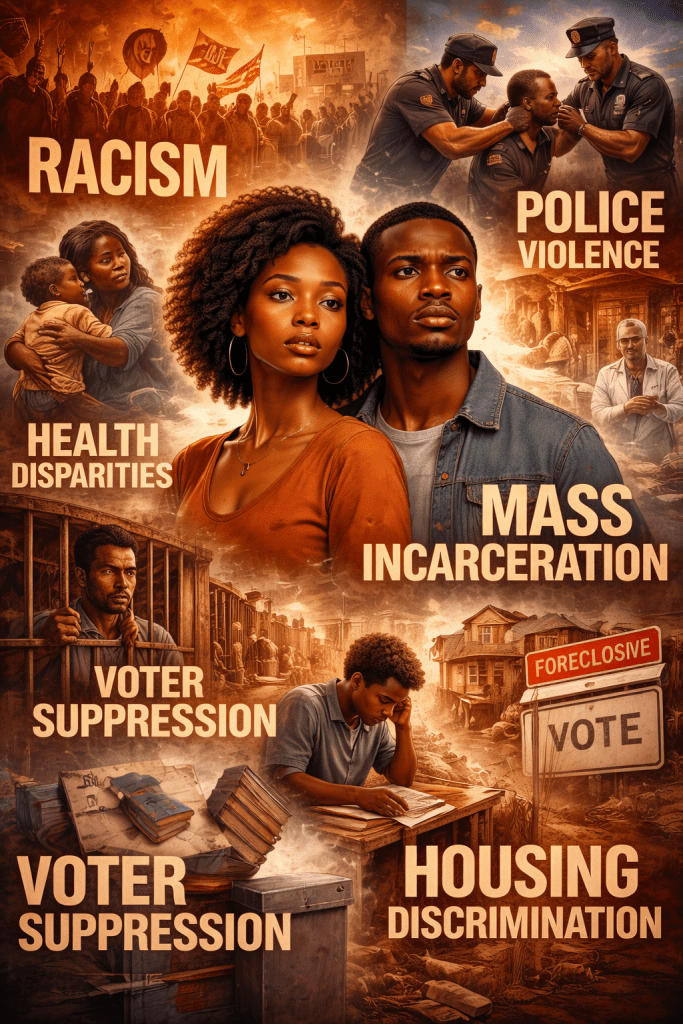
The biggest dilemma Black people face in the United States and globally is not a single issue—it is a complex intersection of systemic racism, historical oppression, and structural inequality. Scholars, historians, and social scientists generally agree that these challenges are interconnected, affecting economic opportunity, health, education, justice, and political representation simultaneously. Here’s a breakdown of the major dimensions of this dilemma:

The Weight of Structural Oppression: The Biggest Dilemma Black People Face

Black people in the United States face a complex web of challenges shaped by centuries of systemic racism, economic inequality, and social marginalization. These intersecting factors have created structural barriers that affect nearly every aspect of life, from housing and education to healthcare and political participation. Understanding the depth of this dilemma requires an examination of historical patterns and contemporary consequences.

Systemic Racism

Systemic or structural racism refers to the ways in which laws, policies, and social institutions create and perpetuate inequality based on race. This includes discriminatory practices in housing, education, employment, and criminal justice. Examples include:

  • Redlining and housing discrimination – Black families were historically denied access to mortgages and homeownership, creating generational wealth gaps.
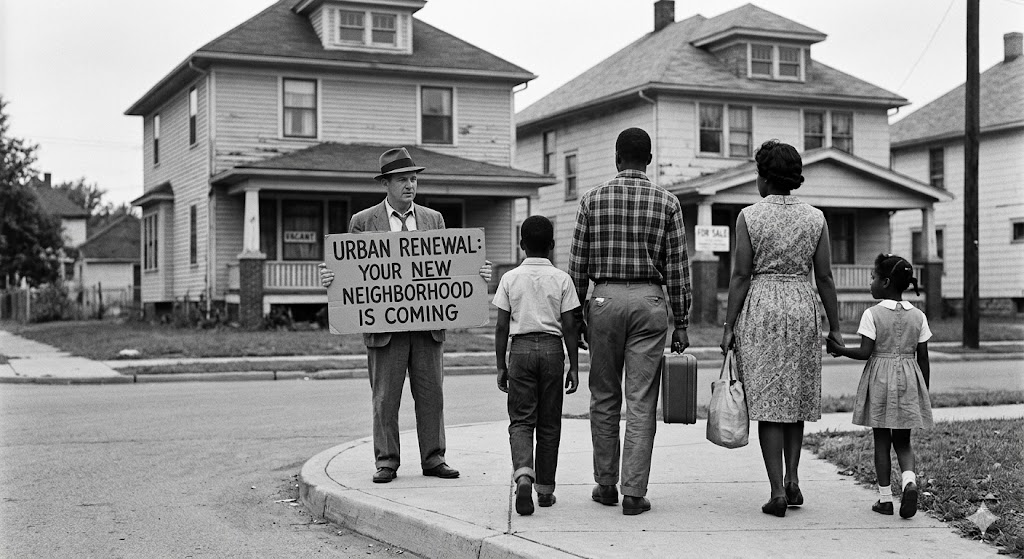
  • Urban renewal and “Negro removal” – Black neighborhoods were destroyed for highways and development, displacing communities.

2. Economic Inequality

Black people consistently face disparities in income, wealth, and access to employment opportunities. According to Federal Reserve data:

  • The median wealth of Black families is significantly lower than that of white families.
  • Access to high-paying jobs is restricted by both educational and systemic barriers, including bias in hiring and promotion.

Economic inequality compounds other challenges, like housing, healthcare, and education.


3. Criminal Justice and Mass Incarceration

The U.S. criminal justice system disproportionately targets Black individuals:

  • Black Americans are more likely to be stopped, arrested, convicted, and given longer sentences than white Americans for similar offenses.
  • Systems like convict leasing historically re-enslaved Black men after emancipation, while modern mass incarceration continues this legacy in a more subtle form.

This creates cycles of poverty, family disruption, and social stigma.


4. Health Disparities

Black people experience disproportionate health challenges, both from systemic barriers and social determinants:

  • Higher rates of chronic disease, infant mortality, and maternal mortality.
  • Less access to quality healthcare and insurance.
  • The legacy of medical exploitation, such as the Tuskegee Syphilis Study, contributes to mistrust of medical institutions.

5. Educational Inequality

Education is a key pathway to social mobility, yet Black students often face:

  • Segregated schools due to district zoning and residential patterns.
  • Underfunded schools with fewer resources, larger class sizes, and limited access to advanced programs.
  • Bias in curriculum and disciplinary practices that disproportionately penalize Black students.

6. Cultural Stereotypes and Social Perceptions

Black people are frequently subjected to harmful stereotypes:

  • Men: “threatening,” “criminal,” or “hyper-masculine” tropes.
  • Women: “angry,” “jezebel,” or “mammy” archetypes.
  • These stereotypes affect employment, policing, mental health, and social interactions.

7. Political Disenfranchisement

Efforts to suppress Black votes through gerrymandering, voter ID laws, and intimidation continue to limit political influence. Without political power, communities struggle to advocate for systemic change in housing, education, and law enforcement.


8. Intergenerational Trauma

The cumulative effect of slavery, segregation, discrimination, and systemic oppression has created intergenerational trauma. This affects:

  • Mental health outcomes
  • Economic behaviors and financial stability
  • Family structures and community cohesion

One of the most pervasive forces shaping Black life is systemic racism. This form of oppression is embedded within institutions, laws, and social practices that disadvantage Black individuals collectively. Systemic racism manifests in policies that limit access to economic resources, enforce segregation, and perpetuate disparities across generations.

Housing discrimination has historically reinforced racial inequality. Practices such as redlining, blockbusting, and contract selling restricted Black families’ access to safe neighborhoods and homeownership. Redlining, for example, denied mortgages to residents in predominantly Black neighborhoods, preventing them from accumulating wealth through property ownership.

Urban renewal projects in the mid-twentieth century, often referred to as “Negro removal,” further disrupted Black communities. Entire neighborhoods were demolished for highways, commercial developments, and government buildings, displacing families and erasing community networks. These policies reinforced segregation while simultaneously enriching developers and local governments.

Economic inequality remains a central challenge. Black Americans experience higher unemployment rates and lower wages compared with white counterparts. This disparity is compounded by limited intergenerational wealth, which restricts opportunities for education, homeownership, and investment. As a result, economic mobility is often constrained by systemic barriers beyond individual control.

Education is similarly affected by structural inequities. School district zoning often ties educational resources to property taxes, leaving Black students in underfunded schools with fewer academic opportunities. Segregated schools continue to produce gaps in achievement and limit access to higher education and professional careers.

Healthcare disparities also exemplify systemic inequities. Black individuals experience higher rates of chronic illnesses, maternal mortality, and limited access to quality care. Historical exploitation, such as the Tuskegee Syphilis Study, has fostered mistrust toward medical institutions, further complicating healthcare outcomes for Black communities.

Criminal justice disparities are another critical component of structural oppression. Black Americans are disproportionately targeted for policing, incarceration, and harsher sentencing. Practices such as convict leasing in the post-Civil War South and contemporary mass incarceration policies have created cycles of poverty and social instability, particularly affecting Black men.

The labor market has not been immune to racial inequities. Occupational segregation, hiring discrimination, and wage gaps limit economic opportunities for Black workers. Even with equal qualifications, Black individuals frequently face systemic barriers that affect promotions, career progression, and job security.

Political disenfranchisement continues to hinder Black communities. Gerrymandering, voter suppression laws, and historical exclusion from voting limit the ability to influence policies that affect housing, education, healthcare, and criminal justice. This reduces accountability and reinforces systemic inequities.

Cultural and media representation also shapes social experiences. Black people are often portrayed through stereotypes that influence perceptions in employment, law enforcement, and interpersonal interactions. These portrayals contribute to bias, discrimination, and the psychological burden of navigating misrepresentation.

Intergenerational trauma compounds these structural challenges. The cumulative effects of slavery, segregation, and systemic discrimination influence mental health, economic behavior, family dynamics, and community cohesion. This trauma persists across generations, creating challenges that extend beyond immediate social conditions.

Health outcomes are further affected by social determinants such as neighborhood safety, food access, and environmental hazards. Many Black communities live in areas with limited resources, higher exposure to pollution, and reduced access to recreational spaces, exacerbating health disparities.

Despite these challenges, Black communities have demonstrated resilience and agency. Historically, Black churches, civic organizations, and grassroots movements have provided support networks, leadership opportunities, and platforms for advocacy. These institutions have played a critical role in fostering community cohesion and social advancement.

Cultural contributions by Black Americans, from music and literature to art and entrepreneurship, have not only enriched society but also served as forms of resistance and empowerment. Cultural production has allowed Black communities to assert identity, challenge oppression, and build intergenerational pride.

Family and community structures within Black communities have historically been sites of strength. Extended kin networks, cooperative child-rearing, and communal support have mitigated the effects of systemic oppression while fostering resilience.

Economic strategies, including mutual aid, cooperative business ventures, and community investment, have also served as tools to counter structural inequality. These efforts, while often limited by systemic barriers, demonstrate agency and resourcefulness in the face of adversity.

Policy interventions are essential to addressing the multifaceted challenges facing Black Americans. Measures to reduce income inequality, expand access to quality education and healthcare, reform the criminal justice system, and combat discriminatory housing practices are critical to creating equitable opportunities.

Understanding the Black experience requires recognizing both systemic barriers and the resilience of the community. Black Americans navigate a society that historically and continuously marginalizes them, yet they maintain cultural, economic, and social strength that contributes to societal advancement.

The overarching dilemma is that Black people are forced to navigate systems designed historically to exclude them. Every aspect of life—education, work, healthcare, criminal justice, housing—is influenced by these systemic barriers. While resilience, cultural strength, and community networks have enabled survival and progress, the structural challenges continue to create cycles of inequality that affect generations.

In short, the biggest dilemma Black people face is systemic oppression combined with persistent structural inequities, which compound across generations to limit access to opportunity, safety, and wealth.

Ultimately, the biggest dilemma facing Black people is not a matter of individual shortcomings but of persistent systemic inequality and structural oppression. Addressing these interrelated challenges requires comprehensive policy reforms, societal commitment to racial equity, and recognition of the historical context that created these disparities.


References

Alexander, M. (2012). The new Jim Crow: Mass incarceration in the age of colorblindness. The New Press.

Blackmon, D. A. (2008). Slavery by another name: The re-enslavement of Black Americans from the Civil War to World War II. Anchor Books.

Collins, P. H. (2000). Black feminist thought: Knowledge, consciousness, and the politics of empowerment. Routledge.

Crenshaw, K. (1989). Demarginalizing the intersection of race and sex. University of Chicago Legal Forum.

Foner, E. (1988). Reconstruction: America’s unfinished revolution, 1863–1877. Harper & Row.

Hirsch, A. R. (1983). Making the second ghetto: Race and housing in Chicago 1940–1960. University of Chicago Press.

Rothstein, R. (2017). The color of law: A forgotten history of how our government segregated America. Liveright Publishing.

Sugrue, T. J. (2014). The origins of the urban crisis: Race and inequality in postwar Detroit. Princeton University Press.

U.S. Department of Housing and Urban Development. (2023). History of housing discrimination and segregation in the United States.

Wingfield, A. H. (2013). No more invisible man: Race and gender in men’s work. Temple University Press.


Right Calling, Wrong Posture

Many people are blessed with a divine calling, a purpose, or a gift from God. Yet, possessing a calling is not enough; the posture with which we approach it determines whether we fulfill our destiny or miss it entirely. A right calling in the wrong posture can lead to frustration, stagnation, and spiritual misalignment.

1. God Honors Posture, Not Just Talent

1 Samuel 16:7 (KJV) teaches: “But the Lord said unto Samuel, Look not on his countenance, or on the height of his stature; because I have refused him: for the Lord seeth not as man seeth; for man looketh on the outward appearance, but the Lord looketh on the heart.”
God values heart posture—humility, obedience, and faith—more than natural talent or outward appearance. You may be gifted, but without the right heart posture, your calling can be misused or ignored.

2. Pride Misaligns the Call

Proverbs 16:18 (KJV) warns: “Pride goeth before destruction, and an haughty spirit before a fall.”
Many individuals pursue their calling with arrogance, entitlement, or impatience. A posture of pride can blind a person to divine guidance, causing missteps even in areas where they are skilled. True readiness requires humility and teachability.

3. Impatience Can Distort the Mission

Ecclesiastes 3:1 (KJV) reminds us: “To everything there is a season, and a time to every purpose under the heaven.”
Rushing ahead of God’s timing, seeking recognition too early, or forcing results creates friction. The right calling requires patience; the wrong posture invites burnout and frustration.

4. Lack of Faith Weakens Impact

Hebrews 11:6 (KJV) teaches: “But without faith it is impossible to please him: for he that cometh to God must believe that he is, and that he is a rewarder of them that diligently seek him.”
Even with a correct calling, if faith is absent, one will fail to execute it effectively. Fear, doubt, or inaction undermine potential. Posture of trust and obedience strengthens calling.

5. Disobedience Nullifies Blessing

Joshua 1:7–8 (KJV) instructs: “Only be thou strong and very courageous, that thou mayest observe to do according to all the law…that thou mayest prosper whithersoever thou goest. This book of the law shall not depart out of thy mouth…that thou mayest make thy way prosperous, and that thou mayest have good success.”
Divine calling must align with God’s instructions. Talent without obedience is like a river without water—it looks promising but fails to nourish. Wrong posture in disobedience prevents true success.

6. Humility and Servanthood Elevate the Calling

Matthew 23:11 (KJV) declares: “But he that is greatest among you shall be your servant.”
God’s kingdom prioritizes servant leadership. Even when called to greatness, the posture of humility, service, and love ensures that the calling fulfills its divine purpose.

7. Listening and Aligning Your Spirit

Proverbs 3:5–6 (KJV) states: “Trust in the Lord with all thine heart; and lean not unto thine own understanding. In all thy ways acknowledge him, and he shall direct thy paths.”
Right posture involves continual spiritual alignment—prayer, discernment, and submission. A misaligned heart or ego can distort God’s calling into personal ambition.


Conclusion

A divine calling is a gift, but posture determines impact. Right calling, wrong posture, leads to wasted potential, frustration, and misalignment with God’s will. The correct posture—humility, obedience, patience, faith, and servanthood—ensures that the calling becomes a blessing, both spiritually and practically. Aligning posture with purpose allows God’s promises to manifest fully in one’s life.


References

Grudem, W. (2004). Systematic theology: An introduction to biblical doctrine. Inter-Varsity Press.

Stanley, A. (2012). The principle of posture in purpose: Aligning heart and calling. Thomas Nelson.

The Holy Bible, King James Version. (1769/2017). Cambridge University Press.

Oswald, R. (2015). Living in your calling: Posture, obedience, and impact. Moody Publishers.

The Dilemma of the Black Man and the Black Woman.

The dilemma of the Black man and Black woman is a spiritual, historical, and cultural paradox. Chosen by God, endowed with divine purpose and ancestral greatness, yet marginalized, oppressed, and misrepresented by the world. “For the Lord shall judge His people, and repent Himself for His servants, when He seeth that their power is gone” (Deuteronomy 32:36, KJV). Our divine worth has often clashed with societal perception.

Black men are called to leadership, protection, and spiritual headship. Scripture shows that a godly man is disciplined, righteous, and sacrificial. “He that ruleth his spirit is better than he that taketh a city” (Proverbs 16:32, KJV). Yet, society often diminishes his authority, questions his integrity, and criminalizes his presence. This creates tension between divine calling and worldly expectation.

Black women are called to honor, nurture, and uphold righteousness. The virtuous woman is praised for her fear of God and strength of character. “Who can find a virtuous woman? for her price is far above rubies” (Proverbs 31:10, KJV). Yet, she is often stereotyped, undervalued, and overburdened. The world demands perfection while failing to recognize her godly worth.

The dilemma begins in history. Black men and women have been enslaved, colonized, and systematically oppressed. They were denied education, autonomy, and wealth, yet their spiritual and cultural legacies endured. “They that wait upon the Lord shall renew their strength” (Isaiah 40:31, KJV). Faith sustained their identity through oppression.

For the Black man, societal misrepresentation often targets masculinity. His leadership and strength are viewed with suspicion rather than admiration. Scripture calls men to love and lead with humility: “Husbands, love your wives, even as Christ also loved the church” (Ephesians 5:25, KJV). Yet society frequently equates Black masculinity with aggression or threat.

For the Black woman, the world often reduces her worth to physical appearance or labor. She is resilient, yet society demands emotional perfection. Scripture reminds women of their eternal value: “Favour is deceitful, and beauty is vain: but a woman that feareth the Lord, she shall be praised” (Proverbs 31:30, KJV). Her worth is divine, not superficial.

The dilemma extends to relationships. The Black man struggles to lead spiritually, financially, and morally in a world that often undermines his authority. The Black woman struggles to honor God and maintain dignity in a culture that diminishes her voice. Yet Scripture instructs unity, obedience to God, and mutual respect: “Likewise, ye husbands, dwell with them according to knowledge, giving honour unto the wife” (1 Peter 3:7, KJV).

Education is another battlefield. Black men and women have historically had access denied, yet have produced scholars, thinkers, and inventors. “The heart of the prudent getteth knowledge; and the ear of the wise seeketh knowledge” (Proverbs 18:15, KJV). The dilemma is access and recognition despite capability.

Economically, Black men and women face systemic barriers. They are often denied fair wages, business opportunities, and generational wealth. Yet Scripture teaches diligence and provision: “If any provide not for his own, and specially for those of his own house, he hath denied the faith” (1 Timothy 5:8, KJV). Faith and persistence remain their anchors.

Spiritually, the Black man may wrestle with societal judgment while maintaining leadership and integrity. The Black woman may wrestle with societal objectification while nurturing faith and family. Scripture affirms that God’s view defines true worth: “Man looketh on the outward appearance, but the Lord looketh on the heart” (1 Samuel 16:7, KJV).

Cultural misrepresentation further complicates identity. Black men are often stereotyped as aggressive; Black women as angry or hypersexualized. Both distortions obscure God’s design. The Bible warns against judging by appearance or hearsay: “Judge not according to the appearance, but judge righteous judgment” (John 7:24, KJV).

Health disparities create another layer. Black men face high rates of disease, incarceration, and early mortality. Black women face maternal and systemic health inequities. Yet spiritual endurance sustains them: “Even the youths shall faint and be weary, and the young men shall utterly fall: But they that wait upon the Lord shall renew their strength” (Isaiah 40:30-31, KJV).

Black men and women are often forced to overperform to prove worth. Excellence is expected; failure is punished. Yet Scripture encourages perseverance and faith-driven identity: “But let patience have her perfect work, that ye may be perfect and entire, wanting nothing” (James 1:4, KJV).

The dilemma is compounded by colorism within the community. Lighter skin may be praised; darker skin criticized. Yet beauty and value are rooted in divine creation, not pigment. “So God created man in his own image, in the image of God created he him; male and female created he them” (Genesis 1:27, KJV).

Black men and women must navigate family dynamics where generational trauma persists. Healing and restoration require wisdom and faith. “Train up a child in the way he should go: and when he is old, he will not depart from it” (Proverbs 22:6, KJV). Spiritual and emotional nurturing is central.

The dilemma also affects love and partnership. Black men may struggle to lead without being misjudged. Black women may struggle to honor themselves while nurturing others. Godly love, patience, and discernment are the remedy: “Charity suffereth long, and is kind; charity envieth not; charity vaunteth not itself” (1 Corinthians 13:4, KJV).

Community expectation weighs heavily. Success is celebrated selectively; failure is amplified. Both men and women carry burdens not of their choosing. Scripture encourages unity and support: “Bear ye one another’s burdens, and so fulfil the law of Christ” (Galatians 6:2, KJV).

Despite these dilemmas, God equips His people with purpose. Black men and women are called to honor, wisdom, and influence. “And he said unto me, My grace is sufficient for thee: for my strength is made perfect in weakness” (2 Corinthians 12:9, KJV). Weakness is a canvas for divine strength.

Education, faith, family, and community become tools to navigate systemic obstacles. Black men lead with humility; Black women nurture with resilience. Both serve God’s higher calling while confronting societal injustice. “Trust in the Lord with all thine heart; and lean not unto thine own understanding” (Proverbs 3:5, KJV).

Ultimately, the dilemma is temporal; God’s perspective is eternal. Black identity, when rooted in divine truth, transcends cultural misrepresentation. “For I know the thoughts that I think toward you, saith the Lord, thoughts of peace, and not of evil, to give you an expected end” (Jeremiah 29:11, KJV).

Black men and women are divine reflections, created with purpose, intelligence, and sacred value. Their struggle is real, but their legacy is eternal. “Therefore all things whatsoever ye would that men should do to you, do ye even so to them” (Matthew 7:12, KJV). Treating oneself and each other with Godly love affirms identity.

The dilemma of the Black man and Black woman is multi-layered: historical, social, psychological, and spiritual. Yet, through faith, perseverance, and adherence to God’s Word, it becomes a pathway to triumph, restoration, and divine fulfillment. “Be strong and of a good courage, fear not, nor be afraid of them: for the Lord thy God, he it is that doth go with thee” (Deuteronomy 31:6, KJV).

Biblical References (KJV)

  • Genesis 1:27 — God created man in His image
  • Proverbs 3:5 — Trust in the Lord
  • Proverbs 16:32 — Self-control is better than conquering a city
  • Proverbs 18:15 — The heart of the prudent seeks knowledge
  • Proverbs 22:6 — Train up a child in the way he should go
  • Proverbs 31:10, 30 — The virtuous woman is above rubies
  • Isaiah 40:30-31 — Renewal of strength
  • Isaiah 54:17 — No weapon formed against thee shall prosper
  • Jeremiah 29:11 — God’s thoughts for peace and purpose
  • Matthew 7:12 — The Golden Rule
  • Ephesians 5:25 — Husbands love your wives as Christ loved the church
  • 1 Corinthians 13:4-6 — Charity suffereth long
  • 1 Peter 2:9 — Chosen generation, royal priesthood
  • 1 Peter 3:7 — Husbands dwell with knowledge, giving honor to wives
  • 2 Corinthians 12:9 — God’s strength made perfect in weakness
  • Galatians 6:2 — Bear one another’s burdens
  • Deuteronomy 31:6 — Be strong and courageous
  • Deuteronomy 32:36 — God judges His people
  • Psalm 68:31 — Ethiopia shall stretch out her hands to God
  • Exodus 5:1 — Let my people go

References

Asante, M. K. (1988). Afrocentricity: The theory of social change. African American Images.

Bell, D. (1992). Faces at the bottom of the well: The permanence of racism. Basic Books.

Diop, C. A. (1974). The African origin of civilization: Myth or reality. Lawrence Hill Books.

Du Bois, W. E. B. (1903). The souls of Black folk. A. C. McClurg & Co.

Fanon, F. (1967). Black skin, white masks. Grove Press.

hooks, b. (1995). Killing rage: Ending racism. Henry Holt and Co.

Muhammad, K. G. (2010). The condemnation of Blackness: Race, crime, and the making of modern urban America. Harvard University Press.

Woodson, C. G. (1933). The mis-education of the Negro. Associated Publishers.

Karenga, M. (2002). Introduction to Black studies (3rd ed.). University of Sankore Press.

Oyěwùmí, O. (1997). The invention of women: Making an African sense of Western gender discourses. University of Minnesota Press.

Urban Renewal and the Hidden Architecture of Displacement: From “Negro Removal” to Modern Segregation.

Urban renewal was a federal policy initiative in the United States during the mid-twentieth century that aimed to modernize cities by removing what officials labeled “blighted” neighborhoods and replacing them with new infrastructure, commercial developments, and highways. While the program was publicly framed as a strategy for economic progress and modernization, it disproportionately targeted Black communities. Critics, civil rights leaders, and historians began referring to the program as “Negro Removal” because of the widespread displacement of Black residents and the destruction of thriving Black neighborhoods.

Urban renewal programs were largely facilitated through the Housing Act of 1949, which provided federal funding to cities to acquire and redevelop urban land. Local governments were given authority to identify neighborhoods deemed deteriorated and to clear those areas for redevelopment projects. In practice, many of the communities targeted for demolition were predominantly Black neighborhoods with long-established social, cultural, and economic networks.

Cities such as Detroit, Atlanta, New Orleans, and St. Louis experienced significant displacement under urban renewal initiatives. Entire districts were demolished to make way for highways, sports arenas, government buildings, and private development projects. Although officials often promised that displaced residents would receive improved housing opportunities, many families were forced into overcrowded and segregated neighborhoods with limited economic resources.

One of the most famous examples of urban renewal’s destructive impact occurred in the Black community of Black Bottom neighborhood. Once a vibrant cultural and economic hub, Black Bottom was home to businesses, churches, jazz clubs, and thousands of residents. In the 1950s and 1960s, much of the neighborhood was demolished to construct freeways and urban development projects, displacing large numbers of Black families.

Urban renewal often worked in tandem with another discriminatory housing practice known as blockbusting. Blockbusting was a tactic used by real estate agents who deliberately spread fear among white homeowners by warning them that Black families were moving into their neighborhoods. Realtors suggested that property values would rapidly decline once Black residents arrived, encouraging white homeowners to sell their homes quickly—often at below-market prices.

After purchasing these homes cheaply, speculators resold them to Black families at significantly inflated prices. This practice accelerated racial turnover in neighborhoods while generating enormous profits for real estate investors. The racial panic associated with blockbusting contributed to widespread “white flight,” the migration of white residents from urban areas to suburban communities.

White flight dramatically reshaped the demographic structure of American cities. As white families moved to suburbs, they often gained access to federally backed mortgages and improved public services. Meanwhile, Black residents left behind in urban areas experienced declining tax bases, underfunded schools, and limited economic investment.

Highway construction played a major role in the displacement of Black communities during the twentieth century. Federal infrastructure programs, particularly those associated with the Federal-Aid Highway Act of 1956, funded the construction of interstate highways that frequently cut through minority neighborhoods. Planners often chose these locations because they were politically easier to acquire and faced less organized resistance.

The construction of highways destroyed thousands of homes, businesses, and community institutions within Black neighborhoods. These infrastructure projects divided communities physically and socially, making it more difficult for residents to maintain economic and cultural networks.

In cities such as Miami, Los Angeles, and Nashville, major highways were built directly through historically Black districts. These projects disrupted thriving commercial corridors and displaced thousands of residents who often received inadequate compensation for their lost property.

The consequences of these policies extended far beyond housing displacement. The destruction of Black neighborhoods also dismantled locally owned businesses, professional networks, and cultural institutions that had sustained Black economic independence.

School district zoning also reinforced segregation patterns created by housing discrimination and urban renewal. Because public school boundaries are often determined by residential neighborhoods, segregated housing patterns translated directly into segregated educational systems.

School district zoning inequality meant that children living in historically Black neighborhoods were often assigned to underfunded schools with fewer educational resources. Meanwhile, suburban districts—often populated primarily by white families—benefited from higher property tax revenues and stronger funding structures.

These educational disparities created long-term consequences for social mobility. Students attending underfunded schools frequently faced larger class sizes, fewer advanced academic programs, and limited access to college preparatory resources.

Another system that reinforced racial control following the abolition of slavery was convict leasing. Convict leasing emerged in the late nineteenth century when Southern states began leasing incarcerated individuals to private businesses for labor.

Under this system, prisoners—many of whom were Black men—were forced to work in mines, farms, railroads, and industrial operations. Historians often describe convict leasing as a form of re-enslavement because prisoners were subjected to harsh labor conditions without pay.

The convict leasing system disproportionately targeted Black men through discriminatory policing and legal practices. Minor offenses such as vagrancy or loitering were frequently used to arrest Black individuals, who were then sentenced to forced labor under leasing agreements.

Unlike traditional slavery, convict leasing allowed states to profit from incarcerated labor while avoiding the responsibility of maintaining prisoners’ welfare. Private companies that leased prisoners often subjected them to brutal conditions, leading to high rates of injury and death.

Although convict leasing formally declined in the early twentieth century, many scholars argue that elements of this system persist through modern prison labor practices and mass incarceration patterns.

The combined effects of urban renewal, blockbusting, highway construction, school zoning inequality, and convict leasing reveal how multiple systems worked together to reinforce racial inequality in American society. These policies were not isolated incidents but interconnected mechanisms that shaped housing patterns, economic opportunities, and educational access.

Understanding these historical practices helps explain the persistence of racial disparities in wealth, housing, and education today. The destruction of Black neighborhoods and the exclusion of Black families from economic opportunities contributed to the racial wealth gap that continues to exist in the United States.

Today, scholars and policymakers increasingly examine these policies as examples of structural racism embedded within public institutions. By studying these historical patterns, researchers hope to develop strategies that promote more equitable housing, education, and economic systems.

Ultimately, the history of urban renewal and related practices demonstrates how policies intended to modernize cities often produced lasting harm for marginalized communities. The legacy of these decisions continues to influence the social and economic landscape of American cities today.


References

Alexander, M. (2012). The new Jim Crow: Mass incarceration in the age of colorblindness. New York: The New Press.

Foner, E. (1988). Reconstruction: America’s unfinished revolution, 1863–1877. New York: Harper & Row.

Hirsch, A. R. (1983). Making the second ghetto: Race and housing in Chicago 1940–1960. Chicago: University of Chicago Press.

Jackson, K. T. (1985). Crabgrass frontier: The suburbanization of the United States. Oxford University Press.

Rothstein, R. (2017). The color of law: A forgotten history of how our government segregated America. Liveright Publishing.

Sugrue, T. J. (2014). The origins of the urban crisis: Race and inequality in postwar Detroit. Princeton University Press.

Blackmon, D. A. (2008). Slavery by another name: The re-enslavement of Black Americans from the Civil War to World War II. Anchor Books.

U.S. Department of Housing and Urban Development. (2023). History of housing discrimination and segregation in the United States.

Wilson, W. J. (2012). The truly disadvantaged: The inner city, the underclass, and public policy. University of Chicago Press.

Contract Selling – The Hidden Housing Exploitation of Black America

Contract selling was a predatory housing practice that targeted Black families who were excluded from traditional mortgage financing due to redlining and racial discrimination. Because banks refused to lend to Black homebuyers in many neighborhoods, African Americans were forced to purchase homes through private contracts rather than legitimate mortgages. These contracts allowed sellers to exploit Black buyers by charging inflated prices and denying them legal protections normally associated with homeownership.

This practice became widespread in cities such as Chicago, Detroit, Cleveland, and Philadelphia during the mid-twentieth century. In these urban centers, real estate investors realized that the housing restrictions imposed by redlining created a desperate market among Black families seeking stable housing. Investors capitalized on this demand by purchasing homes cheaply and reselling them to Black buyers at drastically inflated prices through installment contracts.

Unlike a traditional mortgage, contract buyers did not receive the title to the home until the full purchase price was paid. This meant that even after years of payments, the buyer technically did not own the property. If a payment was missed—even once—the seller could cancel the contract, evict the family, and keep all previous payments.

Because of these terms, contract selling created a cycle of economic exploitation. Black families paid far more for homes than their white counterparts while receiving fewer legal protections. In many cases, homes were sold for two or three times their actual market value.

The practice was closely connected to the discriminatory lending policies enforced by institutions such as the Federal Housing Administration and the Home Owners’ Loan Corporation. These agencies systematically refused to insure mortgages in Black neighborhoods, forcing African Americans into informal and often predatory housing arrangements.

White real estate speculators played a central role in this system. Many investors purchased homes in white neighborhoods after white residents fled due to racial panic—a process known as blockbusting. Once these properties were acquired cheaply, they were sold to Black families through exploitative contracts.

In cities like Chicago, historians estimate that thousands of Black families were trapped in these contracts between the 1950s and 1970s. Entire neighborhoods became sites of financial extraction where Black residents paid excessive housing costs without building equity.

One of the most tragic aspects of contract selling was the illusion of homeownership it created. Families believed they were purchasing homes and investing in their futures, yet the legal structure of the contracts ensured that wealth accumulation remained extremely difficult.

These practices also resulted in housing instability. Because contract sellers remained the legal owners, they were not obligated to maintain the properties. Repairs and maintenance were usually the responsibility of the buyer, even though the buyer did not yet legally own the home.

The economic consequences were severe. Families often spent decades paying off contracts only to lose the property if financial hardship occurred. When this happened, sellers could resell the same home repeatedly to new buyers, profiting multiple times from the same property.

The system eventually sparked organized resistance. In the late 1960s, activists in Chicago formed the Contract Buyers League, a grassroots organization that fought against predatory housing contracts. Members demanded fair prices, mortgage conversions, and legal protections.

The movement gained national attention and forced some lenders to renegotiate contracts with Black homeowners. Although not all families received justice, the activism exposed the hidden exploitation occurring within the housing market.

Contract selling also played a major role in widening the racial wealth gap in the United States. Because Black families paid inflated housing prices without building equity, they were unable to accumulate wealth in the same way white homeowners did through traditional mortgages.

Scholars argue that the wealth lost through these exploitative contracts amounts to billions of dollars in modern value. This represents generational wealth that could have been passed down through property ownership.

The system also reinforced residential segregation. Since Black families were limited to certain neighborhoods and forced into exploitative housing arrangements, economic mobility was severely restricted.

Even after the passage of the Fair Housing Act in 1968, the economic damage caused by decades of contract selling continued to affect Black communities. Many neighborhoods continue to experience lower property values and higher rates of housing instability.

Today, historians view contract selling as one of the clearest examples of how discriminatory housing policies created structural barriers to Black wealth accumulation. It demonstrates how racism within financial institutions extended beyond overt segregation into more subtle and hidden economic practices.

Understanding this history is essential for recognizing how housing inequality developed in the United States. The legacy of contract selling continues to shape the economic landscape of many Black communities.

Ultimately, contract selling represents a painful chapter in American housing history—one in which the dream of homeownership was manipulated and weaponized against those who had already been excluded from the mainstream financial system.


References

Coates, T.-N. (2014). The case for reparations. The Atlantic. https://www.theatlantic.com

Hirsch, A. R. (1983). Making the second ghetto: Race and housing in Chicago 1940–1960. Chicago: University of Chicago Press.

Jackson, K. T. (1985). Crabgrass frontier: The suburbanization of the United States. New York: Oxford University Press.

Rothstein, R. (2017). The color of law: A forgotten history of how our government segregated America. New York: Liveright Publishing.

Satter, B. (2009). Family properties: Race, real estate, and the exploitation of Black urban America. New York: Metropolitan Books.

Taylor, K.-Y. (2019). Race for profit: How banks and the real estate industry undermined Black homeownership. Chapel Hill: University of North Carolina Press.

U.S. Department of Housing and Urban Development. (2023). History of housing discrimination and redlining in America. Washington, DC: HUD Office of Policy Development and Research.

Mapping Inequality Project. (2023). Redlining in New Deal America. University of Richmond Digital Scholarship Lab.

The Tuskegee Syphilis Study – Medical exploitation of Black men.

The Tuskegee Syphilis Study stands as one of the most infamous examples of medical racism and ethical misconduct in American history. Conducted between 1932 and 1972, the study involved hundreds of Black men who were deliberately misled and denied proper medical treatment in order for government researchers to observe the natural progression of untreated syphilis. The experiment revealed how racial prejudice, scientific curiosity, and institutional power combined to exploit a vulnerable population under the guise of public health research.

The study was conducted in Tuskegee, located in Alabama, a region with a large population of poor Black sharecroppers. Researchers from the United States Public Health Service collaborated with the Tuskegee Institute (now Tuskegee University) to recruit participants. Approximately 600 Black men were enrolled in the study, including 399 men who had syphilis and 201 who did not and were used as a control group.

Participants were told that they were receiving treatment for what doctors described as “bad blood,” a vague term commonly used in the rural South to refer to various ailments such as fatigue, anemia, or infections. In reality, the men were never informed that they had syphilis, nor were they told that the purpose of the study was to observe the disease’s untreated progression over time.

During the early twentieth century, scientific racism strongly influenced American medical research. Many white physicians believed that Black people were biologically different and less sensitive to pain or disease than white populations. These racist assumptions contributed to the belief that Black bodies could be used as experimental subjects without the same ethical considerations afforded to white patients.

When the study began in 1932, treatments for syphilis were limited and often dangerous. However, by the mid-1940s, the antibiotic Penicillin had become the widely accepted and highly effective cure for syphilis. Despite this breakthrough, researchers involved in the Tuskegee study intentionally withheld the drug from participants in order to continue observing the disease’s long-term effects.

Researchers monitored the men for decades, regularly conducting blood tests, spinal taps, and physical examinations. Many of the participants believed these procedures were forms of medical care, when in reality they were part of a long-term observational experiment. The spinal taps were misleadingly described to the men as “special treatment,” even though they were primarily diagnostic procedures used for research purposes.

The consequences for the participants were devastating. Untreated syphilis can lead to severe complications, including neurological damage, blindness, heart disease, and death. Many of the men in the study suffered these outcomes while researchers documented the progression of their illness.

The harm extended beyond the individual participants. Because the men were unaware they had syphilis, many unknowingly transmitted the disease to their wives. In some cases, children were born with congenital syphilis, a condition that can cause serious developmental and health complications.

The study continued for forty years, largely hidden from public scrutiny. Government officials, medical researchers, and public health professionals were aware of the experiment, yet few questioned its ethical implications during its early decades. Institutional authority and racial bias allowed the study to persist without significant oversight.

The experiment was finally exposed in 1972 after investigative reporting by Jean Heller, a journalist for Associated Press. Her report brought national attention to the unethical nature of the study and sparked widespread public outrage.

Following the media revelations, the study was immediately terminated by federal authorities. Public condemnation came from medical professionals, civil rights organizations, and political leaders who recognized the experiment as a gross violation of human rights and medical ethics.

The scandal prompted congressional hearings and led to the establishment of new ethical guidelines for human research in the United States. In 1974, the U.S. government passed the National Research Act, which created oversight systems for studies involving human subjects.

One of the most important outcomes of the investigation was the development of the Belmont Report in 1979. This document established fundamental ethical principles for human research, including respect for persons, beneficence, and justice. These principles continue to guide modern medical research practices.

The legacy of the Tuskegee study has had a profound impact on the relationship between Black communities and the American medical establishment. The study reinforced longstanding mistrust toward healthcare institutions among African Americans, many of whom view the incident as evidence of systemic racism within the medical system.

Medical researchers and public health officials have acknowledged that the lingering effects of this mistrust contribute to disparities in healthcare access, participation in clinical trials, and attitudes toward medical treatment among Black populations.

In 1997, the U.S. government formally apologized for the study. During a ceremony at the White House, Bill Clinton issued a public apology to the surviving participants and their families, acknowledging that the government had profoundly violated their rights and dignity.

Clinton stated that the study represented a betrayal of trust and a reminder of the importance of ethical standards in medical research. The apology was widely viewed as a symbolic attempt to address the historical injustice inflicted upon the victims.

Today, the Tuskegee Syphilis Study is frequently taught in medical schools, public health programs, and ethics courses as a cautionary example of how scientific research can be corrupted by racism and institutional power.

The event also serves as a critical reminder of the need for informed consent, transparency, and respect for human dignity in medical research. These ethical standards were strengthened precisely because of the injustices exposed by the Tuskegee study.

Ultimately, the Tuskegee Syphilis Study illustrates how vulnerable populations can be exploited when prejudice, authority, and scientific ambition intersect. Its history remains a powerful lesson about the importance of ethical accountability in both medicine and public health.


References

Brandt, A. M. (1978). Racism and research: The case of the Tuskegee Syphilis Study. Hastings Center Report, 8(6), 21–29.

Centers for Disease Control and Prevention. (2023). The Tuskegee timeline. Centers for Disease Control and Prevention.

Gamble, V. N. (1997). Under the shadow of Tuskegee: African Americans and health care. American Journal of Public Health, 87(11), 1773–1778.

Jones, J. H. (1993). Bad blood: The Tuskegee syphilis experiment. New York: Free Press.

Reverby, S. M. (2009). Examining Tuskegee: The infamous syphilis study and its legacy. Chapel Hill: University of North Carolina Press.

U.S. Department of Health and Human Services. (2022). Tuskegee syphilis study archival records. Washington, DC.

The Male Files: The Spirit of David, Courage, Repentance, and Calling.

Photo by Habib Musliu on Pexels.com

The life of David stands as one of the most profound illustrations of God’s divine orchestration in the midst of human imperfection. From his humble beginnings as a shepherd in Bethlehem to his anointing as King of Israel, David’s story exemplifies courage in battle, steadfast faith, and a heart attuned to God’s calling. His journey is marked by both triumph and failure, demonstrating that divine purpose often intersects with human weakness.

David first enters biblical history in a moment of courage and faith, confronting the Philistine giant Goliath with only a sling and five smooth stones (1 Samuel 17:40, KJV). His courage was rooted not in human strength but in trust in Jehovah. This act was not merely military victory; it was symbolic of spiritual audacity. David’s reliance on God set the foundation for his lifelong recognition as a man after God’s own heart (1 Samuel 13:14, KJV).

Even as a young man, David exhibited the qualities of discernment and strategic patience. When King Saul became jealous and sought his life, David refrained from killing Saul despite opportunities, acknowledging the sovereignty of God over human affairs (1 Samuel 24:6, KJV). This restraint reveals a maturity that transcends physical bravery: a deep recognition of divine timing and justice. Courage for David was inseparable from obedience.

However, David’s story is not one of unbroken righteousness. His sin with Bathsheba, the subsequent orchestration of Uriah’s death, and the resulting confrontation by the prophet Nathan (2 Samuel 11:14-17, KJV) expose the vulnerability of even the most anointed individuals to temptation. David’s actions underscore the human propensity to succumb to desire, ambition, and fear, illustrating that spiritual calling does not eliminate moral responsibility.

Despite his grievous sins, David’s response to conviction exemplifies the centrality of repentance in God’s economy. When confronted by Nathan, David acknowledged his transgression, saying, “I have sinned against the LORD” (2 Samuel 12:13, KJV). His immediate recognition of wrongdoing and humble contrition models the transformative power of confession and the willingness to realign with God’s standards.

Repentance in David’s life is not merely emotional remorse but an active turning toward God. Psalm 51, attributed to David after the Bathsheba incident, is a vivid prayer of contrition, emphasizing the need for inner cleansing, restoration of spirit, and renewal of steadfastness in God (Psalm 51:10-12, KJV). Here, David’s heart becomes the canvas of divine grace, illustrating that repentance restores not only relationship with God but also spiritual vitality.

David’s courage was not limited to military or political arenas; it was also evident in his spiritual leadership. As king, he sought to unite the tribes of Israel, establish Jerusalem as the capital, and bring the Ark of the Covenant into the city (2 Samuel 6:12-15, KJV). These acts required boldness, vision, and the ability to inspire a nation, demonstrating that divine calling often involves risk, leadership, and unwavering faith.

The Spirit of David is marked by deep worship. His psalms, many composed during times of distress or victory, reveal a heart oriented toward God in all circumstances. Psalm 23, for instance, portrays the shepherdly care of the Lord and the security found in His guidance (Psalm 23:1-4, KJV). Even amidst personal failure and political turbulence, David’s devotion remained central to his identity and authority.

David’s life also reflects the tension between human emotion and divine mandate. He experienced grief, anger, jealousy, and fear, yet he continually sought God’s guidance through prayer and prophetic counsel. The episode of Saul’s pursuit demonstrates that even in despair, turning to God rather than acting solely on impulse exemplifies spiritual maturity (1 Samuel 26:23, KJV). Courage for David was inseparable from reliance on the Lord.

The complexity of David’s character is further seen in his family dynamics. His sons, such as Absalom and Adonijah, challenged his authority, leading to rebellion and heartbreak (2 Samuel 15:1-6; 1 Kings 1:5-10, KJV). These trials highlight the interplay of personal sin, divine purpose, and the consequences that ripple through relationships. David’s responses—grief, discernment, and prayer—reveal a blend of kingly wisdom and human vulnerability.

David’s sin with Bathsheba and Uriah also underscores the consequences of unchecked desire. God’s judgment was immediate: the death of the child born from the sin (2 Samuel 12:15, KJV). Yet, in this suffering, David’s faith deepened. He demonstrates that divine discipline, though painful, serves to redirect the heart toward repentance, righteousness, and continued service.

Even in his flaws, David’s reliance on God made him an archetype of resilience. He acknowledged his shortcomings without despair, turning adversity into worship and service. Psalm 34, a reflection on deliverance from fear and persecution, illustrates his philosophy: that fidelity to God transforms suffering into testimony (Psalm 34:1-7, KJV). David’s life exemplifies resilience through both obedience and spiritual reflection.

David’s courage was not merely martial or political; it was moral. He frequently made decisions based on justice rather than expedience. His sparing of Saul’s life, protection of Jonathan’s family, and concern for the widows and orphans under his reign reflect a heart aligned with God’s ethical standards (1 Samuel 26:9-11; 2 Samuel 21:1-3, KJV). The Spirit of David demonstrates that true courage integrates faith with righteousness.

The prophetic interaction with Nathan highlights the integration of divine accountability into leadership. David’s readiness to accept correction models a key principle: humility before God and submission to spiritual authority are essential for sustaining divine favor and moral clarity (2 Samuel 12:1-13, KJV). His acceptance of consequences demonstrates that repentance and obedience restore integrity and calling.

David’s anointing and subsequent kingship also demonstrate that divine calling often precedes perfection. God declared, “I have found David the son of Jesse, a man after mine own heart” (1 Samuel 13:14, KJV), not because David was flawless, but because of his willingness to trust, obey, and seek God’s presence. His life teaches that calling is rooted in devotion and responsiveness rather than sinless performance.

The integration of courage, repentance, and calling manifests in David’s later life. Despite family betrayal, political rebellion, and personal loss, he continued to lead Israel with a combination of wisdom, worship, and strategy (2 Samuel 18:5-15, KJV). His ability to navigate adversity with reliance on God exemplifies the holistic nature of spiritual leadership.

David’s psalms provide an enduring blueprint for confronting sin while embracing divine calling. In Psalm 32, he articulates the blessedness of confession and the relief of forgiveness (Psalm 32:1-5, KJV). The writings underscore that courage is not the absence of sin but the resolve to seek God’s mercy and guidance continually.

The life of David teaches that repentance is an ongoing process, interwoven with personal reflection, prayer, and ethical action. Sin does not negate calling, but unrepented sin impedes the fulfillment of divine purpose. David’s transparency in his struggles affirms that spiritual integrity involves honesty before God and accountability in life.

Ultimately, the Spirit of David is a testament to God’s grace, human frailty, and the redemptive power of repentance. His journey illustrates that courage in battle, moral fortitude, and responsiveness to divine calling can coexist with human imperfection. David becomes a model for believers seeking to navigate life faithfully, balancing accountability, repentance, and the pursuit of God’s purpose.

David’s legacy endures because it encompasses the full spectrum of human experience: triumph, failure, repentance, and divine favor. His life affirms that God’s calling transcends sin and that courage and obedience, when grounded in faith, empower individuals to fulfill divine destiny. In studying David, believers find both a mirror of their struggles and a guide for spiritual excellence, rooted in courage, repentance, and steadfast devotion to God.


References

The Holy Bible, King James Version.

Cone, J. H. (1970). A Black theology of liberation. Orbis Books.

Du Bois, W. E. B. (1903). The souls of Black folk. A. C. McClurg & Co.

Russell, R., & McKnight, S. (2012). King David: The life and legacy of Israel’s greatest king. Baker Academic.

Childs, B. S. (2001). Introduction to the Old Testament as scripture. Fortress Press.

The World’s Method of Communication and Relationship Building vs. The Godly Way.

Photo by Tammy Mosley on Pexels.com

The way human beings approach communication and relationships has always been shaped by cultural values, social systems, and spiritual frameworks. In the contemporary world, relationships are largely influenced by media, entertainment, and a culture that prioritizes self-gratification over commitment. The biblical perspective, however, offers a radically different approach, establishing communication and relationship-building on truth, love, and covenant. The contrast between these two approaches is profound, particularly when we examine issues of intimacy, sex, marriage, and fidelity.

From a biblical standpoint, the blueprint for communication and relationships is laid out as early as Genesis. God Himself declared, “It is not good that the man should be alone; I will make him an help meet for him” (Genesis 2:18, KJV). Here, the institution of marriage is created, rooted in companionship and divine purpose. Adam and Eve’s union becomes the template for godly relationships: one man, one woman, joined together under God’s authority (Genesis 2:24). This foundational model stands in stark contrast to the world’s view, which often sees relationships as temporary, transactional, or purely physical.

Communication in the biblical model is characterized by honesty and love. Proverbs 18:21 (KJV) reminds us that “death and life are in the power of the tongue,” emphasizing the weight words carry in relationships. Godly communication seeks to build up rather than tear down, focusing on speaking the truth in love (Ephesians 4:15). Psychology supports this by noting that effective, respectful communication is one of the strongest predictors of long-term relationship success (Gottman & Silver, 2015).

The world, however, often models communication that is manipulative or self-centered. Social media encourages short, shallow interactions, prioritizing aesthetic appeal over depth and understanding. Romantic comedies and reality TV shows portray conflict as entertainment and normalize deception, sexual experimentation, and revenge. Such portrayals subtly teach that intimacy can exist without emotional or spiritual commitment, which contradicts the biblical ideal of becoming “one flesh” in a covenantal union (Mark 10:8).

A major divergence between the world’s method and the biblical model lies in sexual ethics. The world often glorifies sexual exploration before marriage, normalizing cohabitation and casual encounters. This is framed as freedom, empowerment, or compatibility testing. Yet, research suggests that cohabitation before marriage is linked with lower marital satisfaction and higher divorce rates (Jose, O’Leary, & Moyer, 2010). The Bible, conversely, calls believers to abstain from fornication (1 Thessalonians 4:3), presenting chastity as a means of protecting the heart, soul, and future marriage.

Godly intimacy is not just physical; it is emotional, spiritual, and covenantal. Paul writes, “Know ye not that your bodies are the members of Christ? shall I then take the members of Christ, and make them the members of an harlot? God forbid” (1 Corinthians 6:15, KJV). The implication is that sexual union is sacred, designed for marriage as an expression of total life-giving unity. This counters the secular notion that sex is merely recreational or a biological urge without moral consequence.

Psychologically, casual sexual relationships can create complex emotional entanglements, often referred to as “soul ties” in Christian counseling circles. These attachments may lead to jealousy, insecurity, or trauma, especially if the relationship ends abruptly (McClintock, 2014). The godly way seeks to avoid unnecessary heartbreak by encouraging individuals to guard their hearts (Proverbs 4:23) and wait for a partner chosen in alignment with divine will.

Another aspect of communication and relationship-building where the Bible diverges from the world is in conflict resolution. The world often encourages retaliation or “cutting people off” when disagreements arise. Scripture calls for humility, forgiveness, and reconciliation: “Let all bitterness, and wrath, and anger… be put away from you… and be ye kind one to another, tenderhearted, forgiving one another” (Ephesians 4:31-32, KJV). Psychologically, forgiveness is associated with lower stress levels, improved mental health, and stronger relationships (Worthington & Sandage, 2016).

Furthermore, godly relationships emphasize mutual respect and sacrificial love. Husbands are called to love their wives “as Christ also loved the church” (Ephesians 5:25, KJV), and wives are called to respect their husbands (Ephesians 5:33). This mutuality forms a partnership that reflects God’s love to the world. In contrast, worldly relationships often emphasize self-fulfillment over mutual service, leading to a cycle of using others to meet personal needs rather than seeking to bless them.

The world also promotes hyper-independence, suggesting that individuals should avoid vulnerability to avoid getting hurt. God’s blueprint, however, encourages healthy interdependence, where two become one flesh and carry one another’s burdens (Galatians 6:2). Research in psychology indicates that secure attachment, characterized by trust and mutual support, leads to healthier, more satisfying relationships (Mikulincer & Shaver, 2016).

Parenting and family structure are also impacted by whether we follow the world or the Word. The world often undermines parental authority, glorifies rebellion, and treats family as optional or disposable. The Bible calls parents to “train up a child in the way he should go” (Proverbs 22:6, KJV), ensuring that godly values are passed down generationally.

Even friendship is viewed differently. Worldly friendships are frequently utilitarian, based on mutual benefit, status, or entertainment. Biblical friendship, however, is covenantal and enduring, modeled after the relationship of David and Jonathan, who made a covenant of loyalty and love (1 Samuel 18:3). Psychology supports this by affirming that friendships based on shared values and trust are more resilient and emotionally fulfilling (Demir & David, 2011).

The modern dating culture encourages rapid emotional escalation, sexual experimentation, and serial monogamy. The godly approach emphasizes patience, discernment, and prayerful consideration before entering a relationship. This allows individuals to assess character and compatibility beyond surface-level attraction.

The world’s approach to communication often includes gossip, slander, and passive-aggressive behavior. Scripture warns against corrupt communication (Ephesians 4:29) and calls believers to speak words that edify and give grace. Psychologists note that gossip erodes trust and creates a hostile environment, undermining the foundation of healthy relationships (Foster, 2004).

The ultimate goal of godly relationships is not merely personal happiness but sanctification and glorifying God. When relationships are seen as a means of spiritual growth, communication becomes purposeful, intimacy becomes sacred, and commitment becomes a covenant rather than a contract.

This distinction is critical because the world often teaches that the primary goal of a relationship is personal fulfillment. When that fulfillment wanes, many feel justified in leaving, seeking a new partner. God’s Word calls for faithfulness even in difficulty, teaching perseverance, patience, and unconditional love (1 Corinthians 13:4-7).

A godly relationship also prioritizes prayer and spiritual intimacy, something absent from the secular model. Couples who pray together regularly report higher satisfaction and lower conflict (Lambert & Dollahite, 2008). Prayer unites partners in shared vision and keeps God at the center of their union.

Ultimately, communication and relationship-building according to the Bible require humility and selflessness. Philippians 2:3-4 instructs believers to “esteem other better than themselves” and to look not only to their own interests but also to the interests of others. This spirit of servanthood stands in contrast to the world’s encouragement of pride, competition, and self-promotion.

The blueprint for intimacy in the Bible is therefore holistic. It covers communication, emotional bonding, sexual ethics, conflict resolution, and long-term commitment. Following this blueprint leads to relationships that are stable, fulfilling, and honoring to God.

The world’s approach, though appealing in its promise of freedom and passion, often leads to brokenness, mistrust, and regret. Psychology backs this by showing that short-term pleasure does not necessarily yield long-term relational health (Baumeister et al., 2001).

In conclusion, the difference between the world’s method of communication and relationship-building and the godly way is not just moral but transformational. The biblical model not only preserves emotional and spiritual health but also aligns human relationships with divine purpose. For those seeking love, intimacy, and connection, God’s way remains the most reliable and fulfilling path.


References

  • Baumeister, R. F., et al. (2001). Is there a downside to good self-esteem? American Psychologist, 56(6-7), 64–71.
  • Demir, M., & David, S. A. (2011). Friendship and happiness. In S. J. Lopez (Ed.), Handbook of positive psychology (2nd ed., pp. 647–660). Oxford University Press.
  • Foster, E. K. (2004). Research on gossip: Taxonomy, methods, and future directions. Review of General Psychology, 8(2), 78–99.
  • Gottman, J., & Silver, N. (2015). The Seven Principles for Making Marriage Work. Harmony Books.
  • Jose, O., O’Leary, K. D., & Moyer, A. (2010). Does premarital cohabitation predict subsequent marital stability and marital quality? Journal of Marriage and Family, 72(5), 1051–1067.
  • Lambert, N. M., & Dollahite, D. C. (2008). The threefold cord: Marital commitment in religious couples. Journal of Family Psychology, 22(4), 437–446.
  • McClintock, M. K. (2014). Emotions, attachment, and sexual behavior. Hormones and Behavior, 65(3), 248–262.
  • Mikulincer, M., & Shaver, P. R. (2016). Attachment in adulthood: Structure, dynamics, and change (2nd ed.). Guilford Press.
  • Worthington, E. L., & Sandage, S. J. (2016). Forgiveness and spirituality in psychotherapy: A relational approach. American Psychological Association.

Passing Series: The Secret History of Howard University.

Founded in 1867 in Washington, D.C., Howard University emerged in the immediate aftermath of the American Civil War as one of the most important institutions dedicated to educating formerly enslaved African Americans. Established with the support of the Freedmen’s Bureau and named after Union General Oliver Otis Howard, the university was created to provide intellectual opportunity for newly emancipated Black citizens who had long been denied access to formal education under slavery.

The early mission of Howard University was expansive and ambitious. It was not simply a school but a symbol of racial uplift and reconstruction. The institution admitted students regardless of race or gender—an unusually progressive policy for the nineteenth century. In its earliest years, Howard enrolled formerly enslaved individuals, free Black people, and a small number of white students who believed in the cause of Reconstruction and education for all.

Within this diverse student body, a visible presence emerged that reflected one of the most complicated legacies of American slavery: mixed-race students. Many students at Howard in the late nineteenth century were individuals historically described by society as “mulatto,” meaning people of mixed African and European ancestry. Their existence was tied directly to the violent social realities of slavery, during which enslaved Black women were frequently subjected to sexual exploitation by slaveholders and other white men.

The legacy of these unions produced generations of mixed-race individuals whose appearance sometimes reflected European ancestry in ways that complicated America’s rigid racial categories. At Howard University, this reality was visible among students whose skin tones, hair textures, and facial features ranged across the full spectrum of the African diaspora. Some students appeared unmistakably African, while others possessed features that could allow them to move within white society unnoticed.

During the late nineteenth and early twentieth centuries, racial classification in the United States was governed by the ideology that later became known as the “one-drop rule.” Under this social doctrine, any individual with even a trace of African ancestry was legally considered Black. This legal and cultural definition meant that individuals who looked white could still be classified as Black if their ancestry was known.

The phrase “legally Black” thus emerged as a defining element of American racial identity. It referred to individuals who, under law or social recognition, were categorized as Black regardless of their physical appearance. This concept was reinforced through segregation laws, marriage restrictions, and social customs designed to maintain a rigid racial hierarchy that privileged whiteness.

For some light-skinned African Americans during the late nineteenth and early twentieth centuries, the ability to visually pass as white created a complicated social dilemma. Passing—meaning living as a white person despite Black ancestry—offered access to opportunities otherwise denied under segregation. Employment, housing, safety, and social mobility were often significantly easier to obtain for those perceived as white.

Howard University became a unique intellectual space where these realities were openly discussed among students and faculty. While the institution celebrated Black identity and advancement, it also housed students who could, if they chose, disappear into white society. This tension between racial pride and social survival reflected the broader contradictions of American racial life.

One story frequently discussed in early twentieth-century accounts involves a Howard student reportedly named Johnson, who attended the university during the early 1900s. Johnson’s appearance was so light that he could easily move within white spaces without suspicion. His classmates were aware of this ability, and his presence highlighted the paradox of racial identity during the Jim Crow era.

Johnson’s situation was not unique. Many students at Howard and other historically Black colleges possessed complex family histories shaped by generations of interracial ancestry. Some came from communities where mixed heritage was common, particularly in regions where slavery had produced significant populations of people of blended African and European descent.

In the early twentieth century, the ability to look white carried tangible advantages. Doors in employment, education, and housing frequently opened more readily to individuals whose appearance aligned with white norms. In a segregated society, whiteness functioned as a form of social capital, determining access to resources and protection from discrimination.

However, the decision to pass for white often came with profound psychological and emotional consequences. Individuals who crossed the color line frequently had to sever ties with family members and communities who were legally and socially classified as Black. The act of passing, therefore, required a form of identity erasure to maintain the illusion of whiteness.

Within Howard University, debates about identity, race, and loyalty sometimes surfaced among students. For many, the institution represented a sanctuary where Black intellect, culture, and leadership could flourish. To leave that community and enter white society as an impostor could be viewed as a betrayal of collective struggle.

At the same time, the pressures of racism were immense. The early twentieth century was a period marked by strict segregation laws, racial violence, and limited economic opportunity for African Americans. For some individuals who could visually blend into white society, passing appeared to offer a path toward security and upward mobility.

The broader history of mixed-race people in America cannot be separated from the institution of slavery. Throughout the eighteenth and nineteenth centuries, large populations of people of mixed African and European ancestry emerged across the South and in urban centers. Their existence challenged rigid racial categories while simultaneously reinforcing the hierarchy that privileged whiteness.

Institutions like Howard University became intellectual centers where these histories were examined and debated. Scholars and students explored the complex genealogies that connected African Americans to multiple continents, multiple cultures, and multiple historical experiences.

In this environment, Howard cultivated a new generation of Black thinkers who would later challenge racial inequality across the United States. The university produced influential scholars, lawyers, doctors, and activists who shaped the twentieth-century struggle for civil rights and social justice.

The presence of mixed-race students within Howard also contributed to broader discussions about colorism—the preferential treatment often given to lighter-skinned individuals within both white and Black communities. These conversations forced students to confront how slavery had embedded racial hierarchy not only in law but also in social perception.

Looking white during the Jim Crow era, therefore, carried both privilege and peril. While lighter skin sometimes opened doors, it could also create suspicion, isolation, and internal conflict about belonging. Identity became a negotiation between appearance, ancestry, and community loyalty.

Ultimately, the story of passing and mixed heritage at Howard University reflects the larger contradictions of American racial history. The institution stood as a beacon of Black advancement while simultaneously revealing how fluid and socially constructed racial categories could be.

Today, Howard University remains one of the most prestigious historically Black universities in the United States. Its early history—shaped by Reconstruction, slavery’s legacy, and complex racial identities—offers a powerful lens through which to understand the enduring impact of race, color, and identity in American society.


References

Andrews, W. L. (2019). The Oxford handbook of African American citizenship, 1865–present. Oxford University Press.

Foner, E. (1988). Reconstruction: America’s unfinished revolution, 1863–1877. Harper & Row.

Graham, H. D. (1990). The civil rights era: Origins and development of national policy, 1960–1972. Oxford University Press.

Hobbs, A. (2014). A chosen exile: A history of racial passing in American life. Harvard University Press.

Logan, R. W. (1980). Howard University: The first hundred years, 1867–1967. New York University Press.

Nash, G. B. (1999). Forbidden love: The hidden history of mixed-race America. Henry Holt.

Painter, N. I. (2010). The history of white people. W. W. Norton.

Williams, H. A. (2005). Self-taught: African American education in slavery and freedom. University of North Carolina Press.

The Male Files: A Black Man’s Kryptonite – A Black Woman’s Beauty

Beauty has long been recognized as a potent force in human interaction. For many men, especially in the Black community, a woman’s beauty can act almost like kryptonite, eliciting admiration, attention, and sometimes compromised judgment. Understanding this dynamic is crucial for both men and women in navigating relationships with clarity and purpose.

When a woman is exceptionally beautiful, men often go out of their way to please her. Gifts, attention, and favors can flow more readily, as men feel compelled to demonstrate worthiness in the presence of physical attraction. In some cases, a man may prioritize her desires, sometimes even bending his principles to earn approval or affection.

It is common for beauty to create disproportionate influence. The “whole paycheck” metaphor illustrates that men may invest significant resources—time, energy, money—into a woman whose appeal commands their attention. While generosity is virtuous, disproportionate devotion driven by superficial attraction can misalign priorities and expose vulnerabilities.

Men respond differently depending on their values and spiritual grounding. A man guided by God seeks to honor the woman while maintaining integrity, balance, and personal accountability. He recognizes beauty, yet does not allow physical appearance to overshadow spiritual, emotional, or intellectual compatibility.

Attraction is indeed important. Physical appeal often initiates interest, fosters desire, and creates intimacy. However, attraction alone is insufficient for long-term relational stability. Godly men look beyond mere beauty, seeking qualities like character, wisdom, faith, and compatibility. Proverbs 31 describes the virtuous woman as more valuable than rubies, emphasizing substance over superficiality.

Beautiful women often receive heightened attention, yet a godly man is careful to navigate admiration without succumbing to lustful intent. 1 Corinthians 6:18–20 reminds men to flee fornication and honor God with their bodies, highlighting that desire must be tempered by discipline and reverence.

The influence of beauty can sometimes obscure true intentions. Men may act charitably, make promises, or overextend themselves to impress a woman, revealing that unchecked attraction can be both a motivator and a vulnerability. Awareness of this dynamic is essential for both sexes.

While beauty can captivate, godly men prioritize alignment with God’s will. A woman’s faith, humility, wisdom, and moral character weigh more than her looks. Spiritual and emotional depth sustains relationships in ways that physical attraction alone cannot.

Men often measure potential long-term compatibility by observing how a woman treats others, her approach to life, and her capacity for self-discipline. Beauty may open the door, but character sustains the connection. A woman who exercises grace, patience, and integrity appeals more profoundly than appearance alone.

A beautiful woman can influence decisions subtly or overtly. Men may defer to her preferences, indulge her desires, or even compromise their principles to maintain favor. This dynamic illustrates the power of beauty but also serves as a cautionary tale: influence must be mutual and grounded in respect.

Attraction motivates men to provide and protect. Financial support, acts of service, and demonstrations of care are often heightened in the presence of beauty. While provision is virtuous, the underlying intent must align with integrity, not obsession or coercion.

Godly men seek partnership, not possession. True desire is to cultivate mutual growth, foster respect, and build a life aligned with spiritual principles. They understand that beauty is fleeting, yet faithfulness, wisdom, and godly character endure.

Beauty can amplify a woman’s voice, making her opinions more persuasive or influential. Men often respond to this heightened presence by listening attentively, adjusting behaviors, or seeking approval. This dynamic requires both awareness and accountability, ensuring that attraction does not compromise discernment.

In intimate contexts, godly men exercise self-control. They recognize the temptation that beauty presents but act with restraint, valuing purity, commitment, and spiritual alignment. Waiting for marriage to consummate a relationship exemplifies this principle, safeguarding emotional and spiritual integrity.

Men also observe whether beauty is accompanied by humility. Confidence is attractive, but arrogance can be a deterrent. A godly man values a woman who is aware of her beauty but remains grounded, kind, and considerate toward others.

Physical attractiveness can open doors to opportunities and attention, yet a discerning man seeks to understand the heart. Proverbs 31:30 emphasizes that charm is fleeting, but a woman who fears the Lord is to be praised. True admiration involves respect for both outer and inner qualities.

Men sometimes overestimate the power of beauty, believing it can solve relational or emotional challenges. A godly man recognizes that beauty is a blessing, but relational health is sustained through communication, shared values, and spiritual alignment.

The influence of beauty extends to social perception. Men may elevate a beautiful woman in their minds, attributing qualities or assuming compatibility based on appearance. Godly discernment, prayer, and reflection help ensure that attraction does not cloud judgment.

Ultimately, a black man’s kryptonite—beauty—must be navigated with wisdom. Godly men admire, respect, and honor beauty without surrendering integrity. They provide, encourage, and protect, but never at the expense of principle or spiritual alignment.

Beauty is powerful, yet it is not the ultimate measure of a woman’s worth. A godly man seeks alignment with God’s will, values virtue above physical appearance, and understands that lasting partnership is built on faith, trust, and shared purpose. True love embraces both admiration for the external and reverence for the soul.

References

The Holy Bible, King James Version.

Proverbs 31:10–31
1 Corinthians 6:18–20
1 Timothy 5:8
Proverbs 3:5–6
Ephesians 5:25–33
Galatians 5:22–23

Psychology Today. (2016). Why physical attractiveness influences behavior.

Twenge, J. M., & Campbell, W. K. (2009). The Narcissism Epidemic: Living in the Age of Entitlement. Free Press.

Anderson, E. (2012). The Social Dynamics of Black Male Attraction. Oxford University Press.