Tag Archives: the bible

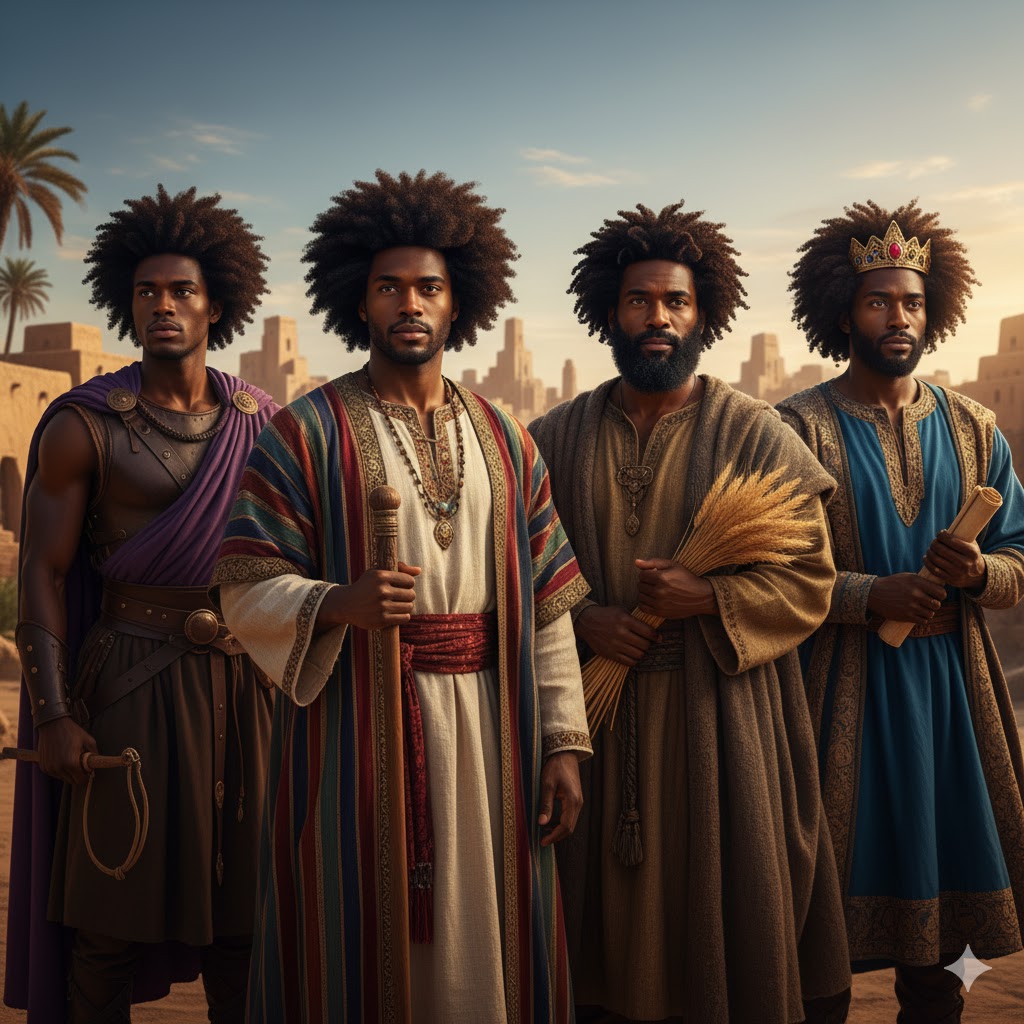
The Bible Series: Masculine Archetypes — David, Joseph, Boaz, Solomon, and Christ-Like Manhood.

Biblical masculinity is not defined merely by physical strength or social status. Rather, it is rooted in covenant identity, moral authority, obedience to God, protective leadership, and sacrificial love. The Scriptures present layered archetypes—each revealing a dimension of righteous manhood and offering a blueprint for spiritual, emotional, and cultural formation. These archetypes counter modern distortions of masculinity rooted in ego, domination, and superficial conquest. Instead, they elevate purpose, humility, stewardship, and divine calling as the true hallmarks of masculine greatness.

David: The Warrior-Poet King
David embodies paradoxical masculine beauty—ferocity in battle paired with artistic tenderness. His courage against Goliath reflects heroic faith, not arrogance. Scripture declares, “The LORD saveth not with sword and spear” (1 Samuel 17:47, KJV), showing that David’s strength came from trust in God. Yet he also wept, repented, wrote psalms, and worshiped openly. His masculinity embraced emotional intelligence and spiritual intimacy. His failures remind men to repent quickly and return to righteousness. David teaches that a man can wield both the harp and the sword—balanced power rooted in divine purpose.

Joseph: The Moral Leader and Visionary Provider
Joseph reveals integrity under pressure and excellence in adversity. Sold into slavery, falsely accused, and imprisoned, he maintained righteousness. When tempted sexually, he fled, declaring, “How then can I do this great wickedness, and sin against God?” (Genesis 39:9, KJV). His restraint and purity positioned him for elevation. As a provider during famine, Joseph exemplifies strategic wisdom, patience, and forgiveness. He shows that real masculine power is self-control, foresight, and the ability to rise without bitterness. Joseph models destiny leadership—meekness that matures into national authority.

Boaz: The Noble Protector and Redeemer
Boaz personifies protective masculinity rooted in kindness and covenant responsibility. He noticed Ruth not merely for beauty but for character and loyalty. Boaz protected her dignity, provided provision, and acted honorably as kinsman-redeemer, reflecting a man who values lineage preservation and community ethics. Scripture notes his generosity and godliness: “The LORD recompense thy work” (Ruth 2:12, KJV). He demonstrates that masculine strength serves, protects, and uplifts womanhood. Boaz teaches that a man does not exploit vulnerability; he covers it with dignity, commitment, and righteous leadership.

Solomon: The Wise King and Builder
Solomon represents intellectual brilliance, kingly refinement, and creative authority. His request for wisdom rather than riches reflects spiritual maturity (1 Kings 3:9–12). He constructed the Temple—symbolizing that masculinity builds, organizes, and leaves legacy. Although his later life warns against unchecked desire and divided loyalty, Solomon’s wisdom literature (Proverbs, Ecclesiastes, Song of Solomon) shapes biblical ethics of discipline, justice, and godly courtship. Solomon’s archetype emphasizes mental strength, discernment, cultural sophistication, and the stewardship of power under divine law.

Christ-Like Manhood: The Perfect Model
Christ embodies the fulfillment of righteous masculinity. He was firm yet gentle, authoritative yet humble, lion and lamb. He washed feet, blessed children, confronted corruption, healed the broken, and gave His life for His people. Scripture declares, “Greater love hath no man than this, that a man lay down his life for his friends” (John 15:13, KJV). Christ-like masculinity rejects pride, domination, and violence for their own sake; instead, it champions sacrifice, servant-leadership, holiness, truth, discipline, emotional capacity, and uncompromising moral courage.

Unity of Archetypes in Biblical Manhood
David teaches bravery and worship; Joseph teaches purity and perseverance; Boaz teaches honorable love and protection; Solomon teaches wisdom and excellence; Christ synthesizes them all into godly kingship and sacrificial love. These archetypes reveal that a biblical man is warrior, provider, visionary, priest, protector, and servant. He leads not by ego but by obedience. He conquers not nations, but himself. He builds not just houses, but homes and legacies rooted in righteousness.

In an age confused by shallow masculinity—defined by appearance, dominance, and applause—Scripture calls men to deeper identity. Biblical manhood is covenant manhood: purposeful, disciplined, humble, courageous, and rooted in divine calling. True masculine glory shines brightest not through force, but through faithfulness, character, and love.


References

Henry, M. (2010). Commentary on the whole Bible. Hendrickson.
Lewis, G. (2019). Biblical masculinity and covenant leadership. Kingdom Press.
Tripp, P. D. (2012). War of words: Redeeming communication. P&R Publishing.
Wright, N. T. (2011). Jesus and the victory of God. Fortress Press.

The Glow Up

A “glow up” is more than a change in appearance—it is a holistic transformation of mind, body, style, and spirit. It represents intentional growth, self-discovery, and refinement. While society often equates glowing up with external beauty, the most profound transformations begin internally. True glow-ups combine emotional maturity, spiritual grounding, physical wellness, and stylistic expression, creating an authentic radiance that shines from within.

At the heart of a glow-up is self-awareness. Understanding who you are, your values, and your goals provides clarity for how to present yourself to the world. Self-awareness informs choices about personal style, grooming, wellness routines, and even relationships. Without it, attempts to “upgrade” are superficial and temporary. Psychology shows that reflective self-awareness improves decision-making, resilience, and emotional regulation (Brown, 2012).

A spiritual foundation amplifies a glow-up. Many find that confidence, peace, and purpose are rooted in a relationship with God. Scripture teaches, “But the fruit of the Spirit is love, joy, peace, longsuffering, gentleness, goodness, faith” (Galatians 5:22, KJV). Spiritual growth brings clarity, patience, and balance, which naturally enhance beauty, poise, and overall presence.

Physical health is another pillar. Glow-ups are reflected in skin, hair, posture, and energy. Proper nutrition, hydration, exercise, and rest not only improve physical appearance but also elevate mental and emotional well-being. Studies show that self-care routines increase confidence and life satisfaction (Snyder et al., 2012). The body becomes a visible testament to care and discipline.

Skin care is central to modern glow-ups. Healthy skin communicates vitality, youthfulness, and self-respect. A consistent skincare regimen tailored to one’s skin type reflects discipline and investment in oneself. Beyond aesthetics, skin care routines encourage mindfulness and self-love.

Hair care also contributes to transformation. Hair is often a key aspect of identity, especially for Black women whose natural hair textures are culturally significant. Styling, protection, and regular maintenance create confidence and visibility. Hair becomes both a fashion statement and a symbol of heritage and pride.

Style and wardrobe transformation is another visible component. Fashion-forward choices, tailored fits, and curated color palettes reflect personal identity and creativity. Minimalist, bold, or trend-conscious aesthetics can all be part of a glow-up, provided they align with the individual’s values and self-expression. The wardrobe becomes a canvas for intentional communication.

Confidence is the glue that unites inner and outer transformation. Psychology research emphasizes that posture, eye contact, and body language impact how others perceive us and how we perceive ourselves (Carney et al., 2010). A confident person carries a glow that transcends material changes. Confidence rooted in competence and self-respect produces authentic magnetism.

A glow-up also involves emotional intelligence. The ability to regulate emotions, communicate effectively, and form healthy relationships adds depth to outer beauty. Emotional maturity enables graceful navigation of challenges and enhances interactions, which further contributes to a radiant presence.

Mindset plays a crucial role. Individuals who embrace growth, resilience, and gratitude often experience deeper glow-ups. A positive mindset fosters persistence through setbacks, encourages self-improvement, and nurtures humility alongside ambition. Joy, patience, and gratitude enhance radiance more than cosmetics alone ever could.

Goal setting is an actionable aspect of glow-ups. Intentional planning for personal, professional, and spiritual growth ensures consistent progress. Small, deliberate steps—like learning a new skill, adopting healthier habits, or refining a wardrobe—compound over time, leading to transformative results.

Glow-ups are not purely external. Inner beauty, character, and integrity matter greatly. Scripture instructs, “Whose adorning let it not be that outward adorning of plaiting the hair, and of wearing of gold, or of putting on of apparel; But let it be the hidden man of the heart” (1 Peter 3:3–4, KJV). Inner refinement complements outward aesthetics, creating holistic radiance.

Social influence and mentorship can accelerate transformation. Surrounding oneself with supportive, inspiring, and like-minded individuals encourages growth. Peer influence, when positive, reinforces discipline, style choices, and spiritual or emotional development.

Self-expression through creativity also contributes. Art, music, writing, and other forms of personal expression allow individuals to explore identity, values, and emotions. Creativity not only enhances mental well-being but also communicates personality, enhancing one’s public presence.

Balance is essential in a glow-up. Overemphasis on appearance without internal growth leads to superficiality. Conversely, focusing solely on character without attending to health, style, and presentation may limit opportunities and visibility. A well-rounded glow-up harmonizes inner and outer cultivation.

Resilience strengthens the glow-up journey. Setbacks, failures, and criticism are inevitable, but perseverance deepens transformation. Learning from challenges and adjusting strategies ensures sustainable improvement in personal, spiritual, and aesthetic domains.

Reflection is a key practice. Periodically evaluating progress helps refine goals, adjust strategies, and celebrate achievements. Journaling, meditation, and spiritual practices encourage continuous self-assessment and growth.

Gratitude enhances the glow-up experience. Appreciating one’s journey, accomplishments, and blessings reinforces confidence, humility, and joy. Gratitude nurtures a positive internal state that radiates externally, enriching all aspects of personal transformation.

Finally, a glow-up is ongoing. It is not a single event but a continual process of refinement, learning, and self-expression. Each season of life provides new opportunities for growth, whether in character, style, spiritual depth, or personal achievements. The glow evolves as the individual evolves, reflecting intentional living.

Ultimately, the glow-up reflects harmony between the internal and external, the spiritual and physical, and the timeless and contemporary. A woman who invests in herself, honors her body, nurtures her spirit, and expresses her creativity becomes a living testament to transformation and empowerment.


References

Brown, B. (2012). Daring greatly: How the courage to be vulnerable transforms the way we live, love, parent, and lead. Gotham Books.

Carney, D. R., Cuddy, A. J. C., & Yap, A. J. (2010). Power posing: Brief nonverbal displays affect neuroendocrine levels and risk tolerance. Psychological Science, 21(10), 1363–1368.

Galatians 5:22, KJV. Holy Bible, King James Version. (2017). Thomas Nelson. (Original work published 1611)

Snyder, C. R., Lopez, S. J., & Pedrotti, J. T. (2012). Positive psychology: The scientific and practical explorations of human strengths (3rd ed.). SAGE Publications.

1 Peter 3:3–4, KJV. Holy Bible, King James Version. (2017). Thomas Nelson. (Original work published 1611)

Acts 16:25, KJV. Holy Bible, King James Version. (2017). Thomas Nelson. (Original work published 1611)

Csikszentmihalyi, M. (1990). Flow: The psychology of optimal experience. Harper & Row.

Fredrickson, B. L. (2001). The role of positive emotions in positive psychology: The broaden-and-build theory of positive emotions. American Psychologist, 56(3), 218–226.

Davis, K., & Shuster, S. (2019). The science of glow: How lifestyle and mindset influence appearance. Routledge.

Watts, R. (2014). Joy as a theological category: An exploration of joy in Christian life. Journal of Christian Studies, 12(1), 45–62.

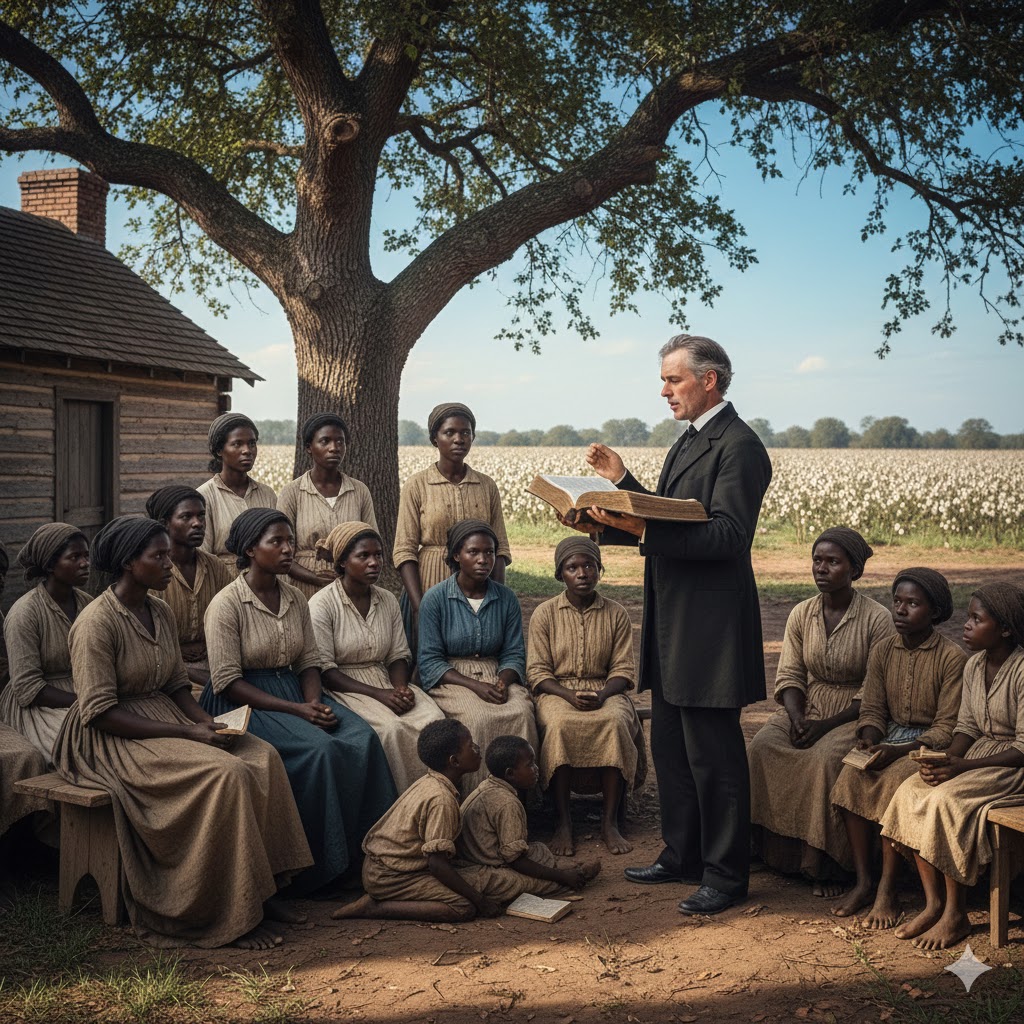
The Bible Series: What was the false Christianity used to control enslaved people?

During the transatlantic slave trade and the centuries of bondage that followed, enslavers in the Americas constructed a false version of Christianity designed to pacify, manipulate, and dominate African people. This was not true biblical faith but a political weapon deliberately engineered to uphold racial hierarchy, economic exploitation, and social control. Enslaved Africans quickly recognized that the Christianity of the slave master contradicted both Scripture and the spirit of the God of justice, yet this distorted theology was imposed on them through law, violence, and psychological manipulation.

The “Slave Bible”: Christianity Rewritten for Control

Slaveholders created an edited version of Scripture often called The Slave Bible (published in 1807 by the Society for the Conversion of Negro Slaves). This Bible omitted as much as 90% of the Old Testament and 50% of the New Testament.

Removed sections included:

  • The Exodus story
  • Passages about freedom and liberation
  • Scriptures against oppression
  • Texts about God judging unjust rulers
  • Lines affirming Israel’s identity, dignity, and divine purpose

Left in were:

  • Scriptures about obedience
  • Passages about servants submitting to masters
  • Verses promoting patience in suffering

It was a theological tool of psychological enslavement.


White Supremacist Christian Doctrine

Slaveholders used a twisted theology that claimed:

  • Africans were “cursed” (misusing the Curse of Ham)
  • Slavery was God’s will
  • Whites were divinely ordained rulers
  • Black people were naturally inferior
  • Saving souls was more important than saving bodies
  • Obedience to the master = obedience to God

This doctrine had no biblical basis, but it was taught to justify kidnapping, rape, brutality, terror, and forced labor.


Enslavement Suppressed the Real Biblical Themes

The enslavers intentionally hid the Bible’s central themes:

  • Liberation (Exodus, Isaiah, Luke 4:18)
  • God’s anger at oppression
  • Justice and righteousness
  • Equality of all people
  • Condemnation of kidnapping (Exodus 21:16)
  • Prophecy about Israel going into slavery (Deuteronomy 28)

Enslaved Africans quickly realized the true Bible was a book of freedom, not submission.


Christianity Was Used as Propaganda

White preachers delivered sermons tailored to slaves:

  • “Be obedient to your masters.”
  • “God wants you to accept your place.”
  • “Heaven will reward you for your suffering.”
  • “Do not question authority.”

This version of Christianity served plantations—not God.


Enslaved People Were Forbidden to Read

Slaveowners passed laws making it illegal for Africans to:

  • Read the Bible
  • Learn to read or write
  • Gather for worship without white oversight
  • Preach freely

Why?

Because the true Bible inspires:

  • liberation
  • identity
  • dignity
  • resistance to injustice
  • divine worthiness

Slaveholders knew the real Scriptures would destroy the slave system.


The Creation of the “Missionary Slave Church”

Enslavers established controlled churches with:

  • White pastors
  • Supervised sermons
  • Carefully selected verses
  • No teaching about Exodus or justice
  • No Hebrew identity
  • No African dignity

This church preached loyalty to the plantation rather than loyalty to God.


The Real Christianity of the Enslaved Was Different

The enslaved Africans created their own underground faith traditions:

  • Secret prayer meetings (“hush harbors”)
  • Spirit-led worship
  • Use of coded spirituals
  • Identification with ancient Israel
  • Reading the full Bible in secret
  • Hope of divine justice and liberation

They saw themselves as the children of Israel in bondage.


Misuse of Paul’s Letters

Slaveholders twisted Paul’s letters about servants in the Roman household system and applied them to chattel slavery, which is fundamentally different.

Biblically:

  • Chattel slavery is condemned.
  • Kidnapping is punishable by death.
  • God liberates oppressed people.
  • Masters and servants in Scripture were not racial, hereditary, or lifelong bondage.

Slaveowners selectively misinterpreted Scripture to protect their wealth.


The Curse of Ham: The Biggest Lie

Enslavers falsely taught that Africans were descendants of Ham and “cursed to be slaves.”
This lie:

  • is not in the Bible
  • misquotes Genesis
  • was created in the Middle Ages to justify racism
  • became a tool of colonial oppression

Biblically, the curse was on Canaan—not all African people.


Why Did Slaveholders Need This False Christianity?

Because true Christianity:

  • condemns slavery
  • empowers the oppressed
  • reveals the humanity of all people
  • uplifts the poor
  • demands justice
  • has a God who destroys oppressive empires (Egypt, Babylon, Assyria, Rome)

False Christianity was the only way to maintain slavery’s brutality while pretending to be righteous.


It Was Christianity Without Christ

It lacked:

  • love
  • justice
  • mercy
  • repentance
  • righteousness
  • truth
  • liberation

It was a political religion masquerading as faith.


The Real Bible Was a Threat to Slavery

Once enslaved Africans encountered the full Scriptures, many identified more with Moses than with Paul, and more with Israel than with Rome.

This realization fueled:

  • rebellions
  • escapes
  • abolitionist movements
  • The formation of independent Black churches

The real gospel is a gospel of freedom.


The false Christianity used to control enslaved people was:

  • a colonial weapon
  • a manipulated theology
  • a stripped-down Bible
  • a slave-owner-approved religion
  • a tool of white supremacy
  • a distortion of Scripture
  • completely opposed to true biblical teaching

The enslaved were given a religion of obedience, while they discovered a God of liberation.

The heart of this false Christianity lay in its selective use of Scripture. Slaveowners removed or rewrote large portions of the Bible to eliminate themes of liberation, divine justice, and human dignity. The infamous “Slave Bible,” published in 1807, cut out nearly all references to freedom, rebellion, and God’s judgment of oppressive rulers. What remained were verses emphasizing obedience, submission, and quiet suffering. This intentional mutilation of the Word of God reveals how deeply slave societies feared the truth of Scripture.

Another core component of this false faith was the misinterpretation of key biblical passages. Enslavers twisted Paul’s instructions to servants—directed at Roman household servants, not enslaved Africans—to justify racial slavery. They also weaponized the so-called Curse of Ham, falsely teaching that African people were destined by God to be slaves. This was a complete distortion of Genesis, where the curse was placed on Canaan, not on Ham, and certainly not on an entire continent of people. Such teachings served the interests of white supremacy, not the teachings of Christ.

To maintain control, slaveholders created highly monitored “plantation churches.” In these spaces, white preachers delivered sermons promoting obedience and reinforcing racial hierarchy. Enslaved people were forbidden to gather independently for worship or to read Scripture for themselves. Laws were enacted across the South prohibiting Black literacy, because the master class understood that an educated believer—armed with the full truth of the Bible—posed a threat to the entire slave system.

This corrupted Christianity also taught enslaved Africans that their suffering was divinely ordained and that they should accept their earthly bondage in exchange for heavenly reward. Such doctrine had no biblical foundation and directly contradicted the character of a God who liberates His people from oppression, from Egypt to Babylon. By promising spiritual salvation while denying physical freedom, enslavers created a theology that separated the soul from the body, ensuring Black labor remained controlled while white consciences remained untroubled.

Yet enslaved Africans discerned the difference between the slave master’s religion and the liberating God of Scripture. In secret gatherings known as “hush harbors,” they forged a true and living Christianity rooted in Exodus, the prophets, the Psalms, and the teachings of Jesus. These clandestine meetings were spaces of healing, communal strength, and spiritual resistance. They prayed for deliverance, sang coded spirituals, and interpreted Scripture through the lens of their lived suffering, affirming a God who hears the cries of the oppressed.

One of the most striking differences between enslaved people’s faith and the enslavers’ religion was the identification with Ancient Israel. Enslaved Africans saw themselves in the story of Moses and the Hebrews—people chosen, persecuted, and promised deliverance by the Most High. This connection was not accidental; it emerged from both spiritual intuition and cultural memory. The master’s Christianity feared this narrative because it empowered enslaved people to see themselves as a sacred people, not property.

The false Christianity of the slaveholder was a Christianity of control, not conversion. Its purpose was not salvation but subjugation. The gospel presented to enslaved people required no repentance from the enslaver, no justice, no righteousness, no love for neighbor. It fabricated a God who blessed the whip, sanctioned the auction block, and smiled upon exploitation. Such a God was an idol created in the image of white supremacy, not the God of Abraham, Isaac, and Jacob.

This enslaver religion also functioned as a political tool. It stabilized the economic foundation of the South by training enslaved people to be compliant, fearful, and psychologically dependent. The message was clear: disobedience to the master meant disobedience to God. This spiritual intimidation reinforced the legal and physical terror already used to maintain slavery.

Despite this oppressive system, enslaved Africans consistently resisted. They sought out the full Bible, interpreted Scripture on their own terms, and cultivated a theology of liberation centuries before formal emancipation. Their understanding of God was holistic—addressing body, spirit, community, and collective freedom. This real Christianity fueled rebellions, escapes, and abolitionist movements, demonstrating the power of faith when aligned with truth.

The false Christianity of slavery also had long-lasting effects. It helped build structures of racism within American churches that persist today. Segregated congregations, discriminatory theology, and racial bias in religious institutions can all be traced back to the slaveholder’s version of faith. This legacy demands honest reckoning and structural repentance from modern Christianity.

Theologically, the Christianity used to control enslaved people was heretical. It denied the prophetic tradition, ignored Christ’s teachings about justice, and contradicted the biblical command to free the oppressed. It rewrote Scripture to accommodate human cruelty. By transforming the Bible into a plantation manual, enslavers positioned themselves not as followers of Christ but as manipulators of His Word.

Enslaved people, however, preserved the truth. Their Christianity was closer to the biblical narrative than the faith preached by their captors. They understood God as deliverer, protector, and judge of unjust nations. Their spirituals, prayers, and testimonies proclaimed a theology of hope in the face of terror, dignity in the face of dehumanization, and destiny in the face of denial.

This distinction between the master’s religion and the enslaved people’s faith became central to the moral authority of Black churches after emancipation. The Black church emerged as a center of community empowerment, civil rights activism, and spiritual resilience precisely because its roots were grounded in liberation, not oppression.

The enslavers’ Christianity was an empire-serving religion, aligned with power rather than truth. It rejected the biblical mandate to “proclaim liberty to the captives” and comfort the brokenhearted. It silenced the prophets and crucified Christ, who stood with the marginalized. Enslaved Africans recognized this and refused to accept a God who endorsed their suffering.

In the end, the false Christianity used to enslave Black people was a counterfeit gospel—one designed to erase identity, suppress resistance, and perpetuate injustice. Yet the enslaved uncovered the true God beneath the lies, reading between the lines, trusting their own spiritual intuition, and embracing a faith that affirmed their humanity and promised their freedom.

This powerful distinction—between a religion of domination and a faith of liberation—continues to shape the spiritual landscape of Black communities today. The legacy of true Christianity, preserved by the enslaved, is a testament to resilience, revelation, and the unbreakable connection between divine truth and human freedom.

References
Blight, D. W. (2018). Frederick Douglass: Prophet of freedom. Simon & Schuster.
Cone, J. H. (2011). The cross and the lynching tree. Orbis Books.
Gomez, M. A. (1998). Exchanging our country marks: The transformation of African identities in the colonial and antebellum South. University of North Carolina Press.
Horsley, R. A. (2003). Jesus and empire: The kingdom of God and the new world disorder. Fortress Press.
Raboteau, A. J. (2004). Slave religion: The “invisible institution” in the antebellum South. Oxford University Press.
Williams, D. (1993). Theology and the Black experience. Fortress Press.

Dilemma: Forgiveness

Forgiveness is one of the most challenging spiritual disciplines, especially when the wound runs deep. The dilemma of forgiveness lies in the tension between justice and mercy, memory and healing, pain and release. It is not a simple act; it is a journey—one that requires courage, humility, and divine strength. To forgive is not humanly easy, but it is spiritually necessary.

Forgiveness begins with a decision, not a feeling. The heart may still hurt, the mind may still replay the offense, and the emotions may still tremble—but forgiveness is a choice. God calls us to forgive because He knows that holding on to bitterness damages the soul more than the offense itself. As Christ taught, “Forgive, and ye shall be forgiven” (Luke 6:37, KJV).

The dilemma is especially heavy for Black people, whose historical suffering presents a unique struggle. Enslavement, lynching, segregation, humiliation, and systemic injustice created generational wounds. Yet, despite centuries of cruelty, many Black people embraced forgiveness—not as a sign of weakness, but as a spiritual survival strategy. They forgave to keep their hearts from becoming poisoned by hate.

This forgiveness was not passive. It was a deliberate, moral, and spiritual act rooted in faith, prayer, and endurance. Enslaved ancestors sang spirituals that prayed for deliverance—not revenge. Civil rights leaders preached love in the face of brutality. Millions of unnamed Black mothers and fathers raised their children without teaching them to hate those who oppressed them. Their forgiveness was empowered by God, not by submission.

God’s Word commands forgiveness because it frees the soul. In Matthew 6:14–15, Jesus teaches that our forgiveness from God is tied to our forgiveness toward others. The Bible does not excuse wrongdoing, but it refuses to let wrongdoers imprison our hearts. Forgiveness becomes an act of liberation—a release from emotional bondage.

Forgiveness does not mean forgetting. The human brain does not erase trauma, nor does God ask us to pretend as though harm never occurred. “Forgetting” in Scripture means choosing not to hold something against a person. God says, “Their sin will I remember no more” (Hebrews 8:12, KJV), meaning He chooses not to charge it to our account. We may remember the event, but we release its hold over us.

Forgiving others does not remove accountability. God is a God of mercy and justice. When you forgive, you are not excusing wrongdoing—you are transferring the burden of judgment to God, who sees and repays. This keeps your heart clean while allowing divine justice to unfold. Forgiveness protects you spiritually while God handles the offender.

Forgiveness toward friends requires honesty and boundaries. Friendships can be deeply painful when loyalty is violated, but God still commands reconciliation when possible. Proverbs 17:9 reminds us that “he that covereth a transgression seeketh love.” Forgiving a friend means acknowledging the wound while choosing peace over resentment.

Forgiveness within marriages requires humility and patience. Spouses hurt each other in ways outsiders never see. Yet Scripture teaches that love “beareth all things… endureth all things” (1 Corinthians 13:7, KJV). Forgiveness strengthens marital covenant and reflects the steadfast love of God.

Forgiving family—parents, siblings, and children—can be the hardest of all. Family wounds cut deep because the expectation of love is high. Yet the Bible continually teaches compassion, restoration, and long-suffering within families. Jesus said to forgive “seventy times seven” (Matthew 18:22, KJV), emphasizing perpetual grace.

Forgiving children involves maturity and understanding. Children make mistakes, sometimes causing serious emotional harm without fully understanding the impact. Parents are called to model God’s grace, teaching children through love, correction, and gentle restoration.

Forgiveness is also internal—you must forgive yourself. Many people carry guilt from past actions, regrets, or mistakes. If God extends mercy, you must learn to accept it. Self-forgiveness becomes an act of obedience to God’s grace.

True forgiveness requires honesty about the offense. Minimizing or denying the hurt only delays healing. You must acknowledge the pain, name the wound, and confront the emotions attached to it. God meets you in your truth, not in your denial.

Forgiveness is also a process. Some wounds heal slowly, and God understands that. Forgiveness may need to be repeated daily until the heart aligns with the decision. The process is not a sign of failure but a step toward deliverance.

Spiritually, forgiveness is warfare. The enemy thrives in bitterness, resentment, and division. When you forgive, you close the door to spiritual attack and open the door to peace. Forgiveness reclaims emotional territory surrendered to anger.

Forgiveness brings freedom. It removes the weight from your chest, the knot from your stomach, and the heaviness from your soul. It allows you to breathe again. It does not rewrite the past, but it releases your future.

Forgiveness aligns you with Christ. Jesus forgave His accusers, His executioners, and His betrayers. His example teaches that forgiveness is not optional—it is the calling of every believer. We forgive because He forgave us first.

Below are Ten Steps to Forgiving that reflect both Scripture and psychological wisdom:

  1. Acknowledge the pain honestly.
  2. Pray for strength, wisdom, and clarity.
  3. Make the decision to forgive, even before emotions catch up.
  4. Release the desire for revenge or repayment.
  5. Separate the person from the offense.
  6. Set appropriate boundaries if needed.
  7. Seek counsel, prayer partners, or pastoral support.
  8. Practice empathy—try to understand, not excuse.
  9. Repeat forgiveness daily until peace comes.
  10. Bless, pray for, and release the offender into God’s hands.

You know you have forgiven when the memory no longer holds emotional power over you. You may remember the event, but it loses its sting. Peace replaces pain, compassion replaces anger, and you can think of the person without bitterness or desire for retribution.

The Dilemma of Trust After Forgiveness

Forgiveness is a spiritual command, but trust is earned. The dilemma arises when we forgive but are unsure whether we can rely on the same person again. Forgiveness releases the offender from debt to our hearts, but trust asks for proof that they will not harm us again.

Forgiving someone does not automatically restore intimacy. The Bible teaches us to forgive, yet it also emphasizes wisdom in relationships. “A prudent man foreseeth the evil, and hideth himself” (Proverbs 22:3, KJV). Forgiveness is mercy; trust is discernment.

This dilemma is particularly poignant in communities that have experienced generational betrayal or oppression. Black people, for example, have forgiven systemic injustices and interpersonal harms, yet trust remains fragile because repeated violations have left deep scars.

Trust after forgiveness requires observation. Actions reveal character. As Scripture notes, “By their fruits ye shall know them” (Matthew 7:20, KJV). Forgiveness opens the door to potential reconciliation, but trust waits for consistent demonstration of respect and integrity.

The tension between forgiveness and trust is not a sign of spiritual weakness. Rather, it reflects discernment and self-preservation. God calls us to forgive without bitterness, yet also to walk wisely in the world (Ephesians 5:15–16, KJV).

In families, trust may take time to rebuild. A parent who has been hurt by a child’s rebellion or a spouse who has betrayed a marriage vow can forgive, but trust must grow gradually. Forgiveness releases resentment; trust ensures the covenant is honored moving forward.

Trust is relational, not instantaneous. Forgiveness sets the foundation; trust builds the structure. One cannot demand trust immediately after hurt—it must be earned through repeated reliability, accountability, and humility.

Forgiveness without boundaries can be dangerous. It is vital to establish clear expectations after betrayal. God forgives humanity but also enforces justice. In the same way, human relationships require safeguards to prevent repeated harm.

In communities recovering from historical trauma, trust requires transparency. Black people who forgave white oppressors may still approach interactions with vigilance. Forgiveness can coexist with caution, understanding that the heart cannot be recklessly exposed.

Forgiveness and trust are tested by temptation and circumstance. Just as humans are prone to sin, people may fail again. The biblical model for trust acknowledges imperfection while emphasizing accountability and restoration (Galatians 6:1–2, KJV).

In friendships, trust is rebuilt through honesty and time. A betrayed friend must demonstrate loyalty consistently. Forgiveness restores the relationship to a baseline of peace; trust allows shared vulnerability to flourish once more.

Trust in marriage requires similar diligence. A spouse who has sinned against the marriage covenant must demonstrate repentance, changed behavior, and ongoing commitment. Forgiveness cleanses the heart, while trust reestablishes security.

Trust also grows through communication. Open conversations about pain, expectations, and boundaries reinforce reliability. Forgiveness without dialogue may leave the forgiver vulnerable to repeated betrayal.

Spiritually, trusting after forgiveness mirrors our relationship with God. We forgive others because He forgives us, yet we walk by faith and not by sight (2 Corinthians 5:7, KJV). Our discernment protects the heart while our faith sustains it.

Forgiveness allows emotional release; trust allows measured engagement. We can forgive an offender fully yet remain cautious in entrusting them with our deepest vulnerabilities. This balance reflects maturity and godly wisdom.

Repeated offenses may require recalibration of trust. Forgiveness does not obligate blind confidence. Scripture encourages justice tempered with mercy—ensuring we do not enable harmful behavior (Romans 12:17–19, KJV).

Trust after forgiveness also requires self-reflection. Are we projecting fear from past wounds onto the present? Are we willing to allow growth and restoration? Forgiveness invites us to release resentment; trust invites us to evaluate prudently.

The dilemma highlights the difference between grace and entitlement. Forgiveness is freely given, reflecting God’s mercy. Trust is conditional, reflecting the responsibility of human beings to honor relationships.

True reconciliation is incomplete without both forgiveness and trust. Forgiveness releases the offender, but trust restores the relational dynamic. Both require time, humility, and spiritual guidance to align with God’s will.

Ultimately, the dilemma of trust after forgiveness challenges believers to balance mercy with wisdom. Forgiveness heals the heart; trust safeguards it. Together, they allow relationships to flourish under the guidance of God’s truth.


Forgiveness is not easy, but it is holy. It is the pathway to healing, the doorway to peace, and the evidence of spiritual maturity. Through God’s grace, you can forgive anyone—friends, family, spouses, children, and even entire systems of oppression. Forgiveness does not diminish the truth of harm; it magnifies the truth of God’s power.


KJV Scripture References

  • Matthew 6:14–15
  • Luke 6:37
  • Matthew 18:22
  • Hebrews 8:12
  • 1 Corinthians 13:7
  • Proverbs 17:9 Proverbs 22:3
  • Matthew 7:20
  • Ephesians 5:15–16
  • Galatians 6:1–2
  • 2 Corinthians 5:7
  • Romans 12:17–19

References

Chapman, G. (2010). The five languages of apology: How to experience healing in all your relationships. Northfield.

Tutu, D., & Tutu, M. (2014). The book of forgiving: The fourfold path for healing ourselves and our world. HarperOne.

West, C. (2017). Race matters. Beacon Press.

Woodson, C. G. (2021). The mis-education of the Negro. Dover.

Biblical History: 👑 Queen Makeda (The Queen of Sheba)

Photo by John Ray Ebora on Pexels.com

👑 Wisdom, Beauty, and Global Influence 👑

Queen Makeda, famously known as the Queen of Sheba, is celebrated as one of the most iconic figures in both biblical and Ethiopian history. Her story reflects an extraordinary combination of beauty, intelligence, and diplomacy, setting the standard for melanated female leadership. The King James Version recounts: “And when the queen of Sheba heard of the fame of Solomon, she came to prove him with hard questions at Jerusalem, with a very great train, and camels that bare spices, and very much gold, and precious stones” (1 Kings 10:1–2, KJV). This narrative highlights her initiative, intellect, and regal presence.

Makeda’s journey to Jerusalem was a deliberate test of Solomon’s wisdom. She arrived not merely as a traveler but as an intellectual equal seeking knowledge and insight. Her ability to pose profound questions reflects a sophisticated understanding of governance, diplomacy, and theology. In doing so, she embodies the ideal that leadership is rooted in both mind and character.

Biblical accounts emphasize her discernment and spiritual awareness. Upon witnessing Solomon’s wisdom, she “praised the Lord with all her heart” (1 Kings 10:7, KJV), demonstrating that recognition of true wisdom extends beyond human intellect to divine insight. Makeda’s reverence for knowledge and God’s guidance aligns her story with Proverbs 3:13 (KJV): “Happy is the man that findeth wisdom, and the man that getteth understanding.”

Makeda’s wealth and strategic presentation of gifts — spices, gold, and precious stones — reflect her political acumen. These offerings were not mere tokens; they were symbolic of her nation’s prosperity and her ability to negotiate alliances. Proverbs 31:16 (KJV) similarly highlights foresight and resourcefulness: “She considereth a field, and buyeth it: with the fruit of her hands she planteth a vineyard.” Makeda’s diplomacy demonstrates that intellectual beauty complements material and strategic intelligence.

Psychologically, Makeda exemplifies the archetype of a melanated queen whose confidence derives from competence, presence, and poise. Leadership studies suggest that individuals who combine charisma with cognitive skill are often more persuasive and effective in negotiations (Bass & Riggio, 2006). Makeda’s story illustrates this principle: her influence extended beyond physical beauty to mental acuity and strategic thinking.

Culturally, Ethiopian traditions elevate Makeda’s legacy as a mother of kings. According to tradition, she bore King Solomon’s son, Menelik I, founder of the Solomonic dynasty. This lineage symbolizes a fusion of divine favor, royal authority, and melanated excellence. Her story continues to inspire pride in African heritage and affirm the historical significance of Black queenship.

Comparisons with other African queens reinforce her archetype. Queen Nzinga of Angola, like Makeda, combined beauty with exceptional military and diplomatic skill, resisting colonization and preserving her people’s autonomy. Similarly, Hatshepsut of Egypt balanced aesthetic elegance with political authority, ruling successfully as a pharaoh. These comparisons show that Makeda’s integration of intellect, beauty, and leadership is a recurring theme in African history.

Makeda’s beauty is consistently noted alongside her intellect. Biblical and historical texts emphasize her regal appearance, but her acclaim arose from her wisdom and discernment as much as from her looks. 1 Kings 10:10 (KJV) reports the lavish gifts she gave Solomon: “And she gave the king an hundred and twenty talents of gold, and of spices very great store, and precious stones: there came no more such abundance of spices as these which the queen of Sheba gave to king Solomon.” These gestures indicate her aesthetic refinement, strategic vision, and wealth.

From a psychological perspective, Makeda’s story demonstrates the principle of “integrated leadership,” in which beauty, charisma, and intellect reinforce one another. Leadership psychology argues that such integration enhances influence, credibility, and cross-cultural diplomacy. Makeda’s engagement with Solomon illustrates how aesthetics and intellect can operate synergistically to achieve diplomatic and spiritual outcomes.

Her global cultural impact is significant. Makeda has been celebrated in Ethiopian art, literature, and music for centuries. She inspired medieval European tales and modern novels, symbolizing a powerful, intelligent Black woman who navigates international relations with skill. Contemporary discussions of female leadership and melanated beauty often invoke her story as a reference point.

Makeda’s spiritual significance is also profound. Her recognition of Solomon’s God reflects alignment with divine wisdom and ethical governance. Proverbs 31:25 (KJV) states, “Strength and honour are her clothing; and she shall rejoice in time to come.” Her story exemplifies this scripture, demonstrating that true queenship intertwines moral integrity with worldly power.

Her legacy extends into symbolism and pedagogy. She is taught in Ethiopian schools and celebrated during cultural festivals, reinforcing the value of intellect, diplomacy, and beauty for young melanated women. By embodying a model where wisdom and aesthetics coexist, she challenges modern narratives that separate beauty from intelligence.

Makeda’s story also intersects with gender studies, illustrating the capacities of women to wield influence in patriarchal societies. Her ability to negotiate, question, and impress Solomon shows that melanated women historically exercised agency and power in both public and private spheres, often shaping dynastic and political trajectories.

In conclusion, Queen Makeda’s life reflects a timeless combination of wisdom, beauty, and leadership. Her diplomatic visit to King Solomon, the gifts she presented, and the lineage she established all reinforce her status as a paradigmatic melanated queen. She serves as a historical and spiritual model for intelligence, strategic thinking, and regal poise, leaving a legacy that continues to inspire leaders, scholars, and admirers of melanated beauty worldwide.


References

  • Bass, B. M., & Riggio, R. E. (2006). Transformational leadership. Psychology Press.
  • Hamilton, V. P. (1990). The Book of Kings: Commentary. Eerdmans.
  • Leslau, W. (1979). Ethiopian historical records and the Queen of Sheba. University of California Press.
  • The Holy Bible, King James Version.
  • Wasyliw, P. (2007). Queens and queenship in African history. African Studies Review, 50(2), 65–90.

The Bible Series: The Rise and Fall of Nimrod

Nimrod is one of the most enigmatic figures in biblical history, mentioned briefly yet powerfully in the Book of Genesis. His story is veiled in mystery, layered with symbolism, and carries theological and historical weight. According to Genesis 10:8–10 (KJV), Nimrod was “a mighty one in the earth” and “a mighty hunter before the LORD.” These few words have inspired centuries of interpretation about who Nimrod was, what he represented, and how his legacy has shaped human civilization and rebellion against God.

The genealogy of Nimrod traces him to Cush, the son of Ham, who was one of Noah’s sons. Genesis 10:6 identifies Cush as Nimrod’s father, making Nimrod a great-grandson of Noah. This familial connection places him in the post-flood world—a time when humanity was beginning to rebuild, multiply, and spread across the earth. His lineage is significant because the descendants of Ham are often associated with the founding of great early civilizations, particularly in Mesopotamia and Africa.

Nimrod’s name itself carries deep meaning. Some scholars suggest it derives from the Hebrew root marad, meaning “to rebel.” Thus, Nimrod’s name can be interpreted as “The Rebel” or “We Shall Rebel.” This etymology aligns with his portrayal as a figure who defied divine authority and established his own rule. He is often regarded as the world’s first monarch, a man who sought dominion through power rather than through submission to God’s will.

The Bible records that the beginning of Nimrod’s kingdom was Babel, Erech, Accad, and Calneh in the land of Shinar (Genesis 10:10). These cities form the cradle of what would later become Babylon, one of the most infamous centers of idolatry and human pride. Nimrod is therefore credited with founding the first world empire—a symbol of human unity that turned into rebellion against the Creator. His rule marked the dawn of organized kingdoms and centralized power, which contrasted with God’s original design for human stewardship under divine authority.

Nimrod’s most notorious act is linked to the Tower of Babel, recounted in Genesis 11. Though his name is not explicitly mentioned in that passage, ancient Jewish and Christian traditions connect him to the building of the tower. Humanity, united under one language, sought to build a city and a tower “whose top may reach unto heaven” (Genesis 11:4, KJV). This act represented defiance—an attempt to achieve godlike status and independence from divine rule. Nimrod is thought to have been the mastermind or leader behind this movement, embodying the spirit of human pride and rebellion.

The fall of Nimrod’s empire came through divine intervention. God confounded the language of the people, scattering them across the earth and halting the construction of the tower. This act of confusion preserved divine order and prevented the complete corruption of humanity through unified arrogance. The fall of Babel is symbolic of the fall of all kingdoms that exalt themselves above God. In this way, Nimrod becomes a timeless archetype of human pride, representing the rise and fall of man-made empires that defy divine will.

Historically, Nimrod has been linked to several ancient rulers and deities. Some historians equate him with Sargon of Akkad, one of the earliest known empire builders. Others associate him with Gilgamesh, the legendary king of Uruk, or with the god Marduk, the chief deity of Babylon. These associations underscore his lasting influence in Mesopotamian mythology and demonstrate how his legend merged with the broader story of humanity’s attempt to rule apart from God.

In extra-biblical literature, particularly in the Book of Jasher and Josephus’s Antiquities of the Jews, Nimrod is portrayed as a tyrant who sought to rule over all men and turn them against God. Josephus writes that Nimrod “persuaded them not to ascribe [their strength] to God, as if it were through His means they were happy, but to believe that it was their own courage which procured that happiness” (Antiquities 1.4.2). This interpretation reinforces the notion that Nimrod was not merely a political leader but a spiritual rebel who introduced idolatry and the worship of self.

The spirit of Nimrod has been interpreted throughout history as symbolic of Babylonian influence—the tendency for societies to centralize power, glorify human achievement, and turn away from divine truth. Babylon itself became the prophetic symbol of rebellion and moral decay throughout Scripture. In Revelation, Babylon is portrayed as the mother of harlots and abominations, a continuation of the same defiant spirit that began with Nimrod’s empire (Revelation 17:5).

Nimrod’s fall was inevitable, as all who oppose divine authority must eventually submit to it. His story teaches that no matter how powerful human rulers or civilizations become, they cannot overthrow the sovereignty of God. The scattering at Babel serves as both judgment and mercy—it prevented humanity from destroying itself through total rebellion and preserved God’s plan for diversity among nations.

Theologically, Nimrod’s legacy can be understood as the first organized attempt to establish a kingdom independent of God’s governance. This rebellion echoes through time in every empire that exalts human glory over divine truth. From Babylon to Rome, from Egypt to modern systems of human pride, the “spirit of Nimrod” persists as a warning of what happens when humanity seeks to dethrone the Creator.

Nimrod’s family line also holds historical significance. As a descendant of Cush, he was part of the Hamitic lineage that gave rise to many ancient nations, including Ethiopia, Egypt, and parts of Canaan. The Cushite connection indicates that his empire may have extended influence into Africa as well as Mesopotamia, blending cultures and establishing the earliest forms of imperialism. His genetic and cultural legacy would thus contribute to the rise of civilizations known for their architectural and scientific achievements—but also for their spiritual corruption.

Archaeological evidence from ancient Mesopotamia reveals powerful city-states that align with the biblical description of Nimrod’s kingdom. The ziggurats, large step-pyramids used for worship, resemble the Tower of Babel in form and function. These structures were meant to connect heaven and earth, serving as symbols of human power and divine imitation. In this light, Nimrod’s influence extends beyond politics into religion—ushering in systems of false worship that mimicked but distorted divine order.

The prophetic implications of Nimrod’s story continue into modern theology. Many scholars see him as a prototype of the Antichrist—a ruler who exalts himself and unites humanity under rebellion against God. Just as Nimrod built Babel, the end-times leader will seek to establish a global system that opposes divine authority. The parallels are striking: centralized control, human pride, idolatry, and defiance of heaven.

Yet amid this darkness, the fall of Nimrod reminds believers that God’s purposes prevail. The dispersion at Babel set the stage for Abraham’s calling, through whom God would establish a covenant people. In this sense, Nimrod’s downfall opened the way for divine redemption and the unfolding of God’s plan for salvation. What man built in pride, God replaced with a promise rooted in faith.

Nimrod’s rise and fall also serve as a reflection of human psychology and leadership. He was charismatic, ambitious, and visionary—qualities often admired—but when severed from spiritual humility, such traits breed tyranny. His life warns against the dangers of unchecked power and the seduction of self-worship.

In later Jewish and Christian interpretation, Nimrod’s name became synonymous with rebellion and oppression. The “mighty hunter” became not just a hunter of animals but a hunter of men—subduing others through force. His strength, meant to serve creation, was instead used to dominate it.

Ultimately, the story of Nimrod stands as a microcosm of human history: the rise of ambition, the temptation of power, and the inevitable downfall of pride. It reminds us that all human kingdoms fade, but the kingdom of God endures forever.

In summary, Nimrod was more than a man—he was a symbol of humanity’s capacity for greatness and corruption. His rise marked the dawn of civilization, but his fall warned of the cost of rebellion. The biblical narrative closes on this truth: those who build without God build in vain.

References

Josephus, F. (1981). Antiquities of the Jews. (W. Whiston, Trans.). Hendrickson Publishers.
King James Bible. (1611). The Holy Bible. Oxford University Press.
Matthews, V. H. (2004). The Cultural World of the Bible: An Illustrated Guide to Manners and Customs. Hendrickson Publishers.
Sarna, N. M. (1989). Genesis: The Traditional Hebrew Text with the New JPS Translation. Jewish Publication Society.
Wenham, G. J. (1987). Genesis 1–15. Word Biblical Commentary. Word Books.
Tigay, J. H. (1982). The Evolution of the Gilgamesh Epic. University of Pennsylvania Press.
Heiser, M. S. (2015). The Unseen Realm: Recovering the Supernatural Worldview of the Bible. Lexham Press.

The Bible Series: Led by His Spirit

Photo by Oladimeji Ajegbile on Pexels.com

Key Scripture: Romans 8:14 – “For as many as are led by the Spirit of God, they are the sons of God.”

Introduction

Walking with Christ is not just about following rules or attending church; it’s about being led by the Holy Spirit. When the Spirit guides you, your life aligns with God’s will, your decisions are sanctified, and your heart reflects His love.


1. Understanding Spirit-Led Living

Being led by the Spirit means surrendering personal control and letting God guide your steps. It requires listening, discernment, and obedience.

  • Galatians 5:16 – “Walk in the Spirit, and ye shall not fulfil the lust of the flesh.”

2. The Evidence of Spirit-Led Life

A Spirit-led life produces fruit in character, decisions, and relationships.

  • Galatians 5:22-23 – “But the fruit of the Spirit is love, joy, peace, longsuffering, gentleness, goodness, faith, meekness, temperance.”

3. Daily Surrender

Spirit-led living requires daily submission: letting go of pride, self-will, and worldly desires. Prayer, meditation, and scripture study are key.

  • Proverbs 3:5-6 – “Trust in the LORD with all thine heart; and lean not unto thine own understanding. In all thy ways acknowledge him, and he shall direct thy paths.”

4. Discernment Through the Spirit

The Holy Spirit guides you in making godly decisions, discerning truth, and avoiding deception.

  • John 16:13 – “Howbeit when he, the Spirit of truth, is come, he will guide you into all truth…”

5. Spirit-Led Relationships

Being led by the Spirit transforms how you interact with others. Love, patience, forgiveness, and humility flow naturally.


6. Overcoming Challenges

Even in trials, the Spirit empowers you to persevere, resist temptation, and remain faithful.

  • Romans 8:26-27 – The Spirit helps us in our weaknesses, interceding when we cannot pray.

7. Living as a Child of God

Romans 8:14 reminds us that those who are led by the Spirit are God’s children. This identity brings peace, confidence, and purpose.


Conclusion

To be led by His Spirit is to walk daily in God’s guidance, let His truth shape your thoughts, and allow His love to flow through your actions. It is the ultimate expression of sonship and an intimate relationship with the Father.

The Bible Series: Adam & Eve

In the beginning, the Most High created the heavens and the earth, forming man from the dust and breathing into him the breath of life. Adam was created in the image of God, molded from the rich soil of the earth (Genesis 2:7, KJV). The Hebrew word for “Adam” means ruddy or of the ground, symbolizing the deep brown hue of the fertile soil. This suggests that Adam and Eve were people of color, their skin reflecting the richness of the earth from which they were formed. Their beauty was natural and divine, representing the perfection of humanity before sin entered the world.

Eve, the first woman, was taken from Adam’s rib—a profound act showing unity, love, and equality. She was not made from his head to rule over him, nor from his feet to be trampled by him, but from his side to walk with him (Genesis 2:21–22, KJV). Together, they embodied harmony, holiness, and purity in the Garden of Eden, a place untouched by corruption. The Most High gave them dominion over creation and one simple command—to abstain from eating from the Tree of the Knowledge of Good and Evil (Genesis 2:16–17, KJV).

The serpent, more subtle than any beast of the field, entered the garden with deception in his heart. This serpent, influenced by Satan, twisted the Most High’s words, planting doubt and rebellion in Eve’s mind. He said, “Ye shall not surely die: For God doth know that in the day ye eat thereof, then your eyes shall be opened” (Genesis 3:4–5, KJV). This manipulation was the seed of sin—the desire to know more than what God allowed, the craving for power and independence from divine authority.

Eve, captivated by what she saw, took the fruit and ate it, then gave it to Adam. The sin was not merely eating forbidden fruit but disobedience—the rejection of divine wisdom for self-gratification. Their eyes were opened, but instead of enlightenment, they found shame. They realized their nakedness and tried to cover themselves with fig leaves, symbolizing the birth of human guilt and fear.

Sin entered the world that day, not through the act itself, but through the spirit of rebellion against the Most High. Humanity was no longer innocent. What was once pure became tainted by pride, lust, and self-will. Their decision shifted the course of history, separating humanity from God and introducing death, pain, and corruption into the world.

The trees in the garden carried deep symbolism. In ancient Hebraic understanding, trees often represented elders or sources of knowledge. To eat from a tree was to partake in wisdom or counsel. Adam and Eve’s choice to eat from the forbidden tree meant seeking counsel apart from the Most High. They exchanged divine guidance for worldly wisdom—a mistake humanity continues to repeat.

The serpent’s deception exposed his true nature as the accuser and destroyer. His goal was to corrupt the image of God within man by appealing to desire and pride. He presented sin as enlightenment and rebellion as freedom. But true freedom comes only through obedience to the Creator, not rebellion against Him.

Adam and Eve’s fall did not only affect them but all of creation. Romans 5:12 (KJV) explains, “Wherefore, as by one man sin entered into the world, and death by sin; and so death passed upon all men.” This marked the beginning of a fallen world where toil, sorrow, and mortality replaced peace and eternal life.

Before the fall, Adam and Eve enjoyed direct fellowship with the Most High. Afterward, they hid among the trees, afraid to face Him. This separation reflected the spiritual death that accompanied their physical existence. Humanity’s bond with God was broken, requiring redemption that would only be fulfilled through Yahusha HaMashiach (Jesus Christ).

Even in judgment, the Most High showed mercy. He clothed them with coats of skins (Genesis 3:21, KJV), foreshadowing the sacrificial system and the ultimate covering through the Messiah’s blood. Though they were cast out of Eden, His love and plan for restoration never ceased.

The color of Adam and Eve, formed from the dust, connects deeply to Africa—the cradle of civilization. The fertile brown and red soils of the East are a reflection of the divine artistry that shaped the first humans. Science and scripture align in this, confirming that humanity’s origins are rooted in a melanated people from the rich lands of the East.

The sin of Adam and Eve also represents the human struggle between spirit and flesh. Their story is not simply about fruit but about the nature of temptation—how desire can cloud obedience, and how curiosity can lead to destruction. The devil still whispers the same lie today: that fulfillment can be found apart from the Most High.

Eve’s vulnerability was not weakness; it was human emotion exploited by deception. Adam’s failure was not ignorance; it was willful disobedience. Together, they symbolize the dual nature of humanity—the intellect and the emotion—both capable of leading astray without divine order.

The Most High’s question, “Where art thou?” (Genesis 3:9, KJV), was not one of location but relationship. Humanity had drifted from its Creator. That question still echoes through time, calling each generation back to repentance and restoration.

From their disobedience came pain in childbirth, toil in labor, and conflict between good and evil. Yet from their lineage came redemption. Eve was called the mother of all living, and through her seed came the promise of salvation. The Most High declared that the seed of the woman would bruise the serpent’s head (Genesis 3:15, KJV), a prophecy fulfilled in Yahusha’s victory over sin and death.

The devil’s act in Eden was the beginning of his war against mankind, but the Most High’s love has always been greater than the serpent’s lies. Though humanity fell, grace arose. The story of Adam and Eve is a mirror to our own lives—every choice we make is a step toward obedience or rebellion.

Their sin introduced death, but it also introduced grace. Through their fall, the Most High revealed His mercy, teaching that even when we fail, He provides a way back. The curse became a path to redemption, and the garden became a memory of what will one day be restored.

Adam and Eve’s story teaches that sin always promises elevation but delivers shame. The devil’s lies have not changed—they simply wear modern faces. But the same God who clothed Adam and Eve still covers us today with His righteousness.

In the end, Adam and Eve’s journey is humanity’s story: created in divine image, tested by temptation, fallen by choice, yet redeemed by grace. The Most High looked beyond their sin and saw their potential for repentance. Through their story, we learn that though sin changed humanity, God’s love never changed. He still calls us to return, to walk in righteousness, and to live by the Spirit rather than the flesh. For in Him alone is true life restored.

Misplaced Trust: A Biblical and Psychological Examination.

Photo by cottonbro studio on Pexels.com

1. Introduction to Trust

Trust is the foundation of all meaningful human relationships. It provides stability, fosters intimacy, and allows communities to flourish. Yet trust, when misplaced, becomes a source of pain, betrayal, and disillusionment. Misplaced trust occurs when we invest our confidence, loyalty, or faith in people, systems, or ideas that cannot sustain or honor it. Scripture repeatedly warns against placing ultimate trust in humans rather than God, highlighting the spiritual and emotional dangers of trusting in the wrong sources (Jeremiah 17:5, KJV).

2. Defining Misplaced Trust

Misplaced trust can be defined as the act of relying on something or someone unworthy of our confidence. It is not simply a matter of being deceived, but of allowing our hope or dependence to rest where it does not belong. Proverbs 3:5 (KJV) instructs believers to “trust in the LORD with all thine heart; and lean not unto thine own understanding.” To misplace trust is to direct that trust toward fallible human wisdom or unreliable foundations.

3. The Psychological Impact

Psychologically, misplaced trust can lead to heartbreak, trauma, and a loss of self-confidence. Betrayal from trusted individuals creates what psychologists call a “violation of core assumptions,” shaking our belief in safety and predictability (Janoff-Bulman, 1992). This can result in anxiety, depression, or hypervigilance in future relationships.

4. Trusting in People Over God

One of the clearest biblical warnings is found in Jeremiah 17:5 (KJV): “Thus saith the LORD; Cursed be the man that trusteth in man, and maketh flesh his arm, and whose heart departeth from the LORD.” Placing ultimate faith in human beings leads to disappointment because all people are limited and prone to failure. Even well-intentioned individuals can break trust due to weakness, sin, or changing circumstances.

5. Trusting in Wealth

Another form of misplaced trust is reliance on riches. Proverbs 11:28 (KJV) declares, “He that trusteth in his riches shall fall: but the righteous shall flourish as a branch.” When people trust in material wealth for security, they discover how fragile money can be. Economic collapse, job loss, or unexpected disaster can strip away what once seemed secure.

6. Trusting in Governments and Systems

Human governments, while necessary, cannot be the ultimate source of salvation or justice. Psalm 146:3 (KJV) warns, “Put not your trust in princes, nor in the son of man, in whom there is no help.” History is filled with examples of governments oppressing rather than protecting their people, from the enslavement of the Israelites in Egypt to modern instances of systemic injustice.

7. Trusting in False Teachers

Spiritual leaders can be a blessing, but Scripture warns against placing blind trust in any man without discernment. Jesus cautioned against false prophets, saying, “Beware of false prophets, which come to you in sheep’s clothing, but inwardly they are ravening wolves” (Matthew 7:15, KJV). Misplaced trust in corrupt spiritual leaders can lead to spiritual abuse, heresy, and disillusionment with faith itself.

8. Trusting in Our Own Strength

Another danger is trusting in our own abilities rather than God’s power. Proverbs 28:26 (KJV) says, “He that trusteth in his own heart is a fool: but whoso walketh wisely, he shall be delivered.” Human understanding is limited and subject to error. Misplaced self-confidence can lead to pride, poor decision-making, and spiritual downfall.

9. Personal Relationships

On a personal level, misplaced trust may appear in friendships or romantic relationships where loyalty is given too quickly or to someone with proven dishonesty. For example, Samson placed trust in Delilah despite her repeated betrayals (Judges 16). His failure to discern her true motives led to his capture and humiliation.

10. Family Betrayal

Misplaced trust can also occur within families. Joseph’s brothers betrayed him, selling him into slavery despite being his own blood (Genesis 37). Joseph’s story illustrates that even those closest to us can misuse our trust, teaching the need for discernment even in family dynamics.

11. Political and Social Examples

Many people misplace trust in political leaders, believing they will bring ultimate justice or salvation. History shows countless examples where such trust led to devastation, including oppressive regimes and corrupt rulers. This reinforces the biblical principle that only God’s kingdom can bring perfect justice (Isaiah 9:7).

12. Trust in False Promises

People often trust in empty promises because they sound appealing. This is why Scripture warns about flattery and deceitful words (Proverbs 26:28). Misplaced trust in charming but dishonest individuals can lead to financial scams, emotional manipulation, or exploitation.

13. The Cost of Misplaced Trust

The emotional cost of misplaced trust is high. Broken trust creates pain, sometimes leading to bitterness or cynicism. Hebrews 12:15 (KJV) warns against allowing “any root of bitterness” to spring up, as it can trouble the soul and defile many.

14. Restoring Trust After Betrayal

While misplaced trust can wound deeply, healing is possible through forgiveness and God’s restoration. Joseph forgave his brothers, saying, “Ye thought evil against me; but God meant it unto good” (Genesis 50:20, KJV). Forgiveness allows believers to release bitterness and find peace, even when trust cannot be fully restored.

15. Developing Discernment

The solution to misplaced trust is not cynicism but discernment. Believers are called to “try the spirits whether they are of God” (1 John 4:1, KJV). This means testing words, actions, and character against Scripture before investing trust.

16. Balancing Trust and Caution

Healthy trust involves both openness and wisdom. Jesus taught His followers to be “wise as serpents, and harmless as doves” (Matthew 10:16, KJV). This balance prevents naivety while keeping the heart free from paranoia.

17. Placing Ultimate Trust in God

The Bible repeatedly urges believers to place their ultimate confidence in God. Psalm 37:3 (KJV) instructs, “Trust in the LORD, and do good; so shalt thou dwell in the land, and verily thou shalt be fed.” Trusting in God provides a firm foundation that cannot be shaken by human failure.

18. Psychological Resilience

When trust is grounded in God, psychological resilience grows. Research shows that faith can buffer against the negative effects of betrayal by providing a sense of meaning and hope (Pargament, 1997). Spiritually rooted trust allows believers to endure human disappointment without collapsing emotionally.

19. Practical Steps to Avoid Misplaced Trust

Practically, believers can avoid misplaced trust by seeking wise counsel (Proverbs 11:14), setting healthy boundaries, and waiting for consistent character to be proven before granting deep trust. Prayerful reflection helps align decisions with God’s will.

✅ List of Misplaced Trusts People Commonly Have

1. Trusting in People More Than God

  • Believing others have the answers to life’s problems rather than seeking God first (Jeremiah 17:5).
  • Example: Relying on friends or mentors for direction before praying about decisions.

2. Trusting in Wealth and Material Possessions

  • Finding security in money, savings, or status instead of the Lord (Proverbs 11:28).
  • Example: Believing financial success can solve every problem.

3. Trusting in Governments and Political Leaders

  • Expecting political figures to bring ultimate peace and justice (Psalm 146:3).
  • Example: Believing a new leader or policy will fix all societal issues.

4. Trusting in Relationships for Fulfillment

  • Looking to a spouse, partner, or friend to fill emotional or spiritual emptiness instead of God.
  • Example: Becoming co-dependent and devastated when that person fails.

5. Trusting in Ourselves (Self-Reliance)

  • Depending solely on personal strength, intellect, or feelings (Proverbs 28:26).
  • Example: Ignoring prayer or godly counsel because you think you “know best.”

6. Trusting in Charm or Flattery

  • Being swayed by smooth words and appearances instead of proven character (Proverbs 26:28).
  • Example: Falling for empty promises in business deals or relationships.

7. Trusting in False Teachers or Leaders

  • Following spiritual leaders blindly without testing their doctrine (Matthew 7:15).
  • Example: Joining a religious movement that leads people away from biblical truth.

8. Trusting in Cultural Norms or Society’s Approval

  • Allowing the world’s standards to define right and wrong rather than Scripture (Romans 12:2).
  • Example: Compromising moral convictions to “fit in.”

9. Trusting in Technology and Science as Ultimate Saviors

  • Believing human innovation can fix every spiritual or moral problem.
  • Example: Placing hope in AI, medicine, or new inventions instead of seeking God’s wisdom.

10. Trusting in Luck, Horoscopes, or Superstition

  • Seeking guidance from fortune tellers, astrology, or rituals (Deuteronomy 18:10-12).
  • Example: Checking zodiac signs before making life decisions.

11. Trusting in Revenge or Human Justice Alone

  • Believing personal retaliation will bring peace (Romans 12:19).
  • Example: Taking vengeance into your own hands instead of trusting God’s justice.

12. Trusting in Fame, Popularity, or Human Praise

  • Finding worth in likes, followers, or human validation (John 12:43).
  • Example: Compromising values to gain approval from others.

13. Trusting in Physical Strength, Beauty, or Youth

  • Building identity on outward appearance rather than inner character (Proverbs 31:30).
  • Example: Obsessing over looks, thinking they guarantee happiness or success.

14. Trusting in Past Experiences or Traditions Over Truth

  • Relying on “how things have always been done” instead of asking God for fresh direction (Mark 7:8).
  • Example: Holding onto harmful family traditions because they are familiar.

15. Trusting in Addiction or Coping Mechanisms

  • Using substances, pornography, or entertainment as a source of comfort instead of prayer (Psalm 46:1).
  • Example: Turning to alcohol when stressed instead of turning to God.

16. Trusting in Human Justice Systems Alone

  • Believing courts, police, or institutions will always deliver perfect justice.
  • Example: Losing faith when corruption or bias is exposed.

17. Trusting in False Hope or Empty Promises

  • Believing that “quick fixes” or get-rich-quick schemes will solve deep issues.
  • Example: Falling for scams or shady business deals because they seem promising.

18. Trusting in Military Power or Weapons for Security

  • Believing armies or weapons guarantee peace (Psalm 20:7).
  • Example: Thinking a nation’s military strength ensures its safety.

19. Trusting in Emotions as Ultimate Truth

  • Making decisions based solely on feelings without discernment (Jeremiah 17:9).
  • Example: Justifying sinful choices because they “feel right.”

20. Trusting in False Gods or Idols

  • Placing faith in anything that takes God’s rightful place—careers, money, celebrities, or even self (Exodus 20:3-4).
  • Example: Worshipping success or fame as the highest goal in life.

Conclusion

Misplaced trust is a universal human struggle that can lead to pain, betrayal, and disillusionment. Yet Scripture provides guidance to redirect trust toward God, who never fails. By cultivating discernment, practicing forgiveness, and grounding hope in the Lord, believers can experience relationships with both wisdom and peace, avoiding the devastating consequences of misplaced loyalty.


References

  • Janoff-Bulman, R. (1992). Shattered assumptions: Towards a new psychology of trauma. Free Press.
  • Pargament, K. I. (1997). The psychology of religion and coping: Theory, research, practice. Guilford Press.
  • The Holy Bible, King James Version.

Girl Talk Series: 8 Mind Traps of Women

Photo by Mikhail Nilov on Pexels.com

Ladies, the battlefield of the mind is where many of life’s greatest struggles are fought and either won or lost. The enemy uses subtle lies, fears, and insecurities to trap women in cycles of comparison, worry, unforgiveness, and self-doubt. These “mind traps” are designed to keep you from walking in the freedom, joy, and confidence that the Most High Yah has called you to. But you are not powerless. The Word of God is the weapon that breaks these strongholds. By meditating on Scripture, praying daily, and aligning your thoughts with truth, you can renew your mind and walk in victory. As 2 Corinthians 10:5 (KJV) reminds us, we must “cast down imaginations, and every high thing that exalteth itself against the knowledge of God,” bringing every thought into obedience to Christ.

The mind is one of the most powerful battlefields for every believer, and women are not exempt from the war that takes place in their thoughts. The enemy of our souls often uses subtle lies and mental traps to keep women bound in cycles of fear, insecurity, and emotional instability. Understanding these mental traps is crucial for breaking free and living in the freedom that the Most High Yah provides. The King James Bible reminds us in 2 Corinthians 10:5 to cast down imaginations and bring every thought into the obedience of Christ.

One of the first mind traps many women fall into is comparison. This is the tendency to measure one’s worth against other women’s appearance, status, or success. Comparison breeds discontentment and envy. Galatians 6:4 advises, “But let every man prove his own work, and then shall he have rejoicing in himself alone, and not in another.” A woman must anchor her identity in Yah’s Word, not in social media feeds or cultural standards of beauty.

The second mind trap is fear and worry. Many women wrestle with anxiety over the future, their children, finances, or relationships. This trap robs them of peace and rest. Philippians 4:6–7 reminds believers to “be careful for nothing” but to bring everything to God in prayer. Women who continually meditate on worst-case scenarios often end up living in emotional torment rather than faith.

A third trap is people-pleasing. Women sometimes sacrifice their own boundaries and well-being to gain approval from others. This can lead to burnout and resentment. Proverbs 29:25 warns, “The fear of man bringeth a snare: but whoso putteth his trust in the LORD shall be safe.” A godly woman learns to seek God’s approval above human validation.

Another mental snare is unforgiveness and bitterness. Holding onto past hurts keeps a woman chained to the pain and anger of what was done to her. Hebrews 12:15 warns about a root of bitterness springing up and defiling many. Choosing to forgive is not about excusing the offense but about releasing oneself from the emotional grip of the offender.

The fifth mind trap is low self-worth. Women who believe they are unworthy of love or respect may tolerate mistreatment or remain in unhealthy relationships. Psalm 139:14 declares, “I will praise thee; for I am fearfully and wonderfully made.” Renewing the mind with Scripture can rebuild confidence and dignity.

A sixth mental trap is resentment toward men. Past betrayals or disappointments can lead to generalizing all men as untrustworthy or unworthy of respect. This creates division between genders and hinders healthy relationships. Ephesians 4:31 commands believers to “let all bitterness, and wrath, and anger… be put away from you.”

Seventh, many women fall into the trap of overthinking and negative self-talk. Replaying conversations, imagining worst outcomes, and mentally punishing oneself for past mistakes can paralyze decision-making. Philippians 4:8 provides the cure: meditate on what is true, honest, just, pure, and lovely.

Lastly, a subtle but dangerous trap is self-reliance apart from God. When a woman feels she must handle everything in her own strength, she risks burnout and pride. Proverbs 3:5–6 counsels, “Trust in the LORD with all thine heart; and lean not unto thine own understanding.” Trusting Yah with every aspect of life allows His wisdom to guide her steps.

8 Mind Traps of Women (KJV Bible Perspective)

  • Comparison – Measuring self-worth against other women, leading to envy and discontentment (Galatians 6:4).
  • Fear & Worry – Constant anxiety about the future, finances, relationships, or children, stealing peace (Philippians 4:6–7).
  • People-Pleasing – Seeking human approval over God’s, often at the expense of personal boundaries (Proverbs 29:25).
  • Unforgiveness & Bitterness – Holding onto hurt and offense, poisoning the heart (Hebrews 12:15).
  • Low Self-Worth – Believing one is unworthy of love, dignity, or respect, leading to unhealthy choices (Psalm 139:14).
  • Resentment Toward Men – Harboring anger or distrust toward men due to past betrayal, causing relational barriers (Ephesians 4:31).
  • Overthinking & Negative Self-Talk – Replaying mistakes or fears, crippling confidence and decision-making (Philippians 4:8).
  • Self-Reliance Apart from God – Trying to manage life in one’s own strength, leading to burnout and pride (Proverbs 3:5–6).

In conclusion, these eight mind traps—comparison, fear, people-pleasing, unforgiveness, low self-worth, resentment, overthinking, and self-reliance—are common pitfalls that women face. The solution lies in renewing the mind through Scripture, prayer, and accountability. Romans 12:2 reminds us to be “transformed by the renewing of your mind,” proving that true freedom begins in the thought life. When women identify these traps and replace lies with biblical truth, they can walk in peace, joy, and spiritual strength.

References:

Comparison – Measuring self-worth against other women, leading to envy and discontentment.

  • KJV Reference: “But let every man prove his own work, and then shall he have rejoicing in himself alone, and not in another.” (Galatians 6:4)

Fear & Worry – Constant anxiety about the future, finances, relationships, or children, stealing peace.

  • KJV Reference: “Be careful for nothing; but in every thing by prayer and supplication with thanksgiving let your requests be made known unto God. And the peace of God… shall keep your hearts and minds through Christ Jesus.” (Philippians 4:6–7)

People-Pleasing – Seeking human approval over God’s, often at the expense of personal boundaries.

  • KJV Reference: “The fear of man bringeth a snare: but whoso putteth his trust in the LORD shall be safe.” (Proverbs 29:25)

Unforgiveness & Bitterness – Holding onto hurt and offense, poisoning the heart.

  • KJV Reference: “Looking diligently lest any man fail of the grace of God; lest any root of bitterness springing up trouble you, and thereby many be defiled.” (Hebrews 12:15)

Low Self-Worth – Believing one is unworthy of love, dignity, or respect, leading to unhealthy choices.

  • KJV Reference: “I will praise thee; for I am fearfully and wonderfully made: marvellous are thy works; and that my soul knoweth right well.” (Psalm 139:14)

Resentment Toward Men – Harboring anger or distrust toward men due to past betrayal, causing relational barriers.

  • KJV Reference: “Let all bitterness, and wrath, and anger, and clamour, and evil speaking, be put away from you, with all malice.” (Ephesians 4:31)

Overthinking & Negative Self-Talk – Replaying mistakes or fears, crippling confidence and decision-making.

  • KJV Reference: “Finally, brethren, whatsoever things are true, whatsoever things are honest, whatsoever things are just, whatsoever things are pure, whatsoever things are lovely, whatsoever things are of good report; if there be any virtue, and if there be any praise, think on these things.” (Philippians 4:8)

Self-Reliance Apart from God – Trying to manage life in one’s own strength, leading to burnout and pride.

  • KJV Reference: “Trust in the LORD with all thine heart; and lean not unto thine own understanding. In all thy ways acknowledge him, and he shall direct thy paths.” (Proverbs 3:5–6)