Tag Archives: spirituality

Dilemma: Racialized Double Consciousness

The concept of racialized double consciousness, first articulated by W. E. B. Du Bois remains one of the most enduring frameworks for understanding the psychological and social realities of Black life in America. It describes the internal conflict experienced by Black individuals who must navigate their own cultural identity while simultaneously viewing themselves through the lens of a dominant society that has historically marginalized them. This dual awareness is not merely theoretical; it is lived, embodied, and passed down through generations.

At its core, racialized double consciousness reflects a fractured sense of self. Black individuals are often compelled to reconcile who they are with how they are perceived. This tension produces a heightened awareness of identity, one that requires constant adjustment depending on the social environment. It is both a survival mechanism and a psychological burden, shaping how one speaks, behaves, and even thinks.

The historical roots of this phenomenon are deeply embedded in the legacy of slavery and segregation in the United States. From the era of bondage to the aftermath of the American Civil War, Black identity was constructed in opposition to a dominant white framework that denied full humanity. Even after emancipation, systems of exclusion such as Jim Crow laws reinforced a dual existence—one public and constrained, the other private and authentic.

During the early twentieth century, Du Bois argued that Black Americans were “gifted with second sight,” a profound awareness that allowed them to see both their own world and the world of the dominant culture. While this duality could foster resilience and insight, it also created a persistent sense of internal division. This division continues to shape contemporary experiences of race and identity.

In modern society, racialized double consciousness manifests in professional spaces, where Black individuals often feel pressure to code-switch to conform to dominant cultural norms. This adaptation can involve altering speech, appearance, or behavior to be perceived as acceptable or non-threatening. While effective in navigating systemic barriers, it can also lead to emotional exhaustion and a diminished sense of authenticity.

Education systems also play a significant role in reinforcing this dual awareness. Curricula that center Eurocentric perspectives can marginalize Black history and contributions, forcing Black students to engage with knowledge that does not fully reflect their lived experiences. This dissonance contributes to a fragmented educational identity and underscores the broader societal imbalance.

The media further amplifies racialized double consciousness by perpetuating stereotypes that distort Black identity. From film to news coverage, representations often oscillate between hypervisibility and invisibility. Influential figures such as Lupita Nyong’o have spoken openly about the psychological impact of colorism and representation, highlighting how external perceptions shape internal self-worth.

In addition to media, economic structures reinforce this duality. Wealth disparities, employment discrimination, and limited access to resources create an environment where Black individuals must constantly navigate structural inequities. The tension between aspiration and systemic limitation deepens the conundrum of identity and opportunity.

Racialized double consciousness is also evident in interactions with law enforcement and the criminal justice system. The need to be hyper-aware of one’s behavior in order to avoid suspicion or harm reflects a lived reality rooted in historical and contemporary injustice. This awareness is not abstract; it is often a matter of survival.

Within interpersonal relationships, this duality can influence how Black individuals relate to others, both within and outside their communities. The pressure to conform to external expectations can create internal conflict, particularly when those expectations conflict with cultural values or personal authenticity.

Despite its challenges, racialized double consciousness can also be a source of strength. The ability to navigate multiple cultural frameworks fosters adaptability, resilience, and a nuanced understanding of the world. This “double vision” can empower individuals to challenge dominant narratives and advocate for change.

The Black intellectual tradition has long engaged with this concept, expanding upon Du Bois’s original framework. Scholars have examined how gender, class, and other intersecting identities complicate the experience of double consciousness. Black women, for instance, often navigate multiple layers of marginalization, resulting in a more complex form of dual awareness.

Spirituality and faith traditions also provide a lens through which to understand and cope with this duality. For many, biblical narratives of exile, struggle, and redemption resonate deeply with the Black experience. These frameworks offer both comfort and a means of interpreting historical and contemporary realities.

Artistic expression has become a powerful outlet for articulating the tensions of double consciousness. Through music, literature, and visual art, Black creators explore themes of identity, belonging, and resistance. These expressions not only reflect individual experiences but also contribute to a collective cultural narrative.

The civil rights movement brought national attention to the realities of racial injustice and the internal conflicts it produces. Leaders and activists sought to dismantle the structures that necessitated double consciousness, advocating for a society in which Black identity could exist without compromise.

In contemporary discourse, the concept remains highly relevant. Movements for racial justice continue to highlight the psychological and structural dimensions of inequality. The persistence of systemic racism ensures that double consciousness is not a relic of the past but an ongoing reality.

Global perspectives further enrich the understanding of racialized double consciousness. Black individuals in different parts of the world experience similar tensions, though shaped by distinct cultural and historical contexts. This global dimension underscores the व्यापक impact of racial hierarchies.

The digital age has introduced new dimensions to this experience. Social media platforms allow for both self-expression and surveillance, creating spaces where identity can be affirmed or contested. The visibility afforded by these platforms can amplify both empowerment and scrutiny.

Ultimately, racialized double consciousness speaks to the enduring complexity of Black identity in a world structured by racial inequality. It is a testament to both the resilience and the vulnerability of those who navigate its demands daily.

As society continues to grapple with issues of race and justice, the insights offered by Du Bois remain profoundly relevant. Understanding and addressing the conditions that produce double consciousness is essential to creating a more equitable and inclusive world.

References

Du Bois, W. E. B. (1903). The Souls of Black Folk. Chicago, IL: A. C. McClurg & Co.

Lupita Nyong’o. (2014). Speech on beauty and colorism at Essence Black Women in Hollywood.

Alexander, M. (2010). The New Jim Crow: Mass Incarceration in the Age of Colorblindness. New York, NY: The New Press.

Coates, T.-N. (2015). Between the World and Me. New York, NY: Spiegel & Grau.

Fanon, F. (1952). Black Skin, White Masks. Paris, France: Éditions du Seuil.

Fearfully and Wonderfully Made: The Brown Girl’s Psalm.

This photograph is the property of its respective owner. No copyright infringement intended.

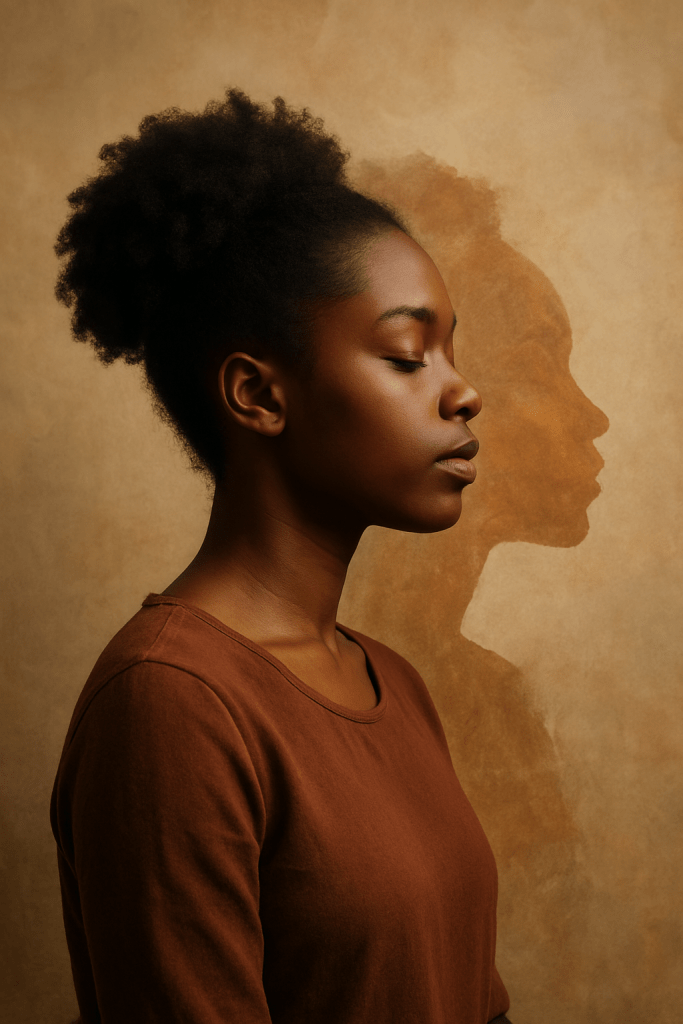
The story of the Brown girl is a sacred hymn written not in ink, but in the richness of melanin and the quiet endurance of her soul. She walks through the world as a living psalm — a testimony of divine craftsmanship and unbroken lineage. In her reflection, we see God’s artistry, not merely in the hue of her skin but in the rhythm of her spirit. “I will praise thee; for I am fearfully and wonderfully made” (Psalm 139:14, KJV) is not just a verse—it is her anthem, one that echoes against centuries of rejection and redefinition.

For generations, the Brown girl has been taught to question her worth, to compare her glow against a false light. But the Creator never designed her to mimic another’s reflection. Her shade, like the soil of Eden, carries the very breath of life. From her crown of coiled glory to the curve of her hips, every part of her was formed with intention and reverence. Her beauty does not seek validation—it speaks of divine origin.

History tried to dim her brilliance through the politics of color and the hierarchy of skin. Yet, even in bondage, she remained radiant. The same sun that darkened her skin also kissed her strength. From the plantations to the pulpits, from the cotton fields to classrooms, she became a bearer of wisdom, resistance, and grace. She survived, not by accident, but by divine decree.

Her skin tells the story of her ancestors’ resilience—those who toiled in chains but dreamed of freedom. Each melanin cell is a monument to survival, each curl a scripture of identity. The Brown girl’s body is not a battleground of beauty standards; it is sacred architecture built by the hands of a Holy God. Her existence itself refutes every lie told by colonial mirrors.

In a world where Eurocentric beauty was exalted, the Brown girl was forced to unlearn self-hate disguised as admiration. She was told that to be lighter was to be lovelier, that proximity to whiteness meant worthiness. Yet the Spirit whispered truth: you were never meant to blend in with those who were never meant to define you. Her beauty, like a psalm, was meant to stand apart and lift the hearts of those who forgot that the Creator does not make mistakes.

The Brown girl’s psalm is also a declaration of liberation. It reminds her that she does not have to bleach her blessings, straighten her identity, or silence her power to be accepted. She can rest in the truth that her image was shaped in the likeness of divinity. When she walks, heaven recognizes her gait, for she carries the DNA of queens, prophets, and poets who have spoken life over deserts of despair.

In her eyes shines the reflection of generations—of Sarah’s faith, Hagar’s endurance, Esther’s courage, and Mary’s devotion. Her story, though rewritten by men, is restored by God. The Brown girl’s psalm teaches her that her scars are not shame but sacred ink—proof that she has survived what was meant to erase her.

This psalm also calls her to rise in purpose. Her voice was not meant to be background harmony but a solo of strength. She must reclaim the narrative that her foremothers were forced to whisper. Each time she affirms, I am fearfully and wonderfully made, she restores what history tried to erase—her identity as both divine creation and divine reflection.

The Brown girl’s confidence does not rest in external admiration but in internal revelation. She understands that self-love is not vanity but victory. When she adores her reflection, she honors the God who shaped her. When she embraces her hair, her nose, her skin, she offers praise not to herself but to the One who called her good from the beginning.

Psalm 139 becomes her mirror, not as a verse recited but as a truth embodied. It reminds her that she was known before she was born, loved before she was named, and chosen before she was celebrated. The Brown girl is not an afterthought—she is the first light after a long night of erasure.

The Brown girl’s psalm is also a lament. It grieves for the little girls who once hated their skin, who longed for lighter shades and looser curls, who never saw themselves in dolls or dreams. But the lament transforms into healing as she learns to sing again, her melody now one of restoration and self-acceptance.

Through time, her presence has always symbolized the sacred balance between beauty and strength. She can nurture nations and lead revolutions, pray with power and walk in poise. Her softness is not weakness—it is divine wisdom wrapped in compassion. Her resilience is not hardness—it is the evidence of God’s sustaining hand.

Her psalm also speaks to men, children, and generations yet unborn. It calls the world to see her not as an object of desire or envy but as an image of God’s glory. The world must unlearn its gaze and see her not as a symbol of struggle but of sacredness. She is the divine feminine in her purest form, clothed in majesty, kissed by creation.

The Brown girl’s existence is a prayer fulfilled. Her laughter is a hymn, her tears are baptisms, her dreams are prophecies. When she walks in truth, she resurrects the legacy of those who died never knowing they were beautiful. She becomes both the psalmist and the psalm.

In this psalm, love becomes her language. She learns to love the reflection that was once foreign to her. Her body becomes a temple of gratitude, her mind a sanctuary of peace. The beauty she carries is not confined to appearance—it is a moral, spiritual, and ancestral inheritance.

Every Brown girl who reads this psalm is invited to rewrite her story with grace. To forgive herself for believing lies. To anoint herself with truth. To declare, “I am my ancestors’ answered prayer.” For in her smile is the dawn, and in her voice, the echo of freedom.

She is not defined by society’s metrics but by heaven’s masterpiece. When she embraces her reflection, she sees more than beauty—she sees purpose. The Brown girl’s psalm teaches her to stand unapologetically in the fullness of her creation, unbothered by comparison, anchored in divine affirmation.

Her life is an offering. Each day she awakens, she adds another verse to the sacred song of womanhood. And as she learns to walk in love, justice, and truth, she becomes the melody of hope for those still finding their way to the mirror.

The Brown girl is fearfully and wonderfully made—an everlasting psalm written by the hand of God and sung through the ages. Her beauty is not a trend but a testimony. Her existence is not accidental—it is divine poetry in motion.

References

  • The Holy Bible, King James Version. (Psalm 139:14).
  • hooks, b. (1992). Black Looks: Race and Representation. South End Press.
  • Morrison, T. (1970). The Bluest Eye. Holt, Rinehart and Winston.
  • Lorde, A. (1984). Sister Outsider: Essays and Speeches. Crossing Press.
  • Davis, A. (1981). Women, Race, & Class. Random House.
  • Hill Collins, P. (2000). Black Feminist Thought: Knowledge, Consciousness, and the Politics of Empowerment. Routledge.
  • Cooper, B. (2018). Eloquent Rage: A Black Feminist Discovers Her Superpower. St. Martin’s Press.

Psychology Series: West African Psychology – Tradition, Identity, and Spiritual Consciousness

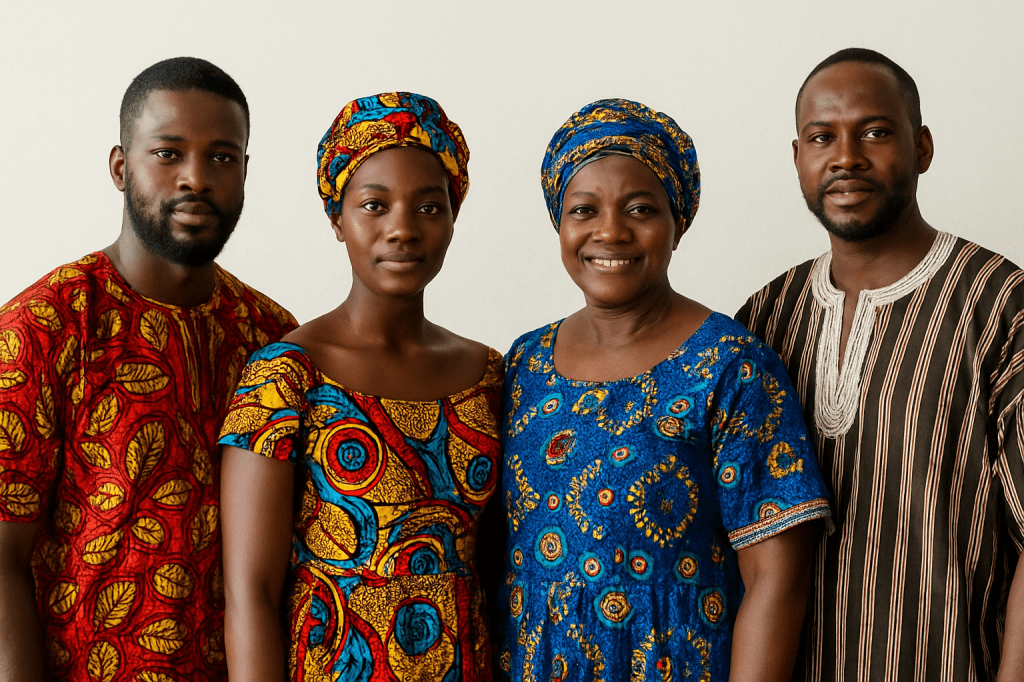
West African psychology represents an intricate synthesis of ancestral wisdom, communal identity, and spiritual consciousness. Unlike Western psychology, which centers on individualism and cognitive analysis, West African psychology is relational, holistic, and rooted in spirituality. It explores not only the human mind but the collective spirit that binds the community together. This essay examines the philosophical foundations, cultural paradigms, and contemporary applications of psychological thought within the West African context.

Long before the formal discipline of psychology emerged in Europe, African civilizations practiced advanced forms of psychological inquiry through philosophy, oral tradition, and spiritual systems. Ancient centers of learning such as Timbuktu, Ife, and Kumasi trained scholars in moral behavior, emotional balance, and communal ethics. African psychology was not divorced from spirituality but saw the psyche (ori, kra, chi) as a divine essence connected to both ancestors and the Creator.

In West African societies, the individual is never isolated from the group. The psychological self is defined through relationships with family, ancestors, and the spirit world. The Yoruba term Ori (inner head or spiritual consciousness) illustrates this beautifully: it is both destiny and divine intelligence guiding one’s path. The Akan concept of Sunsum and Kra parallels this, viewing the soul as the link between the human and divine.

Oral literature—proverbs, folktales, and songs—serves as the vehicle of West African psychology. Proverbs function as moral diagnostics, addressing behavioral correction, emotional intelligence, and cognitive awareness. A proverb such as the Akan saying, “Wisdom is like a baobab tree; no one individual can embrace it,” reflects collective problem-solving and humility, core psychological values in traditional African societies (Gyekye, 1997).

The griot, or traditional storyteller, functions as historian, counselor, and psychologist. By preserving genealogies and moral histories, the griot reinforces identity and belonging—two pillars of mental health in African thought. Elders act as interpreters of social behavior and mediators of conflict, employing narrative therapy long before Western models of psychoanalysis emerged.

West African psychology holds that the ancestors continue to influence the living. This belief shapes an understanding of generational trauma and healing that predates contemporary Western psychology. Ceremonies such as libations or ancestral veneration serve therapeutic purposes, reconnecting individuals with their lineage, thus restoring balance to the mind and soul (Mbiti, 1969).

Rituals in West African societies—such as initiation, drumming, and dance—function as methods of psychological transformation. These activities are designed to harmonize the spiritual, emotional, and physical aspects of the individual. The psychological emphasis lies not on pathology but on restoring harmony between the person, community, and cosmos.

The Yoruba and Igbo philosophical systems provide profound theories of consciousness. The Yoruba Ori-Inu (inner head) aligns with self-awareness and purpose, while the Igbo Chi signifies one’s personal spirit and destiny. These models parallel modern psychological ideas of self-concept and existential meaning but integrate divine intentionality, reflecting a sacred understanding of consciousness.

Though the term Ubuntu originates in Southern Africa, its underlying principle—“I am because we are”—resonates throughout West Africa. Communal interdependence defines identity formation, moral development, and emotional regulation. In contrast to Western individualism, African psychology sees personal well-being as inseparable from community well-being (Nwoye, 2015).

Gender identity in West African psychology is guided by roles within the family and community rather than purely biological distinctions. Women often hold spiritual and emotional authority as nurturers and healers, while men serve as protectors and moral exemplars. Psychological maturity is tied to fulfilling these social roles with integrity, balance, and humility.

Music and rhythm play a crucial role in the regulation of emotion and social bonding. Drumming is not merely artistic but therapeutic—a language of the unconscious. Psychologists studying African traditions note that rhythmic entrainment (synchronized movement) lowers stress and enhances group cohesion, illustrating an indigenous model of group therapy.

The transatlantic slave trade severed ancestral and spiritual connections, leading to psychological dislocation among African descendants. This trauma continues to echo in diasporic communities as collective grief and identity fragmentation. Healing this wound requires a return to African-centered psychological frameworks that restore memory and connection to heritage (Akbar, 1984).

Afrocentric psychologists such as Na’im Akbar and Wade Nobles have emphasized the importance of African consciousness in mental health. They argue that the disconnection from African cosmology has produced spiritual amnesia. Reclaiming African identity restores balance, purpose, and wholeness—key components of psychological healing for African-descended peoples worldwide.

Today, West African psychologists integrate indigenous practices with Western methodologies. In Ghana and Nigeria, traditional healers often work alongside clinical professionals to treat mental illness. This hybrid approach recognizes that emotional distress cannot be separated from spiritual imbalance, an insight often overlooked in Western psychiatry.

Colonial education systems disrupted indigenous epistemologies, promoting cognitive models alien to African spirituality. West African psychology calls for decolonized education that validates African knowledge systems. Restoring indigenous philosophy in schools promotes not only intellectual freedom but psychological liberation (Hountondji, 1997).

Islam, Christianity, and traditional belief systems coexist across West Africa, shaping the spiritual psyche. Prayer, fasting, and communal worship offer cognitive and emotional structure. Even among Christians and Muslims, ancestral values of respect, community, and reverence for life remain embedded in daily psychology.

Urban migration and globalization have introduced new psychological challenges: alienation, unemployment, and cultural dislocation. Yet, traditional coping mechanisms—family networks, spirituality, and storytelling—remain powerful buffers against stress. Modern African psychology continues to adapt these age-old resources to contemporary social contexts.

African-centered therapy emphasizes identity restoration, spiritual alignment, and community reconnection. Therapists working within this framework prioritize cultural affirmation and spiritual guidance over purely clinical methods. Healing becomes a collective process rather than an individual one (Nobles, 2013).

West African psychology offers the world a model of balance—mind, body, and spirit unified in purpose. It challenges the reductionism of Western science by affirming the sacredness of human consciousness. Its wisdom calls for a redefinition of psychology not as a discipline of the mind alone but as the science of soul and society.

West African psychology is not a relic of the past but a living framework of resilience, harmony, and divine connection. It invites humanity to remember that healing begins with remembering who we are. The ancestral mind of West Africa continues to speak—through its proverbs, music, and spirituality—reminding the world that the psyche is sacred and the soul communal.

Remember God is Guide!


References

Akbar, N. (1984). Chains and images of psychological slavery. Mind Productions.
Diop, C. A. (1974). The African origin of civilization: Myth or reality. Lawrence Hill Books.
Gyekye, K. (1997). Tradition and modernity: Philosophical reflections on the African experience. Oxford University Press.
Hountondji, P. J. (1997). Endogenous knowledge: Research trails. African Books Collective.
Mbiti, J. S. (1969). African religions and philosophy. Heinemann.
Nobles, W. W. (2013). African psychology: Toward its reclamation, revitalization, and advancement. Institute for the Advanced Study of Black Family Life and Culture.
Nwoye, A. (2015). What is African psychology the psychology of? Theory & Psychology, 25(1), 96–116.
Sarpong, P. (2002). People differ: An approach to cultural anthropology. Sub-Saharan Publishers.
Wiredu, K. (2004). African philosophy: An introduction. Routledge.

The Beauty of Becoming….

Becoming is a journey, not a destination. It is the quiet unfolding of who we are meant to be, shaped by trials, faith, identity, and the choices we make along the way. The beauty of becoming lies not in perfection, but in the process—the stretching, the learning, the breaking, and the rebuilding that form a life of depth and purpose.

To become anything great, one must first confront the inner landscapes of the soul. This requires honesty, the willingness to face uncomfortable truths, and the courage to shed old versions of oneself. Growth begins where denial ends. It is in those sacred spaces of self-reflection that transformation first takes root.

There is a divine rhythm to becoming. Scripture reminds us that God moves in seasons—“To everything there is a season” (Ecclesiastes 3:1, KJV). Becoming is the unfolding of these seasons: the planting, the watering, the waiting, and the harvest. Each season carries lessons that prepare us for the next.

The beauty of becoming also emerges through struggle. Trials are not curses but catalysts. Hardship refines; adversity illumines; disappointment redirects. What seems like destruction often becomes the fertile soil where destiny grows. Through struggle, we develop endurance and character.

Becoming requires letting go. Letting go of who we used to be, what others expected, and the weight of past mistakes. Release is an act of liberation. The more we loosen our grip on what no longer serves us, the more capacity we create for God to pour in new strength, new vision, and new identity.

There is beauty in vulnerability. Becoming demands that we soften where life has hardened us. It requires openness to healing—emotional, spiritual, relational. When we allow ourselves to feel deeply, we become more human, more compassionate, and more aligned with God’s design for our hearts.

Faith is the anchor of becoming. Without faith, the process feels chaotic and purposeless. With faith, even the unknown becomes sacred territory. Faith allows us to trust that every step, even the painful ones, is divinely ordered and will work together for our good (Romans 8:28, KJV).

The beauty of becoming is dynamic. It is not linear, predictable, or smooth. Some days you leap forward, other days you crawl, and some days you stand still—but you are still becoming. The pauses are part of the process. The setbacks are part of the story. Nothing is wasted.

Becoming teaches patience. We often desire immediate change, instant results, or sudden clarity. But becoming is slow artistry. God does His greatest work in the unseen—beneath the surface, behind the scenes, within the heart. Patience allows us to embrace the pace of grace.

Comparison is the thief of becoming. The moment we measure ourselves against others, we lose sight of our own path. Your becoming will not look like anyone else’s because your calling, your battles, and your blessings are uniquely yours. Embrace your difference as your divine design.

Becoming also involves restoration. The pieces of our past that we thought were broken beyond repair are often the very fragments God uses to create new glory. He is the Potter; we are the clay. In His hands, nothing is wasted, and everything is redeemable.

The beauty of becoming is illuminated through identity. When we know who we are and whose we are, we no longer shrink to fit into the molds of others. We step boldly into our assignment, our gifts, and our God-given authority. Identity fuels transformation.

Relationships also shape our becoming. Some people come to grow us, some to prune us, and some to reposition us. Honor each role. People are part of the curriculum of destiny, teaching us lessons we could never learn alone.

Becoming requires discipline. Dreams without discipline remain fantasies. Purpose demands intentionality—spiritual discipline, mental discipline, financial discipline, emotional discipline. These small, consistent choices shape the future you are building.

There is beauty in embracing change. Change disrupts comfort but expands capacity. Change signals movement, and movement is the heartbeat of becoming. The willingness to adapt, evolve, and be teachable opens doors that stagnation cannot.

Becoming is rooted in self-love—not vanity, but stewardship. To love oneself is to honor the vessel God created, nurture the mind, protect the soul, and speak life into your own journey. Self-love fuels resilience and empowers us to grow with grace.

The beauty of becoming is found in purpose. We are not wandering aimlessly; we are being shaped intentionally. Purpose clarifies decisions, strengthens resolve, and aligns us with the path God designed specifically for us.

Becoming is also sacred because it never ends. As long as we live, we are continually unfolding. New seasons will call forth new versions of you. New challenges will demand new strength. New blessings will require new wisdom. Becoming is a lifelong transformation.

Ultimately, the beauty of becoming reflects the beauty of God’s work within us. We are His workmanship—masterpieces in progress (Ephesians 2:10, KJV). Every chapter, every scar, every triumph, and every tear contribute to the masterpiece He is creating. Becoming is not about reaching a final point, but about becoming more like Christ, more aligned with purpose, and more alive to the fullness of who we are destined to be.

References

Cloud, H. (2016). Necessary endings: The employees, businesses, and relationships that all of us have to give up to move forward. HarperCollins.

Dweck, C. S. (2006). Mindset: The new psychology of success. Random House.

Frankl, V. E. (2006). Man’s search for meaning. Beacon Press.

Houston, J. (2018). The transforming power of prayer: Deepening your friendship with God. HarperOne.

Keller, T. (2013). Walking with God through pain and suffering. Penguin Books.

Lewis, C. S. (1952). Mere Christianity. HarperCollins.

McKnight, S. (2011). The King Jesus Gospel: The original good news revisited. Zondervan.

Piper, J. (2007). When the darkness will not lift: Doing what we can while we wait for God—and joy. Crossway.

Sanders, J. O. (1994). Spiritual leadership: Principles of excellence for every believer. Moody Publishers.

Scazzero, P. (2017). Emotionally healthy spirituality: It’s impossible to be spiritually mature, while remaining emotionally immature. Zondervan.

Tolle, E. (1999). The power of now: A guide to spiritual enlightenment. New World Library.

Willard, D. (1999). The divine conspiracy: Rediscovering our hidden life in God. HarperCollins.

The Olmec Civilization: The Mother Culture of Mesoamerica

The Olmec civilization, often hailed as the “mother culture” of Mesoamerica, represents one of humanity’s earliest high cultures in the Americas. Flourishing between 1500 BCE and 400 BCE along the Gulf Coast of present-day Veracruz and Tabasco, Mexico, the Olmecs laid the foundation for later civilizations such as the Maya and Aztec. Renowned for their monumental artistry, religious symbolism, and complex social organization, the Olmecs embody the ingenuity, spirituality, and resilience of early American civilization (Diehl, 2004).

The term Olmec, derived from the Nahuatl word Olmeca meaning “rubber people,” refers to both the civilization and the region known for its rubber production (Coe, 2011). The Olmec heartland’s fertile river valleys and humid lowlands allowed for advanced agriculture and sustained population centers like San Lorenzo, La Venta, and Tres Zapotes. The Olmecs cultivated maize, cacao, beans, and squash—crops that later became staples of Mesoamerican culture.


Artistic and Architectural Achievements

The colossal stone heads—some weighing up to 50 tons—remain the most enduring symbols of Olmec artistry. These sculptures, carved from basalt transported over long distances, are believed to represent rulers or ballplayers. Each head bears unique facial features, suggesting individualized portrayals rather than idealized forms (Pool, 2007). The sheer craftsmanship demonstrates centralized governance, skilled artisans, and an aesthetic philosophy linking power to sacred representation.

In addition to colossal heads, the Olmecs mastered jade and greenstone carvings, producing figurines, masks, and ritual objects that reveal their refined sense of symmetry and spiritual symbolism. The preference for greenstone—associated with fertility and life—reflects a worldview in which art, agriculture, and divinity were inseparable.


Religion and Cosmology

Olmec religion revolved around deities representing natural forces—rain, maize, and fertility—and often took zoomorphic forms. The “Were-jaguar” figure, half-human and half-jaguar, is among the most pervasive motifs, symbolizing divine transformation or shamanic power (Reilly, 1995). Temples and pyramidal mounds were often aligned with celestial phenomena, emphasizing the Olmecs’ advanced understanding of astronomy.

Ritual bloodletting, offerings, and early forms of the Mesoamerican ballgame appear to have originated among the Olmecs. These rituals reflected the eternal cycles of life, death, and rebirth—core spiritual beliefs that later civilizations inherited.


Society and Governance

Archaeological and linguistic evidence suggests a hierarchical society led by priest-kings who fused political authority with religious power. Trade networks extended from Central America to the Valley of Mexico, spreading Olmec influence and artistic motifs across vast territories. Obsidian, jade, pottery, and feathers were among the traded materials, fostering economic and cultural exchange (Blomster, 2012).

Proto-writing and calendrical systems—evidenced in the Cascajal Block—suggest that the Olmecs developed one of the earliest written languages in the Americas (Rodríguez & Ortiz, 2006). This linguistic sophistication indicates a society of intellectual and ritual complexity rivaling early civilizations in Africa and Asia.


The African Connection: Theories and Debates

The colossal heads’ distinct features—broad noses, full lips, and strong jawlines—have long sparked debate among historians, archaeologists, and Afrocentric scholars. Proponents of the African connection argue that these sculptures bear striking resemblances to West African physiognomy, particularly to the features common among ancient Nubians and West Africans (Van Sertima, 1976). In his seminal work They Came Before Columbus, Ivan Van Sertima argued that African explorers may have reached the Americas centuries before Columbus, influencing early Mesoamerican culture. He pointed to the Olmec heads’ Negroid features, the presence of botanical similarities (such as the African cotton species Gossypium herbaceum), and shared pyramid-building traditions as potential evidence of pre-Columbian transatlantic contact.

Similarly, Black historian Clyde A. Winters (2013) has proposed that African migrants—possibly of the Mande or Nubian cultures—may have contributed to Olmec civilization’s rise through maritime exploration across Atlantic currents. These Afrocentric theories emphasize the historical agency of ancient African peoples and challenge Eurocentric narratives that minimize Africa’s global impact.

However, mainstream archaeologists interpret the facial features differently. Many argue that the Olmec heads reflect the indigenous physiognomy of the native populations of the Gulf Coast, whose features—broad noses and full lips—are naturally diverse and regionally adapted. Modern DNA studies and cranial analyses have not conclusively linked Olmec remains to African populations, instead situating them within the broader indigenous Mesoamerican genetic spectrum (Pool, 2007; Coe, 2011).

While definitive proof of transatlantic contact before Columbus remains elusive, the discussion itself highlights deeper questions of representation, racial bias, and the politics of archaeology. As Asante (2007) notes, Afrocentric inquiry seeks not to impose African origins on every civilization but to restore African humanity to the global historical narrative from which it has often been erased.


Legacy and Cultural Influence

Regardless of the debate, the Olmec legacy in Mesoamerican civilization is indisputable. Their iconography, ritual practices, and urban planning profoundly shaped later societies such as the Maya and Aztec. The concept of divine kingship, the calendar system, and pyramid architecture all bear traces of Olmec origin.

Culturally, the Olmecs symbolize the dawn of intellectual and spiritual consciousness in the Americas. Their art bridges heaven and earth, the visible and invisible worlds, offering timeless testimony to the human desire for divine connection and order.


Conclusion

The Olmec civilization stands as a foundational pillar in world history—a society of builders, artists, priests, and visionaries who defined Mesoamerican identity for millennia. Whether viewed through the lens of indigenous ingenuity or possible African contact, their story underscores the interconnectedness of human cultures. The colossal heads, staring silently through centuries, remind the world of a people whose beauty, intellect, and craftsmanship transcended their time.

As global discourse continues to evolve, revisiting the Olmec question through both scientific and Afrocentric frameworks enriches—not diminishes—our understanding of ancient history. For in every sculpted face of basalt lies not only a ruler of old but the universal face of humanity—diverse, divine, and eternally creative.


References

  • Asante, M. K. (2007). An Afrocentric Manifesto: Toward an African Renaissance. Polity Press.
  • Blomster, J. P. (2012). The Origins of Olmec Civilization: Theories of Formative Mesoamerican Development. Annual Review of Anthropology, 41(1), 223–239.
  • Coe, M. D. (2011). Mexico: From the Olmecs to the Aztecs (6th ed.). Thames & Hudson.
  • Diehl, R. A. (2004). The Olmecs: America’s First Civilization. Thames & Hudson.
  • Pool, C. A. (2007). Olmec Archaeology and Early Mesoamerica. Cambridge University Press.
  • Reilly, F. K. (1995). Art, Ritual, and Rulership in the Olmec World. Dumbarton Oaks.
  • Rodríguez, M. C., & Ortiz, P. (2006). New Evidence for Early Olmec Writing: The Cascajal Block. Science, 313(5793), 1610–1614.
  • Van Sertima, I. (1976). They Came Before Columbus: The African Presence in Ancient America. Random House.
  • Winters, C. A. (2013). African Empires in Ancient America: The Olmecs, the Mande, and the Transatlantic Legacy. African Diaspora Press.

Sacred Femininity: A Woman’s Becoming

This photograph is the property of its respective owner. No copyright infringement intended.

Sacred femininity is not merely an aesthetic—it is a divine revelation. It speaks of the eternal essence that God placed within woman when He formed her from man’s rib and breathed into her the breath of life (Genesis 2:21–23, KJV). This sacredness is not defined by worldly ideals but by divine purpose. It is the glory of creation’s balance, the embodiment of wisdom, compassion, and strength hidden in softness.

The becoming of a woman is both spiritual and ancestral. It is the long pilgrimage from brokenness to wholeness, from survival to sovereignty. For the Black woman, this journey carries generational echoes—cries from foremothers who birthed nations in chains yet sang freedom into existence. Her becoming is not a new story, but a continuation of an ancient one written on papyrus, in the sands of Kemet, and in the margins of a slave Bible.

To become sacred is to remember. The modern world has taught women to perform, to compete, and to commodify their beauty, yet sacred femininity calls her to return—to the Edenic origin where she was not objectified but ordained. She is not the temptation; she is the temple. Her beauty is not vanity—it is divinity made visible.

In a culture that profits from insecurity, sacred femininity is resistance. When a woman reclaims her worth beyond her body, she dismantles a billion-dollar industry of comparison and control. Her holiness becomes protest; her modesty becomes power. The act of self-love becomes an altar where she meets God.

The Black woman’s becoming cannot be divorced from the historical dehumanization of her image. From the Jezebel stereotype that sexualized her body to the Mammy caricature that muted her soul, she has had to rebuild her identity from ashes. Yet like the phoenix, she rises—clothed not in the garments of oppression but in the robe of righteousness (Isaiah 61:10, KJV).

Becoming sacred means understanding that pain has purpose. Every trial, heartbreak, and injustice becomes a teacher. Through tears, she learns the language of faith. Through struggle, she births endurance. Through silence, she finds her voice. The womb of womanhood is not only physical—it is spiritual, birthing dreams, nations, and legacies.

Sacred femininity is not submission to man—it is submission to God. When a woman walks in divine order, her power multiplies, not diminishes. Submission, in its biblical sense, is alignment—a woman aligned with God’s purpose becomes a mirror of His grace. Her femininity is not fragile; it is fortified by faith.

This becoming is also a healing—a spiritual reclamation of what was stolen. For centuries, the Black woman’s body was a battlefield, her womb exploited, her image distorted. But through divine awakening, she begins to see herself as God sees her: fearfully and wonderfully made (Psalm 139:14, KJV). Her melanin is no longer a mark of marginalization but a manifestation of majesty.

The sacred woman knows that beauty is both physical and metaphysical. Her glow is not from cosmetics but from consecration. Her elegance is not performed but possessed. Proverbs 31 describes her not as a passive figure but as an enterprising, wise, and fearless force—a woman whose value is far above rubies.

To become sacred is to unlearn survival and embrace sovereignty. Many women have learned to endure, but few have learned to reign. Sacred femininity teaches her to sit on her throne, not as an idol of vanity, but as a vessel of virtue. It is the spiritual homecoming of the daughter of Zion.

The woman’s becoming is deeply tied to her community. She is both nurturer and nation-builder. From Harriet Tubman guiding souls to freedom, to contemporary queens leading boardrooms and ministries, her divine assignment remains the same: to restore what was broken, to heal what was wounded, and to give life where death was declared.

Sacred femininity also redefines strength. It is not the hardness that the world celebrates but the softness that sustains. It is the ability to forgive without forgetting, to love without losing oneself, and to stand without shouting. Strength, in its purest form, is sanctified gentleness.

Her becoming is also prophetic. Each generation of women births a new revelation of what it means to walk in God’s image. Eve introduced life, Ruth embodied loyalty, Esther demonstrated courage, Mary carried divinity, and today’s woman carries their collective anointing—an inheritance of faith and fire.

In the modern age, sacred femininity stands as a rebuke to artificial empowerment. The world tells women that power is found in dominance and detachment, but the sacred woman knows that true power flows from humility, holiness, and harmony. Her authority is not granted by man but ordained by heaven.

For Black women, this sacred identity also means rejecting colorism, texturism, and the colonial beauty codes that fractured sisterhood. Each shade of melanin, each curl pattern, each ancestral feature reflects a facet of God’s creative genius. Her hair is her crown; her complexion, her covenant.

Sacred femininity restores balance between the masculine and feminine principles of creation. It honors the divine order in relationships, family, and leadership—without erasing individuality or equality. It calls men and women to walk in spiritual unity, where love becomes leadership and service becomes strength.

The woman’s becoming is both internal and eternal. It is a daily practice of prayer, purpose, and purification. She must shed the old self like snakeskin—ego, shame, and fear—to step into her divine assignment. In doing so, she becomes both priestess and prophet of her destiny.

Sacred femininity is also communal; it cannot thrive in isolation. Women heal when they gather—when sisters speak life into one another instead of competing for validation. The circle of sisterhood is an altar where collective healing takes place, a sacred echo of the matriarchal wisdom that once guided nations.

Ultimately, A Woman’s Becoming is not a final arrival but an eternal evolution. To become sacred is to live in constant renewal—to be water and fire, gentle yet unyielding. Every season of her life, from maiden to matriarch, reveals a deeper reflection of God’s glory within her.

In her becoming, she learns that holiness is not perfection but presence—the awareness of God within her. She is both the daughter and the dwelling place, the reflection and the revelation. And when she finally sees herself through divine eyes, she becomes what she was always meant to be: sacred, sovereign, and whole.


References

  • The Holy Bible, King James Version. (n.d.).
  • hooks, b. (2000). All About Love: New Visions. William Morrow.
  • Cooper, B. C. (2018). Eloquent Rage: A Black Feminist Discovers Her Superpower. St. Martin’s Press.
  • Lorde, A. (1984). Sister Outsider: Essays and Speeches. Crossing Press.
  • Walker, A. (1983). In Search of Our Mothers’ Gardens: Womanist Prose. Harcourt.
  • Collins, P. H. (2000). Black Feminist Thought: Knowledge, Consciousness, and the Politics of Empowerment. Routledge.

The Price of Pleasure

Pleasure, in its many forms, has long been both a gift and a snare. Humanity’s pursuit of delight — whether in wealth, lust, status, or indulgence — often reveals the tension between desire and discipline, between freedom and bondage. The price of pleasure, as Scripture and history attest, is seldom advertised at the moment of temptation. It is paid later, in the currency of consequence.

From the Garden of Eden to modern society, the story of humanity’s downfall is tied to the allure of pleasure without restraint. Eve’s bite of the forbidden fruit was not born of hunger, but of curiosity and promise — the seductive voice of the serpent whispering that fulfillment lay beyond obedience. This moment established an eternal pattern: sin disguises itself as satisfaction.

The human heart is wired to seek joy and satisfaction; however, when this longing detaches from divine purpose, it mutates into idolatry. The Apostle Paul warned that people would become “lovers of pleasures more than lovers of God” (2 Timothy 3:4, KJV). This prophecy finds its fulfillment in a world obsessed with comfort, entertainment, and sensuality — a culture that trades holiness for hedonism.

Pleasure itself is not evil; it is a creation of God meant to refresh the soul. Yet when pleasure becomes the master rather than the servant, it corrupts. What begins as harmless enjoyment can evolve into addiction, greed, and spiritual decay. The moment pleasure becomes the goal rather than the byproduct of righteousness, it demands payment — often through guilt, loss, or spiritual emptiness.

In modern times, the worship of pleasure manifests through consumerism, sexuality, and digital gratification. Social media platforms and entertainment industries exploit the human craving for validation and dopamine. We scroll endlessly, seeking stimulation, only to find ourselves more restless than before. The pleasure is temporary, but the dependence lingers.

The ancient book of Proverbs warns, “There is a way which seemeth right unto a man, but the end thereof are the ways of death” (Proverbs 14:12, KJV). This verse captures the deceptive nature of worldly pleasure. It promises satisfaction but delivers sorrow. It glitters like gold but corrodes the spirit like rust.

History, too, offers countless lessons. Entire civilizations have fallen under the weight of indulgence. Rome, once mighty, decayed from within as moral restraint gave way to luxury and lust. The same pattern repeats in every era where pleasure becomes the highest pursuit — the soul grows weak while the senses grow wild.

The psychology of temptation reveals that pleasure is not merely physical; it is deeply emotional and spiritual. Sin appeals to unmet needs — for love, security, or recognition — offering false fulfillment. The enemy does not tempt us with ugliness but with beauty misused. The serpent does not hiss; it flatters.

The price of pleasure is often hidden in the fine print. It can cost one’s integrity, peace, or purpose. A fleeting thrill may lead to years of regret, while a single compromise can birth a lifetime of bondage. Pleasure’s most dangerous lie is that there will be no consequences.

In relationships, this deception manifests as infidelity, lust, or manipulation disguised as passion. Many pursue the thrill of romance without the covenant of commitment, forgetting that true love is not a feeling but a choice rooted in sacrifice. What begins in excitement often ends in emptiness when built outside God’s order.

Financially, the same principle applies. The lust for wealth and material pleasure drives many into debt, dishonesty, or despair. Christ’s warning, “For what shall it profit a man, if he shall gain the whole world, and lose his own soul?” (Mark 8:36, KJV), reminds us that pleasure purchased at the cost of character is too expensive.

Spiritually, unchecked pleasure dulls the conscience. When the heart grows accustomed to indulgence, sin no longer feels sinful — it feels normal. This is the most dangerous stage, where conviction fades and comfort replaces repentance. The pleasure that once thrilled begins to enslave.

However, redemption is always possible. God’s grace restores even those who have squandered their peace chasing pleasure. King David, who knew both sin and sorrow, wrote, “In thy presence is fulness of joy; at thy right hand there are pleasures for evermore” (Psalm 16:11, KJV). This verse reveals that divine pleasure — not carnal indulgence — is the only satisfaction that does not destroy the soul.

To find lasting joy, one must exchange counterfeit pleasure for divine purpose. This requires discipline, discernment, and a heart anchored in truth. It means saying no to fleeting sensations in order to say yes to eternal fulfillment. Pleasure is sweetest when it flows from purity.

In the modern world, true rebellion is self-control. In a society that glorifies indulgence, restraint becomes revolutionary. Those who refuse to be mastered by their appetites rediscover freedom — not the freedom to do whatever feels good, but the freedom to choose what is right.

The price of pleasure is not always immediate; sometimes it accumulates quietly in the soul. Yet those who heed wisdom learn that God’s boundaries are not barriers but blessings — guardrails protecting us from destruction disguised as delight.

Every believer must confront this truth: what the world calls pleasure often leads to pain, but what God calls obedience leads to peace. Pleasure without purpose is poison; purpose filled with joy is divine.

Ultimately, the story of pleasure and pain teaches a timeless lesson — that everything beautiful outside of God’s timing becomes destructive. The fruit may look good to the eyes, but its sweetness can sour the soul. The truest pleasure is found not in rebellion, but in reconciliation with the One who created joy itself.

References

Foster, R. (1998). Celebration of discipline: The path to spiritual growth. HarperCollins.
Lewis, C. S. (1942). The Screwtape letters. HarperOne.
Piper, J. (1986). Desiring God: Meditations of a Christian hedonist. Multnomah.
Tozer, A. W. (1991). The pursuit of God. Christian Publications.
The Holy Bible, King James Version. (1611). London: Oxford University Press.

The Mirror Between Two Worlds

Between the physical and the spiritual, between what is seen and what is felt, there exists a mirror — a reflection that reveals not merely the face, but the soul. The Mirror Between Two Worlds represents the threshold where identity, morality, and divinity converge. It is the space where humanity confronts both its beauty and its brokenness, where truth and illusion battle for dominion over the heart.

Every individual lives in two realms: the material world of flesh and ambition, and the spiritual world of conscience and eternity. The mirror between them does not merely show what we appear to be, but who we have become. In this reflection, one must ask: Am I living for this world or for the one beyond?

The physical world teaches us to chase visibility — to be admired, accepted, and envied. It prizes appearance over authenticity. The spiritual world, by contrast, measures not how we look but how we love, not how high we rise but how deeply we serve. The mirror between these two worlds exposes the tension of modern existence — the war between ego and essence.

In Scripture, mirrors often symbolize revelation and reflection. The Apostle Paul wrote, “For now we see through a glass, darkly; but then face to face” (1 Corinthians 13:12, KJV). Humanity’s understanding of truth is partial, obscured by sin and self-deception. Yet as we draw nearer to God, the reflection clarifies, revealing our true image — one made in His likeness.

This mirror is not a passive object; it is alive with moral consequence. It shows both the masks we wear and the wounds we hide. Many are afraid to look too long, for the reflection exposes compromise, vanity, and spiritual neglect. But transformation begins with honest confrontation. We cannot heal what we refuse to see.

In the age of social media and self-curation, the mirror has multiplied. We are surrounded by digital reflections — selfies, filters, and public personas — each crafted to project perfection. Yet the soul, neglected and unfiltered, remains restless. The world teaches us to polish the image but ignore the spirit, to upgrade the mirror but forget the reflection.

The “two worlds” also represent time and eternity. In this life, we chase possessions, pleasure, and recognition; in the next, only righteousness will endure. The mirror between them reminds us that what is temporary often disguises itself as eternal, and what is unseen carries the greatest value. “While we look not at the things which are seen, but at the things which are not seen…” (2 Corinthians 4:18, KJV).

Every choice we make tilts the reflection toward one world or the other. When we choose truth over convenience, compassion over cruelty, faith over fear — we align with the divine reflection. But when we yield to pride, envy, or greed, the mirror darkens. It becomes clouded by self-interest, unable to reflect the light of God’s image.

For centuries, mystics and theologians have described life as a mirror of the soul. The more one polishes it through repentance and humility, the more clearly it reflects the Creator. Sin, however, scratches the glass, distorting the divine resemblance. The process of sanctification is, in essence, the cleaning of the mirror — the restoration of spiritual clarity.

In psychological terms, the mirror represents self-awareness — the courage to observe one’s own motives, biases, and brokenness. It demands vulnerability, for the truth is rarely flattering. Yet through this inner reflection, spiritual maturity is born. The unexamined soul remains divided, trapped between the two worlds.

The mirror also symbolizes duality — light and shadow, heaven and earth, the sacred and the profane. It reminds us that humans are not merely bodies seeking pleasure, but spirits seeking purpose. When the material dominates, the reflection becomes superficial; when the spiritual leads, beauty flows from within.

The tragedy of modern humanity is that many have mistaken the reflection for the reality. They worship the image — fame, status, self — and forget the source. This idolatry of the self is the ancient sin reborn in digital form. The mirror becomes an altar where the ego reigns supreme, yet leaves the soul starving.

Yet, hope endures. The mirror between worlds is not meant to condemn but to awaken. When one gazes into it with humility, the illusion fades and truth emerges. One begins to see that divine beauty is not external adornment but internal alignment — the harmony of heart, mind, and spirit under God’s light.

In every generation, prophets, poets, and philosophers have urged humanity to look inward. “Know thyself,” inscribed on the Temple of Delphi, echoes the same wisdom Christ imparted: “The kingdom of God is within you” (Luke 17:21, KJV). The mirror between two worlds, then, is not found in glass but in the heart.

The reflection we see in others often reveals what remains unresolved within us. Judgment, envy, and resentment are projections of our own unrest. Thus, relationships become mirrors too — sacred tools of revelation meant to refine rather than condemn. Each encounter is an invitation to greater understanding.

The moment we surrender vanity and face our truest reflection, transformation begins. The mirror ceases to divide the worlds and instead unites them. Heaven and earth meet within the redeemed heart — a space where spiritual truth animates physical existence.

The goal, then, is not to shatter the mirror but to see clearly through it. To live with integrity between both worlds — fully human yet divinely guided. To reflect the Creator while walking through creation.

In the end, every soul must stand before the ultimate mirror — the presence of God — where no filters, excuses, or disguises remain. There, reflection becomes revelation. And in that sacred unveiling, we will finally see ourselves as He always saw us — not divided, but whole.

References

Foster, R. (1998). Celebration of discipline: The path to spiritual growth. HarperCollins.
Lewis, C. S. (1942). The Screwtape letters. HarperOne.
Nouwen, H. (1981). The wounded healer: Ministry in contemporary society. Doubleday.
Tozer, A. W. (1991). The pursuit of God. Christian Publications.
The Holy Bible, King James Version. (1611). London: Oxford University Press.

Brown Girl Blueprint: Beauty, Brilliance & Becoming

The journey of a brown girl is one of discovery, resilience, and transformation. Beauty, Brilliance & Becoming reflects the multidimensional essence of her identity—honoring her physical presence, cultivating her intellect, and stepping into her God-given purpose. This blueprint is not merely a guide for success; it is a roadmap to self-realization, confidence, and divine alignment.

Beauty for the brown girl transcends skin tone or societal standards. It encompasses authenticity, self-love, and the embrace of natural features that reflect her heritage. In a world that often equates beauty with Eurocentric ideals, embracing melanin-rich skin, natural hair textures, and unique features becomes an act of reclamation and empowerment. Psalm 139:14 (KJV) reminds her: “I will praise thee; for I am fearfully and wonderfully made.” True beauty begins with recognition of divine design.

Brilliance is the cultivation of the mind, talents, and wisdom. Intellectual growth, creativity, and problem-solving are forms of empowerment that equip the brown girl to navigate life’s challenges. Proverbs 4:7 (KJV) exhorts: “Wisdom is the principal thing; therefore get wisdom: and with all thy getting get understanding.” Brilliance is nurtured through education, mentorship, and deliberate pursuit of excellence.

Becoming is the ongoing process of fulfilling potential. It is the journey of self-discovery, character development, and spiritual alignment. Becoming requires courage—the courage to defy limiting narratives, overcome systemic barriers, and step into spaces where her voice and vision are recognized. Jeremiah 29:11 (KJV) promises: “For I know the thoughts that I think toward you, saith the LORD, thoughts of peace, and not of evil, to give you an expected end.”

The brown girl blueprint encourages intentionality in all aspects of life. It emphasizes self-care, emotional intelligence, and spiritual grounding. By prioritizing mental and physical wellness, she strengthens her ability to contribute meaningfully to her family, community, and world.

Identity is a foundational pillar. Recognizing the value of her ancestry, culture, and heritage empowers the brown girl to stand with confidence in spaces that may not always affirm her worth. Historical context, from African civilizations to modern Black excellence, forms a legacy of resilience and brilliance to be honored and advanced.

Self-expression is also central to this blueprint. Fashion, hair, art, and communication serve as tools for authenticity, creativity, and empowerment. Celebrating individuality fosters confidence and challenges societal stereotypes, allowing the brown girl to claim her narrative.

Relationships shape growth and influence. Surrounding oneself with mentors, peers, and spiritual guides who affirm values, vision, and purpose cultivates an environment where brilliance can flourish. Proverbs 27:17 (KJV) reminds us: “Iron sharpeneth iron; so a man sharpeneth the countenance of his friend.” The right community catalyzes development and accountability.

Education and skill-building are pathways to empowerment. From formal schooling to personal development, knowledge equips the brown girl to navigate systemic challenges and seize opportunities. Intellectual empowerment is inseparable from confidence and spiritual alignment.

Financial literacy and independence are essential components of becoming. Mastery over resources ensures autonomy, reduces vulnerability, and enables her to support herself and her community responsibly. Proverbs 21:20 (KJV) emphasizes prudence: “There is treasure to be desired and oil in the dwelling of the wise; but a foolish man spendeth it up.”

Faith is the anchor of the brown girl blueprint. Spiritual grounding provides clarity, perseverance, and discernment. Prayer, meditation, and alignment with God’s purpose shape decision-making and fortify resilience. Isaiah 40:31 (KJV) promises: “But they that wait upon the LORD shall renew their strength; they shall mount up with wings as eagles; they shall run, and not be weary; and they shall walk, and not faint.”

Resilience is cultivated through embracing challenges as opportunities for growth. Life’s trials refine character, deepen faith, and enhance wisdom. Every setback becomes a stepping stone toward fulfillment and impact.

Self-confidence grows from acknowledging accomplishments, strengths, and potential. The brown girl is encouraged to celebrate victories, however small, as evidence of her brilliance and progression toward purpose.

Leadership is an extension of becoming. Empowered brown girls are equipped to lead with integrity, compassion, and vision. Influence is exercised responsibly, shaping communities and mentoring future generations.

Creativity fuels innovation and personal expression. Art, music, writing, and entrepreneurship allow the brown girl to channel brilliance into tangible contributions that leave lasting impact.

Service and community engagement solidify purpose. Using talents, resources, and knowledge to uplift others reinforces the values of compassion, justice, and stewardship. Strength is measured not only in personal success but in the ability to positively influence the world.

Reflection and self-assessment ensure continuous growth. Regular evaluation of personal goals, values, and spiritual alignment keeps the brown girl on track toward fulfilling her blueprint with intentionality.

Courage underpins every step of the journey. Fear of failure, judgment, or limitation is overcome through faith, resilience, and self-belief. Courage transforms potential into achievement and vision into reality.

Gratitude and humility balance ambition. Recognizing God’s hand, mentors’ support, and ancestral legacy fosters perspective, grounding the brown girl in values that honor both self and community.

Ultimately, Brown Girl Blueprint: Beauty, Brilliance & Becoming is a call to action and a framework for intentional living. It empowers young women to embrace their identity, cultivate their gifts, and step boldly into destiny. Beauty is acknowledged, brilliance is developed, and becoming is actualized—a holistic journey toward purpose, empowerment, and divine fulfillment.


References

Holy Bible, King James Version. (1611). Thomas Nelson.

Guthrie, D. (1994). The NIV application commentary: Proverbs. Grand Rapids, MI: Zondervan.

Wright, C. J. H. (2002). Old Testament ethics for the people of God. Downers Grove, IL: InterVarsity Press.

Rooks, N. (2021). Hair politics: Beauty, culture, and Black identity. New York, NY: Beacon Press.

Harris, T. (2019). Black girls rising: A roadmap to excellence and empowerment. Chicago, IL: University of Chicago Press.

The Psychology of Shade: Healing Colorism from Within.

Photo by Godisable Jacob on Pexels.com

Colorism is not merely a sociological phenomenon; it is a psychological wound. It is a trauma imprinted on the collective consciousness of the African diaspora, rooted in the violent histories of slavery, colonialism, and Eurocentric beauty hierarchies. While society reinforces these hierarchies externally, they take deeper residence in the human mind, shaping identity, relational dynamics, self-worth, and community cohesion. Healing colorism requires more than awareness; it demands internal restoration, cultural re-education, and spiritual renewal.

Colorism functions as an internalized system of valuation, assigning worth based on proximity to whiteness. According to Hunter (2007), colorism privileges lighter-skinned individuals socially, economically, and romantically, creating a tiered hierarchy among people of African descent. This internal stratification produces shame, insecurity, and self-doubt in darker-skinned individuals while simultaneously burdening lighter-skinned individuals with distorted expectations and identity conflicts. It is oppression turned inward and projected outward.

Psychologically, colorism creates cognitive dissonance — the tension between knowing one’s inherent worth and navigating a world that denies it. Young Black children often develop color-based biases as early as kindergarten, internalizing societal cues that equate lightness with beauty and goodness (Wilder, 2015). These early messages distort developing self-concepts and can manifest in adulthood as anxiety, depression, or body image struggles.

This emotional burden becomes spiritual when one recognizes that humanity is made in the image of God (Genesis 1:27, KJV). To despise one’s God-given hue is to unconsciously question divine intention. The biblical text affirms the beauty of melanated skin — Solomon describes his beloved as “black and comely” (Song of Solomon 1:5, KJV). Yet centuries of Western theology weaponized whiteness as purity, a manipulation that severed many from sacred self-recognition. True healing requires reclaiming a divine understanding of Blackness.

Community fractures deepen the wound. Colorism teaches competition instead of kinship, suspicion instead of solidarity. Dark-skinned women are stereotyped as aggressive or undesirable, while light-skinned women are hypersexualized and envied — both flattened into caricatures. Dark-skinned men are exoticized or deemed threatening, while light-skinned men face challenges asserting masculinity within cultural narratives. No shade escapes psychological consequence; all suffer under the illusion of hierarchy.

Healing begins with acknowledgment. Naming colorism disrupts invisibility. It invites self-reflection: Where have we internalized bias? How do we treat our brothers and sisters? How do we speak to ourselves? Through introspection, one confronts social conditioning and replaces it with truth — every shade holds beauty, dignity, and purpose.

Education plays a critical role. Schools, churches, media creators, and parents must actively counter color-based stereotypes. Children especially benefit from representation that celebrates the full spectrum of Black skin tones. Affirmation builds resilience against societal messages and cultivates pride in one’s natural image.

Therapeutic intervention is equally necessary. Mental health frameworks, particularly those grounded in Afrocentric psychology, offer tools for healing self-esteem wounds and navigating racialized experiences (Akbar, 2004). Therapy becomes not a sign of weakness, but a form of liberation — reclaiming one’s narrative from oppression’s lies.

Community healing circles and culturally rooted dialogue can restore connection. When individuals confess insecurities, biases, or wounds, vulnerability births compassion. In shared testimony, the illusion of isolation dissolves. Love becomes the antidote to generational distortion. Healing is communal, not individual.

Faith also serves as a healing anchor. Scripture proclaims that humans are “fearfully and wonderfully made” (Psalm 139:14, KJV). Divine affirmation dismantles color-based inferiority. Spiritual identity supersedes beauty hierarchies, grounding worth in God’s image, not societal constructs. For many, prayer, meditation, and ancestral reverence restore emotional balance.

Cultural reclamation is vital. From the rich mahogany of Nubian royalty to the bronze beauty of ancient Israelites, history affirms dark-skinned excellence long erased by colonial lenses. Relearning and teaching this truth repairs psychological fractures and reawakens pride in African aesthetics.

Healing colorism also demands accountability — calling out harmful jokes, media portrayals, dating biases, and generational comments. Silence sustains oppression; courageous resistance loosens its grip. Every moment we challenge shade-based discrimination, we affirm collective dignity.

Finally, healing is an act of love. Love for oneself, love for one’s people, love for one’s heritage. Love dismantles shame and renews identity. Love sees beauty not as a hierarchy, but a divine spectrum.

Colorism was inherited; healing must be chosen. To heal colorism from within is to reclaim spiritual truth, psychological freedom, and cultural pride. It is a journey of returning to self — the self untainted by Western gaze, anchored in divine design, affirmed through history, and celebrated within community. As we heal, we restore not just image, but soul.


References

Akbar, N. (2004). Know thyself. Mind Productions.

Hunter, M. (2007). The persistent problem of colorism: Skin tone, status, and inequality. Sociology Compass, 1(1), 237–254.

Wilder, J. (2015). Color stories: Black women and colorism in the 21st century. Praeger.

Holy Bible, King James Version.
Genesis 1:27; Song of Solomon 1:5; Psalm 139:14.