Tag Archives: skin

Melanin: The Golden Fleece

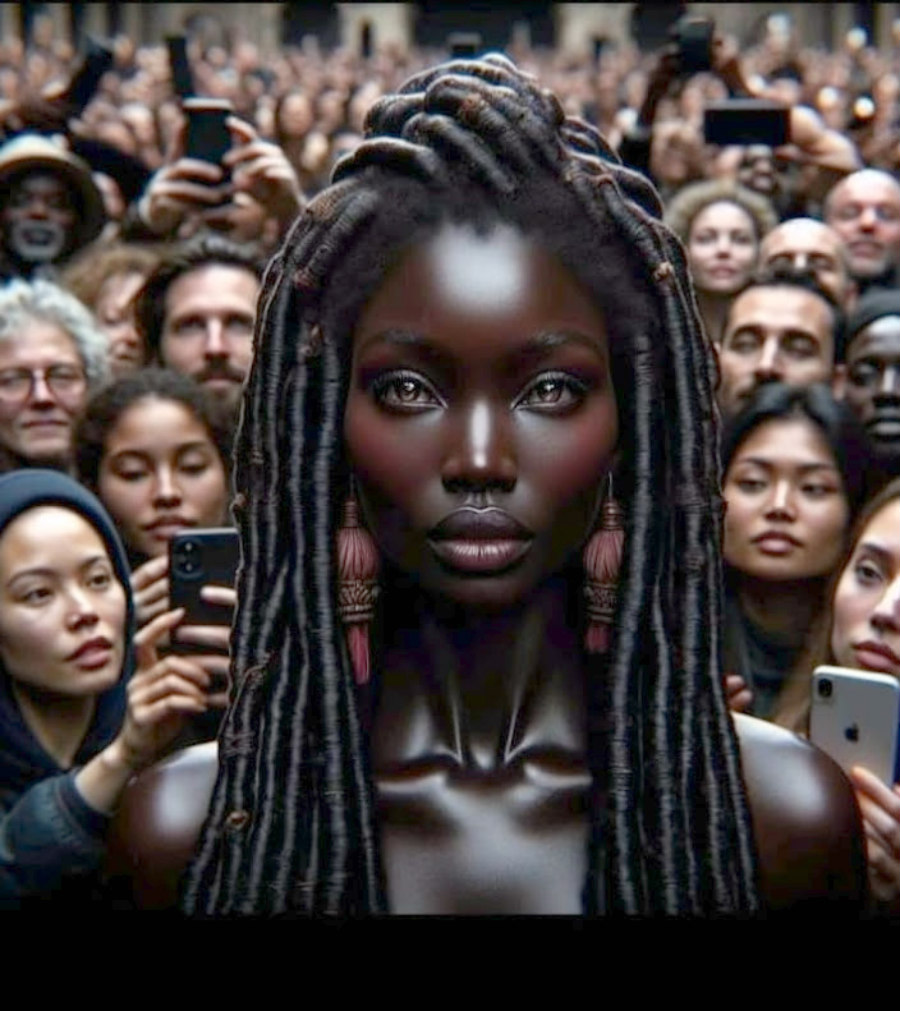
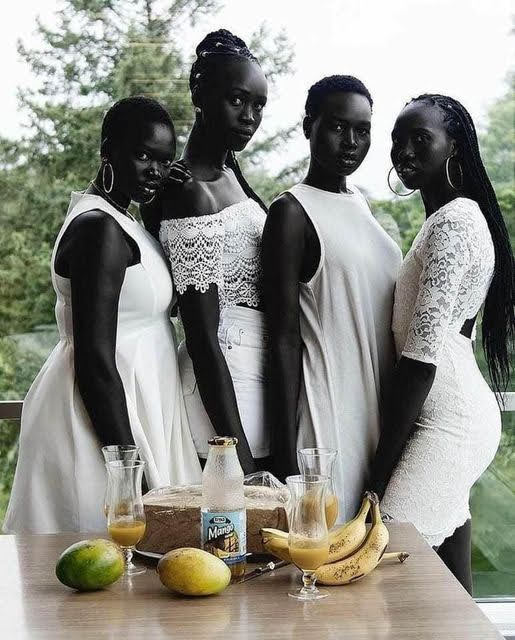
This photograph is the property of its respective owner. No copyright infringement intended.

Melanin has long been viewed through a social, aesthetic, and at times oppressive lens, yet beneath surface narratives lies profound biological, historical, and spiritual significance. Melanin is not merely pigment—it is a biochemical treasure, a molecular shield, and a marker of resilience. To speak of melanin is to enter a conversation about identity, memory, divinity, and survival.

Biologically, melanin is a natural polymer responsible for skin, hair, and eye color. It exists in eumelanin, pheomelanin, and neuromelanin forms, each with precise biological functions (Simon et al., 2009). Eumelanin produces rich brown and black hues, functioning as the body’s natural armor against ultraviolet radiation. Those richly endowed with melanin possess enhanced protection from sun damage and oxidative stress.

The molecular properties of melanin have led many scholars and thinkers to call it a biochemical jewel. It absorbs and transforms light, protects DNA, neutralizes free radicals, and supports cellular stability (Hill, 1992). It is a biological blessing—an evolutionary adaptation honed to thrive under intense sunlight. In this way, melanin becomes symbolic of ancestral endurance in equatorial regions, where ancient civilizations flourished.

Neuromelanin—found in the brain—invites deeper conversation. It is concentrated in regions associated with movement, memory, and emotional regulation (Zecca et al., 2008). The presence of melanin in neural structures has fueled scientific curiosity and cultural pride. Though still under study, neuromelanin may play a role in neurological health, stress resilience, and cognitive processes.

The historical framing of melanin diverges sharply from its biological brilliance. Colonial narratives weaponized skin tone, divorcing melanin from its scientific majesty. People with higher melanin content were cast into artificial hierarchies designed to devalue their humanity and legacy. Yet the very trait used to marginalize Black people is one of nature’s greatest evolutionary triumphs.

Melanin’s perceived mystical value predates colonial discourse. Ancient African civilizations viewed dark skin as a sign of divine power, lineage, and sacred connection to the sun. In Kemet (Egypt), the term Khem symbolized Blackness, fertility, and sacred life (Diop, 1974). To be melanated was to be spiritually potent and cosmically aligned.

Thus arises the metaphor of melanin as “the Golden Fleece.” In Greek mythology, the Golden Fleece symbolized royalty, cosmic blessing, and divine right. To liken melanin to the Golden Fleece is to reclaim the narrative—it is a crown, not a curse. This metaphor challenges societies to re-evaluate the value systems that commodified white aesthetics and vilified Black embodiment.

Spiritually, melanin carries a symbolic weight in Black consciousness movements. The Bible proclaims, “I am black, but comely” (Song of Solomon 1:5, KJV), affirming beauty and dignity in dark skin. Scripture often references dark skin in contexts of royalty, ancestral lineage, and divine intimacy. Spiritual identity and physical identity intertwine.

Social narratives around melanin continue to evolve. The reclamation of Black beauty, culture, and identity represents a collective unshackling from Eurocentric paradigms. Melanin becomes not simply a biological trait, but a cultural banner—a reminder of ancestral legacy and global influence. It is an emblem of survival in systems designed to erase it.

Psychologically, embracing melanin strengthens self-concept and mental resilience. When individuals internalize pride in their natural features—skin, hair, facial structure—they reclaim agency from colorist and racist conditioning (Banks, 2010). The mind becomes liberated when the body is no longer viewed as inferior.

Colorism remains a lingering shadow over melanin discourse. Preference for lighter skin persists globally, rooted in colonial history and social stratification. Yet the global shift toward celebrating dark skin disrupts this narrative, signaling a cultural renaissance. The body becomes a site of revolution and rebirth.

Social media contributes to this awakening. While it has perpetuated beauty hierarchies, it has also become a platform for melanated celebration. Campaigns honoring dark skin tones challenge historical erasure and elevate diverse aesthetics. Visibility becomes liberation.

Scientifically, melanin may hold future technological and medical promise. Research explores melanin’s potential in radiation shielding, bioelectronics, and regenerative medicine (Kim et al., 2019). The same pigment marginalized socially may become a key to future innovation. Such irony underscores the disconnect between perception and reality.

Economically, “melanin markets” emerge in beauty and media spaces. The world profits from Black style, culture, and features even as Black bodies fight for recognition and safety. To claim melanin’s value is to demand equity, representation, and ownership in industries enriched by Black aesthetics.

The spiritual dimension remains profound. Melanin symbolizes creation, depth, and cosmic mystery. It evokes earth, night, and universe—the fertile darkness from which life emerges. In Genesis, creation begins in darkness before light. Darkness is not absence; it is origin.

To honor melanin is not to elevate one group above another, but to correct historical lies. It is a restoration of dignity and truth. Melanin becomes metaphor, biology, legacy, and prophecy—a reminder that identity is both physical and sacred.

The Golden Fleece metaphor anchors melanin as treasure, not because others lack value, but because Blackness has been historically undervalued. To value melanin is to heal collective wounds and uplift future generations. The world flourishes when every hue is honored.

Ultimately, melanin embodies resilience and radiance. It reflects sunlight, history, struggle, and triumph. Those who carry it inherit a story of survival and sacredness. Melanin is memory written into flesh.

To know melanin is to honor the past and walk boldly into the future. It is a science, a symbol, and a song. It is the Golden Fleece—rare, royal, radiant.


References

Banks, K. H. (2010). African American college students’ experiences with racial discrimination and the role of racism socialization. Journal of Applied Social Psychology, 40(6).
Diop, C. A. (1974). The African origin of civilization: Myth or reality. Lawrence Hill Books.
Hill, H. Z. (1992). The function of melanin or six blind people examine an elephant. BioEssays, 14(1).
Kim, Y. J., et al. (2019). Melanin’s applications in bioelectronics and medicine. Biomaterials, 214.
Simon, J. D., Peles, D., & Wakamatsu, K. (2009). Current challenges in understanding melanogenesis. Pigment Cell & Melanoma Research, 22(5).
Zecca, L., et al. (2008). The role of neuromelanin in neurological disorders. Journal of Neural Transmission, 115(11).

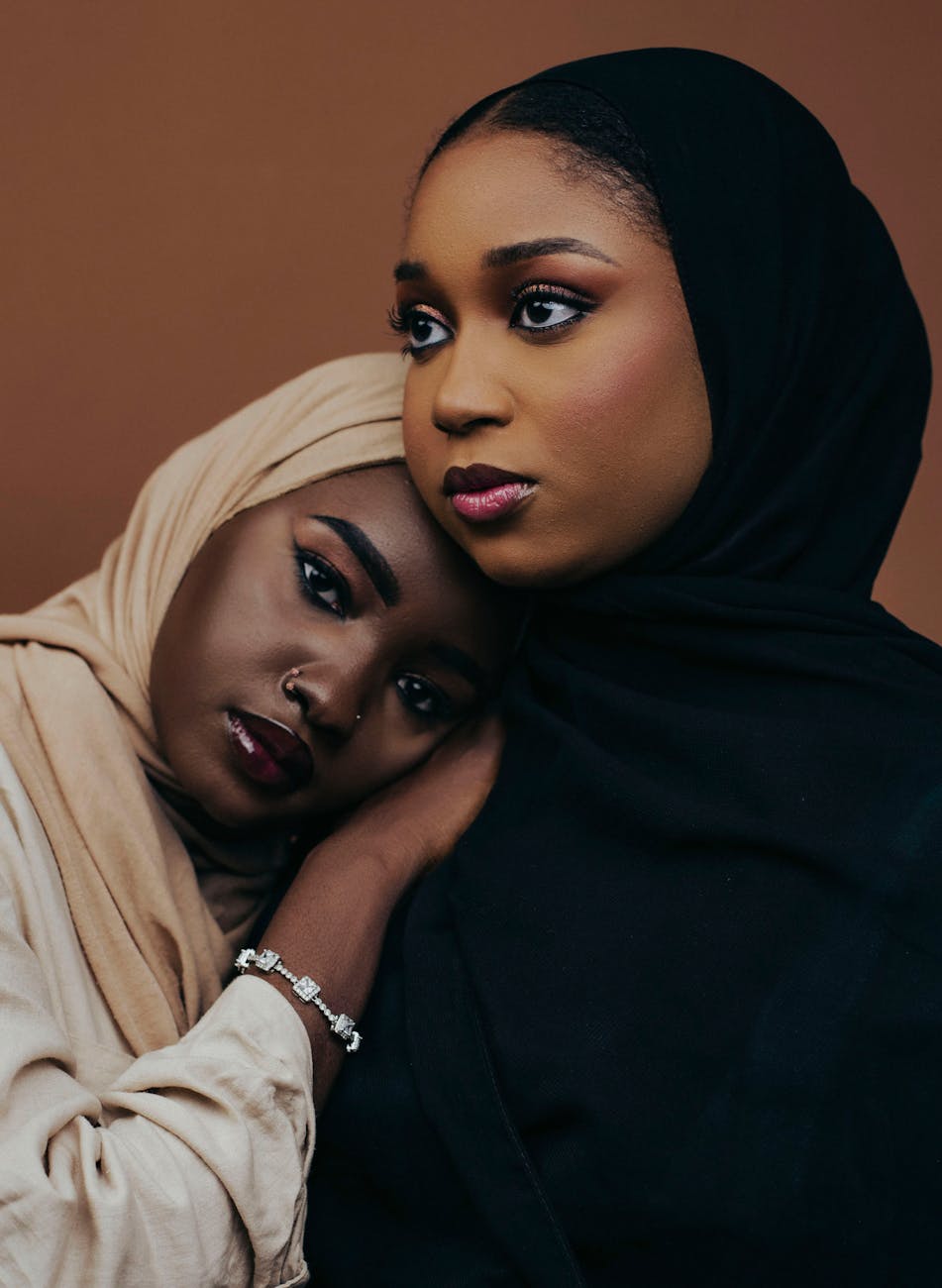
Complexion Confessions: The Psychology of Skin and Self-Perception.

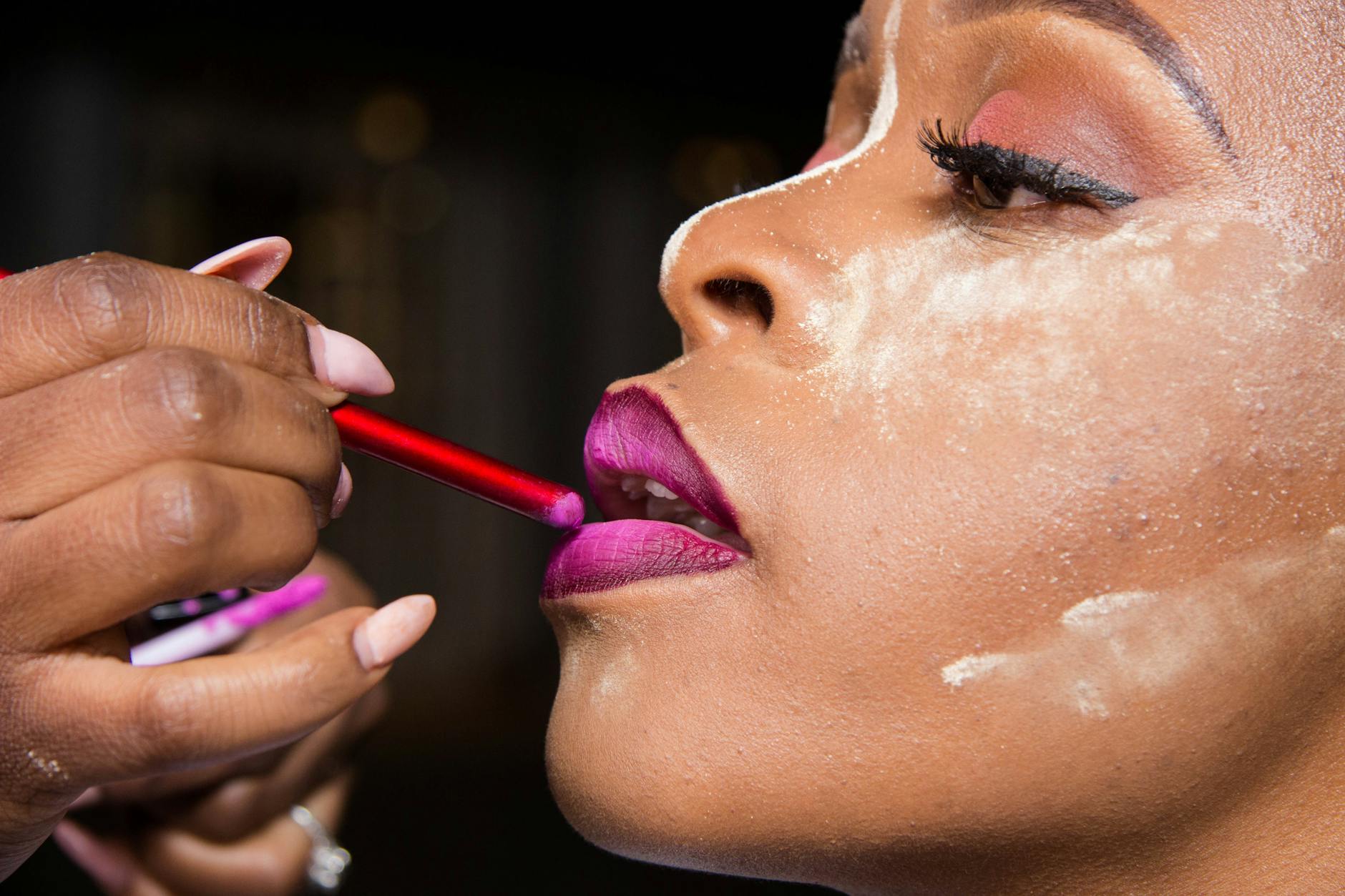
Photo by Thirdman on Pexels.com

The psychology of complexion is not only skin-deep—it is embedded in the consciousness of how individuals see themselves and how the world sees them. Skin color, often perceived as a biological characteristic, has become one of the most psychologically charged markers of identity. Within Black and brown communities, complexion functions as both a mirror and a memory, shaping self-esteem, belonging, and even spirituality. Beneath the melanin lies a narrative of struggle and survival that stretches across continents and centuries.

Self-perception begins with the gaze—the way others reflect our image back to us. For people of African descent, this gaze has historically been distorted by colonialism, slavery, and media representations that privilege whiteness. The colonized mind was taught to view dark skin as a deficiency rather than divinity. Consequently, psychological trauma became intertwined with beauty and identity. When one’s reflection is filtered through systems of racial bias, self-perception becomes an act of resistance rather than vanity.

From early childhood, messages about beauty and worth are absorbed subconsciously. Studies reveal that Black children often internalize negative associations with darker skin tones due to social conditioning and lack of positive representation (Clark & Clark, 1947). This phenomenon, known as internalized colorism, impacts not only how individuals feel about themselves but also how they navigate social hierarchies. The skin becomes a psychological boundary—one that dictates access to opportunity, love, and acceptance.

In the post-slavery era, the politics of pigmentation became an unspoken hierarchy. Lighter skin was associated with privilege, education, and refinement, while darker skin was unjustly linked to labor and inferiority. This psychological conditioning created divisions within Black communities that persist today. These hierarchies were reinforced through institutions, social clubs, and even churches that practiced exclusion based on complexion. The result was a fractured identity where one’s skin tone determined perceived value.

Modern psychology describes this phenomenon as “color-based identity threat”—a condition where individuals feel judged or limited by their skin tone. The internal dialogue that emerges is complex: “Am I enough?” “Am I too dark?” “Am I too light to belong?” This psychological tension erodes self-worth and feeds cycles of comparison and insecurity. The media amplifies this through Eurocentric beauty standards, subtly teaching that proximity to whiteness equals success.

Yet, the human psyche yearns for balance between external validation and internal truth. The journey toward self-acceptance begins when one acknowledges how deeply these biases have been ingrained. For many, healing requires unlearning centuries of propaganda. It means challenging the myth that beauty exists on a spectrum where darkness is deficiency. It is the rediscovery of divine design within melanin—the acceptance that God’s artistry is diverse, deliberate, and dignified.

The concept of the “color complex,” explored by Hall (1995), refers to the internal conflict experienced by individuals navigating the psychological effects of colorism. This conflict is often inherited through family dynamics, where elders unconsciously pass down preferences or prejudices about skin tone. Generations of children have grown up hearing phrases like “stay out of the sun” or “you’re pretty for a dark girl,” which reinforce conditional acceptance. These seemingly harmless comments plant seeds of lifelong insecurity.

Social media has both challenged and perpetuated these issues. Platforms like Instagram and TikTok have created new spaces for visibility, yet they often reward Eurocentric beauty algorithms—favoring lighter skin and straighter features. Filters, lighting, and editing tools have become digital manifestations of colorism, allowing users to “lighten” themselves subconsciously to meet online beauty expectations. In this sense, the psychology of complexion has evolved but not disappeared—it has been rebranded for the digital age.

Conversely, movements such as #MelaninMagic and #BlackIsBeautiful have helped counteract these damaging narratives. They provide communal validation for shades once deemed undesirable. When individuals post unfiltered photos celebrating their dark skin, they engage in a psychological rebellion. The act of self-celebration becomes a therapeutic ritual—a public affirmation that dismantles centuries of silent shame. Representation, therefore, becomes a psychological lifeline.

Faith and spirituality also play crucial roles in reshaping self-perception. When people rediscover themselves through the lens of divine creation, they transcend colonial beauty paradigms. The Bible declares, “I will praise thee; for I am fearfully and wonderfully made” (Psalm 139:14, KJV). For many, this scripture is not merely poetic—it is liberating. It restores the belief that their reflection mirrors God’s intention, not society’s distortion. Such theological validation heals both the heart and the mirror.

Psychologists argue that self-perception is inseparable from social context. The human brain seeks affirmation through patterns of belonging. When entire societies reward lighter skin with privilege, darker-skinned individuals must work twice as hard to maintain self-esteem. This creates a psychological paradox: the desire to belong to a world that often rejects one’s appearance. Overcoming this paradox requires redefining beauty not as conformity but as authenticity.

In educational environments, the psychology of complexion manifests in subtle ways. Teachers, peers, and institutions often display implicit bias—praising lighter-skinned students as “well-spoken” or “articulate,” while darker-skinned peers are unfairly labeled as aggressive or defiant. These microaggressions compound over time, shaping academic identity and confidence. Awareness training and representation within curricula can disrupt these biases, allowing students to see their reflection in both literature and leadership.

The entertainment industry remains a powerful force in shaping collective self-perception. When casting directors consistently favor light-skinned actors for romantic or heroic roles, they reinforce harmful hierarchies. Darker-skinned characters are too often relegated to secondary or suffering positions. Each image broadcast on screen becomes a psychological suggestion, subtly influencing what audiences—and even children—deem desirable. Representation, therefore, is not just cultural but clinical in its effect on the psyche.

In relationships, complexion can unconsciously influence attraction and compatibility. Psychological studies show that colorism affects dating patterns, with lighter skin often being perceived as more socially desirable (Burke, 2018). This reflects a deeper conditioning rather than genuine preference. True love requires deconstructing these inherited biases—learning to see beyond hue into the humanity of the heart. Healing from color-based attraction biases demands vulnerability, awareness, and spiritual renewal.

Therapeutic approaches to colorism emphasize self-compassion and cognitive reframing. Cognitive-behavioral therapy (CBT) helps individuals challenge distorted beliefs about their appearance. By replacing self-critical thoughts with affirming truths, people begin to detach their worth from external validation. Healing from colorism is not merely emotional—it is neurological. Each new thought of self-acceptance rewires the brain toward liberation.

Art, poetry, and storytelling remain powerful vehicles for healing the complexion psyche. When artists depict melanin as sacred and strong, they reconstruct cultural consciousness. Visual representations of dark beauty remind communities of their inherent value. This cultural reimagining is more than aesthetic—it is psychological warfare against centuries of whitewashed imagery. Beauty, in this sense, becomes a political and spiritual reclamation.

At the community level, intergenerational dialogues are vital. Grandmothers, mothers, and daughters must speak truth to the color narratives passed down. Conversations about self-worth and complexion must occur openly, replacing shame with understanding. When families affirm diverse shades within their lineage, they plant seeds of wholeness. Each word of affirmation dismantles a lie once whispered by oppression.

The psychology of skin is not only about individual healing but collective transformation. When communities reject colorism, they dismantle an invisible hierarchy that has long divided them. Education, art, faith, and activism converge to create a new psychological narrative—one that honors melanin as majesty, not margin. Beneath the surface of every shade lies a shared resilience, a history of divine endurance.

Ultimately, self-perception becomes the final frontier of freedom. When individuals look into the mirror and see not shame but strength, not comparison but creation, they fulfill the psychological prophecy of liberation. Skin becomes no longer a site of struggle but of sovereignty. The mind and the mirror align, revealing that true beauty is not in shade but in self-recognition.

To confess the truth of complexion is to reclaim the right to define oneself. The psychology of skin is the story of rebirth—of learning to see with healed eyes and love with healed hearts. When the spirit governs the perception of the flesh, the reflection becomes holy. Self-perception, then, is no longer a battleground but a blessing—a declaration that every hue of humanity is a reflection of divine artistry.


References

Burke, M. (2018). Colorism and romantic relationships: Perceptions of beauty and desirability. Journal of Black Psychology, 44(5), 399–417. https://doi.org/10.1177/0095798418763212

Clark, K. B., & Clark, M. P. (1947). Racial identification and preference in Negro children. In T. M. Newcomb & E. L. Hartley (Eds.), Readings in social psychology (pp. 169–178). Holt.

Hall, R. E. (1995). The bleaching syndrome: African Americans’ response to cultural domination vis-à-vis skin color. Journal of Black Studies, 26(2), 172–184. https://doi.org/10.1177/002193479502600203

Hunter, M. (2007). The persistent problem of colorism: Skin tone, status, and inequality. Sociology Compass, 1(1), 237–254. https://doi.org/10.1111/j.1751-9020.2007.00006.x

Thompson, C. (2019). Skin deep: The psychological impact of colorism in modern society. Cultural Psychology Review, 12(3), 214–231. https://doi.org/10.1080/21507619.2019.1678913

Wilkerson, I. (2020). Caste: The origins of our discontents. Random House.

The Science of Glow: Melanin, Skin Health, and Beauty.

Photo by Darksight Image on Pexels.com

Golden Glow

Emerging from the depths, a shimmer in the light,
Brown skin gleams with stories, both ancient and bright.
Each droplet a testament, each curve a song,
In the tapestry of heritage, we all belong. Rich as earth, deep as night,
A tapestry of ancestral light.
Golden hues in sun’s embrace,
A legacy etched upon the face.
Strength and beauty intertwined,
In every shade, a story is defined.

Glow is often used in popular culture to describe radiant, healthy skin, but behind the aesthetic appeal lies a biological marvel: melanin. Understanding how melanin functions, its impact on skin health, and its role in beauty offers both scientific insight and cultural affirmation for individuals with melanin-rich skin.

Dr. Frances Cress Welsing’s work, The Isis Papers: The Keys to the Colors, delves into the concept of the “Golden Fleece” as a metaphor for the genetic potential and beauty inherent in Black individuals.. In her writings, she emphasizes the unique and powerful attributes of Black skin, often highlighting its radiance and resilience. ResearchGate+3PBS+3Wikipedia+3

The “Golden Fleece” metaphorically represents the richness and depth of Black identity and heritage. It’s a poetic way to acknowledge the inherent beauty and strength that radiates from within, much like the glow that can be seen when light reflects off skin after emerging from water.

Melanin: Nature’s Protective Pigment

Melanin is a natural pigment responsible for skin, hair, and eye color. It is produced by specialized cells called melanocytes, which convert the amino acid tyrosine into pigment through a process called melanogenesis. Melanin serves a crucial biological function: it protects the skin from ultraviolet (UV) radiation, reducing the risk of DNA damage, premature aging, and certain types of skin cancer.

The Link Between Melanin and Skin Health

Individuals with higher melanin content have natural photoprotection, which contributes to healthier skin over time. Melanin acts as a natural sunscreen, absorbing UV rays and preventing excessive sun damage. However, proper skin care remains essential: hydration, nourishment, and protection from environmental stressors enhance the natural glow, while avoiding harsh chemicals and overexposure to sun preserves skin integrity.

Melanin and Aesthetic Glow

A radiant complexion is often associated with high melanin content because melanin-rich skin can reflect light in a warm, luminous manner. This natural radiance is enhanced by proper hydration, nutrition, and self-care practices. Beyond aesthetics, the glow symbolizes resilience and heritage, linking biological function to cultural identity.

What is Melanin?

  • Definition: Natural pigment responsible for skin, hair, and eye color.
  • Function: Protects skin from harmful UV rays and reduces DNA damage.
  • Visual Idea: Diagram showing melanocytes producing melanin in the skin layers.

2. Melanin and Natural Radiance

  • Glow Factor: Reflects light in warm, luminous tones.
  • Significance: Radiance signals health, vitality, and resilience.
  • Visual Idea: Gradient spectrum of melanin-rich skin glowing under soft light.

3. Skin Health Tips for a Natural Glow

  • Hydration: Drink water to maintain cellular function.
  • Nutrition: Eat foods rich in antioxidants, vitamins C & E, and healthy fats.
  • Sun Protection: Use sunscreen to prevent hyperpigmentation and UV damage.
  • Gentle Care: Avoid harsh chemicals; embrace natural products.
  • Visual Idea: Icons representing water, fruits/veggies, sunscreen, and skincare bottles.

4. Cultural and Psychological Power

  • Heritage: Melanin-rich skin represents ancestral pride and identity.
  • Confidence: Embracing natural glow strengthens self-esteem and counters colorism.
  • Visual Idea: Illustration of diverse brown-skinned women celebrating their glow with affirmations.

5. Daily Affirmations for Your Glow

  • “My melanin is my shield and my shine.”
  • “My glow reflects my heritage, health, and beauty.”
  • “I embrace and celebrate my natural radiance every day.”
  • Visual Idea: Typography-based banners layered over gradient brown tones.

Cultural and Psychological Significance

Melanin has been historically undervalued due to Eurocentric beauty standards and colorism. Embracing melanin-rich skin as beautiful and healthy fosters self-esteem, pride, and identity affirmation (Hunter, 2007). When communities celebrate melanin, glow becomes both a physical and psychological marker of confidence, resilience, and empowerment.

Practical Tips for Enhancing Your Natural Glow

  1. Hydration: Water consumption supports cellular function and skin vitality.
  2. Nutrition: Diets rich in antioxidants, vitamins C and E, and healthy fats promote skin radiance.
  3. Sun Protection: Even melanin-rich skin benefits from sunscreen to prevent hyperpigmentation and UV damage.
  4. Gentle Skin Care: Avoid harsh exfoliants and chemical treatments that disrupt natural skin balance.
  5. Affirmation and Confidence: Embrace your natural glow as a reflection of heritage, health, and beauty.

Conclusion

Glow is more than surface-level radiance—it is the intersection of biology, health, and cultural identity. Melanin not only protects the skin but also enhances its aesthetic appeal, symbolizing resilience, heritage, and self-pride. By understanding and caring for melanin-rich skin, individuals can cultivate a natural glow that is both scientifically supported and culturally empowering. Glow is both science and culture. By understanding melanin’s protective role, practicing healthy skincare, and embracing natural beauty, your glow becomes a declaration of confidence, heritage, and empowerment.


References

  • Hunter, M. (2007). The Persistent Problem of Colorism: Skin Tone, Status, and Inequality. Sociology Compass, 1(1), 237–254.
  • Brenner, M., & Hearing, V. J. (2008). The protective role of melanin against UV damage in human skin. Photochemistry and Photobiology, 84(3), 539–549.
  • The Holy Bible, King James Version. (1611). Song of Solomon 1:5.

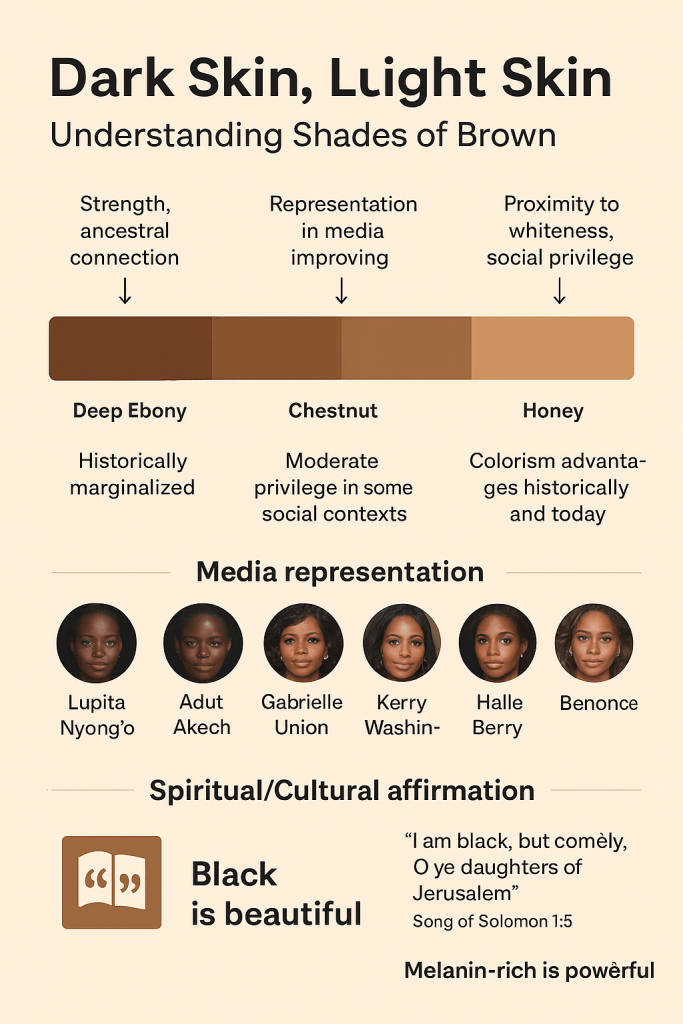
Dark Skin, Light Skin: Understanding Shades of Brown.

Skin color is more than a biological trait; it is a social, cultural, and historical marker. Among people of African descent, the spectrum of brown skin encompasses a wide array of shades, each carrying unique significance in terms of identity, beauty, and social perception. The differences between dark skin and light skin are often perceived not only visually but also psychologically and socially, shaping how individuals are treated, how they see themselves, and how society values them. To understand shades of brown, one must consider genetics, history, psychology, and cultural representation.

Genetic and Biological Foundations

Human skin color is determined primarily by melanin, the pigment produced by melanocytes. Darker skin contains higher levels of eumelanin, which provides more protection against ultraviolet (UV) radiation. Lighter brown skin contains less eumelanin, resulting in greater sensitivity to UV exposure (Jablonski & Chaplin, 2000). These variations occur naturally across populations due to evolutionary adaptation to geographic and environmental conditions. In African and African-descended populations, this genetic diversity produces a rich spectrum of brown skin—from deep ebony to caramel and honey tones.

Cultural Significance of Skin Tone

Shades of brown have been imbued with cultural meaning throughout history. In many African societies, dark skin is celebrated as a sign of strength, vitality, and connection to ancestry. Conversely, during and after slavery in the Americas, lighter skin was often associated with proximity to whiteness, privilege, and social mobility (Hunter, 2005). This historical privileging of light skin laid the foundation for colorism—the practice of favoring lighter-skinned individuals over darker-skinned ones within communities of color.

Examples of celebrities/models for each tone:

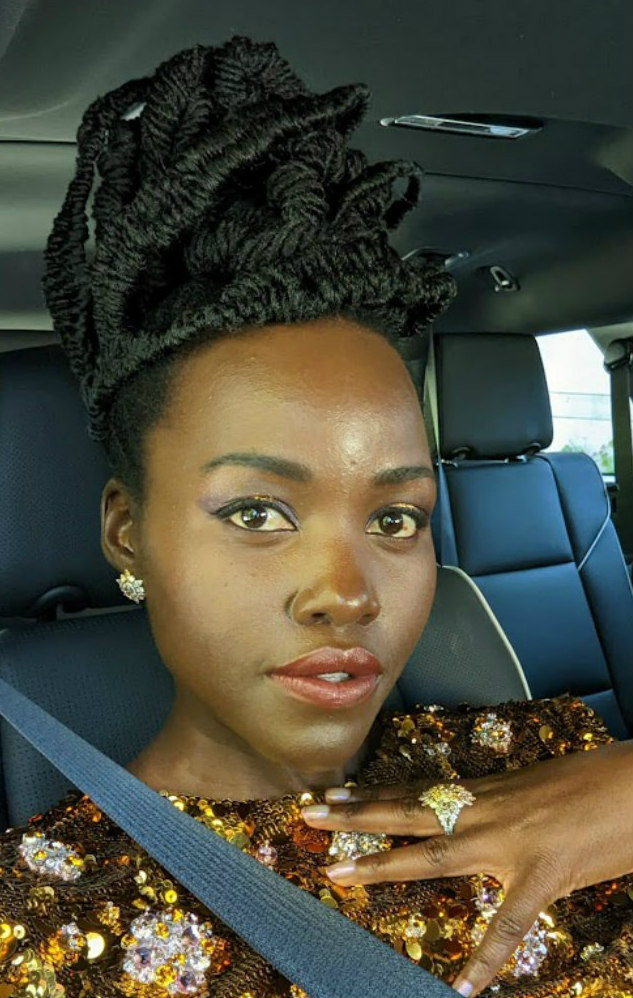
  • Dark Brown: Lupita Nyong’o, Adut Akech, Viola Davis.
  • Medium Brown: Gabrielle Union, Kerry Washington.
  • Light Brown: Halle Berry, Zendaya, Beyoncé.

Colorism and Social Hierarchy

Colorism is a direct legacy of slavery and colonialism. Enslaved light-skinned Africans often received preferential treatment, while darker-skinned individuals were relegated to harsher labor. These social hierarchies persisted into the 20th century, influencing marriage, employment, and media representation. Research shows that lighter-skinned African Americans often enjoy advantages in education, income, and perceptions of attractiveness, demonstrating the lingering psychological and structural effects of colorism (Hill, 2002).

Psychological Impacts

Skin tone can affect self-esteem, social interactions, and identity formation. Dark-skinned individuals may experience negative stereotypes, including assumptions about aggression, laziness, or undesirability, while light-skinned individuals may face internal and external pressure to conform to Eurocentric beauty standards (Fanon, 2008). These dynamics contribute to a spectrum of internalized perceptions of beauty and self-worth, influencing choices about hair, clothing, and cosmetic practices.

Shades of Brown in Media Representation

Media representation continues to reflect and shape perceptions of brown skin. Historically, lighter-skinned actors and models were prioritized in film, television, and advertising, reinforcing the desirability of proximity to whiteness. Dark-skinned individuals were underrepresented or cast in secondary roles, perpetuating stereotypes (Hunter, 2005). Today, movements such as #MelaninPoppin and #BlackGirlMagic seek to celebrate all shades of brown, providing positive visibility for darker-skinned individuals and challenging entrenched biases.

Celebrities as Icons of Melanin Diversity

Public figures have played a key role in redefining beauty standards across the spectrum of brown skin. Adut Akech, Lupita Nyong’o, and Viola Davis celebrate deep ebony skin, while actresses like Halle Berry and Zendaya represent lighter shades of brown. By showcasing a range of skin tones, these women challenge narrow conceptions of beauty and affirm that Blackness is not monolithic but diverse and vibrant.

The Bible and Affirmation of Dark Skin

Scripture affirms the beauty and worth of dark-skinned individuals. Song of Solomon 1:5 (KJV) states, “I am black, but comely, O ye daughters of Jerusalem,” validating the inherent beauty of darker tones. Such affirmations counteract centuries of imposed inferiority and colorist ideologies, offering spiritual grounding for self-acceptance and pride in one’s natural skin.

The Global Perspective

Shades of brown carry significance beyond African-descended populations in the Americas. Across Latin America, the Caribbean, and Africa, skin tone influences social hierarchy, marriage prospects, and economic opportunities. In India and Southeast Asia, similar dynamics exist, with lighter skin often preferred in media and marriage markets. These global patterns reveal that the social value assigned to skin tone is historically contingent and culturally transmitted rather than biologically inherent.

Skin Tone and Hair Texture

Skin tone often intersects with hair texture in shaping beauty standards. Darker-skinned individuals with tightly coiled hair historically faced compounded biases in professional and social settings. Lighter-skinned individuals with looser curls or straighter hair were more likely to align with Eurocentric aesthetics, reinforcing hierarchies within African-descended communities. Movements celebrating natural hair, such as the CROWN Act in the U.S., have challenged these biases and promoted acceptance of diverse expressions of Black beauty.

Colorism in Family and Relationships

Colorism also manifests in interpersonal relationships. Studies indicate that lighter-skinned individuals may experience preferential treatment in dating, marriage, and family dynamics. In some cases, families internalize societal biases, encouraging lighter-skinned children to pursue social advantages associated with proximity to whiteness. This perpetuates generational cycles of color-based prejudice, highlighting the social power of skin tone beyond personal preference.

Psychological Resilience

Despite systemic pressures, many dark-skinned individuals cultivate resilience and pride. Awareness of historical oppression, cultural affirmation, and spiritual grounding contribute to self-confidence and community solidarity. Social campaigns and media representation increasingly highlight the value and beauty of darker tones, fostering empowerment and collective affirmation.

Intersectionality: Race, Gender, and Skin Tone

Shades of brown are experienced differently depending on gender. Dark-skinned women often face compounded bias, with stereotypes intersecting with sexism, while men encounter expectations tied to hypermasculinity and athleticism. Intersectional analysis shows that skin tone cannot be separated from broader structures of racial and gendered inequality, emphasizing the need for nuanced understanding.

Beauty Standards and Economic Implications

Skin tone affects economic outcomes. Studies reveal that lighter-skinned individuals are often favored in hiring, promotions, and media representation. Cosmetic industries exploit these perceptions, marketing skin-lightening products and hair-straightening treatments as pathways to social and professional success. Understanding shades of brown therefore requires attention to both cultural meaning and material consequences.

Spiritual and Cultural Affirmation

Faith and cultural traditions offer avenues for affirming the beauty of all shades of brown. African proverbs, folklore, and religious texts celebrate melanin-rich skin as a symbol of vitality, heritage, and divine design. These affirmations provide psychological and spiritual reinforcement against societal biases.

Conclusion

Shades of brown are not merely aesthetic; they are markers of identity, history, and social dynamics. Dark skin and light skin among African-descended populations carry complex cultural meanings shaped by slavery, colonization, and media representation. Understanding these shades requires attention to biology, psychology, culture, and spirituality. By affirming the beauty of all tones—from deep ebony to caramel and honey—society can challenge colorism, celebrate diversity, and restore dignity to what has long been marginalized. As Song of Solomon 1:5 reminds us, “I am black, but comely,” all shades of brown are inherently worthy of recognition and celebration.


References

Fanon, F. (2008). Black skin, white masks. Grove Press. (Original work published 1952)

Hill, M. E. (2002). Skin color and the perception of attractiveness among African Americans: Does gender make a difference? Social Psychology Quarterly, 65(1), 77–91.

Hunter, M. (2005). Race, gender, and the politics of skin tone. Routledge.

Jablonski, N. G., & Chaplin, G. (2000). The evolution of human skin coloration. Journal of Human Evolution, 39(1), 57–106.

Eternal Bronze: The Science, Spirit, and Psychology of Brown Skin.

This photograph is the property of its respective owner. No copyright infringement intended.

The beauty and resilience of brown skin have been celebrated across centuries and cultures, even as it has also been marginalized and stigmatized under the weight of colonialism and white supremacy. The defining characteristic of this richness is melanin, the natural pigment that gives skin its brown and black hues. Melanin not only provides aesthetic brilliance but also serves as a biological shield, protecting the skin from harmful ultraviolet rays and slowing visible signs of aging. This scientific advantage underlies the well-known saying, “Black don’t crack,” a phrase affirming the ageless quality of melanated skin (Sherrow, 2006).

From a global perspective, various cultures have remarked on the luster and endurance of melanin-rich skin. In African traditions, dark brown skin has long been associated with vitality and spiritual energy. The Sudanese model Adut Akech, for example, has often been described as embodying “the future of beauty” (Vogue, 2019). Similarly, Naomi Campbell, one of the world’s most recognizable supermodels, has consistently shattered Eurocentric barriers while proudly showcasing her deep brown tone on international runways. Male icons such as Morris Chestnut have also carried the global representation of melanated male beauty, admired for the way his brown skin reflects strength and elegance.

Brown skin exists in a wide spectrum of shades—from caramel and honey to chestnut, mahogany, and ebony. Each variation tells a story of genetic heritage, adaptation to climates, and ancestral roots. The psychologists Kenneth and Mamie Clark, whose research included the “doll experiments,” highlighted how societal bias against darker tones led to internalized racism in Black children (Clark & Clark, 1947). Yet, in reversing this stigma, scholars and activists today highlight the aesthetic diversity of brown skin as an emblem of resilience and cultural pride.

The psychology of brown skin is complex. On one hand, melanin-rich individuals often face negative stereotyping, colorism, and systemic discrimination, leading to stress, anxiety, and internalized self-doubt (Russell et al., 1992). On the other hand, movements like “Black is Beautiful” have reclaimed brown skin as a symbol of empowerment and unity. This duality reflects the ongoing struggle between external societal oppression and internal affirmation of self-worth. When society praises Eurocentric beauty, brown skin becomes “the most hated,” not because of its lack, but because of its strength, history, and refusal to conform.

The Bible also affirms the beauty of dark, melanated skin. In the Song of Solomon 1:5 (KJV), the Shulamite woman declares: “I am black, but comely, O ye daughters of Jerusalem.” This scripture has often been used to affirm the dignity and divine beauty of those with darker complexions. Similarly, Jeremiah 13:23 states, “Can the Ethiopian change his skin, or the leopard his spots?” suggesting the unchangeable nature of one’s God-given melanin as both identity and blessing. In this sense, the biblical witness counters the cultural devaluation of darker skin tones by emphasizing their inherent worth.

Science further affirms the benefits of melanin beyond aesthetics. Research shows melanin absorbs and scatters ultraviolet radiation, protecting DNA from damage and reducing the risk of skin cancer (Palmer et al., 2015). This gives brown-skinned individuals a biological advantage in hotter climates, ensuring survival and adaptability across generations. The phrase “Black don’t crack” finds not only cultural but also scientific legitimacy in melanin’s role in maintaining youthful, resilient skin.

Around the world, observers have noted the unique radiance of brown skin. From poets in the Harlem Renaissance to African philosophers like Leopold Senghor, melanated skin has been described as “a mask of light,” reflecting dignity and endurance. Contemporary celebrities and models extend this legacy by asserting their natural hues as high fashion and cultural pride. Brown skin is not a burden but a crown, as seen in figures like Akech, Campbell, and Chestnut, who challenge the world to redefine beauty beyond Eurocentrism.

Ultimately, brown skin embodies both biological blessing and cultural battle. Its glow tells the story of survival, endurance, and divine design, yet its existence has been politicized and stigmatized. The solution lies in dismantling colorism, celebrating melanin’s biological and spiritual significance, and teaching young Black children the truth: their skin is not only beautiful but also powerful. As Amos Wilson (1998) reminded us, “Our self-perceptions must be liberated from alien definitions if we are to be truly free.” Brown skin is not merely pigment—it is history, resilience, and brilliance wrapped in flesh.


References

  • Clark, K. B., & Clark, M. P. (1947). Racial identification and preference in Negro children. Journal of Negro Education, 19(3), 341–350.
  • Palmer, R. A., et al. (2015). Melanin’s role in skin photoprotection. Journal of Photochemistry and Photobiology, 152, 28–39.
  • Russell, K. K., Wilson, M., & Hall, R. (1992). The Color Complex: The Politics of Skin Color among African Americans. Anchor.
  • Sherrow, V. (2006). Encyclopedia of Hair: A Cultural History. Greenwood.
  • The Holy Bible, King James Version. Song of Solomon 1:5; Jeremiah 13:23.
  • Vogue. (2019). “Adut Akech is the future of fashion.” Vogue Magazine.
  • Wilson, A. N. (1998). Blueprint for Black Power. Afrikan World InfoSystems.

Ancient Beauty Secrets: Anti-Aging and Timeless Practices for Skin and Health.

Photo by Boat Ntswaneng on Pexels.com

Throughout history, beauty has been closely tied to health, wellness, and natural remedies. Ancient civilizations cultivated rituals that not only enhanced appearance but also preserved vitality. From the milk baths of Cleopatra to the turmeric masks of India, these practices reveal the ingenuity of traditional medicine and the importance of nature in self-care. Many of these secrets have endured for thousands of years, demonstrating that the foundation of beauty often lies in holistic wellness.

🌿 DIY Ancient-Inspired Facial Mask (Best for Glow and Detox)

Ingredients:

  • 1 tablespoon raw honey (antibacterial, moisturizing)
  • 1 teaspoon turmeric powder (anti-inflammatory, brightening)
  • 2 tablespoons plain yogurt (exfoliating, lactic acid)
  • A few drops of olive oil (hydration)

Instructions: Mix all ingredients into a paste, apply evenly to face, leave for 15–20 minutes, rinse with lukewarm water.


🌱 Best Herbs and Remedies for Skin Health

  • Turmeric – anti-inflammatory, brightens skin.
  • Aloe Vera – soothes burns, hydrates.
  • Neem – antibacterial, clears acne.
  • Rose Water – toner, reduces redness.
  • Green Tea – antioxidant, fights aging.
  • Chamomile – calms sensitive skin.
  • Shea Butter – deep moisturizer, skin barrier repair.

The ancient Egyptians were pioneers in skincare. Cleopatra, the last queen of Egypt, was renowned for bathing in milk infused with honey, a treatment rich in lactic acid, which gently exfoliates and softens the skin (James, 2015). Egyptians also used olive oil for hydration and aloe vera for healing burns and blemishes. In Africa, particularly West Africa, shea butter was prized for moisturizing and protecting the skin against harsh climates, a tradition still widely practiced today (Agyare et al., 2016). Similarly, in ancient China, women used rice water rinses for the skin and hair, enhancing brightness and strengthening hair strands (Zhang, 2013).

Anti-Aging Tips: Herbal, Nutritional, and Skincare Strategies for Youthful Skin

Aging is a natural process, but modern science and traditional herbal wisdom provide tools to slow visible signs of skin aging. Aging skin is characterized by the breakdown of collagen and elastin, loss of hydration, fine lines, wrinkles, hyperpigmentation, and reduced cell turnover. Strategies for maintaining youthful skin involve topical treatments, dietary habits, lifestyle choices, and herbal interventions.

1. Herbal & Natural Anti-Aging Remedies

  • Green Tea (Camellia sinensis): Rich in polyphenols, green tea reduces oxidative stress, improves elasticity, and protects against UV damage (Weber et al., 2018).
  • Turmeric (Curcuma longa): Contains curcumin, an anti-inflammatory and antioxidant compound that can help prevent collagen degradation and pigmentation (Huang et al., 2019).
  • Aloe Vera: Promotes hydration, reduces inflammation, and stimulates collagen production (Choi et al., 2009).
  • Rosehip Oil: High in vitamin C and essential fatty acids; supports skin regeneration and reduces fine lines.
  • Licorice Root: Brightens skin and reduces hyperpigmentation due to its glabridin content.
  • Gotu Kola (Centella asiatica): Stimulates collagen synthesis and enhances skin elasticity.

2. Topical Anti-Aging Skincare

  • Retinoids (Retinol, Retin-A/Tretinoin): Stimulate collagen production, increase cell turnover, and reduce fine lines (Mukherjee et al., 2006). Retinol is milder and suitable for over-the-counter use; tretinoin is prescription-strength.
  • Antioxidants: Vitamin C, E, and coenzyme Q10 neutralize free radicals, protect skin from environmental damage, and improve firmness (Pullar et al., 2017).
  • Hyaluronic Acid: Hydrates and plumps skin, reducing the appearance of fine lines.
  • Sunscreen (Broad Spectrum SPF 30+): Daily UV protection is critical to prevent photoaging.

3. Nutrition for Youthful Skin

  • Antioxidant-rich foods: Berries, leafy greens, nuts, and seeds combat oxidative stress.
  • Healthy fats: Omega-3 fatty acids from salmon, flaxseed, and walnuts maintain skin barrier integrity and hydration.
  • Hydration: Adequate water intake ensures proper skin moisture and elasticity.
  • Protein: Collagen synthesis depends on amino acids from lean meats, eggs, and legumes.
  • Limit sugar and processed foods: Advanced glycation end products (AGEs) from high sugar diets damage collagen and elastin (Vlassara & Uribarri, 2014).

4. Lifestyle and Physical Practices

  • Regular facial exercises (“face yoga”): Strengthen facial muscles, improve circulation, and promote firmness.
  • Ice facials: Constrict capillaries, reduce puffiness, and stimulate collagen production.
  • Stress management: Chronic stress accelerates skin aging; meditation, yoga, and deep breathing help maintain youthfulness.
  • Sleep: Adequate sleep enables repair and regeneration of skin cells.
  • Avoid smoking and excessive alcohol: Both accelerate collagen breakdown and oxidative damage.

In India, the Ayurvedic tradition developed powerful remedies still used in modern wellness. Turmeric facials, often mixed with yogurt or honey, provided anti-inflammatory and antibacterial benefits, giving the skin a natural glow (Mukherjee et al., 2011). Steam facials infused with herbs were also common, opening pores and detoxifying the skin. Ancient Greeks and Romans emphasized nutrition for beauty, encouraging the consumption of fresh fruits, vegetables, and abundant water, while also practicing olive oil massages to promote circulation and skin elasticity (Liversidge, 2017).

Culture / RegionBeauty Practice / SecretKey Ingredients / ToolsPurpose / Benefits
Ancient EgyptMilk bathsMilk, honeyGentle exfoliation, softening skin, hydration
Olive oil massageOlive oilMoisturization, improved circulation
Aloe vera applicationAloe veraHealing burns, soothing skin
West AfricaShea butter applicationShea butterDeep moisturization, skin barrier protection
Black soap cleansingPlant ash, palm oilDetoxifies, gentle exfoliation
India (Ayurveda)Turmeric facial maskTurmeric, yogurt, honeyBrightening, anti-inflammatory, antibacterial
Herbal steam facialsNeem, tulsi, chamomileOpens pores, detoxifies, soothes skin
Ancient ChinaRice water rinseRice waterBrightens skin, strengthens hair
Green tea masksGreen tea, honeyAntioxidant, anti-aging, soothes skin
Greece & RomeOlive oil massagesOlive oilHydration, circulation, elasticity
Wine or honey masksRed wine, honeyAntioxidant, softening skin
Middle EastRose water tonerRose waterSoothes irritation, balances pH
Sandalwood pasteSandalwood, milk or waterCooling, anti-inflammatory
JapanGeisha skincare ritualCamellia oil, rice branHydration, brightening, anti-aging
Indigenous AmericasCornmeal scrubCornmeal, honeyExfoliation, skin softening
Herbal infusionsCalendula, chamomileSoothing, healing minor skin issues

Insights from the Chart:

  • Hydration & moisturization were universally emphasized (milk, honey, shea butter, oils).
  • Exfoliation & brightening came from natural acids or abrasives (milk, rice water, cornmeal).
  • Healing & anti-inflammatory herbs were central in most traditions (turmeric, aloe, neem, chamomile).
  • Ritual & consistency mattered; daily or weekly treatments were part of lifestyle, not just cosmetic.

Other global practices further highlight the universality of natural skincare. Japanese geishas employed green tea extracts for their antioxidant properties. Indigenous peoples of the Americas used cornmeal scrubs for exfoliation, while Middle Eastern traditions included rose water to soothe and tone the skin. Across cultures, beauty was intertwined with rituals of self-preservation and respect for the natural environment. These ancient practices underscore the fact that wellness and beauty are inseparable, rooted in mindful living and harmony with nature.

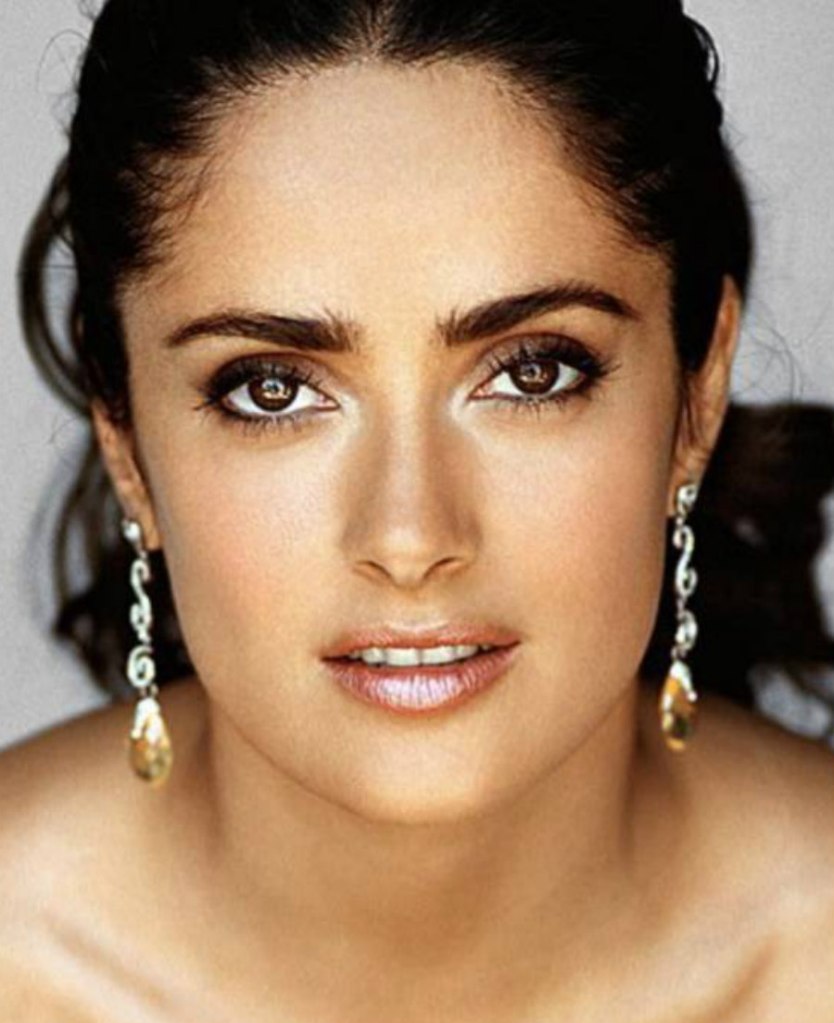
An overview of the skincare routines and beauty secrets of three renowned celebrities: Salma Hayek, Halle Berry, and Lupita Nyong’o. Each of these stars has shared insights into their beauty regimens, highlighting both luxurious and accessible products, as well as natural approaches to skincare.


🌟 Salma Hayek

This photograph is the property of its respective owners. No infringement intended.

Salma Hayek emphasizes a flexible skincare routine that adapts to her skin’s needs. She often starts her day with rose water, a practice inspired by her grandmother’s use of aloe vera and papaya in homemade creams. Hayek incorporates high-end products like Augustinus Bader’s Rich Cream and Forest Essentials’ Advanced Eternal Youth Formula Anti-Aging Night Cream into her regimen. She also swears by Patchology Rejuvenating Eye Gels, which she finds both effective and affordable. Her approach combines luxury with simplicity, focusing on hydration and nourishment. ByrdieGood Housekeeping+1Page Six+1


🌟 Halle Berry

This photograph is the property of its respective owners. No infringement intended.

Halle Berry maintains a consistent skincare routine that includes cleansing, exfoliating, masking, and moisturizing. She uses products like the Olga Lorencin Lactic Acid Hydrating Serum and the Knesko Gold Repair Collagen Face Mask. Berry also incorporates facial massage tools, such as the Flawless Cleanse Hydro-Vibrating Facial Cleanser, to enhance her skincare regimen. Her routine reflects a commitment to maintaining youthful skin through consistent care and the use of high-quality products. eCosmeticsOlga Lorencin Skincare+3The Sun+3Entertainment Tonight+3PreventionEntertainment Tonight


🌟 Lupita Nyong’o

This photograph is the property of its respective owners. No infringement intended.

Lupita Nyong’o is renowned for her radiant complexion and commitment to natural beauty. Her skincare routine emphasizes simplicity, hydration, and the use of natural oils. She often incorporates products like Honest Beauty’s Hydrogel Cream, which contains jojoba, squalane, and hyaluronic acid, to achieve a plump, dewy glow. Additionally, she utilizes avocado oil and Hawaiian kukui oil for moisturizing and makeup removal, appreciating their effectiveness and versatility. Allure+3Vanity Fair+3bombshellbybleu.com+3InStyle+1Momtastic+1


Summary:

  • Salma Hayek: Combines luxurious products with natural ingredients, focusing on hydration and nourishment.
  • Halle Berry: Maintains a consistent skincare routine with high-quality products and tools for youthful skin.
  • Lupita Nyong’o: values the healing properties of calendula ointment, which she carries during travels to address skin issues like burns and scars. This natural remedy reflects her preference for clean beauty products.
CelebritySkincare Products / ToolsNatural Ingredients / RemediesRoutine Highlights / Rituals
Lupita Nyong’oHonest Beauty Hydrogel Cream, calendula ointmentAvocado oil, Hawaiian kukui oil, calendulaEmphasizes hydration, dewy glow; uses natural oils for moisturizing and makeup removal; carries healing ointments while traveling; consistent cleansing, toning, and moisturizing; stress management through meditation & exercise
Salma HayekAugustinus Bader Rich Cream, Forest Essentials Advanced Eternal Youth Night Cream, Patchology Rejuvenating Eye GelsRose water, aloe vera, papaya (inspired by grandmother)Focuses on hydration and nourishment; combines luxury with simple remedies; under-eye gels for puffiness and rejuvenation; flexible routine based on skin needs
Halle BerryOlga Lorencin Lactic Acid Hydrating Serum, Knesko Gold Repair Collagen Face Mask, Flawless Cleanse Hydro-Vibrating Facial CleanserNoted use of masks with natural extractsMaintains youthful skin through consistent cleansing, exfoliation, masking, and moisturizing; incorporates facial massage tools; committed to high-quality products and structured regimen

Key Takeaways:

  1. Hydration is a core focus for all three celebrities—whether through creams, oils, or serums.
  2. Natural ingredients (like rose water, avocado oil, aloe vera, kukui oil) are incorporated alongside high-end products.
  3. Consistency and ritual matter: cleansing, moisturizing, masking, and stress management are prioritized.
  4. Luxury products are often combined with simple, natural remedies for maximum effect.

Each of these celebrities showcases a unique approach to skincare, blending luxury, consistency, and natural ingredients to maintain their radiant complexions.

Layer antioxidants in the morning and retinoids at night for maximal effect.

Combine herbal masks (turmeric, aloe, rosehip) with gentle exfoliation once or twice weekly.

Incorporate adaptogenic herbs like ashwagandha and holy basil to combat stress-related aging.

Modern science has validated many of these traditions. For example, ice facials constrict blood vessels, reduce puffiness, and stimulate circulation, leaving the skin firmer and refreshed. Facial exercises, sometimes called “face yoga,” strengthen underlying muscles, promoting firmness and slowing the appearance of wrinkles. Combined with herbal remedies and nutrient-rich diets, these timeless methods reveal that ancient beauty was less about vanity and more about cultivating balance, resilience, and natural radiance.

📚 References

  • Agyare, C., Boakye, Y. D., Bekoe, E. O., Hensel, A., Dapaah, S. O., & Appiah, T. (2016). African medicinal plants with skin healing properties. Journal of Ethnopharmacology, 177, 85–100.
  • James, T. G. H. (2015). The British Museum Concise Introduction to Ancient Egypt. Thames & Hudson.
  • Liversidge, J. (2017). Everyday Life in the Roman Empire. Routledge.
  • Mukherjee, P. K., Maity, N., Nema, N. K., & Sarkar, B. K. (2011). Bioactive compounds from natural resources against skin aging. Phytomedicine, 19(1), 64–73.
  • Zhang, X. (2013). Beauty Secrets of Ancient China. Beijing Press.

Choi, S., Chung, M. H., & Lee, H. (2009). Effects of Aloe Vera on skin collagen and hydration. Journal of Ethnopharmacology, 124(1), 104–108.

Huang, W., et al. (2019). Curcumin and skin health: A review. Phytotherapy Research, 33(2), 351–366.

Mukherjee, S., Date, A., Patravale, V., Korting, H. C., Roeder, A., & Weindl, G. (2006). Retinoids in the treatment of skin aging: An overview. Indian Journal of Dermatology, 51(4), 255–261.

Pullar, J., Carr, A., & Vissers, M. (2017). The roles of vitamin C in skin health. Nutrients, 9(8), 866.

Vlassara, H., & Uribarri, J. (2014). Advanced glycation end products (AGEs) and skin aging. Journal of Cosmetic Dermatology, 13(4), 288–292.

Weber, C., et al. (2018). Green tea polyphenols and skin protection. Dermato-Endocrinology, 10(1), e1465713.

ET Online. (n.d.). Halle Berry’s skincare routine is the ultimate at-home facial. Retrieved from https://www.etonline.com/halle-berrys-skincare-routine-is-the-ultimate-at-home-facial-shop-the-stars-favorite-beauty