
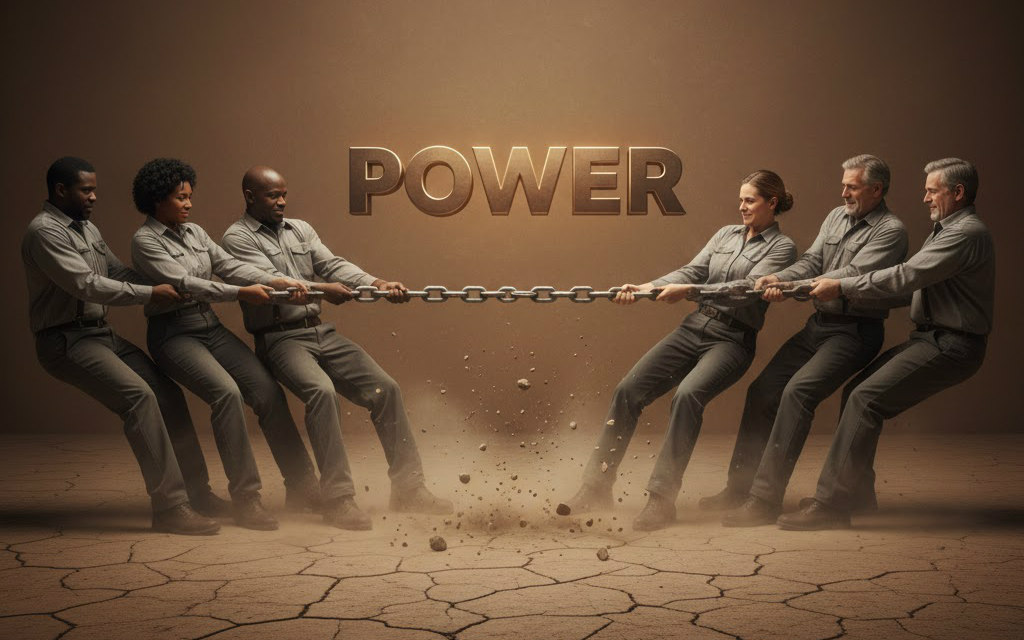
Power in America has never been neutral. From its inception, the nation’s economic, political, and cultural systems were constructed alongside chattel slavery, colonial extraction, and racial hierarchy. For Black America, modern inequality is not accidental or cultural—it is structural, historical, and systemic. The dilemma lies in navigating institutions that were never designed for Black flourishing, yet demand Black participation for survival.
Wall Street, often celebrated as the engine of American prosperity, traces its origins directly to slavery. The original Wall Street was a literal wall built by the Dutch in New Amsterdam, adjacent to a slave market where Africans were bought, sold, and traded. Early American capital accumulation relied heavily on enslaved labor, plantation profits, and transatlantic trade, making slavery foundational—not peripheral—to American finance.
Beyond geography, Wall Street institutionalized slavery through financial instruments. Bonds, mortgages, and commodities markets treated enslaved Africans as collateral and capital. Enslaved people were insured, leveraged, and securitized, embedding Black bodies into the architecture of global capitalism. This legacy persists in wealth inequality, where Black Americans hold a fraction of the wealth accumulated through centuries of racialized exploitation.
The insurance industry followed a similar trajectory. Early insurers such as Lloyd’s of London and American firms underwrote slave ships, plantations, and enslaved people themselves. Policies protected slave owners against rebellion, death, or loss of “property,” transforming human suffering into actuarial risk. This normalized the monetization of Black death and trauma.
Today, the insurance industry still reflects racial bias through redlining, discriminatory premiums, and unequal access to coverage. Black communities are more likely to be underinsured or denied protection, perpetuating vulnerability while insulating wealthier, whiter populations from risk.
Banking institutions also grew by financing slavery. Banks issued loans to purchase enslaved people, expand plantations, and sustain the plantation economy. Enslaved Africans were listed on balance sheets as assets. When slavery ended, no reparative restructuring followed—banks retained the wealth while Black people were released into poverty.
Modern banking continues this pattern through predatory lending, subprime mortgages, and unequal access to credit. These practices drain wealth from Black communities while reinforcing cycles of debt and dependency, echoing earlier forms of economic bondage.
Silicon Valley now represents a new form of power—control over technology, data, and the future. Algorithms determine employment, creditworthiness, policing, and visibility. Yet these systems are trained on biased data shaped by historical racism, reproducing discrimination under the guise of neutrality.
For Black America, technological control often means surveillance rather than empowerment. Facial recognition misidentifies Black faces, predictive policing targets Black neighborhoods, and digital platforms exploit Black culture without equitable compensation or ownership.
The pharmaceutical and medical industries wield immense power over health and survival. Historically, Black bodies were subjected to medical experimentation, from slavery-era surgeries without anesthesia to the Tuskegee Syphilis Study. These abuses created generational distrust.
Today, Black Americans experience higher mortality rates, inadequate care, and medical neglect. Pharmaceutical profit models prioritize treatment over prevention, while systemic racism ensures unequal access to quality healthcare, reinforcing the biological consequences of social inequality.
The prison-industrial complex represents one of the most direct continuations of slavery. The 13th Amendment abolished slavery “except as punishment for crime,” creating a legal pathway for forced labor. Prisons became sites where Black bodies were again exploited for economic gain.
Mass incarceration disproportionately targets Black men and women, extracting labor, destabilizing families, and generating profit for private corporations. This system functions as racial control, not public safety, maintaining a captive population for economic and political purposes.
The military-industrial complex controls violence and war, both abroad and at home. Black Americans have historically fought in wars for freedoms they were denied domestically. Military spending diverts resources from education, housing, and health needs that disproportionately affect Black communities.
Media power shapes perception, truth, and narrative. From minstrel imagery to modern news cycles, Black people are often portrayed as criminals, victims, or anomalies. Media framing influences public policy, jury decisions, and social attitudes.
This narrative control dehumanizes Black life while obscuring systemic causes of inequality. When the media defines reality, it also defines whose suffering matters and whose humanity is negotiable.
Religious institutions wield spiritual authority, yet American Christianity was deeply complicit in slavery. Churches provided theological justification for bondage, segregation, and racial hierarchy, often quoting scripture selectively to sanctify oppression.
Even today, many churches avoid confronting racial injustice, emphasizing personal salvation over structural sin. This spiritual deflection can pacify resistance and discourage critical engagement with power.
Government power enforces laws that have historically criminalized Black existence—from slave codes to Jim Crow to modern voter suppression. Legal frameworks often present themselves as neutral while producing racially unequal outcomes.
The education system controls knowledge and historical memory. Textbooks frequently sanitize slavery, omit Black resistance, and marginalize African contributions. This intellectual erasure shapes national identity and limits Black self-understanding.
Police power represents the most visible arm of state control. Originating from slave patrols, American policing has long functioned to protect property and enforce racial order. Black communities experience policing as occupation rather than protection.
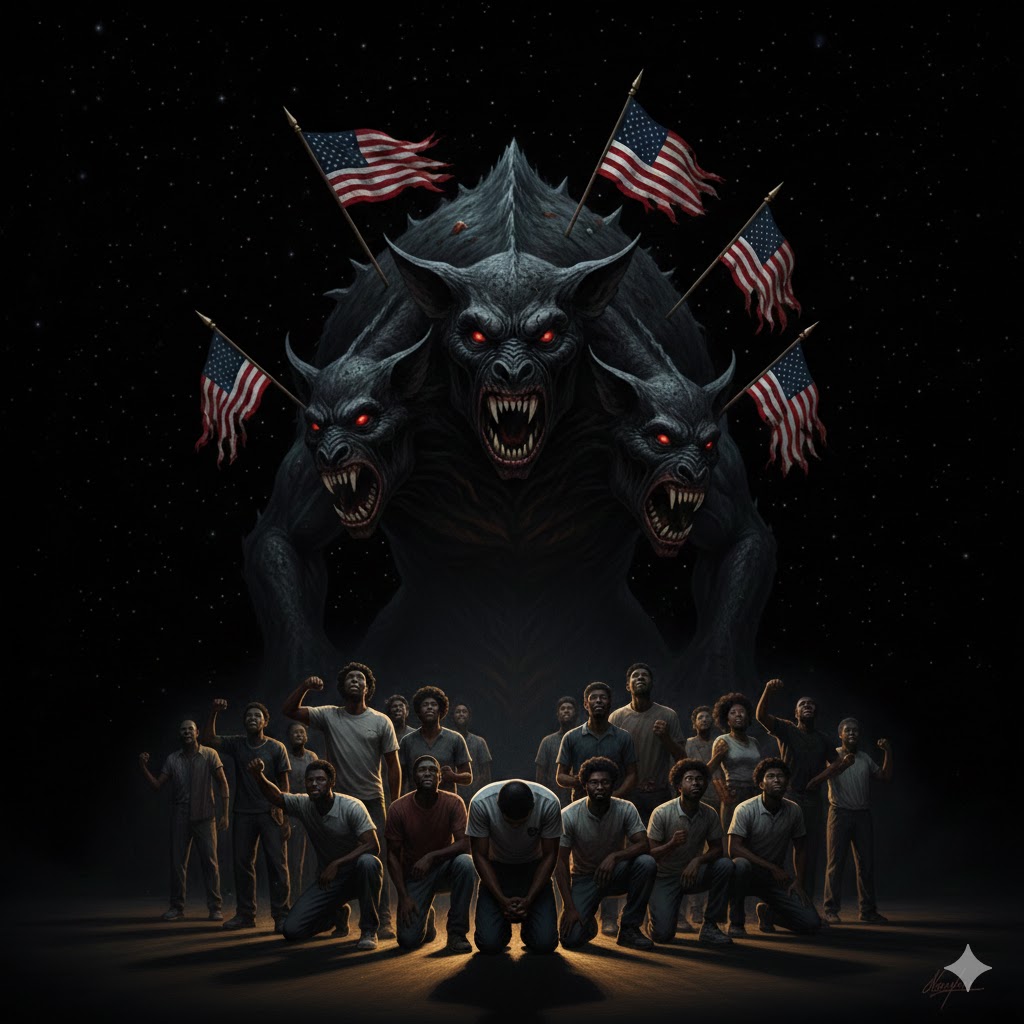
The cumulative effect of these power structures is not coincidence but coordination. Each system reinforces the other—economic control supports political dominance, narrative control legitimizes violence, and spiritual control discourages rebellion.
For Black America, the dilemma is survival within systems that extract value while denying dignity. Resistance requires not only individual success but collective consciousness, historical literacy, and structural transformation.
Understanding these power struggles is the first step toward liberation. Without truth, there can be no justice—and without justice, America remains trapped in a moral contradiction of its own making.
References
Baptist, E. E. (2014). The half has never been told: Slavery and the making of American capitalism. Basic Books.
Du Bois, W. E. B. (1935). Black reconstruction in America. Free Press.
Hannah-Jones, N. (2019). The 1619 Project. The New York Times Magazine.
Kendi, I. X. (2016). Stamped from the beginning: The definitive history of racist ideas in America. Nation Books.
Rothstein, R. (2017). The color of law: A forgotten history of how our government segregated America. Liveright.
Alexander, M. (2012). The new Jim Crow: Mass incarceration in the age of colorblindness. The New Press.
 THE BROWN GIRL DILEMMA