Tag Archives: racism

The Slave Files: Nat Turner

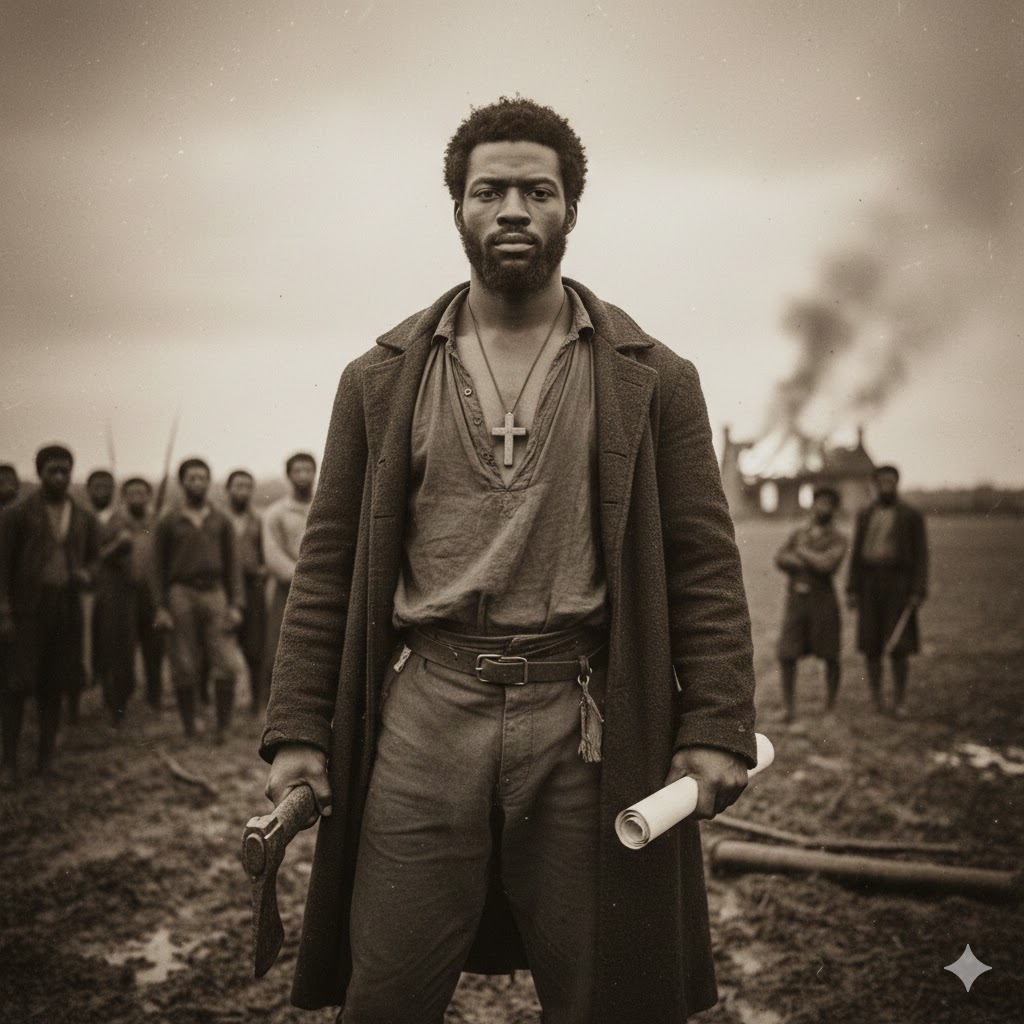
Nat Turner remains one of the most riveting, misunderstood, and fiercely debated figures in American history. His life, marked by enslavement, spiritual conviction, and violent rebellion, exposes the brutal underpinnings of slavery and the relentless pursuit of freedom among the enslaved. Born into bondage yet convinced that God spoke directly to him, Turner’s life becomes both a historical record and a moral indictment of an evil system built on racism, violence, and domination. His story is not merely an episode of revolt—it is a penetrating look into the psychology of oppression and the spiritual courage of a man who believed liberation was his divine mandate.

Nat Turner was born on October 2, 1800, in Southampton County, Virginia, on the Benjamin Turner plantation. Because he was enslaved, his last name “Turner” was not his by heritage but by ownership—a reminder of a system that erased African identities and imposed White surnames as marks of property. He was raised among enslaved people who maintained fragments of African culture while living under the constant threat of punishment, sale, and family separation. Early accounts describe him as highly intelligent, deeply introspective, and gifted with an unusual memory, demonstrating literary and spiritual aptitude uncommon among enslaved children, not because Black children were incapable, but because literacy was violently suppressed.

Turner’s early life was shaped by stories of Africa passed down through elders who remembered freedom. His mother and grandmother reportedly told him he was destined for greatness, strengthening his own belief that he was chosen by God. Because enslavers feared educated Black people, Turner’s intellectual and spiritual gifts were viewed as unsettling. Still, he was allowed to read and interpret scripture, which laid the foundation for his prophetic worldview. Turner believed the Holy Spirit communicated with him through visions and signs—an inner call that would later justify his resistance.

Throughout his enslavement, Turner worked on several plantations due to sale and transfer among enslavers. After Benjamin Turner’s death, Nat was passed to Samuel Turner, and later hired out to others in the region. Ultimately, he lived on the plantation of Joseph Travis—his final enslaver—where he labored in the fields, observed the conditions of fellow enslaved laborers, and cultivated a quiet but fiercely burning resentment toward the system of slavery. Though some enslavers described him as “meek” and “intelligent,” these words reveal more about the blindness of slaveholding ideology than Turner’s true convictions. Beneath the silence was clarity: he was not property but a man.

Nat Turner was married to an enslaved woman named Cherry (also recorded as “Cherie” in some sources), though records of their union are scarce due to the erasure and negligence inherent in slave documentation. They were separated by work arrangements and plantation boundaries, illustrating how marriage among enslaved people was vulnerable to sale, distance, and the will of slaveholders. Turner also had children, though their names and fates are not fully documented, a tragic reminder of how slavery destabilized Black family structures. Enslaved parenthood carried constant fear—a child could be sold, abused, or killed with no recourse.

The racism of Turner’s era was not subtle; it was law, culture, and religion weaponized. Enslavers justified their brutality through pseudo-Christian doctrine and racial myths that claimed African people were inferior. Turner, however, read the Bible for himself and saw deliverance where enslavers preached obedience. His spiritual interpretations defied the slaveholding church and pointed instead to liberation theology: God does not sanctify oppression. Turner began to see visions—blood on corn, heavenly signs, eclipses—as divine symbols that the time for judgment had come.

By 1828, Turner reported having a decisive vision in which “the Spirit spoke” and commanded him to lead a rebellion against slaveholders. He believed God chose him as a prophet, and that enslaved people would gain their freedom through an act of divine justice. This belief was not madness but a theological response to a world where law and society left no pathway to liberation. Slavery had destroyed every peaceful option—Turner saw rebellion as the only moral course.

On August 21, 1831, Nat Turner launched what would become the most significant slave rebellion in American history. Together with a group of enslaved men, he moved silently from plantation to plantation, killing approximately 55 White men, women, and children. While the violence was severe, it must be understood within the context of an institution that killed, raped, and brutalized enslaved people for centuries with complete impunity. Turner’s rebellion exposed the fear underlying slaveholding society—that enslaved people, given the chance, would fight for their freedom with the same intensity with which they had been oppressed.

The rebellion lasted nearly two days before being suppressed by militias and federal troops. What followed was even worse: White mobs and militias killed an estimated 100–200 Black people indiscriminately, many who had nothing to do with the uprising. This retaliatory slaughter revealed how deeply racism governed the South—Black life was disposable, whether rebellious or innocent.

Turner evaded capture for almost two months, hiding in woods and swamps familiar to enslaved laborers. His eventual capture on October 30, 1831, led to a swift trial. During his confinement, attorney Thomas R. Gray interviewed him, producing The Confessions of Nat Turner, a document that remains historically significant but must be read critically. While it gives insight into Turner’s thoughts, it was also shaped by White interpretation, editing, and sensationalism. Still, Turner remained confident in his divine mission, stating that he felt no regret for attempting to overthrow slavery.

On November 11, 1831, Nat Turner was hanged in Jerusalem, Virginia. His body was desecrated, and his remains scattered—a final attempt to erase him from history. But the rebellion had already shaken the South to its core. Slave laws intensified, restrictions on Black movement and literacy increased, and fear spread among White slaveholders. Yet among abolitionists and enslaved people, Turner became a symbol of courage, resistance, and the demand for freedom.

Turner’s life raises profound questions about morality, justice, and the lengths to which oppressed people must go to reclaim their humanity. His story is not merely about violence—it is about the conscience of a nation built on slavery. Whether viewed as a liberator, prophet, revolutionary, or extremist, the truth remains: Nat Turner forced America to confront the evil it tried to normalize. His biography is a testament to the enduring truth that freedom, once imagined, can never be contained.

His wife and children suffered the consequences of his rebellion in silence, surviving in a world that punished Black families for acts of resistance. Their story represents the generational trauma imposed on Black families, whose love existed under the constant threat of separation and sale. Turner’s rebellion was not just for himself—it was for them, and for millions whose cries went unrecorded.

Nat Turner’s legacy has evolved over time. To some, he is a martyr; to others, a warning. But to scholars, theologians, and descendants of the enslaved, he is a complex figure who embodies the deep wounds and righteous anger born of slavery. His rebellion is part of a larger narrative of Black resistance—from maroon communities to uprisings in the Caribbean to civil rights struggles centuries later.

Today, Turner stands as a reminder of how oppression will always birth resistance. His life forces us to examine how deeply racism shaped America’s foundations and how fiercely enslaved people fought for freedom in every generation. His story is not one of defeat but of defiance—an unbroken declaration that slavery could not crush the human spirit.

Turner’s biography invites us to grapple with the uncomfortable truth: righteousness and rebellion often walk hand in hand in the fight against injustice. His actions reflected a spiritual conviction grounded in the belief that God sides with the oppressed, not the oppressor. Whether read as prophecy or desperation, his rebellion demanded that the world acknowledge the humanity of the enslaved, whose blood built the nation.

The Slave Files on Nat Turner remind us that history is not clean, orderly, or polite. It is raw, painful, and shaped by people who refused to accept bondage as destiny. Turner’s story challenges modern readers not to sanitize the past but to confront it with honesty. The scars of slavery remain, but so does the legacy of those who fought against it with unwavering resolve.

Nat Turner was a slave, a husband, a father, a preacher, a visionary, and a revolutionary. His life cannot be reduced to a single moment of violence—it must be understood as the culmination of centuries of suffering and centuries of hope. The Slave Files preserve his memory not to glorify conflict but to honor the courage of a man who believed freedom was worth everything, even his life.

References
Aptheker, H. (1993). American Negro slave revolts. International Publishers.
Gray, T. R. (1831). The confessions of Nat Turner. Baltimore: T. R. Gray.
Greenberg, K. S. (2003). Nat Turner: A slave rebellion in history and memory. Oxford University Press.
Oates, S. B. (1975). The fires of jubilee: Nat Turner’s fierce rebellion. Harper & Row.
Tragle, H. L. (1971). The Southampton slave revolt of 1831: A compilation of source material. University of Massachusetts Press.
Dilemma: Jim Crow – The Legacy of Prejudice and Oppression

Jim Crow laws were a system of legalized racial segregation in the United States, primarily in the South, which lasted from the late 19th century until the mid-1960s. These laws enforced the notion that Black Americans were inferior to whites, systematically restricting their access to public spaces, education, voting rights, and economic opportunity. The name “Jim Crow” itself originated from a racist minstrel show character, highlighting the deeply dehumanizing cultural underpinnings of the system.

The origins of Jim Crow can be traced to the post-Reconstruction era, when Southern states sought to maintain white supremacy after the abolition of slavery. Despite the promises of freedom under the 13th, 14th, and 15th Amendments, white elites implemented laws and practices designed to limit Black advancement, ensuring that social, political, and economic power remained concentrated in white hands.

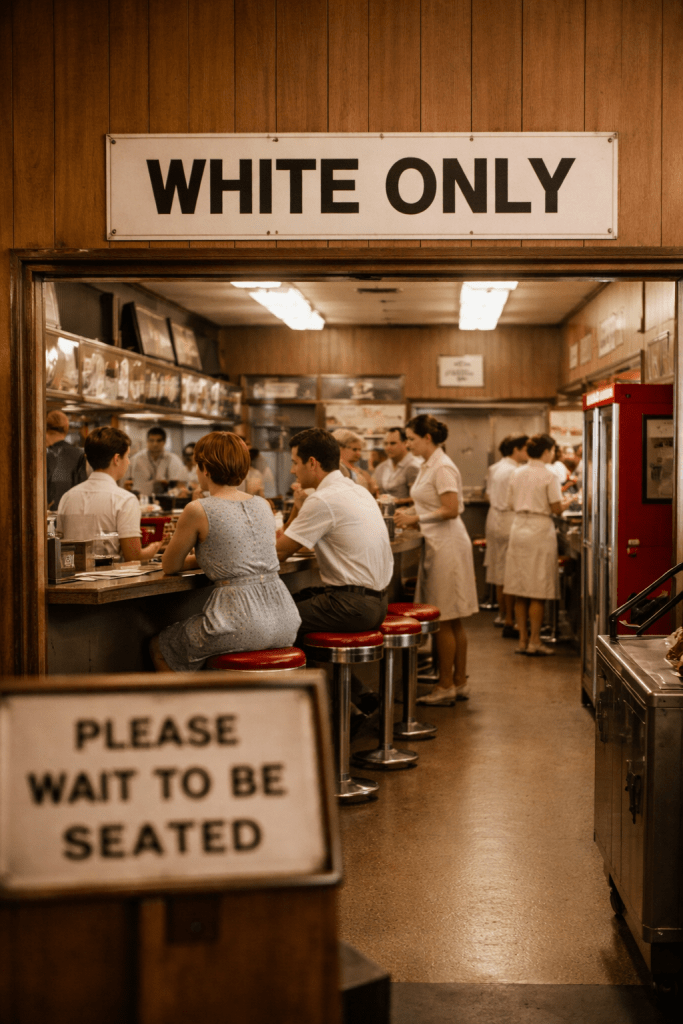
A “White Only” sign in a restaurant during the 1960s was a stark and visible symbol of Jim Crow segregation in the United States. Such signs were legally enforced in many Southern states, designating public spaces—restaurants, theaters, restrooms, water fountains, and more—where Black Americans were either denied entry entirely or relegated to inferior facilities.

These signs were not merely about seating; they reinforced a racial hierarchy, signaling that Black people were considered second-class citizens, unworthy of equal service or treatment. They were part of a broader system designed to maintain white supremacy socially, economically, and politically.

The presence of “White Only” signs had profound psychological and social effects. They dehumanized Black Americans, normalizing exclusion and instilling fear and shame. They also reinforced cultural prejudices in white communities, teaching white patrons that segregation was natural and morally acceptable.

Many Black Americans resisted these injustices through civil rights activism. Sit-ins at “White Only” lunch counters, such as the Greensboro sit-ins in 1960, challenged segregation directly, exposing the cruelty of the system and helping to galvanize national support for desegregation.

Legally, such signs were rendered unenforceable with the passage of the Civil Rights Act of 1964, which outlawed segregation in public accommodations. The removal of these signs symbolized the end of legal segregation, though the social and economic legacies of this discrimination persisted.

In short, a “White Only” sign in a 1960s restaurant was more than a notice—it was a tool of systemic oppression, a daily reminder of racial injustice, and a target for courageous activism in the fight for civil rights.

Under Jim Crow, public facilities were segregated, including schools, transportation, restrooms, restaurants, and theaters. Black citizens were forced into inferior accommodations, often with drastically fewer resources. This system reinforced the message that Black lives were less valuable and less deserving of dignity and opportunity.

Education for Black children under Jim Crow was deliberately underfunded. Schools were overcrowded, lacked textbooks and supplies, and were often housed in dilapidated buildings. This educational inequality limited social mobility, trapping generations of Black Americans in cycles of poverty and exclusion.

Voting rights were systematically restricted through measures such as literacy tests, poll taxes, and grandfather clauses. These tactics effectively disenfranchised most Black citizens in the South, silencing their political voices and denying them the ability to influence policies that affected their communities.

The economic effects of Jim Crow were devastating. Black workers were often relegated to low-paying, unstable jobs while being denied access to higher-paying, skilled labor opportunities. Sharecropping, tenant farming, and discriminatory hiring practices perpetuated economic dependency and vulnerability.

Segregation extended into healthcare, where Black patients faced limited access to hospitals, clinics, and trained physicians. Facilities for Black individuals were often under-resourced, and medical experimentation sometimes targeted Black communities without consent, reflecting the deeply embedded racial prejudice of the era.

Housing discrimination was another major consequence. Redlining and racially restrictive covenants prevented Black families from purchasing homes in certain neighborhoods. This not only limited wealth accumulation but also reinforced social segregation and concentrated poverty.

The legal system was complicit in maintaining Jim Crow. Black Americans were disproportionately targeted, arrested, and harshly sentenced, while white perpetrators often received lenient treatment. Courts upheld segregation and discriminatory laws, cementing structural racism in law and practice.

Social norms under Jim Crow reinforced the ideology of white superiority. Black individuals were subject to constant surveillance, harassment, and intimidation. Even minor perceived infractions of social etiquette could result in violent punishment, including lynching, which was often public and unpunished.

Lynching became a tool of terror used to enforce racial hierarchy. Thousands of Black men and women were murdered or brutally attacked for resisting oppression or simply existing outside the boundaries imposed by white supremacists. These acts were meant to instill fear and reinforce the perceived dominance of whites.

Jim Crow also affected the psychological well-being of Black communities. Continuous exposure to discrimination, exclusion, and violence created trauma that transcended generations. Black individuals internalized societal messages of inferiority, impacting self-esteem, mental health, and aspirations.

Resistance to Jim Crow took many forms. Organizations like the NAACP worked through legal challenges, advocacy, and education to dismantle segregation. Grassroots activism, boycotts, and acts of civil disobedience highlighted the courage and resilience of Black communities under oppression.

The Civil Rights Movement of the 1950s and 1960s directly confronted the injustices of Jim Crow. Landmark legislation, including the Civil Rights Act of 1964 and the Voting Rights Act of 1965, legally ended segregation and restored voting rights. However, the legacy of these laws persists in systemic inequalities and social attitudes.

Jim Crow fostered prejudice not only through law but also through cultural reinforcement. Media, literature, and everyday social interactions perpetuated stereotypes of Black inferiority, laziness, and criminality, creating a society that normalized racial hierarchy.

Racial prejudice under Jim Crow was enforced through both fear and ideology. Black Americans were taught to accept a subordinate status, while whites were socialized to view dominance as natural and justified. This dual reinforcement maintained systemic oppression for decades.

Family life was disrupted by Jim Crow. Economic constraints, restricted mobility, and threats of violence affected Black households, limiting opportunities for generational wealth and stability. Despite this, Black families often cultivated strong networks of support, faith, and community resilience.

Jim Crow shaped urban and rural landscapes. Segregated neighborhoods, schools, and institutions created spatial boundaries that reinforced inequality and restricted access to resources. These patterns of segregation continue to affect cities today.

The legacy of Jim Crow is evident in contemporary racial disparities. Disproportionate incarceration, educational inequities, and wealth gaps trace their roots to the structures and prejudices entrenched during this era. Understanding Jim Crow is essential to addressing these ongoing injustices.

Ultimately, Jim Crow represents the deliberate manipulation of law, culture, and social norms to maintain racial hierarchy. Its effects were profound, extending beyond the immediate physical restrictions to shape generational experiences of Black Americans. The struggle against Jim Crow is a testament to the resilience, courage, and enduring pursuit of justice by Black communities.

References

Woodward, C. V. (2002). The strange career of Jim Crow. Oxford University Press.

Litwack, L. F. (2009). Trouble in mind: Black southerners in the age of Jim Crow. Vintage.

Anderson, J. D. (1988). The education of Blacks in the South, 1860–1935. University of North Carolina Press.

Du Bois, W. E. B. (1935). Black reconstruction in America. Free Press.

Perman, M. (2001). Struggle for mastery: Disfranchisement in the South, 1888–1908. University of North Carolina Press.

Tolnay, S. E., & Beck, E. M. (1995). A festival of violence: An analysis of Southern lynchings, 1882–1930. University of Illinois Press.

Foner, E. (2011). Reconstruction: America’s unfinished revolution, 1863–1877. Harper Perennial.

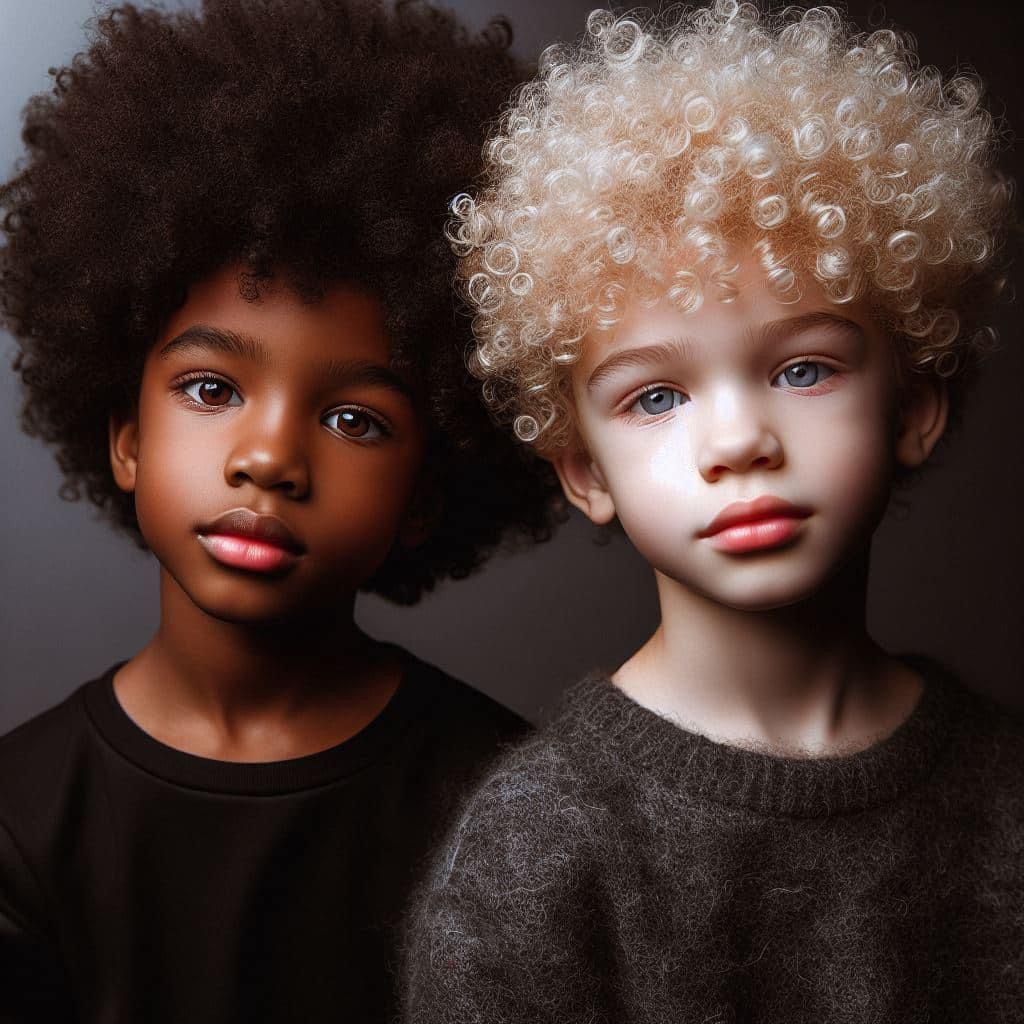
The Brown Boy Dilemma: Colorism

This photograph is the property of its respective owner. No copyright infringement intended.

Colorism—the prejudice or discrimination against individuals with darker skin tones, often within the same racial group—has long been recognized as a pervasive issue affecting Black communities. While much attention has been given to the experiences of Black women, it’s crucial to examine how colorism impacts Black men, whether differently or similarly, and to understand the nuances of this phenomenon.

Understanding Colorism and Its Origins

Colorism is rooted in historical and societal structures that have privileged lighter skin tones, often associating them with beauty, intelligence, and higher social status. This bias has been perpetuated through various means, including media representation, employment opportunities, and social interactions. The Guardian

The Impact of Colorism on Black Men

Black men, like their female counterparts, experience colorism, though the manifestations and societal perceptions may differ. Studies have shown that darker-skinned Black men often face challenges in areas such as employment and social acceptance. ScholarWorks

Media Representation and Stereotyping

In media portrayals, Black men with darker skin tones are frequently depicted in roles that emphasize aggression or criminality, reinforcing negative stereotypes. Conversely, lighter-skinned Black men may be portrayed in more favorable or diverse roles, contributing to a skewed representation that favors lighter skin tones. Verywell Mind

Colorism in Dating and Relationships

Within the dating scene, preferences often lean towards lighter-skinned individuals, a bias that extends to Black men. This preference can lead to feelings of inadequacy or rejection among darker-skinned Black men, affecting their self-esteem and social interactions. Frontiers

Internalized Colorism Among Black Men

Some Black men may internalize colorist attitudes, leading to a preference for lighter-skinned partners or associates. This internalization can perpetuate the cycle of colorism within the community, as individuals may unconsciously uphold and propagate these biases. Medium

Colorism in Professional Environments

In professional settings, lighter-skinned Black men may experience advantages in hiring and promotions due to perceived proximity to Eurocentric beauty standards. Darker-skinned Black men, on the other hand, may face biases that hinder their career advancement, despite equal qualifications. Verywell Mind

The Role of Family and Community

Family and community dynamics can either challenge or reinforce colorism. In some cases, darker-skinned Black men may receive support and affirmation from their families, helping to counteract societal biases. In other instances, families may unknowingly perpetuate colorist attitudes, influencing the individual’s self-perception. The Guardian

Intersectionality and the Experience of Colorism

The experience of colorism among Black men is also shaped by other intersecting factors such as socioeconomic status, education, and geographic location. These intersections can amplify or mitigate the effects of colorism, leading to diverse experiences within the community. Verywell Mind

Addressing Colorism: Steps Toward Equity

Combatting colorism requires a multifaceted approach, including education, media reform, and community engagement. Initiatives aimed at promoting diversity and inclusion can help challenge colorist norms and create a more equitable society for all Black individuals. The Guardian

Conclusion

Colorism affects Black men in complex and multifaceted ways, often intersecting with other forms of discrimination and bias. While the experiences may differ from those of Black women, the underlying issue remains the same: a societal preference for lighter skin tones that marginalizes those with darker complexions. Addressing colorism requires collective effort and a commitment to dismantling the structures that perpetuate these biases.

References:

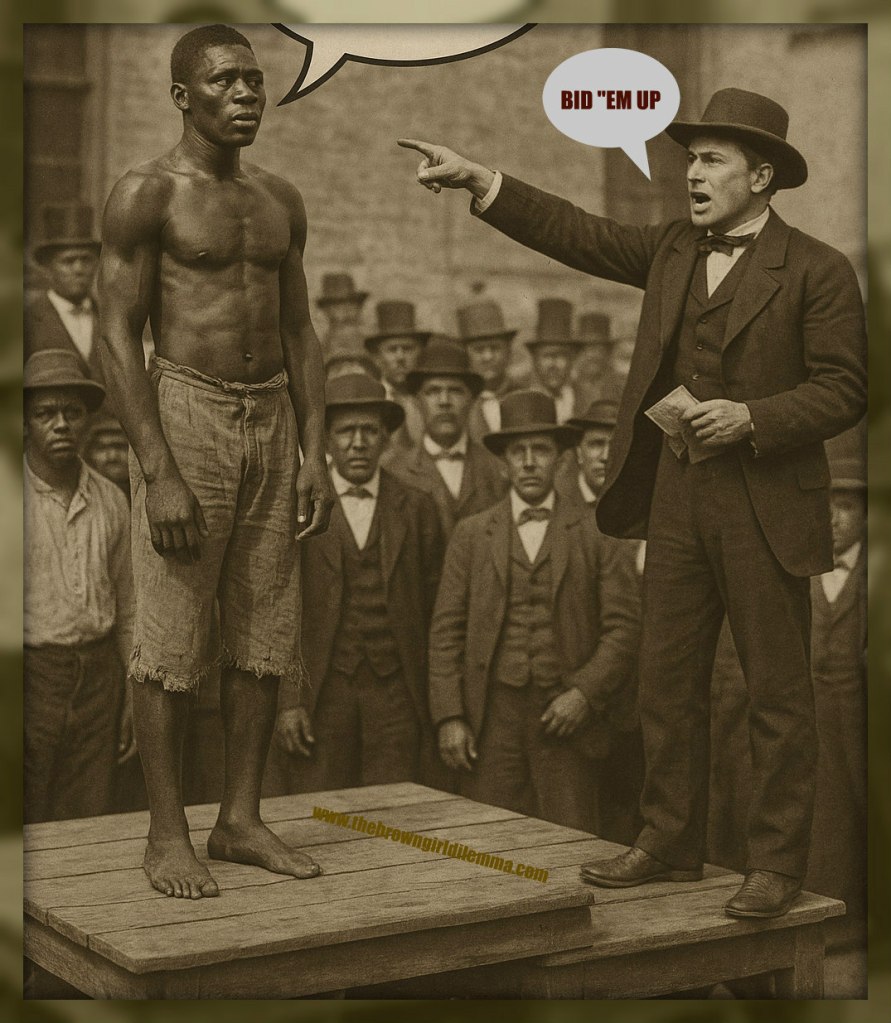
Dilemma: Bid ’Em Up

The phrase “Bid ’em up” refers to one of the most dehumanizing practices of the transatlantic slave trade: the process of auctioning African men, women, and children to the highest bidder. It was a command shouted at buyers during slave auctions, urging them to increase their bids as if the people on the block were livestock rather than human beings. This phrase captures the brutality, humiliation, and commercial greed embedded in American slavery.

Slave auctions operated as public markets where enslaved Africans were bought and sold, primarily in the 1700s–1800s, with the largest waves occurring from the early 18th century up to the Civil War in 1861. These auctions were often loud, crowded, and emotionally devastating events. Families were torn apart as husbands, wives, and children were separated, sold to different plantations, and sent to different states based solely on profit margins. “Bid ’em up” was not merely a business tactic—it was a reflection of how deeply racism shaped the economic and social system of the United States.

The auctions often took place in major Southern cities such as New Orleans, Charleston, Richmond, and Savannah. These markets drew slave traders, planters, wealthy merchants, and speculators eager to expand their labor force. In these spaces, the racial hierarchy of America was not hidden or subtle—it was on full display. Black people were forced onto platforms, examined, touched, and evaluated like property. Their bodies were scrutinized for strength, fertility, and obedience.

The enslaved were stripped of humanity through language. Terms like “bucks,” “breeders,” and “hands” reduced people to economic tools. The phrase “Bid ’em up” reveals the cold transactional nature of slavery, where human lives became items in an economic system built entirely on violence and racial domination.

Racism played a central role in justifying these practices. Europeans and white Americans constructed ideologies claiming Black people were inferior, subhuman, or naturally suited for enslavement. These racist beliefs formed the moral foundation for buying and selling millions of Africans. Without racism, the brutality of the slave market could not have been rationalized or sustained.

Slave auctions were not isolated events—they were central to the expansion of American agriculture. The rise of cotton, sugar, and rice industries increased demand for enslaved labor. The years following the 1808 ban on international slave importation saw the rise of the domestic slave trade, where enslaved people were sold from the Upper South to the Deep South in massive numbers.

These auctions were emotional battlegrounds. Many enslaved people prayed, cried, or resisted in small ways as they were forced onto the blocks. Mothers clung to their children, couples begged to stay together, and countless individuals were separated forever. The psychological trauma of these auctions rippled across generations.

The sight of chains, ropes, and shackles haunted the enslaved. Their names were replaced with auction numbers. Their futures were determined not by God or family but by the greed of bidders. The auction block became a symbol of absolute powerlessness.

Even children were not spared. Boys and girls as young as five or six were sold for their future labor value. Infants were sold with their mothers or separated from them, depending on what yielded higher profits. Slave traders calculated the price of innocence.

The practice reached its most infamous moment in 1859 during the largest recorded slave auction in U.S. history: The Weeping Time in Georgia, where over 400 enslaved people were sold over two days. The rain that fell during the event was described as the tears of heaven, mourning the suffering.

The economic impact of these auctions built generational wealth for white families while simultaneously creating generational poverty for Black Americans. Plantations, banks, and insurance companies all profited from human sale and exploitation.

The culture around slave auctions normalized cruelty. Newspapers advertised upcoming sales, listing children alongside horses. Hotels hosted bidders. Judges and sheriffs enforced fugitive slave laws to protect the system. Churches often remained silent, and in some cases participated.

After the Civil War and emancipation, the memory of the auction block became a permanent wound in African American history. It shaped family structures, migration patterns, and the cultural resilience of Black communities. Many African Americans today trace their lineage to ancestors sold on those blocks.

The legacy of “Bid ’em up” exposes how slavery was not just a labor system—it was an industry, a psychology, and a national economic engine grounded in racial violence. Understanding this context helps illuminate the roots of systemic racism in modern America.

The phrase also reminds us of the strength of the ancestors who survived unimaginable pain. Their endurance, faith, and determination laid the foundation for Black progress in the centuries that followed. They were bought and sold, yet they remained unbroken.

Remembering these auctions is not simply an act of historical reflection. It is a testimony to the resilience of a people who were denied humanity but ultimately reclaimed their identity, dignity, and voice. The auction block is a scar, but it is also a monument to survival.

In studying this painful history, we confront the truth of America’s origins. Slavery was not a footnote—it was central. And phrases like “Bid ’em up” force us to acknowledge the systems of racism that endured long after the auctions ended.

This history calls us to honor the ancestors by telling their stories truthfully, challenging systemic injustice, and ensuring that the trauma of the auction block is never forgotten.

References
Berlin, I. (2003). Generations of captivity: A history of African-American slaves. Harvard University Press.
Fett, S. (2002). Working cures: Healing, health, and power on Southern slave plantations. University of North Carolina Press.
Johnson, W. (1999). Soul by soul: Life inside the antebellum slave market. Harvard University Press.
Smallwood, S. (2007). Saltwater slavery: A Middle Passage from Africa to American diaspora. Harvard University Press.
Smith, C. (2012). The Weeping Time: Slave auctions and the economy of the South. Yale University Press.

Black History Is Holy Ground

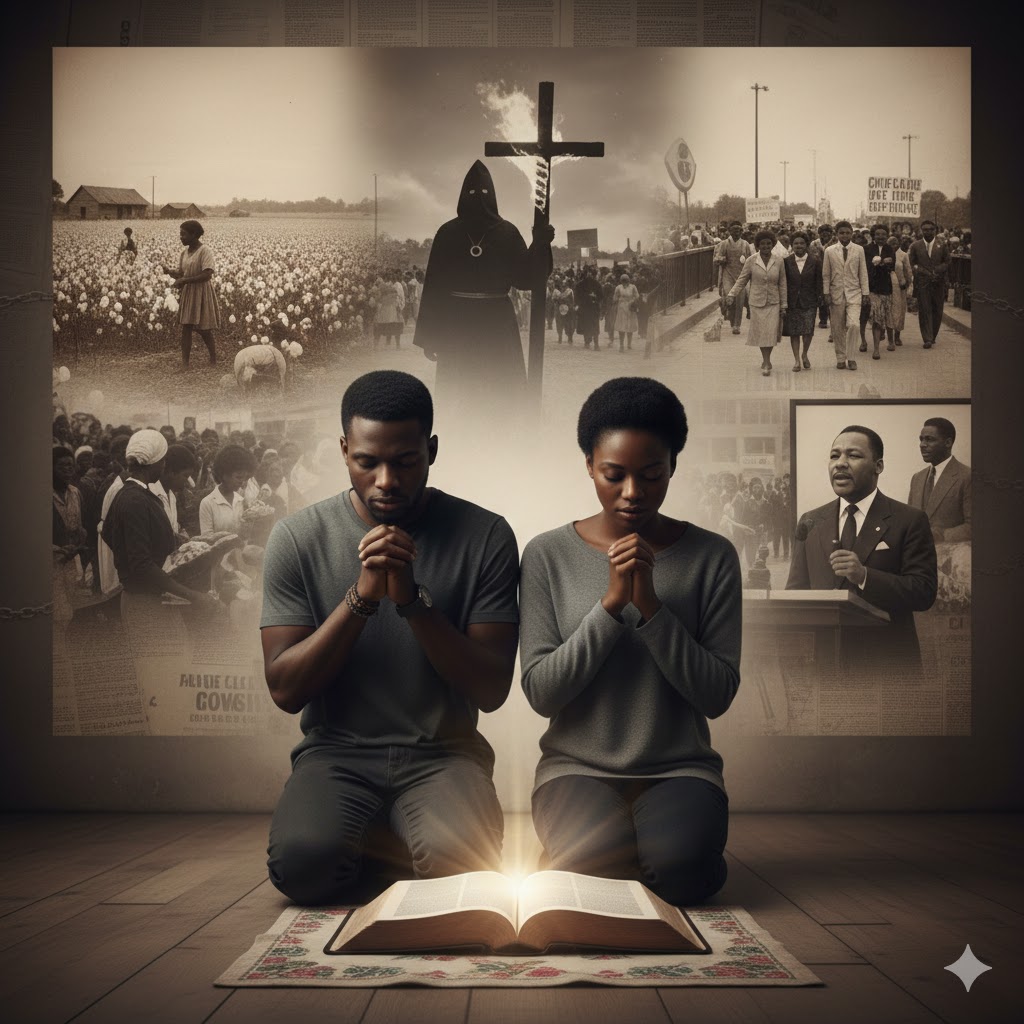
Black history is not merely a sequence of dates or the retelling of oppression; it is sacred terrain. It is a landscape shaped by the footprints of a people who carried faith, culture, dignity, and divine resilience across centuries. To stand in the presence of Black history is to stand on holy ground, because the journey of African-descended people bears witness to a God who walked with them through fire, flood, chains, and liberation.

Black history is holy ground because it begins long before slavery. It stretches back to kingdoms and civilizations where Black people ruled, built, studied, invented, and worshiped. From Nubia to Kush, from Ghana to Songhai, from Kemet to Ethiopia, Africa cultivated intellectual and spiritual traditions that the world still draws from. This heritage elevates Black history beyond pain; it anchors it in glory.

The holiness of this history is also found in its endurance. A people torn from their homeland survived one of the greatest atrocities in human history. They survived not by accident, but by providence. Their survival testifies to a divine hand at work in the shadows of suffering, shaping a remnant that would rise again. Every preserved family line, every song sung in the cotton fields, every whispered prayer in the midnight hour speaks of sacred resilience.

Black history is holy ground because it contains a narrative of faith that never died. Enslaved Africans did not inherit Christianity from their oppressors; they discovered in Scripture a God who understood bondage, deliverance, and covenant. Through the stories of Israel, they recognized themselves. Through the Psalms, they voiced their heartbreak. Through the Gospels, they found a Messiah who stood with the broken. Their faith was not borrowed but reborn.

The holiness of this narrative deepens when we consider the spiritual resistance embedded in Black culture. Spirituals were not just songs; they were coded prayers, liberation messages, and theological declarations. The rhythmic moans of the fields became a liturgy of survival. These traditions laid the foundation for the Black church, a sacred institution that shaped activism, family, and identity for generations.

Black history is holy ground because of its prophets and pioneers. Figures like Harriet Tubman, Frederick Douglass, Sojourner Truth, and countless unnamed leaders operated with a calling that mirrored biblical deliverers. They challenged systems, freed the oppressed, and stood firmly on righteousness. Their bravery was not merely political; it was spiritual warfare.

The holiness of this story extends to the mothers of the movement. Women whose names never made textbooks carried families on their backs. They prayed children into safety, held together broken homes, and passed down wisdom that sustained the community. Their hands were altars, their kitchens sanctuaries, their lives sermons of endurance and love.

Black history is holy ground because it carries the scent of sacrifice. Countless lives were laid down—from the Middle Passage to Jim Crow, from lynching trees to segregated streets. Their blood cries out like Abel’s, reminding the world that injustice is seen by God. Their sacrifices fertilized the soil from which future generations would rise.

That rising continues through the dreamers, scholars, activists, and artists who broadened the path toward freedom. Each breakthrough was a step deeper into holy territory—a reminder that progress is not simply social, but spiritual. Civil rights victories were not just legal milestones; they were manifestations of divine justice.

Black history is holy ground because it illuminates a people who refused to be erased. Despite centuries of oppression, their culture, creativity, and identity could not be destroyed. Instead, they transformed suffering into song, brokenness into brilliance, and hardship into hope. This divine alchemy marks their journey as sacred.

Modern Black life continues this sacredness. Every achievement—from academia to art, from science to business, from ministry to music—is a continuation of a holy lineage. Each accomplishment is a chapter in a story that began thousands of years before American soil ever felt the presence of African feet.

Black history is holy ground because it challenges the world to see humanity through a divine lens. The struggle for justice reflects God’s heart for righteousness. The fight for dignity reflects God’s image within humanity. Every act of resistance is a declaration that Black life is sacred and cannot be diminished.

The sacredness of Black history is also found in its wounds. Healing requires honesty, and Black history invites the world to confront painful truths without running. Yet this truth-telling is not meant to reopen scars but to restore what was lost. There is holiness in remembering, because memory heals and honors.

Black history is holy ground because it holds prophetic power. It warns against repeating the sins of the past, calls nations to repent, and demands transformation. It speaks with the authority of a testimony shaped by centuries of struggle and triumph. It teaches that liberation is a divine mandate, not a political suggestion.

This holiness also lies in the future. Black children today inherit not just a history of suffering but a legacy of brilliance. They stand on the shoulders of kings, queens, scholars, inventors, freedom fighters, and saints. Their existence is a continuation of the sacred promise that a people once enslaved would rise beyond anything intended to destroy them.

Black history is holy ground because it reveals God’s faithfulness. In every generation, He preserved a remnant, raised leaders, empowered movements, and poured creativity into a people who refused to surrender. Their story is evidence of divine purpose. Nothing about their survival is accidental.

To walk through Black history is to walk through a sacred story—one that encompasses creation, covenant, oppression, deliverance, restoration, and glory. It is a story intertwined with Scripture, echoing the journeys of ancient Israel and the hope of future redemption. It is a holy narrative wrapped in melanin and majesty.

Ultimately, Black history is holy ground because it embodies the miracle of endurance. It reveals that no chain is stronger than the human spirit, no system stronger than divine justice, and no hatred stronger than the love planted deep within a people chosen to carry light through centuries of darkness. Black history is not just remembered; it is revered.

And for those who study it, teach it, write it, or live it—it calls them to remove their shoes. For the place where they stand is sacred.

References:
Genesis 15:13–14 (KJV); Exodus 3:5; Psalm 68:31; Isaiah 61:1–4; Luke 4:18; Revelation 7:9; Curtin, P. The Atlantic Slave Trade; Gates, H. L. Africa in World History; Raboteau, A. Slave Religion; Franklin, J. H. From Slavery to Freedom.

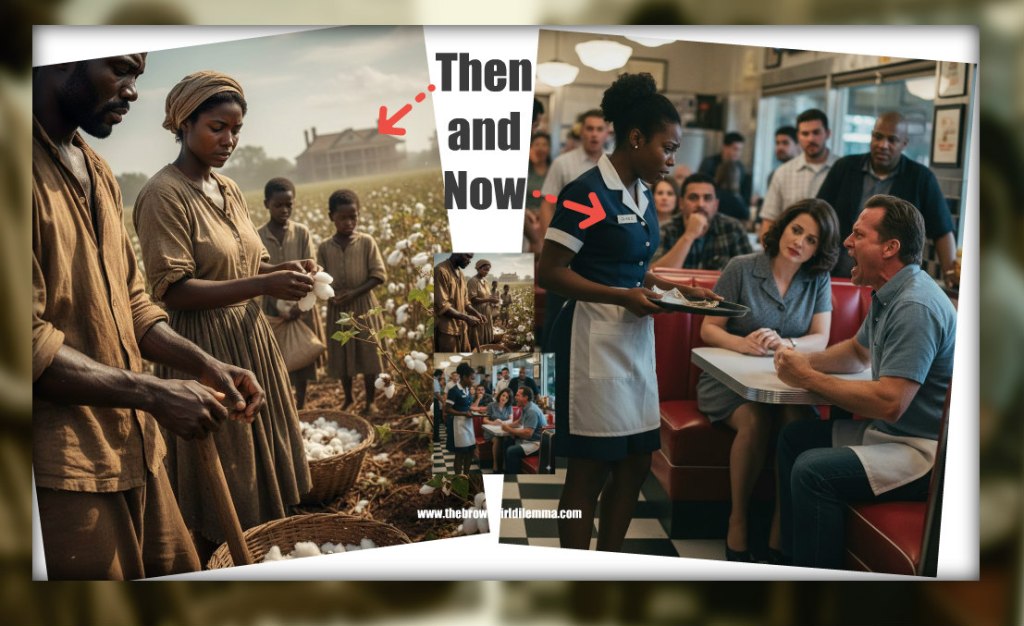
Black History Month Exclusive: From the Transatlantic Slave Trade to Modern-Day Slavery.

The history of Black people is deeply intertwined with the global forces of oppression, beginning with the transatlantic slave trade. This system not only uprooted millions from Africa but laid the foundations for systemic racism, economic disparity, and social exclusion that persist to this day (Eltis & Richardson, 2015). Understanding this continuum is critical for confronting modern forms of slavery and exploitation.

Historical Context of the Transatlantic Slave Trade
The transatlantic slave trade, beginning in the 16th century, forcibly transported over 12 million Africans to the Americas (Lovejoy, 2012). African kingdoms were disrupted, familial structures destroyed, and cultural practices suppressed as enslaved people were commodified and dehumanized (Smallwood, 2007).

Black History Timeline: Transatlantic Slave Trade to Modern-Day Slavery

16th–19th Century – Transatlantic Slave Trade

  • Over 12 million Africans were forcibly transported to the Americas.
  • African societies were disrupted; enslaved people were commodified for labor in plantations.

17th–19th Century – Enslavement on Plantations

  • Brutal labor in sugar, cotton, and tobacco fields.
  • Resistance through rebellions, escapes, and spiritual preservation.

Late 18th–Early 19th Century – Abolition Movements

  • Activists like Frederick Douglass, Olaudah Equiano, and William Wilberforce fought to end slavery.
  • Slavery challenged morally, economically, and politically.

1865 – Emancipation (U.S.)

  • Slavery was legally abolished with the 13th Amendment.
  • The Reconstruction era begins; systemic oppression continues through Black Codes.

Late 19th–Early 20th Century – Jim Crow and Lynching

  • Segregation laws institutionalized racial inequality.
  • Ida B. Wells documents lynching and campaigns for justice.

1916–1970s – The Great Migration

  • Millions of Black Americans move from the rural South to northern urban centers.
  • Encounter economic opportunities, yet face housing discrimination and segregation.

1950s–1960s – Civil Rights Movement

  • Landmark legal victories: Brown v. Board of Education, Civil Rights Act.
  • Leaders like Martin Luther King Jr., Rosa Parks, and Medgar Evers advance equality.

Post-1960s – Structural Inequalities

  • Economic disparities persist: redlining, wage gaps, and limited access to quality education.
  • Mass incarceration disproportionately impacts Black communities.

21st Century – Modern-Day Slavery

  • Exploitation continues through human trafficking, forced labor, and systemic oppression.
  • Vulnerable populations, especially women and children, are disproportionately affected.

Contemporary Resistance and Advocacy

  • Organizations combat slavery and exploitation: Polaris Project, Anti-Slavery International, UN initiatives.
  • Education, activism, and policy reform empower communities and promote justice.

Economic Motivations and Colonial Powers
European colonial powers profited immensely from enslaved labor, fueling the growth of plantation economies in the Americas (Inikori, 2002). Sugar, cotton, and tobacco industries relied heavily on Black labor, creating wealth for Europe while entrenching racial hierarchies and economic inequalities.

Resistance and Revolts During Slavery
Despite brutal conditions, enslaved Africans resisted through rebellion, escape, and cultural preservation. Notable revolts such as the Haitian Revolution (1791–1804) demonstrated resilience and challenged notions of racial inferiority (Geggus, 2001).

The Role of Religion and Spirituality
Religion, particularly Christianity, adapted within African traditions, became a tool for both control and resistance. Spirituals, coded messages, and the church provided emotional sustenance and a framework for community solidarity (Raboteau, 2004).

Abolition Movements
Abolitionists, both Black and White, fought to end the transatlantic slave trade. Figures such as Frederick Douglass, Olaudah Equiano, and William Wilberforce highlighted the moral and economic arguments against slavery (Drescher, 2009).

Emancipation and Its Limitations
Even after emancipation in the 19th century, former enslaved people faced systemic discrimination through Black Codes, Jim Crow laws, and sharecropping systems, which perpetuated economic and social marginalization (Litwack, 2009).

The Great Migration and Urban Struggles
The Great Migration of the early 20th century reshaped Black America as millions moved from the rural South to urban centers, seeking opportunity yet encountering new forms of racial segregation and economic exploitation (Wilkerson, 2010).

Racial Violence and Lynching
Lynching and racial terror were pervasive tools of oppression. Ida B. Wells’ investigative journalism exposed the scale of violence, advocating for legal reform and civil rights (Wells-Barnett, 1895/1999).

Civil Rights and Legal Progress
The mid-20th century Civil Rights Movement achieved landmark legal victories, including Brown v. Board of Education and the Civil Rights Act, challenging systemic barriers and inspiring global movements for racial justice (Branch, 1988).

Economic Inequalities Post-Civil Rights
Despite legal progress, Black communities continue to face structural economic disparities. Redlining, discriminatory lending, and wage gaps reflect persistent inequality rooted in historical oppression (Rothstein, 2017).

Modern-Day Slavery Defined
Contemporary slavery includes human trafficking, forced labor, and exploitation in both domestic and global contexts. The International Labour Organization estimates over 40 million people are affected worldwide, with women and children disproportionately impacted (ILO, 2017).

Human Trafficking and Exploitation
Human trafficking networks prey on vulnerability. Migrants, impoverished communities, and marginalized groups are often coerced into labor or sexual exploitation (Bales, 2012). Black communities remain disproportionately affected due to historical legacies of marginalization.

Systemic Racism and Modern Oppression
Modern slavery is intertwined with systemic racism. Structural inequalities, over-policing, and mass incarceration continue patterns reminiscent of historical exploitation (Alexander, 2010).

Global Supply Chains and Labor Exploitation
Modern industries, including agriculture, textiles, and technology, often rely on exploitative labor practices. Ethical consumerism and corporate accountability are critical for addressing contemporary forms of slavery (Crane, 2013).

Intersection of Gender and Race
Black women face compounded vulnerabilities in modern slavery contexts. Gender-based violence, limited access to education, and economic precarity exacerbate exploitation (Amnesty International, 2017).

Education and Empowerment as Resistance
Education remains a crucial tool against exploitation. Historical and contemporary movements emphasize literacy, advocacy, and economic empowerment as pathways to resilience (Gates, 2019).

Global Movements Against Modern Slavery
Organizations like Anti-Slavery International, Polaris Project, and UN initiatives mobilize resources and awareness to combat trafficking and forced labor worldwide (Bales & Soodalter, 2009).

Continuity of Historical Struggles
The legacy of the transatlantic slave trade is not confined to the past. Modern slavery and systemic oppression reflect a continuum of exploitation, demanding sustained advocacy, education, and structural change (Smallwood, 2007).

Conclusion
Black history is a testament to resilience and resistance. From the horrors of the transatlantic slave trade to the challenges of modern-day slavery, understanding this history is essential for dismantling systemic oppression and fostering justice for future generations.


References

Alexander, M. (2010). The new Jim Crow: Mass incarceration in the age of colorblindness. New Press.
Amnesty International. (2017). Women and modern slavery: Understanding vulnerability. Amnesty International Publications.
Bales, K. (2012). Disposable people: New slavery in the global economy (3rd ed.). University of California Press.
Bales, K., & Soodalter, R. (2009). The slave next door: Human trafficking and slavery in America today. University of California Press.
Branch, T. (1988). Parting the waters: America in the King years 1954-63. Simon & Schuster.
Crane, A. (2013). Modern slavery as a management practice: Exploring the conditions and strategies. Journal of Business Ethics, 114(3), 505–518.
Drescher, S. (2009). Abolition: A history of slavery and antislavery. Cambridge University Press.
Eltis, D., & Richardson, D. (2015). Atlas of the transatlantic slave trade. Yale University Press.
Gates, H. L. (2019). Stony the road: Reconstruction, white supremacy, and the rise of Jim Crow. Penguin Press.
Geggus, D. P. (2001). Haitian revolutionary studies. Indiana University Press.
Inikori, J. E. (2002). Africans and the industrial revolution in England: A study in international trade and economic development. Cambridge University Press.
International Labour Organization (ILO). (2017). Global estimates of modern slavery: Forced labour and forced marriage. ILO Publications.
Litwack, L. F. (2009). Trouble in mind: Black southerners in the age of Jim Crow. Knopf.
Lovejoy, P. E. (2012). Transformations in slavery: A history of slavery in Africa (2nd ed.). Cambridge University Press.
Raboteau, A. J. (2004). Slave religion: The “invisible institution” in the antebellum South (20th anniversary ed.). Oxford University Press.
Rothstein, R. (2017). The color of law: A forgotten history of how our government segregated America. Liveright.
Smallwood, S. E. (2007). Saltwater slavery: A middle passage from Africa to American diaspora. Harvard University Press.
Wells-Barnett, I. B. (1999). The Red Record: Tabulated statistics and case histories of lynching in the United States. Dover Publications. (Original work published 1895)
Wilkerson, I. (2010). The warmth of other suns: The epic story of America’s Great Migration. Random House.

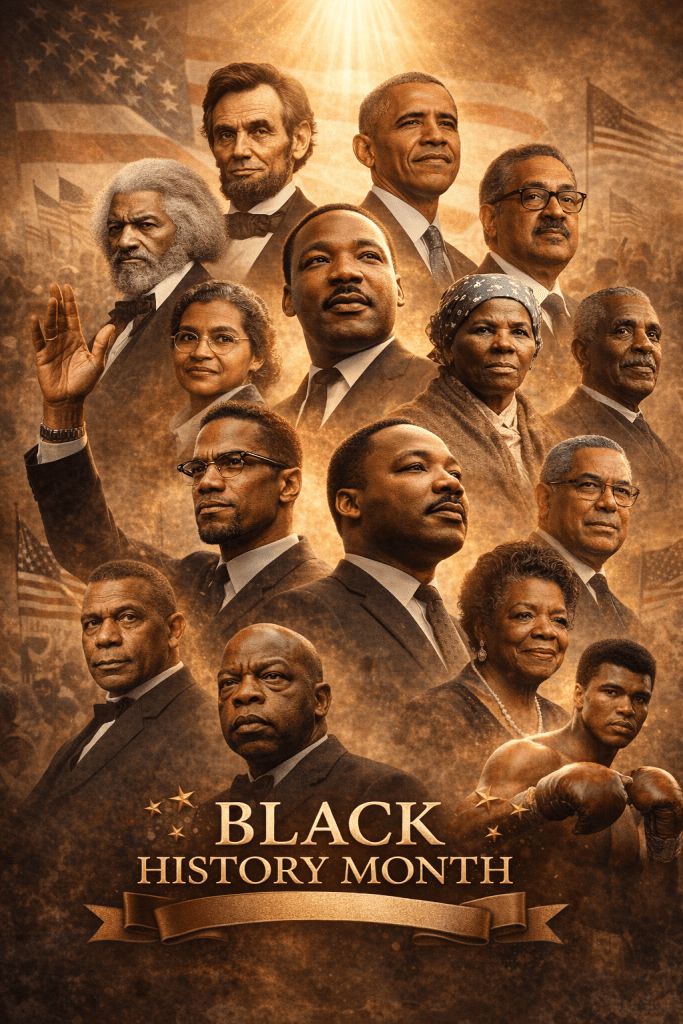
Black History Month: History, Struggle, and Why It Matters.

Black History Month is a nationally recognized observance in the United States dedicated to honoring the history, culture, contributions, and resilience of African Americans. It originated from the work of historian Carter G. Woodson, who established “Negro History Week” in 1926 to counter the exclusion of Black achievements from mainstream historical narratives (Woodson, 1915). The celebration expanded to a full month in 1976, officially recognized by President Gerald Ford, who urged Americans to acknowledge the “too-often neglected accomplishments of Black Americans.”

The importance of Black History Month lies in historical correction. For centuries, Black people in America were either erased from history books or portrayed only through the lens of slavery. This observance restores truth by centering Black voices, experiences, and intellectual contributions that shaped the nation politically, economically, culturally, and spiritually.

One of the foundational experiences Black Americans endured was the transatlantic slave trade, where millions of Africans were forcibly transported, enslaved, dehumanized, and exploited for labor in agriculture, infrastructure, and domestic work. Enslaved people were stripped of language, names, family structures, and legal personhood, treated as property rather than human beings (Berlin, 2003).

After emancipation in 1865, Black Americans faced Black Codes and Jim Crow laws that enforced segregation, restricted voting rights, and maintained economic dependency. Sharecropping replaced slavery with debt bondage, ensuring that many formerly enslaved people remained trapped in poverty (Du Bois, 1935).

Black Americans were subjected to widespread racial terrorism. Thousands were lynched between the late 19th and mid-20th centuries, often publicly, as a tool of social control. These acts were rarely punished and were sometimes encouraged by local authorities (Equal Justice Initiative, 2017).

The struggle for civil rights defined much of the 20th century. Black Americans fought for desegregation, voting rights, and equal protection under the law through movements led by figures such as Martin Luther King Jr., Malcolm X, Rosa Parks, and countless grassroots activists (Morris, 1984).

Despite legal progress, systemic racism persisted through redlining, housing discrimination, employment inequality, and mass incarceration. Black communities were denied access to quality education, wealth-building opportunities, and fair treatment within the criminal justice system (Alexander, 2010).

Black Americans have endured medical exploitation, including the Tuskegee Syphilis Study, where Black men were intentionally left untreated for decades without informed consent, revealing deep ethical violations in U.S. medical history (Brandt, 1978).

Culturally, Black people have faced appropriation, censorship, and marginalization, even as they created some of the most influential artistic forms in the world, including jazz, blues, hip-hop, gospel, soul, and modern dance (Gates, 2014).

Economically, Black Americans were historically excluded from the GI Bill, homeownership programs, and business funding, creating a persistent racial wealth gap that still exists today (Rothstein, 2017).

Psychologically, Black people have endured generational trauma, internalized racism, colorism, and social devaluation, which continue to shape mental health outcomes and identity development (Cross, 1991).

Black History Month is important because it affirms dignity. It reminds Black communities of their resilience, brilliance, and survival in the face of systemic oppression.

It is also important for national accountability. The United States cannot address present inequalities without understanding historical causes. Black History Month provides the context necessary for meaningful dialogue about race, justice, and equity.

The month serves as an educational intervention. Many U.S. school systems still under-teach Black history outside of slavery and civil rights. This observance creates space to explore African civilizations, Black inventors, scholars, scientists, and leaders whose contributions are often ignored.

Black History Month is a tool of empowerment. Representation shapes identity, and seeing Black excellence in history strengthens self-concept, especially for Black youth.

It is also a form of resistance. Remembering is an act of defiance against erasure. Historical memory challenges dominant narratives that portray Black people only through deficit and suffering.

Finally, Black History Month matters because Black history is American history. The United States was built through Black labor, culture, struggle, and innovation. To ignore this is to misunderstand the nation itself.

Black History Month is not about separation, but inclusion. It exists not to isolate Black history, but to correct a system that excluded it for centuries.

The ultimate purpose of Black History Month is truth, healing, and transformation. It invites the nation to confront its past honestly, honor those who endured it, and commit to building a more just future.


References

Alexander, M. (2010). The new Jim Crow: Mass incarceration in the age of colorblindness. The New Press.

Berlin, I. (2003). Generations of captivity: A history of African-American slaves. Harvard University Press.

Brandt, A. M. (1978). Racism and research: The case of the Tuskegee Syphilis Study. Hastings Center Report, 8(6), 21–29.

Cross, W. E. (1991). Shades of Black: Diversity in African-American identity. Temple University Press.

Du Bois, W. E. B. (1935). Black reconstruction in America, 1860–1880. Free Press.

Equal Justice Initiative. (2017). Lynching in America: Confronting the legacy of racial terror.

Gates, H. L. (2014). Life upon these shores: Looking at African American history, 1513–2008. Knopf.

Morris, A. D. (1984). The origins of the civil rights movement. Free Press.

Rothstein, R. (2017). The color of law: A forgotten history of how our government segregated America. Liveright.

Woodson, C. G. (1915). The education of the Negro prior to 1861. G.P. Putnam’s Sons.

What Are You Mixed With? – And Other Microaggressions of Erasure.

A man said to me, “You are the most beautiful woman I have seen. What are you mixed with? You can’t be all Black.” His words were meant to be a compliment, but they struck me like a backhanded slap. In that moment, my identity was reduced to a puzzle he wanted to solve, as though my beauty could not possibly exist within the fullness of Blackness. This is a story many Black women know too well — where admiration becomes interrogation, and affirmation becomes erasure.

“What are you mixed with?” may sound like a harmless question, but it carries a heavy undertone that many Black people instantly recognize. It suggests that their beauty, intellect, or talent must have come from something other than being fully Black. It is rarely asked of white individuals, nor of those whose racial identity matches a dominant group. For Black people, it becomes a subtle interrogation, implying that their very existence must be explained, categorized, or justified.

This question is one of many racial microaggressions — brief and commonplace verbal, behavioral, or environmental slights that communicate hostile, derogatory, or negative racial messages (Sue et al., 2007). Microaggressions are often delivered without malicious intent, yet their cumulative effect on mental health and identity can be significant. Questions about “mixed heritage” often leave the recipient feeling exoticized, tokenized, or “othered,” as if they are a curiosity to be solved.

Historically, this curiosity is rooted in colonial thinking. During slavery, white slaveholders meticulously catalogued the racial percentages of enslaved people — mulatto, quadroon, octoroon — to determine their value and social status (Williamson, 1980). This obsession with blood quantum was less about ancestry and more about control, categorizing Black people in order to decide who would remain enslaved and who might pass into freedom. The modern fascination with “mixedness” is a residue of that system, where proximity to whiteness was privileged and fetishized.

Colorism — the preference for lighter skin within and outside the Black community — is closely tied to this microaggression. Light skin has historically been associated with privilege, beauty, and desirability, while darker skin was demonized (Hunter, 2007). Asking “What are you mixed with?” when someone is light-skinned reinforces the idea that beauty or acceptability is tied to whiteness or foreign ancestry.

Celebrities often face this question publicly. Meghan Markle, the Duchess of Sussex, has shared that her biracial identity was constantly questioned, with people asking, “What are you?” as if they needed to categorize her before interacting (Winfrey, 2021). Zendaya has spoken openly about colorism, acknowledging that her lighter skin tone gives her access and opportunity denied to darker-skinned actresses, and she intentionally uses her platform to amplify those voices (Robinson, 2018).

This constant questioning can have psychological effects. Repeated microaggressions are linked to racial battle fatigue — a state of mental, emotional, and physical exhaustion caused by navigating racism daily (Smith et al., 2011). Being asked about one’s racial makeup forces a person to confront how others perceive them, which can trigger feelings of alienation or anxiety.

Spiritually, these questions can also conflict with the truth of God’s creation. Psalm 139:14 (KJV) affirms, “I will praise thee; for I am fearfully and wonderfully made: marvellous are thy works.” The implication that Blackness must be “mixed with something” to be beautiful denies the inherent dignity God has placed in every person, including those with deep melanin-rich skin and African features.

Microaggressions of erasure go beyond just “What are you mixed with?” They include statements like “You’re pretty for a dark-skinned girl,” “You talk white,” or “I don’t see color.” While they may be meant as compliments, they actually diminish identity. They praise the individual for fitting into a standard that denies their full cultural and racial reality.

The phrase “I don’t see color” is another common erasure tactic. It attempts to signal equality but ultimately refuses to acknowledge the existence of systemic racism and the lived experiences of Black people. As Neville et al. (2013) argue, colorblindness allows racial inequalities to persist because it discourages the recognition of injustice.

“What are you mixed with?” can also sexualize and exoticize. In some cases, it is asked not out of genuine curiosity but as a way to turn identity into a fantasy or a fetish. This is particularly true for women of color, whose bodies and features have been hypersexualized throughout history (Collins, 2004). This type of questioning reduces a person to their perceived racial “ingredients” rather than honoring them as a whole being.

W.E.B. Du Bois (1903) described the phenomenon of double-consciousness — the sense of always looking at oneself through the eyes of others. For many Black people, being constantly asked about their racial makeup deepens this double-consciousness, forcing them to perform or explain their identity to make others comfortable.

Some who ask “What are you mixed with?” may genuinely mean no harm. For them, it is a way to make conversation or express admiration. But intent does not erase impact. Microaggressions accumulate over time, becoming heavy burdens that affect how Black people move through the world — whether they feel accepted, whether they feel seen, whether they feel safe.

Biblically, diversity is not something to erase or explain away. Revelation 7:9 (KJV) describes a heavenly vision where “all nations, and kindreds, and people, and tongues” stand together before God. This suggests that ethnicity and identity are preserved and celebrated in eternity. To erase Blackness or reduce it to a mixture is to work against divine design.

Representation in media has begun to challenge these erasures. Campaigns like #BlackGirlMagic, #MelaninPoppin, and the natural hair movement have helped normalize the beauty of African features and dark skin. Seeing darker-skinned models, actors, and influencers celebrated for their beauty disrupts the idea that only “mixed” or “exotic” Black people are worthy of admiration.

Healing from the harm of these microaggressions requires education. Non-Black individuals must learn the history of racial classification, colorism, and why these questions are not benign. They must understand that curiosity should never come at the cost of someone else’s dignity.

Black individuals, meanwhile, can reclaim their narrative by affirming their identity openly and unapologetically. This may include correcting someone who asks “What are you mixed with?” by simply saying, “I’m Black — and that’s enough.” Such responses help shift the cultural expectation that Blackness must be explained or justified.

The Erasure Complex and Other Microaggressions of Erasure

The Erasure Complex is the cumulative psychological, social, and spiritual effect of living in a world where Blackness is constantly questioned, redefined, and made to prove its legitimacy. It is not merely about blatant racism but about the small, repeated messages that suggest Black identity is insufficient, unattractive, or incomplete unless modified by proximity to whiteness.

One of the most common forms of erasure is the question, “What are you mixed with?” It might sound curious or flattering, but for Black people, it can feel like an accusation — as though beauty, intelligence, or grace cannot come from African roots alone. These moments communicate that being fully Black is something to be doubted, pitied, or corrected.

Microaggressions like this have deep historical roots. In slavery and Jim Crow America, racial classification was an obsession. Words like mulatto, quadroon, and octoroon were invented to measure bloodlines and determine status, privileges, and restrictions (Williamson, 1980). Even freedom could hinge on whether a person could pass for white. That system created a generational wound — a belief that lighter skin or “mixed blood” was better, safer, more desirable.

The Erasure Complex is not limited to questions of ancestry. It also shows up in phrases like, “You talk white,” “You’re pretty for a dark-skinned girl,” or “I don’t see color.” Each of these statements subtly removes part of a Black person’s identity. They praise the individual for being an exception to a negative stereotype while reinforcing the stereotype itself.

Celebrities often experience these erasures publicly. Lupita Nyong’o, for example, has spoken about being told as a child that dark skin was not beautiful and how she longed to be lighter (Nyong’o, 2014). Zendaya, who is biracial, has acknowledged that her lighter skin gives her privilege and access that darker-skinned actresses are denied (Robinson, 2018). Both testimonies expose how deeply embedded these beauty hierarchies remain.

Psychologically, constant microaggressions accumulate to create racial battle fatigue — mental and emotional exhaustion caused by having to navigate these slights daily (Smith et al., 2011). They can lead to anxiety, hypervigilance, and internalized racism, where Black individuals begin to question their own worth and beauty.

Spiritually, the Erasure Complex challenges the truth of creation. Genesis 1:27 (KJV) reminds us, “So God created man in his own image.” To imply that Blackness is insufficient is to deny the fullness of God’s artistry. Psalm 139:14 (KJV) further affirms, “I will praise thee; for I am fearfully and wonderfully made.” There is no divine error in deep melanin, broad noses, full lips, or coiled hair — they are reflections of God’s intentional design.

Colorblind rhetoric, though often well-meaning, also contributes to erasure. When someone says, “I don’t see color,” they deny a person’s racial reality and the systemic oppression tied to it. As Neville et al. (2013) argue, this type of “colorblindness” allows racism to persist because it refuses to name or confront it.

The Erasure Complex also intersects with the policing of Black hair. When Black women wear natural hair, braids, or locs, they may face questions like, “When are you going to do something with your hair?” — implying that the way it naturally grows is wrong. The Crown Act (2022) was passed in several U.S. states precisely to stop discrimination based on natural hairstyles, which reveals just how institutionalized this erasure can be.

Even in religious spaces, erasure can be present. Some churches have historically promoted Eurocentric aesthetics as “holy” or “presentable,” leaving little room for African expression in hair, dress, or worship styles. This creates an unspoken pressure to assimilate rather than to celebrate the diversity that Revelation 7:9 describes, where “all nations, and kindreds, and people, and tongues” are represented before God’s throne.

Media representation is slowly challenging the Erasure Complex. Campaigns like #BlackGirlMagic, #MelaninPoppin, and films like Black Panther have shifted cultural narratives by celebrating the beauty, brilliance, and power of Blackness without dilution. These moments are important not just as entertainment but as acts of cultural restoration.

However, healing is not just about seeing representation. It is also about internal work — rejecting internalized racism and embracing the full spectrum of Black identity. This may mean responding to “What are you mixed with?” by saying unapologetically, “I’m Black — fully, beautifully Black.” Such responses resist the subtle suggestion that Blackness must be explained away.

Education is essential for those outside the community as well. Non-Black individuals must understand why these questions and statements are harmful, even if they are said with good intentions. Learning the history of racial classification, colorism, and microaggressions can equip people to affirm Black identity rather than interrogate it.

The Erasure Complex also thrives in silence. When microaggressions occur, those who witness them have an opportunity to speak up. Being an ally means interrupting erasure when it happens — affirming the dignity of Blackness in public and private spaces.

W.E.B. Du Bois’ concept of double-consciousness remains relevant here. Many Black people navigate the tension of how they see themselves versus how the world sees them (Du Bois, 1903). Erasure compounds that tension, forcing them to constantly explain, defend, and validate their identity. Healing this wound requires both cultural change and self-acceptance.

The ultimate goal is not just to stop erasure but to replace it with affirmation. Isaiah 61:3 (KJV) speaks of God giving His people “beauty for ashes.” For a people whose identity has been systematically erased and distorted, reclaiming Blackness as beautiful, holy, and worthy is a divine act of restoration.

In conclusion, the Erasure Complex is a powerful framework for understanding the subtle but deeply wounding ways that Black identity is questioned and diminished. Microaggressions like “What are you mixed with?” are not simply curiosities — they are echoes of a racial caste system designed to value proximity to whiteness. By naming this dynamic, addressing its historical roots, and affirming the fullness of Blackness, we can dismantle the systems of erasure and move toward wholeness and liberation.


Our communities also have a role to play. Too often, respectability politics within religious spaces have privileged lighter-skinned or Eurocentric beauty standards. By teaching that all skin tones reflect God’s image, churches can help dismantle internalized racism and affirm the beauty of Black identity.

In conclusion, “What are you mixed with?” is not just a casual question — it is a microaggression that reflects centuries of racial hierarchy and erasure. By recognizing its historical roots, addressing its psychological impact, and responding with pride and education, we can move toward a world where Blackness does not need an asterisk, an apology, or an explanation.


References

  • Collins, P. H. (2004). Black sexual politics: African Americans, gender, and the new racism. Routledge.
  • Du Bois, W. E. B. (1903). The souls of Black folk. A.C. McClurg & Co.
  • Hunter, M. (2007). The persistent problem of colorism: Skin tone, status, and inequality. Sociology Compass, 1(1), 237–254.
  • Neville, H. A., Awad, G. H., Brooks, J. E., Flores, M. P., & Bluemel, J. (2013). Color-blind racial ideology: Theory, training, and measurement implications in psychology. American Psychologist, 68(6), 455–466.
  • Robinson, J. (2018, September 4). Zendaya talks about colorism, privilege, and responsibility. Marie Claire.
  • Smith, W. A., Allen, W. R., & Danley, L. L. (2011). “Assume the position… you fit the description”: Psychosocial experiences and racial battle fatigue among African American male college students. American Behavioral Scientist, 51(4), 551–578.
  • Sue, D. W., Capodilupo, C. M., Torino, G. C., Bucceri, J. M., Holder, A. M. B., Nadal, K. L., & Esquilin, M. (2007). Racial microaggressions in everyday life: Implications for clinical practice. American Psychologist, 62(4), 271–286.
  • Williamson, J. (1980). New people: Miscegenation and mulattoes in the United States. Free Press.
  • Winfrey, O. (2021, March 7). Oprah with Meghan and Harry: A CBS primetime special. CBS.

Brown Girl Blues: “Do You Speak African?” They Say….

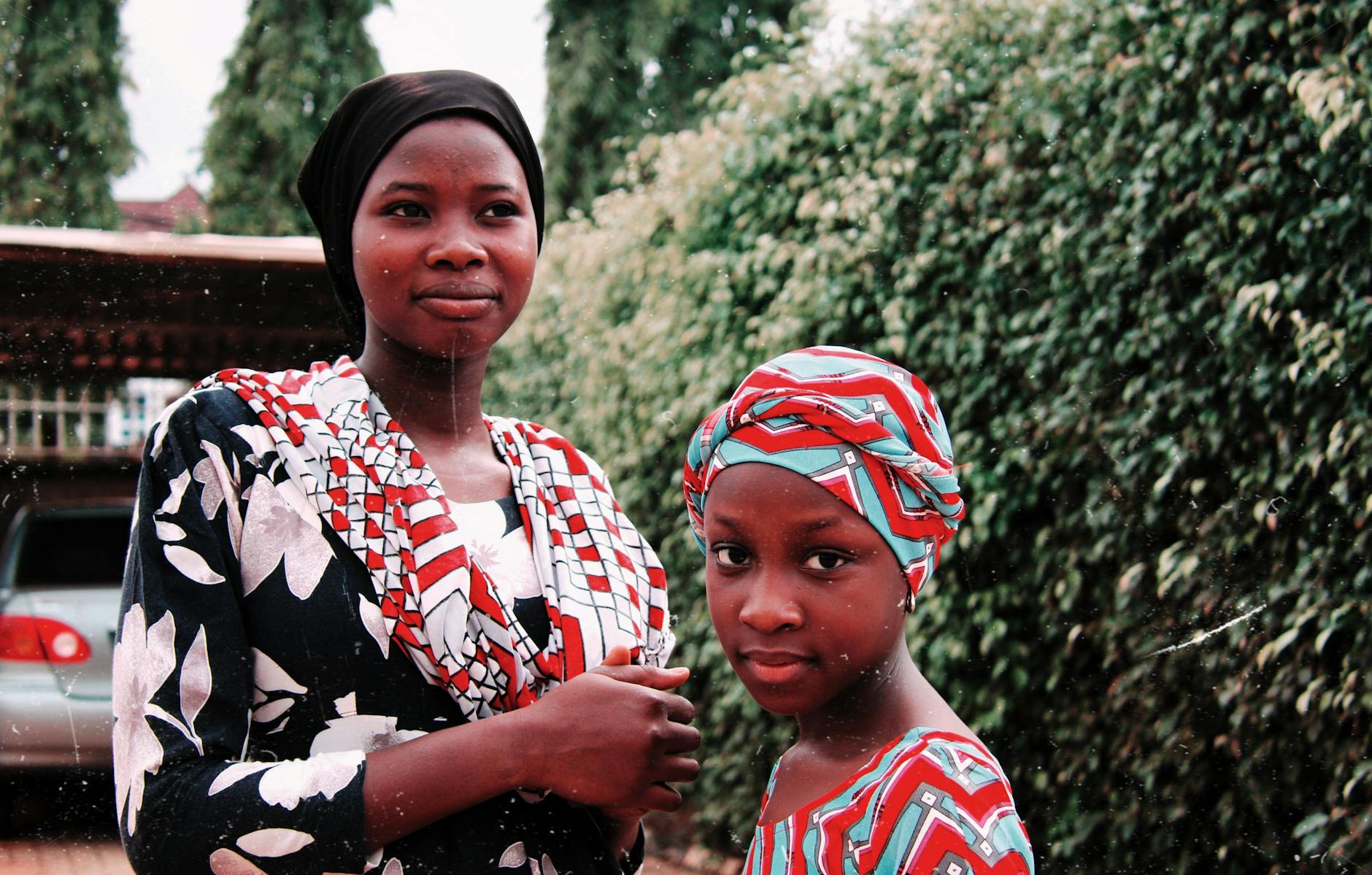
Photo by Muhammad-Taha Ibrahim on Pexels.com

The question, “Do you speak African?” lands with an awkward thud — part curiosity, part ignorance, part wound. It reveals not only what others fail to know but also what history has taken from the brown girl who hears it. The question is not neutral; it is a microaggression wrapped in innocence, a symptom of the colonial erasure that fractured language and lineage.

To ask someone if they “speak African” is to mistake a continent for a country, and a civilization for a dialect. Africa, home to over 1,500 languages and countless dialects, cannot be reduced to a single tongue (Eberhard, Simons, & Fennig, 2022). The question exposes how deeply Western education has flattened the African world — a world once rich with linguistic kingdoms, oral histories, and sacred speech.

For the brown girl in America, this question stings differently. It is not just about language; it is about belonging. Her ancestors once spoke languages now lost — tongues silenced by chains and rewritten through slavery. The question reminds her of what she cannot retrieve: the sound of her motherland’s lullabies.

The transatlantic slave trade did not just steal bodies; it stole languages. Enslaved Africans from different regions were deliberately mixed to prevent communication and rebellion (Gomez, 1998). Over time, English became the imposed tongue, and ancestral languages were criminalized. The linguistic death that followed was cultural genocide disguised as civilization.

Thus, when someone asks, “Do you speak African?” the brown girl feels the ache of disconnection. She wants to answer, “I would if they hadn’t beaten it out of my blood.”

Language is identity — it shapes how one thinks, dreams, and remembers. When language dies, memory fractures. For many descendants of the African diaspora, English became both a prison and a canvas — a forced medium turned into a tool of survival. Out of this tension emerged the dialects and rhythms of Black English, Caribbean patois, and Creole, each carrying fragments of forgotten worlds (Rickford, 2016).

Yet the irony persists: the same world that mocks African languages as “primitive” now romanticizes accents and aestheticizes African words for fashion and marketing. This selective celebration strips context, transforming heritage into decoration.

To the brown girl, “Do you speak African?” sounds like an echo of every moment she’s been told she’s too Black for some and not African enough for others. She exists between worlds — Westernized but not white, diasporic but disconnected. Her tongue carries history’s contradictions.

Cultural alienation often follows diaspora children who have been taught to speak the language of their oppressors more fluently than the language of their ancestors. They master English syntax but long for ancestral rhythm — the music in words they’ve never known.

This longing shows up in art, poetry, and music. From Langston Hughes’s blues to Beyoncé’s Black Is King, artists continually reach across oceans to reconnect the severed speech of their lineage. Their art becomes translation — a spiritual form of speaking “African” in a world that forgot how to listen.

The brown girl learns that language is more than vocabulary. It’s gesture, rhythm, call, and response. She speaks African every time she hums a gospel tune in a minor key, every time her laughter fills a room with rhythm, every time her hands punctuate her words like ancestral drums.

Her speech carries the DNA of lost languages — echoes of Yoruba, Igbo, and Wolof wrapped in English phrasing. Her slang, her tone, her cadence — all are living languages of survival. What others call “improper” is actually linguistic memory resisting erasure (Smitherman, 2000).

Still, the weight of that question lingers. It reminds her that ignorance is not harmless. Every careless question keeps history misunderstood. To say “African” as though it were a single language reveals how empire rewrote geography and reduced multiplicity to stereotype.

Western colonial systems erased Africa’s intellectual complexity, painting the continent as uniform and inferior. Missionaries and colonizers banned indigenous languages in schools, promoting European tongues as “civilized” (Ngũgĩ wa Thiong’o, 1986). The result was not just silence but shame.

The brown girl inherits that shame unconsciously — the hesitation to pronounce African names, the anxiety of mispronunciation, the internalized fear of sounding “too foreign.” These linguistic insecurities are the aftershocks of colonization.

But reclamation begins with awareness. Each generation of brown girls learns to unlearn. She begins to study African languages, wear names that carry meaning, and honor accents once mocked. She reclaims sound as identity.

The movement toward linguistic reconnection has become a spiritual revival. Across the diaspora, Black Americans and Afro-Caribbeans are learning Yoruba, Swahili, and Twi — not merely as languages, but as portals to ancestral consciousness (Ani, 1994).

For the brown girl, this journey feels like resurrection. Each new word is a heartbeat returning to the body of her culture. Each phrase feels like homecoming.

Yet she knows that fluency is not the only path to identity. To “speak African” is also to live African — to embody its values of community, rhythm, resilience, and reverence for spirit. It is to carry Africa in one’s breath, one’s laughter, one’s survival.

When others ask, “Do you speak African?” she now answers differently. She says, “Yes, I speak it in the way I live, love, and remember.”

She speaks it in her boldness, in the way she tells truth with rhythm, in the way her words refuse to be small. She speaks it in her dialect — the language that was never fully lost, just remixed through pain and perseverance.

Her lips form English words, but her spirit speaks Africa’s music. She carries within her every language that empire tried to destroy.

Her tongue, once colonized, is now consecrated. Through her, Africa speaks again.

So the next time the question comes — “Do you speak African?” — she will smile softly and say, “I am African, and that is enough.”

For her very existence is a language — a sacred syntax of survival written in melanin, rhythm, and divine memory.


References

Ani, M. (1994). Yurugu: An African-centered critique of European cultural thought and behavior. Africa World Press.

Collins, P. H. (2000). Black feminist thought: Knowledge, consciousness, and the politics of empowerment. Routledge.

Eberhard, D. M., Simons, G. F., & Fennig, C. D. (Eds.). (2022). Ethnologue: Languages of the world (25th ed.). SIL International.

Gomez, M. A. (1998). Exchanging our country marks: The transformation of African identities in the colonial and antebellum South. University of North Carolina Press.

Ngũgĩ wa Thiong’o. (1986). Decolonising the mind: The politics of language in African literature. James Currey.

Rickford, J. R. (2016). African American vernacular English: Features, evolution, educational implications. Blackwell.

Smitherman, G. (2000). Talkin and testifyin: The language of Black America. Wayne State University Press.

Racism Through Multiple Lenses.

Photo by Andrea Piacquadio on Pexels.com

Historical-Political Lens
Racism, as a historical and political construct, has been deeply tied to the legacy of colonialism and slavery. European colonizers justified the transatlantic slave trade by constructing a racial hierarchy that dehumanized African people, reducing them to property while elevating whiteness as a marker of superiority. This ideology became embedded in legal and political systems, shaping institutions from plantation economies to segregation laws. Jim Crow legislation in the United States, apartheid in South Africa, and colonial laws across the Caribbean and Africa exemplify how racism was codified into structures that controlled land, labor, and liberty. The ripple effect of these policies continues to impact education, wealth distribution, and incarceration rates, leaving a deep scar on the Black diaspora.

Psychological-Social Lens
Racism also functions as a psychological weapon, embedding inferiority in the minds of the oppressed while sustaining superiority in the oppressor. Socially, it manifests in stereotypes, microaggressions, and discriminatory practices that mark Blackness as “less than.” The theory of internalized racism explains how marginalized people sometimes adopt negative beliefs about their own group, perpetuating self-doubt and division (Pyke, 2010). Colorism, an internal byproduct of racism, privileges lighter skin tones and stigmatizes darker ones, creating hierarchies within the Black community itself. This psychological warfare produces identity conflicts, where individuals grapple with reconciling pride in their heritage with the societal messages that devalue it.

Faith-Based Lens
From a biblical perspective, racism stands in direct contradiction to God’s creation. Scripture affirms that all people are made in the image of God: “So God created man in his own image… male and female created he them” (Genesis 1:27, KJV). Racism is not only a social evil but a spiritual one, seeking to divide what God has united. For covenant people, racism echoes the warnings of Deuteronomy 28, where disobedience would lead to scattering, oppression, and subjugation under foreign nations. Yet the Bible also provides a vision of hope: “There is neither Jew nor Greek… for ye are all one in Christ Jesus” (Galatians 3:28, KJV). This does not erase cultural or ethnic identity but calls covenant people to rise above the divisions imposed by man and reclaim their God-given dignity.

Contemporary Lens
In today’s world, racism persists in both overt and subtle forms. While laws against segregation and discrimination exist, systemic inequities remain. Policing disparities, environmental racism, and unequal access to healthcare and education demonstrate how racism evolves with the times. Social media has become a double-edged sword: on one hand, it exposes racist incidents and provides platforms for movements like Black Lives Matter; on the other, it amplifies racist rhetoric and misinformation. Capitalism, too, has commodified Black culture, profiting from music, fashion, and language while often excluding Black creators from ownership and wealth. Racism adapts to modern contexts, proving it is not a relic of the past but a present-day reality that demands vigilance.

Restorative Lens
Healing from racism requires both collective and personal restoration. On a societal level, it involves dismantling oppressive systems and addressing the structural inequalities that perpetuate racial disparities. On a personal and communal level, it demands confronting internalized racism, affirming Black identity, and fostering pride in heritage. Spiritually, healing is rooted in reconciliation with God’s design, remembering that oppression was never His intent. Unity must be cultivated within the Black community, bridging divisions of color, class, and status. As Scripture declares, “How good and how pleasant it is for brethren to dwell together in unity!” (Psalm 133:1, KJV). True restoration involves reclaiming history, reshaping narratives, and building a future where dignity is no longer denied but celebrated.


📖 References

  • Holy Bible, King James Version.
  • Pyke, K. D. (2010). What is internalized racial oppression and why don’t we study it? Sociological Perspectives, 53(4), 551–572.