
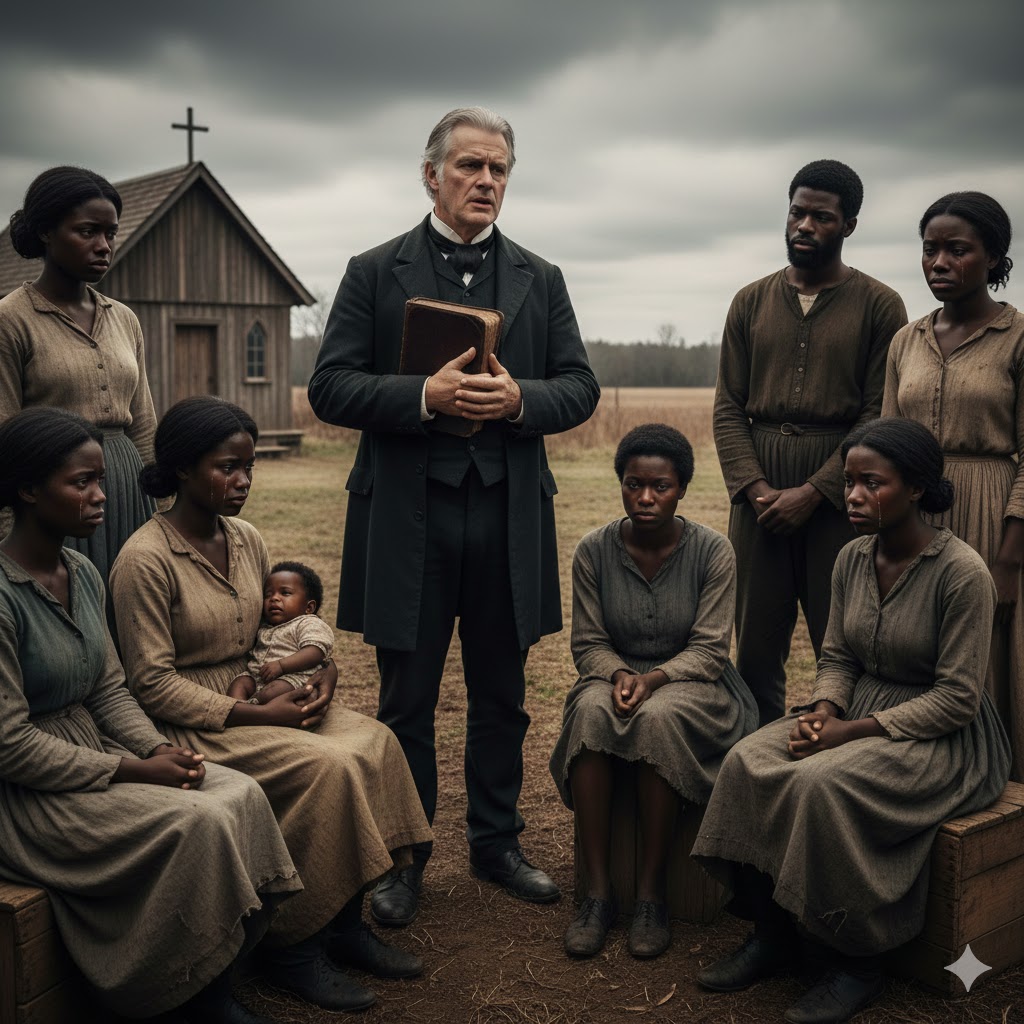
Slavery and colonialism did not emerge as isolated historical accidents but as deliberate systems engineered to extract labor, land, and life from subordinated peoples. At the center of these systems stood the construction of racial hierarchy, a framework that transformed domination into ideology and violence into normalcy.
The transatlantic slave trade marked a pivotal rupture in human history. Africans were captured, commodified, and transported across oceans under conditions designed to erase personhood. This was not merely economic exploitation; it was an ontological assault on humanity itself.
Colonialism expanded this logic globally. European empires occupied territories across Africa, the Americas, Asia, and the Caribbean, imposing foreign rule while dismantling indigenous governance, economies, and epistemologies. Control of land was accompanied by control of meaning.
Racial hierarchy emerged as the moral justification for these practices. Europeans increasingly defined themselves as fully human, rational, and civilized, while Africans and other colonized peoples were cast as primitive, inferior, or subhuman. This hierarchy was not natural; it was manufactured.
Theological distortion played a central role in legitimizing oppression. Biblical texts were selectively interpreted to sanctify slavery and empire, while passages emphasizing justice, liberation, and divine judgment against oppressors were muted or ignored.
One of the most egregious examples was the misuse of the so-called “Curse of Ham.” Though the Genesis narrative never mentions skin color or Africa as justification for enslavement, European theologians weaponized this passage to racialize bondage and claim divine approval for Black subjugation.
At the same time, enslaved Africans encountered the Bible through contradiction. The same text used to justify their chains also spoke of Exodus, covenant, judgment, and liberation. Enslaved readers discerned truths their oppressors refused to see.
The plantation economy reveals the intimate link between slavery and modern capitalism. Sugar, cotton, tobacco, and rice generated immense wealth for European nations and American colonies, laying the financial foundation of global modernity.
Colonial powers did not merely exploit labor; they extracted knowledge. African technologies, agricultural practices, metallurgy, and governance systems were appropriated, while African peoples were denied authorship of their own civilizations.
Colonial education systems reinforced inferiority by teaching colonized subjects to admire Europe and despise themselves. Language suppression, cultural erasure, and religious coercion produced psychological captivity alongside political domination.
Racial hierarchy was further codified through law. Slave codes, colonial ordinances, and later segregationist policies transformed racial inequality into legal structure, ensuring that injustice persisted beyond individual prejudice.
Even after formal abolition, slavery mutated rather than disappeared. Sharecropping, convict leasing, forced labor camps, and colonial labor systems continued extraction under new names, maintaining racial stratification.
The Bible’s prophetic tradition stands in direct opposition to such systems. Prophets repeatedly condemned societies that enriched themselves through exploitation, warning that injustice invites divine judgment regardless of national power.
Deuteronomy, Isaiah, Amos, and Jeremiah articulate a theology in which God sides with the oppressed and holds nations accountable for how they treat the vulnerable, the captive, and the poor.
Colonial Christianity often severed salvation from justice, emphasizing heaven while tolerating hell on earth. This theological bifurcation enabled believers to pray while profiting from suffering.
Black and African theology rejected this split. Faith became inseparable from survival, resistance, and hope. Worship functioned not as escapism but as protest against a world out of alignment with divine order.
Resistance to slavery and colonialism took multiple forms: revolts, maroon communities, abolitionist movements, pan-Africanism, and decolonization struggles. These movements testified that domination was never fully total.
The twentieth century witnessed formal decolonization, yet political independence did not erase economic dependency. Former colonies inherited borders, debts, and institutions designed for extraction, not flourishing.
Racial hierarchy adapted to new global arrangements. Development discourse replaced overt racism, yet inequality persisted through trade imbalances, resource exploitation, and global financial systems.
Within Western societies, the descendants of the enslaved continued to face exclusion through housing discrimination, educational inequity, mass incarceration, and economic marginalization—echoes of the original hierarchy.
Psychological consequences remain profound. Internalized inferiority, historical amnesia, and fractured identity are among the most enduring legacies of racial domination.
Scripture speaks to these realities not through denial but through remembrance. Biblical faith insists that history matters, that suffering is seen, and that injustice leaves a moral residue demanding response.
Divine justice in the biblical vision is neither rushed nor forgetful. It unfolds across generations, confronting systems rather than merely individuals.
The dilemma of slavery, colonialism, and racial hierarchy therefore confronts both history and theology. It demands honest reckoning rather than selective memory.
Healing requires truth, accountability, and restoration. Justice is not achieved through symbolic gestures alone but through material repair and transformed relationships.
The Bible ultimately refuses the permanence of oppression. Empires rise and fall, but divine justice endures beyond human power.
The continued struggle for racial justice is not a deviation from faith but a fulfillment of its ethical demand. To pursue justice is to align human action with divine intent.
Slavery and colonialism reveal the depths of human cruelty, but they also reveal the resilience of those who survived them. Survival itself stands as testimony against the lie of inferiority.
The racial hierarchy constructed to justify domination is historically contingent and morally bankrupt. It cannot withstand sustained truth.
This dilemma remains unresolved not because justice is absent, but because humanity continues to resist its demands.
Yet Scripture insists that injustice is unsustainable. The arc of history bends not by accident, but by moral weight.
The work of dismantling racial hierarchy is therefore sacred labor—historical, ethical, and spiritual—calling this generation to choose truth over comfort and justice over denial.
References
The Holy Bible, King James Version. (1611/1769).
Cone, J. H. (1997). God of the oppressed. Orbis Books.
Fanon, F. (1963). The wretched of the earth. Grove Press.
Rodney, W. (1972). How Europe underdeveloped Africa. Howard University Press.
Williams, E. (1944). Capitalism and slavery. University of North Carolina Press.
Du Bois, W. E. B. (1903). The souls of Black folk. A. C. McClurg & Co.
Heschel, A. J. (2001). The prophets. Harper Perennial.
 THE BROWN GIRL DILEMMA