Tag Archives: politics

Reclaiming Truth: A Scholarly Rebuttal to Eurocentric History.

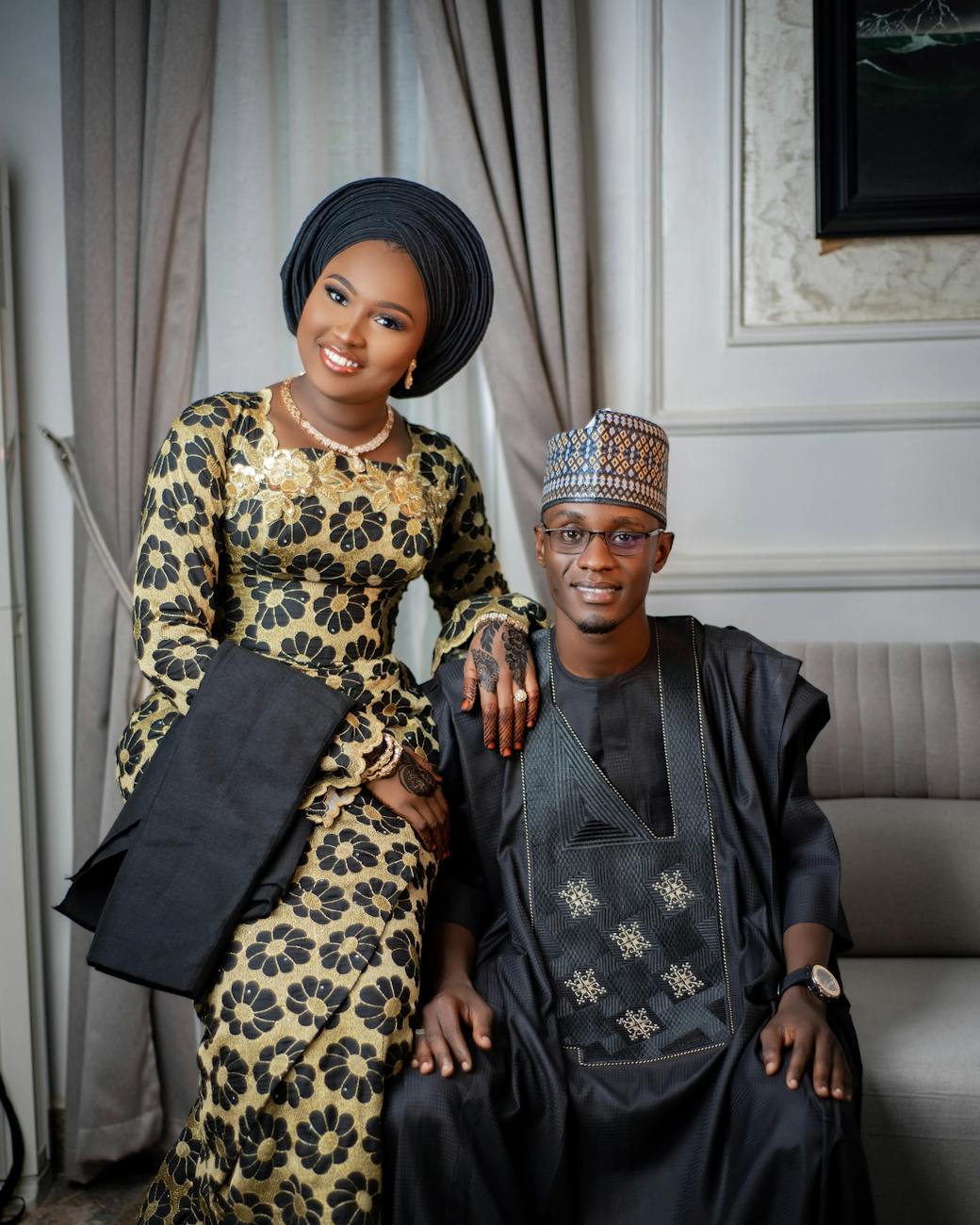
Photo by Deesarkee photos on Pexels.com

Eurocentric history has dominated the narrative of global civilization for centuries, portraying Europe as the cradle of culture, innovation, and morality while minimizing or erasing Africa’s role. This approach not only distorts facts but also perpetuates psychological oppression by marginalizing Black contributions. A careful examination of archaeology, genetics, theology, and anthropology reveals the truth of African primacy and the falsity of Eurocentric supremacy.

1. The Origins of Humanity Are African

Eurocentric historiography often frames humanity as a European achievement. In reality, the oldest Homo sapiens fossils — including Omo Kibish and Herto in Ethiopia — date back over 200,000 years (White et al., 2009). Genetic studies corroborate this: mitochondrial DNA diversity is greatest in African populations, confirming their position as the root of humanity (Tishkoff et al., 2009).

The Eurocentric myth of a “white Adam” contradicts both science and scripture. Genesis 2:7 (KJV) affirms that God formed man from the dust of the earth — the rich soils of Africa, where humanity first emerged.


2. Africa: Cradle of Civilization

Europe often claims credit for early civilization, yet empirical evidence shows that:

  • Ancient Egypt (Kemet) developed writing, mathematics, and monumental architecture over 5,000 years ago (Diop, 1974; Ehret, 2021).
  • Nubia, Axum, Mali, and Songhai established complex urban centers, international trade, metallurgy, and governance before European feudalism (Hunwick, 2003).
  • Timbuktu’s libraries and universities predated European Enlightenment, containing texts on medicine, astronomy, and philosophy (Diagne, 2016).

These facts demonstrate that technological and intellectual foundations attributed to Europe were built upon African precedent.


3. The Erasure of Black Agency in History

European colonial powers systematically erased Black achievements:

  • African scholars, inventors, and leaders were excluded from textbooks.
  • African knowledge of astronomy, navigation, and mathematics was appropriated and reframed as European “discovery.”
  • Artistic and literary contributions were minimized or exoticized.

For example, Greek civilization borrowed heavily from Egypt and other African sources, yet Eurocentric history positions Greece as the originator of philosophy, politics, and art.


4. Slavery and the Myth of Black Inferiority

Slavery is often narrated as punishment for alleged inferiority. In truth, Europeans enslaved educated, skilled, and politically organized Africans, precisely because they were a threat to European economic expansion. This inverted morality reinforced the false narrative of Black incapacity and subservience (Gates, 2014).


5. Biblical Evidence for African Centrality

Scripture repeatedly situates African peoples in positions of significance:

  • Cush, Mizraim, and Put are progenitors in Genesis 10, connecting Africa to the Abrahamic narrative.
  • Moses’ Ethiopian wife (Numbers 12:1–10) and Christ’s sojourn in Egypt (Matthew 2:13–15) affirm Black presence in sacred history.
  • Prophecies in Deuteronomy 28 and Isaiah 11 reflect both the hardships and the eventual restoration of the African diaspora.

6. Genetic Evidence Challenges Racial Hierarchies

Modern genetics contradicts European notions of superiority:

  • Africans harbor the most diverse alleles, indicating evolutionary sophistication and adaptability (Tishkoff et al., 2009).
  • Melanin provides UV protection, free radical scavenging, and neuromelanin in the brain supports cognitive resilience (Zecca et al., 2017).

Biology, therefore, refutes Eurocentric claims that Black people were biologically “less advanced.”


7. Cultural Continuity Across Diaspora

African cultural systems survived the Atlantic slave trade, demonstrating resilience and ingenuity:

  • Music, rhythm, and oral tradition preserved memory and identity.
  • Religion and communal structures adapted while maintaining theological and ethical continuity.
  • These cultural legacies challenge Eurocentric narratives that depict enslaved Africans as passive, cultureless victims.

8. European “Discovery” Is Misnomer

The Eurocentric narrative glorifies Columbus as “discoverer,” ignoring African and Phoenician maritime activity along the Atlantic and Caribbean coasts. African navigators had sophisticated seafaring knowledge long before European expansion (Diop, 1974).


9. Intellectual Resistance

Figures such as Anton Wilhelm Amo, Olaudah Equiano, and Phillis Wheatley challenge Eurocentric intellectual hegemony. Their writings and scholarship demonstrate that African-descended peoples were literate, philosophical, and politically astute despite systemic oppression.


10. The Psychological Weapon of Eurocentric History

By suppressing Black achievement, Europe imposed internalized inferiority, echoing Fanon’s “colonized mind” (Fanon, 1952). The narrative creates generations of people doubting their own worth, perpetuating racial hierarchy.


11. Reclaiming Historical Truth Is Liberation

Education rooted in accurate historiography restores agency. Black people, learning their ancestral contributions, regain cognitive, spiritual, and cultural sovereignty.


12. Melanin as Evidence of Divine Design

Melanin’s biochemical and neuroprotective functions demonstrate intentionality in creation (Hoogduijn, 2021; Solano, 2020). Its presence in skin, hair, and brain aligns with biblical affirmations of sacred human design (Psalm 139:14, KJV).


13. Misconceptions About Blackness in Scripture

Some Eurocentric interpretations attempted to “whiten” biblical figures. Critical scholarship and anthropological evidence reveal that ancient Israelites, Cushites, and Egyptians were likely dark-skinned Afro-Asiatic peoples, challenging European depictions.


14. African Empires Preceded European Expansion

West African kingdoms minted gold coins, established trade routes, and developed governance centuries before the European Renaissance. Mansa Musa’s pilgrimage (1324 CE) displayed wealth, knowledge, and diplomacy unmatched in Europe at the time.


15. Artistic and Scientific Appropriation

From pyramids to Greek philosophy to algebraic systems, Europe frequently appropriated African knowledge. Eurocentric historiography ignores or reassigns these contributions to white actors.


16. Modern Implications

The Eurocentric historical lens still shapes education, policy, and social perception. Reclaiming African-centered history empowers Black communities to rebuild identity, mental health, and socio-political agency.


17. Black Destiny and Restoration

Biblical prophecy supports eventual restoration:

“I will bring again the captivity of my people of Israel… and they shall build the waste cities, and inhabit them.” (Isaiah 49:22, KJV)

This aligns with diasporic resurgence in culture, technology, and global influence.


18. Integrating Science, Scripture, and History

Genetic evidence, archaeological data, and biblical scripture converge to affirm Black centrality in human history. Eurocentric distortion cannot withstand interdisciplinary scrutiny.


19. Conclusion: Rewriting the Narrative

A scholarly rebuttal demands that we:

  1. Recognize Africa as the cradle of humanity.
  2. Acknowledge African civilizations’ intellectual and spiritual achievements.
  3. Correct centuries of historical misrepresentation.
  4. Integrate science, scripture, and culture to reconstruct identity.

20. Call to Action

Black education must center ancestral knowledge, scripture-informed history, and scientific evidence. The liberation of the mind precedes liberation of society. Eurocentric myths are dismantled not through rhetoric alone but through evidence, pride, and scholarly rigor.


References

  • Diop, C. A. (1974). The African origin of civilization: Myth or reality. Lawrence Hill Books.
  • Ehret, C. (2021). Ancient Africa: A global history, to 300 CE. Princeton University Press.
  • Fanon, F. (1952). Black Skin, White Masks. Grove Press.
  • Gates, H. L. (2014). The African Americans: Many rivers to cross. SmileyBooks.
  • Hoogduijn, M. J. (2021). Melanin and its role in skin physiology. International Journal of Molecular Sciences, 22(9), 4352.
  • Hunwick, J. O. (2003). Timbuktu and the Songhay Empire. Brill.
  • Solano, F. (2020). Melanin and melanogenesis: Recent advances in melanocyte biology and function. International Journal of Molecular Sciences, 21(20), 7584.
  • Tishkoff, S. A., et al. (2009). The genetic structure and history of Africans and African Americans. Science, 324(5930), 1035–1044.
  • White, T. D., et al. (2009). Ardipithecus ramidus and early human evolution. Science, 326(5949), 64–86.
  • Zecca, L., et al. (2017). The role of neuromelanin in neurodegenerative diseases. Frontiers in Aging Neuroscience, 9, 1–12.


Dilemma: The “N” Word

The N‑word is a linguistic atomic bomb: it is capable of inflicting instantaneous injury, yet its power depends on historical context, speaker identity, and audience. It embodies centuries of subjugation, hatred, and oppression, and no neutral intent can erase that history.”
— Randall Kennedy, The N Word: Who Can Say It, Who Shouldn’t, and Why (2007, Beacon Press)

The word commonly referred to as the “N‑word” occupies one of the most charged spaces in the English language, carrying with it a history of slavery, segregation, dehumanisation, and ongoing racial violence. Its use, whether overt or subtle, signals more than mere insult—it implicates power, identity, culture, and memory. The dilemma lies in how the term continues to resonate, be contested, be reclaimed, and to injure.

Originally derived from the Latin niger (black), the term entered the English lexicon as “negro” (black person) and then evolved into “nigger”, a pejorative term whose first recorded uses as a slur date back to the seventeenth century. AAIHS+3PBS+3AA Registry+3 Even though a linguistic transformation occurred, the historic weight of racialised domination never abated. The term became embedded within the lexicon of white supremacy as a tool of dehumanisation.

In its historic usage, the slur served to mark Black persons as inferior, as property, as objects of violence and contempt. Through slavery, lynching, Jim Crow segregation, and systemic disenfranchisement, the word was more than an insult—it was an instrument of terror. AAIHS+2The Washington Post+2 To call someone this word was to place them at the lowest rung of society, to deny their humanity, to reduce them to a racialised subordinate.

Its meaning, however, is not fixed. Recent scholarship emphasises that context matters: the same lexical form may carry different pragmatic values depending on speaker identity, target, setting, intonation and community. A study of various uses of the slur in film and African American intra‑group settings argues that context determines nuance. PMC+1 In other words, the slur’s semantics are entangled with social and cultural dynamics.

When a non‑Black person uses the word towards a Black person, the meaning is rarely neutral. Given the historical legacy, it almost always signals contempt, racial threat or dominance. The slur thus acts as a linguistic embodiment of racial hierarchy—reinforcing what scholar Randall Kennedy called the “atomic bomb of racial slurs.” PBS+1 The emotional weight carried by the utterance cannot be divorced from the structural history.

Within the Black community, some use a variant ending in “‑a” (i.e., “nigga”) as a form of intra‑group address, signalling camaraderie, shared suffering, and cultural belonging. But this intra‑group appropriation remains contested. On one hand, it is reclamation; on the other, it is still rooted in a lexicon of oppression. PMC+1 This duality captures the complexity of language, identity, and power.

From a sociolinguistic and psychological perspective, the impact of the slur is substantial. Hearing or being addressed with the word has been associated with increased stress, lowered self‑esteem, internalised stigma, and social alienation. A qualitative study of African Americans’ feelings toward the word found strong negative reactions when used by non‑Black persons, and ambivalent or contextually bounded responses when used within the Black community. ScholarWorks The marker of difference and devaluation is thus deeply internalised.

The ethical and theological dimensions are equally weighty. If humanity is grounded in the imago Dei (Genesis 1:27) and dignity is recognized as universal, then the use of a slur that denies that dignity is a moral wrong. The N‑word becomes not merely a linguistic issue but a theological one: the denial of image, the denial of voice, the denial of equal worth. The Christian prophetic tradition that calls for justice (Isaiah 1:17; Amos 5:24) compels an interrogation of how language participates in oppression.

At a cultural level, the proliferation of the slur in media, music (especially hip‑hop), literature, and everyday speech complicates its mitigation. One analysis noted that the N‑word appears half a million times a day in social‑media use of the variant “nigga”. The Washington Post+1 This saturation suggests the word is both hyper‑present and normalized in certain contexts, even as it remains banned or taboo in others.

This juxtaposition—between taboo and normalization—underscores the dilemma. For many youth, especially across racial lines, the word may carry diminished sting or may function as slang. Yet for many older generations and for persons subjected to its historical brutality, the word still evokes chains, lynchings, segregation, and racial terror. The generational and intra‑community divide is thus real and significant. Learning for Justice

Moreover, the double standard inherent in discourse is explicit. Many educators and scholars note that Black persons may face fewer consequences (or different ones) when using the variant among themselves, whereas non‑Black persons often face condemnation, social censure, or institutional discipline. Lester, for instance, taught a college‐level course on the N‑word and observed that discussions often revolved around this double standard. Learning for Justice+1 The question of who may legitimately say the word is itself a question of power and membership.

In workplaces, educational institutions, and legal settings, the slur can trigger claims of hostile work environment, harassment, or discriminatory bias. Courts have grappled with whether intra‑racial use by Black workers can also constitute actionable harassment, demonstrating that the slur remains legally potent. Digital Commons@DePaul The law recognises that language can be a vehicle of structural oppression.

Language scholarship emphasises that slurs are performative: they do things—they wound, intimidate, exclude, subordinate. The N‑word performs historical violence, racial demotion, and cultural silencing. It enacts through sound and symbol what structural racism does through policy and practice. The reclamation rhetoric tries to invert that performance, to transform a scar into a badge—but the original wound remains.

Why do people use the N‑word today? Several motivations exist. Some non‑Black speakers may use it in ignorance of its history, other speakers may use it deliberately as taunt or threat. Sometimes it is used for shock, rebellion or humour (though harm remains). Within the Black community, usage may serve as marker of intimacy or cultural identity. But the asymmetry of power remains: when the speaker is non‑Black, the word seldom escapes the baggage of hate. The refusal of some non‑Black persons to recognise the word’s history is itself an expression of racial insensitivity.

When directed at Black persons in peer or social settings by non‑Black persons, the word often functions as a racial insult, an invocation of threat, or a reaffirmation of inferior status. Its use is fundamentally interlinked with racial hostility because of the long history of its deployment in violence, exclusion and demeaning treatment. It is an instrument of racial harm.

In interpersonal relations it also fosters distrust, emotional injury and intergenerational trauma. The repeated hearing or expectation of the word can condition psychological hyper‑vigilance, identity stress and a sense of perpetual othering. The phenomenon of “racial battle fatigue” resonates here: Black individuals develop cumulative stress responses to recurrent micro‑ and macro‑aggressions, among which the N‑word is a symbolic anchor.

At the community level, the ubiquity of the word among youth, popular culture and digital spaces intersects with structural inequalities and racial hierarchies. The word’s presence signals that racial devaluation remains socially acceptable in many contexts. This undermines collective efforts to build inclusive institutions and equal dignity. The normalization of the slur—especially when used casually—reduces the social impetus for change.

From a historical vantage, the N‑word is deeply tied to structural racism: from its evolution during the era of slavery, where it served as a descriptor of enslaved Africans, to the post‑emancipation era where it reinforced segregation and Jim Crow disenfranchisement, to the present where it persists in linguistic and cultural domains. The scholarly review of its history emphasises its continuity across centuries of racial subordination. AA Registry+1

Critically, the mere elimination of the word does not eliminate the racism behind it. Some commentators argue that focusing solely on “banning the word” distracts from addressing the power structures that allowed the word to thrive. One scholar argued that eradicationists confuse the form of the word with the conditions of its use. PMC In other words, the slur is a symptom, not the root, of racial devaluation.

In light of your interest in theology, genetics, identity and historical injustice, the N‑word invites reflection on how language intersects with inherited trauma, communal identity and racialised bodies. For example, when Black lineages (including Y‑DNA haplogroups such as E1b1a) are reclaimed and celebrated, the presence of a slur undermines the narrative of dignity restoration, reminding us that language remains a battleground for identity.

In conclusion, the dilemma of the N‑word is not simply a lexical matter—it is deeply social, historical, psychological, cultural and structural. Its significance lies in the interplay of language and power, identity and trauma, resistance and reclamation. Addressing the issue meaningfully requires attention not only to who uses the word, but the reasons behind its use, the relational context, the historical weight, and the healing work that must accompany language transformation.

References
Lester, N. A. (2011). Straight talk about the N‑word. Learning for Justice. Retrieved from https://www.learningforjustice.org/magazine/fall-2011/straight-talk-about-the-nword Learning for Justice
Rahman, J. (2014). Contextual determinants on the meaning of the N word. Philosophy & Social Criticism, 40(2), 123‑141. https://doi.org/10.1177/0191453714550430 PMC
Kennedy, R. (2007). The N Word: Who Can Say It, Who Shouldn’t, and Why. Beacon Press. (Referenced in Kennedy’s public commentary). Digital Commons@DePaul+1
National Association for the Advancement of Colored People. (2014). NAACP official position on the use of the word “nigger” and the “N‑word.” Retrieved from https://naacp.org/resources/naacp-official-position-use-word-nigger-and-n-word NAACP
“Analysis of the Reclamation and Spread of the N‑word in Pop Culture.” (n.d.). Undergraduate Showcase. Retrieved from https://www.journals.uc.edu/index.php/Undergradshowcase/article/download/4116/3123 Journals at UC
“A brief history: The word nigger.” African American Registry. (n.d.). Retrieved from https://aaregistry.org/story/nigger-the-word-a-brief-history/ AA Registry

Dilemma: Racial Slurs

Photo by cottonbro studio on Pexels.com

Racial slurs are more than just words—they are weapons. They are verbal instruments of dehumanization that have been used for centuries to belittle, divide, and destroy. Every slur carries historical trauma, echoing systems of slavery, segregation, and racial oppression. The Bible teaches that “death and life are in the power of the tongue” (Proverbs 18:21, KJV), reminding us that language can either build or break the human spirit.

The most common racial slurs used against Black people, Asians, Indigenous peoples, Latinos, and others vary across cultures, but their roots are similar—they seek to strip identity and dignity. For educational clarity, common examples include the N-word against African Americans, “coon,” “monkey,” and “jigaboo.” Against other groups, terms such as “chink” (Asian), “spic” (Latino), “redskin” (Native American), and “terrorist” or “sand n****r” (Middle Eastern descent) are often used. These terms are not repeated here for hate, but for awareness—so that truth can confront ignorance.

The origin of many racial slurs is found in colonialism and white supremacy, which classified people according to color and physical features to justify domination. Language became a tool of hierarchy. Genesis 11:1–9 (KJV) reminds us that language once unified humanity, but sin brought division. Racial slurs are a modern manifestation of that same pride and separation.

When an oppressor uses a racial slur, they reaffirm an ideology of superiority. These words are meant to remind the target of their “place” in a social hierarchy that was never God-ordained. Yet Scripture declares in Acts 17:26, “And hath made of one blood all nations of men for to dwell on all the face of the earth.” There is no hierarchy in the kingdom of God—only equality in creation.

Psychologically, racial slurs wound deeply because they attack one’s core identity—the self-image shaped by culture, history, and ancestry. They cause internalized shame, self-hatred, and disconnection from one’s heritage. The emotional pain is not just momentary; it can imprint generational trauma. James 3:8 calls the tongue “an unruly evil, full of deadly poison,” which captures the lethal nature of racialized speech.

Sociologically, racial slurs function as control mechanisms. By labeling someone with a degrading name, a person or group exerts power. During slavery, slurs were used to reduce Africans to property; during segregation, they enforced social barriers. These words became linguistic chains.

The solution to racial slurs is both moral and spiritual. Morally, society must commit to education, accountability, and empathy. Spiritually, hearts must be renewed by the Spirit of God. Romans 12:2 (KJV) says, “Be ye transformed by the renewing of your mind.” Without internal transformation, laws and campaigns can only treat the symptoms, not the root.

Healing begins with acknowledgment—acknowledging that these words are not harmless jokes but symptoms of sin and hatred. Then comes repentance, not only from those who speak them, but also from those who silently tolerate them. Proverbs 31:8–9 calls the righteous to “open thy mouth for the dumb… and plead the cause of the poor and needy.”

Another part of the solution is education. Teaching history honestly—about slavery, Jim Crow, and racial colonization—equips future generations to understand why slurs exist and how to resist them. Silence only perpetuates ignorance. Hosea 4:6 warns, “My people are destroyed for lack of knowledge.”

Media accountability also plays a role. Popular culture often normalizes racialized language for humor or shock value. When slurs are sung, posted, or repeated carelessly, they lose their perceived harm but not their actual power. The children who hear them inherit desensitization.

Empathy training in schools, workplaces, and faith communities can bridge divides. The more we interact with those different from ourselves, the less we depend on stereotypes. Galatians 3:28 teaches that “there is neither Jew nor Greek… for ye are all one in Christ Jesus.” This verse doesn’t erase ethnicity; it erases enmity.

Racial slurs also persist because of fear—fear of the other, fear of loss of dominance, fear of change. Fear breeds hatred, but 1 John 4:18 declares, “Perfect love casteth out fear.” Love is not a weak response; it is a powerful act of defiance against bigotry.

The psychological solution involves reclaiming identity. When those targeted by slurs embrace their divine design—skin tone, culture, and heritage—they disarm the insult. Psalm 139:14 reminds, “I will praise thee; for I am fearfully and wonderfully made.” Knowing who you are in God makes you immune to those who call you less.

Community unity among people of color and allies is essential. Racism thrives in division. When Black, Brown, and Indigenous voices rise together in truth and dignity, the power of racist language weakens. Ecclesiastes 4:12 affirms, “A threefold cord is not quickly broken.”

Restorative justice also plays a part—allowing offenders to learn, grow, and make amends rather than simply be punished. Forgiveness does not excuse the offense, but it frees the victim from carrying its poison. Ephesians 4:32 urges believers to “be kind one to another… forgiving one another, even as God for Christ’s sake hath forgiven you.”

Yet, forgiveness must not silence truth. Racial slurs must be confronted directly, with courage and clarity. Jesus confronted the hypocrisy of His time with both grace and fire (Matthew 23). Righteous anger, when guided by love, leads to justice.

Ultimately, the tongue must be sanctified. James 3:10 reminds, “Out of the same mouth proceedeth blessing and cursing. My brethren, these things ought not so to be.” We must re-learn how to speak life—to name people as God names them: beloved, chosen, and worthy.

Each racial slur is a curse—but every curse can be broken by truth. When we replace slurs with affirmations, we reverse the narrative. Calling someone “brother,” “sister,” or “child of God” restores their dignity.

The vision is a redeemed language, where every nation and tongue praises together. Revelation 7:9 paints the heavenly picture: “A great multitude… of all nations, and kindreds, and people, and tongues, stood before the throne.” Heaven’s speech is unity. Earth’s must learn to echo it.


List (Educational and Analytical Context Only): Common Racial Slurs and Groups Targeted
(Note: These are cited for sociological study and anti-racism awareness, not for use.)

  • Against Black people: the “N-word,” “coon,” “monkey,” “jigaboo,” “boy,” “slave,” “colored.”
  • Against Latino/Hispanic people: “spic,” “wetback,” “beaner.”
  • Against Asian people: “chink,” “gook,” “yellow,” “oriental” (outdated and offensive).
  • Against Indigenous peoples: “redskin,” “savage.”
  • Against Middle Eastern people: “terrorist,” “camel jockey,” “sand n****r.”
  • Against Jewish people: “k**e,” “Christ killer.”
  • Against white people (though historically less systemic): “cracker,” “redneck.”

Each word represents centuries of pain, prejudice, and inequality—reminding us that the solution is not silence, but sanctified speech.


Biblical References (KJV)
Proverbs 18:21; Acts 17:26; James 3:8–10; Romans 12:2; Proverbs 31:8–9; Hosea 4:6; Galatians 3:28; Psalm 139:14; Ephesians 4:32; 1 John 4:18; Revelation 7:9.

From King to Commodity: The Exploitation of Black Male Beauty

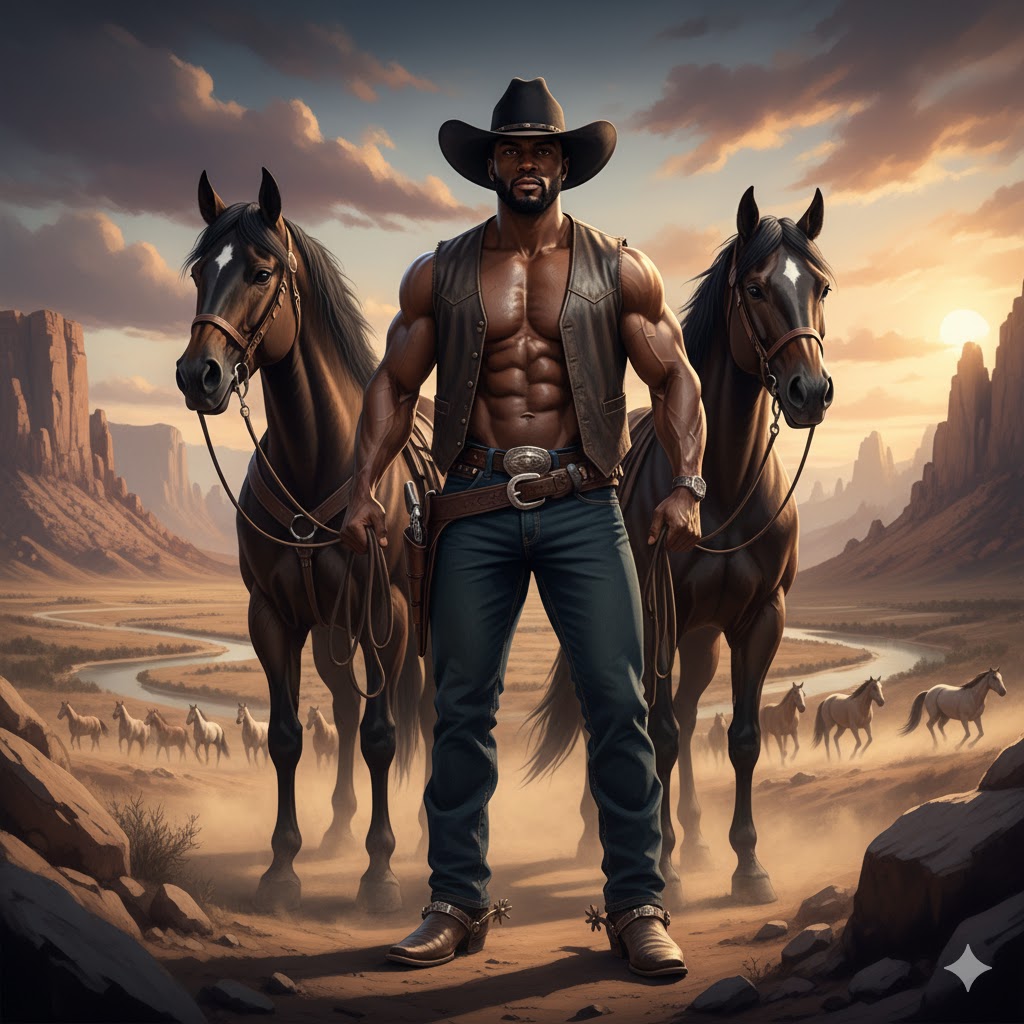
For centuries, the Black male body has existed at the crossroads of reverence and exploitation. In ancient African civilizations, the Black man was often crowned as divine—embodying leadership, spiritual authority, physical excellence, and intellectual brilliance. Yet through the transatlantic slave trade and subsequent Western sociopolitical systems, this image was distorted into a commodified form—an object to be controlled, feared, marketed, consumed, and surveilled. The Black male aesthetic, once a symbol of sovereignty, was stripped and weaponized for profit, entertainment, and domination.

The transformation from king to commodity began during slavery, where enslaved Black men were appraised for strength, endurance, and reproductive potential rather than humanity or intellect. Plantation records reveal how enslavers measured, bred, and traded Black men as physical capital (Gomez, 1998). This legacy birthed an enduring paradox: the Black male admired for his athletic body and masculine power, yet simultaneously denied autonomy, dignity, and emotional depth.

In the modern era, this commodification evolved into media, sports, fashion, and entertainment industries that profit from Black male image and labor. Professional athletics serve as a modern plantation metaphor, where predominantly white ownership capitalizes on Black physicality while often suppressing political voice and cultural authenticity (Rhoden, 2006). Rap and film industries selectively magnify hyper-masculinity, aggression, and sexual prowess, reinforcing stereotypes rooted in slavery’s breeding logic. Even luxury fashion and modeling spaces now celebrate melanin, strong facial structure, and athletic builds—traits historically mocked or criminalized—yet Black men still navigate barriers to economic ownership and narrative control in these industries.

Paradoxically, while the Black male body is commodified, the Black male spirit remains heavily policed. Society praises the physique but fears the presence; celebrates the style but rejects the voice; desires the look but not the lived experience. This duality contributes to mental strain, identity conflict, and hyper-visibility intertwined with invisibility. Black men must constantly negotiate spaces where their beauty is praised but their humanity is questioned.

Yet reclaiming sovereignty is underway. Increasingly, Black men reject objectification and redefine beauty beyond physicality—embracing intellectual excellence, emotional intelligence, spiritual grounding, and entrepreneurial power. Cultural movements uplift the dignified, introspective, protective, visionary roles Black men play as fathers, scholars, artists, healers, and leaders. From ancient Kemet to Nubia, from Timbuktu to Harlem Renaissance salons, the Black man’s beauty has always been multidimensional—rooted not in body alone, but in mind, spirit, and legacy.

The journey forward requires dismantling systems that consume Black masculinity for profit while denying agency and humanity. It calls for honoring the king before the commodity, the purpose before the performance, the soul before the spectacle. The Black male is not merely to be viewed—he is to be valued, respected, and restored to his rightful place in the narrative of global civilization.


References

Gomez, M. A. (1998). Exchanging our country marks: The transformation of African identities in the colonial and antebellum South. University of North Carolina Press.

Rhoden, W. C. (2006). Forty million dollar slaves: The rise, fall, and redemption of the Black athlete. Crown Publishing.

The Slave Files: Anna Julie Cooper

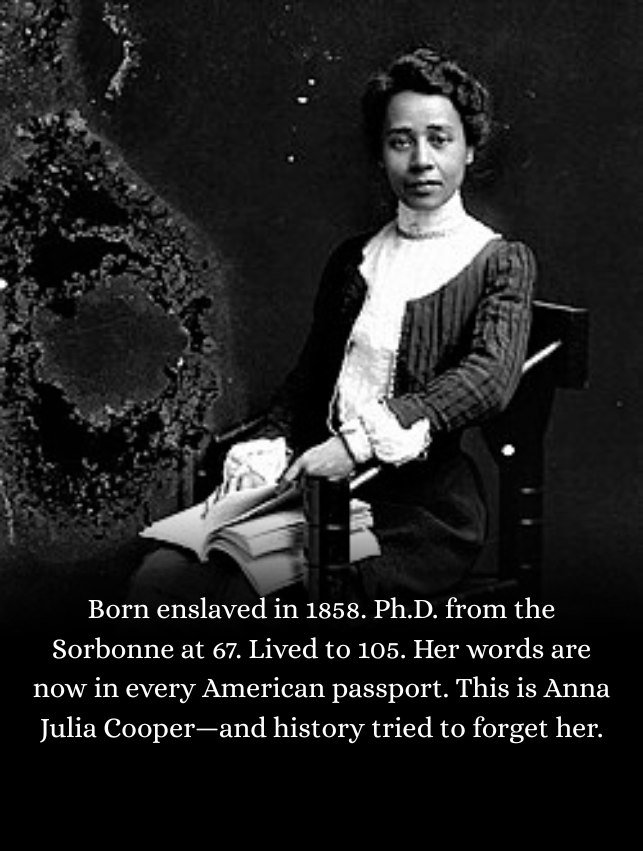
This photograph is the property of its respective owner. No copyright infringement intended.

Anna Julia Cooper was born on August 10, 1858 in Raleigh, North Carolina

Anna Julia Cooper was an influential African American educator, scholar, and author whose life and work left a profound impact on Black education and intellectual thought. Born in the late 19th century, she emerged during a period of systemic oppression and racial discrimination, when opportunities for African Americans—particularly women—were severely limited. Despite these obstacles, Cooper dedicated her life to uplifting her community through education, moral leadership, and scholarly contributions.

Cooper’s early life was marked by a determination to pursue learning despite societal barriers. She believed that education was a fundamental tool for liberation and empowerment. Her passion for teaching and scholarship became a central theme in her life, guiding her professional endeavors and public influence.

As an educator, Julia Cooper worked tirelessly to improve access to quality schooling for African Americans. She advocated for rigorous academic standards, the establishment of Black educational institutions, and curricula that fostered critical thinking and self-worth among students. Her efforts emphasized the transformative power of knowledge as a means to resist systemic oppression.

In addition to teaching, Cooper was a prolific writer and thinker. She authored essays and treatises on the moral, social, and intellectual development of African Americans, emphasizing the necessity of self-respect, cultural pride, and educational attainment. Her writings served as a blueprint for Black uplift during the early 20th century.

Cooper also engaged in public speaking and community organizing. She traveled widely, addressing audiences on the importance of education, civic responsibility, and moral development. Her speeches encouraged African Americans to embrace their intellectual potential and challenge societal narratives that sought to marginalize them.

Her impact extended to her mentorship of younger generations of Black scholars and educators. By providing guidance, encouragement, and access to educational resources, Cooper helped cultivate a new class of African American leaders committed to intellectual excellence and social progress.

Anna Julia Cooper’s work was informed by a deep moral and spiritual philosophy. She believed that personal character and ethical integrity were inseparable from educational and professional achievement. Her vision emphasized holistic development—intellectual, moral, and civic—as essential to individual and communal advancement.

Throughout her career, Cooper confronted racism, sexism, and social prejudice. Her ability to navigate these systemic challenges while achieving professional recognition serves as a testament to her resilience and strategic acumen. She became a symbol of Black female agency in a society structured to limit her potential.

Her legacy is visible in the educational institutions she influenced, the students she inspired, and the broader discourse on African American intellectual empowerment. Cooper’s life exemplifies the potential for knowledge and moral courage to transform communities and challenge entrenched inequalities.

Anna Julia Cooper remains a vital figure in African American history, her life and work illustrating the enduring power of education, scholarship, and leadership in advancing justice and equality. Her contributions continue to inspire educators, students, and leaders committed to intellectual rigor and moral responsibility.


References

  1. Gates, H. L., & Higginbotham, E. B. (2014). African American lives. Oxford University Press.
  2. Gutman, H. G. (1976). The black family in slavery and freedom, 1750-1925. Pantheon Books.
  3. Kelley, R. D. G. (1994). Race rebels: Culture, politics, and the Black working class. Free Press.
  4. Theoharis, J. (2018). A more beautiful and terrible history: The uses and misuses of civil rights history. Beacon Press.
  5. Wiggins, W. H. (2000). The intellectual tradition of African Americans: A historical overview. Greenwood Press.

Algorithmic Colorism: Digital Bias, Beauty Hierarchies, and the New Face of Discrimination.

Colorism has long shaped social, economic, and psychological realities within the global Black and Brown diaspora. But today, the battlefield has shifted into a new arena: technology. Algorithmic colorism refers to the ways digital systems — from social media filters to AI beauty ranking tools to facial recognition — reinforce, re-normalize, and amplify historic hierarchies based on skin tone. This phenomenon merges old prejudice with modern power, cloaking racial bias in the seeming objectivity of data and mathematics.

Historically, colorism was expressed through colonial power structures, slavery, caste systems, and Western beauty standards that privileged fair-skinned individuals. Digital technology, instead of dismantling these hierarchies, frequently embeds them deeper. The algorithm becomes the new overseer — sorting, elevating, suppressing, and shaping perceptions of beauty and humanity. What was once plantation logic now exists as platform logic.

Social media platforms reward certain facial types and color tones. Lighter skin often receives more visibility, engagement, and algorithmic boosting, while darker skin tones are frequently filtered out, shadow-suppressed, or made to appear lighter via “beauty” filters. These filters normalize Eurocentric features — slender noses, lighter skin, narrower jawlines — subtly training young users to internalize standards that privilege whiteness and proximity to whiteness.

Facial recognition systems also demonstrate measurable racial bias, particularly against dark-skinned women. MIT researcher Joy Buolamwini famously revealed that some systems misclassified darker-skinned women up to 35% more frequently than lighter-skinned men. In essence, the darker the skin, the less “visible” the person in digital systems. Invisibility becomes digital erasure — an electronic version of saying “you do not exist” or “you do not belong.”

This bias affects how people experience everyday life. From phone cameras that fail to recognize darker faces to auto-tagging tools misidentifying Black individuals as threats, algorithmic colorism has real-world consequences. It shapes hiring software, law enforcement databases, beauty industry AI, and academic proctoring tools that cannot detect the faces of darker-skinned test-takers. Prejudice becomes code.

Beauty, historically shaped by white supremacy and colonial order, is now shaped by machine learning. AI “beauty scoring” systems — often trained on databases of overwhelmingly white faces — routinely rank lighter-skinned individuals higher. In turn, these systems feed back into social media feedback loops, determining who is labeled “beautiful,” who gets platform attention, and who is pushed to the margins.

Colorism intersects with desirability politics. Young users internalize digital reinforcement, believing that lightness equals attractiveness and darker tones equal less value. As a result, algorithmic systems become silent teachers — instructing generations to view beauty through a skewed, Eurocentric lens. Thus, algorithmic colorism does not just reflect bias; it manufactures it.

Even within communities of color, digital platforms multiply existing color hierarchies. “Brown-skinned” and “yellow-bone” filters flood platforms, enabling the synthetic lightening of melanin and the idealization of mixed-race aesthetics. While dark skin remains celebrated in certain empowering artistic and cultural circles, algorithms often work counter to this empowerment, drowning out dark-skinned beauty under the weight of digital preference.

For the entertainment industry, algorithmic bias determines who is cast, whose music goes viral, and whose aesthetic the machine recognizes as marketable. Lighter-skinned artists often benefit from platform amplification. Meanwhile, darker-skinned artists — especially women — battle invisibility, tokenism, and algorithmic suppression. Technology becomes a gatekeeper and taste-maker.

This digital inequity extends to product design. Filters created primarily for lighter skin produce distortions on darker tones. Lighting and photography technologies in devices often privilege lighter subjects. Developers’ unconscious biases surface in pixels and code, shaping cultural preferences without public debate or consent. Invisibility becomes system design.

Algorithmic colorism also reinforces patriarchal beauty hierarchies. Women bear disproportionate burden as beauty-focused systems magnify color bias in dating algorithms, social media ranking, and digital marketplaces for modeling and branding. Dark-skinned women once again endure dual oppression — racism layered with colorism, now automated.

But resistance rises. Scholars, technologists, and activists call for algorithmic transparency, diverse coding teams, and ethical AI design. Movements centering melanin — from #MelaninMagic to #Unbothered — challenge the narrative. Yet resistance alone cannot match corporate scale; regulation, equity engineering, and truthful representation must follow.

The biblical warning in Psalm 82:2–4 resonates: “How long will ye judge unjustly, and accept the persons of the wicked? Defend the poor and fatherless: do justice to the afflicted and needy.” Injustice coded into digital systems becomes modern oppression requiring moral response, not just technological fixes.

True equity demands confronting the myth of algorithmic neutrality. Algorithms inherit human prejudice unless intentionally purified. Diversity in technology leadership is not cosmetic — it is mandatory for fairness. Ethical coding becomes civil rights work. Data justice becomes a spiritual and social mandate.

The next era of discrimination will not always wear white robes or badges. It will live in lines of code, camera lenses, and AI systems deciding who is visible, desirable, and worthy. The battleground is digital; the stakes are human. Society must choose whether technology reflects our worst biases or our highest ideals.

At stake is more than beauty — it is belonging, self-worth, and humanity’s reflection back to itself. Algorithmic colorism reveals a truth: systems are not neutral. They either liberate or oppress. The fight for melanin dignity continues — not only in streets and classrooms, but in servers, datasets, and screens shaping the modern soul.

Artificial intelligence must evolve beyond artificial bias. The future must honor melanin, not erase it. Beauty must expand beyond filters and code. And the digital world must reflect the full spectrum of humanity — in truth, not distortion.

The Digital Plantation

Colorism—the preferential treatment of lighter-skinned individuals within the same racial or ethnic group—has been a pervasive feature of Black history, tracing back to slavery, colonial hierarchies, and social stratification (Hunter, 2007). In contemporary society, this prejudice has evolved into digital forms, embedded within artificial intelligence, social media algorithms, and beauty standards. These manifestations continue to reinforce oppressive narratives that devalue darker-skinned Black individuals while elevating Eurocentric features.

Theologically, colorism mirrors the human tendency toward superficial judgment condemned in Scripture. The King James Version warns against favoritism: “My brethren, have not the faith of our Lord Jesus Christ, the Lord of glory, with respect of persons” (James 2:1, KJV). Similarly, the Apocrypha highlights the spiritual danger of human vanity and superficial valuation: “For the wickedness of man is great upon the earth” (Wisdom of Solomon 14:12, Apocrypha). Understanding the historical roots of colorism allows for meaningful reflection on both spiritual and societal dimensions of human prejudice.


Historical Roots of Colorism

1. Pre-Colonial African Societies

In many pre-colonial African societies, beauty and social status were complexly coded through hair, skin tone, and body adornment rather than strict hierarchies privileging lighter skin. However, as European colonial powers advanced, notions of skin tone became intertwined with proximity to power, wealth, and survival, laying the foundation for systemic colorism (Harris, 2015).

2. Slavery and the Plantation Hierarchy

During the transatlantic slave trade, slaveholders leveraged colorism as a tool of division. Mixed-race children of European slave owners and enslaved African women were often granted preferential treatment, lighter work duties, and social advantages (Hunter, 2007). This stratification fostered internalized oppression and a hierarchy privileging lighter skin that persisted long after emancipation.

3. Post-Emancipation and Media Representation

Colorism intensified in the 20th century through media, film, and advertising, which predominantly celebrated lighter-skinned Black individuals (Russell, Wilson, & Hall, 2016). The rise of Hollywood, beauty pageants, and commercialized ideals codified skin-tone biases that informed social mobility and cultural capital.


The Digital Plantation: AI and Modern Colorism

The metaphor of “The Digital Plantation” captures how contemporary technology—AI algorithms, facial recognition, and social media filters—perpetuates historical biases. AI systems trained on Eurocentric datasets tend to misclassify, underrepresent, or render invisible darker-skinned individuals (Buolamwini & Gebru, 2018). This represents a digital reincarnation of the same hierarchical systems that defined plantations, enforcing standards of beauty, intelligence, and value based on skin tone.

Visual Concept: The Digital Plantation

  • Foreground: Diverse Black individuals of varying skin tones interacting with smartphones and screens, some celebrated, some obscured by digital shadows.
  • Background: A plantation-like grid subtly overlaid with algorithmic code, symbolizing surveillance, ranking, and control.
  • Lighting: Warm golden light highlights lighter-skinned figures while darker-skinned figures sit in subtle shadow, representing algorithmic bias.
  • Symbolism: Broken chains and floating pixels suggest the potential for liberation from both historical and digital oppression.

Scriptural Reflection

Colorism and AI bias can be seen as modern manifestations of humanity’s spiritual blindness to equality and divine worth. The Scriptures provide moral guidance:

  • James 2:1 (KJV): Condemns favoritism based on appearance.
  • Wisdom of Solomon 14:12 (Apocrypha): Warns against the corruption of judgment by superficial values.
  • Genesis 1:27 (KJV): Affirms that all humans are made in God’s image, irrespective of skin tone.

From a theological perspective, resisting algorithmic colorism is not only a social imperative but a spiritual one, emphasizing justice, discernment, and honoring God’s creation.


Historical Timeline of Colorism → AI

EraManifestationEvidence & Scripture Integration
Pre-1500sCultural beauty diversity in AfricaHighlighted by ethnographic studies (Harris, 2015)
1500s-1800sSlavery, mixed-race privileging, plantation hierarchies“Owe no man any thing, but to love one another” (Rom 13:8, KJV)
1900sHollywood, advertisements, colorism in mediaSocial stratification codified, mirrors James 2:1 warnings
2000sSocial media, digital beauty filtersAlgorithmic reinforcement of bias, e.g., Buolamwini & Gebru (2018)
2020sAI and facial recognitionModern “Digital Plantation” reflecting historical hierarchies

Conclusion

Colorism, historically rooted in slavery and colonialism, persists today in digital landscapes through biased algorithms and representation systems. Addressing these inequities requires historical understanding, technical interventions in AI, and a theological commitment to justice and equality. Scripture, both canonical and apocryphal, provides a moral framework condemning favoritism and promoting the inherent dignity of every human being. The concept of the Digital Plantation visualizes these ongoing struggles, connecting past and present while advocating for liberation in both spiritual and technological realms.


References

  • Buolamwini, J., & Gebru, T. (2018). Gender shades: Intersectional accuracy disparities in commercial gender classification. Proceedings of Machine Learning Research, 81, 1–15.
  • Harris, A. P. (2015). Skin tone stratification and social inequality: Historical and contemporary perspectives. Oxford University Press.
  • Hunter, M. (2007). The persistent problem of colorism: Skin tone, status, and inequality. Sociology Compass, 1(1), 237–254.
  • Russell, K., Wilson, M., & Hall, R. (2016). The color complex: The politics of skin color in a new millennium. Anchor Books.

The Mulatto: The Complex Legacy of Mixed-Race Identity in Slavery.

During the transatlantic slave trade and the centuries of chattel slavery that followed in the Americas, a tragic and complex racial hierarchy emerged. At its center was the “Mulatto”—a person of mixed African and European ancestry. The term itself, derived from the Spanish and Portuguese mulato, meaning “young mule,” was intended to signify something unnatural—a mix between species. This offensive origin reveals the dehumanizing way in which enslaved people were viewed, even those who bore the blood of their enslavers.

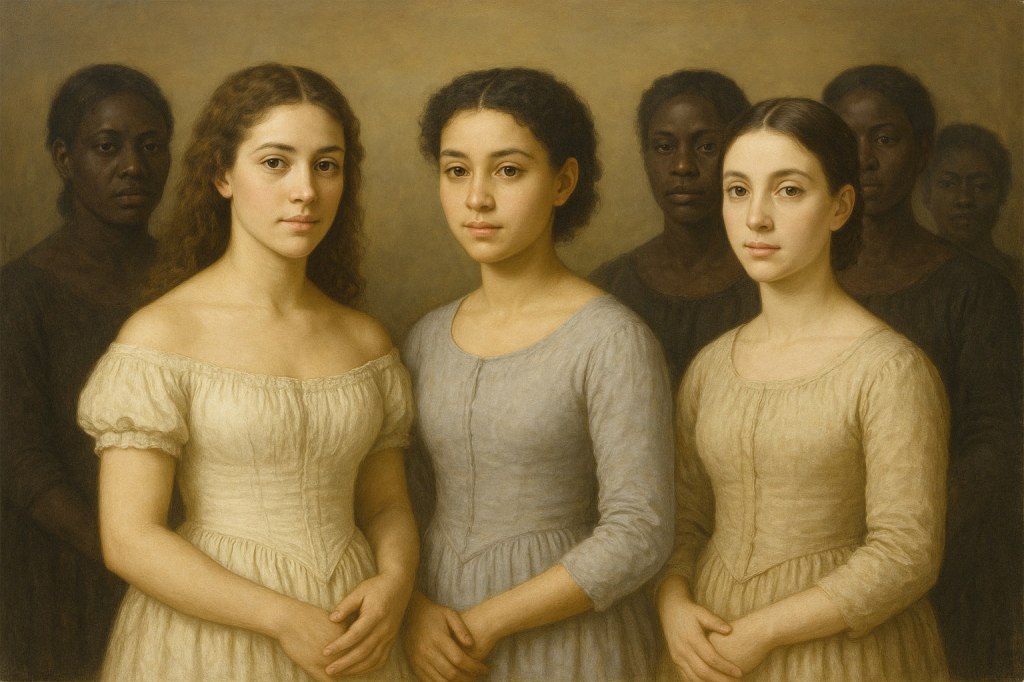
Mulattoes often came into existence through non-consensual sexual relationships between white male slave owners and enslaved African women. These unions were rarely romantic or voluntary; they were products of exploitation, coercion, and the unchecked power of white patriarchy. The children of these unions occupied an ambiguous social status. They were visibly lighter and sometimes given privileges over darker-skinned Africans, yet they were still enslaved and denied full humanity.

Economically, lighter-skinned slaves were often valued more highly in the slave markets. Auction records from New Orleans, Charleston, and the Caribbean show that Mulattoes, Quadroons, and Octoroons—terms denoting fractions of African ancestry—were sold for higher prices due to their perceived proximity to whiteness. In some cases, a beautiful light-skinned woman could fetch thousands of dollars—sometimes twice the price of a strong field laborer (Berry, 2007).

The hierarchy extended as follows: a Mulatto was half African, half European; a Quadroon was one-quarter African; and an Octoroon was one-eighth African. Each degree of whiteness supposedly brought refinement, beauty, and docility, qualities European buyers associated with superiority. This false racial science was a cornerstone of both slavery and early American eugenics.

Quadroon and Octoroon women, especially in New Orleans and parts of Louisiana, were sometimes groomed for what was known as the “plaçage” system. Under this arrangement, wealthy white men entered into unofficial unions with mixed-race women who were often educated, well-dressed, and trained in European manners. These relationships were not legal marriages but resembled concubinage. In exchange for companionship, these women received homes, money, and privileges denied to field slaves (Clark, 2013).

Plantation wives often felt deep resentment and humiliation over their husbands’ relationships with these women. The presence of mixed-race children—who sometimes lived in close proximity to the white household—served as constant reminders of betrayal. Historical letters and diaries reveal the rage, jealousy, and psychological torment many white women endured as they silently tolerated this hypocrisy (White, 1999).

Mulattoes, Quadroons, and Octoroons often worked inside the master’s home as cooks, maids, and nurses rather than in the fields. Their lighter complexion was falsely associated with higher intelligence and beauty. They became symbols of white men’s domination over both Black bodies and the institution of the family. This system reinforced colorism—a social order that persists even today.

Despite their elevated positions, these individuals lived under the same oppressive laws as all enslaved Africans. The “one-drop rule” in America classified anyone with African ancestry as Black, ensuring that even the lightest Octoroon remained enslaved if born to an enslaved mother. This legal principle ensured that slavery perpetuated itself across generations, regardless of physical appearance.

Mulattoes also faced rejection from both sides of society. They were often too “Black” to be accepted by whites, and too “white” to be fully trusted by darker-skinned slaves. This liminal identity created a painful dual consciousness—one that mirrored W.E.B. Du Bois’s later description of the “two-ness” of being both Black and American.

The valuation of mixed-race people as commodities is evident in slave ledgers and advertisements. For example, in the 1850s, a young Octoroon woman could sell for up to $3,000—a staggering sum when a skilled field hand might sell for $1,000 (Johnson, 1999). The intersection of race, beauty, and sex created a disturbing marketplace of human trafficking.

In urban centers like New Orleans, Charleston, and Havana, mixed-race women became central to elite social scenes. Some even gained temporary freedoms or wealth, though their status was always precarious. Freedom papers could be revoked, and any sign of rebellion risked severe punishment.

The plantation economy used these women as both workers and instruments of control. Their presence created divisions among enslaved people—divisions based on skin tone that mirrored European racial ideologies. This psychological warfare weakened unity among the enslaved, reinforcing white supremacy.

Christianity was also manipulated to justify this system. Slaveholders preached obedience while violating every moral tenet of the Bible. Yet enslaved people, including Mulattoes, found in Scripture the promise of deliverance. The story of Moses, the Exodus, and Deuteronomy 28 became powerful symbols of hope and identity.

After emancipation, colorism continued to shape Black communities. Some mixed-race families gained social advantages through education, passing, or wealth. Others were caught between worlds—accepted by neither the white elite nor the broader Black population.

The legacy of the Mulatto is thus deeply ambivalent. It reveals both the violence of racial oppression and the resilience of identity. The beauty, intelligence, and strength of mixed-race descendants are testimonies not to European “refinement” but to African endurance and divine grace.

The language of “Quadroon” and “Octoroon” has since been rejected as racist pseudoscience. Yet the scars of this history remain visible in modern discussions of beauty standards, social hierarchy, and representation in media.

For plantation wives, the mixed-race presence was a symbol of both moral failure and racial anxiety. For white men, it represented unchecked power. For the enslaved, it was a daily reminder of a world built on sexual exploitation and systemic cruelty.

Ultimately, the story of the Mulatto is not about privilege but pain—a reflection of how slavery corrupted family, faith, and love. It reveals the perverse intersection of race and desire that shaped America’s social fabric.

Today, scholars revisit these histories not merely to recount suffering, but to reclaim truth. The bloodlines of the enslaved, the Mulatto, the Quadroon, and the Octoroon tell a story of survival—one written not by choice, but by resilience and faith in freedom’s promise.

References

Berry, D. R. (2007). The Price for Their Pound of Flesh: The Value of the Enslaved from Womb to Grave, in the Building of a Nation. Beacon Press.

Clark, E. (2013). The Strange History of the American Quadroon: Free Women of Color in the Revolutionary Atlantic World. University of North Carolina Press.

Johnson, W. (1999). Soul by Soul: Life Inside the Antebellum Slave Market. Harvard University Press.

White, D. G. (1999). Ar’n’t I a Woman?: Female Slaves in the Plantation South. W.W. Norton & Company.

Psychological and Emotional Depths of Racism, Colorism, and Lookism.

Photo by Ali Drabo on Pexels.com

Racism, colorism, and lookism represent a triad of psychological violence that shapes human experience, distorting both identity and emotional well-being. These constructs intertwine to create hierarchies of worth rooted in superficial attributes—skin color, facial symmetry, and physical appearance—while leaving lasting scars on the psyche of those marginalized by them. Their effects extend far beyond social exclusion; they penetrate the self-concept, dismantling the foundations of self-esteem and belonging.

Racism is not merely an external act of discrimination—it is an internalized poison that teaches individuals to view themselves through the eyes of their oppressors. When a person of African descent absorbs racist messages about inferiority or hyper-visibility, a split occurs between their authentic self and their socially imposed identity. This psychological rupture, described by W.E.B. Du Bois (1903) as “double consciousness,” forces Black individuals to exist between two conflicting perceptions: who they truly are and how they are seen.

Colorism deepens this fracture by introducing an internal hierarchy within racial groups, privileging lighter skin as more beautiful, intelligent, or desirable. Rooted in colonial history, colorism functions as an inherited trauma that reinforces Eurocentric standards of worth. Studies have shown that darker-skinned individuals face harsher judgments in employment, education, and romantic desirability (Hunter, 2007). This creates an invisible caste system within the same racial identity, perpetuating cycles of low self-esteem and division.

The emotional consequences of colorism are profound, particularly for women. Dark-skinned women are often depicted as less feminine or less worthy of love, a stereotype perpetuated by media and societal norms. The absence of representation or the presence of negative portrayals leads to what psychologists term “internalized colorism”—a form of self-loathing or constant comparison to lighter peers. This condition manifests in depression, anxiety, and body dysmorphia, echoing generations of colonial degradation.

Men, too, are not immune to this system of valuation. In a world where light skin and European features are exalted, darker-skinned men are frequently stereotyped as aggressive or undesirable unless they attain wealth or fame. This conditional acceptance feeds into what scholars call “compensatory masculinity,” where self-worth becomes tied to external achievements rather than intrinsic identity (Majors & Billson, 1992). The psychological toll is heavy, fostering performance-based validation instead of authentic self-acceptance.

Lookism—the discrimination based on physical appearance—intersects with both racism and colorism, reinforcing social hierarchies of attractiveness that favor Eurocentric beauty ideals. The psychological effects of lookism can be as damaging as racial prejudice, leading to social anxiety, isolation, and chronic insecurity. Individuals who deviate from mainstream beauty standards often develop what psychologists refer to as “appearance-based self-worth,” where self-esteem fluctuates based on perceived attractiveness.

Racism, colorism, and lookism collectively weaponize the human gaze. The eyes of others become a source of judgment and trauma, transforming the act of being seen into an emotional burden. Frantz Fanon (1952) described this phenomenon in Black Skin, White Masks, recounting how the colonial gaze reduces the Black body to an object of otherness. Such dehumanization fractures the self, replacing the joy of identity with the anxiety of perception.

The family, often a place of refuge, can also become the site where these hierarchies are reinforced. Generations of internalized color preference lead parents to praise lighter children or to discourage darker-skinned ones from embracing their natural features. This subtle form of intra-racial discrimination plants seeds of insecurity early in life. Over time, these messages crystallize into adult self-doubt and relational struggles, perpetuating a cycle of self-denial.

In the context of love and relationships, colorism and lookism operate as silent dictators of desirability. Studies show that both men and women subconsciously associate lighter skin and Eurocentric features with higher social status and compatibility (Maddox & Gray, 2002). For darker individuals, this creates a psychological dilemma—wanting to be loved authentically yet fearing rejection for something immutable.

The emotional depth of these issues cannot be understood without addressing media influence. Hollywood, fashion, and advertising have historically upheld narrow definitions of beauty, centering whiteness as the ideal. Even when diversity is celebrated, it is often curated within acceptable limits—favoring lighter tones, looser curls, and symmetrical features. This reinforces the narrative that true beauty requires proximity to whiteness.

Social media, though often praised for democratizing visibility, has amplified lookism. Platforms that reward filtered perfection encourage constant comparison and digital self-surveillance. The curated self replaces the authentic self, and validation becomes addictive. For Black and brown users, the algorithm often mirrors historical biases—prioritizing lighter-skinned influencers or Eurocentric aesthetics.

Psychologically, this environment breeds what some researchers term “mirror trauma”—a form of emotional distress that arises from seeing distorted versions of oneself reflected in culture and technology. The self becomes fragmented between the reality of one’s body and the idealized digital fantasy that gains approval. Over time, this can lead to emotional numbness, perfectionism, and identity confusion.

The intersection of racism, colorism, and lookism also shapes social mobility. Those who visually conform to beauty norms often experience what sociologists call “aesthetic privilege.” This unearned advantage affects job opportunities, income levels, and even criminal sentencing outcomes. Studies reveal that lighter-skinned Black individuals are more likely to receive lenient treatment in the justice system (Viglione, 2018). Beauty thus becomes currency—a silent economy of worth rooted in colonial logic.

In educational settings, these biases shape teacher expectations and peer interactions. Research indicates that darker-skinned students are disciplined more harshly and perceived as less capable, even when their performance matches that of their lighter peers. These early experiences internalize inferiority, breeding self-doubt and academic disengagement (Hannon et al., 2013).

From a psychological standpoint, the internalization of beauty hierarchies functions as a form of self-surveillance—a mental colonization where individuals police their own features. This creates what bell hooks (1992) described as “aesthetic trauma,” where Black individuals struggle to see themselves as beautiful outside of white validation. Healing from this requires unlearning centuries of visual propaganda.

Spiritually, the damage runs deeper still. Many who grow up under the shadow of colorism question their divine worth. They subconsciously associate lighter skin with purity or godliness, reflecting how colonial religion once depicted holiness through whiteness. Reclaiming one’s spiritual identity, therefore, becomes an act of resistance—seeing oneself as made in the image of the Creator, not the colonizer.

Healing from these intertwined oppressions requires collective re-education. Communities must confront how they perpetuate colorist and lookist narratives through jokes, preferences, or casting choices. Recognizing these patterns allows for intentional change, transforming inherited bias into self-awareness.

Therapeutically, interventions must address both the individual and societal dimensions of appearance-based trauma. Cognitive-behavioral therapy can help reframe distorted beliefs about worth, while cultural therapy reconnects individuals to ancestral pride and historical truth. For many, embracing natural hair, melanin, or cultural fashion becomes a symbolic act of psychological liberation.

Emotionally, the journey toward self-acceptance involves mourning—grieving the years lost to self-hate, rejection, or invisibility. This grief process allows for rebirth, where identity is no longer contingent upon comparison but rooted in divine and cultural truth.

Art, literature, and music serve as tools of resistance. From Nina Simone’s defiant “To Be Young, Gifted and Black” to contemporary movements like #MelaninMagic, creative expression reclaims narrative control. These acts remind the world—and the self—that beauty is not a European export but a human inheritance.

The emotional healing of colorism and lookism requires a mirror reimagined—not one that distorts but one that reflects truth. Each shade, each feature, carries ancestral memory and divine intention. When individuals learn to see themselves as sacred art, the gaze of oppression loses power.

Ultimately, the psychological liberation from racism, colorism, and lookism is both personal and collective. It demands that we dismantle the systems that define beauty as hierarchy and worth as appearance. True freedom begins not when others affirm us, but when we affirm ourselves beyond their gaze.

References

Du Bois, W. E. B. (1903). The souls of Black folk. Chicago: A.C. McClurg.

Fanon, F. (1952). Black skin, white masks. Grove Press.

Hannon, L., Defina, R., & Bruch, S. (2013). The relationship between skin tone and school suspension for African Americans. Race and Social Problems, 5(4), 281–295.

hooks, b. (1992). Black looks: Race and representation. South End Press.

Hunter, M. (2007). The persistent problem of colorism: Skin tone, status, and inequality. Sociology Compass, 1(1), 237–254.

Majors, R., & Billson, J. M. (1992). Cool pose: The dilemmas of Black manhood in America. Lexington Books.

Maddox, K. B., & Gray, S. A. (2002). Cognitive representations of Black Americans: Reexploring the role of skin tone. Personality and Social Psychology Bulletin, 28(2), 250–259.

Viglione, J. (2018). The impact of skin tone on the criminal justice process. Race and Justice, 8(2), 175–200.

Racial Caste Systems: The Architecture of Hierarchy and Human Division.

Throughout history, societies have constructed hierarchies that determine human worth, access, and opportunity. A racial caste system is one of the most enduring forms of social stratification—an arrangement where race determines an individual’s status, mobility, and humanity within a society. Rooted in power, these systems are not merely social constructs but political technologies designed to preserve dominance and justify inequality (Feagin, 2013).

In the United States, the racial caste system originated with the transatlantic slave trade. Africans were systematically dehumanized, defined legally as property, and positioned at the bottom of the social order. This structure created a rigid racial hierarchy that survived emancipation and evolved through segregation, mass incarceration, and economic disparity (Alexander, 2010).

The American racial caste system was not accidental but deliberate. It was engineered through laws such as the Virginia Slave Codes of 1705 and later solidified through Jim Crow legislation. These legal instruments established whiteness as a form of property and superiority, ensuring that freedom and rights were racially distributed (Harris, 1993).

Caste systems rely on ideology to sustain themselves. In America, white supremacy functioned as the central narrative that rationalized subjugation. Pseudoscientific racism, biblical distortions, and economic exploitation merged to construct a worldview that depicted Africans and their descendants as inferior, thus justifying their oppression (Fields & Fields, 2012).

Globally, racial caste systems have appeared in various forms. The Indian caste system, though based on purity and birth rather than race, parallels the racial hierarchy of the West in its systemic exclusion of the Dalits (“untouchables”). Similarly, the apartheid regime in South Africa created a codified racial order that privileged whites and oppressed Africans through political and economic control (Fredrickson, 1981).

In Latin America, colonial powers instituted the casta system, which ranked individuals by racial mixture—from pure-blooded Spaniards at the top to Indigenous and African peoples at the bottom. This system demonstrates how racial stratification was a global phenomenon rooted in European imperialism (Martínez, 2008).

The concept of a racial caste system in modern America was revived in contemporary discourse by Michelle Alexander’s The New Jim Crow (2010). She argues that mass incarceration functions as a new racial caste, disenfranchising Black men through criminalization, restricted employment, and civic exclusion. Though slavery and segregation are abolished, their logic persists in the criminal justice system.

Caste systems persist because they evolve with society. When one form of racial control becomes untenable, it is replaced by another—slavery gave way to segregation, segregation to redlining, and redlining to mass incarceration. Each transformation preserves hierarchy while maintaining the illusion of progress (Wilkerson, 2020).

Sociologists describe racial caste systems as “closed systems,” where mobility is nearly impossible. The barriers are both structural and psychological, reinforced by stereotypes, institutional bias, and intergenerational trauma. These systems teach both the oppressed and the privileged their “place” within the social order (Omi & Winant, 2014).

The psychological impact of racial caste systems cannot be overstated. Black and brown individuals internalize inferiority through constant exposure to racism, while dominant groups internalize superiority as cultural normalcy. This dual conditioning ensures the persistence of inequality even without overt enforcement (Fanon, 1952).

Education plays a central role in reinforcing or dismantling caste systems. Historically, Black Americans were denied literacy and access to higher education to prevent empowerment. Even today, educational inequity, biased testing, and underfunded schools perpetuate the old caste boundaries in subtler forms (Ladson-Billings, 2006).

Economics also undergirds the racial caste hierarchy. Wealth accumulation among white Americans is directly tied to centuries of land theft, free Black labor, and discriminatory housing policies. Economic inequality thus becomes a material expression of the racial caste system, sustaining privilege through capital inheritance (Rothstein, 2017).

Religion has been used both to justify and to resist racial caste systems. Slaveholders once cited scripture to defend bondage, while liberation theologians and civil rights leaders later used the same texts to challenge oppression. Theological interpretations have therefore mirrored the moral tensions within society’s caste structures (Cone, 1975).

Media representation contributes to the perpetuation of caste by shaping public perception. Stereotypical portrayals of Black criminality, Asian servitude, or Latino illegality reinforce cultural hierarchies that align with economic and political control (hooks, 1992). These narratives normalize subordination and invisibility for marginalized groups.

The persistence of racial caste systems in democratic societies exposes a contradiction between declared ideals and lived realities. Nations that claim liberty and equality often maintain invisible systems of exclusion, allowing structural racism to flourish under the guise of meritocracy and neutrality (Bonilla-Silva, 2014).

Breaking racial caste systems requires more than moral outrage—it demands institutional transformation. Policies addressing education, housing, healthcare, and criminal justice must confront the racialized roots of inequality, not merely its symptoms (Kendi, 2019).

Social movements have historically played a critical role in challenging caste structures. From abolitionists to civil rights activists and the modern Black Lives Matter movement, collective resistance has been the most effective counterforce to entrenched hierarchy. These struggles reveal that caste is maintained by compliance but undone by courage (Taylor, 2016).

Globally, the persistence of racial hierarchy shows that caste is not uniquely American. From Australia’s treatment of Aboriginal peoples to Europe’s anti-immigrant rhetoric, the global order still privileges whiteness as the dominant standard of humanity and civilization (Painter, 2010).

The modern concept of race was not a natural or scientific discovery—it was a social and political invention that emerged primarily during the Age of Exploration (15th–18th centuries). Its purpose was to justify European colonization, slavery, and the exploitation of non-European peoples.

Origins in Pseudo-Science and Colonialism

1. Early European Encounters (15th–16th centuries)
Before the transatlantic slave trade, people were classified mainly by nationality, religion, or social status—not by skin color. However, when European explorers like the Portuguese and Spanish began to explore Africa, Asia, and the Americas, they encountered physical and cultural differences they sought to explain and control.

2. Justifying Enslavement and Colonial Rule
As the Atlantic slave trade grew, European powers needed a moral and theological rationale to enslave millions of Africans and seize Indigenous lands. They began to argue that nonwhite peoples were “inferior” or “subhuman.” This was a man-made ideology, not a scientific fact.

3. The Role of Enlightenment Thinkers (17th–18th centuries)
Ironically, during the so-called “Age of Reason,” European philosophers and scientists began categorizing humans by skin color and appearance, using false “scientific” reasoning.

  • Carl Linnaeus (1735), a Swedish naturalist, classified humans into subspecies based on continent and color (e.g., Homo europaeus albus for Europeans and Homo afer niger for Africans).
  • Johann Friedrich Blumenbach (1779) introduced five racial categories (Caucasian, Mongolian, Ethiopian, American, and Malay). His use of “Caucasian” helped cement whiteness as the ideal standard of beauty and intelligence.
  • Georges-Louis Leclerc de Buffon and others claimed environmental factors shaped human differences, but their theories were later distorted into racial hierarchies.

4. Race as a Tool of Power
By the 18th and 19th centuries, race became embedded in law, science, and religion. European colonizers institutionalized racial differences through:

  • Slave codes in the Americas
  • Jim Crow laws in the United States
  • Casta systems in Latin America
  • Apartheid in South Africa

These systems legally and socially defined who was considered “white” or “nonwhite,” determining access to education, property, and freedom.

5. The Myth of Scientific Racism (19th century)
So-called scientists like Samuel Morton (craniometry) and Josiah Nott claimed that skull size and brain shape determined intelligence. Their findings, later proven false, were used to argue for white superiority. These theories justified slavery and segregation by presenting racism as “scientific truth.”

6. The Shift in the 20th Century
After World War II and the Holocaust, when racial ideologies led to genocide, anthropologists like Franz Boas and Ashley Montagu dismantled the biological concept of race. They proved that genetic differences among humans are too small to justify racial divisions—humans share over 99.9% of the same DNA.

7. Modern Understanding
Today, race is understood as a social construct, not a biological reality. It has real consequences—shaping identity, privilege, and oppression—but it is rooted in historical systems of control.

The concept of race was created by European thinkers and colonial powers between the 15th and 18th centuries as a tool to legitimize inequality, slavery, and empire. Over time, it evolved into a global system of social hierarchy, deeply influencing how societies perceive and treat one another.


Ultimately, the racial caste system is an architecture of power—designed, maintained, and justified through centuries of policy, ideology, and violence. To dismantle it requires not only equity in law but equality in humanity. The reconstruction of society demands recognition that no human being should be bound by the color of their skin, the shape of their face, or the history of their birth. The future of justice depends on the collective dismantling of the myths that sustain racial caste systems. When truth replaces denial and love replaces hierarchy, humanity will finally step beyond the shadow of its own divisions. Until then, the work of liberation remains unfinished, and the echoes of caste still whisper through the walls of every institution built upon its foundation.


References

Alexander, M. (2010). The new Jim Crow: Mass incarceration in the age of colorblindness. The New Press.
Bonilla-Silva, E. (2014). Racism without racists: Color-blind racism and the persistence of racial inequality in America. Rowman & Littlefield.
Cone, J. H. (1975). God of the oppressed. Orbis Books.
Fanon, F. (1952). Black skin, white masks. Grove Press.
Feagin, J. R. (2013). Systemic racism: A theory of oppression. Routledge.
Fields, K. E., & Fields, B. J. (2012). Racecraft: The soul of inequality in American life. Verso.
Fredrickson, G. M. (1981). White supremacy: A comparative study in American and South African history. Oxford University Press.
Harris, C. I. (1993). Whiteness as property. Harvard Law Review, 106(8), 1707–1791.
hooks, b. (1992). Black looks: Race and representation. South End Press.
Kendi, I. X. (2019). How to be an antiracist. One World.
Ladson-Billings, G. (2006). From the achievement gap to the education debt. Educational Researcher, 35(7), 3–12.
Martínez, M. E. (2008). Genealogical fictions: Limpieza de sangre, religion, and gender in colonial Mexico. Stanford University Press.
Omi, M., & Winant, H. (2014). Racial formation in the United States. Routledge.
Painter, N. I. (2010). The history of white people. W. W. Norton.
Rothstein, R. (2017). The color of law: A forgotten history of how our government segregated America. Liveright Publishing.
Taylor, K.-Y. (2016). From #BlackLivesMatter to Black liberation. Haymarket Books.
Wilkerson, I. (2020). Caste: The origins of our discontents. Random House.Fredrickson, G. M. (2002). Racism: A Short History. Princeton University Press.

Smedley, A., & Smedley, B. D. (2005). Race as biology is fiction, racism as a social problem is real. American Psychologist, 60(1), 16–26.

Gould, S. J. (1981). The Mismeasure of Man. W. W. Norton.

Fields, B. J., & Fields, K. (2012). Racecraft: The Soul of Inequality in American Life. Verso.

Painter, N. I. (2010). The History of White People. W. W. Norton.

Boas, F. (1940). Race, Language, and Culture. University of Chicago Press.

Types of Racism

Racism is not a singular phenomenon but a complex system of beliefs, policies, and practices that establish and maintain racial hierarchies. It operates on individual, institutional, and structural levels, shaping everything from identity formation to social mobility. Understanding the types of racism is critical for dismantling the deeply embedded inequities that continue to define societies around the world (Bonilla-Silva, 2014).

Individual racism occurs when a person’s beliefs, attitudes, or actions consciously or unconsciously perpetuate racial prejudice or discrimination. It is expressed through personal bias, stereotyping, and direct acts of hostility toward people of another race. Though often the most visible form of racism, it is only one layer of a much larger system (Tatum, 2017).

Interpersonal racism happens in day-to-day interactions, often disguised as microaggressions. These subtle acts—such as questioning a person’s intelligence or making assumptions about their background—communicate inferiority and reinforce racial hierarchies. The cumulative impact of such encounters can result in significant psychological harm (Sue et al., 2007).

Internalized racism occurs when individuals from marginalized racial groups adopt the negative beliefs or stereotypes perpetuated by dominant groups. This internal oppression manifests through self-doubt, assimilation, and the devaluation of one’s cultural heritage. It often results from centuries of colonization, media misrepresentation, and social exclusion (Pyke, 2010).

Institutional racism refers to policies and practices embedded within organizations—such as schools, corporations, or law enforcement—that produce unequal outcomes along racial lines. Even when not explicitly racist, these structures perpetuate disparities in employment, housing, education, and criminal justice (Carmichael & Hamilton, 1967).

Structural racism extends beyond individual institutions and reflects the historical accumulation of inequality across systems. It is the totality of social, economic, and political mechanisms that normalize racial disadvantage and privilege. Structural racism is both pervasive and self-reinforcing, making it one of the most difficult forms to dismantle (Gee & Ford, 2011).

Systemic racism operates as a comprehensive framework that upholds racial inequality in virtually every sphere of life. It is the “normalization and legitimization” of various dynamics—historical, cultural, and institutional—that routinely advantage white people while disadvantaging people of color (Feagin, 2013).

Cultural racism manifests through the promotion of one group’s norms, values, and aesthetics as the universal standard. This form of racism is deeply embedded in media, beauty ideals, education, and religion. It often leads to the marginalization of cultural expressions that do not align with dominant ideals (hooks, 1992).

Colorism—a byproduct of cultural and systemic racism—favors lighter skin tones over darker ones, even within the same racial group. This phenomenon originates from colonial hierarchies that equated proximity to whiteness with superiority and privilege. Colorism affects access to opportunities, social status, and self-worth (Hunter, 2007).

Environmental racism refers to the disproportionate exposure of marginalized racial communities to environmental hazards. Examples include toxic waste sites, polluted neighborhoods, and limited access to clean water and green spaces. This form of racism connects race directly to public health outcomes (Bullard, 2000).

Economic racism operates through inequitable labor systems, wage disparities, and barriers to financial mobility. The racial wealth gap in the United States, for instance, is not accidental but the result of centuries of discriminatory practices—from slavery and sharecropping to redlining and employment discrimination (Oliver & Shapiro, 2019).

Educational racism is evident in underfunded schools, biased curricula, and tracking systems that disadvantage students of color. These inequities reinforce generational poverty and limit access to higher education, perpetuating systemic disparities (Ladson-Billings, 2006).

Political racism manifests when laws, policies, or voting systems suppress the political power of racial minorities. Gerrymandering, voter ID laws, and disenfranchisement are tools historically used to limit Black and brown representation in governance (Anderson, 2016).

Medical racism exposes racial disparities in health care access, treatment, and outcomes. From the exploitation of enslaved Black bodies in early medical research to the ongoing neglect of pain reports by Black patients, racism remains a critical determinant of health inequality (Washington, 2006).

Linguistic racism operates through language hierarchies that stigmatize certain dialects or accents as “less educated” or “unprofessional.” This form of bias privileges white, Western speech norms and penalizes linguistic diversity within communities of color (Flores & Rosa, 2015).

Religious racism merges ethnocentrism with theological bias, often using religion to justify racial domination. Historically, Christianity was weaponized to validate slavery and colonization, presenting whiteness as divine and Blackness as cursed (Cone, 1969). The aftershocks of this manipulation still influence racialized theology today.

Spatial racism refers to the deliberate segregation of communities through housing policies and urban planning. Practices like redlining, restrictive covenants, and gentrification maintain racial boundaries, limiting access to resources and generational wealth (Rothstein, 2017).

Media racism perpetuates stereotypes that frame people of color as dangerous, inferior, or hypersexualized. Such portrayals shape public perception, influence policy, and justify violence. The absence of nuanced representation contributes to cultural erasure (Entman & Rojecki, 2001).

Colorblind racism is a contemporary form that denies the existence of racial inequality by asserting that race “no longer matters.” This ideology ignores systemic inequities and discourages meaningful discussions about race, ultimately maintaining the status quo (Bonilla-Silva, 2014).

Ultimately, racism manifests in diverse but interconnected ways—individual prejudice feeding institutional policy, cultural bias informing structural design. These interlocking forms ensure that racial inequality is both normalized and invisible to those who benefit from it. Understanding the many faces of racism is not an intellectual exercise but a moral imperative toward dismantling its hold on humanity.


References (APA 7th Edition)

Anderson, C. (2016). White rage: The unspoken truth of our racial divide. Bloomsbury.

Bonilla-Silva, E. (2014). Racism without racists: Color-blind racism and the persistence of racial inequality in America. Rowman & Littlefield.

Bullard, R. D. (2000). Dumping in Dixie: Race, class, and environmental quality. Westview Press.

Carmichael, S., & Hamilton, C. V. (1967). Black power: The politics of liberation. Vintage Books.

Cone, J. H. (1969). Black theology and Black power. Seabury Press.

Entman, R. M., & Rojecki, A. (2001). The Black image in the White mind: Media and race in America. University of Chicago Press.

Feagin, J. R. (2013). Systemic racism: A theory of oppression. Routledge.

Flores, N., & Rosa, J. (2015). Undoing appropriateness: Raciolinguistic ideologies and language diversity in education. Harvard Educational Review, 85(2), 149–171.

Gee, G. C., & Ford, C. L. (2011). Structural racism and health inequities. Du Bois Review, 8(1), 115–132.

hooks, b. (1992). Black looks: Race and representation. South End Press.

Hunter, M. (2007). The persistent problem of colorism: Skin tone, status, and inequality. Sociology Compass, 1(1), 237–254.

Ladson-Billings, G. (2006). From the achievement gap to the education debt. Educational Researcher, 35(7), 3–12.

Oliver, M. L., & Shapiro, T. M. (2019). Black wealth/White wealth: A new perspective on racial inequality. Routledge.

Pyke, K. D. (2010). What is internalized racial oppression and why don’t we study it? Sociological Perspectives, 53(4), 551–572.

Rothstein, R. (2017). The color of law: A forgotten history of how our government segregated America. Liveright Publishing.

Sue, D. W., Capodilupo, C. M., & Holder, A. M. B. (2007). Racial microaggressions in everyday life. American Psychologist, 62(4), 271–286.

Tatum, B. D. (2017). Why are all the Black kids sitting together in the cafeteria? Basic Books.

Washington, H. A. (2006). Medical apartheid: The dark history of medical experimentation on Black Americans from colonial times to the present. Doubleday.

ChatGPT can make mistakes. Check important info.