Tag Archives: poetry

20 Practical Principles for Godly Dating

Godly dating is a relationship approach rooted in spiritual principles, prioritizing character, faith, and long-term compatibility over fleeting attraction or personal convenience. It involves intentionally seeking a partner who shares core values, a commitment to moral integrity, and a desire to honor God in their actions, decisions, and interactions. Unlike casual dating, godly dating emphasizes emotional and physical boundaries, open communication, and mutual respect, fostering growth and accountability for both individuals. The purpose is not merely companionship or romantic pleasure but preparation for a covenantal, lifelong partnership—often marriage—that reflects God’s design for love, unity, and shared purpose.

Godly dating is about more than attraction—it’s a journey of intentional love guided by faith and values. It’s choosing partners who share your principles, honor God in their actions, and prioritize character over convenience. Boundaries, honesty, and mutual respect are the foundation, while prayer and discernment guide decisions. This approach teaches patience, emotional maturity, and alignment of life goals, preparing individuals for a healthy, lasting, and spiritually grounded relationship.

In a world of fleeting connections, godly dating reminds us that love is best nurtured with intention, integrity, and divine guidance. By dating with purpose, you not only find a partner but build a relationship that grows in harmony, trust, and shared faith—a love that honors God and enriches both lives.

In godly dating, prayer, spiritual guidance, and discernment play key roles. Decisions are made thoughtfully, avoiding impulsive choices driven by societal pressures or superficial attraction. Partners are encouraged to cultivate patience, grace, and understanding, recognizing that true compatibility emerges from aligned character, vision, and values rather than chemistry alone. Financial responsibility, emotional maturity, and honesty are also essential, as godly dating seeks to build a foundation for sustainable, stable relationships that honor both individuals and God’s principles.

  1. Prioritize spiritual alignment – date someone who shares your faith and core values. Flee fornication, stay holy and pure.
  2. Practice patience – wait for the right person rather than settling for convenience.
  3. Set healthy boundaries – emotional, physical, and financial boundaries protect both partners.
  4. Communicate openly – honesty and transparency are essential from the start.
  5. Seek mutual respect – honor your partner’s dignity, opinions, and differences.
  6. Engage in prayer together – invite God’s guidance into your dating journey.
  7. Observe character – watch actions more than words; integrity matters most.
  8. Avoid rushed intimacy – physical or emotional closeness should develop gradually.
  9. Evaluate shared vision – discuss life goals, family planning, and career aspirations early.
  10. Practice forgiveness – misunderstandings will arise; grace fosters growth and trust.
  11. Involve accountability – trusted mentors or leaders can offer guidance and perspective.
  12. Build emotional intelligence – understand your feelings and empathize with your partner.
  13. Maintain financial wisdom – discuss money habits and stewardship before commitment.
  14. Identify red flags early – dishonesty, abuse, or disrespect should never be ignored.
  15. Avoid distractions – social media or peer pressure should not dictate dating decisions.
  16. Focus on long-term growth – choose relationships that edify both partners spiritually and emotionally.
  17. Celebrate individuality – maintain personal goals, hobbies, and friendships.
  18. Learn from past relationships – reflect on lessons without letting past hurt dictate choices.
  19. Keep accountability in conflicts – disagreements should be resolved with respect and humility.
  20. Seek covenantal commitment – date with the intention of discerning marriage or lifelong partnership.

Godly dating transforms the pursuit of love into a disciplined, intentional, and spiritually guided journey. It teaches that meaningful relationships are cultivated through respect, patience, and shared faith, not convenience or impulsivity. By prioritizing character, values, and long-term purpose, godly dating prepares individuals for healthy, fulfilling, and enduring partnerships. Ultimately, it emphasizes that love guided by divine principles is not only emotionally rewarding but also spiritually enriching, shaping individuals to grow together in harmony, integrity, and mutual devotion.

References
Holy Bible, King James Version. (2017). Hendrickson Publishers. (Original work published 1611).
Cloud, H., & Townsend, J. (2018). Boundaries in dating. Zondervan.
Chapman, G. (2015). The five love languages: How to express heartfelt commitment to your mate. Northfield Publishing.
Keller, T. (2017). The meaning of marriage: Facing the complexities of commitment with the wisdom of God. Dutton.
Fowler, J. W. (2019). Stages of faith: The psychology of human development and the quest for meaning. HarperOne.


🌹 1000 Roses 🌹

From Author: I want to take a moment to express my gratitude to the men who have honored me with roses throughout my life—1,000 roses, given on 11 different occasions. Some were gestures from royalty, others from friends, and some from my late husband, whose love and memory remain etched in my heart. Every 1000 roses, no matter the giver, has been a symbol of affection, devotion, and the moments of beauty that have graced my journey. This poem, 1000 Roses, is a reflection of that gratitude and the emotions woven into every petal.


1000 Roses

A thousand roses, each a whispered vow,
In moments fleeting, I remember them now.
Blush of dawn, crimson fire, softest white,
Each bloom a story, a memory alight.

Some came with crowns, from men of high place,
Royalty’s hand, a gesture of grace.
Their petals spoke of elegance, rare,
A fleeting dance of splendor and care.

Some came from friends, steady and true,
With laughter and warmth in every hue.
No titles, no crowns, just hearts aligned,
In the giving, love’s simplicity I find.

And some came from the one who shared my days,
My late husband, whose love lit my way.
Each rose a heartbeat, tender and near,
A fragrance of comfort that lingers here.

I traced their petals, soft as whispered prayer,
Felt their presence, their thoughtfulness rare.
A thousand roses, yet each distinct,
A tapestry of hearts, delicately linked.

Some roses wore the blush of shy delight,
Some burned with passion, fierce as night.
Some whispered secrets only I could hear,
Some held laughter, some held a tear.

Each occasion, a mark upon my soul,
A thousand roses, making me whole.
The numbers grow, yet the feeling stays,
In silent reflection, in sunlight rays.

I thank the givers, known and unknown,
For every rose, how my heart has grown.
In velvet folds, love’s language unfurls,
A thousand roses, a thousand worlds.

They remind me that love wears many hues,
In red and gold, and gentle blues.
In every petal, a story of grace,
A thousand roses, a thousand embraces.

Through time and memory, each bloom survives,
A fragrant echo of cherished lives.
And though some hands now rest beyond,
Their roses remain, forever fond.

A thousand roses, yet still I see,
The depth of love that surrounds me.
Royalty, friendship, a husband’s devotion,
All carried to me on petals’ motion.

So here I stand, with gratitude deep,
For every rose, for every keep.
A thousand roses, eleven times given,
Each a whisper of heaven, a fragment of heaven.

The Vanity Trap: When Outer Beauty Hides Inner Emptiness.

Photo by Gustavo Almeida on Pexels.com

In contemporary society, the pursuit of physical beauty has become a dominant cultural preoccupation. Yet, behind the allure of aesthetic perfection lies a pervasive emptiness, as individuals often equate outward appearance with personal worth, neglecting the cultivation of inner life.

Vanity, defined as excessive pride in or concern with one’s appearance, can function as both a protective and performative mechanism. Individuals may invest in beauty to gain social approval, masking insecurity, trauma, or unmet emotional needs (Cash & Pruzinsky, 2002).

Media perpetuates the myth that beauty equals success, happiness, and moral virtue. From advertising to social media, the constant display of idealized bodies encourages the internalization of unrealistic standards, fostering dissatisfaction and superficial self-evaluation (Tiggemann & Slater, 2014).

Psychologically, this focus on appearance can contribute to body dysmorphic disorders, low self-esteem, and anxiety. When self-worth is tethered to external validation, individuals may experience perpetual inadequacy, regardless of how closely they meet cultural beauty norms (Grogan, 2016).

The vanity trap is particularly pronounced in cultures that equate youthfulness and symmetry with moral or social value. Such frameworks obscure the importance of character, wisdom, and relational depth, leading to a distorted sense of identity (Etcoff, 1999).

Historically, beauty has been leveraged as a form of social capital. Women and men with “desirable” features were often granted privileges, while those who diverged from these norms faced marginalization. This reinforces the notion that beauty is not only aesthetic but also transactional (Wolf, 1991).

Social comparison intensifies the vanity trap. In environments saturated with images of curated perfection, individuals measure themselves against often unattainable ideals, reinforcing feelings of inadequacy and fostering envy (Fardouly et al., 2015).

The psychological effects of vanity extend to relationships. When outward appearance becomes the primary measure of worth, individuals may struggle with intimacy, emotional vulnerability, and authentic connection, as relational bonds are predicated on superficial criteria (Fredrickson & Roberts, 1997).

Beauty obsession can also distract from personal growth. Time, energy, and resources invested in achieving aesthetic ideals may eclipse pursuits of intellectual, spiritual, and emotional development, leaving a hollow sense of accomplishment (Cash & Pruzinsky, 2002).

The cultural reinforcement of vanity intersects with gendered expectations. Women historically bear disproportionate pressure to maintain appearance, while men increasingly face expectations to cultivate physical fitness and style. Both groups risk internalizing external validation as self-definition (Grogan, 2016).

Social media magnifies these pressures. Platforms that prioritize visual content encourage performative beauty, where likes, comments, and followers become proxies for self-worth, often obscuring authentic personal identity (Fardouly et al., 2015).

Vanity can serve as a coping mechanism for deeper emotional wounds. Individuals may pursue perfection in appearance to compensate for rejection, neglect, or trauma, using beauty as a shield to avoid confronting inner pain (Cash & Pruzinsky, 2002).

Religious and spiritual traditions emphasize the primacy of inner virtue over external appearance. Scriptures, such as 1 Samuel 16:7, highlight that God values the condition of the heart, not outward appearances, challenging societal obsessions with beauty. This perspective offers a pathway to reconcile identity with moral and spiritual integrity.

Therapeutic interventions can address the inner emptiness associated with vanity. Cognitive-behavioral therapy, mindfulness, and narrative therapy help individuals disentangle self-worth from appearance, fostering internal validation and emotional resilience (Cash & Pruzinsky, 2002).

Community and relational contexts are crucial. Mentorship, authentic friendships, and supportive family structures provide mirrors for self-worth based on character and action, rather than appearance, reducing the compulsion toward superficial validation (Ward & Brown, 2015).

Art and creative expression can redirect focus from appearance to inner life. Through writing, painting, music, and performance, individuals can explore identity, emotions, and purpose, cultivating fulfillment that transcends external aesthetics (Etcoff, 1999).

The vanity trap is cyclical, often reinforced across generations. Children observing parental preoccupation with appearance may internalize similar values, perpetuating an endless pursuit of external approval at the expense of emotional and spiritual depth (Danieli, 1998).

Cultural critique highlights the intersection of consumerism and vanity. Beauty industries capitalize on insecurities, creating demand for products and services that promise perfection but rarely deliver lasting satisfaction, commodifying self-esteem (Wolf, 1991).

Reclaiming self-worth requires deliberate introspection. Recognizing the limits of beauty, embracing imperfection, and investing in internal growth can counter the emptiness produced by vanity. True confidence stems from alignment of values, purpose, and character with lived experience.

Ultimately, confronting the vanity trap entails a paradigm shift: valuing inner beauty, moral integrity, emotional depth, and relational authenticity over transient physical ideals. This reorientation fosters holistic well-being, resilient self-esteem, and meaningful human connection.


References

  • Cash, T. F., & Pruzinsky, T. (2002). Body image: A handbook of theory, research, and clinical practice. Guilford Press.
  • Danieli, Y. (1998). International handbook of multigenerational legacies of trauma. Plenum Press.
  • Etcoff, N. (1999). Survival of the prettiest: The science of beauty. Doubleday.
  • Fardouly, J., Diedrichs, P. C., Vartanian, L. R., & Halliwell, E. (2015). Social comparisons on social media: The impact of Facebook on young women’s body image concerns and mood. Body Image, 13, 38–45.
  • Fredrickson, B. L., & Roberts, T.-A. (1997). Objectification theory: Toward understanding women’s lived experiences and mental health risks. Psychology of Women Quarterly, 21(2), 173–206.
  • Grogan, S. (2016). Body image: Understanding body dissatisfaction in men, women, and children. Routledge.
  • Tiggemann, M., & Slater, A. (2014). NetGirls: The Internet, Facebook, and body image concern in adolescent girls. International Journal of Eating Disorders, 47(6), 630–643.
  • Ward, E., & Brown, R. L. (2015). Mental health stigma and African Americans. Journal of African American Studies, 19(2), 137–152.
  • Wolf, N. (1991). The beauty myth: How images of beauty are used against women. HarperCollins.

Brown Girl Paradigm: A Psychology and Poetry of Self

The journey of a brown-skinned girl is both a psychological and spiritual odyssey—a navigation of identity, societal perception, and self-affirmation. From the earliest moments of self-awareness, she encounters a world that categorizes, judges, and at times diminishes her. Yet within the contours of her skin lies a universe of history, resilience, and divine purpose. The Brown Girl Paradigm is not merely about survival; it is about reclamation, self-love, and the deliberate crafting of identity.

Psychologically, colorism and societal bias shape self-perception from a young age. Studies show that darker-skinned girls often experience lower self-esteem due to internalized societal standards of beauty (Hunter, 2007). The media’s glorification of Eurocentric features exacerbates this effect, making self-acceptance a revolutionary act. The brown girl learns early that her worth is not always affirmed externally, yet she finds in this challenge an opportunity for resilience.

The poetic self emerges as a method of coping, reflection, and empowerment. Words become mirrors and shields. She writes:

“My melanin is sunlight captured in skin,
A map of ancestry that refuses to fade.
I am the echo of queens whose crowns were unseen,
And the promise of daughters who will rise unafraid.”

Psychology teaches that self-narrative is foundational to mental health. By embracing a personal narrative of strength and beauty, the brown girl rewrites the stories imposed upon her. She moves from internalized oppression to conscious affirmation, aligning her self-image with her inherent value (Hooks, 2000).

Biblical scripture provides spiritual reinforcement for this journey. Psalm 139:14 (KJV) declares, “I will praise thee; for I am fearfully and wonderfully made: marvellous are thy works; and that my soul knoweth right well.” This verse validates the intrinsic worth of the brown girl, affirming that her creation is intentional, unique, and magnificent.

In adolescence, identity formation is a critical phase. Erikson’s stages of psychosocial development identify this period as one of seeking identity versus role confusion (Erikson, 1968). For the brown girl, this stage is complicated by external prejudices and societal expectations. Yet it also presents an opportunity to claim her narrative, to assert her beauty, intellect, and moral compass against a backdrop of historical erasure.

Poetry, art, and self-expression serve as instruments of both healing and declaration. Through creative outlets, she confronts stereotypes, celebrates heritage, and communicates truths that statistics or theories cannot capture. Each stanza and brushstroke becomes a reclamation of voice, an assertion of selfhood in a world often intent on misrepresentation.

The intersection of faith and psychology offers further empowerment. By integrating spiritual practices—prayer, meditation on scripture, and community worship—the brown girl fortifies her self-concept and builds resilience against societal marginalization. Proverbs 31:25 (KJV) illustrates this principle: “Strength and honour are her clothing; and she shall rejoice in time to come.” Strength and honor, here, are internalized qualities cultivated through awareness, reflection, and faith.

Family and community profoundly influence self-perception. Supportive mentors, relatives, and peers can reinforce confidence and guide the brown girl in embracing her unique identity. Conversely, neglect or internalized bias within these systems can challenge self-esteem. The duality underscores the importance of intentional teaching, affirmation, and cultural education, ensuring the continuity of pride and purpose.

The brown girl’s psychology is also shaped by historical consciousness. Understanding ancestry, the legacies of slavery, colonialism, and African civilizations provides context and validates her experiences. This historical anchoring transforms perceived disadvantage into resilience, highlighting survival, creativity, and leadership embedded in her lineage.

Self-care, both psychological and physical, becomes an act of rebellion and affirmation. Caring for the body, mind, and spirit counters societal messages of neglect and invisibility. As 1 Corinthians 6:19-20 (KJV) notes, “What? know ye not that your body is the temple of the Holy Ghost which is in you, which ye have of God, and ye are not your own? For ye are bought with a price: therefore glorify God in your body, and in your spirit, which are God’s.” Mindful attention to oneself aligns with both spiritual and psychological integrity.

The brown girl also negotiates societal expectations around beauty, intellect, and behavior. She learns to assert her voice in academic, professional, and social spaces while preserving authenticity. This requires psychological dexterity: the capacity to navigate multiple cultural contexts without internalizing limiting stereotypes.

Peer influence plays a crucial role in shaping self-image. Positive reinforcement from peers, mentors, and media representations of brown-skinned women thriving can counteract the pervasive messages of inferiority. Conversely, negative reinforcement may perpetuate self-doubt. Intentional exposure to affirming role models is, therefore, a psychological strategy of empowerment.

Poetry further bridges psychology and spirituality, offering a reflective sanctuary:

“I walk in the light of ancestors’ eyes,
Their wisdom flows through my veins.
Every step I take is resistance,
Every breath I exhale, inheritance.”

This form of expression validates emotion, strengthens identity, and cultivates resilience. It is a testament to the brown girl’s capacity for introspection, self-healing, and transformative growth.

In adulthood, the Brown Girl Paradigm evolves into a framework for self-advocacy and societal contribution. Psychological resilience enables her to navigate workplace discrimination, relational challenges, and societal bias while preserving self-worth and moral integrity. She embodies both wisdom and power, grounded in her historical, spiritual, and psychological heritage.

The cultivation of self-love is an ongoing process. Affirmations, reflective practices, and spiritual engagement help maintain self-concept amid societal fluctuations. Brown girls who embrace this paradigm model for others the possibility of thriving despite systemic oppression.

Ultimately, the Brown Girl Paradigm is a synthesis of psychology, poetry, and faith. It celebrates identity, confronts societal bias, and nurtures resilience. It transforms inherited trauma into empowerment, internalized oppression into affirmation, and invisibility into radiance.

The journey of self-discovery is both intimate and universal. By integrating psychological insight, creative expression, and spiritual grounding, brown girls assert their rightful place as confident, capable, and beautiful beings. In doing so, they embody a paradigm of excellence, resilience, and divine design.


References

Erikson, E. H. (1968). Identity: Youth and Crisis. New York: Norton.
Hooks, B. (2000). Where We Stand: Class Matters. New York: Routledge.
Hunter, M. L. (2007). The Persistent Problem of Colorism: Skin Tone, Status, and Inequality. Sociology Compass, 1(1), 237–254.
Psalm 139:14, KJV.
Proverbs 31:25, KJV.
1 Corinthians 6:19-20, KJV.
Cross, W. E., Jr., & Fhagen-Smith, P. E. (2001). African-American identity development and mental health. In C. L. Wijeyesinghe & B. W. Jackson III (Eds.), New perspectives on racial identity development: A theoretical and practical anthology (pp. 21–34). New York: New York University Press.
Tatum, B. D. (2017). Why Are All the Black Kids Sitting Together in the Cafeteria? And Other Conversations About Race. New York: Basic Books.

Black Men and Broken Systems: Reclaiming Purpose Through Pain

For centuries, Black men have been positioned at the intersection of systemic oppression, cultural misunderstanding, and social vulnerability. Their struggles cannot be viewed in isolation; they are the result of deeply rooted systems that were never built with their flourishing in mind. Yet, in the midst of these structures, Black men continue to pursue purpose, identity, and restoration.

The legacy of slavery established the earliest disruptions to Black male identity. Enslaved men were stripped of autonomy, dignity, and family stability, creating generational wounds that still echo through modern society (Alexander, 2010).

Jim Crow laws further entrenched barriers that limited employment, education, and political participation. Even after these laws were dismantled, their psychological and economic impacts endured, shaping the environments in which many Black men grew up (Du Bois, 1903).

Mass incarceration, often labeled the “New Jim Crow,” disproportionately targets Black men, removing them from communities, families, and careers. This system creates cycles of trauma that are passed on to younger generations (Alexander, 2010).

Educational inequality also plays a major role in the brokenness many Black men navigate. Underfunded schools, biased disciplinary practices, and the school-to-prison pipeline disrupt potential before it has a chance to fully form (Ferguson, 2000).

Economically, Black men face higher unemployment rates, wage discrimination, and limited access to generational wealth. These hardships often lead to feelings of inadequacy, frustration, and loss of purpose (Pager, 2003).

Media portrayals deepen these wounds by depicting Black men as dangerous, irresponsible, or emotionally detached. Such stereotypes influence everything from hiring decisions to policing practices, reinforcing a distorted narrative of Black masculinity (hooks, 2004).

Yet despite these systemic pressures, Black men continue to demonstrate extraordinary resilience. Many find healing in faith, spirituality, and the belief that suffering can birth strength and transformation.

Purpose is often forged in pain, and Black men who confront their challenges with transparency and courage discover a deeper sense of identity. Their resilience becomes not only personal but generational, influencing sons, brothers, and communities.

The role of fatherhood is profoundly important. Even with societal attempts to erase the presence of Black fathers, research shows that involved Black men are among the most engaged and nurturing parental figures in the nation (Cabrera et al., 2018).

Brotherhood and mentorship are also vital. When Black men pour into one another—through conversation, guidance, accountability, and shared experience—they create powerful networks of healing and empowerment.

Therapy and mental health awareness have become essential tools. Breaking the stigma around emotional vulnerability allows Black men to reclaim their humanity and confront trauma with honesty rather than silence (Ward, 2005).

Faith communities also provide grounding spaces where Black men reconnect with identity and divine purpose. Scripture reminds them that suffering can refine rather than destroy, and that purpose is often revealed through endurance.

Creativity is another medium of reclamation. Music, poetry, storytelling, and art allow Black men to express what society often refuses to hear. These forms of expression turn pain into legacy.

Black entrepreneurs and leaders are rewriting narratives by building businesses, influencing culture, and creating opportunities where systems have failed. Their success challenges the myth of inferiority and proves the power of reclaimed purpose.

Communities thrive when Black men heal. Their emotional, spiritual, and economic restoration strengthens families, reduces violence, and reshapes entire neighborhoods.

Healing is not an individual journey; it is communal and generational. When one Black man breaks a cycle, he shifts the trajectory for everyone connected to him.

Reclaiming purpose requires confronting truth—about broken systems, personal trauma, and internalized beliefs. It is difficult work, but transformative work.

In the end, the story of Black men is not defined by the systems that tried to break them. It is defined by their relentless pursuit of dignity, identity, and purpose—even when the world attempts to deny them both. Their resilience is not only a testament to survival but a blueprint for liberation.


References

  • Alexander, M. (2010). The new Jim Crow: Mass incarceration in the age of colorblindness. The New Press.
  • Cabrera, N., Fagan, J., & Farrie, D. (2018). Explaining the father involvement gap: Race, class, and caregiving in the U.S. Journal of Marriage and Family, 80(3), 691–712.
  • Du Bois, W. E. B. (1903). The souls of Black folk. A.C. McClurg.
  • Ferguson, A. A. (2000). Bad boys: Public schools in the making of Black masculinity. University of Michigan Press.
  • hooks, bell. (2004). We real cool: Black men and masculinity. Routledge.
  • Pager, D. (2003). The mark of a criminal record. American Journal of Sociology, 108(5), 937–975.
  • Ward, E. (2005). Keeping it real: A grounded theory study of Black men’s lived experience and mental health. American Journal of Men’s Health, 1(1), 19–29.

The Ebony Dolls: Genevieve Nnaji

This photograph is the property of its respective owner. No copyright infringement intended.

Few women embody the word elegance quite like Genevieve Nnaji — the Nigerian actress, producer, and cultural icon whose beauty and brilliance have transcended borders. With her luminous dark ebony skin, perfectly stunning face, expressive almond-shaped eyes, and graceful demeanor, she radiates a timeless charm reminiscent of a handcrafted porcelain doll — only richer, warmer, and divinely melanated. Her beauty is not only physical; it is regal, poised, and deeply rooted in confidence. Genevieve represents the pinnacle of African femininity: intelligent, self-assured, and graceful in both speech and movement. Often called the “Julia Roberts of Africa,” she stands as one of the most influential figures in Nollywood history, a living testament to what happens when talent meets purpose.


Early Life and Rise to Stardom

Genevieve Nnaji was born on May 3, 1979, in Mbaise, Imo State, Nigeria, and raised in Lagos. The fourth of eight children, she grew up in a close-knit family where hard work, education, and faith were emphasized. Her father worked as an engineer, and her mother was a nursery school teacher. From a young age, Genevieve displayed an extraordinary sense of charisma and performance. At just eight years old, she began acting in the popular Nigerian soap opera Ripples, marking the beginning of a journey that would reshape African cinema.

She later studied Creative Arts at the University of Lagos, where she continued auditioning for film roles while pursuing her education. In the late 1990s, her breakthrough came with the film Most Wanted (1998), followed by a series of blockbuster performances that established her as Nollywood royalty. Her ability to portray deep emotion and authentic African womanhood resonated with audiences across the continent and beyond.


This photograph is the property of its respective owner. No copyright infringement intended.

Career, Awards, and Global Recognition

Genevieve’s career is a masterclass in longevity and excellence. Over the years, she has starred in more than 100 Nollywood films, including Sharon Stone, Blood Sisters, Ijele, and Games Women Play. Her compelling performances earned her numerous accolades, such as the Africa Movie Academy Award (AMAA) for Best Actress in a Leading Role in 2005 — making her the first actress to win that prestigious honor.

In 2011, she was honored with the title of Member of the Order of the Federal Republic (MFR) by the Nigerian government for her contributions to the arts. Genevieve made history again when she directed and starred in Lionheart (2018), which became Nigeria’s first-ever Netflix original film and was Nigeria’s first submission to the Academy Awards in the “Best International Feature Film” category. Lionheart’s success cemented her global reputation as a pioneering filmmaker and storyteller.


Endorsements and Business Ventures

Genevieve’s influence extends beyond acting. Her stunning looks and magnetic presence have made her one of Africa’s most sought-after brand ambassadors. She has signed endorsement deals with major companies such as Lux, Range Rover Evoque, Etisalat (now 9mobile), and Amstel Malta, among others. Her elegance and professionalism have made her the face of premium African beauty, symbolizing grace and achievement.

In 2008, she launched her clothing line, St. Genevieve, blending fashion and philanthropy — proceeds from sales support various charitable causes. Through both her fashion and film ventures, she continues to empower women and promote positive representations of African beauty and excellence.


Family and Personal Life

Genevieve is known for maintaining a dignified level of privacy about her personal life. She is a proud mother to her daughter, Theodora, and has often spoken about the joys and challenges of motherhood. Despite her fame, she has remained grounded, preferring a quiet life away from unnecessary public drama. Her humility and mystery have only deepened her appeal, making her a beloved figure admired for both her beauty and integrity.


This photograph is the property of its respective owner. No copyright infringement intended.

Impact and Legacy

Genevieve Nnaji is widely considered one of the highest-paid actresses in Nollywood, commanding impressive fees per film due to her experience, influence, and star power. She has paved the way for many younger actresses and remains a mentor figure within the industry. Beyond wealth and awards, her impact lies in her ability to tell African stories with dignity, power, and authenticity. She redefined what it means to be a woman of substance and strength — not merely admired for her face, but for her mind and spirit.

Her legacy continues to inspire filmmakers, actresses, and audiences around the world. Genevieve’s artistry proves that true beauty transcends complexion and fame — it is the light of self-awareness, discipline, and divine purpose shining through every performance.


Conclusion

From the streets of Lagos to the global stage, Genevieve Nnaji has become the embodiment of African excellence. Her ebony glow, refined features, and commanding presence are matched only by her grace and intellect. She is not just a film star — she is a symbol of pride, power, and perfection for millions of Black women across the world. In her face and her art, we see the beauty of Africa: radiant, enduring, and forever unforgettable.


References (APA Style)

Africa Magic. (2020). Genevieve Nnaji: The icon of Nollywood. Africa Magic Entertainment. https://www.africamagic.dstv.com

BBC News. (2019, January 7). Genevieve Nnaji’s Lionheart: Nigeria’s first Oscar submission. BBC. https://www.bbc.com/news

Channels Television. (2011). Genevieve Nnaji honored with national award (MFR). Channels TV Nigeria. https://www.channelstv.com

IMDb. (n.d.). Genevieve Nnaji biography. IMDb. https://www.imdb.com/name/nm1452478/

Netflix. (2018). Lionheart [Film]. Netflix Originals.

Pulse Nigeria. (2023, June 12). Genevieve Nnaji: Biography, career, and impact on Nollywood. Pulse Nigeria. https://www.pulse.ng

The Guardian Nigeria. (2020, November 2). Genevieve Nnaji: Beauty, brains, and the power of quiet influence. The Guardian Nigeria. https://guardian.ng

Vanguard. (2021, August 10). Is Genevieve Nnaji still Nollywood’s highest-paid actress? Vanguard Nigeria. https://www.vanguardngr.com

Gil Scott-Heron: The Voice of the Revolution that was Televised 🎤

🎤 The Voice of a Generation…..

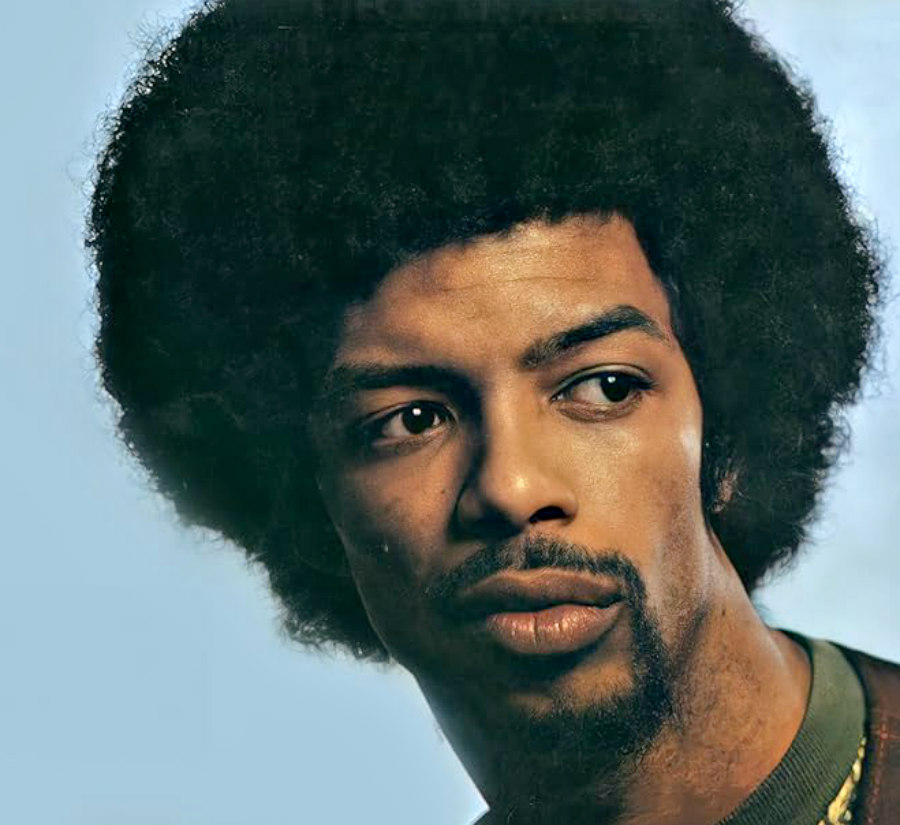
Gil Scott-Heron was a poet, musician, novelist, and spoken-word prophet whose powerful lyrics and uncompromising critique of systemic racism made him a towering figure in Black consciousness and American protest culture. Best known for his seminal work “The Revolution Will Not Be Televised,” Scott-Heron used jazz, funk, and poetry to expose the hypocrisy of American democracy and ignite a deeper understanding of Black identity, oppression, and resilience.


🪶 Biography: A Revolutionary Mind

Gilbert Scott-Heron was born on April 1, 1949, in Chicago, Illinois, and raised in Jackson, Tennessee and later The Bronx, New York. His mother, Bobbie Scott, was a librarian and opera singer; his father, Gil Heron, was a Jamaican-born professional soccer player and the first Black man to play for Scotland’s Celtic FC. Scott-Heron was intellectually precocious, winning a full scholarship to the elite Fieldston School in New York and later attending Lincoln University—a historically Black university in Pennsylvania—where he began collaborating with future jazz great Brian Jackson.

He later earned his master’s degree in creative writing from Johns Hopkins University, blending literary talent with political activism and music.


📢 “The Revolution Will Not Be Televised” – A Cultural Detonation

First recorded in 1970, “The Revolution Will Not Be Televised” became an anthem for Black power and radical critique. Delivered in a gritty, urgent tone over a sparse conga beat, the piece warned against passive consumption of media, urging Black Americans to reject corporate distractions and confront real-world oppression.

“The revolution will not be brought to you by Xerox…The revolution will not go better with Coke.”

It rejected commercialism and fake liberalism, shaking the Black community out of political slumber. For many, it was a wake-up call to reclaim agency, identity, and justice—decades before terms like “woke” were popularized. It remains a cornerstone of hip-hop, neo-soul, and conscious rap, influencing artists like Public Enemy, Kendrick Lamar, Common, and Kanye West.


💍 Marriage, Family, and Struggles

Scott-Heron was married to Brenda Sykes, an actress, and had several children, including Gia Scott-Heron, a poet. His personal life, however, was often turbulent. He struggled with drug addiction, particularly crack cocaine, which led to multiple arrests and prison stints.

He died on May 27, 2011, in New York City, reportedly from complications related to HIV/AIDS, as well as pneumonia.


🏆 Awards and Recognition

Despite his commercial limitations, Scott-Heron was widely revered:

  • Grammy Lifetime Achievement Award (posthumously, 2012)
  • BET Honors and various tributes by musical peers
  • Inducted into the Rock and Roll Hall of Fame (2021) under the category of Early Influence

Critics often credit him as the “godfather of rap,” though he personally rejected the label, arguing that his work was rooted more in Blues, Jazz, and Soul-inflected poetry than the structure of hip-hop.


📚 Literary Work: The Vulture (1970)

Gil Scott-Heron was also an accomplished novelist. His debut novel The Vulture was a gripping urban murder mystery that explored themes of race, violence, and identity in Harlem. The story follows the murder of a young Black man and the perspectives of four friends as they try to uncover the truth.

Written when he was just 19, the novel was raw, honest, and infused with street dialect, jazz rhythms, and sociopolitical tension. Scott-Heron wrote it because he saw literature as another weapon to confront societal neglect and expose the real conditions of inner-city youth. The novel was praised for giving voice to disenfranchised Black characters in a way few literary works had done before.


🤍 Reception from White America

Scott-Heron’s message was unapologetically pro-Black and critical of systemic whiteness, so mainstream (largely white) America viewed him with caution, if not outright hostility. However, progressive white intellectuals and musicians appreciated his genius. Over time, as social justice became a broader conversation, even mainstream outlets began to recognize his prophetic insight.


🧠 What He Thought and Said

Scott-Heron was not only a performer but also a philosopher of Black struggle. One of his most quoted lines:

“The first revolution is when you change your mind.”
—Gil Scott-Heron, The Mind of Gil Scott-Heron (1978)

He believed liberation began with mental transformation—a message that deeply influenced Black consciousness movements.


🔥 Legacy and Influence

Scott-Heron’s work laid the foundation for conscious hip-hop, Black Lives Matter rhetoric, and modern spoken word. His uncompromising style still echoes through the works of artists like Nas, Mos Def, Erykah Badu, and Common.

Though he passed away in 2011, Gil Scott-Heron’s prophetic voice still resonates in every protest, every poem, and every performance that dares to tell the truth.


📚 References

AUTHOR SPOTLIGHT: Maya Angelou

Maya Angelou: A Caged Bird Who Soared—The Voice, The Vision, The Victory of a Phenomenal Woman

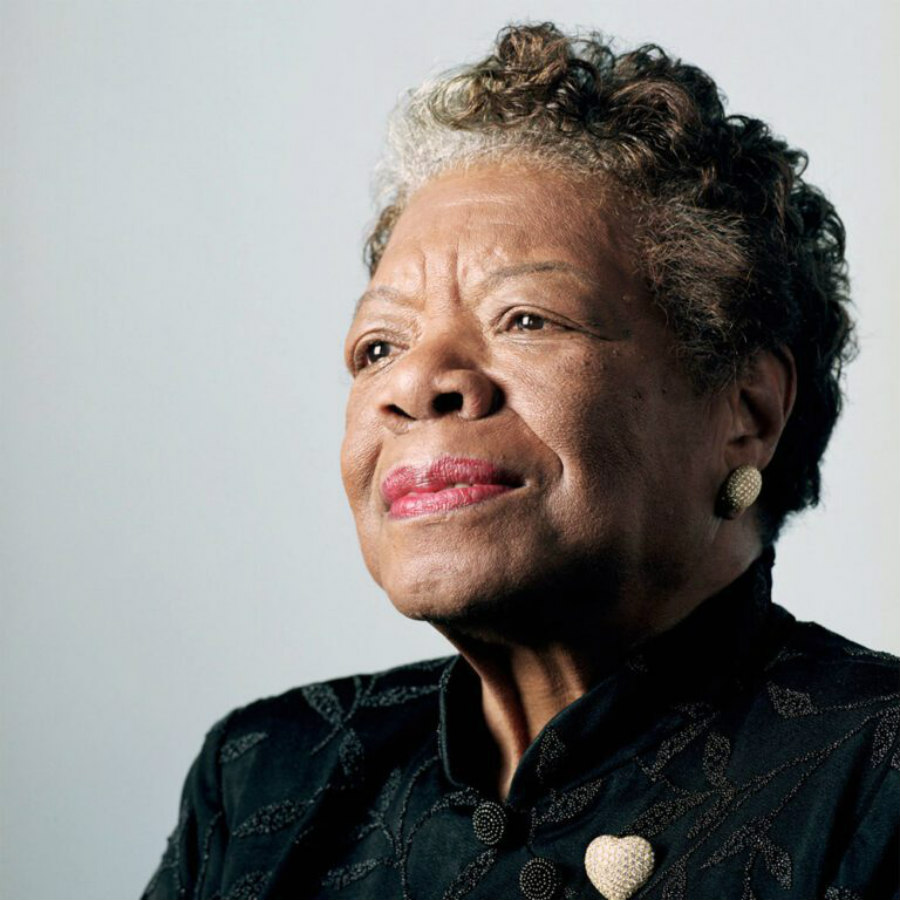
This photograph is the property of its respective owner. No infringement intended.

Few figures in American history have embodied the spirit of resilience, eloquence, and cultural pride quite like the late great, Dr. Maya Angelou. Born Marguerite Annie Johnson on April 4, 1928, in St. Louis, Missouri, she emerged as one of the most influential poets, memoirists, performers, and activists of the 20th and 21st centuries. Her life’s work defied categorization, transcending literature and the arts to become a moral and cultural compass for Black America and the world.

Angelou’s early life was marked by trauma and hardship. After her parents’ divorce, she was sent to live with her grandmother in the deeply segregated town of Stamps, Arkansas. At the age of eight, she was sexually abused by her mother’s boyfriend. Following this traumatic experience, Angelou stopped speaking for nearly five years. It was during this long silence that her love for literature was born. The works of Black writers like Paul Laurence Dunbar and Langston Hughes became her refuge, and words—though unspoken—became her means of survival. Later in life, she famously declared, “There is no greater agony than bearing an untold story inside you” (I Know Why the Caged Bird Sings, 1969). This became the heartbeat of her writing.

Her literary debut, I Know Why the Caged Bird Sings, is widely considered a cornerstone of American memoir. Published in 1969, it recounts her youth marked by racism, trauma, and transformation. It was one of the first widely read autobiographies by a Black woman that dealt openly with sexual violence, racial oppression, and personal rebirth. Angelou’s voice was raw yet refined—she did not write to entertain, but to liberate. For Black Americans, particularly Black women, her story was a mirror and a map: a reflection of their pain, and a guide to their power.

While Angelou’s literary career was monumental, her 1978 poem Phenomenal Woman cemented her as a cultural icon. Written in a time when Eurocentric beauty standards dominated media and society, the poem was a defiant love letter to Black femininity and natural confidence. It celebrated the curves, poise, rhythm, and strength of women whose beauty could not be defined by magazine covers. She wrote:

“It’s in the reach of my arms,
The span of my hips,
The stride of my step,
The curl of my lips.
I’m a woman
Phenomenally.”

With this work, Angelou redefined beauty—not as something adorned, but as something lived. The poem resonated deeply with women of all backgrounds and became a rallying cry for body positivity and self-respect. She wrote not for applause but for affirmation—of identity, dignity, and womanhood.

Throughout her career, Maya Angelou received numerous accolades. She was awarded more than 50 honorary degrees, three Grammy Awards for her spoken-word albums, and was nominated for Tony and Emmy Awards for her acting and screenwriting. Her literary work was complemented by her activism; she worked alongside Dr. Martin Luther King Jr. and Malcolm X, and was deeply involved in Pan-Africanist movements during her time living abroad in Ghana and Egypt. In 1993, she recited her poem On the Pulse of Morning at President Bill Clinton’s inauguration, becoming the second poet in U.S. history to be so honored. Later, in 2011, President Barack Obama awarded her the Presidential Medal of Freedom, the highest civilian honor in the nation.

Angelou’s personal life was as layered as her professional one. She was married briefly to Tosh Angelos, a Greek sailor, though the marriage ended in divorce. She adopted “Angelou,” a variation of her birth and married names, as her stage name. She had one son, Guy Johnson, whom she gave birth to at the age of seventeen. Her devotion to him was unwavering, and he often spoke of her strength, describing her as “the greatest woman I’ve ever known.” Her fierce independence and sacrifices as a single mother gave depth to her understanding of womanhood and motherhood, which often permeated her writing.

Despite her fame, Angelou remained deeply connected to her roots and committed to uplifting her community. Her influence reached far beyond the literary world. She appeared in films such as Roots (1977), Poetic Justice (1993), and How to Make an American Quilt (1995), and directed Down in the Delta (1998), a poignant film about healing and generational restoration. She was a frequent guest on television, notably with Oprah Winfrey, and her impact on popular culture spanned generations. Her words were sampled in music, quoted in speeches, and recited at women’s empowerment events across the globe.

Angelou was revered in the Black community as a truth-teller, a mother figure, and a living ancestor. While some white institutions initially resisted her unapologetic Blackness, she eventually won universal acclaim. Yet she never sought white validation. She understood that her work was rooted in telling the Black truth—and that truth had the power to shake systems and heal souls.

Her poem Phenomenal Woman continues to be a timeless ode to self-worth. When asked about the inspiration behind it, Angelou explained that she wanted to give women permission to be proud of their presence, not just their appearance. She wrote:

“Now you understand
Just why my head’s not bowed.
I don’t shout or jump about
Or have to talk real loud.
When you see me passing,
It ought to make you proud.”

The poem’s resonance was not only literary but deeply personal to women who had been told to shrink themselves. Angelou’s command was simple: be big, be bold, be phenomenal.

She also had personal pleasures—she loved gumbo, Southern cuisine, jazz music, gardening, and Shakespeare. These interests grounded her as a woman of both intellect and heart, rooted in heritage but always reaching for something transcendent.

When asked about her inspiration, Angelou always pointed back to her childhood silence. It was her muteness, paradoxically, that gave her voice such force. Writing became her resurrection. As Pearl Bailey, her dear friend and fellow performer, once said: “She’s more than a writer. She’s a spirit. A thunderous force of truth wrapped in grace.”

After Angelou’s passing in 2014, her son Guy Johnson reflected on her legacy with reverence, saying: “My mother lived a life of deep honesty, and in doing so, she gave millions permission to tell their own truths.”

Maya Angelou was not merely a woman of letters—she was a woman of legacy. Her work endures not because she conformed, but because she dared to live—and write—the truth. She was, and remains, a phenomenal woman in every sense. Her voice still sings, still soars, reminding generations that even a caged bird can rise and touch the heavens.


References

Angelou, M. (1969). I Know Why the Caged Bird Sings. Random House.
Angelou, M. (1995). Phenomenal Woman: Four Poems Celebrating Women. Random House.
Obama, B. (2011). Presidential Medal of Freedom Recipients. The White House Archives.
Johnson, G. (2014). Interview on the legacy of Maya Angelou. National Public Radio (NPR).
Bailey, P. (1985). Reflections on Maya Angelou. Ebony Magazine.

MOVIE REVIEW: THE PHOTOGRAPH

A Soft Place to Land: A 5-Star Review of The Photograph and the Power of Black Love

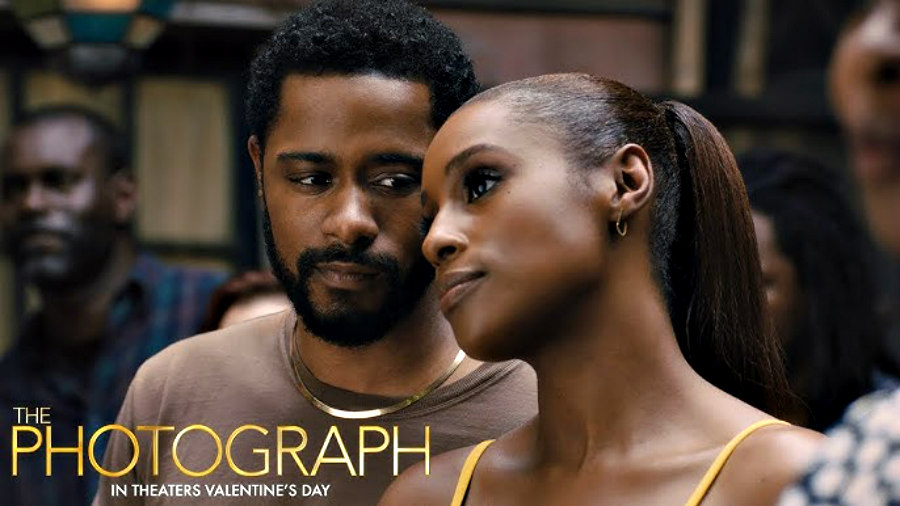
In an era saturated with hyper-dramatic romance and trauma-centered storytelling, The Photograph emerges as a gentle, evocative tribute to the enduring power of Black love. Directed by Stella Meghie and released in 2020, this romantic drama gracefully unfolds over two parallel timelines, weaving together themes of love, loss, generational trauma, and emotional courage. With powerful lead performances from LaKeith Stanfield and Issa Rae, the film delivers a lush, soul-stirring portrait of intimacy that quietly reshapes the cinematic landscape for Black relationships.

At its core, The Photograph tells the story of Mae Morton, a guarded museum curator who is grieving the sudden death of her estranged mother, the acclaimed photographer Christina Eames. As Mae discovers a hidden photograph and a handwritten letter from her mother, she begins to uncover secrets from Christina’s past—including a long-lost love affair. Simultaneously, Mae embarks on her own romantic journey with Michael Block, a rising journalist investigating her mother’s life. Their connection becomes the emotional center of the film, echoing the choices and missed opportunities of the previous generation. The film flows like jazz—measured, improvisational, and beautifully composed. It is, at heart, a love story—but one made remarkable by its cultural subtlety and emotional honesty.


LaKeith Stanfield: A Portrait of Emotional Vulnerability

LaKeith Stanfield, born August 12, 1991, in San Bernardino, California, has carved out a reputation as one of Hollywood’s most versatile and introspective actors. Known for standout performances in Get Out, Atlanta, Judas and the Black Messiah, and Sorry to Bother You, Stanfield consistently chooses roles that challenge dominant narratives around Black masculinity. His portrayal of Michael Block in The Photograph is no exception.

In this role, Stanfield embodies a kind of emotional accessibility rarely afforded to Black male characters in mainstream cinema. Michael is thoughtful, curious, and emotionally intelligent—a man not running from love but quietly pursuing it. Reflecting on the significance of the role, Stanfield remarked, “I wanted to be part of a film where we get to just love, just exist, without chaos. That in itself felt revolutionary.” His presence in the film gives space for Black men to be portrayed with tenderness, complexity, and poetic restraint—offering a refreshing contrast to historically limited and stereotypical portrayals.


Issa Rae: The Evolution of a Phenomenal Woman

Born on January 12, 1985, in Los Angeles, California, Jo-Issa Rae Diop—professionally known as Issa Rae—has transformed the landscape of Black media. She gained national attention through her critically acclaimed web series The Misadventures of Awkward Black Girl, which evolved into the award-winning HBO series Insecure. As a writer, producer, and actress, Rae has become a cultural icon, lauded for her authenticity, wit, and commitment to reshaping the narrative of Black womanhood in media.

In The Photograph, Rae plays Mae Morton, a woman navigating grief, romantic hesitation, and the echoes of her mother’s mistakes. Her performance is subtle yet potent, conveying an internal conflict many Black women face: the need to protect their hearts while longing to open them. Speaking about her connection to the role, Rae shared, “Playing Mae allowed me to explore what it means to love and let go—something many of us wrestle with silently.” Her portrayal offers a quiet revolution in itself—an image of a Black woman not defined by strength alone, but by softness, introspection, and emotional growth.


The Power of Representation and Cultural Impact

The Photograph is more than a romance; it is a cultural statement. It challenges the dominant media narrative that often confines Black stories to struggle and trauma. Instead, it invites audiences into a world where Black people fall in love, make mistakes, and heal—without being burdened by external stereotypes. The film’s aesthetic, scored by Robert Glasper’s jazz compositions, is timeless and dreamlike, further elevating its emotional resonance. Each scene unfolds like a memory, with the camera lingering on touch, glances, and silence rather than sensationalism.

What sets The Photograph apart is its celebration of intergenerational love and emotional inheritance. By paralleling the stories of Mae and her mother Christina, the film explores how trauma, silence, and unresolved love can ripple through time—and how confronting those truths can set future generations free.


Final Reflection: A Necessary Love Story

In every way, The Photograph is a cinematic balm. It reminds viewers that love doesn’t have to be loud to be transformative. For Black audiences especially, it offers something both rare and revolutionary: a story where love is the destination, not the battleground. With Stanfield and Rae delivering performances that are as honest as they are mesmerizing, and with Meghie’s direction guiding the film like a poem, The Photograph earns its five-star rating with ease.

It is not just a film—it is a mirror, a memory, and a meditation on how we love, why we guard our hearts, and what it means to trust again.


References
Meghie, S. (Director). (2020). The Photograph [Film]. Universal Pictures.
NPR. (2020). The Photograph Is a Rare, Tender Look at Black Romance.
Essence. (2020). Issa Rae on Portraying Emotional Complexity in The Photograph.
Variety. (2020). LaKeith Stanfield and Issa Rae Talk Black Love and Vulnerability in The Photograph.