
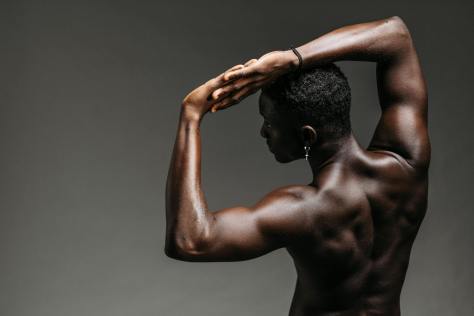
The human male form has long been a subject of fascination in art, science, and culture, reflecting not only physicality but also social hierarchies, cultural ideals, and psychological projections. Across centuries, the representation of the male body has evolved, embodying changing conceptions of masculinity, strength, and beauty. From classical sculptures of Greece and Rome to contemporary photography and film, the male form has been interpreted as a canvas of power and presence.
Historically, the Greek ideal celebrated the male body as a perfect balance of symmetry, proportion, and athleticism. Sculptures such as Polykleitos’ Doryphoros exemplified mathematical precision, with the canon of proportions establishing standards for physical perfection that would influence Western art for millennia. This idealized vision of masculinity combined both aesthetic beauty and moral virtue, suggesting that bodily perfection mirrored inner excellence.
The Renaissance reintroduced classical principles while emphasizing dynamic motion and individual expression. Artists such as Michelangelo in David portrayed not only physical strength but also psychological tension and heroic presence. The male form became an emblem of intellectual and spiritual power, reflecting a holistic understanding of human potential. Renaissance art thus bridged the external and internal, situating the male body as both a physical marvel and a symbolic vessel of identity.
In non-Western contexts, the male form has been depicted through varied cultural lenses. In African art, the male figure often embodies communal roles, leadership, and spiritual vitality rather than purely aesthetic ideals. Carvings, masks, and statues depict muscularity and posture as markers of social and ceremonial significance. Similarly, in East Asian traditions, male figures have symbolized wisdom, martial skill, and filial duty, emphasizing presence over purely sculptural beauty.
Contemporary representations of the male body have expanded to encompass a spectrum of forms, challenging classical notions of beauty and strength. Media, fashion, and advertising frequently spotlight muscular, lean physiques, reinforcing cultural ideals tied to health, athleticism, and desirability. These portrayals, however, often obscure the diversity of natural male forms, creating pressures that intersect with gender norms and body image concerns.
The perception of male strength and virility is deeply intertwined with visual cues. Broad shoulders, defined musculature, and upright posture convey dominance and confidence, signaling both physical capability and social authority. Yet these traits are culturally mediated; in some societies, intellectual presence, sartorial elegance, or artistic skill may supersede raw physicality as markers of masculine power.
Psychologically, the male form operates as a site of projection for both men and women. Men may internalize societal ideals as standards for self-worth, while women may perceive these traits through lenses of attraction, protection, or social status. The interaction of biology, culture, and psychology produces a complex matrix in which physicality, behavior, and charisma intersect.
Artistic depiction often emphasizes narrative alongside form. Paintings, photographs, and sculptures do not merely replicate anatomy but evoke story, emotion, and character. The male form thus becomes a storytelling tool, capable of conveying vulnerability, aggression, heroism, or intimacy depending on context. Such portrayals can redefine social perceptions of masculinity beyond mere physical prowess.
The study of anatomy underpins much of the artistic representation of the male body. Knowledge of skeletal structure, muscle distribution, and movement enables artists to render the body convincingly and expressively. Anatomical studies by Leonardo da Vinci and modern biomechanics research illustrate how understanding physiology enhances both aesthetic and functional interpretation of form.
In cinema and performance, the male body functions as a medium of narrative embodiment. Action films, dance, and theater utilize posture, gesture, and musculature to communicate character, intent, and emotion. Actors’ physical training is integral to credibility, reinforcing cultural associations between physical form and personal agency.
Clothing and adornment further influence perception. Tailored suits, armor, traditional garments, or casual attire interact with the body’s contours to project authority, elegance, or approachability. Fashion, therefore, becomes a form of embodied rhetoric, shaping how presence is interpreted socially and aesthetically.
The intersection of race and the male form reveals additional layers of perception. Societal biases often exaggerate or stereotype certain physiques, influencing both admiration and marginalization. Scholarly research highlights how media representation of Black, Asian, and Indigenous men can reinforce prejudicial narratives while simultaneously offering opportunities for celebration and redefinition of power.
Athleticism, historically celebrated in art and society, continues to reinforce ideals of the male form. Sports icons, Olympians, and bodybuilders exemplify disciplined cultivation of the body, symbolizing perseverance, control, and societal admiration. These figures operate at the nexus of corporeal excellence and symbolic authority.
The sexualization of the male form has also evolved, reflecting shifting cultural mores. Where once nudity implied heroism, divinity, or philosophical ideal, contemporary eroticized representations carry complex implications regarding consent, objectification, and agency. The male body thus navigates multiple discourses simultaneously: aesthetic, athletic, sexual, and symbolic.
Media proliferation intensifies scrutiny of the male form. Social platforms, advertising, and global cinema perpetuate standards of muscularity, height, and symmetry, creating feedback loops that influence self-perception and social judgment. These pressures can foster both aspiration and anxiety, highlighting the psychosocial dimensions of bodily representation.
Philosophically, the male form invites reflection on mortality, temporality, and embodiment. Aging, injury, and transformation challenge ideals of constancy and perfection, offering opportunities for more nuanced understandings of masculinity. Imperfection, once marginalized in classical aesthetics, now contributes to narratives of resilience, authenticity, and wisdom.
Cross-disciplinary studies, incorporating anthropology, psychology, and art history, illuminate the interplay between biology and culture in shaping perceptions of the male form. Evolutionary theory, for example, considers sexual selection, strength signaling, and social hierarchy as factors influencing both appearance and societal valuation. Cultural studies, in turn, examine media representation, ritual, and mythology as determinants of perception.
Digital technology and virtual spaces are redefining the male form in contemporary imagination. CGI, motion capture, and social media avatars allow manipulation of physique, posture, and expression beyond natural limits, raising questions about authenticity, aspiration, and identity. Such developments extend the discourse of perception into immersive and interactive arenas.
Ultimately, the art of the male form transcends mere anatomy. It is a dialogue among power, presence, and perception, reflecting the interdependence of physicality, culture, and cognition. The male body is both observed and experienced, a site of aesthetic contemplation, social negotiation, and personal embodiment.
Contemporary discourse urges inclusivity, diversity, and critical reflection, challenging narrow definitions of strength and beauty. Recognizing variation, vulnerability, and agency broadens appreciation of the male form beyond traditional paradigms. In this light, art, science, and lived experience converge to create a dynamic understanding of masculinity as both human and culturally mediated.
In conclusion, the male form remains a compelling locus of study and representation. Its power lies not solely in muscle or height but in the interplay of physicality, presence, and perception, shaped by history, culture, and psychology. From the classical canon to modern media, the male body continues to articulate ideals, challenge assumptions, and inspire contemplation, affirming its enduring significance in human imagination and social life.
References
Frontiers in Psychology. (2023). Body image dissatisfaction in men: Causes and consequences. https://www.frontiersin.org/journals/psychology/articles/10.3389/fpsyg.2023.1116686/full
Metropolitan Museum of Art. (n.d.). Anatomy in the Renaissance. https://www.metmuseum.org/essays/anatomy-in-the-renaissance
PubMed. (2002). Impact of media images on male body image. https://pubmed.ncbi.nlm.nih.gov/11920996/
Smarthistory. (n.d.). Polykleitos, Doryphoros (Spear Bearer). https://smarthistory.org/polykleitos-doryphoros-spear-bearer/
Smarthistory. (n.d.). Depictions of the human figure and animals in African art. https://smarthistory.org/depictions-of-the-human-figure-and-animals/
Italian Renaissance. (n.d.). Michelangelo’s David: Analysis and history. https://www.italianrenaissance.org/michelangelos-david/
Science Museum, UK. (n.d.). Anatomy, art, and science. https://www.sciencemuseum.org.uk/objects-and-stories/medicine/anatomy-art-and-science
The Boar. (2020, June). Male bodies in film: Representations of masculinity. https://theboar.org/2020/06/male-bodies-film/
Vogue Business. (2021). Sizing is stopping consumers from shopping: Here’s what brands need to know. https://www.voguebusiness.com/story/fashion/sizing-is-stopping-consumers-from-shopping-heres-what-brands-need-to-know
The Times. (n.d.). Unhealthy skinny models: Fashion week report. https://www.thetimes.co.uk/article/vogue-report-unhealthy-skinny-models-fashion-week-jj3qwhf9w
Smithsonian Asian Art Museum. (n.d.). Facing East: Portraits from Asia. https://asia.si.edu/whats-on/exhibitions/facing-east-portraits-from-asia/
 THE BROWN GIRL DILEMMA