
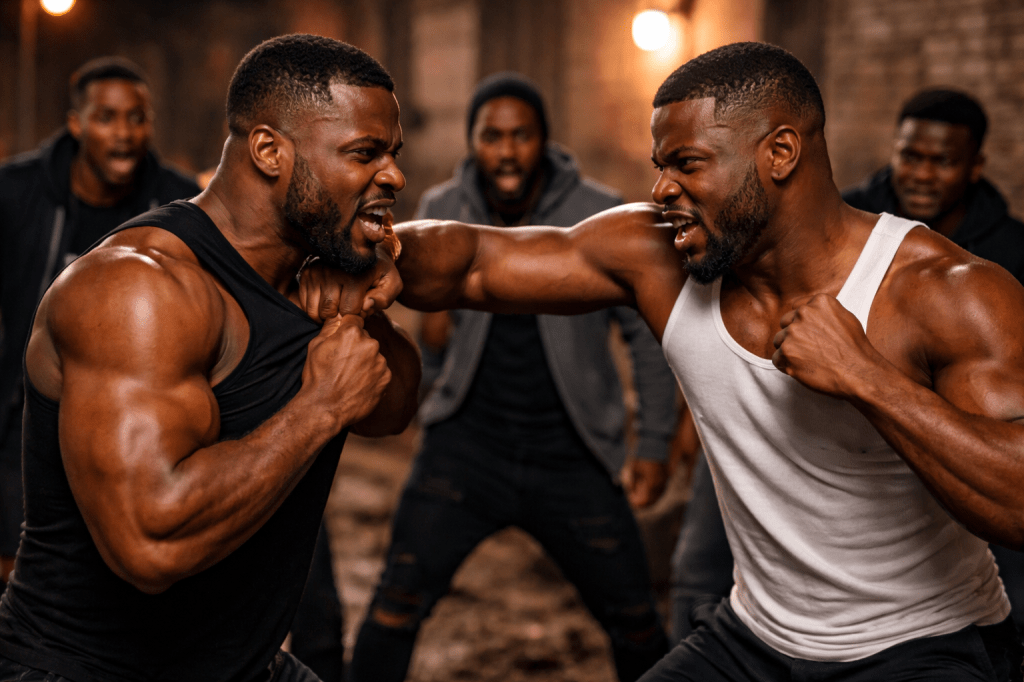
The crisis of “brother against brother” has become one of the most painful and complex truths within the Black community. It reflects a deep wound shaped by centuries of trauma, broken family structures, systemic oppression, and internalized self-hatred. Black men—once kings, protectors, innovators, and spiritual pillars of ancient civilizations—now often find themselves positioned as enemies to one another. Instead of building together, many are trapped in cycles of competition, conflict, and destruction. This tragedy is not born from nature but from historical engineering, social influence, and unresolved generational pain.
The issue of Black men killing other Black men continues to devastate families and communities across America. Although crime exists in every racial group, the concentrated violence within predominantly Black neighborhoods stems from systemic disenfranchisement, redlining, poverty, and the deliberate flooding of drugs and guns into urban communities. When resources are scarce and hope feels distant, men begin to see one another not as brothers but as threats. What should be unity becomes rivalry. What should be communal responsibility becomes survival warfare shaped by external design.
Gang culture emerged partly from these conditions. Although some early gangs were formed for protection, many evolved into organizations that perpetuate cycles of retaliation and territorial conflict. The desire to belong—to claim identity, power, or respect—becomes distorted into violence. Instead of competing against the systems that oppress them, young Black men too often compete against each other, losing years of potential to incarceration, injury, or death. This is not a moral failing but the outcome of generational instability and targeted neglect.
The internal conflict is not only physical but also psychological. The media often magnifies images of Black men as hyper-aggressive, criminal, or emotionally unavailable. These portrayals condition society and Black men themselves to see each other through a lens of suspicion rather than solidarity. The result is mistrust, emotional distance, and the belief that vulnerability is weakness. Without emotional literacy or safe spaces for healing, anger becomes the language many men know best.
Adding to this, modern culture pressures Black men to “one-up” each other—financially, socially, and sometimes violently. Masculinity becomes defined by domination rather than compassion, competition rather than collaboration. Whether through bravado, materialism, or street credibility, envy, worth is measured by comparison rather than character. This competitive mindset fractures relationships, weakens unity, and fuels an environment where brotherhood struggles to thrive.
Another layer of this crisis lies in the public rhetoric of some Black male celebrities and influencers who speak harshly against Black women. Instead of uplifting their sisters, they often demean them publicly, reinforcing stereotypes birthed during slavery when Black families were torn apart. This divisive speech harms the community by creating gender wars—brother against sister—and diverting attention from the real systems that undermine Black families. When Black men publicly dishonor Black women, it fractures the very foundation of the community.
Many of these behaviors stem from unresolved trauma. Generations of Black men have carried burdens of discrimination, economic instability, police brutality, and lack of emotional support. Without healthy mentorship or mental health access, pain can easily transform into aggression. Hurt men hurt other men. The cycle continues because healing is rarely prioritized or taught, especially in spaces where survival takes precedence over self-reflection.
There is also the crisis of absent or strained fatherhood, not by choice but because of mass incarceration, economic challenges, and systemic separation of Black families. When young boys do not see healthy examples of love, leadership, and conflict resolution, they mimic what they are exposed to—chaos, hyper-masculinity, or antisocial behavior. Brotherhood cannot flourish when foundational guidance is interrupted.
Educational inequality contributes as well. Underfunded schools, low expectations, and lack of representation limit opportunities for young Black men. When society signals that success is unattainable, alternative paths—often dangerous ones—become appealing. The lack of academic and vocational support creates breeding grounds for conflict, resentment, and hopelessness.
Music and entertainment industries also play a role. While many Black artists use music for storytelling and healing, corporations often elevate content that glorifies violence, rivalry, and disrespect. Young men absorb these messages and normalize them, believing that masculinity is proven through aggression. This corporate exploitation of Black male identity fuels division and devalues life itself.
Moreover, societal institutions consistently pit Black men against one another. Whether through limited job opportunities, biased criminal justice systems, or exploitative sports industries, the message is clear: only one can win. Only one can succeed. Only one can shine. This scarcity mindset erodes unity and fosters envy.
Yet, despite these challenges, many Black men are actively choosing a different path. Across the country, mentors, pastors, coaches, and community leaders are working to restore brotherhood. Programs focused on emotional intelligence, conflict resolution, and empowerment are helping young men unlearn destructive patterns. Healing spaces are emerging where men can be vulnerable without shame, reclaim their identity, and reconnect with each other.
Black men are also reshaping the narrative by celebrating one another’s success instead of competing. Social media movements like #BlackMenSmile and #BlackBoyJoy highlight the beauty, softness, brilliance, and strength of Black manhood beyond stereotypes. These images promote unity and challenge the belief that Black men must perform masculinity through violence or domination.
Reconciliation between Black men and Black women is also essential. Brotherhood cannot thrive when the relationship with Black women is fractured. Both sides must heal the wounds caused by patriarchy, colorism, and internalized racism. True healing requires accountability, empathy, and partnership—not blame.
Spiritual restoration remains a critical component. Many Black men are returning to faith, prayer, and community fellowship as grounding forces. Scripture emphasizes unity: “Behold, how good and how pleasant it is for brethren to dwell together in unity!” (Psalm 133:1, KJV). Reconnecting with God and identity helps to break cycles of destruction and renew purpose.
Additionally, economic empowerment is strengthening brotherhood. Entrepreneurship, cooperative economics, and financial literacy programs are teaching Black men to build together rather than tear each other down. Shared success creates shared loyalty.
Healing also requires emotional honesty. Black men must confront their pain—grief, abandonment, rejection, societal pressure—rather than hiding behind aggression. Vulnerability is not weakness but liberation. When men heal individually, they strengthen the collective.
To end the epidemic of “brother against brother,” society must address the systemic roots while Black men commit to rebuilding each other with accountability and love. The future of Black families, culture, and generations depends on restored unity, emotional healing, and community transformation. Brotherhood can rise again when men recognize that their brothers are not their enemies but their reflections.
References
Alexander, M. (2010). The new Jim Crow: Mass incarceration in the age of colorblindness. The New Press.
Anderson, E. (1999). Code of the street: Decency, violence, and the moral life of the inner city. W.W. Norton.
hooks, b. (2004). We real cool: Black men and masculinity. Routledge.
Majors, R., & Billson, J. (1992). Cool pose: The dilemmas of Black manhood in America. Simon & Schuster.
Staples, R. (1982). Black masculinity. Black Scholar Press.
 THE BROWN GIRL DILEMMA