
Tag Archives: Myths

Brown Girl Blues: “Brown Girls Are Loud,” They Say….

Photo by Polina Tankilevitch on Pexels.com

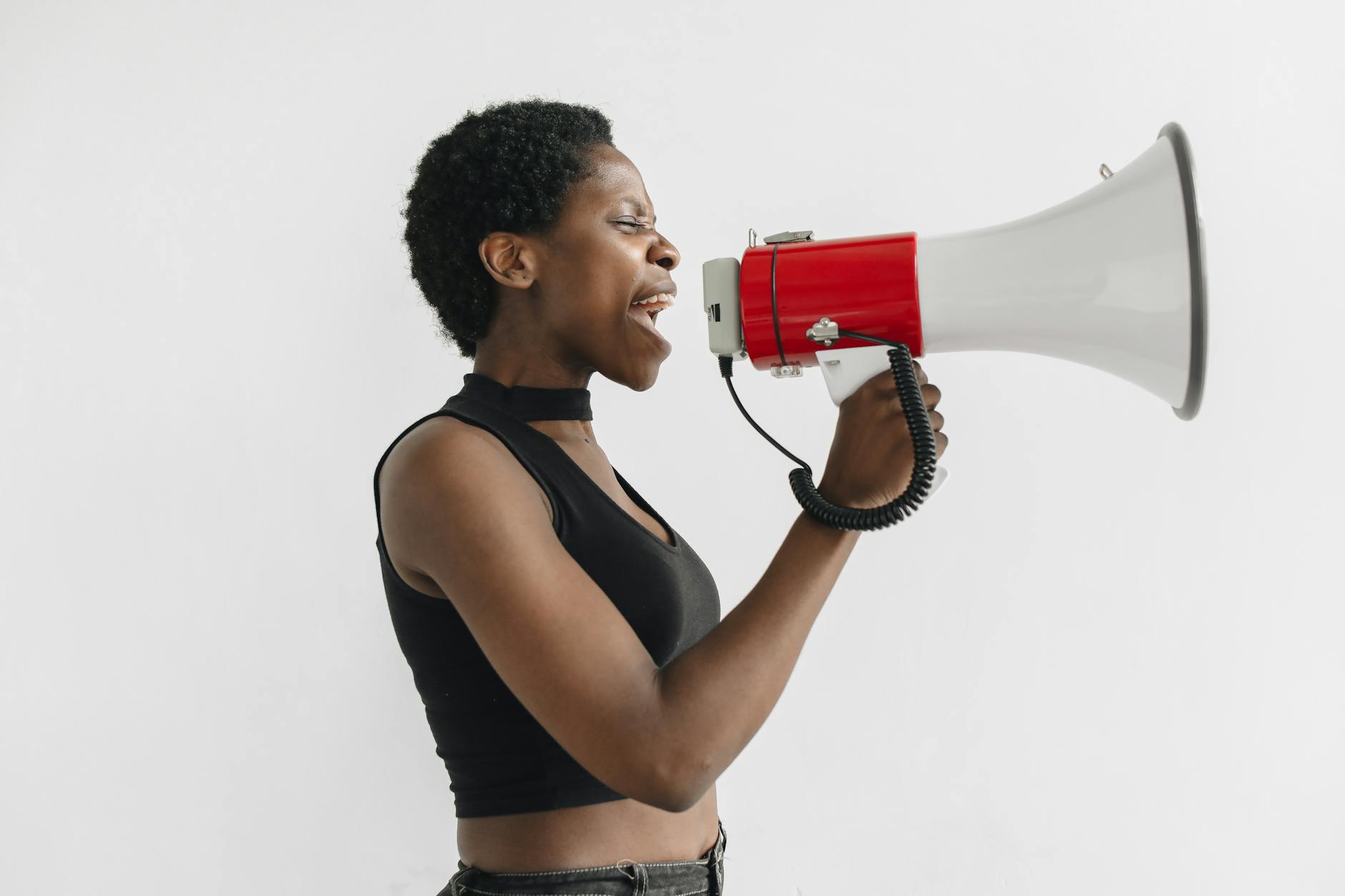
The assertion that “Brown girls are loud” functions as both a stereotype and a silencing mechanism. This phrase, often uttered casually or as social commentary, conceals a deeper historical bias against women of color who assert themselves vocally or emotionally. The term “loud” becomes a racialized label that delegitimizes self-expression while maintaining Eurocentric standards of femininity and decorum (Collins, 2000).

For centuries, the voices of Black and brown women have been controlled, muted, or mocked. Under slavery, colonization, and segregation, their words were often dismissed as irrational or impertinent. Today, these historical prejudices persist through modern stereotypes like the “angry Black woman” or the “fiery Latina,” both of which frame passionate communication as emotional instability (Walley-Jean, 2009). Thus, “loudness” becomes a weaponized term used to reassert social hierarchies.

To be called “loud” is rarely about volume; it is about visibility. When women of color speak confidently or express emotion, they challenge the systems designed to keep them silent. This so-called loudness is, in essence, a refusal to disappear. It is the sound of resistance echoing across generations who were denied speech.

The racialization of voice and tone stems from colonial constructs of civility. Western norms associated femininity with quietness, politeness, and restraint — ideals rooted in white, patriarchal structures (hooks, 1981). Any deviation from this mold was deemed unruly or primitive. For brown women, whose cultural communication styles are often rich in rhythm, gesture, and emotion, this framework was particularly limiting.

The result is tone-policing: a subtle but pervasive form of control where the manner of a woman’s speech overshadows the content of her message. In classrooms, workplaces, and media, brown women are often told to “calm down,” “lower their voices,” or “speak professionally.” These directives disguise racial discomfort as etiquette (Pittman, 2012).

In educational spaces, this dynamic begins early. Studies show that Black girls are more likely to be disciplined for “disruptive behavior” even when engaging in classroom discussion (Morris, 2016). What is interpreted as rudeness or defiance is often simple participation, filtered through racial bias. The message received is clear: intellectual curiosity and emotional expression are dangerous when spoken in a brown voice.

Over time, many young women of color internalize this message. They learn to perform quietness as a form of protection — softening their tone, diluting their opinions, and practicing invisibility to avoid social punishment. This self-censorship comes at the cost of authenticity and mental well-being (Jones & Norwood, 2017).

The workplace continues this narrative of containment. Brown women who are assertive in leadership are often labeled “intimidating” or “difficult.” The corporate world rewards those who fit neatly within the norms of “professionalism,” which are historically white and male-centered (Wingfield, 2010). Thus, emotional expressiveness and cultural authenticity are misread as unprofessionalism rather than strength.

Yet the so-called “loudness” of brown women has fueled some of the most transformative movements in history. From Sojourner Truth’s “Ain’t I a Woman?” speech to Fannie Lou Hamer’s testimony during the Civil Rights Movement, loudness has always been synonymous with liberation (Guy-Sheftall, 1995). The voice has functioned as both weapon and witness.

In artistic and spiritual traditions, voice is sacred. Within African and Afro-diasporic communities, song and speech have long served as vessels for memory and survival. From the griots of West Africa to the blues singers of the American South, the act of speaking — or singing — truth aloud is a form of cultural continuity (Gates, 1988).

Brown women’s expressiveness must therefore be understood within this historical continuum. Their tone is not aggression but ancestral resonance. The cadence, warmth, and emotionality of their voices carry centuries of resilience. To misinterpret that as loudness is to mishear history itself.

Media representations, however, continue to distort this narrative. Television and film often portray brown women as “sassy,” “overly dramatic,” or “ghetto,” reinforcing the myth that they lack emotional control (Gray, 2013). These depictions not only shape public perception but also influence how brown women see themselves.

Representation, as bell hooks (1992) reminds us, is a site of struggle. When brown women are consistently portrayed as one-dimensional caricatures, the world forgets that their “loudness” has context — a response to generations of silence and misrepresentation.

Nevertheless, modern movements in art and media are reclaiming the narrative. Figures like Issa Rae, Viola Davis, and Michaela Coel embody unapologetic authenticity, turning what was once labeled as “too much” into a badge of power. Their presence affirms that loudness and grace can coexist.

Community also plays a crucial role in healing the internal wounds caused by tone-policing. Safe spaces where brown women can speak freely — whether through sister circles, creative writing, or therapy — allow them to rediscover the sound of their unfiltered voices. These spaces become sanctuaries of affirmation.

Spiritual traditions, especially within the African diaspora, have long affirmed the power of voice. In the Black church, for example, “call and response” reflects communal validation — a sacred rhythm where one voice calls forth another. This cultural form rejects Western silence and instead celebrates collective expression (Lincoln & Mamiya, 1990).

The intersection of race, gender, and expression requires a reimagining of what it means to communicate effectively. Emotional expression should not be pathologized but valued as an indicator of passion, creativity, and humanity (Lord, 2000).

Moreover, educators and employers must practice cultural humility — learning to interpret communication through a multicultural lens rather than penalizing difference. This shift from tolerance to understanding is essential to dismantling linguistic bias.

For brown girls and women, unlearning internalized shame takes courage. It involves reclaiming the parts of oneself that were silenced, mocked, or misunderstood. It is a journey toward self-definition, where voice becomes both therapy and testimony.

Healing means allowing oneself to be “too much” in a world that demands less. It means crying loudly, laughing deeply, and speaking boldly — not for validation but liberation.

Cultural pride also strengthens this reclamation. By reconnecting with heritage, language, and tradition, brown women remember that expressiveness is not a flaw but a legacy. Their voices echo the resilience of ancestors who refused silence even when the cost was life itself.

When society tells brown women to quiet down, it is not requesting peace but compliance. Loudness, then, becomes a form of protest — an assertion of life in the face of erasure.

The “Brown Girl Blues” encapsulates the emotional dissonance of being seen yet unheard. It is the ache of visibility without validation, of expression met with resistance. Yet it also symbolizes beauty — the soulful rhythm of survival set to the melody of truth.

To be called “loud” is to be told that your presence disrupts. But disruption births change. In reclaiming the label, brown women transform insult into empowerment, noise into narrative, and stereotype into song.

Today’s brown girls stand on the shoulders of those who dared to speak when speaking was forbidden. Their loudness is not rebellion — it is inheritance.

The world must learn to listen differently. To hear not volume, but value. To perceive not threat, but truth.

For when brown girls speak, they do not merely raise their voices; they raise history. Their sound reverberates through time as proof that silence never saved anyone.

So, the next time the world says, “Brown girls are loud,” the answer should be unapologetic: “Yes, we are — and the world is finally listening.”


References

Collins, P. H. (2000). Black feminist thought: Knowledge, consciousness, and the politics of empowerment. Routledge.

Gates, H. L. (1988). The signifying monkey: A theory of African-American literary criticism. Oxford University Press.

Gray, H. (2013). Cultural moves: African Americans and the politics of representation. University of California Press.

Guy-Sheftall, B. (Ed.). (1995). Words of fire: An anthology of African-American feminist thought. The New Press.

hooks, b. (1981). Ain’t I a woman: Black women and feminism. South End Press.

hooks, b. (1992). Black looks: Race and representation. South End Press.

Jones, C., & Norwood, K. (2017). Aggressive, angry, and affirming: Black women’s labor, speech, and resistance. Communication and Critical/Cultural Studies, 14(3), 253–273.

Lincoln, C. E., & Mamiya, L. H. (1990). The Black church in the African American experience. Duke University Press.

Lord, A. (2000). Sister outsider: Essays and speeches. Crossing Press.

Morris, M. W. (2016). Pushout: The criminalization of Black girls in schools. The New Press.

Pittman, C. T. (2012). Racial microaggressions: The narratives of African American women in the workplace. The Journal of Black Psychology, 38(2), 185–205.

Walley-Jean, J. C. (2009). Debunking the myth of the “angry Black woman”: An exploration of anger in young African American women. Black Women, Gender + Families, 3(2), 68–86.

Wingfield, A. H. (2010). Are some emotions marked “whites only”? Racialized feeling rules in professional workplaces. Social Problems, 57(2), 251–268.

Stereotypes of Black Men: Fallacies, Facts, and Faith + Stereotypes of Black Women: Myths, Misrepresentations, and the Truth

Photo by Muhammad-Taha Ibrahim on Pexels.com

BLACK MEN:

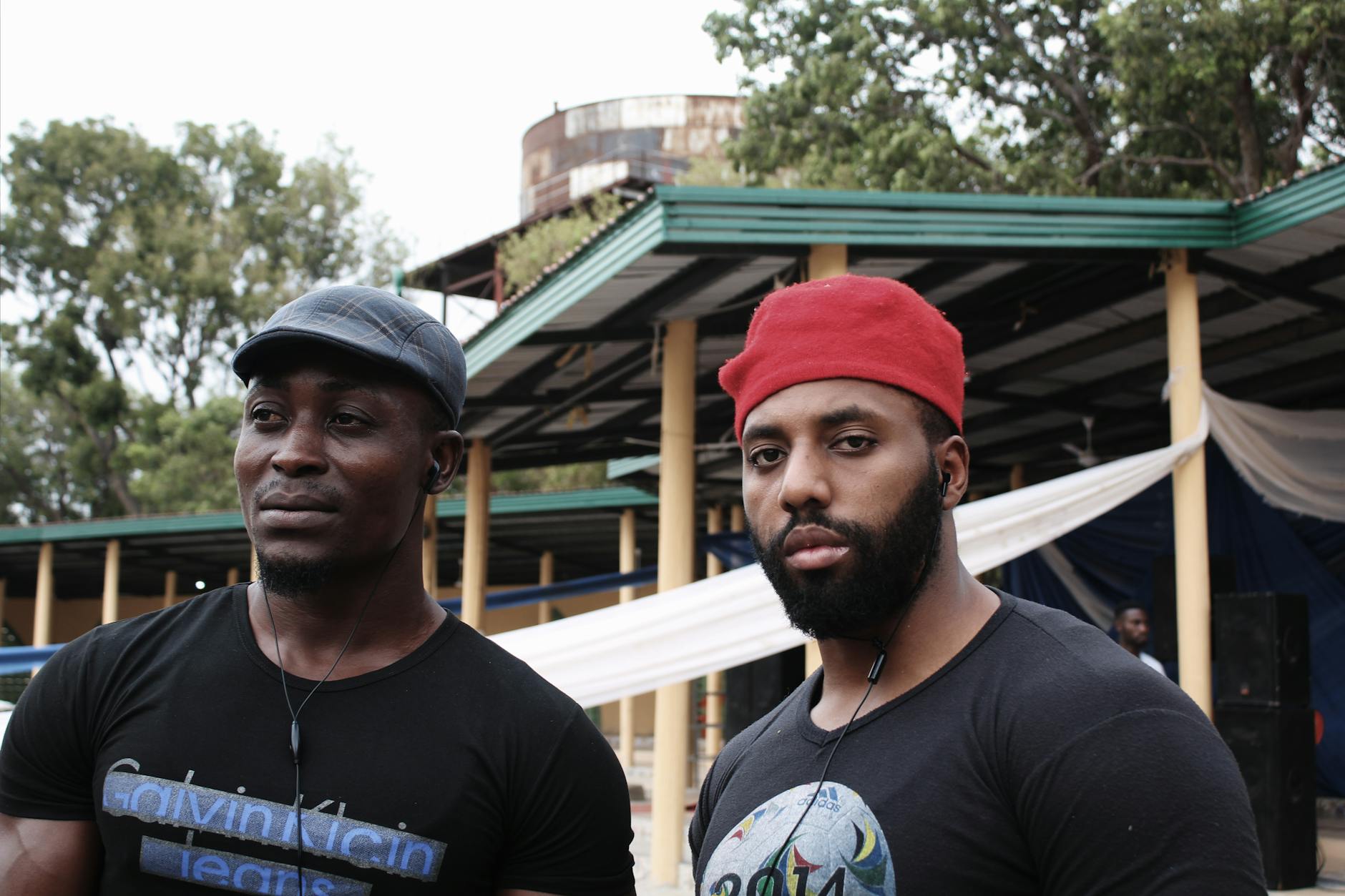
Stereotypes of Black men have historically been used as powerful tools of oppression, rooted in slavery and colonial propaganda. Myths of hypersexuality, laziness, violence, and irresponsibility continue to frame perceptions, shaping public policy, media portrayals, and personal relationships. These stereotypes are not harmless—they carry devastating effects on how Black men are treated within society.

One of the most common stereotypes is that Black men are inherently violent or criminal. This image was popularized during the Jim Crow era and reinforced through biased media coverage and criminal justice policies such as “stop and frisk” and mass incarceration. In truth, studies show crime rates are linked more strongly to poverty and systemic inequality than to race.

Another destructive fallacy is that Black men are “deadbeat fathers.” This stereotype suggests Black men abandon their families at higher rates than other groups. However, research from the Centers for Disease Control reveals that Black fathers who live with their children are more involved in daily child-rearing than fathers of other racial groups. This finding challenges the myth and underscores the need to dismantle false narratives.

The marriage rate stereotype further complicates matters. Critics claim Black men are unwilling to marry, pointing to lower marriage rates in the African American community. While it is true that marriage rates are lower, this is not due to a lack of commitment but rather to economic instability, systemic barriers, and historical disruptions of family structures from slavery onward.

Divorce among Black men is also misrepresented. Statistics indicate higher divorce rates in Black communities, but these outcomes are often tied to financial stressors, unemployment, and discrimination that place strain on marriages. The stereotype that Black men are poor partners is misleading, as the root issue is societal and structural rather than individual.

Another stereotype is that Black men are uneducated or intellectually inferior. This belief has roots in pseudoscientific racism of the 19th century. Today, although disparities exist due to unequal access to quality education, Black men continue to excel academically in multiple disciplines, earning advanced degrees, contributing to STEM, and leading in arts, politics, and theology.

The hypersexualization of Black men is one of the most enduring myths. Dating back to slavery, enslaved Black men were portrayed as dangerous predators to justify lynchings and segregation. In modern times, this stereotype persists in media portrayals of athletes, entertainers, and even news coverage. This myth erases the humanity of Black men and devalues their roles as husbands, leaders, and fathers.

Employment stereotypes also persist, portraying Black men as lazy or dependent. This fallacy ignores the structural racism in hiring practices, wage disparities, and generational economic disadvantages. Despite barriers, Black men have historically shown resilience, from building thriving Black Wall Street communities to excelling in diverse professions.

Prejudice against Black men often takes subtle forms, known as microaggressions. Questions like “What are you mixed with?” or assumptions about aggression reveal ingrained stereotypes. These daily slights damage self-esteem, create stress, and perpetuate societal inequality.

Statistically, Black men face higher rates of unemployment and incarceration, not because of inherent flaws, but because of systemic racism, discriminatory laws, and biased policing. These statistics are often weaponized to reinforce negative stereotypes rather than addressing the true structural causes that produce these disparities.

Within family life, Black men often serve as strong anchors. Contrary to myths, studies show that many Black men take pride in fatherhood, mentorship, and marriage. This reality, however, is underreported, as negative narratives sell better in mainstream media.

Racism also creates distorted realities where the sins of a few are placed upon the many. When one Black man commits a crime, it becomes a commentary on the entire race, unlike in white communities where crimes are individualized. This collective stereotyping is an injustice that Black men bear daily.

The myth of emotional detachment further harms Black men. Society often portrays them as stoic, unfeeling, or emotionally unavailable. Yet, studies in psychology show Black men experience the same depth of love, grief, and vulnerability as anyone else but often mask emotions due to survival in a hostile society.

The biblical perspective contradicts these harmful stereotypes. The Bible affirms the value of men as providers, protectors, and leaders in righteousness. “Lo, children are an heritage of the Lord: and the fruit of the womb is his reward” (Psalm 127:3 KJV). Many Black men live faithfully to this calling despite societal barriers.

Scripture also challenges the stereotype of laziness. “In all labour there is profit: but the talk of the lips tendeth only to penury” (Proverbs 14:23 KJV). Black men, historically and presently, have labored tirelessly, from building the foundations of America under slavery to contributing to modern industries.

Racism in stereotypes is also exposed by the Bible’s teaching on justice and truth. “Judge not according to the appearance, but judge righteous judgment” (John 7:24 KJV). To judge an entire group of men based on appearance or isolated cases is unrighteous and perpetuates inequality.

Marriage and fatherhood stereotypes are dismantled by Scripture, which upholds the husband as the head of the home in love and sacrifice. “Husbands, love your wives, even as Christ also loved the church, and gave himself for it” (Ephesians 5:25 KJV). Many Black men embrace this calling, serving their families faithfully, even amid economic and social hardships.

The truth about Black men cannot be summarized in statistics alone. While challenges exist, they are not inherent flaws of character but reflections of centuries of systemic inequality. The resilience, faith, and brilliance of Black men defy the shallow narratives imposed upon them.

Moving forward requires challenging these stereotypes head-on. Education, community advocacy, and faith-based initiatives can help dismantle lies and build healthier narratives. Uplifting stories of Black men as leaders, scholars, and fathers must be centered more often.

Ultimately, the fallacies about Black men are not only harmful but false. The truth, supported by data and Scripture, is that Black men are human beings with complexity, resilience, and divine worth. Society must reject false labels and embrace the reality of Black men as image-bearers of God, capable of love, leadership, and greatness.

Photo by Mwabonje Ringa on Pexels.com

BLACK WOMEN:

The stereotypes of Black women are deeply entrenched in historical racism, dating back to slavery, colonialism, and early media portrayals. These images have reduced Black women to caricatures, stripping them of individuality and humanity. Myths such as the “angry Black woman,” the “Jezebel,” the “Mammy,” and the “Strong Black Woman” continue to shape how society perceives and interacts with them.

One of the most damaging stereotypes is the “angry Black woman.” This trope portrays Black women as loud, irrational, and hostile, silencing their legitimate grievances against racism and sexism. In truth, Black women often express justified frustration in contexts where they face compounded injustices, yet society labels them unfairly to dismiss their concerns.

The “Jezebel” stereotype hypersexualizes Black women, framing them as promiscuous and immoral. This myth was created during slavery to justify the sexual exploitation of Black women by enslavers. Today, it is perpetuated in music videos, movies, and fashion narratives, often reducing Black women to sexual objects rather than recognizing their dignity.

The “Mammy” stereotype paints Black women as self-sacrificing caretakers whose sole purpose is to serve white families. While rooted in slavery and domestic servitude, this image still lingers in portrayals of Black women as “strong” and endlessly nurturing, often at the expense of their own well-being.

The “Strong Black Woman” stereotype seems positive on the surface but is equally harmful. It assumes Black women can endure limitless suffering without support, placing unfair expectations upon them. While resilience is a reality in Black women’s lives, it should not erase their right to vulnerability and care.

Marriage rates among Black women are often scrutinized in public debates, sometimes weaponized as evidence of broken families. While studies show Black women marry at lower rates than other groups, this is not due to unwillingness but to systemic factors like imbalanced gender ratios, economic instability, and incarceration rates among Black men.

Divorce rates for Black women are similarly inflated in stereotype discourse. While Black women experience higher divorce rates, much of this stems from the economic and racial pressures that strain marriages, rather than personal failings. To reduce this issue to a stereotype ignores structural inequities.

Another fallacy is that Black women do not value education. In reality, Black women are among the fastest-growing groups in higher education. According to the National Center for Education Statistics, Black women consistently enroll in and graduate from colleges and universities at higher rates than their male counterparts, often carrying their communities forward academically.

Motherhood stereotypes also distort reality. Society has painted the image of the “welfare queen,” a derogatory myth suggesting Black women exploit government systems. This stereotype was heavily pushed during the Reagan era, despite evidence that the majority of welfare recipients were white. Black mothers, in truth, often work tirelessly to support and nurture their children under difficult circumstances.

In terms of parenting, Black women are frequently cast as single mothers who cannot raise successful children. Yet statistics show many children of single Black mothers excel academically, professionally, and spiritually. This truth contradicts the stereotype of dysfunction and highlights resilience.

The stereotype of Black women as “loud” is another form of silencing. Their voices are often policed in professional, educational, and social spaces. Yet the assertiveness of Black women should be understood as confidence and strength rather than reduced to a negative trope.

The stereotype of Black women as less beautiful than other women is also pervasive, rooted in Eurocentric beauty standards. Media often privileges light skin, straight hair, and Eurocentric features, while devaluing darker skin and natural textures. Yet global movements toward natural beauty, melanin celebration, and cultural pride are dismantling these lies.

Biblically, beauty is not defined by Eurocentric features but by God’s creation. “I will praise thee; for I am fearfully and wonderfully made: marvellous are thy works; and that my soul knoweth right well” (Psalm 139:14 KJV). This verse affirms that Black women’s natural hair, skin, and features are divinely crafted.

The Jezebel stereotype is particularly contradicted by Scripture. The Bible honors women who walk in purity and dignity. “In like manner also, that women adorn themselves in modest apparel, with shamefacedness and sobriety” (1 Timothy 2:9 KJV). Black women are called to live in holiness, not to embody society’s sexualized caricatures.

The Mammy stereotype is equally unbiblical. While caregiving is noble, no woman’s worth should be reduced to servitude. The virtuous woman of Proverbs 31 demonstrates balance—she provides, nurtures, manages, and honors God, reflecting complexity rather than one-dimensionality.

The “angry Black woman” trope also crumbles under biblical truth. Anger in Scripture is not inherently wrong; it is righteous when directed against injustice. “Be ye angry, and sin not: let not the sun go down upon your wrath” (Ephesians 4:26 KJV). Black women’s anger at oppression is often righteous and should be respected as a call for justice.

Another truth that dispels stereotypes is the spiritual leadership of Black women. Historically, they have been the backbone of churches, movements, and families, carrying faith and culture forward. This reality contradicts the stereotype of weakness or dysfunction.

The truth about Black women cannot be defined by stereotypes, statistics alone, or media portrayals. Black women embody resilience, beauty, intellect, faith, and creativity. Their experiences cannot be reduced to tropes rooted in racism and sexism.

Ultimately, stereotypes of Black women are both false and harmful. They erase individuality, diminish worth, and perpetuate racism. Society must reject these lies and embrace the truth: Black women are fearfully and wonderfully made, image-bearers of God, and vital to the flourishing of family, church, and community.

References

Alexander, M. (2010). The New Jim Crow: Mass Incarceration in the Age of Colorblindness. The New Press.
Centers for Disease Control and Prevention. (2013). Fathers’ Involvement With Their Children: United States, 2006–2010.
Western, B., & Pettit, B. (2010). Incarceration & social inequality. Daedalus, 139(3), 8–19.
Wilson, W. J. (2012). The Truly Disadvantaged: The Inner City, the Underclass, and Public Policy. University of Chicago Press.
The Holy Bible, King James Version (KJV).Alexander, M. (2010). The New Jim Crow: Mass Incarceration in the Age of Colorblindness. The New Press.
Collins, P. H. (2000). Black Feminist Thought: Knowledge, Consciousness, and the Politics of Empowerment. Routledge.
Harris-Perry, M. (2011). Sister Citizen: Shame, Stereotypes, and Black Women in America. Yale University Press.
National Center for Education Statistics. (2022). Digest of Education Statistics.
The Holy Bible, King James Version (KJV).