Tag Archives: money

Basic Financial Literacy: Building the Foundation for Long-Term Stability and Freedom.

Basic financial literacy is the ability to understand and effectively manage money in everyday life. It involves knowing how income, expenses, savings, debt, and investments work together to shape financial outcomes. At its core, financial literacy empowers individuals to make informed decisions rather than emotional or reactive ones, reducing stress and increasing long-term security.

Financial literacy matters because money decisions are unavoidable. From paying rent and utilities to choosing insurance or managing credit, financial choices affect mental health, relationships, and opportunities. Without basic knowledge, people are more vulnerable to predatory lending, chronic debt, and living paycheck to paycheck, even with a decent income.

At its simplest, financial literacy begins with understanding cash flow. Cash flow is the movement of money coming in versus money going out. Knowing exactly how much you earn and how much you spend each month is the foundation of all financial planning. You cannot manage what you do not measure.

The first place to start is awareness. This means tracking every source of income and every expense for at least one full month. Many people underestimate how much they spend on small, recurring costs, which silently drain resources over time. Awareness creates clarity, and clarity creates control.

Budgeting is a central tool of financial literacy. A budget is not a restriction; it is a plan for telling your money where to go instead of wondering where it went. A realistic budget accounts for fixed expenses, variable expenses, savings, and discretionary spending without relying on perfection.

Bills should be treated as non-negotiable priorities. Housing, utilities, transportation, insurance, and basic food costs must be paid first before any optional spending occurs. Paying bills on time protects credit, avoids late fees, and creates a rhythm of financial discipline that compounds over time.

One key principle of financial literacy is avoiding the creation of new, unnecessary bills. This includes resisting lifestyle inflation, unnecessary subscriptions, high-interest financing, and impulse purchases. Each new bill reduces flexibility and increases financial pressure, often without adding real value.

Debt management is another core component. Not all debt is equal, but high-interest consumer debt is one of the greatest barriers to financial progress. Financial literacy teaches individuals to prioritize paying down high-interest balances while avoiding new debt that does not produce long-term benefits.

Understanding credit is essential. Credit scores affect housing, employment opportunities, insurance rates, and borrowing costs. Paying bills on time, keeping balances low, and limiting new credit applications are foundational habits that protect and improve credit health.

Savings is not optional in basic financial literacy; it is essential. An emergency fund acts as a financial buffer against job loss, medical expenses, or unexpected repairs. Starting small is acceptable, as consistency matters more than amount in the early stages.

Financial literacy also involves understanding the difference between needs and wants. Needs support for survival and stability, while wants enhance comfort and pleasure. Learning to delay gratification is a skill that protects future financial well-being and reduces emotional spending.

Creating a financial plan brings structure to knowledge. A plan includes short-term goals, such as paying off a credit card, and long-term goals, such as retirement or homeownership. Written plans are more effective because they turn intentions into commitments.

Financial goals should be specific and measurable. Vague goals like “save more money” often fail, while clear goals like “save $1,000 in six months” provide direction and motivation. Financial literacy emphasizes clarity over wishful thinking.

Automating finances is a powerful literacy strategy. Automatic bill payments, savings transfers, and debt payments reduce missed deadlines and decision fatigue. Automation aligns behavior with goals even during stressful or busy periods.

Learning basic investing concepts is part of long-term financial literacy. While investing may seem advanced, understanding compound interest, risk, diversification, and time horizon is crucial for building wealth beyond simple saving.

Financial literacy also includes protecting what you build. Insurance, estate planning basics, and fraud awareness safeguard financial progress. Protection is often overlooked, but one crisis can undo years of effort without proper preparation.

Education is ongoing. Financial systems, laws, and economic conditions change, so financial literacy is not a one-time achievement. Reading reputable sources, attending workshops, and revisiting plans annually keep knowledge current and effective.

Emotional discipline is as important as technical knowledge. Financial decisions are often driven by fear, pride, comparison, or urgency. Financial literacy teaches restraint, patience, and intentionality, helping individuals act rather than react.

Accountability strengthens financial habits. Sharing goals with a trusted person, using financial tools, or working with a counselor increases follow-through. Literacy thrives when paired with systems that support consistency.

Basic financial literacy ultimately restores agency. It shifts people from surviving to planning, from stress to strategy, and from confusion to confidence. Small, informed decisions made consistently can radically transform financial outcomes over time.

Tips:

Foundational Awareness

  • Track every dollar you earn and spend for at least 30 days
  • Know your exact monthly income after taxes
  • Review bank and credit card statements regularly
  • Identify spending leaks such as subscriptions and impulse purchases

Budgeting & Planning

  • Create a written monthly budget and review it weekly
  • Use a simple framework (50/30/20 or zero-based budgeting)
  • Assign every dollar a purpose before the month begins
  • Plan for irregular expenses like car repairs and holidays

Bills & Obligations

  • Pay essential bills first: housing, utilities, food, transportation
  • Set up automatic payments for recurring bills
  • Avoid creating new bills unless absolutely necessary
  • Negotiate or cancel unnecessary services

Debt Management

  • List all debts with balances, interest rates, and due dates
  • Prioritize paying off high-interest debt first
  • Avoid minimum-only payments whenever possible
  • Stop using credit while actively paying down balances

Savings Habits

  • Build an emergency fund, starting with a small goal
  • Save consistently, even if the amount is modest
  • Keep emergency savings separate from spending accounts
  • Treat savings like a non-negotiable bill

Credit & Financial Reputation

  • Pay all bills on time to protect your credit score
  • Keep credit utilization low
  • Avoid frequent credit applications
  • Check credit reports annually for errors

Spending Discipline

  • Differentiate between needs and wants before spending
  • Practice delayed gratification on non-essential purchases
  • Shop with a list and a spending limit
  • Avoid emotional or comparison-driven spending

Income & Growth

  • Look for ways to increase income without increasing debt
  • Invest in skills that improve earning potential
  • Understand basic investing principles before investing
  • Take advantage of employer benefits when available

Protection & Security

  • Maintain adequate insurance coverage
  • Guard against scams and financial fraud
  • Use strong passwords and secure financial accounts
  • Keep important financial documents organized

Consistency & Accountability

  • Review financial goals monthly
  • Adjust plans as income or expenses change
  • Use tools, apps, or spreadsheets to stay organized
  • Hold yourself accountable through systems, not willpower

Financial literacy is not about perfection or wealth for its own sake. It is about stewardship, stability, and freedom of choice. When money is managed wisely, it becomes a tool that supports life rather than a burden that controls it.


References

Lusardi, A., & Mitchell, O. S. (2014). The economic importance of financial literacy: Theory and evidence. Journal of Economic Literature, 52(1), 5–44. https://doi.org/10.1257/jel.52.1.5

Consumer Financial Protection Bureau. (2023). Financial well-being: The goal of financial education. https://www.consumerfinance.gov

OECD. (2020). OECD/INFE 2020 international survey of adult financial literacy. Organisation for Economic Co-operation and Development.

Hilgert, M. A., Hogarth, J. M., & Beverly, S. G. (2003). Household financial management: The connection between knowledge and behavior. Federal Reserve Bulletin, 89, 309–322.


Smart Money Series: Frugal Habits to Start in 2026

Frugality is not poverty thinking; it is wisdom in motion. As 2026 approaches, the call to steward resources with discipline, foresight, and restraint becomes increasingly urgent in a culture engineered to provoke excess consumption. Scripture teaches that wealth is not merely accumulated—it is managed. Those who master small habits gain authority over larger financial outcomes.

One of the most transformative frugal habits to adopt is intentional investing over impulsive spending. Money that is constantly circulating through consumption never compounds. Investing—whether through retirement accounts, index funds, or dividend-producing assets—requires patience and delayed gratification, virtues praised throughout Scripture. “The plans of the diligent lead surely to plenty” (Proverbs 21:5, KJV).

A critical habit for 2026 is stopping unnecessary shopping. Modern retail thrives on emotional triggers rather than actual need. Many purchases are responses to boredom, comparison, or insecurity rather than utility. Learning to pause before purchasing disrupts the dopamine-driven cycle of consumerism and restores rational decision-making.

Closely tied to this discipline is the practice of maintaining and honoring what you already own. Caring for clothing, electronics, furniture, and vehicles extends their lifespan and reduces waste. Neglect often costs more than repair. Scripture affirms stewardship, not disposability, reminding us that “he that is faithful in that which is least is faithful also in much” (Luke 16:10, KJV).

Shopping for used or second-hand items is another powerful frugal strategy. Thrift stores, resale platforms, and refurbished goods offer significant savings without sacrificing quality. This habit breaks the illusion that value is synonymous with “newness” and challenges pride-based spending rooted in appearance rather than function.

Frugality also requires addressing the spiritual root of overspending: covetousness. Envy fuels debt, comparison, and dissatisfaction. Scripture warns plainly, “Take heed, and beware of covetousness: for a man’s life consisteth not in the abundance of the things which he possesseth” (Luke 12:15, KJV). Financial peace begins when contentment replaces comparison.

A simple yet highly effective habit is carrying snacks and drinks when away from home. Convenience spending—coffee runs, vending machines, impulse fast food—quietly drains finances over time. Preparing ahead transforms small daily leaks into retained capital that can be redirected toward savings or investment.

Cooking dinner at home is another cornerstone of financial discipline. Home-prepared meals are not only more affordable but also healthier and more intentional. Regularly cooking builds routine, reduces food waste, and strengthens household structure. Proverbs commends this foresight, noting that “there is treasure to be desired and oil in the dwelling of the wise” (Proverbs 21:20, KJV).

Alongside this, reducing or eliminating fast food consumption has both economic and physical benefits. Fast food is often overpriced relative to its nutritional value, and habitual reliance on it signals a lack of planning rather than a lack of money. Discipline at the table frequently mirrors discipline in finances.

Another essential frugal habit is tracking expenses with honesty. Awareness precedes change. Many people believe they lack money when, in reality, they lack clarity. Budgeting is not restriction—it is revelation. It exposes patterns and empowers redirection toward long-term goals.

Limiting subscription services is also vital in 2026. Streaming platforms, delivery memberships, and digital tools often go unused while continuing to bill monthly. Evaluating necessity versus convenience restores control and reduces financial clutter.

Practicing delayed upgrades—phones, vehicles, appliances—can save thousands over time. Marketing pressures consumers to believe functionality equals obsolescence. In truth, many upgrades offer marginal improvements at premium costs. Wisdom resists urgency.

Another overlooked habit is planning purchases around seasons and sales, not impulse. Buying off-season, price-comparing, and waiting 24–72 hours before large purchases significantly reduces regret and overspending.

Frugality also involves building an emergency fund. This habit prevents minor inconveniences from becoming financial crises. Scripture consistently encourages preparation, as seen in Joseph’s foresight during Egypt’s years of plenty (Genesis 41, KJV).

Equally important is learning basic financial literacy—understanding interest, inflation, and compound growth. Ignorance is expensive. Hosea warns, “My people are destroyed for lack of knowledge” (Hosea 4:6, KJV), a principle that applies directly to money management.

Practicing generosity within discipline is the final and often misunderstood habit. Giving is not opposed to frugality; it is its fruit. When money is managed wisely, generosity becomes sustainable rather than sacrificial chaos. “There is that scattereth, and yet increaseth” (Proverbs 11:24, KJV).

Ultimately, frugality in 2026 is not about deprivation but alignment—aligning spending with values, values with purpose, and purpose with divine wisdom. Those who master these habits will not only survive economic uncertainty but also walk in peace, stability, and quiet abundance.


References

Bodie, Z., Kane, A., & Marcus, A. J. (2021). Investments (12th ed.). McGraw-Hill Education.

Collins, J. (2016). The simple path to wealth. JL Collins LLC.

Kahneman, D. (2011). Thinking, fast and slow. Farrar, Straus and Giroux.

The Holy Bible, King James Version. (1611/2017). Cambridge University Press.

Thaler, R. H., & Sunstein, C. R. (2009). Nudge: Improving decisions about health, wealth, and happiness. Penguin Books.

13 Things That Are Not Worth the Money

In a world dominated by consumer culture, Black individuals, like everyone else, are constantly bombarded with messages equating self-worth with spending. While financial literacy is often overlooked, the Bible provides timeless guidance on stewardship, discernment, and avoiding unnecessary debt (Proverbs 21:20, KJV; Luke 14:28, KJV). The following thirteen expenses often drain wealth without providing lasting value:

  1. Credit Card Interest
    High-interest debt is one of the fastest ways to erode financial stability. Carrying a balance on a credit card with 20%+ interest can turn small purchases into large financial burdens. Avoiding unnecessary debt is both a practical and biblical principle, as Proverbs 22:7 warns: “The rich ruleth over the poor, and the borrower is servant to the lender.”
  2. New Cars
    Vehicles depreciate rapidly. A car loses 20–30% of its value within the first year. Investing in a slightly used car can save tens of thousands over time.
  3. Designer Handbags and Luxury Goods
    Luxury items may provide temporary satisfaction, but they rarely increase in value. The desire for status can lead to financial compromise, contradicting biblical principles of contentment (Hebrews 13:5, KJV).
  4. Upgrading Phones Every Year
    Technology upgrades are often marketed as essential. However, most smartphones function well for 2–3 years, making annual upgrades unnecessary.
  5. Food Delivery Services
    Convenience comes at a high cost. Preparing meals at home is healthier and significantly more affordable. Apps may charge delivery fees, service fees, and inflated menu prices.
  6. Streaming Services or Excess Subscriptions
    Paying for multiple streaming platforms or unused subscriptions (like Netflix, Hulu, Disney+, or fitness apps) drains money silently. Consolidation or periodic review is essential.
  7. Renting for Status
    Living in an expensive apartment simply to showcase lifestyle rather than necessity is financially unwise. Wealth-building requires intentional saving over superficial spending.
  8. Impulse Online Shopping
    Online shopping often targets emotions, not needs. Unplanned purchases accumulate over time, leading to unnecessary clutter and financial stress.
  9. Haircuts and Beauty Appointments
    Monthly salon visits for haircuts or styling can add up. Learning basic hair care or extending appointment intervals is cost-effective without sacrificing appearance.
  10. Eating Out Frequently
    Restaurant meals can be 3–5 times more expensive than home-cooked alternatives. Regularly eating out impacts health and finances.
  11. Unused Memberships or Gym Subscriptions
    Paying for services not used is equivalent to throwing money away. Review subscriptions quarterly and cancel what isn’t utilized.
  12. Lottery Tickets or Gambling
    The odds of winning are extremely low. These expenses often feed the hope of instant wealth rather than actual wealth accumulation.
  13. Trendy Apparel or Fashion Cycles
    Fast fashion encourages constant spending. Clothing that is versatile, durable, and timeless is a better investment than chasing seasonal trends.

Additional Considerations:

  • Expensive coffee or beverages purchased daily. Over a year, a $5 coffee habit can cost $1,800+.
  • Extended warranties or insurance for inexpensive electronics. Often, self-insurance or careful handling suffices.
  • Cosmetic procedures or elective medical treatments that are primarily aesthetic and not medically necessary.

Biblical and Practical Financial Guidance

  1. Contentment over Consumption – Hebrews 13:5 urges believers to be content with what they have.
  2. Planning Ahead – Luke 14:28 encourages calculating costs before committing to spending.
  3. Stewardship – Proverbs 21:20 teaches that wise saving leads to abundance, not squandering on fleeting pleasures.
  4. Avoiding Debt – Romans 13:8 reminds us to owe nothing to anyone except love; financial obligations can enslave if mismanaged.

References

Collins, J. (2010). Rich dad poor dad: What the rich teach their kids about money that the poor and middle class do not! Plata Publishing.

Dave Ramsey. (2017). The total money makeover: Classic edition. Thomas Nelson.

Kiyosaki, R. T., & Lechter, S. L. (2000). Cashflow quadrant: Rich dad’s guide to financial freedom. Plata Publishing.

O’Neill, B. (2018). Financial literacy and the psychology of spending: Understanding consumer behavior. Journal of Financial Counseling and Planning, 29(2), 280–295.

The Holy Bible, King James Version. (1769/2017). Cambridge University Press.

Dilemma: Money

Money is one of the most powerful forces shaping human behavior, not because it has a life of its own, but because of what it does to the human heart. Scripture does not condemn money itself, yet it repeatedly warns that wealth has the capacity to distort humility, inflate ego, and quietly replace trust in God with trust in possessions. The dilemma of money lies in its ability to serve as both a tool and a temptation.

When wealth increases, humility is often the first virtue to be tested. Financial abundance can subtly convince a person that their success is self-generated, disconnecting prosperity from divine provision. The heart that once prayed earnestly can become casual, assuming tomorrow is guaranteed because resources appear secure. Proverbs warns, “Pride goeth before destruction, and a haughty spirit before a fall” (Proverbs 16:18, KJV).

Money also breeds arrogance by creating artificial hierarchies of worth. Those with more are often perceived as wiser, more capable, or more deserving, while the poor are unjustly viewed as failures. Scripture rebukes this thinking, reminding us that God is no respecter of persons (Acts 10:34, KJV). Wealth does not elevate righteousness, nor does poverty diminish dignity.

False security is one of money’s greatest deceptions. Bank accounts, investments, and assets promise safety, yet they cannot prevent illness, death, or divine judgment. Jesus warns against this illusion when He says, “Take heed, and beware of covetousness: for a man’s life consisteth not in the abundance of the things which he possesseth” (Luke 12:15, KJV).

Christ’s declaration that it is easier for a camel to go through the eye of a needle than for a rich man to enter the kingdom of God is not hyperbole meant to shock without meaning. It exposes how wealth entangles the soul, making surrender to God increasingly difficult (Matthew 19:23–24, KJV). Riches often compete with obedience, demanding loyalty that belongs to the Most High.

Money has the power to turn hearts away from dependence on God because it offers an alternative source of comfort. Instead of seeking daily bread through prayer, wealth allows people to stockpile security for years ahead. Yet Scripture teaches, “Trust in the LORD with all thine heart; and lean not unto thine own understanding” (Proverbs 3:5, KJV).

The Bible repeatedly commands those with abundance to distribute it quickly and generously. Wealth is not meant to stagnate in vaults while suffering surrounds us. “He that hath pity upon the poor lendeth unto the LORD; and that which he hath given will he pay him again” (Proverbs 19:17, KJV). Giving is not loss; it is obedience.

Hoarding wealth while others starve is portrayed in Scripture as moral failure, not financial wisdom. James speaks sharply to the wealthy who store riches while neglecting justice, declaring that their gold and silver will testify against them (James 5:1–3, KJV). Excess becomes evidence of indifference when compassion is absent.

The gospel ethic does not support the endless accumulation of luxury. One can only inhabit so many houses, drive so many cars, or carry so many handbags before excess becomes vanity. Ecclesiastes soberly observes that abundance does not satisfy the soul (Ecclesiastes 5:10, KJV). Desire expands with wealth, never contracting.

Death exposes the ultimate futility of hoarded riches. Scripture is clear that nothing material accompanies the soul beyond the grave. “For we brought nothing into this world, and it is certain we can carry nothing out” (1 Timothy 6:7, KJV). Every possession will eventually belong to someone else.

Jesus’ parable of the rich fool illustrates this truth vividly. The man builds bigger barns to store his goods, confident in his future, only to lose his life that very night. God asks, “Then whose shall those things be?” (Luke 12:20, KJV). Wealth without wisdom ends in loss.

True riches are measured by generosity, not accumulation. Christ teaches that treasures laid up in heaven cannot be corrupted, stolen, or destroyed (Matthew 6:19–21, KJV). Giving transforms wealth from a burden into a blessing.

Money becomes dangerous when it replaces God as the source of identity. Careers, titles, and net worth begin to define worth, while character and obedience fade into the background. Scripture reminds us that the love of money is the root of all kinds of evil, drawing many away from the faith (1 Timothy 6:9–10, KJV).

The poor are not an inconvenience to be avoided but a divine responsibility. Christ identifies Himself with the hungry, the naked, and the imprisoned, declaring that how we treat them is how we treat Him (Matthew 25:40, KJV). Wealth that ignores suffering dishonors God.

Generosity breaks the power money holds over the heart. Giving disciplines desire and realigns trust, reminding believers that provision comes from God, not from stored surplus. Paul teaches that God loves a cheerful giver, one who gives freely rather than fearfully (2 Corinthians 9:6–7, KJV).

Biblical stewardship does not forbid saving, but it condemns idolatry. Savings meant for wisdom differ from hoards driven by fear and pride. When money is guarded more fiercely than faith, it has become an idol.

The early church modeled radical generosity, selling possessions to ensure that no one lacked necessities (Acts 4:34–35, KJV). This was not coercion but compassion born from spiritual unity. Wealth was subordinated to love.

Money also tests obedience by revealing what we prioritize. Where resources flow, the heart follows. Jesus plainly states, “For where your treasure is, there will your heart be also” (Matthew 6:21, KJV).

Society celebrates excess, yet Scripture celebrates sufficiency. Paul declares that godliness with contentment is a great gain (1 Timothy 6:6, KJV). Contentment resists the endless hunger that wealth culture promotes.

Luxury without generosity hardens the heart. Over time, comfort dulls compassion, making suffering seem distant and abstract. Scripture calls believers to remember the poor always, not selectively (Galatians 2:10, KJV).

Money cannot purchase peace, wisdom, or eternal life. These are gifts of God, not commodities. Isaiah warns against laboring for what does not satisfy, urging people to seek what truly nourishes the soul (Isaiah 55:2, KJV).

The dilemma of money is ultimately a spiritual one. Wealth reveals who we trust, what we worship, and how deeply we believe God’s promises. It tests whether faith is genuine or conditional.

When money is surrendered to God, it becomes a servant rather than a master. Used rightly, it feeds the hungry, shelters the vulnerable, and advances righteousness. Used wrongly, it corrodes humility and fractures the soul.

Scripture does not ask whether we have money, but whether money has us. The call is not poverty for its own sake, but freedom from bondage to possessions. True wealth is found in obedience, generosity, and dependence on the Most High.

In the end, only what is done for God and others will endure. Riches fade, but righteousness remains. The dilemma of money forces every believer to choose between temporary comfort and eternal reward.


References

The Holy Bible, King James Version. (1769/2017). Cambridge University Press.

Blomberg, C. L. (2016). Neither poverty nor riches: A biblical theology of material possessions. IVP Academic.

Wright, C. J. H. (2010). Old Testament ethics for the people of God. IVP Academic.

Foster, R. J. (2018). Money, sex, and power: The challenge of the disciplined life. HarperOne.

Smith, J. K. A. (2016). You are what you love: The spiritual power of habit. Brazos Press.

From Sharecropping to Stock Markets: Redefining Black Economic Power Through Land Ownership, Financial Literacy, and Housing Justice.

Photo by Anna Nekrashevich on Pexels.com

The trajectory of Black economic empowerment in America has been profoundly shaped by historical and contemporary policies that have systematically marginalized African American communities. From the exploitative practices of sharecropping to the discriminatory housing policies of redlining, these structural inequities have hindered wealth accumulation and economic mobility for Black families. This essay explores the evolution of Black economic experiences, emphasizing the pivotal roles of land ownership, financial literacy, and equitable housing policies in dismantling the persistent chains of poverty.


The Legacy of Sharecropping

Following the Civil War, many formerly enslaved African Americans entered into sharecropping agreements, a system that ostensibly offered economic independence but often resulted in perpetual indebtedness. Sharecroppers typically lacked access to credit and were forced to purchase supplies from landowners at inflated prices, trapping them in cycles of debt and poverty. This system effectively replaced slavery with a form of economic exploitation that deprived Black families of the opportunity to accumulate wealth and assets.


Redlining and Housing Discrimination

In the 1930s, the federal government, through the Home Owners’ Loan Corporation (HOLC), implemented redlining practices that systematically denied mortgage loans to residents of predominantly Black neighborhoods. These areas were deemed “hazardous” due to racial composition, leading to disinvestment and the stifling of economic growth. Despite the Fair Housing Act of 1968, the legacy of redlining persists, with many formerly redlined neighborhoods continuing to experience lower property values and limited access to financial resources.


The Importance of Land Ownership

Land ownership has historically been a cornerstone of wealth accumulation in America. For Black families, acquiring land has been both a symbol of freedom and a means of economic stability. However, discriminatory practices such as land theft, legal barriers, and lack of access to capital have impeded Black ownership. Efforts to reclaim and preserve Black-owned land are crucial in reversing historical injustices and fostering economic independence within the community.


Financial Literacy as Liberation

Financial literacy is an essential tool for economic empowerment. Understanding financial principles, such as budgeting, investing, and credit management, equips individuals to make informed decisions that can lead to wealth accumulation. Initiatives aimed at enhancing financial literacy within Black communities are vital in breaking the cycles of poverty and fostering long-term economic stability.


The Role of Black-Owned Banks

Black-owned banks have played a significant role in providing financial services to underserved communities. By offering loans, credit, and financial education, these institutions have been instrumental in supporting Black entrepreneurship and homeownership. Strengthening and expanding Black-owned banks can enhance economic opportunities and contribute to the dismantling of systemic financial inequities.


Healthcare Inequities and Economic Impact

Access to quality healthcare is a fundamental aspect of economic well-being. However, Black communities often face disparities in healthcare access and outcomes, stemming from factors such as economic instability, discrimination, and lack of insurance. Addressing these healthcare inequities is essential for improving the overall economic health of Black families and communities.


Educational Disparities and Economic Mobility

Education serves as a pathway to economic mobility. Yet, Black students frequently encounter disparities in educational resources, quality, and outcomes. These educational inequities limit career opportunities and perpetuate cycles of poverty. Reforming educational systems to ensure equitable access and quality education is critical for fostering economic advancement in Black communities.


The Interconnection of Housing, Wealth, and Health

The intersections of housing, wealth, and health are profound. Stable and affordable housing contributes to better health outcomes and economic stability. Conversely, housing instability can lead to poor health and economic insecurity. Policies that promote affordable housing and address housing discrimination are vital in improving the economic and health prospects of Black families.


Policy Recommendations for Economic Equity

To address the systemic barriers hindering Black economic empowerment, comprehensive policy reforms are necessary. These should include:

  • Implementing reparations programs to compensate for historical injustices.
  • Enforcing fair housing laws to eliminate discriminatory practices.
  • Investing in education and workforce development to enhance economic opportunities.
  • Supporting Black-owned businesses and financial institutions to foster community wealth.

Conclusion

The journey from sharecropping to stock markets reflects the resilience and determination of Black Americans in the face of systemic oppression. By prioritizing land ownership, financial literacy, and equitable housing policies, society can work towards dismantling the enduring legacies of economic injustice. Empowering Black communities economically is not only a matter of rectifying historical wrongs but also of building a more equitable and prosperous future for all.


References

  • “Homeownership, Racial Segregation, and Policies for Racial Wealth Equity.” Brookings Institution. [link]
  • “Systemic Inequality: Displacement, Exclusion, and Segregation.” Center for American Progress. [link]
  • “How Sharecropping Robbed Black Americans of Generational Wealth.” Medium. [link]
  • “Racism, Inequality, and Health Care for African Americans.” The Century Foundation. [link]
  • “The Widening Racial Wealth Divide.” The New Yorker. [link]

The Material Girls

In a world overflowing with luxury brands, diamond-studded fantasies, and social media illusions, many women are pressured to measure their worth by what they own rather than who they are. Yet the Most High calls His daughters to a higher understanding of value—one rooted in righteousness, purpose, and inner beauty. Scripture reminds us, “For a man’s life consisteth not in the abundance of the things which he possesseth” (Luke 12:15, KJV). True worth is never defined by handbags, clothes, or labels—it is defined by God.

Material things can glitter, but they cannot satisfy the soul. Many women discover that the more they acquire, the emptier they feel. Money can pay for comfort, but it cannot purchase peace, loyalty, or God’s love. Designer logos can elevate your outfit, but they cannot elevate your spirit. Happiness rooted in possessions is fragile because it depends on something temporary, not eternal.

The Most High repeatedly warns His people about placing too much value on worldly treasures. “Lay not up for yourselves treasures upon earth, where moth and rust doth corrupt, and where thieves break through and steal” (Matthew 6:19, KJV). Everything you buy can be taken, damaged, stolen, or forgotten. Even the most luxurious items fade with time. Nothing in your closet can follow you into the next life.

Most truly wealthy and secure women understand this. Contrary to popular belief, they are often the ones wearing the simplest bags—no logos, no loud prints, no need for validation. Confidence does not need branding. Their wealth speaks in silence because true financial maturity recognizes the difference between value and vanity.

Many times, the people you are trying to impress with designer goods do not even care for you. Some do not like you. Some envy you. Some are not thinking of you at all. When your worth depends on the approval of others, you become enslaved to their opinions. But Scripture declares, “The fear of man bringeth a snare” (Proverbs 29:25, KJV). Chasing validation becomes a trap.

Materialism easily becomes an idol. Whatever you love, trust, or depend on more than the Most High becomes your god. “Little children, keep yourselves from idols” (1 John 5:21, KJV). When your heart becomes attached to status symbols, your spirituality grows weak. Designer worship is a modern form of idolatry, and many do not realize they are bowing to the altar of consumerism.

True beauty is not bought—it is cultivated. A woman of God carries grace, wisdom, and strength that cannot be purchased in boutiques or displayed on runways. The Most High values the hidden beauty of the heart, not the outward show. “Whose adorning… let it be the hidden man of the heart… of great price” (1 Peter 3:4, KJV). Spiritual richness lasts; material richness fades.

When women pursue validation through possessions, they unknowingly teach others that they are only valuable when decorated. But your worth was already established by your Creator. He formed you, chose you, and anointed you before a single luxury brand existed. You are priceless because God said so—not because your outfit said so.

Materialism also blinds many women to the deeper blessings in their lives. Instead of appreciating what they already have—family, health, purpose, peace—they chase what they lack. But Scripture teaches, “Godliness with contentment is great gain” (1 Timothy 6:6, KJV). Peace is wealth. Joy is wealth. Wisdom is wealth.

The Most High wants His daughters free—not trapped in the endless pursuit of more. The “Material Girl” lifestyle leaves many financially strained, emotionally drained, and spiritually empty. They chase the illusion of abundance while spiritually starving. “For the love of money is the root of all evil” (1 Timothy 6:10, KJV). Money itself is not a sin—worshiping it is.

A woman who builds her life on purpose rather than possessions becomes unshakeable. When storms come, her foundation stands firm. But a woman who builds her identity on material things discovers that her foundation crumbles under pressure. A handbag cannot comfort you. A shoe cannot pray for you. A brand cannot heal you.

Even in relationships, materialism complicates love. A man may admire your beauty, but it is your heart that will make him stay. Fake lifestyles attract shallow love. But authenticity draws a genuine connection. A godly man seeks a virtuous woman, not a materialistic one. “Favour is deceitful, and beauty is vain: but a woman that feareth the LORD, she shall be praised” (Proverbs 31:30, KJV).

The enemy often uses materialism to distract the daughters of Zion from their true calling. When your eyes are fixed on earthly prizes, your hands cannot hold heavenly purpose. You cannot chase the Kingdom and clout at the same time. Something must be surrendered.

The Most High has no issue with you having nice things—He simply does not want those things to have you. Wealth is a tool, not an identity. Luxury is optional, not essential. Holiness, however, is mandatory for those who walk with Him.

The real “Material Girl” is the woman who prioritizes spiritual materials: faith, wisdom, virtue, love, and obedience. These cannot be bought, stolen, or destroyed. These treasures will follow you into eternity. “Set your affection on things above, not on things on the earth” (Colossians 3:2, KJV).

When you realize you cannot take any earthly treasure with you when you die, your perspective shifts. What matters most becomes clear—your soul, your relationship with God, your purpose, and your character. Everything else is decoration.

A daughter of Zion understands that she is the treasure. Not the bag. Not the shoes. Not the brand. She is the masterpiece created by the Most High. When she embraces this truth, she walks with a quiet confidence that no designer logo can ever provide.

Do not let the world pressure you into becoming a character instead of a queen. Walk with dignity. Walk with purpose. Walk with the understanding that you are more valuable than anything you could ever buy. You are fearfully and wonderfully made—divinely crafted, spiritually wealthy, and eternally loved.


References (KJV):
Luke 12:15; Matthew 6:19; Proverbs 29:25; 1 John 5:21; 1 Peter 3:4; 1 Timothy 6:6; 1 Timothy 6:10; Proverbs 31:30; Colossians 3:2.

Media, Money, and Melanin: How Culture Shapes Perception.

Photo by Oladimeji Ajegbile on Pexels.com

Media is one of the most powerful forces in shaping societal perceptions of beauty, success, and desirability, and it often reinforces colorism, especially against Brown and Black women. Representation is tightly linked to economics, as visibility in advertising, television, film, and digital platforms directly correlates with financial opportunity. The intersection of media and money amplifies certain standards of beauty—typically lighter skin, Eurocentric features, and straight hair—while marginalizing darker-skinned individuals (Hunter, 2007).

The economic incentives of media shape perception by privileging images that attract attention, engagement, and revenue. Brands often market beauty products, clothing, and lifestyles that align with Eurocentric ideals, perpetuating narrow standards that exclude Brown-skinned and dark-skinned women. Television shows, films, and music videos frequently cast lighter-skinned actors and models, signaling societal value and desirability while creating a visual hierarchy rooted in complexion (Byrd & Tharps, 2014).

Digital media accelerates these patterns through algorithmic amplification. Platforms like Instagram, TikTok, and YouTube favor images that generate high engagement, often reinforcing Eurocentric aesthetics. Influencers with lighter skin tend to gain broader visibility, while darker-skinned users may receive less exposure. These algorithmic biases replicate historical colorist hierarchies, merging cultural perception with financial reward, and demonstrating how melanin becomes both a marker of identity and a determinant of social and economic value (Fardouly et al., 2015).

However, counter-narratives are emerging. Movements like #BlackGirlMagic, #UnapologeticallyBlack, and #MelaninPoppin celebrate darker complexions, natural hair textures, and culturally distinct features. These campaigns challenge traditional media standards while creating market demand for products, representation, and content that reflect authentic diversity. Brands are beginning to invest in campaigns featuring dark-skinned women, demonstrating that cultural affirmation and economic value can align.

Media also influences self-perception. Continuous exposure to lighter-skinned ideals fosters comparison and internalized bias, which can impact confidence, self-esteem, and career ambition. Psychological studies show that individuals who consume media lacking representation of their skin tone and features often experience diminished self-worth (Festinger, 1954). Providing positive, diverse portrayals allows Brown girls to see themselves in aspirational roles, countering centuries of exclusion.

Cultural context further shapes these dynamics. The historical legacy of colonialism and slavery has ingrained Eurocentric beauty standards within global media. Skin tone hierarchy, hair texture preference, and facial feature bias are all culturally mediated constructs that persist through advertising, film, and music. Recognizing the economic and cultural forces behind these standards equips communities to challenge bias and demand authentic representation (Hunter, 2007).

Faith and ethical perspective provide guidance in navigating these pressures. Proverbs 31:30 (KJV) reminds, “Favour is deceitful, and beauty is vain: but a woman that feareth the LORD, she shall be praised.” True value transcends media-driven metrics of desirability and economic reward. By rooting self-worth in character and faith, Brown girls can navigate the influence of media while preserving confidence and authenticity.

In conclusion, the interplay of media, money, and melanin shapes perception in profound ways, influencing societal beauty standards, financial opportunity, and self-esteem. While historical and algorithmic biases have favored lighter-skinned ideals, emerging cultural movements, diverse representation, and conscious media consumption provide avenues for empowerment. Recognizing the economics behind visibility enables Brown girls to understand both the influence of media and their power to redefine perception, asserting their worth in all spheres of life.


Exoticized and Erased: Brown Girls in Global Pop Culture

Brown girls occupy a complicated space in global pop culture, often simultaneously exoticized and erased. While their features, skin tone, and cultural markers are fetishized in music, fashion, and film, their full humanity, voices, and stories are frequently overlooked. This duality—being celebrated for appearance yet marginalized in representation—creates unique challenges for self-perception, identity formation, and societal inclusion (Hunter, 2007).

Exoticization occurs when Brown girls are portrayed as “other,” framed as alluring, mysterious, or hypersexualized, rather than as individuals with diverse talents, ambitions, and personalities. Fashion editorials, music videos, and film often employ tropes that commodify brownness for visual appeal, catering to a Eurocentric or Western gaze. While these portrayals provide visibility, they reduce complex identities to aesthetic consumption, reinforcing limited narratives about desirability and cultural value (Byrd & Tharps, 2014).

Erasure manifests when Brown girls are absent from leading roles, influential positions, and decision-making spaces in media and culture. Hollywood, global advertising, and international modeling frequently favor lighter-skinned actors and models, marginalizing darker-skinned or ethnically ambiguous performers. This absence diminishes representation, leaving Brown girls without aspirational figures in mainstream media while reinforcing colorist hierarchies and internalized bias (Hunter, 2007).

Celebrity culture both reflects and challenges these dynamics. Figures like Lupita Nyong’o, Issa Rae, and Priyanka Chopra have broken barriers, using visibility to showcase talent and authentic cultural identity. Lupita Nyong’o’s red carpet appearances celebrate her dark, radiant skin and African heritage, while Issa Rae’s work in media emphasizes narratives of Black life that are rarely centered globally. These successes demonstrate that Brown girls can redefine cultural perception when given opportunity, platform, and recognition.

Digital platforms provide new avenues to combat exoticization and erasure. Social media campaigns like #BrownSkinGirls and #UnapologeticallyBrown allow young women to claim narratives of beauty, talent, and intellect. User-generated content democratizes representation, enabling Brown girls to showcase their artistry, voice, and personal style beyond the limitations imposed by traditional media. This visibility challenges global audiences to recognize and value their full humanity.

The psychological impact of exoticization and erasure is significant. Internalizing limited portrayals can produce self-doubt, low self-esteem, and identity confusion. Conversely, positive representation strengthens resilience, cultural pride, and confidence. Exposure to authentic role models, media literacy education, and supportive community networks enables Brown girls to navigate cultural pressures while embracing their identity fully (Festinger, 1954).

Spiritual grounding also offers a corrective lens. As Proverbs 31:30 (KJV) states, “Favour is deceitful, and beauty is vain: but a woman that feareth the LORD, she shall be praised.” True recognition is not contingent on exoticization, social validation, or media presence. Anchoring identity in character, virtue, and faith equips Brown girls to value themselves beyond global narratives that often distort or minimize their significance.

In conclusion, Brown girls face the dual challenge of being exoticized yet erased in global pop culture. While these forces can distort self-perception, digital platforms, celebrity advocacy, and cultural affirmation provide tools to reclaim identity and celebrate authentic beauty. By resisting reductive narratives and embracing representation, Brown girls can assert agency, redefine cultural standards, and inspire a future in which their presence, talent, and beauty are fully recognized and celebrated.


References

Byrd, A. D., & Tharps, L. L. (2014). Hair Story: Untangling the Roots of Black Hair in America. St. Martin’s Press.

Fardouly, J., Diedrichs, P. C., Vartanian, L. R., & Halliwell, E. (2015). Social comparisons on social media: The impact of Facebook on young women’s body image concerns and mood. Body Image, 13, 38–45.

Festinger, L. (1954). A theory of social comparison processes. Human Relations, 7(2), 117–140.

Hunter, M. (2007). The persistent problem of colorism: Skin tone, status, and inequality. Sociology Compass, 1(1), 237–254.

Black Economics: The Legacy of Black Economics & Excellence.

This photograph is the property of its respective owners. No copyright infringement intended.

Black economics is deeply intertwined with the history, resilience, and ingenuity of Black communities worldwide. From the era of enslavement to the present, Black individuals have consistently demonstrated resourcefulness and entrepreneurial spirit, often in the face of systemic oppression (Wilson, 2012).

The legacy of Black excellence is rooted in survival. During slavery, enslaved Africans developed economic skills, such as agriculture, carpentry, and trade, which allowed them to generate personal wealth and support their communities under oppressive conditions (Berlin, 2003).

Following emancipation, Black communities sought economic autonomy through the establishment of businesses, banks, and cooperative enterprises. This era saw the rise of Black Wall Streets, with Tulsa’s Greenwood District being the most notable example, showcasing a thriving economy built entirely by Black hands (Harris, 2002).

Despite violent disruptions and discriminatory policies, Black entrepreneurs continued to innovate. Figures like Madam C.J. Walker, the first female self-made millionaire in America, demonstrated that economic success could serve as a platform for empowerment and societal change (Snyder, 1989).

Education has consistently been a cornerstone of Black economic advancement. Historically, Black communities prioritized schools, literacy, and vocational training as tools to break cycles of poverty and build generational wealth (Anderson, 1988).

Black excellence in economics is not confined to the United States. Across Africa and the Caribbean, Black-owned enterprises and cooperative movements have contributed significantly to regional economic growth, reinforcing the global nature of Black entrepreneurial achievement (Agyeman, 2015).

Modern Black businesses encompass a wide spectrum—from fashion and entertainment to technology and finance. These ventures demonstrate innovation and cultural influence while creating employment opportunities within and beyond Black communities (Brown & Dancy, 2018).

Black women have played a pivotal role in this economic legacy. Entrepreneurs like Oprah Winfrey and Rihanna have leveraged creativity and business acumen to build billion-dollar enterprises, inspiring future generations to pursue financial independence (Hooks, 2000).

The historical challenges Black entrepreneurs face are significant, including systemic racism, redlining, limited access to capital, and discriminatory banking practices. Yet, resilience and community solidarity have enabled many to thrive despite these barriers (Oliver, 2006).

Community-based economic strategies, such as mutual aid societies, credit unions, and co-ops, have historically fortified Black communities. These initiatives fostered financial literacy, collective wealth, and intergenerational support, laying the foundation for sustainable growth (Gills, 2009).

Black excellence is also reflected in professional achievement and leadership. Black economists, financiers, and business leaders have challenged stereotypes, influencing policy and demonstrating that economic mastery is not bound by race (Herring & Henderson, 2012).

Cultural entrepreneurship—where art, music, and media are monetized—has created pathways for wealth that simultaneously celebrate Black heritage. Hip-hop, for instance, became both a cultural and economic phenomenon, exemplifying the fusion of creativity and business (Chang, 2005).

Philanthropy remains a critical aspect of Black economic legacy. Historically, successful Black entrepreneurs have reinvested in their communities, funding education, healthcare, and social programs, thus reinforcing cycles of empowerment (Darity & Hamilton, 2012).

The Black economic experience highlights the importance of generational wealth. Building assets, investing in property, and developing financial literacy are critical strategies that sustain Black families and communities over time (Shapiro, 2004).

Modern initiatives, such as Black-owned banks and venture capital funds, aim to address historic inequities by providing capital and resources to underserved Black entrepreneurs, reflecting a continued commitment to economic excellence (Brown & Dancy, 2018).

Education, mentorship, and networking remain vital for sustaining Black economic growth. Programs that connect emerging entrepreneurs with experienced leaders cultivate both skills and confidence, ensuring the next generation carries forward the legacy of excellence (Agyeman, 2015).

Despite systemic barriers, Black communities continue to innovate. Technology startups, e-commerce platforms, and creative industries are areas where Black excellence is visible, challenging conventional economic paradigms and asserting influence in global markets (Harris, 2002).

Black economic thought also intersects with activism. Advocates for reparations, equitable lending practices, and fair labor policies aim to dismantle structures that inhibit Black wealth accumulation, reinforcing that economic empowerment is inseparable from social justice (Darity & Hamilton, 2012).

The legacy of Black excellence in economics is not solely measured in dollars. It is measured in resilience, knowledge, cultural influence, and the ability to transform adversity into opportunity. This holistic perspective underscores the enduring power of Black economic agency (Wilson, 2012).

Ultimately, celebrating Black economics is a recognition of a legacy forged through ingenuity, perseverance, and vision. It is a testament to the capacity of Black communities to create wealth, sustain culture, and inspire future generations toward both economic and personal excellence (Hooks, 2000).


References

Agyeman, J. (2015). Black entrepreneurship in Africa: Strategies for sustainable growth. Routledge.

Anderson, J. D. (1988). The education of Blacks in the South, 1860–1935. University of North Carolina Press.

Berlin, I. (2003). Generations of captivity: A history of African-American slaves. Harvard University Press.

Brown, D. L., & Dancy, T. E. (2018). Economic empowerment in Black communities. Journal of Black Studies, 49(2), 134–152.

Chang, J. (2005). Can’t stop won’t stop: A history of the hip-hop generation. St. Martin’s Press.

Darity, W., & Hamilton, D. (2012). African Americans and the wealth gap: Social justice and reparations. Palgrave Macmillan.

Gills, J. (2009). Cooperative economics and the Black community: Historical perspectives. Journal of Pan African Studies, 3(1), 55–73.

Harris, L. (2002). Black Wall Street: The rise and fall of Greenwood, Tulsa. University of Oklahoma Press.

Herring, C., & Henderson, L. (2012). Skin deep: How race and complexion matter in the workplace. Annual Review of Sociology, 38, 353–374.

Hooks, B. (2000). Where we stand: Class matters. Routledge.

Oliver, M. L. (2006). Black wealth/white wealth: A new perspective on racial inequality. Routledge.

Shapiro, T. (2004). The hidden cost of being African American: How wealth perpetuates inequality. Oxford University Press.

Wilson, W. J. (2012). The truly disadvantaged: The inner city, the underclass, and public policy. University of Chicago Press.

Kingdom Wealth: God’s Blueprint for Prosperity and Purpose.

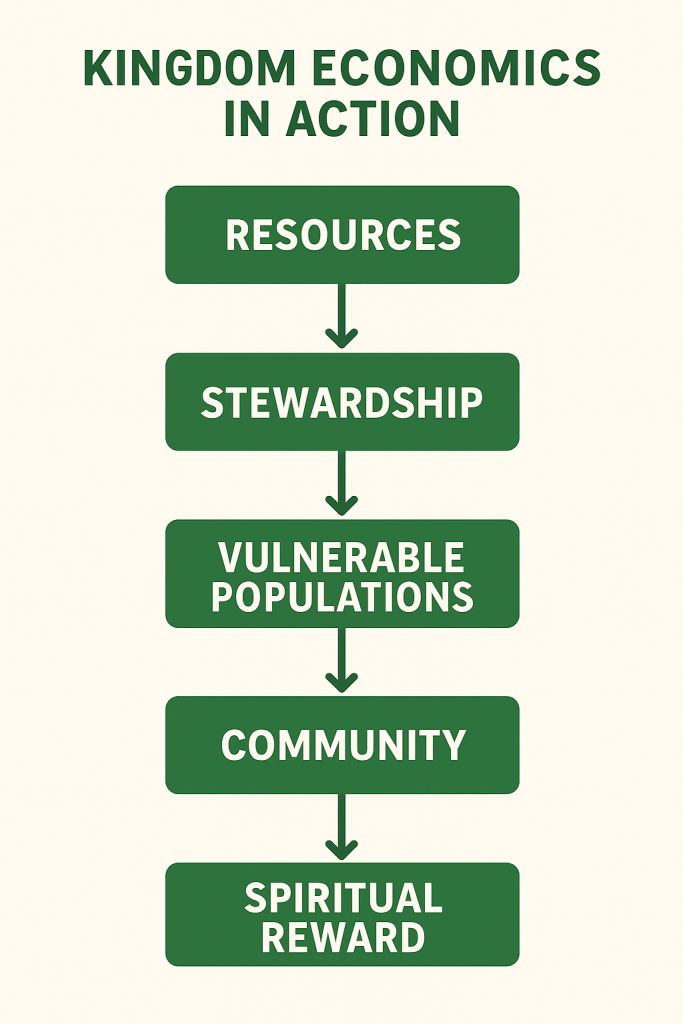
The concept of wealth within the biblical framework transcends material accumulation and economic prosperity. True kingdom wealth is rooted in stewardship, divine purpose, and service to others rather than self-indulgence or exploitation. The Most High’s design for wealth has always been redemptive, restorative, and righteous. As Deuteronomy 8:18 (KJV) declares, “But thou shalt remember the LORD thy God: for it is he that giveth thee power to get wealth, that he may establish his covenant.”

In contrast to the materialism and capitalism that dominate worldly systems, biblical prosperity is covenantal—it exists to advance the will of God, care for the poor, and sustain the community. Wealth in the Kingdom is a trust, not a trophy. It is never meant to enslave the believer’s heart but to empower righteous influence.

The Psychology of Wealth and Purpose

From a psychological perspective, wealth tends to magnify the moral and emotional state of its possessor. Materialism often leads to a distorted self-concept, where identity becomes tied to possessions (Kasser, 2016). In contrast, individuals guided by intrinsic values—such as compassion, stewardship, and purpose—display greater emotional stability and fulfillment. Scripture reinforces this truth in Luke 12:15 (KJV): “A man’s life consisteth not in the abundance of the things which he possesseth.”

The Kingdom mindset therefore shifts the believer’s focus from acquisition to assignment. This transformation represents a renewal of the mind (Romans 12:2), where wealth becomes an instrument of righteousness. Kingdom wealth serves people, not pride.

Stewardship vs. Ownership

In biblical theology, humans are not owners but stewards of God’s resources. Psalm 24:1 (KJV) affirms, “The earth is the LORD’s, and the fulness thereof.” Every possession—whether land, talent, or intellect—belongs ultimately to God. This truth humbles the heart and neutralizes greed. Psychologically, stewardship fosters gratitude, accountability, and ethical decision-making, countering the ego-driven impulses of capitalism.

Wealth as a Test of Character

Wealth reveals what is hidden in the heart. Proverbs 11:28 (KJV) warns, “He that trusteth in his riches shall fall.” The psychology of power and wealth often exposes deeper insecurities, leading to overcompensation through control, consumption, or social dominance. In God’s Kingdom, however, power is authenticated through service (Mark 10:44). The greatest test of prosperity is whether one remains humble and generous amid abundance.

The Kingdom Economy

Unlike the capitalist model based on competition and scarcity, the Kingdom economy is grounded in abundance and cooperation. In Acts 4:34–35 (KJV), the early church practiced communal distribution: “Neither was there any among them that lacked.” Their model demonstrates divine equity, where prosperity is shared, not hoarded. Kingdom economics thus aligns with divine justice, prioritizing human need over greed.

Wealth and Responsibility

The Bible consistently associates wealth with moral responsibility. In 1 Timothy 6:17–18 (KJV), Paul instructs, “Charge them that are rich… that they be rich in good works, ready to distribute, willing to communicate.” The accumulation of wealth without generosity invites judgment (James 5:1–3). From a psychological lens, generosity enhances well-being, while greed fuels anxiety and social isolation (Layous et al., 2012).

The Devil’s Counterfeit Kingdom

When Satan offered Jesus “all the kingdoms of the world” in Matthew 4:8–9 (KJV), he was not lying about possessing them temporarily. The “kingdoms” represent systems—political, economic, religious, and cultural—governed by pride, corruption, and idolatry. These include Babylon (economic greed), Rome (military power), Egypt (enslavement and control), and Sodom (pleasure and moral decay). Each symbolizes a facet of worldly dominion designed to draw humanity away from divine authority.

Who Truly Holds Power?

While earthly rulers boast of influence, Scripture affirms that all true power belongs to God. Psalm 62:11 (KJV) states, “Power belongeth unto God.” The devil’s power is temporal and deceptive, operating through fear, manipulation, and vanity. The believer’s power, by contrast, flows from righteousness, truth, and the indwelling Spirit of God (Acts 1:8).

The Ethics of Giving and Receiving

Biblical wealth ethics emphasize balance—both giving and receiving in alignment with God’s will. Proverbs 3:9–10 (KJV) encourages, “Honour the LORD with thy substance… so shall thy barns be filled with plenty.” Giving is not loss but investment into eternal purpose. Psychologically, altruistic giving correlates with increased happiness and self-worth (Post, 2005).

God’s Heart for Widows

The Bible repeatedly emphasizes that widows are among the most vulnerable members of society. In ancient Israel, widows often lacked financial support because they were dependent on their husbands. God commands His people to care for them, reflecting His justice and mercy:

  • Deuteronomy 10:18 (KJV):“He doth execute the judgment of the fatherless and widow, and loveth the stranger, in giving him food and raiment.”
    • God Himself is described as a defender and provider for widows. Helping widows aligns us with His character.
  • Psalm 68:5 (KJV):“A father of the fatherless, and a judge of the widows, is God in his holy habitation.”
    • God identifies as the protector of widows, showing that caring for them is an extension of worshiping Him.

2. Old Testament Instructions

In the Mosaic Law, caring for widows was often tied to practical provision, especially through gleaning, charity, and justice:

  • Exodus 22:22–24 (KJV):“Ye shall not afflict any widow, or fatherless child. If thou afflict them in any wise, and they cry at all unto me, I will surely hear their cry.”
    • Oppressing a widow was equated with oppressing God Himself. The law ensured widows were protected, not exploited.
  • Deuteronomy 14:29 (KJV): The tithe and offerings were to be shared with “the stranger, the fatherless, and the widow.”
    • God’s economic system included widows as beneficiaries, ensuring they could survive even if they lacked a male provider.
  • Ruth 2:2–3 (KJV): Ruth, a widow, was allowed to glean in Boaz’s field.
    • This illustrates practical giving: providing access to resources and opportunity, not only handouts.

3. New Testament Principles

In the New Testament, the church formalized support for widows as part of spiritual and social responsibility:

  • 1 Timothy 5:3–4 (KJV):“Honour widows that are widows indeed. But if any widow have children or nephews, let them learn first to shew piety at home, and to requite their parents: for that is good and acceptable before God.”
    • The apostle Paul distinguishes between widows who are truly alone and those with family. Giving is primarily for those who lack other support.
  • 1 Timothy 5:9–10 (KJV): Paul outlines qualifications for widows who receive support from the church. They must be reputable, have a good testimony, and show hospitality.
    • This shows that giving to widows was not indiscriminate; it was intended to support godly women in need.
  • James 1:27 (KJV):“Pure religion and undefiled before God and the Father is this, To visit the fatherless and widows in their affliction, and to keep himself unspotted from the world.”
    • Caring for widows is a central marker of true, undefiled religion.

4. Psychological and Spiritual Effects of Giving to Widows

Psychologically, giving to widows combats societal neglect, reduces fear and isolation, and reinforces dignity. It fosters empathy and gratitude, while breaking selfishness in the giver.

Spiritually, giving reflects God’s heart, cultivates generosity, and aligns the giver with kingdom principles of justice, mercy, and righteousness (Proverbs 19:17). It is both a blessing for the widow and a spiritual investment for the giver.


5. Modern Application

In contemporary practice, giving to widows can take many forms:

  1. Financial Support – Direct gifts, stipends, or assistance with bills.
  2. Community Assistance – Helping with groceries, housing, or medical needs.
  3. Spiritual Encouragement – Visiting, praying with, and mentoring widows.
  4. Opportunity Creation – Providing jobs, training, or means of self-sufficiency.

The principle remains the same: widows who lack other support are to be cared for as a reflection of God’s love.


Summary:
Giving to widows in the Bible is both a command and a blessing. It demonstrates godliness (James 1:27), honors God’s heart (Deut. 10:18), and is part of a believer’s duty to the vulnerable. True giving is intentional, respectful, and empowering, not merely a formality or charity.

Capitalism vs. Kingdom Commerce

Capitalism thrives on competition, but the Kingdom thrives on cooperation. The capitalist mindset promotes profit even at the expense of people, while the Kingdom system promotes productivity that blesses the community. Proverbs 16:8 (KJV) declares, “Better is a little with righteousness than great revenues without right.” Kingdom wealth prioritizes justice and sustainability over short-term gain.

Materialism and the Empty Self

Materialism offers a false sense of security and identity. The psychological phenomenon known as the “empty self” (Cushman, 1990) describes modern individuals who fill emotional voids with consumerism. This aligns with Ecclesiastes 5:10 (KJV): “He that loveth silver shall not be satisfied with silver.” The more we pursue things, the less fulfilled we become.

The Role of Contentment

Contentment anchors the believer against covetousness. Philippians 4:11 (KJV) declares, “I have learned, in whatsoever state I am, therewith to be content.” Contentment is not complacency but spiritual stability—the confidence that God is the source of all provision. Psychologically, contentment reduces envy and fosters peace of mind.

Economic Justice and the Poor

The Bible commands economic justice. Proverbs 19:17 (KJV) promises, “He that hath pity upon the poor lendeth unto the LORD.” Neglecting the poor is a spiritual offense (Ezekiel 16:49). Capitalist societies often ignore systemic poverty, perpetuating inequality through unjust systems. Kingdom wealth, by contrast, redistributes blessings to uplift others.

Wealth and Worship

Money is morally neutral—it becomes holy or corrupt depending on intent. Jesus warned in Matthew 6:24 (KJV): “Ye cannot serve God and mammon.” Worshipping wealth enslaves the soul, while surrendering it sanctifies our stewardship. Kingdom-minded believers see every dollar as an opportunity to manifest God’s glory through impact.

The Transformation of Power

In worldly terms, power controls others. In the Kingdom, power serves others. Jesus redefined authority in John 13 when He washed His disciples’ feet. Kingdom power is exercised through humility, self-discipline, and obedience. True power is never domination—it is transformation.

The Psychological Trap of Greed

Greed is both spiritual and psychological bondage. It originates from fear of lack and manifests as insatiable craving. Research links greed to increased depression and moral disengagement (Seuntjens et al., 2015). Spiritually, greed is idolatry (Colossians 3:5). The cure is gratitude—a posture that restores perspective and peace.

Restoring the Divine Order of Wealth

God designed wealth to sustain creation and bless humanity. When believers align finances with faith, they reverse the curse of exploitation. Malachi 3:10 (KJV) highlights the principle of tithing as a covenant of trust and reciprocity. Obedience in giving opens spiritual and material abundance.

Cultural Power and Influence

The “kingdoms of this world” include cultural dominance—media, education, and entertainment. These systems shape thought, normalize sin, and influence behavior. Kingdom citizens are called to engage culture without conforming to it (Romans 12:2). Influence should lead to illumination, not imitation.

Reclaiming Dominion

When Christ rose from the grave, He declared, “All power is given unto me in heaven and in earth” (Matthew 28:18, KJV). This statement reclaimed humanity’s lost dominion. The believer’s authority, therefore, is not in possessions but in position—being seated with Christ in heavenly places (Ephesians 2:6).

Wealth and the End Times

Revelation 18 depicts Babylon’s economic collapse, symbolizing the fall of corrupt world systems. Those who trusted in materialism mourned, but the saints rejoiced because divine justice prevailed. This eschatological vision warns believers not to build eternal hope on temporary wealth.

Power Reimagined Through Service

Jesus taught that leadership in the Kingdom is servant-centered (Matthew 20:26–28). This redefines greatness as the ability to lift others rather than exalt oneself. The psychology of servant leadership demonstrates higher emotional intelligence and resilience (Greenleaf, 2002).

The Eternal Value of Generosity

Generosity is a heavenly investment that yields eternal dividends. Matthew 6:20 (KJV) instructs, “Lay up for yourselves treasures in heaven.” Acts of giving create legacy, spiritual growth, and divine favor. The more one gives, the more one reflects the image of the Giver.

Conclusion

Kingdom wealth is not defined by possessions but by purpose. It aligns prosperity with righteousness, power with service, and influence with integrity. Materialism, capitalism, and the worldly pursuit of power lead to spiritual poverty, while Kingdom stewardship produces eternal fruit. True wealth is measured not by what one owns but by what one gives. In the end, all power, all glory, and all wealth belong to the Most High, who alone reigns forever.


References (KJV & Academic):

  • The Holy Bible, King James Version.
  • Cushman, P. (1990). Why the self is empty: Toward a historically situated psychology. American Psychologist, 45(5), 599–611.
  • Kasser, T. (2016). Materialistic values and goals. Annual Review of Psychology, 67, 489–514.
  • Layous, K., et al. (2012). The benefits of prosocial spending. Journal of Positive Psychology, 7(5), 377–389.
  • Post, S. (2005). Altruism, happiness, and health: It’s good to be good. International Journal of Behavioral Medicine, 12(2), 66–77.
  • Seuntjens, T. G., et al. (2015). Greed: A motivational and social comparison perspective. Personality and Individual Differences, 74, 153–158.
  • Greenleaf, R. K. (2002). Servant leadership: A journey into the nature of legitimate power and greatness. Paulist Press.

Wealth as Empowerment: Building Generational Prosperity.

Photo by Pixabay on Pexels.com

Wealth is more than money; it is a tool of empowerment, influence, and legacy. For Black women, historically marginalized in economic structures, building wealth is both an act of self-determination and a vehicle for generational uplift. Wealth enables financial independence, access to education, and the ability to invest in community, creating a cycle of prosperity that can transcend systemic barriers.

Historically, Black women faced exclusion from financial institutions, employment opportunities, and property ownership. Despite these constraints, they developed strategies for survival and community wealth-building—establishing businesses, savings circles, and cooperative networks. These efforts demonstrate that financial empowerment has long been intertwined with resilience, resourcefulness, and leadership.

Modern financial empowerment involves strategic planning, investment, and education. Understanding assets, liabilities, budgeting, and wealth accumulation is essential. Psychological research emphasizes that financial literacy strengthens self-efficacy, reduces stress, and fosters long-term planning (Lusardi & Mitchell, 2014). Wealth-building is therefore not only practical but also psychological, reinforcing confidence and agency.

Entrepreneurship has been a key avenue for Black women to generate wealth and influence. From Madam C.J. Walker, America’s first self-made female millionaire, to contemporary business leaders like Rihanna with her Fenty brand, Black women have leveraged creativity, strategy, and branding to secure financial independence. These success stories demonstrate that entrepreneurship can create both personal prosperity and employment opportunities within the community.

Investment in real estate, stocks, and businesses also provides long-term security and intergenerational wealth. Proverbs 13:22 (KJV) states: “A good man leaveth an inheritance to his children’s children: and the wealth of the sinner is laid up for the just.” This verse underscores the biblical principle of building resources not only for oneself but for future generations. By adopting disciplined investment strategies, Black women can ensure that their wealth becomes a vehicle for generational prosperity.

Education is another cornerstone of wealth-building. By investing in knowledge, skills, and professional growth, Black women increase earning potential, career advancement, and financial independence. Community initiatives, scholarships, and mentorship programs further amplify these benefits, ensuring that economic empowerment is not an individual pursuit but a collective one.

Generational wealth also has profound societal implications. Families with accumulated resources can access better healthcare, housing, and education, breaking cycles of poverty and creating opportunities for upward mobility. Wealth enables philanthropy, community investment, and advocacy, extending the benefits of financial empowerment beyond the individual.

🌟 Generational Wealth Blueprint for Black Women

1. Build a Strong Financial Foundation

  • Budget Wisely: Track income and expenses; prioritize needs versus wants.
  • Emergency Fund: Save 3–6 months of living expenses to create financial security.
  • Debt Management: Pay down high-interest debt first and avoid unnecessary liabilities.

2. Invest Strategically

  • Stocks & Mutual Funds: Start early to leverage compounding interest.
  • Real Estate: Property ownership builds equity and long-term security.
  • Retirement Accounts: Contribute consistently to 401(k)s, IRAs, or other retirement plans.

Biblical Principle: Proverbs 13:22 (KJV) – “A good man leaveth an inheritance to his children’s children.” Investments today secure tomorrow’s legacy.


3. Entrepreneurship and Business Ownership

  • Leverage Skills & Talents: Turn passions into profitable ventures.
  • Mentorship & Networking: Connect with experienced businesswomen to learn strategies.
  • Scale & Reinvest: Grow the business and reinvest profits to expand impact.

Examples: Madam C.J. Walker’s haircare empire; Rihanna’s Fenty brand.


4. Education and Skill Development

  • Formal Education: Degrees and certifications increase earning potential.
  • Financial Literacy: Understand taxes, investments, and personal finance.
  • Continuous Learning: Stay updated on trends, technology, and market opportunities.

5. Build a Supportive Network

  • Community Circles: Join groups focused on financial empowerment.
  • Mentorship: Both give and receive guidance to create a generational cycle of learning.
  • Family Involvement: Teach children financial responsibility early to instill long-term habits.

6. Estate Planning and Legacy Building

  • Wills & Trusts: Protect assets and ensure smooth wealth transfer to future generations.
  • Life Insurance: Safeguard family in case of unexpected events.
  • Philanthropy: Invest in community initiatives to create societal impact.

7. Psychological and Spiritual Mindset

  • Abundance Mindset: Believe wealth is attainable and purposeful.
  • Resilience: View financial challenges as opportunities to learn and grow.
  • Faith-Driven Approach: Trust God as your guide in financial stewardship.

Scriptural Guidance: Deuteronomy 8:18 (KJV) – “But thou shalt remember the LORD thy God: for it is he that giveth thee power to get wealth.”


8. Key Takeaways

  • Wealth is a tool for empowerment, independence, and community uplift.
  • Combine financial literacy, investment, entrepreneurship, and mentorship to secure generational prosperity.
  • Faith, resilience, and community amplify the impact of wealth across generations.

Psychologically, wealth fosters self-determination and resilience. It provides a buffer against systemic stressors and allows for strategic life choices aligned with values rather than necessity. For Black women, who navigate intersectional challenges, financial empowerment reinforces autonomy, self-respect, and leadership.

Ultimately, wealth as empowerment is both practical and spiritual. It aligns with biblical teachings, supports community uplift, and ensures that success is sustainable across generations. By embracing financial literacy, entrepreneurship, investment, and education, Black women can transform wealth into a tool for personal growth, community development, and lasting legacy.


References

  • Lusardi, A., & Mitchell, O. S. (2014). The economic importance of financial literacy: Theory and evidence. Journal of Economic Literature, 52(1), 5–44.
  • Bible (KJV). Proverbs 13:22.
  • Boyd, R. L. (2003). The History of Black Women Entrepreneurs in America. Greenwood Press.
  • Walker, M. C. (2001). On Her Own Ground: The Life and Times of Madam C.J. Walker. Scribner.