This photograph is the property of its respective owner. No copyright infringement intended.
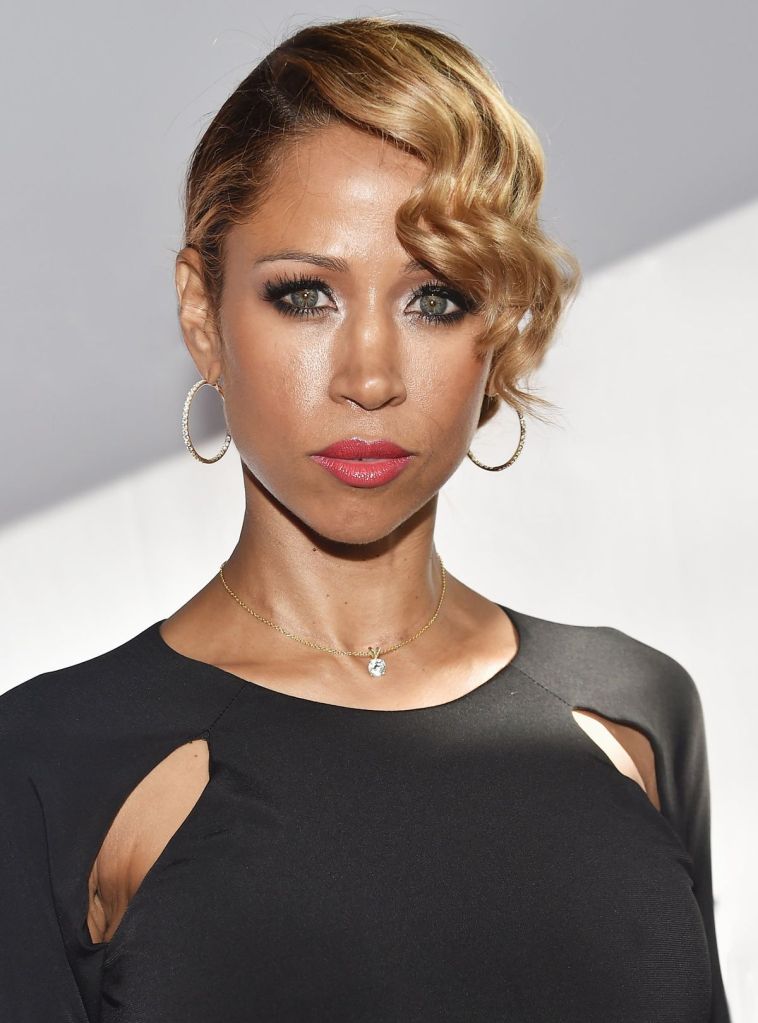
Stacey Dash is an actress and former television personality whose career spans film, television, and political commentary. Born Stacey Lauretta Dash on January 20, 1967, in the Bronx, New York, she rose to prominence in the 1990s as one of Hollywood’s most recognizable light-skinned Black actresses, known for her youthful appearance, symmetrical features, and refined on-screen charisma.
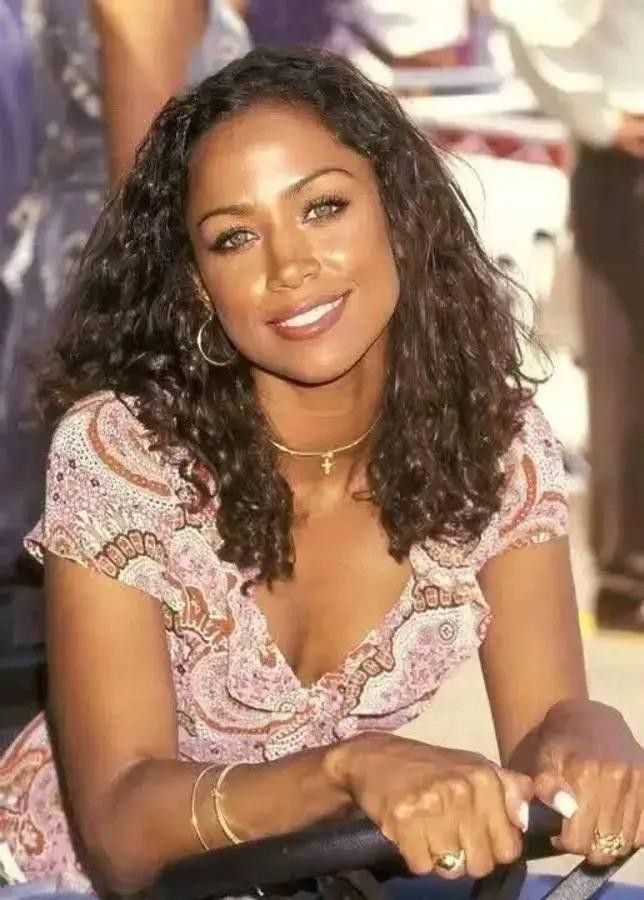
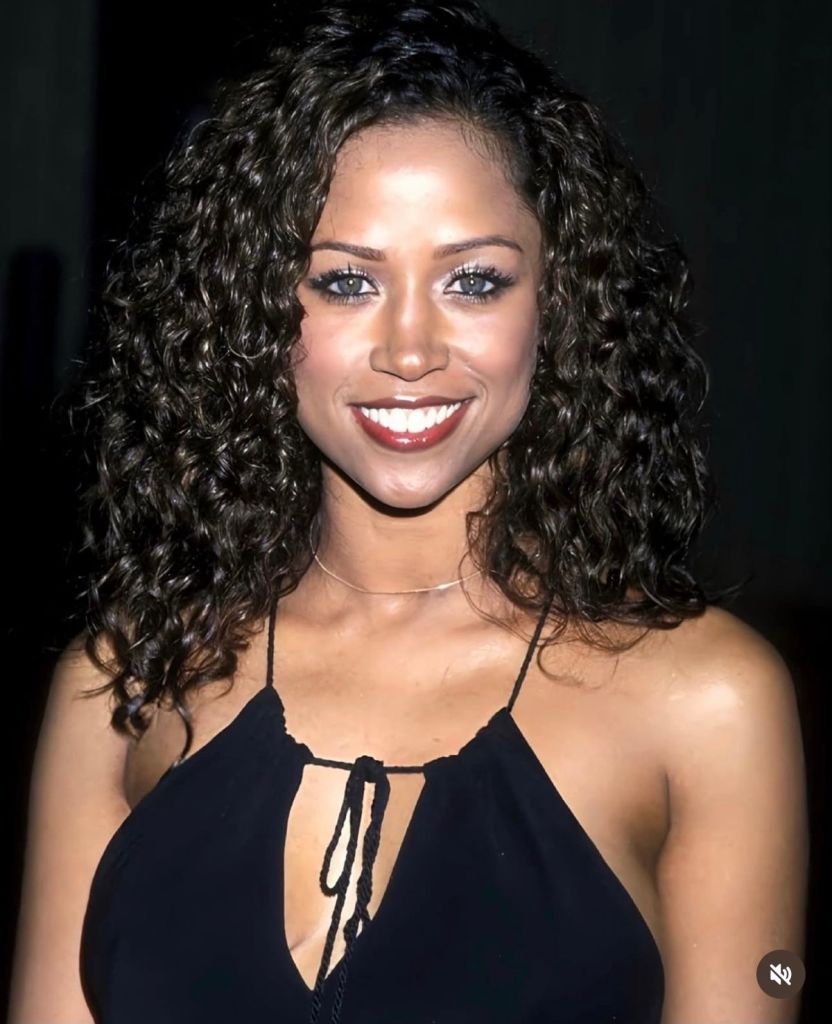
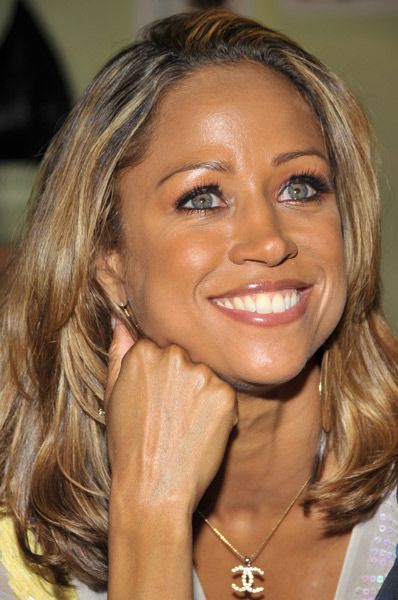
Dash was raised in a culturally diverse household. Her father is African American, and her mother is of Mexican and Afro-Bajan (Barbadian) descent. This blended heritage contributed to her distinctive look—high cheekbones, almond-shaped, striking green eyes, radiant complexion, and a delicate facial structure that often allowed her to portray characters younger than her actual age. Her beauty became one of her defining industry trademarks.
This photograph is the property of its respective owner.
She began her acting career in the mid-1980s, making her television debut in the NBC crime drama Crime Story (1985). Her first film appearance came in Enemy Territory (1987), followed by roles in films such as Moving, Mo’ Money, and Renaissance Man. These early roles positioned her within urban and mainstream cinema, but she had yet to achieve breakout stardom.
Her defining breakthrough came in 1995 with the teen comedy Clueless, where she portrayed Dionne Davenport alongside Alicia Silverstone. Although Dash was in her late twenties at the time, she convincingly played a fashionable high school student. The film became a cultural phenomenon, and Dionne’s stylish, witty, and confident persona cemented Dash as a pop-culture icon of the 1990s. She later reprised the role in the television adaptation of Clueless (1996–1999).
Throughout the late 1990s and early 2000s, Dash appeared in films such as View from the Top, Gang of Roses, and Paper Soldiers, as well as television programs including The Game and Single Ladies. She also appeared in music videos, most notably in Kanye West’s “All Falls Down,” which reintroduced her to a younger generation of viewers.
This photograph is the property of its respective owner. No copyright infringement intended.
In addition to acting, Dash transitioned into political commentary in the 2010s, becoming a contributor for Fox News. This career pivot sparked significant public discourse and polarized opinions, impacting her public image and altering the trajectory of her entertainment career.
In her personal life, Dash has been married multiple times and is the mother of two children. Despite public scrutiny and media attention surrounding her relationships and political views, she has remained a figure of fascination due to her longevity in public consciousness.
While Dash has not received major Academy-level awards, Clueless remains a cult classic, and her character Dionne continues to be referenced in discussions of 1990s fashion and teen cinema. Her cultural influence is tied heavily to that era’s aesthetic and the representation of affluent, stylish Black teen femininity in mainstream film.
This photograph is the property of its respective owner.
Why is she considered an “Ebony Doll”? The phrase, when used respectfully, reflects admiration for her polished features, petite frame, smooth complexion, and doll-like facial symmetry. She embodied a glamorous, fashion-forward image that blended softness with confidence. Her presence in Clueless especially presented a portrayal of a young Black woman who was affluent, articulate, stylish, and socially powerful—an image not commonly centered in 1990s teen films.
Stacey Dash represents a specific moment in Black pop culture history: the era of glossy, MTV-influenced cinema, high-fashion teen comedies, and multicultural casting that subtly shifted representation. Whether through admiration or controversy, her visibility has been enduring.
She remains a figure associated with timeless 1990s beauty, cultural conversation, and a defining cinematic role that continues to resonate decades later.
References
IMDb. (n.d.). Stacey Dash – Filmography and Biography. Wikipedia contributors. (n.d.). Stacey Dash. Paramount Pictures archives. Clueless (1995). Fox News archives (2014–2017 contributor records).
Biracial identity exists at the intersection of history, power, love, and survival. To be biracial is not merely to possess ancestry from two racial groups; it is to navigate a world that has long been obsessed with classification, hierarchy, and visual difference. The biracial experience exposes the artificiality of race while simultaneously revealing how deeply race structures social life.
Historically, biracial people did not emerge from a vacuum of harmony. In many societies—particularly in the Americas—biracial populations grew out of colonialism, enslavement, sexual violence, coercion, and unequal power relations. European colonization of Africa and the Americas produced racial mixing under conditions that were often violent and asymmetrical, leaving biracial descendants to inherit complex legacies rather than simple origin stories.
In the United States, the “one-drop rule” legally and socially erased biracial identity for centuries. Anyone with African ancestry was classified as Black, regardless of appearance or cultural upbringing. This rigid racial binary denied biracial people the right to self-definition and reinforced white supremacy by preserving racial purity narratives (Davis, 2001). Biracial identity, therefore, has always been political.
Modern biracial individuals often face a paradox: being hyper-visible and invisible at the same time. They may be exoticized for ambiguous features while simultaneously pressured to “choose a side.” This demand reflects society’s discomfort with complexity. Biracial people challenge the illusion that race is biological rather than social, revealing it instead as a constructed system maintained through perception and power.
Psychologically, biracial identity development can involve unique challenges. Research shows that biracial individuals often experience identity invalidation, social exclusion, and questioning of authenticity from both racial groups (Rockquemore & Brunsma, 2002). These experiences can lead to internal conflict, but they can also foster adaptability, cultural fluency, and critical awareness.
Media representation has played a significant role in shaping public perceptions of biracial people. Often portrayed as symbols of progress or “post-racial” society, biracial individuals are burdened with unrealistic expectations to reconcile racial divisions they did not create. This narrative obscures ongoing racism and places emotional labor on those already navigating complex identities.
Within the Black community, conversations around biracial identity are especially layered. Colorism, proximity to whiteness, and historical trauma influence how biracial people are perceived and received. While some biracial individuals benefit from lighter skin privilege, others are fully racialized as Black regardless of mixed ancestry. These dynamics reveal that privilege is not evenly distributed among biracial populations.
Culturally, biracial identity is not a monolith. A biracial person raised in a Black household may experience identity differently from someone raised in a white or multicultural environment. Language, neighborhood, religion, and socialization often matter more than genetics alone. Identity, therefore, is lived—not simply inherited.
Genetically, science confirms what sociology has long suggested: race has no biological foundation. Human genetic variation exists on a continuum, with more diversity within so-called racial groups than between them (Lewontin, 1972; Templeton, 2013). Biracial individuals embody this truth, challenging rigid racial thinking through their very existence.
Spiritually and ethically, biracial identity raises questions about belonging, unity, and human dignity. Many faith traditions affirm that humanity shares a common origin, contradicting ideologies that divide people by phenotype. From this perspective, biracial people are not anomalies but reminders of shared humanity.
In contemporary society, biracial individuals are increasingly claiming the right to self-definition. Rather than being boxed into externally imposed categories, many embrace fluid, contextual, and intersectional identities. This shift reflects a broader cultural reckoning with race, power, and history.
Ultimately, the biracial experience exposes both the cruelty and the creativity of human societies. It reveals how deeply people cling to racial boundaries—and how easily those boundaries are crossed. To understand biracial identity is to confront uncomfortable truths about history while imagining more honest, inclusive futures.
Biracial people do not exist to resolve racial tension or symbolize harmony. They exist because people did—and do—love, exploit, resist, survive, and endure. Their stories deserve complexity, respect, and truth.
References
Davis, F. J. (2001). Who is Black? One nation’s definition. Pennsylvania State University Press.
Lewontin, R. C. (1972). The apportionment of human diversity. Evolutionary Biology, 6, 381–398.
Rockquemore, K. A., & Brunsma, D. L. (2002). Beyond Black: Biracial identity in America. Sage Publications.
Templeton, A. R. (2013). Biological races in humans. Studies in History and Philosophy of Science Part C: Studies in History and Philosophy of Biological and Biomedical Sciences, 44(3), 262–271.
This photograph is the property of its respective owner. No copyright infringement intended.
The conversation surrounding mixed-race identity—especially within the African diaspora—is layered with history, psychology, and theology. To understand its roots, one must trace the origins of racial mixing to colonialism and slavery. During the transatlantic slave trade, European men often exploited enslaved African women, creating generations of mixed-race offspring who were caught between two worlds—belonging fully to neither. These children were used to reinforce racial hierarchies, as their lighter skin often afforded them privileges denied to darker-skinned Africans. The complex legacy of this division continues to shape how mixed-race individuals view themselves and how they are perceived within Black communities.
The origin of mixed-race identity in the Black context is deeply tied to oppression rather than equality. Colonial societies created rigid racial classifications such as “mulatto,” “quadroon,” and “octoroon,” assigning social worth based on proximity to whiteness. This system, known as colorism, weaponized phenotype to maintain control and discord among African-descended people. The lighter one’s skin, the closer they were deemed to “civilization.” Such hierarchies fractured unity among the enslaved, fulfilling the divide-and-rule tactics of white supremacy.
This historical divide evolved into a psychological wound. Many mixed-race individuals internalized superiority due to their European features, while darker-skinned individuals were conditioned to associate beauty, intelligence, and worth with lightness. This perpetuated a silent competition within the Black community, where acceptance often hinged on color rather than character. The psychological scars of colonial classification still bleed into modern Black relationships, culture, and self-perception.
The Bible, however, dismantles all forms of racial hierarchy. Acts 17:26 declares, “And hath made of one blood all nations of men for to dwell on all the face of the earth” (KJV). Scripture affirms that all humanity shares a divine origin—therefore, racial superiority or inferiority is antithetical to God’s design. The divisions birthed from slavery and colonialism are not of God but of man’s rebellion and pride.
Mixed-race identity, while historically exploited, also symbolizes resilience. Despite the injustices of their conception, mixed descendants are living testimonies of survival. Yet, the question remains: how do mixed-race individuals navigate a world that often demands they “choose a side”? Many experience rejection from both Black and white communities—too light for one, too dark for the other. This dual rejection can lead to identity confusion and emotional isolation, especially when racial loyalty becomes politicized.
The treatment of darker-skinned Black people by some mixed-race individuals reflects internalized colonial psychology. Proximity to whiteness can unconsciously breed bias, leading to elitism, exclusion, or disdain toward darker skin tones. This phenomenon, known as color stratification, still affects employment, dating, and media representation. It is a modern manifestation of an ancient wound. James 2:9 warns, “But if ye have respect to persons, ye commit sin, and are convinced of the law as transgressors” (KJV). Partiality based on appearance, therefore, is sin before God.
The internal division among Black people undermines collective progress. While society benefits from multiculturalism, the unresolved trauma surrounding mixed identity can perpetuate division rather than unity. Instead of bridging gaps, colorism often reinforces hierarchies of beauty and worth. This spiritual fracture hinders the restoration of Black dignity and solidarity.
Interracial marriage—another byproduct of global migration and cultural exchange—has long sparked theological debate. Some interpret biblical passages as forbidding such unions, yet the KJV Bible does not condemn marriage between races. Rather, it forbids unions that lead believers into idolatry or disobedience to God’s law (Deuteronomy 7:3–4). The issue is not color but covenant. When two people of different races unite under Christ, their marriage honors God’s design for love and unity, transcending the artificial barriers of race.
Nevertheless, interracial relationships carry historical complexities. In societies still healing from racism, these unions can trigger deep emotions, from resentment to fascination. For some Black individuals, seeing interracial relationships—particularly between Black men and white women—can resurrect feelings of rejection and devaluation. This stems not from hate but from historical pain: the centuries-long erasure of Black women’s beauty and humanity.
The modern glorification of mixed-race aesthetics—curly hair, light skin, ambiguous features—continues to marginalize darker-skinned individuals. Media representation often reinforces this bias, promoting “safe” versions of Blackness that appeal to white audiences. This selective visibility diminishes the diversity of Black beauty. Psalm 139:14 reminds us, “I will praise thee; for I am fearfully and wonderfully made.” God crafted all shades of melanin with divine intent; none are superior or inferior in His sight.
Spiritually, division based on color mirrors the sin of pride. Lucifer himself was cast down for exalting his image above God’s (Isaiah 14:12–15). When human beings exalt lighter skin as “better,” they mirror that same rebellion—valuing creation over Creator. True healing requires repentance from color-based idolatry and a return to divine order, where love, not lightness, defines worth.
The social consequences of colorism within the Black community are profound. Darker-skinned individuals often experience higher rates of discrimination, lower marriage rates, and underrepresentation in leadership. Meanwhile, mixed-race or lighter-skinned individuals may face resentment, misunderstanding, or pressure to “prove” their Blackness. This dynamic fosters tension rather than unity, perpetuating what psychologist Beverly Tatum (1997) calls “intra-racial racism.”
Yet, the gospel calls for reconciliation. Galatians 3:28 declares, “There is neither Jew nor Greek… for ye are all one in Christ Jesus.” The identity of the believer transcends color and heritage. The Church must model this unity, teaching that racial hierarchy is sin and diversity is divine. The mixed-race believer, in particular, carries a sacred opportunity to embody this unity—to be a living testimony that God’s kingdom is multiethnic, yet singular in spirit.
Understanding mixed-race identity through a biblical lens helps dismantle shame and confusion. The enemy thrives in division, but Christ restores wholeness. He redeems what history distorted. The color of one’s skin should never define one’s closeness to God or one’s acceptance among brethren. As 1 Samuel 16:7 teaches, “Man looketh on the outward appearance, but the Lord looketh on the heart.”
Interracial marriages, when rooted in faith, symbolize the redemption of divided bloodlines. What once resulted from oppression can now become a covenant of healing. When two races unite under Christ, they testify that love conquers hatred and unity conquers prejudice. Such unions must, however, remain spiritually grounded to resist cultural pressures and ancestral wounds.
It is vital for mixed-race individuals and interracial couples to understand their spiritual assignment. They are not just participants in diversity—they are vessels of reconciliation. Their existence challenges centuries of division and calls all people back to the biblical truth of shared creation. Their journey, however, requires humility, empathy, and active rejection of color-based superiority.
The Black community must also embrace healing by confronting internalized colorism. This begins with education, love, and scriptural truth. The hierarchy of skin tone must be replaced with the hierarchy of virtue. Proverbs 22:2 reminds us, “The rich and poor meet together: the Lord is the maker of them all.” Similarly, light and dark meet in the Creator’s palette, both radiant in His image.
Ultimately, the evolution of mixed-race identity is a spiritual parable. What began in exploitation can end in redemption. What once divided can now unite. The challenge lies in uprooting the psychological residue of slavery and reestablishing identity upon divine truth.
In God’s kingdom, there are no “half” identities—only whole souls. Every shade, feature, and lineage is crafted for His glory. The world divides by pigment, but Heaven unites by purpose. Revelation 7:9 envisions a multitude “of all nations, and kindreds, and people, and tongues, stood before the throne.” This is the divine end of racial confusion—oneness in the presence of the Creator, where all colors reflect His light perfectly.
Scholarly References Tatum, B. D. (1997). Why Are All the Black Kids Sitting Together in the Cafeteria? Basic Books. Hunter, M. (2007). The Persistent Problem of Colorism: Skin Tone, Status, and Inequality.Sociology Compass, 1(1), 237–254. Russell, K., Wilson, M., & Hall, R. (1992). The Color Complex: The Politics of Skin Color Among African Americans. Anchor Books. Ifekwunigwe, J. (2004). Mixed Race Studies: A Reader. Routledge.
This photograph is the property of its respective owners. No copyright infringement intended
In the radiant world of African cinema, few figures embody ethereal beauty and grace like Nadia Buari, the Ghanaian actress often celebrated for her doll-like features, glowing light complexion, and soft, expressive eyes that speak volumes on screen. Her radiant skin tone exudes both elegance and mystery, earning her admiration as one of the most stunning women in African entertainment. With her exquisite beauty, poised demeanor, and remarkable acting talent, Nadia Buari represents a rare blend of femininity, intellect, and star power.
Born on November 21, 1982, in Sekondi-Takoradi, Ghana, Nadia Buari comes from a richly diverse heritage. Her mother is a Ghanaian woman of African descent, while her father, Alhaji Sidiku Buari, is a Ghanaian of Lebanese descent, a renowned musician, producer, and former president of the Musicians Union of Ghana. This mixed heritage contributes to her uniquely captivating look—her almond-shaped eyes, smooth complexion, and deep expressive eyes have made her one of the most photographed faces in West African cinema. Raised in a creative and disciplined household, Nadia’s multicultural background shaped her artistic identity and global appeal.
She attended Mfantsiman Girls’ Secondary School and later graduated from the University of Ghana, Legon, with a Bachelor of Fine Arts degree. Her academic training, coupled with her father’s musical influence, gave her a solid artistic foundation and an appreciation for performance from a young age.
This photograph is the property of its respective owners. No copyright infringement intended
Nadia’s acting career began in the early 2000s when she appeared in the Ghanaian television series Games People Play (2005). Her natural charm and emotional expressiveness immediately drew attention. Her breakout role came with Mummy’s Daughter (2006), but it was her appearance in the Nollywood hit Beyoncé: The President’s Daughter (2006), co-starring Van Vicker and Jackie Appiah, that catapulted her into pan-African fame. The film’s success made her a household name across Ghana and Nigeria, with fans praising her ability to embody both vulnerability and strength with authenticity.
Known for her soft-spoken grace and timeless style, Nadia Buari quickly became one of the most sought-after actresses in Nollywood and Ghallywood. She went on to star in several acclaimed films such as The Return of Beyoncé, Beauty and the Beast, Rough Rider, Secret Lie, and Single and Married. Her screen presence—a fusion of quiet sensuality and emotional depth—set her apart in a competitive industry often dominated by louder personalities.
Her beauty and charisma also made her an ideal ambassador for top brands. Buari has represented numerous African and international companies, endorsing beauty and lifestyle products that align with her image of sophistication. Beyond acting, she is also an entrepreneur, having launched her own clothing line and perfume brand—further proof of her creativity and influence.
In her personal life, Nadia Buari is known for her elegance, privacy, and devotion to family. She is the proud mother of four daughters, often expressing in interviews that motherhood has brought her profound joy and balance. Despite the demands of fame, she remains grounded, valuing her children and family life above all.
This photograph is the property of its respective owners. No copyright infringement intended
Throughout her career, Buari has earned several awards and nominations, including recognition from the Africa Movie Academy Awards (AMAA), Ghana Movie Awards, and Africa Magic Viewers’ Choice Awards (AMVCA). In 2013, she received a Special Recognition Award at the Pan African Film Festival for her contribution to the growth of African cinema.
Today, Nadia Buari is recognized as one of the highest-paid actresses in Nollywood and Ghana, a testament to her enduring appeal and professional excellence. Her success has helped bridge Ghanaian and Nigerian cinema, inspiring a new generation of West African actresses.
Ultimately, Nadia Buari’s legacy lies not just in her films but in the image of refined Black beauty and cultural pride she represents. With her mixed heritage, rich melanin glow, and gentle confidence, she continues to enchant audiences around the world—proving that true beauty is both divine and diverse.
References
Africa Magic. (2022). Nadia Buari Biography and Career Highlights. MultiChoice Africa.
Ghana Web. (2021). Nadia Buari: From Mummy’s Daughter to Nollywood Royalty.
Pulse Ghana. (2023). Top 10 Highest-Paid Actresses in Ghana and Nollywood.
The Guardian Nigeria. (2022). Nadia Buari: A Decade of Excellence in African Cinema.
IMDb. (2024). Nadia Buari Filmography and Awards.
Modern Ghana. (2023). Nadia Buari: Lebanese-Ghanaian Beauty Who Redefined Nollywood Stardom.
Photo courtesy of Steve Landis, the photographer used with his permission.
“When you’re empty on the inside, it doesn’t matter how beautiful you are on the outside.” – Denise Matthews (Vanity)
Introduction: Beauty, Fame, and the Battle Within
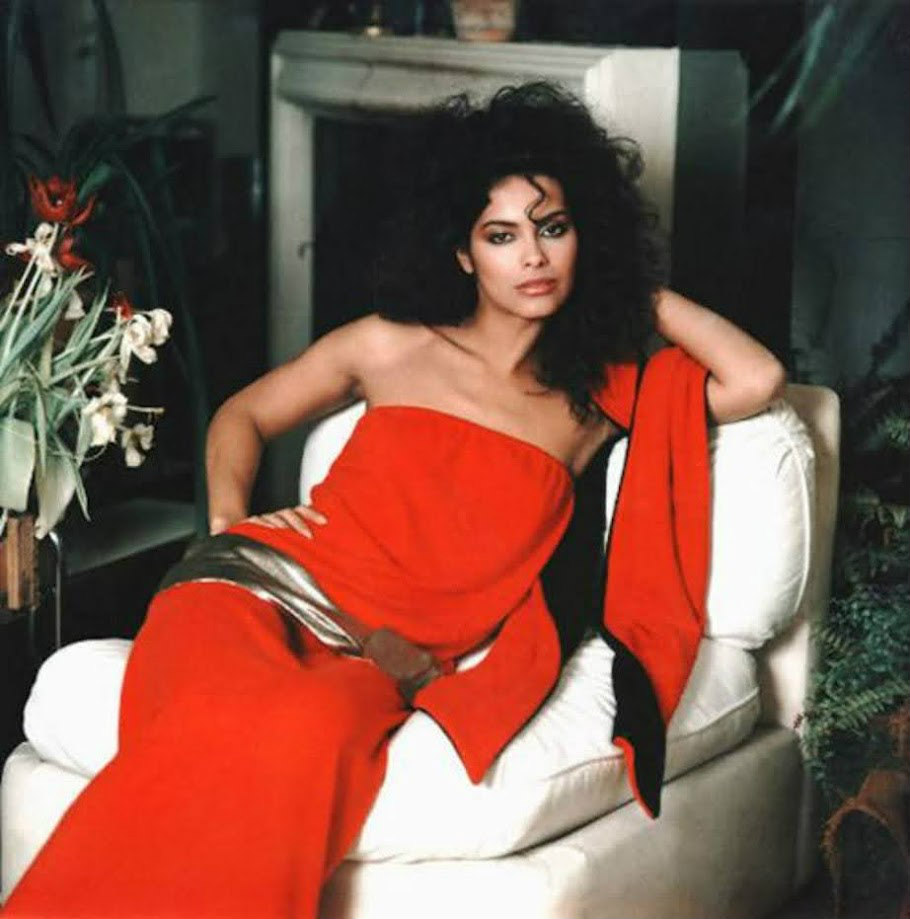
Denise Katrina Matthews—widely known by her stage name Vanity—was a striking beauty, a singer, actress, and model who captivated the world in the 1980s. With an exotic allure and a voice that blended sensuality and soul, Vanity became a pop culture icon during the height of Prince’s musical empire. Yet, beneath the surface of stardom and seduction, Denise battled addiction, identity confusion, and spiritual emptiness. Her journey from sex symbol to servant of Christ is one of profound transformation and testimony.
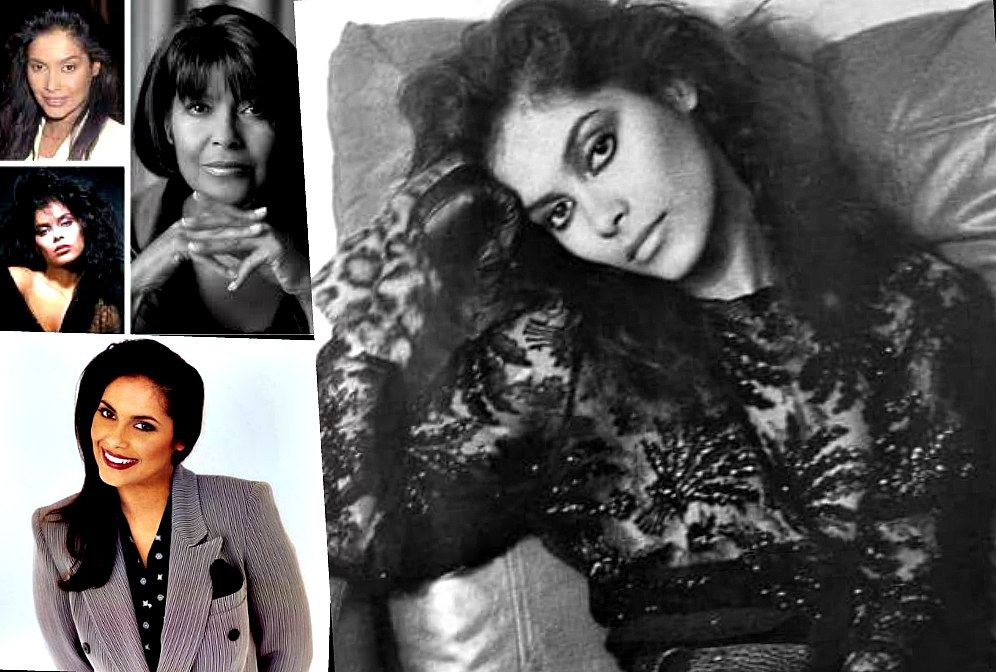
All photographs are the property of their respective owners. No infringement intended.
Early Life and Mixed Heritage
Denise Matthews was born on January 4, 1959, in Niagara Falls, Ontario, Canada. Of African-American, German-Jewish, and Polynesian descent, her mixed-race heritage contributed to her “exotic” beauty that would later become her ticket to the entertainment industry—and, paradoxically, her curse. Standing at about 5’6”, she was admired for her radiant skin, bone structure, and seductive onstage presence. Her early experiences, however, were not glamorous; Denise came from a turbulent household marked by abuse and instability. These early wounds left deep scars that influenced many of her later choices.
Rise to Fame: Vanity 6 and Prince
In the early 1980s, Denise moved to the United States to pursue a career in modeling and acting. She participated in beauty pageants and was even crowned Miss Niagara Hospitality. Her path shifted dramatically when she met Prince, the enigmatic musical genius. He renamed her “Vanity,” claiming she was the female version of himself—a reflection of his own vanity.
Together, they created the girl group Vanity 6, which became famous for their hit “Nasty Girl” in 1982. Clad in lingerie, the group embodied Prince’s provocative style, and Vanity became the face of erotic empowerment in pop culture. Though their chemistry was palpable, Vanity and Prince’s relationship was tumultuous, complicated by control issues and emotional turmoil. Vanity once said:
“Prince and I lived together. We were in love. But I had to walk away to find myself.”
Their relationship ended before the release of Purple Rain, a role Prince had initially written for her but gave to Apollonia Kotero after Vanity’s departure. Many fans speculated rivalry between Vanity and Apollonia, but Vanity later denied ill will, stating that she had outgrown that world.
Hollywood Fame and Drug Addiction
Vanity transitioned to acting, starring in films such as The Last Dragon (1985), Action Jackson (1988), and 52 Pick-Up (1986). Her sultry image became her brand, and she was often featured on “Most Beautiful Women” lists in magazines. She dated Rick James, a fellow icon of funk and excess, whose wild lifestyle mirrored her own. Their relationship was destructive, filled with drugs, sex, and volatility. Rick James later admitted that their bond was fueled by cocaine and chaos.
Fame, however, could not fill the void Denise felt. By the late 1980s, her drug use escalated, and her health began to decline. She overdosed in 1994, suffering near-fatal kidney failure. Doctors gave her three days to live.
A Radical Transformation: From Vanity to Denise Matthews
Facing death, Denise cried out to God. That moment of desperation became her spiritual awakening. She renounced her stage name and identity as Vanity and gave her life to Jesus Christ. Her conversion was not superficial; she walked away from Hollywood, cut ties with former friends and lovers, and devoted herself fully to evangelism. She once declared:
“Vanity is dead. Denise lives for Christ now.”
Denise became a preacher, Christian speaker, and evangelist, traveling across the U.S. and Canada to share her testimony of deliverance from drugs, sexual sin, and vanity. She described her fame as a form of idolatry and warned others about the traps of fame and seduction.
Her Book: Blame It On Vanity
In 2010, Denise published her memoir “Blame It On Vanity”, a raw, honest, and spiritual account of her life. The book detailed her early trauma, rise to stardom, abuse, overdose, and spiritual rebirth. She was vulnerable about her failures, yet triumphant in describing how God saved her. She emphasized the emptiness of fame, saying:
“Fame is like a drug—it makes you feel high, important, untouchable. But it’s all a lie.”
Personal Life: Marriage and Ministry
In 1995, Denise married former NFL player Anthony Smith, though the marriage ended in divorce. She had no children but often referred to the youth and young women she mentored as her spiritual children. She battled with kidney issues for the rest of her life and was on dialysis.
Despite her physical decline, Denise remained bold in her faith, never compromising her beliefs. She lived modestly and refused to return to the entertainment industry, despite offers.
Death and Tributes
Denise Matthews passed away on February 15, 2016, at age 57, from kidney failure caused by years of drug abuse. Just two months later, Prince also died. Upon hearing of her death, Prince paid tribute to her during a concert in Australia, dedicating “Little Red Corvette” to her and reportedly mourning deeply. He stated:
“She loved the Lord, and now she’s home.”
Other celebrities also expressed admiration and sadness. Apollonia Kotero wrote on social media:
“You were my sister. Your light will never dim.”
Conclusion: Beauty Redeemed by Grace
Denise Matthews’ life is a modern parable—a stunning woman who had it all in the world’s eyes but found true life in surrendering to Christ. Her journey from Vanity to virtuous womanhood serves as a powerful reminder that external beauty, fame, and riches are fleeting. The only glory that lasts is the one rooted in the eternal.
References
Matthews, D. (2010). Blame It On Vanity. CreateSpace Independent Publishing.
James, R. (2007). Memoirs of a Super Freak. Amber Books.
Holy Bible. (1611). King James Version.
George, N. (2004). The Life and Times of Prince. Da Capo Press.
Kotero, A. (2016). [Social Media Tribute]. Twitter.
Where faith, history, and truth illuminate the Black experience.



 THE BROWN GIRL DILEMMA